From Secretary to Apprentice to GM in 3 Years | Podcast Ep. 62 | Toolbox for the Trades
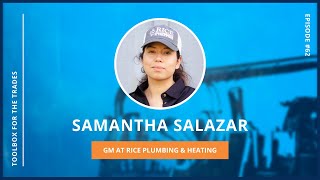
Samantha Salazar went from part-time secretary to GM of Rice Plumbing & Heating's second location in three years. She opened the Boyceville branch in less than nine months and changed how the company recruits apprentices, emphasizing that they're learners, not helpers. Owner Aaron Rice built a culture where people move up.
Questions this video answers
Eight technicians (count includes apprentices).
Two office staff.
Doors/service opened in April 2021; business activity accelerated in June 2021.
Less than nine months.
About 20 years (celebrated 20th anniversary in the interview year).
Spiders that you're dealing with. And you just dropped actually a really big thing here with the Boyceville location, which is, is that it's Rice Plumbing and heating second location. So before we actually get any further, can you just tell me a little bit about Rice? Like how many techs do you guys have? How long have you been in business? Do you only do like what kind of work do you do? Is it only residential, that kind of stuff?
Yeah, definitely. Give me one second. Math.
All right.
So yeah, we actually have eight guys right now going to be in a male dominated field. So I just, and it just fell on my lap. You know, I started years ago with this company as actually like a part time secretary. And, and like eventually we just eventually moved up for me becoming an apprentice. So I was in the field and then to gm. So it's just one of those things that I just happened to work as a secretary part time for a plumbing company and I loved it. So we just wanted to expand it from there.
That's awesome.
I love that you just said that.
You always wanted to work in a male dominated field. Was that you just being like a badass chick who just wanted to show that you could do it?
The. Yeah, you know. Yeah, you know. Yes, 100%. My mom, my mom is pretty, she's awesome and she, you know, we never needed a man. Pretty much it's like what, like, you know, we always did it for ourselves. We figured it out. And that's why I also love the trade too because half of the job is just trial and error. You know, you mess it up, fix it and then you won't do the same mistake again, you know. And that's how I learned too. I'm very, I'm a hands on learner as well. So that's, you know, it works out nice.
Yeah, the trades is totally open to folks that are good hands on learners. So you started as a part time secretary for Rice a few years before you began working as a plumbing apprentice. So what was the, what prompted you to even make that jump?
You know, I actually moved to a new area like half an hour away from my hometown or 45 minutes. And I saw the ad on actually Craigslist and my partner, he actually knows the owner so I actually asked him, hey, can you like reach out and see what's going on? He did. And they were hiring for a secretary and I applied and thank God for my partner because he knew the guy. So I had a leg up and that did the interview. I got the job and it just so happened that it was a plumbing company, I guess.
And so after several years of being a secretary, what happened that made you go, hey, you know what? I really want to try being a plumbing apprentice.
You know, I always, again, I always wanted to be in the trades. So it just happened that, you know, I was part time secretary that I did to full time and I was a secretary for I believe, like two years. And then one day it was, we had a technician in the field and I was like, hey, like, take me out, take me out on the weekend. He's like, you want to come out? Like, yeah. He's like, oh, fine, I'll call you then if we get a phone call for an on call, you know, emergency call, like, I'm going to call you and you can come, like you do a ride along. Is it awesome? And then it was probably about like six months later that I actually came up to my boss and was like, hey, can we give it a shot? Like, let me just do it, let me see how it goes. And you know, he, he gave me the shot, which I'm grateful for. You know, he's a great boss. So. And it worked out, surprisingly.
I'm not surprised at all. And again, we're going to talk more about your boss later because in the first call I had with you, you talked about how supportive he was of you taking these steps on in your career, which I think has been so critical to your success at this point. I really want to know, before we even get to the GM stuff, talk to me about what your apprenticeship was like. Were you doing, were you secretarying part time and then like taking calls and doing ride alongs? What did that look like for you?
No, I was the secretary again for probably a year and a half or two years at that point. Did one ride along over the weekend and then like six months later it was like I was in the office on Friday and then Monday I was just in the field, full blown apprentice, riding along with the guys in the van. And it was like my first, probably my first week when I was like, holy crap. Like, this is a lot. This is a lot. And the guys, you know, were super supportive of it too. Like, they gave me a fair shot. You know, they put me in some situations that I had to be in. But they also are like, super. They're good. I'm like deathly afraid of spiders. So that took a little bit to get used to in crawl spaces and such, but. But now it's all right.
They were like, it's okay, Samantha, just breathe. Just breathe through it. The spider's not gonna hurt you. You're gonna be fine.
Oh my God, that's so funny. One of the things over here too, we talked about Boisville, you know, I was like, oh, we always talked about the great things and how the expansion would be great. Never talked about like the distance between houses or the fact that we have no cell service up here. And the spiders are a whole different breed up here than they are in accord at our other location. These are more mountains and like over here, so.
So you got more rural, you got.
More between apprentices and technicians, you know. Aaron, who's the owner, he actually, he started the business about 20 years ago in Accord. So he, you know, he's the owner. He's actually like super inspiring too. So like, even though he's the owner, like, he'll be the first one to step up and like climb in like this disgusting pit and like diagnose a failed pump or something like that. It's great. Or he'll be the first to help with any issues too. The guys or myself come across, you know, we could be having for however much time. And we call him, he's like, okay, do this, this and this first. And then like we do it and like, oh, we never even thought about that. And he thought of it because he's doing it so long. He knows the ins and outs, there's codes and, you know, building codes and such. He actually got his master plumbing license, which is like a license in the city of Kingston around here. He got that in 2005 or 6 too. So that's, that's a great thing for him to have. And then we have, you know, John, our service manager. He's actually been with the company for I believe like 13 years at this point. He, you know, he's our go to guy too. He's great. He's actually super knowledgeable and can literally show up to a job that we're also having issues on and like look at the system and figure it out in like five minutes and tells us, oh, do this, this and this. And you know, he'll show us the ropes or show us how to do it and then we'll just do about that. He actually like nicknamed himself Johnny Perfect is his nickname.
I love someone who has the, I love someone who has the gumption to nickname themselves.
Oh my. Johnny Perfect is his nickname. And Honestly, he hit 99.9% of the time he's. He's on it. So like.01% that he makes the mistake. We're like, oh. And it's not even bigness, they're like silly little ones, but it's just great. And then we have, you know, our lead tech, RJ too. He was actually the first technician that I really rode along with. So he was the first guy that like really showed me, showed me the ropes. He. I worked with him a lot during my apprenticeship. He's great. Super knowledgeable as well. And then Aaron, I also worked with him a lot too on. On Rough ins, mainly with him. So. And then we have, you know, our new guys too, Andrew and Cody, who are great, they're technicians. Now we have Tim, who's. Who's great too. He just joined our team along with Chuck. And you know, chuck works with RJ a lot. Tim is like a MacGyver of some sort too. He can figure it out, which is great. And then we have Tyler too, who's a new apprentice as well. He's good. And then of course we have our two office staff as well that, you know, businesses can't run without the office. So they're great too.
Oh no, they cannot run without the office. We've got eight technicians and includes apprentices. We got our two office staff. Right, so. And you guys have just opened your second location, Boyceville, which is the one that you are the GM of. So yes, you became a GM after presenting a business proposal for expansion to Aaron and his wife. Tell me about that process. Because we were talking about John having the gumption to name himself Johnny. Perfect. But it also takes a lot of guts to go to your boss and be like, hey, I think we should expand. And here's why. And here's how I think it's why I think it's gonna work.
Yeah, definitely. So honestly, Erin and I were working at a job actually and we were just, just talking about, you know, the business and you know, what I wanted to do future wise and my goals are and such. And then, you know, we both bounced the idea off of each other how to like, what's the next step? Right, what's the next step? You know, you become apprentice and you become technician and then lead tech and then service manager, inventory specialist. You know, there is different positions in being attacked which, you know, we try to offer as well. But I was like, no, let's think big. Let's just think big for a second. And I was like, we gotta expand. And I had a whole different area in mind of the expansion. He was like, you wanna be thinking up. I've always Wanted to expand up in Boyceville because we actually already have calls here. It's about like a half an hour away from our first location. And I was like, I think that's a great idea. He's like, do a business proposal. Like, do, you know, write it up and present it and see, you know, see what happens. I was like, all right. So I spent a good time on this proposal, you know, trying to figure out the ins and outs and money and investments and properties up here and customer base and, you know, all that stuff. And I just wrote it up. It took me like two weeks. And try to figure out, you know, the backup plan, too. I always have a backup plan for everything. It's like a fault, I guess, of my own. My boss tells me, he's like, you never have a backup plan. Just do it. Okay, okay. But, yeah, so it's just. I wrote it up, I sent it to him first, and then I sent it to his wife. And, you know, we had a. We had a meeting about it, too, a couple of the month after when they thought about it and, you know, they had. She had ground rules and we followed it, and now we're, you know, we're here. We're here and operating. Great.
So how long from you creating that business proposal, sharing it with Aaron and his wife, how long did it take from you presenting that to the location being open and operational?
Less than nine months.
Dang. And what was that experience like, watching that happen?
Oh, my God. Surreal. It was literally. It was just. It's crazy. Like, little old me, like, four years ago, I was a farm tech at cvs. You know what I mean? And it, you know, now trying to run the show over here, doing both the office side and, you know, meeting with customers, too. It's. It's insane. And doing, you know, these type of interviews and meetings with, like, the. We have a chamber, chamber of commerce over here, too, so dealing with the chambers too, which is great. They're super supportive. And, you know, just everything, advertising, marketing, hiring, you know, it's a whole different other ball game now. And it's I who would have changed it for the world. It's great.
I can tell just by talking with you how passionate you are about the work that you do. And I'm so happy for you. Like, this is awesome, Samantha. So I would love to know about this process of opening a new location, because we have folks who. Of all different sizes who listen to this show. We got big guys who've been in business for years. We've got Smaller guys that are looking to open up their own location. Looking back on those nine months and even now that you've been open for a little while, you know, what's one thing that you would do differently if you could go back in time?
I would probably ask for, maybe I'd ask for like more help, honestly, from like the guys, you know, from the perspective of the. Of the managers as well that we have in acord, you know what I mean? Like, the owner and I and his wife thought about this idea and we just launched it within ourselves, you know, and maybe having inputs of other managers too from the other location would have been beneficial. You know, right now they are doing their best to help us out. We can all work together because we are one company. But even sharing like the legwork too, you know what I mean? Because I was trying to go through, because we have planning boards over here and they were very particular of what companies and what businesses could open in this particular township, I guess. So we had had even some meetings with the planning board as well. And I had to go to the town offices to talk to the supervisor, the building supervisor and the zone code enforcement officer as well, as well as present a presentation to, you know, the board members as well. So I think that would been so much helpful too. While also being full time with Rice Plumbing, being an apprentice as well, you know what I mean? Like, it would be great to be able to, you know, share I guess, some of the responsibility of it. But, you know, I'm glad that we did it and we figured it out and it's just, you know, it's working.
That's awesome. And I just want to like, just really highlight your timeline because it blows my mind every time you tell me this. While you were putting together and opening a second location for Rice Plumbing, you were also still doing your apprenticeship. Not many people do that, do that job. Not many people are like, go from apprentice to gm. Like that is. That is not the trajectory you see often. I just, I would love to talk a little bit more about that. How. What was that like for you?
Yeah, so I've always had like, again, I think my mom was a single mom. She has her own floral business for like 23 years now in Rhinebeck. And she's just. She's my role model when it comes to business. And I. That's actually one of the hardest jobs I've ever had in my life was working with my mom. Because business is business personal separate and family separate. Like, they don't go together. My mom's fired me before, like, and I was crawling back from my job back because I was late. Like, she's no joke. And you know, and I learned from her and I, you know, she what, 23 years. I was, I was a kid at that point when she first opened it up and it was just pretty much her doing it on her own and even now. So she's, you know, successful now with the flower shop and she does weddings all the time. So my work ethic has always been there because of her. And so I've always wanted to be better and strive to be better and do, do better financially for my family. You know, I have, I have a 10 year old daughter and it's. Everything I do is for her. So I want to make sure that I actually have a career and that she can also look up to too. You know what I mean? Like, people don't do well in college. People don't do well in school. And it is what it is. And I would love for her to go to college, but I'm like, okay, if you don't choose college, you're going to a trade school. Like you are, you're doing something, you're not gonna take a year off. Like you are going to college and doing something that way, getting a degree or you're learning a trade and then you have that, you know, so it's just, it's, it's insane. It's great though. And I just can't believe that I actually got the opportunity to do it and I, you know, worked very, very hard for, for that and even still do just to make sure that we are on top of our game with, with everything that comes our way too. And you know, my customers have been great so far, which I'm grateful for.
That is awesome. That is so awesome. I'm just gonna like, love, I'm just gonna talk about how much I love this interview like the whole time, if you don't mind. So real quick, just to get timeline in order, what year did, when or when did you open the Boyfield location?
We just opened it. Technically the doors opened or service opened in April, but we really. 20, 21 April. And then we actually. Yeah, that's when we got our space and then we took some calls then and then in June is when we really took off. So a couple months ago.
So now that you've been operational for a couple months, what are some of like the biggest lessons that you've learned?
Oh goodness. You know, honestly, it's time management and being able to or trying Your best to get to the calls that are coming in too. You know, unfortunately, there are some times that you are like, listen, like, I can't do it today, but I can go tomorrow with certain things, you know, emergency, emergency services, half our business, you know, any plumbing business, heating business, especially now with winter coming up too, you know, heat calls are coming in soon. So, you know, our emergency calls, we try to take precedent over non emergency calls. So we're trying to balance everything out right now. You know, again, I'm doing the office work and I'm also in the field as well in my own truck. So it's just balancing and time management and being able to actually do the office stuff as well as being in the field. You know, again, I have great support staff too. Aaron's been helping me out a lot too up here in Boiseville. You know, we are apprentices too, have been helpful and our technicians as well. So it's great.
It really sounds like you have an awesome team. And I just want to clarify that in addition to doing the GM duties, you are still getting in a truck and running calls and also doing. Taking customers.
Yeah, it's intense sometimes. And the worst part is I have no service half the time. So we're trying to, we're in the process of figuring that aspect out soon and you know, and hiring, hiring office help as well, or technician help. Anybody?
Anybody? Well, we'll talk about hiring in a second, but before we even get there, talk to me about some of the reactions you've gotten from your customers since you started running calls.
Oh my goodness. You know, I overall have gotten really good feedback from my customers so far, especially in Voiceville. Oh my God, they love it. You know, even today I was with Aaron today, we were doing a quote and you know, the guy was one of the customers. The gentleman was like, you know, I just, I just want to say this, like what? He's like, I am like happy that I actually see a female like in the field doing this. Thank you. You know, and that's the, that's around about the feedback that we get. And you know, I think more women should be in the field. We, you know, like it or not, you know, we can do it. Do it. Like, why not try it. And you know, if you have somebody who, who will let you do it, fucking run with it. Sorry, Run with it. Run with me. I mean, there's, there's some people that, you know, there are some people that on the phone like, okay, when your technician gets here, I'll explain it to him, I'm like, okay, I'll be there tomorrow, but okay. And then I show up, and they're like, oh, are you Samantha, who I spoke to on the phone? Yep, it's me. It's me. You know, I got. I got whistled at a job that actually Aaron and I were doing as well. Oh, yeah, I got whistled at and then called, hey, darling. Oh, my God. And Aaron was like, okay, you're everything. Anything but a darling. I was like, I know, darling. You know, sometimes you still get that. You know, I got. I had an electrician, too, at a job that, you know, I was like, oh, good for you. Good for you for trying. I'm like, okay, so let's. Let's relax a little bit.
I don't know what more the patronizing electrician or the whistling and the hey, darling.
Definitely, he was wearing pajama pants. Like, let's talk about that real quick. Just want to.
I just want to highlight that. Just to showcase that female technicians may have different experiences than male technicians. But it sounds like the team that you've been on has just been so supportive of you and just so excited for you to learn this trade.
Yeah, no, I hope so. I hope so. And that's the vibe that I get from them. So I'm again, super grateful. Grateful for it.
That's awesome. So let's go to Aaron, because you mentioned him already a bunch of times on this call. And in our first call, when we met Aaron Rice, the owner of the company, he. You said that he really gave you a shot. It sounds like he really did that. But also cultivated a working environment that made you feel safe and secure. Is that right?
Yeah, no, absolutely. And he'll be the first one to defend, you know, anybody in the company. And he's. He's. He's. He's awesome. He's super employee oriented, too, and family oriented. You know what I mean? So, like, no matter what, our family comes first. Our family comes first. And even that, too. People always assume that, like, I've gotten. They're going back to the woman in the field thing. I've gotten so many people that are like, oh, are you, like, this particular technician's wife? Or, you know, are you family of Aaron? Like, you know, why, you know, you're in the field? Are you his daughters? Are you. I'm like, no, just started working for him a couple years ago or three years ago, so. But I totally forgot your question.
I was just. I was just. No, you're totally fine. I was just saying, like, it Sounds like he's just created a really safe and secure environment for you guys. Like just really one where you felt like you could go up and say, hey, I want to be an apprentice and more. Hey, I want to be the GM of your new location.
Yeah, no, definitely. He, he will give any opportunity to anybody who has an idea and has a backing for that idea too. You know, I mean, you show him the proof or the evidence, you know, of what you want to do and why, and if it makes sense, he'll do it. As long as you are there and you are committed to it. You know, when you lack your commitment to something, it's when it's like, all right, maybe we should hold off on this, you know, But I'm super persistent when it comes to certain things and, you know, which is again, a fault of my own too, because I want things done a certain way. I want things done now. You know, the patience part of it of me is not really. But, but no, he's good. And the guys, again, the guys have been amazing. Me about it, too.
That's, that's just awesome. And even going back to the guys as a whole, I mean, I know Rice has been in business for how many years?
20 years. We celebrated our 20 year anniversary this. This year.
Congratulations on 20 years. It sounds like, I mean, between John, I think you said, has been with him for 12 years.
Sounds like 13. Yeah, 13.
A couple of these guys have been with him for a while. You've been there for at least three years. Like, yeah. What is.
We have the office manager, too. She's been with him for, I think, eight years now. Eight or nine years now at this point.
So what, I mean, besides him giving everyone a shot, being very employee oriented, family oriented, is there anything else about him that really makes the team want to stay with him and be at Rice.
Again? It's the opportunity that he gives, too. I mean, you can make a career working for, for Race Plumbing and that, that is something that you don't find in a lot of companies. You know what I mean? You don't ever want to be stonewalled or you don't ever want to be like, okay, this is the maximum that you can get to. You know, you don't, you don't want that. So he always gives opportunities out there to the people who deserve them and people who, who want them and try for them too. And, you know, I mean, he'll, he'll make more work for somebody if this is like, what they want to do, you know, which is Great. You know, he, he, he makes sure that we're taken care of and our needs are taken care of right now too. You know, you can't find that anywhere. And that's what I like about small businesses versus corporate is that you are working for somebody who genuinely cares about you and your well being. You know what I mean? So it's just, you know, I've worked for corporations before and you're just a number at that point, unfortunately. And it works for some people. You know, I love the corporation that I worked with before. You know, years ago, they were genuinely good to me, but this is a whole different other ball game. And it's just, it's, it's just a good environment too.
I just want to say, I love that you're saying this because so often on this podcast we talk about how it's so important to connect with your employees to figure out what they really want and to give them, you know, the path to success so that they stay with you. And you are literally a living, breathing example of like, yeah, this is what can happen. You can have a feeling. Email GM at your second location. Give them the opportunity. So if Aaron listens to this, which I hope he does, I just want to pass along the kudos to him as a leader and also to, I think, the rest of the team, because it sounds like he actually has just made a team of leaders that have just one welcomed you with open arms and other people who have joined the organization and have made it a really wonderful place to work, which is so, so hard to do. So congrats on finding that man. That is so hard.
I'm super lucky. I wouldn't trade it for the world. And I hope to like work for Rice forever, you know, and we have, we have other ideas too, what we want to do in the future. So I'm down for it whenever we're ready. You know, we have a three year plan, a five year plan, so let's get it.
Can you tell me a little bit about that plan or you want to keep it under wraps?
So what we do want, I'll tell you a little bit. Give me a little review. Yeah. You know, eventually we want to do another expansion to another territory. Of course, you know, this is, this is working out great. So we're gonna give us some time and then as soon as we get this up and running with own staff, you know, we'll be able to work on another expansion, another town or another territory, you know, and then also we have a market around here too, that we don't, you know, there's definitely room for somebody else too, and it'll piggyback off for plumbing as well. So it's, you know, a couple different certificates that we have to get, certifications that we have to get, you know, some more equipment and such like that. But we're, we're gonna go for it soon, hopefully, so.
Nice. So scanning the existing markets, you're in for new opportunities and looking at other markets to potentially expand to.
Exactly. I love it.
All right, so let's pivot back to being a female tech in a male dominated industry. We already talked about the whistling and the patronizing. I think that pretty covers it. But having supportive. How important having supportive colleagues and a supportive owner is to that growth. What advice would you give other women listening to this who maybe be thinking about pursuing a trade career or maybe they were in your position just a few years ago where there may be a secretary or a CSR or an office manager and it's like, well, crap, I want to get in the field too.
Yeah, do it. You want to what? Just, just do it. It's. What's the worst that can happen? You know what I mean? If this isn't, if you try it, you might love it. You know, again, I didn't. This is not the field that I would have chose five years ago, you know, but I'm so happy that I did and I wouldn't trade it for anything in the world. And not many people will give you an opportunity, unfortunately. And that's just the world that we live in right now. You women have to, in any type of, any type of male dominant field, sports, military trades, anything like that, we have to work harder just to be at the same level or same respect level as men. And as long as you have the ambition and you know, deeper down inside that you can handle that. The patronizing, the look, sometimes the, you know, if you can handle that, you can handle being in the field, you can handle being around guys all day. You know, don't get me wrong, my mannerisms have been. My mannerisms and, you know, some things I say have been a little wild, I guess, working with a whole bunch of guys all the time. But, but you know, it's just, just take a shot. You know, what's the worst that can happen? It didn't work out. All right, do something else. Try another field.
Yeah, that's all you can do. So in the podcast, which you do listen to, which is how I found you or how you found me, rather, and I'm So happy that you did. On this podcast, we talk a lot about, you know, recruiting, and you guys do recruiting in a cool way that I want to talk about. But before even that, let's talk about recruiting women. What advice would you give men listening who want to hire and promote more female text?
I would make sure that you put your ad out there as, you know, if you want to try this trade, especially apprentices. Right. If you. Let me see. I guess the broader. That your. Your ad is out there, the broader. Hold on, I guess, like, you have to revamp your ad, you know, and encourage whoever to apply. You know, you don't necessarily have to say, hey, women, apply here, you know, or encourage women to apply, submit application here. It's more of a, if you think that you can do this, and if you think you can handle this, just apply. I will interview you. And that's what we did too. And that's my new tactic is I interview everybody at this point. You know, anybody who is applying, it's just some of them are not resume writers. You can't judge somebody by their resume. I'm sorry. You know, half of our guys, and that's my experience in my. Especially in the trade, is that like, you know, a couple of our guys didn't have great resumes. They didn't have great experience. And their experience they had wasn't anything near the trade. There wasn't anything in trades at all. You know, but we interviewed them regardless and loved their personality and they wanted to learn. They wanted to have the opportunity to be in a trade. And you wouldn't. You can't tell that by a resume that says, oh, I was a, you know, a cook, a line cook at, you know, for example, a nursing home. We have a guy that was a cook at a nursing home. You know, our other guy was he. What did he do? I forgot what Chuck did. But, you know, you know, we have a guy too, that had no experience at all in the field, or he did have a little bit experience construction, like years ago, but based on his resume. Normally you wouldn't necessarily call that person to come in an interview because they didn't have trade experience. I didn't have trade experience. Like, let's talk about that. I never even picked up a power tool at this point. You know, I knew how to screw in a light bulb. I knew how to pump gas, but that's as far as I got, you know, and then here it's. You just have to do it. And that's why I interview. I interview everybody. Who applies and you know, people who want the job and actually want the job, they will show up. And you can usually tell by the first, what, three minutes of a conversation if they're somebody who's worth giving a shot for. You know, ask your questions and.
Don'T judge a book by its resume.
Don't judge a book by its resume.
Don't judge a book by its resume. But also, what are some like, of your signals when you're hiring or you're interviewing someone that is like, oh yeah, this person's the real deal. This person is actually wants a shot. And I think that we want to give it to them.
Them. So I always look at body language and facial expressions. I. Every time that we bring up like, why do you want to do this? Why did, why do you want to choose plumbing? And their responses are usually, you know, I just, I just want to be in a trade. I want to be able to work with my hands. You know, I can't be locked up behind a desk. I can't do certain. I don't want that. I want to be the trade. And if their face lights up as soon as they say that, like, you know, that they want this bad and they just haven't been given, given the opportunity to do it. So as long as they can complete a sentence. I'm just kidding. They can make, they make eye contact with you and they can, you know, honestly, they can do a full sentence. And you're confident that they can actually talk to customers as well. You know, why not? If it doesn't work out, it doesn't work out. And they also know it's not working out. You know what I mean? Like it's. If you have somebody who can't pull a well pump, like they know they can't pull a well pump at that point. Like they, you know, like it's all hands are on deck. When you're pulling this polyline up, you can hold a T handle.
They're like, I'll see myself out. Goodbye. Thank you for the opportunity.
And honestly that I think that was like my first week too, was a, was a pump. Andrew who started to his like first day, I think was like this 450 foot well pump that I was on. We had, you know, like four other guys that were on. We actually have a picture of it that I'll send to you to all of us after this well pump. And that was his second day, our first day. And I kept checking in on him. Are you okay? As we're pulling this freaking well Pump by hand, because that's what we do. And he's like, I'm good, I'm good. All right. I just want to make sure this is your first day. You never know. And he didn't quit. He's been great. He's been great. He has truck as well, and he's super reliable. And you know, customers love him. He's great. So, you know, you know, and I warn everybody, too. I'm like, listen, this isn't a luxurious job. Like, you're not going to go home without some poop in your hair. Every once in a while, it's dripping on your face. Every once in a while, when you open up a clean out, when you're trying to drain down a house and you're getting cocky and you're at the last thread and you, like, don't realize you're at the last thread and you just turn a little bit more. That, yeah, it comes gushing out like, you know, you're like, it's going to.
Be a dirty job. I have to note, though, and I made a note in my notes that you have a spent a spectacular manicure, though. I was like, wow. Like, you have really. I know. If you guys can go on YouTube and watch the full version of this interview, you will see that Samantha talks with her hands and then she has a phenomenal manicure, which I actually found very surprising. I was like, wow. I wouldn't expect that. Not because of traditional gender things or anything. I'm just. I figured if you worked with your hands, like, no way would you be able to maintain a good manicure. It's great.
So that is one thing I actually, like, try to take pride in and try to, like, remember that I am a woman and, you know, and still have some womanly traits, I guess, and that is one of them. Thank you.
You're welcome.
You're welcome. That is why I do that. I do that religiously now. I have to. It just makes me feel better. I used to get white polish, though, and then I changed from the white polish because the white polish was on white after a week. Ladies, gel is your friend. You got to get the gel on them. The UV light that you put your hands in, that works. Yeah, yeah.
My sister's a nurse and she will also. She does dip. But. But this is not a. This is not a manicurist podcast. This is a trades podcast. So we will pivot. Thank you for staying with us. So when we first talked, you mentioned that you were dealing with the labor shortage. Obviously, we've alluded to it a couple times. And you said that one of the ways that you got more apprentices was that you switched up your ad copy. So can you tell me a little bit about how you made that? Like, what was the change you had to make and how you realized that?
Yeah, so I actually, excuse me. I actually read, you know, I read books and watched other podcasts. I watched actually your podcast multiple times too. One of them was with actually Tommy Mello and Al Levy. And I read their books, actually. I read Tommy Mello's book the Home Service Millionaire and seven Power Contractor from Al. And even Ellen bore it too. We actually bought her a complete suite online too. And their podcast and their books pretty much said, you have to revamp your ad, your hiring ad. And I researched other, other companies too, looked on their ads. And what I've learned from everybody was right now in society that we are in, you have to try to pull people now to your company to choose you. Like, we as an employer are lucky to have employees apply and work for us at this point, especially right now. You know, there's such a need for tradespeople at this point, for every trade. Everyone, electricians, plumbers, everybody who I've ever spoke to, contractors, they have all said that they need help. You know, even, you know, of course, even, you know, there's our distributors too. Like, they need help. Counter, counter help too. It's just I revamped it to be like, hey, you should choose us because we offer, you know, 401k, we offer paid time off, we offer vacation time, sick time, you know, and I had to revamp them all like that to encourage everybody to apply as well. You know, no experience necessary. Right. You know, it's. And then that's what we started too. So we switched it. So we always try to hire technicians. And now we decided, Aaron and I decided that it was best to maybe hire apprentices, train apprentices our way, you know, the rice way, and give them the opportunity to become a tech. And, you know, so that's, that's actually worked out for us very well, which is why we have our, you know, our. Right now we have three apprentices, well, four that are doing very, very well. So hopefully they'll, you know, the next year or two we'll start bringing them up a little bit, you know, have their own van. But that's. We just had to revamp them and pretty much say, like, please choose us.
And this is why, this is why we're a family oriented business. We're a Team we support, we're going to give you opportunity to grow. We've got a badass female GM at our second location. It's going to be awesome. That's great. And I think that's also just like a really good point, which I know we've hit on this podcast before, but I think it's so important to hammer home again. If you want good people, you need to advertise. Why you, they need to come to you. You don't need to advertise what you're looking for. You need to advertise why they need to, they, they should want to work for you.
Oh, yes, 100%.
So talk to me a little bit about the apprentice, about the apprentice program or how you, how you train apprentices. The rice way. I love the way that you said it. Is there any particular way that you guys like to differentiate the way you do that compared to your competitors?
So we try to, so, okay, so this is one of my pet peeves. Oh, my God. I love, no, let me, I hate when people call apprentices helpers. I, I me, I believe that if you want real people to be able to become a technician, you, they are not your helper, they are your apprentice. They are here to learn the trade from you. The technician, a helper helps you get your tools. Is your tool fetcher or whatever you know, brings you, pipe brings you, fittings brings you. Yes, the apprentices do that because they have to learn and they have to make sure. But I want the apprentices to know what we need before we even ask them. You know what I mean? You train them on how to do something. Even putting together a toilet that takes what, 10 minutes to put together a toilet, Right? That's something, though, an apprentice can do. You can teach that or be like, hey, the instructions are in this. You got it? Just don't crack the toilet. Don't over, you know, don't over tighten, but put it together and then I'll teach you how to, you know, put it with a new wax seal, new Johnny bolts on the flange. Like, I'll teach you how to set it. But you just have to, you know, I like and I learned by doing it. So it's just we try to train our technicians on what we would do as, I'm sorry, our apprentices on what we would do as technicians and give them opportunity to actually be hands on and do stuff well. And if they mess up, they mess up. It's on us. You know, it's on the technician that you're with. And I try to, you know, anytime I'm with an apprentice, I try to reiterate that to them as well. Like, if you mess up, which is fine because it happens. You know, we just. Our job as technicians and as you know, your trainer is to look over what you did and just make sure it looks right and it is correct. And if it's not, you can't get mad at them. You teach them, you tell them why it's not right. You show them the right way. You know what I mean? It's just. So we try to do that and try to give them the respect that they deserve as well, because they are giving you their time, and they want to learn this, and they want to learn it from you, you know, and that's special. Like, they. They don't. You know, they can YouTube, whatever. They can work in their own house. Like, no, they want to actually learn from. From you. So that's just one of those things.
I love that. I mean, I think just that mindset shift of switching from, they're not your helper, they're not your gopher, they're your apprentice. You're there to teach them. And I think that's actually a really nice reminder. Any other pet peeves you have in the trades that you would like to share?
Oh, for.
Again, for folks who are not watching the video, she just put her. She just pushed her hair behind her ear as she said, oh, in a very. I'm about to spill some tea way, which I very much enjoyed.
No, I mean, we touched it. You know, one of my pet peeves is, you know, people who just assume that just because you're a female, like, in the field, that you're related to, like, the owner, you're related to the technician, or you're married or partner up with the technician or, you know, like, oh, are you gonna actually crawl in that crawl space? I'm like, yeah, I am. You're welcome. You're welcome. You know, and then at the end, they're like, oh, I can't believe it. You know, that's just one of the things, too. Just give. Give people a shot that you have to, and you'll be surprised again. I'm surprised all the time. And it's great. It's great. I love it.
Okay, so give people a shot. Don't assume that a woman on the field is someone's wife or is married to some or, you know, whatever, or someone's daughter and call your.
Or the fact that I'm a GM as well. Like, I. You Know, interview people. And, you know, I was at a supply house a few weeks ago, and there was this. This older gentleman that came up and was like, oh, I see you open a new location in Phoenicia, which is the town next, next over. And I was like, no, we open it in Boy Stone. He's like, no, no, you open it in Phoenicia. Like, okay, okay, yeah, sure. He was there. Yeah. I'm going to stop by when, you know, the owner's there and, you know, apply for. For a job. You guys hiring? I'm like, yeah, we're hiring, but, you know, you're going to have to give me a call because I'm always in and out at this point. I run service calls. He's like, I'll come in whenever, and I'll wait for the owner. Like, okay, you're not gonna get him right now. Like, you just. You should probably call again. I'm reiterating this. You should probably call. He's like, all right. He's like, wait, you run. You run service? I'm like, yeah, I run service. I run service. He's like, oh, okay, that's crazy. You know, I'm like, okay. And meanwhile, at this point, the counter guys, because we know them, we talk to them every single day, they're just looking at me, and I'm looking at them like, what? Like, get me out of here. And then he was like, yeah, you know, I'm just. I'm over the. I'm over the heating side of it, or I'm over the plumbing. He's over something. Like, what do you mean? He was like, you know, I'm done going through crawl spaces and, you know, late night emergency service calls. And I'm like, well, unfortunately, that's, you know, that's our job. We don't say, no, it's a crawl space. Like, we go. It's not like we go and show up. Like, nope, not for us. Like, no, we go there to help the customer out. If we have to crawl in a crawl space, we get to crawl in a crawl space. Like, it's. It is what it is. And unfortunately, emergency service calls, that's half our business. So I was like, yeah, you know, definitely give me a call before you come in and we'll interview you. Okay. He hasn't called me yet.
Definitely don't want to hire a technician who. One of the first things they say to you is, yeah, I'm over going into crawl spaces.
I'm over, like, okay. I think he said he doesn't like he doesn't like the heating aspect of it, or he doesn't like the plumbing aspect. He didn't like one of the major. Where rice Plumbing and Heating incorporated, like plumbing and heating. And you don't like half of that. That's. That. That's our job.
That's gonna be a problem.
Maybe not the best fit. But, you know, again, I interview everybody. Why not?
But, you know, well, he made us. And he also made assumptions that you're not the one who's interviewing him. So that's on him. Hopefully he listens to this podcast and is now just, you know, banging his head against the wall. Like, I can't believe I did that.
Oh, yeah, right.
So another reason I'm really excited to talk to you is because you're still fairly new in your career in the trades, and you first reached out to me because you've listened to Toolbox for the trades. Thank you for being a listener. And I'm so. I was so excited to talk to you, but there's so many resources out there now, especially, like, in the last few years. There's so many books and podcasts, and I would love to know what resources are you using right now to get information about how to grow as a GM and also how to help grow rice.
Yeah. So, you know, like I said before, those three people have definitely, in my opinion, you know, shaped the trades program. Right. So they're great business coaches, even. You know, I talked to Kris Krue before again. I read Tommy's book how, you know, he's in plumbing, mechanical, and even Ellen. You know, I have Ellen's actually. Hold on.
She's showing me Ellen Rohr's book. And I'm so happy about this because I absolutely love Ellen. She's like, one of my favorite people.
Amazing. I actually, Ellen, I called the number on her website and just to get some information about her coaching and you know, what she does. And it was like, her actual personal cell phone number, it sounded like. And I freaked out, so I hung up. Oh, my God. I called, like, the wrong number. Like, I accidentally called her cell phone, freaking out. And then like, 15 minutes later, she called me and was like, oh, this is Ellen Rohrer. Like, you. I just missed a phone call. And I'm like, oh, my God, I met a superstar. Like, I am talking to, like, God at this point. I was like, oh, my God. So, like, giddy. And she was like, oh, I'm just getting my hair done. I had, like, 15 minutes. I'm just calling you back oh my God. And, you know, I told her a little bit about rice too. So it was a great, like, quick conversation that she had. And, you know, I. She convinced me really quick, or I knew that I was going to do it before, but this. Aaron and I wanted to, but we bought, you know, the complete switch, sorry, the complete suite, which has like the weekend biz plan. We're supposed to like, set up your business plan like through a weekend, right? So, like, you start on like Saturday at 8 o' clock in the morning and it gives you step by step of what you're supposed to do every few hours. You know, the bare bones biz plan too. Like, I have a whole binder of it too. And, you know, where did the Money Go Was a book that she had the. So she had so many different things that were available, resources online that are available that we took advantage of too. And we just tried to, you know, and tried to incorporate a little bit of everything in our business and that it's worked so far, you know, and we learn something new every single day. And you can't just be like, oh, this is what we're going to do, because it's worked for us in the past. You know, we are. It's a different business now and different clientele. With COVID hitting in 2020, it's a whole different ball game now for tradespeople. You know, people are. Even with septics. You know, people up here especially use these houses as weekend homes. So there are septics and leach fields and we're used to having somebody there or a whole family of six there, you know, every single day using everything. So stuff broke and, you know, again, grateful for our customers and, you know, we had a lot of emergency stuff to do that during COVID and we took our precautions. You know, we cleaned the vans out every single day. We sanitized, we had masks, we sanitized our hands like we were super clean. We tried as best to be super clean with this. And, you know, so everything. Business always changed no matter what, and we just have to be able to try to adapt to the change. And that's why I like to listen to like every podcast. I like reading books. You know, Aaron's a big reader too, and he's. He's read Zig Ziglar's books. He's read, you know, he's read so many different type of business, business books. And this is his business, this is his baby. So that's, you know, it works out.
That is awesome. And I just wanted to ask that question, because I just. I mean, that's what I try to do with Toolbox. And I'm just so happy you were able to find some resources through my podcast and through Tommy's podcast, which is excellent, and through Al and through Ellen, Chris crew. They're great.
Well, yeah, so the service line podcasts, they're great because you touch so many different subjects too, which is great. You know what I mean? So when I try to catch them, you have business coaches on there talking about their personal experience and what they think is right. And then you also have, you know, I watched a podcast that had different types of plumbers. So they had, you know, the business owner, but then they had a union. Union technician who worked.
Oh, the Grove series. The Gross series. Yeah, yeah.
You know, so it was. It was great. Like, I, you know, I never knew how, you know, union worked, really. And it was very insightful. And everybody has different experiences with their companies or, you know, I was watching the woman on talking about unions, and she works for different companies every, like, weeks, couple weeks, or every couple months, like, she just switches companies, because that's what you do, you know, and it's great. And it was very insightful, you know, so I'm grateful for it and I love them.
Well, thank you, Samantha, for making me feel like my job is making a difference, and I really thank you. And I actually want to take this opportunity to just shout out to the rest of our listeners, hey, if you want to get on this podcast and talk about what you've learned, I would. More, I would love to have you, Samantha. This has been a wonderful, wonderful conversation. I've loved talking with you, truly, from secretary to GM and like, just a couple of years, that is. How many years was it?
Three years.
That is incredible. And as a female on top of that who's running service. Way to go. I have no doubt that you and Rice are going to do incredible things.
Oh, thank you.
And I hope that we get to see you guys do that. If you've listened to the podcast before, which I know you have, I've got some rapid fire questions for you. Are you ready?
Oh, God. Okay.
Okay. How do you take your coffee?
Black.
If you could have dinner with one person, dead or alive, who would it be?
Lucille Ball.
Great answer. What's one thing you're trying to learn more about right now?
Working out.
If money weren't an object, you had unlimited resources. What's the first thing you would do?
Buy an animal sanctuary or have an animal sanctuary.
I love that. What podcasts or books, would you? I mean, you kind of already done it, but any additional podcast books would you like to recommend to the audience?
Two bucks for the trades, baby. Thank you.
What's the number one thing every contractor must do to run a successful business?
Be open minded.
Love it. Samantha Salazar, thank you so much for being a guest on Toolbox for the Trades and sharing your story.
Thank you. Thank you for having me, Jackie. I really appreciate it. It's awesome.
More from Bill




Capturing the 80%: How SmartAC’s Gen-2 Targets Non-Membership Homeowners | Podcast Ep. 296

Build better customer data with every booking in ServiceTitan | TAD Tune-Up Series

The Biggest Change for Roofers Coming From Other Roofing Software to #ServiceTitan?

