Getting Out of the Comfort Zone | Podcast Ep. 111 | Toolbox for the Trades
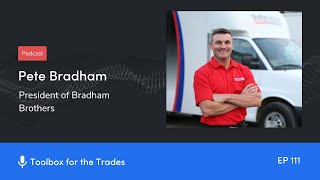
Pete Bradham took over his family's HVAC company in Charlotte when his father got sick. He's kept the customer-first culture while adding electrical services, building a membership program, and aiming for 10% annual growth. He talks about training technicians to communicate better and planning for succession.
Adam, you are the president of Bradham Bros. In Charlotte, North Carolina, an H Vac and electric shop. Welcome to the podcast.
Yes, I am. Thank you. Thanks for having me.
I am so psyched to have you. You actually partnered with one of my colleagues, Mike Persinger, on a marathon story that's featured in our blog, which is all about how you onboarded with service titan. And Mike, he is not. He just has says nothing but great things about you. So I'm so excited to have you on the show and to share your story with all of our listeners.
Thank you. Yeah, it was a. It was a great ride and it's still going on, and Mike is an awesome guy and I. I really appreciate him.
That's awesome. So I'm going to kick off this. This episode the way I kick off every single one, which is. How did you get into the trades?
Yeah, actually, I was. I. I can kind of say I was born into the trades, you might say. My, My dead. And my dad and my uncle started the business a few years before, after I was born. So, you know, it was just kind of like a lifestyle. I didn't realize it until I got quite a bit older and, you know, started thinking about, yeah, what am I, what am I going to do with my life? And, you know, sort of reflected on, you know, following those guys around for a long time and, you know, sort of at first decided, hey, maybe I. Maybe I want to be a mechanic. And, and eventually kind of figured out that, you know, hey, this is a pretty good deal being in the trades and, and watching my father and uncle sort of work hard and halfway enjoy themselves. So, you know, I follow him around for quite a while and, and, you know, grew up in it and just, you know, said, hey, yeah, this is, this is for me. I sort of figured out when I was, you know, fairly young that I had a knack for using my hands and, and kind of being, you know, troubleshooting and. And things like that. Later, I, I grew to understand that, you know, talking was part of the job. So, you know, it. That's kind of how I got into it, sort of evolved into it, but, you know, did consciously make the decision to follow in my father's footsteps, which was pretty exciting because, you know, dad was a great role model to me and a lot of fun. So, yeah, that's. That's pretty much the story.
That's awesome. You said that you were thinking about being a mechanic. You looked at this shop that you basically grew up in, and then you. You said, and I Then I realized talking was part of the job. Was that something that was a little foreign to you?
Yeah, yeah, yeah. I'm, I'm not naturally a talker. I'm generally pretty shy. As I've grown older, I've kind of grown out of that. But yeah, as a, as a young man, I, I, I didn't speak much. You know, I kind of stood back. I guess it, it naturally came from following my father and uncle around. They, you know, they, they took the lead at most of the time, but eventually it got to where it was my turn to do that. And that's when I kind of realized that communication is a, a big part of our trade. And I learned it, it was definitely not a trait that I naturally had. So it was fun. It's a lot easier now. I can, you know, kind of reflect on those first times I had to actually communicate with a customer myself. And you know, it was a little, little uncomfortable, but you know, I grew with it and went on. So communication is a big part of this trade.
I agree. And that's why I'm so happy that you mentioned that it was something that you struggled with because so many techn do that and so many folks that get into this trade because they're good with their hands. And then when you find out that this really is a people business, I've heard that there's a lot of, oh, crap moments. You know, for lack of a better word.
No, you're, you're exactly right. You know, it, it is a big part. And you know, I, I try to teach these young, as they're growing, growing up through it to know, just be natural and just, you know, don't really overthink it. Just, just go in like you were talking to and you know, of course, obviously you gotta have the answers that you need to have so you don't have those old crap moments. I don't know what I'm talking about. You can't fool people with that, but just go at it naturally. It is a, I would say it's probably at least 50 to 60% of a technician's job is communicating with that customer because that's where they have to build that trust and build that rapport with them so that you know, you can do a good job and have excellent customer experiences, which is big for us.
That's great. Yeah, I know. Customer service is such a big part of your business and something you really rely on. You guys have, I think I have it written down here, something like almost 1200 Google reviews and this was. I pulled these numbers just a few days ago, so it might have crossed that already. But I'm curious, when you were trying to learn the talking side of the business, what really helped you? Was it following scripts? Was it just role playing? Was it just doing it over and over again?
Yeah, it was mainly doing it over and over again. I was always really uncomfortable with role playing. I couldn't figure out how to be natural. But I will admit, even though it was really uncomfortable and unnatural to me, it sort of broke the ice. It got me past that part of somebody looking at me and me being embarrassed of what I say or something like that. So it sort of got me, you know, that, that portion, it kind of got me past it. Scripting naturally, just sort of did that in my own head, just as sort of an introduction and things like that. But, you know, just. Just kind of going. Repeating it, you know, definitely, you know, working through some issues of being able to answer a question sort of was, you know, a stumble at first, but, you know, after a few of them, you sort of, you know, find yourself at talking to just like a friend. And that, that really is kind of where it kicked in, is where I learned how to talk to someone as they were my neighbor or just a good friend. And. And then it just came natural. You didn't have to worry about it after that. So, yeah, that's great.
But I have to give you kudos. Obviously, I am a natural talker. I was raised this way. But for me, the idea of like fixing a unit or doing some of the stuff you do in your day to day is just blows my mind. So, you know, I feel like it's always important to. We kind of have these natural talents, but cultivating new ones and cultivating new skills are always in our wheelhouse. We just have to kind of throw ourselves into the deep end, for lack of a better metaphor.
Yeah, I totally agree with you. You know, things that come unnatural to us and that are sort of out of our comfort zone. I feel like that's, you know, when you get out of your comfort zone a little bit, that's where you really can grow and, you know, develop those skills that are important to you. It's just, you know, it's uncomfortable. But I've learned that that's where the positive comes out of it being out of that comfort zone.
That's great. Well, speaking of getting out of your comfort zone, thank you for giving me that wonderful transition. So you took over management of the business from your father, so you basically grew up in the business. And then there came a, where you took over for your father. And I'm curious, when you took over leadership, what things did you want to keep the same and what did you want to change at Bradham Brothers?
Yeah, when, when, when I sort of took over, it was kind of a surprise. So I didn't have, you know, a whole lot of time to sort of think about it in the beginning. So it was, you know, it, I knew as, as I was growing through the business that, you know, my, my dad and uncle had a great thing going on. The, you know, one of the biggest things that was important to them was, you know, doing the right thing all the time. No matter whether it's sacrifice customer, not customers, but the financial side of the business, you know, you did whatever was right. So that was one of the big things that I really wanted to ensure that as we grew and changed through leadership, that we would keep those, those strong morals and foundations that, you know, do the right thing. Customer service is 100% of our goal is to give them the best experience that they can. So, you know, I wanted to keep that part of it and I wanted to keep it as a family. You know, I wanted to, you know, stay involved as much as I can and keep all of my leadership that, that I would bring on as family and, and you know, not be stuck in an office, not, you know, away from the people, away from the customers. So that those were some big things that I wanted. But of course, when, when they were involved in the business, they did a lot of stuff. They did pretty much, you know, five or six people's jobs. And, and I knew that wasn't going to work for me because there's only one a Pete. So yeah, I had to, you sort of had to sort of pick some leadership, unfortunately, really quick. But fortunately it was some really good decisions on my part. I got lucky and kind of stumbled apart, you know, through that part. But, you know, I, I, I definitely wanted to, to keep those morals and things like that and, and keep the company growing and, and keep a good brand and, and, and things. So, you know, not a whole lot of change, but it, after it all had set in, it, everything had changed, which was okay, of course.
And I want to commend you for being able to respect your father and your uncle for what they built, but also being able to identify, oh, I don't want to do that. Like, I don't want to have five or six jobs. So finding those opportunities where you could be more efficient and really Focus your attention on what matters as an owner.
Yeah, that's, that's exactly what I wanted. You know, I watched them do so many things and work such long hours, and the long hours doesn't go away. That's okay. But I really wanted to focus on trying to grow our business and, you know, keep, keep that growth going. So, you know, that, that's what allowed me to find those, those people that take care of those things and know that I don't have to go behind them. I don't have to, you know, figure out if things worked well. They did that and it allowed me to kind of push forward.
That's awesome. So you also mentioned that you took over leadership pretty suddenly. So you really, again, having to throw yourself into the deep end. How did you keep yourself motivated and going during that, really, I'm assuming, tumultuous time, Transitioning from, I don't know what position you were at before you took on the leadership role, but transitioning from being a member of the crew to being the person who leads the crew.
Yeah, when, when, when, when I sort of transitioned for, in the beginning, my, my father became sick. So it was like a light switch. And, you know, it kind of got through in my lap it to be like that. But at the time I was halfway selling. I was still going out selling, selling jobs and things like that and, and being really involved already in decision making, which was great. But, you know, it's a whole lot different when you're bouncing ideas off of people that, you know, can make the decision. It was a lot easier for me. I just, I was kind of like a. Not necessarily yes man, but yeah, I kind of ensured that, yeah, that, that's probably a great way for us to kind of be directed. And you know, it, it was a, it was a scary transition at first because it was so unexpected, but honestly, it was, it was the best way for me. And I, I, I didn't see it coming, but it worked. Great.
Thank you so much for sharing that. I'm so sorry that that happened to you because that must have been emotional in addition to just jarring, having to go into this new position. And the reason I wanted you to bring it up is because a few episodes ago, not a few, actually, it's probably a couple dozen episodes ago, we had someone talk about the importance of secession planning because unfortunately his father passed away very suddenly and he had to take on this leadership role. And they were, the family was basically doing detective work to figure out how things worked. And so I just wanted to Bring that attention. It sounds like your father was still able to. Was still there, but he just could no longer run the business. Right.
Yeah, yeah, you know, it was, it was tough for him, but luckily for me, yeah, secession plan is, is, is definitely a thing that has to be looked at. Even if you have partners that are in the business, I feel like it's still extremely important because yeah, you could, you definitely could use lose that key component. Even though you know you'll make it, everything will be fine. But you know, having a plan is, is much easier and yeah, it was a little scary but you know, it worked out well.
I'm glad. And by the way, that episode that I referenced, which is not a few dozen episodes ago, it's actually episode 49 and this is going to end up being episode 111 or 12, I believe so quite a few episodes ago. It's with Trevor Lively. So if anyone's interested in learning more about succession planning, I highly recommend that episode. Episode. So, pivoting back to Pete, you taking over the business, champion making some changes that you thought were best for you as an owner? I'm curious, how do you champion growth and development at Brad and Brothers, especially as a second generation owner?
Yeah, I just, I just sort of do it a little differently than my father and uncle did. You know, we, we, we never really looked at growth a lot because it just came to us because the city was growing so quickly. There was just plenty of work for everybody and luckily we were one of the few that were sort of in our area. I mean, there was a bunch, but my dad and uncle had such a customer base from a long time. You really never had to look at growth too much. So when I came, it's, everything changed. Our city had grown. People, you know, we had, we had sort of come out over recession so a lot of companies had popped up and, and were, you know, taking some of that thing. So we sort of had to step back and adjust and say, okay, yeah, word of mouth is great, but there's a lot of different things that we have to do now. We, we, we never advertised. We did nothing of that sort. We had no budget for advertising and things like that and branding. And when, when, when I sort of took over, it was time to say, okay, yeah, we got to get our market back. We got to continue to grow and get out of that. I call it the comfort zone because, you know, we had such a bank that we were very comfortable. And it's great, it's comfortable. You don't have to worry Too much. But I feel like if you're in that comfort zone, you're not growing and you really had to push forward. So I slowly started to, you know, change things and channel that brand awareness and you know, just really focus on that and you know, build a great brand. And we've been able to sort of keep that brand that they worked for so long to keep and yet it shows up in our reviews. And that's, that's kind of how I addressed it. Slow, calculated, not trying to change the world in, in, you know, two years. So just take it slow, calculated and push forward and still build that break grand brand.
I love that answer. And I remember reading up on Brad and brothers and the history, especially what Mike had written, which is we referenced at the top of this episode and word of mouth referral was so important to your dad and your uncle because obviously that's your reputation. If you can keep the business running on your reputation alone, what a testament to how great your business is. But I commend you on being able to look at the future and see, you know, we are comfortable here, but we do have to grow or else we're going to be, we're eventually going to lose this business to folks who are advertising and who are building up a great brand. So I commend you on having that foresight. How did you start bringing folks in from the existing team who are maybe used to doing this comfort zone, being in this comfort zone and convincing them to go along with your way of thinking?
Yeah, you know, we, I can, I can clearly remember it. There was a, there was a day when, you know, things had somewhat settled. It took, you know, when, when we had to transition, there was a little time where, you know, it was little upsetting because my father was such a big figure in the company and everybody had those relationship with him. He, he knew everybody. He had nickn names for everybody. So, you know, it was a little bit of a shock to the whole company. And you know, I sort of waited and you know, let everybody sort of digest sort of new things and, and I can remember it clearly. We had a, I had a big meeting with some of my leadership that was slowly, you know, introducing him because when, when it all went down, it was very sudden, but I had to bring people and say, look, you got to help me with this right now. And we, we had a meeting and just said, look, listen, we, you know, there's this, this is all news. We got to get out of the comfort zone. And luckily for me, I think, you know, not everyone is. Is. Is as. Let me think of the word, sort of charged as I am and excited. But these guys that are around me, they jumped right in and they were excited to grow and, And. And grow themselves, which was great, which helped the company tremendously. They. Things they were, you know, they. They knew that they had a great foundation to build off of and, and really dug in and work and said, you know, we're gonna. We're gonna make this better for us and for our customers. And it was. It was nice. I mean, it. It's great to have good team just behind you and excited to. To break new ground and, you know, it was a lot of fun. I love this business.
That's great. I actually you said something at the beginning of your answer that I've never heard before, and you said that because it was so sudden, I really had to take it slow because the change was so sudden. And the people that worked for us had such a great relationship with my father. It's almost like everyone had to grieve the loss of him, even though he was still alive. The fact that he wasn't with the business created unstability. A sudden loss that the whole company had to acknowledge before you were ready to implement changes.
Sure. Yeah, exactly. You know, that, you know, we had. They all had such a good relationship with my father and my uncle. You know, my uncle hung around for a while trying. It was. He was at the time where he was ready to retire before my dad got sick and he hung around, but, you know, it was kind of like a, you know, slamming of the door, you might say. They had such a great relationship and. Yeah, they had to essentially somewhat mourn that loss and. Because it's uncomfortable. It's, you know, when someone has been there that you've been relying on and sort of bouncing your. Your decisions off of, and they're gone. Yeah, you. You have. They're missing. And you're missing something. So you kind of have to sort of take it all in. Let's get past it, let's work through it and go to the next step. And they all did that, so it was great.
That's great. That's great. But I just. I have to just give credit. Like, I love that you were really knowledgeable of that and that they were going through that. And I think that's a big lesson for folks listening to take in, especially folks who maybe are coming in as new owners, maybe they're acquiring through pe, what that transition looks like. Because one thing I notice in the trades is that they really are these really cohesive network of friends and family that really develop this strong bond and relationship. And whenever you inject change, you really have to mourn the loss of what used to be in order to make space for what's. What's gonna happen. So I'm just so happy that you were really mindful of that.
Oh, thank you. Yeah, I did it. I didn't even know it was happening. So, you know, I. I don't know the answer to that. It just. It just happened. I was. I was able to sort of bring it all together, but, you know, it just naturally happened. So, yeah, I'll take a little bit of credit, but not totally.
You know, I think we'll say it' a testament to your character. And sometimes we don't realize we're making decisions when we make them, or we don't realize we're making choices when we make them. And when you reflect back on them, you're like, oh, I'm so glad I did it that way. Something to think about. So I know you leaned on a bunch of mentors as you were going through this growth stage, as you took leadership on. What are some of the biggest lessons you learned from those mentors that you would like to impart on our listener?
The mentors I had were all kinds. You know, my dad and uncle were big mentors to me, but I knew that, you know, they needed to do different things. So I leaned on a lot of mentors just in my community, in other trades that we had been involved with plumbers and things like that. So, you know, one of the biggest things that those mentors were, you know, ensured me that I was capable, that, you know, hey, you know, you can do this. This is not some supernatural sort of ability that everyone has that we all have this inside of us to do these things, and if we just focus on them and work and, you know, not try to sort of change the world in three weeks and just really focus in and work hard. Most of my mentors were, you know, sort of that, you know, just reassuring that, look, this, you can do this. You've. You've. You've done this. You've been involved in this industry for so long, you'll become very eased with it once you get past it. Because, yeah, I was nervous. I mean, I'd been in the business for a very long time, but, you know, it never really rested on my shoulders like it does after that. So, you know, it was good to have those guys that reassured, reassured me that one that you can Handle it. You know, it's not, not impossible. And then, you know, as, as sort of we went through it, you know, they, anytime I would call them, they would, they would answer the phone immediately. And 99 of the time I had the answer already, they just reassured me that, yeah, you know, that's you're thinking, right, which was great. You know, mentors are, are there for you. They, they definitely will take you out of your comfort zone if, if, if, if they're right for you, which is something I'm very uncomfortable with, but I have learned to accept it. You know, comfort zones. Get out of it. If you're there, you're not growing.
Comfort zone. Get out of it. That's the rough title of today's episode. I really, I love that your mentors were just like, don't worry, Pete, you can do this. So many people have done this before. YouTube can do this. And it was really just instilling that confidence that you needed to go to the next level.
Yeah, yeah, it was great. They, they're, they, I still talk to them every, you know, every month. I, I, I try to talk to these guys. You know, I have, have about four of them that I sort of bounce things off, around. And also, you know, even people inside of our trade, you know, they, they're always willing to help if you just reach out and just keep an open dialogue and, and keep those egos away from, from, you know, from your personality that, you know, hey, they're a competitor. But honestly, there's plenty of work out there for all of us and we can all work together. And the main thing is just keep those open. Open to, you know, different opinions is what I, you know, that's the way I feel like it should be.
I agree. So you mentioned that, you mentioned that one of the big changes you made was you didn't wear those five or six hats that your uncle and your dad did. You, you delegated a little bit more so you could maintain focus. What were some of the really big, if you can think of any, like, changes you made to the operation to maybe the types of services you offered or even, like, you know, you can talk a little bit about how you changed the way you guys advertise. Like, I'd love to know what was one specific thing that you really did differently that yielded really big results.
Yeah, probably one of our sort of biggest changes was in our maintenances. We really started trying to, to focus on, you know, getting that repeat service. So when we're, you know, sort of have some downtime to really push forward with those and try to keep our, our memberships coming in because, you know, they're, they're a big, big part of our business in the slow time. So that was one of the biggest ones. A lot of things sort of evolved when, when I took over the business, we only did heating and air conditioning. We didn't do anything outside of that. So, you know, I wanted to grow with that and I still want to continue to bring on other trades. We brought on electrical, you know, about five years ago, which is a big, big part of our business now. Just, just a lot of things come out of that that, you know, work for both, both of those trades. Our customers really like it. On our advertising, you know, we, we had nothing before. I mean it was 100% word of mouth, so it was really uncomfortable. The first, one of the first things that we did was we put this big billboard up and of course we, you know, we feel like we, we all need to put our faces on billboards in, in the, in the advertising world. And, and you know, that was one of the, one of the big things you put your, put your picture up on a billboard, which is really uncomfortable because, you know, I don't, it, it just seems unnatural to ride down the road and see yourself up on a billboard. So sure, that was, that was, that was kind of our, our soft step into, into that and eventually we had to sort of market ourselves a lot more on, on a lot of social media and things like that. And you know, those are probably the biggest sort of aha changes that we sort of went through is, is doing those, those different things which was great for our business no matter what.
I love that. I think that's great. And I could totally relate to having your face somewhere where it wouldn't normally be. When I put my face on the toolbox for the trades website, I was like, oh, I don't like this. So I 100% relate. We talked a lot. We've covered so much great ground. Pete, I would love to know where will Bradham Brothers be in the next five or ten years?
Yeah, Bradham Brothers will continue to grow. We'll, we'll take our same slow, methodical approach to growth is, you know, and, and make it as comfortable as probably, you know, as we can, you know, right now. Where I, I, I expect to grow. I don't really know how to gauge our growth. We can put numbers to it and things like that. But you know, in the next five years, I can see ourselves, you know, growing 20, 30% as. As far as gross revenue and things like that, at least I shoot for 10% every year. Of course, we all understand that. Right now we're getting ready to go through a little bit of maybe some type of economic issues, so we'll see how it goes further generally, luckily for our trades, those economic troubles can be a little uncomfortable, but not nearly as uncomfortable as others. We can still have some good growth in those times. So, you know, I look to. To grow the company 20 to 30% in the next five years. And. And, you know, I look to, you know, I don't. I. I always want to sort of step back and say, keep our brand and keep our customer service up. So, you know, I just. That's how I gauge our growth is. Is comfortable, very slow and methodical and keep that brand. Right. So, you know, I'm. There, there's. I personally feel if you're not growing, you're dying, so we have to continue to grow. Yeah.
Tommy Mellow has said that same thing to probably on his first episode with us and then also on several webinars. He's done with me. If you're not growing, you're dying, which I think is. I think it's true. All right, this has been a great conversation. Pete, I have one final question for you. Has nothing to do with the trades. If you had to choose a song to be the soundtrack of your life, what would it be?
You know, that's. That. That can be somewhat of a. I feel like I'm in a circus most of the time. But, you know, just. I don't know if you've. If. If you. If you watch much or see much of what. It's called a mashup where they take two songs and sort of make one. One song into it. I would probably say I have more like a song for my life would be sort of a mashup that I would probably lead off with welcome to the Jungle by Guns N Roses. Because it's. It's definitely a jungle. You never know what's going on. And then I would probably say mash that up with probably. I think the song is Toes. Toes in the sand by Zach Brown Group.
It's.
Yeah, yeah, yeah.
I think it's just called Toes by Zach Brown Band. That's a great song.
Yeah, yeah. It would be mashed up between the craziness of the jungle and then the. The sort of serenity of laying back and. And sort of saying, man, I. You know, I've got a great life. And that. That would probably be. That would probably sum it up between those two mashed up together.
That's incredible. And if we have any talented DJs in the toolbox for the Trades listenership who want to create that for us, please do. Pete Bradham, thank you so much for joining me for Toolbox for the Trades.
Oh, thank you very much. It's such a pleasure, and I really appreciate it.
More from Bill




Capturing the 80%: How SmartAC’s Gen-2 Targets Non-Membership Homeowners | Podcast Ep. 296

Build better customer data with every booking in ServiceTitan | TAD Tune-Up Series

The Biggest Change for Roofers Coming From Other Roofing Software to #ServiceTitan?

