Happy Calls: Let Your Customers Hear Your Smile | Podcast Ep. 189 | Toolbox for the Trades
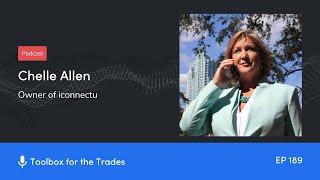
Podcast episode (Toolbox for the Trades Ep. 189) featuring Jackie Aubel interviewing Shell Allen (founder/leader of I Connect You) about 'happy calls'—customer experience follow-up phone calls made 24–48 hours after service. The discussion covers the origin of I Connect You (started July 4, 2009), what happy calls are and example positive/negative feedback they surface, operational best practices (smile while calling, dedicated reps, outsourcing benefits), measurable business benefits (technician retention, $60k–$100k incremental equipment sales for a typical client), data/analytics (ServiceTitan integration, Google Data Studio, live reporting), and Shell’s mission partnership with World Vision to end extreme poverty by 2030.
Questions this video answers
Within 24 to 48 hours after the service.
July 4, 2009.
Approximately 1.2 million calls.
About $60,000 to $100,000 per year.
Hello contractors and welcome to Toolbox for the Trades. My name is Jackie Aubel and today I am chatting with Shell Allen, the leader at I Connect You. Shell and I spoke all about happy calls, what they are, what benefits they provide and how you can get started making them. I hope you enjoy this conversation as much as I did. Shell Allen, you are the leader at I Connect You. Today we're going to be talking about how you turn happy calls into cash and we're going to talk about how happ are the best thing since thank you. Welcome to Toolbox for the Trades.
Thank you for having me. Jackie, it's been such a pleasure to get to know you and I'm a huge service titan fan. So amazing.
Well, thank you so much for saying that. Angie Snow, one of our subject matter experts, told me that I had to talk to you and when I did the pre interview with you, that was proven true. So I am so excited to get into it with you today. Why don't we hop into one of my, you know, core questions here which is how did you get into the trades?
That's a great question because it was such a surprise to me. I was doing high level connecting work in my local market of Sarasota, Bradenton, meeting with CEOs, asking the question, what do they need? Where's the pain point at this moment in time? And they would fill in the blank with payroll signage, new building, I need this, that or the other thing. And I had a lot of tools in my toolbox that I could connect them to people I trusted. So I would make that connection. And then we were getting money from both sides. Both the CEO that we solved the problem for would pay us for any savings they had and then the new service provider would pay us for the referral. And suddenly we were actually making money on what all of us naturally do in networking, where we're referring each other. But we did it on a much higher scale, thus the name iConnectu. And we started in July 4th of 2009. So we're celebrating 15 years coming up soon in 2015. One of our CEOs that we serve said he wanted to do more with us. And I asked the question, what's missing? And he started talking about these happy calls and that he had had somebody on staff for $9 an hour and they could see the value in them, but they weren't really weren't consistent. So I said, sure, let me give it a try. So I started making happy calls for him. And my very first call was to a Widow who had just lost her husband and she had a terrible cold. Jackie, she was just sniffling away and we cried together over the death of her husband. And at the end, I assured her that she could call Aqua Plumbing and Air for anything. Didn't matter if it was related to AC, plumbing or electrical. She could call for anything. We would know, have a solution that we love taking care of widows. And then I sent a personalized note from the team with a little bit of tea from for her. And you know, to this day, she's still using us two or three times a year and calling for anything that might happen. And gosh, that has been since 2015, so almost 10 years we've been making happy calls for Aqua and it just grew. So who would have ever thought I'd be taking care of the ac, plumbing and electric companies across the country? You just never know how things are going to work out. But I absolutely love the owners that we serve. They're committed to excellence. So it's been fun.
Very cool. Very interesting that you were able to create a career out of professional networking, essentially. And Sarasota, Bradenton, that's in Florida, right?
Right, yeah, Southern Florida, south of Tampa. Great market.
Awesome, awesome. And also like a very hot market, pun intended for H vac. So I would love to know, for the folks who don't know what we're talking about, what are happy calls and why do you make them?
Sure, sure. A happy call is a customer experience follow up phone call that should be done 24 to 48 hours after a service is performed. And the core of the call is to say thank you. In our case, we ask what can we improve upon? And the client, the customer of the client will just start speaking about all the wonderful things that happened or he or she will tell us the things that aren't so wonderful. So oftentimes in business we say it's the little things that matter. And what I have found, Jackie, is that this happy call allows my clients to actually hear the little things that they wouldn't know if they weren't making the call. And I'm pretty sure it was somebody in this industry about 20 years ago, introduced to the AC companies. I wish I knew his name. He's no longer with us. I don't think he went around telling everyone they should make these happy calls. So when we meet new clients, we say, you know, were they happy outsourced happy call girls. But you know, our husbands didn't like that name. So, you know, because we would be happy call girls. So we, we changed it to customer.
Experience follow up phone calls, outsourced happy girl calls. Happy call girls. Oh, man.
Well, if they don't, they're not my client, you know.
Fantastic. Hilarious. Hilarious joke. Okay, so you were mentioning it helps us find out the little things. So give me some examples of what some of these little things may be, whether they be positive or negative.
Sure, sure. Like for instance, they would never let us know in a survey or on. Rarely. I shouldn't say never because I'm sure it's come out. But rarely would they say in a review that the technician may have body odor or used language that they shouldn't have on the site or were particularly late. Maybe for instance, the technician pulled up into the driveway and then stayed in the truck long on the phone and started billing a little early. Those are the little things that customers notice, but they don't really say anything to anyone unless we were to ask. That's the negative things that come up. But the good things, the little things, like the technician took time to get to know our puppies. Or I had one the other day where they said, you know, my 8 year old sat and watched the technician, the plumber, work underneath the sink and asked the tech a hundred questions while he was working and he never lost his patience. And I just thought that was so beautiful because, you know, we really want to inspire the next generation of technicians that are coming up into the workforce. So, you know, those are the things that are coming up in these calls. Calls is really beautiful, amazing.
So this is kind of some examples of what folks can expect when they invest in happy calls, when they choose to make it. Is there anything else that you think people should be aware of if they choose to go down this route?
Oh, yeah, there's countless returns. And I think the biggest thing that's happening right now in our market is that our clients are having difficulty finding technicians and keeping technicians. So one of the best tools that we have is that we record every single phone call and we keep track of what we call hero calls. And hero calls is the above and beyond. I mean, they are not just saying that Joe did a great job. They're saying that Joe talked to my kid and Joe talked to my animals. And Joe is amazing and he's welcome in my home and I've invited him to Thanksgiving dinner and those big ones, you know, and so we mark those as hero calls and we place them in a special place for our client to use anytime they want to. Jackie, Sometimes they have what they call tech rall. And they bring all the technicians in and give them breakfast, and they play a call for each of the techs. And we can track who has the most compliments down to the very least. And it creates this amazing camaraderie and competition between the technicians as to who can get the most compliments. Oftentimes it's not the same person that's getting the most Google reviews. So we have a lot of tools out there like pulsem and Podium that track how many. How many compliments and Google reviews the technicians are getting. Oftentimes it's not the same people are getting. We're getting compliments for when we talk to them on the phone. And it really lifts that person up, that maybe the silent or what seems to be the silent type, they're the ones that are getting the most compliments when we're talking to the customers. So I think that is the greatest tool in keeping your technicians. For the clients that actually use that tool, their turnover rate goes down significantly. I mean, talking 20, 30% people, when they feel appreciated, they won't leave. And this is a great way to keep them appreciated.
Why do you think that is? Why do you think there's some people that are down to leave Google reviews and some people that are more. Are more willing to chat on the phone?
Well, I think it's a demographic issue to begin with. You know, I think that our older audience that we serve doesn't really understand the value of the Google review. So they love when we call and talk to them. And of course we talk as long as they want to talk, which can go on for quite some time. We don't, we don't bill by the minute. We bill by the call. So that's fun. I think also that they're surprised that we want to hear from them. And so, you know, they may say, I already left a Google review for Joe. And we say, oh, thank you so much. I haven't gotten to see those yet today, but I'll give a double compliment here for Joe because we got to talk today and he did a good job. Oh, my gosh, he was amazing. And then they'll just go on and on and on about all the things that Joe did, and it's just. It's just awesome. So now Joe comes in out of the field. He's had a bad day. The manager can pull up. This is a live report, so he can see if Joe got any compliments that day and pull a recording. It's right there. The recording would be if it was really good. And he could play it and say, well, you know, Joe, I know you've had a tough day, but as you go home to your family, here's what Mrs. Smith said about what you did today.
Amazing.
That's why people are willing to stay with the companies even if somebody else is offering a dollar more or two dollars more per hour. You know, keeping these technicians happy is great. Also finding the ones that aren't doing so well. Very commonly when we start making calls for someone, Jackie, we discover that there's a miss in either a technician, but oftentimes in either customer service or management. So I've had a lot of owners. Yeah, they've discovered that who they thought their customer service manager that was answering problems may not be doing such a good job. And that's revealed in these happy calls. You can see that there was a problem and whether or not it was addressed.
And would an example of that be, say, well, when I talked to the CSR on the phone, I explained about this and the tech had no idea as to what job it was. So like there's a miscommunication between the office and the techs out in the field.
Could be something as simple as I told him my filter was a 10 by 10. Why didn't he have it on the truck? Simple little things that when a CSR is new, they very well could miss. They don't understand exactly what's happening for the technician out in the field and how hard it is to make four or five stops a day and have their truck properly done. It could be we reveal parts problems and ordering system problems. We reveal opportunities for new sales. I love those. So what that looks like is we can see in a client, especially with Service Titan, they tag it as a replacement opportunity. Right. And the CSR is doing a really good job of teeing up a possible change out. Then the technician goes out and does his diagnostic and he's teeing up an opportunity for a change out. And whether or not the customer bites, we still don't know. Right. Well, clearly they haven't or we wouldn't be making the happy call yet because we could see that it was going to be an opportunity for a sales call. So when we're making the happy call, we can see that in Service Titan that there's all these opportunities. They have a 12 or 13 year old unit and it's been tagged as a replacement opportunity. And here we go now in the happy call we say, so I can see that Joe sent out an estimate for a new unit. Do you have any questions. And you wouldn't believe how many times they actually do have questions or they didn't get the thing that Joe was sending through Service Titan. So we can send it again and we can send a message to whoever does handle follow up to say we spoke to Mrs. Smith and she is still very interested. She's going to get two more quotes tomorrow. You should follow up with her two days from now. She's seen the estimate. She understands it all these little tiny things that you wish you knew after you send out an estimate. It's amazing when they have Service Titan. Now I have clients that don't have Service Titan and we don't have nearly that much information. We can't see when there was replacement opportunities, except for that it's an older unit and then we start teeing it up for them. So on average, I would say that a typical client will have an additional 60 to $100,000 in incremental equipment sales per year just specifically as a result of the happy call.
That's incredible.
Yeah, that's a couple trucks.
That's a couple trucks. And also, so you're getting this information that's telling you basically how your CSRs, how your technicians are doing. So you're discovering coaching opportunities, you're discovering opportunities to prai technicians in front of their co workers, get them keeping them staying there. And you're also, you're basically being another sales touch point, more or less, which is so cool. So there's so many opportunities here when you invest in a good happy call program. So I'm curious what makes a good happy call?
The smile.
Yeah. You know, so interesting. You can really tell when someone's smiling on the phone, can't you? Versus when they're not.
I have listened to at least 100,000 phone calls as a part of. We've made 1.2 million calls. And I've got a certain number I've got to listen to every week to be a good manager of this company. You know, when I hire someone, I actually tell them they need to put a mirror up in their office. And I will be listening for the smile. And I said, we have a great advantage right now that we are not on video calls. It's coming, so you might as well go ahead and make sure you look good and you feel good when you're making this call because I'll be able to tell. And I give them an example. I do the script with or without the smile and they can tell the difference. So I have let people go from my Team Jackie for not smiling on the phone, which is incredible.
Yeah.
Another thing that I think is really, really important is that they don't have anything else to do that they're not. When I do help clients do this in house, they can hire me to help them bring an in house person on board to script, and I'll listen to the calls and I'll help them do it well. And what we find is, is there's people in and out of the office all the time, and they have six or seven other things that are more important than a happy call to do. It's low in the totem pole. Therefore, it doesn't always get done. Most of my clients will say we just didn't do a very good job if we just have a dedicated person that's working two or three hours a week to make all the happy calls. I have one girl that makes 150 to 200 calls a day. It takes her about five hours. And her last call is as good as her first call because she's been doing it eight years now. She's been doing it for that particular client for eight years. Phenomenal. Happy call rep, customer experience, follow up representative. I think that those are the two things that really make a difference, is that that's all they do when they're doing it and that they put a smile on their face. The rest of it can come together as it goes. We're blessed to have a really good, robust reporting system that we put together for our clients. Everything's live. They can see the results immediately. They can pivot their business daily if they choose. They can see which technicians are shining and which aren't. But if you're just doing it in house, you would just do it inside service titan and you would have good notes and there would be. It would be a good start.
Yeah. Yeah. So I just really want to. Really want to hit those two points. Smiling and not being distracted. I can totally see how if we're trying to do happy calls in house, a way that they can fall apart easily is, oh, we have to start giving the person who's doing happy calls some additional work. And they're trying to multitask and they're not actively listening because you. You can tell when someone's not really listening to you on the phone or when you're speaking with them.
For sure. I can tell you that no one's been hired just to do happy calls in house. It's they're doing the CS work or they're doing the dispatch work and Then whoever drew the short straw is having to do the happy calls. Never a manager. Never a manager. It's just impossible. It's the lowest thing. And that's why we're the only ones out there that I know of that actually does this for this industry.
Interesting.
Well, because if I had a full call center doing it, or if everyone that works on the Iconnectu team is virtual. We've been virtual for 10 years. So when Covid happened, we didn't have to pivot at all. Jackie. In fact, I was doing blog postings like this on how to effectively work from home, how to set up your home office so that you can't see your laundry and everything else. We're experts at it. We're experts at making sure it's quiet. And I had a woman once who had. Who had small children. She had set up her office in one of her closets, in a room where if her kids opened the door to the bedroom, a squeak would occur. So she had, like, a second or two to get off the call graciously before her kids opened the door and asked her for a question. It was amazing. And so, you know, if you're in an office environment, people are gonna stand in front of you and want your attention, no matter who you are. And I think it's another great advantage of outsourcing it. You know, I think it's also good that we don't have technicians that we prefer. We don't have our favorite techs.
Yeah, this was something that came up when you and I first talked is like maintaining the integrity of the happy call.
And.
Yeah, so just tell me a little bit more about that. Like, the benefits of this being outsourced is, you know, you don't have kind of that bias. So tell me a bit about that.
Well, I think it's. We've seen it proved that when they bring it in house, if whoever's making the happy call has a friend and that friend is getting complaints, they're not going to put it in their report. They're just going to tell their friend, hey, you know, Mr. And Mrs. Smith didn't like X, Y, and Z, but it's not going to go to the owner, necessarily, because they don't want their friend to get in trouble. So when they outsource this to us, yes, we are friends with the company, but we don't have preferred technicians. And the integrity of the information goes straight to the owner. We answer to the owner. Typically, Jackie, if it's a huge company, we're going to answer to whoever the C level top person is. Because what we discover is, as we move farther down the chain, while the dispatch managers love us, the install managers love us because we're helping them to discover the problems. Then they can go back to the technician and ask the question before they call the client. So there's three sides to the truth, right? His, hers, and the real truth. And so I have found that when people outsource the happy calls, whether it's to us or there's no one else out there doing it, but really concentrate on it, the integrity of the data is golden. It's worth so much information. It's the truth as the customer sees the company. It can't be sugarcoated. They might not like it, but it is the truth, you know?
Yeah, I can definitely see the benefits there. And, you know, I wanted to talk about something else, too, because we're talking about you actually calling on the phone, and I'm a millennial of the famous generation who is, you know, destroying the phone calls along with a bunch of other things. So in your experience, do people actually answer when you call?
I have heard that the people even much older than the millennials have said, well, no one's going to answer the phone. I'm like, oh, we'll just have to see. And the millennials will actually answer the phone and appreciate the call more than anyone else. And six out of 10 people will answer the call, and it goes to eight out of 10 when we're calling Inside Service Titan. So it's because they can see that it's the number of the company. We're not using a different number, even if it's the same area code. We're using a number within the company. They usually have you programmed in the phone. They answer the call, and they love the call. I had a gentleman once out of the Sarasota market who answered the call and had this great back and forth with us and just was exuberant. And I said, sir, I have to say, you seem thrilled to talk to me today. Is there something I should know? And he laughed and he said, actually, I love getting this call. It makes my day. And I said, what about it makes your day? And he said, you just are. You guys are great listeners. I really like your company. I love this brand. I love that you call and say and actually thank me. And you always make me feel better. And I said, okay, that's awesome. And it just surprised me. And I have found that with the millennials, they're surprised and then they're thrilled to give us their truth when we ask the question, which we'll get into the script in a minute. When we ask that particular question, they are more than willing to say, whatever it is, what their truth was. Jackie, it's huge.
Amazing. So let's get into the script. What does a script of a typical happy call look like?
Well, there's a couple tricks of the trade. So if people are paying attention to what we're doing, they may want to grab a pen and paper because they can completely use these on their own. But I would say that the first thing that you want to do is say and introduce yourself and make sure that they know they're on a recorded line, and then ask the question how. How they are, because they will naturally say how they are, and then ask how you are doing. So then you can tell them how you're doing, and then you can ask the questions specific to the job. So it might sound like, hi, Jackie, this is Michelle from Aqua Plumbing and air on a recorded line. How are you today? And you say, I'm great. How are you?
I'm doing well, thank you. How are you?
Yeah, I'm awesome. Thank you so much for asking. Then I pause, and I say, yeah. I say, joe was out to do X, Y, and Z the other day. How did everything go?
Oh, it went great. He was super. He was super efficient. He left my place very clean, and he was very nice to my dog.
Oh, I love that. I'll be sure to give Joe a compliment from you. Here's the money question. You ready?
Mm.
What can we improve upon? Or is there anything we can improve upon?
Okay, interesting. So in this case, now you can start like, well, no, he did a really great job. Maybe I wish he had told me a little bit more about what he was doing to my sink or my air conditioner or whatever.
Exactly.
Exactly.
It's a little thing you may not have said, and it catches you off guard because I really do want to hear if there's anything we can improve upon. Right.
Yeah, we often get.
No, no. There's really nothing I can think of. You guys are awesome. We've been using you for years. Or I get, well, do you really want to know? And then I'll say, absolutely. My name is Michelle. I'm responsible for customer experience. You can tell me anything. And I would say one of the things that I connect you does well, and I would hope everyone would is the. Is honoring the quiet, the pause. I have learned that if you pause for longer than three seconds, people Will fill the gap with their truth.
Interesting. That's also a therapy trick.
It's a therapy trick. I don't know if I learned it from therapy. Probably so. But it's true that inside that gap, they really want to know if you're really going to listen. And so the beauty of a good, happy call has some excellent pauses, especially after we say thank you. So, you know, it might sound a little bit like, hey, Jackie, this is Michelle from Aqua Plumbing and Air. An emergency line or not. I was just calling to say thank you for allowing Joe to come out to your house recently. How did everything go? Or we pause after the thank you a little bit. Or if it's a maintenance call, I always say thank you so much for allowing us to service your beautiful home. Joe was out this time. How did it go? When it comes to these maintenance calls, these are. These are our core clients. These are the ones that are really paying the rent. Right. We rely. Our clients rely on those maintenance accounts. And we can take them from whatever number they are and double and triple them through what I call cross selling. I could talk about that in a minute. But we have to honor that client.
Yeah.
Because they are the most important piece other than change outs. They are the most important piece. Right. Because they're the bread and butter. So oftentimes, Jackie, people will come on board to us and we'll ask them, how many maintenance accounts do you have now? Let's just say 10,000. And we. And maybe all those maintenance accounts are related to the AC department. And you can say, okay, are you selling electric and plumbing programs? And they will have something, but they aren't really pushing it other than in their marketing. So what we tell them is every AC client we talk to that doesn't have a plan, we're going to talk about it all. And anyone that just has ac, we're going to let them know we now can cover their electric and their plumbing. Would they like more information? And inside Servicetitan, we can create a task for the right person to email and follow up to get that maintenance call information sold.
In addition to all of the other things Abbeycall is achieving, you're also using it almost as a marketing touch point to let them know about the other services the company offers.
We call it a cross sell. We actually track how many conversations we have promoting the other things that the company does. It's beautiful. Absolutely beautiful. That particular client in Sarasota had 10,000. That's where that number came from. And now they're close to 20 or 30. And then they created an electrical department and they had like 50,000 clients. And all of them started to understand that we had this electrical department and quickly they needed to add more techs. They started with two or three techs. They're up to 10. Because every single person we talked to, we said we now have an electrical department. Do you have anything in your home you need done? Sometimes the person would say, well what do you mean? What, what do they do? They fix GFIs, they hang lights, they change out the smoke detectors that are high in the, in the, in the ceiling. Do you have anything like that done? Absolutely. I do have them call me. And then it just turned into more business.
Amazing.
Yeah, yeah, it's a really good way. And if we're not doing the happy calls, someone should be doing that and taking those opportunities also.
Art Amazing. And I would love to know like what do you. Because obviously every day you have a plethora of different types of calls. How do you prioritize which, like which jobs to make happy calls for?
That's great, great question. It definitely has morphed over the years. And everything that I connect you does is customizable. So if a client wants something different than this, we understand and we'll give anything a try. But change outs are by far number one. Right. If they're going to invest $10,000 or more, we need to understand how that went. And every single client has a different timeline on when they want that done. Some want it done within a week of the final walkthrough. But someone had done a month, maybe even two months later after some of those electric bills have come in and they can see the savings and we can even take it one step farther and collect a review for carrier or train or whoever the man manufacturer was. Tell us about the unit. Is it quieter? Are you seeing the efficiencies? And we can take that a little bit farther for the, for the manufacturer. So those are the most valuable call by far. It's a tie up a little bit between service and follow up for sales after that. So we'll just go the service route because that's the easiest thing we can see daily on the thank you report. We prioritize those and in service Titan we can see if they have a follow up appointment if parts needed to be ordered, then we can tell that another appointment is to be had. So we don't call that until it's completely done. Another great example of servicetitan maintenance accounts are really, really important. We can see those very simply within ServiceTitan, we can see that they're a member. Beautiful colors of gold and platinum and everything that needs to happen for the tagging system is awesome. And so we pull those up, get right into the job and make the call from the job. So our notes go right there, attached to the job inside Service Titan. It's just my first client ever got Service Titan. I was so intimidated. I was so afraid. I'm like, I'm going to break it. And I have tried and I have been unable to break it, which is awesome. And the thank you report is the report that the Happy call comes from. It's everything that you need and it can be easily customized and has everything that we need. So we just run that report. Our client doesn't have to send us anything. The calls are just done.
Great. I love that and thank you for being so nice about Service Titan. Appreciate that. It's always really cool to see that the company I work for makes an impact in so many different ways. I would love to know a little bit more about how you examine and analyze all this data you collect from Happy Calls. Because in my brain, and I'm very much more of a words speaking person, not very much a numbers person as anyone can, anyone who's worked with me can attest to. But I would love to learn some of your best practices for categorizing this data and how you kind of put it all together and show it to leaders so they can make changes and they can take action on it.
You know, I'm. I'm both a numbers girl. I've loved numbers my whole career. I ran Marriott's before I owned my own business, so I was the GM and had budgets and all that stuff. So I really love the numbers, but I also love the words. And we have an amazing team of programmers. One in particular has taken all the data that we work on in a Google worksheet. So it's live. Our clients can literally watch us make calls, both inside Service Titan and in our workbook. And all this data gets then transferred into something called Data Studio. Have you ever heard of that?
Google Data Studio.
Yeah, Google Data Studio. And so that data can then be sliced daily, weekly, monthly, quarterly, and laid over year over year over year within the company. And then we can break it apart by departments and let them compete. And we can see which technicians have the most reviews and we can see the trends on how many problems they had one year over another or one quarter over another. Because we're coming into summer, so we might just want to overlay one summer over another. And Data Studio allows us to do that easily. But the best thing that we have is we do this thing where we overlay our clients by percentage of call. So some clients are much bigger. We have service titans that we serve that have 150, 200, 500 employees, and then we have these little guys that have 15, 20 employees, and we want to still overlay who's doing better than others. So we make it a percentage of conversations. So If I make 100 calls and I talk to 60 people, of those 60 people, how many compliments did you get? Did you get 50 compliments today or 40 or 30? How many problems did you get? How many times did we sell more information? Did we get any of those maintenance leads we talked about? Did we cross sell any of that cool stuff? Did we get, you know, all these things that we can do annually at the end of the year, we take all our clients and overlay them and kind of let them compete a little bit on who's doing better than others. We let them compete a little bit on who's doing the best in different categories. And they're always humbled and they're always surprised, because oftentimes it's the little guy that is beating out the service titans. And I'm calling them the service titans, not just because I'm with you. They really are beasts in these markets. Absolutely dominating the market. And that business, when you have that many people doing so many different things, it's like a mythological creature. And I love serving the small ones because they have different challenges, but they definitely have a simpler system and.
Yeah.
And then the bigger guys, we really have to take care of the. The customer service level is. It's just critical for all levels. But it's fun to see all the different levels of people we take care of.
It's so interesting because I would imagine with a shop with 15, 20 people, you can make changes a little bit more quickly. You can be a bit more nimble. Whereas with behemoths that have, you know, hundreds of employees, things go a lot slower. So you have to really be strategic about how you give them data and feedback. And, you know, they also have to be strategic in how they lay that out and how it gets disseminated to their team. So it's definitely interesting challenges, but good to know that companies of all size benefit from happy calls.
We assume our people are not looking at a single one of our reports, Jackie.
Really? Tell me more about that.
They just are. They're too busy and at the end of the day, it's not their job. Right. If we were sitting in their office and we saw a problem, we address it. So we have a system of sending them time sensitive emails for the big issues. And then we have a level of leadership that's watching trends and always looking to see the data that we get and we can bring it to their attention and say, hey, lately we've noticed that you've had an upkeep in complaints about your pricing. Did you guys increase your pricing? Yes, we did. All right, we're seeing an uptick in complaints. I don't think it's a problem yet, but we'll watch it carefully and that is priceless. But we don't assume they're ever looking at our reports. They don't have time. We just take care of our clients. I love it.
I love it. So say, I've never done happy calls before and this conversation has inspired me to start doing that in earnest. Where do I get started? How do I get started?
Well, you want to run some type of report that has name, address, phone number, email, and what service was performed. And if you can see the dollar amount, that helps also. So in Service Titan, it's just called the thank you report. And you take that report and export it into some other Excel spreadsheet and you start making your calls inside ServiceTite. So actually you can go right there into the thank you report, click the job number and open it. Look at any notes that says you should or shouldn't make that call, click on the phone number and dial right through and use our script.
Perfect.
Hello, you're being recorded. Thank you. What can we improve upon? Have a nice day. Thank you for being a part of our family. Whatever your tagline is, make sure you finish up with it, especially on a voicemail. Voicemails, if they're 4 out of 10, are getting a voicemail. We want to make sure that we're actually whatever the initiative is that month, that season for the client, we're mentioning those on the voicemail. So we ask our client on a regular basis tell us what's going on. Do you have any initiatives? Oftentimes they're doing a complimentary water heater clean with something else, you know, flushing a water heater alongside changing out your filters, whatever it might be. And so we talk about that on the voicemail so that we're getting more bang for our buck, you know.
Awesome.
Yeah, it's really, it's not hard. Yeah, everybody can do it and they can and we will help Anyone do it in house Also awesome.
So I know this is very important to you, so I want to get to it. At iconnectu, you say you're changing the world one call at a time. So tell me a little bit about that.
Well, you know, this company started by when I was getting suited up in my office, Jackie, I was. The commercial would come on with the starving kids in Africa across. You may recall those. And it just wrecked me because I would have just run past. I was a runner at the time. I'd run past the grocery store and they were throwing away tons of food. Yet across the world, people were starving. So as I connect, you started. I really wanted it to be about changing the world. Every company has the ability to do some type of big give back. And I knew this was going to be an international company, and so we chose ending extreme poverty as our mission. My goal is to have grandkids someday that don't know what extreme poverty even is. And we found in World Vision, a company that we trust to take a dollar. For every dollar we give, they extend, expand it to $1.82. And they're committed to getting clean water around the globe by 2030. And we're committed to growing to a thousand clients by 2030. So for every new client we bring on, we take a child out of extreme poverty alongside World Vision. Thus, we're known as the thousand baby lady. When I speak somewhere, they say, oh, you're the thousand baby lady. And I'm like, yeah, I guess I am. Because I want a thousand kids alongside world VIS by 2030. That's our goal. That's our big, audacious goal, as they say. And we're very proud to be partnering with them. They're right here in the Seattle market where I live, and they're doing a phenomenal job. They really are. So when we talk to a client about their numbers, we have their at least quarterly talk. We start by showing them what's going on with the kid that they co sponsor with us. And we go to their letter and their picture and we if we get a letter in the mail, we'll send it to the client to put up in the break room and to just be part of truly changing the world with every single phone call we make.
Amazing. What an incredible vision and mission for your company. Thank you for sharing it, Shell. This has been a wonderful conversation. I really thank you for diving deep with me into happy calls. And I hope that this was inspirational to everyone listening. So I realized this right when we started the interview, but I didn't want to throw you off your game. I normally ask an icebreaker, and I completely neglected to make one for us for the. For our interview today. So I would love to conclude this interview by asking you just generally, what are you listening to? What are you reading? What are you watching right now? Movies, books, TV shows, whatever. Whatever. Whatever your favorite type of media content is. I would love to know what you're. What you're delighting in at this moment.
That's cool. Well, I'm a Chosen fan. Have you heard of the Chosen?
No, I haven't.
Well, the Chosen is different. It's. It's crowdfunded. So. So it's an app and you can cast it up to your television. And it is a story of Christ's life in the last three years before the Passion. It has so much humor about what it probably was really like back in that day, and it's very poignant. So I have to warn you. So I've been watching that and binging that quite a bit. Season four is just about to end, and I go back and watch them over and over again because I just love Jesus. Our clients are amazing. Our. Our workforce is amazing. But if all of it changed tomorrow, I'm okay. And in fact, in our logo, it's two used to. To get to make the eye of God.
Very cool.
Yeah.
Cool little Easter egg that we discovered. I'm glad that I asked that question.
Thanks, Michelle.
Thank you so much for being a guest on Toolbox for the trades today. I learned so much. I know our audience did as well. I hope I get to see you again and wishing you the best. Thank you so much.
Thank you for having me, Jackie.
It was awesome.
More from Bill




Capturing the 80%: How SmartAC’s Gen-2 Targets Non-Membership Homeowners | Podcast Ep. 296

Build better customer data with every booking in ServiceTitan | TAD Tune-Up Series

The Biggest Change for Roofers Coming From Other Roofing Software to #ServiceTitan?

