Hitting $1 Million by Learning From Failure | Podcast Ep. 117 | Toolbox for the Trades
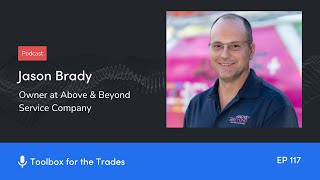
Jason Brady built Above and Beyond Service Company in Edmond, Oklahoma from a 2016 job loss to a million-dollar month. He rebranded with pink trucks to reach female customers, hired leaders like Chelsea, Jordan, and Rose from outside the trades, and credits ServiceTitan software and peer mentorship programs like MAP for the growth.
Jason Brady, you are the owner at above and Beyond Service Company in Edmond, Oklahoma. I'm so excited to have you on the show today. Welcome to Toolbox for the Trades.
Thank you for having me.
I am so psyched to talk to you for the audience. They already know I do pre interviews. I chat with my guests before I invite them on the show. And you had so much cool stuff to talk about. I have just been so eager to chat with you. But before we get into all of that goodness, I want to know how you got into the trades.
So I got in the trades. My dad was. Did heat and air and electric, a little bit of plumbing. So back when I grew up doing that, it was good for you. Instead of like, now where it's like, you know, child labor law violations, those kind of things. I got the fun job, as anybody who grew up in the trades would know, whether it's Ken Ghetto holding a flashlight for his dad, you know, can't hurt my feelings. Kind of like him. If it was a head to get under a house and solder pipes, that's what I did. If it was, hey, you need to climb some stuff, you know, climb a roof and take refrigerant up there or whatever. I mean, that was my job. So that's how I got in. I did that with him. And I swore I was never going to do this as a profession.
Excellent. You know, you just had me think of something because so many people. Come on, they say that exact thing. Oh, yeah. I was my dad's apprentice at a very young age. And I always want. I just thought of this now. Did the moms know? Like, did your mom know that you were soldering pipes?
Oh, yeah, yeah. No, I mean, like, my job was to get under all the houses and do all those things, like, spiders don't bother me. I mean, any of that, like, you know, just. It was what it was. I was more scared of my dad than anything that lived under our house.
Same, I think, which, you know, sorry. Dad will talk about that. He listens to the show. We'll talk about that later.
But that's another show.
That's another show. Dad. Dad. Fear of dads. Anyway, total tangent. You said you did not want to get into this business at all. What made you change your mind?
So I worked for a company for quite a while, and we had the oil. The economic downturn in oil, and my job was eliminated. And I just thought, you know what? I'd kind of been doing it on the side. I had my contractor's license because you know, I was like, it's working. I didn't want to, like, burn somebody's house down. Something bad happened, lose everything. So I thought, you know, I'm gonna. I'm just gonna do this on the side. And when that happened, I thought, you know, I'm just not gonna put my life in somebody else's hands. And I'm just gonna, you know, I'm gonna make sure that if I don't win and I don't succeed, it's because I failed.
It's not because some boss somewhere didn't make the right call financially or some economic downturn, just like you said.
Correct.
And when did that happen? Did that happen around 2008, 2009?
That happened actually in end of 2016, first of 2017.
Okay. So actually around the same year that I first moved to Los Angeles, and service titan had their eye on me. So that's very fun. What made you come up with the name above and Beyond Service? Well, it was first above and Beyond Heating and Cooling. Right. And you've recently.
Mm. You know, because I'd had, like, I'd seen people out, and I had that idea, like, everybody who's a technician and know some stuff, like, I can do it better than my bosses, and, you know, I want to make sure that I'm taking care of my customers. And it was just kind of one of those naive things of, you know, I'm going to do it better. And I want to go above and beyond for customers, which we do. And that is a big part of our company. You know, we want to go above and beyond, but it's also about, you know, for us and for myself, it was really about kind of setting a new standard of customer service and quality.
Yeah, I find that is definitely a common thread between most service setting customers I speak to, especially customers like yourself who use the. Use every asset of the software has to offer. And really goes, like you said, above and beyond. Most of the contractors I speak within this community are really dedicated to customer service, and I really think that's what sets them apart from, you know, checking a truck and what have you. I want to talk because you recently hit a big, big, big milestone. I want to find out how you did it. But before I do, for anyone who's watching on YouTube, they will see that you have a hot pink background behind you with what you can see as big mistakes. I'm wondering if you could tell me a little bit about the hot pink and the phrase behind you.
Okay. So we. Our old logo. I had A person design it for me. I was thought it was cool. Was this little house that had a little, you know, it looked like a house and had above and beyond heating and cooling and had a little chimney with an old electric plug coming out of it. And, you know, I just thought, oh, this is so cool. And, you know, that's what I want to do. And I was at a dealership with Chelsea, who's my internal ops manager now. And this sales guy kept coming up and he asked me like four different times. He goes, so, man, what's. What's it going to cost me? Get a roof on my house? I said, man, I don't do roofing. I'm at do heating and cooling. Like, see the shirt? He's like, oh, well. He came up four different times. And after the last time, I told Chels, like, we're rebranding. That's it. Like, I called Crystal Williams at, at. At. At Lemon Seed and I was like, I need a rebrand. This is what I want to do. I need it to be something different. We all talked. I wear pink. Just I kind. I mean, I like the color and I think it, you know, definitely is, you know, I don't know, it's just comfortable thing for me. It doesn't bother me to wear it. And so we talked and that's how we came up with the pink.
I love it. Well, it's very eye catching. And also I agree with, you know, it's a color that people remember. We did an episode with the pink plumber a couple like a couple dozen episodes ago. We've also had Crystal Williams on and she is just a pro at marketing service company. So I'm glad to hear that you partnered with her. She's my favorite, but so funny about how those logos that we think really work out. People are like, oh, wow, so you do roofing. You're like, oh, no.
Well, and we really talked a lot, I mean, internally about like, what's our. What's our demographic? And honestly, most of the calls we get are from women. It's not the men calling me. So we got a call this morning. So my husband fixed a shower head and tried to do something and now everything leaks. I need you guys to come out. I mean, like, I think 98 of the calls we get are from women, so it's not from men. And so we realized, you know, let's appeal to the base that we have versus trying to be something that we liked. And so it just really honestly worked out.
Yeah, actually one of the very first episodes I did on the show was with Susan fru and she talked about marketing to women because they are the ones who are actually making the call. They're the ones that are typically in the house when the technician comes in to make the repairs. So how can you create your branding to target that key demographic and make them keep them at ease, especially with a stranger coming into their home?
Totally agree.
Yeah. All right, so big milestone. You recently hit your first million dollar month. Congratulations. Cue the confetti, cue the party poppers, all that stuff. How did you do it?
So it was a lot of hard work, a lot of teamwork, Knowing our numbers, knowing call count, knowing where we were in the month, knowing that, you know, everybody was going to have to contribute to get there. You know, it's. I think it's a milestone. When you start out, you don't think you're ever going to hit. You think, oh my gosh, I would never hit it. I would. I'll never be able to do that. You know, I've heard of people doing these million dollar months and I just thought, yeah, I mean, that, I mean, I don't know what it takes to get there. But, you know, a lot of it was having the right team in place, having the right culture, having empowering people. You know, the sign on my wallet says I would never promote a man who has not made mistakes, and big mistakes at that, otherwise he is sure to be mediocre. All my guys know we're gonna fail. We're gonna do something wrong and we're gonna take care of it. We're going to make a mistake and we're going to make it right. We're going to make a bad decision and we're going to learn from it and we'll make better decisions by empowering our guys. It went from me having to answer every phone call and be involved, to me empowering people and trusting that it happens. I mean, we just had a leadership meeting right before this, and our leadership team, like, I'm sitting there going, wait a minute, who's doing this? Who's doing what? Like, when did that happen? And I have a lot of those moments throughout the company. And so I think that, you know, that's how we did it. It wasn't something great I did. I mean, it was having the right people in the right team in place.
Yeah. And we're going to talk about your leadership team in a second because I absolutely love the story of how you built your leadership team. But before we do, you said something that I Found really interesting, which is I never, when I heard people were hitting million dollar months, my immediate thought was, oh, I'm never going to get there. I don't even know how you begin to do that. Talk to me about how you as a leader shifted your mindset to turning that from I don't know how you even get to be to do a million dollars a month to making it possible. Was that something that happened consciously or just happened as you kind of had more faith in your team?
So I think it happened. So I think the first thing that had to happen is as a leader and as somebody in there, I had to be open minded. And so that was the first thing that I did was I was very open minded about what we had going on. I'm very open minded about different ideas, different processes, different thoughts. You know, it's not all Jason's way. It's what ideas do we have? People come up with ideas all the time. Sometimes we implement them, sometimes we don't. But I think that was probably part of it. The other was I was willing to have mentors and coaches willing to listen to people tell me like, hey, this is, you can do this and you can do this better this way and you can do this better this way and that way and being willing to hear how bad I suck at some things and owning that, you know, hey, look, you don't have this figured out and you suck, but you can get better if you do X, you know. And you know, I was looking at MAP goals today because I'm part of, you know, the MAP program now out of California. And so I was looking today going, man, it's going to be a rough meeting in January, this Friday. But I know that I've had, I've had better months and I know that I'm going to have better, better months coming on. And I just realized like where I need to improve and where the company needs to improve and where I'm willing to take mentorship and move on.
Yeah, tell me about the MAP program. I've actually never heard of that before.
So it's management Action program and it is basically they have a unique leadership style. They're like EOs, some different people. The difference with MAP and probably the thing that helped me, ironically enough, is on the disc profile, I'm a high D, which probably would surprise anybody that's ever met me. Not at one, least bit at all, really. No. Everybody who, I mean if anybody was service type that knows me would go, yeah, Jason's a D, A Heidi. Yeah, so the MAP program basically focuses on the leaders first and then on the company. So, you know, I was in a room, there were 14 people in my class, and I had to hear what other people thought of me and what my weaknesses are in ways that I fail. And I had to hear that in front of 13 other leaders of companies, whether they were CEOs, general managers, operations managers, whatever. Talk about a very humbling experience. I mean, it was difficult to sit in there. What I realized were other people had my personality type, had exactly the same faults, and I got to see other faults that other personality types had that frustrated me and realize, okay, these are the ways we work about it. So now we've used that to try to figure out how to communicate with each other. And then the MAP program really just keeps us on goals and helps, you know, they have a really cool way to kind of, you know, solve meeting problems. Your solve problems in the company with really short meetings that don't get drug out for two hours. And so that's kind of what we do. And I mean, that's what it does. It's been really, it's been very, very impactful for us. Everybody on our leadership team except for one person who goes, I think next month has been through the MAP program.
Got it. So I've talked about DISC before, it's been a minute. But just for anyone who's coming to the podcast for the first time, DISC is a personality assessment that they implement in organizations all over the country. And you get assigned, basically it's D, I, S, C, how much of each letter you are. And I apologize, I cannot figure, I can't remember which one everyone is, but I too am A, like high, high D, like 95. And I understand, correct me if I'm wrong, because you're, you are more recent to this, but I understand that means laser focused, get it done. Like kind of one track mind thing. And tenacious, you know? Yeah, yeah, really tenacious. Really just like. And I could see how that could be exhausting to some other people who are a little bit more analytical, perhaps a little bit more social. What were some of the faults that you heard that were really humbling to you?
That I can be emotional and let my emotions overrule my sensibility. And so, I mean, that was probably number one, which was honestly very, very difficult to hear because I am very passionate, you know.
Yeah.
But what I've realized is, you know, and it's helped because a lot of, I mean, time has gone by and I'm repairing some of that, you know, damage that I've done in the organization by being different and, you know, hearing guys calling like, hey, this is what happened. And, you know, you know, the service manager told me to call you because this is what he thinks, but he wants me to double check. And, you know, it's just. It honestly has helped communication happen more, and it's helped it become more transparent and honestly helped me commit, connect better with the guys. So as rough as it was and as. Even now, as difficult as it is to talk about, it was very, you know, it was very, very eye opening and very beneficial for me personally.
Thank you so much. Yeah, of course. No, thank you for opening up about that. I, I right there with you, very emotional myself. It took me a couple years in my career to really get that, to rein that in and to not take things so personally. So I'm with you on that, but it sounds like you've really gone above, above and beyond. Hey, how many times am I gonna do that in this call? Really gone above and beyond to. To, you know, correct for that. So that's fantastic. Now, speaking of disc, this came up when we originally spoke about your leadership team, which you pride yourself on having a very strong leadership team. So I would love for you to tell me a little bit about them. You already mentioned one by name, Chelsea. So tell me about your leadership team.
Okay, so we have Chelsea, who Chelsea started with me as she was the first CSR hired. Prior to that, it was myself and a guy who did some sales, and we thought we were just killing it on the phone. And I hired her and really didn't know how to train her. And so I reached out to Chris Hunter and was like, hey, buddy, I need somebody that can really help me. Like, just. I just need her to answer the phone. And so he referred me to Angie Snow. And Angie Snow called me, and Angie Snow's like, hey. And he's like, she's like, yep, I can take care of it. And, you know, we'll help you out. And so Angie and her work together, which was great. Angie Snow is probably the best CSR coach I have ever met in my life, probably on the planet, hands down. You know, Angie started helping her learn how to answer the phone and do things and kind of gain confidence. And so one day I used to have a couch in my office, and Chelsea came in and she sat down. She was like, so, I need to talk to you. And I was like, okay. And she goes, I need you to, like, not get mad, not say anything, and just kind of listen. And I was like, okay. And she was like, so you have me in here answering the phone, waiting on the phone that just ring while you try to do everything else in the company. You know what you, what you should do is let me help you out and do some things for you. Because I'm just sitting here like, I've watched every video on egia and power sling pros and this, and I like, I've done everything I can possibly do and I'm just sitting here like doing nothing. So it was very eye opening, which is funny because Chelsea does not like confrontation. So she's like totally opposite on the disc profile, but she felt passionate enough that she had to talk to me. So Chelsea went from a CSR to we hired more CSRs to the CSR manager to now she is on our leadership team and part in our internal operations manager and just keeps moving up. So the next person I hired, ironically, which was also a woman, is Jordan. Jordan was a bartender at a restaurant called Charleston's. And I went in there about every Friday or Saturday every week. And I mean, she just like, she was part, you know, she'd be a part time manager. She trained people. She'd be at the end of the bar and that little, you know, they would be slammed and that drink ticket machine would just be spitting out tickets like it was broken. And she was cool under pressure. No problems, just working the whole bar. She had other guys in the bar working with her, two other actually men who really smoothed the customers. But she's the one that like ran the bar. And I was like, man, I really want her. So I would. There was a dishwasher kind of by little bitty bar dishwasher. Everybody's seen them by where I would sit. And so she'd sometimes come over. And I remember I was there on a Friday night and I was like, said, hey, Zach, so what are the specials tonight? And she looked up at me, she's like, really? You can't ask me. You don't think I know what the specials are? Like, what's the problem? And I was like, oh, yeah. I was like, this girl could work for me. So I. We talked and you know, I tried to. We cultivated that little relationship and the playfulness. And, you know, I asked her when I was like, so what are you gonna do? Like, are you gonna like be here forever? And she's like, no, I need to get a grown up job. And so she worked there like seven or eight years. So she started when she was like 16.
Oh, wow.
And so had been there. And I said, well, you know, I've got this opening for csr. And so she came to interview and it was kind of an awkward interview, which is not Jordan at all. Jordan's very outgoing and she was very. She could tell she was uncomfortable. And so it's about three, four days later she decided she did not want the job. It was like, I was like, hey, so what's up? And she's like, I just don't think it's for me. And I'll be honest, I was devastated because I knew Jordan would be a rock star. No doubt about it. Jordan would be a rock star. And so I kind of thought about it. It's like, man, what am I going to do? So I didn't go to Charleston's for a month. And I went in and go. I went, sat where I usually sat and she came up and she was like, and we laugh about this now. But she came up. She goes, where have you been? And I was like, you know, Jordan, there are two women who have broken my heart. The first was my high school sweetheart. And the second was you. When you didn't take that job, you broke my heart. And she'd had a rough day. She almost started crying and she said, is that job still available? And she. I said, yeah. And she said, I'm going to turn in my notice. And literally turned in her nose. And so she's gone from a CSR to now. She is our CSR manager. She handles everything call center related, whether dispatch service, resource managers, you know, CSR follow up coordinator. She handles everything office phone, customer interaction related, plus does processes for us. Like, she is just a rock star.
That's awesome. Now I'm curious because you guys laugh about it now. Did Jordan tell you why she didn't take the job in the first place?
She was nervous and didn't think she'd be a good fit. And she said, you know, I really only took it because you guilt tripped the crap out of me. That's what she says. To which I have to say, you know, I resemble that remark.
You mean resent I resent that remark?
No, I resemble that remark because I definitely resemble that because I definitely guilt tripped her because I wanted her. I mean, I was like, you are such an asset. Like, I have to have you on my team.
Yeah, Well, I think that says a lot of things. That says kudos to you for being able to recognize that talent in a different environment. And we'll talk about that in a second. But also for Jordan you mentioned she'd been working there seven or eight years. She was 16 when she started. She was, like, in her early to mid twenties when you approached her. You know, I think there's something to be said about imposter syndrome, especially jumping from different careers. So restaurant work to service company. They're both technically serviced, but they're. They're different. Like, the way they operate. You're not making drinks. You're, you know, managing calls and all of that stuff. So I like how while you may have guilted her, you also kind of gave her that assurance of, no, I really believe in you, which I'm sure meant a lot to her. In high, probably, most likely at the time. And still today, as she's become CSR manager.
Oh, I mean, for sure. She talks about how, you know, we were talking, you know, we'll go out as a team, and after work some days, and she, you know, we were asking her. It was kind of a hard day. And she's like, you know, I was like, man, this was a hard day. She goes, honey, this ain't nothing compared to how Friday nights used to be at Charleston's. Like, this isn't even bad yet. And oddly enough, she probably makes now about twice what she can make Charleston's with all her incentives and bonuses and all that. So it's been a really good fit for her.
I'm so happy to hear that. Now, speaking of this, why do you think it's important to hire folks from outside the industry as you build up your company?
So I'll tell you why. So we hired an accountant. Her name is Rose. She is our controller. She is the bane of my existence. She tells me no on anything I want to do. Pretty much. Um, we fight a lot. Um, she's probably gonna be, like, the person who makes my HR file the thickest, um, just to be honest. And she came from a huge company. And for me, having people on our leadership team that are mostly from other industries, they bring different perspectives. You know, all us H VAC people are electricians or plumbers or whatever it is. You know, we. We all know how we've done it forever. We've all done it this way. You have people from outside of the industry that go, hey, there's a better way to do this. You know, when Rose came in, she was like, you guys are so messed up. You totally lied to me in my job. Like, you did not tell me it was this bad. And I'm like, what are you talking about? She goes, no, no, no. This isn't Right. And this isn't. And they've helped us see, like, you know, especially like with Roach, she's helped us find a lot of areas of improvement. Ways to be more profitable, ways to decrease costs, ways to make employees happier. I mean, it's a whole different mentality from outside of the industry versus in, because we, you know, we know how we've always done it. You know, when the first company went flat rate, everybody, I'm sure, thought they were crazy. That'll never work. You know, when we wrapped our. Our trucks pink, everybody laughed. The guys at the supply house made jokes. They don't anymore. I mean, we have customers that tell us all the time, hey, I see your pink trucks everywhere. They were telling us that when we had two, you know, and now there's 23 of them running around town. So, I mean, I think it is, you know, having that diversity from outside of the. Outside of this industry and also having a very diverse disc profile for us helps us get a lot of different input into the company. And. And honestly, it's helped us create a better workforce, a happier workforce, a more engaged workforce, you know, a better place that people want to work. I mean, I just think it's been a huge asset to us, more than a detriment.
That's incredible. And I don't. Can't remember if we actually clarified this, but your leadership team, the person who administered your disc testing said that you had one of the most diverse disc profiles among a leadership team that they've ever seen, correct?
Yes, he said that we were the most diverse. He'd never seen somebody, you know, because we have five on our leadership team, three are women. And he had never seen such a diverse profile.
That's pretty cool. And really speaking to how you can pick exactly what you said, teach me what you've learned from other industries and bring it here, see what can translate there. And I really think that's the mark of an agile and dynamic leader. So I want to give you kudos for that. I also want to say, when you were describing Rose, have you ever seen Disney's Monsters, Inc.
Yes.
You know, the Mike Wazowski, like, the. The woman. That's exactly what I picked up. And you're like, she is the bane of my existence.
Yeah, that. That. That pretty much sums it up. Like, I'll be like, hey, I want to do this. No, I think we should do. No. Well, I haven't. No. Like, I don't even get the idea out. And she's like, no, I mean, like, I get like one out of every 18 yeses. I mean, I live my life on the major league baseball rule. You know, if you hit.333, you're a first ballot hall of Famer. Like with her, I'm like, you know, 0.75 or something. Like, I just do not do good. I don't have good ideas when it comes to her.
Oh, my goodness. Oh, my gosh. All right, so another thing we talked about is you believe it's so important to be open to change and other viewpoints while running your business. And I would love for you to give me an example of how this is manifested at above and beyond so far.
So when I started, probably like all contractors, I, you know, I thought, man, new construction is the way to go. We're going to make all this money. You know, had this whole idea. Ironically, I rode down to Houston on a jet that a distributor had with Chris Hunter. And Chris Hunter and I got to sit, you know, next to each other and talk quite a bit. And it was, you know, listening to him talk about his business and talking with him at the, at the, you know, at the factory tour and all that. Like, I learned a lot from him. I learned a lot from him in those couple days. And, you know, he asked and got information from me, of course, too. But he really made me realize, you know, hey, you're, you're really not doing this the right way, which then made me start looking at other ways to do things and other people and other opportunities. And luckily he, he sold his business and started go time. And so then we started using some of the, his coaching and, you know, just kind of grew from there and, you know, that kind of became it. And I think it's, you know, one of my favorite sayings is contempt prior to investigation is ignorance. And so I feel like I need to be willing to look at all viewpoints, whether that's the guy who, you know, know, takes care of our warehouse or, you know, a guy who is an apprentice or whatever it is, somebody that comes from another company or another industry. And listen and, you know, we have had probably the best success doing that. We have people that work for us that came from the oil field. We have a guy that was, worked for the state in probation and parole. He was a supervisor. We have people from just all kinds of industries that we've brought in that we're training and have trained and that honestly have just taught us a lot about business and, you know, employee engagement and customer retention and just, I mean, things that you just Wouldn't think about.
Yeah. Just sat next to Chris Hunter on a jet. He changed your whole trajectory.
I mean, honestly, he did. I mean, he and Angie Snow. I mean, honestly, did you know Angie Snow? Angie and Ryan. That was the Western Heating and Air was the first company I visited.
Wow. Really?
First company. And learn. I mean, learned quite a bit from them.
Yeah. That's where Tom Howard got his start, too. It's actually so fascinating. The more I learn about this community and I get introduced to new people, everyone's just connected in some way. It's like, you know, some weird six degree. Instead of six degrees of Kevin Bacon, you're six degrees of Chris Hunter. Perhaps.
Perhaps.
Fun game for me to do.
Yeah.
I have a few more questions I want to ask you. Jason, this interview has been so great, and I just want to thank you. You told me about a time you took a plumber out to lunch, and so he's shared something really meaningful to you, and I would love for you to tell me that story.
So this, to me, goes to empowerment and still makes me very emotional thinking about it. So this year, we had one of the hottest summers. We've had no Columbia in a long time. And I had a plumber, and so I took him to lunch, and he was a newer guy, worked here probably, I don't know, three weeks a month. And so, you know, I was just, hey, what's going on? How's your. How's it going here? How's the journey? You know, what are some things we can do? You know, what are. What are things that, you know, you don't like about the company and we can do better and what are some things that we do right? And it. It really, like, really, really made me realize that we have the right people in place. Because he said, what I like is every day, somebody from the office calls to make sure I got water that morning. I have ice, I have snacks to see if there's anything I need, and if there's something I forgot, whether it's a snack or I'm a little bit hungry or I'm hot, they will run something out to me. It will have somebody run something out, whether that's a warehouse person, somebody from the CSR team, a manager, I had no idea that was going on at all. And that I think having a diverse group of people in your organization from different. From different organizations and different leadership walks and empowering them to make decisions for the company, I think you get that kind of leadership and you get that level of care.
Yeah, that's Incredible.
To me, that's above and beyond, not just for our customers, but for our guys.
Thanks so much for sharing that. I know it gets you emotional, but I. It's such a phenomenal story. And it really just speaks, I think, to. As we talk about retention, which we didn't get too much into today's episode, but what it takes to keep great technicians. It's those little things, those considerate things that say you're not just giving lip service to. We're a team here, and we're working together towards a goal. You're actually showing up every day and doing that. So thank you so much for sharing that. I think that's such a wonderful example. So a few weeks ago, I will have piloted a new episode of Toolbox for the Trades where I talked with Ishmael Valdez about the day he almost quit the business. The day he almost threw in the towel and was like, I'm done. And I would love to ask you, now that you've hit your million dollar month, you're chugging along, things are going well. What would you say to any contractors listening right now who are maybe thinking of quitting?
So here's kind of an interesting thing. I'm on some Facebook groups, and I had this guy, actually was talking to him right before I got on with you between the leadership meeting from when we left at lunch to come back to the office, I was talking to him, and his post on that I saw Saturday morning said, hey, I'm in southeast Oklahoma. I'm running a business. I have this many guys, this many vehicles. This is my revenue. I can't do it. I'm ready to quit. I just. I'm looking for somebody to. To buy my company. If anybody's interested, hey, let me know. And I sent him a message. You know, I said, hey, I sent you a DM and sent him a message. I was like, man, I've been there. I know what that's like. Give me a shout. Let's talk. It's like, don't give up. Don't start doing that until you know for sure that's what you want to do. I said, because it sounds like you're frustrated. You know, when I talked to him today and he talked about, man, how he's frustrated and, you know, things just aren't going the way he thinks they should. And, you know, I can identify with that a bunch of different times. And it's kind of interesting because in 2019, you know, we were at a point where I wasn't sure if we were going to stay in business, we were going to lose 130,000 that year. We went to Praxis. I had talked to Trey McWilliams and had been down at his place, and he talked about how, you know, Praxis was so instrumental, and he spent quite a bit of time talking to me. And we. We joined Praxis in November, went down in December, cost us about 30,000 bucks between airfare, somewhere to stay, food, just everything. We took, you know, all the key people from our company down, literally paid for the $30,000, and then only lost 119,000 that year. Like, had we not. Had. Had I not been willing and open to change and realizing I didn't have it figured out, like, that was going to be my moment. We were done. And that was when Covid was happening. That was when things were getting harder. But they helped us kind of figure out all the things that we were doing wrong. You know, I got, like, the introduction to things you need to do differently from Chris Hunter, and then I got some more introductions from, you know, his coaches. And then when we went there, it was like we were doing weekly coaching, and things were just moving along, moving along, moving along. And I'll be honest, you know, that was probably that moment where I was like, man, I'm done. Like, if this doesn't work out in the next month or two, I'm done. I'm done fighting. I'm done with all the hassles, you know, in a lot of it. I'll be honest. Between Praxis and map, the biggest struggle that I had was empowerment, was not empowering people to do their job and not. And there were a lot of things, operationally we did that were just horrible. I mean, I'm not going to say that we had that all figured out, because we didn't. But, you know, those were the moments. And what I learned was I've got. And I tell people this quite a bit. You know, there's this garden hose, fire hose theory I have. It's like a garden hose is like, I don't know what it is. In California, it might be 3 gallons of water there. I know you guys are ration, but where I'm at, it's like 6 to 9 gallons of water per minute come out of a garden hose in. In Oklahoma City, a fire hose can do, like, three to 500 gallons a minute. And so, you know, if you're one of those owners that you have to have everything run through you, you're going to be like, ishmael was like, I am like, the guy I talked to, Destin today was ready to give up because everything has to go through you. If you're a fire hose, you have so much going on. You know, you only deal with the important stuff. You know, it's. Some people call it the 8020 rule. There's a lot of ways to look at it. But, you know, what I realized was there had to be a different way. And once I changed that mentality and started really empowering people and not being involved in every decision, that's when I was no longer ready to just quit every decision day.
Wonderful, wonderful way to summarize a lot of. Actually a lot of what Ismail said on his episode. And, you know, just that constant reminder of we can't do it all. And these, like, us, who are super tenacious, very emotionally driven, you know, we want it. We want to have our hand in everything. We want to make sure everything goes out like that the way we want it to. And. But in order to grow and to scale, you just can't do that.
You can't. The problem becomes. And I mean, Ishmael would probably say this, I. We haven't talked about that. But, you know, when you're doing that, you're the guy that's working from six in the morning to midnight or five in the morning to midnight. You're the guy that's doing everything when you do. And it's funny because, like, I'll come in in the morning some days and see the guys off the warehouse, just kind of check in, see how people are, and then I'll go work out, and then I won't come back to the office for, you know, hour and a half. You know, I'll go work out, shower, you know, eat, come back. And people are like, I see you to finally show up. But I can do that because we have a team that allows me the opportunity to do that because we have people in place who allow me to. If I need a mental health day, if you will. And I just really am just tired. They're like, man, just go home. We got it. We got this. You have to worry. Your phone doesn't have to ring. And it's. You know, I can remember the days where if you called me in the morning, Jackie, if you called me before 10, there was a 99.9% chance by the end of the day my iPhone would not have your call in it anymore because I took so many calls during the day.
Oh, my God.
My phone rang all the time. Like, it Rang all the time. I mean, I. It's. All I did was I was on the phone all day long. But. And to go back to what you said about Service Titan, the more we use Service Titan, you know, once we hit the leaderboard and got on that leaderboard, it was like my life started getting easier because we used more Service Titan. Guys are more autonomous. Guys don't call with questions. They already know the answer. They have that answer. They have those forms, they have those processes. You know, they. Blue collar nerd shared about sweet process. We. I was like, we're doing this. This is what we need to do. We're going to have this filled out for everybody. I mean, the more we've done that, the easier my job has been, the less I want to quit. You know, the less I'm frustrated, the less I'm irritated, the less my high D comes out. Because, I mean, it's. It's just stressful. You know, all these guys that are just trying to do everything, like, it's stressful. And I get it. I could never go back to that way. I'd have to go get a job.
No, the way you just described non stop phone calls all day is my personal. My personal torture. So I hear you on that, and thank you for saying such wonderful things about Service Titan. It's always nice to hear from customers who are truly getting the value out of the software that I represent and I work for. So I always love to hear it. So thank you. I've got one question for you, Jason. This has been such a fun conversation. It's the hardest question I sent you, which is if you had to choose a song to be the soundtrack of your life, what would it be?
You know, I thought about that, and honestly, Jackie, I mean, I don't know. You know, I. I mean, I'm gonna say this, and I'm gonna. I'm gonna throw a plug out in here. So. I live a very blessed life I have. I'm very fortunate to have the people on my team. I do. I'm very fortunate to have the life I have. It's not always been perfect. It's not always been great. And I've not always been the easiest guy to work for, be a friend with, or be married to. But I can tell you that, you know, at the end of the day, I think for myself, life is a lot about being better day after day. And I'll tell you, the people that I respect most at Service Titan, and It's all the CSMs, because those people work entirely for us behind the scenes, they don't always get everything right, just like we don't in our contracting businesses. Service Titan doesn't always get everything right, just like we don't our contracting businesses. But I think the CSMs are the most undervalue, underrated people of your organization. And so, I mean, honestly, when I think about, like, you know, what's the soundtrack of my life? I don't know, it's the people I'm grateful for or the people like the CSMs that work tirelessly to help all the contractors have a better business and better experience with service time.
All right, I will take that answer. You took my question about your, your music taste and you turned it into an incredible compliment to our incredible success team, which I cannot wait to share with them. So thank you so much, Jason. I really, I love this conversation. Thank you so much for being a guest on Toolbox for the trades and for sharing all of your learnings with us. I really, I have no doubt that above and beyond is going to be doing some great things, which, by the way, any kind of goals that you want to put out there in the universe. What's next for above and Beyond?
So our goal this year is to grow by quite a bit. I went to Tom's annual planning event in Las Vegas, and so Tom took our piddly, little, tiny, totally achievable, easily doable five year goal. And we went from like, I think it was 25 million to 63.5 million in five years. And he literally took the time we broke it down. Ben Robles was sitting behind me with John Henry Plumbing, and Ben and I talked about it in depth. And honestly, we have taken that goal, broke it down into years, broken it down into months, broken it down into, you know, average ticket, average install call count. And, you know, now we're on our way to basically growing, you know, almost 50% this year is what we're going to do. Which isn't bad because 2019 to 2020, we just grew 129%. So it's not a. It's not like undoable.
It's not undoable. And I love what you like. He took our very easy, achievable plan and he just like 10xed it. That's how I feel working at Service Titan, honestly. So I can commiserate, but I have no doubt that you are going to accomplish that, Jason.
Oh, you know, I don't either. I mean, we were really scared about it. And I'll be honest, when Tom said that I was like you have lost your mind. But Tom also has been a great mentor, along with Chris and those guys and, you know, Tyson Freeman, some of those just amazing people at service type. And I'll be honest, what I've found in this industry is nobody throws you out there if you're willing to ask for help and willing to implement what they offer. Nobody has been willing to just throw us out there and let us figure it out. They're willing to help us figure out how to get there. And. And that's really, honestly what I appreciate probably the most.
Yep, me, too, actually. So we're. We're aligned there. Jason, thank you so much for being a guest on Toolbox for the trades.
More from Bill




Capturing the 80%: How SmartAC’s Gen-2 Targets Non-Membership Homeowners | Podcast Ep. 296

Build better customer data with every booking in ServiceTitan | TAD Tune-Up Series

The Biggest Change for Roofers Coming From Other Roofing Software to #ServiceTitan?

