How Acquisitions Help Companies to Grow | Podcast Ep. 164 | Toolbox for the Trades
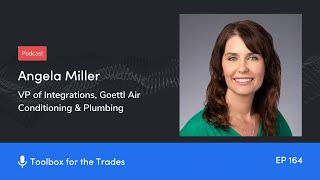
Angela Miller, VP of Integrations at Gettle, walks through how the company absorbs acquired trades businesses. A small team of three generalists works with HR, accounting, and IT to onboard branches in 90 days, focusing on keeping technicians and customers intact. She emphasizes that sellers should clarify what they actually want beyond money: succession plans, retirement, or growth opportunities for their team.
Hello, contractors, and welcome to Toolbox for the Trades. My name is Jackie Aubel, and today I'm chatting with Angela Miller, VP of Integrations at gettl. Angela spoke about integrating a new acquisition into your operations and shared wisdom from her nearly two decades enrolled in the unofficial Ken Goodrich NBA program. Angela was a wealth of knowledge, and I hope you enjoy this episode as much as I did. Angela Miller, you are the senior vice president of integrations at Gettle. Today we're going to talk about the process of integrating and acquired business into a company like Gettle. We're going to talk about what buyers and sellers should know with this integration process. I'm really excited for this conversation. Welcome to Toolbox for the Trades.
Thank you so much for having me. I'm excited to. To talk with you today as well.
Yeah, I'm so excited to talk to you as well, too. So just for a little feedback on the listener, Angela and I met at Service Titan's Pantheon User conference last year, and we were just like. I felt like you and I could have just like, talked in that corner for endless, like an endless, endless time. So I think we're going to go a little long, if my instinct can be. If my instinct is correct, but excited to just, like, dive in there and get all of your knowledge onto this show because I think you have so much to offer the trades. We are going to kick this off, though, with an icebreaker. I would like to know, Angela, what would you like to be known or remembered for?
So, over the years, and, you know, my career, I think I've, you know, changed. Like, everybody changes, right? You change as you. As you age and you get more experience. But I really think at this point in my career, in life, I really kind of look at things, or I try to approach everything with grit, gratitude, and grace. And I really want to try to, you know, I guess hopefully people see that in their interactions with me, grit, because I'm a hard worker. Like, I don't want anybody else to be able to outwork me. There's always going to be smarter people in the room, but I at least have, you know, I have that, you know, grit. I think that with gratitude, you know, life is better and you appreciate people, you know, that are around you because this is a team sport. And I think just grace, because nothing is going to, you know, not everything is going to go your way. So when things kind of get, I think, a little tough or you have to take a step back to do so with grace, you know, as well as just you know, forgiving yourself and forgiving others, I think is helpful and just a really great way to approach life. So if that's something that I can offer my team and the people around me, that's really kind of how I want to kind of pursue things in my life. That is.
I say this all the time. I love that. Can I steal that? Can I start stealing that when I. Because that is just. I resonate with that so much, and I think that's. There's so much wisdom in those three words. I. I've personally started a gratitude practice this year. That's like, one of my, like, you know, new year kind of things. And it really does make a difference. It's, like, really incredible, like, year over. Like, not year over year, day after day, because I'm still pretty new to it. Like, the little things that you take for granted and when you notice that, it can really make a big difference.
Yeah, I think it's a good approach. Just in regards to resetting your mind frame, in regards to just having, you know, we all have bad days, like, they're inevitable. So just to be able to kind of go through those and have the, you know, just start all over the next day, but recognize those little. Those little things in life that. That really do mean a lot.
Yeah, 100%. And, you know, grit and grace. Oh, my gosh, that's. Yeah, those. I think for me, personally, grace is something that has come as I've gotten older. Certainly me, 10 years ago, didn't maybe have as much grace as I have. And grit is definitely something that comes naturally to me. And I think grit is a great way to describe it rather than improve. For me. I'm not saying for you. For me, it was perfectionism. And I like grit a lot better than that.
Oh, yeah, 100%. You know, I was a perfectionist. I call myself a recovering perfectionist. I really believe that perfectionism can really get in the way of progress. Right. Because you're waiting for things to be so perfect that you don't get things executed. And it's all about just, you know, those. Those improvements and the continuous improvement in anything that you do. So I think that's a much better way to approach things. And if, you know, again, I'm not. I'm not perfect. So to expect other people to be that as well. Like, I think that's just a matter of, I think, better work environment, and you get things done, and you just know that, hey, we're going to improve upon this the next time around. And that Kind of, you know, again, adds that to that grace of, hey, you just have to kind of allow for those things to happen in your life and not expect everything to be perfect.
100%. Well, well, well said. And what a way to kick off this show. So I mentioned at the beginning you work at Gettle, which for truly anyone in the trades, Gettle is a behemoth. People know Gettle, they know Ken. I really want to know how you got into the trades and how you found yourself in this universe.
It is happenstance. I actually grew up in Ohio, was there for probably 20 some years, and after I graduated college, I just kind of wanted to go on a little adventure. So I picked St. Louis, Missouri. No idea why, but I picked St. Louis, Missouri. I think probably just because it was a short drive home because I'm close with my family and I picked a place to live and then I found a job and I found a job at a best practices group, entry level position. I just said, you know, let's give it a shot, you know, not anything. I didn't think it would be this career. And so in that space or in that best practices group, I asked a lot of questions, learned a lot from my mentors and the leaders in that group. And that's actually where I met Ken. And from there I just kind of did a bunch of. I was a GM for a year, not my gig. I learned that, learned that really hard. And I respect, you know, business owners and GMs for what they do just because it is, certainly it's a tough job. And so I, you know, I did that for a little bit and worked on different projects and then have been with, actually worked with Ken for the last, I think at this point, 17 to 18 years, it's hard to keep track of all them. So it's been an amazing experience. And I mean, to think after graduating college that let's go into heating and air conditioning and plumbing never would have crossed my mind. A career that I've had and what this industry has given me is just amazing. And I am so grateful for that. And still just kind of, I look back and go, it's just that one decision that I made to pick up and move and just start a new adventure. So 20, 20 some years later, I.
Know that's, it's truly incredible. And I relate to your story too. I had no ambitions of being a podcaster for this industry. I had no ambitions of working in this industry, although my dad was a carpenter. And I'm incredibly grateful for the, for the Opportunities here. And it sounds like same thing. And I also have to say, I love that you are like gm. Not for me. I think sometimes when you're a perfectionist or a hard worker, like the two of us, it's really good to know things you don't like to do. Because then for me, I was like, anything is possible, but being able to narrow down. But I know these three things, not going to do them again.
I think a lot of times when you're trying to find out what you want to do or you're trying to find out, okay, what are the things that I like, is at least going back and saying, okay, here are the things that I don't like. I know that these things don't fit, you know, me, my personality, my strengths, you know, and so if you're trying to figure out what to do, you know, sometimes just writing down, okay, here's what I don't want to do, here's what I don't like, will point you in a direction.
Yeah, yeah. And speaking of things, you know, that you don't want to do, I think that is actually really people to be in when they're thinking about selling their business. Right. What are the things that you don't want to do anymore? So many owners who, you know, usually start off as technicians or this is the family business, and they grow this entity and they're like, oh, my gosh, I had no idea that I would be responsible for financials or for hr. And so what I'm hearing in the space is that partnering with private equity or partnering with companies like Gettle is a really great opportunity to offset some of those things that you necessarily aren't an expert at. So just to kind of set the stage, here you are the VP of integrations, which is all about how Gettle has been buying companies and integrating them into. Into their ecosystem. So tell me a little bit about that and what your role entails, how your team is structured too, because I'm really interested in that.
Okay, so I guess maybe just starting with just kind of, I guess maybe how Gettle approaches partnering with companies that we purchase, we really do want to take those things off the plates of those owners. I think, to your point, you know, they. They get into the business because they understand how to fix an air conditioner, how to sell an air conditioner, how to sell a water heater, and, you know, and then they get into business and realize there's, again, it, hr, insurance, accounting, marketing. I mean, the list just goes on and on. And as that Business owner. And from a family business perspective, you are that right. So at the very beginning you kind of have to do all those things and as your business grows, you don't have the bandwidth to tackle all that stuff and you don't have the bandwidth to learn all that stuff. You have to, I think, kind of get enough knowledge so that you can, I think, hire the right people. But one of the things that I think that Gettle has really kind of focused on is that's the value we want to bring to the business owners is to be able to take those things off their plate so they can focus on what they're good at and their strengths, which is the technical side of the business, the customer service side of the business. And so when we come in, we have an integrations team full time and actually there's about three of us and then we have business partners within the business in their department. So we have an HR person that is a part of the team. We have somebody from accounting that's a part of the team, we have somebody from IT and marketing that works with us. But the solid full time team is there as the liaison between the team, you know, the company and those employees and our team here so that they know they have one single kind of, you know, one single person that they have to go to at the beginning because to learn, okay, who do I go for? Who do I go to for this? Who do I talk to for this? And so if they, you know, we're really that relationship and we really help try to bridge that communication initially and build those relationships within the business so that we can really have a true partnership. And it, you know, and to really kind of smooth out those, those, I think learning new team members.
Yeah, because that can be so tough. So I've been at service, I've mentioned this before on the show. I've been on at Service Titan since we were, you know, less than 300 employees and now we're in the thousands and sometimes I get whiplash. I'm like, wait, who are you? What are you working on? Like, that's incredible. That's incredible. Actually, I went to the office the other day and there used to be an app we had to access and now the app is gone. And I'm like, I didn't know that. And so like it's, it's, you know, it's the testament to moving fast and how that can be that you can just miss things. Like someone told me, oh, there was an email about it and I was like, I didn't see that email. Yeah. So you.
How many emails do we get a day?
Right, I know. Well, for me it's slacks, but yes, how many slacks emails do I get a day? Is. So I think it's really great to establish those relationships. And this actually goes into my next question for you because I know you kind of have a 90 day plan. First acquire an asset. So what does that look like? What does the first 90 days look like? I'm a business owner. I've sold to Gettle. I'm meeting with Angela. What do the next three months look like for me?
Yeah, so we kind of break up. You know, obviously you've got everything that goes on prior to the actual, you know, what we call day one, you know, when it's official, you know, the acquisition's closed. And so there's a lot of, you know, pre work that we do and try to learn the business without being, you know, disruptive because you, you have to find that balance in between making sure that they're still producing for, for themselves and their employees. And, you know, you've got this whole other project kind of going on in the background. Selling your business is a heavy lift. I think that, you know, I mean it's, it's a huge. I mean the reward in selling your business and I think is people have heard and experienced over the last. I mean, this has been going on in the industry forever, but it's been.
Going on a lot in the last like four years.
Oh yes. It's the cycle, I think, and the speed has definitely picked up. So, you know, we've got all the pre work that we do and you know, we try to learn as much about the business and the way that it's structured and their work workflows, but it's not. You really get to, I think a better perspective is when you've got boots on the ground. So the first 90 days, that team right now is really a team of three. We're generalists. We know pretty much every aspect of the business and what resources we need to match up to ensure that their team is feeling good about this, that we're getting them on some of our workflows, you know, continuously making sure that their team members are feeling good about the, you know, the transaction. Because no matter how much you, I think, can assure them that, you know, we brought this business because we're a service business. We need people. We value their, their people. You know, it. There's all, I think there's this thing that goes in the people's back of the, you know, the, this storyline in the back of their heads of. Okay, you know, PE is known for, you know, going in and the first thing they can do is cut over, you know, like cut, you know, a bunch of people so they can, you know, I think get some, you know, quick roi. But that's not the case in this industry at all. You know, we need, this is a people business and so we need those, you know, we need the techs to go service the customers and we need those customers. I mean that's the two things that have the biggest value for us is you need those customers and you need those tech. So as an integrations team, we want to ensure that those are not as least disrupted as possible. So we want to make sure the customer doesn't feel that there's been a change and we want to ensure that the technicians also the impact is lowered. I think that we do a great job at that in the sense of the day before and the day after. The techs don't feel it. They have some new faces around and they have a new phone, new iPad. They log into ServiceTitan, which is that we set up prior to close and then they go out and the next day and run jobs. But there's to the point of having now a team back in shared services on a platform where we have the accounting and the marketing. You know, we have to integrate those types of things to prove the value of why we partnered.
Yeah, yeah. And I'm going to stop you for a second. I think this is really good to be talking about here because I complete. I've been in the tech business for my entire career and I've seen companies I've worked for be open one day and close the other. So I consider myself to always be high sensitivity to like, stuff's about to go down. Will I still be employed by the.
End of the day? Yeah.
And I think when you have PE come in, when you have a buyer come in, I can totally see why technicians and, and purchased asset are going to be scrambling. But I think it's really important for folks listening who are thinking about selling their business in the process of selling their business to remind technicians you are an asset. We. There's no secret, there is a hiring issue. It is no secret that companies are having to build their techs up from scratch, which does take time. So if you're an accomplished tech who's great with customer service, chances are you're going to be fine. In fact, I would think that there would be more opportunity for their career to grow under circumstances like gettle coming in and purchasing you.
I think that's one of the biggest things for everybody on these teams, right? As a family business, the only way I think is if, you know, the one of the family members retires is the way that you're able to move up in the business here. You know, with the number of branches having shared services, there's so many opportunities to have your career progress in so many different avenues that I don't think would be available in a smaller, you know, branch, you know, or just one operation. So I think that really is something that we do, you know, share with the techs, share with the office team as well. You know, that. No, I don't want to forget them at all. They're just. They're just as. I mean, they're just as critical to. To those relationships with customers and keeping the wheel turning. And I think that the. I think the industry has changed. You know, I've been through lots of acquisitions and even on both sides. So, you know, with. With working with Ken, I've been on the buyer side and the seller side. And so, as, you know, early on in the career, I think probably even 15 years ago, they wouldn't tell the staff that this is happening. And I think that that approach has really changed. I think that there is a sweet spot in regards to making sure that you talk to the team to say, hey, this is coming. This is an exciting time. You set the tone for it. I think if you wait and leave it as a surprise, and everybody comes in and says, guess what? We were just sold, those kinds of surprises aren't good ones because they're always waiting for the other shoe drop. And so I think that the communication and how really the industry has approached it and changed has been for the better in that realm, because I think they feel a part of it and they can get excited about the partnership because it really is about, you know, I think, lifting everybody up and giving people opportunity. We like to see it, of course.
And also, I have to say, you know, this. I have a master. We're going to get into the master's degrees in a second, but I have a master's in marriage and family therapy. And so this podcast has, by happenstance, just become lightly mental health focused as well. General best practice. People don't like big change sprung on them, so definitely start. Start doing due diligence. If you're thinking about selling or even acquiring. You mentioned, you know, that you were on the side of ghetto selling, which was gigantic. Right. I would love pivot to that real quickly. I would love to know for folks listening who want to sell a business to PE or to gettle, what is your one big piece of advice?
I think the biggest piece of advice is to understand why you want to sell. I mean, the money obviously is a key part of that, but I think it's important to put it in the right order and I think it should be second. And the reason why is because money is a vehicle for other things and other goals. So if you're trying to de risk yourself in regards to, hey, I'm in a part of my career that I want to just kind of have a partner so that, you know, we can grow the business so that I have the capital. If you are looking to, you know, have a secession plan, that's, you know, another option. If you're looking to retire, if you're looking to give your, you know, children, you know, I guess the ability to go to college or, you know, hey, this is the. I can set up a trust fund for them, you know, and have generational wealth. I think that, that those are the things that you have to kind of focus on and really get really clear about. Okay, this is the real goal, you know, because those things that kind of, you know, to the point of change, you know, I think that through the process you can have moments of kind of doubt and. But to really kind of take a moment and refocus yourself on why you're doing this, I think you, you get to a better outcome and you have better expectations of the process.
I 100% agree with you. I like the concept of money as a vehicle and getting a little bit more specific as to what that money is going. We're hoping that money is going to accomplish for you. Because I think, yeah, it's making me think so. I'm sure it's making the people listening think so. I 100% agree. Now, on the flip side, what is your biggest piece of advice for folks that are looking to grow via acquisitions or maybe looking at some of their local competitors or maybe they want to expand to a different area. What would you say? Hey, these are things to keep in mind if you're preparing to acquire a business?
Yeah, I think that the things that you want to make sure is you have a plan, you have a strategy, you understand the value that you want to actually the value that goes back and forth between those two parties. So what value do you bring to the table in this transaction? And then what value does this target company bring to the business and to really kind of get clear on that as well. And again, plan, plan, plan, and then also be flexible enough to pivot when you need to, because you're never going to be able to anticipate all the things that kind of happen within this. And there's always, I think, when I say a surprise, you know, we talked about the bad surprise. Sometimes let's just call it a better. I think a better term is opportunity. There's always an opportunity that you didn't anticipate. And being able to pivot off of those and to really capture that, I think is important. But without planning and without really having a clear set goal that you can kind of, I think, get sidetracked and end up with, you know, a partnership that doesn't necessarily work for both parties.
Yeah. So again, focusing in on what that goal is, whether we're going to acquire a new service line, get a new roster of customers, have this great reputation attached to us, like, those are the things that you need to identify. I'm going to ask you a question. I didn't send you in advance, so feel free to say, I don't want to answer this, but I would love to know, because you've had so much experience now, has there ever been a company that you were in the process of buying and then. Or thinking about buying, and then you decided actually this isn't going to be a good fit? And why was that?
You know. Yes. I mean, working with Ken for the last 18, you know, 18 years. 17. 18 years. The amount of acquisitions tuck inside, you know, telephone numbers, you know, all the different types of acquisitions that you can do. I've experienced them all. You know, I've kind of had experience with all of them in some form or fashion over the years, and I am sure that we've had one. I can't recall a specific one to say. To say, oh, yeah, this one's really memorable like this, you know, But I. Yeah, I can't recall that there was one specific one. I think the ones that you remember are the ones that have been just the real success, you know, the real successes, or the ones that are almost kind of the most difficult and become the best success are the ones that I think kind of resonate most with me.
Yeah, well, speaking of that, I did ask you, I did want you to share a story if you had one of the most memorable acquisition you've been a part of. So tell me about that.
So it's actually a recent one, and I won't name any names, but I'm sure if he listens, he'll know exactly who he is. So we had an acquisition and we showed up. His wife was actually a part of the business and the plan was, and this was their choice, that she was going to unwind herself from the business. But she was, I think, a key part in the day to day operations for him. And then also, you know, as an entrepreneur and as a business owner, you are the boss. You don't have a boss. And so that shift a bit when you start partnering and then you have to collaborate with people, I think can kind of throw people for a little bit of a loop. And that day to day muscle memory that you have in running your business gets shifted a bit. And so this was just very difficult for him at the beginning of it. So the team, myself and the group of others that show up and work with the team boots on the ground to help transition had. We, had, we struggled because he was very, I mean, he's a very direct person. So he would tell you, like, I'm not liking this. I don't, you know, like he, he was very direct, which I so appreciate with people, you know, and directness. But it can, it can be jarring for some people and hard to understand and adjust. So we constantly, as a team, I think had to kind of come in and just continue to pivot and to continue to kind of come to the table differently every day to try to meet him, where he was at. Why it's the most memorable for me is because it's the most successful. I mean, they are a superstar branch for us. The relationship I still have with him, running that branch, like we talk frequently and it's well with it. I mean, it's been long, like he's been integrated. There's not necessarily any reason for us to discuss anything because he's partnered with accounting, he knows who to talk to with IT and marketing, but we talk regularly and have a fantastic relationship that's really meaningful. And ultimately at the end of the day, he was able to accomplish his goals. We were able to accomplish our goals. And, and that, you know, the first couple weeks of just, you know, kind of powering through those, you know, just, I think, relationship and building the relationship and how, you know, just how often that we had to continue just to kind of pull back and reassess and adjust ourselves, I think really made it, really made it memorable for us as a team. And I think it just developed our skills and our ability to tackle, you know, just any kind of, you know, any kind of thing that gets thrown our way, we now have the experience to be able to take it all in stride.
Yeah, I'm so happy you shared that story. I'm going to bring it back to mental health again. Because even though this is a business transaction, this is still a relationship. This is relational, and you have to build trust with one another. Because like you said, this owner for, you know, maybe decades has been answering to himself, has been, you know, the one who called the shots, who hasn't had to report up to anyone. And I can only. I can imagine. I put myself in the. In the seat of the owner. Okay, here's this asset I built for decades. I just sold it to these guys, and they're telling me how I'm supposed to be, you know, doing things, and I'm mad about it. So I think, to your point, direct communication and being really clear about, hey, this is bumping me the wrong way, is just a good practice for both parties, because even though direct communication can be really scary and uncomfortable at the beginning, more and more direct communication, in my opinion, develops a large and strong foundation for trust. And so I think it's great that he was able to do that. And then in turn, you know, you guys learned, all right, this is what. Maybe a more. I don't want to say scared, but it feels like a scare. I would be scared because this is this thing I've grown for forever. I'm so happy you shared that story because I think there's a lot of learnings in there for folks who are approaching this transaction from either side, the buyer or the seller.
Yeah, I think, you know, the identification of how important trust is, I think is key. Right. In any relationship, whether it's with integrations or within your own team. I think that it's such an important factor in success as a team and in collaboration and to really kind of, I think, get to the best solution. So you have to be able to allow the space for your team to speak up and to be able to say, hey, I'm kind of struggling over here. This is what I need to. This is what I need help with. And if you don't have trust that's built, then they're not going to raise their hand and to kind of point that out. And we're not, as a business, not going to get to the best solution and. Or it's just going to take you longer. So I think just building that relationship first and foremost is key to any kind of integration. And it takes a little bit of time. So kind of going back to, yes, we have a plan, we have an entire checklist that's very sterile of, okay, let's make sure we do this, this, this and this. But we also have to be flexible to say, hey, we need to slow down here and approach this a little bit differently. Hey, we're all on the same page on these areas. This one, they're a successful business. It's not critical for us to go in and change that to kind of, I think the idea of they have things to offer us as well in workflows and processes. And I think it's important to recognize those things and to really take an opportunity to really listen and learn in those situations where it could improve our business. We're always trying to innovate and sometimes that innovation doesn't have to be technical, it doesn't have to be a software. It's about the step before that. The service titan is key to all of those things. I think it really is that human portion of the innovation to say, hey, how can we do this better? And how can we take what they're doing and implement it inward? And really it goes back to understanding, okay, how are they doing this? What is the outcome of those workflows? What is the technician doing in the field that's different than we're doing? And if the outcome is better than what we're doing today, it's an easy buy in from the rest of the GMs to say, hey, we should do this because we're all, I mean, gettle is competitive in a good way because we all want to win and so we'll take those opportunities and we're not too, I think we're open to the idea of, hey, how do we improve this? Right? It's that again, it's that improvement and continuous improvement that we've become kind of good at, that we, it's a double edged sword, you know, the idea of continuous improvement or just the competitiveness of hey, great job, we did an amazing job last year or last month. And as soon as we say that and pat ourselves in the back, we then turn around and say, how do we do it better? So that can kind of, you know, that can be, I think in and of itself, you know, can, can put a little bit of stress on people. But that's just, I think how gettle has grown and have stayed ahead of the curve is that we always come back and go, how can we do it better? And we don't rest in that, you know, in that kind of realm of okay, we're good at this. We're good. Let's just continue on. No, we're constantly looking at ways, looking for, you know, let's, let's. Yeah. And looking for better processes and finding out what else is out there. So that's, you know, I think that from a standpoint of how that that relationship can really be two ways. That's one of the ways that we try to, you know, I think learn from each other and gain value between the partnership.
I'm so happy you brought that up because that was one of my questions was, you know, because you had mentioned in our initial call that you actually sometimes take on workflows that these companies have adopted that you see opportunity for in the gettle universe. And I think that's also really key for business owners who are doing this growth through acquisition strategy. To keep in mind is.
More from Bill




Capturing the 80%: How SmartAC’s Gen-2 Targets Non-Membership Homeowners | Podcast Ep. 296

Build better customer data with every booking in ServiceTitan | TAD Tune-Up Series

The Biggest Change for Roofers Coming From Other Roofing Software to #ServiceTitan?

