How to Hire Female Technicians w/ Mary Jean Anderson | Podcast Ep. 37 | Toolbox for the Trades
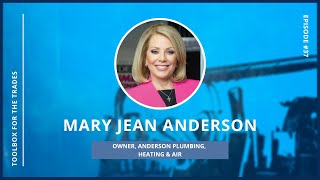
Mary Jean Anderson, president of Andersen Plumbing Heating & Air, talks about taking over the family business around 2004, shifting to service and repair, and launching an in-house training program called Anderson Career Builder Institute to recruit and retain technicians, especially women, in a labor-short industry.
Your biggest obstacle is finding qualified or training people and to a level of journeyman level where they're doing work. Right. I mean, we work with fire. Right. We work with water. We work with gas. I mean, floods, gas leaks. I mean, we're. You got to know what you're doing here, and you've got to have the right people.
You're listening to Toolbox of the Trades, brought to you by ServiceTitan, a podcast for top service professionals where we interview leaders for their best tips and tricks of the trades, learn how industry trailblazers stay ahead of the competition, and how you, too, can be at the forefront of an industry. Let's jump in.
Mary Jean Anderson, welcome to the Toolbox for the Trades.
Thank you. It's nice to be here. Appreciate the invite.
No problem. Honestly, since talking to you for the first time at the end of 2020, I was like, I need this lady on the podcast. You are a very impressive person. You are the president of Andersen Plumbing Heating and Air with you did 37 million in revenue recently. You have over 200 employees. You basically dominate the San Diego market. And I am so excited to talk to you. So for folks who aren't yet familiar with you, which honestly, I don't know how they can't be because you are very Googleable, why don't you tell us about how you got started in the trades?
Okay, sure. Well, actually, it was a family business, and people always want to know this because my husband and I started the business together and I just did book work at night, that type of thing, to help out. And then. And he had a partnership or another, it was a corporation, but two people working, two people working together. And so he loved what he was doing, but they were new construction and he loved the work part of it. But once he got into the running the business part of it, it got really, really difficult for him. And so by 85, or no, I guess it was earlier than that, might have been 83, I came into the I was in nursing and I left that to have kids and then decided it would be best if I tried to help him out. I'm a fixer, kind of a nurturer by personality. And so he was really struggling. I thought, I'm going to come in here and help him be successful. As it turned out over the years, he really didn't like the direction that new construction was going. He really didn't like service and repair. And we started to struggle financially and it started to become a hardship. And so eventually we got divorced and we worked Together for another couple of years. And then we had a difference of opinion on new construction versus service and repair and the way the business is being run. And now a lot of what we do in business is motivational. You have to motivate people. You have to help them become the very best that they could be. In my husband's world is you got your paycheck and you went home and that was your reward for how hard you worked. And so the change in all that was really struggle for him. So one day he just walked in and we were actually working pretty well together. Divorced, actually. But he walked in and said, I don't want to do this anymore. I just don't like where the industry is going. I'm not happy doing this. Would you buy me out? That was huge. And I actually can't even to this day believe I did it. I remember the day anyway, and that's how I got in. That's how I began to revamp it as Lemon owned and ran with it. Long story for a quick, short question.
Well, thank you for being so honest with it. I have to ask, when you were presented with that opportunity to buy him out, what was going through your mind? What were some of the emotions that you got hit with right away? Did you know you were going to do it?
No, I had to sleep on it, obviously. But we had both worked really hard, and I knew that if I. I just felt like I had to do it. I felt an obligation to the people that had been so loyal and putting time in. And I felt like if I. Things might fall apart, you know, and he really didn't want to do it. When your heart's not in it, it was going to fall apart. So anyway, I just took the opportunity. I remember thinking, well, you've had all these ideas and all these opinions all this time. It's time for you to see, you know, put. Put what you think will work to work and see what happens. And so it was kind of like a very scary, very insecure person at the time saying, oh, my gosh, what are my options? I might as well try. That's what happened. And that's. That's the reality.
Wow. Talk about a completely life changing decision. And also, I commend you for saying that you were feeling insecure at the time. I definitely wouldn't categorize you as an insecure person now for sure.
Yeah, well, you know what? You're right. Because once. I do feel very confident now. And it was a change in who I was and who I was Then and who I am now are two different people of the events that unfolded. And you're right, I am much more secure. I still have insecurities, don't get me wrong, lots of them. But I'm pretty secure in the way I run a business now. And it's been through the school of hard knocks for sure.
That's awesome. And so when you, when you took it over yourself, it sounds like you definitely you rebranded. So, Anderson, for anyone who's not familiar with the brand, very pink. You advertise that it is women owned. And it sounds like you really dug into the service and repair side, which it sounds like was your kind of vision when you first were building up the. Is that right?
Right. We were started as new construction and new construction made no sense to me because there was a 10% retainer in new construction and they hold that for months. Right. So 10% of each division of the job. So underground, top out, finished, we're all 10%. But we never made 10%. In most jobs we would make 2, 3%. And so they're working off of your money. And it's like I kept thinking about, well, back then it was, it's Costco now, but back then it was Price Club. And I had read this Saul Price thing about how he was in business and he's like, I get paid, I get paid today. And I pay my vendors out as far as I can. Everything sold off the shelf before you even ask, pay his vendors. And I thought, this makes sense. Get paid today, pay your technicians on Friday, and as you get larger and larger, extend your payments to two months so that you can work, you can work off your money. Not allowing the construction industry to do so. So that made perfect sense. It was very clear in my mind that that's the direction we had to go. I love that getting there because they're two different new construction guys and gals and plumbing service techs are two different animals. I mean, they're just very different. So you really are starting all over.
Yeah. And I love that so much that you just mentioned the Price Club model that you applied at Anderson. The more and more I talk to entrepreneurs on this podcast, the most successful ones are the ones that took business plans from other industries and figured out ways to apply them to their business. I imagine you did a. This is a little off topic, but I'm sure you read a lot of books while you were growing, Anderson. Are there any others that specifically stick out in your mind?
Yeah, Mark Nordstrom. The Nordstrom. I think it's called the Nordstrom Theory. But that book really hit hit home to me. And I know there's so many great writers out there. Don't get me wrong, I could name all the books everybody has read, but if I go back to my very two basics, it would be those two. It was the Nordstrom theory and running our business. And those are my two models that I used in my head as I planned out what things were going to look like. And if you know Nordstrom, you know it's higher end. It's the customer's always right, even when they're wrong. And that's written in our our mission statement. That's read just like the flagellations here. It's the customer's always right, even when they're wrong. If you want to wow someone, that's how you're going to do it.
And we'll actually jump around a bunch here. But your tagline is nobody wows clients like we do, which is fantastic. Very easy to remember, obviously, really convincing for a buyer. So talk to me a little bit about how your team goes above and beyond to wow customers. What do you do different?
Well, first of all, that tagline came from a group of us when I took over the company, a group of us, there were 35 at the time, employees. We all sat down together and said, who are we and what do we hear from the customers? And they kept saying, up as we give wow service. I mean, our customers always say, wow, you did a great job. Wow. Wow, wow. So we came up with, after doing some research that nobody wow's clients like we do should be our tagline. And then we put our mission statement together. And when we wrote our mission statement, we had to write in there, so what is the wow factor? And we have to incorporate that in our mission statement. And if you ever come to my office, I don't care what room you go in. Our mission statement is large. It's part of the artwork in every office. Two of them in the front entrance that are, I don't know, seven feet tall. Because everybody knows in our company this is our mission. And our mission is to wow clients. And how do you wow clients? We list out everything that we do that will wow the client, including clean trucks, including all of that clean environment around them when they're working, et cetera. So it's all incorporated in that.
I love that. I've heard that also from fellow guests on this show, most namely a guest we had in season two, Stacy four, who did exactly what you did. They started a Couple years ago, I can't remember off the top of my head, but they worked with their team to come up with the mission statement which I imagine for you gave the employees buy in into your new vision right when your ex husband left. It's like, oh, wow, we're building this with mj. We're not just, you know, getting a new leader. We now have buy in and a say in what the company is. Do you agree with that?
Yeah, I do. And I think what's really good about it is no matter what happens if a manager leaves, or even if I had to leave tomorrow, like a medical condition or something popped up and I had to leave, everybody still knows. No matter where they walk around, this is our mission. This is why we exist. This is what we're here for. And we even read it in our, like I said, like the pledge of allegiance at the beginning of our meetings, even our management meetings. It's red. Because we want to constantly remind each other and ourselves what we are all about.
Yeah. We do the same thing actually internally at Servicetitan and we've done that recently in the last year. And I think that's also been really powerful for us too. Real quick, I want to talk about how the company has evolved, but what are some of. I Paige put you on the spot, but what are some of your most favorite things that customers say about the experience your technicians give them?
Some of my favorite things are just. Well, it's any of the wow factor. You know, I always say when we started and we started to write our mission statement, I said, guys, I don't care about the size we end up. It is not about that. It is about taking pride in what we do and being the very best with being the best. And we are the best in town. I can promise you that. With that came the growth, which I didn't really honestly didn't expect and care now I do, of course, but back then I didn't. I just wanted to do the best. So when I hear from customers things like, I couldn't believe how clean and neat he was. Just such a nice guy. I felt comfortable with him in my home. It's all of those things about making a difference, solving problems. You know, our industry has gotten such a bad. If you think about the rap over all the years, I mean, go back to the butt crack plumber jokes. Go back to what? The movie Home Alone. Who are the criminals? They're in a plumbing truck all beat up with paper and crap everywhere, you know, or in New York.
I forgot about that.
The plumber touches the pipe and goes, that'll be $10,000. And always been that as criminal, like, crooked, like dumb, dirty. And so, you know, my goal was really to help our plumbers and our H Vac people understand that they really are the health of our nation. And without plumbing, we would have SARS and a lot. You know, I mean, talk about COVID right now and the pandemic. It would be 10 times as bad if there was 100 times as bad if we didn't have plumbing. So think about that in itself. And I wanted them to. You know, coming from the medical profession, I saw how many years it took them to become truly become a journeyman plumber. And everything's forever changing in that industry as well. And same with the heating and air. And it's like, guys have to believe in yourselves. You really got to see who you are. So when I hear that they look professional and that they're neat and clean and that they were, you know, did the job well, that they're smart and people acknowledge their ability and their talent, that makes me really happy. It really does. That's a good question, actually.
Oh, thank you. I'm so happy you answered it that way. And I appreciate your nurse background. My sister's a nurse, so I know how rigid that is. And it's so true. With the journeyman's license, that takes years and years.
It's not just the license. It's just the. It's everything involved. What they have to do, what they have to touch, what they have to know. It's a lot of education. And you go to them, they're coming to the customer, the doctor you go to, you know, and so I don't know. I just. I love the people that I work with. I love this industry. I love what they do. And I'm really grateful that our people. And I'm starting to see it across the energy. But our people know that they're important. They know they're making a difference in the world. And once you know that, because it's not always about money, you can ask most people. It's about knowing that they're, you know, the pride they take in themselves, the pride they take, what they do, and it's about making a difference. And that's, I think, the strength of our culture Here.
Here.
I had me happy.
I had a question for you later that I wanted to end it with. But, you know, I feel like this is the right time to. To go in. It is. I know that at Anderson, you guys do random acts of plumbing, heating and air where you give free services to those in need. And I also, we've talked about it at length already. I'll link the blog post in the show notes of this episode. You've done tremendous work for the Susan G. Komen Foundation. And so as a result, in my preparation for speaking to you, I've been thinking a lot about finding your why and what drives your folks to do what they do. And I was going to ask you how you found your passion in the trades, but it sounds like you just answered it, which is your passion is elevating the industry as a whole.
Right. And elevating people as a whole too. Individuals, you know. You know that I have a lot of women technicians here and you know, it's equal pay for an equal job. You know, everything's the same. And when a female who may not have had the opportunity to go to college, well, and I'd even go a different way with that. But anyway, when women can equal pay, when they can own a home, when they can buy it themselves, do you know what that gives them the sense of? And I'm not saying they're not married and they're not happily married, but when you can take care of yourself and you don't have to depend on anybody, your choices become different. And then you stay in a marriage or a life situation because you want to, not because you have to. That is huge. And that is. And that's what I see.
That is gigantic. And we will get back to the female technician stuff because that is just fascinating. But before we do, I mean, you. So you, you already said you took over Anderson from. You kind of took on the leadership role in the 80s, it sounded like. Is that when you bought out your ex?
No. Much. No. We worked in new construction. We stayed together. We started service and repair through property management, which doesn't pay well at all. I wouldn't suggest that E. But you know, that was a way to start to get into it. I actually bought him out in 2004 or five and started running it. That's when I flipped it the brand. And at that point we, we had 35 employees. And I want to say we were at 30. 35 employees, something like $12 million in revenue. So we weren't a small company. You know, I think we had eight or 10 technicians, something like that.
Nice. That's still pretty profitable. But I want to hear about since after you took it over. Talk to me about some of the biggest growth obs you overcame and how you did it.
Okay. The biggest growth obstacle. Well, there's two little things on that. One was my marketing wasn't good and it was spread all over the place. I had bought a couple of other companies, moved them in. So I had like, you know, one truck with one name on it, another truck with another name on it. We weren't cohesive. And so rolling that all up into the Anderson brand and focusing on, you know, one of the things was female owned. It was female owned. You know, the marketing gal I hired said, we got to put your picture on it. I was like, no, that's where I draw the line. No woman wants a 10 foot picture of themselves anywhere. Right. But she was like, we have to do it because it's truly woman owned. You've got to let people know. And that was probably one of the biggest things on the marketing side. And then of course, the pink because, you know, I think it's us and T Mobile and Susan G. Komen. I think we're the only ones that have that color out there. Right? Yeah. So it stood out. So those things are really important. But I think the biggest obstacle that I still have to overcome every day is finding qualified people to do the work. Because I've seen some watered down training that's so pathetic that it's, you know, sad for the customer and scary at the same time. But that's the. I don't care who you ask, they're going to tell you the same thing. Your biggest obstacle is finding qualified or training people and to a level of journeyman level where they're doing work. Right. I mean, we work with fire. Right. We work with water, we work with gas. I mean, floods, gas leaks. I mean, we're. You got to know what you're doing here and you've got to have the right people.
Yeah, I agree. And I think actually that you've coordinated a brilliant solution to this. So I want to talk more about it. So tell me about the Anderson Career Builder Institute. What sparked the idea and how did you and your team turn it from an idea to reality?
Yeah, I heard a stat from the national phcc. You know, everybody's stealing. I hate that. You know, we put a lot of people into, you know, a lot of money into training our people and then somebody offers them a $10,000 signing bonus to jump ship. And, you know, if you're young and you're going to have a baby or you're in some financial need, $10,000 sounds really good. Well, you know, we spend double, triple that probably in training people over the years. So that was really hard for me. Plus, I don't like to do that. I have a hard time with it. And I was forced to do it. I wasn't comfortable with. I didn't like it. And then the stat came out that our industry is aging out at about 10%. Well, I want to say the trades in general, let me just make that clear, are aging out at about 10% per year, and we're only bringing in about 6%. So it, you know, and then I had one of our employees say to me, there are several things that happened. One of them, he said, you know, guess who's my. My grandmother's favorite? Jose? And I was like, of course it's you, Jose. Are you kidding me? You know, he's just this. And he said, yeah, but you know, why? Why? And he said, because all of my grandmother could say four words in English, Jose, go to college. And he said, all my brothers and sisters went to college, but guess who makes the most money and takes care of grandma now? And that was. It all came together to me of, you know, between all those things like circling in my mind at night when you try to go to sleep, it was like, I got to start a school. I got. I've got to help people to realize there's other directions to go so that you don't end up like Jose's relatives who. Or sisters and brothers who went to college, have a ton of college debt, but they have nowhere to go. And we have an industry that's wonderful and it pays really well. And don't forget supply and demand. You know, we have to pay very, very well. And in reality, if we're going to continue to pay even more and more because it's supply and demand, we've got to bring people in. So I called that. My third act is really putting the school together, finding people that would like to work not just with their hands, but with their minds, with strong communication skills, and focusing on that school to bring people in. And I would say if you're much smaller and you can't do the school, because I get that is start to train people. This is how we first started, is training people in specific areas, like just train them to do, at first do drain, so all they're doing is drain work for you and then start to continue to educate them as you move them into other areas or just change the. Train them to do a water heater, flush and tune ups on water heaters or change out water heaters. Just give them that one area and then have them at least do those. And when they're not doing those calls for you start to train them in other areas with ride alongs so that you have some way. But we have to train our own people. This is an absolute, we cannot depend on hiring people outside. It doesn't, they're not out there. And the ones that are out there, you know, I just had a guy we hired and came across really, really. When actually I called his boss and said he's here interviewing, you know, if you're okay, we're going to hire him. And he said he's good. But I'm going to tell you one thing, he misses a lot of work. Like that's the thing. He's good, he knows what he's doing. But you know, if he can work four days in a week, you're lucky. And it's like those are the options out there. You've got to train your people. Hence acbi. And we've been very successful with it.
That's awesome. And it looks like from your website that you have someone on your team who completely runs and owns acbi. So you have, you have a leadership partner whose job it is to attract folks that kind of have, it sounds, correct me if I'm wrong. Like they have that core, those core resources, good communication skills, bubbly, hard work. Not necessarily bubbly, but hard workers, people that want to work. And then you take those people that have that good, those good core skills and you teach them all of the technical aspects. Is that correct?
Exactly. And it happens to be my husband. So we're 50, 50, 50 ownership in this school. We are just working with actually the federal government, the state government, getting our certified. So very soon we're going to be able to get paid like GI bills and stuff, which is really exciting. That wasn't why we did it. We've been funding it, but that helps a lot too and for their growth. But yeah, that's exactly that. That's the plan. That was the program. That's what we do. My husband's a natural. When he was in the field, he trained all of our technicians. He was the number one person. So it was a natural fit for him. And yeah, we want to make it bigger, we want to expand it. So been very successful.
That's awesome. I have two questions for you. My first question, and please tell me to move on if this is too personal. Did your husband work for you and is that how you met him?
Yeah, I actually hired him.
Oh my gosh.
But years ago, like there was no. And I want to. I don't care if it's out there in front of the public or whatever. But there was no relationship whatsoever at all. And long. Well, I want to get to the personal part of it. I could, but it's not. But anyway, long story short, we ended up together many years later, but it wasn't even a consideration on his or my end. But as I started working closer with him and helping to develop other people's skills in the service industry, we just, you know, one thing after another. But he'll tell you I had a crush on him the whole time and flirted with him all the time. And I can promise you it's an absolute lie. So not true. But luckily in his head, I don't know, somewhere in his head he thought that was the deal. So good for me, I ended up with a good man and it was not intentional.
That's so funny. It's funny how life works out sometimes, right? So please, go ahead. What were you going to say?
No, I was going to say, yeah, nursing to running a plumbing company. An H Vac company.
I know, very funny.
Yeah, life is different.
So when it comes to the actual training, this is a question that's been on my mind for a while because there's a bajillion trainers out there in the trades. There's folks who say I was the best H Vac salesperson. And so let me come in and train your people. I know that you're involved with nexstar, so tell me a little bit about what kind of guided you, you building out that training strategy and how maybe smaller organizations or organizations that don't have your level of budget yet can kind of start thinking about how they want these training programs to develop.
Well, first of all, I love nextstar. I am. When I joined nextar because I was failing miserably and heating and air, I decided to start heating and air, but didn't get the margins, didn't get anything. I was failing and I was in debt. And that's how I found nextstar and nextar within two years pulled me completely out of debt and very successful and profitable. By following theirs, nexstar does. You get huge rebates from your. Different from. From your, the different manufacturers and stuff with them. So it really cuts down on your monthly dues. But having said that, I haven't paid dues in years because I, as I've grown, I buy more and more products and get more and more refunds. But what's good about them, not only do they Teach the communication which we follow now. You know all of their processes on soft skills that you need. This is a unique industry because sending people to PHCC school or something like that, they're teaching them the skills. But our industry specifically service and repair, you need the soft skills as well. They have an amazing soft skills program but now they have a school. So we fast track some of our people through the school. So we do need do use nextar still their school and it's minimum cost. And if you hire a military you're lucky enough to find a good military person that a perfect fit for industry. They're free if you're next our members through their school so they have the technical and soft skill training online and that cuts down amazing expenses. So if anybody is smaller company that wants to really grow their company, I would recommend nextstar and of course Scorpion because of all the cool reports and all the statistics we get to monitor.
Got it. So if you're in a growing stage, look at your best practices organizations. Nexstar worked beautifully for you.
Right?
Yeah.
There's others out there too.
There's for sure others out there. But that would probably be a good first step to look at is like okay, what are the resources I I'm at? What does my network look like? Who can I connect with to figure out how they've done it? Because I'm just seeing this more and more is that owners are realizing I need to start training my own people because I think when you train them they tend to stem stay more loyal to you. I mean I'm sure you could you had already alluded that you have had some people that have had to leave. Right. But I think the benefit also is that they know how to do things the way you want them to be done. So you don't necessarily have to worry about course correcting something they learned before. You know what I mean?
Right, right. And yeah, and very industry specific too. So that's really, I think you know, when you were saying that brought to mind something I've heard a lot of people say. Well, what's the difference? Why do you think you've been so successful? Like what was the magic? And I said, and my answer to that is pretty simple. I asked for help and that's how I found nexstar. I, you know, and I'm not saying it's all men or it's a men and women thing, but the men in my life over the years, including my own father, would never ask for directions. They didn't care. And it could have been just people I was attracted to. I don't know. But we would be driving around, you know, back in the days we didn't have GPS and all, we'd be driving around lost. It's like, oh, there's a gas station. I'm sure they know. Or there's someone standing. I'm sure they. And I realized when I was young that's something I didn't want to do. There are people out there smarter than me. There's people that done things I've never done. You know, I'm really good about asking for help, and that's how I found NextStar. And again, there's other trades out there. But I really feel that's one of the biggest reasons that I've come to the growth and success I am today, or my company is today, is because I'm not embarrassed to ask for help if I don't know it. I have no ego about. I don't get this. This isn't my deal. Explain to me how I should do it. Why? And stick with the people that are proven and ask for their help.
Yeah. And all about building your network too, right?
Yeah, exactly.
Got it. Very good answer. Thank you. So you, after launching acbi, you also published your memoir, Here Comes Cannonball, which speaks about the labor shortage in the trades in addition to your journey as a woman in this industry. So talk to me a little bit about the memoir and then based on what you kind of first, actually, I do this all the time. I listen to myself back in interviews and I'm like, jackie, stop asking five questions at once. First, tell me a little bit about the memoir.
So I wrote it originally as a marketing tool, actually, because on some of the bigger jobs, like a large re pipe of a residential home because we only do residential, or a replacement of a heating and air system, these are 13, $10,000 jobs, $15,000 jobs. And people really like to know who they're working with. So I started to write it as a marketing tool. I was going to have this small book that I could hand out that told about our company and how we got there so people understood who they were hiring and that they were going to hand them out when they gave estimates. Well, as I got halfway through it, I thought, you know, I should talk more about, like, the mistakes I made because I learned a lot from the school hard knocks. So then I started thinking about, well, do I really want. I mean, is this really for the customer? And then I thought, you know, I want it for my grandkids. So they could understand what I went through and maybe that will help them shape their lives. And then I thought, well, if I just write the book in general to people that may be in the industry or a woman who's struggling in a male dominant industry, maybe if I could have one person who read that, you know, maybe it would help them. So it was kind of an accumulation of several things that brought the book to its final end. But it had all of those things in mind. And it didn't work for marketing, by the way.
It didn't.
I mean, I don't know, it was just odd for them to hand it out. Oh well. And here's our owner's book. You know, it wasn't. And it was kind of more by then written by the time I ended it. Written more for the. For people just to want to know, you know, what I went through. Just the journey. Just like you started saying it's a journey, it's still a journey.
Was there any specific. You said mistakes, but I'll say learnings that you wanted to make sure to include in the book or which is the one that kind of jumps to your mind first?
Probably that once I felt successful in plumbing, I could just start something else. And I thought in my head it was like, well, I don't know, didn't know anything about plumbing either. But I really did because for years I heard it at the dinner table. And so starting heating and air was probably the toughest. And I bought. That was my first buy of a very small company. It was smoke and mirrors. I learned a lot from the due diligence process, the margins. Everything was different in heating and air. And so that was probably. But I learned a lot about myself there and that was really, really good. It was like I learned that my. You talk about how you start to build your self esteem over the years from being really insecure to hey, you know what? I got through a million dollars in debt. Because When I found NextStar, I put on a credit card, it was $1 million in debt, including the purchase. And I worked my way out of that in two years. And talk about building your self esteem, you know, when you start to learn from your mistakes. And my mistake was I had developed this ego of well, I can do this. Well, I'll just do this. And not really knowing everything I needed to do to get it started. That's how I do my life. It's two steps forward and one back.
You did a million dollars in debt. You took that off in two years.
Holy cow. Because I am not afraid to ask for help. And when I went to nexstar and I joined, it was like, okay. My first meeting was, okay, I'm in. I bought, I drank the Kool Aid. Tell me how I can close my heating and air company and pay off this debt because I suck at this industry. And they were like, whoa, whoa, whoa. I remember the words exactly. It was, whoa, whoa, whoa. Can I just look at it? It, you know, can we just see what's wrong before we close it? And you know, it's that kind of thing. And just being humble and having to say that, you know, no one wants to say, oh, I worked myself into a million dollar debt. So that humility of that time gave me the strength I have today. So little by little, then you start to build your self esteem.
I love that. Thanks for sharing. That was a growth. That was a growth tactic through acquisition. It sounds like you've done that a couple times. Is that right?
Yes.
Got it. So when you acquired your first H Vac company, was it just like, did you kind of accidentally inherit debt or did you take it on and it just was completely different systems and operations and you just didn't know how to do it?
Well, I had the expense of buying it, which was, it was an immediate debt. I didn't have the money saved up in the bank. I was making payments on it over, you know, a period of 10 years. And so I had that debt number one. And then, yeah, I didn't have the systems there. This same, like business is business. I get that. But they were just, it was another whole group of margins, you know, of the way things were sold, the way things were inventoried. It was just, everything was different about it. And I struggled. I, you know, the great, I bought it in 2007. The Great Recession hit in 2008 and 9, so I had that to battle with and people weren't buying heating and air in those, those two years. So it was a very, it was a struggle, but I was doing a lot of things wrong that I was able to meet wonderful people who, you know, gave me direction and turned it around.
That's awesome. Congratulations on doing that. That's a huge, huge thing. That's awesome because you have done this growth through, through acquisition tactic a couple times before. And I know that's a big playing card in the industry. Are there any like, best practices or like, things people should know to mind when they're trying to do that?
You know, I only learned from my mistakes and mine. The first one I bought was not done Right. I mean, the guy had taken all of his trucks down to TJ Tijuana and had them all repainted. And so the fleet looked really good, but it was just a heap of junk. And I remember them reporting the mileage and some of the miles were high, and I thought, well, nothing worry about there. Look how well he takes care of him. My dad was a mechanic, and I knew an auto mechanic, so I knew if you maintain your vehicles well, so we'll just. I mean, that's one thing that comes to mind is we're just free talking here. But there were just so many things. I remember walking in, there were boards with all these numbers on them, and later found out from one of the employees that stayed with me that they never had those numbers up there before until I came into the building, and there was just a lot. I was kind of conned, but I haven't. Then when I bought others, it wasn't that way because I knew what to look for. So, again, before you venture out, connect with people that know what they're doing.
Yeah, yeah.
And make sure they direct you into what the things to look for. I mean, there were just so many little things.
Thank you for being so honest. I think that's also a giant sign of growth and security that you are able to share that, and I hope everyone takes that lesson. Who's listening? Personal example, for me, the very first podcast I started, I had no idea what I was doing. And doing the first episode took like. Like, I think 14 hours. Then I was like, oh, crap, I have to do this whole thing next week, too. So it's kind of. Yeah, sometimes you just learn by doing, and it's not the most graceful, but you have to kind of be fearless and take that risk.
Right, right, exactly. And, you know, I mean, we learn from doing things right? We do. The mistake is when we do things that aren't right is not learning from them anytime. You know, every time we fall, we have to really stop and think through what went wrong. So I. I have made two small purchases since then, and both were very successful, but I was already educated on what to look for and what not to look for, and it's all those little things, you know?
Totally, totally. Thank you for answering so candidly. So I definitely want to make sure that we go to the female text. You MJ have 12, count them, 12 female technicians, which is. Holy cow. Like, I can't even. What are some of the proactive tactics that you use to recruit more women?
Well, first of all, I want to say not do I have 12. I have 12 extremely successful women technicians that are probably, you know, there's a study that goes back and again, I'm not a. I don't think women technically are the key to everything. I don't. I believe that men are just as wonderful and have just as many great strengths. However, when I started researching this, I realized that in the medical industry, that's where I came from, that there were known. The female doctors are a lot more detailed. They just are. We're naturally more detailed and in some cases better conversationalists. And people want to know who's working in their home. Right?
Sure.
So women, if you can find the women, they're amazing. Our top producers in this company are. Women are 3 top h vac. In fact, I think our women are all in the top. I would say in the top 20%, every single one of them. As I start to think it through, really think it through, and I think maybe it's because they are treated equally and they're respected on equal plane. I don't do anything special for them. They don't get special treatment at all. They're treated very equally. And I think that helps with the men too, because they see that, you know, I'm working for a female. Everything's equal. Doesn't matter what you're. It doesn't matter in our company at all. Race, socio, you know, financial, demographic, any of that. Nothing in our culture is an amazing blend of all different walks of life, which is super cool. And so women just naturally fit into our demographic of such a wide range of people and personalities that they were just accepted. I don't know how else to explain it, but they're out there. And I would suggest to listeners is in our industry, with 10% aging out per year are the trades, 6% coming in, it's time to start thinking outside the box. And there are, you know, you need to start looking. One good place to look for women is the military. There are many women in the military. And if you're. I'm lucky because there's four different military, you know, bases here in San Diego. So I have that. But it's also when you meet. When you get your first couple, they typically hang out with people that are of the same personalities or types and so that you can get referrals through them and putting the word out in your ads, just men and women, we have openings and we're our school. It's still tough. I will say this class, because of COVID we've had to Bump our school all the way back to seven. We only have seven students right now because in January, because of spacing and all of that, we didn't have one woman this time. I was so disappointed because I was like, nobody, you know. So we're really focusing on for our next class, which starts in April. I said, okay, we're going to have to have at least two women in it to make up for not even one being in this class. So, you know, and so go out there. But your ads have to say men and women. They have to say equal opportunity. You know, you have to really let people know that you're looking for women.
I love that. And all of your female techs, did they go through your school?
No, the original ones didn't, but now we have the school, but not the originals. They came to me in different. And I did have one. One gal, one plumber who was in all trades. She was kind of like a handyman, handy lady. And she did walk up to one of our trucks and said, hey, I see your woman owned. Do you think your boss would hire a woman? And the answer was, of course, we already have women. We have several women in the field. Come on in. She'll meet you with open arms. And so she was one that came in. That's the only one that came in, though, from that direction. Typically, you know, it's through referral. Once you know that we're taking women, people start to refer. Got to get the word out that that's. That you're taking women, you're hiring women. Women, you know, we want you here.
The next question I was going to ask is whether or not you think your branding helps with this initiative. And I think you've already answered it. The fact that you've differentiated Anderson as women owned, the fact that your face is on the trucks, I imagine that signals to women, oh, this looks like a female friendly company.
Well, only to the one, though. In reality, I only had one that we got that way. Sure. I do think that if women, though, I will take it one step further. I do think if women are out there, there looking and they see it, they think I want to get intended to, oh, there is a female there. Maybe that's where they would come to us. But I haven't had anybody come in and say, I came to you because I saw your woman owned. But I do think that. That I. And I think, you know, I've heard other women owners who have said they've had a struggle with the men treating the women differently and how did you get around that? It's like, I didn't. So maybe the women branding there, because, I mean, let's face it, you know, it takes quite a pretty stable man to want to drive a pink truck. You know, it's. I mean, think. I mean, if you just think about that, I remember our first one, you know, it was like, who's going to go in it? Nobody wanted to. So, you know. Yeah, I think that that might in some way. Yeah.
That's interesting. Talk to me about technician retention. Right. Like, how do you incentivize your techs to stay with you? Obviously, you know, we all run. Everyone in the industry run. Runs into that, you know, bonus. That bonus temptation. Right. But talk to me. You've already alluded to it a couple times about the culture and how do you keep your text specific, specifically your female texts. Happy and engaged to want to stay at Anderson.
Well, I think it's about measurement. There was a saying, I wish I could remember it on a fortune cookie that said something. It was so powerful, though. It said something like, a dream is a dream, but a goal is a dream that's measured. And I think people want. First of all, we have to. We pay very well. And you know, we do. We pay very well. We probably pay better than anybody in town. Our size allows us to do that. So it's always money, but it's not always money. Also, you have to remember that. And everybody has goals. Always has a goal. You can walk up to anybody in my company. I don't care. You walk. You can walk in the door and go, hey, what's your goal? And they'll tell you what their goal is. And the goals are measured and they're applauded when they hit them. And I think a lot is that. And people want. You know, I learned. I was like, whatever everybody wants. Free for all. You know, I'm really nice. I'm whatever you want. And I think also I've learned over the years that people want to also be held accountable. And I think there's a balance there. Like, you can't run a company where you're accountable and tough no matter what. You can't give them everything they want either. And I think when you find that balance of that, you know, plus the goals, like, you have to have a goal, and if you reach that goal, what's your next goal? And I think that that's so important in keeping technicians. We don't have. I mean, we hire for growth. We have been really good about retention. Very lucky, very good about retention. And I think it has all to do with the culture that embodies all of what we. I just said.
Got it. I totally support that. And I love what you said about finding the balance between holding them accountable and also giving them some leeway. Because on one end, you don't want a boss who's like cracking the whip at you, you know, all the time.
Right.
But on the other hand, yeah, people want to be challenged. They want to be seen, heard, understood. So I agree with you. I think holding them accountable. I'm a first time manager myself, so I'm actually like, you just gave me a personal aha moment.
Yeah, yeah. There's a balance you have to achieve. If you give them whatever they want. Oh, she doesn't care about me. Or if you're constantly. I don't know, there's just got to be that balance. I don't know if I can explain it, but I can promise you that that's one of the things I've learned over the years and that the balance is super important to retain people.
No, I think you're definitely right. How involved are the technicians in setting their goals?
Very involved. I mean, they have a basic look. To be in a truck, you got to do this. If you don't do this, I can't afford to keep you in a truck. It is what it is. You know, we explain the cost of running the truck and all of that, but yeah, they set their own goals beyond the basic of what they want to do. And we talk about that and our daily emails to them are, what's your goal today? You know, what do you want to do? What do you want to buy next? You know, just kind of like, what do you want to do for your kids? Like just these little subliminal messages of, you know, so if they've already hit their goal, they'll go, yeah, but if I can double that, I can buy my motorcycle. Or if I can double that, I can send my kid to private school. If I can double that, I can take my wife to Italy. I don't know, you know, but just constantly reminding them. But, but the goals are so important and the numerical goals are really important. They really are. They have to hit a certain number.
It's a big part of our culture.
Sky's the limit when you.
Yeah, yeah, that's a great answer. Thank you. So I have a couple more questions left, but the one that I kind of skipped over and I really want to hear about, I didn't realize how much of a family business Anderson is continuing to be. So you have Kelly Jo, who's your service manager, and your daughter. Right. And Kyle, who is your VP of strategic operations, who's your son. How do you make a family business run so smoothly?
Well, it doesn't always run smoothly. I mean, you know, but we're a family. I mean, even at work, we're a family. Here, all the people that work here, we're still a family. So my daughter is the trainer. That's what her degree was in. And so she does all the communication training and she trains and she oversees the managers. Kyle oversees the inventories, the warehouses, the trucks, the general operation of what we're going to do. They do their own thing because guess what? They have goals. And my kids are like, I am. They want to achieve goals. It's really important to them to set a goal and finish it, you know, and so they know. I don't. They know when they're gonna. They know if they're doing well or not. I don't have to tell them. If you have a goal and a number and it may just like how many client concerns you're gonna get. How can you reduce them? By what percentage? If you have a goal, you don't really have to discipline anybody. They know when they're making it or not making it, and you just work on how to help them. So because we're so separate in what we do, it's really. I mean, it's as much of an issue as having any other employee, but it's not different because they're my kids, you know?
Got it.
So they will tell me the truth a lot easier. I have to admit. They will tell the truth a lot easier than some managers, but I don't. I want. I work towards my managers being able to be just like my kids. I want them to tell me what they if wrong or right. I want them to kind of argue. Not argue and fight, but just like explain their opinions and don't hold things back. That's what a good manager should do so that we can communicate. You know, it can't always be hearts and flowers. It has to be, you know, why? Why? You know, I want to know why. Well, I don't think this will work. And, you know, so I would say it's kind of equal all the way around. And that's my goal, is to have everybody like my kids, all the managers. Right?
Yeah. I mean, I love that. It sounds like you guys are so goal oriented at Anderson that you just. I mean, I love the quote of you don't really have to manage. If they have a goal, they know if they're hitting it or not. Right?
Yeah.
I was gonna. My next question was gonna be, what's it like to have your kids report to you? But I think you're. You probably already would say, well, they know if they're doing well or they're not. Right?
Yeah. And, you know, it's interesting the way we have it set up. They don't report to me. I mean, they will come to me and say, you know, Kelly will come in and say, okay, we're lacking in VIPs, you know, our maintenance grants. We need to sell more. I really think that if we do this, this and this, kind of planned it out, and I decided one of the reasons we're not selling was because of this. So this is what I'm going to do. And if I don't believe in what she's doing, I will say, well, you know, I'll explain my opinion. But pretty much they do their own thing anyway. So, I mean, you know. You know, I mean, we would. My son and I especially will bump heads on certain things. He's a little tougher than I am, so we will bump heads on. Well, do you have to put it out that way? Way. How could you put it out where it's a little less. A little. Where it's not. It sounds confrontational. Kyle, go back and think about how you can make it less confrontational, and then it might come up as. Well. It's not confrontational at all. Okay. You know, then launch and see what happens. And then, you know, they learn. If it didn't go well, then he knows he was too confrontational on the way he approached it. So, you know, they're learning. We're all learning.
That's great. Any tips for setting boundaries in a family business?
I would say, just like in a marriage, honestly, is don't take it home with you. Yeah, probably that's the biggest thing, is don't take it home with you. Don't have the kids over for dinner on Sunday and talk about work, you know, that type of thing. Probably. I mean. No, I mean, they still know I have the final say, but I'm trying to work out of that, you know, but in reality, I don't. I really can't give you that, other than to not take it home with you. You.
I think that's as simple as it gets. And that's what I hear a lot from other family businesses because, you know, they're so popular in the trades Obviously, some go really well, some not so much, and the ones that have done really well say just that. So I always appreciate an honest answer there. I have some rapid fire questions for you that I did not give you beforehand, but they're. I think you'll enjoy them. Before I jump into those, is there anything we should have talked about that we didn't?
No. I think you're amazing. You did a really good job. You covered everything. Oh, thank you. Oh, yeah.
Thank you so much. I mean, you've given me some fantastic, fantastic answers, mj. And I know the listeners appreciate it too. Okay, are you ready for some rapid fire? How do you take your coffee?
Oh, extra hot and with sugar.
Even in the summer. Even in the scorching summer heat.
Extra hot.
Nice. If you could have dinner with one person, dead or alive, who would it be?
That's a really good question. Probably Jane Fonda.
Jane Fonda is great, 100%.
She has had strong beliefs. When she was younger, she worked through a lot of problems with beliefs and things that she put out there, and she had to transition her life. And I think it would be really interesting to find out how she learned to balance and not be so out there. It'd be interesting to see what she had to say.
Yeah, she's great. I love that. I love that answer. What's the number one thing you're trying to learn about right now?
What I don't know about other people. I feel like I work with so many people and I do know them and I know they have two kids, but what else don't I know about you that I should know? I think that really is what I've been focusing on. On is just even asking that question. I literally will say hi to somebody. You know what? I feel like I so know you, but what is it that I don't know about you that I should, you know? And just learning more about people, I think that's great.
And I think that's also really important for the leader of a company to do, especially any podcasts or books, book recommendations you would like to give.
Well, I love Pat Leoncione. How do you say his last name? Pat Liancioni. I think it is. I just read something by Jock Wilneck.
Jocko Wilneck.
Jocko Wilnick. That was pretty good. An amazing story and true leadership. And when I read that, I learned about, like, not anything specific, but an overarching way that he thinks about management. And that comes from the military, which is crazy for me because I'm not the strictest but yeah, I love that.
That, yeah, I've heard great things about, about Jocko, so that's awesome.
Yeah.
Two more questions. If money weren't an object, so you had unlimited resources, what's the first thing you would do?
Probably nothing different. I really, really like what I'm doing. I can't imagine. I don't know. Nothing different. Honestly. Nothing different.
And that's, I, I hope that, I hope that puts a smile on your face for the rest of the day. Mj. That's, that's a way to go. That's awesome.
Nothing different.
What's the number one thing every contractor must do to run a successful business?
Know your numbers. Know your key numbers. Very important. Yeah. The numbers rule everything. Numbers, numbers, numbers. I hate numbers. But I had to learn that numbers are the most important part of business. You have to know them.
Yeah.
How you get them is one thing, but knowing them is really important. Important.
I agree. Well, Mary Jane Anderson, I so enjoyed this conversation with you. You are an absolute delight. Besides, Here Comes Cannonball, is there any other place you want folks to check out or if they want to learn more about you?
No, I think just that, I mean, I think that, you know, it's called Here comes Cannonball. 40 year reflection is the way it's written. So I would just say that anyway, there's a lot to success in learning from the school of hard knocks. Been there, done that, and so there. I'm, I don't get a huge residual. I'm not trying to sell the book, but if anybody really wants to learn from other people's mistakes, there, you got it.
I love that. Thank you so much for sharing your story with me today and thank you for your time. I really enjoyed it.
It was a pleasure. So you take care. Bye bye.
Bye bye.
Are you looking to build a top tier service company? Servicetitan's Contractor Playbook is a handy guide to help you get where you want to go. Authored by the industry's greatest minds, this free all in one playbook will help you set your company up for success, learn how to provide excellent customer service, establish your company's culture market to new and existing customers and more. Just go to servicetitan.com get/playbook to access the free digital guide. That's servicetitan.com getplaybook.
More from Bill




Capturing the 80%: How SmartAC’s Gen-2 Targets Non-Membership Homeowners | Podcast Ep. 296

Build better customer data with every booking in ServiceTitan | TAD Tune-Up Series

The Biggest Change for Roofers Coming From Other Roofing Software to #ServiceTitan?

