How to Manage Growth Through Acquisitions w/ John Wilson | Podcast Ep. 46 | Toolbox for the Trades
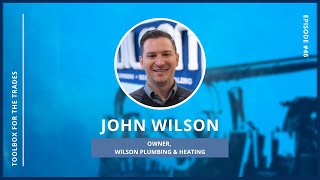
John Wilson, owner of Wilson Plumbing and Heating, talks about growing his family business through acquisitions. He covers scaling challenges, hiring practices, and marketing strategies for service trades companies.
When you triple, everything breaks. And when you triple, the people that got you there aren't the people that triple you again. And that was a hard truth to accept. You are listening to Toolbox of the Trades brought to you by Servicetitan, a podcast for top service professionals where we interview leaders for their best tips and tricks of the trades. Learn how industry trailblazers stay ahead of the competition and how you, too, can be at the forefront of an industry. Let's jump in.
Hello, contractors, and welcome to the Toolbox for the Trades. Today I'm joined by John Wilson, the owner of Wilson Plumbing and Heating in Akron, Ohio, the founder of the Wilson Companies and co host of the podcast Owned and Operated. Since purchasing majority shares in his family business over the last five years, John has been hard at work leveraging an uncommonly used but highly effective acquisition strategy to grow his company by at least 30% year over year. This fascinating conversation is a sincere one and at times, quite funny. I learned a lot from John, and I hope you will, too. John Wilson, welcome to the Toolbox for the Trades.
Thank you. Thanks for having me on.
I am so excited to chat with you. Not only are you the CEO of Wilson Plumbing and Heating in Ohio, but you are also the owner of the Wilson Companies and co host of Owned and Operated, which is also a podcast. You're now my CEO, second or third fellow podcaster I've had on this show, and I just. I love chatting with podcasters. So I'm super excited.
You're starting a club. Yeah. You're starting a club now.
I mean, if we were to start a club of podcasters in the trades, that club could actually get pretty large. There's quite a few now.
Yeah, yeah, it has blown. It has blown up in just the past couple years. It feels like I see more and more. I don't know about good ones, but there's definitely a lot.
Well, I like to think that mine is a good one, and I also.
Like yours is a good one and.
That yours is a good one too. But let's just kick this interview off and we'll start it the way I start all my interviews, which is, how did you get into the trades?
Okay, so I'm in a family owned and operated company, so it's Wilson Plumbing and my last name is Wilson. Right. So my grandfather started this back in 1958. My dad bought it in the 80s. So like most people who grew up, especially in the trades and family companies, you know you're working there when you're 10 years old, putting Stuff away in the shop and getting yelled at by the people in the office and, you know, all of that stuff. So that was me. I was a kid. I grew up in the business, helped out after school, through high school, and when I was 18, I came on as an apprentice technician. So that's my origin in the trades.
Did you always want to work for the family business or did you ever have a rebellious side where you were like, nah, oh my gosh, I'm going to become a stockbroker instead.
Yeah, yeah. Okay, so almost exactly. That was perfect. I'm like, did you read my book for the Listener? I don't have a book. So, yeah, I really, for most of my life, I did not want to get into this at all. I really fought against it. I don't remember why. Maybe it felt too predictable. But when I turned 18, I actually went to school for graphic design. So very different. And then I started working in the trades. And then at 21, I went to. I stopped going to school for graphic design. And then at 21, I started going to school full time at night for accounting. And I was determined that I was going to go be an accountant somewhere. Oh, wow.
So and while you were doing this, you were also moonlighting or daylighting as a technician, Right?
Dang. Yeah. So I would go. Yeah, I would go to work, you know, eight to five, whatever. And then there was a local community college that I went to for my first two years for accounting, and classes started at six, ended at ten, three nights a week. And I did that for two years. And then on the third year I went. I, like, transferred to a local university. Oh, wow.
And so when did you make the switch that. All right. Well, I guess I'm going into the family business.
I had just got. I got married at 23, and I was three years into my college education. And I think at the time I had, like, gotten myself into financial troubles because I was 23 and stupid. So I really went down a really big rabbit hole in personal finance and tried to figure out what I was going to do with my life and how to be wealthy or successful or whatever. And I just stumbled on books that talked about rich dad. Poor dad is always the one I reference. But where you can buy a company and you can generate profit, you can buy real estate, whatever it is, but buy assets that make you money. So turned into studying Warren Buffet, and I'm like, oh, my God, apparently you can make your living just buying companies. And once I knew that and I was like, 23, I mean, I was hooked. Like, I knew I had to make that my life. Where I was buying companies and buying assets.
I love that. And we'll get into that, by the way, with the Wilson companies as a heads up listener. This episode is going to be very much about acquisition equity, all of that stuff which I'm really excited about. Because like you, John, I also went into my own journey into personal finance. But unfortunately it was not as early as 23. It was only a couple years ago, but we all get there. So before we go into the Wilson companies, which is, I think is super cool, let's talk about Wilson Plumbing, heating and cooling. Just give me the makeup of the company. What's your annual revenue look like? How many techs? Residential versus commercial? The whole deal.
Yeah. Like do we talk about history or Whatever you want.
However defining the company means to you.
Okay, well, defining the company for me has been a company of rapid growth. So when I first bought into the company In 2016, we had under 10 employees and we were doing about $1.1 million of revenue through a couple of acquisitions and just learning how to run a business. We're expecting to close 21, a little over 5 million with about 32 employees total. And that's 22 trucks on the road across three different trains. Wow.
That's pretty significant growth from 2016 to 2021, which is when we're recording right now, February of 2021. So you didn't actually come into the business as your typical father handing down the keys to his son. You actually bought in.
I would say that most people have a. The premise of your question is that most people don't buy in. And I would say that people have a very interesting conception about how family businesses are handed down because you can't hand a business over. Like, if I was handed a business, the IRS would have sent me and everyone in my family to prison. Like, it's a taxable asset. Right. You can't hand away an asset that should be taxed on sale. So we could dive into how that dynamic works in selling. But usually the only way to hand out a business is if the parents die and it's inherited. Or you can gift it over the course of maybe 10 years, because there's a gift exclusion where you can gift up to 15,000 per adult to your kids. So if that was your parents, that would be 30,000 total. If they each own shares, you could gift that. So I do know some people that the business was maybe worth three or four hundred thousand dollars and they gifted it over the course of 10 to 15 years. In our case, the business was already worth more than that. So using a gift exclusion, that tax exemption would have taken about 20 years to fully move the company, which was not our intention.
Oh, dang. That's so fascinating. This is new information to me. I say this on the podcast all the time. I am not a business owner. I'm just.
Yeah, that's okay.
Enthusiastic observer. So thank you for clarifying that. We'll assume that other people listening right now also learned that. So you actually bought in and when you bought in, did you become a part owner of Wilson Plumbing Heating and Cooling?
Yeah, So I bought 50% of the company and it was a seller note to my parents, to my mom. I bought my mom out. So I bought 49% and then my father retained 51%. And then in 2019, I bought another 49%. So my father, Paul, will retain another 2% for however long.
Oh, wow. So what did that look like? This may get a little personal and you can tell me to bring it on.
I'm an open book.
You can tell me to go kick rocks if you want to, but what's it like kind of in those first few years as you're taking over ownership from your parents? And I can imagine, given what I know about your background, presenting different types of systems, different types of processes, and just a different way of doing business.
Yeah, it probably depends a lot on the two people involved. I'm sure that we've all heard or seen family businesses that act anything other than family. Right. They are at each other's throats and whatever. That was certainly not my relationship with my father. We had a great relationship before being partners. We had a great relationship during it, and we have a good relationship after. Great relationship after. But that being said, it was difficult to pull off what I wanted to pull off because I was 25, 26, and he was 69 at the time. So very different stages of life. And he wanted to exit and he wanted to slow down. And he really only liked this 10 person company. He ran it as a 10 person company for 30 years. And that was his, you know, it was a lifestyle business for him that he used to go buy real estate and live his life right. Put kids through school. So it was a difficult dynamic getting what I felt like we needed to do, which was invest aggressively into marketing and processes and acquisitions with someone who owned majority and did not want those things.
Got it. And is that why you eventually. Well, you said already he wanted to exit, so he had Motivation to sell you the second half, But I know.
That is why we ended up doing it. At the time we did, we were getting to the point where I was being constrained, and we both felt it. I could not make the decisions that we needed to make as a company in order to move forward because I was the minority shareholder that ran day to day. So there was a lot of marketing that we could not do. I didn't feel that we could pursue larger acquisitions, and I just couldn't sort of go the direction that I felt like we needed to go.
Got it. And it sounds like you and your dad had a pretty good relationship. You said we both felt it. So was that just a series of conversations that got to this makes the most sense?
Pretty much, yeah. It was early 2019. We'd been doing it for two and a half years, and we both saw where the business was going. We had just crossed 3 million for the first time, and what we had to do next was pretty straightforward. He just didn't want to be a part of it. So it was pretty easy to handle. And the transaction, once we sort of decided, hey, this needs to happen, it took about two months to iron out that final 49%.
Nice. Quick question. What was it like to take a business that had been at 1 million steady for years and years to that $3 million mark?
It was a train wreck. It was a total train wreck. So I've worked for two companies in my life. I'm, like, probably the worst employee in the world. I worked at a local ski resort when I was in high school, and I worked for Wilson Plumbing. So I have never worked at a company that had their shit together. I don't know if I'm allowed to say that, but we didn't know what onboarding was supposed to look like. We didn't have an employee handbook. We had no clue how to market. We just didn't know how to run, like, an actual company. When we got slow, we used to flip houses instead of learning how to market. I don't know. Looking back, even just four years ago, it's like, oh, my gosh, I cannot believe that that's how that company used to run. Like, it was just so different. It was just so different. So we had to design the whole thing over again. And it was most, I want to say, like, trial and error, but it was mostly error of figuring out how to actually run a company successfully. So it was a train wreck. We got a little bit farther. But the biggest thing that accelerated our growth was an acquisition and that doubled us overnight. And that's when we really saw all of our weaknesses for what they were and we had to come to terms with them and fix them quick. Otherwise the company was going to not do well.
Oh man. I asked that question thinking you were going to say, oh yeah, 1 to 3 million. That was such an incredible accomplishment. Just to get tricked. As an honest response, that's.
It was a total train wreck. Well, I think they say everything breaks at three times, so every time you triple everything breaks and 3 million. The reality is not a big company. It's just not. It's maybe 25 people, but the systems and processes that you need to understand how to run a $3 million company versus a $1 million company, they don't even look close to the same. And having to learn that with no one on the team that has any idea what the hell they're doing, like, it was not an easy journey.
I love the humor and just the honesty you're giving me right here. What were some of the biggest resources that you looked to as someone who was taking ownership of this company and was like, I gotta get my shit together to your phrase.
Yeah, yeah. So we were a part of the Mastermind group and we were the smallest one there. Right. It was like there was these guys that were like in ours at the time, just like killing it at like $5 million. We're like, man, that's so cool. And we were in that group with them and just trying to absorb everything that we could. So we were like. While we were with them, it was about a year and a half, we would go down to their businesses, we would walk through their systems and processes, meet their staff and just sort of dissect it. It was five or six businesses in that group and that was the big kicking off point for us. That got us on Service Titan in 2017, that got us on flat rate pricing. That gave us an idea of how to handle fleet, an idea of what culture should look like in a success driven culture. So that we got a really inside look at what a five to seven million dollars company looked like when they operated.
I love that.
So that was the big kickoff. Without that, it would have taken longer.
How did you get connected with that Masterminds group?
One of our supplier, our primary supplier at the time, they just, it was a pet project of their VP of sales. It was, I mean, it was incredible. Yeah, it was. I mean it was, it was very cool that we were able to be involved in that. That was a big game changer for Our company.
I mean, lesson here. Talk to everyone who you connect with, whether that be your suppliers, whether that be your vendors, and see who they can connect you with. That is like, one thing that keeps coming up through this podcast is network, network, network, network. Because this industry, and when I say this industry, I mean basically all service industries, at least the one service titan deals in, they're so willing to help one another. So the more you get connected with folks, the better.
Yeah. For somebody outside of my service, like, outside of Ohio, like, you, can you. I'll walk you through my shop, I'll introduce you to my staff. I'll show you how we do things. If you're in Ohio, I probably won't, because I'll be in your market soon. But, yeah, I mean, it's real. And I think there's new ways to network now with COVID Like, I've been networking with a lot of people over just Twitter and talking to other operators in all kinds of industries, but people running, like, I'm now friends with a guy who's buying a $20 million roofing company in North Carolina, and in a month, I'm going to drive down there and I'm going to walk through it, meet his staff, and see how a $20 million roofing company runs. And that's going to be hugely impactful for what we need to do in the next few years.
Nice. That's awesome. I love it. I love the ambition, I love the enthusiasm. So I have a feeling you have a couple answers to this question. But knowing what. Knowing what you know now, what's a couple. What's one thing? Or what would you have done differently when you first started taking over in 2016? So what you know now, what would you have done differently those last couple years?
I think people, and I'm sure this is everybody's answer, and I hate that that's so cliche. But it took me about three years, maybe two. I'll give myself a little bit of credit to understand the role that people take in scaling good and bad. Like I said, when you triple, everything breaks. And when you triple, the people that got you there aren't the people that triple you again. And that was a hard truth to accept, because you like the people that at a million dollars really helped put your business together and really put you on that track to success. They're not a part of your $10 million team, which is like, that's a. That's a tough thing to accept. And then I think figuring out who is on that $10 million or $50 million or whatever. Your next goal post is who is on that team, how to recruit them, how to incentivize them. Like how do you hire operators? That's a huge learning curve that it took me a little bit too long to learn.
How do you hire operators?
Carefully.
Tell me, what do you look for?
We look for. It's a little simple and maybe trite, but we look for humble, hungry and smart. So we want someone coming in like my ideal operator. I divide personalities up into profiles, right? So my ideal operator looks like X. That is currently someone who has worked inside a franchise as a service manager of some type, preferably not in industry. I don't want someone H vac or plumbing related has been involved in some type of entrepreneurial effort at some point in their life. That's a big deal to us. We want them to be scrappy. We want someone that started a landscaping company at 15 and they were the ones pushing them over because we don't want someone to believe that they're too far above getting out into the field. We hope that they never do because that's not their role. But you know, we don't want a superiority complex. We want someone who's humble and who exemplifies servant leadership. That's how I lead. That's how we all lead. We all take credit for our mistakes and we try to give credit for everyone else's wins. And we're all just here to support and smart. I mean, that was pretty straightforward. But whenever we're recruiting, we call it our $10 million team because that's our next big goalpost. Some people call it raising the iq. Every hire should raise the average IQ of your organization. So however you look at it, but you need to be hiring people that will help you on your next triple.
I love that I'm actually going to call something out because you just, and I don't know if you noticed, but you were flipping an old view on its head in terms of the trades. I've heard this before, that skilled technicians who have left a company and tried to start their own aren't good there. It's kind of like a red flag. You don't want them stealing your customers. But you, on the other hand, said no. I would love to see someone with some entrepreneurial experience. Tell me, can you dig into a little bit more why that's so, so important?
Yeah. So I guess I have a couple thoughts on this one. If people want to start their own company, they're going to do it. And it Just doesn't matter. Trying to block someone from pursuing their own future is like, it's only going to hurt you, it's only going to hurt them. That's not saying I'm encouraging our people to go start their own company. But if someone's like, yeah, I'm going to do this hell or high water, I would much rather be a friend to them than try to make their life a living hell. So that's one part of the answer. And the other part is we are an entrepreneurial group, like our very organization. Right. We grow at a minimum 30% a year. We've doubled some years, we've launched two ground up services, like started them from scratch. One was a handyman concept, one was damage remediation. We're constantly acquiring companies and if you don't have an entrepreneurial spark, you're just not going to survive here. So like I don't have any use for someone that's been a middle manager for 30 years because they're just not like they're not going to be driven to succeed the way that we are driven to succeed.
Yeah. Have you ever read a book called Multipliers?
No, but I'm going to write it down.
They have this really interesting concept. I've been listening to it for a while now just you know, in between my, you know, when I'm, you know, cooking dinner or something. But they have this really great concept that is about rock stars versus like superstars. I may be muddling that up a bit, but it talks about the identifying folks that are really good at consistent hard work that you need to keep a business running and then identifying folks that are always reaching for that next level, that always need to unlock a new skill set or keep striving for better, better, better. And by differentiating those in your team, you can really scale for growth and really optimize everyone's talents. So that's my.
Yes, that concept. I've never heard it called that, but we use a concept called integrator and operator. I'm sorry, integrator and allocator.
Ah.
So it's similar to like the EOS system from Traction or if you've read the Outsiders. But like my job in the company is to strategize, allocate capital and build the business. Right. But my job is not to run the business. I have nothing to do with running the business and it'd be a train wreck if I did because I'm not very good at operations. So we have people in the companies that are our integrators So I strategize, I go buy a company tomorrow, who's going to integrate it, who's going to hire the staff, who's going to actually do pull off and execute the strategy that I've laid out. So I think that's probably similar. And I 100% like, you need people who are going to always be driving forward, always going to be setting that vision far out and ahead and then chasing it with vigor. And then you need the people that are actually going to execute what you're trying to do. Two very different people. That's never the same person. Yeah.
And good on you for being self aware and knowing what you're good at. Not many people are. So we've been dancing around the acquisition topic. Let's dive into it. So in your time running Wilson, the company has done a couple of acquisitions. Tell me about them and why you chose to acquire these businesses and just what the process was like.
Sure. I feel like that's so vague because there's just so much like there's so many different ways to go.
Are you calling my question.
It was like, are you roasting me a little? Like which direction do you want me to go here?
Tell me. Let's start here. Talk to me about the acquisitions.
Okay. All right. So I've made four acquisitions. First one was my family's company. The second one was in 2018 and that was an M and A style, which is merger and acquisition. And then I did two, what are called tuck ins. The difference doesn't matter very much. It's just basically a tuck in is so small that you tuck it into your business. It takes almost no time to integrate. They're very small.
Got it. And when we're talking about these acquisitions now you're speaking as the owner of the Wilson companies and we're looking at your overall portfolio. So the core business, which is your family business, which is Wilson Plumbing and Heating. And then we have the M and A company which was in 2018 or the that you acquired through classic merger and acquisition and then two more tuck ins. And it sounds like you're kind of taking them all under that one umbrella right now, which is Wilson Plumbing and Heating.
Right. So the strategy that we've been employing is called rolling up. So you buy a, it's called a platform company. It's just your first company in the space. Anything could be a platform company. Once you have your platform company, you start looking at either equal size mergers or larger ones or tuck ins. But basically you have your foothold Inside the space and then you start adding to it. It's frequently used by conventional private equity. If conventional private equity went and bought me today, they would buy three to five more companies in my area, roll them all up, combine management, save a bunch of money on all those shared processes, and then sell it off and three to five years for whatever their fund life is. But we're using a roll up strategy, but we have no intention of selling the platform company, which is my family's Got it.
Very interesting. Talk to me about that first acquisition in 2018. What prompted you to make that acquisition? What was the strategy behind it?
I had decided pretty early in my life that I wanted to make my life like buying stuff that made money. So I had been operating Wilson Plumbing for about a year and a half and I was like, I think it's time. I have no idea what I'm doing, so let's double. So I started just doing general seller outreach. We sent letters. I googled plumbing companies in the area. I came up with like 50. We sent letters, five people responded and I bought one of them.
Oh, wow.
And what was your not that complicated.
Here, here, you guys hear it now Toolbox for the trades?
Not that complicated. Not that complicated. Not that complicated. Yeah. What was your pitch in? There's like two. Okay. My pitch in this first one was terrible. So I want to like it. I want to acknowledge that. And I learned so much from that about seller psychology and what a seller wants and needs and how to address that conversation. My pitch in that first one, the seller was in financial trouble. So the pitch was, I'll get you out of financial trouble, but I get the business. It's a pretty straightforward pitch. Not a very compelling pitch, it turned out. So the deal ended up taking nine to 10 months to close. And mainly just because I was 26, I had never done this before. I had no idea how to structure a deal and I didn't know how to talk to a seller. And talking to a seller and helping them design their exit from the company that they've run for 30 years, that put their kids through school, that sent them on vacations, that is a skill and practice, is the only way that you're going to get good at that. And identifying what a seller really wants and why they're actually exiting the company and what the next five to 10 years need to look like. I learned all of that in that transaction because I really went at it totally wrong, thinking I was there to do him a favor, which was get him out of financial troubles. And that was as good as I needed to get. And I didn't really need to be conscious of all the other soft skills that went into that. And obviously that was, you know, incorrect. So I learned and adapted.
Got it. Really interesting. So you acquired this company in 2018. You did it brand new, no experience. I love it. I love the gumption. I'm similar minded. You rolled up this second company into the platform company. And when you did that, did that just add to your existing database of plumbing and heating and air contacts or did that expand into a new service area? Did that expand into a new trade? What did that look like?
So we were in plumbing and heating in the base company and this was, they just did plumbing, but it wasn't a new geographical area. So as an accounting, just south of us, not a huge population, but another city, basically five or six hundred thousand in that whole county. But second generation family business, they've been around for 35 years. But again, I said it was a train wreck like 10 minutes ago because it totally was. I think we were doing one and a half million when we acquired them. And you just don't need to know a lot to run. This isn't an insult to people running $1.5 million companies. It's just we were a 60 year old company that had a huge customer base that had never had to learn how to market, never have to learn how to really hire because we've had technicians for a decade and a half. There was just so much that we had no idea how to do because we'd never needed to do it because we'd grown gradually over 60 years. When we doubled, it was such a train wreck because we all of a sudden had to figure out how to actually run a company instead of run a lifestyle.
What were some of like, I mean, I'm sure the stuff that came up in my previous question, People, systems and processes. Is there anything that really comes to mind right now when you think about that train wreck of combining the two?
Yeah, I mean overhead, overhead planning, fleet management, marketing. We had no clue how to market. We'd never marketed. So we just like two months after we bought them, we got onto Google to start like, you know, that's a, that's a learning curve and we had to do it under duress. HR was a big one. We had like, our HR practices were just horrible. Really terrible. Bad onboarding, bad hiring. I could go on and on about our bad HR practices like we're nice people, but we just didn't know how to do it. Sure. I'm trying to think what else was a total train wreck.
Well, let's stop at hiring and onboarding real quick because we actually haven't spoken too much about HR practices on this podcast. But onboarding. So right now you have, you have two companies. Right. You have your platform company and you have the company you just acquired. There has to be some thought and consideration that goes to merging those two together. Bringing over technicians, if you're not just purchasing a database or a name, but bringing over employees, integrating them effectively with your employees and making sure that folks are lined up and incentivized to make.
Sure it all works.
Right.
Right. Yeah, that was for me, that was most of the I'm good at strategy. That's like one of my three things I'm good at. So that part of it we had unlock. We didn't have any drop off of technicians. They were able to integrate day one. And we went into that acquisition with, we now call it our hundred day plan. So whenever we acquire a company, we have like a folder. We sit down on day one and we set the company down. It's a, it's a tell all. Like you can ask me anything and I give them. We go over their benefits, we go over handbook, we go over how the company runs, who the players are, there's an org chart and then there's a very detailed list of. Here's what the next 100 days looks like. Because when somebody is working for a company that gets sold, there's a bunch of concerns that flash across your mind when you find out. And usually it's like a Monday morning and the owner doesn't tell you before. So like here comes me like, hey, I'm your new boss. So we spend a lot of time and energy trying to ease that transition. Yeah. So by bad HR and onboarding practices, it was more like we didn't know how to recruit effectively. We didn't know how to. Onboarding really was a big one. We could onboard a company. That one we actually did pretty well because we devoted so much energy to it. But a good example of our practices, I brought somebody on in 2019 as a technician and it was six months later and he still didn't know how his vacation worked. Like that's bad onboarding. Right? Like that's on me. I was doing the onboarding and I was doing it wrong. So we really changed it where now there's like a week long process to onboarding. If a new tech comes in, they're in the office for two days training with whoever the training manager is, they're riding along, they're going over our software and they get bought in to that company, to our company in the first week.
Got it. Very interesting. So it sounds like with this first acquisition you expanded into a new area. All of a sudden you got all this market share. You had to figure out how to market to these people. Because now it wasn't just the Wilson family name that folks had known for 60 years and were calling up like, oh, yeah, call Wilson, we always call them for our plumbing and H VAC needs. So you had to have a quick rapid session in Marketing 101 under duress.
I love that. Under duress. Well, we had like, we had. We had only ever had three or four techs in service and suddenly we had 10 and we never had to market. So we didn't know, oh, you have to keep these guys busy. We just assumed the phone would always ring. Right. That's not how it worked. So suddenly we have guys just sitting around. We're like, we don't know how to market. We've never had to do this. So that's the. Under duress is like we bought the company in February and by June we had to figure out how to market because this was not going well.
This is so funny. Not funny, but I'm just. I'm really.
It's funny. No, it's funny.
I'm enjoying the lightness of, of this conversation. What worked in marketing for you guys when doing that and what didn't work.
Well, when we first jumped onto marketing, all we did was digital because it's. We had to drive results fast. So there's like, you can divide up marketing into like digital and branding, right? Like two halves of a whole. And we felt like for the first year and a half or two years of marketing that the only thing worth it was direct results. So like pay per click, LSAs I don't think existed at the time, but something that I can put a dollar in and get 50 cents out or whatever. So that was backwards, but you get what I mean.
Yes.
So we were neglecting branding and also because we needed results fast, because we now had guys sitting around and it was like, well, how do we get them to work immediately? So we signed up for angie's List and HomeAdvisor and PPC and just everything that was a direct result advertising. The downside of that was we neglected branding for too long. So then it was a hard shift to turn. We turned it, but there was a drop off for about a month. When we shifted more out of ppc, because I don't know, do we need to. Should we get into depth on marketing really quick?
I think.
Is that a good tangent?
I think this is a good tangent.
Okay, okay. I'm like, what's? Welcome? All right. So in marketing, you deal with diminishing returns. Like a lot. That's like half the game is handling your diminishing returns in this company. So we were getting to the point where we were spending $15,000 a month on PPC and no money anywhere else. That was it. That was our marketing. It was $15,000 a month on PPC. The problem with that is if I spent $6,000 a month on PPC, I would be in front of 80% of searches. So that last 20% cost me another $9,000, another 150% of my original marketing budget. Right. Because it's diminishing returns. So every thousand dollars I reinvest into ppc, you get less and less leads from until you're overbidding on keywords and it's just an ineffective way to grow. I didn't understand that for like a while. I just. I was like, oh, PPC works. We're getting more leads. I didn't really think very hard about it. So, yeah, one day I was like, why are we spending $15,000 a month? And how are we spending $15,000aMonth? And in February, our phone still doesn't ring. Like, this just doesn't make sense to me. And then I started, you know, I just stopped for, I guess, two minutes to think about it at all. I was like, okay, that makes sense. Started investing heavily into alternative methods right now. This is interesting. I don't know how long this will last. So I don't mind sharing this with the whole world because I think people are starting to catch on. But people are so invested in digital everywhere. Not just plumbing and H Vac, but that marginal utility of those dollars has dropped substantially over the past three years. Whereas billboards, radio, tv, that's cheaper than ever, which is really interesting. So you can get way more potency for every dollar that you invest in those. So we have been doubling and then tripling down on our out of home media, lot of radio, we're jumping on YouTube, TV and currently have a billboard campaign and some mailers and that type of thing. But it's about 50% of our budget is going towards non digital and 50% is going to digital.
Wow, really interesting. I do have to commend you on your website. I do really like it. I enjoyed the very. John is fist bumping in the zoom.
I'm fist pumping for the listener.
Yeah, no, the website's very, very clean. And yeah, I've heard this before. I actually heard it a couple months ago that. And actually, it was at the beginning of COVID I had spoken with Susan Frew on a webinar and she had said that now is the time to negotiate for radio.
For thoughts, I bought years of radio. Like, the world shut down on a Wednesday, and the next day I. I bought two years of radio. Like, because that day half of their flights had canceled. So I got 50% off. I'll take that deal any day of the week. Exactly.
That's really interesting. What's your. So when you're crafting a radio or a billboard spot or TV spot, which obviously is branding, it's an impression. What's the tagline that you're using to. To promote Wilson? How do you advertise in those quick, you know, 10, 15 second increments?
Right now there's a. Depends on, you know, season or whatever, but the tagline is better call Wilson.
Better call.
Better call Wilson.
Oh, do you record the voice voiceover too?
No, I do not.
All right. This is all very fascinating, and again, I cannot tell you how much I enjoyed the brevity of this conversation and how big honest you're being. John, I don't think. I mean, I think everyone who comes on this podcast is very honest. I don't think anyone has been as honest as you have. So let's go into the Wilson company.
Now. I'm just like, is that good or bad?
No, I think it's excellent. That's the only way that people learn. And I think, personally, my opinion. I've interviewed hundreds of owners and entrepreneurs at this point. I think the more honest and truthful you are, the more things will come back to you. So that's my opinion. But who? What do I know? I only host this podcast, I think, in our business.
To me, it's kind of a joke. Like, none of this. It's just a game. I don't know. We've always failed forward and we try to recognize our mistakes and laugh about them because we learn. Like, I launched a company in 2018 and I did everything wrong. It was the worst. I did such a bad job. But because I did such a bit, like, we shut it down because I made unsalvageable errors in opening that company, which was hilarious. But a year later, we launched a new concept and I fixed everything that I did wrong in the first one. And because we sat down and we're like, hey, what happened, man? That was. Who decided that? For the listener, I'm pointing at me and I don't know, I just feel like, yeah, own it. It's funny. Like, learn from it and keep moving.
I mean, yeah, I think it's just an overall message to not take ourselves so seriously. So I sent you some questions before this podcast so you could get an idea of what I wanted to talk to. But in our conversation, I'm really starting to see you more as the owner and strategic person of the Wilson companies. And you're kind of moving your chess pieces, so to speak, with your main chess piece, your platform being Wilson Plumbing, and he dame and figuring out how to grow that platform company. Right. We've already talked in detail about the mergers and acquisitions, the classic acquisition you did in 2018. Talk to me about how you've done these tuck ins and were they used to either expand to another service area or were they used to add on a new trade?
Yeah, so they've all been used to expand into a new service area or just increase density inside an existing one. Okay, I'm sorry. I did acquire one to add a new service to the damage remediation company in December. So, yeah, okay. So each one's been a little bit different. So In February of 2020, I bought a company in Cleveland, which was a new market for us. We have an interesting dynamic where we're in a shrinking market. We're in Northeast Ohio, we lose a tenth of a percent of people a year. So I'm not in Austin or Houston or Denver, where you can market a little bit and go from 5 to 20 million in two years. That's not the market we're in. We have to acquire into new areas. So that's a big reason why acquisitions has become so important to us is because I have to be buying into markets where I can massively grow. Whereas right now we have big companies competing for a lessening amount of customers every year. So that's the nature of a shrinking market. Right. So last year I bought into Cleveland because Cleveland has about five times the population that my existing service area has. I bought into it. Covid happened. So all of our plans sort of like, you know, halted. We kept a technician running up there and just had him report to our main branch. But In January of 21, I put an ops manager in place and she's doing great. She just hired our second tech up there and he started last Monday. So we should end up with four techs, which is about 1.2 million in sales is what we're projecting up in Cleveland this year.
Nice.
So that was that one. I did another one. We own a damage remediation company. I started that last year and in December I acquired a carpet cleaning company for lead flow. Because damage remediation is like, when it's good, it's good. When it's slow, it's slow. Right. So we needed something to keep the techs busy. So in December, I grabbed a little tuck in for that. And I'm talking to an owner right now. I'm Talking to like 10 owners right now, but one of them is a tuck in in Akron. And that's just a density thing. Like we'll probably close in 40 days and I'm going to get five texts out of it, a phone number, some vans, and an active workflow.
Dang. I've really never spoken to someone who's approached business like you are right now. I've spoken to a lot of owners who are just growing from within and pumping in dollars into budget. I don't, granted, I don't have a lot of visibility into whether they're getting outside money or, you know, like that. But I tend to speak to folks who have just usually a family business, they've had it for years and they're just growing and they're learning new systems like traction eos. That's been really big on the, on this season actually, and they're just organically growing. But I've never really spoken to someone, a young person, especially someone like, you know, in the younger generation who's come up and is really just looking at this in a really strategic, strategic way. Do you find that your approach is fairly unique in the industry?
Yeah, I know that I don't firsthand know other people doing it. I know of people in the industry doing it. I've heard them on podcasts. There's not a lot of us. And I know the companies around me. I've been in various masterminds and I've explained my strategy because our strategy is a combination. We reinvest a ton of our profit into marketing growth, hiring the right people. And then every now and then I take a big swing and add 30% in a day or I double in a day. Not many people do it. And I think it's just because people don't know how and they maybe don't. I want to learn or it sounds intimidating or whatever it is. I do see a lot of companies doing. I'll see a $5 to $8 million company buy a one man show because I think that's easy. To them, that's a tuck in. That'd be defined as a token. It's easy. It doesn't take very much work. There's almost no risk. Whereas this year I'm planning on buying a company that does 40% of our current annual revenue. So we'll add that in one swing and we're probably going to do two of those deals. So I don't know that there's a right or wrong way. We've taken more. I don't know that we've taken more risk. It's just a different game.
Yeah, it's really interesting. I think it's a really unique approach to it. I'm pretty fascinated by it.
And again, it's a shrinking market thing too. Who are you talking to? If you're talking to someone out in Denver, they have a different battle than I do. Right. They can, they have staffing, but they're still. It's a massively growing market. So customer supply and customer acquisition is very different than what I have to deal with in my 800,000 population service area. So acquiring techs and acquiring customers is easy?
Yeah. Denver's the second most competitive housing market and Austin is the first most competitive housing market. Don't ask me how I know. I've just been living in my student apartment for a year in Los Angeles, paying the price of a mortgage for most people. I digress. Talk to me about what kind of business makes a good acquisition versus what kind of business makes a bad acquisition.
Okay. So it probably depends on your platform. Ultimately, I'd say the type of business that makes a good acquisition is one that no one else is looking at or no one else knows what to do with. So I'm residential, like exclusively at this point. Me looking at a commercial union contractor would do me no good. Whereas if I was a $20 million union contractor, I'd look at that. So it's really trying to align what they do, what you do as close as possible. Sometimes you can get creative. Right now I'm looking at an electrical contractor. We don't have electrical and they are all commercial, but I think I can pivot them in about six months to residential. And nobody else wants to touch them because they're too small. So that means you can get a deal. Right. So outside of like what they actually do, is it a cultural fit? Usually you're not allowed to meet the staff, but just talk to the owner. If the owner is a jerk, then he runs his company like a jerk. Right. So you probably know that that's not going to be a good culture fit. And he probably hired jerks and it's a whole thing. So culture is a really big one. How do their systems look? It depends a lot on the size as far as whether or not their systems matter. So let's say a tuck in right now. The one I'm talking to that I'm hoping to close in the next two months, they're doing $700,000 in sales and they have four or five technicians. So I'm looking at that and saying, okay, that's four or five techs. I can onboard them in two weeks. They have an active workflow. I don't need anyone from their office because they have no systems or processes that I'm interested in. At that size of a company, whether or not I take their vehicles and equipment, I don't know. I haven't looked at it yet. I definitely want their contracts. They have some really good recurring contracts. Trying to think what else I look at for that one.
Yeah, recurring contracts is huge.
Yeah. And that's sort of the initial look. I mean you uncover more stuff during due diligence. Like are their drivers good? Do they have any big insurance risks? Do they have any customer that takes up 30% of their revenue? That type of stuff we don't like. Obviously we want a bunch of 1 percenters.
Yeah, that's really interesting. Yeah.
There's about 100 data points that go into is this a good fit? But when you're looking off the cuff, how do you build or how do you design a campaign to talk to these owners? It's what's their reputation look like online and otherwise? How big is their company? It's hard to buy one man shows just because they want more than it's worth. And it's usually only worth like 30 to $50,000, which is hard for owners to accept reasonably. And if it's too big, it's not a fit. So it's size, reputation and sales.
I've also heard on the size thing that if it's a one man shop, sometimes that customer base will be like, oh, but where's Dave? Dave's the one that always comes here and does my, my H Vac so you have to deal with that too.
Yeah, personality driven business is what it's called. But yeah, definitely likely. We try to avoid one mans if possible. Anything below 5 is just tough. It's just tough to pull off because you're just not buying anything. There's nothing there. The customer base can't be that big because it's a few people. There's no systems or processes that are great. You didn't have the dollars to own jetting equipment or valuable equipment that would add to my fleet. Your vehicles are probably 10 years old and heavily used. There's just not a lot there. Whereas when you start hitting that million dollar mark, okay, you've got some processes. Your guys probably know how to use flat rate or something like that. So I'm not going to lose them by putting them all in flat rate. Your vehicles might be a little bit newer, probably have some drain machines. There's just stuff that happens at different levels that you care about when you're buying it.
That's fascinating. Is there anything that sellers should think of when they're dealing with someone like you or maybe a more popular private equity firm? Not a more popular but a more national level or a more traditional private equity firm?
Yeah, I think sellers should be thinking about what they want their exit to look like. Like what they want, not what they think it's supposed to look like or what their friend tells them it's supposed to look like. What they actually want the next three to five years of their life to look and act like. Because that's the determining factor in how a transaction happens. So we're actively in outreach. So I have five active sellers that we're working with. We're probably going to close on two of them within the next six months. And all different profiles. A couple of folks are in their 40s, a couple are 63, 63 to 65. So what those two sellers are looking for are very different out of their next couple of years. So when you're dealing with conventional private equity, what they're looking for in your business is called multiple expansion. So what I described earlier, the roll up strategy that we use, that's a private equity strategy. So they're going to come in and they're going to buy a platform company, probably doing 500 to 2 million in net profit, and then they're going to add as many other companies as they can to that. The reason they do that is because when you buy a company doing $500,000 to $2 million in net profit, you're going to pay three to five times the net profit for that business. That's called the multiple. So that's how it sells. But as you grow, that multiple expands. So if you're doing $5 million in net profit, the multiple actually becomes 10 times. So if you buy 3, 2 million net profit businesses at 3 to 4 times earnings, you can sell them for 8 to 10 times earnings simply by owning them for a few years. So that's the private equity game. They buy your company, they give you a good financial offer for it, but they're going to absolutely wreck your culture because they're only going to own the business for three to five years and then they're going to flip it. That is how private equity works. So if all you are looking for is the highest dollar out the door, private equity is great. You're going to get that highest dollar. And they might even recap you in that way. When they sell the bigger company in three to five years, whatever their fund life is, you get a percentage of those proceeds too. So you get bought out twice. It works. That's the whole private equity game. When you're dealing with someone like me, who's defined as a strategic buyer, your people tend to be more taken care of. My holding period is forever. So we're not looking to flip it in three to five years. I'm not making short term decisions based on what I need to give my investors back because there are no investors. It's me and my company. So it's just a very different buyer. It's polar opposite buyers. I come in and I have a 20 year timeline at a minimum. Private equity has a 5 year at a maximum.
Dang. Very interesting. Really giving me a lot of knowledge, John, a lot of things that I had never thought about before on this podcast. So thank you for that.
Private equity is a big thing in the trades now. They really accelerated their buying in 20, 20 and 21. Yeah, we've had, I mean, it's crazy.
We've had a couple PE guys on the podcast before and they're all great. I mean, everyone listening should obviously do their due diligence and figure out what's best for you. And they give similar advice, which is figure out what it is that you want. You know, what is your end goal here with the transaction if you're selling. But it's, you know, really fascinating when you think about it. And it's also, you know, you've mentioned a couple times the psychology of the seller. And I've gotten into that too. Like the emotional aspect of selling that you've built for years and years and years and what that looks like to have someone come in and say, yep, it's worth, I'll pay you 1.5 for this. And you're like, Wait, what? That's. That's it.
Dollars. They're a cheap substitute for everything that went into that company. And I think I see it a lot on Twitter. Usually there's a whole entrepreneurship through acquisition thing going on right now where people are buying companies, which is great. I guess a lot of boomers retiring, but they're allowing the spreadsheets to guide the transaction instead of. A company isn't a spreadsheet. A company is a group of people that are chaotic and happen to accidentally generate profit at the end of the day, sometimes intentionally. That's a company. They're all messy. Companies are messy, and that's okay. And trying to figure out how to run a company pro forma off a spreadsheet before you buy it is just nonsensical until you go in and actually talk to the people running and working inside that company.
Yeah, just a company is just a chaotic group of people that just sometimes happen to make profit.
I mean, that's the reality. Like, we can all dress it up and like if someone says that their operations are pristine, I'm gonna, I'm gonna walk through your place because I know you're, you're either lying or you're trying to sell me something. Oh my gosh.
All right, John, we've been chatting for almost an hour. I can't believe we already hit this, but I, I have been neglecting your. I see why you were approached to co host the owned and operated podcast just based on your honesty and your demeanor. Tell me a little bit about that podcast and what you guys are doing there because I think I'm definitely going to become a regular listener, a subscriber.
Sweet. So. So I'm on Twitter, right? And I'm, and I'm talking to all these people I'm networking with, all Twitter's the networking convention of 2020 now. And there's all these people trying to buy businesses and trying to figure out how to run them. And I don't know, I think that there's this ridiculous conception that companies are just these well oiled things that just print out cash for whoever happens to own it and all you have to do is show up that day and you'll back the truck up. We got some money and I think it's insane. So what we're trying to do is we are, we're sort of, we're dropping the veil. We're like, no, this is what it actually looks like. So we grow 30% a year and that is a mess. Every year. That is a mess. So what did that take? Like, what decisions did we make right? And maybe more importantly, what did we make totally wrong? Like, how did we mess up and what did we learn? We're going to be talking about the deals that we're actively looking at. Not by name, but, like, hey, here's what we're looking at. Here's how we're going to integrate it. Here's what we did last time. Here's why it worked so bad last time, but we're totally going to do it better this time. So we're hoping to just be honest and transparent and talk about what ownership and operations actually look like. Not this Instagram, I'm succeeding in public nonsense.
Thank you. Thank you for saying that.
I think it's crazy. I don't know. Like, a friend of mine, half of his staff quit yesterday. Half.
Oh, geez.
Like, that's not something that's going to show up on Instagram, but I would talk about that on a podcast all day long because I bet you I learned quite a few things.
Good luck to your friend, man.
Yeah, he's going to. He'll be okay. Like, he learned a lot. He learned a lot of good lessons, but he's not going to talk about that, right?
Yeah. On that note, I have a couple. I have a couple. A couple rapid fire questions.
All right, thank you.
Well, first, I actually want to ask, because you already, you already mentioned rich dad, poor dad. What are some of your favorite go to podcasts and books? Because I imagine you are just a wealth of book recommendations and podcast recommendations.
Oh, boy. I really like, like anybody that's in the business of buying businesses. I like Warren Buffett. There is a book called Warren Buffett, the Making of an American Capitalist. Easily my favorite book. And it goes from birth to 95 or something like that. Talks about every deal, talks about wins, talks about losses. I think that's fascinating. I really like the Outsiders, and that is a book about CEOs who excel at capital allocation and strategy, but are introverts. So I'm like, that's me as far as, like, getting in. The books that inspired me the most in my life were Millionaire Next Door and Rich Dad, Poor Dad.
Love it. These are all new book recommendations, so I'm very happy about it.
Read them all. Yes.
All right. How do you take your coffee?
Black.
If you could have dinner with one person, dead or alive, who would it be?
Brent Beshore. He's totally alive. He runs a fund in Wisconsin. And I think I'm going to be able to have dinner with him because I've met him through Twitter. Nice.
So he runs his own fund similar to you, and does he have a similar strategy?
Yeah, my strategy is called Holding Company Permanent Capital. So, like, it's a very specific. Very specific. And there's like 200 people doing it right in the States. So he was. The biggest people you see doing it are like Warren Buffett. But he's totally unrelatable in every possible way. Yes. Right. Like, it doesn't matter. Like, I. I can glean something from him, but, like, what's the rule? You should only look at people one or two steps ahead of you, because someone 10 steps ahead of you is going to teach you absolutely nothing. Like, they're dealing with problems that are so above what you're dealing with. It doesn't matter. Like, I could go talk to a billionaire and I wouldn't get anything out of that conversation except for being awestruck, probably. But Brent started off in the same way that I did. He had one company, and he turned it into a $500 million a year holding company in about 10 years.
That's amazing. That's really, really cool.
I can't wait to have dinner with him.
What's the number one thing you're trying to learn more about now?
How to be balanced in work?
Life balance.
More just like life balance. Like, how do you balance your marriage and how do you balance your relationship with your kids, and how do you balance your faith life and then add all that together and you still have, like, your health and making as much money as you can. Because that's fun. Like, how do you balance that? That all. I don't know. I feel like I see people that are four or five steps ahead of me, and I don't like what their life looks like. Their marriage is a wreck, and they're probably not in good relationships with their kids. So I'm really trying to learn how to be balanced now so I can take that skill with me to the future.
Yeah, I mean, that's. Thinking about what you want your lifestyle to look like is, I think, a giant question you need to answer for yourself before you do any type of giant undertaking. Right. If money weren't an object, unlimited resources, what's the first thing you would do?
Honestly, I like what I do.
I can tell.
Yeah. I've been like, I love this. And I hit my financial goals when I was 28. I don't need to be doing this. I can sell everything and leave, but I really love buying shit that makes money. That is so much fun. And not because I need more money, but just because it's fun. It's exhilarating. You get to, I don't know, go take down a company or like right now we're talking about a million dollar real estate acquisition because it's distressed, because it's five restaurants during COVID Like, yeah, that's fun. I want to figure that out.
Get it, man.
So I would keep solving big problems and attempting to profit from them, which is what I think I'm currently doing.
Nice, Nice. What's the number one thing every contractor must do to run a successful business?
Figure out if you're the integrator or the allocator, like, what's your role? And stick to it. You're not both. You shouldn't be both. And if you try to be both, you will stay small. Love it.
John Wilson, thank you so much for being a guest on Toolbox for the Trades.
Thanks for having me on. This was fun.
Service Titan's Growth series, the only masterclass featuring turnkey advice from industry experts, is now available on demand. Unlock critical lessons to accelerate growth, like mastering systems and processes with Al Levy. Leveraging open book management to motivate your team with Ellen Rohr and getting into the growth mindset with Keith Mercurio. Just go to servicetitan.com growth to access the original series for free. Again, that's servicetitan.com growth.
More from Bill




Capturing the 80%: How SmartAC’s Gen-2 Targets Non-Membership Homeowners | Podcast Ep. 296

Build better customer data with every booking in ServiceTitan | TAD Tune-Up Series

The Biggest Change for Roofers Coming From Other Roofing Software to #ServiceTitan?

