How to Pass Inspections in Real-Time | Podcast Ep. 152 | Toolbox for the Trades
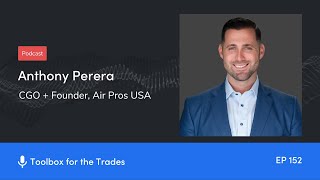
Jackie interviews Anthony Pereira, founder of Inspected.com and Permit Hub, about how HVAC contractors can pass inspections in real-time. Pereira shares how his technology integrates with Service Titan to streamline permitting and inspections, and discusses his path from technician to building multiple trades businesses.
Anthony Pereira, you are the chief Growth Officer and founder at Air Pros usa. Welcome to Toolbox for the Trades.
Thank you for having me, Jackie. I appreciate being here.
I am so excited to talk to you. You've got a pretty interesting story. We're going to talk about how you went from being a technician to a technology entrepreneur. You are also the founder of Inspected.com and the permit Hub, which we're going to get into in a little bit. But before we get there, we need to start at the beginning. Um, but even before we get to the beginning, I need to ask you an icebreaker, which is the new way that I'm starting these podcasts and I would love to know, since you're such a busy man, if you had to delete all but three apps from your smartphone, which ones would you keep?
Probably service titan, because I'm on this podcast.
You know, I kind of queued it up for you. I queued it up for you. You didn't have to go there. You didn't have to go there, but you did and I respect you for it.
Service titan, inspected and probably. I don't know if email and text are kind of part of the Apple universe, but probably one of those two.
Okay. If you had to live, if you could only email or text for the rest of your life, what would you prefer?
Probably text because it's instant. Yeah, I think you get better communication and responses. You can get more done quickly. Email's great. But if you look at my phone right now, I mean it honestly would have. And I can probably show it to you. Over 110,000 unread emails. And it's not by design, it's just, it's. It's. They kind of start piling up after a while and it becomes kind of a daunting task.
Yeah, yeah, I agree with you on that. I think my email right now has been like 1200. I am impressed with 100,000 though. I haven't seen that. So. But we're not here to talk about email and task management. We are here to talk about your journey in the trades and I want to know how it began. How did you get into the trades, Anthony?
Yeah, so my father's been doing H Vac for as long as I. As I can remember. You know, when I was a kid, he take around with him on his truck and in a previous business I had, we were in the bar restaurant industry and my dad was my construction manager. So he'd go and he'd manage the contractors, do the build outs you know, organize permits and all that good stuff. And when I exited that business, truthfully, he came up with the idea of getting in the nature company. And my goal really was to just kind of get him off my payroll at the time. Right. So we started air Pros in 2017. One tech, one truck. And you know, I use that cliche term out of the garage of our house because it really was out of my garage, you know. And that kind of, that was how Air Pros was formed. It was because my father wanted to open his own business. He never owned an actual air conditioning company. And I said I'd handle marketing and an organization and setting up the business and, and that was, you know, what is it now? Six years as of this, as of this June.
That's amazing. And when we first spoke, you mentioned that it was one truck, one tech 2017. And now you're up to 40 million in AR and you have almost 1,000 techs, I believe.
So we actually will do 225 million this year in revenue. We have over 1,000 employees and just over 750 trucks in the organization.
All right, so I also have a history in the bar restaurant industry. What, what a like split, right? Like. Well tell me what were you doing in bar restaurant industry before that?
So I think you should go back to the very beginning of my kind of entrepreneur journey. You know, started when I was 19. I was go. I was actually was going to school for pre law. Knowing how much I've spent on lawyers now versus what? Versus, you know, me getting my, my law degree could have saved me a few, you know, a couple million buc. I think over the course of my career so far.
But yeah, but then you'd have to be a lawyer. Then you'd have to be a lawyer. No offense to any lawyers listening. My brother in law is a lawyer. So I respect you. I'm so happy that you do what you do so I don't have to do it. That's what I love to say.
And I have some great friends who are lawyers, great friends who are lawyers who are awesome at their job. But I'm happy I didn't go down that path. I actually, I had a passion for, for racing mud trucks, funny enough. So growing up in central Florida and the Ocala area, you know, mud truck racing and mudfest and all these events were, were kind of taking off circa 2006 and 7 and, and I was still in college and you know, I went to a store one day to buy a magazine. I was, had a Jeep a CJ7 that we'd go out and race on the weekends. And I wanted to buy a magazine to help make my truck faster. At the time, there really wasn't any magazine dedicated to our sport. Right. You can go to the store, you'd buy a magazine for, you know, I don't know, four Wheeling or JP or whatever it was or diesel power back then. And so I said, listen, how hard can it be? I was halfway decent and high school at writing and had a few cameras laying around and, and so we started mudlife back in 2007. It was a magazine dedicated to kind of the off road sector, like lifestyle. You know, I had $10,000 that my grandfather had given me for college and you know, he told me not to use it for anything else but college. But we ended up using it to start the magazine and you know, printed it first copy. You had 0 subscribers, 0 advertising clients. It was literally a picture book with photos and, and we'd walk around these events and hawk it like a hot dog vendor for $3 a copy. You know, so took that, grew it, realized the importance of when you're building a business, it's not just building the business, is building the brand behind the business. And so with that, you know, we hit the road and went to events and started printing T shirts and you know, by our third issue we were 19,000 stores across the country, Books, a million Barnes and Nobles Borders, all that fun stuff. It's kind of my real first jaunt into the business world and I kind of had a lot of fun doing it. Eventually I sold the business to a big publishing firm when I was 21 going on 22 years old. Had I dropped out of college obviously at this point and was really focused on know becoming the chief editor for that magazine. Realized I was way too immature for that at that point in my career. Worked for them for about six months. And at 22, what else would be the cool thing to do at 20, at 22 years old and own a bar restaurant in your hometown? Yeah. So I decided to launch a country Western theme concept, 22 going on 23 and was hugely successful. Exited it a few years later, took a couple years, about a year off, did some real estate and got the itch go back into the bar restaurant sector. So I brought my father in the business to help kind of do the construction build outs. We opened six locations across four different states and then I sold that business in 2016. A year later we started Air Pros.
Okay, I didn't know any of that but what I wrote, I wrote down two things while you were talking. First, you're not just building the business. You're building the brand behind the business. I mean, that's just a quote. You just said a quote right there. You just said like a tagline for the book that I imagine you're planning to write at some point. Also, you strike me as someone who, when you find a problem, you solve for it.
Yeah, yeah, I think, I think that's. That's kind of been, you know, first of all, it's a passion of mine. You know, I'm a creative guy by nature, and my creativity comes from building companies. But, you know, kind of hitting on the brand perspective. You know, it really hit me pretty hard in the magazine industry because how do you, how do you set yourself apart from other. Other magazines that are 40, 50, 60 years old in an already kind of crowded sector? And so, you know, when we started publishing the magazine, you know, our goal was we wanted to have our, our readers who actually go to the store, pick up a carton of oil, whatever they were doing for their truck, and grab a mudlife, right? That was the brand we created. And back then, it's the circa 2007 and 8, we had a million followers on Facebook. When you couldn't buy followers, like, you actually go get them. So when I went to go sell the business, it's kind of funny. We're at the. I got a call from our biggest distributor. Time was. Was source Interlink Media. And they go, I'm in this room, no idea why they called me. I thought they were going to like, can me from the, from the, from the distribution. So I'm like, petrified. 20, 21, 22 years old. Walk in this room and there's the CEO, the CEO and like five executives around this table. The guy, the CFO walks in and slams like all of his brands on the table and goes, how do you, how do you outsell us in the store? Three to one, two to one, you know, And I was like, well, we built the brand and our. We have a really, really endeared customer base that loves what we do. And so. And that's really kind of where I've used that mentality and building brands of all my companies, right? Even. Even the bars and restaurants, I have patrons who had our logos tattooed on their arms. I mean, like, it was, I think, truthfully, I'll show you some pictures. But, you know, it's funny because I jokingly say I think I've contributed to more marriages, divorces, and babies. In my career as a restaurant bar operator, I even had a. We had a funeral or two at the bars, right? So you build this brand and you kind of really endear yourself to your customer base. And then we try to use that same mentality in building Air Pros. You know, it's not just anybody can choose any brand, any H Vac contractor. I mean, heck, there's, you know, tens of thousands of them in the US and in each state. And how do you differentiate yourself? And it kind of goes to how we wrapped our first truck. And Dan will kill me, Antonelli from Kick Charge, because to this day, I'm probably one of the only, I think, brands he never actually rebranded. And he's done nine of my other brands as we acquire companies. But Air Pros, our first truck was wrapped like a zebra and a tiger and it was nothing to do with air conditioning. And it's horrible. Look. But you know what it did is it set ourselves apart. And when customers saw it, they're like, oh, my God, what's this crazy tiger truck? What is Air Pros? And so that's kind of how we grew the business organically for the first couple of, couple of years and started doing some strategic M and A and buying customer lists of defunct businesses or guys who are struggling. And today I proudly sit here and I think we are the largest non equity sponsored H Vac platform. So we never actually raised equity. We've always raised debt capital in our industry. You know, so our shareholders and our organization controlled the whole entire business, which, you know, most, most platforms of our size, you know, they've had multiple exits and you know, the founders typically only retain a small portion. And in our business, we control the majority. So it's been a very, very interesting ride. A very unique way about to go about building a company. And we're very proud of it.
I mean, I don't know. So when we put videos out of this podcast, you only see your face. So unfortunately, the folks watching on YouTube did not get to see me do the first ever toolbox in the trades. Walk away because you literally made my jaw drop. I cannot believe that at such a young age you created a brand that people tattooed on their skin permanently. I have tattoos. I like tattoos. They don't have a brand tattoo, so that is, that is something. Love Dan Antonelli too, by the way. But man, we could go so, so deep on this. But I really want to talk for a moment about debt capital because you and your family are still, I think, 78% shareholders of the business. So can you tell me a bit about something like that? Right. I think that's when. So tell me a bit about how this debt capital works. Because we've talked so much about private equity and M and A on this podcast and this is something I haven't heard about before. So I know our listeners, some of our listeners haven't. So tell me a bit about it.
Yeah, listen, I mean the traditional path and a lot of these operators and it's a great path to take, so don't take anything away from you guys for what you've done is to go and build your business and spend, you know, years doing it and eventually finding a partner who's going to either one buy you from a, you know, a, to start their own platform. So private equity group or to a strategic where they're going to fold you into their platform and you're going to roll and so on and so forth. And we liked that idea. You know, we had, we had a very healthy pipeline of potential targets we wanted to acquire. And so you know, I went out to seek an alternative means to doing so. Right. And building real value for our shareholders because those that did roll with us obviously have intrinsic value because they're rolling into a platform that hasn't traded hand yet. So we actually met with a group out of Austin, Texas and we had a couple of bidders and suitors and we raised what's called a delayed draw term loan. So really what we did is we raised capital to do M and A. And so it was not cheap by any means, it's not cheap capital, but it gave us the creative freedom and flexibility to take our business. At the time we first raised the money was 45 million in revenue to over 200 million today. And even today we refinanced the capital a few times through one of the largest debt providers in the US but even today we still don't have any equity in our cap stack as we're recording this call right now. So it's really been interesting and listen all the guys out there who are in their 20, 30, 40 million dollar range that, that, that, that, that, that exists for them as well and happy to, you know, talk more about that and how to source that, how to find that and be a resource to help other operators who want to do that because it's a path that a lot of people don't know about. Right. They all, we're all in this industry as contractors think, okay, build my company, either I keep it, give it to my kids, which by the way, I'm not really for that. My kids, I can show you don't want my company, want my money, right. So it's when I pass away, right? They have no desire to run an H VAC company. They definitely want, you know, the money. Right. So. But the other part of that is how do you keep scaling, right? How do you, how do you grow inorganically? How do you, how do you do M and A and not give up, you know, the majority of your company? And there's ways to do that and we've done it. We're a perfect example of that and actually achieving that. And so I don't think anybody, even our capital partners, would ever imagined at the rate at which we grew because of, you know, our ability to define accretive deals and, and great operators out there who, who we felt were a good fit for our organization. But it's been a really, really fun ride and it's been a really interesting process and a ton in doing it.
I promise you, you're going to get contact requests once this podcast launched to ask about how this works. I don't want to get into the nitty gritty of it, but I'm so happy you brought it to the table because it's important. One thing we do talk about when we talk about private equity is it's so important to evaluate what your options are. And it just sounds like this is another option for folks in the 20, 30 million, 40 million dollar range to consider if they want to grow through acquisition but don't want to partner with private equity in order to do it. So you've grown into a ton of markets. You're based out of Florida. And where again in Florida are you? Remind me, please.
So we're headquartered right here in Fort Lauderdale, actually a suburb of that called Plantation is where our headquarter office is. We operate in eight different states now, so Florida, Georgia, Louisiana, Mississippi, Texas, Colorado and Washington. And so, and we're looking Washington state.
Or D.C. washington state.
No, D State. Yeah, yeah. Way across the other side of the country.
Dang. Okay, so as you grew into these new markets across the entire country, I mean, Pacific Northwest from Southeast. Florida, right? From the Southeast, yeah. Directions, huh? What are those? What were some of the biggest obstacles to growth as you expanded into these markets?
You know, I think the biggest thing is really just how do you manage communication? You know, a lot of platforms out there and no discredit to them. They built great businesses. One of the things that we do differently is we're, we're real integrators. And how we manage our company is we actually integrate the businesses. Right. We're not aggregators. So in, in, in, in. In the general sense, there's two types of platforms out there. You have integrators and aggregators. Aggregators are private equity guys who just go out and acquire EBITDA and revenue and consolidate it and eventually repackage it and go sell it. And that's the whole process. We wanted to operate the same playing field, right? So same sales processes right down to the same job types, you know, same KPIs, you know, same back office accounting software. I mean all those things for us have a huge impact on, on how we operate. The other thing for me was kind of some real self awakening moments as a business grew from 40 to 100 to 140 million in revenue was making sure you have the right team members around you, the right organizational infrastructure to support that. I think the first thing you should do before you scale any business, even if you're in your current business, is really make sure you have a good org chart. Make sure you know who reports to who, communication lines are very clean. That's the best way to get things accomplished. And then for me it was really building out an executive leadership team that's done this before. Right. So surround yourself with people who either have more knowledge than you or equal knowledge to you to help you grow. And I think we've done a very good job at that in our organization. So I stepped down as CEO of the business March of last year and brought in full C suite. So Rob DiPietro, our CEO, fantastic operator. Brian Smith, our COO, fantastic operator. Richard Outram, our CFO, fantastic operation. And they brought their own skill sets the organization and then matures the business even further. So I know it's kind of a long winded answer to the question you.
Asked, but you, but you're showing, you're turning like you're hitting themes that we hit a lot on this show, which is org charts. I have, I've had Ali be on the show a dozen times. Not dozen, that's a euphemism, but a couple times. And he talks so much about the importance of org charts, not only to knowing who reports to who, but also to give career pathways to folks who want to grow within the business. I think that's so important and I'm really, I think it's pretty incredible that you stepped down as CEO and now you're cgo C Chief Growth.
Arbitrary. Arbitrary title. No, no. What it really Means, but it sounded pretty cool when they gave it to me, so I kind of took it. So, Chief growth officer.
Yeah, I would love to know what your prime objective is as chief Growth Officer, and I'm assuming this probably goes into what you're doing with inspected and permit hub.
Kind of, sort of, you know, it's kind of a little. Little separated. You know, for me, with. With. As a chief Growth officer, my number one role is to keep growing through both inorganically and organically. So making sure that we have the right, you know, tools for. For our team to organically grow the businesses, but also to continue to find great partners who want to partner with us and. And other targets for M and A that we can, you know, get done and. And. And can help, you know, us grow inorganically. You know, the inspected business and permit hub really came out of a necessity that we had, you know, in our organization going back, I don't know, 20, 21, 20, 20 ish, where, you know, we're installing a time where roughly $40 million in revenue and. And we're doing, let's call it 30, 40, 50 systems, whatever the number is, across the day, you know, across the organization. And if you know anything about permitting, it's a really mundane process, but a lot of municipalities require it, right? So we go to a customer's house, we install a system today, and then we got to go back there three or four days later and wait for Bob or John or Sally, the mechanical inspector, to come out and say, okay, well, it looks good. Listen, we all know, right, they're worse than the cable company most times, no offense, Many Miss Valley listening in here, but they give you a window.
We do. We do have a big municipality audience, so get ready for some pushback. Anthony, I've got government contractor people listening to this show like you have no idea. You were saying some hot takes.
Yeah, I know. I'm gonna get my permits. I'll start failing all of a sudden, right?
Oh, no, no, no. Okay, yeah. Okay. So, yes, you, as you're growing, as you're expanding, you're installing 30 to 50 units a day, and you have this really annoying problem where you're going in, doing the work, and then you have to come in and go back to the homeowner's house and wait for this mythical permit inspector who may or may not show up 100%.
And listen, they're government employees. Now, again, no offense to them, but, you know, they. They don't have a certain schedule they have to adhere to, so they're Their time. And, and I was, I was saying they're kind of worse than the cable company. I mean how many times you call the cable company out and they give you a window from 9, 9 to 12. I show up at 6, 6pm at night, the homeowner sitting there waiting all day. You know, I like to have one of our team on site when they do the inspections because if there's something wrong, it's having to wait and reschedule for later, right? We're there instantly in the mix, can fix it. Okay, sign off, we're done. It just, it's a very antiquated process, very, very arduous. And you know, it's got, it's ready for change. So you know, we built technology, you know, it's patent pending, hopefully patent gets issued soon. But we geolocate a video conferencing call in real time to a specific location. And so what inspect it set out to do was sell this technology to municipalities, right? But if you ever talk to a government agency and selling to a government agency, it's like pulling teeth, right? It takes forever. It's RFPs. I mean it's very, very long tail project. So then we realized that 47 states allow for what's called a third party inspector. So big home builders, Lennar Pulte, whatever these guys are, they're not waiting for Bob, Sally, John to show up to their, you know, 100 track home site to inspect the duck rough, right? They have an engineering firm on site and as they're going along through the process, they're signing it off. I said, oh great. What if we can manage or marry this technology with this kind of law that exists in almost every state in the country now how, that's how inspecting was born. So now in Florida, Georgia and Texas for inspected in real time when, when install crews are done, we do roofing, solar, all the trades, even, even new home construction. But when install crews are done with the job, right. They call our remote inspectors virtually and get inspected and pass the permit in real time. And so there's no more waiting, which is super cool, right, because it solves that problem. The, the second piece to that is, you know, in doing that we realize there's a whole bunch of automation involved with managing a permit, right? So it's all the different, different forms you need for different municipality. It's the, you know, in this, in this muni, you got to have this document signed for this change out, whatever it may be. And so we, we essentially built this, we call it a document Engine or now it's called Permit Hub, which is going to be launching here any, any week. It's in beta right now and doing all that fun stuff, but integrates directly with Service Titan. So when you, when you create, when you sell a job, right, and the job creates a, a required permit, it pulls that data in, automatically fills out all the required forms for that municipality so that your permit team in your office have it all in one spot. And like every other contractor who manages a permit, I can assure you most of us are managing it on a Google spreadsheet or excel file where Ms. Smith was installed on, you know, December 1, 2023, whatever it is. And you're having to manually check up on where that process is with Permit Hub. Now it was a one stop shop that can manage your entire permitting workflow from start to finish. And that'd be a resource or database to find out where in the process they exist. So, you know, not a plug for Permit Hub or inspected, but definitely, you know, I think it's a cool solution that we as a contractor have developed outside of Air Pros. So it's no, you don't know about any kind of, you know, commingling of anything, but different leadership team, but it definitely solves for a problem that we all face. How do we manage our permits? How do we get our inspections and jobs done and closed out faster? And how do we, how do we track where customers are in a lifecycle of a permit?
Yeah. So going back to What I said 20 minutes ago, 25 minutes ago, you are someone who finds a problem and you solve it, which I think is a really phenomenal quality to have not just as a contra, as a entrepreneur, but as a person, as a contractor. So I'm complimenting you. Here you go. Take my compliment. There you go. Appreciate the compliment.
Thank you very much for it.
So just to kind of reiterate here, so for Florida, Georgia and Texas, Inspected.com allows a technician to, when they're done with their tool, when they're done with their installation, they can go to inspect it.com, get a virtual inspector. And in real time, that inspector could look at everything and say, yep, it's good to go. So now we've just eliminated a homeowner having to stay home another day waiting for a fictional inspector and having your tech get sent out too to make sure everything's okay, which is what you at Air Pros prefer to do. And then Permit Hub enables you to track all the permits. You said, you know, installing 3050 systems a day from start to finish. So it takes away that Google Sheet.
Component and it also automates the documentation requirements. Because if you're, let's just say you're a contractor. And like for us in Broward county, right, in one county, there's 13 different municipalities and every municipality has their own requirement, what documents you have to have or forms required for that change out, right? And so we've taken all those forms. We've literally painstakingly, very, very diligently automated every single one of those things so that in real time you can have that done. And the other cool feature we didn't talk about for Permit Hub and we can get off it and go talk about other fun contractor stuff, is we actually do real time notary. So when a job sold in real time, the other problem we have as a contractor is getting the homeowner to notarize those documents, right? So not to pull a permit. So within a matter of 3 minutes of submitting, it's an average. So don't hold me to that number, but between three and six minutes, right? That's the average time we have from the sale process for tech in a home submitting job sold or assigned estimate or estimate approval, whatever your structure is inside of Service Titan, we can actually email the homeowner or text, however you prefer the actual link to click and sign. All those permit docs, we talked about that. All automated in real time. So you're getting a real time notary, real time permanent application, everything done in real time. And that's kind of what we built as to your point, as a necessity because now we have eight different states we're operating in, right? We have, we're doing 10, 15,000 jobs a month across the country. Across the country. I mean, it's, it's a big number, right? So a lot, a lot of movement, a lot of moving parts. We're trying to simplify and solve that for contractors.
Okay. This is so freaking cool, Anthony. And I want you to know, like, I've had several folks on the show at this point, Point now, who, like Service Titan, are innovating new technology to make the space more efficient, to make the space more friendly to the contractor, to the business owner. And I just think it's so cool that you're doing this. I think it's really, really fantastic.
I appreciate that. You know, again, the good thing about it is that we're also contractors, right? So we come from the industry, we know the pains, we all face them, you know, and service time has been a, I mean, Funny enough, I want to tell you a quick story about Service Titan in my relationship with Service Titan, right? Because it's super comical. So Service Titan is a godsend. I mean, it's. There's no other way. It's a gold standard operating when it comes to H vac companies, home service companies. You know, when I first started Air Pros, members of circa 2017, 18, you guys are finally getting your stride. Like, you're actually getting going and really expanding.
That's when they hired me, by the way. That's when they hired me. They're like, we got Jackie. We can go. This is all that matters.
You definitely drove the growth, Jackie. I promise.
Thank you. Just saying.
And so I call up the rep at the time and I'm like, hey, you know, I'd like to use Service Titan. And we had two technicians and two trucks. Well, kind of like a tech and a half, right? And they were like, yeah, you're way too small. I said, listen, guys, just take a shot on me. I promise you, we're going to get this thing, we're going to grow it. And I painstakingly convinced them to give us a shot. And that was 2000. I think we could give him a client in 18. And, you know, I mean, we now have. I don't have any instances of the product and operating different states across the universe of the country, but, you know, it's been an invaluable resource. But I always tell that joke when I talk to the team at Service Titan. You guys almost didn't have me as.
A client, you know, I know, I know. And then the egg would have been on our face. And I have to let all the listeners know. For those who don't know, I started my career at Service Titan as the social media manager. And if Anthony maybe posted a passive aggressive comment on a Facebook ad or. Or maybe sent a put up a Google review, that wasn't so nice. I was the one who responded. And now here we are in 2023, just living our best lives. We're going to get back to inspected.com and permit hub in a second because I want to close out and I want to let folks know how they can get involved with this. And I want to talk about the integration within Service Titan. But I just. Okay, real quick, I'm just going to go through your resume. Magazine creator, bar and restaurant, like restaurateur two times over. H vac entrepreneur, like $250 million now doing inspector.com and permanent hub. You're essentially a startup entrepreneur. You're a technology entrepreneur and I want to know, do you experience any imposter syndrome? And if so, how do you overcome it?
You know, like, as I'm the imposter. Like, like as from a startup perspective.
You know, do you know what imposter syndrome is?
I have no clue what that is.
Oh my gosh. I'll tell you and I'll let the rest of the team know. So imposter syndrome is something where you're in a role and you're good at your job, but for whatever reason, you have some internal voices in your head that tell you, I'm not good enough. What am I doing here? I'm a fraud. People are going to find out that I don't know what I'm doing. And when I was thinking about your background, Anthony, I was like, I wonder if this guy has this issue. I have this issue. I know a lot of people do. You may not. And that's okay. So I think the crux of my question really is like, how do you do it?
You know, Again, I think we started off with my creative juices come when I, when I built something right? And I have a passion for building companies, you know, I don't think I ever have an imposter syndrome. Listen, we're all humans. We all have this internal dialogue with ourselves. Am I doing the right thing? Making the right decision? Am I? You know, did I start my career as an actual technician? No, I didn't. I started as a business guy who had his dad in the trades, you know, who saw his dad work and selling. My dad's never owned an H vac company. He's always been a tech or sales guy. It's definitely a rude awakening though, going back from running a company with 1,000 employees and full C suite and VP levels and directors and GMs and regionals. They're having to be in a startup environment. It's completely different because now you're doing the work. And I think that's what most entrepreneurs enjoy is actually that phase of the business where you actually are doing the work. And we all preach, right, work on the business, not in the business. But a lot of that fun when you first build a company is working in the business, right? I mean, I can't tell how many times as an air pros, why get a phone call at 10 o' clock at night and I drop off a fan motor to a technician who is running a service call because they're out of stock on their truck, right? Like so, you know, don't I guess one piece of advice you give other entrepreneurs is don't be afraid to work in the business until you can work on the business. Right? Like, everybody's always trying to push to work on it and they kind of, they lose sight of what actually is making the business tick. And that's real important. But I don't think I have imposter syndrome. I think I have, like, we all do an internal dialogue with, am I doing the right thing? Do I have the right team? Is this decision I made the right decision? Am I making the right decision on a daily basis? But yeah, I think that's probably the correct way to address that.
Wow. So you're a mentally healthy person. What's it like, Anthony?
I read a lot of books. Take a page out of Tommy Mello, right? Read, read, read, learn, learn, learn. I'm actually reading a book right now so I can read more effectively. How to read 200 pages in one hour. So it's a pretty interesting book. Yeah.
That's amazing. Very, very cool. Anthony, I love that you gave. I mean, dude, you talk so quick. You've given like so many insights. I want to keep you longer, but I think this episode is like jam packed with great content already. Tell. Tell the folks listening how they can learn more about Inspected.com and Permit Hub.
For sure. It's pretty easy. You can go to www.insulta.com.
I was thinking, like, send a carrier pigeon. I don't know what's up with me today. Like, I'm really punchy today. This is good. I'm glad. I'm happy about it. Okay, sorry. Go to inspected.com yeah.
And you can learn there and sign up. There's a little box. You learn more about us and one of our amazing, talented team members will reach out to you. Same with Permit Hub. You can go to inspect it.com and actually get the Permit Hub if you wanted to, or permithub.com as well to reach out. And we'll love to show you a demo and get you on and get you signed up. It's not officially launched yet, so it's coming out hopefully soon. And we're doing some pretty early signup stuff to be a first adopter, all that fun jazz.
Cool. So this is probably going to come out at the end of August, beginning of September. So where do you think you guys will be when this end?
Interview? By then you can sign up? By then you can sign up for sure. Yeah.
Awesome. Awesome. And just to clarify, are they two separate companies or is Permit Hub Kind of underneath the inspected.com umbrella.
Yeah. So inspected is the parent company because you could, you can use Permit Hub and then have our inspectors do the inspections or just use inspected as standalone. But inspected is the, the main business and then Permit Hub is our technology that actually powers inspected. So the technology that we use internally to, to manage all of our contractors uninspected is actually what Permit Hub truly is.
Got it. And can you tell us a bit about how you're talking with service site folks about potential integration?
Yes. Right now it's pretty simple. It's kind of a one way integration. So you create a job tag or a tag on a job permit required and we can pull it in and create the product, create the job inside of Permit Hub based on those details. I think eventually it becomes a smoother as we continue to grow and, and build a product out becomes a lot easier. But I mean it's pretty straightforward. I mean we every couple hours we ping and get our API key to push over the information and then we can we do it that way.
Awesome. Very, very cool. So excited that we're, I mean from begging service Titan to let you, to let you pay us to now integrating your own software into our software I think is a super cool transition if you haven't thought of it that way or not. Transformation of evolution. I have to ask, I have to ask because I know you're a reader, right? What book made the biggest impact on you professionally? And you don't have to pick just one, you can pick multiple. But I would love to know what are some titles that really, you know, really made you think and made you.
Go like wow, you know, I think, I think, you know, there's a book that One of our VPs brought in to me about two years ago now and we've kind of used it pretty, pretty regularly in our business. Traction by Gina Wickman. Great book. Really helps on, on kind of organizational communication structure meeting structure, meeting cadence were kind of my takeaways. Especially as a leader who's evolving in a business. It's definitely helpful. You know, obviously good to great's a great book. Talks about, you know, life cycles of companies, what makes good companies great and so on and so forth. What I'm reading right now is the Innovator's Dilemma, which is kind of about how businesses shift and change. And it's really interesting read and I would highly recommend that. But I'm a big, I like reading kind of the autobiography business stories. So the story on the shoe dog or whatever the title of that book was, and I'm reading the one right now, actually just finished it on Trader Joe and His Path and his Journey and so kind of it's fun to learn what these guys went through and and the stuff they had to overcome as operators and entrepreneurs.
Very, very cool. Anthony Pereira, thank you so much for sharing your story on Toolbox for the Trades. I am so excited for the official launch of Inspected.com and Permit Hub. I can't wait to hear more and hopefully you and I can partner again in the future on some content to tell more folks about these really cool tools you created.
I would love it and I really enjoy the time being on the show with you and thank you again for having me.
More from Bill




Capturing the 80%: How SmartAC’s Gen-2 Targets Non-Membership Homeowners | Podcast Ep. 296

Build better customer data with every booking in ServiceTitan | TAD Tune-Up Series

The Biggest Change for Roofers Coming From Other Roofing Software to #ServiceTitan?

