How Tommy Mello Grew From Painting Garage Doors for $100 to Running a $30M Business | TBFTT Ep. 2
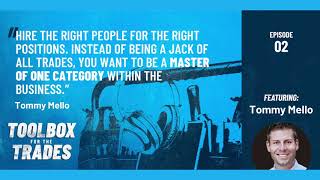
Transcript of a Toolbox for the Trades podcast episode (host Jackie Aubel) featuring Tommy Mello of A1 Garage Door. Tommy recounts his start painting garage doors, scaling to a $30M+ home-service business, lessons learned about SOPs, KPIs, hiring, training, financial discipline, marketing, and company culture, and promotes his book and podcast.
Foreign.
You're listening to Toolbox for the Trades, brought to you by ServiceTitan, a podcast for top service professionals where we interview leaders for their best tips and tricks of the trades. Learn how industry trailblazers stay ahead of the competition and how you too can be at the forefront of an industry. Let's jump in.
I'm gonna bring your significant other, your kids, your dog. We're all going to Hawaii. I'm paying for the flight, I'm paying for the booze. I'm paying for the food, the volcano tours, the dolphins. You're not allowed to get on your phone. You're not allowed to check your CRM. I want to know what your business looks like when we get back in a month. And if you say there is no business, it just got ruined, you don't have a real business.
Hello, contractors, and welcome to the Toolbox for the Trades. I'm your host, Jackie Aubel, and today's guest is Tommy Mello, the owner of A one Garage Door, the host of the Home Service Expert podcast, and the author of the Home Service Millionaire. This incredibly detailed and honest conversation with Tommy is full of excellent advice for service entrepreneurs at any stage of their business journey. We discuss the challenges he overcame while growing his business from $50,000 in debt to over $30 million in revenue. And most importantly, how you can optimize your business to save money and unlock your full potential. Plus, we're giving you access to Tommy's never before seen web series, how to Build a Rockstar Team. Stay tuned to the end of this conversation to see how you can get exclusive access.
Enjoy. Tommy Mello, welcome to the podcast.
Thank you. I appreciate being here.
How are you doing today?
It's great. Phoenix, Arizona is amazing in February, so I'm really happy. It's a sunny day, beautiful weather, I had the air conditioning on, so no complaints.
That sounds amazing. Well, I know you are a very, very busy man, so I truly appreciate you taking the time to talk to our audience today. You have quite the resume, which I kind of alluded to at the beginning in my intro. But before we get into that, I want to get to the beginning. So why don't you tell us how you got into the trades.
Well, I started with a landscaping company and actually I started out as a kid mowing lawns for extra money, shoveling snow. So that was my introduction to it. And then I moved to Arizona from Michigan and really started getting into a successful landscaping company, which we did irrigation, stuff like that. And then I had the opportunity from a Roommate of mine, he said, do you know how to paint garage doors? And at the time I didn't, but he said, it pays really well. I'll pay you $100 per garage door. So I said 100 bucks. I guess I could learn. And I got to the point where I was painting 10 to 12 garage doors a day on the weekends. So I was making an extra grand after you take out the paint costs. And then I said, if I can make a grand painting them, what could I do if I actually fixed them and installed them? So that's how I kind of got started. I had a partner, and in 2010, I bought him out. Basically took on a lot of the debt. I say buy out, but took on some of the debt. And it was just, I love the industry. I love what we're doing. I love what you guys have helped us with the organization and the KPIs. And the dashboard service title was a big piece of my success as I write the book.
That's awesome. Actually, I realized we totally jumped the gun. You have so many business titles that I forgot to name them all. So why don't you introduce yourself to listeners who may never have heard about you before.
So my name's Tommy mello. My company's A1 garage door service. I have actually a Christmas light company that I'm a partner in called Stay off the roof, stayofftheroof.com. i do some lead generation stuff. You know, A1's the big beast. And I do a lot of public speaking now. And then I've got the podcast which a lot of people from service time have been on. Ara's been on there and it's called the Home Service Expert. And then I came out with a book called the Home Service Millionaire. And so I went from $50,000 in debt to over a $30 million company. And this came out almost two years ago now. Yeah, 2018. So more revenue these days, more profit is the main thing. And yeah, it's just a fun ride. Lately I've been doing a lot of keynote speeches and just traveling around the country. We're opening up in a lot of new locations. We're opening up in Boise, Idaho, Vancouver, Washington, Charlotte, North Carolina. That's in the next two months and just looking to expand from there.
So going back to when you were painting garage doors, $100 a pop. How old were you, by the way, when that was happening?
2006. I was 23.
I mean, an extra grand a weekend for a 23 year old is pretty significant. Were you out of college. Did you go to college or anything like that?
Yeah, so I've got a master's in business, which I got later, but I had a bachelor's at the time in business. And I was bartending too, and I was doing landscaping. So I never really had a hard time making money. The difference was is I never made money when I travel or when I wanted to. Not if I wasn't working, I wasn't making money. And that's the difference between wealth versus rich. Like wealth is when you make money when you sleep. And that's what I've really been learning these last five years is how do I make money when I'm not doing the job, how do I have people work for me and make sure the business makes money, not just a salary?
Gotcha. So you got your bachelor's in business, you graduated, and then you were in your early 20s and you were kind of just doing a bunch of odd end gigs, trying to make the most money you could for yourself. So you actually didn't have much of a. How familiar were you with the trades before your friend invited you to paint garage doors?
Not very. I didn't know the CSR role versus a dispatcher versus a technician. And you know, we call it the triangle of communication and how to hire correctly and just building manuals and how important, recruiting the right people and checks and balances. And I didn't know what a KPI meant. Key performance indicator. And there's a lot of things. Conversion rate, average ticket marketing. It took me quite a few years to really understand and put it all together. And someone asked me the other day, they said if you went into another industry in the home services, do you feel like you'd be successful? And I said, yeah, absolutely, because it's all the same things. There's minor changes like do you pay hourly for certain things and commission versus performance versus fixed. But altogether it's the same things. You need to keep all the numbers around the same. How much are you going to spend on marketing? Well, you know, a new market, you can spend 15, 20% in the existing market, 8 to 10. But all the same universal rules apply to most home service companies.
It sounds like you're very much a businessman who is looking for the right opportunities to start a business.
Yeah, I think that was the case. I think that garage doors. I always wonder if I would have fell into roofing or windows or H vac because it's just such a higher average ticket. But I wouldn't change anything for the world. And that's how I know things are good. Because I'm happy every day. I wake up and everything we're working on is like, you know, things could have been different, but I don't have any. I don't think I would have made anything different because everything. That's. All the mistakes that I've made have kind of. It's kind of like you make the mistake once and you just don't make the same mistake again, you know?
And all of the mistakes led you to where you are today, which is the host of your own podcast and author and an owner of what $300 million business? Is that what you said?
Oh, no, 30 million is the 30 million it was back then.
All right, well, I'm giving you your new goal, so when you write the 300, I will.
Well, the new book's gonna be called the Home Service billionaire. That's my 2.0.
I love it. I hope I can write a little inscription on the back or something like that. So talk to me a little bit about that transition from going from painting garage doors to actually fixing them. So you kind of identified a market. You're like, oh, I think this is actually a profitable area where I could grow and start my own business. Talk to me about those first couple of months, those first coup of years, and what were some of the kinks that you had to work out? What were some of the things that you learned?
Oh, man, there's so many things. Kind of inspect what you expect type thing. So we'd hire employees, and I never realized that you need to train. So there's a lot about recruiting, training, retaining, and just the orientation period. And really, people talk about culture and building culture, but when you're a small business, you are the business. And shoot, we didn't have manuals, we didn't have standard operating procedures. So everything was chaos. I was the dispatcher. I'd answer the phone, I'd pull over. I mean, it was just. There was no systems in place back then. I used to think whatever I made was the company's profit. I didn't realize that I should pay myself a salary and the company should still make 15%. And then on top of that, you should really be filling out what this role is and explain on paper what they you believe. So this is who I need to run this business. I need somebody in charge of. You got to act like the business you want to become. And I didn't know that back then. And I never. One of the things I'd recommend to anybody listening is Find a role model who's doing what you want to do. Tell them how amazing they are. Tell them that you want to become just like them. Tell me you want to Shadow them for two days, ask them questions, and then find 10 more and go visit one a month. You might think it's an expense, but it's really not. It's not an expense. It's going to supercharge your business, and it's gonna save you a decade that I wasted. So I wouldn't say I wasted it, but I'd say that if I would have listened to a mentor tell me this is why you shouldn't do this or this is why you should, it would have definitely fast forward the business. So, yeah, I was just. I'd work in the business. You've heard the cliche. Work in instead of on it. And, you know, I started reading a lot of books. I started reading the E. Myth, and I just did a podcast with Michael Gerber two days ago. I like the Ultimate Sales Machine by Chet Holmes. Those were some of the first books. My CPA took me under his wing, and he'd had me a new book every couple weeks. Say, read this one, read this one. And I'd go, whoa, this is like, awesome. And, you know, we built upon that and hired the right people for the right positions. Instead of being a jack of all trade, you want to be a master of one category within the business. And that's what I've learned. It's a really nice org chart, a really nice depth chart, and just manuals and standard operating procedures for everything. That way, you know, you look at McDonald's or KFC opens a new store every four to six hours. So it's this master plan to go in, and everything's the same. There's a system and checks and balances around every single aspect. And that's how they create success.
Because they essentially, no one person is doing more than one thing. They're, this is what I'm good at. And I'm going to outsource to the. To people that are better at the other things I'm not as good at.
When you're small, you want to outsource everything when you're not as small. Like, I tried to outsource my call center. That was a big mistake. We used a nationwide company called Nationwide Inbound. Very good for a secondary call center if we can't get to the call. But they don't have the same culture. They don't understand the business as much. They're just supposed to be kind of an order taker and they're good at what they do. But some people outsource everything, and there's times to outsource. If you really are bad at marketing, you shouldn't try to become. A lot of people try to become good at what they're not good at. Like, they try to become controllers and CPAs, or they might become a sales pro, and they never sold anything in their lives. And I think that's when you want to hire out. But any chance you could grow big enough to bring in a specialist and learn your culture and adapt your systems and learn how they all connect? Like, marketing has to really pay attention to the CSR role because you want to know if this marketing source is booking good calls and you want to know, is it a huge average ticket, can we spend more on this marketing source? So each hand needs to talk to the other hand.
Gotcha. So instead of outsourcing, bringing in a specialist as you get bigger, and this way this expert can own this one facet of the business.
Yeah, and I'm not afraid of outsourcing, but, yeah, I think that that's one of the things we've done really well. But another thing that we always do is we shop everything. We shop our insurance every single year with four other companies. It's good to keep people honest and every year have a system to where we're going to check for this. We're going to check. And there's like, probably 30 things we shop once a year. Windshields. I just got $75 off per windshield. We replace six a week. That's 500 bucks. It might not sound like a lot of money, but that's 26 grand a year for one phone call. So that was me.
No, totally. Yeah. It sounds like you're really in tune with how you can optimize your business, save money, so this way you can grow and hit your goals. So going back to, you know, it sounded like your CPA was really the person that took you under the wing and was like, whoa, dude, like, I need to share with you some information. And in place of the mentor that you suggest other people listening, go and see out this guy kind of gave you your first dose of the books you needed to implement the right best practices at A1. Is that correct?
Yeah, yeah. He came in and I had. I had a bikini calendar in my office. And he's like, dude, you got to take that down. I mean, it was kind of funny because I kind of grew up in a transmission shop that my dad owned, and I was just like, this is normal. Who cares? And he's. He mentored me as far as he could for not being in the service industry. So then I met. I started the podcast, and I met this guy, Al Levy. He wrote the book the seven Power Contractor, and he was a huge role model and a big consultant for us, and he kind of opened our eyes to a lot of stuff. He walked in our office, this is just a few years ago, and he said, wow. He goes, I'm impressed, but I have so many things I think I could help you with. He's like, I could have used your own forklift to steal your whole warehouse of inventory, because no one was back there. So we've had several mentors over the last five years, but the first one was my cpa, and he's still my cpa. He's an amazing guy.
Gotcha. So I want to know a little bit without obviously, giving away the whole contents of your book, but going from that 50,000 in debt to 30 million in revenue, talk to me about how you started to steer that ship around. Where were you at? How many technicians did you have, if any? What were some of the first changes you really had to make to go in the right direction?
Mindset's a huge one. Understanding the fact that I own a business and I should be operating in the business and on the business, I think my biggest challenge for myself, and it's not for everybody, but I know how to make a lot of revenue. I just didn't know how to keep a lot of it. There's a good book by Michael McKello. It's called Profit first, and it kind of gives you a plan to make a lot of money, pay yourself first. So I've always been good at sales and marketing, but I never really knew how to keep a lot of it. So there's this old slogan I always talk about on my podcast. Revenue is for vanity, Profit is for sanity. And we just were spending more than we were making. We didn't have controls for inventory. Was a big one. It would go out the window. I think I was getting a lot of theft. I had to buy really big warehouses. I'd have to have a warehouse guy, a warehouse truck, a warehouse shelving. I had to have camera systems. I'd had to have bigger swamp coolers. And then there was, you know, you got theft, and then you've got more money, you're paying, and then you've got spoilage. Like, things would get bad, batteries would die, and just the overhead was killing me. So I learned a lot of stuff just to get out of the inventory game. And I thought I could do a little bit of everything. I thought I could do inventory really well. Then I started buying all my own trucks and fixing them, doing all this stuff. And I just realized focus is everything. You know, I talk a lot always about books because I've learned a lot from books. The two books that I would recommend, the people that think they could do everything, is essentialism. And the one thing by Gary Keller kind of explains focus. I see these small guys are like, yeah, I do a little bit of commercial, a little bit of residential. I do home depots, I do home warranties. I also get involved with new builders and I'm like, those are all different business types. Like focus on one, get so big at one, then you could take on a new branch and they could focus on that other one. But see, with commercial, you're usually net 90. You have to carry different insurance, completely different truck setup, completely different expectations from that customer. It's relationship based versus the marketing you try to do for residential. And I think you could do both and be successful. But you're only going to grow so big until you start going, why don't we just focus our trucks? I only have two trucks. I have install and repair. We've got a truck and a van. The van's for repair. It's all the same. Everything's in the same spot. It's like nail it and scale it is what I say. And you shouldn't have different everything. Some people use different logos, different software is different. Like I don't know how some people are successful and I hear a lot of people brag about their revenue but they're really not making much profit.
Got it. You're just dropping just knowledge over and over again. And I really appreciate all the book recommendations you're giving. I'm loving. I think I'm going to come up with some sort of like contractor book club because everyone has incredible recommendations and actually essentialism is on my list. Oh good, read that next. Because I'm also, I like to call myself a Jackie of all trades. And I love to do everything when in actuality I should be focusing on one thing. But you've mentioned it a couple times now and I would love to get your thoughts on what you mean by paying yourself a salary. I understand what the concept is, but talk to me a little bit about big mistake contractors make when they're starting out a business and what they really have to consider when it Comes to paying themselves.
I've been involved with purchasing other garage door companies, and I know a lot more than I ever did about how to purchase a company. And a lot of times people say I made 150,000 last year, especially a million dollars and less. The fact is they paid themselves 150,000, but the company made 0 of it. So I always ask, if I had to replace you, Jackie, in your garage door company, how much would I have to pay somebody? Well, I have to pay somebody 90,000 to replace you who's going out doing a lot of the service sales, if you're worth. Unless I was a completely absentee owner and I was an investor, then I got to pay myself to replace. I'd have to pay Jackie to replace the next Jackie to come in and take on your role. So come up with a good salary for yourself if you're working 40, 50 hours a week. Nobody works 40 or 50 hours. We're working 80 hours. So we should be able to pay ourselves six figures and the company should still make profit. And I like that 10 to 15% range. If you're really good and you're really good, you can make 20, 25%. And it depends on the industry. But it's important to understand how that works is most people say, yeah, we made $200,000. I'm like, okay, how much did the company make profit? Well, that was the 200,000. Well, how much do you pay yourself? 200,000. They're two different things, and you got to separate the two.
Gotcha. Because if your ultimate goal is to create a service business that you eventually want to be bought by someone else, your salary, it has to run on its own. You have to. It's just like what you said at the beginning of the interview. Being rich is, you know, working, working, working. Wealth is when you acquire money while you're not working.
Well, I tell people this. If I was to take you and your family, Jackie, today, I'm going to bring your significant other, your kids, your dog. We're all going to Hawaii. I'm paying for the flight. I'm paying for the booze. I'm paying for the food, the volcano tours, the dolphins. You're not allowed to get on your phone. You're not allowed to check your CRM. I want to know what your business looks like when we get back in a month. And if you say there is no business, it just got ruined. You don't have a real business. A business that depends on you to work is not a business. I want to Buy. And anybody that thinks that there's all these businesses out there that literally fall apart without the owner, and trust me, I was there, I was a big proponent of what I'm talking about. And that's why I think when I leave town now for two weeks at a time, we set records. And it's not because I'm gone, it's because we continue to hit records every single week and every single month. But, you know, we really started to get focused and narrowed our focus and we got out of home warranties, we stopped doing Home Depots. We stopped. We realized last year when we were doing home warranties before we cut them is they were couple percent of our revenue, not a lot of profit, and they were 80% of our problems. So so many people, they'll just say, well, it's a big money job. I went out to my cousin's shop in Colorado Springs and he goes, dude, that's $12,000 job. I said, wait a minute, it's past your 90 day collection. Your AR is through the roof, your insurance is this much more. And there's no margin in this job. After you pay for the guy and the parts and the warranty car you just had to run, it looks like a lot of money. But people don't know their balance sheet. They don't understand the financials are what you make all the decisions with. And what I would advise somebody to do is take an accounting class and be very, very good. You gotta understand the numbers. The numbers should dictate the decisions. You shouldn't say, well, I think you're doing good or I think we're doing good. You should say based on the black and white key performance indicators that we've set up for this department. You're killing it. And I don't believe in tenure either. Tenure to me. You worked here for five years, you should get a raise. No, I believe that if a new person comes in and they do a better job and they kill it, everybody should be set up performance pay everybody in the company. And there's no guarantees that you're gonna make better than you did the year before. Because if we hit a horrible recession, and I'm just guaranteeing you this, the company's supposed to go under. So I used to feel bad when I had to fire people, but now I say, we've got several hundred employees. Just say 200. We have 200 employees. Each of them feed a family of three. So there's 800 people we're feeding. Is it right for me to keep a Low producer. Someone that I know could do better in that position. I think about the 800 people, and I say, this is one loss. So it's tough, but you're feeding all these families, and it makes it a lot easier. Makes it a lot easier when you think about all the families you're feeding, because you can let go of somebody and say, can someone do their job better? And some people say, ABC always be closing. I say, always be recruiting. This economy right now, it's hard to find great people. So if you build a culture that you're always hiring, we give $1,500. If you refer a friend and they get hired for every position, 1500 sounds like a lot of money. Well, let me tell you this.
He's doing math for anyone who's not watching the video.
So I'm just gonna write down some numbers here. You got a $500 average. It you've got a CSR book in 70%. She's taking 10 calls a day. That's. Most of mine are doing 30 calls a day. So just 10 for the sake of numbers. So she's doing 70%. So she's losing me three calls a day. That's $1,500 she lost me. You got someone at 90%, that's $1,000 a day. $1,000 a day by getting a person just 20% better booking rate. And when you take that to 30% or 30 calls a day, that's $3,000 per day. And people say, why would you ever pay $1,500? I go, a lot of people tell me they're at a 90% booking rate. And I go, you are so far off, you don't track it correctly. They don't have service times set up correctly at all. And a lot of them aren't even on a good, sophisticated CRM. A lot of them don't have any checks and balances. And I love buying these type of businesses because I could go in immediately and fix so many things. They've done a great job. You never want to belittle somebody for what they've built because they got a lot energy, sweat, blood, and tears that went into that business. And just because you're better doesn't mean. And when I say better, better. Better is relative. But checks and balances, a system are important, and most people don't have that. I mean, a lot of people on service time that I've met are still using paper invoices. I know a guy that's doing 40 million that just switched over from Paper invoices. And I'm like, how is this even possible? But you know, I respect where anybody that gets a $40 million in revenue is doing something right. So it's just using the systems. I think the biggest game changer is when you start to automate processes. You don't need 10 people to figure out payroll. You could have a system that does it. You know, one of the things I talked about with our on my podcast over a year ago with him is you guys took the best specialists in the industry to come up with certain dispatching and CSR and different aspects of the business and inventory controls and how you're going to talk to QuickBooks or whatever system you're using for accounting. And RS said a lot of companies that are small, they have a spit for this and a spit for this and they do things completely differently and they don't want to change. Well, the day that we chose to say we're just going to take service titans way they built it and switch everything over to the systems they designed, even though our industry doesn't do it like this yet, we're going to accept the fact that there were hundred, two hundred, three hundred million dollar companies that came up with these processes and we switch everything. Payroll takes half an hour now every other week. Our payroll is half a million dollars every other week. Half an hour long is how long my COO just spends looking at it. We've got systems in place to make sure everything's accurate, but it used to take 20 hours a week. Now it takes a half an hour from every other week. So you got to make a decision. The system's designed to do something. You're gonna have to make some, I wouldn't call them sacrifices, but I say it's change. And everybody's afraid of change. And don't be afraid to change. Embrace change. And Ara's a really smart guy and he wouldn't have built the system. It's tough with software because you build one thing, it breaks another thing. So there's so much testing that people don't understand. They go, I wish it did this. And I'm like, I wish it did a lot of things. But it's the most sophisticated system in the industry by far and it's light years above all the other ones. And it's slowly coming out. I mean, you guys have doubled for the last two years. And what's tough when you're growing that fast is the left hand talking to the right. There's all these. It's tough to hold all that stuff together. I think you guys are at, what, a thousand employees now?
Yep. We actually have our logo going up on the old Nestle building as I'm talking to you right now.
I love that.
Yeah, it's incredible.
I remember I was just out there about two weeks ago. What you guys are doing is incredible.
Thanks. Well, we think what you're doing is incredible, too. That's why you're on our podcast. But you're mentioning so many great things, and I love the always be hiring. I actually came out and met you about a little, maybe like a year and a half ago at this point, and we filmed how to Build a Rockstar Team, which is actually finally getting its release date. And people can go to the website for this podcast to access that recording. That'll be at the end of this recording. I'll have another clip to make sure I give everyone the right lengths. But you've just collected so much of this business knowledge just speaking with contractors and just doing the type of learning that you've done. Okay, so the last place we left off is you were turning the boat around. You were installing processes, standard operating procedures. You were learning to pay yourself a salary, but also. Also the company. Exactly. It sounds like you've constantly been pivoting and embracing change to achieve the level of success that you're at now. What does the markup of your business look like at this point? You mentioned you have an install truck and you have a service truck. So what's like the makeup? How does a one garage door look right now?
Well, there's no more than five direct reports. You know, we're a strong proponent. Nexter teaches that we've learned from nexstar, although they don't accept grocery companies into their programming. I just. I think one of the best things is Pantheon, because I get to meet a guy like Jack Tester, and I go to these breakout sessions, and I learned so much. And what I've learned is people go through peaks and valleys, and the peaks are when you're doing your best. The valleys are usually because you get too many direct reports and stuff starts slipping through that shouldn't have, and a lot of mistakes happen. So, I mean, as far as our makeup, we've got a field supervisor who manages five technicians, and then we've got an apprentice that starts out, we fast track the apprentices. They train for about three to four weeks in their market, then they fly out to Phoenix. They train for six weeks. We fly them back home in the middle of it, because six weeks away from home is a long time. We've got a full time training center now. We've got a full time recruiter, we've got two full time trainers. We've got an LMS learning management system. We've really invested a lot of time on getting great people and training these great people to be successful. Because I've seen A players come on board and become C players because they were being mismanaged. And I've seen C players get managed correctly and become A players. And if you got a will, we'll find the way. That's what we always say is, do you want this job? Do you want to become that next level six figure income maker? And I tend to start to think about people. I don't say how much money do you want to make? But I say, if you had $2,000 a week, let me ask you something, what would you do? Would you fly your parents out more often? Would you take your kids to Disneyland? Would you set up a college? What's important to you? Because money. A lot of people don't get excited about money. They get excited about what money does for their life. So when you talk in terms of what this does for you, what's in it for you, what is this going to do for you? I started to get them to live and dream that they could actually do it. I think Starbucks does a great job of that. When I look at training, I look at a company like Enterprise and the way they train their employees and all these people have wrote books and if you get, if you love Audible or you love reading, Leaders are readers. And reading has been a big part of it. And hanging out with successful people. I know I'm going off on all these different directions, but there's so much here to unpack in a small podcast. And you know, I get to talk for over an hour every time I have a podcast. And that's sometimes two weeks, sometimes when we release them every week. And I get to ask people that have just done it and they want to teach as much questions as I want. And that's kind of fast tracked us.
Yeah, totally. I'm honestly feeling like in the, in the launch of this podcast for service titan, which is, which is really similar to what you're doing with the home service expert, which I think is great, is it's giving me almost a bit of a accidental MBA by talking to service entrepreneurs, which I never thought would ever happen. I have a degree in neuropsychology, so I didn't think this would happen, but it's really fascinating. I want to pivot now into kind of tips, strategies, some of the. Some of the best lessons that you've learned, not only at a one Garage Door, but also in your talks for Home Service Expert. But before I do, I want to know, how are you feeling right now about where you are in life and what you've built?
I feel like I'm just getting started. I feel like I'm at the fetal stages of what we're becoming. And I talk to a lot of companies that hit like 3 million and they're like, this is as far as I'm going to go. My life's a mess, I'm under stress, and now I feel literally like it's there to build. It's ours for the taking. I feel very unique in the team that we've built the software, which we're part of with you guys and, you know, the LMS and other things. And I. I feel like, I guess what success to me means I could do what I want, when I want, with who I want. It means that when the bill comes, I'm not trying to figure out, like, I don't look at the bill as much. If I go out with people and I want to pick up dinner, I'm not like, shouldn't have ordered that steak. But for me, success just means if I want to go do something, I do it. But I would tell you that there's a good book by Dan Thurman called Off Balance on Purpose. And people say, do you have balance in your life? And I'll tell you this. When I'm going to church every Sunday and praying every single morning and night, I might not be working out as much as I should. I might not be eating perfectly. I can't work 80 hours a week in the business and have a perfect relationship. I don't have any kids. But you got to choose what's important to you and what's your why. You know, you've heard Simon Sinek on why the reason that you should own a business is not because you don't want to work for someone else. And I think that's the biggest thing that people say. I'm a great technician, but they're horrible operators. So the nice thing about the garage industry, there's a lot of technicians that started out owning their own. Now they own a business and they want to get out of it. They're going, dude, you kind of figured it out. I want my nine to five. You're going to pay me to do what I love. Which was the technician and not be this micromanaging kind of a butthole boss and trying to be polite to the listeners out there. And I think that that's important to keep a positive attitude. Great culture. We fly our guys to the International Door Association. We have contests all the time. We communicate with them. We let them know where they stand. There's no, like when people walk in for want to know how they're doing. They know. They know. Every single week, every single day, we have a morning Mojo call. Every day on Thursday, we have every technician on a zoom call. We have reports, rankings. We use a thing called Power bi. It takes all the service titans data and it throws it into these awesome visual aids that basically say, I want to look at. I want to look at a piece at a report. I want it to tell a million words. Here's a top guy, here's the wrong guy. Here's why. Here's not why. You guys should get together and understand how this guy's doing this. It allows us to take a deeper dive. A visual aid to understand why is this guy. The conversion rate, is he selling more of this part versus this part? And then we get to ask why, when you could really understand, you could. It's like anatomy or the physiology of a business. And to understand the sales cycle. Or let's look at our office supplies. Why were our office supplies so much higher? We bought a lot of 200. Whatever those little things are is the numbers dictate everything. I never thought I'd love to have so many meetings. I've got a cup out there. We've got this like coffee cup collection that everybody buys when they go out of town. Then I got this one that says, great, another meeting that should have been an email. So meetings could be the death of a business, but if they're very good meetings, you've been part of meetings that you're like, why am I here?
Yeah, totally.
Meetings like, thank God we're at this meeting because I want to know what's going on within the company. You know, you asked me, you're like, I want to know more about stuff. And it's hard to compile 110 podcasts we're at and all the mistakes we've made and all the success we're having. I put it into this hour. But I'm trying to give you as much tidbits as I can. You know, I love marketing and I love sales.
Yes. And I want to talk about that. But just to recap all the wonderful things you just said it sounds like your biggest takeaway of where you're at now is that you're really living your why, like you've defined what success looks like for you, which is I want to be able to do what I want, when I want, with who I want. And being able to run a successful business will give me the money that will allow me to live that lifestyle that I, that I desire. Your advice to people who may be considering like, oh, do I want to start my business? Don't start a business if you just don't want a boss. Think more about the why. Perhaps you want more autonomy and know that if you start a business moving forward, there's a lot more work and a lot more learning than a lot of people realize when they first undertake this, because that's a giant step that so many service technicians do, is they get really good and they're like, you know what? I'm going to start this thing on my own. And then they quickly find out that there's so much more that goes into it, like culture, like learning KPIs, like learning how to do a balance sheet. And you have to decide if that's really your why and what motivates you to get up every day.
That and they all go into tax, they all have tax problems. They don't pay Uncle Sam. I found another thing. They work from their house, they never heard of health benefits, they don't pay their people right. They have no business hiring somebody because they don't know to hire for attitude. And they work out of their house, their wife answers the phones, their son helps out in the warehouse. And they always have this business that really is a job. It's just an adf. When they go out of town, the business suffers and it's this small minded. They're not really entrepreneurs, they're technicians that are running a business that want to work in it all the time. And like I said, the E Myth really talks about you've got a manager and a technician and an entrepreneur. And the entrepreneur goes out and he wants to start a business. But then we go back and we're a technician and he talks about the fat guy and the skinny guy. The skinny guy wants to wake up early, go work out, not drink beer. The fat guy, he's always in our head going, you know, let's just watch the football game, let's just drink some beer, let's just, let's get the workout today. So the technician usually prevails in most business owners minds. He talks about the woman that bakes pies. And that's all she does is she bakes from early morning to late night and she sells out of her pies. But without her, the business fails. And I think it's important to understand that the technician takes over our lives. And when I'm so far over to the entrepreneur side, I live in this bubble way outside. I live on the moon and I'm looking down at Earth. When I can see things, mistakes, I could go, wait a minute, I'm not involved with that department. But why, why do we spend this much on this? Or what is happening here or what's going on with this? Or there's certain key performance indicators. Holistically, some people have 50, we have five, and then each one of those branch out into more. But when I go into business, I look at conversion rate, average ticket call booking rate, cost per acquisition, and I say, wait a minute, this is way too high. This is way too low. We can fix these three things. And I just quadrupled your business. And this is a 30 day thing.
What are your 5 KPIs? Cost per acquisition?
Yeah, so cost per acquisition. So I always work backwards. I say, how much do you want to make this year? Revenue. What's your percentage? 10%. Okay, you want to make 5 million, so you need to make 500,000. So we look at that and then I say, what's your average ticket? Divide that by that. And then we say, what's your face to face booking rate or closing rate? Conversion rate. Then I say, what's your call booking rate? Then what's your cost per acquisition? And that's how much money we need to spend in marketing. But most of the time I could increase the average ticket. Most of the time I can increase the booking rate. Most of the time I could increase the conversion rate. Are you not selling financing? When's the last time? There's all these things within the business that that uncovers. But then I look at there, I'm becoming much better. Looking at an income statement, a balance sheet, a profit and loss statement. I look at how much of your company's business comes from previous customers, how many service agreements. It's crazy. I'm learning things that I never thought I'd care about, but they make such a huge impact. I met this guy, a service roundtable. He's part of Service Titan, great guy, Josh Campbell, and he does $8 million in 10 zip codes and he's got a $10 million company. So he taught me frequency of just your ideal avatar customer. Get in front of them all the time, own them. And once you own them, they're going to be a big part of your revenue. So he figured out a lot. I had a whole podcast that I did it in person with him in Vegas. And he just talks a lot about figuring out your avatar and get in front of them all the time and measure it. If you measure it, you can fix it. If you're not measuring anything, if you don't know it's broken, you can't fix it.
Yeah, that's great. So let's move on into tips, tricks, tactics. You've said that you are a sales and marketing expert. Tell me about that.
So sales. So I never listen to someone's story. I never call the guys that aren't, their conversion rates are low or their average ticket is low. I always call the guys that are winning every day and some of them have a breakthrough, one of them will have the best day ever. That's when I call them and I say, what happened? What paradigm shift happened in your mind? And those are the things I love hearing these success stories. And I learn it, then I share it. I'm kind of an encyclopedia of everybody's great story. And I have so many great stories. And storytellers are important. Storytellers are leaders. So I find out the story and most of the time they say, you know what? I did exactly what you said. I stepped to the process, I asked the right questions, I built rapport, I educated, I followed up properly. People really lose a lot of money and follow up. So I don't say, are you good at sales? Because I don't believe you need to be good at sales. You need to follow a strict operational sales process. But you need to be good at eye contact, body language and tonality. So you're the doctor when you're in the garage or the AC unit around the roof or whatever that looks like. And then as far as marketing goes, 70% of all services are found online. 70% of that's Google. Half your marketing dollars should be spent focused on SEO, ppc, your Google, my business getting reviews. The other one is your Google local services. And now you got a sponsored GMB ad. So there's five things on Google. Then I think Bing's the next big thing. And then reviews are huge. People say Bing doesn't make money, it's a fifth of the traffic. But the people that are on Bing spend a lot of money because Microsoft gets loaded with Bing. So some of our 60 to 80 year old demographic that just say fix it, I Want it fixed right. Some of our best customers, so I wouldn't ignore that. But so many people, they don't focus online. They've got their hours of their business. They close at 5. If you're a service company, you're never closed. Be open as long as possible. Bonus your guys on reviews. If they get good reviews, you should, that helps your reputation out. I have a full time person that just deals with complaints. And because we had I think 67,000 customers last year, if we get 1% of 67,000, that's 67 or 600, 670, that's 671% upset customers. And there needs to be somebody to deal with those. So we call them up, we let them tell us what happened and we're like, we apologize. Sometimes we were late, sometimes it got canceled twice on. Sometimes the guy smelt like cigarettes. I don't know. There's like, who knows? There's always something. You're never gonna make everybody happy. So we deal with that head on and we protect our image, we protect our brand. Another thing that I think is you should work on direct response before you go. A lot of people do radio and TV and they'll hit like a couple ads and say it didn't work for me. I'm in Valpak money mailer. I'm in a lot of stuff. But I say you got to give it some time, you got to measure it. And if you're going to do billboards, TV or radio, the number one thing I say is you better be good at Google, you better have mailers going out because that's going to increase the conversion rate on the direct response stuff. So master direct response. Make sure you got the right messaging, you're in the right spots, understand? First thing I'm going to ask you is what is your customer? And if you say anybody with an air conditioning unit, I'm going to say you're full of crap. I'm going to say this is the age, this is the gender, this is the average household income, this is their credit score rating. I mean you should know more and more about who your real customers are. And then you focus on direct response. And then you could do branding. And branding comes when you're hitting your right key performance indicators, like your 15% margin. Okay, I'm willing to take 4% of that next year. 4% of 5 million is 200,000 and put that more towards branding and hopefully that increases my conversion rate. It increases the, lowers my pay per click. It's kind of getting Complicated on this stuff. But just understand Google is God when it comes to home service. Facebook is like this. It's an upside down pyramid. The way I do Facebook is you've got a lot of customers at the top that really don't know about your service or don't need it today, but you're building a funnel. It's top of the pyramid, but it's an upside down pyramid. Now these are the people at the bottom that go to Google and they need you today. Some of them, it's brand awareness. We call it top of mind topa top of mind awareness. And you're starting to get that online reputation of hey, I've seen that company before, now I need them and now they're gonna think of you. So it's hard to make a ton of money off of Facebook. Some people do it. Some people are gonna listen to this and say they're wrong. Some people say you can't make money in Bellpack or the newspaper anymore. Some people say all I do is stickers. Some people say I just do. They all work. You just got to pick the one that's suited for your business.
Well, it also you touched on something that I think is Marketing 101, which is creating your buyer Persona, you know, knowing who your demographic is. You know, if you're a high end shop that is a little bit pricier than the other competitors in your area, you need to have the brand that collates with that and you need to figure out who your demographic is. You know what I mean? So it sounds like what you were saying with marketing here is focus first and foremost on your reviews, on your Google, on your online presence, and then once that in a really good place. So once people see your name and they go online to reference you, everything looks. Everything looks good. Then you can start investing in some of the kind of higher touch long term strategies like brands like newspaper ads, like radio ads, et cetera.
Absolutely. And one of the things I recommend is you get a new guy. So I hire Jackie. I say here's thank you. Here's what I want you to do. I want you. And I've got a whole sheet. It's not on my desk right now, but I want you to write down 100 names. I want you to do a lot of work in the six weeks that you're training Jackie. I want you to come up with neighbors, friends and family and then ask them if they know anybody, church, anybody, we're at school. If they've got a garage door. I want you when you Go back to service that garage door for free. The free service call, free tune up. And here's what I want in return. We're going to give them half off anything they need. But I want you to get comfortable with service tech. I want you to get comfortable in the new truck. I want you to know where your tools are. And then if you do a great job, I want you to ask your friends, neighbors and family to review you if you think they did a good job. If you think I did a good job, I'd love you to leave a review. Nextdoor, Facebook, Yelp, Google. There's nothing wrong with that. If we service the garage door. So we're increasing our brand awareness and our reviews. You're getting practice, you're learning the operational technical side and you're getting comfortable in this new role that you're in. So you just came out of this brand new role. You're not very, you know, so you get to practice on family and friends. So it's kind of like at a restaurant. You do a soft opening and you come in and you just, you make the mistakes. You learn that the, you know, basically the computer system like we used to use Aloha used to be in bartending stuff. And that's a great tip. You said you want us to tactics and tricks. That's one of them. One of the things I do is I've got a second screen open and we check if they're on Yelp. So we put their email into Yelp Buying friends. We find out if they're a Yelper because I want to know if they're a Yelper. So we tag it as a Yelper. Then we ask for that review. I also look for employees on Yelp if they leave all bad reviews. So if I was Jackie and I put in your email address and boom, it was all one stars. Every other week you're leaving a one star. No two stars, no three stars. I'm like, man, this Jackie gal's hard to please. We look at your social media, we check your credit card score. Cause if you're at the 400, you're probably not responsible. I check that you at least file for taxes. Now we're doing predictive index. It's a personality profile. My goal is to build the biggest funnel to get people in and then quantify that and get it down to the people I want to have a one on one interview with.
And this is for employees.
This is for employees now. But I'm a marketer, so I got a Market for three people. I need to market for employees, customers, but relationships. So the relationships are the guy that spent $800,000 with me last year. So he's a big builder, but he's a custom builder. So understanding who your big clients are, what I'd recommend is making a list of the top 20 people that you know. And sometimes you got to do some analysis. We use a thing called construction monitor. It shows who pulls permits, find the guys pulling the most garage door permits. Usually it's an llc. Do a little bit of research, write their name, their company down and say, listen, I'd love to buy you lunch. You pick up that customer, it could be a million dollars. And you should have your top 20. Just start crossing them out. Send them something every single month in a FedEx or UPS box that they'll open up, whether it's a book, a widget. I have these little Rubik's cubes and I have a hundred of them still. Then I send the people and I say, I'm still puzzled why you haven't let me take you out to eat yet. Or I send them a little tape measure and I say, I'm still, I'm just wondering, are you measuring the results of your current crossroad provider? Because we think we could do better. And you know, the little widgets that cost basically nothing and it's just funny. And you spend that much. If you're gonna spend 10% on a million dollar customer, you could spend $100,000 to acquire that customer, some people say, who would spend that kind of money? Just with your top 20, who cares if you spend $100 a year?
You know, with those dad jokes, I'm surprised you don't have any kids. That's very funny. I chuckled at the, at the, at the puzzle joke. That's good. And I wanted to circle back to what I believe you kind of tipped the hat for is your strategy with new hires, with apprentices is offering that free service to their family, their friends, people they go that are in their community they go to church with. And then that not only gives your apprentice real true experience, but it also gives them experience, people who in theory care about them and want to invest in their future. So they're probably going to do a good job, the customer is probably going to be satisfied. And that's a great way to just get some wonderful feedback from all the communities where you open up these new shops.
Absolutely. It's a game changer.
That's awesome. When did you start implementing that?
Well, I never was doing 100 till recently. Normally, people could only come up with a list of 10 until we really started to work on it. Like, you got to say, well, who are your neighbors? Do you have any people? You know, give them an incentive to do it. And, like, I'm giving these guys this week whoever comes up with the most a hundred bucks. But more importantly, they want to please me. It's like. It's just kind of funny now because we're a bigger company, that people are just like, oh, does Tommy even know who I am? And there's so many new faces every day. It's like, dude, I want to start carrying, like, name badges or something, because it's hard. And I think it's truly important as a leader. I think Jack Walsh probably knew a lot of his employee when he was a CEO of General Electric, and one of the things that he always said was he'd always get rid of the bottom 10%. He did 10%. So every year, there were certain roles in the company where he just. They eliminated 10%. And what that meant was nobody was really sad about it. You knew it was coming, but it was always that change, that evolution of the company that, hey, who are these new people? And always know that your job is not necessarily on the line. It is if you don't want to give it 100%. And, you know, Southwest does a great job, too, of hiring people, and I think hiring the right people, but becoming a leader that really cares and building a culture. I used to hate the word culture. Even when I started, you know, reading a lot of books, I was like, culture, smaller. Like, I come in, people are smoking. They're just. They don't care about me. Why should I care about them? And just the attitude was just like, what's in it for me? And when you can start looking at somebody and saying, what's in it for them? And changing the mindset and saying, how do they win the game? Not how do I make a lot of money this year? But say, how does everybody kind of get what they want? How do we win as a team? Is when things started changing basically in my behalf. And I was selfish, and I would just say, you know, if you don't take care of me, I'm not gonna take care of you until you start giving back. And really saying, we've got a whole game room. We've got massage chairs. We've got, you know, foosball. We've got ping pong. We've got all these air hockey. We've got a pinball machine. Big Buck Hunter, Golden Tee. We have fun here at work. I'm getting these nice coffee machines. It's so important to build that culture of just, are they going to hate where they got to go on Monday? Monday comes around. You know when you feel like you got to go to work and you're like, I hate that place. You can do whatever you can to say, how do I make this fun for them to come in on Monday? How do we create a relationship with our employees to where we go out and do fun things together? I think that that's probably the best way to build something that not a lot of people have, and it's very special when you can. And I'm not everywhere I want to be. I'm never complacent. But we've done. The team has done an amazing job so far. And I think we got a long way to go, but it's happening.
I love that. And I think that's a really interesting way to look at culture, too, because I think a lot of people roll their eyes. They're like, I'm paying you. What else do you want from me? But you put it really nicely. It's like, I want to be the type of leader that my team looks up to, that they want to do a good job for. And that really requires implementing some sort of culture and some perks. So your employees like the place they go to for work. So I think that's a really good point that you made. I have a couple more questions left.
Okay.
And the first one is, what's the. I don't want to say mistake, but what's the biggest lesson you've learned in your time at a one Garage Door?
Well, it depends on who I would be talking to, an early business owner or a late business owner. But I'd say, build your foundation strong. And that means a really nice org chart. That means there's want ads for every position. That means that there's a clear description of how to win the game when they start for you. That means there's training. Not you get to ride with my best guy. You get to train with my best CSR and learn all their bad habits and their good habits. There's. You should have performance pay throughout the company and let people win the game. So many people start and they go, Well, I get $14 an hour. My top CSR made $36 an hour last week. My bottom one made minimum wage $12 an hour. Not a lot of people make minimum wage, but we say, we're going to bonus you or this. We don't give you an hourly plus this because that creates an atmosphere where you end up keeping lower performers. So I think that the setup with the stuff that Al Levy kind of set up for me, with the manuals and just standard operating procedures, like buttoning them up, is important, and the numbers should dictate the decisions. I had a very, very bad control over my financial. I didn't like to log into the bank account. I didn't like to look at our credit card, spend it. It almost was like, I know we're doing okay. I love sales and market. I'm gonna live over here. Well, when I was in charge of it, all of our credit cards were paid every single week. When I mean, we got up to $800,000 on credit cards, we didn't have enough money in the bank. It was bad. I remember not that long ago, I had to use my points from a credit card to give people a Christmas bonus. Some of our managers and I was like, man, and, you know, you should have 10% of your revenue in the bank. I think just maybe there's so many things, but I would say just make sure if you're going to grow, that your balance sheet is clean. Learn the financial aspect of the business. Because I think a lot of us that start in the home service, we don't know enough about the finance side. We don't know enough about the key performance indicators. We don't know where we should be spending our day. I look at a lot of my managers and I'm like, show me what you did. They were like, I was busy all day. And I'm like, okay, I want you to take a log every 15 minutes. I want to write down what you did. And a lot of it's a waste of time. A lot of it. We're so busy putting out fires and answering questions that should have been in a manual. You know, most my managers now, they say, go that answers in your manual. They don't give them the answer. They say, that answer is in your manual. There's some of the things that will never be in the manual, but if you build your business right, everybody should go out equipped to know what's going on. And I think a lot of us, we just don't start the business right. We don't put the. I read my cousin's want ads, and it said, must be eligible for. Must work nights and weekends, blah, blah, blah. I go, dude, I would never want to work for you. This is horrible. I rewrote his ad he had 50 applicants that week. So setting the foundation up of how your business is going to look. Act like you want your business to look in 10 years, you need to act like it today. And there's a lot there. But that's basically, I think, setting the foundation, setting up build strong roots and you'll have a strong tree or a strong plant. And that's a lot of people don't. And a lot of people, they hit things, they hit mistakes and they change. They hit mistakes. And that's how I was. And if I could go back, I would have said, dude, let's, here's how you're gonna start. You're gonna give us such a strong foundation. There's nowhere to grow but up.
Gotcha. And what would you say to someone who's a larger organization, someone who's not.
Starting out a really big organization? I think that people get content and I think if you're not growing your shrinkage and they go on find where I'm at today and they're waiting for that next guy like me to come in and take market share. So I think if you're fine where you're at, then sell your business. If you're not really willing to grow, then you're ready to kind of retire. And if you don't have that burning desire to grow, then you've lost it. You've lost it. Now I know what I'm doing. I always say, like Spider man, he had great responsibility. Comes great, great power. Comes great responsibility. So I know I'm obligated to change people's lives to grow this. I know I could employ several thousand people and I know that's my calling, that's what I need to do. And if you've lost that, I think you need to sell. And I think every business should be built to sell. You should build your business. People say, yeah, I'm not selling anytime soon, so why should I? Everybody's going to sell your business. If you die, someone's going to inherit it. There's an ex of kin or they're going to auction off your business like every. There's no, we're gonna die, we're gonna pay tax. You're gonna sell your business, it's gonna get taken over. So some people just have this mentality, well, I'm not ready, I'm not ready, I'm not ready, I'm not ready. There's never a good time, but you should be building it to where it's a commodity you have. It's called shareholder Responsibility, you are the shareholder if you're a single owned llc to create shareholder value. So that's through service agreements, that's through follow up, that's through increasing and getting better at the operation of the business and automating stuff with service type and building better training, communicating better and showing people where to spend their time. And a lot of people don't, this is your job and if you don't like it then don't go into business. And I feel bad for a lot of people, they have no business owning a business and those people better just either start to learn and get some mentors or unfortunately, maybe, maybe it's not for them because they're going to burn a lot of relationships, they're going to lose a lot of time, they're going to lose family members, they're going to lose best friends over their business. And I don't think that's fair to them or everybody around them if they're not going to run it properly.
Yeah, I think that's really good advice. My learnings question went into my advice question so I will finish with this. Is there anything about running a service business that we should have talked about that we didn't?
I think we hit most of this stuff. I think that I always say BYB better, your best. You know, I think that you got to set big goals. I was talking to Ken Goodrich the other day and his manager, he owns Ghetto and his manager came back to him with 10% growth for next year and he goes, get this out of, I don't want to look at this. And it's kind of what I do. And so the guy came back and he said we're not going to be able to do more than this. And this is what I told my manager and I did it for him on the whiteboard. I said what do we need to get to a billion? And they said, well, what do you mean? I said well, let's just say our average technician, which they do, does $500,000. $500,000. So how many do we need? We need 2,000. So if we hire 50 people a month times three years, that gets us to 18. That gets us, that gets us to our goal basically. So now we know we got to get to the point where we can hire 50 tech on board, get trained, get into a market, how many leads do we need coming in? Well, if the average guy works four jobs a day. So we back rolled into all of it. We said, how do we get here? Not this year, not this quarter, not this month, but what needs to happen today, this week, and by backing into what your goals are and saying, here's what we need to spend, here's what we need to increase, here's how we need to hire, here's how we need to recruit, here's the insurance checks and balances. You need to understand your brain starts to think differently. All of a sudden the cognitive and you understand this, your dendrites and axons and everything's firing differently because all of a sudden you go, this is the path to get there. It makes sense. Not everybody's going. We're going to be a billion dollar grassroots company. Most people would laugh in my face if I told them that every single person here knows exactly what we need to do to get to that. So if you want to figure it out back into where you want to be and figure out what needs to happen today to make that happen.
Gotcha. Be always beat your best. Byb.
Better your best.
Better your best. Oh, I thought beat your best. Better your best. Reach for the stars essentially and like really push yourself. Yeah, Always be improving. I know you got stuff to plug, so why don't you tell me what you want to plug?
Well, you know, this is a great book. It's not only me that wrote it. I would say Levy Ara was in the book. Darius Levers tell us how to sell financing.
You've got Darius Levers going to be on this podcast.
He's great. He's an amazing guy. I mean, I had Alan Rohr talk about financial.
Alan Rohr is also going to be on this podcast.
Everybody that's good is in this book. There's 12 co authors and it took two years to put together.
So this is called the Home Service Millionaire. For anyone who is not watching the.
Video, but who's listening homeservicemillionaire.com, you can find the book. It's cheap, it's on Amazon. And I didn't hold back in the book. I really think that the people that co authored it did an amazing job. And then the podcast, I mean, I mean all the people that I just mentioned have been on the podcast. There's certain ones that are absolutely phenomenal. There's certain ones more tax related towards the end of the year, how to save on taxes. There's other ones that are more on how to hire. There's other ones by some of the best authors in the world, like Michael Michalowis that wrote Profit first or Sean Van Dyke who wrote Profit first for contractors. If you haven't heard it. Just go to the ones with a lot of reviews. Hopefully you can learn something. I don't make any money. There's no ads on my podcasts. I'm not getting paid to do them. I just I learn a lot and I share a lot and people hopefully get something out of it. Those are the only two plugs I had.
Yes. So the Home Service Expert podcast, which I can confirm is very good. I think you do a great job and Home Service Millionaire, which I've also read parts of and I think you've done a very good job. So I also endorse the book and the podcast. Tell me Mello, thank you so much for your time today. I really really appreciate it it thank you.
I appreciate being on hey guys, I hope you enjoyed this episode. If you're still in the market for more Tommy Mellow Wisdom, head on over to servicetitan.com Tommy that's T O M M Y to watch an exclusive, never before seen web series on how to.
Build a Rockstar team.
Tommy goes deep into the tools and strategies he uses to hire, retain and empower his technicians. It's an awesome series that you do.
Not want to miss.
Again, that's servicetitan.com Tommy the grit and.
Know how required to tackle your community's toughest jobs hasn't changed, but the way companies run their business has. Servicetitan is the only field service software that was born in the trades. Built for the trades. If you're interested in seeing what Servicetitan can do for your business, request a demo@servicetit servicetitan.com trades and we'll send you a new Milwaukee tool set plus a free iPad when you sign up. That's servicetitan.com trades you've been listening to Toolbox of the Trades presented by Servicetitan, the leading home and commercial field service software. Please subscribe to Toolbox for the Trades wherever you get your podcasts to hear.
All of our episodes. Want to learn more?
Check out servicetitan.com podcast. Thanks for listening.
More from Bill




Capturing the 80%: How SmartAC’s Gen-2 Targets Non-Membership Homeowners | Podcast Ep. 296

Build better customer data with every booking in ServiceTitan | TAD Tune-Up Series

The Biggest Change for Roofers Coming From Other Roofing Software to #ServiceTitan?

