Key Indicators That Your Data Is Broken | Podcast Ep. 149 | Toolbox for the Trades
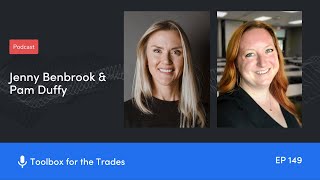
Jenny Benbrook and Pam Duffy from Powerhouse Consulting help ServiceTitan customers fix broken data and workflows. They've worked with 300 contractors in three years, spotting problems like unbooked sold estimates worth thousands of dollars and teams ignoring core tools like the dispatch board. Their approach: listen first, explain why changes matter, test before rolling out.
Questions this video answers
Three years ago (from the Nov 2023 recording).
Nearly 300 contractors in three years.
About 16 years.
About 10%.
Jenny Benbrook and Pam Duffy, you are the co founders at Powerhouse Consulting Group. I am so excited to have you here at Toolbox for the trades. Welcome.
Thank you, Jackie. We are thrilled to be here with you. As we said just a minute ago before the camera started rolling, I have listened to you and your podcast for years, and it is so neat to be able to sit here and put a body with a voice and feel your energy and be a part of the wonderful content you put out for service time.
Oh, thank you so much. It's so great to have you both here. I've worked with Powerhouse kind of tangentially over the years with webinars. Pam, you put on a fantastic webinar, I think, last fall. I love you guys. I love referring customers to you. So I can't wait to learn a little bit more about Powerhouse Consulting and get into some of the nitty gritty about how you help folks and give the people listening today some takeaways that they can apply to their own business. Does that sound good?
Let's do it.
Definitely.
All right, so we're going to kick it off the way I love to, which is through an ice breaker. So, Jenny, I'll ask you first, what's one thing you consider yourself to be very good at and what's one thing you consider yourself to be very bad at?
Well. Oh, that's a tough one. Is this in a business sense?
It could be any sense.
And. Okay, so in a business sense, I'm going to play off of Pam and I's relationship because what makes us work so well together as partners is she is the exact opposite of me, and vice versa. Whatever I am good at, Pam comes to me and we collaborate on whatever I am terrible at. She shines so brightly. And so we're the Ying to each other's yang, but we have some funny stories with how we differ and how we've supported each other. One that I'll give you is driving through LA yesterday and whose ability to follow directions was on point and whose was not.
Spoiler alert. It was not me. I'm not good.
One of us is no longer allowed to drive in la.
That's me.
What did you do?
So the thing is, is that I. I am actually a great driver.
Sure.
Fun fact about me is that I've never been pulled over. I need to, like, knock on some wood.
Yeah.
Never gotten a ticket in my life. So I'm a very, very safe driver. I like to follow the rules. And that means if you're in a place where you maybe need to be a little bit more aggressive. You need to maybe break, maybe bend some rules. That is, it is just outside of my personality. I just cannot do it. So, yeah, Jenny had to take over a bit. But my thing that I'm terrible at is I am a terrible passenger. So then I'm just, you know, sitting like holding on in the background.
So, yeah, and that's how, you know, we keep things interesting while driving and trying to follow the rules and the instructions. We were cutting it close to the meeting we had at 4 o' clock and I had my comfortable plane shoes on, not my dress shoes. And so while Pam was driving, I had to crawl in the back of the vehicle because I'm a rule breaker. And so I had to crawl in the back of the vehicle to put the appropriate shoes on, all the while giving my partner a heart attack. So I think it's an interesting dynamic between the two of us. Us where it takes all sorts of people to make the world interesting. And I love how unique Pam and I are in each other's. Right. And how that plays off of each other in good ways. Where I am an extreme risk taker, very adaptable, I tend to act quickly and then build the plan afterward, whereas Pam comes and says, let's take some time, let's think through this, let's put some assurances in place. And so it's really nice to play off of each other like that. So I think probably a great strength of mine is that I am adaptable and a risk taker, and that's probably a weakness of mine as well.
Wonderful answer. I mean, also kind of goes with, I think, your technical roles at the company. CEO and coo. CEO being the visionary, COO being lit. Let's figure this out, can we, please, Jenny? So that's really funny and beautiful way to introduce the two. The two of you are, and how you work together. Pam, is there anything you want to add to the icebreaker? I'll give you the same question. Something you think you're very good at and something you think you're very bad at.
Well, something that we were talking about on this trip as well is that I love lists. I am a list person. I, first of all, I am an Excel nerd through and through and through and through. I love Excel, but I love lists. And I, I really pride myself on keeping, I don't know, templates, you know, where I go and I update them all the time. So one of my lists is I have a very extensive packing list and I travel Quite a bit domestically. And so I have maybe like a 90 item like packing list and if I forget something on a trip, I will go back and I will add it to this list. So my list kind of just keeps getting longer and longer, but I'm always, I'm always prepared and I always, you know, I have my really fantastic list and you know, I think that's a. Just a fun thing that I'm really good at is going back and making sure all of my, my lists are in place, which is great personally for packing, but, you know, also obviously makes sense for business as well.
Yeah, I'm sure. For the work that you do. I mean, I think so much of what. And we're going to get into it in a second, but I think so much of what the professional service partner program at Service Titan does is it allows business owners who have Service Titan to kind of offload all of that technical and organizational components that they can't really take a hold of every day if they're going to run the business. So we'll get into that in a bit. I absolutely love the dynamic between the two of you, by the way. I just like can't get enough of it and I'm going to. It's gonna be really hard for me to keep this trades focused and not just go into like Gossip Girl here.
I mean, funny story is that, you know how I have my list and my packing list and what did we do this morning? We went to CVS so that Jenny could pick up some things that she had forgotten. It just totally. It just plays all the time how we're just very different, but we work together really well.
That's fantastic. So I'm going to ask the question that I always ask, which is how did you get into the trades? And Pam, maybe you could start first.
Sure. So I actually have a mechanical engineering degree. I always wanted to be like a theme park engineer, you know, grew up in Florida and went to school in Orlando. So I. That's really what I wanted to do. And I interned at one of the major theme parks and decided it was not for me. So I had to shift paths and ended up discovering the H Vac industry, which I just had no idea about. Nobody in my family is an engineer, so this, the whole thing was just totally new to me. And I had several jobs in the industry, but some of the major ones were for some of the big manufacturers in the industry working in their corporate offices and doing product development, product management and training. And that is how I really got to know all sides of the industry. So not just the technical part of the product, which is mostly what I was responsible for in terms of how does the product work, what are the new features we need in the ace H VAC units and whatnot, but also what do contractors need, what engineers need, what do our distributors need, how do their business models work, how do they go to market? Also, how do we price our product, how do we sell our product, how do we make it enticing to the customer? So I really, really understood a lot more about the overall business. And so that is what I did a majority of my career before coming over to Powerhouse.
Okay, so you've got that cool manufacturing background and congrats on having a mechan engineering degree. Can I ask how. What was the male to female ratio in your classes?
It was pretty small. And so the thing is, is that a lot of, a lot of people start out in engineering, and this is, you know, very common for engineering school where the classes just get smaller and smaller as you, like, get. Towards the end, I would say it was probably about 10% of my classes were, were women in those classes. So it's. It's been, you know, different, but it is, it is what it is. And I've always enjoyed not just the, the technical side of, of the industry, but, you know, I get along great with guys, so it's fine. But I have always been very involved in the society women engineers as well, sui and been a life member of swe. So I love encouraging other women and building those relationships with them to help them succeed. Because diversity is really, really important in every workspace. It makes everyone better. So it's important not just for people to pursue these degrees, but also to stay in the industry.
Yeah, I love that. I think it's so great that you did it and I love that you paved the way because I'm seeing more and more women get involved in engineering and getting more involved in these STEM careers. So I'm super passionate about it. So thank you for letting me geek out on that. Jenny, same question to you. How did you get into the trades?
So I always like to say that I grew up dreaming of being an H Vac. Not really. It was a total accident falling into the industry, but I built my career in H Vac. Specifically. We've of course expanded during our time at Powerhouse to represent all businesses in the trades. But this will be my 16th year in the business and I totally fell into it by accident. Went to work for a marketing firm out of Tampa, Florida, who specialized in marketing for H vac contractors in a group setting. My first week there, I was asked if I could go represent the company as they open the newest carrier account in California. And I said that's great, I'll do it. What is a carrier? Everything is history from there. For the next 10 years or so, I met with well over 700 contractors. I have worked extensively, extensively on not only the marketing side, but really the operations side. So the importance of understanding not just how to bring business in, but what happens when it comes in, where do we find that business, how are we segmenting, how are we training the teams? Whether it's from first call booking to the in home sales presentation. And spend a lot of time developing some great relationships in the industry. Probably one of my favorite parts about working in in this business is that the people are just wonderful.
They really are.
I am incredibly proud to say that here at Powerhouse I still work with some of the contractors I called on 15 years ago, still clients of ours. And so it really is a relationship driven business where we focus on what does your business need ultimately, whether it is marketing focus, sales focus, operations, accounting and really getting to the root of what we where the kinks are. That's how we founded Powerhouse, essentially was a contractor through my other consulting business. Had an internal service titan super user that left his company and he felt a bit exposed. He thought, you know, this person had all of the knowledge within my company and we don't have that to continue growing our team. Can we outsource it to you? And at that point, Pam and I were working together to support this and other clients. And we got together and said there really is this tremendous opportunity to strengthen a contractor's use of this very powerful software and become a trusted extension who can not only consult on best practices and workflows within the software, but who actually understands what it's like to be in their business. And that's where our experience in the industry has really served us well. And we've not only carried that through with the individuals on our team, every consultant that we have comes from within the industry. But we are also mostly a female owned, female run business with a majority of our consultants being women from the trades. And so it's this powerful dynamic that we're able to offer to contractors.
Yes. And thank you so much for getting into it. I love. You know, we are recording this right after Pantheon in Orlando, which, you know, I can fully attest to what you just said, Jenny, which is the industry as a whole, the community just blows me away every time. Like, everyone is just so welcoming, so friendly and so supportive of each other. And it's also just incredible how Service Titan being this behemoth piece of software, has just spawned this whole tertiary industry. Secondary, tertiary, whatever industry of people that are helping folks make the most out of Service Titan. And that's basically what you guys do. So, kind of going back to what I mentioned at the start of this episode, you are Professional Service Partners, formerly known as Service Titan Certified providers for any of our folks who may be familiar with this program already, it's now being rebranded to Service Titan. Service Titan's Professional Service Partners. I did it. So we've kind of, you know, danced around it, but what exactly does a PSP do? Pam, could you answer that for me?
Yeah. I'd like to start by maybe telling one of the more earlier stories of Powerhouse, which was when Jenny and I, before we had started Powerhouse, some of the contractors that we were working with were just onboarding Service Titans Marketing Pro product for the first time. And they were asking us if we could please help put together some email marketing campaigns for them while they kind of test drove this new platform in Service Titan and we could build some really great emails and we were building these audiences. I'm sure your audience here is familiar with the audience builder, but the emails weren't always reaching the right people or the right, you know, the customers, they wanted to fit into the audience weren't fitting into the audience. And what I started learning was it's not just about this Marketing Pro module. Marketing Pro is fueled by the other data you have in Service Titan. So I ended up learning a lot about memberships and recurring services, recurring service events, um, and all of this, these different pieces of, of Service Titan and realizing, oh, it all really works together. You cannot silo yourself in Service Titan. You need to really understand how all of these pieces work together. So if your memberships are a mess, your emails to members and about membership things are not going to work properly. And that's really what spawned us to say some of these contractors need more help than what is currently out there and more hand holding than what ServiceTitan is capable of providing. Service Titan does an amazing job with their customer Service and their CSMs. And it's amazing. But there are a lot of people out there that just need a little bit more. And so that is what we do. We tend to serve basically three types of customers that are looking for help. The first are people that say, my Service Titan account is a complete mess. You know, like my Data is all over the place. My memberships are not working the way I want it to. The price book doesn't work for my techs. Nobody seems to know how to book a call properly. We can come in and help with that through training, building out workflows, custom workflows for these contractors. Because sometimes, you know, the templates that are provided are not custom enough for somebody's individual workflow. So that's one type of customer. Then we have other contractors that come to us and say, well, we think it's going okay using Service Titan, but we're not really sure that our data is right. Sometimes I pull this report and that number doesn't sound right to me, but I can't figure out what I should be looking for. And so we can come in and help with that as well and really start peeling back the layers of the data that they have in their account. And then the third type of customer is people that say, we're all stars. Service Titan. Our Titan Advisor score is 200 plus. But man, we really, really just want to take it to the next level and we want to implement inventory or we want to really make sure we're using all of the possible features available to us to automate things for our team so that our team can focus on more high level tasks. We can come in and help with that as well. So the way that we serve all of these customers is mostly the same, which is mostly virtually meeting with them over conference calls or emails. So that's most of what we do. We can meet one on one with somebody at the contractor. We can meet with a whole team. We've done big team trainings before. We've done both virtual and on site stuff as well. So, you know, we do it all. But really we're just there to help them make the most of the investment they're already making in their business. So we're just there to help.
And the idea is to really become an extension of their business. It is by way of meeting regularly, learning what their pain points are or even discussions happening and identifying, hey, did you know Service Titan can alleviate that or we can automate whatever this employee is doing, we can automate it just by using Service Titan. And so the idea is we become an extension of the business, learning what they need when they need it, so that we can be more proactive in our recommendations for them.
And also the more you work with those businesses, the more you learn the product for various verticals, the more you see different use cases and the larger your knowledge becomes of Servicetitan and how it can work for different use cases.
Yes. And to that point, because we see so many customers in so many different setups, that really positions us well to guide other customers on, you know, well, this really worked for our other client or we have a similar client who tried to do a similar thing. It went this way. We'd really recommend this other way. So we have a lot of knowledge of how hundreds of businesses are using Service Titan successfully or maybe not so successfully that we can use to guide on. And I think Jenny, you bring up such a good point about us becoming an extension of a contractor's business. That is really our bread and butter. We are not at our best when we're just answering one off questions. What Powerhouse really does and shines at is this long term partnership with a contractor and really getting to know their business and why they do things the way that they do and who the members of their team are so that we can come in, you know, monthly or however often and give recommendations specific to their needs. As an example, when Service Titan's release notes come out, we take those release notes, comb through them and we say, hey, client, you know, these are the two things out of all of these amazing things Service Titan is doing. These two things are the ones we need to get implemented today. And I can help you with that.
Yeah, I mean, that's so helpful. I know that we're changing a bit the way we market our releases, but I remember when we would do the release notes webinars, I'd be like, oh my God, we've been going for an hour and 45 minutes. This has to be so overwhelming to a business owner who has to think about payroll, who has to think about the new promotion that they're running. It's hard to keep that, to like to keep all those things in your head at once. So I can definitely see the value we're going to get into a bit. Some of like the large learnings, like the large learnings, the big takeaways that you've learned now from doing Powerhouse. And by the way, when did the company officially start?
Three years ago. Three years ago. So I love to say that we are no longer a baby company. We've graduated to being a toddler business. But in just three short years we have, we have helped nearly 300 contractors. That's so crazy. And to your point, what you alluded to earlier, we have developed a wide range of experience in that time, not only serving H Vac, which of course is where we started and we should say our other co founder, Dawn Wasachak, also comes from the industry. And so she brought a tremendous amount of experience on the H VAC side, having actually implemented the software directly for contractors. However, we very quickly grew into the more common plumbing and electrical spaces. But now we represent every business that Service Titan does, including new market businesses, pest control all the way to commercial, which is an emerging field for Service Titan. So we have a tremendous amount of experience there as well.
That's so awesome. So three years. And also I love dawn too. Big shout out to Dawn.
Yes, we love Dawn. Yeah, she's the best.
Brilliant. And she also has helped me out with webinars. So before we get into some of like the big takeaways, I do want to ask clarifying question. You know, you talked about this first customer that kind of started it all, who had an internal Service Titan super user at the company who left, and it left this hole. What's the difference between Powerhouse Consulting as a professional service partner, formerly Service Titan certified provider. What's the difference between a PSP and some person who's like, oh, yeah, I helped implement Service Titan at my old shop. I can help you on a consulting gig. Like, what kind of qualifications do you have that folks who are listening who may be thinking about working with, you know that you know what you're talking about.
Working with a professional services provider ensures that we have number one been vetted by the Service Titan Partner team. So the certifications that we go through are quite a bit more advanced than even the administrative certification which is available to contractors. So it goes more in depth. You guys do a very good job on, on measuring our knowledge. Very tricky questions, we will say.
I think Danielle Combs is the one who does that. She is. She's like employee number two or three, I think. And she, man, she's got some tricky questions in those certification tests.
Well, her vision for this program was brilliant. It really was. And when we founded Powerhouse, I'm not sure if you are aware of this. It was, but dawn was with the first group of individuals who went through the certification process.
I did know that, yes.
So she is. She is actually the second person in the country to become certified and the first person to become multi certified. So a tremendous amount of experience. But it's really what ignites our passion for serving these contractors is we know that there are solutions and in many cases, multiple ways to do things. So it is a combination of not only understanding the software in great detail, but also understanding their business to determine what is the Best solution for you specifically. And so where we really differ, actually, probably one of the most important things that we do is foster change management, positive change management within an organization. And so can I just stop you there?
We could do a whole podcast on.
Change management and we would love to. We're certified in change management. But our, our first contractor that we mentioned earlier, he's still a client of ours. We can't wait to share more about him, or we hope to, but he came to us with a lot of questions around his account. Is it being used properly? Are there opportunities that we're not aware of that we could be using? And when we first started working together, we were met with quite a bit of resistance internally. And it wasn't that the owner or even his GM did not believe that there was, that there was room for improvement. It was team members within the office or within the field that were very accustomed to doing things the way they had always done them. And that is human nature. We like comfort. We like doing the same thing over.
And over again, even if it doesn't make sense, even if it takes so much longer than it should. We just love something that we know how to do.
Yes, it feels good. Pam has been on a dopamine, a dopamine rush lately, encouraging, checking things off the list to spark that hit of dopamine. But really you find that in comfort. You find that in what you know. And so when we come in, we are not only identifying the area of improvement, but more importantly, we're talking to the teams. We're ensuring that they understand the why. How will this benefit their position? How will it benefit their job? How will it streamline their day to day? And once we can really break it down and explain how it will serve either their direct position or the company as a whole, the adoption rate is significantly higher. And so I think that would probably be the chief differentiator between bringing on a consultant who comes to learn the business versus leaning on somebody in your business is we really affect necessary change within the organization that direct individuals may not be privy to because they're right there in it.
Yeah.
Yeah. I would love to add to that, if that's okay. I was just going to say that the people that we encounter at our clients, our potential clients that are the service titan, super users or power users at those companies, they are absolutely incredible. They are. These people have so much on their plate and they are doing so much every day. And a lot of times what we find is they do have these great ideas of, well, I would really like to try this other feature. I would love to try to implement this, but I am just buried in the day to day of dispatching people to jobs, closing out jobs, doing the invoices. You know, they're doing the day to day minutia and cannot get out from underneath that. And truth be told, contractors need somebody to do that work like that work needs to get done. So this high level strategic change management is what less gets left not being done. And almost all of the contractors that come to us say they want to grow. Whether it's grow in size of their company or just develop their team, they, they want to grow, they want to keep moving forward, which is exactly what any business owner should want to do. And so that is just such a huge benefit of us coming on board because they have to get this day to day admin done. And we can come in and provide some of these kind of higher level discussions. It's also nice because we speak often directly to the business owner and we are straight shooters. And I think a lot of times people that work for business owners might hesitate a little bit before telling their boss, like, we're doing this all wrong, you know, but that's what a lot of contractors come to us for. Tell us straight, like, are we using this software the best way we could possibly be using it? And we are happy to share our recommendations with those contractors. And then the third thing that I think we do differently than maybe an internal resource is we will always be here for you no matter what changes your business goes through. We have clients now that have been with us since the very, very beginning. And what is so great about that is we have really gotten to know those businesses over time and through all of the employee changes, internally, department changes and all the things that happen at any business, we're there as sort of a steady resource for these contractors and we, in the meantime, while they're going through changes, as Jenny mentioned, we're training, we're learning, we're staying up to speed and we're growing from all of the knowledge that we're getting from other clients as well. So we are always there for our clients, you know, in, in the long haul with them. And I think that's a big differentiator.
As well, keeping things moving forward.
Yes. Yeah. Yes.
I have to say you two were nervous about being on camera and you guys are just like blowing it out of the water. So just need to give you some props mid interview that is.
And you would think we'd be used to it by now. Considering I think between the two of us, we probably do, I don't know, 100 zooms a week.
Yeah, probably.
Yeah. Well, you did it beautifully and I really appreciate, you know, giving us this look into what the Professional Service Partner program is formerly Service Titan certified providers. As someone who's been at Service Titan now for over six years, one of the biggest things we hear is folks who need more support, more help from their success team. And you bring so much value. Having the trade experience, seeing how other, how many hundreds of businesses are using their Service Titan instance, you're staying up to date, I can totally see why investing in your partnership would make sense. And I would definitely encourage folks who are listening to that to check out the service. I keep looking because I can't remember. I want to call it STCP so bad, the Professional Service Partner Program.
Just remember.
Yeah, you're joking.
That that's, that's how you say it. Especially the two of you, just to see if this is what you want to do, if you want to take your service. Because it is Service Titan. I'm not going to, I'm not going to dance around it. Serviceitan is a giant investment for some people. It really is. And I think it would behoove someone not to use resources like yours if they have goals for the software, if they see areas where they can definitely improve.
And we are, we are in place to support the relationship that contractors have with Service Titan. So as Pam mentioned earlier, we have tremendous amount of experience in software, specifically software for the trades. And it's our opinion that the amount of support that Service Titan provides is remarkable. Where we come in is to take this tremendous knowledge base and apply it to a contractor's business specifically. So instead of a general support base or general recommendations, we provide customized support based on those ongoing conversations and in depth business analysis. So I always like to mention that we strive to work in lockstep with a customer CSM regardless of whether they are with a CSM directly or a part of the new pool, which has been fantastic. We make sure that we're applicable, we are working with those teams that everybody is on the same page. And that is what is incredibly refreshing to contractors is we know that, pardon me, they know that we are in discussions with their CSMs, that we're communicating with them on the changes that we're making. And this really is a partnership working toward elevating their business. It's not at all uncommon to seek outsourced professional resources for that type of customized guidance. And so we'd like to bring attention to that, that we are a complement to the wonderful support that ServiceTitan is already providing.
Yeah. And I just want to shout out all of our team that I was gonna say back in the office, but we're a complete remote company. But our team is just incredible and they are all champions for their contractors that they work with and they really, really want them to succeed and the team to do great things. We have a fantastic Slack channel that we have, that we share each other's, you know, wins and things that are going great. And we love it when, you know, this, this client, you know, finally, you know, really got to work with, you know, Google local services integration, and they're getting leads and it's happening, you know, and it's just, it's really exciting. So we share those wins, you know, kind of alongside of our clients. We want to celebrate with them and help them move forward. And our team is just incredible at what they do day to day with our clients.
I love that. So I want to now go into some of the big themes that I spoke about with Jenny when we first planned this interview. And the first theme is I don't know what I don't know. So tell me a bit about that. And as you tell me about that, can you tell me a bit about some of the common pain points that you get from customers? I know, Pam, you discussed the three levels so beautifully, but speak more on this idea of I don't know what I don't know and some common pain.
Points that you see very often. I am the first point of contact at Powerhouse, so a contractor will reach out to us. I will set an initial call to learn about their business, where their pain points are, where they're struggling, and then discuss different ways that we can best support them. I would say nine out of 10 calls, it begins with I don't know what. I don't know so much that we have made T shirts around it. I don't know if you noticed. At Pantheon, to support Dawn's breakout presentation, all of our shirts, well, I wasn't there, but our team shirts said, ask me how I know. Because there is a sense of, well, I know that my price book is a mess. I understand that either it wasn't built correctly, I don't have a working price book at all. But I also know that there's a lot to this software that I'm not utilizing. So back to the investment contractors. Sign on with Service Titan because they understand conceptually this software will change their business. This software, when Utilized properly will aid in their growth, in scalable growth. But where contractors tend to get lost is in the day to day. So staying on top of those updates or going through transitions within their company, adding new services or business units, employees changing. So much happens on the day to day that to keep up with a software as complex and as important as Service Titan, it can be overwhelming. And over time, contractors can lose confidence that they are getting the most out of this investment for whatever reason. And so very often when we are first contacted, it is that general sense of, I just don't know what, I don't know, I don't know if I'm using it correctly, I don't know if the data I'm reading on my reports is accurate. You know, I don't know how to implement inventory or how to do this. And so when we come in, we will typically start with a full, full assessment on the account, which will really bring to light all of those unknowns, whether it's the good. Here is what you are doing. Great. Knocking it out of the park. Everybody loves a win. And here are the areas where we have absolutely identified workflow issues, whether it's training or use of a particular application. And finally, here are areas that we recommend you use. Were you aware this is available to you? And so once we provide that detailed audit, we almost hear an audible sigh like, oh, now I see it. I see everything that's in front of us. Let's get to work on building out that roadmap. So once our contractors have a good understanding of everything they didn't know, we can then determine based on their goals as well as what's needed from a priority order within the software or what we need to work on and when to elevate their use of the software.
Yeah, and I would just add to that, the health assessment is so important for us to understand where a contractor is at today. Because I think what happens is companies will implement Servicetitan and sometimes it goes great, sometimes other things happen, it doesn't go so great for one reason or another. And then they're scrambling, just trying to get day to day operations. So maybe they're booking jobs and then closing out jobs and that's it. But for example, recently we came across a contractor in the health assessment that was not using the dispatch board at all, which is a key function. I think anybody listening would know that is a key function of Servicetitan. We've also run into customers that are not taking calls through Servicetitan. And so some of these things where they didn't even know it was possible, though. And those are things right away we can help with. And so sometimes people say, well, I don't know, I didn't even know that you could do that. But they come to us initially saying, I think this software can do more. And it absolutely can. Almost 10 out of 10 times. Absolutely. It can do even more for you than it is doing today. It's just these little features that you don't know. Some of them, like the ones I just mentioned, are kind of core features and very core to the. To the function of the operation.
Core to data collection. Correct. Like going back to what you were saying at the top of this episode. Just like making. Not utilizing the dispatch board, not taking calls, very extreme examples. But if you're not doing that, you're not collecting data on the customers that then trickled down to your Marketing Pro campaigns, if you're using Marketing Pro, all that stuff.
But then to layer on to that, then we kind of get into the. Did you know? Because a lot of times they don't know. But a good example of that is if during a health assessment, we say, your price book is great. You know, you've. You've organized it great, you've got vendors set up, you're using all of these different things. But did you know there's estimate templates, did you know there's proposal templates. And a lot of times they don't know. Or maybe they were told one time or they've heard about it, but they didn't really know how to get started.
Or the changes in staff. Typically it could be an office manager or another employee with some level of technology experience who takes the charge. And then perhaps they leave or they change roles. And it's not that the software wasn't implemented properly, but it was one person who gained all that knowledge during the implementation phase. And that's what makes it so risky if it's not a team effort, if you have one individual with all that knowledge.
Well, just to share some anecdote, I implemented some humongous webinar software about a year ago, and I'm the point person on it, and I talk to my support person on the regular when they're telling me about things that I'm not utilizing. And I always have that gut reaction of being like, I didn't know about this. No, I did. I did know about this. It's just you told me about this. And I had two meetings sandwiched in between our meeting. Exactly. And it just left my mind. I think it's like, I think we're being very good about that, but I just want to call it out as saying, you know, when you're working with a software like Service Titan that is just so all encompassing, it's impossible, it's impossible to be able to recall everything you learned from your, from your onboarding session, everything you learned from the first few months on there. So I think the health assessment can be so helpful in that way.
Right. And again, like the team that's working for any contractor is just, it's in the day to day. In the day to day. In the day to day. And our goal is to try to level them up from where they are and do it with ease and smoothly and really, you know, give as much support as they need. Sometimes our clients want us to really hand hold. And so we will develop standard operating procedures from scratch for that contractor with screenshots and loom videos specific to their account. And we will train their team, we will schedule those training sessions and go step by step by step by step. And then once all of that is done, we will monitor, you know, on a weekly basis or on a daily basis if we have to. There was a client recently that we had that was really unhappy with their missed calls in how they didn't feel like their team was really picking up all of their calls. And we identified a workflow issue, trained the team, and then the next week the calls, the missed calls went from something like 180 in the week down to 40, and then the week after that it was down to 20. And so it's not just, okay, this is the workflow issue and let's go fix it. I think, you know, we can come in and really do all of the training, all the handholding, but also kind of that management piece of, let's now make sure that we're all doing what we said we were going to do and help guide people after the fact. So after the training, however, some companies have a lot more resources than, than that and they really want to implement it themselves, themselves. We can train just that one person on what they need to do and then they can handle all of that as well. So we can, we can help. It's customized, totally customizable. Yep.
Yeah, that's awesome. And thank you for those, you know, those few examples. I'm sure every customer is different, but I mean, something to consider, right? And I'm sure there's folks listening right now who are thinking about, oh yeah, there's that part of my price book or oh yeah, there's that part of whatever that I'm not hitting. I need to like, by the way, I think this is going to be episode 148 or 149. I need to like, just memorize a list of features. So when I want to share Service Titan anecdotes on the live on the podcast, I can just remember I can just pull from one of them anyway to do for me for later for.
Jackie, I'll do a little cheat sheet.
So we've been talking and this has just been great, ladies. I really appreciate you coming down and talking with me in person because we get to work together, you guys get to feed off each other without a screen in between you. It makes it so it really makes for a great show. So thank you again. I want to talk a little bit about kind of this, this topic that you've been touring around, which is key indicators that your data is broken. We're recording this now. It's going to launch in November. So you'll have already presented this at Women at no, at the NEXAR super meeting, but this is going to be. You're also going to be presenting this at ahr. So tell me a bit about the key indicators that your data is broken.
Yes, I'd be happy to tell you about this. So we have noticed in our now three years of experience at Powerhouse, there are a few areas where we can navigate to in servicetitan and say if it's a red flag here, it's going to be a red flag everywhere. And so I wanted to put together just a short list of places where companies can go and say if this number doesn't make sense, probably the rest of your data doesn't make sense. Because besides the anecdote of I don't know what I don't know, another thing that Jenny and I both come across a lot with new clients is I do not trust my data. I know my data is wrong. Sometimes people will say that if they log into their dashboard. So many people tell us they log into their Service Titan dashboard and never even look at it. People will tell us right away, I know it's not right. So I just don't even look at it.
They're still tracking externally in spreadsheets.
Yes.
Even though they have this wonderful software.
That's another. Just as a sidebar, that's another way that our team can help coach. If you are taking your Service Titan data and putting it in somewhere else, please, please let us help you. Because that is what Service Titan is for. And it's so great to have that transparency of data. But anyway, that's another topic for another day. Oh, go ahead.
Well, the key indicators, is it so critical to business owners and managers within companies? Because that's how they make their decisions. Quick glance at the data in the morning. Whether you're a part of a coaching group and they have their special morning meetings where you're setting goals or if you're doing this internally, the power of that data is limitless and it's available to every contractor. And so to gain confidence in the data, Pam is wonderful at how she brings these real life examples to our client base. We thought it would be wonderful to share on a larger scale, provide contractors with actionable insights that they can just log in, take a quick look at their dashboard and say, oh yep, that number is not right. Let's go and dig deeper and figure out why in many cases they can do that internally, they can work backward to identify where the systemic failure occurred. And in many cases they'll reach out to a professional services provider to engage in more strategic high level assistance.
Yeah, so just as an example, one of the areas that anybody can go to is in their follow up tab in Service Titan and navigate over to sold estimates and then change the date range on that sold estimates, let's just say to the first of the year and most of our clients, I mean this totally depends on your business size. But before you hit the button, you should think to yourself, how many outstanding estimates do we have? Do I think that we have that are sold but not yet booked into a job? A lot of our clients that'll be somewhere between 10 to 20ish, something like that. So if you go and you go and you navigate here to follow up sold estimates change to the first of the year and you're seeing hundreds, that, that is a problem.
Tell them about the one that you found, how many, I mean we, we've.
Seen because it will give you. Service Titan will give you a quantity as well as a value. And sometimes we've seen that value of sold estimates be $1 million, $2 million. And when we see that, we think that is if, if the data was correct, if, if we can assume that the workflow is correct, that is $2 million that is committed from your customers that you are not acting on and booking into jobs. Now, as a homeowner, I can actually relate to this in terms of somebody coming out giving me an estimate, I sign the estimate and then it seems like the company just forgets about it, which by the way that is a workflow issue. But if again, everything was recorded right in Service Titan, that would be a valid sold estimate that hasn't been booked into a job. So that, that could be what is going on. It could be your salespeople are doing an amazing job and then whomever is supposed to be following up on the, the permitting process or the, the part ordering process or whatever, it's not completing the cycle. Or it could just be how you are using Service Titan and how you are booking those sold estimates into the jobs and if you're following the best practices. So even in the last two weeks, I think we've had three different clients that have had, I don't want to say issues with this, but we have helped coach them on the appropriate way to take a sold estimate, initiate booking, book it into a job so that it clears from that sold estimate screen appropriately. When we review this with clients in health assessments, they'll say, well, that job for Jackie, we did that last week. I don't know why that's there. And then we can explain why it is there. And so the issue is, it's not so much, you know, people will say in that situation, well, see, Service Titan is broken. So we'll say, see, like your workflows are broken. And it's an issue because if you are using Service Titan to look at how much sold revenue you have, so you have your sales and your revenue right? So if you're trying to use that as a performance indicator for your business, then all of your data is just going to be off if your workflows are off. And so that is why it is so critical to get your workflows right. So anyway, all of this goes back to. As a business owner, you don't really need to know the minutiae of all of these workflows and all the buttons that need to be clicked, but you can go into that one little area and look at that number and see if it makes sense to you. And if it doesn't, there's more work that's needed.
That's an excellent takeaway for any folks listening who are on Service Titan and want to make the most out of it. I mean, again, fantastic. Just really great. I love what you guys had to say today. I thank you so much for setting up the program. I think you have a great marketing campaign that I'm going to pitch to the team after that, like, just a whisper, like, just like, I need some help.
It's a secret.
Let's look just a little bit Broadly, because I know we have folks who listen to the show who aren't just service titan users. Right. So looking broadly at a contractor and I think maybe going back to change management, Right. What is some advice that, now that you've worked with hundreds of contractors, what is some advice that you would love to give to the folks listening when it comes to change management that you think contractors would really benefit from hearing?
I'll take that one. I think the most crucial part of change management is listening. Listening to your team and understanding what their resistance to the change is. Why do they feel that this will negatively impact them? Hearing their concerns and then explaining the why. It always goes back to we as humans want to feel confident in what we're doing. And if I don't understand the bigger picture or if I don't see how this could potentially be an advantage over a certain way I'm used to doing things, then I will have a natural resistance to whatever that change is that's going to take me out of my comfort zone. And so a big part of what we do is we listen. We listen to the contractor's pain points, their struggles, their goals, and then we listen to their team. Do they match? Are they in alignment? What do we need to know to structure our program changes in a way that they will not only understand, but continuously adopt them. And so I think that's probably my biggest piece of advice is take the time to listen to what the aversion to the change is and then take the time to explain how it will impact and benefit in the long run.
Love that.
Yeah, I totally agree with that. I think explaining the why behind any change that is getting made and how it will benefit the team is a big part of change management. Something that we coach on a lot to leaders that we work with is we have to build confidence in the team that the new process will work as advertised. And that requires a lot of work on our end as consultants. But also anybody that's implementing a change in their business is to make sure it runs exactly as you advertise before you implement it. Because when you have that pushback, that initial pushback, right away, it can really be a detriment to the overall implementation because everybody will remember that first day when everything didn't work the way. And so, so it's just so important to build confidence in the team that it's not only going to either make their job easier or save the company money, which then will allow us to maybe make some payroll changes and things like that, but also it's going to work. It will work and that is a very important part of change management.
Excellent. I mean, ladies, we've talked for almost an hour. I don't think any of this interview is going to end up on the cutting room floor. Truly. Jenny and Pam, thank you so much for being guests on Toolbox for the trades. I will be linking all of Powerhouse's info on the in the show notes for anyone who is interested. And thank you so much just for spending the time with me coming out to LA to do this interview. It really means a lot and I look forward to partnering with you guys some more on content because you are certainly Powerhouses for sure. So thank you so much.
It has been our pleasure. Jackie. This is really an exciting, exciting day for Powerhouse and me personally to sit and meet Jackie.
Yeah.
And I, I wish our whole team could be there. So shout out to our whole team again. We, we love you guys so much and we miss you.
They're a big. They're the reason we are who we are and because of their work.
So friendly. Your team is so friendly.
They're the best, aren't they? They're just the best. Yeah, we love them. We get comments on that. And they met so many folks at, at Pantheon, so it was just wonderful. So just shout out to the whole Powerhouse team.
Awesome.
Yeah.
More from Bill




Capturing the 80%: How SmartAC’s Gen-2 Targets Non-Membership Homeowners | Podcast Ep. 296

Build better customer data with every booking in ServiceTitan | TAD Tune-Up Series

The Biggest Change for Roofers Coming From Other Roofing Software to #ServiceTitan?

