Leaning on Your Peers in the Trades | Podcast Ep. 101 | Toolbox for the Trades
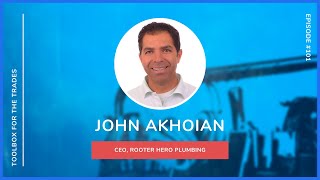
John Akoyan built Rooter Hero into California's largest residential plumbing company using a hub-and-spoke model and intrapreneurial general managers. He credits peer groups for learning, emphasizes daily communication and company culture, and recently published a memoir called Temporarily Broken.
Questions this video answers
11 locations currently, with 3 more in the works (≈14 planned).
About 70 employees in the centralized hub infrastructure.
Faith; Integrity; Respect; Service; Teamwork.
Temporarily Broken.
17.
John Akoyan, you are the CEO of Rooter Hero Plumbing and Air. Welcome back to the Toolbox for the Trades.
Thank you. Good to be here.
Jackie, I am so excited to have you back again. I'm going to read off a little bit about who you are, what you're doing. So you are the CEO of Reuter Hero Plumbing and Air, the largest residential plumbing company in California. We're going to talk about that. And also one of the first guests I've ever had on Toolbox for the Trades. I always kick off the podcast with asking my guests, how did you get into the trades? But we actually already know your origin story. You became a plumber at 17 to support your family and have been working at this ever since. So the last time we spoke, which was right before COVID by the way, Rooter hero was a $50 million business. What's changed?
Well, a lot's changed. We've nearly doubled the size of the company, which is pretty amazing. Did really good through Covid and opening up locations, you know, so we've expanded a of lot little more on our reach and currently I'm in the middle of opening up three more.
Oh my goodness.
So it's just a lot of exciting things going on right now. I mean, it just took off a lot faster than I thought. I mean, I thought it's going to, you know, the bigger you get, you know, the harder it's going to get. But it's actually I'm having more time to work on the business now, which is pretty incredible. You know, I really enjoy it.
That's awesome.
So, yeah, lots change. But there's things that are still the same too, you know.
What's still the same?
Well, we're still doing drain cleaning and plumbing and we added H Vac just recently. So now we're getting into that market as well. So yeah, I mean, the day to day business things have been the same, the philosophy is the same, our values are the same. So there's just a lot of things that are just the same. At Hero Land.
You always call your business Hero Land whenever I talk to you about it. Let's actually just get that out of the way. When did you start calling it Hero Land and does everyone at the company call it Hero Land?
Yeah, we all call it Hero Land. We believe it's the happiest place on earth next to the other, you know.
The other happiest place on earth in California.
This one's for adults though.
Sure.
So we, we enjoy the place and it's just sort of our internal dialogue, you know.
Nice. That's awesome. I actually really like that. I feel like at service titan, we have our own internal lingo. And it's so interesting how as you develop a culture, as you build a business, you kind of develop this, only almost its own language to speak about what it's like there. Right. I'm kind of getting off on a tangent, but I think that's really cool. So you've doubled your business since we last spoke, which was right before COVID and I just want to highlight how incredible that is, especially during a pandemic. And now, as I alluded to at the beginning of the conversation, you were the largest residential plumbing in California. How the heck did you do that?
I've always enjoyed, you know, growing. I like working on the business. I like starting things. I'm not like the kind of guy that likes to finish it, but I.
Oh, my gosh, we have that in common.
I'm the same, but I love to start things. So I'm like, you know, I always, like, get the first, you know, 20% going, and then my team picks up and, you know, they keep it going. And I think we just kind of been lucky, too.
Nice. How many locations do you have to have to be the largest residential plumbing company?
So currently we have 11 locations, and we've got three more in the works, so we'll probably be at about 14. And now we're looking at going into, you know, neighboring states, too. So, you know, hopefully we are in Arizona. We're in Phoenix.
So are you looking at Nevada just, like, slowly creeping up towards the middle of the country?
Yeah, I mean, you know, just there's only enough markets in the. In California where, you know, you'd have to go out further. So we're looking at same time zones, you know, because that's important, because we have a shared services, and a lot of it's like interacting with one another. So the time zone thing is kind of important. And then I like to get to the location. So one thing I look for is how easy can I get to it.
Oh, sure.
You know, so it has to be something where you could easily travel and get to it without having to, you know, I like to come back home and sleep in my bed nowadays instead of being being out on the road for so long.
Totally. I love that you just said that. As an owner, it's still really important for you to be able to visit those different locations.
Yeah.
And I wonder how often entrepreneurs in the service industry consider that as they're.
Expanding you know, that was kind of important to me from even the beginning days because of my family. I just like to come home and have dinner with the boys and my wife and, you know, we sometimes read books together and, you know, so it's, it's been important to me from the beginning. But in the beginning days when we were expanding, I was spending a lot more time like, you know, in hotels and stuff like that. But nowadays it's actually, you know, I get home, I leave in the morning really early. Like, I went actually this week on Wednesday, I was in Reno. So I left my house at 4:30 in the morning and by 6:30pm I was having dinner at home.
So, I mean, that works. I have done that Reno to Los Angeles road trip though, and it is, it's tough.
Yeah.
So I want to get in to all the ways that you were able to double since the pandemic, how you became the largest residential plumbing, Cal plumbing company in California. So tell me a bit about the internal infrastructure you had to build within hero land to support this extreme growth.
So we have a shared service type of model where we call it the hub, you know, where we have a call center, we have evening dispatching. We have an accounting team there. We do our payroll out of there. We got an HR function, we have a legal team and just some executives that work out of there too. Anybody that's working on. And we, within the last couple years, we put a compliance department now in place where, you know, we're making sure that we cross all their T's and out all the I's and make sure that everything is compliant. So it's sort of like, I think we might have 70 employees, you know, that work within that infrastructure. And then they cater to only our companies. So then on the front line we have, we call them intrapreneur, like general managers, which are, you know, guys that love to build businesses as well, but they don't have to risk their own dollar. You know, we, you know, we'll write the checks and they can help us grow it. And, and they get a little bit of equity in the company and it keeps them happy. And they're. And they love building. So. And they run a operation and they make a lot of the decisions day to day and they're facing the front line. So they have a lot of the technicians and some of them have some office staff that report to them as well, you know, to help, you know, keep things organized. But that's kind of, it's like a big wheel with a bunch of the hub in the middle and then a bunch of spokes coming out and we keep wanting to add more and more spokes.
You know, I love that I've heard about this model. I think I first heard about it maybe I'm going to say 40 episodes ago, which was this shared service model and you have different branches and you select a really entrepreneurial go get them kind of person to run those branches.
Yeah.
And you just, you take all the risk out of it. And I think it's such a brilliant way for you to identify go getters in the company who may one day become your competition. And instead you're providing them with the growth opportunities they want internally so they don't leave and they get the rewards of being a business entrepreneur without really having to take the risks. I think that's so cool.
Yeah. And then also having networking amongst them, you know, because iron sharpens iron and, you know, you have a great group of people and they're always like, you know, helping each other out and they're doing the same thing. And a lot of them, you know, are, you know, just try different things and if it works, they share it with others. So it's just a really good internal kind of like infrastructure where, you know, you just get better and better by the day, you know, because the group's getting better, you know, and then they're sharing with one another. And that's how I've learned too, because I've always been, you know, part of like a performance group with other trades and stuff like that as well. And that's really helped me. And I know it's. It's also helping, you know, internally, our team.
Awesome. I would love to know how long have you had this model in place, by the way?
Well, I mean, before Hero Land, we had this. I was in the franchise. I was a franchisee for a larger franchise company and I kind of built the same infrastructure within that company as well. So I kind of learned it and tried it out and expanded outside of just our backyard and learned the model. And then. And then with Hero Land, I just kind of already had done it, so I knew what to do. And when we started back in 2011, it just was very simple to figure out that infrastructure and then just keep on using that model to grow.
I love that. What would you say to any contractors who are hearing about this model, who have heard it at other best practice organizations at other conferences, and they're like, yeah, I'm really interested in that. What kind of advice would you give for them? If they wanted to set that up.
Well, I mean, it only works if you hire people that have batteries included, right?
Yeah.
So, you know, you're gonna have to have people that are, you know, willing to, you know, like, be resourceful, you know, create there, you know, be self motivated, self energized and sort of that intrapreneurial, like spirit where somebody could come in and they want to grow and they want to build something big. And so it works when you have that type of. Those type of people that are helping you build those infrastructures. I've. I've had the other side where I've, you know, I thought somebody was really good, but they were really not entrepreneurial. They just wanted something that was already going on. They didn't want to build anything. They wanted something that was built that they could just manage. You know, that doesn't really work good in our model. Sometimes it does because we have some divisions that require that. But for the most part, it requires somebody that's willing to roll up their sleeves and, you know, help us build a business.
I'm thinking about a business book and I can't remember the name of it. Maybe you can help me out. It's about. It's by a woman and it's about. It talks about the difference between rock stars and like everyday boots on the ground workers. And a big thing to do as a leader is to identify who's the people. Who are the people in your organization who constantly need new challenges, which is what I think intrapreneurs do.
Yeah.
And who are the people that are really happy mastering a craft and just being really good at that. Does that align with the experience you had?
Yeah, sort of. Yeah, sort of. I mean, you know, at the same time, you know, like somebody that's willing to, you know, like fail and keep going kind of deal, you know, like, and not let that bother them. Like just get up and keep going. Because, you know, when you're starting a new location or a new business, there's just a lot of failures in the beginning. A lot less now. Well, a lot, A lot less now than it was before because we've learned so many things. We learned a lot of things not to do, you know, we.
Sure.
So it's just got to be somebody that's willing to keep going. And it's also about building a team and then having that person build a team within a team and be able to manage that team as well, you know, so.
Got it. Are all of your intrapreneurs, they all former service Technicians.
Some of them are. Some of them have grown within the company. Some of them have come from outside the company. But, you know, we look within the walls. That's usually where we look first. And then if we can't find anybody that's ready for a challenge or is ready to move to a location or something like that, then we'll look from the outside.
I got it. I'm throwing you so many questions I didn't prep you with, and you're handling them beautifully because I'm just really interested in this entrepreneur model. My final question about it is building teams within a team. So you have the hub that you have 70 employees at, and then you have all these spokes that are different locations. What do you do to make sure that there's cohesion among the different spokes?
So, I mean, a lot of what we do when we're bringing people in is, you know, we'll. We'll talk about our values, we'll talk about the type of company it is. And even in our ads, I mean, we just place some new ads and we'll talk about not only, like, before, we used to put all the good things in the ads, right. And now we're putting, like, the good things, but we're also putting in what the expectations are and what the company culture is like, because not everybody likes a entrepreneurial culture, you know, not everybody likes, you know, that. That type of thing. So we. We put all the good, but we also put the bad in there too. And we do put in there the compliance measures and all the things that people have to do as well. And. And I think that's, you know, that's kind of what, you know, what it takes being honest with people, telling them what to expect. So they're not coming in with this expectation of, oh, everything's gonna be great. This is what it is. And then all of a sudden, they hit their first hiccup, right? And they're like, oh, I didn't sign up for this, you know?
Yeah. And I mean, there must be such a fine line or fine line to toe, right? Because the trades is always looking for fresh talent because there's a hiring crisis. Talk about it all the. All the time on this podcast.
Yeah, yeah.
But you also want to be brutally honest about what actually is in it for them. So I imagine the copy and those want ads and not want ads, but those online postings most likely has to be really. Has to really toe that line between being inspirational but also realistic. So you're targeting the right people.
Yeah. And, you know, one thing I love to do is communicate with my team every day. So every morning I'll send out a message to all of our people, like a nice quote with an action behind it. And, you know, we're in constant communication through just group me like, or WhatsApp and stuff like that. So we have, like, these group chats and stuff. And I'm always participating and on there, and I'm very accessible, too. So I put my cell phone number on our website behind every business card. I'm reachable by every employee. You know, so sometimes I'll get a call from an employee and they might not be happy about something, you know, and I'll go back to, you know, either HR or their manager. I'll try to figure out what it is and, you know, help them get through it, you know, so, you know, you got to be accessible. I know there's a lot of, like, CEOs that, you know, don't want to be bothered or, you know, don't want to be called or hard to get ahold of. But I try to make myself accessible to our company customers and also our internal heroes as well. You know, if they need anything from.
Me, I can verify that. Yes, you can find John's cell phone on the website. I apologize for any crank calls you might get after this airs, but I love that approach. And do you get as many calls as you think as someone may think you do?
Not really.
That's interesting.
Yeah, I mean, it's. You think that your phone would ring off the hook, but it really doesn't. I mean, I do get some calls that are just solicitors and stuff like that, but, you know, it happens. I mean, I get spam calls on my cell phone all the time.
Yeah, don't we all?
Yeah.
I guess it just further highlights that people just really don't like talking on the phone.
No, you're right. I mean, more and more people like to be, you know, and I. Even on my message, I put down, look, just text me, you know, please, if don't leave me a voicemail because I don't like listening to them.
Oh, my gosh. No. My voicemail is perpetually 90% full.
Yeah. I try not to delete it. So there's no space for another one. Right.
Yeah, same, same. I love the intrapreneur shared services model, and I really think that's a cool strategy to grow and to expand while also maintaining a finger on the pulse of the business. Right. I know that one thing that has really helped you grow Too is your peer group. So tell me about that.
Well, yeah, the peer group I used to belong to. So we had a group of contractors that would meet every week. I mean, just an incredible group. And we called us the family group. And a lot of them have already sold their businesses to private equity. And as that happened, more and more got out of the group. And so it was eight of us before, and I think it's just me and one other guy that we still own our own businesses. But the benefit of that group was incredible. I mean, I would get on the phone every week at a pre mark time and we'd just get into a one hour conversation. And I just learned so much. I mean, these guys were just so smart, ran a really good business and it's just beneficial to be around people like that, you know, because you learn so much, you know, when you're around people that are running a really good business and have good moral ethics, you know, and, and they're trying hard and you know, it's just. And, and they have almost. They're in the same trade, you know, and different areas. Some of them were on the east coast, some of them were in California in the same areas. But, you know, we would, you know, like we had a common agreement. One of the agreements was that we're not going to hire each other's employees. So there was a code of conduct, you know, that we had to all agree on. And then, you know, there was shared values as well. I mean, we all kind of were sharing the same type of values. And then as soon as, you know, we were in the group or, you know, people would get in the group. It was like a brotherhood. It was just amazing. I mean, we'd travel together, go to different companies together. We'd go to somebody's company and like split up and meet with their team members and ask questions and help them, you know, like, figure out what are some of the bottlenecks. And then we'd bring the owners in and we'd communicate with them and tell them this is what we learned and this is what your team is telling us they might not be telling you. And this is what, you know, this is what we believe you should be doing to kind of like keep growing your business. So it's just. And by doing those kind of things, I was like, even though I was at somebody else's company doing it, I was like learning because I'm like, hey, this is going on in my company as well. Right. So I. So it just, just a lot of great things Coming out of a peer.
Group, it was like you were doing real life undercover boss. Almost.
Almost, yeah.
And how did you get set up with the peer group?
So a friend of mine that I met through organization I used to go to was in that group. I was in another group and that group kind of was like, it kind of fell apart. So I called him up and I said, hey, I want to join the, you know, the group that you guys are in. And he's like, well, there's some criterias about joining the group. And our criterias were I got in because the criterias were, okay, you have to be at 30 million in revenue or more double digit EBITDA. And what we would do, well, the guys in that group I knew, but anybody knew that would come in, couple people would go to their company, would interview them and kind of spend a day with them, talk to some of their staff. We'd get their, you know, we do an NDA, get their financials and take a look at that. And then we'd meet as a group and go, do we really want this company in our group? Can we provide value to these people? You know, and will they provide value to the group? So those were the kind of conversations we were having. And if the answers were yes, they were in. If the answers were no, you know, it was hard to get in. You know, it was like exclusive club. Yeah.
But I guess, I mean, when you're running a business and you're trying to grow at the rate that you are at now, when you're talking about, you know, tens of millions of dollars, you have to take something like that seriously. You can't just partner up with whoever says, how about me? You know, I would imagine that running a business like that, your time is so valuable that you really have to do that legwork to ensure that the person you're going to work with, you're going to be co mentors, co peers with each other, you really want to make sure you're getting in bed with the right people, for lack of a better metaphor, obviously.
Yeah, yeah.
Wow. So you mentioned how long were you in that group?
Oh, many years. I think we were probably good six or seven years until it just kind of like one at a time. I mean, it happened really quickly because I guess private equity came into our businesses and thought the model was just.
Like when all your friends starting, start getting married at the same time.
Yeah. All of a sudden you're like, hey, you know, am I the only single guy here? So it just happened really quick. And you Know, but it was a great run. I mean, I learned so much. And we used to travel together. And, you know, one of the things I remember, you know, we all went to Washington, D.C. to look at this software or this, you know, technology that we all thought would be great to implement in our business. So we met with them and went over it. And one of the guys in the group knew another contractor that was in Washington, D.C. and he said, hey, I set up a date to go, you know, check out this really large contractor. He's $150 million, you know, H vac and plumbing company. We're like, we're all in. Let's go. Just for that. We'll go, you know, just to meet him and see. And. And I met the owner of Michael and Son, Bassam. Oh, yeah, great guy. Became good friends with him until today. You know, we either text each other or meet up. And I've gone back to his office many times. And so you meet so many great people. Like, when you're with great people, you meet a lot. You know, you meet. You meet other great people, you know, so just a lot of good things happen being in that group. So I highly recommend it. Yeah.
Yeah, totally. I'm curious what. I know you mentioned you learned so much. Is there any single lesson that really comes to mind right now in terms of. Oh, yeah. When I joined that group, I was. I realized I was doing something totally wrong, or maybe I realized I was doing something totally right. Was there a particular aha. Moment that you remember?
Yeah, I mean, there was a lot. I know. Like, I've always been sort of the quiet one, you know, sort of like the fly on the wall. I like to listen a lot. But what I learned being in the group is you have to be totally honest. Don't be afraid to be vulnerable, like, you know, put your problems out there. Because most of the times we don't put the problems out there is because our ego is telling us that we're going to look weak or we're not going to, you know, it's. People are going to judge us or whatever it is. So the more honest I got and the more vulnerable I got and the more I was willing to share my issues and challenges, the more I was getting from the group, you know. So I guess, you know, I learned that early on, you know, coming into the group and. And, you know, I just learned a lot from it. I mean, I was not the smartest guy in the room, for sure. You know, there was so many smarter guys than me. I Felt like I was, you know, one of the luckiest guys to be in that room, you know, But I just learned a lot from them. You know, they were all very. And until today, they're all great entrepreneurs, run an incredible business, and still in contact with a lot of them.
That's awesome. Was that vulnerability in the group? Was that modeled for you by the other members?
I mean, all of the members, you know, shared that honesty and just brought that to the table. I feel like they were all, like, you know, really cared about one another and were willing to be vulnerable. They were willing to open up their books. They were willing to talk about what they weren't good at as much as they were willing to talk about what they were great at, you know? So I just. I felt like it was a very safe environment, you know, to just, you know, put your problems out there, you know, nobody's gonna judge. Don't worry. You know, they're all there to help, you know, and just a great group of guys. Yeah.
That's awesome. I'm. We mentioned this before we started recording that I'm a big psychology nerd, and I. Brene Brown has this wonderful anecdote about how you should only listen to critiques or criticism or feedback from folks that are in the arena with you, that are at that level, that are facing the same challenges you have, or rather, who have had the courage to take the risks and accept the challenges that you have. And I think that's so important to cultivate that sense of honesty, of safety you mentioned, too, when you're in those peer groups. So something for folks listening to, consider if they're working with peers, and maybe they don't feel that sense of safety or if they do recognize how wonderful that is.
Definitely. Yeah, it is awesome.
So you mentioned already, most of those folks from your peer group have been acquired by private equity. They got the red rose per the Bachelor, but you're not interested in that at this moment. And PE Is something we talk about so much on the podcast, so I was hoping you could share your point of view and enlighten the audience as to why, at this point, you're not interested in this.
Well, I mean, I don't know. I just never felt like it was the right time. And I've always worked, you know, like, on my own since I was, like, 19. I started my first company, and I've always kind of felt like I always answered to somebody. Like I was, you know, I had to, you know, be there for my people, and I had to serve them And I felt like, even though, you know, they reported to me, I felt like I had an obligation to them. Right. So there was always that. But I guess, you know, I've always had the fear of the unknown, you know, like, what does it feel like, you know, to, you know, be acquired and now, you know, have a board of directors that you're reporting to or somebody else that majority owns majority of the company, you know, And I don't know, I just. I guess, you know, sometime soon we'll do it and we'll have to do it and we'll, you know, probably keep growing and, you know, making it outside of California and maybe making it nationwide, you know, So I think there is a benefit to it for sure, but I just never felt the urgency to do it.
That's fair. Imagine if in this moment I pulled off a mask and I was one of the private equity people that I'm sure have been trying to. Have been trying to take you out to dinner for many years. I like that you said that you feel like an obligation to others, an obligation to your team. And I think it's really interesting, just talking about the entrepreneur in general, how while you feel that obligation to your team, you're not so eager to trust other people with that, with that obligation, because it is so important. Do you agree with that?
Yeah, yeah.
Yeah. That's really interesting. What do you think? So you think you're just going to kind of play it cool for the next few years and see what happens?
No, I mean, I'm still exploring. I mean, I'm, you know, I'm talking to people and, you know, I'm not like. It's not like. No, it's a deal breaker. I mean, I. Either way, it's. I know that, you know, we're going to continue to build hero land, and it's going to be a very successful business. I believe in that. You know, I believe that this is my calling, you know, and that whatever I'm doing, I was put on the earth to do, you know, So I don't know. I mean, we'll see what happens.
That's okay. I don't know is a perfectly fine answer. Also, I didn't realize. I mean, I know you got into the trade super young, but first, business at 19. That I was. I wanted to interrupt you and go show off, so I just wanted to share that. So we talked about your peer group, we talked about your intrapreneur shared services model, which is all stuff I wanted to talk about. Now I want to get A little bit to you, because I know you're really into personal development, which is such a theme when I talk to service entrepreneurs or just folks that maybe don't have the title of CEO or founder, but are just really interested in growing themselves. What are you trying to learn more about right now?
Well, I mean, right now I've always been a health fanatic, so I'm trying to learn. And I hit 50 this year.
Mazel tov. You look 36.
Thank you. Thank you. So I'm. I'm learning about, you know, age reversal. So I'm trying to do what I can to stay young and stay energetic so I could continue to do what I love, which is plumbing and H vac and. And I guess that's the first thing because my dad died when, you know, I was 17. And I want to make sure that I could live as long as I can to enjoy my kids and family and, you know, the people I work with. And so that's the priority. I'm learning a lot about that, but I'm also learning about H Vac businesses. I'm learning about private equity. I've been researching that a lot to see, you know, what's that about? You know, M and A, things like that.
So all the fun acronyms that you can throw around at conferences and people are like, oh, he knows what he's talking about. Do you still actually get in and do manual labor as it pertains to plumbing, an H vac these days?
Funny that you asked. So my, my wife's friend called the other day and said she, you know, her gardener turned off her water and it was like 8 o' clock at night. And I had just got back from Reno. I said, don't worry, you know, I'll be there to take a look at it. I called my office and they're like, all the, all the techs are busy. We could probably get somebody there by 10 o'. Clock. It was about a couple miles away. So my wife's like, okay, I'll go with you. So we went over. She just bought a house. She's a first time homebuyer. And the gardener turned off the water. So I was able to fix it for her, you know, that evening and get her water back on. And she was happy. But before that, I was out in the field with the guys during COVID When Covid happened, we had a lot of guys that didn't want to go out in the field. They were kind of afraid, and I didn't blame them because you don't know, you know, what's going on. And so I threw my uniform on, and I got in a service truck, and I started taking service calls. And I encouraged our team. I said, listen, you know, if. You know, if we're out there to be heroes, we got to be on the front lines. And I'm on the front lines with everybody else. And everybody else just, you know, put their protective gear on and went out and served customers. And it was a really good time because I really enjoyed it. I spent several weeks in the field and fixed a lot of plumbing and, you know, and. And had a great time with the people out in the field. A lot of the customer interactions and then dealing with the techs. I was actually. We were doing TV commercials back then, too, so it was funny. I went into somebody's house, and they're like, you're the guy on tv. Like, you're in my house fixing it, and you're the guy. I'm like, I'm in the field today.
That's so funny. I'm so happy I asked that question. It's like, wait, your face is on the website. It's like, yeah, well, you know, gotta do it. Gotta show my team. Which speaks to. I think, also, even though you're a CEO role, even though largest plumbing. Largest residential plumbing company in California, it's still so important to potentially go. Go out there, if you still can, and work with the guys, get on the ground floor and just make sure you're touching the business at every level.
Yeah, definitely.
That's awesome. So you have a new book out, and the first time you came on the podcast, we talked about your original two books. So the new book is called Temporarily Broken, and I would love it if you could tell me a little bit about it.
So originally, I wrote this book for my kids. It was sort of like something I wanted them to know about their father and also their ancestors, you know, their great grandparents and grandparents. And some of the accomplishments, some of the. Mainly the struggles that I went through. A lot of it was to tell them, you know, here's what not to do, right? This is all the stuff you shouldn't do, you know, And I finished the book. It was something I wanted to give them. And as I was doing it, you know, like, a lot of people that I work with were kind of interested, and they're like, hey, we want to read about that story as well. And so I eventually put it out on Amazon and, you know, started to share it with other people. And there's a chapter about Service Titan when it started and how I was part of it in the beginning and how I feel like that was one of the greatest contributions I think I made to the trades, even though I wasn't the one that created Service Titan was there to, you know, be the first customer and help them see what needs to be developed and stuff like that. So, yeah, I mean, it's. I guess it's a good story if people want to read about, you know.
It is a great story. I mean, you really. I kind of glossed over it at the intro because it is a bit of a sad story. But when you were a teenager, when you were 17 years old, your dad died and you had to help your mom and so you got into plumbing and then now you've turned it into a multi. Tens of. I don't even know, how do you say multimillion? Well, it's 150 million now, right?
No, we're not quite there yet.
Okay, not quite there yet. Sorry, sorry, sorry, sorry, sorry. We're approaching 100, almost $100 million business.
Yeah.
So, I mean, just being able to do that and make that transition and go through what I'm sure was a really tough time and come out of it the other end such a successful person. It's a wonderful story.
Yeah. Thank you.
Yeah. So is there anything else in there that's pretty. That you're really. That you would really like to share with the folks listening right now?
I've kind of, you know, you talk about being vulnerable. I've exposed a lot of skeletons and, you know, from my past and through the dark sides that I went through and the struggles I've had and how I came out of it and, you know, how it helped me become a better person. And my wife being one of the people that, you know, are one of those angels that came in and helped me become better and, you know, I have to give it to her. I think, you know, it's so important and I tell my boys that it's so important to, you know, like, find your soulmate, somebody that's going to make you better. And she's done that to me, you know, so there's a chapter on her in there. How we started. Rooter Heroes is in there as well. And a little bit about Service Titan as well. And, you know, I love it when.
Folks shout out their partners or spouses on this podcast. It happens actually quite a lot, which I think is just a testament to how to run a business like this. It's definitely not a one person job. If you've got a family, that family has to be bought in as well. And you have to figure out a way to manage the. Manage time between both of them. Right?
Yeah. Well, I always say that, you know, my wife and my kids are my first love affair, and my employees and Rooter Hero and Hero Land are my second love affair. So I try to cater to both, you know, because I'm either there or there, you know.
Got it. Got it. Is there any other advice you'd like to give contractors listening to today's episode?
Well, I mean, if you're looking at putting together a performance group or a group of other contractors to learn from, you know, just find people that are. That are. You know, share the same values that you can open up with and, you know, just surround yourself with better people, you know, and you'll become better. Yeah, I mean, it's just the law of the averages, right? You become the average of the people that you hang out with. So that's. That's all there is.
Got it. Actually, would you mind reiterating your values? Because I know we spoke about them on your very first episode, and you've mentioned them several times. I think it would be helpful for the listener for you to. For you to ground them in what your values are.
Yeah. Our first value is faith, integrity, respect, service, and teamwork. And we have a couple of sentences in between all of that that kind of describes what we mean, but those. Those are our values.
That's excellent. So who else should I have on this podcast? I've talked. You're now going to be. Well, you're technically a revisit. Ken also was a revisit. So I've technically had 99 contractors on this podcast. Who do you think would be a great person for me to interview next?
Well, I mean, I think that if you can get Basim on here from Michael and Son, I mean, he's just an incredible human being, and he's super smart and has built a really big business. I'm sure he has a lot of nuggets to share also. I mean, my call center manager, David, who also runs our podcast called Hero Talk, he wrote a new book about call centers. He wrote the Blue Collar Call center, and he just finished and published it. And he's. He's a really good guy to have on the podcast as well, because he'll talk about how he changed the culture of our call center and how he made it better and how they're booking at a higher rate, and they've got this, you know, Incredible culture going on in there. So, yeah, those are a couple people.
That I think that's awesome. I mean, yeah, sell David. That sounds great. Hero Talk. Is that an external podcast or is it just for internal?
No, it's external as well.
Amazing.
Internal and external.
Tell us about it. Why should people listen?
Well, he runs it. I've been on. I've been a guest on it a few times, but he runs it. And it's just very short, to the point. And we talk about kind of what we're doing at Heroland. It's mainly about how we're building the culture and how important that is and how we work on it every day. You know, it's just because you have to be purposeful about it. You have to be intentional, because if you're not, then you might end up with a culture that you don't like.
I love that. What kind of culture are you trying to build right now?
Well, we're building a culture of people that enjoy coming to work. We're building a culture of people that'll. That feel safe to take risk, that will go out there and try new things. And just mainly that. I mean, I love working with people that don't pull me into the weeds, you know, and. Yeah, and just keep it like, you know, brief and to the point, you know, so it's, you know, David is sort of our culture hero and kind of works on that and communicates that through the podcast a lot.
I love that. I also really like what you just said about. I love people that don't pull me into the weeds. I love my job at Service Titan. I love working on this podcast. But if I ever were to apply somewhere else, I would say I'm the type of worker who likes to try to solve the problem before she comes to you. And I think that I would just get so, so many acceptances. As someone who's been man. Who's been managing people for a little bit myself, I think that that is so important and such a high value item for employees to consider as they're going into new spaces. Right.
Yeah.
All right. We've been taught you've been. I want you to just let you know you have given a fantastic interview. We've been going back and forth. It's been like a lovely tennis match. I'm going to now give you the question that I know you don't necessarily have an answer to, but we'll see what happens. If you had to pick a song to be the soundtrack of your life, what would it be?
Yeah. That's a hard one because I listen to more audiobooks than music. But also I still love music, but I don't really pay attention to the words as much. I just love. I'd have to say, you know, World hold on by Bob Sinclair. I mean, when that song comes on, it just, you know, the beat is so good and I love some of the words that come out of it. So it's almost kind of like spiritual, you know. So I guess I would say that.
See, you had a song. You got one. You. You pulled one out.
I pulled one out.
Awesome. I'm so happy. Thank you for sharing that, John Akoyen. It was lovely to chat with you again. Thank you so much for coming back on Toolbox for the trades. Everyone listen, listening. Check out what's going on with Hero Land and check out John's new book, Temporarily Broken. Thanks, John.
Thank you.
More from Bill




Capturing the 80%: How SmartAC’s Gen-2 Targets Non-Membership Homeowners | Podcast Ep. 296

Build better customer data with every booking in ServiceTitan | TAD Tune-Up Series

The Biggest Change for Roofers Coming From Other Roofing Software to #ServiceTitan?

