Lending a Friendly Hand Through Mentorship | Podcast Ep. 86 | Toolbox for the Trades
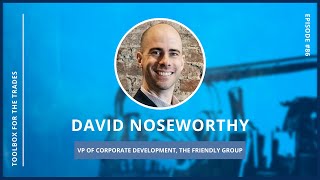
David Noseworthy, VP of Corporate Development at Friendly Home Services Group, explains how the company uses mentorship and training to support partner businesses. Friendly looks for home services companies with strong culture and profitability in the high-teens, then pairs them with internal experts and external providers like Nexstar to help them grow.
Questions this video answers
David Noseworthy — VP of Corporate Development, Friendly Home Services Group.
Episode 86.
friendlygroup.com.
Nexstar.
High-teens net margin (he finds high 20s potentially unsustainable; low single digits are a concern).
Hello, contractors, and welcome to the Toolbox for the Trades, the show where we share the top tricks, tips and tactics from service professionals worldwide. Today I'm talking about private equity with David Noseworthy, the VP of Corporate Development at the Friendly Home Services Group. I spoke with David about mentorship, unlocking latent potential, and what kind of margins private equity groups are looking for. Enjoy. All right, David Noseworthy, you are the VP of Corporate Development at the Friendly Home Services Group. I am so excited to have you join me today. Welcome to the Toolbox for the Trades podcast.
Thanks for having me, Jackie. Really appreciate it.
I am going to kick off this conversation the way I do every single one, which is how did you get into the trades?
You know, it's been a bit of a round trip for me. So I started off working at a utility in Canada called Enbridge. Enbridge actually spun out what I believe is the largest home services company in North America, Enercare. At the time it was called consumer water heaters. Most people in the US know one of its subsidiaries, service experts, which Enercare acquired back in 2012. So I spent a decade at Enbridge in engineering, operations, corporate development before making a, a change to equity research both on Bay street and Wall street here in the US and it was during my time here in the US that I met Bill Coughlin. Bill Coughlin and I created Alchemy Capital. Alchemy Capital. The focus there is really on unlocking latent potential. And by unlocking the latent potential in each employee, you unlock the potential of the company. And that was our reason for creating that company to start with. And given our focus on people, when it came time to decide where did we want to invest, it just made sense for us to focus on an industry where labor was constrained. And because those companies that could attract and retain talent could grow and win and we could do well by doing good. And you know, I think the home services and the trades is a poster child for a labor constrained market. And we just don't have enough good people. And I don't necessarily understand why that is, but I recognize that it is that way and I'm hoping that we can change it by attracting more people by being that great employer. So, you know, given my experience at Enbridge, with Enercare and Bill's experience in private equity in the blue collared industry services industries, the home service sector just made a ton of sense. It was kind of a bit of coming back from where we started. We felt confident that our approach would be successful in home services because it's the idea that you focus on the employee, their development, taking care of them through benefits, just as a person so that they can take care of the customer and then ultimately the customer will take care of the business. And this is why we started the Friendly Group and how I got back into the trades.
That is awesome. And I will tell you right now, you are in good company. In this podcast, everyone who I have joined is all about how do we get more people into the trades. And I'm sure, in fact, I'm not sure. I know they have many opinions as to why we don't have as much skilled labor in the trades, but we'll leave that to those episodes. So I'm going to be very frank with you. A lot of the words you just said about your background as someone who's not a finance person kind of intimidates me, I should say. And I'm sure that's the same for some of our listeners. So today's topic, we're really going to get into demystifying private equity in terms of especially the Friendly Group. Right. And how you guys really partner with service companies. So I just want to assure everyone listening right now that we are going to make this as digestible as possible and hopefully give you some action items to take as you grow your service business. So alchemy capital, and now we are running the Friendly Home Services group. So can you tell me what is the Friendly Group?
Yeah, the Friendly Group is a leading home services company growing through, you know, organically just getting new customers each day, but also through acquisitions of high quality H vac plus plumbing and electrical companies whose owners share our vision and values. And I can't underemphasize that last bit.
We are going to get into your values really quite deep. So why don't you go ahead and just tell us what they are?
Absolutely. You know, at Friendly, we believe there's power in the pack. And that's our tagline. You know, we truly believe that we get better together, that one plus one equals more than two. So it starts, it starts there just that together we are better. You know, the second piece that we fully buy into is just being straightforward, genuine, having that honest conversation even when it hurts. I think it really helps to avoid miscommunication. And I think miscommunication is kind of one of those cornerstones to when people get upset because, hey, I thought you meant this and you didn't. So. So just having that approach, saying what you mean and meaning what you say is throughout the company, I think if there was one other thread that kind of connected us all together, it's really that dedication to continuous learning, mentoring, and coaching. You see it every day that each of us, we're striving both individually but also together, to be better today than we were yesterday. And that's pretty awesome. It's actually a lot of fun, especially for those people with the kind of that open growth mindset that, you know, just are like, hey, what can I learn next? And, you know, I'd actually. What's interesting, when we started Friendly, we thought that we would be a home for people that were, you know, just kind of looking to retire and hand the reins over to a place that would take good care of both the employees and the customer. What we have found is not only are those people attracted, but maybe more so the younger entrepreneur, the person is saying, how do I scale that next wall of growth? And I believe it comes back to these values. It just. They identify with it.
Got it. So just to recap a little bit what I got from your beautiful explanation there. Continuous learning, transparency, collaboration, and working more effectively as a pack.
Absolutely awesome.
So, I mean, obvious question next. We've talked about private equity a bit on this podcast. We've had some other groups come on. We've had M and A brokers. Come on. What, in your opinion, differentiates the Friendly group from other PE firms out there?
Yeah, that's a great question, Jackie. And it's one that I have to say, I actually struggled a lot with that question, especially, you know, when we were putting together our. Our website, actually, and we're looking at this and saying, okay, well, what is it that that differentiates us? Because when I looked at the words that we would write down and the words that I would. I would hear all the other groups out there write down, they look pretty similar. And so I scratched my head and I said, but when I look at the. Our members, our OPCOs, our owners, we're not the same. And so how do you communicate that? And so ultimately, what we did is we actually. We actually got each of the owners that joined the Friendly group to tell their story in their own way. And it was pretty powerful. In kind of having it in our own words. I kind of recommend that people go onto the website. It's friendlygroup.com and to listen to their stories. Because it's one thing for me to say it's, but it's another thing to hear it. In short, it's our people focus, it's our employee focus. It's that in continuous Improvement mindset, you know, it's those elements. And I don't. I think that there are people that pay. People will say they do that. But to honestly own that is just another element. And you can. You kind of. You need to feel it and see it to know it. But when you do see it and you do feel it, you'll recognize it. Got it.
That's a great answer. So Angie Snow, who works at Service Titan now, she's one of the owners of Western out in or in Utah. When I was going around the Friendly Group website, I saw that she was one of your partners, and I immediately asked her, I was like, angie, what should I talk to about David? And she really reiterated all the things that you said. And that was really powerful for me as an interview, as an interviewer, to know that, you know, someone I know definitely agrees with everything you just said. So that's awesome. And great branding on your. And great branding on your part. But I know that what really makes Friendly Group different, right? Developing employees, unlocking that latent potential, and mentorship. So let's get into the two of those. So developing employees within the organizations that you partner with. Talk to me about the importance of unlocking latent potential.
Good question. You know, it starts with our focus on training. And that really starts, you know, in the budgeting. You need to make sure that you're allocating significant resources, but then it continues to identifying the training needs of the individual and the company. And then. And then you need to bring the right resources. Bear. And what I mean by that is, you know, it's one thing to set an expectation for. Someone says, I want you to do this, and this is what I want you to achieve. But if you don't train them and you don't guide them along the way, they may get there, but more often than not, they may not. And what we want is people to get there every time. And so you do that by giving them the training they need, giving them a mentorship they need. And so what do we do in terms of training? Well, we have kind of a dual approach. One is both internal and external resources. So we're a member of nexstar, and we actually really like a lot of the training that nexstar provides. And so we will regularly send our people to nexstar to kind of get that bread and butter training. But then also within our operating companies, we have some phenomenal people that really know their stuff. And so, you know, one of those examples at Western, we have Robin, who's just a phenomenal at call center. And so we said, well, why, why have Robin only look after the call center? Why not? Why, why not let her look after multiple call centers so that she can really kind of pass along that knowledge and those best practices throughout the organization. But, and in. So Dean, you kind of, she, by having those, those people that really care about your development, you do unlock the potential in each One of those CSRs in this case, right? And then I guess the other element you kind of said, hey, what is the importance of it is that we're a big believer in kind of promoting from within. And if you think about your employees as being your, you know, your, if you think about your apprentices or your install helper as being your next install manager, or maybe they're gonna make be the gm, then, then you, all sudden you have to realize, well, listen, how do I get them from that install helper to gm? And there's the, there's a lot of training, a lot of skills that you need to develop. And so creating that kind of, that path for them is, is in, in doing that, you kind of unlock that, that ability within them and it creates not just a job, but a career, which is exciting.
I had a thought while you were talking and I think it would, it would be smart for owners to think about their employees as the assets they have that don't actually depreciate. The more you invest in your employees, the more they will give back to you. And I've had different points of view come on this podcast, one that'll be this on this season is, you know, you shouldn't just, you shouldn't just promote someone because they've been with you for a long time. You should promote someone because they have the skills needed. But on that same boat, you know, Al Levy constantly emphasizes the importance of the organizational chart and giving your employees an idea of how they can grow within their role. Because I think especially now in 2022, stagnation and being bored at work, a lot of people don't love that. And you actually answered my first question, which was how do you train? And I love that you, you leverage Nexstar, that we're a big fan of them here at ServiceTitan. So tell me a little bit about if a new partner, if a new partner company comes on to friendly group, how do you even begin to evaluate, all right, what are their training needs? How can we set them up for success? How can we get this career, these career paths in place?
Yeah, that's good question. So you know, it is Interesting because every company that joins the friendly group is in a different part kind of path in their evolution and how they think about employees. And I mean some of them are just doing a phenomenal job. And honestly, if it ain't broke, don't fix it is one of those things. And it's more tweaking around the edges and saying, have you thought of this? And then, and then there are others where, you know, the, the owners are just wonderful people. They've done a great job of kind of developing a person here where we needed them. But there isn't what you call like that system. And so all of them come with the one prerequisite which is a culture, a people first culture, right? That, that you have to have that you can't, you can't develop that after the fact, at least not with the same people. And so, you know, we look for that as just like that's a prerequisite for coming into the, to the friendly group. So and then I would also say just in that it's that and it kind of gets back to the idea that if you think about everybody within your company being that next service manager, that next install manager, that next GM operations manager, then it really does as, as an owner and as a manager, focus you in on, hey, how do I get that person from there? Because I'm not sure they're ready to be there tomorrow. And you know, one of the things in my career, it had always been that the expectation with it was in within a year to two years of being in your. In my position, I had to have someone underneath me that was ready to take over my role. And, and that was just the requisite. And then, but, but the great thing about that is that great. So now that I can go to a new role and we got a person that can come in behind me and we. And that's the beauty of growing, is that you keep creating more and more opportunities. And that's the other exciting thing about people. Why you want to join for the Friendly group is that it does create more opportunities for you and your people. But I'm getting a little sidetracked here. So these career paths. So the next element is actually having a career path, you know, And I say that, you know, someone comes in, let's say you hire someone from Enterprise Rent a Car, they don't know a thing about plumbing. Okay, well if you can actually show them a career path where, hey, you're gonna start off as an apprentice or a helper and then after a year, year and A half. We're gonna kind of promote you up, and you're gonna. You're gonna be a lead, but then we're gonna move you into H vac, where maybe we'll make you an install helper for six months. And you might decide that, hey, I like H Vac better. Great, okay, so then we'll get you into being a lead installer. And then over time, you might decide, hey, but what about service? Okay, great. And you kind of create this technical path where you can go across many different elements of home services, whether you know, that's electrical or plumbing or H vac and get that experience. But the thing about showing that career path to them is that they can kind of then say, hey, I don't have to think about what do I want to do next. You know, there's a little bit of the process helps me go, oh, this is what's next for me. And okay, that's. I want. I want that. And that's part of helping our employees have a career, because you show them, hey, it's not just this job. Don't think you should leave here to go to the place across the street for $2 more an hour. There's so much more here. And whereas that might be the only job you'll have at other place, here you can see where the next job is and what that next role looks like and continue to grow. And I think the third element comes back, and I'm going to sound a little bit like a broken record here, but it is that dedication to training and mentoring, because it's one thing to kind of show what the next role is, but then how do you actually help that person? And that's, you know, you do need the technical training, but you also need the soft skills. And, you know, you can't become a manager without knowing how to deal with people. And that's. That's kind of critical.
Well, you gave me a perfect segue into my next question, David. So you did not. You were not a broken record. You actually proved my job made my job better as a host. So thank you. I really appreciate everything you had to say about unlocking latent potential, making sure that folks have those career path set up so they know what they can aim to if that's what they choose to. It also really, you know, I think it really gives that autonomy, too, within a career that someone can look and say, okay, if I start from here, here's where I can possibly go, is that something I even want? And really have them thinking about those Conversations and thinking about, you know, where maybe they would be a better fit in the company. So I love that transparency. I love that, that sharing information and really, I think empowering the employee to make the decision for their career. Right. Which goes back to people first. So mentoring. This is obviously a big thing for the friendly group. All of your partner companies work together to support one another. What kind of systems do you have in place to make sure that that's happening? And if someone were to join the friendly group, what would that look like?
Yeah, so there's kind of a couple different ways we think through kind of mentoring, coaching. There's. If you think about it, there's our home team. Home team is. Well, it's very intentionally the term we use for kind of our corporate office, because we don't think of our corporate office as a corporate office. It's much more. We have a group of resources, coaches there that as a leader within our operating company, you say, hey, I need some help in HR or I need some help in marketing. There are these resources that you can kind of pull into the company. And sure, they can help do, but more importantly, they can help coach. You know, you may have just hired a new marketing lead and you're saying, okay, well, but how do I get that? I'm not a marketing person, so how do I get that person up to speed in a meaningful way? Great. Well, we got Cooper Calhoun. He's fantastic at marketing and he can kind of help, you know, set kind of here some initial goals you should think about. And here are some of the things that you want to. Want to develop. And let me show you how we look at Google or how we think about leads management. And so that becomes one of those kind of coaching resources that one of the owners can pull in and think of it that way. And then there's kind of more of within the companies themselves is saying, okay, well, you know, how do I get my service supervisor up and ready to be a service manager? And so because I think our service manager is ready to, we have another center over here that we'd like to move them to the general manager role there. And so that's kind of the thought. And again, we kind of identify that succession management element or that succession of, hey, here are the different pieces. And you kind of do that well in advance before you know that there is those opportunities. There are those opportunities. And so that's really kind of how we kind of facilitate that. And it starts from the top and it just kind of trickles down to each level where the level above is kind of helping and mentoring the level below. Yeah, it sounds simple. It's interesting when you get into the nitty gritty detail it gets. There's a lot of things you have to follow, but it works.
It sounds like it really requires two way communication between the partner group and the friendly group in terms of what do you need, how can we support you? And then also looking at the internal resources, who among the friendly group home office and who among the partner organizations can really help you best solve this problem?
That's absolutely right. And I mean, I guess that's the other really great part about this is what we see happen just very naturally and we encourage it. And you know, our CEO David Saltzman does a lot of this is that, you know, we bring in a new, a new partner, a new member of the package to the friendly group. And, and we know that they have these, these great operations. And so what we, you will find is our other owners just naturally reach out and say, hey, I hear you just joined us. Love how you do your vendor management. Want to learn more about that? Can I come to your operations? Absolutely. And, and there's, there's those, those kind of. Or I mean, just the other day I was talking to one of our GMs and he was saying, I'm having a hard time with recruiting. I'm like, well, isn't the whole industry? And so, and so I said, actually, you know, Steve, one of our owner GMs at Ambient, just kind of unlocked a whole kind of pipeline of opportunities just by using indeed differently. And I said, you know, you should really look into that. And sometimes it's just changing the mindset of how you use these tools. But, you know, that kind of unlocked more opportunities for him. And so this is, you know, whether it's, whether it's the home team acting as kind of a liaison between them or they're reaching out to one another, we find that that's happening again and again. And it's, it's more, it's not just because there's this mentorship or coaching approach. It's also because there's just this genuine desire to see each other succeed. Both from a personal philosophy perspective, but I think also from a. They're all owners and your success is my success. And it's amazing how quickly as people join the group, how quickly they kind of grasp that concept and they kind of see their ability to not just help their company, but to help many, many companies and to see those rewards come back to them. I always Say, you know, you may be in a navy group or some other kind of best practices group at another organization and it's nice because you're all helping each other out and you hope, hey, one day they may help me out. In this case, you're like, hey, actually every time I help you, it helps me. And I love that. And it's kind of just that nice. It's a unique platform for that to happen.
I love that. Also, the main reason why I love working in the trades right now, not directly, but, you know, supporting, is that I find that contractors really want to help one another, which is awesome. So we just talked a lot about the friendly group, what you guys offer, how you work to support your partner, your partner companies. I want to talk a little bit about private equity in general because, you know, this is the big topic. It's been the big topic for a while, can't get enough of it. So what qualities should a service shop have if they aspire to be acquired by a private equity group?
Yeah, you know, each private equity group probably has their own checklist of what they, what they look for. I, yeah, I'm going to focus more on the friendly group because A, I know it and I don't want to steer anyone astray. But you know, it starts with culture. And I think we've talked a lot about that today. Just that the focus on the employees, the open mindset, that thirst for learning, you know, maybe very quickly behind that it's management. Strong management teams make a big difference. And you as an owner, I think you need to think, hey, do I, how many hats am I wearing? Because it's not always a positive that you're wearing five different hats. In fact, I would say more often than not it's better that you wear less hats and that you've developed a team around you that are taking on those roles, whether it's install or service or marketing or warehouse, you know, back office accounting. But having that kind of what I call professionalized team, it makes a big difference and it creates a lot of value. It creates value for you, but it also creates value for someone who wants to invest in your company and have you join. You know, in our case, join the friendly group. We see a lot of value in that. You know, there are, there are again different groups focus on different elements of the home services spectrum. For us, we are very much focused on service, maintenance and replacement. So, you know, what is that excluding? It's excluding things like residential, new construction or kind of large scale commercial, but there are others out there that if you happen to be in residential new construction or in commercial that are focused on that. So, you know, just because it's not the friendly group doesn't mean that there isn't a group out there that would be very much interested in those companies. And then I think, you know, kind of what else should you be focused on? Or what does a, what does a group like friendly group look for? We like to see growth, we like to see profitability. You know, growth shows continuous learning. It's kind of almost like, hey, if I see growth, they must be continuously doing something that is improving their business. And that kind of gets back to that culture element. And so that's the way to see a culture in the numbers, so to speak. And profitability means that you kind of get that, hey, this is, this is a business. And that you need to respect the value of what you're selling, you know, not, not to gouge the customer because that's never fair, but to get a fair price for a job well done. And so, and you, and that reflects itself in kind of that profitability. So those are, I would say, the characteristics that I would say are most desirable for the friendly group.
Thank you. That's a wonderful answer. I have to ask, is there a specific profit margin or average ticket, Average ticket sticker that you guys are looking for or is that proprietary data? Proprietary?
Yeah. No, no. It's interesting in that there is a really wide spectrum. I mean, there's a lot of companies out there that keep making it buy on what I would call low single digit profit margin. And then there are, and that's a net profit. And then there are those that are up in the high 20s. And I would say for us, you know, I like to see high teens because that's pretty impressive. If you're hitting high teens, that means you're doing a lot of things right. And I start to scratch my head when I start to see high 20s. I kind of think there may be something here that's not sustainable. And I'm wondering what they're doing that might be unique. And sometimes there's this kind of little weird idiosyncratic things that they do. Like, hey, my brother is a mechanic and he just likes to fix the trucks. And so my Entire fleet is 15 years old running in perfect condition, but it's 15 years old and I don't pay him. Okay, well, I can't replicate that. So, you know, your, your profit margins won't be my profit margins, but that's, you know, that's kind of the way I think about it. And then, and then if you go down to the lower end, you know, there's a lot of great companies that have high single digits, you know, 10, 12%. And I think those, that's good. And we're very interested in working with those companies and we feel like there's an ability to move them up in terms of their profitability. And I think, you know, the guys that are down in the low single digits, honestly it's in their interest to figure some of that stuff out and they can come talk to us. And I'd be happy to like give you give advice and say here are the things I see and here's what I think you can do. But if you're really thinking of joining a group like this, I just think there's so much value that you're leaving on the table if you do it while you're not that low single digit area that it just, just ask for some help before you kind of find your exit.
Thank you for that breakdown. I don't think anyone's ever given me a great answer like that to that before. So I know a lot of people are going to appreciate that. And I love, I can't replicate your service of your brother in law who just loves fixing your 15 year old trucks. It's simple, just marry a lady who has a mechanic for a brother who's very selfless. But I would love to know what advice you would give and maybe this is a bit of a tag on from your last answer. Private equity isn't going to be for everyone. There are folks out there, they're like, you know what, I really want to do this on my own. What advice would you give for them as they look to scale, grow and make their company more efficient, more streamlined? All that good stuff.
Yeah, I think like first you got to take a step back. This is an incredibly. There are so There are over 100,000 H VAC companies in the United States. I mean if you take plumbing you probably have another 80,000. You take electrical, maybe add another 100,000. So you know, easily 300,000 home services companies in those three verticals in the United States. It's just a huge number. And none of them own 5% or more of the market. I mean maybe in their little market they do, but not within the broader United States. And so there's a, it's a very healthy competitive market. And, and I don't feel like even with private equity coming into the space today that someone needs to join the group or they're going to be left behind. I don't think that's a scenario. I mean, you can get ahead by joining one of these groups. And if you have this kind of growth mindset, that is absolutely a kind of way to accelerate all your ambitions and things you want to do in a way to kind of have a bigger impact, scale your impact on the world. But if that's not what you want to do, I think then it's really focusing on your niche and knowing your customer. You know, and I always say, own your zip code. It's not about owning a bigger and bigger geography and saying, oh, I cover the entire city. No, you don't need to do that. Own your 5, 6, 10 zip codes and be the only H Vac company that really focuses on and know that are you a white glove service type company or are you low cost or are you good value, whatever it is, know what it is and really drive that value message home to the customer. Because when customers know what your value is and where you focus and what it's all about, your customers will naturally gravitate to you. And then it becomes, it gets back to that referral element. The referral is the best lead you can get in home services, bar none. And you'll get more referrals if you do. I always say if you do great quality work and you have what I call density, that is you have more jobs in one little subdivision than not, as opposed to five jobs and five subdivisions, that is what's going to get your referrals. And you own that niche, you own those zip codes. And I actually believe, I think any company would have a hard time competing with that kind of competitive approach.
Love it. And you actually just answered again one of my other questions, which was did you feel that companies need to partner with PE to be competitive 5, 10, 15 years from now? And it sounds like from your answer you just gave, private equity can really give your company that boost. And if you're in that good mindset of I want to grow, I want to scale, I want to build my team fast, that's the way to go. But if you focus on your niche, you can still be pretty dangerous in your area.
Yeah, I couldn't agree with that summary better, Jackie. That's exactly right. You know, the question mark is 15 years ago or 15 years ago, 15 years from now, if this kind of the rate at which companies are kind of joining together with companies like Friendly Group, do we get a smaller industry, a more consolidated industry, and then does it become kind of haves and have nots. It's possible. Hard to predict what's going to happen 15 years from now. You know, that's that, you know, if someone knows that I'm going to defer to them. But yeah, there's a trend. I'm not sure how quickly this trend. Does this trend keep accelerating? Because it's been accelerating for a number of years now. And what kind of slows it down do all of these groups succeed? I feel good about the friendly group because I feel like, hey, a company that's really focused on people and, and doing a high quality service, I think that's always going to be valued. But not everyone has that approach. And so. Okay, well, will their approaches work similarly? Well, I, I don't know, but let's just assume they all did. Well, you know, at some point we will kind of get to a point where there are kind of the, the big, the big few. And, and the question mark is, is do you continue to want to compete with them or not? But here's the beauty. If you've done your thing and you've worked on your niche and you've owned your market, well, you're going to be highly desirable. Right. And so you're going to have the option at that point, in fact, at any point as to whether or not you want to join a group. And that just having that flexibility of doing what you want to do is just, I think it's so powerful. Why wouldn't you.
Yeah, I 100% agree with that. I think that's a wonderful, a wonderful way to look at it. And again, if anyone who thinks they know what's going to happen in 15 years now, I don't think, I think we've all gotten out of the business of predicting the future for sure. So we've only got a few more minutes left. And I want to ask you some questions that are personal to you. Tell me about one of your most memorable experiences with one of your partner companies.
Yeah, it's a good one. You know, it was, we were bringing on the company just right, which was joining us and the owner there is a gentleman by the name of Dan Dearden. And Dan has a vision and his vision was that he wants to be the most reputable, highest quality, biggest home service company in Utah. And he's had that vision for, I got to think, a couple decades. And, and so when I met him, he was looking at actually exiting the industry. This is, this was kind of it for him. He said, you know what? I'M going to. I'm going to. I think I'm going to exit here. And we talked and we told him about what we were. What we're doing and why we're doing what we're doing and how we want to do this as part of the Friendly Group. And it was really cool because over the course of several weeks, Dan went from, I'm looking at this as my exit to not only do I want to stay, but just right. Is going to do a reverse takeover of the Friendly Group. Now we're going to control from within because you guys are going to allow me to realize my goal of being the biggest, highest quality, most reputable home services company in Salt Lake City. And he goes, I am so excited about this. And. And I gotta tell you, I'm so excited about it because. Because helping Dan realize his dream through the Friendly Group platform is exactly the sort of thing that we want to do. We want to. We want to help owners achieve and realize these things that they couldn't do otherwise, or at least not in the timelines that are reasonable for them. That is awesome.
I mean, Dan definitely sounds like a man with a plan and definitely, I would say, probably a good sampling of the kind of wolves you have in your pack over there at the Friendly Group.
Thank you.
All right, so I would love if you could tell me as we wrap up here, you know, pe. This is what you've done. This is what you've done for a really long time now. What is something that you wish people asked you more about that they never do?
Yeah, it's an interesting question. And, you know, I was looking. I was thinking about that, and one of those questions is, he's just like, I would love how can I make a difference at the Friendly Group? Because I think when people are kind of talking, they're thinking about, well, what does this mean for me and my company and my employees? But. And once they. And those who join us, you know, it's very quickly after they join us, they're like, wait a second. My. My. My range of influence has just grown tenfold. And they. And they. And they kind of. And it's so exciting for them. And. And they really appreciate and enjoy that ability to kind of do what they do well, but on a bigger scale.
And.
And I think it would be. I wish people. And actually, I was talking to an owner just last week, and, you know, his question to me was, so, you know, will I add value to the Friendly Group? And it blew my mind because he was such a smart Individual, such a continuous improvement mindset kind of person. And I was like, oh, my gosh, yes. And I said, look at this, this library of books you have behind you that you've read. And I said, you know, whenever you focus on something, you're going to figure it out and figure it out really, really well. And you've done that time and time again. I can see this in your business now. Think about you figuring these things out and not just applying it to your business, but also ambient edge, day and night, Western, and helping each of those owners out because they may not be focused on the thing you're focused on today, but they got another one and they're going to pass around. I said, that is just huge value. And it actually reminds me of when we had our first annual planning meeting and it was the first opportunity for all of these owners to come together and they, and, and all of a sudden they just said, we get it. We understand why we're part of the friendly group and why you. You partnered with all these other owners because they're all amazing. And then in some way or another, they reminded them of themselves. And that was, that was just an amazing aha moment. I would love it as people, you know, sit down with me, if they could have that aha moment earlier, wouldn't that be so much cooler?
That is awesome. I also love how it's always the people with the most books, the most smart, that are always the most unsure of themselves. That's exactly what it is. Am I going to bring value? It's like, you have so many books. Yes, you will bring value. I'm not knocking people who do not have books behind them when they join ZOOM conferences. I am not one of those either. I have books. They just can't be displayed behind me. Anyway, if you could go back in time and give yourself one piece of a career advice, what would it be?
Gosh, don't underestimate the value of relationships and people. You know, I think I am. In my early years, I was younger, I really thought if I wanted to do something right, I had to do it myself. I think in the last 10, 15 years, I've come a 180 on that. And, and I, you know, just that ability to work with people, develop those relationships, what you can accomplish together is so much greater. You know, teaching someone how to fish is so much better than giving them a fish. I just, I really believe that. And, and so I think it's just that is the number one way to kind of leverage yourself. And then Actually, it was one of our owners. They gave me a book, who not how by Dan Sullivan. And it's, you know, for those who are of that mindset that, hey, if you want it done right, I got to do it myself. Read that book. I highly recommend it. It is. It kind of encapsulates this piece of advice that I wish that I knew as a 20 year old rather than a 44 year old.
There you go. I need to read that book. It's been on my list for a minute. All right, final question of the Toolbox for the Trades podcast with David Noseworthy. If you had to choose a song to be the soundtrack of your life, what would it be?
Maybe more by the title than the actual lyrics, but I would go with Don't Stop Believing by Journey.
Good one. That's a good one. I love all of the. I love all the answers. I'm getting to these questions. It's going to be a playlist that I'm going to share with everyone when it's done. It's going to be very eclectic. David, thank you so much for your time. Thank you for telling us about the friendly group, giving us some of your opinions on private equity and just sharing your knowledge with the members of the Toolbox of the Trades community. I really appreciate it.
It's my pleasure. Jackie, thank you so much for having me here.
More from Bill




Capturing the 80%: How SmartAC’s Gen-2 Targets Non-Membership Homeowners | Podcast Ep. 296

Build better customer data with every booking in ServiceTitan | TAD Tune-Up Series

The Biggest Change for Roofers Coming From Other Roofing Software to #ServiceTitan?

