Leverage Commercial Contracting Services for Growth | Podcast Ep. 184 | Toolbox for the Trades
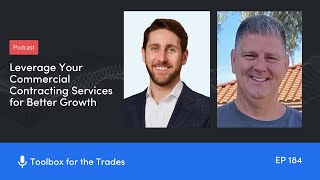
Jackie Aubel talks with Charlie Warren from Convex and Brian Ruffner from No Limit Performance about building profitable commercial service divisions. They cover hiring strong people, using subcontractors, investing in technology, and shortening ramp time for new reps with the right tools and culture.
Hello, contractors, and welcome to Toolbox for the Trades. My name is Jackie Aubel, and today I am chatting with Charlie Warren from Convex and Brian Ruffner from no Limit Performance. We spoke about the fundamentals needed to grow and enhance a commercial service division. From marketing to technology to hiring, we covered it all. I hope you enjoyed this conversation as much as I did. Charlie Warren, you are the co founder and CEO of Convex, a recent service titan acquisition. And Brian Ruffner, you are the CEO and p performance consultant with no Limit Performance. Today we are going to be talking about tips for enhancing your commercial service division or even just building one from scratch. I am so excited to have you both on the podcast. Welcome to Toolbox for the Trades. And actually, because we have two people on for those in the audio. Brian, can you say hello real quick?
Hello, everybody.
And Charlie, can you say hello?
Great to be here. Thanks for having me, Jackie.
All right, excellent. This way people can hopefully differentiate your voices. We're going to kick this off with an icebreaker. Brian, I'm going to encourage you to go first. If you could see one movie for the first time again, what would it be and why?
Oh, that's a great question, Jackie. When I was a young man, I was very into basketball and I really wanted to play basketball in college. And there was a movie in 1977 that came out called One on One that starred somebody named Robbie Benson who actually wrote the movie when he was 21 years old and then starred in it. And that really, it was about a guy from high school that ended up going to college and was a cool story, and it really inspired me.
That's awesome. I have never heard of that movie before, so I love that. I love that answer. Charlie, what about you? Same question. If you could see a movie for the first time again, what would it be and why Oppenheimer?
So I went contemporary. It's very good. And I think I love Christopher Nolan movies. I think it's the best one yet. And the cinematography is incredible. So that's my.
Why.
I just think it's a great film.
Okay. You think it even beats the spinning top ending of Inception? Because that's pretty hard to be. I was in the theater for that. And the collective, like, sigh of. Of exasperation when it cut to credits like that was pretty intense.
Do you have a top on you now?
I do not have a top on me now.
We'll never. We'll never know.
We'll never know. Okay, well, while I would love to talk movies with you guys, we are Here to talk about commercial contracting. So I want to know how both of you got into the trade. So, Charlie, you can kick us off. How'd you get into the trades?
Absolutely. Primarily by the way of technology, which we'll talk a bit about. I did grow up in the Detroit area and that's where my family's from. And I always bring that up because I think it gives you a certain reverence for industrial businesses, both the scale and scope of them, and also just an understanding and a respect for the work that those folks do. And I started the business about seven years ago with some other folks in order to, you know, change the lives of contractors. Just like service titan, but also just understanding the large part of the economy that services comprises and really what the opportunity space is there. So I think Midwestern industrial routes, always hard to ignore services when you're in that part of the world.
Yeah, totally. Brian, same question to you. How did you get into the trades? Because I was originally going to do this podcast just with Charlie, and he was like, no, we actually have to have Brian Ruffner come on. So I would love to hear your background.
Well, thank you. It was kind of interesting. I had started my career out in education and then got into horse equipment. And I was at a luncheon, there was a president of a general contractor there. We were sitting next to each other and started talking. We ended up having several meetings and lunches together. And he felt like I was a guy that could help him build his business. And so in 1991, I jumped in as the director of marketing and sales for a general contractor. And then my career continued in the general contractor realm with some very, very large national restoration firms. And then I made the transition into the sub trades around 2010, worked both residential and commercial along the way, ran some offices, and then worked for a good period of time for Rosen Electric, which is the largest privately held electrical contractor in the US that led me into some larger publicly traded mechanical and electrical firms. After that, did a about a seven year stretch with Comfort Systems USA as their director of sales in the commercial, mechanical and H Vac space.
Okay, all right, so you've got some restoration, you've got some general contracting in there, you've got commercial, you've got mechanical, residential. You've kind of played in all these different areas.
Yeah, I'm very fortunate that I have some touches in all those. Those areas.
Okay, excellent. I could see, Charlie, why you wanted Brian to come on. And actually, just to make sure that we're all on the same page, so we know Brian, you're a little bit of a jack of all trades here when it comes to this industry. Charlie, can you tell us what Convex is for folks that don't know?
Yeah, absolutely.
We are the leading sales and marketing software platform or commercial services specifically. And when I think about like what do our customers hire us to do, it's they want us to combine the best data insights for every property, so physical location, every company and every person and then bring that into workflow software that helps primarily salespeople who we'll talk about today and marketers who will also talk about find their next customer or find their next account. That includes upselling and cross selling the existing base, the existing sort of install base and assets. Maybe to double click on that. If I'm a user of Convex, I might want to first plan my market and we'll talk probably a bit about this today. But who do you even go after? And by who I mean also what types of properties, what types of equipment, what types of technicians do you employ that you can actually deliver on that type of service, geographies, what have you. I want to target the right types of people that that's both a level and a part of an organization and in this industry and commercial in particular, that gets very complex in multi site locations. But there's a lot of different stakeholders. I then if I'm a seller or a marketer, I want to engage those people in the application that looks like calling, emailing, actually reaching out in the product. And there's really interesting generative AI things you can do with that. And then lastly I want to track all of that as a manager and that kind of gets to the CRM element. And I'll just end by saying the way we've designed the product is batteries included as opposed to like an empty vessel that you need to put all this stuff into. It comes pre populated and so you get all this great tracking and sort of business intelligence on the back end. But it gives individual contributors, be they sellers or marketers, something to actually, you know, use on day one and get successful. And we'll spend a lot of time today, I hope, talking about how do you build these teams, how do you get them successful? I'm biased, but I think technology is a piece of that puzzle. There's a lot more to it that Brian can touch on with the brand.
Got it. So just let me hear it, let me reflect back what I heard and you can tell me if I have it wrong or not. So what I'm hearing is Convex is kind of a multi layered tool on one end. It provides data into all of these commercial buyers essentially, or these commercial customers. So you're able to target folks based on how you want to market your business and what your specialty and your niche is. And then you have all of these workflows that allow you to track the nurturing of these potential customers and putting them kind of through your sales funnel so you can grow your business sustainably.
Precisely. The only nuance I would add to that, and again, maybe we'll talk about it. There's a fair bit of up and cross selling in this industry. So maybe it was a new construction project that we won or lost, or we did the install on a piece of equipment, but we don't yet have the service, which is obviously the recurring revenue, higher margin opportunity. We're often taking our customers data and combining it with our insights to build those plays out at scale. Because a lot of the growth in these businesses is in the existing account base in addition to that kind of white space or some people call greenfield opportunity. You know, truly net new customers. If you're good in this industry, your customers should want to buy more from you because they're having a good service experience.
Got it, Got it. Okay, cool. I think I have a good grasp on what Convex is. So, Brian, tell me, how did you get introduced to Charlie and the team at Convex?
So it was kind of interesting. I was fairly new to my position with Comfort Systems and I was looking for some prospecting tools that we could use. Our vision was to grow out our service business. And so I was leading a team of sales reps in what we called building services, which was direct to owner project work and then preventative maintenance service agreements, which then also included our demand service along with that. So Charlie actually hit me up, I believe, on LinkedIn. And what was interesting is maybe part of it was I was looking for something. But also Charlie's approach was different. I don't remember what it was, but it was different than what all the others that were trying to hit me up with. So we actually had a conversation on the phone. He was our sales rep. He came over and gave us a demonstration and showed us the product. And when we decided we wanted to move forward, he was the one that actually fed up everybody and did it all. So I think it was just Charlie at the time, maybe a couple others that were involved, but we got on full cycle. Yeah, we were fortunate that we got in early, but there was a couple of things that really were the big movers for us. And one of them was, which was our number one prospective customer is owner occupied buildings. And Charlie's product, you could search by whatever size and by owner occupied buildings. That and the fact that you gave a top down view of all the equipment so we could see what was going on on the building. And it also told us, by the way, what other contractors had done work in there. So it was a pretty cool tool right out of the gate.
That's really cool. All right, I think we've got some background here. And also this sheds so much light, Charlie, into why Service Titan wanted to partner with Convex. Because what Brian just told me is very similar to the stories I heard when I first joined Service Titan of ARA and vahe, our co founders going in and being the salespeople and then actually setting the product up back in the old days. So I'm getting a bit of deja vu here. Love the context, guys. So let's get into it. Let's put Convex and what Convex's capability is to the side a bit and let's talk about just building a profitable, sustainable commercial division. As you both know, Service Titan's kind of core customers that we originally started with are a lot of residential service and replacement contractors. In the last few years we've really grown to expand to commercial and construction. And I really want to talk about this so that our listeners can hear some better best practices for whether they want to grow a division from scratch or kind of build a more sustainable one. So Brian, I would love to hear from your varied experience, what are some common barriers to growth that most contractors have to overcome when trying to scale their commercial division?
Well, the first thing is, is that they may be very accomplished in the residential world, but they've got to realize that this is a diff completely different marketplace. And just saying I want to do it is not going to get it done. So I would encourage getting somebody alongside with you to help you through this. So it's not a trial and error experience. The big thing that I think is, is you need to become crystal clear on what your vision and your goals are. And a lot of times that and that leads to your strategic plan. But a lot of times that has to do with what can we do right now. Right. So most companies aren't going to say, oh, we're going to hire all these technical people in all the different boilers, chillers, et cetera. So we've got to look at what could our people right now do today. Maybe it's just install rooftop units and so like Charlie had mentioned, you can search companies and look for equipment that they have that you could actually service. Right. So first step is that getting crystal clear on your vision, your goals and your strategic plan. The next step is really you've got to hire some A players and you got to figure out what they're looking for. Because if you take your guys or gals that are selling in the residential world, they may not be the right people to get you success in the commercial world. So knowing what that looks like to bring those kind of people in and then as you start to grow, before you grow, I would recommend you partnering with some companies as subs that could help you. So let's say that you, you have a customer and you're doing some, you know, split systems form and they have chillers, but you don't know anything about chillers. You should have already partnered with some company that you could bring in as a sub, allow your people to ride along with as you get more of that business. And of course you're going to hire your own people. So have some backup plans in place so that you can handle some of that business where you don't have to just say, oh, we don't do it, Sorry, go elsewhere. Those would be my, my first thoughts.
So getting really specific about what your vision for this division is, figuring out what you can do today to get started with that. So it's not like, you know, shooting for the moon right away and then also start working with subcontractors or seeing if you can be a subcontractor on certain jobs.
Yeah, exactly. And then, you know, it's going to take really good people and you got to figure out what is it going to take, what kind of person am I going to bring in? Because it's probably not the same people that you have. Once in a while there's a unicorn, but not very often. And a lot of people have no clue about what that would look like to bring that right person in.
Tell me a little bit more about that. Expand on that a bit. So like, what is this? What is this right person look like? I'm sure it's going to be different for every person who attempts this, right? But tell me a little bit about that.
Yeah, I'll give you a little bit of background in that. So when I started with Comfort Systems, we had a very small team. When I left, there was 25 high performing sales reps that I led. Four of them were there originally when I showed up. And so all the rest of them were people I hired over that period of time, what most people do is they hire off the resume. Oh, this person has worked in the commercial world. Right. And what I found is one, it's very hard to find people out there. I mean, there's a talent war, as everybody knows, and it's both on the field admin side as well as sales side. But nobody goes to work unless there is a salesperson selling something profitable. So it starts with that. And so I would look at what kind of attributes we are looking for. Right. And so for me, the number one thing was character. All of these people are going to have some strengths and they're going to have some blind spots that we're going to need to address taking the rest away. So for instance, let's say I found somebody that had some good technical acumen, right. In the commercial world, but they didn't have any sales experience. But I knew based on doing some assessments with them and interviews that they had the right DNA, that I could teach them the rest of it. So if they're coachable and they have that right internal DNA, then we can take them the rest away. So whatever people you get, you have to already think about that. Most likely you're going to need to take them the rest of the way and it could be, maybe it's on the other side. So like with agreement sales, they don't have to have all the technical acumen. So maybe they've got some real superpowers on the sales or business development side. But we're going to have to help them learn enough so that they can go in and competently sell maintenance agreements. So those were the things that, that I did. And that of course leads into if you're going to hire a players, you better have a culture that is going to help these people continue to grow. And that's where I think most people fall apart, is they hire good people, but they don't onboard them for success and there's no growth path for them. So these people get bored and then they go work for your competition and start crushing it for them instead of you.
Yeah. So I just want to pause you right there because you know, we're talking about how, you know, building a commercial division is so different. I've been doing this podcast. I think this is going to be like episode 180 something, which is insane to me, but you're saying a lot of the stuff that I hear from really successful residential contractors, which is like, you know, you have to, when it comes to finding a players, you have to look at their core qualities and look at what you're willing to teach and what you're not willing to teach. And so I heard a lot of that sentiment echoed in what you just said. Brian, am I kind of on the right track here?
Yeah, 100% that one piece. Right. Because a lot of people don't spend a lot of time or effort into continually helping your people grow. I'll guarantee you if you bring the right people in and then you help continue to get them growing and it never stops, there is no finish line, then they will help you grow the business. So you look at the four people that were originally with Comfort systems. When I got there, one of the things that I'm really proud about is that they're all were 15, 20 year employees. And once we started this growth culture, this high performance culture building and continued it, the results were these guys were doing 5x what they had been doing for 15 years.
Wow.
So it helps existing people as well as new people that are coming in.
Can I, can I jump in there?
Yeah.
Yes, of course, go for it.
I want to get a little specific here. One of the things we saw maybe five years ago, six years ago, even seven, was an approach on the talent side to basically hiring, poaching, if you will, top performers in the same geo market from, you know, in a similar role. The idea being, you know, the old expression like they're worth their Rolodex and so they would bring their Rolodex over. My sort of outside in perspective is that has seldom worked. You know, would you recommend that, Brian, like hiring directly from other folks in marketing or do you think you can build some of these people more from the ground up? What's your approach to the sort of local hiring game?
That's a great question, Charlie. You're right. When I had tried hiring people and we were thinking we were getting certain customers that were coming with them, it never usually worked out. And that's also, you know, can be disappointing to them because they think maybe all these people are going to go with them, but they don't. So it's really more having the, the core attribute that we know if groomed, right. Will help them become superstars. So yeah, I don't think that's accurate. Although I have, as you called it, poached a few people from our competitors over the years. It could work, it could work, but it wasn't because of their Rolodex. It wasn't because of their customer base. Right. And so actually that's part of it is when you're looking at what could you do? Because if you put an ad in the paper, you're going to get very few quality resumes. And so specifically going after some people, which I have done, and I actually use convex to identify some of them. The thing is that you're going to have to have something compelling of why they'd want to leave unless they're just very unhappy where they're at. And actually with some of our more younger talented, they wanted to know what kind of technology we had. What were you using, what have you got? And our number. Who became the number one agreement sales in the whole country for Comfort Systems. When I hired him, one of the pieces he liked was the fact that I had. We recently got Atlas and we were showing him this and he came from the Seattle area doing the same kind of thing, but actually had never seen this before. He said, man, I got a cell phone and a pat on the back and said, good luck. Yeah.
And you're investing in the team. Maybe a related question, another kind of my perspective failure mode we have seen in building these teams is taking people who are extremely tenured on the technical side and then trying to get them into a go to market role without that training. And I've seen it more in smaller companies where maybe they don't have the resources and so they're sort of half in and out and they put them into an account manager role. They have no formal sales training, you know, and they really struggle. This is obviously a leading question, but you know, like, should people be doing that as they're trying to build these divisions or should they be taking a different approach to enablement?
Well, most people that are trying to build a division, they don't have any accounts, there's no account. Yeah, fair overall, right?
Yeah, fair.
And that's similar to how things were with most of the companies I've been with, is that you gotta make sure that they've got enough in their DNA to be able. Nobody is born, you know, being a natural cold caller. Nobody comes out, you know, the womb saying, man, I nothing I could rather do than be a cold caller. Right. But you're gonna have to figure out some ways that you can help them with warmer leads than just diets. Right. So that's, that's helpful. But eventually you want them to build their book of business to where then they are going to become more of a farmer than a hunter. And so you want to make sure that there's both of those skill sets that you feel like that are part of who they are. Yeah. Or that you could teach them.
So I just want to. So this is also coming for me. So, Brian, just so you. I don't. You didn't know this. I didn't have much of a trades background when I joined Service Titans. So through this podcast and through just osmosis of being surrounded by incredibly talented people, I've learned how the business, how our industries work that we serve. Commercial is still fairly new to me. So I just want to make sure I'm understanding you have someone come in to help build this commercial division and that salesperson, that main contact, is really trying to build relationships. Right. Because those are the relationships that will drive your commercial business.
Yeah, that's correct. And part of why I, I say that rarely is a residential person going to work out in the commercial world. I've tried in the past hiring some residential guys that were very successful and they never really did well in the commercial world. So doesn't mean it couldn't happen, but it just hasn't.
Why do you think that is?
Just different set of skill sets. They were used to getting leads from marketing that was going on and that's not usually the way it works in the commercial world. Very few in the commercial world are doing a lot of marketing. If it is, it's more, you know, partnering to support, you know, a particular cause for a golf tournament that, you know, there's people that you want to, you know, meet there, things like that. It's not the traditional marketing funnel that you would see happen in the residential side of things. So the real marketing are the salespeople. So you've got to have the salespeople that are going out there and they are your branding and they are your marketing.
And while they, someone from residential or someone with a ton of technical skills may know all the ins and outs of chillers and all these other types of equipment. If they can't nurture relationships, if they can't show up to that golf tournament and make contacts and be a good representation for the company and the brand, they're not necessarily going to get your commercial business very far.
Yeah. And there's, don't get me wrong, we have people with a lot of different personalities that have been wildly successful. It doesn't always have to be that what people think is the typical salesperson that is real outgoing and can talk to anybody. It's really somebody more that's very thoughtful and can ask the right question questions and can listen actively better than anybody else.
Can I add one note on that, Jackie? The end user buyers are changing too. So this is going on independent. And so if I were starting a new commercial kind of go to market motion, I would recognize that the people that I'm selling to are changing historically. You know, let's take the mechanical trade as an example. The buyer was a facilities manager or kind of building engineer, a single person making like pretty one off decision, increasingly that is someone further up the org chart in the business, potentially managing multiple properties and increasingly tasked with other KPIs or objectives around building energy load, you know, savings there or sustainability targets or, or whatever. And that is a much different sale. That is a financial value driven type of motion, not a sort of literal order taking. Someone calls you up and says I want a new, you know, piece of equipment. And so even in the commercial market I think that's really changing and therefore the skill set of either the, the attributes of the people you hire, as Brian mentioned, are probably changing and the way you enable those people to do their jobs is changing. I think there's a lot more emphasis on sales enablement, continuous training and preparing them for those types of conversations because it's a much different sale and it probably a much harder sale.
That's a really good point. I'm glad you brought that up. So we're kind of talking about a lot of things here. We're talking a lot about talent, we're talking a lot about how, especially for residential contractors who may be building out a commercial division or even someone starting commercial division from scratch. It's a very different type of marketing play and sales play. I really want to go back quickly to the growth culture component, Brian, only because you mentioned how you grew this team and they, they were performing more and more. What are some ways that you implemented this growth culture? If you can give me specific examples of how you were challenging folks to constantly beat their best and keep them engaged in work.
Sometimes it's confusing for companies that the people that are working for you are not highly motivated by putting more money in your bank account.
What?
No way.
No, it's really, it's really shocking, isn't it? So just beating people over their head with the sales plan is not going to get it done right? You have to crack the 2575 rule. And so this is something that I use for a long time and it's really helped. So as a leader I believe that people would just give me about 25% of themselves to hit the baseline level to not get fired. Now some of this is a little bit of a jedi Mind trick. But the 75% is what I was focusing on. How could I get them to eagerly volunteer that other 75%? And that's the difference between somebody that is here and is doing five. That's what they were doing before. So tapping into their personal and doing. So one of the things that I would do every year is do a life plan with everybody and we flush out their personal banner goals, right? And then tying a direct line from their personal sales goal and how that's going to impact what they're going to do. So I'll give you an example. Like one of one of my reps at one time had said he got his whole family together, sat them down and said, this is what's going to happen. I'm going to sell X amount this year. And by doing that going to be able to come debt free. And this is going to allow you kids to have all the, you know, you want to do these sports and these other activities. It's going to really open up the door so we can all do it. So I want everybody to support this because I'm going to have to be putting in some extra hours to get this done, right? So I sit down with everybody and talk to them about that. And so when I'm talking to them about how things are going this year, I'm tying it back to that. And if things aren't going that right direction, sometimes you've got to decide to pull out. Well, what would happen if you don't do this? Can you imagine standing up in front of your family at the end of the year and telling them, no, dad didn't do this because dad was too lazy and he wouldn't do what he needed to do. So it sounds a little harsh, but that kind of internal pain is what's going to drive people. So it starts with that and then giving people the tools. It's not a one and done. What people sometimes do, they do like sales training and it's one and done. And they think, okay, I sent you through sales training, now you should be a superstar. It's really constant growth and constantly helping them get better so that they can be more effective. You know, one of the things that was really important is, is in the very beginning when you first hire somebody and that's where we, we really found that Convex was really helping us. In previous time it would be like a six to nine month window before we'd see some return on investment from a new hire. But using the tools like with what Condo Convex would give us now that shortened to a 30 to 60 day window. We would be expecting people making sales. Now that's good for the company, but it's also really good for that sales rep because now they're getting big Mo on their side. They're getting a belief, a confidence level. And now that this drives them, plus it also drives their roots deeper into the organization to where they say, this is my place, I found my tribe, I'm not going anywhere. I can really make a great career here. It's not just finding the good people, but keeping them right. Yeah.
Can I jump in there too? I think on the sales, third party sales training, I'm a big proponent of whether it's Spin or Challenger or Sandler, there's great groups out there. One of the failure modes we have seen because we have incentivized businesses is basically using third party sales training as like outsourced management of the team. It's gotta be internal. You have to build those playbooks, spend the time, create the intellectual property, if you will, to manage folks to these things and not just bring someone in. As Brian said, once or twice a year, tie everyone up in a conference room for two days and like, you know, off you go. You gotta live and breathe that kind of management of these people, as Brian said. And I think too often people just want to throw a bit of money at the problem, frankly. You literally put them in a conference room, you close the door and you don't even have to be in the room. And then you say, okay, well, we're good. My team's trained for the next six months of the year. They're enabled. It's like you have to build that as a product that your company kind of owns. That's how I think about it.
Yeah, part of it is setting the vision too, Charlie. I mean, the leader, the number one mover of any company is leadership, either down or up. One of the companies I worked with when I joined their company, I didn't know this before the, before I got there, but they informed me on day one, hey, by the way, we have that 87% turnover rate here, so I'm hoping you can.
Wow.
Like, oh my goodness, you're like, great.
Can't wait to figure out why.
Yeah, right. And it was pretty obvious. But part of it is the vision. So one of the things that I did okay, is I wanted to create a different vision for what we had. And so I just kind of slipped in, starting call, started calling our team the A team. And it was really setting a set of A vision of world class versus just being okay. And so it really is, like Charlie said, it's driven by the leader. It is either going to. And I say this, and sometimes people don't like it, but there are no bad teams. There's only bad leaders. And so if your team is not performing, you should take 100% responsibility for them not performing.
Yeah, I said it moments ago. But, you know, I know we're talking kind of about building up this commercial division, but I have to be honest, what you guys are saying is stuff that I talk about on this show all the time, like hiring for soft skills that you can't train. Incentivizing folks with plans and goals that relate to them and relate to what they want in their life. Not just have the goal be put more money in the company's pocket. And then you're also talking a lot about how you're investing in processes and technology that help your team succeed. So you're basically setting the stage in such a way that you're giving your team members every literal opportunity to find the internal motivation and have the tools to do the work to be successful. So that's really what I'm hearing in today's conversation. Do you guys want to add anything to that?
I would just say maybe one piece and then, Brian, feel free to jump in. I do think the difference, if we're trying to contrast with some of the residential companies, is just the complexity. And by that I mean the complexity of the assets, the complexity of the teams that will go service them, the complexity of the sale process. And I mentioned the buyer journey on the other end of it and what those relationships can look like over time. And then oftentimes at scale, the complexity between the relationship of the call it folks doing service delivery and the folks selling the work, not to mention the whole new construction element we haven't really touched on. And so I do think that is different. And it probably permeates all of those things in terms of the types of training you do, the types of software you get, and the types of, you know, people you hire. But, Brian, curious to hear your perspective, having been on both sides of the.
Field, if you will, especially with commercial. In the residential market, a lot of it is driven, price driven. Right. Because it's more commoditized. Right. I've got a three ton unit. Oh, okay. You'll put it in for this, they'll put it in for that. Right. It's very commoditized, the commercial service group. And I'm not giving away Any kind of, you know, secrets. This is pretty well known. You should be able to serve to sell at over 35% gross profit. Now, the residential guys, oh, we kill it with that. But on the commercial side, we're talking about big numbers. Instead of putting in $15,000 a unit, we're talking about putting in $750,000 worth of equipment at 40% plus. On the maintenance side, it's even higher than that. You know, you should be able to average 42 or higher percent gross profit. It's definitely the one thing that you did say, Jackie, is you said you got to hire for soft skills that you can't train. I look at it just a little differently in that I'm looking for attributes and a coachability that I know I could train them. They just may not know it. Right. The other thing is, is it's really three things. It's character. First, do these people have high character? Two, are they hungry? Do they have the potential to be a high performer? They may have never. They did not accomplish it yet, but I believe that they have it. And then three, what's their level of people skills, which is kind of what you're talking about with the soft skills, is what's their innate emotional intelligence they already have. Right. Do they have the ability to display what I call tactical empathy? And if not, do they have the right attributes that I believe we could teach them this, and then they'll crush it because they just didn't have that before. So a lot of it is their coachability, too, because if they're pretty much, oh, I've already done this. I've been in this forever. You know, Charlie, I've been in this for 20 years. Is it 20 years doing the same thing over and over again, or what is it? Right? It's really kind of a complex thing, and a lot of people get it wrong. And if you are a small organization, this happens a lot. Where you don't have a sales leader. Those salespeople are going to answer to some ops person, right? Then you're going to need some help. You're going to need some outside help to help you. Because most of those ops people, because I work with a lot of companies, and it was common. I hate salespeople. I don't like dealing with them. I don't like hiring. I don't know anything about them. They're foreign to me. I just want them to do their job. You're going to have to figure out some workarounds till you get big enough to wherever you Hire somebody.
Let's say you're trying to start a. Let's keep in the mechanical trade. Go to market motion in a. In a singular geo. Who's your first hire? Do you hire the maintenance salesperson first? You hire a projects person who can kind of do everything. Who would you.
Well, I was looking at what, what do we have? Ops wise, right? So if we've got a team of techs and maybe some of them have worked on commercial equipment where they weren't great at being able to, you know, fix it, but maybe they could, they could do maintenance on it. So I would look at that first and then say, okay, you've got the. And if let's say was maintenance that could handle some basic preventive maintenance, then yes, we'd hire a preventative maintenance salesperson. But if there was something different, you know, we had some technical people that could do some different things. And maybe I go with a project person that I can tell you one thing, is that in the maintenance world, that is a harder sell than the project. Part of it is here in Phoenix later this week, it's going to be north of 110 degrees. So if your unit goes down, you want something happening right away, Right. So if there's a project, they need to get something replaced. Well, that's, that's a big pain in a need, right. So it just depends on what, what you feel like you've got attribute wire. And what are you willing to invest in if you don't have it? Are you willing to invest in some of those people in the field? Yeah.
Would you. That was my last question on this. Would you try and hire ahead on the operational side, or would you try and build more gradually through less complex equipment, smaller preventive maintenance agreement, simpler customers and kind of grow your way in? Or would you make a big push on the technical side and then hire the salespeople after the fact?
Yeah, I mean, it's a big expense if you hire in advance. Rarely are companies going to do that. It's always going to be the horse before the cart. You got to have the salespeople. You got to get some business. Now the good thing is, is that you may have a little bit of time, you know, so that's why I said being real, crystal clear on what you're going after, you want the salespeople staying within the lane of stuff that you can actually do. If you can't, have you made some connections with some other companies in the same field that you could bring in as a subcontractor? To help you if you get that opportunity.
Yeah. Build those relationships.
Awesome. All right, guys, this was a very big topic that we, we tackled today, and I think we got some really good insights from both of you just to kind of wrap us up. Charlie, I would love to know how can listeners learn more about convex and get started if it's something they're interested in?
Yeah, absolutely. You can just go to convex.com and find out more there or email me at charlieonvex.com, which is still my main email address. And that's all route to server titan as well.
Awesome. All right. Brave of you to give out your email address on a podcast, Brian. I don't know if you want to follow suit, but you really shared some awesome insight today. And I know that you're with no Limit Performance. So how can folks find you if they want to talk more about. Talk more to you or work with you or where can they find you?
NoLimitPerformance Biz? You can go to our website or you can email me at Brian B R I A N O limitperformance Biz. Or you can call our office number, which is 602-641-2032 and would love to talk to anybody.
Amazing. Oh, my gosh. You gave an email and a phone number. Now I'm going to go next.
You can pick up the phone.
So fun. So fun. All right, final fun question for you guys. I would love to know what are you watching, reading and or listening to right now? What are you consuming right now that you want to talk about? Charlie, maybe you can go first.
I'll give a business one and a personal one. I am actually rereading a great business book called Decision Leadership, which is by Don Moore and Max Bazerman, I think the latter, which is at Harvard. It's all for those who've studied Daniel Kahneman or sort of behavioral psychology and decision making. It applies a lot of that fundamental research to decision making as a leader of people and processes. And how do you get sort of past your own biases? And for fun, I'm reading a book called the Believer, which is a book about fly fishing by an author named David Coggins, who's gotten pretty popular of late. It's sort of a nonfiction.
Pete, nice. Same question to you, Brian.
Well, right now the French Open is going on, which is one of the four grand slams in tennis. And I'm a big tennis guy, so I am watching the French Open, which at times when they first started, it would. It would come on live at 2 in the morning, which was screwing up my sleep. But anyway, we're getting down to the end of it, so. Go Carlos Alcaraz from Spain.
Well, anyone who's listening to this, because we're recording this a bit early, you can see how he did, how Carlos did. But also, great opener for when you email Brian on his email that you gave him. Give him some tennis stuff. That's a nice way to warm him up. Charlie and Brian, thank you guys so much for joining me today on Toolbox for the trades. I really enjoyed having you and I, I hope you guys come back again soon.
More from Bill




Capturing the 80%: How SmartAC’s Gen-2 Targets Non-Membership Homeowners | Podcast Ep. 296

Build better customer data with every booking in ServiceTitan | TAD Tune-Up Series

The Biggest Change for Roofers Coming From Other Roofing Software to #ServiceTitan?

