Perseverance: An Entrepreneur’s Rocket Fuel for Growth | Podcast Ep. 157 | Toolbox for the Trades
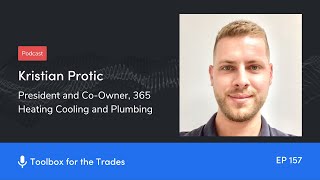
Christian Protich, president of 365 Heating, Cooling and Plumbing in Waterloo, Ontario, shares lessons from three business ventures. He stresses hiring slowly and firing fast, building systems before scaling, and leaning on coaches and peer networks. The company started early in the year with 15 staff and aims for 10 million in revenue by end of 2024.
Questions this video answers
Born in Croatia (family of Serbian background); immigrated to Canada at ~11 months old.
He said this company was started at the beginning of this year (the interview recorded late 2023).
About 15 people on the team.
A target of $10 million in revenue by the end of 2024.
He said he is 31 and turning 32 in March.
Christian Protich, you are the president and the co owner of 365 Heating, Cooling and Plumbing near Waterloo, Ontario in Canada. Today we're going to be talking a little bit about how for you it's been a third time's a charm for running a business. I'm so excited to get into it. Welcome to the show.
Thank you for having me, Jackie. I appreciate it.
I'm super excited to get into your story. But before we do, we're going to kick it off with an icebreaker like I have been the last couple of episodes. I would love to know, Christian, where would you time travel if it were possible?
If I could time travel, honestly, I would probably go back to the early 90s when my parents immigrated to Canada. I would go back in time to that period because I would honestly love to learn to help them navigate a new life where they knew nobody, where they didn't know how to speak the language. And I would maybe, you know, help them overcome some obstacles and challenges that they faced. I was, I was a little shithead when I was a little boy and I think based off of that, they decided to not have any more kids. So I'm an only child. So I think if, if I, if I know what I know now and I could bring any of that back in time, it would help change some things for them. So I think if, if I could go back in time, that's when it would be. Yeah.
I'm already loving the self awareness of this episode, Christian, so thank you so much. Quick follow up. Were you born in Serbia? Were you born in Canada?
Born in Croatia, but my family were of Serbian background, so it was, it used to be former Yugoslavia back then, so.
Nice.
Yeah.
How old were you?
Just under a year. I was.
Oh, okay.
Yeah, I was, I was, I was 11 months when I came to Canada and I've been here ever since. I, I've lived in, in, in Florida for a few years in my mid-20s. But yeah, most of the time has been here, here in Canada.
Very, very cool. Well, I'm so excited to hop into it, Christian. So as I alluded to in my little intro here when I was working with my colleague Amanda on how we should kind of brand today's episode, really? Your story is third time's a charm and this is literally your third time running a home service business. I know you learned a lot from your first two runs. Now that story, as you told it, was long and winding and full of thrills and ups and downs, quite frankly. So I would Love to.
Yeah, the roller coaster.
Truly, truly. And you're a pretty young guy, too. Like, the amount of stuff that you've gone through in your time is. I mean, it's incredible. Honestly, I would love to know what is one of the major takeaways from each of your past businesses that help you better understand the industry today.
Yeah, so I would say the. The first business I had, honestly, just probably to be able to trust in my own abilities more. Um, I made a lot of the wrong moves, a lot of mistakes, bringing on a business partner that I didn't think at the time. I thought he would be a good fit, but as time would tell, you know, a lot of responsibilities and duties were brought onto me, and I was forced to do a lot of the work and split the profits with somebody who didn't, quite frankly, deserve it or earn it. Um, lot of. Lot of time and money it costed me, and I, you know, poured in a lot of energy and emotions into that. And yeah, I. I'd probably just, you know, looking back, I would. I would honestly just put more trust in myself and my abilities. At that time. I felt like it was just absolutely necessary that I needed someone's support on the business front. But, yeah, I mean, looking. Looking back, you know, everything happens for a reason. And, you know, I've. I've learned from those mistakes. So we're. We're here today where we are the business. After that, though, I'm definitely having more structure in place.
The.
The whole idea of, you know, a business operating with processes and procedures and. And all that was, you know, it was new to me. I didn't really know much about it, and I just thought that, you know, I could wear every hat in the business and I could run it, you know, the way that I saw fit and things would work themselves out. And they did to an extent. But in. In hindsight, not having. Not having those systems and processes in place, you know, it was detrimental to the business in a lot of ways. So, you know, looking back, that's. That's definitely another thing. Having having that in place now has. Has helped us a lot. The. The. The business wouldn't be where it is without those things, so.
Got it. So from those first two businesses, one, having more confidence in yourself and not having a business partner to fall back on or feeling like you needed to have a business partner to fall back on. And then really the importance of systems and processes, which we talk about on this podcast so frequently, and I want to get into each of those. But before we Do I realized I didn't plan to ask you the big question I ask on every single episode, which is how did you get into the trades? Like what, your parents immigrated to Canada from their Serbian by origin? What was it? How did you even find the trades?
Yeah, I mean, I got into the trades in a bit of a different route than a lot of people. Um, I started in sales versus on the tools, so started in sales and started door to door here in Ontario. Um, this would have been 20. When was that? 2012, 2013. Around that time. And did that for a few years. And just from there, kind of found an interest in all the different areas of how a home service business runs. I was fascinated with all the backend operations that took place and marketing and, you know, sales beyond what I was just taught sales is. And from there, yeah, we just kind of took. Took a liking to everything else and then worked my way up. Worked for a few different companies in the office, ran. Ran a couple offices, worked my way up to like an operations manager. Lived in Florida for a few years, did all that, helped a company here, was trying to expand in the states and, you know, was bouncing back and forth. And then that was good. And yeah, and then it was that Covid started in March of 2020, and right before that I decided, hey, let's start my own H vac and plumbing company. And yeah, that was, that was an interesting ride for sure. And then, yeah, just from there, worked, worked my way through the many challenges of being a business owner and just tried to incorporate everything I've ever learned from my sales and marketing background to business and operations and how that all ties into running your own company. And, you know, there's still days where I handle a lot of, you know, tasks that, you know, maybe should be assigned to somebody else, but we're still a newer business at 3, 6, 5, and we're. We're working towards, you know, having all those departments and filling the roles as time goes on. Yeah, that's kind of in a nutshell where, where. Where my history stems from in the sense.
So you really stumbled upon the trades, it sounds like.
Yeah, yeah, but it was, it was very different. Like, you know, I mentioned on. On our. On our first call that we had, it wasn't really until like December, like the, the holidays of 2022, just like about a year ago, 11, no, 13 months ago, from, from this point is when, yeah, I stumbled across. Across a few Facebook groups. And that's where I learned about, you know, Tommy Mello and Ishmael And Victor and all these guys, Ken Goodrich. And I said, wow, who are these people and what are they doing? And then, you know, you, you dive into one, you start reading one book, you lead into another book. And then really, I honestly, I, I, I, I've been in the trades for, for about a decade, but I'd honestly say it's more so opened my eyes to what's out there and what's possible more so ever than ever in this past year.
Uh, wow.
Cause I was very accustomed, I was very accustomed to only what I knew here in Canada. And like, the, the markets are very different. You know, a lot of companies I find, I don't know, you know, maybe it's just me, but I find a lot of companies here, they're not as open as some businesses are in the States. You know, like, I had never heard of a shop tour. I didn't know that was a thing up until this year. And I went to California with my, with my business partner and our sales manager, and we toured Victor Rancour's shop in California. And yeah, like, I, that to me was, that was just like, I had never experienced that. I didn't know that was the thing. I didn't know people were open to that. It just wasn't, wasn't something that I was accustomed to. And then as time went on, you know, I found some companies here now that are very open to it. But, you know, I've had to open my eyes a little bit more to it, put my ears to the ground and, you know, listen more through the grapevine. But, yeah, before this year, there was just, I never even thought that that was something that people would do, because it was, I was always raised kind of like, keep your secrets to yourself, don't share what you're doing with others. But it's like, why, why not, like, if we can all elevate the industry together and we can all become better, if I can share a bit of knowledge that I've learned with, you know, a contractor down the street from me, and they can better their business by 1%, it helps everybody. Right?
So here's where we could take this episode and we could go in a whole different direction. So my father is an immigrant. He was born in Germany. And so I grew up with my German immigrants. Not the same as your upbringing, exactly. But I really resonated with the idea of being raised, like, keep your secrets to yourself. Mind your business, don't share.
Yeah, yeah.
And so I think that's really interesting how you kind of had to recognize you had that mindset and see the other opportunities out there. I think the biggest, one of the biggest lessons I've learned from doing this show is how much you can grow by just talking to people. And it sounds like that's really happening, especially now with three.
65, 100%. Yeah. No, I, I, I'm a big, big advocate on just talking to people, sharing ideas. I'm a part of a lot of these different Facebook groups for sales and marketing and all things service titan, you know, business coaching, leadership, all that. I just try to be a sponge and just try to learn as much as I can. I mean, when you've got, you know, these multimillionaires and billionaires in the home service space just so openly wanting to share their experiences and, you know, what they've had to overcome and different lessons that they've learned. Like that's free information there, and they're willing to share that. Like, there, there's people that sell that information for tens of thousands, if not hundreds of thousands of dollars.
I know.
You know, there, there's a lot of resources that are available to young contractors like myself where, you know, you can just dive into it and it's, it's an endless, endless, you know, what's, what's the word when you, when you dive into something?
Endless pond of opportunities. Endless ocean of opportunities. Chick, choose a metaphor. I'm so bad at metaphor.
Right. It's, it's all there. You just gotta, you gotta look for it. I, I made myself available to that information. I think that's what's most important. And I'm, I'm open, and I'm open to learning from others. So, I mean, that's really, really all it takes.
I want to stay on this topic of seeking help when you need it. Right. But before we do, I just want to establish365. Started in right before COVID Right. December of 2019 or January of 2020. Do I have that right?
No, no, no. So that, so this, this company we started at the beginning of this year.
Okay, so you are, so you're almost here.
This is, this is like three iterations of business. So I had different business names, different business partners, different offices. Yeah, it's like, it's, it's a, it's been a whirlwind, whirlwind. But yeah, we're, we're here now. We're got this nice established office. We've got a bunch of trucks, got a, you know, there's 15 of us or so on the Team total. And yeah, every day it's getting busier.
And I love it.
I'm happy with where the. Where things are headed. So. Yeah.
Awesome. So now, like, looking back about this idea of like looking for help and making your. Making yourself available to information. You mentioned already Facebook, you mentioned doing shop tours. Is there any other places where others who are in the thick of it right now can go and look for help who are maybe struggling contractors?
Yeah, absolutely. Tommy preaches about these like, BNI groups all the time. I haven't yet joined the one here in my area, but I've been in talks with some of the members there. Um, I honestly, I would say, yeah, like YouTube and Facebook social. Like, you know, social media could be, you know, it could be negative. It could have a negative impact on, you know, certain choices that you make, but it could also have a lot of positive ones. It really just comes down to like, who you're following, what information you're choosing to soak up. But yeah, just read a lot of books, talk to a lot of people, network. Tommy talks a lot about how your. Your network is your. Your net worth, you know, so that's probably like the big, the biggest thing. I mean, you know, if. If I was shy and introverted and not outgoing as I am, I wouldn't have probably talked to Sarah from Service Titan, Shout out to Sarah Gerardo and she wouldn't have connected us. Right?
Exactly. Exactly.
Like when I go to these trade shows now, I just talk to everyone and share my story and ask them theirs and try to. Try to listen more than I talk. Sometimes I can go off on tangents. But yeah, listening. Listening more than you talk. And that's definitely one important thing. But yeah, just being out there, trade shows, reading books, going on Facebook, joining these groups, those are all very helpful things. I mean, it's helped me tremendously in one year that I've dove into all of that. Like, I used to read a lot of books before, all business oriented, but it was, you know, wasn't trade like home service specific, you know, and then.
Exactly.
Came. Came across Tommy's book and I was like, oh, wow, okay, this is what's possible.
So. And Tommy has a couple. I know he has home service millionaire. He has elevate. I know there's the E. Myth that everyone preaches. There's also profit first. Any books that you. That come to mind right now that are. That you found really beneficial for you.
I mean, there's, there's so many out there, but yeah, those are probably the main ones.
I love it.
I know there's. Yeah, like Victor Rancour I know is releasing a book soon, so I'll be picking that up. But yeah, everything you mentioned is pretty much what I read this year and kind of dove into like Tommy's book, Home Service Millionaire. I think I've read like 30, 30 times between like the book and the audiobook. I listen to a lot of audiobooks and podcasts while I'm driving everywhere, so that's, that's a big thing for me.
Amazing. So I know in your past business ventures, you had difficulty with hiring the right people. You know, you mentioned it with your first business partner sound like they didn't do as much work as you wanted them to do, especially for what sounds like a 5050 split. And I know you had some issues in the second business with some installers, like during that Covid boom. So given your experience, what are your thoughts on how to hire the right people?
So there's that saying that a lot of people talk about how you should hire slow and fire fast. I would even take it one step further and I would hire really slow and fire really fast. Yeah, just having, having the wrong people on, on the team can just be so detrimental to your name, your brand, your, your business and your life essentially. Right. Like, you know, if you're, if you're a young business owner, you know, you're usually putting in tons of long hours. You're working six, seven days a week. So your business is your life, whichever way you want to look at it. Right. So definitely having the wrong people in the business can have so many negative impacts. But then on the flip side too, having the right people can get you to where you want to be. Right. Take you to the next level. And in my, in my old office, I used to have a big wall that said teamwork makes the dream work. And I absolutely believe that. And I mean, even we're still very small today. But you know, where, where we've gotten so far in, you know, the, the few several months that we've been active, I mean, we wouldn't have been able to get here without the team that we have right now. So definitely, definitely choosing, you know, the right people slowly and taking the time to really get to know them, do background checks, do drug tests, that's kind of helped us a lot in, in our decision making abilities in the past year. Never, never used to do that. I used to just look at the resume before and say, oh, you've got sales experience or you've got, you Know, install or technical maintenance service experience, whatever it is, you're hired. And that's not a good way to conduct business, unfortunately.
Spoken from experience.
Yeah. Had to learn the hard way. Um, but yeah, no, just. Yeah, just having all the right measures in place when it comes to hiring and recruiting, we will definitely put you in the right place. And yeah, just take. Taking the time to hire. Hire people. It. Yeah. I mean, it. Right. Right now I'm really learning how to not grow as quickly as I want. And it's better to, you know, I'd rather. I'd rather be stable at where I am for 6 months to 12 months than try to grow a little bit too much, and then, you know, things can go sideways quickly, so.
Exactly. And I know that's what happened in your second business is you got a lot of growth really quickly, and then that just wasn't sustainable based on the model that you had.
No. Yeah, we got. We got too excited too quick. It didn't. Didn't work out, unfortunately.
Is there something specific you look for when hiring people?
Personality, Honestly, is everything now. Personality, do they fit our culture? Can I walk into my office and smile when I see you, or do I. Am I going to dread looking at your face when I walk in here? Like, it's. It's literally that, like, we've. We've hired some people already this year that we thought, you know, their, Their. Their personalities were great. And then you put them out in the field and, you know, they're complaining about everything. They're complaining to their teammates, they're complaining to customers. And I'm like, I can't have that, you know, so, you know, just taking the time to really get to know somebody, going through. I. I see now why, like, some of these. Some of these really large companies, these big, like, Fortune 500 companies, probably even you guys. But how they go through multiple levels of interviews and, you know, have different people interview, like, hold the interviews. Like, that's very important. Right. Because what I'm gonna see from someone might be different than what my business partner sees or what, I don't know, our sales manager sees or the guy that we have in charge of service and installs right now, what he's gonna see. Right. So it's putting people through different stages, different levels of the interview, I think can definitely help a lot. Yeah.
Yeah. So another thing you mentioned from your learnings at your previous companies are the importance of pro processes. Is there a particular system or process that has really transformed what you're doing at 365 compared to your other businesses that, you know, has been really instrumental.
Yeah, so I'm from reading, like, Tommy's books, hearing about Al Ley kind of diving. We haven't signed up for his. The seven Power contractor, the manuals and everything that he has. But just I've read his book, I've watched a lot of his videos, seen a lot of what he talks about. We. We have like our. We have a business coach, Victor Rancour, and we have another kind of business coach, sales service coach Joe Krisara. So from those two individuals, they come with, like, a plethora of knowledge and a lot of what they've kind of mapped out in their businesses. Like, we apply here. So both, both of their, like, academies and training programs come with a lot of internal documents that we've kind of structured here from, you know, how we answer the phones to how we do outbounding, to how we schedule installs, how do we collect money? All. All different sorts of things. It's crazy. Like, there's so many things. There's so many moving pieces in a home service business where if, if you don't. If you don't honestly, like, take care of it and run it the right way and put the right people in. In that, like, in that process to manage all of it, things can get like, so off track so quickly and off the rails, and it's. It's hard. It's hard to like, bring it back. Right? So a lot of. A lot of what we learned from those two individuals this year has. Has helped a lot. Joker Sar. We just kind of introduced in the last couple months, but learned. Learned lots from Victor and just, yeah, lots from Tommy and all these guys. But yeah, it's awesome. It's. Honestly, everything. It's. It's. I, I can't believe I, I was running a business before without, without any of that stuff because, like, when you're young and you think you know everything, it's like, you know, you just kind of take it day, one day at a time. And, you know, you. You think you. You think what you're doing is the right thing. And then, you know, when you, when you learn the hard way, you learn the hard way.
But yeah, it's interesting how the older you get, the less you know.
Yeah, it's true.
I mean, I, I've heard the, the idea of working with a coach being sung time and time over again in turn on this podcast. So many people recommend it and how helpful it can be. Cause I feel like as an entrepreneur, as an owner or president of a business, your head is in so many different areas that you need. Sometimes I feel like it could be beneficial to have that coach be able to, like, zoom out and say, no, actually, this is really where you need to focus on, and this is where you should focus on delegating and prioritizing delegation so you can focus on the big, big picture.
100%. Yeah. Like, I, I would honestly like the one question you asked earlier, like if, If I could give a piece of advice to other fellow contractors that are, you know, in the thick of it right now, that would probably be one of the biggest things, is if, if you have a little bit of disposable income on the side, just put it towards hiring like a coach. There's so many great coaches out there that have gone through everything that we're going through right now and that other people will be going through. And it's just like they come with years of experience, and for what, you know, a lot of these guys charge, it's like so worth it because it's, you know, what you're going to learn from them in like, three months, six months, a year, two years. It'll just catapult you to where, where you want to be. Like, I, I'm. I'm very young. I'm very hungry, you know, and I, I know where we want to take this business, and I can't see myself doing that without these people. Right. So I have to. I, I have, I have a lot to think when it comes to those individuals. Right. So I would absolutely recommend that. It's probably the single single thing that's like, changed my life when it comes to this business is hiring, hiring a coach and just surrounding myself with those people. I mean, it's.
Yeah, it sounds like the thing that's really priceless. It sounds like the thing that's really transformed you as a leader has been asking for help and being open to.
Receiving that help 100%. Yeah.
So to that, to that extent. Right. My next question here is, you know, I think about what we've been talking about for almost the last half hour. You've got some pretty big lessons like hire really slow and fire really fast for you. You want to grow sustainably. You can't grow as fast as you want to, but you want to have that foundation before you can your business, and then asking for help and utilizing coaches. So this is very different from, I'm sure, where you were when you first had your first business a couple of years ago. How does this mindset of being open to help growing slowly. How has it affected 365 today?
I mean, it's, I think it's benefited us, honestly. Like just right now we're just trying to be super lean, run, run a clean, tight ship and, you know, learn, learn every day as we go. I mean, there's challenges and obstacles that we're still facing, just like any business owner, no matter the size. So, I mean, we're, we're, we're just taking it day by day. But it, you know, comes now with a lot more planning, planning in the future, you know, knowing your numbers, you know, having like a marketing plan, all that stuff. We're, we're building a bunch of stuff out right now as we speak for 2024. And you know, it's. Yeah, just. Yeah. Probably the biggest thing is just honestly right now just keeping things as lean as possible. I mean, it's. Right now, I think all of North America and you know, other parts of the world are in tough economic times, so being able to, you know, to keep expenses low and costs down are a big thing. We, we ran into some issues earlier on with, with payroll and stuff. It was, I think, a little bit bigger than we needed it to be. So we've, we've slimmed that down a little bit. But you know, you gotta make sure, at the end of the day, we gotta make sure that we're running a profitable business. Nothing really else matters other than, other than that if you're, if you're a business owner. Right. Cause very, very quickly you can drive yourself into the ground if you're, if you know, you don't know your numbers and you're not executing correctly. So, yeah, I hope that answered, answered your question.
I mean, it just feels like one of the reasons I wanted to talk to you is because one, I just was really struck by your humility. When you and I first talked about, and you told me about how your first two businesses started and how they ended up. You ended up closing the chapter on both of those businesses and how now with 365, your third business, you're trying to make different choices. You're expanding your mind, you're open to new coaches and new advisors. And I think that's so important because I think your story's one that can really normalize. Failure is a big word, but normalize the struggle of being an a business owner. And I think especially for folks who may be listening who maybe have just started their own business or considering it, I just really want to thank you for Being so open and honest about your own struggles. Cause I think that's so important. You know, we talk about mental health a bit on this show too, because it's one of my passions. Tommy's talked about his mental health. So has Ishmael. Um, and I just, I really value you contributing and sharing your story here because some of the stuff that you've been through, man, some people will go through it and be like, you know what? Screw this. No business. Yep. I'm just gonna go be an employee somewhere. That sounds a lot easier. So I'm curious for you, like, what is it that keeps you going? Like, despite these challenges, what's the thing in you that has kept you going and trying over and over again?
I, I just, I think I'm probably stronger mentally than a lot of people. And I, I just, like, I know myself and I'm just so confident that, like, I can do this and that I can get to where I want to be. But again, it all, like, you know, I need to have the right team in place. There's a lot of factors that, that, you know, are there too. But, yeah, I just, you know, there's, you know, don't get me wrong, there's days where I go home and it's very late at night, and I'm like, you know, what the hell am I doing? Why did, why did I do this? Like, I've put everything that I have into this business and it's not, you know, working the way that I want it to. Like, you know, last week we had a relatively slow week, and then today we had, you know, one of our biggest days ever. I, I closed a big six figure deal with, with a contractor builder friend of mine. And, you know, now there's light again at the end of the tunnel. It's like every day is, there's, there's new challenges that we, we get to face here. But I don't know, I, it's like a game almost to me. It's like, I, I, I, I love seeing what each day is going to bring and what challenges I've got to face and what the team has to go through. And, you know, they're, they're in good hands, I think. You know, I, I do my best to take care of them as, as best as I can, but, yeah, just, yeah, mental, I mean, the whole mental health thing. Like, I was listening last night to Tommy's monthly webinar that he hosts on Facebook there, and I was just like, thinking to myself, I'm like, how, like, imagine what this guy's gotta go through on, like, imagine what goes through his head on a daily basis, you know? And I'm like, I was just thinking, I'm like, I'd really love to just sit and chat with him for like half an hour, an hour, pick his brain about, like, how he deals with this stuff. It's not easy. You know, there's, can I be doing more personally? Like, I don't, I don't go to the gym as often as I need to. I don't, you know, eat as healthy as I could be. You know, we're, we're working towards that. But, you know, there's, there's a lot of struggles that I feel like a lot of business owners go through, especially in the whole mental health scape. So just trying to like, keep keeping yourself in check is just the biggest thing. I think that's kind of my strong suit. I don't know, I just, I tell myself every day, it's gonna be okay, it's gonna be okay. You know, I, I have a bit more of an appetite for risk than a lot of other people, but, you know, we'll figure it out. You know, there's been many times where it's like that last second, I'm like, holy shit, what are we gonna do? How are we going to pay these people? How are we going to do this? How can we afford this? Somehow we make it work, we make it happen, and slowly but surely it's getting better and we're, we're on the right track.
Yeah. I think part of the risk of being an entrepreneur in this field, or I guess in any field really, is accepting that you're kind of always a work in progress. A bit like, there's always something you're better at. There's always something that you can optimize and talking about personal and professional, to be really frank with you at the level you're at, it sounds like to me there's probably very little work life balance in your life, or like, work life balance. Never knew her. You know what I mean? Like, I, I, I have empathy for you, but I mean, if you crave that, that challenge, if you have that, you are more comfortable with risk than other people and this is the type of work that you love doing. I mean, there's nothing wrong with that.
I don't, I feel like I, I feel like I thrive in this kind of an environment. I don't know. Like, I, I like, I, I, I like living edge or living life on the edge. You know what I mean, sure, with a bit. With a business, it's like, what better way to live life on the edge where you put everything that you have into this company? And it's like, all right, let's. Let's give it one last goal. Let's. Let's try to make this happen. But no, I mean, we've put in a lot of the right, you know, checks and balances in place to, you know, really kind of help move this business along. But, yeah, there's days still where it's like, holy shit, what's happening? What do we do next? But, yeah, I. I don't know. I think I do a really good job, honestly, keeping myself in check. And I handle. I mean, I think I tell myself I handle stress well, but I don't know. There's for sure people out there that if they were in my position, they would react much differently to certain scenarios. I think I do a pretty good job at keeping myself cool, calm, and collected. I think that's important. I think that's very important.
If I knew more about astrology, I could put an astrology joke in here. But unfortunately, I do not when things. So, Lil, I have two more questions because Amanda just sent me a great one. When things are uncertain, you know, as you're establishing this foundation, as you grow, it can be hard to plan. But what hopes do you have for the next year? We're recording this at the end of 2023. I believe this will go live right at the end of 2023 or right at the beginning of 2024. So what plans or hopes do you have for the next year?
I would like to probably double in size, maybe triple in size from where we are right now. I think that's kind of a good place to be in for the next year or so. I don't think I want to grow more than that. I just don't want to go through that whole period where, like, I kind of bit off more than I could chew. Right. And I also don't want to be in a position where I'm having to, you know, hire people and then I have to let them go after a month or two or three months or whatever. Right. So, yeah, like, ideally, our goal that we've kind of set in our company, we have it written on one of the whiteboards here. But by the end of 2024, we'd like to hit 10 million in revenue, and I'm confident we can get there. I mean, we're trending probably by the end of the summer, next year to do maybe around 7, 8. So I think we could hit that 10, 10 billion mark by the end of next year. That's, that's the goal. But yeah, I mean, we've got four trucks right now. If I could do eight or 12, 15 around there, that's probably comfortable with me. You know, I, I just, I want to, I want to be comfortable going to sleep. There was there used to be many nights before when I had too, too many people. It's like, holy, what's everyone gonna do tomorrow? What's, where are all these trucks? What, like, it was just, it was a little too chaotic to handle for me. But I also tried to wear too many hats at that time. So I've got a, I've got a better team in place now to assist with all of that. But yeah, just, you know, I, I, I, I, I want to grow. I mean, I, I, I'm, I mean, I'm 31, turning 32 in March. I'm pretty confident that I could get to Tommy's level or Ishmael's level in, you know, eight years from now. Tommy just turned, what, 40 not too long ago maybe. Yeah, yeah, like, I'm, I'm confident that I could probably get there. I'm with, with, with the right, with the right people in place. I mean, we, we, we can do it. Like Canada's, Canada's a much smaller market than the U.S. right? Well, you guys, you guys have like, what, 4, 400 million people or so in, in all of the U.S. we've got like 40, right. So we're like one tenth the size of you guys, really.
But the map makes you guys look so big.
Yeah, we're, we're a bigger, we're a bigger country land wise, but we've, we've caught like a tenth of the population.
Christian, you have been so generous with your time, and I really appreciate you coming on the show and sharing your story. From Honestly, like a pretty not, I don't, not a vulnerable place, but from like more of a beginning stage than typically folks join us from. And I, I really loved it. I loved talking to you about this. Is there anything that you wish I would have asked you that? I did.
I was really hoping that you would ask me if, if I could choose a song. What if what it was, what that song would be the, the soundtrack of my life.
Yeah, we might, we might have to start bringing that back. Okay, so a little background for the listener who may have joined us, who may be joining us later in Toolbox for the Trades Life. Um, I used to always ask, if you had to choose a song to be the soundtrack of your life, what would it be? And we did that for the first almost hundred episodes, I think I did a spreadsheet of the songs and I swear it was like Journey and Eminem. Those were like the top people. So really, I would love it. Yes. I would love, Christian, for you to add to the database here if you had to choose a song to be the soundtrack of your life.
If I could choose a song, probably. I've been listening to this song on. Not on repeat, but I've probably listened to it a good 50 times in the last few months. Lenny Kravitz, fly Away.
Oh, okay.
You like that song? You know that song?
I've never. I'm not familiar with Lenny Kravitz discography. I'm more familiar with his scarves. But is it a newer song or an older song?
It's an older song. If you. Oh yes, you're gonna listen to, you're gonna listen to it after this podcast and you're. You're gonna know what song I'm talking to. Talking about. But yeah, I don't know something about that song. It just, it like evokes positivity and I just, I don't know, it puts me in a great mood.
So I love it. I love it.
I'm all about that. That's. That's my life.
Well, Christian, thank you again for sharing your story with Toolbox. For the trades. I will be rooting for 365, so please keep us.
Thank you.
Especially if you hit that 10 million dollar mark by 2,024. I want to hear about it.
Thank you.
Thank you again so much. This has been an awesome conversation.
You're very welcome. Thank you as well, Jackie, for your time and thank you for having me on the show.
More from Bill




Capturing the 80%: How SmartAC’s Gen-2 Targets Non-Membership Homeowners | Podcast Ep. 296

Build better customer data with every booking in ServiceTitan | TAD Tune-Up Series

The Biggest Change for Roofers Coming From Other Roofing Software to #ServiceTitan?

