Plumber Paige: A Voice for Young Women in the Trades | Podcast Ep. 155 | Toolbox for the Trades
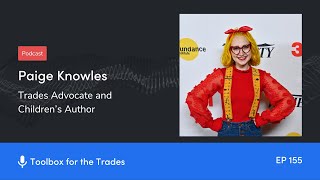
Paige Knowles, a 21-year-old plumber and author, talks about getting into the trades through high school technical education and SkillsUSA competitions. She runs Let's Build Construction Camp, a free program for girls ages 12 to 18, and uses social media to recruit young women into plumbing and other trades.
Questions this video answers
She turned 21 in July.
December 26, 2023.
Held in Georgia (the year referenced in the conversation).
Free; for girls approximately ages 12 to 18.
Ken Midget.
Paige Knowles, you are so many things. You're an author, you're a trades advocate, you're a student and a public speaker. I am so thrilled to have you on Toolbox for the trades today. Welcome to the show.
Thank you. Thank you so much for having me. I'm really excited to be here.
I am really excited to be here too. And I'm sure a ton of our listeners are going to be excited to hear from you today. Because today we are going to be talking about how to get fantastic young people like yourself in the trades and where to find them. Also, as a quick note, this episode is debuting on my birthday December 26th. So thank you so much for being my very special birthday guest. I'm really, really excited, Paige. Ever since I first heard about you through the Lady Titans, which is a customer led support group here at Service Titan, I knew I wanted to chat with you. So I'm just really excited to have you on.
Thank you so much. Happy birthday.
Thank you. Thank you so much. They keep coming. My birthdays feel like they are closer and closer every year and I don't know how I feel about that. Yeah, faster. But you're.
But you.
You still are definitely back in the time. Well, actually, if you don't mind me asking, will you tell me please, how old are you?
I turned 21 in July. Feels like yesterday, but it's already like, I'm already halfway through this year already. It's definitely going a lot faster.
Amazing. Amazing. Well, happy half birthday, I suppose. Thanks so much. And we're going to get into who you are, your trades background, which is pretty extensive. In just a moment before we do, we're going to kick off this show the way we do every single one, which is with an icebreaker. So I would love to know, Paige, if you could be in a movie, what would it be and what character would you play?
So I've been thinking about this because I knew this question was coming and this is so hard for me. The only answer I can come up with that's like kid appropriate is Ladybug from Miraculous Ladybug. The tales. Yeah, her and Cat Noir. Me and my boyfriend dressed up as them for Halloween this past year. So that was fun. I got to be her a little bit and she's like a super cool superhero. So I guess that's my answer.
What, what are ladybug super powers? Is it giving luck to people that she touches?
Well, there's like this bad guy and he's trying to steal their powers or whatever and she, the the bad guy turns innocent people into destroyers, and they kind of ruin the village or whatever. So she comes in and she helps lead the person who was akumatized, they call it, and, like, helps them de. Akumatize. Yeah, she just helps people. And she's like the creator or something. Like, she's. She's cool and she's got. She's a good person.
Oh, my goodness. I have to tell you. So the day that this goes live will be my 34th birthday. You are 21. Definitely a bit of a generation gap there. But, wow, I just felt pretty old because I did not know who Lady. What's her full name? Is it just Ladybug?
Yeah, I think it's just Ladybug.
I do not know who Ladybug is, but she sounds awesome. And I love that you pick something that probably a lot of folks listening don't know about either, but this is all definitely do. Okay, so those listening who have children, please ask your kids if you know who Ladybug is, and then you will get a sense for who Paige Knowles is.
Yes.
All right, cool. So, Paige, you are very young. You're a woman, and. And you are a trades advocate, which is what I mentioned at the top of the show. So why don't you tell us a little bit about how you got into the trades?
Yeah, it's kind of a complicated story. My path to where I am now, but getting into it. In middle school, we had the opportunity to explore the tech school. And of course, it was super interesting to me. I wanted to explore the construction wing. I was not allowed to, actually, when we were touring, because I was in the group of girls who were straight A students. They weren't going to go look at the construction wing. Why would they want to see that? They would want to see culinary and cosmetology and, like, not actually go to tech school because their parents and guidance counselors would tell them not to. But I wanted to. And I kind of went past everybody's expectations and decided what I wanted to do. I got support from my parents, and the rest is history. I went to school for plumbing for all four years. I was a state medalist in my junior year. And then senior year, Covid happened, so I couldn't continue on. But I definitely. Well, I can't say definitely, but I really was hoping to be able to get to nationals. Um, yeah, my sisters followed me into plumbing. My youngest sister actually won 15th place in Nationals. So that's pretty awesome.
Yeah, that's incredible. So tell me what is. What is Nationals. Tell me, what is this competition?
Okay, so Skills USA is the organization that it's through. And there's district competitions, and then state and then national level, and then there is a world level. Not that we don't talk about that that much, but there is a world level. And if I won at nationals, I definitely would have gone to world, but that's a different conversation. It's like a competition. There's the written test, so theory of it all. And then there's also the math blueprints and building the actual structure and whatever you have to put inside of it. So it's different for every state, and every competition continues to change, but it's something along the lines of, like, put the supply lines and drain lines in for a couple of appliances, like a sink and a water heater or something, and test those lines, obviously, see if they work and make sure the measurements are correct. There's a lot that goes into it, and it's honestly one of the biggest competitions at nationals for SkillsUSA, which was held at Georgia this year. It's very. It's taken very seriously. And there's a lot of people who will hire you from the work that you do at these competitions. It's really cool.
That is so awesome. So I love how you started your story. I was in middle school. And what were you touring exactly? Can you remind me?
Yeah. So the technical school is affiliated with the high schools, and it's an obligation, like through the school, that you have to tour it. But it's kind of discouraged for. From a lot of teachers and guidance counselors to actually want to pursue it, because that's just for the stupid kids who don't have anything else going for them, and they'll send them to the tech school. Then I think the narrative is changing a little bit that, like, if you want to learn a trade and work with your hands, then you should go there. But it was more discouraged still when I was exploring that option.
Yeah. And I have to say, when Paige said the word stupid, she used air quotes. So if those watching video, you got to see her say, I got to hear her see her do that ironically. But for folks who are listening, she definitely did not mean that assumption that she was. She was sharing there. Man. I have to tell you, Paige, you know, we talked a little bit. I told you about Toolbox for the trades before bringing you on. Cause you're still so new in your career. You're still actually in college right now. Um, and so much of what I do here at Toolbox for the trades and with Service titan is to work with entrepreneurs to overcome this stigma that so many of your guidance counselors and teachers have about blue collar. And it just, I have to say, it just like it kind of bums me out that I'm talking to you here and you're like, yeah, I still kind of experienced that myself in middle school. Which for you was like, what, like 10 years ago?
Something.
Yeah, not that long ago. So, man, I have to tell you, that, like, bums me out. What do you think about it?
Yeah, it's definitely really disappointing. Like, there should be more support for that. Even though it doesn't add to school's numbers. That's not the end goal. The end goal is to find something, a career that you're happy in, you know, so it's definitely my mission to go back to these schools, the school that I went to, and just surrounding schools that aren't as supportive and force them to be supportive because it's like college is kind of dulling down. In my opinion. Like, you don't need to go to college to have a successful career. And it's so forced down everybody's throat to explore college as the only path. And it's not. So, yeah, I think it's definitely not the only option. And people should be encouraging more to go to trade schools. Hopefully I'm adding to that encouragement.
Yeah, yeah, totally. So let's start with, you know, shifting that narrative with you being able to help overcome that stigma. Let's talk about it first with your immediate friends and family. You know, when you were a middle schooler, you were touring the tech school, you wanted to see this plumbing wing and you're just like, whoa. And they're like, paige, what are you doing? You, you straight a female student. You don't want to go there. So tell me, like, how did you get your. How did your friends and family react when you shared you wanted to go into the trades?
Yeah, my family, after a couple minute discussion, became very supportive because they see the need as well. They've experienced it firsthand. They have rental properties and so they have to hire people to come out, like trades people to fix the things that aren't working so they know the benefit and how much can be paid. And even just having the skill, if I don't want to do that as a career, but having the skill and learning, it is super beneficial. So they were very much on board and then reaching out to further family without, like, not just immediate but closer knit family, they were concerned. But now that I've grown within the industry. They've seen how successful they can, like, people can be within it, and they've become very proud of me. My friends. In middle school, I actually lost most of my friends. It's kind of sad to talk about because I don't want anyone like kids to be listening to my story and be discouraged from wanting to explore their passions just because they think they're going to lose their friends. But it was just their parents thought that they shouldn't be surrounded by people who aren't going to be going to college because that's like, the only path. I think it's honestly a lot controlled by the parents, honestly, because the other students nowadays definitely understand. They reach out to me because they're moving into houses. They don't know how anything works. They want me to come check something or fix something because I have the skill and they know I have the skill. So as you get older, you understand the benefit of it. But at that age, it was very difficult for a lot of people to understand.
Yeah. So what exactly did you tell your parents, do you remember? Like, to kind of get them on board?
Yes. Before I thought about the trade industry, I thought I was going to own a bakery. So that had kind of. I was always super, like, on the entrepreneurial path. So I was telling my parents how I was wanted to own my own business and everything. And then I come home from school one day, I'm like, you know what? Plumbing is where it's at. This is what I want to do. They were like, why? My mom says, you know, you're going to have to touch actual poop. Like, that's the running joke. But, you know, so does she. She's a nurse. Like, everybody has to deal with some shitty parts of their careers. So I was willing to do that. I'll wear gloves, I'll wash my hands and fix things, make a lot of money. It's okay. There's negatives to everything, but I don't even see it as a negative. And I just expressed the. They have properties and have hired people and stuff. So I was like, how much did you pay this guy to do this simple task that once you saw him do it, you're sure you could do it and it would take a lot less time. And if you have the tool, like, you wouldn't be having to spend hundreds of dollars. And they were like, you know what? Yeah, you're right. Go ahead, do it.
Yeah. Oh, my goodness. I mean, when you think about it, what's the average plumbing Ticket versus how much do you pay for a cupcake?
Right. I make a lot more being a plumber than a bakery owner. I'm sure.
I know. That's so interesting. I love that you already kind of had that entrepreneurial spirit in you when you were a young kid. Do you remember what it was about a bakery that intrigued you?
I think, like, as a kid, you think about what you want to do. And I liked to cook and bake with my mom, and I was very entrepreneurial, so it just seemed like it made sense. I don't know why with bakery specifically, I think it was just because that's what people said I could do, if you know what I mean. But sure, yeah, yeah.
Can I also say something and you can tell me to go kick rocks if you don't like what I'm about to say, but you look like someone who would own a bakery. You've got, like, beautiful platinum blonde hair for this interview, you're wearing heart shaped glasses. Like, if someone were to put you in front of me and say, this woman, who do you think this woman is? Is she a plumber or is she a baker? I would have been like, obviously, she's a baker, which goes to where my stereotypes lie. So I think it's. I just have to say, like, what you're talking to me about, just as you being a young kid, saying, hey, this is what I want to do, and being really passionate and tenacious about it. I just hope you know how rare that is. And I hope that you're as proud of. Of yourself as I'm sure the people around you are, because that's really incredible. It's. Especially as a kid, to go against what you think others expect of you takes so much courage, and I hope that you're able to see that.
Thank you. I appreciate that. I've been told many times, and I just kind of take it for granted a little bit because that's who I am. But I as I, you know, connect with other people and hear their stories, I've learned. I've learned that it's really hard for people to not listen to their immediate, you know, mentors. And I had to kind of overcome that, but I'm really glad I did because it led to this. And I'm super happy where I am and I'm super passionate about the industry, so I'm glad that I did.
Amazing. All right, so talk to me a bit. I'm curious because I have an idea as to why folks have a negative mindset when it comes to the trades as career paths. But given where you are and the journey you've gone through already in your short life, why do you think there's a negative mindset? When a young person expresses interest in.
The trades, the feedback from other people are usually older people or their friends who are told by older people that that's the wrong path to pursue. And from every conversation that I've had, every experience that I've had talking to parents and, you know, people in general, it's because of safety. Parents don't think that their kids are going to be safe going into a blue collared anything because their safe path would be going to college. That's all that's ever really, like, taught, and that's what they're comfortable with. And they think if you go to college, you'll make the most money and you'll have the most successful future. So it's because they have the best interests of the kids at heart. But if you have their best interests at heart, then let them explore their options and don't tell them that it's a bad idea before they even get to explore it. That's my opinion.
Yeah, I think it's a great one. And when you talk about safety, you mean actual financial safety?
Yeah, like stability. Like, everybody wants their kids to be safe and as successful as they possibly can be. So something that is kind of less talked about and you're not sure where the path could take you seems a lot more unsafe and less stable.
Yeah, but I mean, so this is speaking from someone with a bachelor's and master's degree in psychology that she's not directly using. Right. So I am an advocate for continuing education if you want to do it, which I personally do. Right. Yeah. But you think about safety and it's like, okay, there's literally plumbing in every single structure inhabited by humans on the planet. And I don't know what safety comes from. A bachelor's in philosophy, not saying it's not merited or not saying it's not worth doing. It certainly is. But when you think about that financial stability, I 100% agree with you. I think that the college degree just doesn't give what it did, you know, a couple decades ago. And my generation, the millennials.
Yeah, exactly.
That's what I was about to say. My generation, the millennial generation, has learned it gives you debt and doesn't necessarily give you job, like safety and security. Whereas, Paige, here you are. And I'm sure it's okay if you have it, but I'm sure you've gotten job offers from several plumbing companies. Right. Probably more all the time.
Yeah. Not even just plumbing. Anybody within the construction industry wants to hire me because I have a skill set and a passion to want to learn more.
Skill set and a passion to want to learn more. I love that you said that because that's something that we touch upon the show all the time when we come, when we talk about finding the right people for this type of career. And when I say this type of career, I'm talking about like the technical. Well, just all sides of the. The trades industry.
Yeah.
And a lot of entrepreneurs who I've had on this show say, I don't care if they don't know the skill, I can teach them the skill. What I can't teach is their willingness to learn and their willingness to. The motivation. You can't teach that. So I think that is so important and I'm glad you touched upon it.
Yeah. Awesome.
So let's talk about other young people in the trade. So you've mentioned already that you've had several conversations with people who now know about this awesome skillset you have. They want you to fix their stuff. But you've also connected with other young people who are similar to you that are really passionate about this type of work. So where do young people in the trades go to connect with one another? And how can companies that are listening to this episode tap into that resource?
That's a good question. Like high school level, the kids who are interested in it and pursuing a non traditional career path or technical kind of career path. I would say, like the SkillsUSA kind of conventions. That's where I met a lot of the people within the industry. And that's also where I've met a lot of career professionals as well because they go there to scout out all the, you know, motivated kids. But then like out of high school, I don't really know. I think there maybe needs to be more of a place. But also the kids who are working and learning that skill don't have time to, you know, go to wherever. So they're going to prioritize working and learning the skill over socializing. But yeah, I don't know. Like, skills has definitely been a huge thing for me. And then like trade shows and conferences like that. But beyond that there, I don't know. To be honest, I connect with them over Instagram and LinkedIn and it's hard, it's hard to find your people sometimes for sure.
And your plumber page. Everywhere, right?
Mm, yes, everywhere. Yeah.
So that's pretty clear to everyone who you are and what you do. But it does also speak, I think, to social presence that companies can have. And I'm seeing more and more customers of service titan guests who have been on this show really amping up their social media presence. And I'm wondering if there's a way that they can create social media campaigns that talk about becoming an apprentice at their shop and what it would actually look like. Do you feel like that would be something that folks could really get value out of?
Definitely, because if there's opportunity for you to learn, I'm, I'm looking there and I'm sure plenty of other people who want to have that skill will be looking as well. So it just has to be more accessible to in the right places for the right people. And this generation. It's very social media based. So I think that's perfect opportunity. There's like, I, I work with, let's build construction camp. And the way that we reach a lot of our young people is through social media. So I think that's a perfect idea.
Amazing. All right, so I have to ask, which social media platforms are you on the most?
Me personally or like the trades?
I know the trades. Love their Facebook, but I'm talking about you as a representation for young people in the trades. Where do you spend most of your time on social media?
I choose Instagram and YouTube, but TikTok is really climbing up that, like, priority list. That's where you're going to reach the next generation. It's the easiest thing to scroll on and everything. Yeah. I've been putting a lot of energy into YouTube and Instagram, but TikTok is where it's at.
For real. I'm so happy you said that. We actually had a plumber on. I think he's episode 85. Armando. Oh, I can't remember his last name, but Armando from Plumero and Phoenix. And he went viral on TikTok with his jingle and he got tons of people asking if they could work for him, which I thought was so cool. Um, and I'm seeing more and more, and I'm seeing more and more shops, a lot of female owned shops that are doing more of a TikTok presence and I think that's really, really great. Uh, and so many hiring experts I've been having on the show also talk about using social media campaigns to drive more of the youth into their shops. So talking about that, right, like getting more young people interested in your shop. So say you write a. You go to SkillsUSA and we're going to circle back by the way to let's build construction because I really want to talk about them. But say you're a shop, you've done some social media outreach, you've gone to Skills usa, maybe you've gone and visited your local high schools, technical colleges and you've talked about your company and all that stuff. How can, if I'm an entrepreneur who's done all that and I have some, a pool of candidates, how can I make my company more welcoming to your generation?
I think just accepting them honestly, like you have to find your right work environment. So there have been companies who I haven't felt comfortable being a female in their trait, like working with them just because, and not even being a female, but just being a young female. So if I was an older established female coming in, they probably would have no respect for me. But because I have two things going for me that are kind of like negative and I use air quotes again for the people listening coming in. I just don't feel comfortable in some places so making it welcoming and accepting because there's, you know, the old guys have their ways and sometimes they don't want to accept the next generation because the next generation quote unquote doesn't want to work and all of that. But you know, we're here for a reason. I wouldn't be here if I didn't want to work. So yeah, I think just keeping a welcoming environment and maybe training to continue the education. But yeah, it's not that hard to keep people as long as you're paying them.
Well that definitely. So like, let's be honest, like good competitive salaries, especially for that age range. Like I hear so many people talk about how, you know. Oh well, yeah, I started working as an apprentice and already I'm making more money than my friends who just got out of college. So that's a big selling point. But I love that you touched upon the fact two things going for you. You are young and you are a woman and traditionally the trades are a male dominated field. And I just want to say we can go as deep into this topic as you want and if you don't want to say talk about something, we can pull back. But could you tell me a little bit about what it means to be a bit more welcoming? Could you give me some specific examples of maybe shops you've been to or folks you've met in the trades who have made you feel very welcoming and accepted just so we can get a little bit more tangible? Tangible examples there?
Yeah, I get what you mean. I think there's a lot of different directions that you could go with being welcoming. It doesn't do all of them or do one of them. Like it helps you if you're trying at all. One of them would be accepting a lot of new younger people. So there's a lot of companies, at least locally that it's all very older gentlemen working and if you hire one young person and it doesn't work out, they're going to hate on the younger generation for like everybody just because one person doesn't work out. So the company that I've found the most success in has a lot like majority of young people working because we're all motivated and maybe some people don't stick. But you can't resent an entire generation because of a couple of people people. So continuing to hire younger people and not just one or two I would say is one way to do that because it creates more of a family dynamic because you feel like you're not the only one.
So when I'm thinking about you, Paige, I'm thinking about myself. And obviously because as human beings we've lived one life presumably and we project our life experience onto other people. That's just kind of the nature of what we do. I as a young woman I worked for a bunch of tech startups that tech predominantly a male dominated industry. I think that's now changing. But you know, back in 2011, 2012, not so much. I was the only women woman at some of, at two companies I can think of right now and that really affected the culture and I felt almost like I had to prove myself in a way that was a bit disingenuous to who I am. So when I asked you like how can a shop make themselves more welcoming to a young woman in the trades, I was wondering if you had any examples of that.
Yeah, the thought came to me too and it kind of goes along with what you were saying. Like when I find myself in a group of people where I am the minority, I don't get special treatment, I would say. But I've also the, the higher level. So the boss or the teacher or whoever sets that boundary of respect for everybody else. She is on the same level as you. You respect her. Just like one of you, you do not disrespect her in any way. And we're all on an evil playing field and I don't feel like I have to prove myself extra to anybody else. So even just stating that like to everybody flat out, this is how it is. And if you have a problem, you're coming to the high level. Like me made me feel super welcomed and accepted and not like I had to prove myself extra hard or something because I was the same level as everybody else.
Yeah, I'm so happy you said that. That really speaks to how it's not just the job of how it's the job of the leaders in place to make sure that that level of respect is set as a foundation for when you bring in folks that haven't traditionally been in the trades like yourself, a young 21 year old woman. And I have to say what you talked about, you said something so brilliant in your answer about, you know, if you hire one young person and they don't work out, don't put that stigma on every single young person out there. And I want to encourage our listeners. I hope we didn't make anyone too mad. But think about the stigma that you have to overcome as a plumber, an H vac tech, an electrician because of the quote unquote Chuck in a truck. The all of the stigmas that, the stigma that comes along with the trades and how you have to deliver incredible customer service because of those couple bad apples acting in your space. So I think it's actually a pretty good comparison here. Just because one young person didn't work out does not mean that all young people, all members of Gen Z and Gen Alpha coming up are not going to want to work hard or do.
The work that's so perfectly said. Great comparison.
Yeah, thank you. Please use it, use it as you continue to be a trades advocate. So let's talk about, let's talk about the. Oh well, to make it not confusing, I will reword my thought. Tell me about let's build Construction Camp. What is their mission and how did it shape your journey?
Yeah, so let's build Construction Camp is a construction camp for girls. It's free. It's From I think 12 to 18. I started the very first year that it was organized as a camper and I was the camper for as long as I could until I aged out and I had a lot of skills. So then I asked if I could help volunteer and teach the new generation of kids coming in how to work with their hands. And it exposes girls and gets them excited about the construction industry and related industries. So like architecture, engineering and then the actual hands on building of things and interior design, all of that kind of stuff, it opens their eyes to all the possibilities within the building environment. So it's a really Cool opportunity. It's free. And we're trying to reach, like, nationwide. It started in Lehigh Valley. Yeah, it's really cool. It made me even more passionate about it because I was already studying plumbing at the time. But as I got into that, I just knew this is really where it's at. This is where I'm comfortable and excited and passionate, and being surrounded by other people who are supporting women was super encouraging for me. So now I'm trying to help, you know, be that encouragement for the new girls coming in. It's super cool.
That's amazing. Also. It's free. Yeah, Free, free, free. And, like, I feel like the. The theme here, Paige, with, you know, your journey in the trades, overcoming the. Expect. Overcoming people's wariness about your choice, and now what you're doing in your advocacy work, like, at the end of the day, the skill that you learn that, you know, is so invaluable, and it will take you literally anywhere. If you choose to open up your own plumbing business, if you choose to be a technician or do something else. Like, so I think this is such a great idea. I mean, if I was between. What do you say, 12 to 18? Yeah, I would go. I would go in a heartbeat. 12 to 18. Oh, my gosh.
Well, and I talk to people, like, you know, between our ages who are buying houses, and they, too, want to go to the camp because they don't have the skills. So maybe we should make an adult camp or something.
Oh, if we could make an adult camp that just tells me, like, basic how homes work, I would. I would pay actually a pretty good amount of money for that. Not, like, a crazy amount, but, like, I would pay just for any of the entrepreneurs out there who are thinking about this, actually, that would be a pretty cool idea. Anyone listening can steal it, but if you did, like, a homeowner education seminar at your plumbing or H vac shop or something, and it's like, hey, learn how your unit works. That could actually probably be a really cool customer acquisition strategy. Anyway. Okay, I have a few more questions I want to ask you, Paige, and you're so fun. I really appreciate you coming on the podcast. This is a question I. We didn't think about before, but as we've been talking, I've really wanted to ask you, do you have a mentor?
I would say I have a lot of mentors. My biggest mentor growing up was my mother. She's very entrepreneurial, spirited. So I just picked that up from her. And then going to school, I actually had rotations in H vac, electrical and plumbing and I was interested in all of them, but plumbing was the most interesting to me even before. But then the teacher there really just made the huge difference for me. He is super supportive and he's been one of my biggest mentors even past graduation. We still keep in touch and he'll help me, give me advice when I'm needing it. He's a huge support system and mentor for me. And then my previous employer when I was working with a plumbing company my junior and senior year, he's definitely been part of it. There's just, you have to find your circle, your tribe as I like to call it. And I've definitely found them within my, you know, area and they're mentors for me. I love it.
That's amazing. Do you want to share their names so you can give them a little shout outs?
Oh, yeah. So Ken Midget was my teacher in high school. He, he's amazing. He's been on a little bit of a trades advocate path to kind of encouraging people to accept women and all of that. And he's been on other podcasts so if people want to go check him out, Ken Midget, he's all over the place if you look him up. And he's been a huge support system even out of high school. He now has a new job and he's kind of brought me on to, you know, get young people's advice and I ask him questions about like the older generation. So yeah, so when people think of.
A plumber, you're not, we've already established this. You're not exactly what comes to mind. So how have people reacted in the past when you show up to a job?
It's pretty interesting to see the people's reactions when I walk into their house with just myself or another person. They aren't expecting a woman usually. So that's, you know, that's been actually a little bit of a struggle because they, the customers want to talk to me instead of letting me go learn and work with my hands and they just let, oh, the man can go do that. And I want to learn about your story. But like I'm here to do it too or the like because that's usually the women want to talk to me or I'll walk into a man's house and he'll be like, wow, this is really demasculating having this woman come in here and, you know, do something that I can't do. So that it's been pretty funny to see everybody's different reactions of me coming in, but at the end of the day, I have respect and I get the job done, so they're grateful, you know?
Yeah. Oh, my goodness. Any strategies that you have to kind of. I want to say buffet those advances, but I don't think that's the way to say it. Do you have any strategies that you employ to, like, kind of kindly tell folks, like, hey, thanks so much for your interest, but I. I really need to start working on this now. Like, how do you. How do you handle that?
Honestly, I try to show the homeowner or whoever it is what we're working on. So, like, I'll talk to you when I'm talking to you about what we're doing, and I'll educate you because I'm trying to learn. So, like, I'll be like the middleman to help. The communication between customers is really important, too, which I'm sure everybody listening to this knows. So if I am working under someone, like, I'll go to them, ask the questions, and kind of bring the customer along. What are we doing here? What's the problem? How are we fixing this? That kind of thing. And if I am, like, the only one in there, hey, I'm here to do your job. Where's this place? And I walk in there, and if they follow me and they want to talk, I'll talk to them while I do my job.
Awesome. All right, cool. So what's your advice to young people who are interested in the trades? If you have someone who's, like, new to high school or, like, younger, a little bit earlier on in their journey than you are, and they're like, hey, Paige, I want to get started. What do you say to them?
It's always, just explore your options, like, go for it. Because you. It's never going to hurt to have that skill. No matter what skill you want to learn, having a skill set is really valuable. So learn it as fast as you can. Reach out to anybody. It doesn't hurt. The worst that's going to happen is you're going to get a no. So I like to live by, like, that saying, you miss 100% of the opportunities you don't take. So just go for it. Explore, you know? Yeah. That's the biggest piece of advice. And if you're young and you think that there aren't options available, study up on your own. There's plenty of resources out there just online for free, that you can learn. Learn so that when you are old enough or more prepared to work with someone or for someone or whatever. You already have a little bit of knowledge and skill set established.
Awesome, awesome, awesome. So we're gonna wrap up. Just a few more questions for you left. But you know, I, I mentioned at the beginning you're not only a plumber, but you're also an author. So tell me about your books.
Yeah, so I have them right here with me for the people who are watching, you can see. So the first one is plumber page, let's replace a shower head. And the second one is let's fix a running toilet. And actually as you guys are listening to this, the third one will be out. So that's plumber Page, like let's snake a drain or something like that. So yeah, that's super exciting. I'm really excited to have the third one out. And they've been a great resource for super young kids even to see that you can follow a non traditional career path because a girl in plumbing is already like, you know, surprising to people. But then also just the construction industry isn't really talked about. So it's to encourage both genders and all age ranges to explore the industry and see what it's like, get their hands on some stuff in their own house and understanding how it works. So, yeah, that's been a super fun little project that I have been working on.
Oh my God, those books are amazing. And honestly, probably so useful. Like I can just like, just imagine like, oh my gosh, like what's happening with my toilet. I'll get the plumber page book.
Yeah, for real. Like it's. Tell me that they can use it.
Oh my gosh, I absolutely love that page. All right, so we're at the end of the interview. Folks can find you at plumber page everywhere, anywhere particular you want to shout out or you would like to let folks know if they want to get in touch with you.
Yeah, my website has chat links, so you can send me any kind of messages. You can reach out to me on any platform that. And my website actually had, like it'll send you to all of them. So if you just want to check out plumberpage.com that's the easiest way to then find whatever suits you. So Instagram, Facebook, TikTok, YouTube, whatever, it's. It's all there. But if you want to go to my website, then you can figure out where you want to go from there.
I mean, I could talk to you honestly, forever. I think you're incredibly inspiring and I really hope that my listeners, anyone who was, you know, who was touched by your story who wants to learn more about you reaches out. And I hope that I get to meet you in person one of these days, maybe on the convention circuit or whatever. But I honestly, Paige, I think you have an incredibly bright future ahead of you. I'm so happy to have you on my birthday episode of Toolbox for the Traits. And also, please just keep in touch. I want to keep hearing what's going on with you and know that me and the team at Toolbox are going to be rooting for you.
Thank you so much. I really appreciate it. And thank you everyone for taking the time to listen and you for taking the time to interview me. It was an amazing podcast. I loved it.
More from Bill




Capturing the 80%: How SmartAC’s Gen-2 Targets Non-Membership Homeowners | Podcast Ep. 296

Build better customer data with every booking in ServiceTitan | TAD Tune-Up Series

The Biggest Change for Roofers Coming From Other Roofing Software to #ServiceTitan?

