Succeed Personally & Professionally w/ Chris Crew | Podcast Ep. 33 | Toolbox for the Trades
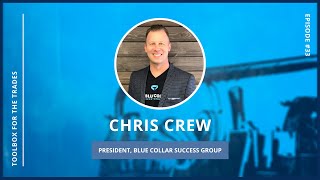
Kris Kreu, president of Blue Collar Success Group, started in electrical trades at 16 and built a career through corporate service roles and business ownership. He emphasizes scripting, process, and valuing technicians as the foundation for contractor success.
I believe that life is by design or by default. And if you're not living your life on purpose, it's just happening the way it happens.
You're listening to Toolbox of the Trades, brought to you by Servicetitan, a podcast for top service professionals where we interview leaders for their best tips and tricks of the trades. Learn how industry trailblazers stay ahead of the competition and how you, too, can be at the forefront of an industry. Let's jump in.
Hello, contractors, and welcome to the Toolbox for the Trades. Today I am delighted to share with you this very open and honest conversation with Kris Kreu, president of the Blue Collar Success Group. Kris began his trade career as an electrical technician when he was just 16 years old. Since then, he's started his own business, worked at others, and eventually, after a serendipitous meeting with Kenny Chapman, joined the team at Blue Collar Success Group. Chris is all about discovering new ways of motivating and building you and your team and transforming the industry as a whole. I hope you enjoy our conversation as much as I did. Thanks for listening. Kris Kreu. Welcome to the Toolbox for the Trades.
Hey, Jackie, how are you? Good to be here.
I am doing fantastic. I'm really excited to chat with you and thrilled that you decided to take some time out of your day to chat with me today. So thanks for coming on.
No, thanks, Jackie. I appreciate the invite. It's always an honor. Pleasure to be able to give back to the trades and for those that in every space and every trade, it's always good to be able to connect with those people.
Yeah, 100% agree. So let's kick off this episode the way we do every single one. Why don't you tell the folks at home how you got into the trades?
Funny you asked the question, Jackie. A lot of times I always tell people to either there's two ways to get into the trades. Either you choose the trade or the trade chooses you. And so at I come from a single parent home and unfortunately, my mom was kind of struggling to make ends meet and wasn't a bad student, but I needed to be able to provide and be able to put food on the table. And so at 16, I ventured out into the trade and it went a little something like this. My grandfather said, son, if you're going to quit school, you better do something that you can earn a living at forever. And he said, I mean, you need to be able to work with your hands. No, like, you can't go flip hamburgers. You can't do any of that. You got to go learn something. And I said, okay, so now my search is on. And a friend of mine said, hey, Chris, we're hiring. And I said, what do you do? He said, we do electrical work. Cool. What does that mean? He's like, we put electricity in houses. I was like, and they're hiring? Yes. So that's how I got into the trade. At 16, the trade chose me. I did not choose to sign up. However, I will say that my grandfather was a general contractor, so he built houses. He was pretty handy. Like he always did that. And my uncle was a plumber. My other uncle also works in the home services, kind of like in a, in a secondary type trade. He owns a company doing that. So it's, it's always kind of been in the family. And then we'll fast forward for a moment and give you this. Seven days before my 40th birthday, I met my biological father. And as chance would have it, he was an electrician.
What?
Yeah.
Okay, I'm sorry, this is. I don't tend to go into too much personal. But you can't drop a bomb like that and not have me ask a follow up question. How did that come to fruition? How did that meeting happen?
It's really, I say it's life. And so, you know, I don't want to get off on life stuff, but I believe that, you know, your personal life and your professional life are intertwined and there is no unwinding that. So I just believe you live in the best moments that you can. I got a phone call from what would be my biological aunt and she said, hey. She's kind of stayed in touch at a very distant from me and my family. And she said, hey, I just wanted to see if you've heard. And I said, heard what? She said, your father has stage four cancer and he doesn't have but a couple of months to live. And it's always been like an open door for me that I felt like I needed to close. I won't go into all details of why, but never knew him. Right. He left when I was born and I said, gosh, if I'm going to close this door, I better make contact. So I reached out to him by phone and we had a very lengthy conversation. Of course, you can imagine I've got anger, I've got, you know, there's a lot of resentment built up. And I said, you know what, I can unload all of that or I can try to make the best of what we've Got here and it was a really long story. Short would be he wasn't doing well. We decided we're gonna meet. Come to find out. In 2008, I had moved to Florida and he reside. He happened to reside in Orlando, Florida. As chance would have it, he left the hometown that I left and went to Orlando, Florida. So we scheduled a meet for us to meet. The day before, I got a phone call from his girlfriend and said, hey, your dad's not doing well. They had to rush to the emergency room. So I met my dad for the very first time in a hospital bed, basically on his deathbed. It's pretty tough. So we were able to talk about life and in a couple hours time, kind of catch up on the last 40 years. Then I had the opportunity. I was speaking at a conference in Orlando and I told him, hey, I'm coming over. I'll come by and see you. The week before they called hospice in and he had had a stroke and he at that point was not doing well. So I was very fortunate for the short amount of time that I got to catch up with him and learn about him and him about me and the last 40 years. So it was able to close that door in my life.
Wow. Thank you so much for sharing that. That is an incredible story. And I mean, you kicked it off at the beginning. I think our personal and our professional lives are so entwined, even just the fact of you getting into the electrical trade was out of necessity to help your mom. So, I mean, it's true. I think for people to really understand how folks succeed and they do well in this business, which is why I started this podcast, you really have to understand the underlying things that prompt us to do what we do. You know, sometimes discomfort leads to change, and that seems has been a theme throughout your life. But from my end, it seems like you're doing pretty well. So congratulations on that and for working through a really tough thing.
Thank you, Jackie. I appreciate that. I always tell people that the trade has been so good to me and my family and my life. It's literally been a life changer. But what's really funny is that my career has kind of evolved. At every step and with every opportunity come a new horizon for me. And it's like, where I'm at now in my career, I'm like, I wonder what's next, right? Because, like, all these things keep happening to you in life, and you're like, wow. You reach this level of excitement. You're like, wow, could things really get any better? And Then the next level comes, right? And. And it's not that I'm never satisfied with where I'm at. It's just I just, I'm a. I'm a learner. Like, I like to learn. I like to adapt. I like to educate myself. And because of that, I always say that opportunity only dances with people that are on the dance floor. And I guess you could say that I like to dance a lot.
Oh, my gosh. I absolutely love that. I've never heard that phrase before. That's fantastic. So we alluded to it. Your career is quite impressive. And actually, one of my questions was why you chose electrical opposed to H Vac or plumbing. But you already answered that. Why don't you walk us through kind of the different milestones throughout your career with which you ostensibly started at 16, which is insane. I was nowhere near that mature at 16. So kudos to you. Tell me, how did the career go and where are you at now?
Sure. So at 16, I wasn't so mature, by the way. I was a typical teenager at that point. But I knew that I needed to grow up and grow up fast. And so it started in new construction. There was a new construction company, as I said, that hired me, and that was where I made some of my lifelong connections, I guess you could say. So it's, you know, I believe that life is by design or by default, right? And if you're not living your life on purpose, it's just happening the way it happens. And at a young age, I was not living my life by design. I was just kind of living it by default. And, you know, it just was whatever happened. So in the new construction world, I'll never forget when I walked into the very first house. We were wiring the house, roughing it in, and I walked in and they were like, we're going to wire this house. I'll never forget. I was like, how are we going to do that, right? So my mom was like, like, I didn't know anything, right? So it wasn't like I was a little bitty kid and I was a second generation. I knew what to do at 16. Like, I knew nothing. I, you know, I had my tool belt on, and here we go. And I got, you know, people teaching me all the funny new construction jokes that everybody does about other trades and about, you know, what you do and you don't do. And I learned this whole new construction etiquette, but within a very short amount of time, because once again, I like to learn. And I'm very much like A hands on person. Within about six to nine months, I was running an entire, like, trim out crew, which is not, I look back, it's like, it's not really that impressive. It's you can be responsible enough to get you and your people to a job site, complete a job, and then leave, right? And make sure that you did a job well done within a very short amount of time. I left the trim crew and started wiring houses. And the trim proof, just to be clear, is the house is built, you just got to go put the plugs and the switches, the light fixtures and test everything. Then I started wiring houses and that led to the owner of that company giving me an opportunity to start doing things like entrances to subdivisions. And then I was running entire job sites. I had guys that were working for me. They're old enough to be my grandfather. And it was pretty intimidating. When I look back, I was probably, I was in over my head. I had no management skills, no leadership skills at all. And that's kind of what led me to that whole new construction path. And I started doing service work for the guy. And my version of professional was, you put a T shirt on because, you know, new construction, you don't wear a shirt when you're outside, you're hot and sweaty. And I put a shirt on, and before you step into the house, you take your boots off. And that was about as professional as it got, right. But I started realizing, like, I kind of enjoy the service side. Like, this is kind of fun. And I asked the owner like, hey, can, can we do service work? And this is what he said to me. He said, chris, you can't make money in service.
Ah, interesting.
So he started giving me side jobs. I mean, that's, I thought that's how you lived in new construction. I thought you just, you had to do side work on the weekends at night. And I did that to get to a point to where I was making really good money. In fact, I was so busy that I had to make a decision like, I can't continue to burn the candle at both ends. So I decided to go out and kind of do my own thing. And no business experience at all. The E myth explained my life at that point. I'm like, I can just go do it. I'm really good at this. I can. But I learned really quickly in the short amount of time that I owned and operated for myself, I didn't build anything of any value at all. It was just a job. And I look back and I'm glad that I went through that to learn. Right. What I didn't know to prepare me for the next level. And so that was kind of how I got into the trade. And that was my. My take on what it was like to be a business owner. My first go around.
Wow. And can you not to make yourself, you know. Well, actually, no. You already said you started at 16. How old were you when you decided to make it on your own?
I left there at 20. Yeah. So I did that for four years, and then at 20 years old, I embarked into the new journey of entrepreneurship.
I want everyone listening to think about what they were doing at 20. And for me, it was certainly not that. So, again, giving you some credit where credit is due. I want to talk more about where we went from after that first business entre, that first entrepreneur journey that you went on. I want to dig more into that, but before I do, there was something you mentioned that really piqued my interest, which was when you were working on these trim crews and you were working on job sites with guys that were old enough to be your grandfather. You were kind of like a teenage punk, so to speak. How did you even manage that weird hierarchical thing? Like, what was that experience like for you? Because you're not old at all. Like, this was, you know, within. When was this? Like, the early 2000s, late night, late 90s, something like that?
Yeah, late 90s. Yeah, for sure.
How did you manage that?
You know what? I think that some of my life skills kind of kicked in a little bit. But, you know, we learn by what we see. And, you know, a lot of us that, you know that are listening right now, we typically do what monkey see, monkey do. And I don't mean that we're monkeys, but, like, that's typically how we learn. And so I was around the older, quote, air quote, older lead men and their way of motivating people was to cuss them out and scream and holler at them. So I'm like, I guess that's how you motivate people to do things. You just cuss them out and scream and holler. And all the folks that are listening that are either in new construction or have been in new construction can definitely give me the head nod on that one. But that was what happened. And I started realizing, like, this just isn't. I don't want to be treated that way. I'll stop treating people that way. And so I think that was a little bit of a pivot moment. I'll never forget intervene interventions in life. And the guy that owned the Company love him to death. He's a fantastic man. But he motivated me to not be what he was. Ah. His idea of management was a conversation across the desk that would stand up and then he would pace and he would get louder and then it would result in him slamming his hand on his desk. And I always said, if I ever get into a point to where I have the responsibility of managing and leading people, I'll never treat people that way. And it stuck with me all of my career. I just don't yell and scream and holler and cuss at people. I just believe there's better ways of getting things done.
Yeah, you certainly don't exude that energy at all. Would you say that today? And we're recording this in 2020. End of 2020, but this will go live in 2021. Do you feel like there's still this tension and in the dichotomy between the old guys versus the new guys coming into the trades?
Yep, 100%. I believe this, that there's two ways you can manage the way you've always managed, which was it's my way or the highway. Our society has changed and some people are still motivated by that. And some, you know, I hear people especially, especially some of my, you know, my older colleagues, like, tell them to grow up and put a pair of big boy pants on. That's just how it is. That's how the trades are. And, and while I desire for the trade to still maintain its, like, dignity around that, that it's a bunch of roughnecks, but I think what's happened is professional business people have got into our space and it has forever changed the landscape of who we are and how we operate. And so they've helped us. A little bit of a Freudian slip, but they've helped us to realize that we're not just blue collar people anymore. We're blue collar people in a white collar world now. We still work with their hands, but you know, the old blue collar, white collar mentality, the us and them mentality, that's slowly starting to fade away.
Yeah, 100%. I want to dig into that more. But let's continue on your professional journey. So 20, you decided I'm good at this, let me do this on my own. How did that work for you?
Not so good. Not so good. People will tell you to get into business so you can create a lifelong of wealth and entertainment. What they don't tell you is very much the concept of there's two skill sets. There's the business skill set. Then there's the trade skill set. And I've seen people be good at one and not the other and be successful. And I was on flips on both. Like, you don't have to have trade experience to be good in this industry. If you have good business experience, you can hire the people for the skill set that you lack. And the same is true on the other. Typically, though, owners struggle to embrace the fact that they're not good at business. Right. Because once again, you know, we, we're tradespeople. And because we're tradespeople, we don't need, we don't need somebody outside of our industry telling us how to run our business and what to do. But it just, it evolved. And so here's what, here's what happened. I owned a paycheck. That's all I owned. I did not own a business. And, you know, some of us are okay with that. And there's nothing wrong with owning a paycheck, but that's not freedom.
Yeah. And I think that's what people commonly think they're getting when they decide to go it on their own, so to speak. But they don't actually have the, I don't want to say the business sense, but they don't necessarily have the business foundation to really grow and scale and build an asset that it's going to reward them later on in life.
Exactly.
Got it. So you started on your own, you owned a paycheck, and then where did you go from there? Because I know you got the million dollar Reward for producing 1.4 million in revenue at the start of your career as a tech. So I imagine that when you went in on your own, that didn't go as well as you wanted. So you went to another contractor. Was that more service focused?
So when I let me go full circle. So at my very first stop of my electrical career, I told you, I made connections that are lifelong connections. And one of the, one of the people that was a team member of that company was an apprentice, but he and I made a really good connection. It wasn't like, hey, we stayed connected and stayed buds the whole time. Like, we didn't call each other all the time, but we knew each other and see each other in public. In 2000, I'll go 2004, this. 2004, this happened. I was eating at a restaurant, I stepped out in the parking lot, and here is this person and I'm like, hey, how are you doing? I called his name. Jason. Hey, Jason, how you doing, man? Good. Doing really good. Man, how things go. And he's like, oh, man, I'm working. I'm like, what are you up to these days? So he starts telling me that what he's up to. And I'm super impressed. Right? There were people that came from the company that I worked for that several of us went on to be very quite successful, right? Have a good success, track record. So he says to me all this stuff, and he's like, what are you up to? You know, my pride and ego. Oh, you know, I'm on business and I this and that. And he said, man, I sure would love if you come to work, come to work for me. We could use somebody like you. And my pride got in the way. I was like, nah, I'm good. But then he started talking about things like vacation, benefits, all the stuff that I didn't have that I envied. And I said, you know what? It probably is worth conversation. And I went and interviewed, and that was in October of 2004. I interviewed with, at that time was the largest electrical service company in the Atlanta market. And I interviewed, and I'll never forget, I left there and said, this is going to be one of the best things that ever happened in my life. And I went back, basically sold off everything that I could sell. Everybody that worked for me, I got them jobs with people that I knew in the industry. And I winded it up and I walked away and didn't know a penny, but didn't make a penny. And it was satisfactory to me to close that chapter of my life. And it was at that company, Jackie, where I started learning the things that I didn't know. Right. They were exposing me to information and ultimately how to make my service truck become a business. Right? So it wasn't a business technically, but they were teaching me. They were very. They were open book management. And you know, once again, I'm a lifelong learner. I'm going to learn and adapt. And I didn't know anything about selling. I never sold anything before in my life, right. I tried to sell cancer insurance. And let me just go ahead and say that that's tough. You want to sell something, try to go door to door selling cancer insurance. But I learned that I could take the skill set that I've got and learn how to communicate that skill set to homeowners, and I could make a great living. And it was there, Jackie, where I made my first ever making six figures in a year as a service tech. And that was in, by the way, that was January 3rd in 2005. January 3rd, 2005 was my first day at that company. And my life would never be the same without that. The gentleman who owned the company recently passed away. He's a legend in this industry. He helped mold and shape many people that will listen to this. If I mentioned the name Patrick Kennedy, many people on here would know who I'm talking about. So he forever changed my life. And that was where I went on to, you know, make, make and break, set sales records.
So that's amazing. And kudos to Patrick for leaving such a. For leaving such a legacy with his, with his employees. I imagine that there's a lot of people listening now who hope that when their time comes, the people that they've shepherded along the way would say such kind things as you did just now. So talk to me about some of those lessons that you learned as a service technician. You know, your previous boss you still hold in high regard, said Chris. There's no money in service work. So talk to me about how you learned. There is, in fact, money in service work. And also for any folks who may be listening who, who are maybe considering a career in the trades, I want to again, underline, highlight, bold, italicize six figures a year as a service technician in 2005, which was not that long ago. So talk to me about, you know, the lessons Patrick taught you and what you learned in that role that really helps you make a phenomenal career for yourself.
Great. A little bit of a background on him, you know, God rest his soul. He's not with us anymore, but he was an entrepreneur, but he was an immigrant from Ireland. He came to America with very little money in his pocket and got into the industry. He had several stops along the way. So it wasn't like he just landed in success. He built along the way and became a learner. And he imparted his wisdom and his knowledge of the industry and the trades into literally anybody and everybody that would listen. And I'm like, if somebody can be successful at something, I can emulate that. And that was ultimately what started happening. I just started emulating. I'll go back, just tell a funny story. You guys will get a kick out of this, this 2005. And keep in mind, I'm almost, I'm from a small town outside of Atlanta and I'm a country boy, like. And so because of that, I had small, small town, American mentality about certain things, especially when it comes to pricing services. And some of you guys will get a kick out of this, but I'll never Forget day one. I was riding with one of the service techs. You know, they were training me, and he handed me the price guide. This was back before Service Titan was a thing, and yet software. In fact, there was an old software that we used, but it did have price. It was very clunky. It was super clunky. You guys would get a kick. We could talk war stories on that. You would laugh about some of the silly stuff it did and did not do. But I'll never forget, they handed me the price book, printed price book. And the technician said, hey, you need to study that thing. You're going to need to learn it. And I'm like, okay, cool. So we're driving down the road, and I looked down, and I'll never Forget, it was 2005, okay? I looked down and I said, $49 to replace an outlet. And without missing a beat, he's driving down the road in Atlanta traffic. He literally looks over, he said, all day long. And he just kept driving. So, like, that was, like, my first experience, like, retail pricing. Like, I would have never imagined that customers would pay that kind of price. And then it was at that moment where my mind really started to be just limiting. Beliefs just shattered about what people would and would not pay money for. And it wasn't about gouging and charging. It was about charging a fair price for a fair service. And so that was really what I started learning, was what goes into pricing our services. How do you price a service correctly? Whether I'm H Vac, electrical, or plumbing, I'm a service tech. And I'm going, I think my owners are getting filthy, stinking rich, because I know what the part costs and I know what I make, and where's the rest of the money going? I started understanding things like overhead about, you know, by the way, you got to have insurances, you got to have, you know, proper maintained vehicles. You got to have facility. You got to. People pay people to answer the phone. You got to put money aside for warranty reserves and all these things. It was like, in my brain, just totally opened up. I'm like, this all makes sense now. I totally understand. And so that lasted once again, that was 05. That company ended up getting bought out by a. I would say a private equity firm. They're not. It was a national organization that came in and bought the company and franchised it. That's what landed me the next level of my career. And I was a supervisor in that location. They had three locations. Supervisor managing 18 service trucks as a field supervisor. And so, once again, it was just every time they want to share information, I learn, like, I don't know how this is going to apply to me today, but I'm still going to learn it. Like, I was understanding as a service tech, I was understanding what direct costs needed to be, what is our marketing need to be, what is, you know, what of all these things need to be. And that's what afforded me the opportunity in 2008 to. To relocate to where I live today, which is in Sarasota, Florida. The franchise company ended up coming back to Patrick and saying, we need people to help us run this thing. Like, what do we do? And once again, I was on the dance floor dancing, and opportunity stepped in and said, you want to move to Sarasota? And in the interview, I'll never forget, they said, are you willing to relocate? And I was like, I guess. Where are you talking about? And they said, it's in Florida. And my mind went to Florida Beach. I was like, is there a beach? And they said, it's a beach town. And I was like, sign me up. So as the old saying goes, the rest is history. But I did. I worked for, oh, eight, probably there. I was six years in corporate America. Climbed the ladder, climbed the corporate ladder. Worked with H Vac Plumbing, Electrical. I helped in their training department and did kind of a little bit of everything and build to kind of gained more knowledge and information about the business in general and made tons of connections and made tons of friends that still are lasting friendships today through this industry.
That's amazing. And I want to highlight a couple of things that you just shared there. One, you started off as a technician, you had your own little foray into business ownership, decided to not pursue that, and went to the company with Patrick, where you just essentially opened yourself to all opportunities or learned everything you possibly could, and I imagine was a very good employee who just showed up, was professional, and did the job as it needed to be done. So for any technicians who may be listening, who are thinking about how can I open up opportunities for me to get into higher positions within a company, that's probably would be. That would probably be your advice, right?
Yeah. And keep in mind, I mean, let's go all the way. 1996. 1996. I started off, and I'm a grunt. I was green. I was that. That's what it was like. My. My lead man would say things, oh, looks like the wires too short. Go to the truck. Give me the wire stretcher. What does that look like? It's about this long. And it's got a little curve on this end and a hook on this end. Go find it. And they'd send me to the truck to look for the wire stretcher. Everybody's in the house laughing. It doesn't exist. There's no such thing, right? Like, go get me a. They would say things like, hey, looks like this thing's not working. You know what? We probably, we need a bucket of ohms. Run out there in the truck. The bucket's a white bucket about this big and it's got a. They, you know, you learn all these little funny things. And that was where I started. I mean, I was 16 years old and you know, I played full out with everybody along the way. And that went from learn, learn, learn, adapt, learn, learn, learn, adapt. One of the most helpful things that really has helped me in my career is this. A lot of people want the next level. And the challenge is, especially in this industry, business owners typically promote from the ranks. For example, service tech, best service tech, make them the service manager. And they get no training in how to be a service manager. And so unfortunately, if it's not enlarged this way, but a lot of our industry, when I've seen resumes and talk to people that have been service managers for 10, 15, 20 years and have no understanding of what an income statement is. So I'm going to go back to that. As a service tech, I was learning what an income statement was, learning what direct costs were, learning what my material costs needed to be understanding how to restock my truck. This is the reason why is because if A is where I currently reside today in position A and my promotion would be at B would be the next level up. If you wait to learn how to be a B when you get to B, you're always going to be behind. If you learn what it takes to be a B while you're at A, when you get to B, you're going to always beat out the competition that are in your space. And I don't mean competition like other companies in your market. I'm talking about inside your personal growth. You always have to learn the next level at the previous level. And when you do that, you will far exceed those in your position. Little piece of advice there.
No, that's a fantastic piece of advice that I got. I got, I got tingles from that. That's gave me something to think about. So thank you for that, Chris. Let's talk a little bit about. Cause you eventually got into a space where you were climbing the corporate ladder. You did a of training, which really goes back to the work that you do today at blue collar. Before we do, I do want to go a little bit back to you having that sticker shock about 49 to replace an outlet. How did you transform your mindset to start selling your services in a way that allowed you to be incredibly profitable as an electrical service tech?
It didn't happen overnight. Let me just say that. So it wasn't just like a switch flipped and I was like, okay, it is what it is. I need to understand what's that.
Switch flipped.
Yeah, exactly. Right, right. No, no pun intended there. The switch flipped. But it went back to just understanding like how do we operate the business, what all goes into that. And then I started realizing that if we don't charge the right price, I don't get the opportunity to go out to be an electrician because we're going to go out of business. And so that's what really helped me to understand that everybody, you know, if you could imagine this, the best way I could describe is this, Jackie. We go out and go, oh, we sold a $500 ticket, rent's $500. Just take that 500 bucks and pay the rent. That's not how business works. Every single dollar that comes into the business gets divided into what we would refer to as income statement line items or buckets, if you would. So a certain amount of that dollar goes to pay for your facilities, certain part goes to play for your vehicles, certain part of that goes to play pay employee expenses. Another part is going to for marketing, another part goes to pay for direct cost. And then what's left over is the profit. Right. So I really started understanding mentally what that meant. And quite frankly, if I wanted to make a good living, I've got to charge for that. Like. And that's where a lot of technicians get hung up, is their self value is not there. And I'm saying this for every technician that's on the line. No, this is no knock on other industries at all. But when I think about people that go get four, six and eight year degrees and they're doctors, they still practice medicine like everything's not a guaranteed. And this industry, we don't practice. When we practice, people die, people lose property. Right. So you know, when we're, when we're really good at this trade and, and I didn't just get it overnight, like I had to be in the field and learn and all my years of sweating and being freezing to death and do it all. That's why I Charge. I'm worth every penny that I charge. And so if you take nothing away from this interview, it's that you're worth more than you realize.
I absolutely love that. And the same goes for H vac Plumbing and as well as the other industries that Service Titan serves. Chimney, water treatment, all this stuff, this is life and death matters in a lot of cases. And technicians need to value themselves more. So talk to me. As you, as you kind of got into the training space and you started training other technicians, what are some of the key things that owners who are listening now or service managers who are listening now, field supervisors, what should they really be thinking about as they look to shape and train their. Their workforce into something that represents their brand in an effective way and is turning their technicians into not only good workers, but also mindful businessmen and women?
I'll say, wow, Jackie, that's a really tough one. But let me take a stab at that and let me see if this makes sense. Number one, shut out all the noise, everybody. And look, my company today, that I'm the president of the Blue Collar Success Group. We are a training and coaching organization. So, you know, for those that are listening, don't think, oh, this guy is, you know, telling everybody, don't, don't listen. I'm saying this. Vet out who the right fit for your company is. Right. And it doesn't mean that as an organization that you have to have all the answers. Solicit outside opinions and perspective, but make sure they pass the litmus test. And for me, Jackie, the litmus test is not. They've been training for 20 years of their career. Right? Because the challenge is if they've been training for 20, that means what they're doing is outdated. They haven't been in the industry, like, actively working with people and understanding what. So if I'm an owner or a technician today, my question is, where am I going to get my information from? Because the reality is you can get to where you want to get a lot faster if you'll start listening to people now. That doesn't mean that you have to listen and apply everything you hear. I kind of feel like it's a little bit of a buffet mentality where, please, I'm not a buffet guy, by the way. I'm totally grossed out by buffets. I'm a germaphobe. And by the way, we are recording this in 2020, prior to March of 2020. I was a germaphobe before then, anyway. So, anyways, I don't want to get off with that. But training is like a buffet, right? So there might be things that are on the buffet that I don't like, but it doesn't mean I won't eat. And a lot of times people go, oh, I don't like it when they say this or do this or that's not comfortable for me. The most important thing that you can understand to be able to help and to grow is find something that you are comfortable with and stick to it. I see a lot of technicians trying to bounce from, oh, I listened to this guy. And then all of a sudden this company or this trainer will say something I don't like or I don't agree with. And then I throw everything I've ever learned from my way and try to learn something new again, like, it's a toolbox. And you're going to have to take a little bit from here, a little bit from there, and kind of put together and learn how to be comfortable in what you do. But I'm really big on making sure that it's tested and proven, not just ideas, right? So, like, I think about some of the most well known quote salespeople in the world. While we can learn from those people and learn communication skills from them, it doesn't necessarily translate directly into our industry. So we have to have the knowledge to go, that won't work because of this, but if I do this, it will work. Like, there's a lot of great sales books that are out there that are not from our industries at all, that have really good advice in them, really good processes inside of them. And so when I go back to, like, how did I learn? Well, I took what they were teaching me then I didn't just take it at that. I started going, getting more training outside of the industries and reading books, going, how does this apply to me? So I hope that. Does that help answer the question that you had about, like, what should I.
Do to get better? Well, I guess I'm thinking about owners who are trying to figure out what their training program looks like. It sounds like one. They have to identify who they are as a company. You know, what differentiates them from their competition, how do they want to stand out, and then finding a, that fits their workforce in a way that represents their brand, but then also being open to pulling things from different trainers, from different programs and finding something that works for them. And you also mentioned something that I can test and apply. Like, you don't have to apply everything, but when you do apply, you have to test. So can you talk a Little bit more about that.
It's funny, and I'll say this verbatim. When I was coming up in the trade, I was trying to emulate successful people. Let me go back and say that. Because success leaves clues, right? Success will always leave clues behind if you really study successful people. So I didn't look at other technicians in my space. You know, I get the opportunity to travel and I'm speaking on stages in front of technicians. I'll never. I just told this story. Like last week I was telling someone. I'll never forget the very first time I ever spoke on stage. I was a service tech and I went to a conference and they put me on stage on a panel. I was nervous. I was so nervous. And I was chewing gum and someone passed me a note from the floor that said, spit your gum out. And I went and I swallowed it. And they were basically giving me coaching. Here is where I take that. Whether I like the person that is teaching or not, if I'm willing to listen, they'll say things that I can agree with. And if they said to me, and I've said this in the past, if they told me, Kris, all I do is I knock on the door. When the customer opens the door, I do a little spin and I go, ta da. And if they were a top salesperson and that's what they were doing, now I'm being very, very extreme. Like, obviously that is not the case, but quit trying to discredit what other people are doing to be successful and just start mimicking that. Like, nobody has new tricks in this industry of how to sell, how to, how to run a call better. Like nobody has anything new. And if they do, run for the hills, it's a lie. Like, sales is one of the oldest professions. It's all about how we, how do we go about making it happen, right? And so that might be new, but the actual technical sale, like, nothing's changing. Okay, cool. So now we're selling from iPads versus a piece of paper. The same logic still applies. Like, nothing changed, just the delivery mechanism changed. So if our on the other end, I'm listening. One of the pieces of advice that I could take away is make sure that I listen to everything that's being said, whether I agree with it or disagree with it. Especially in the world we live in today, where if we don't agree with what, what one person says, one thing they don't say, we discredit everything they say. And that's the most foolish thing that you could do in this Industry.
I think that's really interesting. I also think that's really. I mean, it's very telling of the times that we live in. I feel like when you follow, you know, author, a mentor, a leader, and if they say or do something controversial, occasionally it's like you throw the baby out with the bathwater and you're saying, exactly, don't do that. But what really struck me about your answer there was don't think or try and find a new way to do it. People have been having success in this industry for years and years and years. We all know how to do it. You actually just have to implement it. So can you talk a little bit more about implementation and maybe tie that back into the kind of work that you do with blue collar and how you help owners implement?
We've said it once, we'll say it a thousand times. I'll never stop. Practice only makes permanent. And if you're doing it all wrong, you'll get it all wrong. The only way that you're really going to implement is to get committed. And I'll say it again. Get committed. There is a big difference between being interested and being committed. You see all these social media groups where, you know, I say this, like, industry, where people are bragging like, you know, my industry paid for this and I got this, and I look at my big house and look at my big truck, and everybody's looking, going, I want to do that. I want to do that, right? The question is, are you interested in getting that stuff or are you committed to getting that stuff? Because what I tell people all the time is when I'm teaching and training in the classroom, someone who has been doing it for a long time, not teaching, but physically out in the field, and you've done something and you have what I'm going to call perfected your craft, because that's what this is, right? Everybody can look back and go. You know, they can look back at the. At the. At the ductwork and go, look at that. And if you know what you're looking at, like, you notice that if they use mastic that it's not just a sloppy mastic job. They taped it off, they mastic it, and then they pulled the tape off to create a perfect mastic line. See that? That's what I call really, really perfecting your crap. I'm a plumber, and I know that my pipes. I don't have a bunch of primer running down the edge, right? I'm an electrician, and all my wires are flat. Like, go to any industry. And we can tell who's really good at the trade by what their work looks like. Now let's reverse that and talk about the service aspect and the communication component. That also is a craft and a skill that you have to build. And if I'm in the classroom and I'm teaching and literally you could, at the drop of a hat, you could say, chris, could you role play that for me a thousand times? Every time I will do it because of the commitment that I've had to perfecting my craft. I can tell you the countless hours, and this is for anybody out there right now, you'll laugh. And that's fine. You may listen to this podcast and go, oh, that's great. And now right now you're about to turn me off. But remember what I've already said. Don't discount me for what I'm about to tell you. So a lot of people are like, they don't want to be scripted. And that's fine. I was. And the reason why is because guess what I learned really good salespeople learned a long time. Somebody like the forms of a Tom Hopkins, super duper sales guy. Right. And he's. And he was a little bit of in this industry and some real estate. But knowing what my process is, from the time I knock on the door to the time that I leave the home, I know exactly what to say along the way. And I have practiced. And it started, by the way, Jackie, I wrote it down. Everything I'm going to say on every. I wrote it down. And then I literally got in front of a mirror and practiced it over and over and over again to the point to where I made it a conversation, not a script.
Yeah.
The way I liken that is Hollywood gets paid multi millions of dollars to become a. You know, Tom Hanks didn't get paid the millions and millions of dollars that he got paid because he's Tom Hanks. He got paid that because he was Forrest Gump. And see, that's where I think that we get hung up in our brain that when we, you know, when we don't, we're scripted or whatever, we're not ourself. No, I get to be myself the more I know that script. And so because of that, I wasn't interested in being successful in this industry. And I'll go all the way back. I wasn't interested being successful as a service tech. I was committed to being successful as a service tech and I was willing to do what everybody else was not willing to do. My Peers and colleagues thought I was crazy. You mean you really get in front of a mirror and practice? Yep, I sure do. Yep, that's what I do. It's worked for me so far.
Yeah, it's really interesting. So I don't know if we mentioned. I've mentioned this very, very briefly and I'll keep it brief, but I have a background in performance and in doing comedy. And the way you just described memorizing the script you would have on a customer.
It's worked for me so far.
Yeah, it's really interesting. So I don't know if we mentioned. I've mentioned this very, very briefly and I'll keep it brief, but I have a background in performance and in doing comedy. And the way you just described memorizing the script you would have on a customer is. And it's true. The more you know your jokes, the more you know your punchlines, the more you know the beats you have to hit, so to speak, the more comfortable you can get and really express yourself as a human being. That now this homeowner trust in pricing their electrical job that they called you for, that they don't know anything about. So I think there's actually a lot of value there. So if we were to talk about training technicians and the kind of work that you do at blue collar, it's really, it sounds like very focused on scripting, getting comfortable with that script and perfecting the process of the service call. Not necessarily kind of winging it every time.
Yeah. And this is what I hear people say from the industry all the time. You're a service tech, you're listening and you would say this, but Kris, every calls different. And I'm like. And that's the exact reason why you need a script, Right. Because every call is so different. It's not. Your call is not going to be like, oh, I'm going to show up and I'm going to say this and I'm going to do this. It's literally taking the opportunity to say what will happen when I knock at the door. They're going to knock on the door, they're going to open. And by the way, you have no idea who's going to open the door. You don't know if a dog is going to come running out. You don't know, like, you don't know all of that. So now you can be prepared for what is different versus what's the same. Like, what is the same. I know that when I show up, I've got to, you know, meet and greet the customer. I know that I've got to set forth some level of an agenda. However you're trained to do that. You got to set some level of agenda and communicate what they're going to. What you're going to do. You've got to communicate price. You've got to tell them, you know, you got to ask for the sale. You got to do all the key things that make that happen. Because I know this has never happened to anybody where, oh, I don't know, you're right into the middle of, about to present, and you're sitting with a homeowner and the spouse walks in. In the middle of your presentation. That's happened to anybody. Has it? Of course it has. That's the exact reason why I have a process, though, Jackie and I encourage everybody to really have a process so that I can deal with that situation independently of just winging it. Right. So when you, when you wing it, you will not get predictable results. And I will say this, there's very talented people in our industry, but just like Michael Jordan, he was talented, but he worked on building his skill. That's what made him a champion commitment.
To being, to being a phenomenal service tech. Figuring out your process, nailing it down, scripting it. These are all really crucial things that I think both technicians need to remember and also owners need to remember as they build out their technicians and grow and scale their business. That was fantastic. Thank you for sharing. I'm loving this conversation, by the way. Talk to me about how you met Kenny Chapman and how you started blue collar, because we haven't really talked about that. And I want to hear it described through your words.
So once again, my life, maybe I'm the only person like this, you know, six degrees of separation. I'm like, if it's in the contracting space, it's two. You can know one contractor, and all of a sudden, you know them all. Right, so I'll go back. A friend of mine who was a plumber in Minneapolis ended up in the same corporate environment as myself. And he and I were working together and I formed a really good relationship with him. Many of us, he'd been in the industry a while, probably would know him if I called his name. But I said to him, Tim was. His name's Tim. And you know, after work, I always just walk down and chat with Tim. You know, it's five o', clock, quoting corporate America. Instead of just rushing out the door, I like to hang around and talk and observe. And so went down to Tim's office Hey, Tim. How you doing? I sat down, we were chatting, and I'll never forget, he tossed across the desk a plumbing and mechanical magazine that was opened up to an article, and he just kind of tossed it. He said, read that. And it was an article. And I read it, and he said, do you know that guy? And I said, I don't. I don't know who that is. And he said, I think it's somebody that you should know. Like, I just. I feel like you guys should know each other. That was 2010. Call it 2010, 2011, 2016. Another friend, plumber friend of mine. If I called his name, people probably know him, too. And I know I say that a lot. Why? Because two degrees of separation contracting. Tab and I were at the beach one day, and we were in the water, you know, just chilling, doing what you normally do on the weekends. And he said, you know what? It just came up in conversation. He says, I got somebody I think that you need to meet. And I said, okay, who is it? And he said, kenny Chapman. And I went all the way back to 2010. And I went, Tim McGuire said, I need to know Kenny Chapman, too. And I said, I think the world's trying to tell me something. And I'm not trying to get all philosophical and whatever your beliefs are, I'm not trying to tap in and wreck your limiting beliefs regarding how the world works and conspires for you on your behalf, but I will tell you, life has conspired on my behalf to provide me what I put out into the universe. And I said, you're the second person in my life that said I need to know who Kenny Chapman is, and I think that I need to take action on that. Kenny lives in Phoenix, Arizona, and I live in Sarasota. It's not necessarily a drive down the street. So he said, well, we're actually. Kenny's teaching a class next month in Tampa, and I think you guys should meet. At this time, I owned and operated. I didn't own and operated in an electrical service business. And I was like, yeah, okay, all right, we'll meet. We met at A World of Beards. They were having an event up by the Tampa airport. Little like, meet and greet outside the hotel. I met him, and it was, like, instant connection. It was like we had known each other forever. We started, you know, sharing stories, and great things started happening. He said, well, maybe we could, you know, maybe we could do something in the future together. Because I own an operator. I had no interest in leaving at that time, but Life changes. And in 2000, and let's see, that would have been 18, 20, 18, I sold my shares of my business to my partner and Kenny called me and said, hey, word on the street is you're not working anywhere anymore, and I think that we should do something. And I said I would entertain that. And Kenny was going to be in town. Orlando. I drove over to Orlando. We spent a day planning what things could be, and here we are today. So I started with Kenny and the Blue Collar Success Group as a coach and a trainer. And back in February, Kenny asked me if I would be willing to take on the role of a president of Blue Collar Success Group to help us grow and change contractors lives through coaching and training and mentoring not only them as owners and operators, but technicians, call takers, salespeople, dispatchers, everybody at every level. And once again, Jackie, I'll say this. This industry has been so good to me and my family. I couldn't imagine not giving back to it.
I love it. What's some of what's talk to me about? I know I hate to put you on the spot, but tell me about one of your most memorable warm and fuzzy moments that you've had since working at bcsg.
It's really hard to pinpoint one, but I'm going to go full circle again. Remember the guy that was my apprentice at my very first electrical job? Yes. That was also the guy that got me into this industry.
Yes.
I now serve him in the capacity of his business coach.
That's amazing. That's incredible. Wow. Full circle, indeed.
Yep. So this, once again, that's kind of a. And if Jason's listened to this, like, I don't. I tell him often, like, man, it's crazy how as kids we were, you know, how things were and how things are today. That's definitely a very memorable moment. Warm and fuzzy, Jackie, when super smart contractors that are very wealthy, when you help them connect the dots on something that they haven't connected the dots on. And this is not necessarily being exposed, but most recently, I was on site with a client working on something in their business. And literally he was like, well, that paid for the visit, Chris. That just saved me a hundred thousand dollars. Yeah, like that. That feels good, Jackie. Like, that feels really good to me. Like, when you say warm and fuzzy, it's hard to pick. How about technicians that connect with you after a class and say, hey, can I get your email address? Or can I get your telephone number? And then six months, nine months down the road, they text you and say, Hey, I don't know if you remember me or not, but I was the one that. And I'll remember. See, I just want to let you know you changed my life forever. Like, and I got cold chills just thinking about that. It's not about me, it's not about our company. It's about this industry and everybody else that's in this industry. Like, that's what's important. And you might go, well, that's a cop out. Like, that's why I do what I do.
No, totally. I mean that's how you and I originally got introduced is because you actually help service. You don't work for service site in any capacity you have clients are who use service titan. But you actually helped us build our electrical price book which is a pro feature that our clients can choose to purchase if they're electricians. Was that all also about just helping the industry as a whole?
Yep, sure was. Obviously business is business and people have to be compensated for what they do. So I don't want you to feel like this is all about charity and I don't want people to leave here thinking, well, would you be good to this industry if it didn't pay you anymore? Like this industry is always going to pay me. Like whether, whether we want it to or not. It's always going to pay me in some level, in some capacity and it's not always monetarily. So like you can't stop. You can't stop that. It's karma.
Totally 100% agree. For folks listening now who may be thinking about coaching or being a part of a certain success group, what are some tips that you would give them as to considering, you know, how do they, how do they choose a coach? How do they choose a program that works for them?
Coming from been involved in multiple levels, I've been involved in best practices group. I've been involved in franchise. Today I would consider it sounds a little, I don't know, salesy but like blue collar is more of what I consider to be more like boutique type of coaching and training and there's a lot listen for everybody out there, I don't know that I could say that there is one thing that you got to look for in many cases all of us do the same thing. All of us have similar tools. All of us do that. So for me, Jackie, the most important thing is can I work with this person? Because if I and it doesn't mean that we got to be best buds and we got to hang out, but it's do I resonate with this person. Right. And so in many cases we have clients that have what I call them joiners, which means they join everything. Everything that somebody, oh, I'm like literally give them a resume of like, well, I've worked with this person, this person, this person, this person. And one of the things they're like, well, and I'm giving because my experience is the reason why we work with you, Chris, is because of you. It's not because of anything else. Right. We know that we can go get information. I mean, heck, for many of us, if we're willing to do the hard work, you can Google like it's an information highway. There's no, quote, proprietary stuff out there. Like, let's get really real. There's no proprietary stuff out there. It's all we know what the business fundamentals need to be. If it's a coach that you need, you need to be interviewing the person and how they actually help you. And I will say this, many of us won't hire people because the coach will tell you what you need to hear, not what you want to hear. And that will hold you back in many cases. I'm not saying that the coach has got to be tough like Sam Elliott on you and you know, like, be mean to you. But they, you need some level of accountability as an owner. You're accountable to nobody. So quote, from a boutique standpoint, I'm not going to help you do anything that you don't already want to do. And let's face it, nobody can really be motivated. Motivations, really either you got it or you don't. Somebody can help properly help motivate you to be able to get what you want. But if you didn't want it anyways, nothing I say or do will ever help you get there. So if you're a three truck operator and you're like, I don't want to be a 10 truck operator, you won't. Like, there's nothing that I could ever force you to do to help. I can show you how to do it, but I can't make you do it. And so that goes back to really being able to make sure that. And by the way, let me say this for those, you got to make sure that you're hiring a coach for the right reasons.
That's important.
Don't just hire a coach just because you want to grow. Because like an example, I don't care what level of business we work with, you know, six figure companies, all the way up to nine figure companies, right? Like, and I would say this to every one of them. If you want my help, we're going to check off the basics first, because anything along the way, I want to make sure that we didn't miss something that I thought you knew because you're a big business back that we should have done at the beginning of our relationship. Anybody can teach you how to read an income statement, how to recruit, hire, and retain. I mean, all that stuff. There's no secret sauce. You got to be committed and hire the coach for the right reasons.
Commitment is certainly the theme of today's episode. We've been talking for a little almost an hour now. Is there anything that we should have talked about that we didn't?
That's the toughest question you have asked me yet, Jackie.
I think I've hit you with some pretty tough ones. This interview.
I can't. Like, if my mind went to is there anything that we should have talked about in the context I think it would probably go back to this Life will give you whatever you ask of it. The challenge is many of us mentally can't get to a place to where we're willing to ask for it the way that it needs to be asked. And so because of that, many of us, like, we never change. We never quit doing what we've done. We need to break our habits and change our thinking. Like. And that. That's really whether. And it's at every level. Service tech, call taker, dispatcher, manager, owner. We all just get stuck in the. In the stinking thinking trap. Like, we just. We. And I like to, you know, if we were going to talk about that. Find yourself sitting in a room and imagine your closest colleagues. And I'm not talking about just like people, you know, on social media, that's not a real connection. It's 2020. But just because you're connected on social media doesn't mean that y' all are friends. Let's be really real, okay? I'm talking about someone that you could pick up the phone call and talk to about anything. Look at those people if they were sitting in a room right now and ask yourself the question, am I the smartest person in this room right now? And if you are, you better find you a new room to get into.
Hmm. That's some pretty. That's some pretty solid advice.
Doesn't mean those people are bad people, but you've outgrown them. And that means you're going to be stuck. You're plateaued. You need people around you that think bigger, that think outside the what I call the quadrilateral parallelogram. Right. Think outside the box. That's a $10 word for those of y' all didn't think a country boy knew fancy words. I have. I have. I have made new friends along the way, and I've tried to surround myself with people that are smarter than me because I realize when I do, once again, go full circle. I'm a learner. I can get around people that are smarter than me. I can learn. And success always leaves clues. I can pick those up. Right. So if there was anything that we didn't talk about today that we should, it's. You should examine your peers that are around you. And I'm not saying, like, put them through the ringer and judging them. It's just if I'm not where I want to be in my life, I first got to look inward and ask myself the questions. Am I committed? Number one? Number two, am I around the right people to help me get to where I want to go?
Yeah. I've heard this before, that you're the sum of the six people you spend the most time with.
Yes.
So I think that's another way to think about it, too. For you, definitely. Learning and growth and always getting that more knowledge, being a learner, that's your motivation. But the biggest takeaway here is think about the people you see the most and how do they contribute to your life? How do they challenge you?
All that stuff. All right, Jackie, I'll leave you one final thought.
Yes.
Great exercise. For those that are here, we don't have time to go through the entire part of the exercise, but imagine that doesn't matter how you believe, but at some point, you're not going to make it out of this thing alive. That's just a fact, everybody. Don't make it out alive. What would you want your eulogy to be? What would you want them to say about you? Yeah, right. It's like, because at the end of the day, that's all that gets left behind. All the money, all the fortune, all the fame, all that gets left behind. But once that stuff's gone, you won't be remembered by it anymore. You'll be remembered by the experiences that you created and the connections that you made along the way. Like, for me, you can't buy that stuff.
Yeah, I think that's really good. I think that's a wonderful thing to keep in mind. I have some rapid fire questions to close out the episode. Would you be willing to participate?
Do it.
All right, ready? Perfect. How do you Take your coffee.
Cream and sugar. Lots of sugar, lots of cream.
Nice. So dessert with some coffee in it. I love it. If you could have dinner with one person, dead or alive, who would it be?
Jackie? Why? So tough questions. I think I'd have dinner with my wife again. Aw.
What's the number one thing you're trying to learn more about right now?
Being bigger than myself.
If money weren't an object. Unlimited resources. What's the first thing you would do?
Make sure my entire family is taken care of for the rest of my life.
Nice. What podcasts and or books would you encourage the folks listening to? Take a listen or read or read through.
Oh, this is. This may be telling, Jackie. I like podcasts for learning, but I also like podcasts for mindless. No thinking. So two. I'll give you two, then really quick. Two podcasts. Number one is Ed Mylett. That's my learning one. And then the Duddy B show, which is a rock reggae band out of California called the Dirty Heads. But they tell funny stories about their being on the road. And if I could recommend a book right now. This is what I'm reading right now. It is by Kenny chapman. It's the six dimensions of change 2.0.
Nice. I've seen the Dirty Heads in concert, by the way. They're great.
One of my favorite bands.
They're super fun. What's the number one thing every contractor should do to run a successful business?
Recruit and hire the best people in the industry.
Yep. Easier said than done, for sure. But we're certainly trying to solve that issue for everyone here at ServiceTitan, but yeah. Chris, I want to thank you so much for taking the time and chatting with me. I know that we've worked together before. We have an awesome webinar that you did that will link to the page this podcast will live on. Thank you so much. I really enjoyed this conversation. It was great to get to know you more.
Thank you, Jackie. It was a pleasure. Gosh, I hope I didn't embarrass myself or anybody that listens to this later on says, wow, I can't believe he said that.
No, you're actually really funny. Thank you so much, Chris. We'll talk to you soon.
Thank you, Jackie. It was a pleasure. Thank you.
Hey, toolbox listeners, did you enjoy our chat with Chris? Well, good news, because there's more where that came from. Go to servicetitan.com crew to check out three tools to grow a profitable electrical business. An on demand webinar I did with Chris a few months ago filled with simple and easy tips on how to increase efficiencies at your business. Again, that's servicetitan.com Crew C R E.
W Ever wonder how much your business is worth? So many owners ask that question and have no idea where to turn for an answer in just a few if you click, ServiceTitan's new service business Valuation Calculator can give you an easy and free estimate of the current value of your business. Whether you're thinking about selling your company or looking to track growth, Check it out now. Visit servicetitan.com/ Again, that's servicetitan.comvalue see how much your business is worth today. Want to network with fellow service entrepreneurs and former guests of this podcast? Join our private Facebook Facebook Group Toolbox for the Trades to get immediate access to the best tips, tricks and tactics from fellow service entrepreneurs. Visit facebook.com group toolbox for the Trades or click the link in our show notes to join.
See you online.
More from Bill




Capturing the 80%: How SmartAC’s Gen-2 Targets Non-Membership Homeowners | Podcast Ep. 296

Build better customer data with every booking in ServiceTitan | TAD Tune-Up Series

The Biggest Change for Roofers Coming From Other Roofing Software to #ServiceTitan?

