The Top 4 Challenges for Female Service Entrepreneurs | Podcast Ep. 67 | Toolbox for the Trades
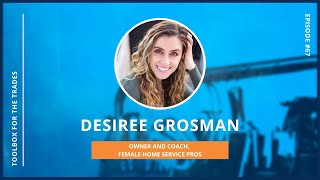
Desiree Grossman, founder of Female Service Pros, identifies the four biggest obstacles for women running service businesses: customer acquisition, hiring and delegation, earning team respect, and time management. She recommends job-costing, tracking gross profit and cost per lead, hiring a bookkeeper, and recruiting year-round to fix them.
Welcome. Desiree Grossman, you are the owner of Female Service Pros. Thank you so much for joining today's podcast. Your mission is to support women in the trade. So I am so excited to talk to you today. Thank you again for carving out some time out of your busy schedule to talk with me.
Yeah, thank you for having me. No worries.
So let's kick off this podcast the way we do every single one. How did you get into the trades?
Well, I like to say that I was born into a family of tradesmen. My dad was a plumber. My uncle and grandpa were machinists. My father in law is a garage door installer. My husband's a welder. So everybody in my family has pretty much, you know, been in the trades in some capacity or another. And pretty much all business owners too, which is really cool. But they would always tease me growing up and call me plumberina. They said I was going to grow up to be plumberina. And you know, I, I didn't even, it didn't occur to me that there were other roles in the trades beyond turning the wrenches. So. So when I discovered, like, I could work in the trades in some other capacity, it really lit a fire under me. And because I am from a family of small business owners, it just made me really passionate about wanting to help other small business owners, especially contractors who maybe are working a little bit in the past. They're a little bit stuck in the old school methods of how they run their business. And so I really love, like helping bring them up to speed and innovating and using new strategies and just building a business that can, you know, run without them there.
I mean, that's very much the goal of a lot of people who not only come on this podcast, but who help others with that mission. So you are definitely in good company in terms of the guests that we've had on here. And, you know, speaking, going back to your background a little bit, you actually started your career working in house for a plumbing company. I would love to learn a little bit about, you know, what that role was like and what prompted you to then start your own business. Female Service Pros.
Yeah. Yeah. So, yeah, I did work in house as a plumbing company. I actually started in marketing, communications, that whole world. And I, like, was working in all kinds of different industries, food and beverage and hospitality and travel. I didn't know what I wanted to do. And then it kind of clicked, like, duh, I know the trades. I've lived in this world already. Why don't I Start helping those businesses. And so I started doing copywriting and website development and things like that and branding. And before I knew it, clients were saying like, hey, can you do this? Hey can you do this? That, hey, can you help me implement software? Hey, can you work with my CSR so that we, you know, do better on the phones and convert more leads? And it just grew and grew and grew. And before I even knew what was happening, I was consulting and I didn't even know that. I didn't even realize, like, oh, I'm, I'm coaching. But people were hiring me to do it and I guess they liked what I was doing. So I started working more in, yeah, growth and development for businesses. So it grew from there.
Awesome. I know you from Lady Titans, which is a group here at Service Titan where we have a group of everyone who supports women in the trades and that's open to both men and women, non binary folks in the trades. And you actually have a similar thing with the female service pros community. So I would love for you to tell me a little bit about that community and then about female service pros as a whole.
Sure, yeah. So, you know, like I said, working with all these different trades businesses, it was primarily men, or at least I thought it was primarily men. It was oftentimes the men that kind of owned the business, but they were co owned with their spouse, with a wife or the wife was kind of in the background making a lot of the decisions with them or even working, you know, in house in administrative roles. So I started to realize there are so many more female business owners in the trades than I had ever, you know, it hadn't occurred to me. And so I felt there was really a gap there. A lot of the coaches and consultants that I see are really, you know, they gear their messaging and their, you know, their academies and their training programs for men. But women have such a unique touch and bring something very unique to this industry and to, to the customers and even to their employees. And I really wanted to help women bring that out and show how them being a leader is different and something special in the trades. And yeah, so I started a group, not really sure, you know, what would happen with it and it just quickly started growing. We're at almost 400 members now and they're all over the world, I would say primarily the US and Canada, but we have people in South Africa and Europe and Australia, so all over the place. And yeah, it's just a place to gather. The ladies will ask questions in there or celebrate their Wins different things like that. And then of course I'm in there daily, you know, sharing tips or advice. Anything that I can think of that might help, you know, a female contractor grow their business or help things run smoother or you know, if they're struggling to hire tips that I've seen work for my clients, I'll share stuff like that. So you have about your, you have.
This community on Facebook, female service pros primarily focused on women leaders in the trades and they're all over the world. And some of these are your clients, I assume also some of them are just people who want to connect with other female in the trades and who.
Want to learn more. Yeah, exactly. Yeah, it's a combination of both. Yeah, I primarily like with my one on one clients, some of them are in there, some of them are not. But yeah, I work with one on one clients. And then the group itself is just for any lady in the trades who is looking to grow and learn and absorb anything she can to help her business run better.
Got it. I love the thing you said about how, you know, there's so many women who co own the business with their husbands and I have seen that time over again. I mean, just off the top of my head. Megan Giler, Rhonda Doughty, Angie Snow, Vanessa Gonzalez, these are all really powerful women in the trades who have co owned this enterprise with their spouse. Typically, typically husband. And they've just taken it to astronomical growth. A lot of the times I hear when I talk to them about what it's like working with your spouse and I actually will have an episode on this on the podcast coming up soon about working with your spouse. Yeah, but whenever I ask them, you know, what's it like working with your spouse? Like nine times out of ten they say, oh well, my husband's really like the 10,000ft guy. He's like the visionary and I'm very much the more operations implementation person. Is that a theme that you see repeated in the clients that you work with or not so much.
It depends a little bit. But no, I've actually heard more. So like the men want to like they're out in the field a lot of times, like maybe they're doing the sales or the estimating or even the installing and then the wives are like in the building like you know, kind of running the show a little bit, which is cool and but you know, for a lot of them the goal is to get the husband out of the field to be able to have that 10,000 foot view and be the Decision makers to, you know, not just be the boss, but to own the business, to own the trains and have somebody else make sure they run on time. So I think for a lot of them, that's the goal. And yeah, so I've seen it both ways though. Yeah. Where the men are in the field or maybe they're overseeing things. It depends.
It always depends. Yeah. But it is interesting. There are definitely tropes that I see repeated in different family businesses. And it's. It's not, it's. It goes across trades, it goes. It goes across locations and it's really fascinating. I bet you there is a very good psychology study somewhere in there. But that is not my. Why don't you tell me a little bit about, you know, some of the repeat themes that come up in the female service pros community, like what are some common answers that you provide? What are some common tips that you share?
Totally. So the four major things that I think these female business owners are dealing with is of course getting more customers. I think that's every. Every business, even if you're booked out, that's always a concern in the back of your head, like what happens if it slows down. So always getting more customers or ret. Their customer base, developing their customer experience to create more word of mouth and a better reputation. Obviously the current hiring challenges, everybody is struggling with that, whether you're in the trades or not. And with that also learning how to innovate and be able to eliminate automate, delegate. I think those things are very important when the hiring challenges are so hard. So that's a big aspect of it. And with that too, leading their teams and getting the respect they deserve from employees. Sometimes the male employees just in working with these women, sometimes the male employees who've maybe been craftsmen in the trade for years, they don't have a lot of respect or they question her authority. One of my clients even was like, yeah, I think they think of me as the little old housewife who came in and starts stomping around and demanding things of them. So learning how to get the respect of your team so you can build a dream team there. And then time management, like we talked about, everybody wants the business that can run on its own without them there. And so learning how to have more freedom of their schedule and a business that can run more independently and then anything related to money. I feel like a lot of contractors really struggle with the numbers and that could be cash flow problems or not job costing, not knowing how much to estimate or how to sell their Services better for better gross profit margins. So yeah. As for that though, I harp on that a lot and I know a lot of other consultants and coaches do too. But you have to know your numbers. It's so important. And that's something that I try to give a lot of tips and advice and tools to help people do that better.
I love that and thank you that you basically just said these are all the things that I work on. And we're going to dive into all of this separately. Definitely want to get into some of the challenges that are unique to female business owners. I mean, obviously getting respect from male technicians, or I shouldn't even just generalize and say male technicians, but male employees. Let's start there. What are some tips that you give to your female entrepreneurs if they're experiencing that kind of friction?
Yeah, it really, it does depend on the person for sure. It depends on the situation, what's happening. But a lot of times like a sit down has to happen at some point and they really need to discuss, you know, where that perception is coming from or where maybe the employee thinks they're lacking in some area. And if it is like a technical aspect, like, well, you've never been a plumber, so you don't know what we experience out here in the field, then maybe it's time to do a ride along with them and get your eyes on the situation and see what they are experiencing. And maybe their complaints are justified and maybe they're not. But that's the only way to really get out there and see if what they're saying is something that's accurate and that you can work on together.
Do you recommend that female entrepreneurs obtain the technical certifications or technical skills?
It really depends on your industry because for some people that could be going through a five year apprenticeship and then certifying and it's a whole mess of things. But yes, having basic knowledge I would say is really helpful and really important. You know, you don't have to be a pro, you don't have to have every answer, but it can definitely give you a little bit of leverage and authority with your employees if you can answer their questions in the technical aspect. And if you can't, if that's totally not possible or something you just, you don't feel you can do, you know, get the right people in place, the right managers and supervisors and team members that will work with you and do respect you and can answer those questions for your team so that they have someone to turn to that they can have those discussions with or Those technical questions with.
Awesome. Yeah, really cool. So let's talk about money management, understanding metrics, all of that stuff, but money management first. What are some common problems around money management that you help female entrepreneurs solve?
Well, like I said, a lot of contractors, I don't know what it is about this industry, but I feel like there are so many contracting businesses that are just doing it old school still, you know, whether that's not wanting to change or not knowing how to take the next step forward to kind of innovate their business. But a huge part of that is the numbers. Like they're building estimates based on guesses. They're, you know, pricing their services based on, you know, maybe a quick Google search to see what their competition is doing. And that's kind of the end of it. But you can't manage what you can't measure. And so it's really has to be an under a good understanding and a solid understanding of the numbers. They're the facts. The numbers are the facts, and you have to run a business based on those facts. So job costing is super important so that you can price your services accurately in a way that's fair to your customers, but also fair to your business so that you're making a profit and can reinvest in your business and continue serving customers. You're no good if you go out of business. We talk about numbers too, associated with like your leads, where they come from, how many of them convert on the phone, how many of those bookings turn into sold jobs, your average sale is, or your average ticket is, and how to find that sweet spot between your most profitable work. But also that's like the lowest amount of effort and expense on the company's behalf. So finding that fine line and that fine balance and really promoting that specific service. And then overhead, we talk a lot about overhead and learning what to include in that. Like your salary, for example.
Speaking of salary, when we first spoke, you told me this heartbreaking but illuminating story about one of your clients in regards to that she was an electrician in Canada. Do you recall the story? Would you mind sharing it?
Yeah. So this woman that I talked to, she had been in business for about four years, single mom, she was an experienced electrician. She started her own business and she hadn't taken a paycheck in four years. And somebody had told her, don't take a paycheck for at least five years. And I think there's such a high demand for the trades, especially right now, I think through the COVID crisis, most trades were booming. Like doubled in business, some of them or more. And so these are industries that you really have an opportunity to be profitable from day one, if you're doing it right, if you're knowing your numbers and really tracking that. So, yeah, that. That was something where she wasn't taking paycheck and just. I don't know, I. It broke my heart to hear that. But obviously there is a difference in startup costs between somebody like a painter versus somebody like an H Vac company. Like, the startup costs are different. I understand that. And so there is going to be a difference in overhead and what you have to charge. But knowing your numbers really helps with that. Another woman I worked with recently, we put a little growth plan together for her business. She had taken over the business from a family member who passed away, and she had never worked in this industry. She was in landscaping. And so she had no idea what to charge, no idea how much labor should cost her, no idea how long a job should take. She just, she had no idea what her pricing should be or what the costs were to run a business and be profitable. And so I gave her a tool to help, you know, price her jobs more accurately and gave her a little. We worked with a. On a growth plan and we'll see how that helps her adjust going forward. So I'm really excited for her to hopefully turn things around and keep this family business generational and going and growing.
So that's awesome. I mean, you're touching upon a lot of different things as it pertains to money management. Right. Like we talked, like job costing, knowing how much your overhead is, et cetera, different startup costs and all of that. What are some general tips you would like to give in either of those categories, but under the larger umbrella of money management to the audience of Toolbox for the trades?
Yeah, totally. So, you know, as a business owner, especially a new business owner, if you've just started up recently, you wear all hats. You know, that's just how it goes in a new business. But it doesn't necessarily mean you should wear all hats. I was looking at some stats the other day, just this was just for h vac business owners on the low end. H vac business owners on average make like 65,000 a year. You can make that much being a tech in H Vac and not have all the stress and risk that comes with owning a business. So the numbers are so important. And because of that, I say that one of your first investments should be an experienced bookkeeper, somebody that can help you with Managing your money and all the financial transactions, oversee your accounts payable and receivable and your payroll and taxes and all of that. And it's going to give so much more clarity on the financial health of your business. So just like I talked about, people wanting a business that can run with or without them there in that regard, if you're committed to being an owner, then be the owner and have other people in place that can take over roles that they can be an expert in. You don't have to be an expert in every single thing in marketing, in sales, in doing your bookkeeping and all of that. You know, pick the things that you're really great at, stay in that lane and hire out the other positions.
Yeah, 100% on a bookkeeper right away. That's what I hear a lot. But also going back to, you know, the dynamic we see a lot in the trades of a husband and wife partnership, what I found a lot is husbands out in the field, wife's at home doing bookkeeping. Do you have any comment on that?
Yeah, I mean, it can work. Some of I. We have some ladies in our group for sure, that do that. And some of them, like, were accountants before, maybe in other industries and things like that, or were bookkeepers for other companies. So they have the experience there. And if you have the experience and you're good it and you're passionate about it, that's great. Do it. But if it's something, money isn't something to mess with. So, you know, if it's something you're unsure of or it's just taking mass amounts of your time to figure out, you know, how to do it at its best, then maybe it's time to hire somebody to do that for you.
100%. All right, let's pivot a bit to metrics. What are the top metrics that you recommend your clients in the service industry? Always, always, always track.
Yeah, so definitely like the stuff we've talked about. The, you know, the overhead, your fixed and variable costs, your. Your monthly profit, loss statements, your gross profit margins, average ticket prices. And then, yeah, anything that comes has to do with customers. The new leads that are coming in each week, whether they convert or not, whether those turn into sold jobs. Yeah, cost per lead, all of that.
Do you have a personal customer story that kind of highlights what just tracking those metrics can do to really, like, transform a business?
Yeah, definitely. So, you know, service titan, I'm a big advocate for service titan. I think it's amazing. There's a lot of softwares out there. This is one of the most robust, which, it's a beast. Like it's hard to implement, but once you get your eyes on the numbers and you have that right in front of you on the dashboard and you're seeing where you're actually operating at, it's pretty eye opening. So one of my clients, they thought they were operating at like 30% gross profit margins plus and they were just barely breaking even. They didn't even like know that that was happening. And they felt like, why are we working so hard? And then just living barely above broke. So it just gave them such clarity implementing the software and they hired a new controller to help them with their money too, to work in house with them. And it was like night and day to be able to that. And then they had such insane growth after that too, because they realized like where the gaps were and what they needed to be charging to be profitable.
You know, we talked about money management, we talked about metrics. Let's talk a bit about customer acquisition, lead generation, because that is always a giant topic. Everyone's always like, how can I get to the phone ring? How can I get the phone to ring more? And so what are the biggest things that you've, that you've implemented in terms of customer acquisition strategies that have worked for your clients and for your past, within your past roles?
Yeah, yeah. So, well, some of it is as simple as like they didn't have a website. So like getting a website up and running, getting them more present online, things like that. But then, you know, other companies, total rebrands, I mean, like this one client was, you know, a 90 some odd, 93 year old company and we did a full rebrand on them. And so, you know, something like that can really just change everything about your business. The way customers perceive you when they see your trucks driving down the street or when they see a piece of your brochure or your website or whatever. So yeah, rebrands. But yeah, the one thing I'll say about that is don't compare yourself to other companies and just try to do the same thing as them. Design your company all yourself, make your brand very unique. You have to stand out. There are so many businesses that are doing the same exact thing you do that are maybe even offering an excellent customer experience like you are, and their prices might even be more affordable than you. So how can you stand out in your branding and marketing? One of the clients I worked with, they really wanted to make it fun. They wanted to catch people's attention. And so we Ended up incorporating like memes and GIFs and all kinds of fun stuff in their email marketing and in their, you know, their ads on YouTube and their different campaigns and social media and all of that. So we really tried to make it fun and appealing and humorous because humor is super powerful in, you know, in advertising and in customer acquisition. Makes people feel like you're a person, you're more relatable and yeah, can brighten somebody's day when they're in a very stressful situation, like, you know, a burst pipe or a, you know, an AC that went out when you have 110 degree weather or whatever.
Totally. What would you say to someone who is maybe struggling with marketing and who probably needs a brand refresh but is scared about it?
Oh, yeah. I think first of all, I cannot say enough good things about this company and I'm not affiliated whatsoever. But Dan over at Kickcharge Creative, that company is killing it right now and I've worked with them directly and they are just awesome. And I mean, they're totally taking the industry by storm as far as the brands that they're creating or the rebrands that they're doing. And, and I think like, you know, if you have no ideas to bring to the table, they can really work with you and bring out the most important aspects of your company and really highlight what makes you unique and special and then put that into your brand, put that into your logo on your truck wrap so that you just stand out in your marketplace. So, yeah, if anybody's hesitating on that, talk to Dan over at Kickcharge. Meet with them. It is so worth the investment. And really for. I guess maybe other industry people wouldn't want me to say this, but for what they're charging, it's so more than worth it. And it will pay itself back again and again and again for years to come. I mean, a lot of people don't rebrand, like ever. They might have a 50 year old business that's never had a rebrand. Just do it, freshen it up. It's gonna really get eyes on your business and help you fit this kind of new modern marketing that other companies that you're competing with are doing.
I totally second that on Dan. He actually did a webinar with us back. Right. It was so poorly timed. We had a webinar on branding and it literally went live the week that Covid shutdowns were happening. Oh, no, it's on the service time website. But thank you for reminding me because I definitely need to reach out to him again. He's wonderful. And his whole team.
Oh, he's so awesome. Yeah, they're great.
Just staying on marketing a little bit longer because that's definitely where your passion is from. What I can understand from us talking to one another, I'd love to hear about the most memorable marketing campaign you've ever worked on.
Yeah, well, I think doing that huge rebrand was, like, really big. I mean, it wasn't just, like, a specific marketing campaign. It was just across the board, like, refreshing everything, the whole look and feel of it, and they really went all in. I mean, it wasn't just like, okay, we got a new logo, and let's slap it on our invoices. It was like, we're redoing the website. We are rewrapping every single truck we have. We're doing new uniforms. We're doing total facelift on the social media, everything. They even had, like, coffee mugs that fit their theme and had their new tagline and, like, beanies and gifts for customers that they. Water bottles and all this stuff. And they just really went for it. And actually there's an H vac company. I don't work with them, but Next Gen down in California, and they're kind of like that. They're all about the brand and getting their brand everywhere, and I love it. They'll be out by Angel Stadium or down in Hollywood, and they'll, like, take a picture with their truck out there. And it's so good for, like, brand recognition and awareness and just, you know, it's just awesome.
Yeah. Ishmael has been on this podcast.
Oh, has he?
Yeah. Yeah. And as someone who's lived in Southern California, I can tell you they are all about branding.
Yep. Yes.
Their billboards, literally, like, whenever I'm on, like, the five, I'm like, there's another Next Gen one Little highway humor for any Southern California listeners. All right, so we talked about marketing. We talked about all of this really cool stuff.
I feel like I had a question.
Oh, yes, Here we go. So, you know, we've had a lot of consultants on this podcast, a lot of marketing experts, and I always love to hear their different point of views. You know, when it comes to service, especially, you know, memberships are such a big deal. When you talk about creating new revenue for the business, is there, like, a certain percentage that you recommend focusing folks focus on new business or nurturing existing customers?
That's hard to say because, I mean, it's possible to have the repeat business in any of these trades, but Some of these trades, like if you do a re pipe on a house, hopefully the goal is that it all goes well and they're not going to need you again for many years to come. So for a lot of these trades, it might be a little more challenging for them to think of ways to utilize something like a membership or to have those customers coming back, you know, once a year or even once every three or five years. You know, whereas something like a landscape company, they might, you might want weekly maintenance. That's a very different, you know, those are two very different business models. So I think you should always be nurturing. Email marketing is becoming so much more popular in the trades. And it's funny because email marketing has been used for years in other industries, but just to stay top of mind. And that's a great way to stay top of mind with those customers that, that may not need you now, but they're going to need you again someday. So something as simple as that. And I know Service Titan has Marketing Pro where you can automate that and just blast out your blog post once a month or a tip here and there when the season changes or your coupons or whatever. So those can be great ways to do that. But yeah, always new customers too are going to be the lifeblood of your business. New customers become repeat customers in the future. So another thing I like to say with that is just make sure you're giving both the new customers and the old customers the same customers experience. They should both be getting the luxury treatment, you know, whether they're brand new and it's their first time hiring you or whether you, they've hired you 20 times. Don't get complacent with that customer that has hired you again and again and again. Always give the same or you know, the top notch experience that they deserve and are paying for.
Yeah, 100% agree. So finally, kind of going into all the different things you specialize in, let's talk about team building. And I know we touched upon a little bit before with, you know, the male, female dynamic. But for listeners who are looking to grow their team, especially with today's hiring crisis, what do you suggest?
Yeah, the hiring, it's so hard and it's so easy to say, well, make your culture great and then you won't have any problems. You could still have problems. It really depends where you're located and how big your pool of talent is. If you're looking for certain people with certain certifications, you may have run out of options in your area. If you're in a small town somewhere. It just depends. But yes, culture is really important. I know that seem seems like a buzzword, but if people don't like coming into work, it's going to be really hard to keep them. And keeping your employees, keeping them happy, keeping them productive is so much cheaper and so much less stressful than always trying to hire new talent and dealing with turnover. So yeah, build up, you know, the things within your business, do meetings, do one on ones with people and just check their temperature, see how they're doing. And then you just have to be recruiting year round. You can't wait until somebody gives their two weeks notice or until somebody just dec not to show up tomorrow. And then you post a job ad and like keep your fingers crossed for a hot candidate to come in. You really have to be recruiting year round and building kind of a database of potential employees that, that could, you know, fill a role for you and then with that too, when you do interviews or when you look at resumes, don't just consider them for the job they're applying for. See if they could fit somewhere else, see if they have transferable skills. I know one of my clients, she, she had somebody come in to be a CSR and ended up hiring them to the warehouse. And he's killing it. He's like got their warehouse that was like a total mess, chaotic. They didn't have any kind of inventory tracking and he's really like pulling it together and creating systems for them. And so it's just been awesome to see that somebody can come in for one role and really fill a need in another area.
Yeah, I've 100% heard that before too. I think really savvy business owners will be doing that and looking for that. And I love that you just said creating a database of potential employees because just like you market your business to your customers, you need to be marketing your business to your potential employees.
It is exactly the same thing. Yeah, you don't want to stop your marketing at any given point in the year. You want to just keep doing that year round to get customers because the slowdown is going to hit and you should have been doing things three months ago. And it's the same thing with your employees. If nobody knows you exist, if they don't know you're hiring and they aren't looking for a job right now, but then maybe a month from now they are or whatever, it doesn't hurt to just be trying to recruit year round and reaching out to people directly and saying like, hey, I know you're awesome. Do you want to come work for us? Don't be afraid to be direct. I think you have to do that and have a great offer ready to go. Know exactly what makes your company special and what sets you apart from any other employer that they could work for.
Yeah, 100%. All right, so we've talked about managing money, looking at metrics, customer acquisition, team building, any what, what additional advice would you like to give to specifically any female entrepreneurs who are looking to break into the service business?
Well, like I said, I really think women bring something really special to these industries. I like to think of, you know, my, myself as a customer or the other women I know who are customers who have hired a contractor and, and the guy shows up, he's in a beat up old truck, he looks all dirty, his jeans are torn, he flicks a cigarette into her yard and then, you know, looks around her property and doesn't really make any chit chat and then just slaps a thousand dollar estimate in front of her. You know, it's, it's not a good experience. She feels upsold, she feels taken advantage of, she doesn't really know what's going on. Whereas, you know, a woman can get in there and create a customer experience that's really different, that has, you know, really high touch experience that's personal and it's something really valuable and there's no reason to just be like, well, I'm a woman business owner, it doesn't really mean anything. Use that to your advantage and really let that come across in the customer experience. Give it that feminine touch that women have. And that goes with employees too. So many employees probably feel like, well, they start a new job and they're just going to get yelled at by their boss all the time. And I'm sorry, I shouldn't generalize. There's plenty of male bosses who are, you know, very patient, very kind, really invest in their team, but that's not always the case. And women can bring something completely different to their employees and really create a culture that is more approachable, more trustworthy. I mean, it's just, it can be very different when a woman is running the business and bringing something special. So yeah, so use that, use that in your marketing. Use it in the way you interact with your employees, use it in the way your customers are sold to. It's a great way to differentiate yourself 100%.
I mean, I'll also talk to, I speak to a lot of multi generation or third, fourth generation companies where say it's all Men who have inherited the business and now we're at the latest generation and there's just a shift in the culture. The things people expect at their job are so different. And it applies to the trades now too. You know, my dad's a carpenter. I also was born in the trades. And the way you would talk to people on jobs back when my dad was starting is very different than talk to now. So having that tenderness, that empathy, that compassion, that patience, I should say is really valuable. So I agree with you 100% on marketing. It's a bit of a stereotype for sure, that, you know, oh, it's women owned. She'll probably be a nicer boss than a male boss. And I'm glad that you called that out to too, because it's a generalization. It's not true, but it's the way people think. Right?
Yeah. Yep. And I've seen it both ways. Yeah. I think women have something really unique to bring to the table.
Awesome. Okay, so pivoting a little bit. You've been so generous with your time and we've got so many tips. I so appreciate it. You actually helped one of your clients implement Service Titan and you mentioned already that it's a beast, which is great. What would you advise folks listening who are looking to get started with our software? Maybe they're coming from a different software or. Or they're coming from pen paper.
Yeah, it is definitely a beast. It has so many moving parts and with that it's so robust. Like, there's so many awesome things about it that other softwares don't offer. But here's the thing. I think of it like when you have, when you're going to have a baby, nobody's ready to have a baby. You just kind of have to jump in and do it. And that's how I feel with Service Titan. You're going to feel like when you're doing the onboarding and you're getting all the systems set up and you're inputting all the numbers and you're adding employees and technicians and training, it's going to feel overwhelming. And you're going to want to push that launch date so far in the future. You're going to want to. Can we have another week? Another week. Eventually you're going to just have to hit the ground running with softwares like this. And that's okay. There are going to be mistakes. Like, it's unavoidable. There are things that will go wrong when you first launch. And even two years after you launch, you're going to find things that you're like, wow, we've been doing that wrong the whole time and now we have to go back and like figure out how to correct or change our process in house or whatever. So that's always gonna happen, but you just have to dive in and you're gonna start to learn it as you go. And I love that up in the corner. The little Titan advisor thing shows you how far along you are and how many of the features you're taking advantage of and using. And I think that's so cool because yeah, there's just so many features you're not gonna get them all at once. It's gonna take time. That's okay. But it's well worth it.
Thanks. So what are some of your go to book recommendations for anyone in business or anyone in the trades who may be interested?
Yeah, sure. So. Well, I guess I would say the book I read more often or more consistently than any other book is probably the bible. Tons of wisdom in there. So, you know, whether it's for business or personal life, you'll probably find some gold nuggets. I would say the E myth is great. And pricing for profit first. Those are great for contractors. I think every contractor should read them. I love the Go Giver too. It's a really short, easy read and for people who have trouble with selling, maybe don't like the money conversations with their customers, it might give kind of a refreshed perspective for you of what selling is and how to sell and being more about giving. So the Go Giver is great. And then in my queue right now I have the slight edge. So this one's about making, if I understand it right, it's about basically making smarter decisions on the small decisions on your day to day that will eventually lead you to massive success. It's like compound interest basically. So looking forward to reading that but haven't read it yet. Nice.
Very cool. Finally. Well, not finally. I have some rapid fire questions after this, but what's your most controversial opinion on the trades?
So this is probably not controversial to tradespeople, but more controversial by society standards. I think think only like 10% of people should go to college, like need to go to college. Most people don't need to go to college. It's perfectly okay to get experience, you know, hands on experience or to go to a trade school or tech school or something like that. You know college is expensive. It's a distraction. A lot of 18 year olds go in there and don't know what they're going to do. They jump from major to major. They rack up debt and then they come out of it and they're getting paid like $40,000 a year to be a professional barista. So, yeah, I guess controversial by society's standards. I don't think most people need to go to college.
I think a lot of the people who listen to this podcast are probably in agreement with you.
Yeah, they might be nodding right now.
Yeah, definitely. So I have a couple rapid fire questions. Would you mind answering them for me? I'll let you go.
Yeah.
All right. How do you take your coffee?
Cream.
Oh, me too. What's the number one thing you're trying to learn more about right now?
Automation 100%.
If money weren't an object so you had unlimited resources, what's the first thing you would do?
Oh, probably pay off my house and then maybe take a vacation.
What's the number one thing every contractor must do to run a successful business?
Invest in their business, Invest in themselves, their personal growth, their professional growth. Don't get stagnant. It's really easy in the trades to get complacent and get stuck in, like I said, the old ways of doing things. And yes, change is hard. Change can be scary. But for a lot of people, that's why you got into business ownership in the first place. You saw a gap in the market. You wanted to innovate and offer something that didn't exist or that didn't exist for, you know, the customers in your area. So don't lose sight of that. Don't lose that spark of innovation that's inside of you and be willing to learn and grow and adapt with the modern times and with modern demands.
That's a fantastic answer. That was great, Desiree. Thank you so much for being on Toolbox for the Trades. If anyone wants to find you, where should they go?
You can go to femaleservicepros.com of course you can go to Facebook and join our group, Female Contractors, Female service pros. Contractors for Growth. I also have a free gift for anyone who's listening. I created a free resource. It's the contractor's guide to saving 30 plus hours per week. So if you want to grab that, you can go to femaleservicepros.com savetime and find ways to save 30 plus hours of your precious time. It's a resource you never get back. So don't miss an opportunity to save that time.
Thanks, Desiree. I really appreciate your time and thanks for being a wonderful guest for Toolbox for the Trades.
Thank you so much. Thanks for having me.
More from Bill




Capturing the 80%: How SmartAC’s Gen-2 Targets Non-Membership Homeowners | Podcast Ep. 296

Build better customer data with every booking in ServiceTitan | TAD Tune-Up Series

The Biggest Change for Roofers Coming From Other Roofing Software to #ServiceTitan?

