You Can’t Lead If You’re Too Busy Putting Out Fires | Podcast Ep. 56 | Toolbox for the Trades
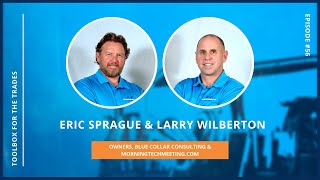
Eric Sprague and Larry Wilburton built Shamrock restoration from scratch in 2008, grew it to 30 staff, then sold it. They credit daily 5-7 minute morning meetings covering mission, behavior, and DISC personality types with cutting turnover and freeing owners from constant firefighting.
Questions this video answers
January 2, 2008
About 30 employees
Daily virtual 5–7 minute morning meeting lessons
Eric Sprague and Larry Wilburton, welcome to the Toolbox for the Trades podcast.
Thank you for having us.
Hey, Jack, how are you today?
I'm doing great. Would you do me a favor and just identify yourselves with your name? Just say, hey, I'm Eric. Hey, I'm Larry. So this way, folks, know who's chatting.
Well, I'm here.
Larry. He's always talking over me. He does this all the time.
We're going to apologize in advance for everything that Larry and I do to each other for the rest of this podcast. Because we've been doing this for 36 years.
Yeah, exactly. He's Eric, I'm Larry, and we're good to go.
Fantastic. You guys are the owners of MorningTechMeeting.com and you are also the hosts for the From. For the Blue Collar Nation podcast. I'm so excited to talk to you guys today. But before I get into that, I'm gonna start this interview the way I do every single one, which is, how did you get into the trades? And maybe, Eric, you can take the first stab at this question.
Sure. Yeah. So it was funny. I had a boss who was like, the entrepreneur's entrepreneur. He had had so many different businesses, and he was my mentor. And one day, after a long day, he was getting older, and I knew it was going to be time for me to move on soon. And I said, you know, in my next step, if you were me, what would you do? And he'd say, well, look, don't go be, like, a doctor or a lawyer. It's super competitive. Right? Like, it's hard to make your name. There he goes. Go be the smartest guy in the dumb guy industry. Right? I'm like, well, no, and there's a point to this.
And just alienated all the listeners.
No, no, no, no. But, yeah, so I know it's like.
We'Re gonna have to unpack dumb industry. Yeah, yeah.
Well, no, well, this is the thing. This is. So I started looking around, and we. We had had some carpet cleaners at the house, and we'd had a few really poor service experiences. And I was like, ah, that's something I could do well, you know, so we did that. And then little did we know that the trades are full of, like, really intelligent people, super business savvy, and it's just as competitive, not more than, like, everything else, but that's how we got in. And I just dragged Larry along, too.
Yeah, I just.
Oh, you just dragged him along. I'm pretty good at sales when I want to be. And I sold Larry hard.
So I was in the tech industry or technician as far as computer technician industry. And that wasn't going so well. It was more corporate environment, and I was dying to get out of it.
Eric Halls.
It was perfect timing. And I get out of the rule game and I started making my own rules and being creative and entrepreneurial. And then this is where we ended up.
Got it. And how did you two meet? And Larry, you can take this one.
So we were in Keene, New Hampshire, maybe 18 years old. And what's the buzz haircut and the long hair in the back part?
Mullet. We both had mullets pretty much. It was the 80s. It was okay.
We were a couple muscleheads, and we used to walk to the gym through, like, feet of snow to get to the gym. And the gym was closed because nobody could get to the gym to open it because there was feet of snow to get to the gym. We were the only guys. So Eric's dad said, if you guys can perform the way you did in New Hampshire, working out and everything, staying consistent with something like that, then you probably would be good at business together. So we've been enjoying the ride.
Got it. And can you please tell me what was your first foray into business? Because, you know, you kind of dated yourself there with the mullet haircut, so I'd love to know. Your first attempt at business.
No, Shamrock was our first attempt at business. I went to graduate school. Larry did, too. And then we both had kind of corporate type jobs for a decade or more. And then when we were. Larry, how old were you? We started. I think I was 40 when we started our first business. I was not young.
I was like 29. You're like 11 years older than me.
Oh, really? Yeah. You were like the super kid who went to college when he was 10.
Yeah, I was just a couple. One of my young. One year younger than you.
Yeah, yeah. So no, we were. We were. We started later and, you know, it made it more important because we started from scratch and we both had kids and wives and houses and, you know, I mean, where a lot of guys in the trade start a business really young without all that responsibility. We had a lot of responsibility and we started our service business January 2, 2008.
Yeah, that's when everything went downhill.
The timing was not ideal, but, you know, we learned a ton because of that. And I think it made us resilient for growing and competing as we were trying to gain market share and get bigger later. And what we realized Was even though we had no business experience at all, then really, we out hustled every. A lot of the other service companies that they use the recession to basically give themselves a hall pass. So we're just like, well, we're going to do triple what everybody else does. And Larry and I literally spent the first couple of years essentially working seven days a week around the clock. I mean, we did anything to bring money in.
We didn't know any better.
Yeah.
And that's how we learned. By failing so many times, by thinking we could do everything. And that was probably the worst thing we could have done. But at the time, with the timing, with the economy, it seemed to work. It benefited us.
Got it. January 2, 2008. Yeah, that's not the best time to start a business for sure. But also love that you guys started it later in life. Not like the typical story of the technician who has the entrepreneurial seizure. And it's like, I got to do this on my own. So I. Larry, maybe you could tell me a little bit about what was Shamrock, what was the business? What was your type of focus? And what were some of those lessons that you learned early on from out hustling everyone else?
We started out cleaning air ducts, and that was going actually well in the beginning because most of our clients were high end clients. We were cleaning big houses and that was going great. And then it started dropping off. So we just started marketing. We started doing janitorial at night just because we can get jobs doing that. We started doing trash outs because there was tons of reos.
Whatever. Foreclosures, Foreclosures everywhere.
And there were all these houses that need to be cleaned up. So that was a huge resource at the time. So we were very creative. And we learned over time that this is not the best way to be doing business. Just being sporadic and all over the place. But we learned it in a productive way. And we had a team that was with us for a while that went very well. And, you know, we just put it together. Maybe we're a little bit older, we were a little bit smarter, but it came together. Or I was. I don't know about Eric.
I don't know if we're shaking his head.
I don't know if we were any smarter. I think. I think we just had everything on the line and we weren't going to quit.
Yeah.
Like, we just got it. There was no way we were quitting anything ever.
Got it. So it sounds like you guys were taking a lot of jobs, and that's Actually not the first time I heard of service businesses where the. All that horrendous foreclosures, all of them actually turned out really well because banks needed to upkeep these houses that they foreclosed on. At what point did you guys find a specialty and talk to me about how you eventually came to sell the business? And, Eric, maybe you can take this one.
Sure. Well, I mean, we kind of had a specialty pretty early on with the duct cleaning and the carpet cleaning. And, you know, taking all these other jobs wasn't really what we wanted to do. We just did it until we didn't have to do it anymore, you know, because we. We would go do janitorial all night long, sleep two hours, and then go clean carpets all day long, you know.
Yeah, it was tough.
And we weren't spring chickens. Let's get real. But, you know, as the economy picked up and as we kept marketing, you know, all of a sudden we fell into, you know, we are carpet cleaners. That's what we do. Right? And then we. Larry and I just happened to be meeting for lunch. This was so happenstance. And he had a. He had, like, a air duct cleaning van that was, you know, late, you know, was wrapped with air duct cleaning, and I had a carpet cleaning van. And we were just sitting there, like, having, like, a quick parking lot meeting, like, you're going to do this tonight, and I'm going to do this. And this truck rolled up, and it was. One of. It was a national restoration contractor, you know, a chain or, you know, franchise. He's like, hey, you guys do air duct cleaning and carpet cleaning? We're like, yeah. And he goes, great, here's my card. I need subs. We're like, oh, okay. So literally, I'm not kidding. Within three or four days, the Yorba Linda fires happened. In 2000.
It was so busy. It was amazing.
And all of a sudden, we're. For six days a week, for like, six months, we were working on restoration jobs, doing all the cleaning, air ducts and tile and carpet and upholstery. But what was happening was we were seeing the level of service from the company that was bringing us in. They were so big, they couldn't give the level of service that we felt their clients really kind of deserved. And, you know, I used to go ring the doorbell to go clean the carpet, and they'd open the door and just start screaming at me. And at first, I was really. Yeah. I mean, literally, I'd open the. They'd open the door and just start Yelling. And I freaked out. At first I'm thinking I just pulled up, I don't even have done anything wrong yet, you know, give me a chance. And then, you know, and then I'd let them vent and it was at the restoration company. And then I'd say, oh, you know, Mr. And Mrs. Jones, I'm a subcontractor. I get called in to do the cleaning and then they do it again and go, well, let me tell you about this company. Then they give me the whole thing again. So Larry and I decided like, hey, you know, we've been on these jobs every day for months. Like, we just need to go to school and learn how to do this. I mean, we're never going to compete with this company. But in our little area, we could give good service doing this, this flood and firework. So we went and took all the classes and then just started marketing to like our cut, like our own customer list for carpet cleaning. Next thing you know, we're getting like flood after flood after flood after flood. And it just grew from there. And then over several years, we ended up having about 30 guys and we were doing a lot of water losses every month. And then we just got to the point where we were able to sell. So we went through that whole process and, you know, so we just got asked on a previous podcast about that whole sale process. And it was just time. Larry and I wanted to do other things. Like, we had a great business. We didn't have to be there every minute of every day. We had amazing people. I was in Utah. I lived in Utah the whole time that we owned the business in California. Commuted. I was getting a little burned out on that. And it was just the right time. So we took, we got an offer with a company that we knew the owner, we knew the company, we knew how good they were and how well they'd treat our people. And we just felt that was a good fit so that we could go on. Larry and I were like, we're 100% in on whatever we're doing. And we were starting to lose focus. I think we were getting a little bored and we were losing focus on the restoration company. I think if you really, it was. If you could go back 10 years. It was just all those 90 hour weeks. It had just kind of worn us out a little bit.
Get caught up to us. Totally caught up.
And we were just like, you know, we have this idea for morning tech meeting. We want to do some coaching. We have an opportunity, let's go. So that we can Go put all of our energy now into our next venture. And that is what we did.
Got it. Got it. It sounds like you went through serious, not. I don't want to say serious vetting necessarily, but it sounds like you made sure that your buyer was good fit for your culture and would treat your people right. And so you made sure that that relationship worked well. And the reason I asked is because selling and acquiring is always a huge topic on our show. And I really love what you said about ringing the doorbell and get then getting screamed at and being able to notice a need. And this actually ties in really well into what you're doing at morning tech meeting and how you came up with the podcast. And we're going to get into that in a second. But I want to hang on to you guys as business owners real quick. And my main question is, looking back, what would you have done differently when running Shamrock?
Go ahead, Larry.
Well, there's things that we could have done growing. I mean, we were just learning the business. We had the entrepreneurial seizure in 2008, and then we didn't read Gerber's book the E. Myth a couple years later. We could have read that earlier on. That would have made a huge difference. But the skills that we learned, we don't learn these things. They're not taught us in college, not taught to us in college, we high school or anything. You have to learn these things by failing. And if we had some of the skillset beforehand, that would have been great. But to change things, we wouldn't, because it worked out really well. I mean, I would have marketed more and managed less. That might have personally for me, but Eric would have. I know Eric. What would you have done? I could tell you, but I think.
You'D totally disagree with me. Yeah, I made a list. Well, yeah, I would have. I mean, no, because the question, Jackie.
Is that's a huge list.
Yeah, but the question is if you knew what you knew now, then. Right. That's. So I would have. I would have found somebody with a lot more actual industry experience than us and put them in a general manager role. I would have gone out and then marketed with Larry a lot more than I did. Because Larry and I had this, like, that's how we grew quickly. We were so different. We're kind of like, you know, Frick and Frack. So everybody knew us. It was easy to get a lot of attention and get business. But then as we grew, all of a sudden I disappear from all of that because I'm stuck in my office Just managing, managing, managing. And I think if we had brought a couple people that had more experience and more connections than our own, we could have grown faster. I don't know if the end result would have been vastly different, but I think we could have gone. I think we could have grown bigger and quicker if we had brought in a couple key people earlier and just paid them. You know, we were always kind of trying to do it on our own because we started in the garage. And, you know, in retrospect, I don't think we do that.
So looking back, you would have definitely found some industry experts, put them in high, high functioning, high, like, high visibility roles and help leverage their expertise to grow faster and smarter.
There you go.
I think. Yeah, I agree with that.
Yeah, very interesting. All right, so let's get into morning tech meeting. Eric, what was the opportunity that you and Larry saw and how were you? Are you trying to meet it with morning tech meeting?
Well, you know, we had all kinds of friends, you know, plumbers, electricians, you know, remodel contractors. Like, you know, we ran in a group where we all were business owners of, you know, blue collar service businesses of some sort or another. And everybody, everybody, and including us at certain times, would sit there and just bitch and moan about, oh, my guys have done this and my guys have done that and they don't know anything and I don't trust them and this, you know, and then, you know, we were having the same kind of problems. And, you know, Larry does some videos for our marketing where he has a fireman's outfit on where he's like, the fireman, right? Like, the call comes in, there's a problem, and you just go put out a fire and then another fire. We were doing that. And you can't grow when you're doing that. So I got totally sick of it. I'm not a patient person by nature, so I'm just like, I gotta find what's wrong.
He definitely is not, and then fix it.
And, you know, I realized. What I realized was, is that the girls in the office and I just sat down and we, like all the complaint calls, we just logged them and realized that almost none of them had anything to do with lack of technical skills. Our guys could go out and do the work all day long. The complaints were, your guy walked across my lawn 16 times and, you know, beat a hole in my beautiful grass. Or, you know, they, they leaned, you know, they set a drill on my granite countertop. They, you know, he didn't have good communication skills. Like, it Was all this, like, soft skills stuff. And, you know, we'd always hear guys go, you know, like, oh, their parents didn't train them and the school system didn't train them. And they, you know, and I'm like, yeah, but, well, then somebody's got to train them, right?
You know, we had to own it.
Might as well be us, right?
That's what we did.
So that's what we started doing in house. We started doing it where I would do like a five to seven or eight minute meeting every morning. We'd bring everybody in. Larry. Larry fought me tooth and nail at the beginning because he's just counting heads, going $25, $30 an hour. Like, he's just counting up how much this is costing. But what we saw was. And I had to prove it to Larry. So, like, I needed results, you know, add on, sales went up, breakages went down, team engagement went up. You know, like, all the metrics that we cared about were getting better by doing these little morning meetings. And all of a sudden, he and I weren't playing firemen anymore. The managers weren't playing firemen where they had to just run around and fix problems all day, because that's a business killer. You can't grow and make profit when you spend all day fixing those little brush fires.
The culture improved dramatically. I mean, the guys look forward to the meeting, they look forward to coming to work. They didn't dislike us as much. They didn't dislike their boss. Oh, my boss, my boss. No, we actually talked to them, we related to them, we hung out with them, and it just changed things. And they cared more and they were engaged. And the value of that versus paying for them to be there for 15 minutes extra at most every morning was so valuable that the business just grew. And guys stayed with us. We didn't have the turnover all the time. And guys got into the job and they had these lessons they talked about every day, and they understood where we were coming from. Because explaining the why, which Eric was really good at, the Tech Whisperer is what we nicknamed them as communicated so well with these guys that they made a big difference in their job and they enjoyed it more. And they. It made just a huge difference in the culture.
Yeah, I love that you shared how Larry was a little hesitant at first because I think we've all heard that before. How much is this meeting cost? You know, look how many people are in this room right now. How much is this meeting cost us? But it sounds like this was invaluable for you. So I would love to. So morningtechmeeting.com provides these morning meetings every day for folks. Virtually five to seven minute meeting structures. Correct?
Right.
I would love to know how, when you were piloting this program in house at Shamrock, how did you know where to start?
Well, we didn't.
Was like anything else, you're just winging it first.
Well, I mean, I had an idea of what our problems were because I was. Larry and I were having to put out the fires all day.
Eric's a late night person, so he'd be at the office all the time at night, just putting together these schemes of what he's going to tell everybody in the morning. And then he'd bounce it off of me or he just throw it up there. And we started a bunch of things that worked very well in the company. They knew the mission statement, they knew the vision for the company. And then we just started teaching them the things that they were just screwing up all the time that we just could not get a handle on. And Eric would explain why these things that we're telling them were really important. And once you told them why in a productive fashion, that wasn't demeaning to them so that they can relate, it just made a huge difference in their perception of us as owners and the business and their job. And it was a game changer.
So Jackie, what I did was I broke every day into a different topic. So when we did it in house at the beginning, it's a little bit. It's slightly different than morning tech meeting is now. So we used to do mission statement Monday. And our mission statement was an acronym, so it was Shamrock. So it was service, honesty, accuracy management, revenue, opportunity, cleaning and knowledge. Right. So but the reason it was an acronym, it was that way it's easy for them to remember. So we used to go around the room and be like, today we're going to go on service. Timmy, what does service mean to you? Susie, how does Shamrock give good service? They would have to know. And the rule was they'd had three weeks from the time they got hired that I could go on site or Larry could go on site and we just pull them aside and go, tell me what the mission statement is and tell me what it means. So we did mission statement Monday. Then on Tuesday we did in home behavior, property protection, look a customer in the eye, where to park the van, what time to show up all those.
Things, close behind the stairs, up behind the woman.
And then Wednesdays we did disc training. So disc personality training. And that was the Biggest game changer in our company because they can use it at home with their family, with their kids, with the clients in house. I mean, I have a story where two guys, I had them on a van, and I mean, my manager came in and said, hey, you know, this guy and this guy, they're in the back parking lot. They're about to start throwing punches at each other, you know. And I was like, well, I'll bring them in. You know, I'm thinking I'm gonna have this big blowout. And they came in and sat down, and I was like, all right, guys, what's up? And I'm waiting for. This guy's a jerk. I hate this guy. You know, the normal stuff, right? And then the one guy goes, well, all right, Eric, here's the deal. I'm a D. And I think this way. And you know, when I do this, it rubs him the wrong way. And he's an eye, and he's unorganized. And then the eyes like, look, I get it. You know, he's kind of pushy. I should just let it guard, you know, he's that way. So they. They like, did this for like five or ten minutes. And then at the end, I just looked at him. I'm like, you guys good now? Yeah, we're good. And they were on the van for like, two more years together. That was like. That was like singularly the greatest day of my life. Like, I'm like, wow, this. Well, other than my wedding day. And.
So the people that don't know what Eric's talking about. The disc is like a Myers Brigger personality assessment tool. That's very simple. You only have four areas to look at. And we taught our guys this. It's so simple. And we teach our clients right now, and it's making a huge difference in our clients business. Just like Eric's saying, like it did with Shamrock with us. And it's very, very powerful. Powerful. And then what did you do on. You taught something else after?
Well, then Thursday we would do sales training, add on sales. And then on Friday, we did a recap of the weekend quiz. So the only. The only difference I do for the meetings online is that I don't do mission statement Monday, because every company has a different mission statement. So we do personal development, because if they're not good at home, they're not going to be good at work. So we talk about things like what time to go to bed the night before and don't stay up till three in the morning playing World of Warcraft and don't drink 12 beers on a Tuesday night. And I mean, I know that stuff sounds so basic, but those are the things that guys like us are dealing with, you know, and it's like, eat breakfast, pack a lunch, bring water, like all, you know, show up on time. We even. I even have a lesson on how to quit because I'm seeing younger guys. Oh my gosh, they just like throw you a text at 5am hey, I'm never coming in again.
So you got one guy said, I quit, and that was it, you know.
Or they just don't. You know, I hate to say I'm not trying to pinpoint it on, you know, certain generations, but the younger guys would feel that it was okay just to literally ghost you, just not show up anymore. So, you know, I even do a lesson on. Because, look, if they're going to quit, they're going to quit, right? There's nobody stopping them. So, you know, we would even teach the guys, like, look, if you're not happy here, it's okay to quit. Here's how you do it the right way so that you can have a reference. You're not screwing over all the rest of us like your buds of the field. Because if you just quit and don't show up, it's actually hurting your buddies probably more than it's hurting Larry and I. Like, we do all kinds of lessons like that on personal development. So that's Mondays. That's what we do.
That's awesome. And actually Chris Hunter, director of customer relations at ServiceTitan, who will be chatting with four of us one of these days soon. He taught social skills training at his company, Hunter Super Techs. And his thought process was exactly the same, which is if they, like, you, also need to take care of what's going on out of work, because if they're not happy out of work, they're not going to be happy in work. So I think that's fantastic. And I mean, everything you said, I highly agree with. And may I quickly ask, what are your two respective disc profiles? And do you as business partners argue the way that you just mentioned Eric?
Oh, Larry, I'll leave this to. You know, we were.
We used. We would go back and forth for the first couple years. Then we went to maybe it was like four years into it, and then we were just disagreeing because I'm an I, social. Eric's a D. He wants to take control. So it was a bit of a challenge. We would clash often. So we're taking this test at Howard Partridge's. And we're taking these. Howard Partridge was our coach at the time. And we're taking it. We're listening, we're taking. And all of a sudden it clicked. It happened to click at the same time for both of us. And I looked at him like, I don't know if I could swear on the podcast. I said, oh, now I know why you're such an asshole and I forgive you. And he looked at me, he goes, now I know why you're such a flake. I get it. And all of a sudden we saw it as it wasn't personally coming at each other. It was huge. And the self awareness that the disc does for each one of us was, you know, just changed how we were and how we interact with people in general. So it was really cool. So I forgave him.
That's wonderful. I actually, Eric, you and I.
That's his version.
What's your version, Eric?
No, it's similar. Yeah, no, it is what it is. I think for me, what was more important was when we went back that Larry and I used to get bogged down in disagreeing because we're 50, 50 partners, right? So there's no tiebreaker. So Larry and I look college roommates, our families are close. Like, it's more like family business than it is. I mean, even though we're not family at this point, it's like family. So, you know, for us it's like, well, there's no getting out, so we have to work it out, right? So. But Larry and I would lose a lot of time and energy trying to come up with, you know, some sort of compromise on every single decision. And once we knew disk, we could kind of get it done a lot quicker. Because I'd say, well, you're looking at it, you know, from a people perspective, and I'm looking at it from a task perspective because I'm a DC so that I'm all task and Larry's mainly people. So then we would. We would get there in half the time and then consider both the people aspect and the task aspect, and then we could make a decision from that so much easier. It was so much easier.
One of the things I really wanted to ask you guys about is being business partners for as long as you guys were running the restoration business and then enjoying working with each other so much that you did another business together. Like, you don't hear about that often. Normally when I talk with folks in the trades, they're husband, wife, duos, or it's family business. It's it's rare that I come across non family business business partners that are. Have been working together for as long as you guys have. So I really wanted to tell me, I really would love it if you guys could elaborate on maybe what was like a particular business issue that you guys really disagreed about and how was that resolved. And if you did that in terms of disc, I'm happy to hear it.
I'll start out with I'm the patient one, which is what makes most of this work out just perfectly because I have a lot of SME, which makes me a lot of very, very patient. But he's gonna have a good example. I'm sure he's gonna come up with.
Well, I'll give you an example. So Larry, you know, Larry's an id, so your secondary score is usually kind of your negative place. So Larry gets very bossy when he's not getting what he wants. Right. You know, so Larry, what he, his tendency was always if things weren't going perfectly because he was so worried that the people that he was marketing to wouldn't like him personally. Like, look, it's a service business. There's problems in the field. Right. There's always going to be problems in the field. Larry would stop marketing and then go and like insert himself in every job because he stopped trusting everybody.
Put out the fire.
And then I'd have to sit there and be like, dude, get out of this. You're not do, you know, every. The opportunity cost of you stop marketing is killing us. So that would be the main point of friction during our whole career. And although, you know now you're much better about that.
Yeah, well, it's reflection. Everything looks really easy looking back.
Yeah. And then for me, I think what I could. I mean, Larry. Well, everything about me, Larry, is irritated by. But you know, I'm so big picture that sometimes I miss and I'm a good leader but not a good manager. So I, I give people such a wide berth that I don't catch them screwing up until later because I'm just like, yeah, hey, you go over there and do this and then I'm gonna go somewhere else. And then all of a sudden, you know, six months later and we're like, we gotta fire that guy, he's terrible, you know, or whatever. Is that right, Larry? Is that basically because it was like.
The technical training that we probably could have done more of and just letting somebody else manage, which is one of the things that we could have done. But yeah, yeah. So that's how we Resolve things. Just figuring it out.
Interesting. What advice would you give people listening who are thinking about going into business with their best friend or someone they're really close to? Larry, you can answer first.
Well, the disc is all self aware. That's where it starts with. You have to understand yourself and your own profile before you can start understanding other people and trying to use it to your benefit or everybody's benefit. So the more self aware you are, the easier it is to communicate and deal with people. I mean that's all aspects of your life. And the other part of the question, coaching helped us dramatically because we're not the society isn't. You're not taught the schools early on the skills early on in any schools to run a business. I mean you can read a million books, but you have to be out there with your hands on to see what's working, what's not working because you're not, you're not sure of the expectations or that was at least with us.
Got it. What advice would you give folks, Eric, if they're going into business with their best friend?
No, no.
Dance around that.
I don't, I don't, I don't think that most people do that. Well, I think, I'm not saying Larry and I are like an anomaly, but I think we are to a degree. And look, we've had other business partners come in in the past, like a third business partner to try to grow it in a different way. And it's never worked out like Larry and I have this bond because must be because we've known each other since we were teenagers.
It's just trust because other people, we've talked to other people. I can never have a business partner. I'm thinking why would you want to do everything? You only have to do half. And they just. It's a matter of the trust. It's a complete trust that you're not going to get screwed over and that it's all just going to work out in the long run.
Well, I think our relationship's a little bit like everybody says, best friends. I don't think that's like exactly true. You know, Larry and I were roommates, but we were also lifting partners. That was our thing. Like we were in the gym and lifting. Partnership when you're a kid is no different than a business partnership when you're an adult. You have make decisions. You have to both have the same work ethic. You have to have the same level of commitment. You know, Larry would go off and he had a whole in college A whole different set of friends than I did. So our bit, we've always had, even though we're friends, but it's always been a working relationship of some. Some sort, even if it was unpaid. So, yeah, I think that's the other thing. We, we give each other space. Like we're not joined at the hip.
I'm glad you made that distinction. So instead of a broken heart necklace that says best friends forever, it's lifting partners forever. Fantastic. But no, the lifting partners.
No, that's embroidered on a fanny pack.
No, the lifting partners. That's a wonderful, that's a wonderful, wonderful thing that you said. Because I, I did a rock climbing gym for a bit and there was a chick that, you know, we would meet every Tuesday or Thursday, same, and we would do dual rock climbing. And it's. You need that person. You need to be. You need them to be reliable. You need to be able to know they're going to show up. They got your safety in mind, especially with lifting. Like, holy cow, you get really hurt if you don't trust that person. So interesting. Maybe the, maybe the little nugget here is don't go into business with your best friend, but go into. Go into business with someone who you really trust and you know, you can count on.
Well, when we were about to start, I talked to my dad. My dad's just kind of this, you know, like, very pragmatic New Englander, you know, older. My parents were quite a bit older than me, so he was, you know, he was well in the 70s by the time we even started. And I said, well, you know, I'm thinking of going into business with Larry. And, you know, my dad's like, is that the guy that you used to walk to the gym and like, waist deep snow and you guys never missed and all that? I'm like, yeah, yeah, that's the guy. He goes, yeah, yeah, that'll work out fine. You know, I mean, his thing was like, you have to have somebody who's got your back that has the same values and the same work ethic that you do. And, you know, Larry and I, I think, have that for each other.
That's awesome. All right, I want to go back to the tech whisper stuff because I think if. If there are a lot of owners out there that wish they were bestowed with that innate talent. Eric. So given the work that you guys do now with morning Tech meeting, the people you're meeting through Blue Collar Nation, the co coaching that you do, where do you think are some of the biggest missteps in communication that happen between owners and technicians.
I think the owners have a very hard time separating their emotions from their business. They take their business so personally that they get very emotionally invested in it and that any mistake that a technician makes, they almost take it back personally. Where I always viewed the business as just like almost more of a chessboard and I'm trying to figure out where each piece goes. So I didn't, I didn't take it like when somebody screwed up, I didn't take it personally. I was like, okay, there's work to be done with this guy or gal, you know, And I just see a lot of guys, they, I don't know, they've been burned a lot, so they don't trust their technicians. They're like, oh, they're all leaving anyway. No, they're not. They're leaving you. They're not leaving. And you know, you see the companies that have thrived and they usually have the least jaded leaders. Like I call them the old crusty dogs. There's these guys that they just, they think they have it all figured out. There's a lot of ego involved and they don't want to learn anything new and they think everybody is a wuss and they just need to man up or whatever, right? And they have this like kind of hardcore mentality that this is how you do business. You just do everything hard and tough and, you know, don't give people breaks. And they're always. The companies that are just stuck. Seems like to me, you know, look, I do one on one coaching. I have clients that, you know, that's their struggle. They've just been repeating the same mistakes for 25 years straight. And they're just like, I don't know why I'm stuck at a million or 2 million or whatever. And it's like, I know why you're stuck at 2 million, you know, and you know, whereas if you look to the companies that really thrive and have, you know, they're doing 10 million, 20 million, the owner is usually much more humble, much more of a lifetime learner themselves. They want to get better and they really realize that they can't get there without the team. So there's not all that ego wrapped up. It doesn't mean they don't have an ego, but they know that they have to invest in their people to get where they want to go. And you can just feel it like when I walk into a business, like I know right away, like if the owner on the ball or if the owner is an Egomaniac or fearful? One or the other. Right. They're either the ones that don't do well. I'm sorry, Jackie, I didn't mean to cut you up. They're either egomaniacs or they're super fearful or a combination of both. That's what I see.
I was going to say that sounds, you can tell a fear based culture when you walk into a room. For sure. You can tell that. Is, Larry, is there anything you want to add in terms of what owners should be aware of?
You know, I was that guy that Eric's talking about and it wasn't, you know, I was more worried about, I was taking it personally. It was, I was very tied to the business and Eric would try, you know, to get me to see things that I couldn't see. You know, in hindsight I should have been backed off and let the guys fail more and it would have worked fine. But I was going to tie something into Service Titan because that's the type of thing the owners of Service Titan because it's a high end software and it takes work to get it working, to get the value out of it. And you have to invest into it and you're investing into the software. So the people that own the companies that use your software are forward thinking. I'm going to invest time and energy into this. I'm going to change all my systems, all my processes retrain, all my guys get all different. If you have iPads or whatever they're using, they're thinking forward. So those are the owners that we work with and we like working with and we like to get to the owners that are not thinking that way to help them along, to see the value of investing in yourself and your team and your software and everything like that. And then all of a sudden it's like the world opens up, the blinders come off. And to get to guys like that is very valuable.
That's Jackie. That's why we have the Blue Collar Nation podcast. It's, it's kind of like dripping on the owner who isn't there yet by having, exposing them to enough guests that keep saying the same thing. I mean, most of our successful guests kind of say the same thing in a different way over and over and over. And we're hoping that that amount of social proof will get guys to go, you know what, maybe I should think about changing how I'm operating.
You know, I love that. And that's part of the reason why I do Toolbox, because I want to celebrate some of our customers that have done tremendous work. But also, hey, learn from these people. Because this industry, man, I'm constantly blown away by how folks in the industry want to help one another. And it's like, here's some help, here's some free help. Listen to it. And they're all kind of, for the most part, you start seeing some, you could start seeing some commonalities. People that have had really successful businesses, really fruitful transactions. They, they, they brought on that learn learning mindset for themselves, right? They invested in their people, they invested in those soft skills like you were talking about, Eric. And they got really smart about reporting, about KPIs, about setting goals. And it's kind of, that's kind of the formula. And about marketing too. Can't, can't neglect marketing and sales. But tell me now a little bit more about Blue Collar Nation and if you will, Eric, would you mind describing the Leslie episode, which I absolutely loved because one of the themes of the toolbox for the trades is always be recruiting. And people love to give the example of you get good service at Chili's, you get good service at Applebee's. Like, ask that waiter waitress if they want a job. And this is more or less what happened to Leslie and you. So can you please tell the story?
Sure, yeah. Leslie is, she's. We have a couple like super success stories, but Leslie's probably my favorite because I worked with Leslie very closely. Leslie came to us. She was 18 years old. The only job. She had two jobs. She stood on the corner with the sign for like Sprint Mobile and like danced up and down, which is totally against her personality. I don't know how in the world she did. She probably lasted in two weeks. I don't know. I'll have to ask her. So she had that job and then she went to Farmer Boys, which in California is kind of like a, like a slightly higher end version of McDonald's kind of thing. It's kind of like a Denny's and a McDonald's put together. You know, burgers and breakfast and all that. And she had kind of worked into a shift leader. I mean, she was, she comes from very young parents. She talks about it in the podcast. I think her parents are like 15, 16. When they had her, I mean, she, she says it was like kids, ra kids. So she had to learn to be self sufficient very early on. And so we got her and brought her in. We didn't even know what to do with her. We just knew she was good. Like, we could just see the sparkle like this Kid's sharp, you know, and we had her come in and the only task I gave her at the beginning was like we had all, we had GPSs in all the vans and I'm like, just track all the guys and I want to report once a week. I didn't tell her how to do it. I didn't. I'm just like, just go sit at that desk and see what you can do. Like literally at the end of the week she came in with like this 30 page document where not only had she, not only had she like broken down with GEO fencing, like how long they were taking, you know, to gas up and she actually, I think like even driven over there to spy on them to see how long they were smoking cigarettes and, and you know, and I'm just like, oh my gosh, we, this kid is like out of control, right? So you know, fast forward. We started, we just saw the writing on the wall. Like she's really sharp and we need to do something with this. So you know, I, I'm John Maxwell, leadership certified. So I just started taking, we did like in house mastermind groups with his books. And then Leslie, you know, just kept moving up in the office. Like, you know, we gave her more stuff. Next thing you know she's like running everybody and everything, which including Larry and.
I. Oh my gosh. She was in control, you know.
But you know Leslie, the one thing she really lacked, and I think she talked about this, was she, she did lack self awareness. Not only because of her age, but just she's very strong personality and didn't want to own any of her own weaknesses. Like she felt that was really showing weakness opposed to strength by saying I can't do this or I don't know how to do this. So what I did is try to constantly tell her, look, everybody in this company does basically every job better than I do, but I'm good at my one job of being the ringleader and making sure everybody's doing what they need to do. And then once she saw me owning and Larry owning our crap or what we're not good at, then she started softening up and letting people see her weak side. And that's when she really started to take off because people started to trust her more at the end. She talks about it like Larry and I, we disappear for like weeks and you know, call in and she'd be like, yeah, you're not needed, you're good. If you show back up, you're only going to cause chaos. Everything's running smoothly, just Stay away, please. Go ride your bikes or go the beach or whatever you two do. And when we sold, Leslie decided that she. That was her opportunity to go out on her own, because she. She never had thought she wanted to be entrepreneurial. And, you know, she was going to school the whole time that she was working for us, like, at night, and she wanted to be so many hours. She wanted to be a physician's assistant. And I just know Leslie, and I just sit there, and I'd say to Larry, I'm like, that kid's so good at business, but she has no idea how good at business she is. You know, this is not a good fit, but I'm not going to tell her not to go to school for whatever she wants to go to. And then when push came to shove and we sold, she went into the financial services business and has just killed it. Runs her own company, has a bunch of employees. Yeah, we have a few stories like Leslie's.
Just one.
We. There's. There's more than one. We have many entrepreneurs out of our ranks.
That's awesome.
We're very proud of. Yeah.
Yeah. That must make you both feel fantastic.
It does. We're in contact with all of them.
Yeah. You know, bring them on the podcast sometimes, and they call us up and ask for advice, and it's really nice. Just. They still reach out to us, and we have relationships, and it just goes a long way.
That really is a testament to what you can get out when you build your people and you let them fly and you recognize talent and you nurture it. And also, being owners, knowing what I'm not good at and finding people that can fill that for me, that's fantastic. I love that story. Thank you for resharing. I also recommend.
I'm sorry, please. Can I make one point about that? We're talking about owner mistakes, which I've made plenty. But, you know, with Leslie, you see that the end result. But what people don't see is all the times that I was spending an extra two hours after work with her sitting in front of my desk, and we're talking about what it means to be a leader or what. What we can do to make our business better. Like, there's a time element up front. There's an upfront cost to building these people. And so many owners, I believe, just are like, I'm too busy for that. It's like, well, then you're always going to be too busy. Right? Like, you have to make the time to invest in these people that you feel can Be leaders. So that then once we built people like Leslie, then we could disappear. And now we had time to do anything we wanted, but we had to do the time up front. Like everybody says they're going to do it, but I don't think many people really do it.
Got no. I'm glad you made that amendment. Thank you. All right, we're starting to wrap up now. I got two more questions left. Given your coaching consulting experience, and Larry, you can maybe take this one first. What are some of the best and worst trends you're seeing in the industries right now? And when I say industry, I'm saying service industry, because I know you guys work with plumbing and H vac, two of our big. And garage door as well, three of our big industries, but also restoration, which we're not in yet. But what are you seeing?
What I see a lot of times is that everybody advertises. Not everybody. Many advertisements. Oh, you do this and you'll get this. And you do. You know, it's short term. Buy this program and immediately you'll have all this money or you'll be able to be the best leader or you'll get all this immediately. All of it takes time and energy and work and reflecting and focusing and putting energy into what you're learning. It's just like marketing. When you market to somebody, you're not going to get to them the first time, the second time. I mean, the studies say up to nine times. You just got to keep knocking on the door, crossing somebody's path for them to call you. It's the same thing with the other skills that you learn, the leadership skills or the management skills or the. The technician. Like the tech whisper lessons don't generally work the first week that we give away, but you can see the concept on it that it's going to work in the long run. So in the service business, you have to keep at it. You have to be diligent and consistent. It's purposeful practice that you have to stay on top of and that makes the biggest difference. Go ahead.
What do you think? What do you think, Eric? Best and worst trends?
Well, I mean, one of the trends. Are we just talking about the industries? Are we talking about coaching industries?
Industries, yes.
One of the. I don't know if it's troubling. It depends on what side you're on. But like we're seeing in the restoration world, a lot of private equity is coming in, bringing in a lot of money. And then they're taking that 80 truck plumbing operation and pairing it with that $15 million restoration company so that they're closing out a lot of these mom and pop restoration companies. And I mean, and then there's also, you know, some third party administrator stuff too in that world. And I'm sure it's happening in H vac and electrical and plumbing too. I just, I know this one more intimately. You know, it's. That might be good for the private equity company and I'm sure it's good for the owner who sells, but I don't know if that's good for the clients and good for the industry as a whole as we get these like several behemoth companies and then that's all there is. I think it's. It ends up being collusion in a way. You know, it's just, they get too big and, you know, there's two. It's too easy to. When you control the whole job from A to Z, especially like in these insurance claims, that's not always a good thing. It's good to have smaller companies running these. And I mean, that's what I see. And then I want to address Larry's like, hack thing. It's like everybody's a coach now. Like you go on Instagram and guy with 6 months experience is a coach of something or whatever. And Larry and I just try to be like, no B.S. it's like, look, we don't have all the answers. We know how to do a couple things well, we did them for a long time and, you know, everybody wants the hack. Like Larry said, give me the five points to, you know, so I don't ever have to work again or, you know, whatever. And it's, it doesn't work that way. It just does. You know, still, the people that are very successful are very hardworking. Even, even if you don't see them at the office, they're still working on their business all the time. You know, Larry and I, the later years weren't. We weren't in the office all that much. But it doesn't mean we weren't working on our business. We just weren't working in our business. So forget the quick and easy fix. I don't believe in it.
Okay, I think that's fair. So say there's maybe an owner too who just listened to this episode now and they really resonated with your tech whisperer stuff. They're really like, oh crap, I need to form a better relationship relationship with my technicians. What should they do? What's one of the first things they should do? What are some opportunities they should take advantage of.
They go to morningtechmeeting.com and we have a place where you can put your name and email in there and we'll send you a lesson. And we can send a week's worth of lessons as well. That's in there as well. And you can see how the lessons resonate. There's actually the sample lessons right on the website. You don't have to do anything. We'd like to get your email. That'd be great. But you see, Eric's got these lessons at the lower end of the webpage and he could see how it resonates with the technicians. You just watch it and you think about it and it goes a long way because it eliminates so many problems that you don't have to have. And we didn't even realize that for years and years and years. So we're just trying to push that along. It's more to make. It drove us nuts over the years. We had so many problems we could not find a solution to, and we didn't even know which way to turn. And if we could take that pain away from another service business owner, it would be really valuable to us.
Got it, Eric.
I have an idea. This is what I did. So one of the things that I did to get engagement and it took me a while, once I started the morning meetings, I just made sure that I was back at the office around 4 and I helped every guy unload their van. When they'd come back at the end of the day, I'd give them a high five and I'd be out there for like two to three hours, right? Like a lot of times I'd come in in the morning and then I'd disappear and go ride my bike or do whatever. But I made sure I was back there at the end of the day because some of those guys to get that full engagement and want them want to be part of your company, like, that's when they would tell me, like, oh, this customer was killing me. Or, you know, I mean, being in the field is hard. And as owners, most of us were out there before, but we forget how hard. So by going and just helping them unload their van or throw some trash away and just be an ear to let them vent a little bit. That like, did more for our business in our technicians than I think anything else I did other than the morning meeting. Like, it just. They knew I cared about them because I would go help them unload their van and look, that was not too much to ask. I mean, you could say, like, oh, Eric, that was two hours out of your day. Like, you could have done this, this, this, and this. I didn't view it that way. I viewed it as, this is what's going to keep my guys around. This is what's going to make them better. This is when they're gonna tell me when they feel safe that, you know, my van's falling apart, we need to get a new van, or my tools are no good, or like, we're doing something wrong. They're not gonna tell me that in a morning meeting, but they'll tell me that, as you know, the two of us are carrying a granite countertop to a dumpster together, and you're gonna chuck it in. You know, I'm not saying you do it every day either, but spending that little bit of quality time for us went a long, long way. And Larry did it, too. Wasn't just me.
That's awesome. That's a really great tip.
And bringing food, that's what I used to do. Bring them food on the job site. Bring them all Gatorades or waters, or bring them pizzas, or in the morning, I'd have donuts or something like that. Or we bring juice for everybody. Food is my thing, and that's what I marketed with. So I'm thinking if I bring this all to the potential clients, I should be doing the same thing for the guys. So I just show up with food and they, you know, when you're on a job for five or six hours, it's labor intensive, you're shot, and anything like that goes a long way. And it works wonderfully.
It really does. I've got some rapid fire questions I did not give you guys beforehand. But before we go to those, is there any other thing that we should have talked about? But we didn't.
No, I think so.
No. You're doing great, Jack. You're getting wonderful.
I only ask that question so people can validate me as a podcast host. But first question.
You're the best interviewer we've ever had.
Oh, thank you. All right, Eric, you take this one first. How do you take your coffee? I don't drink coffee, Larry, how do you take your coffee? Larry, if you could have dinner with one person, dead or alive, who would it be?
Oh, yeah, I used to. Definitely my daughter. My daughter lives far away and I miss her terribly. And we did this one time at an event, and everybody was choosing all these movie stars and historical people, and I was like, no, I miss my daughter a lot. When I see her, it means the world to me. So definitely my daughter, Sydney.
Aw. Eric, same question.
Steve Jobs.
Eric, what's the number one thing you're trying to learn more about right now?
Digital marketing.
Larry, same question.
Yeah. Trying to communicate with people through this pandemic without going and shaking hands and looking people in the eye in different ways through the podcast and digital marketing and mailing things and going old school.
Got it. Larry, if money weren't an object, so you had unlimited resources, what's the first thing you would do?
Work from anywhere I want. That's one of my goals. So I enjoy working an awful lot, but just from anywhere.
Love it. Eric, same question.
I buy a lot of acreage up in the valley. I live in Utah and build a big ranch.
Nice. Eric, what's the number one thing every contractor must do to run a successful business?
Care. Build a team.
Larry, same question.
Yeah. Focus on culture. Your culture will change your business for the better.
Amazing. Final question. Any podcast recommendations other than your own you'd like to plug or any book recommendations that you'd like to give?
Tools. Tools for Titans. Tools for the trade.
Oh, by. Wait.
Tools for Titan, that's. The Tools of the Titans is actually a book by Tim Ferriss.
Oh, yeah, Maybe that's what I was thinking of, because I do read that often. Your podcast is great. I listen to you all the time. You do a great job interviewing people. And I am a big Tim Ferriss fan. I listen to that all the time as well.
Oh, yeah, he's great. What about you, Eric?
It's not on anymore, but you can find it on online. It was Andy Frisella's MF CEO project. He's the owner of First Form Supplements. He's got a really. He had a really good business. A lot of swearing. So if you don't like profanity, don't go. But. But it's. It was just super straightforward. No bs. This is how you run a business. So, MF CEO project. And then as far as books, we actually. We have a monthly book club on our podcast with one of our friends, and we just did a book by Dr. Cal Newport called Digital Minimalism. And I highly recommend that because I think all of us waste way too much time and energy on YouTube and Facebook and Instagram and whatever. It could even just be television in general. Whereas if we just took even a fraction of that time, we'd get so much more accomplished.
Agreed. Larry and Eric, thank you so much for being guests on Toolbox for the trades. I really enjoyed this conversation.
Thank you.
More from Bill




Capturing the 80%: How SmartAC’s Gen-2 Targets Non-Membership Homeowners | Podcast Ep. 296

Build better customer data with every booking in ServiceTitan | TAD Tune-Up Series

The Biggest Change for Roofers Coming From Other Roofing Software to #ServiceTitan?

