You Can’t Script Authenticity | Podcast Ep. 106 | Toolbox for the Trades
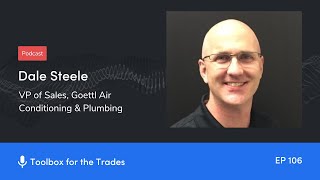
Transcript of a Toolbox for the Trades podcast episode (one-on-one interview) with Dale Steele, VP of Sales at Gettle. Covers Dale’s career journey from heavy-metal singer to HVAC technician to sales leader, Gettle’s history and footprint, sales philosophy (authentic conversations over scripts), leadership and team alignment, focus/mindset, and practical advice for contractors. The tone is conversational and anecdotal.
Dale Steele, you are the VP of sales at Gettle, a little company that's located on the west coast of the United States. We are going to talk today about how you maintain laser focus within your career. We're going to talk about sales as well. Ken Goodrich told me that I needed to talk to you. And honestly, before we even booked this podcast or when I did my discovery call with you, I was like, oh, I cannot wait to get Dale in a room, one on one and hit record. So thank you so much for giving me some of your time.
For.
We are going to kick off this podcast. We do every single one, which is. How did you get into the trades?
Well, first of all, it's great to be here. And yeah, how I got into the trades is. I mean, it's kind of a long story. I met a guy. I used to be in a band. I used to play in a rock band. Really?
What'd you play?
I was a singer. And so, yeah, heavy metal singer.
A heavy metal. Dale, you can't come out the gate saying you were a heavy metal singer on the Toolbox of the Trades podcast. I need to know more.
I know, but you know, so. Well, we can get into that. But. So I did that and. And I. And I needed a job and I got done with a. I went out on this little tour and I had to have a job when I got back. And I knew a guy who worked in a. In a contact center. Excuse me, setting appointments for an air conditioning company. Just little. A little mod pod shop in Phoenix. And so I went in there and I went in to apply for a job and I met the, like, the contact center manager and interviewed with him and he said, you know, you seem like a good guy, but I just don't have anything for you. So I left. And when I was backing my car out of the. This, My parking space, he came up to the window and said, hey, you know what? Come in tomorrow. I'll find something for you. And so that's how I got into the business. $7 an hour, 30 hours a week. And I got a spiff when the call ran.
Incredible.
Yeah. And then I. Excuse me. And then I. I did that for a while and then. And it was cold calling. A lot of cold calling. I did that for a while. I did good at that. And then they asked me if I wanted to learn how to be a technician. Yeah. Then they asked me if I wanted to learn how to be a technician or be a technician. I said, well, I don't know anything about air conditioners. They're like, okay, and we'll teach you. So I did that. And you know, on the first day that I did that, they took me. The guy who I was riding with took me on a call and it was a 30 foot ladder. And to this day, I'm not a fan of. I'm not a 30 foot ladder guy.
No, no, I. I watch, I watch like, go for it.
No, go ahead.
I was gonna say I watch like POV roller coaster videos on YouTube and Tik Tok sometimes. I'm like, no, I can't deal with that.
Yeah. And I mean, I'm like a ten foot ladder guy. Sure. You know, and I'm fine with that, you know, and so I got on this 30 foot ladder and you know, getting up on the roof is a breeze. Getting off the roof, like swinging every contractor on the call. I'm sure there's a lot or on this that's watching this will relate to that. I mean, getting off of a roof onto a ladder can be a little dicey. It feels a little weird because you're swinging out over the. Over the ladder. And I'll bet a lot of the guys that'll be watching this, they're probably on those ladders every day. And they probably are just terrified, you know, every day at some point.
Hopefully some of them are watching this on the ladder though.
Right, Exactly. And then, and then I got home and I told my wife or my girlfriend at the time, I said, I can't do this job because it's 30 foot ladder cam, terrified of heights. And she's like, yeah, you, I don't want you on those ladders. So I'm like, cool. So I went the next day and said, I can't do the job because of the ladders. And they said, oh, you don't have to go on roofs then. So I was like, really? They're like, yeah. So, you know, dodge that bullet. So right there, I mean, tried to quit the first day. Barely got the job because, you know, it's like, like seconds and inches. Right. It's just a, you know, the zig and the zag of life. And then I did that. And then they said, do you want to get into sales? And I said, well, because I did pretty well as a technician. I think I made like a, you know, made. Made some good money my first year. And then they said, do you want to just be straight sales? And I said, well, well, I make more than I make as a technician. And they said, maybe. I said, all Right, I'll try that. So I did that and then, you know, then that company became a one hour franchise.
Sure.
So I did one hour. I did the one hour thing for a while, few years and did well there. And then that company got acquired, you know, just some acquisition things and, and then I ended up, you know, finding my way to Gettle eventually.
That's incredible. And we're going to talk a little bit about Gettle in a second because. Well, actually, no, let's go to it right now. So in the very small, minuscule off chance that someone listening to this show does not know about Gettle, tell them about Gettle, because I know the company is really important to you. So tell us a little bit about what Gettle is and what kind of work you do and the size of the company and all that stuff.
Yeah, I mean Gettles was originated in Phoenix by the gettle brothers in 1939. So that's, you know, 83 years ago. And they actually were the pioneers of the, you know, of air conditioning, residential air conditioning. And, and so they built their own over the years and, and you know, they were, they're very, very big part of, of Phoenix that basically Phoenix wouldn't be habitable if it wasn't for, you know, air conditioning because it's very hot. And they basically, yeah, they, they got involved with the, the, the builders there and the Del Webb builders in the Sun City communities, the, and Sun Lakes communities. And they put in all the air conditioners in that, in that pretty much entire city. And over time manufacturing got tough. So they got out of the manufacturing and you know, just became a service company. And you know, then, you know, they've been around forever. They went through tough times, high times, tough times. And you know, Ken Goodrich ended up, you know, buying the company and you know, next thing you know, I found myself working there and I remember when I was a technician in the field and I was getting trained and whenever I'd see an air, a ghetto air conditioner, you know, the, the guy that I was training with was always, you know, those are, you know, those, they run forever.
They were called standard. The Iron Horse.
Iron Horse, yeah. And they would run forever. I mean, we still pull off, you know, 30, 30 year old air conditioners, 30 year old kettles, 40 year old kettles off of rooftops in Phoenix. They're still running. They're not energy efficient, right. Because they were built in, you know, the 70s, but they're, they still run. They're, they're amazing machines.
Got it so Gettle as an industry as well. Gettle as a company right now is in Arizona, California, New Mexico, I believe.
No, California, Arizona, Nevada. And Texas.
And Texas. And how many locations across all those states?
More to come. Nine.
Nine. Okay. And you are the VP of sales of all of them. So from someone who, you know, got back off tour from his heavy metal band and just happened to roll into a residential service shop and barely got the job, almost quit, you're now VP of sales of one of the largest H vac and plumbing companies in the country and with some of the best rep, with honestly one of the best reputations. I mean, Ken Goodrich is a giant in the industry. I've had him on this podcast twice. He specifically recommended you. So. And I know that you're really loyal to Ken because that is something that came up when we talked. So tell me a little bit about your relationship with him and the rest of the team and why Gettle is so important to you at this stage in your career.
Yeah, And I'll say this. I'm a loyal person in general. I mean, I was loyal to the guy I worked for before Ken. I was loyal to the guy before that. If the businesses that I was working for hadn't changed hands, I'd still be probably at that first company, you know, because that's just how I'm. How I'm wired. But what was the question again about how did I. My relationship.
Well, just tell me about your relationship with Ken and the rest of the team.
Well, so I guess first I'll talk about how I came to meet Ken. The company that I was working for got acquired. It became a one hour, and then it became right time, and then it got acquired by the. It got acquired by another guy. And I worked for this guy for like maybe a week. And the first day he came in and he said, we are going to be the hot. We are going to be the biggest air conditioning company in Arizona in three years. And everybody went, ah. And then he said the next sentence. I swear to God, he said, I don't know how we're gonna do it. Then everybody went. Then I called my. Called my friend who was working for Ken and work for Ken. You know, I met with Ken, went and met him for dinner at the Valley Ho. Nice hotel in Scottsdale. And we had dinner. And then afterwards, like. Like most of our dinners and they end with cigars. And we smoked cigars till probably midnight or 1am and I got home and got home probably one or two in the morning. And Woke my wife up. Now my girlfriend, who is now my wife, shook her, woke her up and told her that I met the guy that was going to change our lives forever.
Holy crap.
And she said, wow, can we talk about this tomorrow? And I said, sure. So she went back to bed, and then I went back to bed and I went to bed. And the next day I talked to her about, you know, the, the opportunity to work for Ken at Gettle, and, and I made the move over to Gettle and you know, and so Ken and I just have, you know, we connected right away on a, on a, on a vision, you know, his, on our vision or his vision. I connected with that, you know, and not on personal level. We just connected and shaded off, kind of have the same sense of humor and the same, same mindset. And yeah, we just connected and, you know, the rest is, is, I guess the history of my history anyway. But yeah, the rest is just, you know, we're still working on it, still a work in progress, but we've done some pretty cool things in. That's eight years.
That's awesome. So I want to call out two points in your story there. One, you had just. We were at a company that just been acquired and this guy who took it over, giant idea, but no strategy or insight into how it was actually going to happen. And for you that was a giant red flag, it sounds like.
Yeah, and I'll just say this too, just to clarify is that I was working for George Donaldson and that was great. He might see this podcast. That was great, amazing, great guy, great company. He sold the company. The guy who bought it, another great guy just didn't have the vision and, and he didn't have the business for very long. So, you know, not, not bagging on anybody. It's just, you know, but yeah, but.
As someone who was looking to succeed and grow, you were looking for a leader who had more than just some fancy words to throw around. You were looking for some actual, all right, tell me how we're going to do it. That was really important to you, it sounds like.
Yeah, and I didn't have the plan, like a master plan that I was going to be the, you know, VP of the.1 of the largest, you know, company. I just knew that I like strong leadership. I like decisive, strong, action oriented leadership. And I had that. And then I saw, I heard some things immediately that I was like, oh, I don't think that's, that's this place anymore. So, you know, I made, made a move and I met Ken and I'm like, oh, yeah, this is exactly the kind of guy I want to work with.
Do you remember anything specific about that dinner and those post dinner cigars that really clicked in your mind?
Yeah, I mean, I guess, you know, you just said. He said, you know, I told him about myself and my story, and he said, I've been looking for somebody like you. A dynamic sales leader, I think was probably his nearly exact words. And he said, let's do, you know, why don't you join up with me? And in. In. I think he said, in three years, you'll be a multi millionaire. I mean, I think it took four.
Around year three, were you like, excuse me, sir, I'm not yet a multimillionaire, but I'm looking to be.
Yeah, around four or five years. We. We sold the company to, did our first private equity gettles. You know, our first. Ken's done, you know, dozens of these, but ghetto, we did our first private equity deal in 2018.
That's awesome.
Yeah.
And you were able to benefit from it. And the reason, by the way, I'm bringing all this up is because a reason I'm bringing this all up is because something that comes up on this podcast all the time is how do you retain the best talent? And so many insightful leaders like Kenner, you have to give them a piece of the pie. You have to give them incentives to keep it. And it sounds like when you met with Ken, he was very much like, you're going to become a multimillionaire if you work for me. And you were like, all right, boss, I'm in. And I just want to call out how that, I think, is a really great way to connect realistically with people who you feel can bring a lot to the company. And I'm sorry, go ahead.
Yeah, he made me a partner from. From day one, so. And you know, it's funny because I was talking about this the other day, is that, you know, the difference with Ken is that he's done this. I mean, by the time, you know, by the time he'd gotten ghetto, I think got. Gotten ghetto by the time he got ghetto, by the time he. He bought ghetto, he had already, I think, done six deals where he bought, built, and then, you know, sold a business for, you know, millions of dollars. It was like his sixth time and fifth or sixth time. And. But. And so. So he had done this. And so, you know, I mean, there was a long list of. Now, of course, when you have a lot of success, there's a list of People that aren't fans. Right? But then there were also a list. It was also a list of people that were, you know, just, you know, deeply loyal, you know, in Ken, to Ken, and believers in Ken and whom he had, you know, allowed them to or helped them to build wealth, you know, and so I knew that there were people who told me that weren't fans, that were like, oh, yeah, you know, he's told that to a lot of people, and it didn't work out and this and that. And I couldn't find any. Anybody. Through my extensive research, you know, I was like, everybody that I've, you know, looked into, I was like, well, you know, they didn't get their, you know, you achieve this, you get this. It was very, you know, it wasn't just some, like, arbitrary, you know, gift. It's like, you know, if you. If we achieve this, you get this, and if you didn't achieve it, you didn't get it. I mean, it's, you know, it's whatever it is, right? Whether it's a bonus, whether it's a pay. It's a wage. You sell the air conditioner for $15,000. This is what you get paid. You sell the business for whatever. This is what you get paid. It's very set in stone. But the thing is that Ken delivers. He's delivered on every promise that he's ever made, as far as I know, in his whole career. So I was like, this is the greatest thing ever, you know. That's awesome. Yeah. And so you're joining up with. It's like, you know, you join up with Tom Brady, and he says, you know, follow me, and I'm going to take you to the Super bowl. And because he's 1 7, you know, whether you like the Patriots or not or the. Or the Buccaneers now or not, you know, you got to believe that there's a very good chance that you're going to make it to the big dance, the big game. And so when Ken Goodrich tells you that do this and this is going to happen, there's, you know, there's good reason to have faith in that, you know. So, yeah, Ken's a great guy. He's a good person. He's got a big heart, and he's very charitable, and he's a visionary, and he's, you know, I'm a better person since I've known him. And he's made, you know, my life, my personal life, my career, you know, not gonna say I owe it all to Ken because I worked hard but, you know, without Ken, I would definitely not be here. I wouldn't be on this podcast with you.
100%. I agree. I think Ken is a wonderful force in the industry, and in the limited time that I've known him and the little constraint space, I agree with everything you said.
So he really cares about the industry too.
Yeah.
That'S a thing that, you know, he truly cares about the industry. He, you know, he's text messaging. I mean, you know, he's, you know, and he shares a lot of things with me and I mean, he'll have people that he's never even met face to face reach out to him and tell them that, you know, they read his book or they saw his podcast and they implemented something in their business, and now they've had this windfall of success and, you know, they're thanking him and it's like, that's the ripple effect that he has had on this industry that he probably doesn't get enough credit for, but he's not really looking for that.
Yeah. All right, I want to talk about you a little bit because Gettle, as we know, is a super high growth environment. You guys have been growing exponentially, been doing all of these crazy deals, and when you and I first spoke, you said that you like to avoid distractions like the plague. In fact, this is the first solo podcast you've ever done. So how do you manage that avoidance in such a high visibility role at a high profile company?
Yeah, I don't really do. Well, I don't do podcasts. That's the first thing that I do.
For anyone who's not. For anyone who's not watching. I actually, I have just a very intimidating guy standing behind Dale, and he's not allowed to leave this room until our call is over, just FYI.
So, yeah, I mean, you know the way. How do I avoid distractions? I mean, I don't really. I try to fly under. It's hard. I try to fly under the radar. But you. You can't really fly under the radar when you're the VP of sales. But, you know, I try to. I just try to, you know, not. I, I stay focused. I. I don't really do a lot of networking outside of Gettle. You know, I'll network to bring people into Gettle, but I don't really go outside of the business much. When people leave the business that are my friends, I don't cut off my relationship with them, but I just am like, I'm pretty focused on the task at hand. So I Just, I avoid all of that. You know, I try to, I try to. I don't really search for the credit. I'm not, I'm not really looking to have my name out there and get credit for success. Maybe it's because I don't want the, want the blame when the stuff, when things go sideways. If you try to get all the credit, then you're going to get stuck with all the blame. So, you know, that's, you know, so I just try to just stay under the radar, stay out of the spotlight. I don't go on, you know, I'm on a lot of those social media groups, but I don't ever post. I just creep around and like read and like, look at, look at all the crazy things that people say and the petty disputes that they get into. And I just watch all of that and learn from it. And I just try to be absorbed everything around me and try not to make it about myself as, as much as, as much as possible. And, you know, I just try to avoid all of it. Now Ken has said he wants me to start getting into more of this.
Stuff and, you know, sharing your expertise, for sure. I'm curious when it comes to laser focus because I struggle with this a lot. I am total millennial. Grew up around screens. Anything can distract me. So how do you just maintain focus? Do you do like bullet journaling or something? Or do you do, do you have a specific process that follow?
No, I mean, I just come, I come in ever, every day. I've got my, I've got my, you know, with, in, in our business, we come in the scoreboards at zero every day pretty much. So you, you know, I focus on metrics. I have my, my key people throughout the organization that I'm in contact with. So it's, you know, just very metrics oriented. You know, the, the, we have our daily, our dsc, our daily compass that we look at for all of our sales metrics and that tells the story of the business. And then I reach out to my, to my team and we pull the necessary levers to drive the numbers and drive the results. So I keep it very focused on that. I try to stay out of the personalities, you know, that. Which is tough because, you know, the business is all, it's all people, right? I mean, come to find out that in the air conditioning business, you know, in the, it's probably 20% about the air conditioners and it's 80% about the people, whether it's the customers or the technicians or the installers. Because you have to drive all of the results through the people and. But I try to stay out of the personalities as much as possible and drive it by the metrics, by the numbers. And so the numbers, you can focus. I mean, you know, when I'm staring at the DSC or a spreadsheet and looking at the numbers, it's kind of. Everything else kind of fades away. So I just try to drive it that way.
Totally. I mean, that makes sense from a logistical standpoint. And I'm totally going off script here. I hope you don't mind, but in recent episodes I've recorded, we talk a lot about personnel and the importance of making people feel included and connecting with your team on a pretty. I don't want to say. I don't want to say like a pretty intimate basis by any means, because I still think at the end of the day, businesses are businesses and they need to turn a profit. But it is important to, you know, connect with the folks that you're. That are underneath you. So how do you manage in between that? I don't focus on the personality. The numbers drive my actions. But how do you kind of weigh that against. I'm also. This is a people business and all the business happens to the people. So how am I connecting with the people? Does that make sense?
Yeah, I mean, I'm a pretty. I mean, I'm a sales guy, you know, so I'm definitely a personable guy, approachable, always up to talk about things that aren't associated with business. You know, I can get. I gotta clear my throat. I'm sorry.
No, no, you're okay.
I can get down rabbit holes on other topics. You know, I'm a football guy. Right. I'm a. You know, I. When I see, When I walk into the contact center, you know, when I'm walking through, you know, I want to, I want to know what, what, what people did on the weekend. You know, I can. Because I probably didn't do anything. I might have just sat on my couch and watched tv. So I want to hear what all the. Whether they're the kids in the contacts and. Or what they did for the weekend. Maybe I'll see somebody's social media and see that they were somewhere and I'll ask them about it. So I, I try to, you know, I mean, I'm. I'm very focused. When I get in my office and the door closes, I'm focused. But, you know, to get to my office, I walk through the contact center, I walk through shared services, I walk through the shop. And, you know, I know who's. Who's everybody's football team is. I know what they like to do. You know, I try to. I want to make sure that I have in real conversations with people. And that's. And that's really with, you know, as a salesperson. When I was a salesperson, I just, you know, I just like to have real conversations with people. Yeah, I make sure that when I'm in front of somebody, I'm having a real conversation. I mean, this is a real conversation that we're having right now.
It is. It is a real conversation. So I want to talk about. Man, I. You've given me some great stuff already. I would be remiss if I did not ask the VP of sales at Gettle about your preferred sales approach. So what are some common sales words of wisdom that you like to impart on fellow contractors when they ask it? Or rather when Ken's like, hey, talk to this guy or a gal.
Yeah. You know, I mean, here's the thing about. Is, let me. I got like this frog in my throat.
I wonder you're okay.
You know, sales is. Is, you know, sales is funny because. It's funny because everyone's. Everyone can sell. I mean, every. Every technician, sales. I mean, there's so many salespeople. I mean, no matter what, you know, when you go. Whether you go into Best Buy or you go to a car dealership, or you go to, you know, Chick Fil A or, you know, they're. They're wherever they're trying. Everybody's selling and, you know, and everybody is, you know, and then in the H Vac industry, I mean, you know, every technician, every. Every H Vac company, every plumbing company out there, they all know how to sell. I think what separates the good people, the good salespeople from the great ones. And not that I'm a great one. I'm not saying that, but I think it's. How well do you really connect with the people? You know, how well do you do. How well do you just naturally connect with people? Because, you know, if you're, you know, everybody knows how to. Well, everybody knows how to sell an air conditioner or plumbing or whatever it is that their. Their craft is. And everybody knows probably has their own way of trying to sell themselves. But I think that the most successful people are the ones that just connect on a real personal level, an authentic level. That's. That's. That's real. And have. Having real conversations. I mean, I've always told all of my all my sales guys is, you know, to have real conversations with customers. Have. Have real conversations. I mean, you know, if they're, if they are. If they give you an objection that doesn't make sense. Say that doesn't make sense. You know, I don't like scripts. I've never liked scripts. I've. I like. Because I think that the word script in its essence is not authentic.
Script makes sense.
And so I've, you know, I. All of my salespeople, they follow a framework, but they have, you know, freedom to work in that framework. As long as you're getting your points across about the equipment, about the products, you know, but. But you have to have that authentic. Whether it's telling a Jew, you know, whatever it is, whatever your thing is, that's the. That's what, you know, you have to identify what your thing is. If it's, you know, if it's. I can talk about anything. And I. And I. Yeah, and I love. And I love people. And I'm, you know, I think before this started, we talked about how, you know, I start here on the Internet, and then I go here and I go click here. And next thing you know, I'm reading about something that has nothing to do with what I originally looked for. And so I've got a lot of information about a lot of things, a little information about a lot of things. And. And I. I'm into pop culture, you know, and I know a little bit about a lot of, you know, a lot of stuff. And so, you know, and that's always been beneficial to me, I think, and just being able to connect with people quickly. You know, I gave my phone number to, like, every customer. You know, over the years, I sold a lot of air conditioners, you know, and people still call me that I sold air conditioners to, you know, eight years ago or seven years ago. They still call me when their thermostats blinking, you know, and, you know, and a lot of the. A lot of people will relate to this. I mean, you know, you know, you're doing something special when you have. And I hear this from a lot of people. You know, when you have customers inviting you to dinner, want you to bring your wife over or bring your dog over or they want to, you know, I've had customers they. That called. One that called. What made me call my mom.
Oh, my goodness.
You know, and, you know, that, you know, just the connections with people, that's what it's. To me, that's what it's all about, you know, because after I guess I've been doing this for 14 or 15 years now, and like I said, I've sold a lot of air conditioners over the years and. But I don't remember any of the air conditioners.
Oh, of course. Yeah, no, of course.
Like, oh, that one. Boy, I sold that 16 seer variable speed system to that. I don't remember any of that. But I remember the people, you know, I remember the people. I remember those, those, those, those relationships that I built and those people. That's. That's what I remember. And I don't necessarily remember the names either. Some terrible names, but I remember the, the feeling, you know, I might not even remember the faces, but I remember the, the conversations and the connections and those moments. And that's what. And, and as a person, I, that's what I search for. I look for that every day throughout my day. Well, you know, those personal connections with people, and I think that's what the, the best sales people have. Yeah, the ability to see that, to see those things, to identify them and see them.
Yeah.
Well, if you believe in the product you're selling, and if I connect with you, and I believe in the product that I'm selling, and I believe it's going to truly benefit you and your family, then, you know, I'm okay with being passionate. Not pushy, but passionate.
Not pushy, but passionate. Yeah. So obviously being a people person comes naturally to you, right? You're a performer. What do you say to technicians who want to get into more of a sales role that maybe are a little stiff, don't have that kind of ease with them? Do you think that that's something that really has to be innate in their personality, or do you think it can be trained?
I think that it can be trained to a point. I think that the people that have it, they're, they're, you know, they have a leg up. But I think it can be trained to a point. I mean, there's some people that just really struggle that, you know, they, you know, they can't look you in the eye or they can't, you know, they, they have some bad, some bad habits and, you know, they just struggle with that or they have like, major, like, social anxiety. They just can't connect with people. I think you can probably, you know, teach some of that for them. They can learn some of those things, but I think in some ways, you know, the, if you have the, if you have the natural ability, the natural gift to connect with people, and then you learn the tools of, say, the Sales tools, then you, you know, that's the best platform. But I've seen guys that come in the door, people, you know, some gals, too see people come in the door that, you know, couldn't have a conversation with, weren't. Weren't confident in conversations with customers. And, you know, we have, We've. We have some systems that can help with those people, you know, help those technicians, and, you know, they. They can be successful.
That's great.
We've taken people like that, that struggle with communication and, and made them very successful.
That's awesome. That's great to hear. You mentioned already that you don't like scripts. And I wrote that down because I wanted to get into that because, oh, man, people love a script, love being able to control every element of the customer journey. You know, I've heard owners that say, you know, you got to know exactly what your technician is doing the minute they park in front of the customer's house until they pull away. And the style I'm getting from you is really more of. Sounds like scripts really squash authenticity and just make things really mechanical. Is that what you're getting at?
Yeah, I mean, you know, I mean, you definitely want to have a process. You get to the house, you park your car a certain way. You get to the front door, you knock on the door, you ring the doorbell, preferably knock, and you put your shoe covers on before you walk in, and you greet them with a smile and yeah, yeah, you know, yeah, you know, you know, you bill, you know, you look around the house, you try to identify some common interests and that you can talk about. Those are all things that, you know, that, that we want to. That we. That we preach, you know, and then, you know, the overcoming objections. If they say, I can't afford it, you know, you have your. Your objection handling your way to do that. But, you know, and you do, and you want to know all those things. You want to learn all those things, because otherwise it feels like somebody threw a, you know, glass of cold water in your face when you weren't expecting it. You're just shocked, you know, and. But I think you need to take those. Those scripts and you. You want to make all that stuff your own. I mean, I know all those scripts. I've been. We've all been to the same. Anybody who's watching this podcast that's in the H Vac industry, we've all seen the same trainings, we've all read the same scripts. We've all been doing this. But the most successful people are the ones that can make it their own.
Yeah. So it's, I like then that what you said with the framework, it's because it allows you to inject some authenticity into it. And whether you're a football guy, whether you're, I'm a television girl, you can find ways to insert things that are really that resonate with the consumer or even just like looking at, or even just like looking around when you get to the home, see if there's anything you can comment on. I'm sure that's always a really great opportunity to crack someone open and get them talking like, oh, is that your grandchild or is that your kid or is that your dog?
And yeah, and we, and we try to teach that stuff. I mean, we try to do some role playing on things like that in morning meetings so that the guys can get comfortable looking at things around the house and having conversations. And you know, all of that is, is, is good stuff. And you know, when you're training people, you have to train them, you have to train them with scripts. I mean, we use scripts, you know, but once you get out in the field and you're in front of these customers, right, everybody. What is Mike Tyson? Mike Tyson said everybody's got a plan until they get punched in the mouth. Like you got a script and then the customer says something completely off script. Well, I'll tell you, if you're now you, now, now it's hand to hand combat. You better be able to think on your feet. And so, you know, we, we, you have to learn all that stuff, but then you have to figure out how to make it your own. That's my what I believe.
Yeah, I love that. And having all of those people see.
Right through it too. I mean people, you know, I mean, you know, ghetto calls you up or whoever calls you up and says, hey, we're going to come out and perform your, your, your, your free maintenance. Everybody knows what you're coming there to do. I mean, the husband knows, the wife knows, the kids know, the dog knows. Everybody knows that you're coming there to sell something. So make it authentic. You know, we're here to sell. I mean, we're, you know, we, we, we are for, we're a for profit. We're all in a for profit business. And to make the profit, we have to sell our products and services to our customers and hopefully everyone is being ethical and only selling and only offering. I tell all our guys that if you believe a customer truly will benefit from the product or service that you're Offering, Go for it and we'll back you up 100%. But if you don't believe that the customer needs or is going to benefit from that product, then you have no business, you know, offering it.
Got it. So VP of sales, obviously a very big title. You oversee a pretty, pretty large organization.
I'm assuming thousand employees.
Oh, no big deal. No big deal. Just a cool thou.
Cool. Ken would make the argument that it's that every employee is my responsibility.
Definitely. So tell me about your second in command and who underneath you kind of helps run the sales machine. Who are the people that.
I got a few. I, you know, I've got a guy, Stephen Gamst, he's, we acquired his business in Las Vegas a few years ago and he came with it and now he's in Texas. I've got Tony Abara, who is, we could, pulled him out of, was out of New Mexico and he's into my Phoenix operation and he runs the sales in Arizona. I've got, you know, and then I've got some GMs like Jason Ross. He runs the, he's a, he's the GM of our, of our, of our Las Vegas operation. And he's a sales guy at heart. He's the gm, but he has a sales background. So he's a sale. One of our sales leaders. Got a couple guys in California, Aaron Crawford, Max Smith. You know, I've got a regional GM in California, Sean, Sean K. Sean Kardolu. You know, I've got a team of guys around me that they, they get it done. So and we're all, we're all aligned. Aligned at a frightening level to the point where kennel come to one of them and say, hey, you know, what do you think of this and this? And they'll give him the answer and he'll say, you're just parroting Dale, you know, and it's like you're just regurgitating what Dale told you. And they're like, no, I'm not. But we're, we're all very aligned, you know, of how we do things, you know, and we have to be because, you know, this, this, this world that we're, that we're all in, you know, it's, you know, you don't, there's not much time that we're up, we're always up against time, you know, we're not going to do it. Someone else is going to do it.
Oh, in terms of competition, yeah.
It's like if we're not, we're, we're, we're you know, running hard, and if we slow down, then somebody is. There's other people that are running just as hard, just as fast, and just as smart. Probably. Ken's pretty smart, though. Ken Gooder is pretty smart. But no, there's other people that are very smart and they're running just as hard and just as smart. And so, you know, no one can really. You better be aligned with your team.
Yeah.
Yeah. And, and, and we're. And it's to the. Here's how it is. Is that at Ghetto, we're so aligned that if you're not aligned, it's very uncomfortable for you.
Really.
You stick out. Yeah. You. Yeah, you'll. It's. It's uncomfortable. We're very, we're very focused, very aligned. And if you're not aligned with what we're trying to accomplish and how we're doing it, you. It's very uncomfortable, very fast. Because for you. Because, you know, we. We're. We're running fast and hard, and we're very focused.
Well, tell me a little bit about alignment. How do you get so many different people on the same page and how does that trickle down as the company grows and grows and expands, Expands and is in different locations, different time zones? How do you maintain alignment?
I mean, it's tough, you know, but, you know, we look for, you know, when we're. When we're expanding, you know, we're. We're looking for, you know, obviously we're looking for. For profitable businesses in specific geographical areas, but really we're looking for, you know, strong leadership. I mean, you know, the. When we go out and, and acquire these new businesses in new locations, we're acquiring, you know, you're acquiring the profit and you're acquiring the equipment, the trucks and the location and all that. But, you know, really, you're acquiring the people. And so we're looking for a certain type of person, you know, somebody that's. Wants to get it done. Not afraid of change. You know, we try not to change. You know, change is a. Is. Nobody likes change. Right. I don't. People say that. Oh, I love change. It's like, you like change. You. You know, everyone likes change if it's something that they want to change.
Sure. And change is neither. Change is neither good nor bad. It just is.
It's inevitable. But it's like, you know, there's certain things you don't want to change. You're going to be resistant to that, you know, but the things that are. Some things you don't care about. Some things you do, but you know. Yeah, I mean we've got, we've got a, you know, our culture is basically, you know, assist is, it's a system. It's the, the way that we're going to conduct ourselves. We have, you know, the, the, we have the, the getaway which is right here.
Oh my goodness, you just pulled out a little booklet for anyone listening on the audio.
Very sad with them. And that's our, that's our list. That's our getaway, our list of non negotiables of how we're going to conduct ourselves as a business. And you know, and, and then we have systems in place, our sales system and our, our technician. How to run a call and how to answer the phones. And we have this, you know, so we have aligned, you know, systems and then, you know, and then the, but I think the hard, you know, that's tough, right? Getting everybody on that, but then also getting everyone's mindset aligned.
Yeah, I want to talk to you about mindset as well because that's also something that comes up on this show all the time. It's like kind of one of the themes that's always lurking in the background ready to pop up. Mindset is so important. So tell me about that.
Yeah, it's all about mindset for me. I mean, you know, and that's where it's like the mindset of, where it really is a team effort. And that's kind of the thing too is that we try to not to have, you know, we, we, we try not to be inside, have our team, you know, not in silos where they're just running their own program. We want everyone to have freedom, to have, be entrepreneurial and you know, autonomous to a certain point. But then we have to keep everybody moving in the same direction. And so, you know, the mindset of the, of the sales leaders of, and all the GMs in our business is that, you know, we've got, we've got, you know, there again every day you come in, in this, you know, you come in, there's your, the scoreboards at zero every day. I said that earlier. It's like, and you know, you come in and you, you scoreboards at zero and you got to hit your number every day and, and you know, and if you're, and if you are, you know, you're, if you're self aware, you know that you're only going to be able to achieve your number, your goal through all the people. Yeah, you can't beat people. You can't beat people into being successful. You can't pound them into being successful. And so you have to be positive. You have to have a positive mindset. You got to come in with a positive. And it's tough because, you know, some days are tough days but, but you know, you've got to always try to keep it positive. I try to keep things light. I'm, you know, I can tell, try to not, you know, take the business very serious, take our goals and our, and our history and you know, the responsibility very serious. But I try not to take myself too serious.
You know, I love that. Yeah, I'm kind of the same way.
Yeah. And I think that's, that's a common thing that we have in the, on our team. You know, I think every, we've got a very, every one kind of has this self deprecating sense of humor. You know, we don't take our sale tells too serious. We bust on each other daily. Have fun, you know, try to make it as fun of an, of a, of an atmosphere as possible. And you know, one of the things for me with mindset too is that, you know, I, I had some success in the field when I was a salesperson. I've had some success, you know, as an executive or, you know, sales leader and stuff like that. But you know, there's so many things that had to occur, you know, on a daily basis. You know, if you're a sales guy in the field, first thing is that, you know, Ken had to come up with a concept because Ken's the, A lot of our radio marketing, a lot of it's, Ken's, you know, ideas that he has. You know, he's up late at night and you know, thinking about something and he sends an email and next thing you know, a script is written for a commercial. And so first thing that has to happen is a commercial has to hit the radio. And then a customer has to connect to the radio commercial one way or the other, pick up the phone, call the call our contact center, and then we got to answer the phone. Right, and we got to answer the phone in a certain amount of time.
For the customer and in a certain way.
Yeah, in a certain, or they're going to hang up, you know, and then they have to book the call. And then the, then the, then the operations team has to put the call on the right technician, you know, and then the technician has to go and get in front of the customer and build a relationship. And then all these things have to happen. And then if, then if all those things happen. Then when I was a sales guy, then I'd show up on a sales call and then I'd have to connect with the customer and then sell the job, and then the installers would have to install it. You know, so there were so many things that had to happen. I don't know, it's probably 20 things that have to happen. Probably a hundred, you know, have to.
Happen before you make. Before you make business.
Before you even get an opportunity to make a sale.
Exactly.
So when I make that sale, you know, can I really take credit? I had a part in it. I played a part. But how big of a part? Yeah, everybody could. Everybody knows how to sell an air conditioner, so.
Interesting.
Yeah. So when you have that perspective that, you know, it really is a team sport, there's different players. I mean, you know, you got the quarterback, right. That's maybe a little more of a glamorous position as opposed to a lineman or, you know, whatever it is. But it's like, you know, it really is a team effort. And then the installers, you know, they're the ones who have to really deliver. They gotta deliver on all the crazy promises that the dipshit sales guy makes. Right. You know, so it's like, yeah, I.
Know the installer side of businesses before just cursing salespeople under my breath.
So I think when you have. When you really understand that and you really believe that, it's hard to not have kind of a pot, and it's hard to not have a positive mindset or it's hard to not truly appreciate. You know, behind me is a. On the other side of that wall is a, you know, hundred seat contact center. Yeah, they're, you know, they're the ones that are. That's the first touch point, you know, and so when I walk through there, I appreciate every one of them. And, you know, when I was a sales guy, I appreciated, you know, every time I sold the job, I'd buy somebody lunch, I'd buy the office. I buy the office lunch. You know, I started making lots and lots of sales. I didn't do that. I do it maybe every other sale or something, but. Or maybe once a week I'd have a pizza party or whatever, but, you know, there are so many people that are involved. And then today, as the VP of sales, it's like, come on. It's like there's like a thousand employees doing their job, you know, so if I get on a podcast and start talking about all the great things I've done, it's like there's, you know, there's a. But there's a thousand people doing great things every day at Ghetto so that I can do my job.
That's awesome.
Wag the dog.
I love that. I want to.
All about the field. It's all, and I'll say this too, for contractors, it is all about the field. That the magic doesn't happen in the office, it happens in the contact center. But the magic doesn't happen in a planning session in the conference room with the executive team. The magic happens when a happy technician or a happy CXR answers the phone and you can hear the smile in their voice. And when a happy technician gets in front of a happy customer, that's the magic. Or when the installers go out and install this job that looks just like a work of art, you know, the tankless water heater is just perfect. And that, that's the magic. And so everything that I do or that we do as, you know, leaders needs to support that. And me and every day you have to ask, I have to ask myself, I don't ask myself this every day, but I should ask myself every day if what I'm doing or the ideas that I have or the things that I'm trying to implement, implement or make happen is supporting that.
Sure.
You know, because otherwise it's truly the tail is wagging the dog.
Yeah. I just want to summarize what you, what you said here. Right. Because I love the mindset of this is a team sport. I cannot run this thing alone. I need the support of all the people around me to help get, get, get us to the goal line, score that point, whatever that may be. And you also talk about alignment, having that booklet in your back pocket as this is what GETTLE is all about. This is what we strive to do. And then having those systems, those are all three big components that enable GETTLE to have the high growth environment that it currently does. And I think it's something that I want the listeners to take away as they think about how do I start building this foundation for growth and scalability as I aspire to potentially be someone like Dale or someone like Ken Goodrich. Because I think that's really important. I love that you brought it back to team sports. I thought that was very cool and it actually got me thinking in terms of how I work and how I can better contribute to my own team.
Yeah. And I mean the, you know, the, the growth, the growth component, it's, you know, if you, if you don't have the foundation. Right. You know, if you can't, you build a. You can build a house that looks amazing on sand. Right. But, you know, if you don't have that solid foundation, the house might look beautiful, but eventually it's gonna start getting wonky, right?
Totally.
Yeah. And so when you're running as fast of a pace as ghetto is, or as a lot of our colleagues are, we're not the only one. You know, we, we. I think we believe we're the best, you know, but we're. There's lots of people doing lots of great things in this industry. I could name lots. I could name a dozen, you know, but, you know, we have, you have to have. We have to have a really solid foundation. You know, you have to, you have to have solid people and solid and really solid systems in place. Otherwise, you know, I mean, there again, it's like, you know, if you're trying to sell. Because if the game is. If the game that we're all playing is trying to. And this isn't what everyone wants, but a lot of people wanna, A lot of the contractors want to build their business and then sell it, you know, then do it again and, you know, you don't want to sell. And if you sell, sign, and they can send the people that are buying the businesses, they can sniff it out. Yeah, they can sniff it out. Like, yeah, there's lots, lots of money, lots of revenue, but the foundation is very, very shaky. And, you know, they, they're the people that buy the business from you. They, they're. They're going to do the same thing. They're going to try to build it and then they're going to sell it. And their reputation, you know, we all put our. If you sell, you know, if I sell, you sell me a car and you sell me a lemon, I'm never going to buy another car from you.
Exactly.
I'm going to make sure that if you, If I sell you an air conditioner and it's a lemon, you're never going to buy another one from me. And you're probably going to let everyone that, you know to not buy one from me. If I sell you a business and it's a lemon, you're never going to buy another business from me. And you're probably going to tell all your friends to not don't buy a business. Yeah. So it's like you really have to make sure that the foundation is solid. That's what Ken really, you know, he always brings it back to the basics, back to the blocking and Tackling just the basics. Just like if you're a technician in the field, you know, and you're struggling in the field and you ask, you know what? I'm having a really hard time. What should I do? I just would always say, go back to the basics. Sell some coil cleanings, clean some coils, sell some capacitors, sell some filters. Take it back to the basics. Just try to build a great relationship with the customer. Back to basics. You know, make sure. If you're a contractor, make sure that your installers are, Are. You know, that you're installing a picture perfect install. Make sure that your installs are, are, you know, impeccable. Deliver and do a great job. You know, be a great air conditioner, air conditioning contractor, a great. A great plumbing contractor or whatever the type of contractor you are. Be great at the craft first and foremost, and then you focus on. Then you can build your business. But you got to have that foundation.
Dale, I love where we ended up. I thought we were going to talk a lot about maintaining focus, and we ended up going into team sports and building foundations and making sure that stuff is strong so you can grow, and I love that. I love when conversations like this get to evolve and grow. I don't want to keep you much longer because you've been so generous with your time, but I have two more questions I want to ask. First up, what should we have talked about that we didn't talk about yet? Is there anything on your mind that you want to share with contractors as a whole, on the Toolbox for the trades audience that we can talk about right now?
You know, just, you know, keep your mindset, keep your head straight. You know, I've, you know, a lot of people, when they have some success, as if they're technically. If there's any technicians on this call, you know, or on this podcast watching, it's, you know, I've seen a lot of guys that get some success, and they just. They. They just, for whatever reason, they freak out. They go out and they buy. You know, they have a good month and they go out and buy a truck that they can't afford or they buy or, you know, or their ego, they. They think that, you know, that the success is because they're great and they can take their craft. And we've had guys say, you know, they do the little LeBron James decision, and they say, I'm gonna shop my. My. My talents to the highest bidder. You know that people say that. Those words, and it's just, you know, and. And Their. Their ego. Ego is terrible. So, you know, stay humble, whatever, because there's somebody working harder than you, just as hard, you know, and the people every. There's always somebody smarter and working harder. And so just stay humble and, you know, and don't make. Try to make sound decisions. You know, it's like when. When things are going really good, people sometimes make really bad decisions when it's going really good, like, oh, I'm doing so great. I can do this anywhere, and they leave a great situation. Or when things are going really bad, they think, oh, I'm not being treated right. This is all everyone else's fault, so I'm going to leave. And they leave a good situation. And really, it's a lot of times the people that are the most successful in my experience is they're the ones who just stay the course. They stay the course. They're the. The. They're the. With the tortoise in the hair, right? They just keep plugging away, you know, and. And they. Then they stay humble. So I'd say that that's. That's the thing. I just want to tell anybody, whether they're a business owner or a technician in the field, it's not a. It's not a sprint. It's a long. You gotta play the long game, and you can make a really nice living.
I love that. All right, so now that I know about your. Your history, I'm so excited to ask you this question. If you had to choose a song to be the soundtrack of your life, what would it be?
AC dc? It's a long way to the top if you want to rock and roll.
Hell, yeah. That's perfect. That's so perfect. May I ask, before we.
It's a long path, so whatever it is that you're trying to accomplish, it doesn't happen overnight.
I love that. And may I also ask, what was the name of the heavy metal band that you used to sing for? If you want to divulge.
I was in a band called F. The letter F5.
F5. Fantastic. Well, Dale, it was an absolute pleasure talking to you today on Toolbox for the Trades. Thank you for taking time out of your busy schedule, and I will take your words to heart today. I'm going to practice humility and hopefully for many days moving forward. Thank you for being a guest.
Thank you.
More from Bill




Capturing the 80%: How SmartAC’s Gen-2 Targets Non-Membership Homeowners | Podcast Ep. 296

Build better customer data with every booking in ServiceTitan | TAD Tune-Up Series

The Biggest Change for Roofers Coming From Other Roofing Software to #ServiceTitan?

