Zoom Drain’s Success Secrets w/ Steve Solla | Podcast Ep. 51 | Toolbox for the Trades
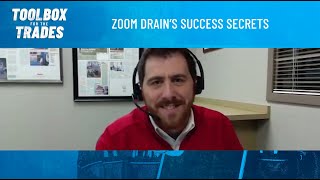
Steve Solla, GM of Zoom Drain Philadelphia, started in odd jobs and joined the company's apprenticeship program. He walks through their training system: ride-alongs, classroom work, and modular checklists. Clear career paths and KPI scoreboards keep technicians engaged as the company grows.
Steve Sola, welcome to the Toolbox for the trades.
Hi, Jackie.
I am super excited for you to join me today. You are actually, believe it or not, no, I don't think you're the very first GM we've had on the podcast, but you are the second. I normally don't get to talk to GMs, so I'm really excited to talk to you. You are the GM at Zoom Drain and Sewer Service, the Philadelphia location, which is actually the hub location. You've been at Zoom for quite a while now, and I just. I think you have a lot of knowledge that our audience is going to be interested in. So let's kick off this conversation the way I do every time, which is, why don't you tell me, how did you get into the trades?
So how I got into the trades, and I'm excited to be here, by the way. How I got into the trades was, I guess I was like 22, 23, and I was working a bunch of. I worked a lot of different jobs, you know, regular jobs. I would work. I worked at Subway. I worked delivering pizzas for, like, Papa John's. I worked washing dishes, Ruby Tuesdays. I worked at a rug store. Just a whole bunch of kind of odd jobs. And sometimes I'd be. Sometimes I'd work three jobs at a time. I work during the day, and then sometimes at night, I'd wash dishes, and then on the weekends, I would, you know, hang out at the rug store. But I'd put in a lot of hours. I wouldn't see any overtime or anything. But, you know, I always worked a lot, and I always, you know, I learned from school that, you know, school wasn't really for me at the time. You know, it's. I get very motivated by work, and I like to be productive. And I didn't feel it at school right away, so I wanted to get into the trades. And once again, I had a tough time with schooling. So even, you know, trade school, I wasn't sure about it, but I was lucky enough. Zoom Drain took a chance on me. I saw they had in house training. I saw that I could ride with technicians, I could learn out in the field. But, yeah, so Zoom Drain took a chance on me, and, yeah, within six months, I was running a truck.
That's awesome. Yeah. And we'll get into Zoom's apprentice program in a little bit. But what I really want to learn about their program, given that you just said, man, I wasn't that good at school. What was it about that program that kept you Incentivized to finish well.
So, you know, I guess learning it and then applying it directly in the field, you know, so we would do class two nights a week for two hours apiece. And then during the day, I would actively, you know, get to do it, you know, unlike where school, you know, I might learn or sit through a class, learn a lot, but it would be a while before I got to apply it. Whereas this was something I could learn in class and I'd probably be doing the next day. Or I had just seen it that day, and I was learning the. The theory of it at night. So that really helped with me.
Oh, interesting. So having that almost instant application of the skills that you learned really kept you motivated.
Yeah, absolutely. And, you know, the, you know, the teachers, you know, the supervisors at the time that were doing it, you know, wanting to be like them and wanting to be able to, you know, perform like that, you know, really helped.
Oh, nice. So they must have been pretty good role models then.
Yeah, absolutely.
Awesome. Awesome. We have a lot of folks who come on this podcast who talk about how they're building their apprenticeship programs. So I always love to hear, as someone who's been through that program, like, what even, you know, made it worth doing. So you. After six months, you were in your own truck, and then you quickly. You, like, just kept hidden. Milestone after milestone after milestone, you went from a tech to. Did you go right from tech to field supervisor, or did you have another role in between?
So we have a ladder here. So we have kind of tech to senior tech to field supervisor. And then from field supervisor, I transitioned over into the. The office side of service manager, and now general manager.
Nice. What's the most surprising thing about. You found about the industry since doing this line of work having not come from it at all?
What I would say is what I learned was I think the biggest thing is how customer facing it is. I guess when I got into the trades, I didn't think of how similar it could be to some of those jobs, like working at a Subway or working at a Papa John's of dealing directly with the customer. I thought you would just kind of go in and do your thing, go home. And I didn't realize how much customer interaction there was and how much sales and how it's important. So that's one thing that, you know, that's the biggest thing that was different from what I kind of envisioned.
Got it. Oh, that's so interesting. I love that you're kind of tying in the subway, by the way. I Just want to let you to know that I'm smelling a Subway, as we say it. That's great brand on them, but how you're tying in Subway, working at a rug store, working at a Papa John's, and how that customer facing role is really the same. A lot of people who come on this podcast say always be recruiting. Like, if you have great service, if you have a great waiter or waitress, give them a card, ask them if they're looking for a job. Do you subscribe to that same belief?
Absolutely. Absolutely. We have definitely handed out cards to bartenders when we go out to like company dinners and stuff like that. We absolutely do that.
Did anyone actually take you up on it that you can remember?
You know, not that I can remember, but we hire so many people that I can't imagine it hasn't happened.
Got it. Very cool.
Actually, no, I'm sorry. I can think of a case where it happened. Somebody was working with their dad doing like, just like putting a deck in something for one of our technicians, and we hired that kid and he was really successful here.
Oh, that's awesome. That's such a great story. All right, so Zoom Drain, I alluded to at the beginning of this conversation, has grown quite a bit since you first joined. So can you just tell me a little bit how the company's grown as you've hit your different milestones?
Sure. So when I came in as an apprentice, there were four of us, and I think there were either five or six technicians at the time. As. As Zoom has grown, it's. There's been more room at the top. So, for example, when I became a field supervisor, it was because we had grown to enough text that we needed field supervisors. And then when I became the service manager, it's because we had grown so big that we had enough field supervisors, but now we needed a service manager. You know, before it was the owner doing everything. And just as we grew and grew, you know, we needed those. Those other roles. So that's been, I think, the biggest thing. Like I said when I started five to six techs when I was a field supervisor, there's eight to 10 techs have a service manager, there was about 15 techs. Now as the GM, there's over 20 techs, four dig crews, you know, system engineers. Like, we've really expanded. You know, we've gotten a lot bigger.
That's awesome. And when we're talking about it, we're talking about the Philly location.
Right.
Not the other franchise locations.
Right. We're talking strictly, you Know the Philadelphia area.
Got it. I love what you said. I wrote it down. The more we grew, the more room there was at the top. Can you elaborate on that and answer a little bit of why employees should also keep this in mind as they're trying to help their businesses grow?
Sure. I mean, most of the jobs I had, if they weren't stagnant, if there was room for movement, it was because I was waiting for the night manager to quit or to get fired. A lot of jobs I had, the only way up was for somebody to go out. And that's not been the case here. It's just the more people we have, the more opportunities there are. Just as long as we keep growing, there's really no end in sight.
That's awesome. So talk to me about the tools and training that you have used personally to get better and better at your job.
You know, the biggest thing for me, I think, is our manuals and procedures. As an apprentice, as a tech, that's, you know, what I would focus on, I'd read up on, I'd use that to guide myself. And then when you get to the other side of it, when I became a supervisor or, you know, service manager, being able to edit those manuals and put things I wanted to instill and, you know, our procedures and how we do things and allowed it to make it a lot easier. So I think those are probably the biggest tools. And then, of course, I've had, you know, a lot of, you know, Jim as the. Jim Carnetty, the owner, and you know, Alan Rohr and Al Levy, you know, having those kind of people in my, I guess, stratosphere around me to be able to, you know, ask them for help, that's also been huge as well.
Yeah. Ellen and Al, who have also been on this podcast and who I consider friends, and you said manuals and procedures in the career ladder. And I'm like, oh, we're just dancing around the Al Levy question that's going to come up. Is there any. So you had the manuals and the internal resources at Zoom. It sounds like they really did everything they could to provide you with the tools that you needed to grow. And I completely. And this is a faux pas on me as an interviewer because I am familiar already with Zoom Drain. But for the folks who are not, can you just briefly describe the kind of service that you. That your team provides and who you provide it to?
Sure. So we're a full service drain cleaning company, and, you know, a lot of our work is primarily either subcontracted or referred by plumbers. We love working with plumbers as an extension of their services. You know, a lot of plumbers will do some drain cleaning here and there, but it's very, like, equipment driven and skills driven. So when they get into things that, you know, maybe their equipment can't handle or maybe they, you know, they're just too busy with plumbing work, you know, they'll call us in and, you know, we like being that specialist. We like working hand in hand with the plumbers. And, you know, we can really handle, you know, most anything. We, you know, do an even split, like residential and commercial. It's mostly emergency service. You know, we're. We get out there, you know, same day. You know, we. We really focus on, like, the emergency service and, you know, working with those plumbers.
That's awesome. I actually didn't realize that you guys worked so closely as subcontractors with a lot of plumbers. I'm curious. I know there's a stigma about working with subcontractors in the H vac space. Have you heard the same in the plumbing space as well?
No. I mean, I think. Yeah, I don't think we really run into too much of that. We have great relationship with all our plumbers. And, you know, I think if we ever have any problems, you know, we call the plumbers or if they have any problems, they call us. You know, the communication is just great. And. No, I think. I think it's a different situation. I think we're good.
Yeah, I think it is, too. I'm only. And I'm. I'm just genuinely asking out of interest. Everything I've kind of heard from, like, the E myth and from owners is like, how to work with subcontractors effectively. So as someone who does a lot of subcontracting work, I really wanted to just hear your side of the story.
Yeah. And, you know, and that's why we also do just a lot of referral work, too. You know, it all depends how they, you know, whatever they're comfortable with. But yeah, no, we have a lot of. We have great working relationships with a lot of plumbers.
Got it. All right. I need to ask this because when I first met Ellen Rohr, she did not hesitate to give me graphic description of the types of things that you find in drains. So I would love to hear your most memorable drain service job, either as a tech or as someone who had. From the supervisor standpoint, I mean, I've seen a lot.
It's, you know, some of the, you know, I've seen snakes, seen, you know, rats and things like that. Those are always kind of fun seeing. Just. Oh, man, it's hard. Some of the. Some of, like, the more industrial ones we see, like. I don't even know how to describe it. Sometimes it looks like peanut butter coming out of drain lines. And, you know, it's. It's just very weird. And to tell you the truth, I can watch videos of clogs opening all day long. I think that's, you know, some of the most satisfying things to watch.
We do not have that in common, Steve, but I absolutely love that for you. All right, so pivoting from that, I want to know what it's been like working for Zoom Dream Philly, which then spread, sprang up into this franchise. Like, what's it been like watching the franchise grow, being at the center of the hub location?
Well, I think it's. I've learned a lot about, you know, it's fun. We. We get a chance to meet a bunch of people from different areas. We get to, you know, compare stories of what's going on in different areas. You know, some things that, you know, I take for granted that other places don't have. You know, in Philadelphia, Philadelphia is a very old city, and we have. We have curb traps. That's something that not everybody has, apparently. I thought everybody had them. We have these house traps that are, you know, six, seven, eight feet deep in the sidewalk. And I'm learning that's not a common thing. And, you know, other people, they're showing me fittings from where they are. So it's been very interesting, but it's also been interesting to see, you know, how similar people can be from all areas, too. You know, just seeing, you know, prices in different areas, you know, it's all, you know, it's. It's very similar.
And I would imagine a lot of learning opportunities for you as a GM to chat with other Zoom drain GMs and be like, hey, I'm having this problem. Have you had this problem? You know, what did you do? That kind of stuff.
Oh, yeah, yeah, absolutely. And, you know, with even coming up with, you know, different procedures and stuff like that, sometimes just getting another set of eyes or a different perspective, you know, can really, you know, show a different angle, you know, or a different procedure that, you know, could be useful. You get to meet a lot of different, you know, business owners and managers.
Yeah, that's interesting. And I'm just thinking about this now out loud, which is it has to be a little bit different from One from a brand that just has multiple locations opposed to having, you know, different franchise locations. Because I feel like a brand with multiple locations, they generally all share the same culture. So there could be some things that they all do really well, some things they all don't do very well. Whereas a franchise, it's kind of like we're all aiming towards the same goal, but we all do things a little bit differently. So it's kind of almost like little hubs opposed to kind of one big umbrella. Hmm. And that was my gist. Do you agree with what I just said, which just came out of my mouth?
Yeah, no, I would definitely say that, you know, they all have. They're all a little bit, you know, individual and. But, you know, we're all going towards kind of the same goals and, you know, having those different perspectives and everything can, you know, it helps everybody.
Yeah, that's really interesting. Just something for folks to think about if they're thinking about franchising or opening up their location or opening up additional locations, that kind of stuff. So, from what I've heard about Ellen, obviously we're talking right now on the podcast, you're a very good Zoom Dream Team member. So I really want to know, what is it about the company and the culture that keeps you engaged and motivated?
You know, and I know I'm kind of going back, but it was really that growth from, you know, just the growth, presenting opportunities. I see it as a company that's going great places, and, you know, I've had a chance to shape, you know, some of the procedures, some of the things we've done, and being able to see my work and other people's work, you know, grow into something has been very. Been very exciting, and I'm excited for the future. I think we're going to keep growing, and, you know, I like being a part of it.
Yeah. So what I just heard is you had buy in, in the growth. You were given a clear path, a clear path to grow your career, which I assume had different milestones and different KPIs, perhaps, that you had to achieve or unlock in order to get to that next level. So buy in and growth opportunities, just to kind of sum it up, right?
Yeah, absolutely.
Yeah. Because I know that people in the trades are always talking about, like, I can't find good people. I can't find good people. I can't find good people. But it sounds like the Zoom drains really kind of crack the code in terms of creating great people within the organization.
Yeah. And giving people, you know, just Giving people a chance to, you know, show what they can do and, you know, listening, I think is huge.
Yeah, I agree. So we just talked about your personal career growth. Let's, let's pivot now to managing people because, you know, you're a gm, so you oversee fricking everything, and you manage a whole lot of people. We already talked about Al, who was a consultant for Zoom, helping put together those manuals and procedures and that career ladder. So we know that's a thing. Can you tell me a little bit more granularly how you communicate that to the technicians and kind of how the techs can keep their scorecards and get an idea of where they're going? Like, how do they, how do you, one, communicate, hey, this is where you can go. And then also two, this is how you can keep track of where you're going.
Okay, so what we do is when I interview people, even in the first interview, one of the first things I go over is the salary ladder. I have a little kind of two page sheet of each step of the ladder there, and I go through it with them line by line. Hey, you come in as an apprentice, this is your probationary period. At the completion of this probationary period, you know, assuming you can, you know, show up on time, clean, sober, dressed right, you go to this, you go to the apprentice class, you graduate the apprentice class, you go to this. Once you're on a truck and you have proven that you know how to do everything that you learned in class by filling out a checklist. And after a minimum of six months, you go to this, continue to hit these statistics that we're tracking. So we track, you know, a close rate, a sales goal, you know, average ticket labor, those kind of things. We have measurable statistics. You have to hit a certain amount of months with hitting these KPIs, you go to this. Then we have another class for like our tech to senior tech. Complete that. Here's what you get. And then once again, you get another checklist of everything you learned in class. You go out and do it on the road on your own. Show that you can do it. Check that off. That's another raise. So that's really how we do it. We go through it like that. And then when somebody is hired, I give them, I give them the salary ladder. There's no secrets here. Everybody here knows how much everybody else is making. And I mean, because, you know, they're gonna, they would talk anyway, you know, there's no sense hiding it. And if you want to know why that guy's making what he's making. You can look no further than the scoreboard. You know, that's one thing that we do is every week we post our numbers. You know, we talk about how we did. So yeah, it's. Everybody really knows, well, what they're doing. And our field supervisors, they sit down with the guys and, you know, we talk to them, hey, what do you need to do to get to the next pay raise? How can we help you get there?
Got it. All right, so how often do you have those sit downs? How often do you have those reviews? Is that quarterly? Is that twice a year? What does that look like?
So those reviews, I mean, we do those after the weekly meeting. You know, we get together with the guys, just see how their week went, you know, what they need to do. So we, we stay on top of that.
Got it? I can't help but draw parallels to being in college and getting X amount of credits in order to get a degree or to qualify for a minor or even just back as high school of you need to get hit this test score on this test to qualify for a high school diploma.
Yeah, yeah. I mean, it's very similar, you know, it's all just very, you know, it's lined up, you know, there's no I gave you the raise or I didn't give you the raise. It's really, you either hit your numbers or you did, you know.
Yeah. I love that you said, you know, everyone knows what everyone makes here because. And whatever. They would talk about it anyway, which is so true. I'm going to throw you a bit of a curveball question here. But as a gm, someone who definitely came up from the technician tract, what do you think most owners need to know about their technicians?
You know, and I may be a little biased on this because, you know, Jim, the owner, he came up the same way. I mean, he was, he was started out on the road himself too. So I think it's just important to be in tune with what they, what the technicians do, what they go through. And also I think it's important for everybody to kind of in our industry to take yourself seriously. You know, it's. It's funny, I always remember when I first got the job and I would go hang out with my friends and I would have my phone on my hip because, you know, it was emergency service. Somebody called, I was an apprentice, I was going out and my friends would give me a hard time sometimes and they'd be like, well, it's not like you're A fireman or something. I was like, well, I take it seriously. If somebody's backing up, I gotta go. Like, I don't know what to tell you. So I always think it's important for everybody to take it seriously and take your technician seriously as well.
All right, that's a good answer. Good answer. All right, tell me everything about the Zoom apprenticeship program. I want to know how it's set up. I want to know how you recruit people to join it, and I want to know what your success rate looks like, how successful. I mean, obviously, you came up through it, so I would say successful, but I would love to know, like, what kind of numbers you guys are seeing.
Yeah, well, so. And it's funny because when I started, I said there were four apprentices. Well, the other apprentice that's still here, he's my service manager, Chris Roche.
Oh.
So, yeah, no, that's been great. So kind of a dive into the apprentice program. So we like to, you know, we hire a lot of people, and we like to hire people from lots of different industries. We like, you know, people from the restaurant industry. We like people from retail. You know, we like people that, you know, have done labor, like landscaping junk guys. You know, we like to, you know, talk to a lot of people. And so I say we hire a lot of people, and we hire a lot of people that have really good attitudes. But there's more to it than that. You also have to be good operationally, and you have to be good technically. There are some things where, you know, since we hire people with no experience. Oh, I am sorry.
Oh, wow. What happened? You were so still that your motion sensor lights just went off.
My screen's blocking. Can you start that question again? I'm sorry.
Sure. Yeah. So tell me about the apprentice program at Zoom. I want to know how successful it is. And obviously you are. It is because you came through the program. I want to know how you get people, and I want to know kind of what the ins and outs of the program looks like, how's it structured?
Okay. So, you know, like I said before, there was four apprentices when I started, and the other one is Chris Roche. He's my service manager. So. And that was. That was 14 years ago. We started this month.
Congratulations.
Yeah. Thank you.
That is pretty. That is pretty uncommon these days to meet someone who's been at the same job for 14 years. So.
Yeah. Yeah. And. But when we. When we hire people, we like to hire a lot of guys. We get some guys with some experience, you know, maybe coming from they were a parts runner for somewhere or you know, maybe they have some experience digging, maybe they're a landscaper. But we also like retail food service. We like a lot of like customer facing people. That's good. But there's more to it than just being like a nice person or a good personality. You also have to be operationally good and technically good. So, you know, in that first 90 days, you know, you might be able to like when we interview, I'm sorry, we do a, like a two part interview, we have somebody come in, we talk to them, we see how they are with people. But then the second interview is we have them come in for a ride along and that way they can see what a whole day actually looks like. All right, so we kind of expose them to it that way. Then once they're here, we have a 90 day probationary period. Now this is the time when we make sure that they can show up on time, they can do everything operationally. But also we have to make sure that they do have technical ability. You know, when I came, I didn't really have any technical ability prior to this. I didn't have any, you know, skilled labor jobs before this. So I will say I, you know, it took me maybe a little bit longer than it takes some of these guys to pick up some of the stuff, but I could pick it up. There are some people that, you know, just like, I'll never be a singer. There are some people that could never be a drain cleaner. You know, they just don't have the, the like spatial recognition for it or just the ability for it. But. So that's pretty much all weeded out in the first 90 days. Our apprentice program. What we do now is we do about four hours a week of classroom theory. And also we have a training center here. So we have like one wall with toilet sinks and pumps and it gives them a chance to practice on everything in a safe environment. So, you know, we do a little bit of classroom for theory and then we work out in the training center. But then outside of that, they're still riding with the techs. And the techs are trained to, you know, get these guys hands dirty, you know, get them busy, get them working. They're not just, you know, gophers while they're out there.
That's really good. And I actually have a woman on this season of the podcast named Megan Bedford who's launching a Ride and decide program in Colorado where they're taking high school graduates, high school students on ride alongs and being like this is what it's like. Are you interested? So I really want to commend you on the ride along because I think it's so important for them to get exposure to a full day and be like, is this what I want to do? Yes. No. So that's pretty smart. And then after that probationary period, after all of their classes are over. Who created your curriculum by the way? In terms of figuring out this is the kind of classroom theory we have to do. These are the type of training scenarios we need to build in our, in our training center.
So that actually came from. So our drain and sewer manual, Basically it's a list of all the tasks we do. We have that in a checklist form. Now, each one of these topics, we call it a block. I literally have a closet that's full of bankers boxes, each one of a block. So I've got all my literature, all my pipe fittings or whatever I need in each one of those blocks. So when we go in to do a class, I can pull out that block, go through everything. Kind of like a kindergarten teacher, first grade teacher. Everything's all together. So, you know, I believe that was, it was mostly, that was Jim. I think that really started that. Now things change. You know, we, you know, things have changed since the company started. You know, there's waterless urinals. Now there's a whole bunch of new stuff. So they're not set in stone. You know, we're always adding things or you know, something new we come across, you know, we just throw it in the box and that way next time that class comes up, you know, we're prepared.
Got it. Again, shout out to those manuals that were created pretty early on in the company, which really helped for growth. Way to go, Ali V. So in terms. So I already asked you, what do owners need to know about their technicians? And you said they need to take the job seriously. I have a feeling I'm going to know what the answer to this question is. But what do you think owners need to do to keep their employees happy and engaged at their company?
Once again, I think it's very important to recognize the work they do. I think it's important to give them games or, you know, incentive programs, you know, to reward people for doing a good job. You know, we're very, you know, performance minded. So I think that's important. I think people that are motivated by that, you know, really excel in those situations.
Got it. Do you guys do performance based pay or Spiffs?
So we do primarily like hourly but we do use Spiffs, and we also have bonus opportunities as well.
Oh, got it. Very, very cool. All right, so, I mean, it sounds like the kind of training that was created at Zoom, folks really can't get that anywhere else because it came from the mind of your owner. Right. And it seems to be customized based on location. Like, you had mentioned that wonderful example before about there's something in Philly that is only in Philly. And I've been to Philly. Yeah, Like, Philly is a little. It's like, wow, this is an old city. And it's the same too. I'm from the east coast, but I'm now in the west coast and just, you know, the landscape, the way the streets are paved, the way houses look, that all takes into. That all takes into account, you know, the differences in the type of work that you do across the country. Besides technical stuff, what do you think that apprentices can get in terms of education at Zoom Drain that they can't get anywhere else?
Well, I mean, I would say for us, it's really the experience of the team. I can't think of another drain company that's as big as us or as experienced as us, since we just specialize in that one area. You know, my guys are, you know, clearing, you know, five mains a day. You know, and I think a lot of, you know, a lot of other plumbers or contractors, they might be doing, you know, broader scope of work. But since we just dive into that one thing, I don't think anybody has better support. You know, when it comes into that one guy who's has a drain he's never seen before, one of us has seen it. You know, one of us knows exactly what he's talking about. So I think that's. Since we're so specialized that our experience, you know, we offer the techs support they can't get anywhere else.
That's actually a really, really good. Good point. How do you. And this is just a curiosity question on my end. How do you guys communicate when texts are on the field? Do you text each other? Do you use Slack? Do you like. What does that look like if someone's like, I've never seen this drain before. How do I even. Like, what does that look like?
So we. We text, we call, we use, like, Google chats.
Oh, sure.
You know, so we have little, you know, group set up for field supervisor, group set up for the service side, group set up for install. So if you need to shoot something out to a bunch of people at once, we can do that. You know, we also like to shoot out little messages of fun things we see as well. So that's always fun. But, yeah, I mean, we're heavy on the. On the phones and everything.
Got it. I had this question before, but you already answered it, which I think just goes to you being a fantastic interview subject. So in terms of keeping text accountable, you mentioned that you track close rate, the sales goal, average ticket labor rate, and that you go over. I just want to make sure we get this. You go over how they're tracking every week?
Yeah, yeah, we posted every week. And, you know, we highlight the. The top performers. You know, ask them what worked for them that week. You know, how did they achieve those numbers and everything. So I think that's. I think that's very important. And even though we could. We can do it digitally, we still like to write it up there, you know, so that. I don't know, there's just something about writing up a green number or a good week, you know, by hand, that means something.
Got it. What kind of. What does conversations look like when, say. If. Say you have a technician who hasn't been doing so well for a couple weeks in a row, what does that look like?
You know, really, we try and dive down to what is it? What's. Where are we running into issues? Is it a close rate issue? Is it an average ticket issue? Because if it's a close rate, you know, I can kind of. We can dive into it a little bit more. What's the objection you've been getting lately? Or, you know, we try and dig down into what is it that we could work on to get those couple, you know, to get that up? Is it a script that we're, you know, we're saying wrong? Are we saying something and talk ourselves out of the job, or are we just not kind of reading the situation properly? Or if it's an average. Are we selling the right job? Are we. Are we doing the right fix the first time? That's a big one.
Can you elaborate a little bit more on that?
Sure. So there's always. I think sometimes, especially in, like, new text, people have this, like, this mindset that I'll fix it for as cheap as possible, and I'm doing you a favor. And I always like to. I always go back to. I don't know why, but I've always had terrible H Vac problems in my life. I should have gotten into H Vac because I just constantly have problems with it. But in my old house, I used to have this furnace, and it wasn't that old, but I would get a no heat. You know, I would have no heat. I call the guy out, he'd come out, he'd look at it and be like, hey, I got it working. I'd be like, what was he. He's like, ah, don't worry about it. It was only 150 bucks or whatever. And I guess the first time I was like, oh, okay, cool. It seemed fine, but then it happened. Like two weeks later, they come back and they go, oh, there's nothing. I gotta reset. You're all. You're all set to go. So. Okay, well, that's not. It's. It's not okay anymore because I don't want to keep running into this. Like, just tell me what I need to do. I mean, I'll figure it out. So it's those kind of situations where, you know, find out what the customer really wants. I wanted to not lose heat and, you know, I was willing to do what it took so I don't lose heat. I want. It wasn't get me running another week. I just need to make it until whenever. No, I want to have heat. I don't want to be inconvenienced. I want the right job. And so, yeah, when people deal with sewer backups, it's a serious thing. You know, people don't. Don't necessarily want us to just plunge something. They want us to get to the bottom of it. They want us to snake it. They want us to camera it. They want us to jet it. They want to figure it out. They didn't, you know, call us and take a day off of work so that we could do a band aid it until it backed up again. So I think that's the biggest thing, is when you sell the right job the first time. You know, things like that is what makes the fixes the average ticket.
Got it. And I was going to ask you a question about, like, how do you get technicians who want to do exactly what you just said, which is just put a band aid on it, opposed to fixing it? How do you get them to move past those assumptions? So is there any particular coaching? I mean, what you just said makes perfect sense. You know, your personal H Vac problem is that kind of how you communicate with your texts when they're like, oh, but I could fix it this way.
Yeah, I have no shortage of stories of when I wish I had. I wish I'd been sold a better service or I wish I had been sold a better product because A lot of times when I go shopping for something, it's maybe the first time I went to go shop for it. I need somebody to tell me what I need. A lot of people with sewer issues, it could be their first or second time dealing with it. They may not know what they need in order to have a fully functional system. So, you know, it's important to remember that.
Got it. Very cool. You mentioned that listening was very important in terms of the owner keeping in mind with the technician. So I imagine that has a lot to do with you as well. You're a very good listener. Is there anything else that you think of when I ask you what's your personal managing philosophy?
I think the biggest thing is making sure you create a good team. And I feel like it's important to, you know, to build on, like, your team's culture by making sure that you get good people in. And I think that's important. And when some. When somebody is not a good fit or when something's not working out, that should be handled as well. I think it's important to keep good people here, people that want to be here and that are, you know, looking to succeed. So I think that's the biggest thing is keeping a good. A good fun place, but serious place too. You know, like I said, I take myself seriously and I expect my techs to take themselves seriously too.
Got it. So based on all the experience that you have now, what would you have done differently over the course of your personal trade career? When it comes to managing people and not just actually, man, I'll even take off that second, that second part. Based on the knowledge you have now, what would you have done differently in your personal trade career?
You know, I. Not to say I haven't made mistakes, because I certainly have. I don't think I could have done anything differently. Any of the mistakes I've made have been, you know, a learning moment for me and, you know, really, I've really just been lucky to have good tutelage and, you know, good support system here and good group of guys. I really. I don't think I would have changed anything. You know, I sometimes I think I wish I would have been here earlier, but I may not have been ready for it.
So, yeah, that's a pretty good outlook. That's that I actually share that outlook as well. It's like, oh, yeah, I could have gotten. I could have gone here earlier, but I probably wasn't ready for it. So it's fine. So kudos to you. We've talked. We've hit a lot of stuff on the episode. Is there anything we should have talked about that we didn't?
No, I mean, the, the one thing that I did want to kind of. I actually kind of wanted to shout out service titan a little bit on the, on like I'm not going to.
I'm not going to bend your arm. By all means.
I do want to say that the, like, the forms and service titan has allowed us to actually put a lot of our manuals and a lot of our procedures into the job. Meaning, like we can have forms kind of, you know, that you almost had to trip over. Like before we used to have somebody, you know, you'd have to get a form out to write it before this job to make sure you asked all the right questions and everything. Now we can have a form pop up. So I will say that that has been just absolutely great. We do like how we can now use ServiceTitan to implement our procedures. It's been great. I love being able to upload the photos and videos and all that. Especially us. We love uploading our drain videos on every job. It's the greatest thing.
That's awesome. So happy to hear that, Steve. Thanks. I have a couple rapid fire questions for you that I did not give you in advance. Are you ready?
Yeah, go for it.
All right. How do you take your coffee?
Black.
If you could have dinner with one person, dead or alive, who would it be?
Can we come back to it?
Yeah, we can come back to it. What's the number one thing you're trying to learn more about right now?
You know, I like doing things that are. I like doing things that are hard. And a hobby of mine is Brazilian Jiu Jitsu.
Oh, fun.
That is something I'm always, you know, always working on. I always wish I were better at, but that's, that's what I try to do.
Nice. If money weren't an object so you had unlimited resources, what's the first thing you would do?
Probably take a day off.
Nice. Let's go back to the dinner question. One person, dead or alive, who would it be?
Oh, man, it's. Now this is. It's definitely a tough one. I. I can't.
I mean, people have cheated and said to people before, so I mean, I'm not gonna, I'm not gonna. Whoever comes to mind.
Man. It's just. I don't know. That should be like a. It should be a question I have daydreamed about or something, but I guess not. I. I don't know. I mean, I guess I'd always want to talk to, like. I'd always like to talk to somebody at the absolute, like, top level of, like, success. I don't know, maybe like a Bezos or Elon Musk or something.
Sure.
You know, I would just like to, you know, just maybe see that side of things.
That's a good answer. Do you have any podcasts or books you would like to recommend to the audience?
No, I can't say. I can't say that I do. I've. I mean, podcasts I listen to. I like to listen to the Joe Rogan show. You know, I like, you know, he gets a lot of good interviews on there. That's always fun. But I really don't have anything trade specific I could say for. For po podcasts. And as far as books, you know, I read. I read trash novels, believe it or not. I'm sure everybody has, like, you know, they wanted, you know, the books with all the platitudes and all the, you know, the empowering books and all that. I like trash, like John Sanford novels and I hope that doesn't offend him, but they're just like fun novels.
I don't think it will offend anyone, and I applaud you for owning it. Final question. What's the number one thing every contractor must do to run a successful business?
I mean, I think you have to answer the call. I mean, that's one thing I deal with. Even when I'm trying to get contractors for myself. I can't get somebody to pick up the phone. If people could just pick up the phone, they could charge three and four times what they charge. So I think that's the biggest thing. Pick up the phone and do what you say you're going to do. And I think that's going to get.
You really far, especially if you're a contractor in Philly, where Steve is apparently. That is definitely a call to action. Steve, thank you so much for being a guest on Toolbox for the Trades.
Thanks so much.
More from Bill




Capturing the 80%: How SmartAC’s Gen-2 Targets Non-Membership Homeowners | Podcast Ep. 296

Build better customer data with every booking in ServiceTitan | TAD Tune-Up Series

The Biggest Change for Roofers Coming From Other Roofing Software to #ServiceTitan?

