180: New Patients From Google Ads (ft. Bailee Bragg) | The ChiroCandy Podcast
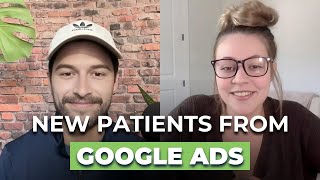
In this episode of the ChiroCandy podcast, host Matt Keenan interviews Bailee Bragg, Google Director at ChiroCandy, about how chiropractors can acquire new patients through Google’s advertising ecosystem. The conversation begins with a striking statistic that roughly 4.97 billion people (about 90% of internet users) use Google, establishing the platform’s massive reach. Bailee explains how the team moved beyond “Google’s book” – the default recommendations – by partnering with a seasoned Google‑focused agency, adopting a hands‑on approach to keyword selection, bid management, and audience targeting. They discuss the importance of geo‑targeting (presence vs. interest), the pitfalls of auto‑apply recommendations, and the need to keep campaigns tightly aligned with a chiropractor’s niche (e.g., avoiding “back surgery” keywords). The dialogue contrasts Google Search ads, which capture high‑intent users actively searching for services, with Facebook ads, which act more like cold‑calling. Bailee highlights the concept of “omnipresence”: using Google Search, Display, YouTube, and Facebook together so that prospects see the practice across multiple touchpoints, and she shares a case where Google and Facebook synergy drove brand‑name searches. The episode also covers newer Google products—Display retargeting, YouTube advertising, and especially Local Service Ads, which appear at the top of search results, are pay‑per‑call, and require verification. Platform changes such as the rollout of Google Analytics 4 and UI updates are mentioned as both opportunities and challenges. Throughout, Bailee emphasizes three actionable takeaways: create omnipresence, go where your searchers are, and leverage every Google ad format to stay top‑of‑mind. The episode ends with a call‑to‑action for listeners to schedule a strategy call with ChiroCandy.
Chapters
Approximately 4.97 billion people use Google.
I knew it was a lot. I guess I didn't realize it was that many.
No. Yeah. Because if there's 5.4 billion Internet users in the world, 4.97 of them are using Google. Welcome to another episode of the Chiralkindi Podcast. My name is Billy Sticker, founder and and CEO of Cairo Candy, and this is going to be one of our success series episodes. And on the success series episodes, what it is is going to be different leaders and directors from our co team doing different interviews, talking about what's working best for different clients and on different platforms. So without further ado, let's get on over into the episode. Enjoy. Hey, everybody, and welcome to another episode of the Coyo Candy podcast. I'm your host, Matt Keenan, and today we have a special guest with us.
Hi, I'm Bailey. I am the Google director here at Kyrue Candy.
Yes. And she's about to give us some really good nuggets of wisdom about Google that I don't even work with Google. So I know that you're going to have a lot of things to share this. Lots of value that's going to be added from Google Ads. So just to start things off, I know, like, obviously if you've been listening to the podcast for a few years, you know that Kyro Kenny has been offering Google Ads as a service for years now. But Bailey, I know that you just started within like the last year and a half as the new Google director and things have changed a lot. I. I know that I haven't had to do all of the different things, but I know that for our account reps, things have been done differently and more efficiently. So can you just talk on that?
Yeah, definitely. So, I mean, when we were running Google Ads before, we were running by Google's book, we were, you know, doing what Google was teaching. Doing what? The training for Google. You know, they're telling you you should be doing this, but I ended up getting with a. Another agency owner and he specializes in Google, like primarily Google. He maybe runs a couple Facebooks here and there. So he's been doing it for 10, 15 years, something like that. So he knows, he knows the ins and outs. He knows, you know, what works, what doesn't. And a lot of people can get trapped in that. Like, well, Google told me how to do it, so I got to do it Google's way. But you got to think about it. Google is an advertising platform. Like, their goal is to have you spend money.
Exactly.
You Know there's going to be things that they, they introduce to you that you're like, hey, do this. But in reality, like, is it going to help your niche specifically or is it just, you know, Google trying to get a little bit money?
Is this better for you or better for Google?
Yeah, exactly. Yeah. So I ended up working with him and he taught me so many different things, you know, all of the ins and outs that Google doesn't tell you because, you know, it might, might change things for them. So we were able to take what we were running, take what we already knew and just expand on it. Really. That's all we were able to do. Like, we just, you know, we knew the platform, we knew how to run things, we knew, you know, what to do, but we were able to just open a brand new, I guess open a brand new door of like, hey, you could be doing this. You have the opportunity to do this. Just because Google doesn't tell you about it doesn't mean you can't do it.
Right.
It has increased our conversion rates. It has lowered our conversion numbers. It has given us just a really clear understanding of, like, what keywords work best, and it has given us more opportunity to really be hands on in there. Like, we were hands on before, but we are hands on now.
Yeah. Working on plug and play anymore?
No, no. I mean, we were never like plug and Play, but we were definitely not as hands on as we are today. Very hands on as far as, like, keywords bidding. Like, we are picking the bids for every single keyword. It's. We were. We are working in there.
Yeah. You are the algorithm.
Yeah. We're like, Google, step back. We got this.
Well, that's awesome. I can, I know that I can definitely attest to that in my clients. My clients in particular have definitely gotten better results on Google than previously. Whenever we revamped everything after, after you took the reins. But I think, I think that that's a. What you were talking about with doing things by Google's book beforehand. I can definitely. We were, if we were to do that with Facebook things, things would definitely be not. Not in a good place. I mean, I'm sure if you're, if you're advertising on Facebook right now, you know that I'm sure you get the emails from like your Facebook marketing pros saying, like, you need to schedule a call, you need to do this. And then you schedule a call with them and they're saying, spend more money. You know.
The auto apply thing, which I started to see on, on Facebook too. Is they'll, they'll ask for like auto applies to apply certain recommendations and then I'll look through some of those certain recommendations and it's like, here, add this one keyword. And it's like, I don't know, you know, back surgery near me. And it's like we chiropractors don't do back surgery. They help prevent back surgery. So we don't, we don't want to advertise to back surgery. We wanted to advertise as an alternative to back surgery, you know. So I mean, Google is kind of just like, Google's great. Like they will give you good recommendations, but you have to be putting your eyes on it because they will just auto apply anything if you let them.
Plus, especially when it comes to things like targeting with Facebook, one of the things is Facebook, if you're, if you're on. Again, if you're on Facebook or. I'm sure it's the same thing with Google. It's always telling you make your audience bigger. Nobody, not enough people are seeing it. But I'm like, this is, this is a local, this is local service advertising. You know, we're not, we're not gonna, if someone is in Montana, we're not gonna, you know, advertise to somebody in Florida or even Colorado for that matter. You know, like, we're, we're, we have to keep it local to the business. Unless they're doing telehealth or something. But obviously, yeah.
And they started doing that thing on Facebook where they took away certain, like you can only advertise to people in one area and then, but you don't have to absolutely live in that area. Google does the same thing. They do presence, which is people in that area, but then they also have like an automatic, like when you set the, the location, it says presence or interest. So you could be in Texas looking up somewhere in Montana, but you're interested in that area. So that's another thing. You just gotta keep an eye out for those little tiny things that Google. There's people over in Texas looking for you. We're going to send it to them.
Exactly. Yeah. No thanks. I'm not looking, I'm not looking for a chiropractor in Montana. I'm good. So in general, I guess just to take a step back to talk about Google Ads in general, why should chiropractors be advertising on Google?
Google is huge for local businesses. Like when you're looking for something, let's just say you're looking for a dentist. Let's take Chiropractors out of it for a second. You're looking for a dentist. Where do you go? You go to Google immediately you're going to Google and if you're, you know, if you just started your business or maybe you've got a ton of other chiropractors or other dentists in the area and your SEO is just not ranking, you know, you're not going to be on that top spot. Google advertising is a way that you get on that top spot and you can set that geo targeting to make sure that you're hitting people in your area. So when they go look up, chiropractor near me, dentist near me. I mean all the way down to like looking up for H vac near me. You know, when you're looking that up, you got that geotargeting. You don't got to worry about whether your SEO is working because you're paying to be there. So you're getting on that top spot. People are seeing that when they are looking up for stuff in their area. So they are actually searching out for somebody that does your services.
Exactly. The quality is, the quality is already, I mean, and people, people know the Google quality is, it's different than all of the other, all of the other platforms. And especially because like even, you know, if, even if people aren't, for those people who aren't using social media, they're using Google, you know, everybody uses it. And it's not like you can, I don't, can you even track how many people are like using Google? I'm sure they have the metrics for that.
I don't know. I bet you could Google it.
Yeah, I could probably Google it. How, how many people, how many people use Google and like every day? That would be insane. I mean, I use Google several times a day just for random. I mean, I'm sure, I feel like, I feel like the Gen Z or even Gen Alpha, they just go to TikTok to search things.
I've been doing that a lot recently. Like if I'm like tips this, I'll like go to TikTok and I'll be like, tips on this. And yeah, no, another thing I've been doing just, I'm getting way off topic here. But another thing I've been doing is if you go and you have a question, use AI. Use chat GPT. Yes, in Chat GPT. And it'll give you your answer right away. Like Google has started using that AI tool. I've seen that that is like top tier. Because I have the answers I don't want to look through seven different articles. No, I'm picking top. And that leads into why you should do Google services or Google advertising. So you're at the top. What's at the top?
Exactly, Exactly. That's a, That's a good point too. Every once in a while, I do like, I do like Reddit because it has like, a lot of different opinions and it's not just going to have like the top answer. You know, it's going to be more than that. But anyway, yeah, so. So it's. So chiropractors should definitely be on Google because it's, it's relevant. They have all the quality.
Quality is huge on Google. Like, they are actively looking for you. Like, they, it's not, you know, I don't know, it's just actively looking for you. They want a chiropractor, so why not be there when they want it? You know?
And I guess, and that's, I guess that's, that's like the main difference I probably, between like the Facebook advertising and Google advertising is just some. On Facebook, someone isn't necessarily looking for a chiropractor or, or whatever it is that you're advertising, but it's. They're going to be shown an ad of like, hey, in case you need this. But on Google, most of the time they're actually searching for it. But what are the, what are the other differences between Google and Facebook advertising?
Yeah, so I would say biggest thing, that quality is just the biggest thing, like Facebook is. I like to kind of go off of like the reference of cold calling. Like, Facebook is like the new generation of cold calling. Like, you are just calling up people and you're like, hey, we're a chiropractor in this area. You know, if you've got these symptoms, these problems, you know, we can help. Now Google is like, I'm going really old school. Google is like being in the phone book and people are looking you up in the phone book looking for a chiropractor. You know, you're on those yellow pages. But like Facebook, you know, you're going to get some good patients from Facebook because there are people that don't even think about it. Like, they're like, I've got really bad lower back pain. But they, they aren't thinking like, oh, chiropractor. They're just thinking, yeah, ibuprofen.
And these. And these are the people that aren't even thinking, oh, I should Google how to fix this. These are the people that are, that are kind of some. Some of them may be, like, apathetic, I guess, towards, like, looking. Looking something up on Google. But then they're. We got you on Facebook.
Yeah. I mean, you're gonna. You're gonna get good patients from Facebook. You really are, because you're getting those people that aren't really thinking they need it. But then you're like, hey, if you have this problem, you need this solution.
And it gives people the opportunity to share it too. I feel like, you know, like, yeah, oh, I just got this. And share it to your friend or your family member, you know, is struggling with it.
And Google is kind of skipping that, like, convincing they. They have a problem. You're. You're skipping the, hey, if you have this problem or you have this problem, we have this solution. You're skipping that. You know, if you got the problem, you are going straight to, we have the solution for you. We. We do know you have this problem, we have this solution. So you kind of just, like I said, going from cold calling to them looking you up in the phone book, like, that's kind of the biggest difference between Facebook and Google and just what kind of patients you're getting. You're either getting patients that know they have the problem and they need the solution and they're looking for the solution, or people that may know that they have the problem or may know that they need some sort of solution, and you're offering that solution, you're telling them they have the problem. So it works. Works hand in hand. You just got a little bit different. Different quality there.
Yeah, that makes. That makes a lot of sense. I know that a lot of times, chiropractors, and in general, like, my clients, they can. They'll. They'll be asking me, like, which one should I do? Which one's better? Which one? And so I. But I know that they. They work together for sure. So in what ways do they complement each other and do they, I guess, riff off of each other and. And how can that benefit chiropractors who are wondering that themselves?
Yeah, this is honestly my favorite question because, you know, I've been doing Facebook for three years. I really stepped into the Google role. That. Now that's my baby, you know? So I love this question. It is all about omnipresence. So let's say you go look up something on. Let's say you go look like, yeah, you're looking up. Let's go back to a dentist. We're looking up a dentist. Right? And you're like, I don't know. Maybe, Maybe later. Okay, so you click on their ad and you kind of look through some stuff, but then you're like, nah, maybe later. Now you go on Facebook when you're, you know, scrolling through Facebook, just dead scrolling there, and you're like, hey, that's the guy I just looked up on. That's the guy I just saw on Google. That's the dentist. I was just. And people are always talking about, I was thinking about that one thing and then all of a sudden it popped up on my Facebook. I looked at one product they had and all of a sudden I popped up on their Facebook. That's the omnipresence. That is on purpose. That is not, you know, we're not doing that by chance. Like, we want you to see us. We want, you know, we want to be everywhere. So maybe we didn't catch you the first time or maybe we didn't catch the lead the first time. They were like, maybe later. Well, now we're on Facebook and we're going to keep showing you on Facebook. And then when you're ready, we're ready. We'll be there. We're on Facebook. Here we are. You know, omnipresence is, is huge. We're able to take those people that are clicking on your Google Ads, and if they don't sign up, we're gonna, we're gonna repurpose that. We're gonna try to get them somewhere else. We're gonna show your stuff, we're gonna show your videos and your content and, and you know, we're, we're tying everything together. It's all about.
No. Yeah. And, yeah, and with that too, I love the visual of that, the omnipresence. Because then in that regard, it's not that you're, you know, you're paying for ad spend on Facebook, you're paying for ad spend on Google, and it's these two separate things. But then if you think about it, it's, it's almost like you're maximizing your investment when you're doing both of them because they're just going to keep the circle, the circle going. You know, perfect patient tribe to mine, if you will. You know, it's going to just like it's going to expand it. They're going to keep going into retargeting, they're going to have a bigger and better audiences. It's. And the quality is just going to increase with. When you're using both of them hand in hand.
Yeah, I mean, I have one client that I watched like I could See through the numbers that they were going hand in hand. Like I, they were doing the videos, we were pushing out videos, we were pushing their reputation out on Facebook, right? And then they're running Google. They're, they're getting people on Google. But then all of a sudden I start seeing, seeing their, we have their name, like their chiropractic name. We have that as a keyword. And all of a sudden, week by week, more and more people are looking up the office by name. Rather than just looking up chiropractor near me, they're looking up by name. So we're seeing like they are starting to notice this office and they are starting to Google this office. Like you can see how these two tie in together. So I mean, you don't want people to steal your name. So we are up there. We've got just, I think we've got like $4 behind it a day or something. But we want to be up there. We don't want people stealing our name because a lot of times we'll do like our advertiser to do like competitor keywords to try to get above competitors SEO. I'm like, we're not, that's not happening. We got a big name. We're going to be up there. So you could see it like you can just in the numbers, you can see it working and it's amazing.
I love that too. I've done and I, and like I said, like, especially since you've taken over and made a lot of new, exciting changes to Google, I know that my, my clients are benefiting from it. So that's just a testament to how you're, you're just a rock star. I know that you're doing a great job.
Love it.
I love it.
But with that, do what I said I love it. I really do. Like, it has become my baby, for sure.
I love that and I love that when that you're. The passion is definitely seen in the work and the quality of it too, because you're not just checking things off your list. I know that you put a lot of blood, sweat and tears into bringing our Google Ads to where they're at today. So that's our Google direct for everybody. That's Bailey. So I know we talked a lot about Google search ads, but what else do they have to offer? Because I know that there, you know, we've talked a little bit about, you know, how, how it can like integrate with Facebook and stuff. Like what else do they have for advertising so much?
Google is always like, Google is always Changing. Even in the year and a half that I've been doing this, the platform, the look of the platform has completely changed. They've added like Google Analytics 4. Like, they have changed everything, which is great. Like, they're always updating. Can. Can be kind of a pain in the butt when I'm like, I remember this was right here. Now I have to go find it.
That'. Industry, that's, that is marketing for you. They're going to change where the buttons are. Every Facebook is even worse than, than Google in that regard. Every single day. Every single day. Sorry to interrupt. Continue.
No, no, it is so true. Like, I'm, I'll be sitting there and I, I used to be able to, like, I'll be doing something around the house or, you know, like, I have to go to a dentist appointment or a doctor's appointment or something and somebody else.
You love dentists.
I love dentists. I don't know why I'm on dentist today. But, you know, somebody will ask me, somebody will call me like, hey, where do I go to find this? And before I'm like, yeah, if you click on this button and then you like, I'm doing something else. But like, I know the platform, you know, I'll be like, click on this button and then it'll take you to this. And then you can click on this. And now people will call me and I'll be like, let me go to my computer. I don't, I don't even remember anyway. But yeah, Google is, they're always coming up with new stuff. Biggest things for Google on advertising. Search is obviously the biggest. Like, search is the bread and butter, you know. But then you've also got stuff like display ads. You know, you come up onto a website and you see all like the little pictures and you know, the different advertising on like the side of the picture or the side stuff. That's display ads. You know, you gotta be careful with those ones. Just because you don't want to just show up on whatever random sites. You know, you want to make sure you're hitting a good, like, retargeting audience. Like, you want to do that omnipresence. You don't want to be just showing up on random sites because.
Right. That would just, that would just bring down your relevance, I feel like.
Yeah, so you want, you want retargeting for, for like display ads and stuff. But then you've got the other side of things where Google now owns YouTube. So, you know, you can advertise on YouTube, you can advertise YouTube shorts. You can, you know, create audiences based on your YouTube channel. If you want to create, you know, people that are subscribers of your YouTube channel and you want to send them new videos or send them advertisings on advertisements on Google or advertisements on YouTube, you can do that because you can create audiences from your subscribers or from people that are watching your videos. And awesome. So another, just really building into that omnipresence, like that's another thing layer on top of what you can do with Google. And then another big thing recently that chiropractors are able to do, it's not for every service. Like you'd have to like double check Google it. But local service ads are really big right now. Those are what are local service ads? Yeah, yeah. So when you're like googling something or looking something up, you'll see at like the top, it's got like a couple little boxes and it has like the top three. Like the top three boxes are what you looked for. So let's say H Vac, you're looking up H Vac and you've got those three little.
Not dentists.
Not dentists. But you've got the three little boxes at the top. Typically three. But those are local service ads. They're always going to be at the top. They're pretty much call only. Like you can kind of go see like their website and stuff. But the biggest thing about local service ads is you don't pay per click, you pay per call. So Facebook, you pay per impression. So every person that sees it, you're paying for it. Now Google, you're only paying for people that are clicking on the ads, that people are looking into your stuff. Now, local services is one step further. You're not paying unless that person contacts you.
Wow.
So it's. Yeah, yeah, it's really. And you're always going to be up at the top. That's where they put their local service ads. You know, it's, it's really a good thing. It's kind of a pain in the butt to set up lots of hoops because they want to verify.
Right.
You know who they want to verify that you are licensed, that you are a real. That you're not just saying you're a chiropractor, that you're not just saying you're this specific business. They want to make sure, if you think about it, the people that make Google money are not the advertisers, they're the searchers, you know, people the reason.
That they're using it.
Yeah, exactly. So they're going to cater to the searcher. They want to make sure that they're providing them with the best possible results, that they're. They're giving them the best possible thing that they could. At the top of the page, Local service ads, they're guaranteed by Google that the license is guaranteed, verified, whatever you want to call it, they. So local service ads is like, really, really up there, but it's not a whole lot of management that goes into it. It's pretty much like the business profile. You kind of just set it up, you optimize it every week or so and, you know, wait for people to call you.
Gotcha. Okay. That makes a lot of sense. I didn't think about it like that. You know, that. Because I. I guess I always thought, you know, thinking about it, surface level, that the advertisers are the ones that are making them money. But it does make sense. Like, ultimately, the people that they're providing the service to, Google is their user. Same thing with Facebook. I mean, obviously, Facebook is making a lot of money from advertisers, but if. If first, for whatever reason that's not resonating with the users or something happens and their users are like, oh, I don't like this about ads. We're leaving. Then they're like, whoa, whoa, whoa, whoa, whoa. Yeah, because that's the whole point of advertisers even needing to pay Facebook is because of the users. I mean, I guess that was like a pretty stupid epiphany, but I get it. I guess I should have known that already. I've been doing this for five years.
But you're gonna advertise where the people are. So Google needs the people to even have the advertisers, or Facebook needs the people to have advertisers. So, yeah, it's. They're gonna cater to. They're not gonna cater to you as an advertiser. Sorry, hate to say, but they're gonna cater to the searchers. They're gonna cater to the users. They want to make sure that their experience is the best. So then they can say to the advertisers, hey, we've got millions and billions of people on this platform. Advertise with us so you can reach all those people.
Yeah. And with that, I know earlier, you know, we asked, like, how many people use Google? I did use Google to Google that question. And according to the AI Overview, it said that hundreds of millions of people use Google every day. Hundreds of millions of people use it every day. And. And that's based on, like, there's approximately 99,000 search queries every second, resulting in about. Every second. 90, 99,000 search queries every second, resulting in about 8.5 billion searches daily and roughly 2 trillion global searches annually. And then. But to answer the big question, how many users in 2024, their. Their global market share was 91.47%. But with. With 5.44 billion Internet users in general, that would mean approximately 4.97 billion people use Google.
I knew it was a lot. I guess I didn't realize it was that many.
No. Yeah, because if. If there's 5.4 billion Internet users in the world, 4.97 of them are using Google, that should be enough reason there just to use it for advertising. It's because they know everyone they've got.
If you want to reach that person, the other. What is it, 0.5 billion. Those are all that, like, live in the boonies and don't have any Internet connection and can barely use Google. So. Right.
It's basically just people that don't have access to it, that aren't using it. That's an insane number.
That is. Yeah. And I mean, just think, like, if you've got. If pretty much, let's just say 90% of people use Google. I don't. I don't know the numbers offhand, exactly what percentage that was, but, you know, 90%. So if you're in an area, you've got 100,000 people, you're. You have the ability to reach 90,000 people. Like, and those are people that could be actively looking up what you need or what you're giving them. So, I mean, it's. It's crazy.
Yeah. Especially in a country like America, because most of our clients are in America. They. Everybody has Internet access. You know, I even see people on the streets with phones. You know what I mean? Like, they even. I don't. I don't know how that works, but I've. I've definitely seen unhoused people with cell phones, and I'm like, you know, they're using Internet. You know, they're going to Starbucks, you know.
Yeah. And we were just talking about this before we started the podcast that, like, I have an iPhone. Right. So Safari is the Iph. You know, just. What is that called? I can't even think of the word right now, but that. Safari, the browser. Yeah. I don't use Safari. I use Chrome for everything. I use it on my phone, I use it on my computer. I have a Mac. So, like, I use Apple, but I use Google. So, like, I'm sure I'm not the only one that.
No, the top dogs. I mean, I, I personally use Safari on my phone because it. I just didn't feel like downloading something different, but I'm one of the few examples. But anyway, we're getting off base, but I think that was a lot of great value. I learned a lot, honestly, just from talking to you. Thank you so much for your time. Is there anything else that you wanted to leave our listeners with or anything that you want them to walk away with? If there's one thing they could walk away with after this episode, what would you leave them with?
Oh, goodness.
Sorry to put you on the spot.
I know, right? Biggest key points for this, if you skipped everything up until now and you're just listening to the end. Create omnipresence. Go where your searchers are. Go where your users are. So if they're on Facebook, advertise on Facebook. If they're on Google, advertise on Google. And we already said that there's, you know, 4.9 billion users on Google, so they are on Google. But, you know, go where your advertiser or go where your searchers are, go where your customers are and create that omnipresence. You know, make sure that you are there when they want you. Those are my biggest things and, you know, biggest ways to do that. Creating omnipresence, utilizing every different aspect you can display. YouTube, Facebook, Google search. Create that omnipresence. You are everywhere at that point. If you're using all of those, you're pretty much on every single website they're going to be on. You're everywhere. But, yeah, that's my biggest thing is I am all about the omnipresence.
Awesome. I love that term, too. I feel like that's the perfect word for it because ultimately that's what we're going for. That's our goal.
But honestly. And I was like, that's it. That is like the perfect. That's. That's what I want. That's what I want for my clients. I want them omnipresent.
Yeah. In their communities, that's for sure. Well, I think that is pretty much all the information that I can store in my brain for one day. So thank you so much. Thank you so much for your time on this episode. And if you're listening and you, you want our team to reach out to you and look at what you're running right now, see your options and what would be good for your, your campaigns or your whatever you're doing at your office, we'd love to get on a call with you. Go to Kairocandy.com and you can schedule a call and we'd love to get in contact with you all about it. So other than that, I hope you guys had an awesome time listening to this episode and I hope you got a lot of value from it and tune in for the next one. Thanks for listening.