203: Functional Extremity Care with Dr. Kyle Bryant
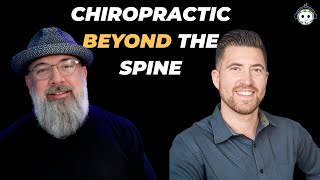
Dr. Kyle Bryant, a Washington chiropractor, spent 12 years specializing in extremity adjusting and created the Functional Extremities Chiropractor educational program to teach other practitioners. He treats ankle sprains, bunions, and tendinopathies by integrating extremity work with spinal assessments, and uses a cash-only model with social media content to build his practice.
Chapters
Your goal in marketing on social media is to stop the scroll, and so anything like this is going to get people to stop the scroll. So I think it's great.
You're listening to Cairo Candy, the podcast of sweet chiropractic success. Here's your host, Billy Sticker.
All right, welcome to another episode of the Chiro Candy podcast. We have Dr. Kyle Bryant with us today, and we're going to get into a little bit of his story, and then we're going to talk about extremity adjusting, which is. We've actually never had anybody on to really talk about extremities, so I'm excited to have you on. Very cool.
Thanks for having me, buddy.
Yeah, sure. So you're up in Washington state, correct?
Washington state, yeah. Most people know Seattle. Then there's Spokane, and then we're kind of. We kind of create a triangle with them down in the southeastern part of the state. And Kennewick, Washington.
Okay. Yeah, I'm familiar with the. We've got some friends over in the battleground Vancouver area, just north of Portland. So that's the closest I've been to. To where you are. Well, that's actually where they do Chiro Fest. Paul Reed is up in that area. So, yeah, great. Beautiful part of the country. So what. What got you started in chiropractic?
Well, I would say a few things. Probably the most impactful, and I've said this a few different times, is my mom was in a car accident when I was a young teenager, probably 13, 14, and she went to go see a chiropractor, Dr. Perry Barnhill. And I just thought he was the coolest guy. I didn't know anything about chiropractic at the time. I was just kind of typical teenager, hanging out with my mom, watching her get her adjustments. And I could see that Dr. Barnhill would kind of look over at me and notice I was gaining interest and eventually just kept telling me, hey, this is the best job in the world. Best job in the world. Best job in the world. Best job in the world. So that kind of got it ingrained in my head. And then throughout my youth, all I was really concerned about was playing soccer. So, you know, I just loved everything that had to do with soccer. When I. When I eventually went to college, that's all I cared about, was playing soccer. But I started to get some injuries that were pretty significant that set me back. Ankles, knees, those kind of things. And so I started kind of melding what would have been, you know, know said in the back of my head there from Dr. Bar Hill, just with my own personal experience. So by the time I was probably midway through college, I was like, all right, I think this is. I think this is my calling. And so just went kind of all, all eggs in one basket, went for it, and then got into chiropractic school and haven't looked back since.
How long have you been in practice now?
This is my 12th year.
Okay, very good. Well, somewhere along the lines, you started focusing a little bit more on extremities. What. What did that look like?
So I would say actually part of that probably started my first year in practice. I was fortunate enough to practice overseas in Ireland, and I also played for a soccer team that kind of traveled the country. And so they needed a team doc. I guess I got elected to be team doc as well. And so just found myself kind of regularly working with athletic injuries, you know, obviously soccer injuries. So you're going to see a lot of ankles, knees, hips, those kind of things. And it started kind of just showing me that it's like, all right, this is pretty cool that I can blend this with everything I had learned through chiropractic school. I mean, I know most of us in the current curriculums, we get exposed to extremities, you know, joint palpation, adjustments. But unless we get out and practice right away and start using it, you know, usually it kind of goes by the wayside. So that started hitting me from the very beginning. And then after I moved back to the States, I started working for a doc in Spokane, Dr. Keith Morehouse, who is just a very neat chiropractor. He was one that I always admired. He'd treat anything that walked through the door. He always found some way that he could help with the condition. But he was a ccep, a certified chiropractic extremities practitioner, a certification I had personally never heard about. But as I was under his wing practicing there for a couple years, I knew that that was the direction I wanted to go. So I became a CCEP myself, which for your listeners, I don't know if they've necessarily heard it because it's more. It's based out of Boise, Idaho, so it's kind of more popular this part of the country. But such a cool program that Dr. Heron came up with and got my certification. That was probably 10ish years ago. And so I've been refining what I learned with CCP and implementing it into a new system that we've come up with.
What are. Do you, if I can ask, are there Certain things that you see all the time with patients.
Sure, yeah. With. I mean, with our clinic. Our clinic name is integrative, chiropractic and extremities. So we have extremities in our name, although the common public. Public, when they have, you know, like an ankle sprain, they're not necessarily looking up, you know, extremity doctor online. So. But I would say we see a lot of, you know, I love working with old ankle sprains because they'll manifest in about everything. We see bunions, Achilles tendonitis, tendinopathies, Morton's neuromas. We'll see Baker cysts in the knees, collateral ligament sprains. And then, you know, a lot of tendinitis, bursitis, kind of in your. Your common junction, shoulders, hips, elbows. A lot of impingement syndromes that create neurologic symbol symptoms going downwind into the extremities. So. But one thing, and you and I kind of talked about this just a little bit, but one thing I typically do is always connect whatever brought someone into the office. I always find a way to connect that extremity back to the adjacent spinal structure and kind of their holistic structure in general.
So what made you want to start packaging this? I mean, this is something that you've obviously been focused on for the past 12 years now, but to actually put it in, in a program to help other, other docs, what led you to that?
It was. It wasn't necessarily I was something I was seeking out. It was just, you know, I love to learn. And so I kept finding kind of this foundational way of going about doing things with extremity flows and assessments and adjustments. And it's like each time I, even to this day when I'm doing them with patients, it kind of just reiterates to me how powerful this can be, and especially when you zoom out, you know, And I think for most of us docs in practice like it, we kind of can get into the habit or the rhythm of where someone hurts is where we focus. But this system that I've used and that, again, we keep refining kind of demonstrates in a. In a more zoomed out way of looking at the human body. So you're getting to a point where you don't leave any stone left unturned. You know, someone's old ankle injury may have altered their movement in such a way that now they have this, you know, chronic postural shoulder issue or this, you know, C1 subluxation that never seems to go away. Um, there's Just so many different ways that you can kind of connect the dots and see how the body's integrated into these different layers with this system. And so anyways, I have a good buddy that he was visiting me in town one day and I was. He had happened to tweak his back and so I was fixing or working with him on a regular basis. He's like, hey, this system is pretty cool. Like you should. Have you ever thought about, you know, showing someone else how to do it or to teach them? And I'd never thought about it. And that was kind of the spark right there. So.
So how you just recently kind of packaged all this together though, correct?
Yeah, I would say, you know, I've been, I've been making. I was doing. I was going to set it up as an academy type setup back in 2019 and just with life and the business of the clinic, I kind of had to put it onto the wayside. And so when I talked with Jeff here just a couple years ago now, that's kind of where the spark started. And so we've been working on the material, or at least packaging the material for probably the past, well, 18 months or so. So still fairly new, all things considered.
What's the difference that you've seen it make in your practice?
I would say this is defined, defined our practice. That's this kind of how we have people know us in town. You know, we're in a somewhat metropolitan area, 300,000 people, and we have a lot of good chiropractors in town. And I just recognized early there needed to be a little bit of a niche. We needed to have something that differentiated us. And so now here we are. We've had the practice open for eight years and you know, we have a five star Google rating of over 300 reviews. And just some. I think the thing, one of the things I take the most pride in is when you hear patients say, hey, I've seen. And not to knock on our own profession, but I've seen other chiropractors and just wasn't getting results. But you know, when you took the focus with the system that you guys use, all right, we were able to get somewhere. And I think for me personally, I hate hearing that, you know, someone, they had seen a chiropractor and not gotten results, so they assumed they're never going to get results for anything when they go to a chiropractor, you know, this one or the next one type thing. So I think to let people know the potential that chiropractic has And I mean, there's always the fit of the doctor and the patient for sure. But I think when you have a system, you can fall back on it. It's definitely more of a guarantee of better results, I think.
Sure. And what about, like, I would imagine you see a lot of referrals because of this, too, or where do you see the majority of your new patients coming from?
Yeah. Again, something I tried to do early on when we established the clinic was get a good referral system with different professionals. So I have my medical doctors, dos massage therapists, dentists, just tried to get a wide range of people that would learn to trust us. And I think when they saw that we had a good system, that we could look at things, you know, from maybe speak some of the Western medicine lingo, but translate it to how we would address things from a holistic chiropractic standpoint. I think it really showed that there's a good conservative option in there between PT and spinal chiropractic that would kind of allow you to look at these extremity injuries and this. This more holistic way of looking at the spine.
So tell us if somebody's interested, which I would imagine the majority of people listening are probably going to be interested in finding out more about your program. Tell us about that.
Well, okay, so the. I would say the program right now, we've had a release already which we call FEC Foundations. And that, to me, for the average person that's listening, would be the biggest game changer as far as simplicity to learn and the easy nature of you implementing it into practice. That would be. And that's kind of just the nuts and bolts of our system, but it really gives you a good way of looking at each major extremity joint and being able to tie it into what the entire extremity is doing and then being able to tie that into what their spine is doing. So that release we. We did six months ago. What we're really trying to hype up now is our second release, which we call FEC Advanced. So Functional Extremity Chiropractor Advanced. That's going to have more advanced modules, more advanced adjustments, and just kind of a deeper dive as far as clinically being able to connect the dominoes with each patient. And then the idea is eventually we'll have a third release, ideally at the beginning of next year, which we. We call FEC Complete, and that will be kind of the entirety of our FEC system. So anyone that's really interested in learning more, we have a website, the functional or functional extremitieschiropractor.com that gives you lots of good info, all the relevant info that you need. And there's different options to sign up. The. What we've been doing up to this point is it's been complimentary, but now we're going to start charging a low one time fee of 399 to gain access to both the FEC foundations and the FEC Advanced.
Yeah, that's a obviously very, very reasonable price for all the stuff that, that you've, you know, that you guys have done with it. And one of the things we were talking about before, before you hit record and hopefully it's okay I say this and if not, I can, we can have the guy that does all my editing scratch this part. But one of the things that you were saying is the reason you want to keep it at a low price right now is you're trying to get more docs on board and, and have them go through it to really give you feedback on it as well. You want to see them implementing this in their practice, but also let you know, hey, this is what we really, really liked about it. This is what we think can maybe, you know, be changed. Is that, is that a fair assessment?
Yeah. Thanks, Billy. Yeah. Very good reminder. Yeah, you guys, for anyone listening, I mean, this could really be a difference maker. You know, we've tried to model this system to cater to new docs, even students, or trying to model it to the chiropractor that's been a practice for 30 years, but has just seen spine. And now they're wanting to maybe freshen things up or change up the dynamic of the practice or especially for anyone that has a practice where they're just struggling, you're not having good patient retention. You're just, you're fighting tooth and nail to get people to come into your door. I mean, I can honestly say my practice, I've never done any marketing. All I do is just educational videos that we have on our YouTube channel. And the system that we use, it just creates a nice systemic path for people to regularly come into your practice. So we try and hit all those points and to what you were reminding me of, Billy. We think this has potential to affect the entire profession. So we're trying to implement it into the chiropractic, you know, profession as far as a low entry fee and just trying to get some feedback to see how people are implementing it, see how it's working with their everyday practice. And I'd really encourage if you guys are interested now, now would be the time to go in and sign up because eventually when we do release the third phase, we will have a significantly higher price point. And ultimately that's because we're wanting to certify Docs as a functional extremities chiropractor. So now would certainly be the time to kind of join in, get the gist of it. We have a supportive community group that we're there to talk through adjustments, assessments, any questions Docs might have. Also sharing testimonials that might be really cool where they're. While they're integrating the content. So it's really exciting. We're up to. We have a Facebook group right now that we have 80 members of. I'm looking to grow that for anyone that's interested right now. That will be included in part of this fee. But it'll be a really cool group of chiropractors and I think it'd really do some awesome things for the profession in general.
Excuse me. What I love about this is we are always trying to get our doctors to do more content for the community. Just educational content, short 30, 40 second reels that you're getting out to the community and extremity adjusting. Just people aren't accustomed to seeing that, you know, somebody getting their wrist, you know, adjusted or their ankle adjusted. That's great content because people automatically associate, you know, a side posture adjustment with chiropractic. You know, like, that's, that's common. But to your goal in marketing on social media is stop the scroll. And so anything like this is going to get people to stop the scroll. So I think it's great. From my perspective, it's great content that you could be putting out to your community in general to build that retargeting audience of people who know, like, and trust you and they see you over and over and over again doing all these different things and then all of a sudden, oh, yeah, he's not like, you know, or she's not like the guy down the street. They do, you know, things different. They're doing extremities. I didn't even know that chiropractic could help with that, but it makes sense. Like, I just think it's fantastic.
Yeah. Thanks, Billy. Well, and I, I mean, another kind of unique angle about our practice is we're primarily cash, but I also have it set at a higher fee. And that's because I don't necessarily want to be a destination chiropractic clinic. I don't want it to be easy access. I Don't want it to be. You know, we're just constantly rolling people through the door. Like this is. This is a true wellness clinic. You know, I have it right now where I'm spaced out to. I'm only. My next new patient availability is in about three and a half months. So it's not something that I'm trying to ram people through the door. I'm really trying to make, you know, kind of a premium quality understanding of chiropractic. And what you're saying is these, you know, these videos that we've done, we've called them tip for Tuesdays. I have them playing in our lobby, and I have patients all the time. They'll come in for their appointment and they're like, oh, I didn't even know a chiropractor could help with a wrist issue. You know, my grandma's been struggling with this or this. So it's a really good system as far as showing people that chiropractors have so much potential to help the body, even if that's their kind of entry point into seeing you is for their wrist injury. Most people that come in here, they'll. They'll start off with that dynamic and then we. We zoom out to eventually treating their entire body. So it's a really good gateway to get them in and understand chiropract and the potential it has for human health.
I love it. So good. So how can docs reach out? I think you said the website was functional extremity chiropractor. Is that correct?
Yeah. So website is functional extremitieschiropractor.com. that'll have the good majority of info for what you guys need. If you're interested, you can go sign up. Like I said, I'd jump on that now. If you guys are interested, you're welcome to reach out to me personally. My email address is Dr. Kyleis clinics with an s.com and yeah, any way that I could help you, even if you guys are somewhat interested but don't want to commit at this point, I'm cool just giving as much information as I can. And I would also encourage too, if you guys have Facebook accounts. Our Facebook group is free until we implement this stage two, so you can jump in there. We make some special content especially for the group, and you can kind of get the gist of it and see what it's all about a little more before you make any commitment.
All right. Dr. Kyle Bryant, appreciate you being on today.
Thanks, Billy. I really appreciate it.