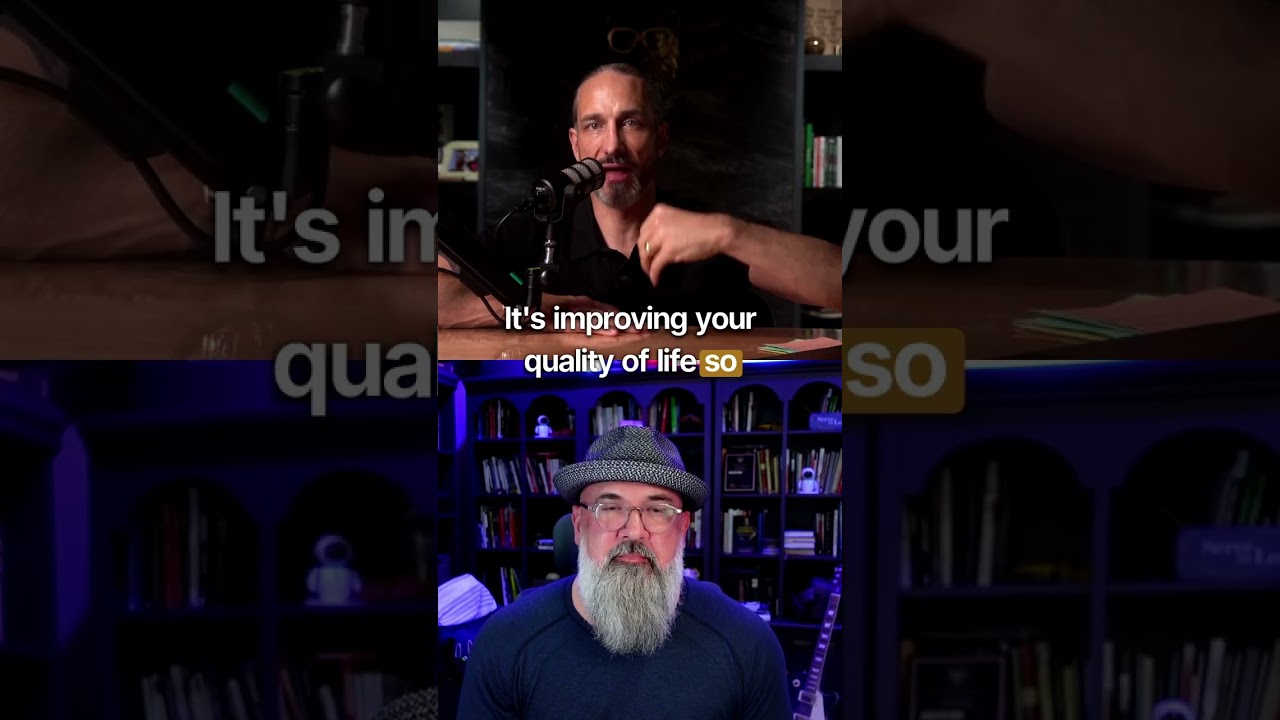
210: He was Dead and then... with Dr. Justin Moseley
Dr. Justin Moseley survived a near-death white-water rafting accident in 2018 that redirected his entire life toward chiropractic care and purpose. He discusses building his Nashville practice, overcoming burnout and limiting beliefs, and using content and personal branding to reach patients. The conversation covers practical strategies for scaling a practice, from hiring and team building to pricing and incremental 1% improvements.
Chapters
And I still remember the sound of my helmet scraping down the rocks as I was being pushed under. And the last thing I remember thinking is, I'm not coming back up. And then everything went black, and then everything went bright white, and it was the most peaceful, serene feeling I'd ever felt. And I lost consciousness, trapped underwater, wedged between two rocks. And I don't know how long I was out, but thankfully I heard a voice that said, wake up. You are listening to Chiro Candy, the podcast of sweet chiropractic success. Here's your host, Billy Sticker.
Welcome to another episode of the Chiro Candy Podcast. And I am actually embarrassed to say that this is the first time I've had Dr. Justin Mosley on. So we've known each other and I consider you a friend.
Yeah, it's been a long time coming, man. I'm excited.
Yes, I apologize for not having you on until now. So we've got a lot to talk about. We've got definitely a lot to talk about. So let's, let's get into your story. What brought you into chiropractic, uh, and then really what you're doing now, where your heart is.
Yeah, so what got me into chiropractic, I was actually going to college for video production. My dad's a video producer here in Nashville. That's what I was on track to do. And I became a personal trainer during college, and I loved helping people. And then I started developing headaches and some other symptoms, and went to a chiropractor and it helped me. And I was like, man, this is another way. Because really deep down, all I wanted to do was be an entrepreneur, and video production was the path to be an entrepreneur. But I was like, man, I like helping people as a personal trainer. Being a chiropractor, I could be an entrepreneur and build a business that way. So I shifted gears from video production to a pre-med major so I could go to chiropractic school. And when I got into chiropractic, I didn't know anything other than it was headaches, neck pain, and back pain. I thought that's what chiropractic was, right? And then when I got to school, I found out the philosophy and how the power that made the body heals the body, and we don't need help healing, we just need no interference. When we remove the interference, the body heals. And I fell in love with that. I went to Life. Okay, I went to Life. Yep. So fell in love with the principle of it, surrounded myself with people that talked about it and owned it, spent a lot of time visiting docs on the weekends, screening, doing spinal screenings back in the day to learn to communicate. And yeah, so then at the end of school, I went to Life. My wife now, she went to Sherman. So we met at a seminar in Orlando our last year of school. So she's at Sherman in South Carolina. I'm Atlanta. We did the long-distance thing. And hey, it worked out for me. We've been together 13 years now. I opened our practice in 2012 just outside of Nashville, Tennessee here and built an amazing practice. And so, Fast forward, 2012, we opened. In 2018, I had a near-death accident. I was whitewater rafting here in the Ocoee in East Tennessee. I was on a men's retreat. And it was just a freak accident. We went whitewater rafting. I'm sitting on the back of the raft. And we hit some Class V rapids. And the raft tipped over. And just me being on the back, I got caught underneath the rapid itself. And it started pushing me underwater. And I still remember the sound of my helmet scraping down the rocks as I was being pushed under. And the last thing I remember thinking is, "I'm not coming back up." And then everything went black, and then everything went bright white. And it was the most peaceful, serene feeling I'd ever felt. And I lost consciousness, trapped underwater, wedged between two rocks. And I don't know how long I was out, but thankfully I heard a voice that said, "Wake up." And when I did, I came back to consciousness, but I was trapped underwater and I tried to push and I didn't budge. And I pushed and I pushed and nothing was happening. And then finally my adrenaline kicked in. I would hear these crazy stories of like a mom that can lift a car to save a kid that's trapped underneath. Like, it was like this superhuman strength. I pushed hard enough, I broke one of the buckles on my life jacket that was trapped underneath the rocks. I floated to the top, gasped for breath, got swept down the river. Man, at that point I was rocked. Like, what just happened? And I'm sure you've been here. We all at some point in life—
I've never been there.
Not there, not there. But we've all at some point questioned our purpose in life. Like, why are we here? Like, what is all this about? But in that moment, ask a different question. I said, why am I still here? Because things could have been different in that moment. What if I didn't hear wake up? Or what if I wasn't strong enough to break free? So I started processing that, like, why am I still here? Like, I know God's got me here for a bigger purpose. And one of the big lessons I learned from that is I had gotten comfortable in life because life was good. Practice was good. We were helping people. We were making a difference in the community. I was living my purpose, but I was playing way too small. And what I realized, if I truly wanted to step into the purpose that God had on my life, I had to exchange my comfort for my calling. And that's when I started— and then kind of how I got to meet you— I just started building a personal brand. And it wasn't that I was trying to do that. I was just like, I know God's called me to go bigger, but I don't know what that looks like. So I started processing my own life and I was like, what am I passionate about? Well, I love mindset, personal development, leadership, marketing, sales, all the things. I've been studying for years. I'm just going to put out content about it so it can help others. And I don't know if anybody's going to listen. When I first put myself out there, I started a Facebook group the 1st of 2020, in January 2020. And I was like, I don't know if anybody's going to show up. But 1,000 people joined in the first month. So I was like, oh, this is cool. I mean, people are here, they're listening, and it just led to more opportunities. It led to speaking opportunities. I started speaking all over. Um, I did my first TED Talk in 2022 talking about my near-death, uh, experience. And then from there, just kept speaking more, and I just did a TED Talk last year that's about to cross a million views now. So that one's one of how I overcame my fear of public speaking. Because for most of my life, I had a tremendous fear of public speaking. Even in college, I almost failed a speech class because I had a panic attack giving a speech. But I had to overcome that fear ultimately to live the purpose that God has for my life. And I think a big, big thing that came from this was from my near-death accident. I was sitting on the side of the river, again, rocked, and I was just like questioning my legacy. Like, what if it all would have ended in that moment? Is this the legacy I want to leave? And the answer was no. And that still drives me to this day. Like, I don't want to get to the end of my life and realize I could have done more. I could have helped more people, or I could have made a bigger impact. So that still drives me right now. And it all stems from that near-death accident.
What a— what a story. You know, I definitely have not been there. I've had some close calls. I wouldn't— after that, I definitely wouldn't call them a near-death experience.
And that's the thing is most people, they think it's a near-death accident, it's a car accident, it's the loss of a loved one, a rock bottom moment. Something happens for us in order to change. And for me, I'm here to tell you, you don't need a near-death accident or you don't need a rock bottom moment. Like, you can change today. Like, people listening right now, you can ask yourself the same question I asked myself. Why are you still here? Because life is a gift. You didn't have to wake up today, but you did. And you didn't have to turn on this podcast and listen to us, but you did. Why are you still here? When you can answer that question, life changes.
I love that. With us, as you know, I think one of the reasons we connect, not just because of chiropractic, but our, our hearts for God. Yeah, right. And I think you— we both align with we're supposed to love God and love people, and we serve God by serving people. That's our mission. And there's a story in Kings where, uh, no, that's a different story. But, um, the Queen of Sheba went to go visit King Solomon, and I don't know if you've You've probably heard this one, but she just wanted to learn, like, because word had spread. They didn't have the internet, right? They didn't have YouTube and Instagram, but word had spread about what a great leader he was. So people from all over, all these other leaders would come and pay him gold and livestock and all this to learn how to lead better. And then Queen of Sheba was there and she was walking with him and she makes a comment and she says, God loved Israel so much that he made you their king. And it wasn't for him, it was because he loved his people so much.
Yeah, he—
that God gave him that purpose.
Right.
And I think that has to motivate you. It's not— I think too often in life we think we're not going to grow, we're not going to really be ambitious or push, push to that next level, especially in chiropractic, because in chiropractic that next level is helping more people.
That's right.
It's increasing your impact.
Yep.
But we think, oh, well, no, I mean, it's okay right now, and that's going to require more work, and then I have to hire more people. And you, you You have all these excuses why not to do it, but God loved your community so much he made you a chiropractor in that community.
Hmm. So good.
Not for you. It's for them.
Yeah.
And when you're not spreading your message, when you're not reaching more people, who's that not— who's that hurting? Your community.
Absolutely. Yeah.
Not you. So it ties back in with our purpose. So I love your heart in that, that why is it you're still here? Because it's not— our purpose isn't selfish. When we don't step into that, that's selfish.
That's right. Yeah. And I think my favorite quote is Zig Ziglar's. You can get anything in life that you want if you help enough other people get what they want. So we opened our chiropractic practice based off of that quote and the fact that Jesus didn't come to be served, he came to serve.
Right.
Both that quote and the Bible itself, Jesus's life was about service. So it is, it's finding what is your purpose. And then now you being the marketer guy made me think. So Larry Winget, one of the OGs in marketing, he's got a quote, find your uniqueness and exploit it in the service of others. Like everybody listening, you have a unique gift right now. There's— and it's different from mine, it's different than Billy's. You have something unique about you. Find your uniqueness and exploit it in the service for others. And man, it's a game changer.
Yeah, it's so true. And it's sad how many people just never reach their potential.
Emotions.
Yeah, I do some, some coaching, business coaching for other agencies, and, um, and I've had some people that they want to do it, but they don't do it. They don't do the work, right? Proverbs 14:23, one of my top scriptures, says, all hard work brings a profit, but mere talk leads to poverty. And that's where a lot of us get caught up.
Yeah.
Yeah. I mean, look at my plans. This is what I plan on doing. Okay, well, let's do it. Yeah. You know what the difference between wisdom and knowledge is? Like, we all have knowledge. We now— think about it— with our phones, we have access to all the knowledge in human history. Yeah. So we don't— it's not a lack of knowledge. It's a lack of wisdom. And wisdom is applying the knowledge, its application.
And speaking of wisdom, and you mentioned King Solomon, man, there's something that just blows my mind is it— all that he had in the palace and the money and the all the things is nothing compared to what we have today. Like the technology we have right now, he couldn't jump in a plane and fly to another side of the world. Like he doesn't have access to the things that we have today when it comes to wealth We are more wealthy than he was, and which just blows my mind, the things that we have access to. But we don't, we don't, we hold ourselves back to what we're truly capable of. And like you said, people aren't reaching their potential because they limit themselves and then they don't, they just don't take action. Yeah.
You know, or like I joke about this saying, why do today what I can put off till tomorrow?
Yeah, right, right.
But really, if you, if you look at where you're at and where your goals are, there are actions that have to take place for you to hit those goals. The question becomes, how soon are you going to get those actions done? Like, if you actually, if you knew exactly, and this is where the problem is, is we don't know exactly how many repetitions we're going to need. Till we hit that next level. But we know, we know it's going to take some. But if we could sit down and say, hey, I'm just going to throw this out there. If you went out and you did 20 workshops in 2026, your practice will double.
Yep.
Let's just say that if that was, if we knew that was the case. Oh, you just need 20 workshops. Yeah, you'd be thinking, okay, how quick can I do the 20?
Right.
But what we do is we're like, oh, I might do one next month. Yeah, I might do one. No, if you absolutely knew— and it doesn't have to be workshops, it doesn't matter what it is. We used to tell our salesmen this. I sold rare coins for 17 years, gold, silver, platinum, things like that. And whenever a new salesman that would come in and we would talk to him, we're like, look, because they would call existing clients of the company. They weren't like cold calling or anything. You have to make phone calls. You have to make presentations. Eventually, like, you're going to hit that next level. You're going to find that client. But you've got to make the calls. You've got to make the presentations. Is it 50? Is it 100? We don't know. Yeah, but, and so what happens is you just don't make them or you put it off, you know. But if you knew, and so I think that's it. Once we know what it is we want, do it.
Right. And so there's a psychological thing that's happening and happens a lot with chiropractors because they say, yeah, I want to collect X amount of money. I want to see X amount of volume. But psychologically, I don't truly think it. It's under, under the radar here. They're really thinking, but that's actually going to make me do more work and I'm not willing to do that. So they sabotage themselves. They set these goals. I want to do this, but they're not truly willing to put in the work, like you said, to actually make it happen. And I think that's where— because it's not tied to a deeper purpose. It's not about serving. And unfortunately, for some, for some chiropractors, we have such a heartfelt profession and we do set out to serve. But over time, we just get beat down and we get worn out because we are pouring so much of ourselves. We lose the purpose. And then doubling their practice sounds horrible because they're already at capacity because they're just so burnt out. It's because they lost the fire. They lost the purpose of why they were there in the first place, to serve the people.
But yet I know so many docs that serve thousands of people a week that work less now than what they did when they were seeing 150.
Yeah, absolutely.
And it's because when you grow, it gives you the capacity to employ more people, to build a solid team, to do these things. So it's not all about you. I mean, I remember when we first started growing Cairo Candy, and she didn't mean anything negative by it. I guess in a way she thought this was kind of a hobby for us. But revenue is coming in, and then we start hiring employees, and we had a family member say, why are you hiring employees? Like, don't you want to just keep the money for yourself? Yep, I understand what she's saying, but it's like, no, I— not if I want to reach and serve the people I want to serve.
That's right.
I can't do it alone, you know.
Yeah, exactly. And that's why I'm able to be right here doing this with you. I've got a team that's serving our patients right now and generating money that supplies the need for them. And I think that's a big misconception with a lot of chiropractors too, is they have a big vision, but then they realize I'm doing all the work. But then they're like, I don't have enough money to pay someone else. So there's a mindset shift they need to make right there. It's one is you're going to bring someone on, it's going to increase your capacity. You're not right here, whatever level you're making, you're not going to take money out of that and just pay someone else. Your revenue is actually going to increase to be able to cover both you, them, everyone that's in there. As long as you are putting in the work, you can't just sit back and do nothing, right? You can increase your capacity for what's possible. You bring in the right whos into your practice— who, not how— you bring in the right people and it actually increases your capacity. And for me, I had— and I blew my shoulder out back in the day adjusting, so it was a long time I didn't adjust anybody, but I was still driving the practice and had other people, other docs that are in there serving the masses and growing the practice without me physically having to lay my hands on people. So, but it starts with a vision. Without vision, people perish. I think too many chiropractors don't have a vision of that. They just think, oh, it's got It's just gonna be all on me. I could never have an associate. I don't even know where to find one or how to hire or do all the things. But if you get the vision, you can find the answer.
And I think we lose the vision for a couple of reasons, I think, and I'd love to hear your input on this. We get stuck doing the, going through the motions, right? It's 6:30 every morning. We're standing in front of the mirror shaving, you know, like every— just about every day. Like, we just get in these routines and, and we put off, you know, doing something today that we could do tomorrow, you know, and we just— I'll do it later, I'll do it later, I'll do it later. And then, and then all of a sudden we get burnt out. And what do you, what do you say to that person that's that's where they're at. They've been grinding and they've had the ups and downs in practice, but right now they're just like, I'm, I'm just stuck. Yeah, I don't even know if I want to keep doing this.
Yeah, and I think the biggest part is they're trying to, to get to a different level with the same level of thinking. They're thinking, I have to do more, more of the same is going to— more work it's just going to make me more exhausted. But instead, you have to give yourself one, allow yourself to dream again and say, like, what if it didn't have to be this way? What would life look like if I could have an amazing practice that's serving the community, making lots of money, helping people? What would need to happen for me not to be exhausted there? And that's where, okay, who would I need to hire? That's one of the biggest things. What would the team have to look like? And yeah, maybe you can't do it right now. But you can work every day towards that vision, but you have to have a vision that excites you. And talking about just going through the motions, because a lot of people do this, like with morning routines, like, okay, I woke up and I was told I was supposed to do gratitude. So I wrote down 3 things I was grateful for, and I did this and I did that. But those things just become a checklist. They're not actually feeling grateful. The whole point in a gratitude list is to change your state and to change actually how you feel and actually how you show up. I learned this while I was back in chiropractic school from Dr. John D. Martini. He wrote a book all about gratitude, and I got to interview him a couple of years ago and ask him about his gratitude list. And he was like, I have journals and journals full of just my gratitude. And he showed me now he's got it digitally. So he's got a Google Doc that's 4,000 pages long, and it's just all the stuff he's grateful for. But he talked about in the book years ago, he doesn't even get out of bed until he has a tear of gratitude coming down his face. Because that's an emotion he wants to feel. When you're grateful, you can't be in fear, worry, and doubt. So if you are in those and you're in scarcity mode and all those things, get grateful. And I don't mean just check off the list— I love my wife, my car, my house— all the things. Truly feel grateful for it. And when you can get yourself to be that, in that state, start there and then say, okay, what could practice be like if I could have my practice and my dreams A lot of people are afraid to dream because they're like, well, I want that, but I can't have it. And they come up with all the reasons why they can't have it. And I don't know who actually said it first. I've heard it from Dan Martell, but he's like, the reason people don't reach their goals is because there's a clear path to a lesser goal and people just choose that. That's the easy way. Oh, I want this, but it's a lot easier to go over here, so I'll just go there. And they do the easy things. But sometimes you got to put in the work. Like you said, you got to put in the work. But it starts— it's not just putting in the work. Carpenters have been putting in the work for years without a vision of something better. So they just do more of the same work and that's what leads them to burnout. So I would go back to let yourself dream. And when those voices say, you can't have that, go back to what if I could? That's one of my favorite questions. What if it could happen?
Yeah. What if it did? If you think about the psychology of worry, You're just thinking, what if this bad thing happens?
Yep.
That's what causes worry.
Yeah.
And that's it.
Yeah.
But what if it doesn't? What if you did win? What if that— like, it's just as much energy, right, to think that.
Yeah.
And, uh, yeah, that's so good talking about being thankful. I've got a book that I bought. I haven't picked it up in years, but I still love the fact that I have this book and it's 10,000 Things to Be Thankful For.
Wow.
And it looks like a little phone book, but you just flip it open and you pick one and it's, you know, porch swings, right? You know, heart surgeons, like it'll be something real serious. And then the sound of a baby laughing, right? And you're like, oh, yeah, good. And then there's like door hinges. Yeah, I'm thankful for those, right? There's so many things to be thankful for. But what's great is just grabbing that and just kind of flipping through it.
Yeah.
You know, now I don't have to flip through it. It's just easy. Just thinking about the book puts me in the mindset of, man, I'm so thankful that somebody invented this technology that we have now.
Yeah.
That I can work from home. That, you know, we can be 800 miles apart and be sharing a cup of coffee. Exactly. Yeah. And so, yeah, there's so many things to be thankful for. So I do like that.
But too many people spend that time in worry, like you said. And it reminded me because I shared that Mark Twain quote in my first TED Talk is he said, I lived a life of many troubles. Most of them never happened. And it's because they all happen in our mind. We worry about what could go wrong if I did this or I did that. And sometimes it becomes a self-fulfilling prophecy because you're thinking of it and you're making it happen. But a lot of times we fear how bad something's going to go. And then you have that experience and like, oh, that wasn't bad at all. Well, why did you spend all that emotional, mental energy about worry and fear and doubt when you could have been thinking about, man, what if this goes right? And that's how I like to shift it. And I think about what are all the good things that could happen by doing this?
Something else Brian Tracy talks about is, you know, the, the speed between first place and second place is minimal.
Yeah. Yeah.
Like a horse can win, could win a race by a nose.
Yeah.
But the prize money, the purse is 10 times what it is, right, of somebody that was just a little bit behind. But also what that says is sometimes for you to increase your practice doesn't mean you have to do twice the work. Sometimes it's just a little bit more. It's going to get you to that next level where the bigger prize money is.
Yeah, yeah.
It's just, you know, a little more. Going back to what I was saying earlier about, you know, coaching calls, I don't do a lot of it anymore, but I have a couple that that I do some one-on-one coaching with still. And I got a call from this guy yesterday, and he was just so excited. Like, he got his funnels dialed in, and he's like, Billy, I had 13 sales calls Monday. 13 sales calls. If you're figuring they're— even if they're 30 to 40 minutes apiece, that's a very long, mentally draining day, right? And he's like, 7 people said yes. And it's like it was— it's so exciting to see him crush it.
Yeah.
But so many people where he was a couple of months ago, it's like, man, this isn't working. Like, I'm trying to say, okay, pivot. Like, just do— like, don't stop. Don't stop. Don't— what I like about this guy in particular is he, he's just not satisfied. Doesn't mean he's not grateful. Right? But he's not— because there's, there's a difference here. And I think that's where sometimes, like, well, I'm just satisfied where I am because I'm thankful for what I have, right? If I want more, it means I'm not thankful for this.
Yep.
And I don't think that's the case. I remember— I'm going to be totally vulnerable here— we lived in mobile homes for a long time. Yeah. Uh, and I remember making good money But some stuff happened. Just a good friend of the family's had passed away, and we had just sold a house, and we ended up moving into her mobile home, uh, to help out with some other family that they had. But anyway, we're in this house, and then we're looking for a house, and we looked for over a year and just couldn't find anything. And I knew my kids were at that, like, junior high age, and You know, I said, look, why don't you have more friends come over? Well, they know we're looking for a nicer house. And one of them was like, Dad, I get it. And please don't be mad. I kind of want to wait till we get our new house, you know? And especially being a teenager, I do understand that. But I remember one day sitting in the driveway and I was like, God, I'm thankful for this. And if this is where we are forever, I'm fine. Like, our kids are taken care of. We have a great life. There's so much we have to be thankful for. We would like a new house. Yeah, but I am thankful for this.
Yeah.
And I think that's how we can be with our business or whatever, wherever we're at.
Yeah.
You know, it got me wanting more. Doesn't mean I'm not thankful for what I have right now.
Yeah, absolutely.
Very thankful for this.
What I like to tell people is you got to be content but not complacent. Because Paul talks about, I've been— I learned to be content in any situation. When I've had plenty and when I've been in need, I can be content. But too many people get complacent, and they might have been in your situation, but, but this is all God has in the cards for me. I just need to be thankful for this and just settle. Versus, no, God gave you talents and abilities that obviously you tapped into that created a whole new life for yourself. So that's where there's like a crossroads right there. Some people will just stay Both you were— both person A and person B could be grateful, but the one that's actually saying, I'm not going to settle for this, they're the ones that are actually going to succeed. And at the end of the day, it's not about success, money, the different house. It's just, I believe, like, God gives us these talents and abilities. That's God's gift to us. But our gift to God is developing these talents and abilities. How about we do more with what God gave us? Because at the end of the day, at least for me, it's all about how much more impact can I make. I'm only here for a short, short time. And especially after a near-death accident, I'm in bonus time, like in soccer. Like, you don't even know when the game is over because, like, they have what's called bonus time, right? And only the referee knows, like, when is this game going to end? So for me, I'm in bonus time, but we all are, man. We got the gift of life today. And I think it's to develop our skills and abilities that God has given us because they're all unique and just use that to help serve more people, make a bigger impact. And then when you do that, the money comes, the other things in life come as a byproduct of you just getting out there and serving people.
Just serving. Yeah. So good. With Garrett Gunderson and I were talking the other day and actually had him on the podcast also, but we were talking about traveling. And one of the things, knowing that we're on bonus time is taking advantage, I guess, taking advantage of the day and the time. And don't put off taking the trip. Don't put off making the phone call. Don't put off doing these things. And there's been times where, man, financially, probably makes more sense for us not to do this trip. No, you know what? We're in our 50s now. I mean, we're in great health, but we're going to take the trip because we don't know how many more trips we have.
Exactly.
And my wife was— Rusty was a home health nurse for a long time. And this is really what changed in our marriage that really put travel as something we value as a family. She came home one day, she's like, hey, we need to talk, which is always nervous. You know, whenever your spouse says, hey, we need to talk.
Yeah.
She's like, we always say that we want to travel like that. We want to travel. We want to travel.
Yeah.
All of these patients that I'm seeing are older patients, and over and over again, I hear them complaining that they waited too long to travel. They wanted to wait till they were older because they would have the time and the finances. Well, now they have the time and the finances, but they don't have the health. And which there's a lot to be said there about choices you make in your health, you know, but we're talking to chiropractors where most of us are doing pretty good there. And so we made it, we made that a priority is we're not going to, we're not going to put those things off. If we have the opportunity to take a trip, we have the United app. On our phones because we're out here in Houston and United's a hub. So we can— that's typically who we fly with being right here. And it shows you how many days to your next flight. And when we don't have a flight booked, we kind of joke about it. We're like, what's going on? We got to have something planned. You know, we need something. But I think we, we have one shot at this life.
Yep.
Let's go.
That's right.
Let's go do it. So what do you say to that person? Okay. I mean, we've talked about their purpose, you know, finding their purpose and not being complacent. What are some of the key things that you see doctors make? Mindset-wise, whatever, some of these key changes where you really see them step into that, that next level?
One, I think it's one thing you actually need to do is surround yourself with people that are thinking bigger than you are. And for me, like, if I'm the smartest person in the room, I'm in the wrong room. Like, I want to be the dumbest person in the room. I want to learn from people that are doing things bigger because they're going to have a bigger vision that than me, and they're going to be able to show me how to get there faster. So one, if you— one, like I said, go back to vision. You got to have the vision. If you don't have it, surround yourself with people that are doing bigger things, because one of the things you'll notice is they're not much different than you are. And if they can do it, you can do it. So look at who you're surrounding yourself with and making sure you surround yourself with the right people. And then I think it goes back to the limiting beliefs. You got to stop thinking about, um, where you are and making all your decisions based off of what's going on right now versus from the future. Like, if you truly created the practice of your dreams, what would that look like? And I got to interview Dan Martell on the podcast, and he talks about the person who is going to reach your goals is not the person you are today, because if you were already that person, you would already have achieved your goals. So you got to know, one, what do you want? But more importantly, who do you need to become in order to achieve those goals? And I think back to your question, most people aren't growing themselves. They're not trying to become better people along the way. They're the same person trying to reach bigger goals, and they just do the same thing over and over and over, wondering why they're not hitting these goals. Well, one, do you know what you want? Most people don't. When I ask them, what do you want? They'll tell me all the things I don't want. Well, I don't want to do this. I don't want to work these hours. I don't want to blah, blah, blah. All the things they don't want to do. But when you get really clear, what do you want? Number 2, then you can ask the real question: Who do I need to become in order to achieve this? So, and then there may be a season, like we go back to, to practice, like if it's a get an associate so you don't have to do all the work, there is going to be a season where you do need to put in the work. But if you know it's for a bigger purpose that I'm going to be able to make enough money to hire this other person to come in and help me, and then if I get that person in, I can scale back and look at, okay, I bought back my time. Somebody's coming in, helping me to adjust. How can I use my talents and abilities to grow the practice even more? And maybe it's adding another associate. And I don't want to get too far ahead of myself because that freaks people out, thinking too far ahead. But just start with the vision. If you need help and you're burnt out, and that's the big, biggest thing I see with chiropractors, they think it's a, it's a one-person show. Like, it's got— it's me. I've been running this thing for 10 years, 20 years, whatever it is, and I've never had an associate. It's all on me. No, get that person to come and help you, but have the vision of what it looks like and then be willing to put in the work. Uh, I was telling you before we got started, there was, there's a doc that reached out and she wanted to collect $50K, and she was, she was averaging about $20K, so that's over double. She wanted to get to $50K. I was like, okay, that's great. And she'd been following my stuff for a while, and mindset. I was like, that's awesome. So what do you average, um, new patients per month? And she's like, well, last month I had 6. And I was like, what about the months before? She's like, yeah, I usually average about 4 to 6 new patients a month. I'm like, well, first off, there's— you have such a low standard of what you accept. Like, for me, like, we'll see more than that in a week. And you're like, you're okay with just seeing 4 to 6 a month? You're never going to get to $50K. And maybe the first step is you need to reach out to Billy and talk about how do I get more patients coming in here? Because it starts there. If you can't attract new patients, and then you gotta look at, well, can you convert new patients? You gotta look at all the pieces. Can you attract them? Can you convert them? Can you connect? Can you sell? We have to sell. Yeah, you gotta retain. Retain is huge. Think about if you could just retain a few more percent of your patients over time, that's huge. So there's all these parts and pieces you can look at. What— and I would recommend that, write down, these are all the parts and pieces of my practice. What do I need to get better at? And don't try to get better at all of them at the same time, but start with one. And if it's on the front end, you're not attracting the patients, start there and reach out to an expert like Billy and say, where do I start? And one thing I like about your style too is putting out content, because when you get in front of people and people get to see you, they're already pre-sold before they come into your clinic because they already got to know, like, and trust you before they even met you. So start there and then look at, okay, what are the next pieces and what do I need to get better at? And the better you get at these things, the better your practice is going to be. But it goes back to what we've talked about. Too many people are just going through the motions. They're showing up doing the same thing every day and they're not getting better at anything. So if you got 1% better at something, I think James Clear is one that talked about it in Atomic Habits. You get like 1% better over the year like it's an exponential percentage that you're actually better. It's not just a small incremental amount. Like, you get a huge amount just by getting 1% better in one area. So I would look at that and say, where are the areas in my life, in my practice, I can get better? And not even your practice. I look a lot— look at your relationships. I've seen too many chiropractors, their, their marriages are failing because they're so focused on the business and how it's not working, then they're not being present at home. So I heard Dave Ramsey talk about your business. Man, how did he word it though? Basically, it's a mistress, and the mistress will try to steal your marriage because you'll put your mind on the business all the time. And all of a sudden, you'll look up, it's 10 o'clock at night, and you'll look at your wife like, I'm sorry, I haven't been present. I've just been having to focus on the business. Well, the business becomes your biggest mistress. Don't let that happen. Focus on your marriage. Focus on your kids. Focus on the things that are important. And also figure out how do I balance that? There's got to be a season. I'd be there when I'm there. I'm there. But when it's business time, let's go. Where can I grow? Where can I get better? And what can I focus on?
I think Jim Rohn says something about that. Wherever you are, be there.
Yeah, that's good.
It's really that simple. And I do think there's also harvest time and seed time. Right. Not to make excuses, and it can't always be sea time, but there are sometimes like, honey, look, we're— give me just a little bit. These next month or so, we're going to be grinding. Yeah, but you can't stay there.
Yeah.
And that's one of the reasons we travel. We do these things because, like, we're making these memories, right? I don't want to have regrets. Like, you should never have regrets.
Absolutely.
What is it you need to do? But I like to ask this. So everybody listening, I want you to think, is it possible for you to double your practice next year? Is it possible? Is it possible for you to triple your practice? And I'm going to tell you the answer is yes. Think about it this way. If somebody else came in and took over your practice, could they double or triple it? 100%. There are people out there that could step into your practice and double or triple from where it is right now.
T.D.
Jakes has a quote. I love that we're using all these, you know, giving credit to all these other people. But he says you should never let anyone else play the cards you were dealt better than you play them.
Hmm. Yeah. Yeah.
And so you have to look at your hand because there's some people, it's like, oh, well, they just have better cards. No, people have won millions of dollars with a really crappy hand.
That's right.
Because they just knew how to play them well.
Yeah.
And you have to look at— you may not have the personality that this other person has, or you may not have this, or you may not— okay, what do you have? What do you have? And then how do you use that? You know, the parable of the talents. It's not about looking at what somebody else has. It's like, what do you have? And what are you— if you don't— going back to that parable in the story, the person that didn't use those talents, they were taken away and given to somebody else. So I— you can absolutely do it. You made the comment while ago, what one man can do, another can do.
Yeah. And we can jam on this stuff all day because I know from Bob Proctor, Bob Proctor talks about most people aren't even the star role in the movie of their own life. Like, we're like second actors in our own movie. Everybody else is the star of the show. Like, no, like we talked about, life is short. We got one shot at this thing. You should be the star of your own movie. The cards that you're holding, you should be playing those. The best that you could play them. So yeah, I think all this is right, and it goes back to— that was a powerful question. Like, when you ask, could you double your practice? Absolutely, the answer is yes. Could you triple it? Yes. What's going to happen is they're going to hear it and you're going to think, yeah, but— yeah, I could, but this, but that. Powerful exercise is ask yourself that question, and then every yeah, but that comes up, write that down. And then try to ask yourself, where does that come from? Because it's a lie. Whatever the "yeah, but" is, and there's, there's truth. "Yeah, but I don't have the staff." Okay, great. That's, that's a lie that's going to keep you from getting to your practice because you could hire the staff. You can make enough money to bring more people on. So there's always a clear path to it. There's always, "Yes, you could double it, and what would that take?" "Yes, you could triple it, what would that take?" But you've got to get over all the "yeah, buts." "Yes, I could, but I only have this." "Yeah, it's only me." "Yeah, I only make this much money." "Yeah, but, but, but." But write all those down and like, okay, well, how do I overcome that? What would I need to do to overcome that? Because you get those out of the way, you could easily double, easily triple. And back to your other thing too. Yeah, I was just thinking, because, um, back in the day I would hear other chiropractors that would say that to— from the stage, they'd be like, if I came to your town, that I would do X, Y, and Z to your practice. And at first I thought it was just ego, like them just saying that, but No, it's true. Like, if you put some— a successful chiropractor that's, that's done great things could come into a struggling practice and immediately turn it around. Not out of ego, just because of one, their belief in themselves, their knowledge, their talents, their skills that they have built up. But if they can do it, okay, well, how do I develop those talents, skills, and abilities that they have and apply it in my own practice and be able to take this thing to the next level?
Yeah, and you do it by becoming the person that can have it. You know, you said a while ago you got to know what it is you want.
Yeah.
Then you have to figure out, okay, who do I have to become to do it? And then the question I think after who do I have to become is who do I have to serve to get there?
Yeah.
Because right now all the money you're ever going to make in your life is in someone else's pocket.
Yep.
But they will gladly pay you when you're providing the service that they want and need.
Yep. Yeah.
And, and so that's it. Like, right now, all the money that you're ever going to make, it's out, it's already out there. It's sitting in somebody else's pocket. You just need to show them you care enough, you're going to serve them so well, and you're going to serve as many people as you can to be able— you know, like you said earlier, that's the, the money is just a byproduct to how well you serve.
Yeah, yeah. And Jim Rohn said, he said, if you want to make a million dollars, just go help a million people and have them give you a dollar. It's that simple. And it's like, yeah, that's true. Like, you don't have to do it for just a dollar, especially chiropractic. It's a valuable service. It's a math problem. Okay, you want to make a million dollars? How much service at what price point did I need to deliver? And then figure out how to go deliver that. But it's not about— it's— it— you get too calculated on numbers and KPIs and all the things, and you forget about the service side. That's where people stall out too. You've got to have the balance. And I've seen it too far the other way. I just want to serve, and then you don't make any money because you just give everything away. No, you got to have the balance. I know that's a good thing that you've done. I know surrounding yourself by people like Myron Golden, the people that, that are biblically grounded in making money and being successful. And that's what I like, is like money, money is not evil, and money misconception that money is the root of all evil. Like, no, when you love money and you make your— all your life about that, that's one thing. But no, money can be a tool that can actually increase your impact and allow you to serve more people. So you got to have that balance of, okay, I want to go serve, that's number one, let me focus on serving. How do I turn that serving into money so that I can use that money to serve even more?
Yeah, so one of the things that really helped me in that is, have you ever been sitting in a service, you know, at church, and the preacher, the speaker's speaking on one thing and it's all good, but at the same time the Holy Spirit's even showing you other things?
Oh yeah, a lot of times I got notes going on over here, just these little nuggets that are being dropped. Yeah.
And so I remember this guy was talking about the widow woman who— this was the story in Kings I was kind of referenced earlier At first she goes to Simo, she's like, or no, she goes to Elijah. She's like, look, my husband was training under you, you know, in the school of prophets. Like, he was training under you. He's gone. We had debt. If we don't pay this debt, they're coming to take my boys. What do I do? And he's like, okay, what do you have? I don't have anything. That's why I'm talking to you. What do you have? Well, I got a little bit of oil. I said, okay, here's what you're going to do. You're going to go borrow these vessels, as many as you can. So one right there that shows it's okay for us to borrow. Yeah, for business, right? It's not all that's bad, right? Anyway, go borrow as many as you can. And then the story goes, her sons go out and help get all these, all these vessels. And as they start pouring the oil, It doesn't run out. And then she's like, hey, I need another vessel. Like, we don't have any more vessels. And then the oil was gone. Like, that's it. And so she's like, okay, got all this oil. What do we do? He said, go sell it. So it's okay to sell stuff, right? That's not bad. Go sell it, make a profit, pay off your debt, and you and your, you and your boys live on the rest. And whenever he mentioned live on the rest, that was the Holy— like, the Holy Spirit used that to show me it's okay for you to have a nice house and have nice cars and do all that and go on these vacations as long as you're paying your debts. You're doing— like, you're— too many people do things backwards. They have a nice house, have a nice car, they're not paying their debts, they're not being responsible. But when you do it in that order, then you, you and your family live on the rest. I was with my dad one day and you and I were talking about my dad before we hit record. Phenomenal guy. Did he have his faults? 100%. But he was a good guy. And we're, we're in the truck together and we saw somebody drive by in a G-Wagon and I was like, oh, Dad, there's so-and-so. And I knew my dad really didn't like this guy. And he's like, oh my goodness, there he is, flaunting his money. And my dad just kind of goes off. And we've all heard people say this. We may have been guilty of saying stuff like this before. And it kind of hurt because we were in a position, we had a nice house and like we were in a position, we could, we could have a car like that. We could, you know, And I was like, Dad, I just want you to know that's, that's kind of unfair. Look at all the real estate this guy owns. How many people have homes because of him? Like, he's serving a lot of people in the community. And also that attitude makes me feel like I can never go out and have a nice car because I don't want people to think I'm flaunting. My wealth, right? And it was so neat because he was like, you know what, you're right, you're right. And it was just a very neat moment for me and my dad because that's what I was afraid of, you know. And then it was shortly after that, you know, I, I hadn't heard the story before about, you know, the oil and the vessels, but being able to really dig in there and see how many truths were applicable. But I love, love the part, go, go live on the rest.
Yeah, no, yeah. And I loved you pointed out about the borrowing too, because we always hear borrower is the slave to the lender. Everybody likes to use that one, but there's a perfect example right there where he says go borrow.
So yeah, and if they would have borrowed more, they would have made more. I'm not telling anybody they should go—
yes, because it is a bunch of financial debt, but because they for general purposes, it is, yes, stay out of debt. That's a solid principle because people get themselves in trouble. But yeah, there's a way to leverage debt and all those things.
Uh, but yeah, scripture also says it's better to lend than borrow, right? Well, so if borrowing's a sin, it wouldn't say it's better to lend. Like, yeah, you know, it's better to help people get in sin. No, it's like saying it's better to be in a position that you can be able to do that.
Absolutely.
So, and I tell you right now, we, we can sit here and talk about this stuff for hours. Yeah, this is great. What's, what are some closing thoughts that you have?
Yeah, one is just to clear things up for people too, because a lot of times when I talk about vision and purpose, they get caught up because they think they have to have some Mother Teresa-sized vision and, or I need to feed the hungry or do all this stuff. No, like start with where you're at. Maybe it's walking into your practice today and just putting a smile on somebody's face. Maybe just being present with that patient and not worrying about finances and bills that you gotta pay and just making that person feel seen and heard right in front of you because they're not getting it in their life. Like, people are so distracted. Like, just be present with people. That could be your purpose for right now. And a lot of people get caught up on dreaming and setting goals because they think it's overwhelming trying to think 3 years or 5 years or 10 years in the future. Stop. Take a step back. Like, what if you could just change something right now, just in this season? What's a goal you could set? You say, okay, I'm no longer settling for this. What can I change right now? And just start small, but definitely figure out what do you want and give yourself the space to just sit there and figure that out. And then I'm wearing the shirt, You Are Enough. And I think that's a reminder for you right now. You don't have to have a certain amount of collection, certain amount of volume. Like a lot of times we are competing with other people in the profession, like, oh, they're successful, but of X, Y, and Z. A lot of times those successful people are successful on paper, but their marriage is falling apart. They're not there for their kids. Their life— you wouldn't want to trade their life anyways. So one, you are enough right now. God's giving you the talents and abilities. Use those to bring honor and glory to him. Maximize those. Figure out, okay, what are my talents and abilities? That's step one. Like, how can I use these even more to serve people? And then, uh, you had asked me before, like, the biggest thing that I want right now in this season— I've got a TEDx talk that it's about to hit a million views, and I would love you guys to help me reach more people. And the only way to do that, if you go watch my TED Talk, if you make a comment, share it with people if you'd like. I did a TED Talk on how I overcame my fear of public speaking, because I truly believe that everyone has a message to share, especially if you're a chiropractor listening to this. Like, you have a message to share, and your message getting out there is going to impact thousands of lives. And I actually shared B.J. Palmer's quote in my TED Talk. You never know how far-reaching something you may think, say, or do today can change the lives of millions tomorrow. So get out there and share your message. And whether you're a great speaker or not, I've had a lot of like public speaking coaches that are using my TEDx talk to actually break down and show like the psychology of a talk. So I think there's something for everyone to learn from it. But I was really just sharing my heart and where this came from too. Like I did a TED Talk in 2022 I was asked to come do one in 2023, but I didn't want to because I was spending time praying like, God, what message do you want me to share? And this is really a God message, this one that I just did last year, because he revealed to me this is the message that can truly help people. And I think that's why it's got so much traction, about to hit a million views, because it's not of me, it's of God. And something I haven't shared publicly, I'm probably going to do some posts on it. I wrote my talk. In one day, I think less than 2 weeks from when I actually had to deliver the TED Talk. Like, God had given me the concept and I knew what, like, overcome my fear of public speaking. That's my message. That's what I'm going to share. But I was just processing. I mean, I'd lived it, so I had the stories. But I was in South Carolina visiting my wife's family, and I was riding a bike down, down this long driveway, and God just downloaded it to me all within a few hours, my entire TED Talk. And now it's making a huge impact. But that's the power of giving it to God. Like, this wasn't about me. What message can I share that's going to help people? It's like, no, God, what message do you want me to share in the world? There's lessons that I've learned from the stuff that I've been through. Like, God took me through that for a reason. How can I use that stuff to help people? And man, God, it was this divine download. He just gave me that whole talk within a matter of hours. Yeah, now it's cool to see it affecting people all over the world. People comment like, I'm watching from Denmark, I'm watching from all these countries across the world.
They're so great. And I think even that'll preach. Like, there's a message there that, you know, when you ask God, he didn't have to scratch his head and say, give me a second, I'll get back with you. Yeah, no, that's something else is I think God right now— and I talk about this in my Blessed Entrepreneur book. Book, that God's up there with all these business ideas and all this favor. And he's looking for people that are going to be faithful with their talents and with their time, with their resources, that he can trust to give these to people, right? Like, he's, he's an abundant God, and he's just waiting for people to ask and to be willing, right? And to be the type, to become that person that he can trust with it. And some of you want things, and he's already given you some things that you're not even using. Yeah, you're not even doing anything with. You got to be faithful with a little before you can be faithful with a bunch. But, uh, but I just love, one, how you, you give so much glory to God. But yes, so to watch this I guess the best way, go to YouTube, look up TED Talk, how to overcome public fear.
Yeah, if you just type in Justin Mosley TED Talk in YouTube, it'll come up there. Yep.
Yeah, great. We'll definitely want you guys, everybody, go and watch it. If you have multiple YouTube accounts like me, watch it on each one.
Hey, there you go. Appreciate that.
Yeah, that's great. Justin, thank you so much for being on, man. We definitely have to do this again because it's been been, you know, pushing an hour, and I feel like we can keep going.
So absolutely, man. Thank you for having me. Always blessed to be around you and spend time with you. So thank you.
Thanks, man.