136 - Redefining Inclusion: Strengths, Structure, and Support with Blake Baumann and Pickens Calhoun
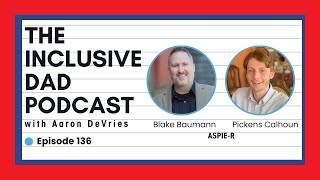
Blake Baumann and Pickens Calhoun discuss coaching neurodivergent young people toward independence through structure and small consistent actions. They cover practical career prep like resumes and volunteering, and explain their Autism Independence Academy program designed to build confidence in autistic teens and adults.
Questions this video answers
15 years old.
Autism Independence Academy: aia-launch.com; Aspire: aspie-r.com.
Good day, fellow champions on inclusion. I'm Aaron, and this is the Inclusive Dad Podcast, where we explore inclusion and make it practical. Thank you for taking time out of your busy schedule to join me in exploring ways we can create a more inclusive world together. You are important, you matter, and you can make a difference. Today is a little bit different. I have two guests. I have Blake Bauman and Pickens Calhoun. Welcome to the show.
Hey, thank you for having us. And I guess if you're Aaron, I gotta be B. Locke, right?
There you go. I don't know how you pronounce chickens like that. PI.
I know.
Yeah.
Pete Hickens. I think.
I don't know.
So why don't you just start me. Start us off by telling us a little bit about yourself. I mean, you guys each want to do a little brief introduction?
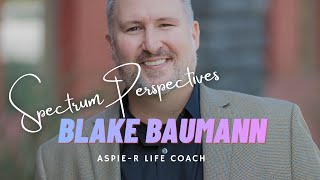
Sure. Absolutely. So, as you mentioned, I'm Blake Bowman, and I am the founder of Aspire Autism Coaching and now the Autism Independence Academy. And essentially, I was a person that got diagnosed later in life, and so I got diagnosed in my upper 30s, and it's when my son actually got diagnosed is when I found out that I was also on the spectrum and so really focused on trying to help him. And in that process, organically became a coach and started these coaching businesses. And then I brought Pickens on because he has his own neurodivergent story, and. And so I'll just turn it over to Pickens.
Yeah, absolutely. So my story is a little same, but different. Basically. You know, obviously, I'm a little bit younger, so coming out of college, I was working in tax consulting, and that's actually how I ended up meeting Blake. And it was pretty cool because, you know, the tax credit that I really was working on towards the end was something that strived to help, you know, diversity, inclusion. You know, basically, it's a tax credit that's designed for people like, you know, veterans, people on disability, you know, long term unemployed people, stuff like that. But, you know, eventually I kind of hit this point where I felt like I needed a little bit of a change, and I absolutely love what Blake does. You know, I have a family that's just full of neurodivergence, and so it's something I'm passionate about. And I essentially kind of, you know, begged Blake for a job initially, and eventually I was able to convince him to bring me on, and I'm so thankful that he did.
That's awesome. Yeah. So I have a bachelor's in accounting, and my first job after college was I worked for a company called Fastenal. And it was. I was in charge of all their sales tax operations, which they don't teach you about in college at all. So figuring all that stuff out. So I have. That. I had that connection to taxes. Like, it. Sales tax is way more complicated than just this percentage on an item.
Absolutely. We can make this whole podcast about accounting.
Yeah. So. But, yeah, then my. When I. My daughter was born, and I quickly realized, like, you know, working 100 hours a week and all that stuff that we're kind of taught. I mean, I was taught. I'm 48, so maybe my generation were taught, you know, work, work, work. And that's the most important thing. I'm like, nope, that's not. Family is. And I need to spend time with her. And that kind of shifted things for me. So one of the good things that has come out of, you know, her. My journey is, you know, just realizing early on that, you know, the stuff that I was taught growing up is not, you know, what's most important. And that's.
Yeah, we. We came from a different generation, Aaron. And so work was the most important thing. And. And you find out you have family, that it's beautiful because it switches your priorities and you actually live a more fulfilling life when you do that.
Yeah, for sure. Absolutely. What. So I don't know if you both want to answer this one, but what is your definition of inclusion?
I'll go first.
Is.
I think inclusion really is all about making sure people feel like they belong. And I almost take it a step further, and it's really an acceptance of everybody. And for me, you know, it's a journey that when I would go into, I was in the corporate world for. For quite a bit of time. And I really struggled at certain things because I was super literal and to the point. I'll just kind of deviate for one quick second. Is when I was younger, my mom would say, hey, Blake, go put the clothes from the washer into the dryer. I'd do that. And then, you know, about an hour later, you'd hear your full last name, and when you. Or your full name, and when you hear your full name, you know you did something wrong. So I'd come running, and she said, blake, the clothes are still wet. You never started the dryer. And I said, but you didn't tell me to start the dryer. And, you know, I can laugh about it today, but at that time, I was really dead serious. And as I went through my journey, getting into, like, the corporate world, it was really hard because sometimes when people would say things I wouldn't quite understand and they want it, they would think I was being oppositional, and it really wasn't. It's just I wasn't comprehending what they were saying. And so when I think of, you know, inclusivity, I think of being curious and accepting of everybody. And so that's kind of my definition.
Yeah, take a stab at it, man.
It's hard to follow up such a good answer like that. But if there is something that I would add. I think another thing that I view inclusion for, especially, you know, in the context of what we do, is, you know, not just accepting everybody, but being able to kind of maximize everyone and their strengths and things like that, whether it's, you know, people from different walks of life or, you know, people who have their brains wired in a different way, because, you know, really, the way that I view autism is that it's not a disability at all. It's really a superpower if you can actually, you know, harness, you know, their gift. And so I think if there's anything I could add to such a good answer about what inclusion really is, it's that I think it's not only, you know, bringing everyone in, but also making sure that you're able to maximize everyone's, you know, strengths and skills and things like that.
Yeah, I love that. So, Blake, how old was your son when you. He was diagnosed with autism.
Yeah, so he was 15. And I. I'll just say it this way. Aaron is. My wife was a gifted education teacher, and we're blended family, so we have his and hers collection. They're all mine. But essentially, she kept on telling me, hey, I think our eldest is on the spectrum. He has the traits. And I say, there. There's no way. He's like my mini me. There's no way. And so I took him in, and he got diagnosed with Asperger's and then also a learning disability for math. And while I was there, they asked me, hey, do you want to do this as well? And I said, sure. So I went and did it as well. And I got diagnosed with Asperger's. I know we don't call it that anymore. Now it's all autism spectrum disorder, level one. But, you know, at that time, Aaron, I was not as inclusive as I should have been. And so I honestly, I denied it. My wife, being in the education world, wanted to put them on a IEP or a 504 plan, and I told her no. I said, the world's not going to treat him differently, we're not going to start treating him differently now. We got to teach them how to maneuver the current world. And so basically I decided to. I get hyper focused on things, I got hyper focused on this. And so I went and I started looking up what autism really was. And then I started looking at the stats. And the stats absolutely scared me. And the stats were like 85% of autistic people don't have full time employment. And the ones that do are typically underpaid. The second stat was like 87% of them will live with their parents, you know, well into their 30s and sometimes even longer. And then the stats that really said, hey, I got to do something was seven times more likely to commit suicide, nine times more likely to get on drugs. And at that moment I said, all right, we talked about you kind of shifting your focus. That's when all my focus went to my son. And I just said, all right, I'm going to build a plan. Because part of my, like Pickens mentioned, kind of our genius or gift is strategy and pattern recognition. And so I told my son, hey, we're going to really put a plan to help you launch in life. And he says, okay, as long, as long as I'm not driving, I'm not going to college, I'm not getting a job and I'm not going to leave home, I'm in. And I said, well, I appreciate your opinion on that. However, that's not quite how life works. And so I put together this five year plan and basically we were able to execute it in three and a half years. And he got launched in life. He's been living independently on his own since then. He's now 26 and he's been successful in his own right. And life has been dramatically different because at that time, parents were asking me, hey, what did you do to get your son to be able to do these things? And so I said, well, you know, here's the things I started doing. And they said, well, can you do that with our kids? So I started doing that and they started having success. And I said, okay, I think I have a new calling because this is really an area that I got fulfilled in. Whereas in the corporate world, yeah, it was good to have victories, but you just didn't get that fulfillment. And so that's what started this journey.
Yeah, but yeah, I mean, how much did you ever put him on an IEP then or not? Did you?
I. I did not. And again, I'm not saying if I Had to go back and do it differently. I. I wouldn't. But what I wanted to do is I wanted to teach him strategies on how to maneuver. So a little bit personal is, back in my late teens, early 20s, I was a mess. And I don't know if you ever saw that. That ATT versus Sprint commercial where, like, there's four people in this little car minivan. This text comes through, three of them start laughing, and then the fourth one, the Sprint dude's just sitting there going, that fourth person was me. And I was very fortunate that my mom was an educator, my dad was an entrepreneur, and we had friends and mentors that stepped up in my life. And they basically said, blake, you know, you know, your communication is going to be a direct impact on your actual employment and the money you're going to make in life. And so one of them challenged me because I felt like I was in a foreign country where, you know, I didn't speak neurotypical. And they said, okay, are you going to expect everybody to speak your language, or are you going to speak theirs? And so I went ahead and I became, you know, what I would say, multilingual only in the neurotypical neurodiverse world, not any other foreign languages.
But.
But that opened up, you know, my whole career for myself, and that kind of launched me into life. And so with my son, I started teaching him skills. Now, I'm a big believer in not doing masking. So that's not. What I'm saying here is we're not masking anything. In my world, masking is trying to be somebody who's inauthentic to who they are, and covering up, like, stems and things of that nature. Wasn't teaching them that. I was just teaching them how to navigate situations and how to look at things a little bit differently and how to better understand things to help him. And that did involve. We held him back a year in school to help him mature, because, as you probably are aware, many people that are neurodivergent basically lag in certain maturity levels by, you know, three to five years. And. And he was definitely one of them. So we held him back, and that was the best thing that we ever did for him. And that got him into a place where we had systems and structure to help him navigate high school, then college, and then getting into his current employment that he's in.
Yeah. So, I mean, it sounds to me like a lot of what was you did with your son was, like, stuff that you and your family did with him. I mean, to me, I might kind of go off a little bit of a tangent, but I mean, I grew up, I didn't know anything about disability, didn't know anything about this. So I just relied on the school and everybody telling me what we should be doing, which led to like the inclusion piece. That first grade I went to my daughter's class for lunch and they were, some of the kids were folding towels and I was like, why in first grade are we already folding towels? Like talking what you said, like, how are they going to have good paying jobs if you're already not teaching them, you know, the subjects? So kind of went down that path and then kind of, you know, you're in the school system, you had an iep. You know, there wasn't a lot of, in my opinion, preparing for, like when she got older, part of that was, I mean, your kids getting older. Like, I need to accept that he is getting older and we need to focus and he's going to move out of the house. Like, you know, anybody else. Part of it was me, but just a lot of. Sounds like you did a lot of work as yourself and you know, your wife and the family to help your son out where, you know, there's some families that mean they don't have the time or they're not able to do that. I mean, how do you. Is there some tips maybe for families who aren't able to like hire a folks such as yourself that they can do some things to make it better for their family?
Absolutely, absolutely. One of the things I will tell you is one of the key things that we see where we're young adults now and this happens in their teens and tweens, where they really get stuck is for two key reasons. And there's more. But the two key reasons I'm going to talk about today is one is lack of structure. And when I talk about structure, what I mean by structure is that it's easier to let our kids stay on video games than it is to get them to do chores. And so if you don't have the structure built in where they're doing something that's teaching them adult skills. So in our house, just to give you an example, is we had four kiddos. They're all neurodivergent, eldest, two definitely on the spectrum, diagnosed. The third one most likely is on the spectrum, never diagnosed. The fourth one's ADHD and dyslexic diagnosed. And so we would divide responsibilities that they each had that they would do, and then we would rotate them every Month. And, you know, and we held them accountable to those structures of whatever they decided to pursue as far as their chores. And from there, we kept on pushing them. I talk about just like 1% actions. And if you think of this, Aaron, is if you can improve yourself by just 1% a day for 365 days straight, you know, most people think that's 365% and they would take it. And although that's a good improvement, what happens is you're improving on the improvement from the day before, which is an improvement on the day before that. And so it really is a 3,778% improvement. It's massive. But the key is, is you have to be consistent. And so I always tell parents, consistency beats intensity every time, because most parents, they want to get really intense, and they do it for one time, and then they just kind of take a step back and they. They relax. Well, then the kid's going to go back into the same habit patterns that they were in. And so we don't want to make massive changes. We want to make tiny changes. So, for example, I had a son that the ADHD that would forget to lock the door. And so his responsibility was locking the door. And we would actually practice this where he would lock the door like a hundred times until it nailed. Now he's a US Marine. He comes home every six months. First thing he does when he walks in, he locks the door. Makes me chuckle. But it's because we had to teach him, you know, if you leave the door open, somebody can come on in. That's unexpected, right? And the safety elements of it. And we did this with all of our children in life skills. So if they wanted something like, obviously kids like cell phones. And so we're a big believer. We're not going to gift you a cell phone. You got to buy it yourself. Now we'll give you an opportunity to work for it. So a lot of those chores had dollars attached to it so that they could buy big purchases. But they also had to do a presentation in front of us to present to us why they needed a cell phone. And we wanted to get them accustomed to talking and presenting their ideas, because in the world of corporations and businesses, you got to be able to communicate, right? And so, you know, we did it at whatever level they were at. We didn't expect them to come in with a pro forma and do all this financial, you know, presentation, but it just had to be where they were at, but it push them. And we started this when they were five. And so for me, that structure is one of the big things that I see that is missing from many houses. And they. And that's, that's, that's one area. The second area is confidence. Many of neurodivergent kids, because of how they were treated at school, how they were treated by other family members, how they were just treated in general, they lack confidence. So if they lack confidence, the first thing they're going to go do is plug in online to escape everything. And then many times they're really good at video games, so they get on these video games, and now they're confident in the video games. And then another aspect of this is that many times if they're neurodivergent, they may have some ADHD parts and elements to it. And video games stimulates all that. And then you also have. Where they can be a different person online. They can, they can pretend they're somebody else, right? And so that's why many of these kids, they get, you know, addicted to video games, because that's where they're getting fulfilled. And so usually, if you can start teaching them confidence, and the way to do that is just little things. And, and so one of the first things when Pickens and I, we work with clients, one of our first coaching assignments is to get our. Our clients to start writing down their victories. And so one of the things that I would do as a family and actually did this is we had a victory jar. And it was about. It's a pretty big one. There are six of us, right? And so each kid got their own little at note color. And at dinner time, we would eat together, no tv, no technology. They would write down three victories that they had for the day. They would crumple it up, and then they would throw it in the jar. And what that does is that starts programming their mind to start focusing on victories. Because mom and dad are going to ask, what are our victories today? And then it's going to. When they start programming their mind, they're going to start seeing more victories happening in their life. And then they also get to see those victories tangibly add up. And that's a cool thing. And then what we did, tradition wise, is we poured those victories out at the end of the year, New Year's Eve, and we would go through them and relive them again. And so those are things that don't really cost anybody anything and that they can start now. But it's really confidence and structure are two of the keys. There's definitely more, but Those are two of the keys that I would say parents can start doing today.
Yeah, pickin. Do you have any other, do you have any things to add that you think that parents can do today?
So I, the perspective that I would take on this is if there was some things that I could just quickly give somebody that can make a big roi, you know, I'm gonna come at it from the perspective of career because as Blake mentioned before, you know, 85% of people on the spectrum, you know, don't have long term employment, or at least not that they have kind of employment that they want. And you know, I think that the modern job market is just nothing like anything we've seen before. You know, I'll give you a perfect example. Something as simple as resumes. You know, people think, oh, you know, resumes, you know, they've been the same forever. You know, it's super simple. No, resumes nowadays are almost always put through either ATS or OCR systems that check it first before a human ever sees them. And so, you know, unless you know these types of things, you're going to be set up for failure. You know, a lot of people, they have, you know, pretty resumes and things like that. Well, if a robot's reading that, they're going to fail you. And so just understanding the situation we're at in the job market like the one today, you know, can make it so that you can gamify the rules in your own favor. And so like with, you know, ATS systems, it's important to have very simple formatting, make sure that everything is aligned so that it doesn't like throw the robot off and all this stuff because you could be the perfect candidate and you never get seen. And that's just going to exacerbate the problem that many people on the spectrum today face. And so I think things like that are huge roi because it's really easy to make a change there. And it can make a huge impact on, you know, their ability to acquire interviews and jobs and things like that.
And I'll just piggyback off that for a parent. What they can do is they can start getting their kids to volunteer. Because what volunteering does is one is it gets their kids out into an environment where they're actually doing something and they're working and, and that's a confidence builder as well, but it's also a resume builder too. So many kids, they don't have any experience, but if they have volunteer experience, you can use that on a resume. And I see that. So Much is that once they start volunteering their confidence source, many of these kids isolate themselves. Well, when. Typically when you're volunteering, you're now in some form of a community, and so you're getting to engage with people. And I know this scares a lot of them, but. So parents do that with your kids at first, and then as they grow, they can do the volunteering and so forth. So depending. We started our kids at the age of 12 doing volunteer work, and then we kept it going until after they got out of school. And now it's their choice whether they do volunteer work. But it's been something that's paid dividends for sure.
Yeah. I mean, for me as a parent, too, I mean, I keep aging myself, but I mean, I. Not uncommon, you know, for people older than me where they work 50 years at one company. I mean, I. I don't even remember how many jobs I've had, but, like, just. It's so different now, too. Like I said, like, you go to work at the meat plant, and when you're 18, you're working there until you retire. That doesn't happen anymore. And just the jobs that are available or how you can make money. I mean, even since I've been in the job market, I mean, how do you. I mean, it sounds weird to me that somebody can make a living or, you know, make a lot of money on YouTube or playing video games and that kind of stuff. How do you. Do you have any tips or encouragement for parents about supporting, you know, their child? Hey, I love to do this thing that me as a parent doesn't. I don't want them to go down that path. But, you know, there are all these possibilities of how to make money or make a living. Do you have any ways that you encourage. Yeah. Open to that now.
Now, parents, I'm gonna. I'm talking to you right now. So listen in. The first thing I will tell you is be open. If it's something that excites them, that is a big plus. That may not be their final destination or even their end destination or their first destination. But if that excites them and motiv, then you want to get excited and motivated as well, because you can use that as you go. It's like many people that chase in our generation that chased Hollywood and said, hey, I want to go be an actor. I want to be a singer. That's great. If you want to be a social media star, the opportunity is there. But you have to know that all these other stars had other jobs. Right. And so we have to have other jobs to be able to pay the bills. And so, you know, that is something that is big. We've worked with people that started their own podcast and we're talking about 16, 17 year olds that started their own podcast that are doing incredible. I've worked with a young lady that was in her mid-20s and she wanted to become a DJ. And Aaron, I know your audience is probably judging me and they're right, I am no, not a dj. But we know how to unleash people's geniuses out of them and help them achieve their goals. And if I would have said logically, hey, I don't think you're going to be a dj, and crushed her dreams and gone a different route with her, you know, she could have done the other thing, but she wouldn't be fulfilled. What she did is she actually went through the strategy. She put herself out there. She started, went and bought old DJ equipment from a pawn shop. She started playing in parking lots and ended up playing an ice cream shop and got selected. And there's a big thing in Texas called Anime Matsuri. People heard her because she was posting things online and she's playing this Pikachu outfit and all of this. And she got selected to be the first African American female DJ for Anime Matsuri. And you know, it, it's, it's incredible the journey that you can go on. If you have belief and support from somebody, it doesn't have to be the entire family, but they need somebody supporting them and if you can support them, you build that trust and then they're more apt to listen to you. Especially if they're not having the success that they want to have to maybe shift over to something. Like many of the clients Pickens and I work with, you know, that aren't parents, the, the young adults or teens, they all want to do video game technology of some sort, whether they're designing video games, designing the ui, ux, video game testers and stuff like that. And I support all of that. However, I also let them know what are the statistics of achieving that and what it's going to actually take to achieve that and where they're at. So we give them all the information and we start going down this path, but we're also going down another path to get them income coming in as well. And as parents, I would just say accept your kids dreams, be happy and grateful that they have it because imagine if they didn't, right? And, and if you get them going down that path, they're going to get more confidence and they're more eligible or able to do other opportun while they're going down that path. Because social media, you don't have to do it from nine to five. Right. You can go do a different job and then come home. I have clients that will go do a six hour job and then they'll come home and they'll start streaming on Twitch or YouTube or another Instagram and some others. And while they're building their followers up because they know it takes time to monetize their account and do those things. And so it's. They just need support. And if you do that, you will have a great relationship with your kids.
Maybe if each one of you can answer this one, what is one tip you can share to help listeners be more inclusive today? So just something anybody can start doing today to be more inclusive.
So I'll jump first if you're okay with that. Pickens is what I would do is, and I kind of led off with this when you asked me kind of what inclusion was is I would try to normalize differences. And the way I would do that is through open conversations. I believe curiosity is something that will eliminate a lot of friction, it will eliminate a lot of fear. I think many times when somebody's different, we're fearful of them. And so if we can go in and be curious without judgment, then we can absolutely learn what's going on. And from there we can actually celebrate the differences a little bit. And so curiousness is kind of that, that key that I would say. And this is for any inclusivity, not even just neurodiversity. Right. It's, it's anything, it's curiosity is what I think is the key.
Yeah.
The way that I would kind of approach this question is something that I talk about, especially in kind of in the context of, you know, social skills and things like that. Because when I'm working with a client and they're like, I just don't know how to connect with people. And something that I tell them all the time, and I actually got this from Blake is people absolutely love when you ask them for help. And so many people on the spectrum have so much to offer the world. You know, whether it's somebody who's, you know, obsessed with plants or obsessed with, you know, religion or philosophy or whatever, you know, people absolutely adore it when they get asked for help. And so whether you're somebody who's on the spectrum who's trying to connect with people, if you can find something that you can ask them for help, they're going to absolutely love it. And if you have somebody who's on the spectrum in your life and you're trying to connect with them, ask them for help. So, you know, it could be, you know, a random person, and, you know, they just love plants. I'll use that as an example and be like, hey, you know, I keep killing my house plants. What am I doing wrong? You'll just see them open up in a way that is just amazing. And so, you know, that makes them feel more included, you know, in the conversation sphere, in the connection sphere, all those things.
Yeah. Those are great tips. Thank you. We've talked about a lot of stuff. Is there anything you got, either one of you guys want to share that we haven't discussed yet?
I just think that for parents, I'll go from the parent route. I'll let Pickens go from a young adult route. But. But for parents, the one thing that I see constantly is they will come in and they'll. They'll say, hey, my kid's lazy. They're unmotivated. And you know what? I could see why they see it that way, but many times it's not that they are. It's because they're scared. They don't have a direction or clarity in a direction. And because of that, it's safer for them to stay where they're at than to try to go down any path. And so for parents, I would just tell you to explore and be open to figuring out a little bit more about why your. Your young adult is staying stuck and. And. And not labeling it, because once you label it, you've made judgment. And once you made judgment, you kind of become the judge and juror, and. And you're not open to hearing anything else. So go in with curiosity. And. And again, I go back to that, because it's just. It's a big thing.
Right. Thank you. Yeah.
And then from the young adult perspective, I think, you know, an example we use kind of to piggyback off of what Blake is saying is, like, you know, you might say, oh, you know, my son or daughter's lazy. But, you know, they love video games, and when they're playing video games, they're not lazy. And so it's really figuring out what makes them tick, what gets them excited about life. You know, if you're somebody who just absolutely needs connection, then understanding that can build a path forward, you know, one that hopefully avoids jobs where you talk to zero people or anything like that. And so I think you Know, a big part of it is going to be, you know, figuring out really what your biggest motivators are and things like that can be transformational for anybody to understand.
Absolutely.
Love those. Yeah. The video game thing to me is funny because I mean, I remember growing up when a new game came out, you'd buy a 12 pack amount and do you buy the magazine that showed you how to get through the, the game and you're up till the next morning, you know, finishing the game. So that's the funny. I mean I spent, stayed up all night, couldn't function the next day playing video games. That's why it's funny when that one comes up. Yep.
Now they're crazy advanced, that's for sure.
Yeah. Where, where can everybody connect with you guys?
Sure. So I, we got two areas and I'll go with one of the areas is the Autism Independence Academy and that's at a I a-launch.com so aia-launch.com is one area and then the other one is aspire and it's spelled funny a s p I e-r.com so aspi-r.com and those are the two key places to find us right now.
Yeah. Can you maybe talk a little about the, the academy piece, like what that entails or what that looks like?
Yeah, absolutely. So what we did is Pickens and I designed an academy that's a virtual academy that goes after both parents and young adults and teens because it takes both efforts to get a young person to become independent. And so with the young adults, what we're looking at is we're looking at teaching them confidence, executive functioning skills, social skills, career skills, and then life skills. And we do that typically over an eight week period. And then with the parents, what we're really teaching them is how to build that plan I mentioned early on, that five year plan. Well, that's what I actually walk parents through, is my exact process of how to build that plan and then take the hat off of a parent or many times the rescuer hat where we come in and do things for our kids and rescue them from situations. Remove that hat and put the hat. That's the guide that's going to guide their young adult or their teen into that independence level. And you know, we're really proud of what we've gotten built there. And the parents and the young adults that have already gone through the program. Matter of fact, Pickens is doing a social skills accelerator four week program right now. And, and he has just incredible. Pickens is phenomenal for the teens and young adults, because of course you can see him. He's. He's closer to their age, but he knows how to connect. He's incredible background. Besides coaching certifications, he has a finance degree. He's a insurance and securities agent. So he's licensed. And he doesn't talk much about that. And he's just incredible at social skills and building confidence. And so that is something that kids just kind of gravitate towards, but it's really the other part of the both these groups as many parents feel alone. And so when you pull them into kind of a group setting, they're not alone anymore. And they can create little pods that go off and stay together. Young adults do the exact same thing. And so it's really something.
We're very, very proud of this virtual or in person or both or how does that.
So it's virtual. Currently we are looking at an in person element, but currently it is virtual. So we have kids all across the US We've had kids from Australia, Spain, England, Turkey before as well. And so we're not bound, which is great. And many of the kids, they feel more comfortable starting online than they do in person. And so that's the reason we started it this way.
Awesome. Well, Pickens, you've done a lot in your life. You look like you're 15, so you've gotten a lot accomplished.
Hopefully I'll still look like when I'm 15, when I'm a little bit older as well.
Yeah. Well, awesome. You guys ready for the last question?
Sure.
It is.
You like bam. Lunch? Me? Yes or no? I do.
Pickens does. Apparently. I. I went to Hawaii one time and I didn't realize how big spam was there. You go into McDonald's and they don't have anything but eggs and spam. And so I've eaten it before. I'm not a big fan of it.
Gotcha. Yeah. The reason I asked that question, like I said, I live near Austin, Minnesota, where they make fam and where the spam museum is located. So if everyone visit it, you got to come to Austin. So, yeah, that's. I've been asking everybody that question and. Fun. Fun to get the reaction. Yeah. Yes. Quick. No. Or like.
Hey, I'll eat a musubi all day long. I love spam.
I've never. I've never had it that way. You usually just fry it up and have it for breakfast. Yeah, yeah. Never. I haven't been to Hawaii and haven't experienced it that way yet.
Well, and. And Aaron, I just want to say this before you cut out. I just want to tell you how much we appreciate what you're doing for inclusivity and, and just getting the process started. You know, I, I, I, I see you as an advocate, Pickens, and I, you know, we're, we're for, I don't see us as advocates, but I see us as people that empower people. And so, and I just want to tell you I appreciate what you're doing so much.
Awesome. Thank you so much. Thank you both for being on the show today.
Excellent.
Our pleasure.
Those listening, thank you for allowing me to be part of your journey. It is truly an honor. Please join the podcast newsletter by clicking on the link in the episode description to keep up with the latest episodes. Together we can make the world more inclusive. Until next time, stay empowered and be a champion for inclusion.