Mastering Life, Wealth, and Resilience w/ Blake Baumann #14
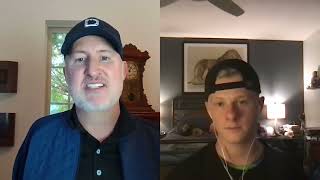
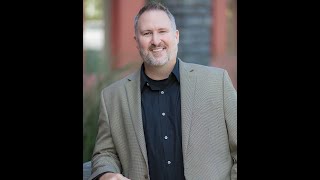
This is a YouTube podcast episode titled "Mastering Life, Wealth, and Resilience w/ Blake Baumann #14" recorded in February 2024. The episode features a conversation between host Solomon Cole and Blake Baumann, who is a life and success coach specializing in working with neurodiverse individuals. They discuss topics including thriving in life, belief systems, self-sabotage, the impact of mindset on success, and Blake's personal journey overcoming cancer. The dialogue is motivational and focuses on personal growth, resilience, and living life on one's own terms.
Foreign.
Welcome to Wax On, Wax off, the podcast, where a teenager gains wisdom and insight from pioneers and innovators that have come before in search of how to win in every facet of life and change the world. I am your host, Solomon Cole, and let's get into today's episode. So before I tell you who is the guest, who's going to be on the episode today, whatever I just said. Anyway, I'm hyped up on caffeine if you can't tell. Today's guest is my life coach. He is amazing. He is a survivor. He is like my hero. He just is. He embodies all of these things that I want to be when I grow up. He is extremely successful. He's worked with many, I don't know what they're called, Fortune 500 businesses. He has just done a lot of big things in his life, and he's continuing to do big things. I would not be the person I am today if it weren't for him. Yeah. So everyone give a round of applause. It's actually his second time on the podcast. Give a round of applause for Blake Bauman, everyone. Whoo. Also, I want to do a quick little thing that I was gonna do that I didn't do. I want to just say, number one, thank you, guys, for all your support, all the things you have done for me. I would not be where I am today. This podcast would not exist if it weren't for you. If you want to, and if you can, I would love for to share this link, send it to other people, spread the word, because we're nothing without you guys. Honestly, I'm not gonna lie. And I do this for you, and I hope that you maybe can change the people around you because of this podcast and it filling you up and you being able to give out into other people. So, yeah, that's kind of everything. Today's episode is not sponsored by Liquid Death, but I drink it. It's the drink of podcasters. I wanna thank you for being on the podcast. I would not be the person I am today if it weren't for you. You have helped me start this podcast. You have helped me in just my personal success journey, my personal life journey, grounding myself, figuring out who I am as a person and who I want to be. So I want to thank you for being on the podcast, and I want to thank you for just being there for me whenever I need you.
Absolutely. It's actually a privilege to work with you, so I just want you to know, not only a privilege But a pleasure. And you've been a model student, so to speak. But the funny part, Solomon, is I learned so much from you in the coaching process, so kudos to you as well.
Thank you.
I kind of want to start off this podcast, and I asked this question a lot, but I think it can be either, like, a superficial question or a really deep question. So I want to ask you, what do you do and why do you do it?
Sure. So I'm a life and success coach, and essentially what I try to do is I specialize in working with the neurodiverse. And so these are individuals that typically are labeled adhd, Autism Spectrum Disorder, ocd, things of that nature. And really what it is, it's just their minds are wired differently. And I'm actually autistic myself, And I have four kids that are all neurodivergent, and they range from 18 to 24 right now. And so it's a strong passion for me because typically, this population of individuals are the ones that have been looked down upon as, you know, take autism, for example. Autism Spectrum disorder. They're calling it a disorder when really it's just they're wired differently. And so I have this mission to work with these individuals to unleash what I would say is their genius inside to help them live an extraordinary life and essentially pass that on to other people.
Yeah, you really, like you. You help people who. No matter, like, who they are, but specifically people who would be probably more difficult to find a way to, like, thrive in life. And you help them, like, find, like, how to. How to thrive and how they can thrive in their own, like, individual path and life place. What does it mean to, like, thrive?
So, you know, thrive is a. Is a. Is a word that can be interpreted.
Right.
And so when I think about thriving, I think it's more of being able to live life on your own terms. And so that could be. You know, I'm often asked, you know, what if one of your kids wanted to be a janitor? And there's nothing wrong with janitors. Right. It's just. But people have this fixed mindset that that's a bad life. And I said, well, if they want to do that and they're enjoying it and they're doing it on their own terms, I consider that thriving. Now, they may have a different definition of what thriving means, and that's okay. That's their definition. That's their truth. But for me, it's really helping people to tap into exactly what do they want to do? How do they want to do it and can they live life on their own terms? And when, typically when you do that, you're enjoying life at a higher level, you're more fulfilled. Mm. Does that make sense?
Yeah, 100%. Yeah. So for the people out there who are like, okay, I want to, I want to thrive, I want to be successful, I want to, whatever.
How.
For those people who want to thrive but don't know how to, what do you recommend?
So the first thing I would tell you is there's a lot of people out there struggling and, you know, life is tough. That. Let's just put that out there. Life is tough. You know, my generation probably says, oh, to your generation, you don't know how life was hard. Walk up a mountain, three, you know, in three feet of snow and stuff like that. No, life is tough no matter what generation you're a part of. And I would almost say life is tougher now because there's so many distractions, there's so much going on. You know, with social media, if you're not doing X, Y and Z, you feel like you're way behind and you have all of this going on. And mental health is at an all time, you know, high as far as struggling goes. And so I would talk about the very first thing that somebody has to do is they have to have the belief that it's possible to thrive. Right? Just that it's possible. Not that they can, but that it's possible. And the way you find that is just look around. Are other people doing things that you want to do in life? And if they are, then, you know, it's possible. And if you can start with just that small belief, then you can start shifting and doing things that you want to do. So, for example, the next step is, once you know it's possible, is typically just taking a small step on something that you can control. Right. And a lot of times it can be as simple as, hey, I got a counter that has some clutter on it. Let me just clear that clutter off. You're going to feel better for clearing that clutter off. And now you are in control of things and you're taking control of your life. So when we think again, my definition of thriving is being able to take control and live life the way you want to. And so you start small and then you grow from there. Because once you grow, then you're going to be able to take that little step of clearing the clutter and turn it into finding either the job you want or doing, you know, the hobby or the dream that you want to fulfill and being able to equate it that way. And so that's kind of how I would start the process. But the other aspect of this too is, and I think most, most of the quote unquote experts out there would say this too is find gratitude where you're at. Right. So when we think about the present, it's a gift. You know, the future is not promised. And so if you can find gratitude with where you're at, what that does is that shifts in your mind. All those things that you're missing to now is telling your mind that you're okay, you have the capability of having things. And when we have that capability of having things, then we can actually go get those things. But it starts with that small belief of that it's possible.
Yeah.
So it really all stems from belief. And I've found this in my life, that the power of belief. And I didn't understand it because people would tell it to me, you would tell it to me. You'd be like, like it really is your perspective and how you, like, what belief do you have behind whatever it was? And as soon as I got it, I got it. Like as soon as I got it. Because you can understand intellectually, but not like experientially. I don't know if that's a word.
But it definitely is a word. Think about it this way. Your belief controls your thoughts, your thoughts control your actions. Your actions control your results. Your results reinforce your beliefs. So if you have negative beliefs, this is why people keep on getting what they don't want is because they have the negative beliefs and that's just reinforcing their thoughts, their actions, and then it reinforces and it's just this loop that goes around and so you can break that loop. And typically, if you're in a place, and I know you asked about the thriving aspect and if you're in a place where you're not thriving, and I would say one of my, one of my geniuses from an autism aspect is I see patterns and it's a pattern that they're running and you got to break that pattern. But once you change that pattern, then all of a sudden you can put a new belief in. That new belief is going to cause you to take a different, to have a different thought. That new thought is going to cause you to take a different action. That new action is going to get you to take a different or get you to have a different result, which then reinforces and you can change paths. You're not stuck. And that's the big thing I want people to, to know is that they're not stuck with where they're at. Even if it feels painful and the world around them is kind of chaotic, they're not stuck. But it starts with the belief.
Yeah, it really does. You talked to me about the money thermometer and I didn't. I'd never heard of this before. Can you share what that is and how that, like, can. I mean, they'll understand as soon as you share what it is. But how that, like, can play a role in our life.
Yeah. So think about, let's just take the money part off and let's just talk about like a thermostat in our house. This. And we're going to use this as a metaphor. So essentially, if we have our thermostat, say set at 72 degrees, what happens when our house gets to about 75 degrees? Right. Our AC comes on and, and pulls us right back down to 72. Well, what happens if it gets too cold? It goes down to like 69, 68. Our heat comes on and raises us back up at 72. Right. So when we think about. And we'll use money as an example, most people have this money thermostat in their mind. And what that means is that they have this belief of how much money they're capable or they're worth making. So if somebody has a belief that they're worth making like say $50,000 a year, you know what, if you look back over their history, they probably made everywhere close to maybe 55 to 45 somewhere in there. And. But if they start getting to that point where they start getting too high, then all of a sudden that thermostat kicks in and they start self sabotaging to pull us back down. But say they're not making enough, this is where then that thermostat kicks on in their mind and they start doing additional things. It could be taking its second job or third job. It could be doing extra projects or whatever it may be to get noticed at work. But all of a sudden they get a raise to get back to that $50,000 year level. And we have that in all of our areas. So I'll give you a perfect example with me. So when I was much younger, I tried playing professional golf. And for people who don't understand golf, the lower you shoot in golf, the better it is. And so typically you're trying to shoot somewhere below 72, and we call 72 par, and a lot of Times I'm playing and I would be like four or five under that. So I'd be on pace to shoot 67 or 68. But when I'd get to those last three or four holes, all of a sudden I had this gauge in my mind and I would make all these mistakes and shoot 71 or 72 and then vice versa, I would be four or five holes down and I'd be four or five shots above that and then all of a sudden would come on and then I do really good the last three, four holes and shoot right around 72. And we do this all over our life, not just with money, but if you ever have that person that says, why do I keep on making the same mistake over and over, it could be a self sabotage that we're doing based on our belief system.
Yeah, it's like what value? It's like a value or what belief you have about yourself affects the way you live your life. And I think it's not even consciously most of the time. I think it's a subconscious thing. And I wonder, do you even know like what, why we subconsciously do that?
So a lot of times it's, it's from outside factors and it's in our environment, right. You know, our environment can have an impact on our DNA and our environment can have an impact on our belief systems and things of that nature. And so what happens is as we're growing up is a perfect example, you know, if there are some religious beliefs out there that, you know, the money is the root of all evil, right? And so if you have that, you've gone to church and you hear that and then you're at home and you hear maybe your parents arguing over money situations or you see that, hey, these wealthy people did bad things to get their wealth, then all of a sudden you start putting these roots and they just subconsciously come into your mind and they take plants like a little garden. And what happens is as you start to make more money, the subconscious belief in the back of your mind is saying, you know, if I make more money, I'm going to be bad or I'm going to, it's going to cause me to have arguments with my friends or my partner or I may not be able to go to heaven. If you have a belief in heaven and hell and things of that nature based on your beliefs. Right. And it's all absorbed from an environmental standpoint. And so we have to be very, very conscious of the information we're letting in. Because if we're not Then all of a sudden we're letting beliefs in that we don't necessarily are useful for us and they'll take root and then they'll start controlling our thoughts and our actions and eventually our results.
Yeah.
So it's like an evaluation of like. And I love when you hear something and it forces you to kind of go inside and like, kind of check what's going on and dust the shelves and see what's going on inside. And this kind of does that to you where you're like, okay, what standards am I holding myself to? What beliefs do I have about myself that are self sabotaging me? Like, I see that, like, if I will make like more money than I like think I should, I'm gonna go out and spend some money and then I'm equalizing myself back at, to whatever the amount of money that I have. And it's like. But I also, if I go beneath the money of the level of money that I think I should have, or this goes for anything, I boost myself up and I find ways to get there. So I feel like if you can figure out a way to hack this, this truth of how we are wired, you can, like, if I believe I'm going to make $100 million, you're going to, if you actually believe that, you're going to figure out ways to get there, you're going to grind and you're going to cut out some of the, the fluff in your life that you don't like, really need to have.
Yeah. So think about, you know, you can you look at a couple of examples. You can look at lottery winners. You know, if you actually do a. They did a study and if you Google this, it's somewhere in there. I don't know the exact stats, but basically they did a study where these people that would win millions and millions and hundreds of millions of dollars on an average seven years later were broke again. But not only broke, they were actually worse, they were more in debt than before. And a lot of times it's because of our belief systems and what we think about money. Think about the athletes that are out there that make hundreds of millions of dollars and next thing you know, you know, they're broke. And again, it's because of the money education aspect, but it's also the belief system of how much you show, should have. And that is something that it goes across. And money is just kind of a metaphor. It goes in every area of life. So if you believe you should be having a great life or an easy life, you know, you're going to have a great life and an easy life if you truly believe it. If you don't, you know, you might have a belief that, you know, life is a dance and you're going to have all this excitement, but you might also have this belief that life's a battle. Maybe you grew up in an environment where your parents said you have to work really hard to make money and earn a living and to live life well. If that's your belief and that's the story you created, you're going to fulfill that story. And that's what we do.
Yeah.
How?
So you talk about life story.
How.
How do we live the life story that we want to live? Like, how do we become instead of. Because I think a lot of us watch our story get written out by someone else or something else or just the world around us, and we are a product of our environment. How do we instead say, screw that, give me this notebook, give me this pen, and I'm going to write my own life story. How do we. How do we do that? What advice do you have for people who want to write their own life story?
Sure. Well, I will tell you. You just said it is the beginning. Point is, grab a pen, grab a piece of paper, grab your computer if you don't like writing things out and you start putting what you want to happen in your life down. See, what we have is we have in our minds this thing called a reticular activating system. And sometimes it's known as ras, and basically it's a filter. So we have so much stimulus coming at us all the time that if, if we didn't have a filter, we'd just go mad and go kind of crazy. And so this filters out what we don't want and lets through the important stuff based on our beliefs, based on our values, you know, based on what we're looking for at the time. I don't know if you've ever experienced this where maybe you went out and you saw a shirt, or.
If you're.
Older, maybe a car that you bought. The next thing you know, everybody has is driving that car or everybody has that shirt and you never noticed it before. Yeah, that's our reticular activating system. And so when you start designing your life by putting it on paper, what happens is your life, your reticular activating system, starts looking for those things in your life and it starts making you aware of them. Because I will tell you in my own personal experience that if you're looking for good or you're looking for bad, it's right there in the same moment. It's just, what are you letting in? And, you know, I have a belief and a filter that life works for me. So we were just talking, you know, a few minutes ago before the podcast started, that my electricity went out. I'm in a newer neighborhood and electricity has been going out because they're putting in some new homes and some new shopping complexes where I'm at. And electrical go out for four or five minutes. Okay, well, if you're in the middle of working on something, that could get frustrating. Right. And so I asked myself, how is this for me? Well, it gives me an opportunity to drop down and do some push ups or, or to go play with my dogs or to go, you know, walk around and take a break from technology or things of that nature. So it's happening for me. And that's how I truly believe. And because of that, you know, there's a calmness around me. I'm not losing my mind, getting crazy about interruptions or things of that nature, I have found. But I could easily take that other story and say, oh, this is causing me, I'm getting upset. But that, you know, when you think about control and what thriving is, thriving is living your life on your own terms, in a sense. You know, obviously we can't control every single factor in our life, but we can control on how we react to those factors. And so being able to control how you react to it is absolutely something that happens to you. And so when we go back to a long way to get back to how do we start writing our own story and living our own life, the first step really is to get really clear what you want. Most people are not clear. So what happens is because they're not clear on what they want, they end up in somebody else's story and they're living out somebody else's story. If you want to live your own life and have your own story, you got to write it. And it doesn't have to be a perfect Shakespearean story. It can be bullet points. But get really clear what you want to experience. And it's phenomenal. The magic that will start happening when you're truly clear about it. And then you add the belief that it is possible. Yeah.
There's so many directions I want to go with this. Oh, my gosh, I love this. I have just figured this out and it has changed my life, is that life loves me. Instead of viewing life as just like kind of this path, I'm On, I kind of have started to. And it doesn't matter if this is true, because the way I view it helps. If it helps the way I live my life, then that's great. I kind of view it as its own separate entity, and I view it as if it loves me and it wants the best for me. And it's kind of this, like, I don't even know. It's this, like, forge that is making me the best that I can be. So sometimes the forge feels great and I'm happy and I'm in, like, a good season, and sometimes the forge is hot, and it's purifying some stuff out of me that makes me uncomfortable. But it's good. And no matter what, I view it as a win. Because no matter what, I'm getting better. If it's bad, I know that there's going to be an even better good at the end. Like, that's after the. It's just like the rhythm of life is up and down and up and down. And some people are like, I love the high. And then the low is really low. But if you view the low as, like, you shift your perspective and you say the low is a good thing, the low is an amazing thing. The low is something that, like, is making me a better person probably quicker than the high is making me. I think it's just changed my perspective.
Yeah. So think about this. Think about if you took all of your successes and you look at it, what typically got you there?
Right?
Right. What typically got you there was that low, because you had to fix it. You had to overcome it. You know, most people look at problems as a bad thing, but if, you know, you know, if you. If you think about life, you know, life is all about expansion. Whether, you know, you're doing it through a loving way or you're doing it through, you know, however you see life yourself. But it's all about expansion. And the only way we keep on expanding is. Is we got to grow. Well, if we're only way we can grow is we have to have these things called problems or else we're just going to stay stagnant. You know, I was talking to my brother a couple of days ago, and he had an opportunity that he was looking at for a new job. And he says, I got it really good here right now. And I said, well, you know what the opposite of great is, right? It's not bad. The opposite of great is good. And because if. If life is good, then you're going to. This is where you'll get stuck. Where people get stuck a lot.
Yeah.
Is they don't have enough problems.
Yeah.
Because it's just staying problems will push you one way or the other. But you're not going to stay. Right.
Yeah, I heard, I think it was. Yeah, it was Robert Edward Grant and he was talking about how he was working on his video game and he's was trying to figure out how he can make a game to like get people to enlightenment. And that was his goal. And he, I think he ended up doing, I think it's called Maya or something. But he, when he was doing it, he lets you program your character with anything you want it to. So you get to create yourself with whatever aspects, whether you're courageous, whether you're whatever. And the game will shift towards that. And he, he tried a different. A bunch of different aspects and different kind of versions of himself that he wanted to create. And he tried one where he had everything he ever wanted and life was so boring. And he was like, what? Like that's. I think that's the whole point of life is that we have the suck. Like we have a little bit of like, this stinks. Because that's the hero's journey. It's like if the hero had all the superpowers in the beginning, then you're like, well, what's the point? I just kind of like kill bad guys. And then after a while it's like that gets boring. But if you had these powers and then you lost them and then you have to go get find them and then along the way you make friends and then along the way you're learning things and you're. You figure out, maybe I want to do this. It's like that's, that's really what life is about. Is about like viewing it as this story that sometimes you're not going to always be in control of, but you can when you're out of control, you can embrace it. And when you do that, you become in control of it.
That is beautifully said. Beautifully said. You know, your wise beyond your ears there. You know, it's so true. Because if we get everything that we want all the time, it becomes boring. Think about, you know, and again, I'm going to go back to the money side because that's how a lot of people measure success. Think about people like Robin Williams. I don't know if you knew who he was. He was a famous comedian, you know, everything. He made people smile all the time, but he was empty inside. And so he ended up taking his own life and you think about these millionaires, billionaires that are empty inside and they turn to drugs and they turn to all these other devices to try to fulfill that hole that they have inside. When, you know, when you think about it, life gives you a gift every day. And it's what you do with that gift. You got to own that second. You got to win the battle in the seconds. And when you do that, you know you can take control of life. When you think about everything that you have from an opportunity wise, you know, the appreciation of the problem, because it's there to help you, it's there to push you, it may not even be for you, it may be for you to help somebody else with. Right. And that's how sometimes you have to look at it. Right. If you're going through something difficult. Why am I going through this difficult? Could be a question that you're continuing. Ask yourself. It could be that you may have kids or you may have a relative or you may have a friend that eventually will go through that and you're going to be able to help them and be get through that time. And maybe that's what it's meant for. And again, you get to control the meaning. That's the beautiful part about this. You get to control the meaning and what you're giving it.
Yeah, 100%. It's all about the, the value that you put on things, the value that you put on yourself, the value of all of that. I wanted to ask you, what did you learn from having cancer, like having a terminal illness?
So, you know, let's give the backstory, let's give the story.
Yeah.
Is I turned 45 in September of 2022 and went. And I go every year to see my normal, what I would say practitioner and do some blood work, just make sure everything's good. And he said, hey, Blake, you know that at 45 you can now do colonoscopies. You don't have to wait till you're 50. And I said, that's not the most exciting thing I've heard today, but why don't we go ahead and schedule it? Yeah, let's schedule it for January of 2023. So 20 January rolls around. I go in just thinking it's going to be an easy peasy procedure. When I wake up, they had told me that they had found, you know, basically cancer in me. And, you know, that was kind of scary. You don't always think about those things. That, that never even crossed my mind. And all of a sudden, and I will tell you, Solomon, it It was tough, and I had to use everything that I'm talking to you about and more on keeping my mind, right? And so I just. I never asked why, just said, okay, just stay still. There's nothing I can do to change it. So I need to control my reaction on how I handle this. And so let's just go to the next step. Well, the next step was to have surgery and see if it gets in your lymph nodes. So if it gets in your lymph nodes, that's the pathway to your blood system. That's where it spreads. And so going into that, I know this is going to sound silly. I said, you know what? It's really a gift that I went ahead and went through with the colonoscopy at 45. Instead of waiting five years, we found it. Now it can be handled, right? So I saw it as a gift go in and they do surgery, and they said, hey, once I came out of surgery that it revealed that it did get into a lymph node, and so it spread. And that was. That was. That was tough. Again, I didn't ask why. I just said, okay. I said, tell me about it. Said the procedure was easy. You know, we took 20 lymph nodes. Normally we only take 12, and we found it in one. I said, okay. Again, where my mind went was, what if they would only take in 12 and not found it in those 12? I would have thought I was scot free. And then, you know, it would be worse, right? But they found it one. I said, okay, well, I'm grateful they found it in one, so now we can take care of it. And so then we went to the chemotherapy process, which is a tough process, right? And I went and I called everybody I knew that had ever had cancer, and I asked them, and across the board, they had different answers. But one answer across the board stayed the same, and they said, it's your attitude. So I went out and I actually hired a coach that had cancer, and he had a brain tumor, and he was in England. And so he said, you know, Blake, part of what you have to do is you have to understand that the medical side is only one element of the healing process. Your mind, your diet, you know, all the things that you can control, your exercise. These are all elements of the process. You've got to master all of this, not just think the doctor is going to solve it. So I went on a little bit of a mission to look at life a little bit differently. And one of the cool things is he got me and Again, this is why we have coaches and counselors and people like this is they get us to shift our perspective. He said, every time you go on chemo, what I want you to do is I want you to envision that the medicine they're pumping in, which is really poison, that they're pumping in, fill it with love, bless it, see it going in and see it cleansing your body as you go through. I did that, Solomon, and I will tell you that based on what my doctors told me, based on other people's experiences, they said I had very, very mild reactions. And they said, you know, if anybody didn't know I was going to cancer, they would have never known I was going through cancer treatment, chemotherapy. And I attribute that to the mind. I attribute to, you know, getting the help, because that's important. And I want to make sure people understand, even though I'm telling you as a coach, coaches need help too, and we need coaches to help. And so it's okay to ask for help.
Yeah.
So I went through that, and as of September, they said cancer free. And. And so. But, you know, it changed my lifestyle. But what it also did is it was a blessing. And I tell people this to this day. I told person on the phone yesterday that I was talking to they for setting up my actual next colonoscopy, and they said, I can't believe your attitude about this. I said, well, it's a gift. You know, the part that I left out for them is when you face something like cancer and you face something with so much uncertainty, all of a sudden, you become very present, and the present is a present. You don't know that you're not promised the next 10 minutes. Even though that I'm healed of cancer, I'm not promised the next 10 minutes of my life.
Yeah.
So I am so much better at staying present. And there were some things that I was. As hard as this is to say, I was scared to do. So I wanted to start, and it's called the Autism Independence Academy. I wanted to start that, but I was too scared to start it. Well, after this experience, boom, we started it. I've already run it, and we're running it again. And, you know, and there hasn't been anything I hadn't tried now because I faced that, and it just shifted my whole perspective about life. And I'm here to tell you that don't wait to follow your dreams.
Yeah.
You know, so, I mean, hopefully that helps a little bit on the story. And. And no 100 answers your question.
Yeah.
And I Want to ask you, like, when. When stuff like that happens or it even happens to someone that you like, you know, because I've never, like, been in the place where I've had, like, some possible terminal illness, but even, like, having you, or having, like, my grandpa who passed away, you notice that life is a vapor. And I think when you're at that place, a lot of things, you see how unimportant they actually are, and you see how there's, like, a lot of, like, to use, like, a. Whatever biblical reference, like the chaff, it just falls away. And you see, like, all of the fluff falls away, and you see, like, what really matters, which is you talked about. It's the present moment. What did you. What were things that you found that, like, didn't matter, that kind of fell away, and that you were like, I've been holding onto this stuff, treating it like it was super important and it wasn't at all, and I don't need this in my life. And then what are some things that. What's at that center surrounded by fluff? What really matters?
Yeah. So those are two really big questions. Those are great questions. I'm going to answer the second one first. What did I find that really mattered? What really mattered to me was really three things. One was my faith. I actually. I'm a believer in God and the man upstairs. And. And I hadn't gone to church in a couple years. We're back at church because that put me front and center and. And just brought me back to having that relationship on a stronger level. I never abandoned it, but just didn't feel it as strongly. And now I do. The second thing is my family. You know, my kids are, like I said, between 18 and 24. They're all off living on their own, but it's me and my wife, and then I have some immediate family, but making sure that we don't skip the opportunities, because in the past, I would have put work in front of family, and I'm no longer doing that.
Yeah.
And I'm looking for. Instead of giving, like, gifts of, like, I don't know, just toys or whatever it may be, I'm giving gifts of experiences with us. So, you know, giving trips that we can go on together, giving, you know, moments that we can have together as experiences. And then the third thing is just kind of the mission I talked about in the beginning. You know, I. I truly believe that I'm here for a purpose. And my purpose is to really help others get from struggling and get from not seeing that they have this component in them. And I call that component their genius, right? Helping them tap into that. Helping them tap into the strength, unleashing it, so that they can not only live an extraordinary life, but make a generational difference in their life. Because think about this is you, the way you're living life right now, one day, I'm sure you're going to, you know, get married and potentially have kids and all that, you're making a difference for those kids. But even if you don't, you're making a difference for the generation below you, right? And so I believe that we should make a world better than we found it. And before we leave this planet, we need to leave it better than we found it. And so those are the three things that brought front and center for me, as far as the things that, you know, I was holding on to that wasn't as important. Work, Right? And, you know, I. And when I say work, you know, I'm very fortunate enough to work in a field where I get to meet some incredible people, I get to help people and watch them succeed, and I get to be their cheerleader, and I get the sideline seats. So it's an incredible journey. However, I can't put that in front of my family, right? And because my family needs me, too. And that's one of the things I dropped is instead of working every weekend and going to events and doing all the studying and all of that, I let a lot of that go and focused on my family. Second thing is, you know, traffic is not getting any smoother. And I know this one's kind of silly, but I would get irritated in traffic a lot because everybody's going at their own different pace, cutting people off and all of this. Well, now, just when I'm in traffic, I'm just so present that I'm enjoying the moment, and I'm using that moment. And. And I'm sure this is an old saying from somewhere that's called net time. No extra time. So I'm using that moment either to listen to an audio book or a podcast, or if I have somebody in the car with me just enjoying their presence of the car. I'm using it to call friends that I hadn't talked to in a while. And so I'm changing those things from always being kind of wired and ready to go to now being more at peace. And then the fears, you know, that. That's probably the biggest thing was the fear I had all these fears that I was holding on to, and I almost feel kind of hypocritical, because I help people through fears all the time. And here I am kind of stuck in some fears. And so going through this experience, let me know, you know, it's okay to be scared.
Yeah.
You could still do it scared, right?
Yeah.
And. And now that life has really hit me that tomorrow is not promised. There's no better time than now. It's like, when's the best time to plant a tree? 20 years ago. When this next best time. Right now.
Yeah.
And so that's what, you know, that's. That's basically the. The three things that I've kind of let go of.
That's amazing. And I think that for whoever's listening, that is probably some of the most valuable information, because not even information, just valuable lessons. Because those are only lessons that you get from living life. Like, those are the only lessons you get from being in that experience and getting through that. And that, I think that's why we go through struggles and trials is so that not only we learn it ourselves, but we can share that with other people. And that means for you people listening who are having stuff shared with you, you have to be teachable, you have to be learnable, and you have to grow into becoming this sponge. Like, I was not always a sponge, like I am, but I figured out, okay, how do I learn? How do I love learning? And then I became that sponge, and I was able to not only soak that all in, but now I go and I bring my sponge and I, like, squeeze it out on other people. That sounds weird, but.
Yeah.
No, I think your listeners get that point that you're making. And think about. You have all this wisdom from people that have done it before you. And a lot of times the wisdom doesn't have to be from sages or gurus, or it could be just from your dad, from a friend, from a teacher, from somebody who maybe is not living life the way you would want to live life. Right. You can learn lessons from people that aren't living life the right way according to you. And so as long as you can look for that and train yourself to see those opportunities of, you know, this isn't how I would like to live life. That helps you write your story. So I'm going to go back to that story thing because I think it's so important is that the more clear you can get on what you want, it's. It programs a reticular, activating system. It programs your belief system, and it's going to start happening for your listeners and it starts with just getting clear. And part of this, too, is going and looking at the people that have done this before. You know, if there's somebody who's living life like you want to live it. And that's actually how I started, is I found a person that had the life I wanted. And I went to him and I said, hey, his name was Joe. And I said, joe, would you mentor me? And he looked kind of shocked, and he said, I'll tell you what. Write a letter to me about why you want me to mentor you and what you would like to learn. I wrote him that letter. He agreed to mentor me over the next two years, and this is all his wisdom. I was. I was 19 at the time. I have. You know, I was dumb, didn't understand life. I had my own struggles going on. You know, over the next two years, my life radically transformed. My. If we measure finances, my finances tripled in a positive way. I was happier than I ever had been because this guy had the formula for the life I wanted to. And he's like a second father to me. And so when you're out there, if you're struggling, that's another thing, is look for a mentor. You know, it doesn't always have to be a life coach. It doesn't always have to be a counselor or therapist. It can be just a person that's living. And don't be afraid to ask because. And it's in our nature to want to help. And so I think that's. I think that's important, Solomon, is to make sure that people know that based on what you said, the wisdom's out there. Sometimes you just gotta ask. Just gotta ask.
Yeah.
And I think there are a lot of. On both ends. I think there are a lot of mentors who don't have anyone to mentor. And I think there are a lot of people, or mentees, maybe that's what it's called, who are either not ready or are scared or don't want to, or it makes them feel uncomfortable. And I think that on both ends, it's like. I think the mentor should learn how to go find those people, because I. There are a couple people in my life who came and found me, and they saw something inside of me, and it just took them pursuing me. And they, like, no matter if it was a good day or bad day, they were like, hey, man, how are you? What can I do to make your day better? What can I do to make your life better? Whatever. And they were always there, always there. And then on Me, I mean, you can't just be throwing stuff at a brick wall forever.
Correct.
Because some stuff will stick, but after a while, you're just kind of wasting whatever it is you're throwing at the brick wall. But then if there are those people that you see who are willing to be mentored, I think those like, and wanting to be that person, and you have to. You have to want to change in everything, whether it's addiction, whether it's whatever, you always have to want to change. If you want the life, if you want to write your own life story, you have to want, like, a life story. You can't like. And I say this. You. You have to live life, not let life live you. Like, you have to. We talked about this. We talked about this in our. In our meetings. We talked about this in a lot of different aspects of life. Is. And I, I want to ask you, how do you live life, not let life live you?
Yeah. So I, I think it starts with, you know, first you have to have the intention of what you want to succeed or have in your day. And you know, and we talked about this before is I'm a big believer in scheduling success. Right. And that means that to be able to schedule success, you have to know what you want.
Yeah.
So typically, typically the end of every single day, I will spend probably, you know, 10, 15 minutes writing down what I want to achieve the next day. And so I'm always after that outcome of what I'm wanting. And when you get consistent with this, Solomon, what basically happens is that you're able to start having one successful day that turns into two to three to four, then all of a sudden, a month, a year, a life. But it starts with, again, going back to what is your intention of what you want to achieve? And making sure, if you talk about it, you know, I think it's possible, but when you start scheduling it, it becomes real.
Yeah.
And so I would challenge your listeners to just start off with making a list of what do they want to experience in a day? Right. And when I say experience and success, I'm talking about emotions, too. So do you want to feel enthusiastic? Do you want to feel happy? Do you want to feel peaceful? Do you want to feel angry? I don't know if somebody might want to get mad or something of that nature. And so there's crazy people out there, Solomon, So maybe that gets them going.
Yeah.
And so. But write down what do you want to feel as part of it? And then think about what can you do that helps you feel that way. So, for example, if you want to feel excited or happy, does working out help you feel that way? Just turning on and listening to some of your best jams or music or things of that nature get you pumped up and excited? Does calling a friend who can pour into you, does that get you excited? Does helping somebody get you excited? Schedule that stuff out and put it on your calendar. Because when you do that, then you're going to get those emotions and when you have those emotions going, you're going to feel so much fulfillment and you're going to feel, feel essentially better, happier, that you're going to want to do this more often. It's going to become contagious in a sense.
Yeah.
And, and so when you do that, you know, I will tell you, life becomes fun.
Yeah, no, I agree completely. And I think I've found that the stuff I didn't like to do in the beginning, after I do it for a while, I end up loving it and I start finding that like with working out, I didn't like working out in the beginning, but once I started working out, it became this place where I could like just be one with my body, one with myself. And it took, it took scheduling and it took every morning. I need to allot x amount of time and I need to do it every single day. And I worked out for 100 days in a row, no matter what day it was, no matter what I was doing because of that. And it took me doing that, scheduling it, and also just embracing it. And I think for a lot of things, my dad always says this, and I've said this on podcast before, it's the wisest. Three words like that I keep with me always is like there are only three ways to live life. Acceptance, enjoyment, or enthusiasm. The rest is going to lead you to a sad, like, not fulfilling life. It's if you accept it, that's, that's if it's worst case scenario, you have to accept it because the rest is denial. If you enjoy it then then great. And if you're enthusiastic about it, then you're passionate about it and you're sharing it with other people.
That's exactly right.
Yeah, I don't, I don't know where my dad probably stole that from someone. Maybe if he didn't, then he's an absolute philosopher.
But there's wisdom there. Yeah, there's definitely wisdom there, a hundred percent.
I kind of want to go out asking you what is and I want to start asking people this because I think this is a good question. To kind of get the. Not the dark side of someone, but kind of the. The human side. What is the thing that you are struggling with most right now and how are you going to overcome it?
Sensational question. Sensational question. So we talked about the cancer situation.
Yeah.
And going through that. So right now I still have what I would say, a little ptsd. Whenever I hear the word cancer that I'm still, you know, it takes me back immediately to my feelings and emotions that I experienced in January and February.
Yeah.
And so I'm. I'm trying to retrain when I hear that word, to think of victory, because I was victorious over it, so to speak. And when I. And not because I'm cancer free, but because I never gave in to it. Right. I kept on pushing through. So that is. That's probably the biggest challenge I have now. I can talk to you about building businesses and things that I'm doing on the side, but that's not that. That's just, you know, those are. Once you face cancer, those are tiny problems. Right. And so what I would eventually like to do is actually coach people who are going through cancer because I found it so valuable, I couldn't find anybody. I actually had to beg people to say, hey, is there a coach out there? And they finally hooked me up with an incredible, incredible coach named Damon who had just gone through cancer. And he told me, he goes, hey, I just want you to know there could be a little bit of, you know, PTSD for himself. And so just want to warn you on that in case you feel that energy. And I said, I completely get it. And so I'm not there yet. So that's. The dark side right now is I think I will eventually be there, but I have to retrain my brain when I see the word cancer to mean something differently.
Yeah.
Because I think when anybody sees the word cancer, they automatically think death.
Yeah, they think.
And the truth of it is that we all have cancer at one point in our lives. We just may not know it because it's just these cells that go rogue and if our immune system doesn't knock them out, out. And so I want to get to a point where I can walk into the facilities that I went to and be able to give back and volunteer there. And so I'm trying to ramp that up. I. I set a five year goal on that. Yeah, I know that sounds maybe like too long of a time, but I don't know.
Yeah.
So I'm trying to ramp that up so I can go give back to that community as well, because it's hard to find somebody out there that can help you. And I know they have grief, and I'm not about the grief side. So they offer me all these groups because they say, hey, we have a grief group. We have this group. We have that group. That's not what I want. I want a group that. Where you have these positive people that can find the meaning, even if it is a terminal, that they can find a meaning in, you know, what they're doing. If they can't, are they open to finding meaning to it? And that's kind of the direction. Eventually I'll go. I'm not there yet. But that's. That's kind of the struggle. So you asked me what I'm struggling with. If you look at almost every commercial, every drug commercial, side effect, cancer. Side effect, cancer. You look on the back of a bottle of something, potential cancer. And so it's just getting comfortable with that word.
Yeah.
Has taken. It's taken a while. And I was talking to my wife yesterday, we joked about it for the first time, and that felt a lot of relief.
Yeah.
And that's just being real. So.
Yeah. No.
Yeah.
And I think that that is like, number one, I view you as a champion. I view you as not just because of that, because I don't think that that's. And I think a lot of people can get like, oh, like, remember him who had cancer? And beat it. Like, that's not you. That's not like your identity or anything. Like, that's not even how I view you. But I view as a champion. And I think you just kind of did. What you always do is you just, like, you figure out a way to thrive. You know what I mean?
Yeah, I do.
Yeah, I do.
And I'll tell you, it comes down to the belief. I have a belief that life is for me. That's my internal belief. Anything that comes my way, as uncomfortable as it is, it's for me. I don't know why it's for me. I don't know how it's for me until I start asking my. Processing through it. But that's my initial belief. And because of that, I very rarely get angry. I very rarely ask why In a negative context. I usually ask, like, how is this for me?
Yeah.
And so, you know, and. And if you didn't know I had cancer, I wouldn't tell you. I don't. I don't really share that or talk about it or anything of that nature. Maybe I should. But it's Just not my identity. And so that's, that's part of it.
Yeah, 100%. If you could go back and tell 18 year old you one thing, what would you tell 18 year old you?
Well, it would start with that life is for you. Right. I, I would try trying to plant that belief in there right now is that life is for you. I would also plant the belief that there's all this wisdom around you. You know, I think sometimes when we're 18, 17, 19, 20 in that age group, we think like we know everything and, and people can't really tell us anything because we know it already. And I think it's because our minds are, are closed off still at that point. If I could get myself to open my mind up sooner and start taking the wisdom in, because there's the wisdom out there, will help you get further, faster.
Yeah.
And even if you have a little bit of a mess going on, it will help you turn your mess into a message.
Right.
And so that you can serve others, you can, you can get to that life and thrive. So if I could go back, those are the two things I would tell myself is life is for you. I'd help myself, show myself how and then, hey, tap into the wisdom that's around you. You know, podcasts like you're doing, Solomon, you're giving wisdom out with all your other guests that you're bringing on and they have a story to tell. And I promise you, nobody's had a straight line path to success. Success. They've had their downs and lows and downs and lows and. But if you can listen to how they got through those and how they got through it better, all of a sudden that wisdom can take your, any viewer or listener that you have that's struggling right now and help them get out of it. You know, if they could take just one piece of information from each of your podcasts, they would be so, so far, you know, out of where they're at. And I like to give this example, and I think it's Tony Robbins who does this example is he says, you know, if you could just make a 2 millimeter shift in your life, let's just say you're flying from LA to New York, right. And let's just say your flight is off 2 degrees south. So do you end up in New York? No, you end up in like Washington D.C. yeah. So down in D.C. and it's that big of a difference. So with your life, you don't have to make all these big adjustments to make a difference. You can just start with making one or two minor adjustments with. And I would start with your beliefs. Or it could be something as simple as, hey, write out what you want to feel the next day. I want to feel excitement. Right out. I want to feel excitement. Then write three ways that you know that you could potentially feel excitement. If you're not there yet, Maybe it's. I'm at a point where I'm really feeling sad, so excitement's too extreme. Well, how can I feel peace? Right. Maybe get lost in a book or a movie or something of that nature, but write that out. And so I just. I think it's important for your listeners just to know that it is possible. Wisdom's all around them.
Yeah.
Not only the gurus across the board, but people like you, people like me. People that are walking down the streets full of wisdom that they can offer and help people.
Yeah, A hundred percent. I was literally just going to say that analogy that you just said, because I carry that with me. And no matter, like, because sometimes I do things that I feel this might be insignificant. Even, like the podcast. Sometimes I'm like, maybe people are listening to it, but it's just kind of like they're just listening to it out of pity, which I know they're probably not doing, and I don't think anyone's doing that. But those are doubts that I have. And I think that what you said is, if I can just shift someone's world half a percent. Half percent over a long period of time, that half a percent I contributed to, and that's going to get way, way bigger. It's going to have a big effect, and it's going to change the course of their life forever. And I think that. And also what you were talking about with the talking to random people, I've started, like, if we're at, like, an amusement park or I'm just somewhere, and sometimes I get overstimulated, and it's like, groups are too much. So I'm like, I go and I find a bench, and if there's, like, an old person just sitting by themselves, I'll go sit next to them, be like, hi, how's your day going? And I hear their whole life story, and there's so much wisdom there. And it's fun because I do these, like, not interviews, but, like, I do, like, a mini podcast with these people who have so much wisdom and no one would ever know about, but I get to, like, glean from what. What they have lived.
Oh, yeah. I mean, if. If anybody wants A great volunteer activity. Go to a nursing home 100 and talk to those individuals because they have incredible stories. Incredible stories. And going back to your, you know, your half a percent. So there's a, a thing that James Clear, you know, the author of Atomic Habits, I didn't realize he had this in his book, but I was kind of talking about it as well, is just trying to make a 1% improvement, right? If you were able to make a 1% improvement every day for a year, it doesn't have to be big. It's just 1%. Most people would think after a year, I've made 365% improvement, which is incredible. But it's not 365% because you're improving upon the improvement upon the improvement. It's really like 3,700% somewhere around, like 37, 78, if you want to get exact percent. It's a massive thing. And so I'll give you a quick example. A personal story is my eldest son had autism and, or has autism, and basically when he was 16, told me he was never going to drive. He was scared to death of driving because he could see himself getting in accidents. So I took this 1% methodology. So I just want to share this real quick. It doesn't have to be anything major. So what we did is, the first thing we did is I walked him outside and I showed him how to use the car door. He thought I was stupid. I already know how to use the car door. I said, I get it, but we're going to use the key fob, and we're actually going to take the key out and use it just in case the battery dies in the key fob. Who knows, right? And so day one, we just learned how to use the key fob and the key key and open the door. Day two, we learned how to get in the truck and sit down, put the seat belt on. Day three, we learned what the gas pedal, the brake pedal, the gauges met. Day four, Adam actually start the truck. Day five, we moved the truck, like just a foot, maybe half a foot. Day six, maybe two feet. Day seven, maybe a little bit longer. Day eight, into the drive or into the street. Then I have them bring it back. Day nine, 10 by 30 days, he was driving and got his driver's license. And it was all these 1% aspects.
Yeah.
Because what sometimes people look at is when they think about making these changes, they see this big change they have to make. Maybe they're. They're struggling right now, and where they're at and they think that they have to make this complete 180 shift. And. But no, all you have to do is make it a minor shift. It could be just one little thing that you can do that's going to change the trajectory of life. And it could be just as simply as learning how to unlock a truck door.
Yeah.
It can change your world, those little 1%. And I think noticing that for yourself and changing other people, but also what 1% are you doing? Are you doing positive or are you doing negative? Because you're either purposefully getting better or where you're passively getting worse. Because if you're letting life happen to you, you're. You're going down. You don't just stay where you are. You're always moving. That's the whole point of the world. We're always revolving. We're always going somewhere. So are you going up or are you going down?
Yeah. Yeah.
Well, I want to thank you for being you. I want to thank you for being on the podcast. I want to thank you for sharing your wisdom and giving me and the listeners your. Your time. Where can people find out more about you, your work?
Sure. So I would just tell you to go to my website. And the website is called aspire.com, but it's spelled. Spelled funny. So it's www.as p I e r dot com. So Asps and Paul I e-r dot com and essentially what the word play is, just in case somebody's curious, is people with autism, we're also known as Aspie. So you got Aspie A S P, I E. And then when you add the R, it makes aspire. And aspire means to rise high or rise higher.
Yeah.
And so my mission is to help people with neurodiversity rise higher and accomplish their dreams. So that's. That's the best place to find me.
Yeah.
Well, you. You do that. You change people's world and you change their life. And I just want to thank you again for being who you are. Also, the link will be in the description for his website, so if you want to learn more about him, it'll be right there. Let me know what you think about the episode. And thank you so much for listening. Bye, everybody.
More from Blake

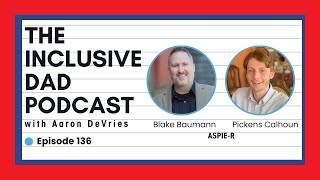
136 - Redefining Inclusion: Strengths, Structure, and Support with Blake Baumann and Pickens Calhoun