Day 01: 33-Minute Back To Basics Workout with Kettlebells or Dumbbells [B2B Challenge]
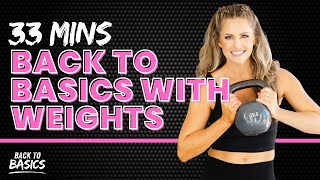
YouTube workout led by Amy of Bodyfit by Amy: a 33-minute "Back to Basics" strength session emphasizing fundamental movement patterns (squat, hinge/deadlift, upper-pull, upper-push, lunges, core). The instructor offers interval-based sets (commonly 30–40 seconds), demos variations (kettlebell/dumbbell/bodyweight), progressions/regressions, and closes with a cooldown and call-to-action to subscribe or join the app.
Hey, everybody. I'm Amy from Bodyfit by Amy. And this is your back to basic strength with weights workout. In this workout, we are taking it back to basics. That does not mean easy. That means that we are not going to be doing any crazy combinations or compound movements. We are focusing on our big movement patterns that strengthen our entire body and get our heart rates up. I'll be working with dumbbells and kettlebells today, but you use what you have available to you, and of course, I'm going to give you lots of options to work to your level. Are you ready? Let's do it. Let's start just by getting our bodies warm. You can march, you can jog, you can shake up those arms or pump your arms. We're just going to get a little blood flowing, get our bodies ready to move. Roll those shoulders here. This is going to be a fun workout today. What I love about these back to basics workouts is if you've been here before, you know that I refer to back to basics. This exercise you can do dumbbell or kettle bell. I'm going to take it with a kettle bell so I can go a little heavier. But you can also have one dumbbe center. We're just doing our basic squat and bring it up like you're sitting in a chair. If you want to keep it body weight, take it here. You can. Then we're going to take it to some upper pulls. We'll be alternating, but starting with that squat for 40 seconds. 3, 2, 1. Drive the hips to the back. Sit in the chair all the way up. Now we're going to give you some options as we go to take those toes out. Our next round will be a paa. Then an option to switch your placement of your weight. Again, back to basics, but with a little variety so you can feel the difference. But you can always just do this regular squat, keeping the chest open so we don't want those shoulders to round. Chest open, sitting in the chair, driving the hips to the back and then coming up squat, not a hinge. You have to hear me say hinge, not a squat. Right? Right through here. Three, two, one. Set that aside. Next we're going to our basic upper body pull. My favorite exercise is your bend over row. So two dumbbells, if you have them, try to go heavy if you're able, because these are strong muscles. We're going to roll those shoulders back. We're gonna have our weights in front. We're going to pull towards our hips. Ready? Here we go. Now you're letting those weights come down in front. But we really want to make sure we have a nice flat back. So we're not rounding here. If you need to stagger sometimes that can be helpful. If you're feeling too much in that lower back, or if you need to alternate one at a time, that's always an option. Or if you want to go with a heavier kettlebell. Now, with these upper pull and upper push, we're going to be full on changing exercises like we talked about, giving you variety, but starting with our bigger muscles working to those smaller accessory muscles. So with the upper and pull and upper push, I do want you to try to at least try doing the variety one more and relax, because it's going to be a little bit different. Next, we're going with a deadlift. So this is our hinge pattern. Hinge. We do this all day long. You with picking stuff off the floor. Take heavy dumbbells or kettle bell weights close to the front of the legs. Stand up straight. We got 40 seconds. Starting in three, two, one. Here we go. So your hinge. I know we were just in that hinge position with our row, but really just think stand up straight, connect with the core, squeeze in those glutes and hamstrings, but stopping straight. What we're not doing is hyper extending or pulling those hips forward. Right, we're stopping here. What can be helpful, if you're feeling your back, bring those weights by your side. Or you can always take the weight out of it and just work through the movement pattern. Right, again, we do this motion all day long, picking things up off the floor. Last one. Relax. All right, so now we've got an overhead press. So our upper push. I'm gonna do two dumbbells here. Out and in. You can also do one dumbbell or one kettlebell. Go ahead and grab those weights. Something a little lighter maybe that makes more sense to you. Looks like this here and here. Join me. Now, this is often called an Arnold press. One of the reasons I love it is because we get, as you can tell, that rotation through the shoulder joint, that movement all the way through. But certainly if it feels better just to go straight up and down or here, up and in, down and out or one dumbbell, which would look like this. One dumbbell or kettlebell, that's always an option. You do you again, find what is best for you. We've got five seconds to go. Three, two, one. And relax. I'm using all of the weights today. All right, team, so now we are taking it to A lunge pattern. Now your lunge pattern. Traditional lunge, you might think reverse lunge. That's what we're going to go with today. If you need to keep it stationary and drop it down, you can. If you need to make it a little smaller, that's fine. If you need to keep it body weight totally fine, or two heavy weights are one, I'm gonna go one heavy kettlebell on the inside, but you do you. So my right foot forward, left foot back or stepping back. Here we go here. And bring it up. Now, having the weight on one side is going to add a little layer of pull to your core. So if that doesn't feel right for you, just go two dumbbells, one on either side. They'll help you balance. That may even allow you to go a little heavier. So sometimes I like to feel that extra work in my core. Right, but maybe that's making you feel too off balance. Take it with two or keep it body weight, especially if you're a beginner, trust me, you're going to feel this lunge. If you need to tap it back, that works too. 3, 2, 1. Relax. Catch your breath. Should get your heart rate up right. Anytime we're working these bigger muscles requires a lot of energy. Other side. Stepping back in here. So again, a great modification is just a tap back, slight bend in this front leg, drive out of it. Whatever you need to do for you. Other side. 3, 2, 1. And up. Right here and here again. If the weight starts to feel like it's pulling you or you're feeling your back or you can't keep that nice open chest, drop the weight and keep it body weight. You're gonna feel it, I promise. And here. Yes, you can. 10 seconds. Whatever is best for you. And then we got our core coming. It's gonna be down on the mat. 3, 2, 1. So let's take it down to the mat. You felt that, right? We got our squat pattern, our upper pull, our hinge, our upper push, and our lunge pattern. Let's add some core again. Core. We're grouping it all together. We get flexion and extension, some rotation. We're going to start here. Now, generally safe for most people, but if you'd rather keep it grounded, you can do what we call a little arm and leg slide right here. But if you can, little dead bug, opposite arm, opposite leg. Closing the core, so no movement actually through the spine. It's all about stability. Here we go. Now, on this core work, I want you to think about a little gentle tuck of the pelvis, you're not pushing into the ground, but making sure you've got that neutral spine right? And I call it zipping up the core, where you're stacking the rib cage over the hips. Make sure you don't have an arch either way. And then as the arm and the leg go out, you have to work hard to stabilize. So button up that rib cage here. I like to think of it as closing the core as everything comes in, breathing through the movement. Head and neck are resting. 3, 2, 1. And relax. Hug those knees in. Up onto your feet, team, let's grab a sip of water. So with our core as well, we will be mixing up the movement every circuit. So I encourage you to try the newer version. Let's grab some water, team. So there you go. I know that move quickly, but the good news is now you know those moves. Cheers, y'. All. So now we can add slight variations, or you can keep it regular just to keep getting those movement patterns in our body. So if you're new to this, a great way to start, but also if you've been doing this a while, a great way to go heavier. Really perfect your form. So we're back to that squat team. I'm gonna grab my dumbbells this time because we're going to turn our toes out for a plie squat. It's going to look like this. If that doesn't feel right for your legs, go back to those toes forward. Use a chair if you need to, but if you can, grab something heavy with me. And we're going to squat it down. Plie squat. Here we go. So it just looks like this. My toes are out. I'm still getting low, but it's a little more of a downward motion, less of driving those hips to the back. Right. I, when I use dumbbells, like to use rest them right on my legs. If you have something heavier and you want to go down in the center, one dumbbell or one kettlebell or two, that's a great option as well. Squeeze up through those inner thighs and glutes. You can probably already feel the difference. Right? We're still getting quads, we're still getting hamstrings, but a lot more glutes, a lot more inner thighs. Right? 3, 2, 1. And relax. All right, team, so you are welcome to keep that bent over row for our upper pull, but if you want to mix it up, reverse fly, go a little lighter. If you're doing that one with me, we're extending from the shoulders instead of pulling up with the lats. Core is engaged right here. Here we go. Now, this one is tougher, right? Because we're going. We're extending longer through the arms. We're engaging more of those smaller muscles in our back and in our shoulders. We still want to stay in that hinge pattern, that hinge position. If it starts to feel like too much or you feel like you're like you're straining, alternate. Take it one at a time. Maybe you're like me. You're still feeling your heart rate up from that squat. I told you we don't have to be doing jumping jacks or doing high impact to get high intensity, right. You can get it from your strength training. Three, two, one. Relax. All right, team, so that was a different version of upper body pull. Now we're going to take it to a kickstand deadlift. So we did our hinge here, right? Our regular deadlift kickstand. We set one foot back like a kickstand. We hinge it forward. You can go two heavy dumbbells, one heavy kettle bell, or one heavy dumbbell. If that doesn't feel right for you, you can just get the regular deadlift. We're going to go 30 seconds. And 30 seconds. Here we go. 30. 30 seconds. Right? Right. One forward. Stand up straight. Now, there is another variation that we're not going to do where we do a single leg where we lift that back leg off the ground. I love that variation. It really works balance. It also works your core. But here I find that I can really push through that front leg to get glutes and hamstrings. It's still a hinge. Drive the hips to the back. Stand up straight. One more. We're gonna go right into that other side. So get set. Here we go. Stand up straight. It's not a lunge. Even though your muscle memory might say, oh, yeah, we just did this, we just did a lunge. Nope, it is a hinge. Show you from the side. Side kickstand deadlift right here. 30 seconds. And 30 seconds. Right, breathe. Three, two. Last one. And relax. Yes, team, get a little stretch through those hamstrings and meet me down on the mat. All right, so here's what we got. Instead of that overhead press, we're going to a chest press. If going down on the mat is not your thing, you want to keep that regular shoulder press, you can. Otherwise, join me on your back. We're going at a little bit of a 45 degrees angle. Press up and in, come down and out. You can go two Dumbbells or one kettle bell in the center. Let's do it right through here. Now, as you're here, remember, those elbows are not coming right down by your side or right out by your shoulders. Split the difference. Difference, small angle. So then we can press up and in. Yes, we're getting chest and shoulders, but we're also activating the triceps, the back of the arms. You can probably guess that we're going to isolate triceps as those smaller muscles when we come back to this move. Right. Right through here. Boom. Right here. Five, four, three, two, one. Yes, team. Since we're here, we're going into a plank. So you can take this plank on the wall, you can elevate it, or you can take it on your knees or your knees here. But we're gonna mix up our pattern just because we're already down here. But your plank is here. We're lifting up either to just the knees or all the way up. And we're gonna hold. Join me. Here we go again. If the plank is not right for you, you. You can take it to a standing knee raise or take this plank on the wall. Elbows on the wall. Walk your feet back or elevated surface. Now from here, if you can. Hands about shoulder width apart. Keeping the chest open, but zipping up the core. So a little tuck of the pelvis. Not here, but not letting it drop. Little tuck hips to ribs, button up the rib cage, tighten out those legs and those glutes. Feel how when you tighten out, make sure you're breathing, but feel how that helps you contract even tighter all through the center in your core. Holding for 3, 2, 1, and relax. All right, team, now we're back up onto our feet. We just did that since we were already down. So now let's finish with the lunge. That might be a better one to finish with anyway. We are gonna go 40 seconds each because we're gonna get a break from our hands. You can do one kettle bell or dumbbells. I'll go dumbbells this time. Cross behind in a curtsy lunge. You can, of course, just do a tap back if that's a better option for you, or just the regular lunge or tap back. But if you can, we're crossing behind. We call this the transverse plane. So we get lots of hips. Glutes go heavy. If you can, especially my experienced exercisers out there. Let's do it right here. Drop it low. Press out of those hips. So I'm keeping my hips and my shoulders square. What I'm not doing is turning my entire body right. I'm just crossing that foot behind. A lot of times people ask me where that back needs to be. Not too far from that front heel. But it's a little bit of deciding what's best for you. Maybe you have longer legs, you need to go little bit further back. Of course, you can also do a slight hinge forward to give you a little more balance. Really get into those glutes. 3, 2, 1. Give your hands a break. All right, team, we are taking it to the other side. 40 seconds. Heart rate should be up a bit. I know mine is same thing over here. Cross behind, get low at end. The you can, if that doesn't feel good, regular lunge or tap back. 3, 2, 1. Get low, drive it up. Curtsy is a great way to really improve our mobility. Right again, we're not just staying in that sagittal or frontal plane we call it. We're not just moving front to back, side to side. We're actually twisting that transverse. Good for our joints because we do that in life. Right, Keep those shoulders pulled back. Burn right here. After this, we're grabbing water. Team, five seconds to go. Can you get two more good ones? Last one. I know. Burn. Yes, team, grab a sip of water. Here we go. Quick sip. Heart rate should be up. Hopefully you're feeling it. I know I am. Here is what we've got, team. So last round, shake it out if you need to. Often, I like to give you what I call cardio mobility, just to kind of shake out what we've been working. All right, so with that squat, it's your pick if you want to go toes forward or toes out. But you can either bring the kettle bell up to a goblet or rack those weights in your shoulders if you want the variety. Otherwise, you pick your squat. Our upper pull, we're going to take it to a bicep curl. Our hinge, we're going to give you the option to take it to a swing. Triceps, side lunge and a plank. Not so bad. Grab a heavy weight for that squat, whatever it is for you. Goblet, squat or racked or regular. Here we go. Bring it up. So finishing out, back to basics, your squat motion again. We do this all day long and we do this our entire lives. So maybe you're somebody who's been through an injury and has been told maybe you shouldn't squat. Well, you have to squat right? Sitting in a chair, getting in your car, getting up off the toilet. We need this Motion to be strong. Now, maybe if you had an injury, you have to be careful with it. Maybe you don't want to go heavy loads, but we need this movement in our lives. So train for it, whatever that means for you. Not saying, don't listen to your doctors. I'm saying we gotta have that mobility. Last one. Breathe. All right, team, so our last upper pull is our basic bicep curl. Lightweights, if you got them, you can do or medium weights. You can do kettlebell, you can do dumbbells. I'm gonna go two dumbbells. Bend your knees to get them. Zip up the core. Here we go. Up and in, down and out. Now, obviously, everything that we're doing, we're grouping upper pull and upper push together, but there are variations on each one. Variations on rows, variations on flies, variations. Variations on your presses. So we got more of that coming. But today, again, we're focusing on those major movement patterns. Upper pull again, we lift stuff all day long. Whether you're picking up your kids, boxes, groceries, whatever it is, we're doing this. But of course, there are variations on this as well. So close. Last one. And breathe. All right, team, so if you've done a swing before, you want to try it, we're taking kettlebell or dumbbell through the center. This is still that hinge pattern, right? But we're adding some power. Power. Lock it out at the top. Let it drop. Chest drop. Power, let it drop. If you've never done that before, stick with just your regular deadlift. Or if that doesn't feel right for you, regular deadlift works, too. We've got 30 seconds, team. Grab that weight or weight. Hinge it, prep it. Swing. Here we go. Yes. All the way up. And again, if that is not right for you, you just let your chest drop and hinge in that deadlift like we just did. Drive it up, let it drop up, let it drop. Lock out at the top. You are not controlling it with your arms. You're getting that power to bring it up. Last one. Let it swing. Don't stop the swing in midair, and then relax. Pedal in those feet. Yes, team. All right, now we're going to take it to a tricep press. We're going to take it on the mat, but if that is not right for you, you. You can go overhead tricep press with one dumbbell or kettle bell. Otherwise, we're going two down on the mat. So I'm going to grab my tens here. You probably want something again, medium to heavy. We're bending through the elbow and extending up. We're not moving through the shoulders. Join me on the mat. Core engage. Shift those shoulders back. We're going from here to here. Let's go. And listen. And, guys, I know in an effort to keep these videos shorter so you don't feel like you have to be here forever, and also to keep our hearts rate up. Heart rates up. I know sometimes it feels like we're rushing from standing to on the mat. But listen, you do you take your time. If you need a little more time to get down into this position to get a good setup, I would rather you get quality over quantity. Doesn't matter how many you get in these 40 seconds. If you get it in 30 or if you get it slower. 3, 2, 1. And relax. All right, team, this time, let's keep our order. We're gonna go back to our lunge pattern. Here is what we've got. We got side lunge. We're gonna go 30 and 30. Right side and left side, side. So one heavy weight or two heavy weights. We're stepping into a side lunge, so we're driving our hips to the back. We're pushing out of it. If you need to keep it stationary and just shift, you can do that too. I got two heavy dumbbells, but you can do a kettle bell, too. Let's do it. Here we go. All on one side for 30 seconds. Shift your weight. Now we're stepping out, straight leg to bent leg. Watch me here. You're going to drive your hips back. So we are building in a little bit of a hinge. And then you shift your weight to that side. Hold for a count, push up out of it. Yes. You feel the difference, right? We don't have quite the same quad burn as a regular lunge, but we feel those smaller muscles, inner outers working. Let's go. Other side. Right here. Make sure you have some space here. And up. I want you to get low, but more than that, I want you to think about shifting to the side so you can push out of that hip, keeping the chest open, especially as we're getting tired here. I know. And up. 3, 2, 1. And last one. One. Why not? And relax deep. All right, team, so just for something a little extra special, we have two different variations on our core. We're going to do some rotation through our dead bug, as in a bicycle. You can keep it standing in if you want. We're going to do some rotation into a side plank from our plank. I'll talk you through it. Meet me on the mat, if that's right for you. You can also just keep the dead bug. Or we're going bicycle, shoulder to elbow, wrapping the core. Let's get it done. We got 40 seconds. Tuck the pelvis button up. Here we go. Slow and controlled. We're not going for speed here, right? This is not what it looks like. We're here to here. Now, I want you to think about all those different things. Course to stability, right? Like we did with the dead bug and the plank. And now we're adding movement. So we're getting rotation, we're getting spinal flexion. Right, right through here. If you need to keep those legs a little higher or do just the lower or just the upper, you do you. Five seconds to go. Four, three, two, one. Hug those knees in. All right, team, let's take it into that plank now. Again, you can be on your knees if you need to. Great modification is hands and knees to here into the side plank, to here into the side plank. But if you want to be on your elbows with me, I like to bring them here. We're going to rotate. Hold for a count. Keep those hips up, back to center. So right and then left, center in between. 3, 2. Strong plank position. Here we go. Center turn one way, back to center. Hold for a count. And here. So as we turn into it and out of it, make sure that you're keeping those hips up. And breathe. We're here. And lift. Yes. I know that core is tired, so if you need to drop to those knees, try to keep working through it, but don't lose form. We got five seconds to go. Three, two, one. And relax. Stretch it back. Right through here, team. Big stretch. I know this. All right, team, up onto your feet. As many of you know if you've been here before, often I like to close our workouts with a bonus move. We've kept it back to basics, but you also know if we do a swing, I like to add another swing or two into our workout. So let's close with one swing as our bonus. Only 30 seconds. Again, if that's not right for you, you just your deadlift. Stand up straight or you pick any of those movement patterns that we just did. If you want to add it for one more sec, 30 second interval, go for it. Otherwise, grab that kettlebell or dumbbell and let's swing it. Shoulders back. This is it, team. 30 seconds. We're going to hinge it here. We're going to prep it. Let's swing. Three, two. Here we go. And again. Swing is not for Everybody, I know some of you feel like you get a lot more out of that deadlift, so go for it. But if you want to incorporate that power, I love this move because we get it all. We get strength, we get mobility, we get power, and we certainly get cardio. But I love it because you don't really realize it until you're finished with the swing. And then you feel that heart rate push into those feet. Lock out at the top. We got three, two, one, swing and relax. Pedal those feet. Team, you did it. So wherever you are, hands either on top of your legs or on the kettlebell. Let's just get a little hamstring stretch. And of course, if you need need water, go for it. Yes. Team, I am so proud of you for that. Let's just get our heart rate coming down. We're going to do a quick little stretch, quick little cool down. Mostly just to regulate our system to get our bodies back to that place. But please get some more stretching on your own. Let's take our arms up right here. We had just a couple minutes at the end, but I know often you need to get out of here. You have a short amount of time. I do too. I get it. So get some more flexibility and mobility throughout your week, throughout your day. Don't count on your two or three minutes or five minutes of stretching after a workout to be your only stretching during the week. Reach those thumbs back, open up the chest and if you can grab, take them here. Always good and often my active recovery workouts, which are on the day four of my free calendar that you can check out in the links below. Let's open it up. Stretch your back, stretch those inner thighs. Those are usually mobility, active recovery. So we build in all of it, some gentle cardio, some mobility and flexibility. It's a great way to add a little bit more in throughout your week. Leave me a comment. How did you feel? Were you able to go heavy? Are you new trying this for the first time? Are you experienced and you were able to really go for it because you knew I wasn't going to add any crazy second or third movements? Let me know. I want to hear from you in the comments. And do you like this format where we add instead of usually like three exercises like a lower end, upper and core where we do several. No, it's went by pretty quick. Right? So let me know in the comments. And of course, if you haven't already, please subscribe to the YouTube channel that helps me out so much and gets the body Fit channel out to More people and please join us on the Body Fit by Amy app if you are not there already. Thank you so much for being here today and for all of your hard work. One big deep breath in and out. You did it. That was your back to basics strength workout. Great job everybody but please get some more stretching on your own. Let's take our arms up right here. We had just a couple minutes at the end, but I know often you need to get out of here. You have a short amount of time. I do too. I get it it so get some more flexibility and mobility throughout your week, throughout your day. Don't count on your two or three minutes or five minutes of stretching after a workout to be your only stretching during the week. Reach those thumbs back, open up the chest and if you can grab take them here. Always good and often my active recovery workouts which are in the day for four of my free calendar that you can check out in the links below. Let's open it up. Stretch your back. Stretch those inner thighs. Those are usually mobility, active recovery. So we build in all of it. Some gentle cardio, some mobility and flexibility. It's a great way to add a little bit more in throughout your week. Leave me a comment. How did you feel? Were you able to go heavy? Are you new trying this for the first time? Are you experienced and you were able to really go for it because you knew I wasn't gonna add any crazy second or third movements. Let me know, I want to hear from you in the comments. And do you like this format where we add instead of usually like three exercises like a lower upper and core where we do several. No, it's went by pretty quick, right? So let me know in the comments. And of course if you haven't already, please subscribe to the YouTube channel that helps me out so much and gets the Body Fit channel out to more people. And please join us on the Bodyfit by Amy app if you are not there already. Thank you so much for being here today and for all of your hard work. One big deep breath in and out. You did it. That was your back to basics strength workout. Great job everybody.
More from Amy

06: Dumbbell Tabata Build Workout | Full Body Strength + Cardio | BodyFit By Amy

01: Total Body HILIT Strength Workout | High Intensity, Low Impact | BodyFit By Amy | 30 Mins - NEW!

18: 🔥 Upper Body Fusion Workout | Strength + Mobility | Bands & Dumbbells | BodyFit By Amy

16: 🔥 Full Body Strength Ladder Workout | Dumbbells & Kettlebells | BodyFit By Amy | 31 Mins
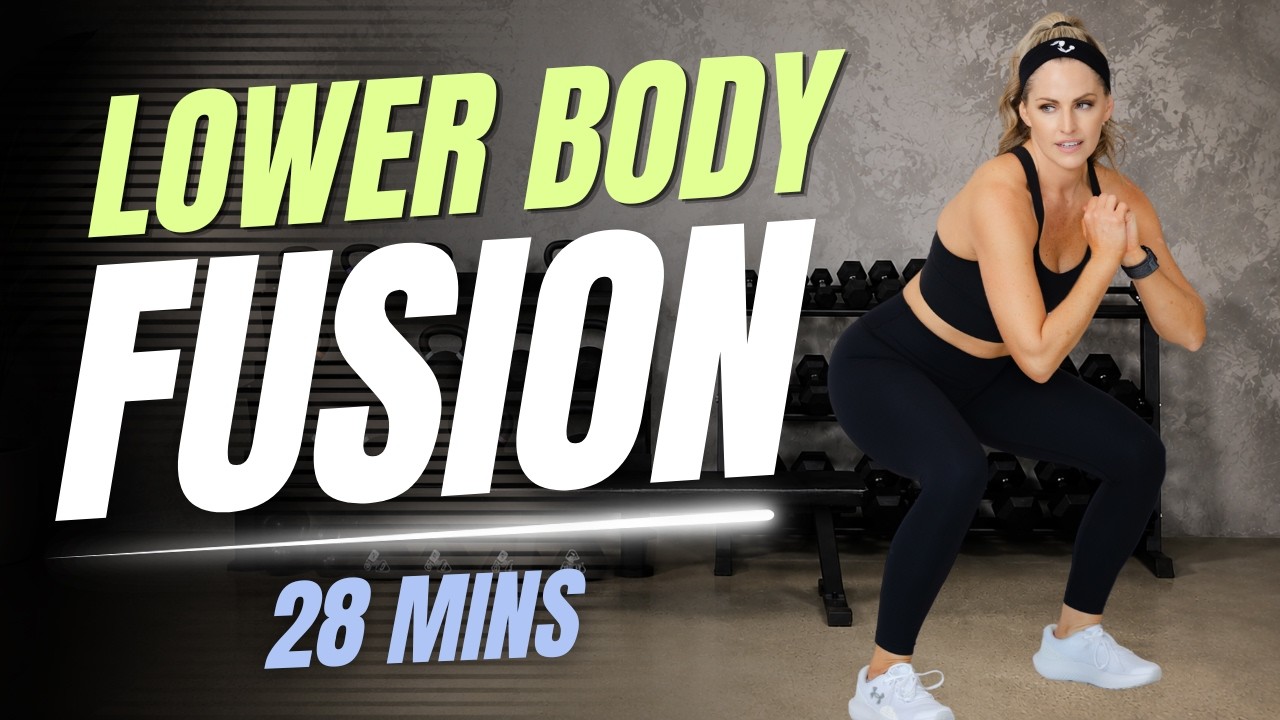
13: 🔥 Lower Body Fusion | Strength + Mobility with Mini Bands, Dumbbells & Kettlebells (No Repeat!)
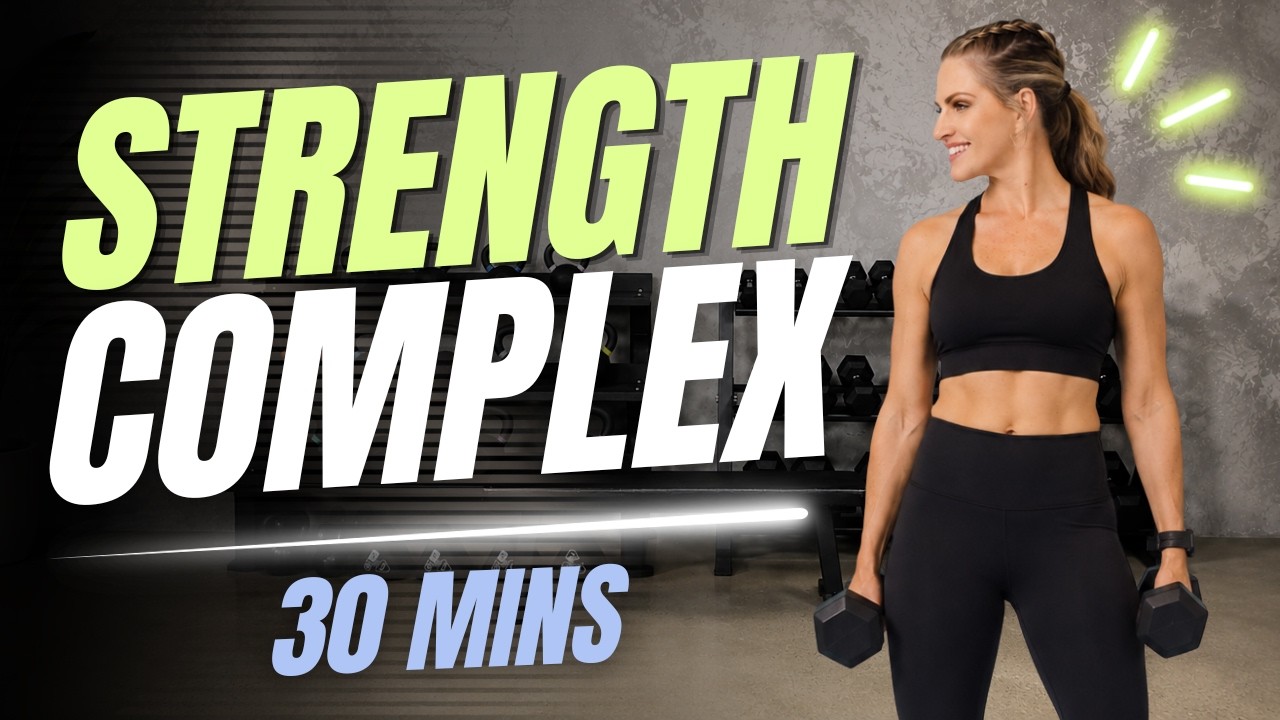
11: 🔥 Dumbbell Strength Complex Workout | Full Body Strength + Cardio | BodyFit By Amy | 30 Min

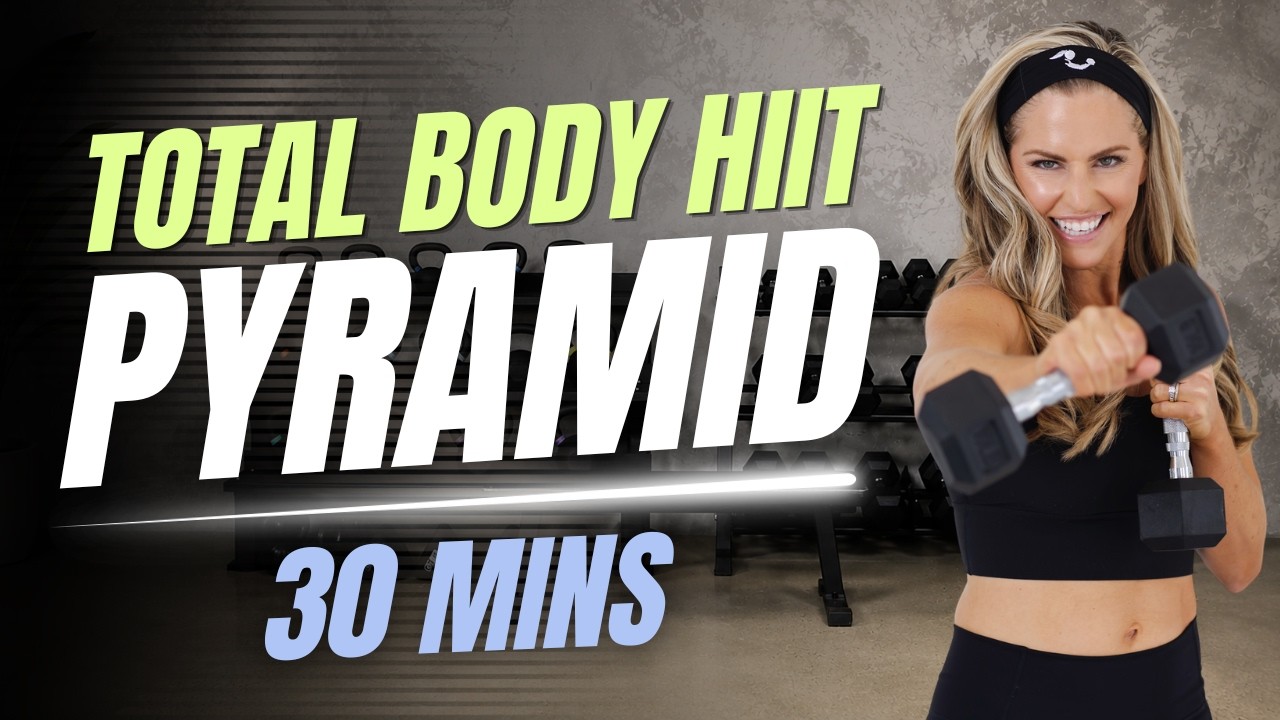
01: 🔥 Total Body Pyramid HIIT Workout with Dumbbells & Kettlebells | Strength + Cardio

Midlife Fitness: Ditch Old Advice, Embrace New Training! #midlifewomen #perimenopause
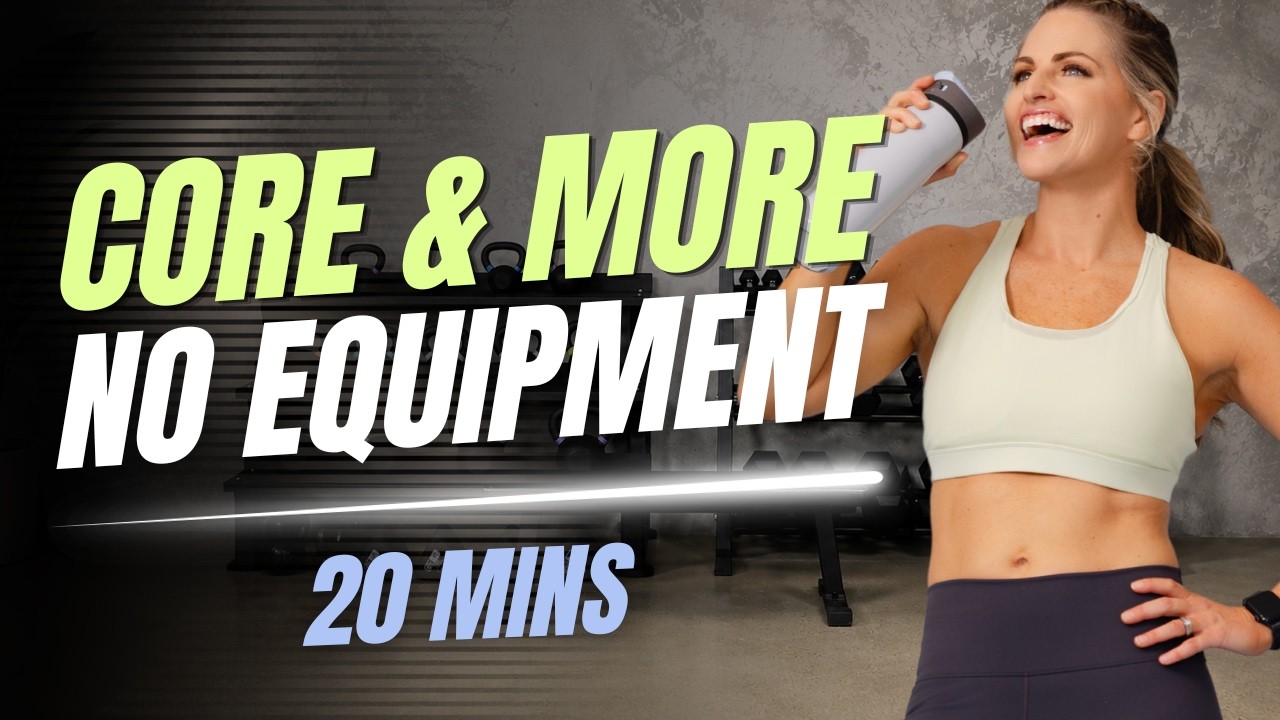
25: No Equipment Core & More Workout | 20 Mins Full Body Strength, Cardio & Mobility (Ab Focus!)