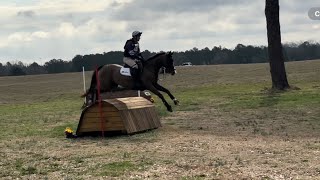
In a brief, informal interview, host Speaker A sits down with three‑time U.S. Olympic eventer Boyd Erik Martin to discuss three topics. First, Martin explains how he balances a demanding elite eventing career with family life, noting that living on his farm lets him be present with his wife Sylvia and three children, but the sport still requires long periods away, travel, and sacrifice. Second, he shares a mindset for handling setbacks—both physical injuries to a horse and emotional disappointments—advocating a steady emotional “level” and viewing the highs and lows of competition as a privilege that few experience. Third, he offers advice to amateurs and juniors, emphasizing the importance of enjoying the day‑to‑day partnership with horses, focusing on incremental improvement rather than only elite goals, and finding satisfaction in the work itself. Throughout, Martin’s tone is candid, supportive, and modest, with occasional humor about his dislike of sitting still. The interview concludes with the host’s gratitude and encouragement for viewers to pursue their equestrian dreams.
Questions this video answers
It's chaotic; I live where I work, which helps, but the sport requires a lot of travel and sacrifice. I try to be present with my kids when I'm home, especially during quieter months, and balance riding with family time.
Stay as level as possible—don't get too high when things go well and don't get too low when they go badly. View the pressure and disappointment as a privilege of doing something you love, and remember you can always choose to sit and watch TV, but the sport offers unique emotions.
Enjoy the process and the partnership with your horse. Focus on day‑to‑day improvement rather than only aiming for five‑star or Olympic goals. The work is hard and frustrating, but it's far more rewarding than a desk job.
Chapters
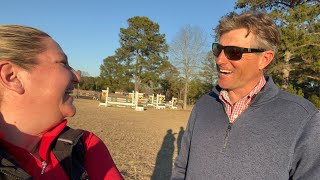
Positive education in the equine community. If I'm supposed to encourage you all to be positive about yourself, your riding and your horses, then I have to be positive about the fact that this is what I look like. Because I've been trying to track this next interview down all day. And I've literally driven from here to there to here. But this saint of a human has always been beyond generous, beyond kind. Is notable for his incredibly kind and supportive personality. Personality as a human, as a trainer, instructor and rider. I can't. I bless my poor heart and I bring you one of my most nerve wracking and amazing interviews. As it was literally between course walks with the most amazing Boyd Martin. I still can't believe I just did that. And he did that for me. So follow your dreams, folks. Okay, I am with Boyd Martin. Three quick questions to professional three time U.S. olympian. Correct.
Three times?
Yeah, three times for the U.S. correct us.
Yeah.
Okay, we are doing three quick questions. Are you ready?
I'm ready.
Okay. How do you handle your home life and your work life? He has a wonderful wife, Silva Martin. Three beautiful kids. Amazing career. For you and Silva. How do you, how do you balance it?
It's chaotic, you know, I don't sleep much. Let's see. Well, I'm lucky. I. I live where I work, so I, I think that's a huge bonus. Being able to, you know, wake up in the morning and go to work and, and be there when the kids come home and you're still working away and they might be sort of running around the farm, but to be honest, it's. It's a hard balance because, you know, you're away a lot and you're competing and to be really, really good at this, you have to, you know, you have to sacrifice a lot to. So, you know, like, I'm down here in Aiken for two months and I won't see my family for a while. But, you know, I think this is what we signed up for. And I think the other thing is that when there's a moment of quiet in like November or December is to really sort of dedicate yourself to being present with your kids. And I don't know, like, I think my life's changed a bit now too. Like, as soon as I finish riding at sort of five o' clock or whatever, then I just transfer over, take the kids to sport. And. Yeah, I don't know, I think we've got a healthy balance. But it's, it's hard though, because you're to be very, very Good at this. You, you know, you. I don't know what, I don't want to say it's selfish, but you've got to be away a lot.
Absolutely.
Competing and traveling and, you know, I'm missing all my kids games and stuff like that. But then there's other parents that sit at home and drink a six pack of beer and watch TV all night and they're not really present, you know,
so that is very fair because your media shows that you're very present when you're home.
O.
And we love that. And yeah, we all love watching, I think, Leo. We love that. The next question. How would you encourage an amateur to stay positive with a setback? Either a physical setback with their horse or a mental or emotional setback? I know that's a tricky question, but as an adventure in theory, you've had many, I guess, also like, how do you not be selfish? Because I know you retired a horse off of the cross country field last year. It's kind of.
Yeah. I mean, I always find that whenever, I don't know, like, you try and stay as level as you can when things are going really, really well, don't get too high and when things that are a disaster, don't get too low. And I mean, I think it used to sting me a lot when I was younger, you know, and I think maybe now that I'm older, I'm a bit more numb to injuries and setbacks and disappointments and, you know, the alternative is to be sitting on the couch and watching TV and eating ice cream all day.
I do that sometimes.
Yeah, I know. But what I'm saying is that, you know, in a weird kind of way, pressure or disappointment or triumph is a privilege because you've taken on a sport and a passion that put yourself in a position where it could be really awesome or it could be heartbreaking and normal. Normal people or millions and millions of people don't experience those emotions. So, you know, you, even though it's miserable, sometimes take joy in the fact that you're able to do what you want to do and do what you love, and it's never quite as bad as it seems.
And then one last question. Thank you so much. We're gonna let you go off your courses. Do you have any advice for people starting out in the eventing world? Is there anything you think that maybe an amateur or junior is missing that's. That's overlooked?
For me, I mean, obviously I think I love competition and that, but like, I think there's got to be Just enjoyment in the process, you know, in the sense of. I think there's got to be just huge amounts of satisfaction.
Yeah.
Producing a horse and having a partner or a goal and working away at something, and, you know, it's. It's such a long, slow process of improvement that, you know, that I think that there's, you know, there's always goals of riding at the five stars or Olympics and all that crap, but, like, very few people get to do that. And I think my enjoyment is just the day to day. Working with the horses and seeing the improvement, building up a partnership with them. And, you know, it's a lot of work and it's hard and it's frustrating and that, but it beats the hell out of sitting at a desk.
He doesn't like to sit. We know he doesn't like to sit from this interview.
You know, driving at work in a traffic.
Doesn't like to sit, Mr. Martin.
Better than that.
Well, we wish you so much luck for the rest of the year. I think you are going to the Olympics at the Hope.
Well, you hope so, but it's definitely not a.
It's the goal. It's the goal. We're tempted to qualify for the Olympics. So. Boyd Martin, thank you so much. I really appreciate it. Send your love to Sylvia and the kids. Thank you. Thank you. Obviously, our takeaway is Boyd doesn't like to sit. As if anyone who knows him or knows of him would think any different. What I think the takeaway that I got the most is good mindset. Understanding who you are, understanding your limits. I cannot thank him enough for being extremely kind. He wanted the sun in the correct direction. He is also way taller than I remember him being at Devon. So not only was I nerve wracked. Yeah, that's him. Not only was I nerve wracked, but my arm was also giving out, and I ran to meet him. I really thought he'd been like a whole entourage of people and instead just. Just there. That's. That's just. Just doing the course. What. What an incredible human being. I apologize for my lack of professionalism, I guess during the interview, as I had had it in my head for weeks and weeks of what to say. I'm not even sure that I asked the questions I had intended to. But I do think we got something out of our interview with Boyd. We got something out of every interview we've done with our professionals thus far. But I. As nervous as I am and as kind as he is, I want you all to realize, please, if you want something. Even if you don't feel good enough or prepared, just try. It's gonna be really hard to take that first step, but I promise you, the outcome is a lot better than you think. And plus, you know, when I see him again at Dubon next year, the end of 2024, I'm gonna look a whole lot better. Plus, the lighting there is better. Thank you all. So like and follow and subscribe.