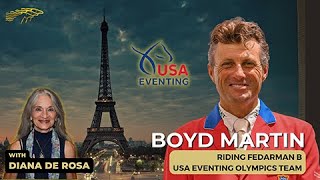
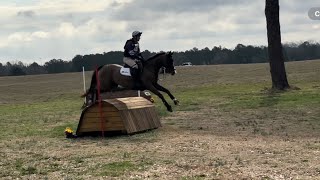
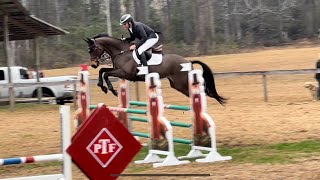
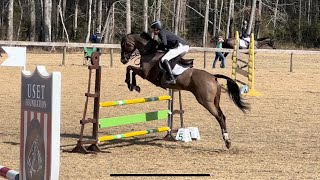
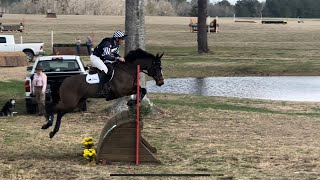
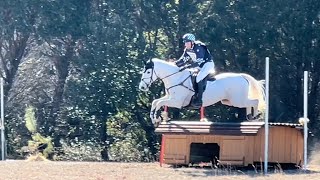
In this Equus Television interview, host Diana DeRosa speaks with U.S. eventing rider Boyd Erik Martin about his selection to the USA Eventing Team for the Paris 2024 Olympic Games riding Fetterman B (Bruno). Martin reflects on his early love of horses in Australia, his rise from a sporting family to four Olympic appearances (Tokyo 2020, London 2012, Rio 2016, now Paris 2024). He describes the Olympics as the pinnacle of the sport and explains his two‑year preparation plan, emphasizing the need for multiple top‑level horses, strategic competition scheduling, and timing the horse’s peak form a few months before the Games. Martin details his two Olympic horses: Fetterman B, a quirky yet gentle horse with a tragic backstory involving a former owner’s fatal accident, and Commando 3, a younger, highly talented horse that narrowly missed selection. He discusses the selection process, the balance between experience and potential, and shares personal motivations and gratitude. The interview concludes with Martin thanking DeRosa and promising to give his best at Paris.
Chapters
I'm Diana derosa and I'm speaking with Boyd Martin, who lives in Pennsylvania and has been named to the USA Eventing Team for the Paris 2024 Olympic Games riding Fetterman B. This will be his fourth Olympic Games. He's also competed in a number of Pan American games and in 2019 took the individual gold and was a member of the gold medal team. And the list continues. Trust me, this man has represented the United States well in many of the most prestigious events. So, Boyd, I want to thank you for joining me today and I want to kick this off by talking about you. How did that first pony or horse ride get you to where you are today?
Excellent question. You know, you, I never would have thought that falling in love with horses at a young age in Australia would take me to the other side of the world and, and get me to the Olympic Games. But in all honesty, I think I grew up in a very sporting family and I also was just terrible at school and thank God I found horses because I, I wonder if I, if I didn't find horses, what, where I would have ended up in life. But I think I enjoyed the, the process of training horses. I, I love competition and still to this day just can't wait to get out of bed and jump on the horses and work away. And it's amazing where horses take you in the world. I've been lucky enough to compete all over the globe and had many, many triumphs, many, many disappointments, ups and downs, highs and lows. It's been a wonderful ride.
Yeah, I think those highs and lows are important because we always get better when we, you know, when, wherever we go with all that we do. All right, so this is your fourth Olympic Games. What does it mean to you?
Oh, it's a, you know, it's a, it's the pinnacle of the sport. It's, you know, it's one of those, you know, we're in a small sport, worldwide eventing and obviously the, the people in our little bubble, yeah, they follow the five stars and the, you know, the international three day events pretty closely. But every four years we're sort of on the true world, world stage against all the other mega athletes and mega sports and I don't know, it's, it's just a, an unbelievable competition. It's a, it's a true, I don't know, it's a, it's just something that only comes around every four years. So it's a special event and only three people from each country get to go and you know, it's something that I've sort of been focused on and I'm trying to make sure that I get on the Olympic team while I'm in, you know, in my prime here.
How do you plan to prepare for it?
Well, to me, to be honest, the planning starts probably two years out. You know, I think two years away from the Olympic games, you've got to, in eventing, I think you've got to have a couple of horses. You know, there's so many things that can go good or bad or up or down or high and low or so you know, truly in, in about 2022 I sort of had a group of horses that I thought could, could be there and, and I'm left with, with two very strong horses. Fetimon bees the been picked on the team and then I've got a Director Reserve called Commando 3. So you know that it sounds glamorous going to the Olympics but it's just thousands and thousands of hours of practice. It's, there's lots of just training and practice and then the picking the right lead up events and knowing when to push your horse and really go for a win and knowing when to be conservative, servative and save them with this sort of long term picture involved. And I think the big thing with making an Olympic team is the timing. You know, making sure that you've got your horse in form, performing really well, you're healthy, they're healthy about two or three months before the Olympic Games. So that's the critical part.
That's actually great information to share with our viewers. I mean it is important to know where you are and where your horse is. Let's talk a little bit about your horses. You can start with Fetterman, but I know that Commando is another one. So our viewers always like to hear a little bit more. What's it like in the barn? What's it like to ride him a little bit more?
Well, he said he's a quirky horse. He's very, very hard to get on, he's very, very hard to catch. But other than that he's just an angel. He's a very quiet, laid back horse, he's a gentleman to ride and most, most top level event horses are lunatics. And this guy's, he's, he's just a pleasure but he is quirky. It's a sad story how he came to me. He was a student or a good friend of mine, Annie Goodwin had the horse and tragically she was killed on him in a cross country schooling accident. So while we're in Tokyo three years ago we got the shocking news that she'd had a fall and you know, and the parents thankfully sent, sent Bruno to me and at the beginning we didn't really get along that well. He'd only been a sort of a one horse horse for Annie and he wasn't too sure of me. And our first couple of events were a disaster and then after about six months we really started to click and gel and, and at that time I sort of brought in a large syndicate, a big group to, to own the horse and you know, who, who would have known? But you know, a couple years later we're going to the Olympic Games.
All right, let's talk a little bit about Commando.
I mean Connor's probably one of the most amazingly talented horses I've ever sat on. He's a little greener than, than Bruno. He's, he's, he's hit the ball out of the park at the four star level and he's ready to go five star. So I think it was a chuff tough decision for the selectors. They probably went with the more experienced, seasoned horse, Bruno. But Connor, I feel like in six months time he's, he's going to be one of the best horses in the world. So I was a bit sad for Connor just because if it wasn't for Bruno he would be going to the Olympics. But part of me also thinks that, you know, it might be just a moment too soon for him where he is in his career. So, you know, after sort of going back and forth, back and forth. I do think experience does count at the Olympic Games.
Oh, I think it's really good for anybody. It's good for the rider and good for the horse. And so four Olympic Games. So you started in Tokyo, then you went to London, then you went to Rio and now you will be in Paris. I've been to all of them or will be to all of them after Paris and I look forward to seeing you there and I want to thank you very much for joining me. Do you have any last words you'd like to say?
Not really, but thanks for having me on and I'll be giving it my best shot.
I will watch you as you do that. And I am Diana DeRosa reporting for the Equus Television Network,