Stories of Greatness: Boyd Martin, Three-Day Eventer
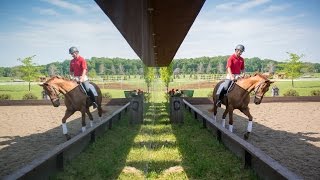
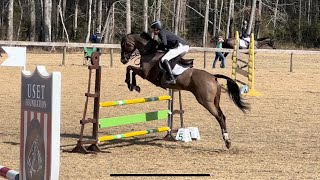
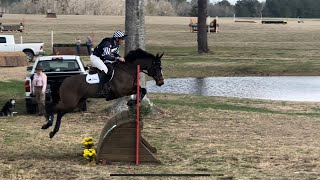
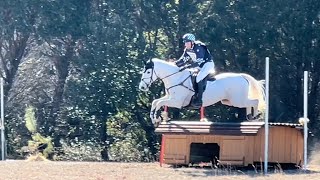
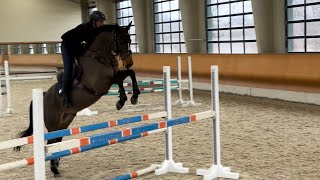
The video is an interview‑style documentary featuring three‑day event rider Boyd Martin, his mentor Philip Dutton, and his wife Silva Martin. It traces Boyd’s journey from his first pony in Australia, through his early competitive years, the pivotal move to the United States to train with Philip Dutton, and his rise in elite eventing. The conversation delves deeply into the physical toll of the sport—listing dozens of surgeries, broken bones, and severe injuries—while highlighting Boyd’s relentless work ethic and mental toughness. A major crisis unfolds when a barn fire threatens his horses; Boyd rescues the future star Neville Bardos, who later survives smoke inhalation thanks to a hyper‑baric oxygen chamber and community support. The narrative also covers personal tragedies, including the death of Boyd’s father and Silva’s brain injury, underscoring the family’s resilience. The segment concludes with reflections on Boyd’s competitive achievements (World Championships, Rolex Kentucky, Burghley), his ambition to become a sport legend, and the supportive network that helped him rebuild after disaster.
Chapters
The sport is such that it's not for somebody who's in it for the wrong reasons. You know, eventing, it's a lifelong process.
It seems glamorous, but it's a hard slog sometimes, you know, it's tough on your body. It's unbelievable hours. You lose a component of your life that other people would seem important, but something within me had the passion to do it. Obviously, he's a very gifted rider, but just being a gifted rider doesn't always equal success.
Yeah, they took some big hits, there's no question, but the harder it gets, the more they fight.
You know, I had a lot of things that should have slowed me down or backed me off, and, you know, I didn't break.
Boyd is such a competitor and like, even with all the stuff that happened to us, he's like, bring in on.
There's nobody that wants it more than he does.
Boyd is cutthroat competitor. I mean, he was not gonna give up.
This is all he wants to do.
And he wants to be known as one of the greats of the sport. He's not gonna take any shortcuts and he's gonna go down fighting that sport.
You know, you push to where other people. My first pony was a horse called Willie. He was a little grey horse and his show name was Willie DeWitt.
As you can see, Willie's a natural all rounder.
You know, I remember jumping off the school bus every day and running home down the road and tacking Willie up and start jumping him over the ditches or making a log pile and daring myself to see if he'd jump over that fence. Number two, storm damage or Martin mayhem. It's almost surreal looking back on it there that something. When I was 12 years old, something was brewing in. Me first met Boyd when we were at Pony Club as kids growing up in Australia. You know, basically as a young kid, everyone in the neighbourhood did it. And I don't think me and Woodsy would have been the standouts. You know, like when you look at people playing sport, like we weren't the two. Oh, my God, look at those two guys riding. We were both thrill seekers, intrigued in the fast side of riding. So we were doing all the races and the jumping and getting into the. That's where we first started eventing. Eventing originated as a military sport. The cavalry developed a three part test and a cavalry remount. Those tests were dressage, which simulated the parade ground maneuvers, and then a speed and endurance test which would include fallen logs, ditches, banks, and so on so far we've covered a lot of ground.
Today we're going to do a little jumping.
The show jumping was designed as a measurement that the officer had not used his horse up. That format has continued to the present day. My first horse trial was St Ives, one day event. I came dead last. I think like the penalty score I was on was like 384, which I think is a world record. But I enjoyed every minute of it, you know, and at the same time, school definitely wasn't for me. I was a bit of a train wreck there. And, you know, there wasn't one moment where a teacher ever said to me, at the end of high school, maybe you should think about college. And I was lucky though, because both my parents were Olympians so they had no problem with the idea of that. You know, the day you finish high school that you pack your bags up. And I remember I went up to the New South Wales Equestrian Centre and moved into a bunkhouse at Heath Ryan's. That thought of pursuing the international arena is very much a part of our program. He was just an unbelievable character, probably certifiably insane. Like he was just manic. He'd be breeding foals, breaking in horses, shoeing horses, branding them and talking on the phone at the same time. I think I was drawn to that electricity. He really taught you how to be a really fine horseman and the work ethic that's involved to be really good and also gave this sort of desperation for brilliance. Classic Australians in that we are competitors, we're competitive, we're just trying to win. When I was 17 and I moved in there, you know, I was pretty impressionable. And someone starts chanting that to you seven days a week, you start getting excited about the idea and it was all of a sudden, we've got to get you to four star. You're going to be a rider that can ride any type of horse. You're going to compete and represent your country. And it was good. It was good because in my life at the time, I didn't quite realise it, but there was no Plan B. There was nothing else. Like I had to make it doing this, otherwise I had nothing. Basically did every big competition in Australia and New Zealand over and over again and, you know, started thinking, there's more out there for me.
In 2006, Boyd prepared to go to Rolex Kentucky, and he then emailed Phil Dutton, who he didn't know, obviously I'd
heard of him in Australia, but I'd never met him.
Boyd contacted us about coming to America and basing with us leading into the Rolex event.
I mean, Philip was basically one of the most successful riders in the world. So I lived in his garage while I was preparing, and I was having a beer with him one night just before Rolex and said, oh, gee, I wouldn't mind moving over here. And he looked at me and he said, well, why don't you come back and work for me?
So then we started talking about plans and what he wanted to do, how he wanted to progress with his career, and he ended up starting to work for us and, you know, we've become best of friends since.
America was a bit more of a happening place for high level dressage, high level eventing. It was just awesome being in a new country. Every event was a novelty and I just went for it. Yeah. I mean, the reality is our job is training horses, and sometimes it goes well and sometimes you get driven into the ground. Yeah, Boyd thing, he's always got a
little bit of a propensity to get injured, and so he calls me up
and said, all right, I'm going to send you a picture.
You're not going to like him if some elbow is broken or collarbone is
broken or something like that.
It's hard to kind of keep him out of trouble like that a lot of times.
You know, I've probably had, I think, 18 surgeries now over the years, and I don't know how many fractures and tears and torn ligaments and bumps and bruises. And I've been lucky enough to, you know, link up with guys like Chris Doherty that knew his stuff in physiotherapy. And, and he's helped me unbelievably over the last four years, five years just since 2013, Boyd has suffered a laundry list of injuries, starting with torn ligaments in his ankle. He had a broken leg, dislocated elbow and separated shoulder, broken arm, dislocated elbow, same time, and a fractured collarbone. And that's, that's a laundry list. And that's not even to mention all the little things here. And there's that he's come in to see me for. You know, every day you wake up a bit sore, but that's part of the job. If you want to ride an animal at high speeds at a fixed obstacle every now and then, it's not going to work out and you dust yourself off and, you know, get going and push on.
First of all, Boyd's fearless. You have to have such trust in these horses and they have to have such trust in you. To be able to jump what they jump, because it obviously you can die. People die.
You know, I don't get worried about injury. Like, I don't. Doesn't really bother me if I get hurt or banged up or anything, but, you know, I've had one or two friends get killed. And that. That's tough because, you know, you get into this sport for the love of competition or the passion for horses, and when it goes wrong, it can really go wrong.
You know, I had a really bad accident myself, and I think it would be very hard for a boy to go through anything like that because I couldn't just be tough and go through it and just do it. I was just stuck. It's just a stupid accident, really. I just hit my head the wrong way and I, you know, I ended up with a brain bleed and I couldn't walk, I couldn't talk. And, you know, I lost this eye. Like I. You know, there's just a lot to it,
right?
When I first saw her, she was conscious, but she wasn't making any sense. And I remember thinking at the time, you know, this is not just any old injury. This was a life changer.
I met so many people in rehab that, you know, have such a big fight to live every day that, God, we're lucky. You know, there's just people out there that are struggling every single day just to get out of bed. So for us to do what we are doing and live where we're living, it's incredible.
So Silva got flown back to Pennsylvania here with the brain injury. She had a live in nurse trying to get through.
And then Boyd went to Salem Pines and broke his leg.
As soon as I hit the deck, I knew I'd broken my leg. And an hour later, I had a rod put through the top of my knee, all the way down through my ankle and screwed up. So the morning after that, I'll never forget our house. We had a nurse here trying to help me put my pants on and feeding Silver with a spoon.
I couldn't walk. He was limping around. She was cooking meals for us. It was great.
It was like a hospital ward.
You know, sometimes you fall off at an inopportune time. And so, you know, if you really do want it badly enough, you'll still ride with the pain, you know, just still got to play through it. And that's a true sign of a champion, you know, like, the harder it gets, the more they fight. And that's typical of Boyd. You know, if it goes, something goes wrong. I mean, he's just looking how he's gonna get out of it and, you know, it only makes him stronger.
So that was the year of the world championships. And then straight away I broke my leg in half, so it didn't look like I had a hope in hell. And getting to the world championships, we all kind of heal at roughly the same rate. But with him, it's the mental makeup for sure that I think gets him going faster and kind of says, you know, I'm going to push the limits to get back to where I need to be. You know, it was supposed to take six weeks to heal and, you know, I probably started riding three weeks into it after the injury. And the last chance to get qualified for the world championships was a four star in Germany called Le Moulin. Welcome to Le Moyn. Lamorlan was a big, big event. Some of the best horses in the world. I flew over there and had just a fantastic event on him. So on to course now comes Boyd Martin to the United States of America with Chambari four won the three star international at Red Hills this spring before then breaking his leg at the Carolina International. Every time you landed off a jump, you know, like there was just this piercing pain up your leg. Philip Dutton rode the horse a couple of times for his friend Boyd, which meant that this is his first international ride with Chambare 4. Physically, I don't think he was there. It's hard to be physically 100% after coming back from that level of injury in that short period of time. Boyd just gets the pace absolutely right to that corner. You know, lucky for me though, I just started feeling strong enough just before the Moulin. So nothing to add. The only one on the octuum time
as the USA's Boyd Martin comes very close on Shamwari.
Let's clear over the polls just in
the time
he ran third against, you know, arguably the best horses in the world. And yeah, after the event, we were giggling and having a cold beer together thinking, well, we went, we cut that one pretty close. Mr. Miyagi here got him going for me and schooled him. And I gotta say, it was one of the smoothest, nicest cross country rounds I've ever ridden. And the horse just does it for fun, You know, coming to America like Silver. And I came to America for one reason and that was to compete horses.
And we kind of had a good business in Australia, but it was kind of like that stuff, as good as it could get.
I remember flying home from Rolex thinking, okay, America is the place to Be I'm going to get rid of everything I've got there, sell everything and move over here and start over. I moved back here and sort of started over as a student for Philip.
Philip then took over and I think he made him the competitor that he is now.
He, you know, obviously his attitude is that he wants to learn and he's never above, you know, hearing criticism or, you know, he's always quick to want to know what I think and how to improve and he's fun to be around. So it was, you know, I was more than happy to give them a leg up.
I feel like I got over here and I was a bit rough around the edges and he just polished it all up and really made me different or special to what I was. And that was, that was a big turning point. I was very lucky that I was working for Philip and sort of got to compete some of his horses. And at the same time I had a horse that was nearly at the top of the sport. Neville Bardos. Hi, welcome to the Neville Bardos Syndicate Report, boys. Martin riding Neville Bardos. Next to go, Neville.
Brad.
Yeah, I mean, growing up in Australia, there's tonnes and tonnes of thoroughbreds off the track because the racing's so big in Australia, there's a lot of failed racehorses. So when you're a young guy or a young rider, you could buy quite
cheap horses to a degree. You have to see something in a horse that somebody else doesn't see because they're not on the market very long. The ones that just stand out and say, I'm a superstar. Like somebody picks them up pretty quickly.
Yeah, Neville came along and he'd just finished racing and I remember just seeing my friend of mine trying him and the friend of mine didn't think he was any good and he told the fella to take him back and I yelled out that I'd buy him and we got him for eight or nine hundred dollars. I guess we just trusted Boyd and it was not a huge investment. The horse was, you know, starting off at zero, so to speak, and Void
was very high on him, so you
gotta go with it. To start with, I think I got ripped off.
The very first view I got of Neville was him breaking loose at the trailer with the shipping boots on and running around the whole showground.
The horse was a bit crazy and then it was wind sucking and they should really tell you if they were wind suckers. And early on I would have sold him for anything. And then by about the age of five, I started thinking Hang on, this horse is turning around. And then at age of six, he won a CCI two star at Melbourne three day event. And I remember the great Barry Roycroft handed me the trophy and said that he thought this horse was special. And from that moment on, no money in the world could buy him off me.
You know, he had, you know, smoke coming out of his ears. He was a typical hot thoroughbred horse, and it was all credit to them that they were patient with him. And, you know, it's pretty cool watching the horses progress.
Yeah, I mean, it's. Yeah. Different to racing. I might have the same horse that I work with for an hour and a half every day for 10 years, 12 years. And when you have a horse for years and years and years, you can just feel what it's thinking. You know, if you look at really good riders jumping or doing dressage, they actually look like they're doing nothing. And the horse is making huge changes. And, you know, it's very, very subtle things, and it's a feel. And I don't think you can teach feel like, I think feel is something you're either born with or you develop through this partnership. And when you build up a great partnership with a horse, I think that's the secret. He was hitting his prime. And, you know, I was just hungry, you know, just hungry to show everyone what I could do. And, you know, left everything and abandoned everything in Australia just to compete these horses. And I had nothing to lose. At that time. We were renting Philip Dutton's top barn, and Silver and I were running our operation out of there.
We have been teaching this clinic in New York, and we got home late,
and then about midnight, a girl that was working for me, Caitlin Silliman, rang me.
I'll never forget that voice of hers, because she was in such a panic.
She was just hysterical and crying and yelling about something on a fire.
So I got a phone call from Ryan Wood and he just was screaming into the fire phone, fire, there's a fire here. There's a fire here.
There wasn't much of a conversation. It was just like, our barn's on fire. Get over here. And then just went back to getting horses out of stalls. Woodsy was living above the barn at the time, and he's like, I'm sorry. I tried, I tried. And he was in a mess. And I could see right down the breezeway of the barn, and there was one horse that was burnt to death in the breezeway of the barn.
Driving up, you see the whole barn on fire. It was a really horrible sight.
We rushed right over there and of course it was decimation and it was just, it was ghastly. It was pretty traumatic really. Like there was horses with their skin on fire. You know, seeing those horses that were suffering was pretty terrifying.
You know, obviously most of the people that around were in a state of shock. There was a couple of fire engines here and they've been trained to save lives, human lives. So they're not so worried about the animals and so they were always trying to keep people back. But Boyd knew where Neville Bartos was in the. The fire marshal said you can't go in there. And Boyd just took off in.
You know, you don't have much time to think in situations like that. You know, there's moments in time where you'd think back and regret that you didn't do anything. And it seemed like there was a chance. I remember I had a shirt on and I put it over my head and I remember just going down and I could feel the, the stable doors.
The smoke that comes from burning straw is just like dark, really dark black kind of diesel smoke.
It was just the thickest, blackest smoke and like just never been so out of breath. It felt like I was drowning. I thought to myself, alright, if I stay in here any longer I'm dead. I was starting to cough and suffocate and then I could hear a noise in one stable and it was just sort of gargling or making a noise up against the wall. Then I sort of ran my hand up his neck and could feel this wind sucking collar that he has. And then I tried to pull him there and he couldn't move. And like the smoke was getting thicker
and when the horse is scared they just go into the corner of the stall.
Horses don't want to leave a fire because they think that their stall is their safety. And then all of a sudden Neville
started to move and it was Philip
on the tail like a ghost. Out of nowhere like Philip pops up, puts his shoulder in behind the horse.
So I got behind him and just like laid into him and then he
started dragging him out the stable door and dragging him out of the burning building.
He's one tough son of a bitch that horse. I'll take it.
I nearly thought I was dead. Like I couldn't have stayed in there one more second, you know. And so in a weird kind of way it was a good feeling because you say, all right, I did everything I could have done. It is what it is now. Like I've Done everything I can to try and rectify it or sort it out, but everything we'd been working for, you know, just went.
I just loaded up the horses, I got out, including Neville, and drove to Newbolden Centre. And they were amazing. Keeping them alive, really.
All I wanted him to do was survive. You know, he's been a good horse for me, done a lot. I'd known him forever and come across to America with him and it'd just be great if he survived. And then about a week into it, there was the Fairhill Therapy Centre. A guy called Bruce Jackson had this hyperbaric chamber which was well beyond our budget to use. And he said, bring Neville in here. I want you to. To put him in this tank of pure oxygenated air for our everyday well.
This right here is the hyperbaric oxygen chamber.
And the highest door in the chamber
here is, in fact, Neville.
All the burns in Neville's throat and the stuff in his lungs got healed, like, really quick. And, you know, we just had so many people helping us out. It was remarkable because in a short period of time, we had, you know, a complete, complete stable. Blocks set up a few of the local farmers, moved some of the running sheds, and we converted them into a tack room and into a feed room and into a wash stall. The local quarry company donated the stone to put down under the stairs. And the guy that built our arena, he levelled a big pad for free. Floors on the rubber mats that go down the aisle. He knocked up some lights, trenched a pipeline out there to get some water out there. And, like, I was just blown away by the amount of support that we got. You know, like, we'd move to America to do this horse thing and everything got taken away and, you know, you just push on. Just when we were getting through this fire, I was at a charity event, a fundraiser to get us back on our feet, and we got a phone call saying my dad had been paralysed in a bike ride. It was just a brutal time.
It was definitely a rough time because we had the barn fire. And then two weeks later, Boyd's dad passed away. He was in a bicycle race and he got hit by a truck. He would have been paralyzed for the rest of his life, and he didn't want to do that. You know, he said to us, I cannot be this way. And he had talked to Boyd for a long time, and I'm so happy that he got to talk to Boyd. They kept him alive. For Boyd to get there, it was
probably good, you know, like, not Everyone gets that chance to say goodbye and just spent a day with him, and he was the least upset about it. He sort of said his goodbyes and such is life and see you later. So
I got back from the funeral, and my dad had been battling with cancer for five years. And my mom called me and said, you know, you better come. And I guess he had a blood clot. So we all spent a few days with him. And, yeah, that wasn't a fun time.
That was hard because that all. It all happened bang, bang, bang. You know, the fire and my dad and Silver's dad. Everyone's like, oh, wow, how did you push on? Or how did you get through this? And to be quite frank, we didn't have a choice.
Yeah, I mean, obviously, there's times where I get down and, you know, you think, oh, poor me. But you know what? Poor me doesn't work, because even with all the shit that happened to us, life goes on.
I think Neville was a. It was just a good distraction. He's doing all right. This is actually his first day out of a storm. Sort of went day by day and thought, right, oh, well, just, if he feels good today, I'll do a little bit more tomorrow, and if he feels good tomorrow, I'll do a little bit more the next day. And we were sort of preparing for an event, and. And then I asked Philippa, what do you think? And he's like, yeah, yeah, yeah, you'll be right.
The idea was to get him to Burghley that year, which was remarkable.
Yeah, I mean, it was a big call. Burley had been a long, long life dream of mine to compete there. And, you know, for 12 months before, we'd been focusing on that one event.
You know, he had him pretty fit before the fire, so it was just a case of getting him back to that.
We're still trying to work out where he's at in his progression since the fire. It was a little bit of the unknown. Like, even the experts were a little unsure about what he was going to be able to do and how soon he was going to be able to do it.
It wasn't an ideal preparation by any stretch of the imagination. However, he wouldn't have taken him unless the horse felt right.
At the moment, he's telling me everything's okay. The last month of the training, he really started to pick up. Things are going well, much better than I ever would have hoped for. I knew two weeks before Burley, he was. He'd eat it up. America's Boyd Martin riding Neville Bardos formerly competed for Australia but changed nationality.
I started crying when he went out of the Starbucks. Not because I was worried, just because I was like, I just, I can't believe he's doing what he's doing with
all the history of this year, Matt. Everybody hoping, wishing that he can round off a really good weekend. The announcer was saying Boyd and Neville are at such and such a jump. But you didn't need the announcer to
know where they were because the crowd
cheering because I think a lot of people knew the story.
Boyd had a nasty start of the year.
His barn got burnt down, he lost a few horses.
Everyone wishing him very, very well.
You know, it's such an intense course and big competition. You don't want to let your thoughts drift and ever start thinking about what ifs or anything but the jump coming at you. Here's Boyd coming to the Rolex combination and he's good on time, Matt. Yes, he is. Neville would be as big as athlete as any horse I've ridden. You know, like he's got a unbelievable engine and heart and he just is such a trier. Boyd Martin, now formerly Australian, now riding through the us coming to the biggest fence on the course, gobbles that up. It's the biggest track in the world and like the horses were getting tired and riders were falling off and the last minute of the course I gave the old horse a tap on the shoulder and he just flew.
This is Lloyd Martin coming home and
he's going to be inside the time and he's going to move up. He was 24th after dressage, sixth place at the moment. And Matt, that's very pleasing. I remember I got interviewed by Samantha Clark at the end of the course. She just asked, you know, was it hard as you got near the end
to keep your emotions in check as
you realized you were going to do
it and you felt sure.
I mean there's quiet moments when you're by yourself thinking about it. It's the first time I really thought of it.
Well, we're all thrilled for you.
Thank you.
And I know everyone else taught you and well done. Everyone's so thankful.
Thanks everyone in America for help me along. It's been a hard time. It was just the thoughts of I did it and like all the people that got me there.
This is Boyd Martin and Neville Bardos.
Neville Bardos actually was rescued out of the barn that was burned.
He suffered from smoke inhalation and here
he is doing a four star three day event at the end of the year. You know, I think Boyd is going to be one of the greats of
the sport, one of those, you know,
one of the legends.
Because we're only at the start of
his career, he seems to me to be the model for the 21st century adventurer.
He's got a tremendous work ethic.
He's a very, very good rider. I expect to see him on teams
for the next 10 to 15 years.
Come on, boy. Come on.
More from Boyd
Building Bravery Through Competence - An NF+ Masterclass Exclusive with Boyd Martin