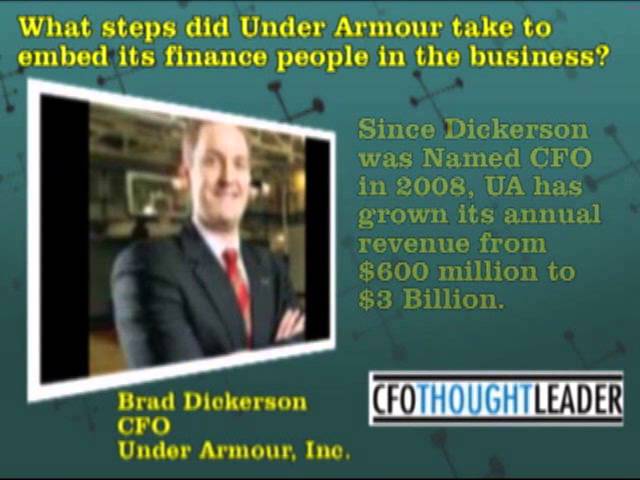
Ep 3: Navigating Financial Foundations and Leadership in Scaling Startups with Brad Dickerson
Brad Dickerson, who scaled Under Armour, Blue Apron, and Bombas, argues that founders need a CFO mindset before hiring a CFO. He stresses mastering the P&L and balance sheet as the foundation for growth, and warns against chasing capital just for the badge.
Chapters
Welcome to the Scaling Startups Podcast. I'm your host, Irene Ortiz Glass. Founders are visionaries who are pushing boundaries and bringing the nonexistent to life. It's challenging and also very exciting at the same time. But at some point, this vision requires people, process, and structure. The Scaling Startups Podcast seeks to explore the truth behind what it takes to scale startups, leaders, and organizations. It's about managing energy and focus while not killing the dream. Hello, everybody. I am so excited to be here today to talk about a very important piece of the puzzle regarding scaling startups, which is the financial side of scaling an organization. And I am so happy to have Brad Dickerson, a friend, a colleague, a partner, here with us today. Just to give you a bit of a story here, Brad and I have worked together in multiple scaling organizations as partners in different capacities, and I have firsthand observed just the magic and the incredible expertise that Brad can bring into organizations to help them view the finance side of scaling a startup, not only from the metrics and the balance sheet, but also strategically. And it's just so incredible to have you here, Brad.
Thank you.
Thank you so much for joining me. By background, Brad Dickerson is an executive advisor and also serves as an operating partner on the private equity investment team at MidOcean Equity Partners. Brad has over 35 years of experience in corporate finance, operations, and broader executive oversight in high-growth environments. He currently advises small to mid-sized company executives in navigating growth and scale in finance, operations, and general executive management. matters. Brad played an instrumental role in many high-profile consumer brands in his career, including Bombas, where he served as president and CFO, Blue Apron, where he was CFO and also had CEO responsibilities for a period of time, and Under Armour, where he served in numerous executive roles, including CFO and COO during their incredible growth from $100 million to $4 billion in revenue. What a story, Brad. I still remember meeting you at Under Armour and thinking, and us having this conversation, right, around your own leadership and me saying, Brad, you're like way more than a CFO. Like, you see the entire picture in the enterprise. So, share with our audience today a little bit about your journey because it's quite a story.
Yeah. Thank you, Irene, and appreciate you and everything that you've done. And you've been very impactful in my professional career. So I appreciate you giving me the opportunity to speak with you here today. But yeah, you know, I think there's a few inflection points I think that were critical in the journey to really, you know, help companies be successful in scaling. For me, I think one of those inflection points when I went and got my executive MBA at Loyola Maryland, This was back in 2001, 2002. It was really a great opportunity for me to see how different parts of the business have to connect and work together in tandem to be successful. I think up until that point, a lot of my focus was either accounting and/or finance and how does that function serve the organization. But I think that up until that point, I didn't really have a full appreciation for how connected that you really need to be across the organization to be able to help it scale and work through issues and challenges and growth to some degree. So that was a really big inflection point for me where I started to have this bigger curiosity around, you know, how does marketing impact sales? How does sales impact operations? How does finance play a part in helping all those parts of the organization? So that was a big point. And then, you know, I was extremely fortunate to get the role at Under Armour and, you know, first as controller. And see us again at $100 million in revenue and watching that over 12 years expand to $4 billion in revenue and all the different things that happened along the way. We did an IPO in 2005, multiple product expansions, geography expansions, channel expansions. It was just a phenomenal experience. And again, fortunate to eventually take the CFO role in 2008 and navigate you know, a high-growth, high-profile consumer brand in a public company arena was interesting. And as you mentioned, you know, a short stint as COO towards the end of that. And, you know, talk about scale, going from $100 million to $4 billion. You know, I'm not sure there's more challenge than— and doing that in 12 years around really trying to put the pieces in place. And, you know, you never kind of get it completely right to 100%, but it really is how do you navigate it? How do you try to get in front of it? How do you try not to get too far in front of it and really bring the right talent and right team in to kind of make the organization work together and the critical parts of the organization work together to scale? And it was just a tremendous experience, a life-changing experience to me from a professional career perspective, going through that at Under Armour and all the different people I worked with. Taking that eventually to Blue Apron, the thought was, I love that journey from $100 million to $4 billion. How do I do that journey over again? And that's kind of what led me to Blue Apron, again, initially as CFO. And again, the focus there was high growth, hypergrowth almost to some degree, put the right things in place, get the organization more mature relative to the financial side of the business, and eventually, again, do an IPO, which we did. A lot of scale going on there. The company was moving very fast. And I think maybe the opposite side of Under Armour, maybe moving a little bit too fast. And we had some challenges on the back half of my tenure at Blue Apron because I think the organization, maybe the scale wasn't in front of the organization to some degree.
Mm-hmm.
We had to kind of work through that in the back half of my tenure at Blue Apron and kind of get scale back in line to be able to support the organization to be successful longer term. I was CEO, as you mentioned, for a period of time there. And again, the focus was let's get the foundation in the right place because, as we'll probably talk through, like, part of scaling an organization is you got to have the right foundation.
Mm-hmm.
And, you know, really get the foundation right that you can scale off of going forward. After Blue Apron, as you mentioned, Bombas, president and CFO, you know, tremendous brand, tremendous organization, great people. I really enjoyed working there at Bombas. I'm still on the board at Bombas, which is great. But again, a very similar situation, fast, high growth, especially in the earlier days at Bombas, digitally native company. And again, same thing, how do you put the pieces in place and how do you put the foundation in place to continue to build off of as your business goes from $50 million to $100 million to a couple hundred million dollars in revenue and so forth?
I just love this because, you know, having experienced this with you here and there a bit, I have watched the incredible energy around you bringing in some of this fundamental process and rigor to an organization that really, quite honestly, many founders are, you know, averse to. They want to keep dreaming the dream and vision and creating, and they're not fans of building the foundation. And I had a call this week with a very young founder, he was like, people keep telling to put systems in place. And I said, don't focus on systems, focus on the fundamentals. Let's get the foundation in place. So, you and I are completely lockstep in that. So, share with us the idea of the foundation. How would you describe that? And where do founders and, you know, first-time CEOs misstep when scaling?
Yeah, it's interesting. And again, I've had the opportunity now to go through 3 of these in the last few decades. And there was a lot of similarities and common grounds in this. And I think there's a very positive side of a founder-led organization that there's an extreme amount of passion and optimism that they bring to the business. And that's needed. It's especially needed in the very early stages where there's still some questions. Is this organization, is this idea, business idea going to make it? Is this company going to make it? Are we actually going to be able to move forward and expand and grow and so forth? That passion and optimism has a very, very big role, especially in the very early stages. I think that the challenge to some of that is, can you bring— I won't even say the reality into it because when you're really early, who knows what reality is relative to the opportunity of the business?
Yeah.
I don't think there's a definition of what reality is yet when you're in a very early stage getting launched, getting going. Who knows what the opportunity is or the challenges potentially? I bring the word conservatism in as a balance of somebody. And again, I even challenge some of the founder CEOs, as you're outwardly passionate and optimistic about your business, can a piece of you also be conservative to say, hey, you know, what piece of this can we just be careful about going forward? And I think that's an important role for that founder to have, to have some of that in their background of just like, I don't want to be overly optimistic because I need to be aware that could get me in trouble. How do I make sure I build some conservatism into my approach, at least in the organization? And/or how do I bring other people in around me that can bring that and balance that kind of optimism out to some degree? And I think that I do see that common thread of an overly optimistic founder. They need to be that somewhat on an outward basis, an outwardly looking basis. But, you know, at the end of the day, when they go back to their office or back home and they're kind of with their own thoughts, how can they bring some of that conservatism thought into it to just say, hey, let's, let's make sure we do this the right way and the right approach. And that's pretty hard for most of them, especially early on.
Yeah.
But I do think that as they move their way through the evolution and stage, whether it's through other folks they bring in around them that can guide them or counsel them, Or let's face it, sometimes the hard reality of a trip or a fall or a failure that they have to withstand, I think they start to bring this conservatism view in to kind of balance that optimism to some degree.
So, when we think about some of the fundamentals on finance, I think of things like, you know, okay, what are our funding options, right? As like one of the things I think of, what do we need to be thinking about around financial planning? And then how are we thinking about cash flow management? Right, as a big part of this as well. And then managing KPIs. So when you think of those buckets, what are some of the learnings or things that you would tell a founder in the early days of trying to set this up?
Yeah, I think that one of the first steps is, you know, really define what you want your economic model to be and your business model. And in a very simple fashion, you know, I want the business to grow from X to Y I want to have a certain level of profitability. Maybe it's a goal to get to profitability in a very realistic timeframe or a certain discipline of I'm always going to have some profitability in my business and build that economic model with the discipline around it. It's like, I'm not going to break this model. This model is going to help guide me in how I run my business and the decisions I make going forward. I think that's really important.
Yeah.
And where I've seen that play successfully in a couple of companies I've been at is it does kind of serve as a guardrail to the CEO of like, I, I'm going to be disciplined in having a profitable business. And I think that helps them. It clears the path a little bit in their mind around the decisions they need to make, sometimes difficult decisions. It says, I'm not going to break the model here, I'm going to stay in this model. So I think it's, I think it's really important that, that all founder CEOs have that kind of a basic economic model that's going to be the principle of how I run my business going board that helps them make those decisions. I think beyond that, I think that, you know, the basics of, of the P&L, the income statement, you know, revenue growth, gross profitability, gross margin, uh, you know, operating profit or, or EBITDA is a, is a, you know, earnings before interest, taxes, depreciation, amortization, big metric. Um, I think, you know, getting the basics of how a P&L works in a business is an absolute necessity for anybody on any executive team. Truthfully, any executive, let alone the CEO, has to have those basic fundamentals to really run their business. They have to understand how that works. I think the piece that many of them miss, though, is the balance sheet side of it.
Yeah.
It's, you know, how much capital do I have to have in my business to protect myself? How do we manage working capital and manage the balance sheet and cash flow? A lot of them tend to be so P&L focused Because it's a little bit more clear and easy to really look at the measures day to day on that and am I successful. But I would really urge founders to scale your business. You talk about a foundation. Your balance sheet is the foundation to work off of, to grow off of going forward. And I would put a lot more effort into are we managing the balance sheet, are we managing cash flow, are we managing working capital, because those things are immensely important to the success of your business.
Yeah. Oh, I hope everybody listens to this 3 times. I think what you just said is so important and truly what I see that most founders get wrong in the early days as they start to build this out. Describe some of the tension that you've observed between growth and scale. What's the tension in that?
Yeah, you know, that's a great question. And I think it comes down to simply You know, when you're in the moment of growth, especially early stage, it's all about what did— what does the business need today? What do we need today? And what you find yourself is, is a Groundhog Day. You live that day over and over again. What do I need today? What do I need today? I think scale is really about more like, how do we start to think about building this right foundation out and putting the pieces in place so that we're not always just, you know, going after the fire drill today, but we can also start to get in front of some and anticipate some of the challenges tomorrow and down the road. I think that's the big difference between growth and scale is, you know, how do you separate a little bit of like you need to work on today that probably needs to be, especially in the early stages, a lot of your focus. But how do you start to put the right mindset and mindshare in place of like what pieces do we have to put in place so that we can actually build the right foundation And continue to grow going forward and start to anticipate, you know, what are those things that are going to break if we're not in front of them and start to work on them going forward. And I think that's, in my mind, the difference between growth and scale is, is really kind of getting in front of and anticipating those things that could break on you and truthfully stop your business today and stop your growth today.
And my guess is, in all your experience working with boards and, and investors as well as, as I've had these experiences, is they are looking for the founder CEO to be forward-thinking and anticipating the future, right? So that's a pretty important role. So at what point does a founder CEO bring in a finance expert? You know, is it something you need in the early stages? Is it a number? Is it a revenue target number that you bring them in? Is it Number of employees? What is it? You know, what's the right time for that, in your opinion?
Yeah, I think that that there's no clear-cut answer to that. I think it's it is a great question. There's probably a lot of art around the decision of when to do things like that. What I would say, though, is you know, I think going back to the economic model, the reality is is if you run your business to profitability, you probably don't need to raise a lot of money going forward. board, which is a really good position to be in because you can continue to control your destiny if you're not, if you're not raising other people's money to some degree. Um, if you do have to raise money, uh, I would say I would strongly urge founders, do it strategically and not as a badge of honor. And I think what you see a lot of from founders is they want to march around and talk about, I raised $250 million. And I think the reality is, is you probably would rather say, Hey, I raised money from this firm and this is what they bring to the table for me. That's the— you know, use fundraising as a strategy to bring competency into your organization. And the reason why I'm answering that that way for your question is if you're going to go out and raise money, some of the CFO mindset, quote unquote, you can get from your equity partner.
Interesting.
To some degree. And you can get some of that mindset and some of that counseling and advice of like, How to, how to work with your P&L, how to manage your balance sheet. They can really be helpful with that in the earlier stages. So I think it's really important to go back of like, the more money you raise, chances are the less control you're going to have in your business.
Do you think they know that? Do you think they realize that? I—
if they've done it before, they absolutely realize. Yeah. If they haven't done it before, they don't realize that.
Yeah.
The more, like, if you go to the bank and raise money, you're going to lose some control. If you go and raise a Series A, you're going to lose some control. If you're up to Series B, Series C, Series D, you've lost a lot of control in your business. Now, if it's being done strategically for a strategic reason, that may not be a bad thing.
Sure.
But if it's just done for the sake of raising more money and burning through it, I think that's a real dangerous and challenging place to be. So, I would say first and foremost, like, Control your destiny the best you can. Sometimes you're going to go out and you're going to have to raise money to be successful. Do it strategically. Pick the right partner who's going to help you and guide you and be that counterpart to where your strengths are. And then I think that going one level deeper to your question, when do you need a CFO? I would say CEO, founder CEO, you need a CFO mindset first.
Yeah.
Doesn't need to be a hire. It needs to be a mindset. And whether it's you getting the right equity partner, whether it's you talking to other people, whether they're advisors or people that can give you counsel on some of the basics of a financial kind of discipline in the organization, bring some of your own CFO mindset to the table through people you can talk to and have a relationship with before you actually hire one. Because the reality is, if you're early stages, it's going to be really hard to hire that.
Absolutely.
And at that stage, and these are high-demand people that probably are pretty costly. So, I would challenge founder CEOs is how do you bring a CFO mindset into your organization day one? And then when the time is right based on where you are and where you scale, bringing that person in at the right time permanently. Doesn't mean you haven't already had some of that mindset in your background.
Yeah. Well, that's great. So, let's just shift for a second to your own leadership journey, right? So, you've changed and evolved yourself over all these years of working with these founders and scaling. What have been the biggest takeaways for you personally as you've evolved in your own leadership journey?
Yeah. You know, that's a really good question, Irene. And I think that everybody's journey is different, obviously. And we're all creatures of the journey we've been through to some degree. I think that for me, learning that, and I think this transcends beyond anybody's title, truthfully. If you're going to be an executive leader in any organization, I think that it's really important to have some flexibility and adaptability of every organization is different, every CEO is different to some degree. And just really understanding that you're going to have to adapt and be flexible to be successful in every organization you go to. And let's face it, also, there's going to be organizations where you're not going to be successful. And I think that it's pretty hard for an ambitious executive leader to accept that they're not a good fit for an organization. I think that part of the journey of being a leader is understanding that there's circumstantial Things that happen that can help you. It can absolutely help you be successful in any organization you are or just be successful overall. There's also circumstantial things that'll be very difficult for you to work through or work around. And don't take it personally. We all have our successes, our challenges, things that went great, things that didn't go great. But I think that not unlike the sports analogies of like, you're going to have a bad game, you're going to have a bad day, you dust yourself off and you keep moving It's really important as an executive leader to kind of have that mentality of like, I'm going to have great days, I'm going to have great weeks, I'm going to have really bad weeks, and I'm going to have great conversations with my CEO partner. I'm going to have terrible conversations with my CEO partner. And just understanding that the majority of that is circumstantial. It's not personal.
Yeah.
And you just got to work through that. You got to be flexible, you got to adapt, and you got to work through it. And you got to have an extreme amount of persistence. Yeah. It is not a straight-line journey. No business is a straight-line journey. And there's ups and there's downs, and you have to be very, very persistent to kind of work through that. And I think that Under Armour gave me the great ability to understand that, where in this whole vast 12 years of a ton of success, it was not straight line.
Hmm.
There were plenty of challenges and plenty of tough months and plenty of tough quarters. That behind the scenes you would never know when you looked at, wow, the 12 years of that business looked like it was just nothing but success. So, the reality is, to be a great leader is you have to be persistent. You have to really push and help your teams get through the hurdles and the challenging times. It's easy to get through the good times.
Yeah.
But really what defines you as a leader is how do you navigate a tough circumstance and how do you help your team navigate those tough circumstances and be levelheaded? And be calm and really kind of be the leading force to work through those things. I think that's, you know, from a leadership principle perspective, that's probably the thing I learned the most is navigating challenge is really what defines you as a good leader.
Yeah, I think you're right. And I've watched you surround yourself with some incredible talent. I think your ability to not only scale a business, but to bring in the right capability around you as you continue to evolve in your leadership to have people who could basically be the arms and legs to your vision, which I think is, is a really important part of scaling. So, tell us what you're doing now. I know many people are going to listen to this and want a part of Brad Dickerson. So, tell us what you're up to. Yeah.
You know, I'm at that point in my career now when I, when I look back, especially at the last 20 years and, and some of the, the roles we talked about and mentioned, I look back on that and think about, you know, what's the real value I can bring to the table? Because the reality is, is all of us want to be valuable in our lives, whether it's personally, professionally, whatever. We want to be valuable to other people. And, you know, I look back in the last 20 years and it's such a unique experience. And everyone's journey is different. Everyone's journey is unique. And my journey is unique also. And I think my journey is my value to some degree.
Yeah.
What I've been through at Under Armour, what I've been through at Blue Apron, what I've been through at Bombas. It can bring extreme value to a lot of folks that haven't been through that journey yet. And the ability to sit across from someone who's been through that and seen the leading indicators of success or the leading indicators of failures, it's very valuable to people who haven't been through that yet.
Yeah.
And I think that a lot of the executives I deal with see a lot of value in that and the stories, truthfully, the stories bring to life some of the concepts we're talking about, right?
Absolutely.
They love the stories of walk me through what happened here at Under Armour or here at Bombas or Blue Apron. And being able to share those stories automatically brings context to the situation of that organization too. So, what I found right now is, you know, I'm out spending a lot more time with CEOs, CFOs, other executives, other organizations who are at an earlier— early to mid-stage in their evolution where I feel like You know, it's hard to get— you can't really acquire someone with my experience full-time into your organization. But if you can tap into some of that knowledge, it can be really beneficial for you at this stage of your organization. So, I'm doing some of that on my own. I also connected with the great folks here at MidOcean Equity Partners, and they have, you know, a few dozen portfolio companies, and I'm able to bring some of that, you know, executive advisory skill set. into some of their portfolio companies too.
Amazing. Well, thank you. I know I've reached out many times on topics where I'm like hitting a wall with a client and need that financial expertise that you bring. So, thank you for being a friend and a partner. I'm so, so happy you're here and shared so much wisdom today. I know so many people need to hear this and will get so much out of this time today. How can they find you if interested in reaching out, Brad?
Probably the best place is LinkedIn to find me. The easiest, best place to do that would be LinkedIn. Obviously, if it's people that you know, you can connect the two of us. I'm happy to see if there's a match. Listen, there's not always a match. My journey may not match other people's journeys, but where there is a match and there can be value, I'd love to be able to talk to people and see how I can help.
Great. Thanks, Brad. Wonderful to see you. For more information on how we can support you and your organization for coaching and leadership development, Visit us at leadershipadvisorygroup.com.