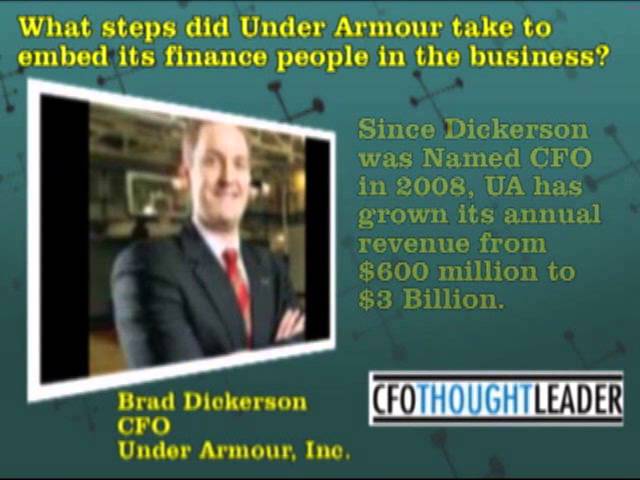
Brad Dickerson, Under Armour's CFO, embedded finance professionals directly in business units instead of keeping them in a central office. The finance team shifted to spending 95% of their time supporting the business and 5% on corporate tasks, which made skeptical business partners trust them enough to request more resources.
Chapters
Resources and allocation of resources is probably one of the biggest challenges of a CFO in an overall company, let alone just the than the finance function itself. So to me, it was really important to be successful in embedding the talent into the organization because I think to some degree it became a self-funding mechanism at that point. And instead of trying to fight the business that says, you know, I need to hire some more financial people for us to run our business, it was really kind of the other way around where the business started coming to me and saying, I would love to pay for some more resources. I see the value in it. I see the success in it, and these are very valued business partners. So it was really important, the first couple of financial people we hired and embedded in the business, it was really, really important that they had the right attitude and personality, maybe a little more extroverted than your typical finance person, but it was really important for them to build that bridge early on with what at the time was some skeptical business partners. Did this make the most sense? Would this work? It ended up working very well. I think, again, the right personality, the right balance of these individuals sitting in the business, probably spending 95% of their time with the business, supporting them, helping them make decisions, controlling their numbers, giving them some information. Then the 5% of the time that they do spend with myself and the corporate finance group is more around calendar, when we need things, the standardization, and the policies and procedures and so forth. To get the dollars and to get the resources built, it was really, really important early on that the business saw the value in this. And once they saw that, it was actually a pretty easy proposition for me that they would come to me and say, I'd love to hire another finance person. So we went from one in 2008, and then pretty much by the end of 2012 had at least one financial person in every critical business we had in our company.