Created Economy 050: Interview with Brendan Gahan (Mekanism)
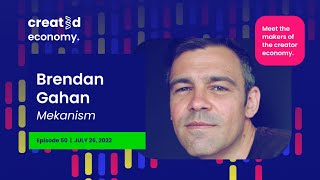
In this episode of The Created Economy, hosts Speaker A and Greg interview Brendan Gahan, Partner and Chief Social Officer at Mekanism. Brendan shares his career journey from early influencer deals in 2006 to leading Mekanism’s social team. The conversation covers the evolution of influencer marketing, the shifting power balance toward creators, and the need for long‑term, athlete‑endorsement‑style partnerships rather than one‑off activations. They discuss successful multi‑year campaigns such as the Mountain Dew creator program, the rise of short‑form video (TikTok’s For‑You‑Page), and how brands are learning to value authentic, community‑driven content over polished ads. Brendan explains Mekanism’s approach to Web3, NFTs, and DAOs, outlining a crawl‑walk‑run framework for brand participation and the importance of brand patronage in community spaces. The hosts explore metrics that matter (engagement, view‑through, community health), the blurred line between “creator” and “influencer,” the changing meaning of authenticity, and advice for both creators (personalized pitches, leveraging Creator Wizard) and brands (partnership models, social listening). Finally, Brendan highlights future trends he’s bullish on: owned creator communities (Discord, newsletters, Patreon) and creator‑owned product brands, citing examples like Little Chonk. The episode ends with a preview of upcoming guests and a call for new interviewees.
Chapters
Hello everybody and welcome to another episode of The Created Economy. It's our, what we assume to be, a weekly interview series where my co-host Greg and I chat with the players in the creator economy at large and discuss the key topics impacting the industry. You can find new episodes of The Created Economy on YouTube and also anywhere you find, you listen to your favorite podcasts on Wednesdays, at least we try to. You can find out more about the show on createdeconomy.com. You can check out all the news that we are curating about the creator economy on Flipboard at flipboard.com/@createdeconomy, and be sure to follow us on social where we will be sharing more of the news and our videos everywhere at Created Economy. All right, and then let's bring on, hey Greg! What's up? It has been forever. I know we were off for our summer break, whatever they're calling it, but Yeah, it's been ages. Why are you squinting?
You know, it's like, you know, I'm trying to adjust my settings and they're very tiny.
Do you need these glasses? I mean, we can send you glasses, you know.
I mean, I have glasses here, you know, like these are my computer glasses. Oh my God, looking at the computer. But then they have glare, so then, you know, it just doesn't work when you're live streaming.
So yeah, yeah, they don't work. Yeah, gotcha.
Plus it just clashes with the purple.
Oh man, how you been?
Been good, been good, been busy. Um, yeah, you know, lots of, uh, travel again in the life. And, um, you know, the— it's interesting to see all the changes in the creator economy and, you know, all the doom and gloom in Web3. So, um, you know, there are slivers of light that I think are very interesting. So I think it's still a good time to be building.
You actually are going to be speaking at a conference in London later this year, is that correct?
Yeah, November I'll be speaking at NFT London, which is an extension of the NFT NYC sort of franchise, and I'll be doing a talk on the more modern community stack. So yeah, been a bit busy just trying to get Zealous launched right now as well. So yeah, it's a busy day. Busy week, busy month, busy quarter.
If it doesn't sound like it's a conflict of interest, we should definitely talk more about Zealous in a future episode and kind of get an idea of what you're doing. I think our listeners would be very keen to know how they can use what you're doing. So, but we'll save that for another time. We are going to bring on our guest at this time. He is a partner and the Chief Social Officer for Mekanism, which is a really cool creative agency, well, at one point was an independent agency, just got acquired by a Canadian holding company called Plus Company, and so they are focusing on creating just viral marketing campaigns, what they call storytelling for emerging media, so very interested to hear more from that. He's also an advisor to VidCon, Everyone, give a warm welcome to our friend Brendan Gahan. How's it going?
It's going well, going well. Thanks for having me. That's some pretty epic intro music, by the way. I love it.
No, we try. Um, you know, Greg, Greg picked it out.
Um, we're not Stranger Things fans.
It totally has that vibe. I, I really, I genuinely, I like it.
See, when Greg picked it out, I was like, oh my God, '80s music! Like, yes, dancing to that! And then when we first aired it, um, I was dancing off camera, and then, and this guy decides, oh, let's put him on camera dancing. I'm like, oh, come on, Greg!
Oh, that's hilarious.
So, but yeah, I, I love it. I sometimes, when I play it, when like I have nothing else to listen to on Spotify, you know, but I'm not sure why.
There's a playlist where every other song is the theme song.
That's awesome.
I'm gonna put that into our, uh, into, into a, uh, Instagram.
We also get a copyright strike like every time we play it, so it's just a fabulous song.
Yeah, it's supposed to be whatever.
Yeah, it's supposed to be royalty-free, but it's not.
Yeah, yeah, I guess we'll never monetize our show.
So I guess the royalty part is from the royal pain in the ass that it is to undo the copyright strikes every time.
So, you know how some people are doing it for money? We're actually doing it because we're passionate about it and we just don't want to deal with the pain of trying to overdo the copyright strikes, right?
Awesome.
But anyways, without— let's dive right into this. Brendan, thank you so much for joining us. Why don't you kind of give everyone a quick overview about who you are, what do you do, and why should people pay attention to you?
For sure. And yeah, seriously, thanks for having me. I'm pumped. I'm really appreciative. All right, so a little bit about my background. So let's see, I think sort of ultimately what led us to this moment was, so I got my first job in advertising in like 2005, right when social media was just starting to be a thing. And I was a, you know, an intern, had no business pitching ideas or anything like that. And I was so thrown off by like how much money was being thrown into like traditional media. And I was like, I don't understand it. Like nobody really I don't really pay attention to billboards and that sort of thing. And so, um, I was really fortunate that I pitched a really early influencer brand deal and, um, it was in 2006. And, um, you know, the, the brand we were working with agreed to it. The partners at the agency I was at were like super supportive in me pitching it. And, um, it was with these creators Smosh who are still massive. And I kind of used that as a springboard to then go to Mechanism, um, who was doing a ton of like really early sort of like, uh, just, you know, video content for online. I mean, they started doing video for, for, um, the internet before YouTube was even a thing. And I was basically put in a position where it was like, we're making cool stuff, how do we get people to like see it? You know, before like all the paid kind of platforms and paid advertising on social was really a thing. And so spent years just sort of like, you know, working with influencers and doing a lot of creative things and, you know, blogger outreach and Reddit and all these sorts of things. Spent about 6 or so years there, then did a startup in the space. I worked at Fullscreen, YouTube MCN, then I started my own influencer marketing agency, and then I sold that to Mechanism, which was like a sort of really roundabout way. Like I was always tight with the president and CEO Jason, and he was giving me advice as I was negotiating the sale of it. And then at the 11th hour, he was like, ah, why don't you just come back? And he knew what deal I had on the table. So I was like, just beat that and we're good. Yeah. And so now I've been back at Mekanism 7 or so years and overseeing the social team and you know, Mekanism is a full service creative agency. We work with a ton of consumer brands and when we're tasked with the social, you know, myself and my team are overseeing the implementation of that.
Yeah. So that, that's awesome. So I wanna know, because You kind of referenced it earlier and we kind of talked about it, like you are— Mechanism has always been storytelling for the emerging media. Like emerging media has drastically changed. I mean, you don't see fundamentally like a lot of new types of media these days as opposed to, you know, two decades ago. But let's talk about influencer marketing, right? The role of what an influencer is. How have you seen that changed in the decades that you've been at Mechanism or that you've been at Mechanism at Fullscreen and at Epic Signal before you rejoining Mega. You've kind of seen this kind of evolution. What does it mean to be an influencer these days?
Yeah, I mean, it's, it's interesting. Like, the evolution is fascinating because like back in the day it was like— what's weird is like the creators themselves and like their draw and the fascination and the pull that they have with audiences hasn't changed, but it's like it's almost like the marketplace has sort of caught up and, or I wouldn't even say it's caught up, it's starting to catch up. You know, back in the day it was like you really had to convince brands like, no, no, no, no, no, this is gonna be worth it. Trust me. Like it would take so much coaxing and, you know, paid the amount of money that you would have to cut to work with a creator was like tiny compared to now. But the impact would be massive. And I think the thing that's really interesting that I'm seeing more than anything else, and I'm excited to see more of, is sort of more of the business end of things, like the power being centralized around creators so that the creators are building their own brands. And as a result, they have so much more leverage when they're working with traditional brands. So it's like, this idea of like the one and done activation with a brand, I think that's something we're gonna continue to see less and less of because, you know, it's not easy to start a company, but if you've got a built-in audience and distribution, that is like, that is, I don't know if that's half the equation or more than half the equation, but that's like, so massive and so they're finally realizing, or they are realizing that they can just launch their own competing brands and they don't need to rely upon brands. And so as brands, I think it's forcing brands and advertisers, it's forcing us to really come to the table and collaborate with creators in more and more meaningful ways. So that's sort of like the biggest evolution from like the advertising standpoint.
I think. So how would you, what advice would you give to brands, right? As they want, you talked about it, that there's the power has, the dynamic has shifted to creators versus brands, right? You know, this is not your traditional TV type of thing where it's like, oh, I am, you know, this car company and I wanna work with Serena Williams You know, okay, there's, I have the power is with me 'cause I can spend all the money. If I wanna work with a Logan Paul, like there is more power with that Logan Paul has as an influencer, as a creator over the course of these years as that versus, you know, that shift has happened. So what would you say to brands to say, hey, we wanna do this type of viral campaign or this thing? I mean, the playbook has gone out the window. So what are, what do you, how do you advise them as they start thinking about these things?
For sure. I mean, I think a good framework to sort of think about it is like the athlete endorsement framework, you know, Nike and Jordan, obviously that's like an extreme example, but when you look at sort of like successful brand collaborations with like personalities, it's an ongoing partnership. That involves like multiple touchpoints. So like we would be like making fun of Nike if Nike had sort of paid Jordan when he just started taking off as a basketball player to play one game in, in Nikes and then they just left him wide open to go work with Adidas or, you know, Converse or whatever. Like that makes no sense to us, but that's the way brands even still sort of like approach so many creators. And so I think for the same reasons you wouldn't do that with an athlete, you need, you should sort of approach creators through the same lens. Like what's a partnership look like? That way it, you build, you get so many benefits. You get A, like the credibility for both the brand and the creator because you're not diluting the brand by basically letting them go off and work with competitive brands. You can learn from each other. So much of the work goes into that upfront, like onboarding phase of working with creators, you know, the identification, contracting, negotiating, immersing them in the brand and the activations. Like that's so much of the work leading up to the first execution. It just gets easier from there. And then like you can negotiate economies of scale, you can integrate them across multiple campaign touchpoints and they can be like brand ambassadors and appearing in everything from your more traditional ads to making event and in-store appearances. And that's, so that athlete endorsement sort of framework is the way that I would approach working with creators for sure.
What are some of the, and I'm gonna ask this question then Greg, if you have any other questions to chime in, I'm curious, What are some of the, your favorite campaigns that you've done or that Mechanism has done involving creators?
Oh yeah, my favorite one was we did this 2-year program with Mountain Dew where we recruited a handful of creators. It was like a little over half a dozen creators and signed them to multi-year contracts where they did just like sort of like all these things we were talking about, like they were real ambassadors. You know, we hooked them up with products, swag, you know, folks were making appearances at like Dude Tour, South by Southwest, you know, various events. We actually got one of the creators integrated into this VR game that Mountain Dew had built. And you know, they were making tons of content for their own channels and we were providing a lot of experiences for them. And then in addition to that, we even like got one of the creators into one of the Super Bowl spots that Mountain Dew did. And it was awesome because, you know, after a while you get into a rhythm with working with the creators, you develop that shorthand and, you know, they're an extension of the team essentially. So from just like a workflow standpoint, super efficient, but then from like a performance standpoint, you know, because you're working with people for like 2-year-long contracts, you can negotiate those sort of economies of scale and that really benefit both the creator and the brand. The creator can like build a team around it, you know, has a better sense of what their business looks like. And the brand gets that economies of scale from just like, you know, overarching deal flow. It's like, okay, like I'm getting, you know, 24 videos from a creator over the course of 2 years, that's gonna be priced very differently than 24 individual videos from 24 different brands. So I definitely, that's a soft spot for me for sure. Like that's probably my favorite brand activation.
Nice, nice. Greg, any questions?
Yeah, Brendan, it's good to see you again. And I just messaged a picture to Brian of, all three of us in the studio.
Oh, dope.
Gave it a heart. Um, you know, I, I guess I have a compound question to some degree. Like, the economies of scale thing, I absolutely get. Spent a lot of time, you know, building platforms that support brands as well. Um, you know, historically, it feels like they were stacking for reach, right? Um, and I'm kind of curious, are you seeing that evolve any away from sort of this pure— because there's many new words that we use, relationships, community, et cetera. It all sort of represents something deeper or sort of more meaningful form of connection between sort of like a customer and sort of a brand. I'm kind of curious, is scale giving way at all? Are people realizing are you seeing any new value or any hints of that happening in breadth, like depth of the relationship as opposed to the breadth of it? And I guess at the same time, relative to the creator economy, is that introducing more of the ecosystem into the fold as parties that they could partner with or work with? Because the celebrity model, I think, is great, but it tends to reward the rich get richer in that game often, right? I'm just kind of curious how you're seeing the evolution of the essence of the thing over as we're sort of going into this generation.
100%. I think that's a great call out. And I would say that like, yeah, I definitely don't want to, I guess in terms of like this sort of like celebrity athlete endorsement model, it's really more about the way of collaborating that I think is really unique in terms of like scale, you know, depth versus breadth across the board. You know, it's something that like, you know, we certainly take into account and I think that much of the industry is sort of caught onto in terms of like, hey, it's not the biggest numbers do not necessarily equate to the best results. It can, but it's not necessarily the case. And so I think at, at its core, it's identifying, you know, A, what's the objective and backing into that. And oftentimes that means working with creators that aren't like the big sexy names, you know, like everybody knows a MrBeast, but like, even if you have the money to pay him, it doesn't like, yeah, sure, he might get more, more video views or whatever, but it doesn't mean he's like the right fit for you. Your brand. And I think, you know, depending on the objective, you really sort of are best looking at it with like a blank slate and establishing, well, what's our criteria? And backing into that. And oftentimes with our campaigns, you know, depending on the objectives and everything, we'll sort of have a, almost like a matrix of creators, you know, some that are like there more for awareness, whereas others are like, there to more tap into niche communities in a deeper, more engaging way. So I think it's definitely a good call out that like breadth is 100% important. And I think really diving into sort of like the analytics and understanding your objective and not getting caught up in, you know, star fuckery essentially, which can totally like, it can skew your perception so easily. It's like, well, I know this person, I've heard of them before. Why wouldn't we work with them? It's like, yeah, but if your goal is to drive sales, that's probably not the best option.
And I am remembering another time we met. It was at VidCon. I think I was with Eugene Lee from Channel Meter, and I'm pretty sure we connected again. And so related, I guess, to that, there's just to ask us, sort of a different question. In terms of the formats, storytelling, I love the frame that you guys work through, and I think storytelling is so important in these days and age, 'cause the only thing that cuts through sort of the noise, right? My last company was a UGC platform, and we had a very hard time getting brands to want to work with user-generated video, largely because they didn't feel like they had control, they couldn't moderate it, they couldn't really tell what was inside of it. All these other things. But, you know, Fullscreen did, you know, was early in sort of like bringing that to the forefront. Is video, has that become more like agreeable to brands? Is it the thing that they expect now? You know, where's the format, I guess, how's the format evolving, I guess, of storytelling and what else is coming along with that now that we're moving into sort of like obviously high bandwidth days, metaverse, VR, AR, immersive kinds of things? What else is happening in the arena?
Well, all right, let's see. I would say kind of breaking down the video side of things, I think the overall acceptance and understanding of sort of the role, like the output of video and it being okay to not sort of be something that was shot beautifully and well produced. More and more brands understand that. And I think I would point to TikTok in particular is doing a great job sort of hammering that point home. They continuously sort of in all their communications to marketers and brands and agencies, they're constantly saying make TikToks, not ads. And they're always like releasing studies that show like, you know, the more human feeling content, less produced, performs best. And that's something we've been seeing for years. Like any, it really, like, you know, we've done paid campaigns where we ran creator content against kind of more highly produced stuff. Most of the time the creator stuff outperforms, and I think part of it is it doesn't sort of take you out of the experience. It's like nowadays it's like, you know, you're so, you're used to looking at stuff shot on phones and your friends' content and seeing this like glossy ad with like crazy motion graphics. It's kind of jarring. That said, you know, there's definitely a role and a lot of, you know, for more produced stuff and a lot of brands definitely want that and there is a time and a place for it. So that's the first part of the question in terms of like, how does storytelling evolve? Or like, do you mind maybe elaborating on that second part of the question? Yeah.
So, and one, I love the, I mean, I think we've been hearing that the, you know, the tales of authenticity arriving in the brand side. So, you know, did you buy, I guess I was also curious, because we have a lot more tools for telling stories, right? And then obviously people are evolving. You know, you sort of develop this like sort of callous, you know, like, ah, that's just fake. Like, you know, it almost feels like a newer reality emerges to defend us from the— when everyone starts impersonating reality, right? Like, yeah, or, you know, natural things. So I'm kind of curious, like, one, like, you just— are you seeing like any new trends in sort of like this like area of like storytelling? And like, is it moving to a new thing? Like, where is there like, you know, like how vintage and nostalgia comes back every, you know, like in waves, right? Like, what's that next wave that's gonna come back? Like, is the highly polished thing gonna make its way back in because people are tired of like everything looking the same, right?
For sure. You know, I think so. This is like one which, um, I, I don't know if this is exactly the best answer, but it's one that sort of jumps out based off the prompt. Like what's that thing that people are sort of gravitating towards and helping like that I think brands really need to understand is like, I think there's this trend towards like real community and meaningful conversations or associating with others around a shared like interest, passion topic. Versus kind of what we see within so much of social, which is sort of chasing the vanity metrics. And like you see this sort of play out in, you know, the rise of like, you know, Discord and in Web3 too, community is at the core. And, you know, as we're talking about investing in so many of these like new mediums in particular, like Web3, the thing we're constantly hammering home is sort of like this idea of like brand patronage. Brands need to go in and add value because more and more, and you know, calling out Web3 specifically, like people are sort of going into these spaces, you know, Discord, whatever, where as an advertiser, you can't just blast ads and reach people. These are communities where the focus is the community. So as a brand to get sort of entrée into these spaces, you need to be a patron. You need to be adding value. You need to build a track record of supporting a community, kind of just jumping in and creating some splashy thing with a, you know, for a headline is jarring and alienating and something that people are really averse to. So we're really sort of across the board, that's something that stands out, you know, building real community in Web3 in particular, it's all the more important.
Yeah, last question, Ken. Go ahead. Good thread there actually. And you know, when I was, you know, my last company, we dealt with these sort of the cycle of billing and, you know, like campaigns and things like that, I guess. To accommodate this, which I think is very important, I love that you actually called it out, is the relationship changed with the agency then? Is it a longer-term partnership? You know, like, you know, 'cause you know the staff, like this kind of thing is very different than like spin up for 3 months and, or get ready for an event or something like that. What's that dynamic like when you embrace this sort of modality?
Yeah. It's, yeah, I mean like the, in general I would say just like with social and sort of like when that shift occurred towards like an emphasis on real time, I think it was sort of like training wheels, like leading up to this moment in time. And there is a need to sort of like, you know, constantly be doing like implementing social listening so you understand, all right, what's going on? Something we can jump on. And that's like not quite, you know, I think that's sort of like a stepping stone to where we're headed, which is, you know, the brand always needs to be engaging and getting that flywheel going and creating a reason for people to show up. So it's like, it's interesting, it's really difficult. And it's, it's pretty demanding, I would say, like from a staffing and an organizational standpoint. And, um, you know, the, the thing that I think is that we're trying to navigate, and I would say like we don't necessarily have it all figured out, but it's sort of like, how do you balance the importance for sort of like high touch and, and being very timely with sort of the need to kind of ladder up to a broader like brand objective and stuff that's maybe historically used to require a lot of time and back and forth. Like how do you get brands to feel comfortable to sort of like take a step back and let the agency sort of like editorialize a little bit more? I don't have a perfect answer.
No, I don't think there is one. I think it's, Yeah, that classic Stifler line after, you know, in American Pie where the guys are explaining what they're doing and he's like, dude, that sounds like a lot of work. It feels like that's almost like, you know, I think because it's an all-inclusive part now, right? It's so many parts of the business attached into this effort, and which is what we saw happen with social, right? Is it, you know, like it stopped being just a silo over at the edge of marketing and sort of became like CRM and customer success. Yeah, all these other functions roll together, right?
Yeah, yeah. And, and I, I think too what's interesting is like, I mean, I'll say something that like I've definitely said before, but I don't know if other people would agree with me or not, but like I actually think a lot of those roles should not be outsourced to the agency. Like I think it creates friction and, um, it slows a lot of the process down. And ultimately there are a lot of things that are often like sort of intangibles that somebody within the organization is just naturally gonna know much better than somebody agency side. And while I love it when brands give us all the business in the world, I think if you're really gonna create deep, meaningful conversations, it's better if it's not passing through multiple filters.
Yeah, that makes, yeah, I think that makes a lot of sense. There's also still an obvious need for, you know, being connected to, you know, the emerging sentiments and sort of creativity and all the other things that were really valuable things that, you know, obviously the agency side definitely can provide. Uh, and also arguably some organizations don't have the culture to actually care about this the way that, that the market may need it, right?
Oh yeah. That is very true.
So Brendan, can you define the difference between an influencer and a creator? Has that changed? I know that a creator can be an influencer. Can an influencer be a creator?
Honestly, like, I feel like this is like a debate that people love to have. I personally use them totally interchangeably. I think that, that, I think that the distinction a lot of people like to make between the two is that like a creator, yeah, is like an influencer with maybe that's not just posting selfies on Instagram, maybe has a, you know, a specific skill or art form that they're sort of like actually creating and expressing. But, you know, and if people wanna define it that way, that's fine. Like that's totally cool. But like, me personally, I just— yeah, they're interchangeable.
Do you see— has the word, or has the principle of authenticity, has that changed at all, right? Has that shifted in terms of the definition or the type of content that's created? Because you hinted, you alluded to it earlier in this conversation, right, in terms of Brands working with creators, but I'm curious just in general, that phrase, that word authenticity, has that been distorted or has that evolved in any way since the dawn of, I guess, this creator economy during the early YouTube days?
Yeah, that's a good question. I have some strong opinions. I feel like authenticity is like, it's like this, answer that like when people are like, well, why, why is a creator successful? Or why was this successful? It's easy to say, well, it's authentic. But I feel like it's sort of like lost its meaning. It's like a thing you can say without having to like provide a real, without providing real clarity. And I think ultimately In my mind, so it's like, is, okay, so Trisha Paytas, you know, I don't know, are you familiar with, are you guys familiar with Trisha Paytas? All right.
I don't think so.
I'm gonna, all right, so she's like this really crazy, I mean, whatever, I don't wanna, she's a pretty out there creator, YouTuber. She once sat on her kitchen floor and said, I identify as a chicken nugget or something like that. And her fans loved her for it. Would you define that as being authentic? To me, it seems like it's more like it's something else. It's trolling or something like that. And so I think why creators are successful I think oftentimes, but not always, when people are saying, oh, they're being authentic, it's more about are they bringing people into their lives in a way that people connect emotionally? And it's sort of like, can you create these like parasocial bonds? And I think usually the way that sort of comes about is through some sort of like, you traditional storytelling narrative of like a hero's journey. It's like, I've been here since the beginning, I've seen this rise. Or maybe it's just sheer sort of like vulnerability. It's not often that we see, we don't see celebrities out there jumping on YouTube and crying on camera and having these deeply personal moments and broadcasting it to millions, it's, it's still this, this— I think that the sort of window into these people's lives is oftentimes very unique and not something we get from a lot of other media. And, um, I don't know if that is or is not defined as authenticity, but I think it's like, in my mind, that's generally sort of what makes a creator successful? Like, can you connect with them on an emotional level? And I think there's a lot of ways into that.
So let's dive into Web3, NFTs, creator economy, and with agencies. What are your, what's your, what is Mechanism's stance on NFTs and Web3? And then let's talk about your stance on them. Working with creators.
All right. So, I mean, I'm definitely bullish on Web3 overall, sort of what form that takes, where it's all gonna head. You know, my guess is probably worse than most people's, to be honest, 'cause I lost a bunch of money in crypto. But, so, but by and large, I'm a believer in a mechanism is investing.
You only lose if you sell.
Yeah, that's a great point. Okay, I haven't lost so far. I'm up overall. Yeah, on paper, uh, uh, I'm not doing so hot, but yeah, neither is anybody else. Um, but in terms of like our philosophy around it, we, we've, you know, so we've done a couple activations and the thing we picked up really early on was like kind of going back to that point of like community And when we approach brands and talk to them about diving into this space, we've sort of broken it down to this framework. It's basically a crawl, walk, run, you know, like connect, just like right off the bat, obviously get your basics set up, but have conversations, maybe pick up an NFT or two, Buy some tokens and just like talk to some people. Then, all right, get some learnings, you get some feedback from the community, then move on to collaborate. Do some collaborations, you know, going back to that idea of like brand patronage. Be a patron of some communities, support them, you know, easy support, buy the NFT for the community. But then ideally, if you can, like go in and add value to that community. So like people are like, Oh, I am so pumped that, you know, X brand is here because they're like hooking us up with like exclusives and insight and like, oh, you know, maybe they brought somebody in for like, you know, some cool like Discord discussion or, um, you know, just, just in general providing real value so that when you're ready to like come outta the gates and like launch something. There is a, there's a track record of credibility in having invested in the space so that people are less likely to, and because, you know, the Web3 space is so full of like haters, you know, especially when it comes to like brands and stuff or anything sort of, yeah, especially when it comes to brands. So building some credibility through a foundation of like making these steps, participating, adding value. And then when you launch too as a brand, you've applied some learnings, you know what the community is actually talking about and you know what they're interested in because you've done all these smaller activations that were like lower risk and you slowly laddered up and you incorporated that feedback loop of information from various like executions through collaborations and you understand the nuances and the language and, you know, at that stage you should feel pretty comfortable diving in. I think what doesn't work is jumping in, doing a launch for the headline and then bouncing. Like people caught onto that real quick. It doesn't fly anymore.
You brought up communities and Greg, you know a lot more about community. So I'm curious to hear your thoughts as well. Like, what about DAOs? Like, you're talking about brands being— participating. They should not be participating. They should not be creating these communities. They should be joining existing communities, correct? And, and how do DAOs play into that?
For sure. Um, I think, well, you know, they could create a community down the line, but I think right off the bat, participating and adding values— value to communities is like That should be first and foremost, and there should be a consistent track record of that. In terms of like how to participate in DAOs and stuff, honestly, I think the sort of like the playbook for how to participate and collaborate with DAOs from a brand standpoint is what Callaway did with Link DAO. So like, I don't know if you guys saw this, but like, so Link DAO, the DAO where, you know, they launched all the NFTs where Um, the whole, like, they sold all these NFTs, uh, that are essentially going to act as passes to a golf course they plan to buy at some point in the future. Um, in the meantime, they've got this lively community. They're hosting meetups, people getting together, play golf, all this. So what Callaway did was they came and, um, they actually made an investment into the DAO, and they're providing all kinds of exclusives for, uh, LynxDAO holders. So, um, you get access to Topgolf, I think exclusive, uh, Callaway merch, and I think LynxDAO, all LynxDAO sort of like gear is now going to be, um, made by Callaway, and, uh, you know, exclusive discounts and that sort of thing. And so that's, that's a brand going into the community and adding value versus sort of just in it to extract value. Gotcha.
That's interesting. I'm gonna see if Greg will be back in a little bit. I wanted to pass it back to him, but I wanted to kind of get your sense, Brendan, in terms of what advice would you give to creators who are working, who want to work with brands? Like we, I asked you early on, like how do brands work with creators?
Yeah.
As creators, I think with those that are creators that want to be entrepreneurs and kind of want to not have this be a, a hobby, um, they want to— a big chunk of their income or any of the revenue will come from brand partnerships, right? They're not necessarily able to be the MrBeast or Logan Pauls to necessarily say, okay, here's our merch, here's, you know, all these other, uh, projects that we're doing. They rely on essentially the good graces of brands and agencies to look for them. What advice would you give to these creators such as Greg and I to say, hey, we want to like think about us as potential partners for collaboration?
100%. I have a bunch of ways I could answer that. One really like just tactical one, I'll give him a shout out, but Justin, Who is the creator wizard? Why am I blanking on his last name, actually?
Oh, I know who you're talking about. We were trying to get him on our show earlier. Yes, I know who you're talking about though.
Yes, he's the best. And he's got a whole course and everything. Justin Moore. I don't know why. Sorry, I didn't sleep well the last few nights. I had a big pitch, so I'm like totally running on fumes. But Justin Moore. Yeah, so he's, you know, family YouTuber, you know, has been a family YouTuber for a long time. Um, and, uh, uh, you know, maybe a year, year and a half ago launched Creator Wizard. Um, you know, he's got a Twitter newsletter, YouTube channel, um, and of course now all about, um, educating creators on like how to work with brands, how to get in touch with brands, all that stuff. So that's like a really very specific thing. Um, I think he does a great job breaking it down. But then I, I would say, you know, honestly nothing beats the basics in a lot of ways. Like, A, like you would be blown away by how many times I've tried to get ahold of a creator and like, uh, couldn't find their email or sent them an email and didn't hear back or heard back like 3 weeks later. Like, so right off the bat, just like email, Ready to go. And then, you know, have information on yourself, like what, you know, why are you a good fit for, you know, certain categories, demographics, all that. And so that's sort of like passive things, you know, the inbound side of things. But in terms of like if you wanted to go out there and pitch brands, hey, I mean, you know, it's very easy to find who's working on what brands and what capacity, you know, between LinkedIn and Twitter. And I would not be shy about reaching out to brand folks and ad folks. You know, in doing that outreach, my recommendation would be keep it super short, sweet, and specific. You know, hi, I'm whoever. I'm reaching out because I'm really passionate about your brand. I think it'd be a good fit because of, you know, I do this and I made this video that's like related, you know, like, And, um, hey, if you ever wanted to chat, like, I'd love 15 minutes and I could talk more. Like, it doesn't need to be a crazy in-depth thing, but, um, I would not do a generic blast. Uh, I would make it super specific. And, um, and, uh, yeah, I would make the pitch specific and short.
So what is this about? Um, Obviously in the news, TikTok, everyone's talking about TikTok. Everyone's talking about Facebook, Instagram, Snap's in the news, Twitter's doing something in the creator space sort of, we're not really sure. But I think what Greg had talked about earlier in terms of video, kind of brought up like, yes, the thing that everyone's, the delivery mechanism today are videos, right? Are the short-form ephemeral videos, the stories, the reels, whatever you wanna call 'em, right? What do you make of the current state of ephemeral videos? You know, this, how TikTok is kind of really crushing it and Facebook and Instagram still trying to figure out what they're trying to do. They're like, Yes, we know TikTok's a big rival. We're going to pour more resources into this. We're going to put more videos everywhere out there, the equivalent of ads. Like, is TikTok just like smiling, saying, yeah, we know what we're doing. Everyone else is still trying to tread water.
I mean, if I was them, I would probably be thinking along those lines for sure. Well, I think the thing with TikTok Well, there's a few things. One is the introduction of the FYP is so disruptive in a really fascinating way. You know, if you think about it, before TikTok launched, uh, I mean, and Musical.ly had it, but before the For You page, everything was really about your personal connections. And so, um, uh, if somebody was really early to a platform, they had less competition, they could grow, they could get that momentum, and it was sort of like a, you know, um, the big get bigger kind of situation. By and large, obviously there's always exceptions. Somebody can launch later and, you know, they're really compelling and disruptive and they can grow. But, but really, because it was built off of, um, kind of your, your connections and your following, um, the, the, the sort of like success rate was just like so overwhelmingly skewed towards those who started early. And, um, and it was much harder for like later adopters. Now the FYP sort of unbundled all that. It wasn't about any personal connections. It was simply You know, the, the For You page is just all about algorithmically what piece of content do we think is going to be the most compelling to you, whether or not you follow them. Um, and, and so it put much more merit on each individual asset. Um, so I think that really gave them so much headwind because, um, you know, especially for in terms of like getting creators on the platform. Like, people just even now aren't really growing organically on, on Instagram and definitely not Facebook and stuff. So that was really disruptive. And now I sort of feel like, um, uh, oh gosh, there was a, a some other point of reference I was gonna bring up, um, and I'm totally blanking on it. Um, Gosh, yeah, so that's why I think they initially got all the traction, but there was something else I was gonna say that I'm totally blanking on. So I don't know if you've got a follow-up question.
No, I have more questions. I just wanted to, you know, I'm curious in terms of the, let's talk metrics, right? I think in an agency, you know, for brands working with agencies, they love metrics. Like, is this actually, you know, are we getting our bang for our buck, so to speak? So what are the met— every platform has their own type of metric that they keep track of, you know, time spent or the amount of how much, how many videos were watched or so on and so forth. What are some key metrics you get, you share with brands that, that your clients say, hey, this is, this is what you should be paying attention. This is the actual true metric you should be paying attention to, not necessarily impressions or or clicks, but if you're working with creators/influencers, this is what's actually important.
Yeah, for sure. Well, I would say it's, it's based on the objective. So, you know, there's a ton of great metrics. If it's awareness, then yeah, views, sure, go for it, fine, you know. Um, but, uh, it's even that is usually not as simple as that because, you know, then it's like, well, you, you want to look at, you know, view duration and completion rates and all that to make sure that like people actually were consuming the content, et cetera. Um, but from a, uh, but yeah, overarching analytics standpoint, um, it depends. And, um, typically, uh, if we're, you know, we'll sort of use specific signals to help inform our recommendations around specific objectives. So if we're trying to, let's say, focus on a campaign that's gonna be a little bit more performance-based, then we're probably gonna prioritize engagement above just about everything else because that's gonna be at least, that's a good signal to us Um, that, uh, that's a good signal that correlates nicely with like sales and that sort of thing. It shows high trust versus just somebody, you know, oftentimes there are creators who just create content which is somewhat, um, you know, it's like just, uh, it's consumable but it's not emotionally resonant, not emotionally engaging. So people don't, um, you know, spend a lot of time in the comments and, and that sort of thing. So we'll use a number of metrics like that and then, you know, obviously take into account like, you know, there's with all these like analytics tools in evaluating creators can look at sort of like estimations around, well, how many bots do they have, that sort of thing. Is their account real, et cetera. But a lot of it is like really like getting into just like what's their community like? What are they talking about? How engaged are they? That type of thing. Thing. Um, so it's, it's, it's not like a one-size-fits-all. Does that answer your question? I know it's not a clean-cut one. Also, I was just gonna say, I remembered what I was gonna say before, which was like, now, um, as all these platforms are shifting to, to short-form vertical video, I think it's a boon for TikTok because Everyone associates it with TikTok, and they managed to commoditize this, this new, like, new video format. And it's really like people are building with TikTok in mind and then they're distributing elsewhere. So, um, and then from a production standpoint, advertising standpoint, revenue standpoint, that's going to help them because now people are like less likely, you know, they're not picking either or. They're like, oh, well, vertical video is great because I can distribute it everywhere. And TikTok is more than any other platform synonymous with that. So I think they're gonna benefit the most.
Gotcha. Greg, you wanna ask any other questions before we wrap up?
Yeah, I guess, sorry, I had to pop out and still hairline, but I guess to loop it back a little bit on that question, Brendan, to the original or the earlier conversation about community and some of these things, are there metrics that you've discovered are useful, like when working with a brand? You know, because like relationships feel a lot mushier than, you know, like clicks and things like that, you know, so if you're encouraging a brand to sort of partner or collaborate, you know, or connect with, you know, existing communities, what does it all still boil down to the same thing or are there other sort of intermediaries maybe that are useful?
Yeah, for sure. So I mean, I would say there's a few things, you know, we'll look at sort of like, oftentimes we'll do social listening to sort of see like, are there, if there's conversations happening around a creator that are just purely community driven, like that's a huge signal that this creator is a big deal. Like if they don't even need to be sort of like stepping in to keep that momentum going, that's massive. So yeah, we'll do a lot of social listening, you know, we'll look at sort of like, you know, do they have a subreddit, that sort of thing, like other signals to show like the health of the community overall for sure. And then now more and more than any, now more and more, you know, we're taking into account sort of like their owned communities, like Do they have a direct line of communication with their fans via email, Discord, et cetera? If so, you know, what's the size of that community? How active is it? Like, particularly with like Web3 communities, I mean, diving into the Discord is one of the easiest ways to tell like how legit something is. And, you know, that's the case whether it's a creator or Web3 community for sure. Um, so yeah, like, I, I think the amount of conversation happening and sparked by the community is definitely a big one, and, uh, social listening tools help with that for sure.
Nice. I mean, it makes, makes perfect sense. I also think, like, um, you know, in thinking about that stack, I do think, um, it's equally important to be rational about it like we would in normal tools, right? Like, I don't think we should give it a pass any more than we would anything else. And I think like classic content marketing models, like still actually like communities or content marketing, you know, like flywheels, right? Like, so there's sort of like, it's, you still have a good model to look at. And I think like where I've seen some of the missteps is not actually working to repackage the good coming out of those spaces and looking at that almost like an annuity.
Yeah.
That they should be continuously mining, right? Because, you know, some of those best ideas and conversations are great fodder for campaigns. Maybe they're good fodder for, you know, just other longer-term conversations or, you know, et cetera, and finding better ways to insert themselves. Like, oh, we know a lot about that actually. You know, that's where you should jump in.
Yeah. 100%. Yeah. And then, and there, there's so much of an X factor too. Like, um, like, When we're sort of building out creator recommendations, we take into account like the sort of like the sort of intangibles of the community and the creator, like what is tone, all that, as well as sort of like the specifics, demographics, you know, scale, engagement, et cetera. And then having deep conversations with the creator before we sign them because or not necessarily a crazy deep, but like having a conversation. Are you excited about this? Do you think your fans will resonate with this? Do you have ideas? If they're like really excited and jazzed and, um, and proactive, that's a— that's usually a good, good sign.
Yeah, I'm just kind of— I'm curious though, is, you know, it's all these different types of communities, but it seems like a lot of these platforms, it almost seems like there's a there's going to be some like butting heads between Web3 is all about communities, right? And DAOs, and like there's that into the return to intimacy, intimate, uh, communication and relationships with, with peers as opposed to, you know, that spray and pray type of mentality. Then you get with the, the Web2 apps, the, the TikToks, the Instagrams, Facebooks, the YouTubes, it's very much— that's the spray and pray mentality. People are still trying to ascertain what the algorithm is, and it seems like you're, you're running parallel tracks, but at some point you would want them to, to merge. But in reality, it's probably not going to happen, right? On one hand, for, for creators, you're playing against an algorithm, but on the other hand, you're playing with like your peers, right? There's a human and then there's AI. It's just like the world of communities is going to be absolutely fascinating in over the next couple years in terms of how, how things shape up, because everyone's talking about, oh, we should be a part of this community. But it's like, how do you figure out that community? Because it's not all communities are basically going to be the same, you know?
Oh, 100%, you know? Yeah, yeah, absolutely. And like, I think oftentimes it's sort of like this hub and spoke model, you know? It's like the community is at the center of it and where you kind of usually want to funnel in your like hardcore, um, but then everything else is sort of like about distribution, awareness, pulling new people in, um, uh, that, that type of thing.
Yeah.
Uh, a final question for you, uh, what are you bullish on? Like in— if there's, if there's a, if there's company or technology you're bullish on. What would it be? And you can't say— and you cannot say TikTok, basically. Yeah, you can't say TikTok.
Does it need to be just one? How many do you have? Uh, I got a few. I got a few here. Let's see. Yeah, so I guess there's probably two broad trends. Um, one is community and specifically sort of like owned communities. So like I think we're gonna continue to see more like newsletter businesses, Discords, that type of thing, you know, Patreons, et cetera. Those are just gonna get bigger and bigger. And then I think the other thing is brand-owned, or sorry, creator-owned and operated brands. There's just so much opportunity. And while it's not easy to build the logistical side of the business, I mean, having the marketing and distribution sort of built in, you know, I really think that's like the ultimate sort of like growth hack to a business. And, you know, I'll shout out like some buddies of mine that, you know, I'm an advisor to. Little Chonk. I don't know if you're familiar with like Maxine the corgi.
Yes, I follow Maxine. I'm very upset that Maxine was in San Francisco and I wasn't there for that. Oh, I do follow Maxine. Yeah, the Little Chonk backpack. Yes, I know. I'm doing that.
It's awesome. And like, how, like, what a great business for them to build. I mean, like, it's like I've done some investing and advising. That one is just so much fun. It's like, you know, for the, the, the viewers/listeners, um, uh, Maxine is an Instagram, TikTok famous cute corgi. Um, Brian, her owner, uh, goes all over New York and puts her in this, this backpack. And he, um, he was kind of fed up with the one, the only one that was really out there on the market, so he decided Hey, like, I'm like making these guys so much money and the product is just so-so. I'm just gonna make my own. And I mean, they put so much time and effort into like the product design. Like, they— like, the amount of care that they went into is like— also like the branding is incredible. Yeah. And it's like they're off to a great start and it's an awesome business. And I mean that, you know, you don't have to do physical goods too to be a brand. There's so many different ways to sort of imagine a brand, you know, Creator Wizard, et cetera. I think creator-driven brands is just gonna continue to explode.
Gotcha. All right, well, I know we are at time. Greg, do you have any final questions for Brendan before we sign off?
Oh, it's been a fun convo and it's great to always chat with people who are you know, right at the crux of like where the things that are changing are because, you know, the change always comes from this edge, but people don't quite always appreciate, you know, I think like if you ask a creator, they're always like, no, we make the change. And you ask a brand, then we make the change. And you know, the agency is like that good glue between the two. So I think it's great to see and hear just sort of the evolution and the history in here as well.
Yeah. Yeah. Thanks for having me. This is awesome. And I hope I wasn't rambling too much. I haven't— I'm a little sleep deprived after the last couple of days, so I might have been a little out of it.
No, it's good to hear those insights. I completely agree with Greg. I've been very much watching from the sidelines of what you've been doing at Mechanism and also at Epic Signal and back to Mechanism. And I've always been fascinated about the evolution of influencer marketing. So it's great to learn from one of the best. And thank you so much for being our creator whisperer, if you will. I'm gonna try and make that stick. I'm gonna do the SEO. So there, I love it. You get that. I'll take it. All right. Thanks so much, Brendan. I'll take you off screen and we'll wrap it up. All right, cool. Well, Greg, it's been fun. I think we're off to a great start for our next batch of shows.
Got a good sprint of many, many awesome interviews coming up, actually.
Yes, coming up sometime soon. Be sure to check it out on anywhere you watch podcasts and also on our YouTube. We have Yiying Lu, the creator of The Farewell. She's writing a new book, so we'll have her on the show, amazing artist. We're hopefully, we will get Brian Solis, who's an analyst, Chief Evangelist at Salesforce. A dear friend of ours, amazing digital anthropologist, to chat with us. We also have Mark Bergen. He's a reporter for Bloomberg. He's also the author of a brand new book coming out called Like, Comment, and Subscribe. We will have one of the first interviews with him all about his book on YouTube. And to tie it all off, we have Kaya Iriye from The Information. Super excited. And if you want to be a guest on our show, feel free to check us out at createdeconomy.com/guestlist. All right, thanks everybody for tuning in. Uh, we will see you next time. Uh, feel free to check us out on the internets and slide into our DMs if you want to know more about the show. With that, we will bid you all a fond farewell, assuming I can figure out how to use the internet. All right, see you guys.










