Famous Birthdays: The Wikipedia for Content Creators
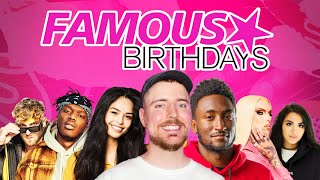
In this interview, Brendan Gahan talks with Evan Britton, founder of Famous Birthdays, about how the company grew from a mobile‑first alternative to Wikipedia into the leading creator‑focused encyclopedia. Britton explains his background in marketing and web‑sites, the decision to focus on concise birthday bios, and how the product evolved by tracking "missed searches" to surface emerging creators. He describes the shift from traditional celebrity dominance to creator‑driven search traffic, noting that creators now occupy 80% of the top‑5 daily searches. The conversation covers early inflection points such as VidCon 2014, the importance of being early on new platforms, and the role of niche passion and long‑tail creators, especially gamers. Britton details the operational side: manually writing 250,000 bios, building a custom CMS, and translating a portion of content, which creates a proprietary, copyrighted database licensed to partners like Alexa. He introduces FB Pro, a data product that combines platform‑agnostic rankings with keyword‑rich bios for B2B customers. Throughout, Britton emphasizes a disciplined focus on the core vision— a mobile‑first, creator‑first IMDb— and the practice of saying no to distractions. He shares advice for entrepreneurs in the creator economy, stressing audience‑first thinking, early platform adoption, realistic valuation expectations, and the competitive landscape. The interview ends with Britton pointing listeners to Famous Birthdays' web and app platforms and his LinkedIn presence.
Chapters
I think the most important thing for the creator economy is the user and the audience. Users are not going back to a movie theater. The time a user would watch a movie at AMC, they can watch 480 TikToks, 15 seconds each, and that's targeted TikToks. Users want more creator content, which is ultimately what's going to fuel the ecosystem, because then the platforms are going to build around there and then opportunity will flow. Evan, founder of Famous Birthdays. Excited to be here with you.
Awesome. Um, well, let's start at the beginning. Like, what's your background? How did you get into starting Famous Birthdays?
I've always been into like marketing and UX and websites. I owned a network of websites and everything was kind of flat, so I wanted to focus just on one thing. You know, I bootstrapped the company, and one of the things that I've had to do is focus You know, when you have a lot of capital, you can place a lot of bets, but I just wanted to focus on one thing. So I picked famous birthdays, not because of the celebrity interest more. I just felt that Wikipedia was too much content for a mobile device. And that, you know, that was kind of the initial vision. Birthdays is often the first thing people care about. Um, but it was more about concise Wikipedia. And, you know, we're almost going to be— we'll be 11 years in March. So we've been doing it for a long time.
And what were those? Or do you want to speak to, or can you share what the network of sites was before?
Oh, they were just smaller sites, like in different niches. It was called ResourceWebs. It was just like resourceful sites for the internet. Nothing like, you know, that was huge. But like, you know, having a network of sites. Helped me to learn about, you know, different internet-related stuff. But you really can't grow when you're focused on 8 or 9 things.
And, uh, so how did Famous Birthdays come about? Because it's kind of interesting, it's like it's become sort of the de facto resource for creators and influencers. But was, was that sort of the goal in the beginning?
Not at all. The goal was for somebody like Beyoncé or Taylor Swift or an NBA athlete. When I looked up them on Wikipedia on my phone, it was way too much info. I knew nothing about creators and creators weren't even scaling at that time back in 2012. It was really Vine and a little bit on Twitter and maybe YouTube. So yeah, it was about traditional celebrities, people that I may have heard of. But what happened is that we have a search box on our site, which still today is the most relevant thing we look at. If people are searching for some TikToker or YouTuber, then we'll know our— or even a TV show or a movie— that lets us know that our users want to learn more about that, and that's what we'll profile. That was the same thing we're doing back in 2012, and we saw these Vine stars being searched, maybe in 2013 when the site was a year in.. And we saw that these people weren't even on Wikipedia. So I kind of learned that it's one thing to be a resource like a concise Wikipedia, but for creators, we were the source. We were able to, uh, contact them for their headshot and bio info and start to build out a database for people to learn more about them. And it's important because if you go to a creator's TikTok or Instagram, you're going to see really great content, but You're not going to see the Wikipedia bio details. In fact, in most social media bios, it'll often have a link to their merch or maybe saying something that they, you know, that they love their fans and so forth. You know, but we write kind of the boring bio on them, which has utility because users can't get that on their social platforms. They get everything else.
Now, was there like a specific— so you mentioned like 2012, 2013. You started to see, uh, like Vine stars in particular getting searched for. Was there like a specific inflection point or moment in time where you click— it clicked and you're like, oh my gosh, like this is massive? And if so, like, was it a specific person or what? What was that?
It was definitely yes and no. Know that it just consistently happened. A lot of times with trends it goes from 1% to 2% to 3% of our missed searches being these creators. So it was like all of a sudden all of the missed searches, which is when someone searches for content on famous birthdays and they don't get what they're looking for, we see the missed searches. So increasingly a higher percentage of our missed searches were creators, but it didn't go from 0 to 60 overnight. That said, I do specifically remember Nash Grier and Cameron Dallas. They were the two Vine stars that really were being searched more than traditional stars, like mainstream stars— Nash Grier and Cameron Dallas. And I remembered that their email was on their Twitter bio, whereas somebody with like a speaking line in the movie had like their assistant or their manager. So the fact that you can directly contact a Vine star with 3 million followers but you couldn't directly contact, uh, somebody with a speaking line that had 10,000 followers. I saw the gap, just, you know, and they responded right away and were excited. But definitely inflection point in terms of conviction for me was VidCon 2014. VidCon, I got stuck in a swarm of screaming fans for Ricky Dillon, who was on— I think he was on Famous Birthdays. But I think I checked, he wasn't on Wikipedia at the time. And I remember thinking, if in Anaheim, California, I'm stuck in the midst of 300 screaming fans, you know, this would be happening in more cities than just Anaheim. And there's difference than seeing a celebrity and take a picture and be excited for an autograph than that passionate screaming. Like, that really, uh, was noticeable. So, um, you know, so that was definitely an inflection point for— we're already on the path we are on looking at the missed searches, but you know, data is great to look at, but when you see something in the real world, it can help build conviction.
Yeah. Now I'd be curious, like, how do the top creators stack up these days in terms of searches versus like the celebrities? Like, do you have that breakdown? Like on any given day, what is the most, like, how does the search volume compare for like Beyoncé versus like, yeah, versus Charli D'Amelio?
Definitely the creators are up top. The only time the mainstream stars will get there, like if Taylor Swift launches a new song or like Millie Bobby Brown when Stranger Things was like being watched right when they released season 4 a little bit. I think it was season 4 a little bit ago. Um, you know, when it just— when Netflix just announced that Stranger Things was the most minutes watched ever on Netflix, then she was being searched more. But unless there's a big event happening where a traditional celeb's a part of, creators consistently outpace their searches. And the top 5 list daily, it's usually 4 creators and maybe 1 traditional celeb. Um, maybe Bieber just came out with his new album, you know, and then people are, you know, reconnecting with Bieber. But, you know, usually it's 80% creators in the top 5 of the searches.
That's pretty, that's pretty wild that there's that many like proactive searches for like creators over celebrities. Can you share sort of like, or do you have a sense of like what the multiples are?
Like if you compared like I think the overview on it, it's that there's a difference between passion and being a fan, you know. So like, just like I mentioned with the screaming example, you know, these mainstream celebrities might have like 100 million followers, but those followers aren't going to scream when they see them. Whereas Addison Rae might have 5% of that, but her fans will scream when they see her. So that trickles down into our searches, that there's just more passion and consistency for the creators. Multiples is hard because there's so much long tail and it varies. You know, if you look at our most popular page, you can see that creators dominate it. The trend isn't going away, um, that's for sure. And long— I think the bigger thing that's noticeable is long tail. There's always mainstream celebrities at the top funnel that will get similar to creators, but it's the longer tail celebrities that are dominating. Also, you know, somebody with 500,000 TikTok followers that's getting 30,000 views per post, that's much more significant in terms of passion than somebody that might have like been the third leading actor in a new movie. Or in a new show. So the long tail is being eaten up by the creators, and TikTok's helping that because their AI is going to find the right creator for the right user. You know, if they know I like basketball trick shots, they're going to show me creators making basketball trick shots, which is going to get me to be, you know, have engagement around that creator. So I think there's a lot of tailwinds for the long tail, which is, you know, overtaking the longer tail traditional celebrities. That's awesome.
Uh, I remember you, when we've chatted before, you mentioned, um, I think you spotted like Addison Rae super early, Charli D'Amelio super early. Like, who was like maybe a creator or a handful of creators where you like saw this tidal wave before anyone else? And yeah, What was that like?
Well, a good example of that is Jacob Sartorius. He was the biggest musical.ly star, and he was number 1 on our site, uh, probably like the 2017-2018. He passed Bieber, which is a big deal because it was the first time a traditional celebrity wasn't on the number 1 slot. And I do remember, um, you know, him being number 1 was, um Not controversial, but he wasn't as widely known as Bieber, so I don't think everyone understood it. But I remember VidCon, again, back to VidCon. VidCon, it's, it's very good to see, to valid, like to see real world marrying of the data. You're like, see in the real world what you've noticed in the data. And I remember at VidCon, Jacob, we had a booth for our team. We maybe had 12 team members there. And Jacob Sartorius was playing music on the other side of the expo hall, and we, we heard screams. So I'm like, there's our number one, let's go see him. And we got to the other side of the expo hall and he wasn't even there. They were just playing his song over the speakers. So that was validating that the number one person on our site had, had just screamed, not for being at VidCon, but for his music being played at VidCon. That's right. Yeah. And that was kind of like— I wasn't surprised because of our data, but it just validated that that's why he's number one, that all you need to do is have him on the speakers and you get that type of reaction. So then after Jacob Sartorius, Andy LeBlanc was number one maybe in 2019, and then Charlie took over in 2020, and she still is now. So, um, you know, I think Molly Brown got to number 2 at the height of Netflix. Stranger Things recently. Um, you know, our rankings are based on real time and all time. It's a combo. So, um, but yeah, so I think Jacob Sartorius is definitely one we noticed early where we were talking— we saw it in the data that he had outsized engagement.
That's fascinating. Now, um, are there any, uh new, so like it's interesting, like I think TikTok is definitely sort of disrupting things. But it's almost like sort of settled down a little bit, like definitely more so than it was in the sense that like suddenly there are these massive stars nobody ever heard of. People are sort of getting used to it. Yep. But there are new trends or patterns that you're seeing emerge within the creator space.
I think initially TikTok was, the AI wasn't as smart. And it was new, so Addison Rae and Charli D'Amelio and others could get to 100 million followers and everyone was seeing their content. They became global superstars. I think the new trend now is that TikTok's AI is so good that it's creating a lot of celebrities, but that have smaller, very passionate audiences. Um, so, you know, my feed's much different than someone else's, and TikTok's going to learn the type of creators that you know, the type of content slash creators that, um, that I want to see, and that's who I'm going to become a fan of. So I think it's creating more celebrities with just that same amount of passionate fan base, but much more narrow, is a trend. Um, I think gamers— I'm not a gamer, so it's like I— so I think people that aren't gamer might not understand it as much, but gamers have such significant engagement. You can notice if you go to a Twitter account of a gamer, they get like 3,000 likes or comments per post, on per tweet. And on Twitter, it's very hard to get engagement because a lot of people use it for news. But that just shows the gamer's passionate fan base. If you like, you'll see a gamer with only 70,000 Twitch followers, but their Twitter gets more engagement than huge mainstream stars. So gamers really connect with their fans because again, to hold the user for 20, 30 minutes is a lot more difficult than a picture in a feed or a 15-second video.
That's so— yeah, I'm sorry, go ahead.
Well, I was gonna say, so I think that's— I think that's the— that's like the two patterns. Gamers are really strong and TikTok's more of a niche-based, still passionate, but just not a few people versus many that are building it.
Yeah, it's sort of like everyone is going to have their own individual Oprah versus like one Oprah like for everyone, right?
Right. Yeah, Oprah's— Oprah's not the type, you know, this is not talk shows on TikTok. But yes, that's that, point taken. Just like I think Seinfeld, the finale had like— it's similar to cable TV. I think Seinfeld's finale still is the most watched cable show, you know, because then everybody had 600 different cable channels, so not everybody was on NBC at 9 PM on the Thursday.
But yeah, that's what's happening now with gamers. Like, um, I think the time spent is spot on, like, because they do the, uh, Play With Me stuff on YouTube. Twitch streamers are spending, you know, 6, 8 hours a day streaming Do you think there's like, outside of sort of like the time spent with the creator, do you think there's like an element— is there another variable that is lending itself to that sort of like extreme passion? Or is it simply that because they're playing video games, it's easier to do long-form content, and as a result of long-form content, people form a deeper connection?
I think it's also there's different niches of games. I think people underestimate that. You know, we see in our data there's Fortnite gamers, there's NBA 2K gamers, you know, there's Minecraft gamers. So I think that there's different types of games that people play and love, so then they'll just watch it just like they'll get stuck playing that. So, you know, I think people categorize gamers just as this one big category, but if you drill down, there are specific games that they love to play, and that's part of why they get such long watch time. Yeah.
Now, you, you having access to all this data, you've sort of seen a lot of trends and people come and go. Do you feel like you've got any particular insight into, like, A, what makes someone pop off and, and build that passionate fan base, or, and/or B, uh, makes them— what is it that like makes them lose that? Like, do you feel like you've got any particular insight into that?
I think one thing, being early really matters if you want to be like, you know, riding the wave of a platform. You know, some people are trying to be a BeReal star. Now that's kind of investing your time, but if that app becomes as big as Instagram those early users are gonna build a following. They're gonna get suggested, follow this person. You start to build up, you know, equity on the platform where maybe 5% of the users on the platform are following you at some point. So as the platform grows, so do your followers. So I think being early really matters on a platform, as does committing to it. You know, I think that if you're early and you commit to just only— I think that's one challenge creators have, is that they're on 5 or 6 different platforms. You can spread yourself thin, and you— the real way to get leverage is to ride the wave. And this is where I— this is where my content is, and the platform knows that, and the algorithms notice that, and you can really ride the wave. Um, so being early helps. And then again, I think the other key is the niche. You know, you're gonna see— you know, you saw Emily Mariko rise on TikTok in September of 2021. She put a salmon and rice dish in the microwave and it got 40 million views. But if you look at her TikTok, that's what she does— recipe videos and different unique food combinations. So that's how she's able to sustain that engagement, because that's her lane towards engagement, and she gets better at that content by focusing on it. So I think that's You know, if you can ride the wave early, you don't have to be as niche-focused because you're just, again, growing as the platform grows. But once the platform reaches critical mass, you gotta really know your niche and triple down on it.
Dude, that's a good segue because this actually brings me to something I was going to bring back to you. You seem so good at being laser-focused on like building Famous Birthdays and like as a, as a resource and not getting distracted by a lot of things. I think a lot of other people would be like, I, I feel like when we've talked before, you're like, you're like, oh, I just say no to things. Like, I, like, it's like, I feel like that's a superpower. Um, like, where did you learn that? And like, why can you elaborate on sort of like why you are so— and I don't mean to put words in your mouth, but I feel like that's one thing I think you're great at.
You know, I, I, um, thank you. I, uh, I did not think this website was gonna get as big as it did. Remember when I started this, creators don't even know what creators— nothing— didn't know what, you know, creators were going to be— this be a huge industry. So, you know, given that it's much bigger than I thought it was going to be, it's easier for me to You know, and also the impact it has. You know, like when we went to VidCon every year, 2014 to— when I went to VidCon in 2014, I walked up to every booth, told them about Famous Birthdays. No one knew about it. No one cared, which I understood. It was early. By the last VidCon, 99% of the attendees in the industry knew us. Now, you know, that's rare and hard to build a consumer brand that has that type of mindshare. And I own 100% of the company. So I just think I'm humbled by that, where, um, you know, since it's already bigger than it is, and I'm humbled by how much value it adds for the industry, I just want to make sure we keep adding the value. And, um, you know, and it makes a real big impact. So it's kind of easy to say no, but then it also comes down to a philosophy. Like, you know, the Instagram founder Kevin Systrom, I heard him on an interview and he said, I say no to 99.99% of stuff. And you know, it's almost like I am always about doing stuff for the platform that I know will help. You can take a big risk and do something that could be really big, but there's a chance it doesn't help. I know if our site gets 0.1% faster, it's gonna help users. Now maybe that's a boring thing to do, but when you have 25, 30 million users, If I can make our site, you know, 1% faster, that's gonna make a big impact. So there's always ways for me to find stuff to focus on that, you know, helps our platform add more value where I can stay focused. And then the last thing I'll say is that I did have an initial vision that Wikipedia, there needed to be a mobile-first Wikipedia. And you know, and it's kind of also, a, you know, creator-first IMDb, and we're the leader there. And to me, that's a big enough vision for me to not feel that I want to represent talent or do merch or launch a conference or sell direct ads and so forth. So I think that our vision to be a new IMDb is a pretty cool, big vision. And I remind myself that we're achieving that vision. But I want to triple down on it to make sure it continues.
What's crazy too is like, not only are you guys that, but like, I feel like you guys are surpassing that because IMDb, sure, there's like a lot of, um, there's a lot of actors and actresses and there's a lot of interest there, but there's way more creators. And, and as you already touched on, there's like way more passion and interest there. And as it grows, it's like, it seems like the opportunity there is just massive.
Yeah. And I think the other thing too is remember the missed search data is how this company got to where it is. We look at the missed search data and today our miss— our search engine is searched probably about 500,000 times per day. And maybe on those searches, 10 to 15% are a miss. So that helps me be focused. I can pull up in the last minute, I can see the 50 missed searches we had, and those are users not getting what they want. So that also helps me to be focused since we always grew the site based on the missed searches and the data. It keeps us in our lane because the more we do that, the more missed searches we get. And that's always motivating to see that I, after this call, I can refresh the missed search report. And see what was searched while we were on this interview. It, it's nonstop. So that helps us stay focused. And yeah, it shows that there's a bigger opportunity because there's still a lot we can't get to.
Yeah. Now what is the threshold to make it into Famous Birthdays?
A, it's completely agnostic. One, one thing we've always done is we don't work directly with creators. Everything's based on data and engagement and what our users want. So, um, you know, so right now we want to see that our users are interested, and then it looks like it's around— it changes based on like the supply-demand scenario of who we have working on the platform versus what's being searched. But usually it's like user interest and over 100K followers on a given platform. Um, now it's not just creators, we'll add actors or or singers or, um, athletes. But with creators, which is the majority of what gets added, it's about $100K+ on a given platform.
That's interesting. And like, uh, the data I feel like you guys are sitting on is, is insanely valuable, or at least that's my assumption. I, I think, uh, and I know you've got, um, more of like a kind of like a I don't know if you'd call it like a SaaS product or an information product where like you can kind of get access to emerging creators. Do you want to speak to sort of what that is and, and, uh, the use cases there?
You know, we have two pieces of proprietary data. We have our rankings, 100% proprietary, based on our user activity, platform agnostic. Our rankings don't care if someone's rising on Spotify, on Netflix, on Patreon, on YouTube, because our, our Wikipedia site is the unifier of that. So we have our own platform agnostic rankings, but then we also have bios. We manually have written 250,000 bios, and those bios end up containing keywords about what the creators do. So when we marry those two pieces of proprietary data, I can run a report. Anybody on YouTube with DIY in their bio who's being searched the most last week, or any Twitch star with Fortnite in their bio being searched the most in the last month. And then you can drill down deeper into the filters. So that's why we launched FB Pro. You know, we were the first company to ever email Addison Rae and Charli D'Amelio. Um, Addison Rae told the LA Times that we emailed her when she had 300,000 followers. Um, so we've always kind of been able to contact people creators early based on our data. But as the industry grew, we knew that other companies could benefit from that. It would also benefit creators because they'd get opportunities. And then again, it helps us stay in our lane. You know, we're not going to start doing influencer marketing deals with them or signing them, so we can help other companies do that. And it's going well. Um, we're definitely adding a lot of value for, uh, the companies using it.
That's awesome. Yeah. Oh gosh, I'm blanking. There was something I was gonna say. Oh wait, yeah, yeah. Just from like a logistical standpoint, how did you build this? You guys manually wrote 250,000 bios, like manually. How do you even go about like, what could you maybe walk through from like an entrepreneurial standpoint? Like how did you build the company in, What are like the systems and processes that you've put in place to like even like manage all this stuff? It seems— that seems like wild.
That's so daunting. It's daunting, but again, it gets back to the focus. That's all we do. Yeah. So we've perfected it now. It's manual, and we, we research and write those, and we hire people to do that, but that's what we do. And so you know, over 11 years we've gotten better at, you know, that task to do that. Again, our users tell us who wants to be at it, but you know, we've built a custom CMS to help us organize everything and, um, you know, grow the team via writing these bios. And, um, they're very concise but fact-rich. Yeah. So that's a good thing about mobile. On mobile, you don't want 15 paragraphs, but you do want it to be concise, evergreen, and informative. So, you know, we know our format, but yeah, it is daunting. I remember when we got to 100,000, we went out for a lunch with the team and, um, there was like a trivia question in the office. Who was the 100,000th bio written? But now we are, now we're at 250,000. Um, but then we've also— that's in English. We've translated about 25 to 30% of those bios manually in Spanish and maybe 15% of those in Portuguese. So it's just manual work. And, you know, when you think about intellectual property, a lot of people think about building some AI or using technology, building some software, and that's great, but you can also do intellectual property just via hard work. So we have this huge copyrighted database. Alexa just licensed our database. It's because it's our copyrighted IP that's been manually done and with a focus on quality. But we haven't done anything else. We haven't launched a TV show. We haven't done news. We haven't repped creators. We haven't done influencer marketing deals. So that's helped us to just get really good at it.
I, I think that's really interesting. It's like, um, I can't remember who said it, but I feel like it was like Marc Andreessen or somebody from Y Combinator sort of famously said like, um, often like something to the effect of like oftentimes you need to do things that don't scale. And like, I think everybody sort of like looks for, well, what's the way I can like just streamline this and make it easy as possible? But by the time oftentimes you can do that, it's like commoditized. And when it's a commodity, like, you're not able to put the same sort of like your own fingerprint on it and make it truly like ownable.
100%. And that's what, you know, 250,000 bios has been a lot of work, a lot of focus. I think that's partly why there hasn't been as much innovation around translation, because it's manual. You know, if you AI— if you don't— if you automate that, it's not going to be quality. But if you manually, you know, like, like have voice actors in other languages, that's a daunting, uh, task. So yeah, so I agree with you. I do think that, um, you know, it's taken a long time and it's required discipline, but, uh, but we did it the long way. So, and we're still going too. I mean, you And you know, that's a good thing, is that like, I don't have a goal to get to like a half a million bios. It's not about that, it's about helping our users. Yeah, but, uh, but we're gonna— we're adding more every day.
Um, how many people are you now? You're like 60, dude. That is awesome.
Not all full-time, that's full-time and freelancing, but, but about 60.
Um, I'd be curious, like, uh, can you tell— and maybe, maybe not— but like, do you— what what regions tend to have the people that are most interested in the creator economy, whether that's like states or like countries or specific languages? Are you aware of like patterns there?
Not off— I know in Latin America we've— and like, I know Brazil TikTok, like our Portuguese site in Brazil, TikTok stars get amazing engagement. Uh, I know in Latin America we saw significant engagement with creators, so I don't— I haven't like narrowed in on, um, you know, one— does like a comparison on Geo versus Geo. But I do think the creator economy, like, I'm sure if you looked at TikTok's downloads, it's going to be everywhere.
Yeah, that makes sense. Now, uh, you mentioned you haven't done a TV show and, and all this. Like, I imagine you totally could. Of all those things you've probably been pitched, which— what's the one that like is probably like most appealing, or, and/or you might do down the line, if you can share? Or most ridiculous too.
All right. Um, well, ridiculous— we get approval— not ridiculous, actually, at the time it was— we get approval for every headshot on our site, like manual. Now we don't have red carpet like traditional celebrities, we can license that, but For all the social stars, we directly contact them to get approval, so we don't get everyone. And one of my team members once said we should draw cartoons so that way we have an image for everyone we don't get contacted by. But that might, that might take a lot of work if we have to make cartoons, like cartoon, you know, pictures for everyone we don't add. Um, I don't think anything's ridiculous because it's all with the lens of the leverage we already have. Um, people used to talk about FameCon. Um, you know, doing influencer marketing, like, not like building this pro software, but actually doing the service of like contacting brands and manually matching them up. Um, yeah, honestly, like, look, the good thing about internationalization, which I said no to for 6 years But we did it because I like to do things that are very native to what we do. So we talked about news or internationalization, and news would have grew our traffic more, but internationalization was much, much more down the road of the leverage we had because it's the same bio, same headshot, same CMS. We're just same ranking algorithm, but obviously the Spanish site has its own rankings, but the same technology for that. Whereas news, it was all new, where any site— we're starting from zero, where any site could do that. And that's helped us, even though news would have been more traffic. Now Alexa's licensing our data in multiple languages. So I look at ideas as where do we have the most unique leverage because of what we're already— what we've already done, if that makes sense, and what— and what we already do. So I don't know that launching a show would give us that when there's a zillion other creators that can launch an amazing show right alongside of us.
Yeah, it's sort of the power of compound interest and like continuing to build. Dude, that's incredible. Like, I, I feel like I'm like so ADD sometimes and I get shiny object syndrome. Like, somebody who— like, every time I've, I've talked to you, you, you, you seem so laser focused and like I feel like that sort of framework and way of thinking, I'm like very, very envious of. Uh, so kudos.
Thank you. No, when it helps, it's an ass. It helps famous birthdays that I am, you know. So, um, you know, and it hasn't changed, which is good. That's awesome.
Yeah, yeah, yeah. Now, uh, I'd be curious, like, um, you know, the creator economy, especially over the last couple years, I feel like going right into COVID, it just sort of like exploded in this way within like, like the VC world and business world, and suddenly it was like kind of, um, getting a lot of outside attention. Like, what, what's your take on that? Do you think there are a lot of businesses, like smart businesses, being built? What advice would you give to, um, people looking to build something in the creator economy?
I mean, obviously we didn't raise VC, and I, I I respect VCs. Like, they, they want to create one huge PayPal, and, you know, that one PayPal pays for the 99 companies that don't succeed. And that's the model, and, and it works. When it works, it really works. I just think that for entrepreneurs, if that, you know, that have— that you want to be— make sure that you have a valuation that you could, um, grow into. Some niches can only be so big. Now, obviously entrepreneurs can always improvise and move into other stuff, but there is a lot of competition and companies, you know, around the space. Um, so, you know, like there might be like an industry, like a niche that maybe there should be one company handling two niches, but there's six, there's 12 companies for each niche. So, you know, but then we'll see what shakes out, whether it's consolidation and whatnot. The industry is very strong and healthy, um, which is good. Um, it's— and obviously the global economy affects it also. Um, so there's a lot of factors, but I think the most important thing for the creator economy is the users and the audience. Audience is the important part. With that, opportunities will happen, and users are not going back to a movie theater or The time a user would watch a movie at AMC, they can watch— what's that, 120 minutes? 480 TikToks, 15 seconds each. And that's targeted TikToks. So I do think that users want more creator content, which is ultimately what's going to fuel the ecosystem, because then the platforms are going to build around there, and then opportunity will flow.
So Dude, that is gonna be a dope TikTok. That math, that, that is, uh, I've never thought about it that way.
Well, yeah, I did the math. So with the hour and 20 minutes, 120-minute movie, 4 TikToks per minute, so 480 TikToks. Yeah.
So, and to your point, catering to you specifically.
Exactly. Where, as opposed to a movie, which is, you know, so maybe it'll be a movie theater that just shows you a TikTok movie. Like, there's an idea. So, um, you know, go to a movie theater and just watch your TikTok feed for 2 hours. Yeah, you know, um, but the problem is you'd have to need a separate theater for each user.
So yeah, 100%. Yeah. Now, do you— you mentioned, um, the importance of the users. Do you feel like, um, do you feel like some of these companies have— whoop. Um, do you feel like some of these companies have maybe lost sight of that, or, or do they understand that?
They understand it, but obviously there's a lot of tools and a lot of SaaS and VC for tools for the industry. Audience is kind of hard. Like, again, that's audiences— how you can't just buy an audience, you know, and you can't just build software for an audience. Um, you know, it takes a long time And, uh, you know, there's a lot of, uh, options for consumers when they go on the web or open up the App Store. Um, so yeah, I think that a lot of the VC's been about platforms and software and technology and services for the creators, which is good, but you know, audience is going to be what, uh, drives the industry.
Well, dude, this is awesome. Um, Obviously there's famousbirthdays.com, but where can people find you? Where do you want people to go?
I've been enjoying posting on LinkedIn of late, so I'm on LinkedIn. But then obviously north of that, Famous Birthdays on the web, on the app, on iOS and Android app as well. And thanks, Brendan. Like, really enjoyed catching up and was 40 minutes. It felt like 10. It was a fun conversation., and I appreciate what you do for the industry.
So thanks for having me. Thanks. And, uh, I'll put up— or I'll put in the description your, um, LinkedIn and, uh, throw it up on the screen. Um, but thanks so much, dude.
This is awesome. Awesome.
Enjoyed it. Thanks, man.










