Sam Parr Interview: Reddit Growth Hacks, Copywriting Secrets, & More
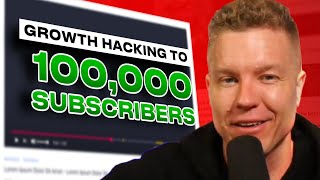
Sam Parr, founder of The Hustle, explains how his media business grew to millions through Reddit virality and long-form blogging, then paid acquisition. He argues sustainable growth requires a solid product and deep focus on one channel, not hacks. For copywriting, he recommends hand-writing great sales copy for a month to internalize patterns.
Chapters
I think TikTok is probably the easiest. It doesn't fit my personality because I don't like the camera thing as much as I like writing, but I think, uh, I would still start a blog. I also think blogging is a little bit more interesting for me because you can blog an article and in 4 or 5 or 6 years later, it could still be really relevant and people will go to it consistently. Whereas TikTok, Twitter, Instagram, sometimes YouTube, it's a little bit more, what have you done for me lately? I am Sam Parr. I've started a bunch of internet companies. The most popular one is The Hustle, which was a media company that reached like 2 million people a day, recently sold to HubSpot for a fair bit. And then I host this podcast called My First Million. That's a pretty popular business podcast. And I've got a ton of other like interesting projects on the side, like real estate or trying to get really in shape. Weird things like that. I do a lot of adventures.
Best known as a fitness influencer.
Yeah, yeah. The artist formerly known as entrepreneur, now fitness influencer.
It's amazing. All right. And so yeah, most of my stuff kind of revolves around like social and trying to— I'm trying to be more specific in the direction, but really like about like how to get people's attention and grow audiences, that sort of thing. So like, Most of these thematically will align with that, but feel free to take it wherever. But like, what was your biggest misstep, uh, in your attempt to, or like when you're starting out growing The Hustle or the podcast?
The thing about growing a podcast is it's so hard and podcast is the hardest thing that I've ever had to grow. And the reason being is that there's no hacks. The only thing that you can do is good content. When someone listens to you for an hour a week, you know, or an hour an episode for many episodes a week, they get to know you and you can't be a hack. And it's really hard to game the system. There's a lot of other stuff, particularly TikTok, that's much easier to go quicker and faster and be bigger and be kind of a flash in the pan. Podcasts are really hard to grow. So that's the hardest thing that I've had to grow with. Um, The Hustle, we grew to close to 2 million email subscribers when I sold it and We grew to the first 100,000 users completely organically through blogging. And then after that we did paid marketing. And the biggest misstep that I made was I didn't spend a whole lot of money when the marketing was done really profitably. So we were spending like $2 to acquire a user and we made $10 from it. And when you have a machine that turns $2 into $10, the smart person would get a pickup truck, fill it with money and back that truck into the— or just dipped all the money back into that machine. And I was a little too timid and I didn't go as aggressive as I should have.
I love that one. Uh, and so going from that $0 to $100,000 organic, what was like the biggest, um, what was the single most effective thing you did to grow organically?
Blogging and making articles go viral on Reddit. So I would think about where is my audience on Reddit and what long-form articles can I write that will— they will love and share like crazy. So for example, there was a subreddit called Soylent with like 90,000 people. I wrote an article about living on Soylent for 30 days. There was a subreddit for people who like to self-publish books. I wrote an article about how I gamed the system and became a bestselling romance novelist by plagiarizing another author and kind of like proving that a lot of times self-publishing can be a scam., and I wanted to like call that out, and that got a lot of controversy, but it got a lot of views. Another thing was right when LSD was getting popular among Silicon Valley folks, one of my good buddies decided to do a lot of microdosing. You know, he microdosed on a regular basis, and we had him blog about it, and I knew that would get popular on Reddit and popular in other subreddits and forums and things like that. And so in our first month of business, or maybe the first 2 months, we had close to a million people come to the website. Only through those blog posts and mostly all through Reddit.
I gotta get fucking on Reddit. I don't spend enough time on that.
Yeah, it's the place to be, man. It's like the 8th or 6th most popular website in America.
Front page of the internet.
Yeah, it's the front page of the internet. It's happening.
Let's see. Okay, so this question is, do you believe in growth hacks? Why or why not? And sort of some context is like, I was talking to this buddy who I think is like really smart the other day, and I was like asking him for advice about like kind of like what I thought was an area that would have like growth hacks. And I was asking like, oh, do you have any like articles or sites on this stuff? He's like, honestly, if it's out there already, it's not going to work anymore. So you've got to go and find it. Like by the time people are talking about it, the opportunity is gone.
I don't think that I don't, I disagree with that sentiment because growth hacks, so basically not all the time, but a lot of times if you're able to grow quickly, there's a chance that your user base is going to go away just as quickly. Sometimes magic is in a bottle, like an Instagram or a Snapchat and things spread like wildfire. But there's a lot of companies that do a lot of like silly hacks. Um, and things change really quickly. Of course, Amazon, they found out that they could spend a lot of money on Google AdWords and Google AdSense in order to grow, and they bought a ton of ads and they grew on the back of Google and they became huge. But I don't like the word growth hack because what it means is that it's like a get rich quick, do something really quickly, and the product maybe doesn't have as much research and development and it isn't really that amazing. So I don't like the word growth hack and I don't like that sentiment, this idea like if it's already out there. Then you can't do it. It's like, no, usually, um, if you just provide a good product and good service and then you like find one channel of marketing that works and you just go all in and exhaust that, and then when that breaks, you go to another one, 9 out of 10 times that will work. But what does help is if you get early in on platforms. For example, we acquired customers on Facebook for $1.50 to $2. Now that's like $8, and we weren't particularly early. This was 4 years ago, But it does help to be a little bit earlier into the game, but you certainly don't have to be like cutting edge in order to grow quickly.
Now, uh, if you're going to start out from scratch today and you want to build an audience, what platform do you think you'd want to jump in on?
Man, I would create a blog. I think long-form blogging is the way to go. I mean, I would start that way. It's not for everyone. It just so happens that I'm really good at— I'm not— I don't know if I'm really good, but I like writing. And sometimes it works, but I think TikTok is probably the easiest. It doesn't fit my personality because I don't like the camera thing as much as I like writing, but I think, uh, I would still start a blog. I also think blogging is a little bit more interesting for me because you can blog an article and in 4 or 5 or 6 years later, it could still be really relevant and people will go to it consistently. Whereas TikTok, Twitter, Instagram, sometimes YouTube, it's a little bit more, what have you done for me lately?
Yeah, definitely.
I like blogging. And if I was 21, I'm not convinced that the blog would make all the money for me and be like my big moneymaker. But if I use the long-form written word to express myself in a smart way, I'm pretty confident that I can convince smart people to read it who would eventually give me a job. And long-form writing is an awesome way to show off your thinking.
You referenced sort of being a great writer and stuff, and you've talked a lot about copywriting. What's some good advice you've got for anyone when it comes to copywriting and marketing? I remember I used that clip of you talking about the only thing people are interested in is themselves, and I love that. But you have any other sort of like— I do. All right, let's hear it.
So here's the best way to become a good writer, and it's really simple. It's called copywork, and it's basically the same way you learn how to play the piano or guitar. So when you learn how to play the piano or guitar, you don't just start writing your own music. You play like Jingle Bells, and eventually like a rock song, and then like some popular music and some old music, and you start seeing all the patterns in it. And after a year or two, then you start writing your own music. It's the same way with writing. So it's this technique called copywork that was popular for centuries, and then for some reason in like the early 1900s, it's quit being popular. But basically all you do is whatever writing that you like and you want to be like, you literally print it out, get a notebook, and by hand write it word for word for 1 hour every day. Do that for 30 days and you'll be a pretty good writer at the end of that. So for example, you want to become a good comedy writer, get movie scripts, get TV scripts, write it out by hand. That's what Judd Apatow used to do. That's what a lot of people used to do. Ben Franklin was famous for this, and he's a wonderful writer. A ton of writers are famous for doing that where you just— so if you want to get a good copywriter, you go and you Google, or I actually have a course on this that I launched. I didn't publicize it much, but like a lot of people signed up for it, and I just send people the best sales writings and sales pages I've ever seen, and I annotate them and I explain why they're interesting, and your job is to copy it word for word by hand, and you'll become a great writer. It's the way to go, man. Copywork is the— It's single-handedly the best way to learn how to write, but most people don't do it because it seems so simple that you think, oh, there's no way it works, but it definitely does.
By the way, you've got your TikTok now. You've been posting on it, right? I'm not mad at you.
A little bit, yeah. You could tag me. Not religiously. I've been going harder on Instagram, and that's probably a mistake.
Dude, yeah, you gotta do it on TikTok. Instagram is so fucking hard, but you can use TikTok as a funnel to grow your Instagram.
Like, I like TikTok. I just— I'm not that— like, these kids are so creative.
You can, you can do your own thing though. That's the thing. Like, I mean, I, I feel the same way even now, but like, it's, it's the thing. You could just do what you do. Like, you could— like, you're— you could do your like ice baths, you know, and just do it on TikTok.
Like, it doesn't need to be like ice bath content.
Do the ice bath content, like ice bath wisdom or whatever. What was the thing you said the other day?
Like, you guys remember the ice bath confessions?
Something like that. Yeah, yeah, yeah.
Do that.
Like, people would love that. And you could then, like, once you hit 1,000, you can do lives. Like, people would probably— like, that might be kind of funny.
All right, I'll do it.
Yeah, I think it's a good idea. And then you can also just, like, export everything to Instagram. So you get 2 for 1 anyways.
All right, I'll do that.
What book or resource would you recommend people go and read, um, to learn outside of the copy, you know, uh, you know, to be a better copywriter or to be a good business person?
Well, let me give you here, I'll give me, I'm gonna give you a good one. So there's this book that I'm embarrassed to tell people that I read, but it changed my life. And I basically built my life around this book. It's called How to Get Rich. And it's by this guy named Felix Dennis. Felix Dennis. Was a billionaire in England. He's kind of like a combination of Richard Branson and Mick Jagger combined. He was this wonderful businessman, but he was kind of vulgar, but he wrote beautifully. And he wrote this book right before he died called How to Get Rich. And he wrote all of his opinions and feedback on how he built his business and things that you can do. And he says things because he was about to die and he was already wealthy. He said things that people never say and that they would never say today. And it's the greatest book I've ever read, and it changed my life.
I read that after you recommended it. I fucking loved it.
It's the best.
It's so good. And like, he has such wisdom. Like, uh, what's this thing about, like, um, he talks about like, uh, you know, just basically like the importance of going in a direction if you see like that momentum. He said it so much more eloquently, but like, it's like so true.
Beautiful writer.
Yeah, he's incredible. Um, What do you think most people get wrong when it comes to trying to like build an audience?
I think that they think that it's gonna come quickly, and in some cases it does. There definitely are people who have built things really quickly, and people always say there's no such thing as an overnight success. I say, yeah, there are, there are definitely sometimes that, that definitely exists, but 99% of people, even peop— 99% of successful people, it actually takes a long time. And so for example, The Hustle, we had millions of people a day. But that was like after 4 or 5 years of doing it like 60 hours a week, every single week. And then there's a lot of examples of wonderful YouTubers who I follow and they're huge now, but you can actually go to their videos and you click sort by oldest and you could see, wow, they've been doing this for 8 years and their early videos had nothing and they were horrible. And so I think the biggest misconception is that it's going to happen quickly and it actually takes probably 2 or 3 years to do anything significant.
Yeah. There's a, there's this YouTuber, Roberto Blake. He had a great video. He's like, um, 100 bad videos. He's like, you gotta make 100 bad videos to get to one good one. And he breaks down sort of like MrBeast— I think it was MrBeast, PewDiePie, and MKHB— and showed like, like PewDiePie— or sorry, uh, MrBeast, I think it was like 100 videos to get his to his first 1,000 subscribers. And I think MKHB, it was even more. It was like fucking wild. It's like so weird.
A long time. Things take a long time. In order to have mastery, you typically have to go through this apprenticeship period where you just suck, but you're learning, but you just have to go through the motions because that actually is really useful.
Yeah, I think it's kind of liberating too to hear that because then it's like it gives you permission to like get the momentum and build the muscle of just doing the work versus like analysis paralysis, like it has to be perfect. If you're almost like, I gotta do 100 bad ones You're like, oh, it's, it's done, it's bad, and push it out. And then you just like try and make like 1% improvements each time.
I know, I agree, I agree. I, I'm all about that.
Along those lines, I'd be curious, and I, I don't know how much of my TikTok you've seen recently.
I, I see all— I mean, I only log into TikTok like once every 5 days, but you are definitely the one that I, that I get the most.
Oh cool, thanks man. So I just hit 100K. Nice. And, um, you know, that was like the big sort of first goal. I'm trying to grow my email list, and I feel like the thing that I need to do is somehow like develop like that emotional— my theory is like people come in for the content and they stick around because of the way, like, the connection they develop, the community. Kind of like that sense of, and generally that sense of connection to like the personality. And I'm trying to think through like how to build that out so that there's some depth beyond like, oh, it was like an interesting fun fact.
I would show off parts of your daily life. For example, your office is badass. I would be like, what's up TikTok? I just got to our office. Check out this gorilla that we have. It's huge. We bought it for this reason. And maybe tomorrow I'll actually show you the rest of the office if enough of you comment and say they want to see it. It's a pretty magnificent office.
Oh, that's a good idea. All right, I'm gonna steal that. I'll do that tomorrow.
I would do that for sure. I'd be like, what's happening? This is my lady, she's a YouTuber. Um, this is how we live every day. Look at the studio.
Yeah, that's a great idea. All right, all right, I'm gonna do that.
Behind the scenes stuff, people love that.
Yeah, I'd never do that. That's a good call. If you were gonna do something to capture the world's attention, what would you do?
I don't know. I don't have a good answer. That's a really hard one. It's, I don't know. Yeah. Yeah. That's a hard question. What I've noticed about people who have kind of taken over the world, I've had people who have started WeWork, people have started Away, Casper, like a lot of really cool New York D2C brands. I've had billionaires from other different sectors, you know, all types of software billionaires speak at our events. And I have— what I do before every event that we host, and we've had hundreds of speakers, is I tell them to arrive about an hour and a half before they actually need to arrive. And I do that because I want them backstage, and it's my excuse to hang out with all of them. And I've been in the room with some of these crazy billionaires just hanging out, shooting the shit, just us, just talking. And what I noticed is that, A, they definitely have doubts and confidence issues just like your average Joe. But what really works with them and the people who kick ass and capture the world's attention and take over the world is they have crazy amounts of energy and they're incredibly intense about what they're doing. And so even though they have like, yeah, I'm not sure if this is gonna work, but I'm doing it. And, uh, that type of like persistence and that type of really high energy that's crazy focused is like, I think the key. Not so much IQ. That's important, but it's not like the determining factor. Yeah.
Like that level of grit is so critical.
Yes. And like, for example, we had the founder of ClassPass, her name's Payal, speak at the event and backstage she was super nervous. I like remember had to get her a bottle of water cuz I was like afraid that she was like getting too nervous and she was pacing back and forth backstage reading the speech to her, to herself over and over and over again. And then she got on stage and she crushed it. And at the time ClassPass, I think they still are, but they were definitely killing it. Like maybe a billion dollar company. And I remember thinking like, why are you so nervous? You're like the best. You're so cool. And she was just, I realized at that point like, oh, you're, you have flaws like me. But she had so much positive energy and so much energy and output in general that I thought like, I don't ever wanna go against this woman.
That's dope. It's always reassuring hearing people have like insecurities who you like look at as ballers.
For sure. One time in a room, it was me, the founder of WeWork, Casey Neistat, Payal, um, and the guy, I think the guy who started ThredUp, which is now a multi-billion dollar publicly traded company. And we were just chilling and everyone was complaining about the same stuff. One person said, I have had this person work for me for years and I'm too afraid to fire them even though they suck. I just am afraid of the confrontation. Another person was like, man, I don't know if this is gonna work out. I, I'm not sure. And there was all these doubts that people were just complaining about. And in that room I didn't say a word, but I listened and in my head I was like, hell yeah.
Well, and that's sort of like, I feel like it's like goes back to that whole theme about, um, Dennis. Like it's like Put yourself, like, just go for like the general direction. It's like everybody's got these problems. You may as well make the stakes worth it to a certain extent.
Totally. Additionally, you get a lot more help when you're doing cool stuff. It's kind of like the analogy of if you see someone on the side of the road with a broken car, you're likely not gonna stop. But if you see someone on the side of the road pushing their car, you're more likely to stop and help. And people are really inspired by people doing cool stuff, even if it doesn't work out.
That's a great point. Yeah, dude, this is, uh, this is dope. Do you have any like sort of like, I don't know, knowledge bombs you just want to drop and have as like a TikTok clip, or any, anything you want to reference, or anything you want to plug?
Uh, listen to My First Million, that's a good podcast. But no, man, I'm like Obama, I just talked in all types of sound bites just now. It's perfect.
This is gonna be like 20 TikToks.
Yeah, I don't think I— I don't— I try to talk in 60-second bites so you could make something. Um, no, I don't think I have anything else to say. One thing that I've been doing this year in 2022, but also I started doing it in 2021, is I'm putting myself in situations that make me incredibly physically uncomfortable. So for example, I take ice baths every single morning at like 39 degrees. Sometimes it's even colder, and I like to sit in it for a while and get really cold and shiver. And I do it first thing in the morning. The second thing is I've been boxing a lot and preparing for my first match, going against like young guys that are like killers and actually are good. And I've noticed that in doing those things that like are physically uncomfortable, my work has been significantly better because I'm not stressed about the day-to-day that I typically was freaked out about. Because in my head I'm like, oh well, I got beat up last night and I feel great and I'm fine. I got in this cold water this morning. It felt like I was gonna die, but like, I feel great. I'm fine. Like, this other stuff, it's not that big of a deal, and it's helped me in my life significantly.
That's good advice. I, I think in general it's— and also like, there's, there's something too, like, feeling of just like a little bit physically fit. Like, when you, when you have those moments where you like surprise yourself, you like run up like a flight of stairs and you're like, oh, I'm not winded. And like, you're like, yeah, I feel good.
If you're in New York and you see someone like throw trash on the street, you go, hey, why'd you throw this on the trash— on the street? Like, what are you doing, man? That's not cool. Like, these just confrontations gets your testosterone and your adrenaline going a little bit more, and it's like this little drug, and it creates a little bit of momentum, and it kind of dulls out everything else. I think getting in a fight like that, like a boxing fight, it's actually kind of good because it makes everything else in your life feel a lot more dull, which is a good thing.










