The Creative Drive: Exploring the Passion and Business of the Creator Economy w/ Brendan Gahan
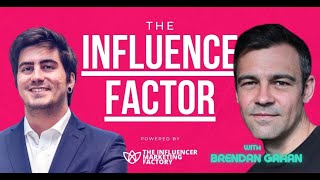
Brendan Gahan, Chief Innovation Officer at Mekanism, traces the creator economy from his first YouTube deal with Smosh in 2005 to today's shift toward long-term creator partnerships and DTC products. He uses ChatGPT for writing and headlines, posts weekly newsletters and daily on LinkedIn, and sees paid-subscription models replacing ad-driven platforms.
Chapters
Welcome to a new episode of The Influence Factor by The Influencer Marketing Factory. This week with me, we have Brendan Gahan, that is the Chief Innovation Officer at Mekanism. Before we get started, I want to just remind you to subscribe and follow us on Apple Podcasts, Spotify, YouTube. Every single Wednesday we have fantastic guests on. Enjoy the show. Hey Brendan, welcome to the show.
How are you? Good, good. Thanks for having me. Pumped to be here.
Absolutely. You were telling me that you're back from Austin, right?
I just got back. Oh gosh. Monday afternoon. It's Wednesday. Yeah, it was a blast. South by is amazing.
Nice. I want to know more about that in a second. Right. Because I mean, I saw many different news. I saw that you also posted about the main insights, right, that came out from that. But before we dive in, right, and I know you have a lot of knowledge about the creator economy and influencers and so on, can't wait to learn more about that. But first of all, who is Brendan? Tell us a bit more about yourself.
Yeah, um, all right, cool. Yeah, so I'm Brendan Gahan, um, I'm, uh, Chief Innovation Officer at Mekanism, which is a full-service creative agency. And probably, I guess, in terms of like why I ended up on your podcast and a bit about me. I got into advertising in 2005. That was my first internship right outta school and fell right into influencer marketing. I was really fortunate. I was at a small boutique agency and, you know, it was right when Facebook and YouTube were starting to get on the scene. MySpace was, you know, the hot social platform at the time. And I got to pitch a lot of social ideas and I had no business doing that, but you know, I did it anyways. And you know, it was a really fun agency and did some early influencer marketing, did my first YouTuber brand deal in 2006 and really honestly just sort of never looked back. I was like, this is amazing, this is what I want to do. Parlayed, you know, that, that first influencer activation into a role at Mechanism, where, um, you know, I'm at again now. But at the time, they were doing a lot of early branded content, you know, uh, digital video storytelling. You know, they launched some branded video campaigns for companies pre-YouTube even and saw a lot of success. And so it was kind of a perfect mix and perfect moment in time where Mechanism was making this amazing content and really focused on the opportunities with digital and storytelling within social media. And so I came in and, you know, along with a couple other, you know, young guys, and we basically built out a social media team in the early, early days. And we did tons of influencer marketing. I spent about 6 or 7 years there, and then I did a YouTube MCN. I worked at Fullscreen for about a year and then started my own influencer marketing agency and then sold that to Mekanism. And that was about 8 years ago. You know, in that time I've overseen the social team, but I would say influencer marketing and just working with creators has been always sort of near and dear to me. I think in part because of the characters. You know, the, the creators are always fun to work with. And, and yeah, also just the impact you can have, you know, is sort of— it's, it's, it's wild to see what you can do when you find the right partner and pair them up with the right brand and right activation. You know, what you can— what you can accomplish is really mind-blowing. Um, I've also dabbled a bit in like some angel investing and advising and sit on the VidCon advisory board.
Well, you got yourself quite busy, right? Like, it's wild. First of all, when it's about 2006, was it the first YouTube integration like with influencers?
I, I don't know if it was the very first, but it was pretty early. Um, I haven't seen an activation earlier than mine, but I would imagine that there had to be some going on, you know. But yeah, it was definitely early, early days. I remember. So that deal was with Smosh, who's, you know, still pretty— Yeah, yeah, yeah, yeah. I sent them a cold email and, you know, was like, hey, I pitched this idea. Would you guys be down to chat? A week or two later, because they were just up in the Sacramento area, not too far from San Francisco. They came down to the office and we hammered out a deal and in, you know, an hour-long meeting and we were off to the races. And that first campaign, we, you know, crashed the client's website, got millions of views. And I was like, this is so amazing. Like, it's like, it's so fun, sort of like seeing that real tangible impact, which I think is sort of the beauty of creators in general. Like the way they can wield their audiences is sort of unprecedented.
No, it's, it's crazy to think again, you know, like just thinking about, okay, this is not, you know, just a YouTube video with, you know, like it's a hobby for some people. That, that was at the time up until like 10 years ago, 8 years ago, right? For some people, when I say all the time, you didn't want to say to anyone, I'm a YouTuber, right? It was like sort of a secret thing, you know. I am the new— other people knew, they were looking at you like That's weird. Like, why are you spending this time for something that we don't make any money? So the idea to go to someone like you did, right? And be like, hey, why don't we do this? You know, like, and as a marketing channel, it's crazy. And I will ask you later more about how things changed, right? In the past 10 years and so on, because again, you've been doing that. I mean, you mentioned MySpace. So I'm pretty sure that you know very well what happened in the past 15 years, I would say. But before even entering into that, I wanted just to spend a couple of minutes since you just got back from South by Southwest. First of all, how was it overall? And then secondly, what are some of the things that you get from it? I know that you also have your own newsletter where you pile up everything every single day, I would say, or write this. I don't remember, is it daily or— I mean, I see it all the time on my LinkedIn.
Yeah, I post the newsletter once a week. And I try and post to LinkedIn, you know, once every day or so, but probably average, you know, 5 or 6 times a week.
Okay, cool. So people can find you the information there. But what is the first impact, like, everything that is still fresh on you, something that you learned or something that maybe you didn't expect this year that was a, uh, maybe a big, you know, like, focus for content creators?
Yeah, for sure. Well, I think first off, it was awesome just going back to Austin after I don't know, for me, I think I might have missed 2019 even, but you know, so it'd been 4 or so years probably since I've been back. But it was awesome just to go back. You know, it wasn't quite as big. I think post-COVID, it's still sort of getting momentum, you know, the real-world events. But it was amazing just to spend time with people again and sort of the serendipity of the real world. Is just so much fun. We caught up with clients, spent a lot of time catching up with other folks in the industry, seeing a bunch of creators. So that was a blast. And honestly, more than any of the content, the highlight for me, the big themes that I saw, and to a certain degree, this might be some confirmation bias given my own interests, but I think AI and the creator economy were sort of the big overarching themes that stuck out to me. AI is obviously the hot topic at the moment, and it seemed that was sort of the common thread through so many of the announcements and panels and themes and new product launches. You know, I sat in a bit on Kevin Systrom, you know, the founder of— or co-founder of Instagram, rather. He did a conversation with Kara Swisher because he launched a new app called Artifact, which is sort of like It's like TikTok for tech. Yeah, yeah, leveraging AI to sort of like cater your newsfeed to you personally and it's got some, a social layer on top of it. Yeah, so I think that was probably like the best talk that I saw. And then in general it was just AI and creators were sort of on the tip of everyone's tongue. The information, uh, how the creator event seemed like a lot of the events and kind of side conversations were all about creators. Um, so I was, I was engaged the whole time and pumped.
Hey, quick break. This podcast is hosted by The Influencer Marketing Factory. We are an influencer marketing agency that helps brands and companies engage with Gen Z and millennials on social media. We take care of influencer identification, storytelling, creativity, negotiation, contracting, campaign management, error analysis, in-depth reporting, content boosting, and much, much more. Are you interested in learning more? You can find us at theinfluencermarketingfactory.com or you can Google The Influencer Marketing Factory. Nice. No, I mean, like, especially with AI, we discussed about it like many times on the podcast. I had like different point of view, both for content creators and also from companies and platforms. It's definitely a hot topic. I'm also curious, like maybe we can leave it at the end of everything. I really want to know what do you think, what are the best use cases and what do you think might be because everyone is talking about it, you know, but from talking about it and actually having practical examples between generative AI and also optimization AI, there is so much, right, that you can either do or more. So it's something that we have to look at. But Before we look at that, before we even dive in, you know, like on all the different things that are happening, I'm really curious about something. And you mentioned that before, LinkedIn, you're really active, you have newsletters and so on. I see you and other faces every single day engaging a lot. So how much, like, first of all, how do you manage your time like on during the day? And how much are you like giving attention to LinkedIn or maybe other social media? Because I asked this also to other people and they told me like, yeah, like I spend these hours to research, these hours to write in my newsletter or my whatever, these others to engage with others. Do you have a system in place or do you go a bit random depending by your mood and feelings?
I, yeah, I do and I don't. Um, uh, it's sort of, I'm always sort of thinking about it a bit behind the scenes and you know, you always have those 5 or 10 minutes in between calls and meetings where you're like, oh, I'll just see sort of like what's what's trending on Twitter, you know, what's happening on like LinkedIn or, you know, in the news. And I guess, you know, maybe some background. I started posting because I've had a blog for a while, but I never really got in the habit of posting. I found myself like I'd just sit and write. I'd work on a blog post for sometimes, you know, weeks or months, and it would just constantly— I'd be like, oh, it's not done yet. I got to add to it. I got to add to it. It's not— I can't publish it just yet. And I would sort of find myself in this like analysis paralysis mode. And so at the start of 2020, I was basically like kind of fed up with myself, if I'm being honest. Like, I was like, Brendan, you're being such a wuss. Like, just post stuff. And I realized that I— the hardest part for me was the actual process of posting stuff. I was holding myself back and kind of just overanalyzing, oh, people are going to think this, people are going to hate on that, or like just being honestly just really insecure. And so I got started by basically forcing myself to build the habit of posting and telling myself, just post once a day, even if it's sharing an article and just saying, this is interesting, because I almost had to like inoculate myself from that fear. I mean, I still have crippling self-doubt. Like everything is like I'm like, oh, that wasn't good. This is dumb. People won't think that's interesting. People will think I'm an idiot. Um, or, or honestly, even myself, I'm like, this isn't as good as it could be. Um, but I wanted to, to just get my thinking out there because so much of my job is spent thinking about strategy and brands and ways of working, and I kind of felt like I needed an outlet to sort of like push a lot of that thinking out into the world. So it just didn't sit sort of on my computer all day. But in terms of process, I sort of tend to bookmark links and save them and throw them into Evernote, things that I find interesting. And then if I have, you know, 15 or 20 minutes during a meeting, I'll usually find throughout the day something that I find really intriguing or interesting or sort of like ladders up to the themes that I'm really passionate about, and I'll sort of jot down a post. Um, and, uh, one thing that I would say is sort of the process-oriented piece of it, or the hack for me, is I save everything in Evernote, and I tend to write and posts about the same general themes. And so the beauty of Evernote is it's sort of compounding, you know, all this information around these same core topics. So like, if I find something that's of interest, it's almost like a— and I almost use it as an entry point to then insert all these other thoughts or information that I've collected now over several years And I've got this great foundation to almost pick and choose from to use whatever was in the news as the jumping off point for that point of view, which by and large doesn't change a ton. I've got a lot of the thinking and sort of philosophy there. So that's really helpful. And then with the newsletter, it's almost like just a macro version of that. You know, throughout the week I've got different things that sort of just struck a chord with me for whatever reason. And then I'll sit down and write something and add some commentary around a couple of themes. For those who don't read it, the, the, the structure of the newsletter is 1-2-1, you know, sort of a play on words, 1-2-1, 'cause I want it to be a conversation as much as possible. But 1 being like 1 interesting insight or, or data point, 2 interesting links or shares, and then a question, one question. And I try and add some thoughts, you know, to each kind of sharing my perspective on them. Yeah. And so that's sort of my general workflow. I, I have a lot of room for improvement from a process standpoint, but I will say keeping everything at like at my fingertips with Evernote has made it much more manageable.
Absolutely. And when it comes to— so this is mostly for your writing or researching. What about the engaging with others? Because I also saw you popping up in my feed, right? You are either liking or commenting something. Are you doing that for like awareness to bring in the people to your newsletter? Are you doing mostly for networking? Is it a combination? And does it work? Because the algorithm is still changing all the time. Do you think there is still something that other professionals should do?
Yeah, for sure. I mean, I think it works just sort of like And to be honest, that's the piece I probably need to do the most. I really, there's a few friends who we try and, you know, comment on each other's stuff and bolster it so that it does get more visibility. I could be much, much better about it, to be honest. That's a piece that like I am constantly kicking myself to like improve upon. But it seems to work. And I know for me personally, at least, like LinkedIn is a relatively— compared to a lot of platforms, more tight-knit, I feel like. And you get a lot of thoughtful comments and commentary. So I recognize a lot of the names and faces over time. And I imagine for other people it's sort of similar. And then from an algorithm standpoint, obviously I don't know the, the ins and outs of, of how it's working exactly, but it does seem like Engagement is pretty high when you comment on other people's stuff. Like, the visibility around that, at least anecdotally, seems to be relatively high.
Yeah, no, I absolutely mean, but I, I understand what you mean about, you know, structure a bit more because those find some— myself, sometimes I maybe have like, you know, really a lot of energy for like 15 minutes. I go there, I comment on something, and maybe for 5 days I do nothing, right? And there's definitely not a system in there. And I know that I also should be better on that. I know there's some people, they have like a really structured work when it comes to that. They have like a listing or a sheet or a CRM where they're like, I had to comment on that today. Like, so they have like, but some of them, they also do it because it's their work. Like they mostly are doing personal branding. So I get it on them.
Yeah.
For, for sharing a bit more about like the behind the scenes.
Admittedly, I wish I had more time for all that. Like it's, it's, it's I'm not, uh, anyone to follow or take advice from when it comes to time management. I'm the worst at it. Like, I, I'm more of a brute force type of person. Like, I just like, you know, I'll just do stuff late at night or early in the morning, that kind of thing.
I, I know, I know. I'm, I would say that I'm quite the same on that. I'm trying to get better on that, but, uh, Sometimes it works, you know, each of us is different. Some people work pretty well structured, some others more creative mode, let's say like that, and fly freely. But so, you know, something else that I wanted to ask you, you already mentioned at the beginning, right? So apart from, you know, like the LinkedIn and everything, but you mentioned before, you know, like MySpace and what is happening from like YouTube in 2006 and so on. I will not ask you what happened necessarily to all the social media in the past 10 years because we would need like 10 hours of podcasting. But what about, I'm trying to like, you know, put it just in 6 months, okay? Let's take 6 months, the past 6 months, right? What I say all the time, it is social media, one day in social media is like one year in every other industry. But if we look at 6 months, what are the top 3 things that happened in the industry that either shocked you or excited you? And it could be about social media as apps or also a bit more like on the creator economy as a broader Cossips.
Yeah, for sure. I mean, I would say there's probably only one thing that genuinely shocked me, and that was sort of the usability of, um, ChatGPT in particular. I think that is one of the first tech kind of launches and products in a while that really like lived up to the hype. And, um, I think it— the influence of it is sort of like multifaceted, but undoubtedly is helping creators. I know for myself, like, it's helped me with my writing. Like, I don't think I'm a— I don't think I'm a great writer. I would like to think my ideas are halfway decent, but, you know, in terms of structuring thoughts and putting them into a mode that is a little bit more palatable, it's super helpful. Like, I will oftentimes use it to come up with like a headline or make things a little bit more pithy and sound better. I'm almost always like using it for like, okay, hey, I wrote this thing. What's a good alliteration or parallelism or a hyperbolic way of stating this? And I'll often use that as sort of like an opening line or two. To really capture people's attention. And I know, you know, a lot of creators are out there using it as a tool to brainstorm and help punch up ideas, help come up with original ideas. So I think that that is one that I would have to admit has shocked me. I think some things that are really exciting to me and a lot of people will probably hate this one, but I think the idea of paying for social media is actually a really good idea. And I genuinely hope that it gains traction. The reason being is I see a lot of parallels to the newspaper industry over 100 years ago. You know, in the 1890s, yellow journalism was running rampant. For those who aren't familiar, the term is basically like yellow journalism is like journalism where it's sort of like emphasizing sensationalism, uh, sensationalist content, exaggeration, essentially, uh, clickbait before clickbait. And we saw historically that sort of disappeared a bit more when, um, the, the newspapers were— their, their model shifted to more more from just selling newspapers day to day to sort of passersby on the street via newsies who were screaming out headlines to the subscription model because the subscription model put them a priority over the, you know, the subscribers and really wanted to give them a lot of value. And so I'm hoping that we'll see something similar with paid social. I totally think that I'm being overly optimistic. I think that's sort of a best case scenario. I'm inclined to believe that it, it's not going to solve everything, but I really hope that it does, and I see potential there. Um, and then I would say in addition to that, I think just the sheer number of options that are emerging and people are starting to explore and be open to beyond the duopoly of sort of YouTube and Facebook/Meta is exciting. The, the amount of competition out there, you know, Reddit is emerging more and more as a viable ad platform. You know, obviously there's TikTok, Snap, and more and more there's LinkedIn. They're entering the conversation in a very real way. Um, people are becoming much more open to new types of social platforms. You know, uh, we saw BeReal gain a lot of traction, Gas App All these, it just seems like there's this tipping point where people are open to new platforms and adopting them and at least playing around with them. And a number of them are starting to stand out as real viable long-term platforms for creators and advertisers.
No, it's everything that you said is interesting, especially When you talk about the subscription and making it paid, so you mostly, I guess, meant the, let's say for example, Instagram subscription to get exclusive content, or do you also mean, like, for example, the new Instagram verified service? Like, is it both for users and creators, or do you mean mostly on the creator side with users paying the content creators?
I honestly think more for all users of the platforms paying for like, yeah, an Instagram verified where you're subscribing, um, to, uh, the platform to get, um, you know, in, in Twitter's case, you know, fewer ads, etc. Because I think if these platforms become less reliant upon advertising and more reliant upon the users as the kind of the, the, their customers that they need to keep happy. They're going to be less dependent upon page views, where we all know instinctually we can't help but gravitate towards the extremes. And if they're disincentivized to promote the extreme content, the clickbait, and instead keep users happy via quality content, I think it's going to create a more moderate ecosystem and one that hopefully doesn't lead to the downfall of democracy and, and sort of these hints of, of horrible things that we've seen in the past and all the divisiveness.
Yeah, no, especially also I would say on the remove the disruption of the user's behavior and experience, right, while scrolling. Because if you can remove an ad but paying someone and Instagram still gets, for example, of TikTok gets still a fee With it, you have native content that works very well with the overall experience of the user. It's not disruptive, and you're still, still helping somehow the company to, to move forward with everything, but you're also helping your content creators to having a more stable income, right?
Yeah, yeah, I could see the win-win there in that case. Um, 100%. I mean, it's about aligning incentives, and right now the incentives are get as many page views as possible. And what do we know drives page views? Uh, it's, yeah, I mean, it's, it's the extreme content. There's this study done, um, I think it was by Jonah Berger that showed sort of generally speaking, the content that was most, you know, viral was content that was inspired awe, anger, or anxiety. Generally speaking, not the best things for people to be engaging with, you know. Ah, maybe a little bit, but anger and anxiety, that's not healthy. And if instead they're focused on like, well, what are these, you know, we need to keep our users happy because they're the ones paying us versus the advertisers happy. I think aligning those incentives around the users and could potentially create a more, a less divisive ecosystem overall.
It makes sense. And since now, you know, we mostly talked about the side of content creators, right? Like how can they, you know, get on more of a quality sort of like sensational, you know, topics and clickbait and so on. But on the other side, there are content creators and the other side there are brands and companies, right? And you know that they still want to use influencers and content creators to promote their products, services, and so on. And I read one of your LinkedIn posts that stated that the one-off influencer activations will decline. We've seen that like happen in the past years for sort of like a long-term relationship. That is one. What else changed in the past 3 years of influencer marketing that you've seen either for the best or for the worst? Like, how did it change it overall? And also, if you can go more in detail about what you said about the one-off activations, right, that are like declining and slowly disappearing?
Yeah, for sure. Well, I think what's really interesting is I feel like we're seeing a tipping point where creators are able to capitalize on the leverage they've generated via the communities they've built. You know, there's more services out there to help them monetize their audiences directly, whether that's a product, you know, there's platforms like Pietra and then, you know, just in general, like, tools like Shopify and, you know, it almost feels as though the moat and the barrier to create a product is almost easier than the building a community or the advertising piece. Whereas historically the manufacturing was such a hurdle, you know, that barrier entry The barrier to entry has come way down. And at the same time, advertisers are struggling now because of the bifurcation of media. You know, you've got so many TV channels, digital platforms, arenas where people are consuming media, many of which are very difficult for advertisers not only to pay for placement, to get placement, but to have a real impact because people are listening to creators more and more. And so creators sort of have this interesting competitive moat via their built-in audience, their community. And so I think that power dynamic is really changing. And I think we're gonna see a lot of creators reach a level sooner where they wanna invest in themselves versus just partnering with brands. For one-offs because there's this shift happening and they're seeing their peers go off and build their own brands and be successful with that. So I think that's going to also just inspire more creators to take the leap and move away from, you know, doing brand one-offs because they sort of see the advantage of investing in themselves versus sort of renting their audience. And so what does that mean for more traditional brands? I think that it means they're going to have to come to creators with a real partnership that's meaningful versus, hey, just promote our, you know, our product, and they walk away. I think some, some great examples of this are sort of like what Nerf has done with Dude Perfect., you know, creating a whole product line, um, you know, co-created product line. I would argue that while that is sort of the ideal scenario, in general the bar has been set pretty low for, for the most part. Um, you know, most brands, or a lot of brands, sort of just want to treat creators as almost like a media buy to a certain extent, you know, tackle things, um, you know, via email or, you know, and not really build a relationship with them. And, you know, creatives are building a business and to sort of, you know, sign on to do a one-off brand deal, they can't have exclusivity in perpetuity, which means that leaves them open to working another with another brand down the line. And ultimately, I think the end result is if the creator works with multiple brands within the same category or can, you know, directly competing brands, that sort of dilutes the credibility of both the brands and creators over time. So I think these like really more meaningful, deep partnerships is beneficial to both, you know, from a brand building standpoint. But then if you think about it just from a practical standpoint, you know, it takes— you do this, it takes so much time to like get alignment on like who the right creators are, how we're going to work with them, doing the contracting, negotiating, onboarding, and then working out the kinks of, of, um, sort of what those collaborations look like. I feel like to walk away from that, all that effort after one activation, is, is oftentimes a waste. Not— I mean, you know, there are exceptions. Some, some partnerships look great on paper and they don't pan out. But in general, if you can do an ongoing partnership, then you can negotiate exclusivity, you can get economies of scale. It becomes much more efficient over time because the creator knows the brand in and out in a very real, meaningful way. They become a true representative and brand ambassador in the same way that a lot of athletes have become synonymous with brands. And so I really feel that these sort of Treating creators like an athlete endorsement is, at least from, you know, large brands, the, the big opportunity on the horizon.
Yeah, especially as you said, you know, it's time-consuming. Like, that as an analogy is like hiring someone in a company and every 2 months changing that person. Like, yeah, right, you had to train that person again, you had to find the right person. You have to trust them. You have to be sure that they are aligned with your values and everything. So yeah, just the idea of having to change them every single month, it's a bit crazy. Like, it's like, you know, the 3-month internship. Yeah, that can be okay for the person learning, but on the other side, there is the company that is teaching you everything. And what's the point, right, to having to find someone? So I can absolutely see, right, the point on that one. And I also like the idea with the brand, like athletes and brands. Yes, it's there., but some other industries should, I think, you know, like, you know, step up the game in there and be like, okay, instead of every single time find new people. And also, you know, something that we also notice whenever we do our campaigns with our clients, for example, if we have 10 people in, for example, we just look at the tracking of the data and be like, these 2 perform the best, use them again. You don't have to use all of them, but maybe the top 3, 2, right? The next time in the new cohort, you can just use them again.
So, and I like that. Yeah. Yeah. I love that approach. And that's something we in general are preaching to a lot of our brands. And then you can like allow that, those efforts to really compound. You get real tangible learnings that carry over from activation to activation to activation because you're controlling more variables and you're able to zero in on like what is sort of triggering the actions we want versus sort of taking very broad guesses.
No, 100%, especially exactly the tracking and looking at influencer marketing as any other serious marketing channel, right? That should have that type of approach. And before you talked about, you know, co-branding, right? So collaborate with brands in coming out with maybe, you know, a product that is made together. But what about instead, and you mentioned Pietra, there is one of these like platform where you can go and mostly like having all the, as you said, all the factory side and, you know, having the, you know, the physical, right, elements and the branding and everything in one place, it's easier. So apart from the co-branding, what about influencers products? We've been seeing some examples, right? Prime, we have seen Emma Chamberlain with a coffee. MrBeast with a burger, um, Dobrik with a pizza, uh, who was that, the gamer with the bidet device? Ludwig, I think. Uh, I don't know if you saw that, that one, it was a few months ago.
Was it the one that attaches to the iPhone, that one?
No, no, it's the one for the toilet.
Oh, oh yes, yes, I did see that, that was hilarious.
How was it? Something different. So first of all, are there more any winners or losers into this? Because it's not that easy, right? It's easy to create it. It's easier, I would say, to create it nowadays. But still, you need distribution. You need to store things somewhere. You have to look at margins. It's, it's, it's all in a company in that case. So, so far, what do you think? Are more winners or losers in the influencers products?
That's a good question. Whether or not there are more winners, I mean, I would imagine there's gotta be more losers at this stage, but the more I would think of it more as like, people are like learning what the model is. That said, I think there's so many success stories out there in so many different verticals. Yeah, they're the ones you mentioned. There's a ton of creators. These top-tier creators who are launching huge brands. But there's a lot that are in various niches that are doing really well also. And some huge brands that people at this point have forgotten were even started by creators, like Black Rifle Coffee Company was started in part by the collaboration of two YouTubers, and then they partnered with some business guys. But that's traded on the New York Stock Exchange. And, you know, as a— I don't know what their valuation is, but I think a multi-billion dollar valuation. Um, you know, Michelle Phan and Ipsy. Um, but then you, you can break down into like niches. So like we were talking about surfing before, um, we started the podcast, but like it's really interesting. There's like a bunch of, uh, surfers who have started vlogs who are doing really well now. And there's this whole trend within surfing around like soft top boards. So like not your traditional, you know, traditional board, but one that's sort of like is soft and sort of like made of boogie board type material. And so there's guys like Ben Gravy, Jamie O'Brien, and a handful of others who popularized that. This is like a fun new way to surf. Um, and just a few years back, that was sort of seen as like a thing only for like beginners. Um, but like Ben Gravy has his own brand or his own product line with Catch Surf, this, this company that does that. And, um, so I think that's really interesting. And then like a bunch of other surfers are doing things like launching their own coaching courses and, and even doing like organize trips and stuff because, you know, they've got hundreds of thousands of people watching them who want to hang out with this guy. One of my favorite examples of a, you know, creator having a successful product, and I'm blanking on the name of it, but it's a channel out of Canada. It's got like 5 million followers. It's just an ant farm. The whole channel is all about ants., and they sell like ant farms via their channel and stuff. I mean, I don't know the numbers on that, but it must be massive. They've got like 5 million subscribers. It's like such an odd niche. It's pretty wild. So the sort of iterations of this are really endless. You know, I was reading this stat the other day. There's over 45,000 YouTube channels in the US alone with over 100,000 subscribers. And there's over 5,000 in the US with at least a million. That's crazy. Like, you know, cable TV shows oftentimes don't get, you know, a million viewers. So you've got— not only do you have a lot of niches, but these guys have pretty significant scale and you don't even need that scale to have a really lucrative business. So I'm sure there's so many out there that like we've never even heard of.
Oh yeah, I was talking with someone else still on this podcast about communities and especially maybe it was the episode with Reddit, I think, and all the subreddits that you can encounter about things that you didn't even know they existed. And there is actually a community that every single day discuss about it and you can get into a rabbit hole of like things that you didn't know. But it's fascinating, right? Because as you correctly said, you know, you can have like maybe a small community of, let's say, only, you know, 100,000, you know, like subscribers. But if it is a real niche and there are only a few players, you basically dominate the market and, and you can still win it, you know. 100%.
And one of my favorite examples too, um, shouting out, uh, Justin Moore, um, he's got his, um, his course and newsletter Creator Wizard, and it's all dedicated to helping creators understand how to get brand deals and manage working with brands. And I've seen him— I won't share the numbers, um, but I know he's tweeted a lot of his revenue numbers. He's got a great business, and it makes sense. I mean, it's like you're creating— like, so many creators jump in, and once they've got some traction, they're like, how the hell do I monetize this? And me is, you know, working on the brand side, you know, the advertiser side. Um, I feel like he's doing the Lord's work, like teaching brands or like creators how to better work with brands. And like, a lot of it is like, like on our side seems pretty basic, but it's like, hey, like, uh, did you know, think about doing a recap when you're done? Because like, we're doing reporting all the time for this stuff, and it is, it can be very time-consuming. And if there's a creator who's like, just goes that extra 10% and is a little bit service-oriented, I'm going to keep that guy in mind for the next brand deal that they might be relevant for. Because if they can make my life just a little bit easier, I'm so grateful. You know, this, this can be a very hectic and stressful business, and, um, I'll take all the help I can get.
Yeah, I mean, especially when you said about, you know, that for some people it's basic, for, but for others, no. I noticed that you can be a great business person and be terrible at making videos online so that those things don't align, or vice versa. It can be fantastic at making the most compelling and interesting and eye-catching YouTube videos with a really great watch time. It can be terrible at business. And, and so I get that, especially if you're a creative person. I don't want to say that all the creative people are not good with numbers, but the majority of the people that are really creative, whenever they see a Google Sheet, they're like, I don't think like that with my brain. I had many people that I talked to, content creators, that all they told me, I love doing the creative side when it comes to tax accounts, accountant work, and also on even just brand deals and cold emailing. They're like, I don't want to do this. So I absolutely understand why they need some support, right? It's not something natural that comes to you., right? That is something that you have to learn. And some of those things are really, you know, really narrowed down like, you know, to the comma, right? Like, you know, and different examples there. So it's very interesting to see what is gonna happen. And okay, I would have like 1,000 more questions for you today. I'm gonna like just the last one and then I'm gonna give you like all the space that you want to add anything that I didn't ask you. But the last one is, Apart from BeReal, that is already declining. It was like a big boost and then we also saw that it was missing in terms of real community and so on because it was mostly a feature. But apart from that, are there any other either platforms for content creators or any social media that you are either noticing that people don't really know and they're missing out? Or do you think that now there is not really a new winner or a new big player in the game? Because again, many tried, but at the end of the day, TikTok is still here, Instagram is still here, Meta is still here, YouTube is still here.
Yeah. Um, well, I think— so I'll start with kind of broad trends. I don't know who the specific winner will be necessarily, but where I see opportunity is like, one, community platforms. I think And Discord is sort of— Discord is the leader of that, I would say, at the moment. But there's a lot of different ways to sort of bring this to life. And I think in general, people are looking for social connection in a really meaningful way that maybe a lot of, you know, air quotes, traditional social platforms don't really offer. You know, I love this sort of like analogy of like Instagram is the club. Discord is the house party. You know, everybody goes to Instagram and they're portraying the best version of themselves. They're showing themselves like partying. They're like these FOMO-inducing posts. Like, I look, I look really cool, um, I'm hot, I'm dressed up, like whatever, you know. But that, that is not the entirety of your social persona. Um, you oftentimes have like deep passions or close friendships, and an Instagram or a TikTok is not necessarily the best place to nurture that. So I think these more private communities, you know, a Discord, uh, you know, WhatsApp, etc., where people get together with their friends and have deep conversations that are just for them That's feeling a very real need that, that I think we're starting to see emerge. I mean, it makes sense, you know, especially on the heels of COVID where so many of us were isolated. And I think even still, we don't have the same day-to-day in-person connections that we once did. Um, so I think we're sort of seeing that those parallels emerge online. And then the other overarching theme that I'm very bullish on is live shopping. In China, it is massive. It is so big, you know, QVC with creators on social media. And we're seeing a lot of platforms invest a lot of money in pushing these. Now, I know, um, there have been some stops and starts. I think Facebook might have killed their initiative. Yeah, Instagram removed that. Yeah. Yes. But I'm still super bullish. Like, to me, it seems like if you look at social apps and social commerce in particular, now China is really like at the bleeding edge of it and we're sort of getting it, you know, 2 to 3 years later. TikTok being a great example. And even the whole functionality of TikTok that sort of algorithmic, uh, the algorithmically recommended content, that, that came over from China, and we're seeing that start to ripple out and that influence permeate throughout, um, not even just social apps but almost all apps here in the U.S. So I'm, I'm pretty bullish on that. And, you know, TikTok is really pushing it. And I've seen some of the stuff they're testing. It's amazing. Like, I really think I'm super bullish on that. Then the other thing, which on the surface might seem really obvious, but I think the sort of variety of features and functionality that TikTok is investing in is fascinating. Search, long form, shopping in general, but then also live shopping, desktop live. We're seeing them really push towards closer connections. You know, they're really pushing you to connect with your existing social graph. Whereas, you know, their sort of like wedge in the market initially was like the inverse of that, the FYP. It's like, here's content you're gonna like regardless of whether or not you know this person. Yeah. And messaging, they're pushing pretty hard. Yeah, geographic, placing an emphasis on geography. So they're kind of spidering out into all these different features and functionality. And if it was another app, I would probably be like, oh, they're just testing a bunch of things. But they've already dominated all these arenas in China.
So I'm like, And they also have super apps, right?
They have used to have everything in one place, right? Exactly. Yeah. And so there's a precedent. They, they've seen what works, and maybe not everything will translate here in the US, but I think a lot of it will. And, um, so I'm really curious to see sort of that platform evolve. Um, you know, I've messed around with TikTok Desktop Live that's like gonna open up a whole other world to like gamers, et cetera, down the line. And like, I saw some data from some like financial filing they did in the UK and the revenue they're generating from live, I don't remember the stats off the top of my head, but like the digital gifting was massive. I don't think people realize how much people spend on giving digital gifts to their favorite creators. It's a huge, uh, ecosystem in and of itself. And that's not even like buying products, it's just like, I'm a fan of you, like, I'm gonna gift you, you know, $50.
Well, you, you're totally right. One, on that, we run a Creator Economy report that we're now refreshing and getting a new version for 2023. And one of the questions was about how do you support and what do you support. And many of them, as you correctly said, very cheap people and $1 from a person is different from a dollar from a company, first of all. So there is all that things to, you know, to look at. And then I also very bullish on the live streaming. We also did one report about live stream shopping and one about social commerce where we asked people and what I recommend all the time is look at what is happening in China and what is happening in Indonesia. There is the many people don't forget there is the China is the first one, right? If I'm correct, then there is India. And then the US, uh, no, the Indonesia is number 3. Number 5. I, I'm now blinking on that, but we're talking about the 4th, if I'm correct, the biggest population in the world, Indonesia. And if you look at TikTok Indonesia, they do a lot of events, uh, especially live. They are different. And I talked with some people there and they told me like, yeah, we use it, you know, live streaming and live shopping because of premium discounts, because of funnel, because of all of that that is missing right now in the US. While in, for example, TikTok UK, you can buy instantly something that you cannot do, for example, in the US. So I'm also very bullish. And when I recommend all the time, look what is happening in Asia, in Southeast Asia, because we're copying as US and Europe, we're copying what is happening there. And as you correctly said, after a few years it's going to come here as well, right? So if you want to see innovation, look at those places more than here.
It's so wild. Yeah. And when I did my, my surf trip, we were talking about, you know, I went to Indonesia. I also went to Thailand. It was really interesting in Thailand seeing how the app Line was really integrated into so many different things. And that sort of goes back to that like community component that I was talking about. You know, it's not Discord, but it's— and I know it's big in China too, in different forms, not Line specifically, but sort of like message us. You know, these different businesses are like QR codes up, you know, connect with us online and then message us. And I think it's, it's an interesting way of sort of building business and community. You can kind of cater to people's needs. You bring them into the fold and, you know, address questions, etc. And then you've got that direct line of communication to them. So that, you know, if a question arises, they can ping you and, you know, you can shoot them a note like, hey, we've got this new product, etc. I think people really like to have a more meaningful question. And I've heard— I was talking to a friend of mine, married a woman from mainland China, and she was talking about like one of the— part of the appeal of like live is the fact that like people will be like,, you know, trying on the clothes and they can be like, oh, okay, I see how that fits. And it takes— it creates a deeper experience beyond just like, here's a photo, you know, and you can like comment like, what does it look like with this? You know, and like you can kind of get a sense of what the product is actually like before purchasing. Because, you know, to like a lot of people have been burned by online shopping in general. So anything that can sort of mitigate risk will go a long way.
Yeah, I know you can ask, you know, questions in real time apart from like, can I see this in other color? As you correctly said, like how does it look like on that type of t-shirts, for example? Or can you show me like, you know, a bit more of the material? You can just communicate that some of that if you were like, let's say just on Amazon, so not Amazon Live but on a listing there, you can get maybe the description information. But apart from that, how can you actually ask this question to that? Person that is behind the product, right? So I'm really bullish as well. It has to be the future there. And I'm so— it's my biggest question mark of the past 2 years is why the heck the US and Europe hasn't invested more into that. It's— I know there are behavioral, you know, factors, historical factors, technological factors, and so on. But still, like, you know, if you put together influencers, plus commerce, they are the two oldest things if you think about it. Word of mouth and buying and selling things. It's the oldest things in society ever happening. If you put them together, like, you're the best of the best.
Yeah, and I don't totally buy the whole like culturally it doesn't translate, which I've heard people say, because QVC is still massive here in the US, you know? And like, so if it's, to me this seems like it's just QVC translated for digital and with people who are more trusted.
So yeah, I think there's so much opportunity. Let's see, I would love to just do another episode on all the items that we discussed because really we would need another hour. But Brendan, thank you so much for joining me today. Thanks for having me. Yeah, like I can see that you really own this, like, of the industry. Like, I can see that you are very passionate about all of these, and I really— I will continue following you. Uh, we already mentioned that before, but where can people find you? What are the best things that you want to share with the audience in terms of where to find you, where to read about you?
Yeah, for sure. I would say, um, I would love it if people signed up for my newsletter. Um, if you go to brendangahan.com/newsletters. Um, drop your email in there and sign up. Make sure to confirm when it comes to your inbox. Like, oftentimes it will go to your spam, but you got to double opt in. But really, if you just search my name anywhere, @BrendanGahan, um, you'll find me. I'm on TikTok, I post quite a bit there. LinkedIn and, um, and Twitter. Probably Twitter— sorry, TikTok and LinkedIn are probably my primary two. Um, but yeah, wherever you want to find me. I don't— Instagram is all my just like personal stuff.
I don't really post anything industry there. But we're gonna add the most important links in our description of the episode so you can easily click in, right? And, and, uh, and subscribe for anything that they like. Brendan, thank you again so much. Thanks for having me. This was the Influence Factor by the Influencer Marketing Factory. I'll see you next week.










