The Rise of LinkedIn Influencer Marketing with Brendan Gahan (Co-Founder & CEO, Creator Authority)
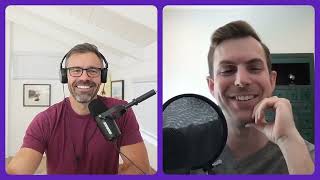
In this episode of the Apply Now podcast, host James interviews Brendan Gahan, co‑founder and CEO of Creator Authority, to trace his journey through the creator economy and explore the emergence of LinkedIn influencer marketing. Brendan recounts his early exposure to digital media—starting with a MySpace internship in 2005, moving to YouTube where he orchestrated one of the platform’s first brand deals with Smosh, and learning the power of creator‑driven content while at a small Bay Area ad agency. He then describes his roles at Mechanism and Fullscreen, where he honed influencer strategy before launching his own agency, Epic Signal, which was later acquired by Mechanism. The conversation shifts to his personal branding struggle on LinkedIn, detailing a disciplined daily‑posting experiment that helped him overcome analysis paralysis and grow a sizable following. Brendan explains why LinkedIn now offers a uniquely brand‑safe, affluent, and highly engaged audience, highlighting platform‑specific tools such as creator mode, brand disclosure, and Thought Leader ads that enable B2B influencer campaigns. He offers actionable advice on building a personal brand, the importance of authentic content over vanity metrics, and hiring principles that prioritize niceness, curiosity, and passion. The episode closes with rapid‑fire questions about his odd early jobs, team‑building criteria, and recommendations for continuous skill development, emphasizing mastery of current responsibilities, proactive side projects, and being a hands‑on practitioner. Throughout, Brendan reflects on work‑life balance, burnout, and the trade‑offs between entrepreneurship and organizational support, providing listeners with both strategic insights and practical tactics for navigating the creator economy.
Chapters
Hey everybody, welcome back to Apply Now, your podcast focused on the creator economy and hiring tips. Today's guest is Brendan Gahan, the co-founder and CEO of Creator Authority. Did I get it wrong? Did I literally just say it wrong? Amazing. I mean, you're right. I totally did. I totally second-guessed it.
Dude. Yeah, you did what I do. I psyched myself out.
I switched it in my head. Okay. We're just gonna, we're just gonna take it from here. Start from the top.
We can keep that in. It's all, this is good stuff. Stuff.
This is, this is, this is the content. This is what people pay to see, man, right here. Now we'll take it, we'll take it one more from the top.
All right.
Hey everybody, welcome back to Apply Now, your podcast focused on the creator economy, career insights, and, uh, hiring advice. Today's guest is Brendan Gahan, the co-founder and CEO. Oh my gosh, did I seriously— I did it again. Brendan Gahan. Brendan Gahan. Okay.
Brendan Gahan. Normally I'd let it roll, but you wanted to get it right, so I'm—
I do want to get it right. Brendan Gahan. Third time's the charm. So, hey everybody, welcome back to Apply Now, your podcast focused on the creator economy, career insights, and hiring trends. Today's guest is Brendan Gahan, the co-founder and CEO of Creator Authority. Brendan, welcome to the show.
Thanks for having me. And, uh, I think you should keep those earlier takes in for the record.
We could do some blooper outros for the fact that I'm mortally embarrassed that I've known Brendan for, I don't know, 10 years at least at this point. And we are partners. We work together very closely on the Creator Authority business. And for the life of me, if someone offered me $1 million to pronounce your last name correctly, I probably would get it wrong.
So thanks for keeping me honest. I'm totally fine with it. Seriously.
Nice. So Brendan, you know, excited to kind of dig into your background. And for those who are maybe new to you or new to the conversation, How did you get your start in the creator economy? What was like the early start of your career?
Yeah, for sure. Well, I feel like, I feel bad if somebody has heard me on podcast interviews before, because I have, I brought this up, but if it's new, it's awesome. If it's not new, bear with me. But I was super fortunate, got into advertising. 2005, MySpace was the cool thing. I was on, you know, we were all on thefacebook.com. You had to have your college email address. And I was graduating from college. I went to UC Santa Cruz and got offered an internship in San Francisco for this small ad agency. And Bay Area, you know, startups, social media was the new thing. And in general, just being like a college kid, I was like broke and spending time on social. And then when YouTube came out, I was watching YouTube because it was like, you know, people were ripping and posting full South Park episodes and stuff. And so I was sort of in this weird space where, you know, I'd go in the office and I like, I would be like, why are people spending, you know, tens of thousands of dollars on billboards? Like, I, I, in my head, I'm like, people must have some really sophisticated insights into like how billboards are actually wildly effective, but it like, it never clicked for me. And, um, and, uh, so I don't know, like, I just was really fortunate, um, that that shop was small with like a lot of really great people, and they kind of would like let me just pitch ideas. And I was just a junior account executive and sometimes covering the front desk even. And, but when I, even when I got hired, that's where I was spending half the time. But I would constantly, any chance I got, I'd be like, you should pitch like this, a viral video of that, da da da da da. I remember we made a MySpace page for the Monterey Bay Aquarium. Was a client and they had baby otters. And so I was like, let's make a MySpace page for the baby otters and stuff.
Smart.
And then, yeah, yeah. But my first real foray into the creator space was like, we were the agency. Like, literally, I heard the partners talking behind me how they were going to pass on this tiny brand. They didn't have a big budget. And, um, and, uh, I heard the number and I like spun around. I was like, what if we, what if we pay these kids on YouTube to insert it into, uh, their video? It'll be like a brand piece of branded content. And, um, they were like, yeah, you can pitch it to the client if you want, go for it. Like, we're gonna pass on it otherwise, maybe we can make a little money and it's a win-win. And, um, do you remember who the client was? Yeah, it does. Like, literally doesn't exist anymore. So like, uh, um, this was like shortly after the iPad had come out, probably 2 years after the iPod came out, but there were still other portable MP3 player brands where, you know, you had the external SD card and it was, uh, this kind of mass-produced, um MP3 player called ZVU and like you could get Walmart, it was like relatively inexpensive. And yeah, so that was the brand. And I, so like the partners at the agency were like, yeah, if you want to pitch it, go for it. So I went to Smosh's MySpace page and dug up Ian and Anthony's email, emailed them and they emailed me back. And then I think we had a call that afternoon. They were just up in Sacramento or just outside Sacramento and we had a great chat and then they're like, oh, we're going to YouTube's office next week. Maybe we can meet up. And so they came by the office, we chatted and we talked a little bit about the idea and they're like, yeah, let's do it. Talked some high-level pricing and then We took it to the client, client said yes. And then, you know, after a lot of, you know, it's like they say yes and then there was a lot of back and forth and coaxing.
Of course, yeah.
Yeah.
But this must have been one of the first brand deals that ever happened on YouTube. Had Smosh ever done anything like that before?
No, I have yet to hear of an earlier one, but I mean, I would love to say, oh, it was the first one. I have doubts that that's the case, but it's the earliest one I've come across so far. But yeah, and they, the video went live, they crashed the client's website, got millions of views. And I was like, this is awesome. And at the time, Mechanism was like just a few blocks down. And when I had originally been an intern, I was an intern for Jason Harris, who eventually, shortly after I got hired, left and became a partner there. And they were doing a lot of cool viral video stuff. And so like every week or so I would shoot him an email and be like, dude, you guys are doing such cool stuff. I think I could help out. And then when I got that sort of initial win with Smosh, I was like sending it to him and like I'd just pitch him ideas all the time. 'Cause they were, you know, at the time, like nobody was really doing like a lot of branded, you know, cool video stuff for brands on YouTube. And they hired me and then it was like mostly, you know, the platforms didn't have paid media or like on YouTube, the only thing you could buy was the front page. So we would make all this cool stuff and then myself and the team grew over time, but it was myself and two other guys in the early days. And we would just constantly be like having to like rack our brains, like how are we going to make this stuff get seen? And we did a ton of cool stuff, but influencers was continuously a big part of that. So yeah, we got to work with like a lot of early creators, some that are still big today, you know, some of them we cut their first checks and Um, that was where I kind of got the bug.
That's amazing. So there's a number of things that I hear from this story you've shared that I want to call out. The first is, you know, you were, uh, kind of intentional, it sounds like, about working in new media. You were attracted to YouTube and these emerging platforms as a chance to kind of disrupt traditional advertising and to experiment, right? Like opportunities for brands to find a voice or build an audience. The second thing was you went to a place where you could do this, right? So you kind of started, you know, on the ground floor, but you were in a small environment where you had the freedom to express ideas or pitch things, or there's kind of creative freedom that even the partners or owners of this agency would listen to a junior account executive who had a cool idea about something that otherwise might not have been an opportunity, right? They were about to just pass on the client and you turned that into And a really successful test. And the last piece is kind of you being proactive, right? You like having these ideas, you suggesting them not only in your current company, but also kind of tracking the progress, building relationships with other agency owners like Jason at Mechanism, and then using that to kind of build your personal brand, start to tell the story of how you could creatively influence content decisions in digital media.
Wow. When you put it that way, it sounds so much smarter than we've always seen it.
Well, I'm trying to tease out the essence, right, for the listener. And I think for people early on in their career, there's a lot of amazing things within your story that resonate, right? Like if I was 22, just graduated college, was thinking about like, how do I get started in my career? There's a lot of lessons just from that one story you shared.
Yeah. And I think one thing, you know, uh, if this is for people who are super junior, the other thing is like, while I would not say I was a great, I was, I was not great in my role. I definitely busted my ass. To try and like be as good as I could be. And then I would get there early in the morning, stay late, and try and like work on all this other stuff so that I could like have some credibility and sort of like nudge the projects that I was really passionate about forward. And so I think, you know, the fact that I was, you know, I mean, I would get in that office at 6 AM every day and like, you know, like try and like, uh, pitch stuff all the time, but, you know, at the same time, get my own work done. Um, cause it, I mean, I was really, I was super fortunate that they were so open-minded. Um, and, uh, I, I love the whole ad agency environment.
Mm-hmm. Nice. So you spend some time at that early agency and then you, uh, wind up at Mechanism, right? So you make your way over to working with Jason Harris the first time. And then fast forward a little bit, you go to Fullscreen, right? Which is this early YouTube multi-channel network focused on helping creators build their careers and their platform. But you leave Fullscreen to kind of do your first entrepreneurial endeavor. So what gave you the startup bug and what inspired you to launch your first agency, Epic Signal?
Yeah, for sure. Well, I think, you know, at the time, the— there was the MCN boom. And so people were, it went from like really like 5 or 6 years of most people not understanding influencers, you're starting at square one. I think all these things we take for granted to a certain extent today. I mean, today we've got a whole different set of issues, but it was really constantly sort of being like, am I, are we stupid for like thinking there's a career here? This established sort of practice or accepted even aspect of the industry for a long time. And then it was like YouTube launched their $100 million grant program, the Billboard campaign, MCNs blew up, and suddenly the industry turned its head towards influencers and YouTubers in particular in this big way. And going to Fullscreen, to George's credit, the founder, he really capitalized on it. But I think at Fullscreen, I sort of felt like they were growing really quickly and I was sort of in this environment that was really fast-paced. A lot of people were very smart, but comparatively new to influencer marketing. And I was so used to doing really like, or at least being able to pitch really immersive influencer campaigns. And I sort of felt like I wasn't able to sort of spread my wings and do the work that I really wanted to do and take it, pitch the ideas I want to do with influencers and really kind of be more holistic about it versus kind of like a bunch of one-off deals. And I'm not saying that's everything they did, But it was just like a different environment. And I felt like, hey, there's so much hype around this space. I'm realizing there's a lot of people coming into it, but they haven't been doing it as long as me. I think there's an opportunity for me to go and do more of the work that I really want to do. And so I struck out on my own and because for years I was sort of like, doing it in a little bit of like where it was like the only one sort of, you know, I was like this Pied Piper without an audience. And then suddenly like everybody was interested in the space when I struck out on my own. All these people were like, you know, who I'd worked with at different brands or agencies sort of came out of the woodwork and were like, dude, influencers is a hot thing. Can you help us out? And so it really ramped up pretty quickly. In, in, uh, in starting Epic Signal, which was, was, uh, I was really fortunate. It was very much right place, right time.
Yeah. So you run Epic Signal and then end up selling that to Mechanism, right? Mechanism acquires the business and you go back in as a, uh, kind of chief innovation officer. You're doing a lot of strategy work, you're pitching on clients, but helping drive their influencer practice, social digital practice. So as you move into this next chapter of your career, right, going into kind of the mid-stage, what did you learn or what are the things that, you know, might be relevant for people in that phase of their career?
Yeah, I mean, I think the thing that I learned in transitioning from like being an entrepreneur to being back part of an organization was sort of what, you know, it's like finding what you're good at and what you want to do. And being an entrepreneur was really difficult. I struck out on my own. I was, you know, the founder, CEO, I own the whole thing. And then I hired great people. But it was a small team. And I was the sort of like, all the decisions came down to me, like, and I got very burnt out. I'm already a bit of a workaholic. But in that situation, I was just like, 24/7. And I sort of realized, like, I, I would trade, you know, time and money. I would trade money for, for more time and support. And so I started shopping it around because we also had great clients. Like, we were working with, like, Bud Light, Corona, Mountain Dew, Pepsi, Toyota. And so I felt like I sort of had something, you know, I was still tight with Jason and we were getting offers and stuff and I'd hit him up asking for advice and then he was basically like, don't take that deal, come back. And so, you know, it was like a trade-off at that point. Do you go with what's the phrase? Like go with the devil.
The devil you know versus the devil you don't.
Yeah. Yeah. And I was like, you know, I've got good relationships with those guys. We're still friends and wanted that support and infrastructure again. So yeah, I think that was really what I learned. It's sort of like, what do I want to do and focus on? And what am I willing to trade to get that?
Yeah. Being more intentional and prioritizing, right? I fell victim to the same thing in my 20s, was this eager, proactive, wanting to get ahead, worked a ton, right? And then as an entrepreneur, you know, started a business when I was 25. I worked nonstop, right? So it's like weekends, nights, it just was any time to try and move the ball forward. When you put all this pressure on yourself, it creates these difficult expectations. And so, yeah, once you get a little bit older and you learn some of this the hard way, you find out what's the right balance for me. When do I want to work? When do I want to have personal time, relationships, etc.? Because all of those other things are just as important.
100%. Yeah.
Yeah. And how about now? So fast forward, right? The mechanism business is acquired. You spend some time transition through that acquisition and then have a chance to kind of pick your head up again and say, what's next? And you focus in on B2B influencer marketing, specifically around LinkedIn creators. What was that journey like?
Yeah, well, you're a big part of that for sure. But well, I'll start with the personal, like my LinkedIn story was like, so for years, you know, I've been, I'd been behind the scenes and I always was maybe a little bit envious of people who were good about putting, you know, getting their name out there and that kind of thing and sharing their thoughts publicly. And I always suffered from a bit of, I don't know, analysis paralysis and just like, just like fear of like putting myself out there publicly. Yeah. And I don't know, I have a tendency to, you know, kind of make weird goals for myself every, you know, year or 6 months or a couple of years. And I was like, oh, I need to get over this fear. And there was a quote actually that I remember. It was like something about like, I feel like it's a Tim Ferriss quote, but sort of like you want to inoculate yourself from that fear. And so I was like, okay, what's the easiest way to get over this fear of sharing ideas? Because I would write blog posts and I would just keep writing, keep writing, keep writing and never post it.
And so The hardest part is pressing publish.
Yeah, 100%. And so I was like, I just need to get over that. And so I made a goal of publishing at least once a day to LinkedIn all year. And so January 1st, 2020, I started, and sometimes it would literally just be like me sharing a blog post and writing, this is cool. You know, just to kind of get over it. But I really enjoyed the LinkedIn sort of environment. It felt a little bit safer in a lot of ways than other ecosystems, you know, because I was also talking about industry stuff. So yeah, just started publishing every day for a year and then eventually I sort of like, yeah, got over a little bit of that fear and I, you know, did TikTok and stuff like that. And then Yeah, as the ecosystem grew, you know, in 2021, there was like all these creator initiatives, creator mode, creator grant program. They hired partner managers. You know, the community grew and, you know, you and myself and Avi and Phil and a bunch of other guys would sort of like trade, you know, ideas and messages back and forth and there was sort of like this little community going and it felt like LinkedIn had sort of like reached this inflection point where there was this massive community but not a ton of brands. And I think you may have been the one that told me like about this idea of, you know, you, I think, and I might have the details kind of wrong, but I think it was like you, Phil and Avi were sort of toying like putting together a media kit to pitch to brands.
Sure.
Yep. And, you know, I found that really enticing. And then, you know, I think we worked on a media kit together. And then as I was sort of like maybe getting a little restless, I was like, I think that could be a real business. And yeah. And then we had some conversations about me going and turning it into a full-time thing and expanding beyond us.
Making it. And we're so glad you did. Yeah. So, um, I will add a little bit of color because I think that's a good summary, but I will, I will also say that you're being very modest, right? You've been recognized as a top voice on LinkedIn. You built over 100,000 followers on TikTok. And I think for me, as someone who's followed your career before getting to work more closely with you in the last year or so, um, you have aspired to walk the walk, right? As someone who's in the business you wanted to educate yourself about the platforms and the tactics and the strategies that would work for your clients. And the best way to do that is through trial and error, right? Experimentation. Um, I had a similar journey on LinkedIn shortly after you, I think maybe the COVID stuff going on, like 2021, I set a goal to publish every weekday on LinkedIn and it was transformational. Like I learned so much from it. I've made amazing connections. I know your story has a lot of parallels, just, you know, by by forcing yourself to overcome that fear, right, of whether it's writing or another year for me, it was running, right? I always said like, oh, I hate running, but I need to do cardio because it's good for me as I get older and everything else. And I just set a goal for myself, like I'm going to get out and run 3 times a week, and then it was 4 times a week, and it's, you know, 10 minutes, then it's 15 minutes, and you just kind of build up. But the best part about it is conquering that fear, right? So even though those were the mental obstacles for me, The success was kind of a personal success of, I'm going to learn, you know, what's effective on this platform, or I'm going to, you know, start to become a runner, even though historically I would not have identified that way, or it would have scared me, or I would have like said, no, this is not, this is not who I am. But the fact that you can kind of start small and then create a big change is really powerful.
Yeah. Yeah. Well, and also, I feel like you're being modest. I remember like us bumping into each other at, uh, uh, one of the VidCons and you're like, oh, um, I can't remember what it was, but we were talking about LinkedIn and then like you, you had mentioned when you started like doing the once a day thing and you blew right past me. I'm like, damn it. I mean, like I was happy for you, but I was more, I like, I genuinely was, but I was more like, what am I doing wrong? Not, not, not like, not in an envious way. I genuinely.
Like, I think, you know, uh, it's, it is natural for us to all get caught up in the followers and the engagement bait of it all. But, um, yeah, it is funny. Like, you know, you see, oh, what's working for somebody else and you want to bench yourself, benchmark yourself against a peer set. And that's healthy. Like, we share stuff all the time. Hey, the algorithm changed, or this post did really well for me. Or I'd notice like you, me, and Phil Ranza would all write about the same thing and be like, why is Phil's post killing it? Mine was bad. Right. And so. Some of that is over-analysis, but I think collectively we've learned so much from each other. And it is funny that you get caught up in the numbers, even though you try to be like, that's not really what it's about. And now for us trying to help brands succeed on the platform, it's a lot more about how do you tell your story? And yes, the reach and the engagement is all part of that. But at the end of the day, it's more about this is a really qualified audience, right? There's more signal than noise here than anybody else. The community is very positive. Collaborative, right? Unlike other platforms where there can be toxicity or trolls or other activity, on LinkedIn, people have to, you know, they are their work selves. They have to kind of behave a little bit, and that lends to, uh, you know, some good interactions and actually positive ways to connect. And I've ended up doing work and, and finding real friendships with people that I've met through the platform.
So yeah, 100%. Yeah, it's a, it's a great, great ecosystem, I think.
Yeah. So as you think about, uh, let's, let's focus on LinkedIn for a second. For people in their career at any stage, right? Whether you're just starting off, whether you're an experienced executive who's seeing everything going on in LinkedIn, what would you recommend? How, how should someone think about their personal brand and why is LinkedIn important for them?
For sure. Well, why it's important, I think, is, um, you know, the, if we're talking about the way LinkedIn works, it's unique at this moment in time in that in a lot of ways, I think you could argue it's the last true social network. The other platforms have sort of become these open source media channels. It's like really more of an interest-based graph versus a social graph. And so LinkedIn prioritizes sort of like who you've opted in to follow and then sort of who's in your extended community and then filters that based off of, you know, is the content informational and helpful? And so, you know, as you're thinking about that through the lens of your career, it's like a great way to connect with your peers, meet new folks in your industry. And also, I think it almost acts as a little bit of sort of like this, like bat signal. I don't know if that's like the best analogy, but sort of like a way to share your thoughts and like wave your hand and say like, hey, I'm over here. Like, who else thinks the this way. And, um, and then you sort of like are able to meet your people and find, um, individuals and other smart folks that think along sort of similar lines to you. And, um, I think that aspect is, is, is the most rewarding. And, um, you know, certainly that can open doors from a, a career standpoint, monetization standpoint, etc. But more than anything, I always like, you know, probably I think similar to you, like I like sort of like meeting people who have interesting takes or have a different perspective and you're sort of like, huh, I never thought of it that way. And so that's the aspect of it that I personally really enjoy.
For sure. I'll add to that to say that I think a lot of people start out saying, I'm going to share content on LinkedIn because I need to hit this artificial goal, right? I need to have a certain number of followers or this needs to kind of like drive leads from a business. And those things can happen. But I think of them more as the side effects rather than like the real ultimate outcome. For me, I started creating content that I legitimately was interested in, right? And I still try to stay fairly true to that mission of like, okay, what, what would I want to read or what am I curious about? And I would end up kind of approaching our industry as an academic or someone who's curious and wanted to learn and then sharing what I learned with other people because that was kind of the nature of what led to valuable content. And as a result of that, right, like not having an expectation, it comes back to you tenfold, right? And I, same kind of ethos in making introductions for people or trying to be helpful and additive to folks in our space because it is kind of open and collaborative. That's been one of the best things for me is like, don't, don't play the game by someone else's rules of like, oh, I need to get 10,000 followers or I need to get 1,000 impressions on this post. It's more about like, you know, I'm doing this because it's going to make me a better writer. It's going to make me a better leader. I'm more informed about our space. Like I'm going to get better about defending my opinion about something in public. And then as a result, just naturally people are going to be interested and connect with you. I think what's changed is both of us were on LinkedIn very early on. I used to just cold connect with people. Um, and legitimately it was just like, hey, I, I like what you're doing. I'd love to learn more about it. Maybe we can help each other or maybe I can learn from you. And I met so many people on LinkedIn that way 10 years ago, but you can't do that today. Right. It's very hard. But if you create content rather than it being that kind of, um, pull mechanism of saying, or push mechanism of like outreach, trying to contact someone saying, hey, like this is me and I'd like to talk to you. Content is a magnet. It attracts people to you and then they're more likely to engage. So if you're sharing really interesting insights into the creator economy and LinkedIn influencer marketing, all of a sudden it's like, oh, like I know who Brendan is. He's really smart, he's thoughtful, he shares this valuable content. I know he's a subject matter expert. So when I have that need, I'm going to think to work with him.
100%. Yeah. Yeah. I think that's a great way of thinking about it.
Nice. And as you think about building out a business in this space, Talk to me about the opportunity. Why, you know, how are brands navigating the challenge of figuring out a new platform and what's different about LinkedIn than, you know, their traditional influencer marketing activities?
Yeah, for sure. Well, there's so many different ways to answer that, but I think in terms of like breaking it down, like why LinkedIn and why LinkedIn influencer marketing, you know, as a byproduct of their investment in the community over the last few years. You know, per my reference earlier about like, you know, they did the creator mode grant program, partner managers, all that stuff. Last year they saw a 24% year over year increase in content shared on the platform. Now there's over 150,000 newsletters. It's this incredible audience. It's like highly qualified. They've got over a billion users worldwide. That's great. But the great thing is, these are people that are more affluent on average, 1.3x more affluent than the typical Facebook user. They're decision makers. And from a brand standpoint, if you're thinking about it, it's an incredibly trusted environment amongst users. eMarketer did a poll. Amongst social media users. And for 5 years in a row, LinkedIn was most trusted platform. But in addition to that, brands probably think of it as the most trusted platform. I mean, they haven't run into issues like really everywhere else, you know, no Cambridge Analytica scandal. They don't have an Elon Musk. They don't have extremist content. On there. There's no adpocalypse. So it's an incredibly brand-safe environment. And then now I think, you know, uh, you're reaching this sort of like inflection point where the— okay, so it's this brand-safe environment, there's this engaged community. We talked a little bit about like how they're adjusting what you see in the feed and, and the way their algorithms work. So it's, it's more kind of like, uh, it's depth over breadth, uh, relevance over reach. And now there's this new sort of trend with the platform support to support, uh, an influencer ecosystem. So last year they launched a brand disclosure tool and they launched the first version of the thought leader ads, which was a promoted post tool. Now. The first version, you could just amplify employee posts. 3, 4 weeks ago, they made an announcement where now the, it's essentially a promoted post feature. So you can work with an influencer and run it as a promoted post via thought leader ads. So they're actively sort of like getting behind this community and ecosystem and beginning to connect brands and creators in a very intentional way. So I think all these elements and a number of others are coming together to create this like really incredible opportunity that sort of feels like, you know, the early days of YouTube, Instagram, Vine, TikTok, where there's not a lot of brands that have kind of caught up, but the creator ecosystem is there and it's very hungry and eager for this type of thing.
Yeah, phenomenal. Let's shift gears. We've just got a few minutes left, so I want to finish up with maybe some rapid-fire questions. We'll start with a fun one. What's the craziest or weirdest job you've ever had?
Ooh, craziest. Well, I probably have two. One is I worked at the Sweet Factory in the mall, the candy store, in high school.
Okay.
How was that? Yeah, that was pretty funny. And then for several summers, I also worked for the Ventura County Flood Control Department. And basically we were working on like, kind of, you, it was, it was brutal. It was just manual labor. You'd go out hot days every day, 5 days a week. I think I had to be at work at 6 AM. And it was a lot of like, uh, like digging up and cutting out invasive species and then planting native plants. And we worked with like every machinery and like fixing all the, the, the, like the piping and stuff. Because if there was like different projects going on, you know, related to like dams or irrigation, etc., basically like the city would have to plant more native species and you'd have to get rid of non-invasive or invasive species. And so yeah, I got to spend a lot of time with weed whackers in the heat.
And you figured out very quickly, like, this is not for me. The agency life sounds a bit more fun, huh?
Oh my gosh. When I got into my first ad agency office and I was like, there's a beer fridge and like pool table. Like I was like, I never thought an office could have something like that. This is— I was like, yeah, this is way better.
Nice. How about, um, for you, when you're building a team, when you're hiring people, what are the top 3 qualities you look for in a candidate?
Oh, that's a great question. I like working with really nice people. Um, that's, that's a nebulous thing. Uh, are they nice? Uh, are they curious? And, you know, I would sort of put like curious and interested and passion sort of in the same sort of general sphere. Cause it's like, oh, like have they really thought about it? Are they thinking about it from different angles? And then are they like, you know, passionate and hardworking kind of like one in the same? Like, are they gonna like try and push through to get a project done versus just sort of like, oh, I'm fine, you know, time's up, like it doesn't matter whether or not the, the task is complete. So, um, those are, are, uh, very broad, uh, I like that.
They're not nice, but yeah, curious and passionate or hardworking. Yeah, those are, I mean, essential ingredients for success, so I like it. Um, to close things out, uh, what is some advice you would encourage people to do to keep up to date with new skills. If someone is in their career but wants to work towards a promotion or thinking about starting a company one day or just wants to kind of level up their game, what resources, tools, activities would you suggest?
Well, first I'll say from an activity standpoint, like, be good at the job that you're, you were hired for. Like, My advice on that front would be, but you got ambitions, maybe you want to shift into a different role. So be A-minus good in that role and then do it and do everything asked of you and do it even beyond what's asked. And then outside the deliberate asks of that role, be ambitious and on your own time, work on the tasks you want to be doing next. Because it doesn't matter if like, if maybe you're like amazing at these other tasks, but you're not getting your day-to-day work done, then you are unreliable. And it almost doesn't matter. So be very good, but not too good, because then they don't want to like let you move into another space. And then do go above and beyond and be proactive. So I would say that I do think being a practitioner helps a lot. Like I've learned so much, you know, from doing the TikTok stuff, doing LinkedIn, et cetera. Like that stuff, it's so valuable. And there's so many people who sort of like look at these things and say, oh, it's really, you know, outside looking in, these things can look very easy or obvious, but really most of the time what's going on is kind of what you're seeing is sort of the tip of the iceberg. Like everything from the nuances of how a platform works to the connections being made. I love that phrase, it goes down in the DMs. And on social, that's like really the way it works.
It's like— Totally true.
Yep. The outward facing stuff, Yeah, that's nice. But you're not really going to be learning it. You're not going to be making those connections. So I think be a practitioner. And like, even if you, you know, you're not successful in like the traditional sense, have a ton of followings, you know, a big following, it shows that you're ambitious and curious and active in learning. And if you're not getting the work experience you want, now obviously I'm sort of framing this through the lens of social a little bit. If you're not getting the work experience you want, at least it shows you have something to point to other than just like whatever you're thinking. Because thinking something and doing something are totally different.
Yeah. Love that. Brendan, this has been awesome. Great insights into your career, into the evolution of creator economy and influencer marketing and what, some exciting stuff going on around creator authority and the future of LinkedIn creator marketing. Where can people find out more about you and more about creator authority?
Yeah, hit us up, creatorauthority.co. That is creatorauthority.co. Yeah, and then if anybody wants to get a hold of me, I mean, I'm everywhere at Brendan Gahan, B-R-E-N-D-A-N-G-A-H-A-N. But LinkedIn is probably the one that I'm most— LinkedIn is the one I'm most active on.
No surprise there, right?
Yeah. But yeah, Brendan.
Brendan Gahan, anywhere. Amazing. Thanks so much. It was awesome having you on the show. Thank you. And look forward to seeing more great things to come.
Also, I just want to shout you out because you said nice things about me, but I genuinely want to say nice things about you, James. You're an amazing partner, a smart guy for sure and all that, but like, you know, for as long as I've known you, you've always been very cool and intelligent, but like incredibly supportive. And so I just, Really, thank you for all your help in this journey.
Pumped to be doing this with you.
Likewise.
Well, I am, I'm humbled. That just made my day. Thanks, man. Appreciate it. And thanks again for coming on the show.
Thanks for having me.










