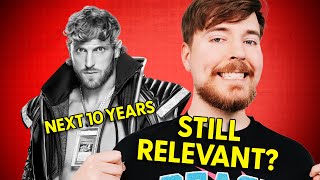
In this talk, the speaker references John Green’s 2015 Brandcast warning that marketers focus too much on impressions and ignore creators, arguing that the creator economy has exploded and now contributes $25 billion to the U.S. GDP, supports 425 000 full‑time jobs, and hosts tens of thousands of channels with sizable audiences. Traditional one‑off influencer deals are described as short‑sighted, unpredictable for creators, and dilutive for brands. The speaker highlights a wave of creators turning their communities into product businesses—examples include Logan Paul and KSI’s Prime sports drink, Lily Hevesh’s Hevesh Domino Company, MrBeast’s Feastables, Michelle Phan’s Ipsy, and many others—made possible by turnkey e‑commerce tools (Shopify, supplier databases like Pietra). The core recommendation is for brands to shift from transactional deals to long‑term, co‑created partnerships that embed creators in product development, marketing, and community engagement, mirroring historic brand‑athlete collaborations (e.g., Nike and Michael Jordan). By doing so, brands can avoid being left behind as an entire generation increasingly consumes video content for authentic connection rather than passive advertising.
Chapters
I'm not here to entertain you. I'm not here to educate you or kiss up to you. I'm here to scare you. Those aren't my words. 8 years ago, John Green said this to 2,400 advertisers all gathered at YouTube's Brandcast presentation. If you're not familiar with John, he's a well-known YouTuber, author, and entrepreneur. He and his brother started the Vlogbrothers channel. They founded VidCon. He's written several successful books, including The Fault in Our Stars, which was made into a movie. In short, hugely successful guy, and the foundation for much of that success has been built off of his YouTube audience. But back to Brandcast. He went on to make the point that most marketers are way too focused on impressions or how many eyeballs they've reached and neglecting creators, which is a big mistake because creators provide something more meaningful. They've got fans that have opted in to watch their content. These aren't just passive viewers. These are communities that they're building and fostering. And because of these communities, the creators are actually building a world where they don't have to depend on advertisers and they're thriving. And on a long enough timeline, brands who have failed to embrace the creator community will be left behind. Now this talk was 8 years ago, but what Green said then is more true than ever today because the creator economy is massive. A recent study shows that the creator economy contributed $25 billion to the US GDP in 2021, that there are 425,000 full-time jobs as a result of the creator space, and there's over 45,000 channels in the US alone with over 100,000 subscribers. Now 100,000 may not sound like a lot, but it is. Cable TV shows don't get that many viewers. To contextualize this, the 5th largest TV network, the CW, averages less than half a million viewers. But compare this to YouTube as a platform, where there's over 5,500 channels in the US alone with over a million subscribers. And a million subscribers is a lot. You don't really need that many to have a massive business. So what we've got are thousands of channels, many of them with significant scale, supporting different communities, verticals, and interests. These aren't just distracted viewers, unlike TV, so it's much more impactful than any traditional advertising channel. So what, what are brands missing out on right now? There's a lot of influencer marketing, right? Well, most brands are doing one-off partnerships. They're not really investing in these communities in a meaningful way. For creators, the work is unpredictable, and one-off partnerships aren't the best for creators or brands. Think about the influencers of 30 years ago. Athletes. How insane would it have been if Nike had sponsored Jordan for his first game and his first game alone? What's he going to do after that game? Gotta pay the bills. Is he gonna work with Adidas one game, Converse the next, Reebok the next? This is more or less what we're seeing with creators right now. And this one-off approach is time-consuming and dilutes the credibility of both the brands and the creators. And creators are getting tired of it. And in response, creator businesses and brands are emerging. This is a huge trend that's not going away. Creators find content marketing market fit, they build an audience, then they launch companies. And it's happening now more than ever because platforms are unreliable. Creators are seeing ad revenue decline and algorithms change. They're getting hip to the fact that they can't depend on TikTok or YouTube alone to make a living, and creating a product is easier than ever. In the past, it was all about product market fit. Producing a product was the hard part. Now that's become so turnkey. It's easier than ever to source products, to manufacture, and sell via Shopify and other tools. All this infrastructure is in place. Creators are also drawing inspiration from their peers. They see what folks like Logan Paul and KSI are doing with Prime. Launched just over a year ago, it's now the 6th largest sports drink, recently replacing Coca-Cola's BodyArmor as the official UFC sports drink and even getting a Super Bowl commercial. They've generated over $250 million in sales and just launched in the UK where it's so popular you can't even find it on store shelves. And it's actually being resold on eBay. And it's not just the big creators doing this. You've got folks like Maxine the Corgi whose owner didn't love the dog backpacks available, so decided to launch his own company, Little Chonk. These are now selling out within minutes. Another example I love is Lily Hevesh. Hevesh5, her channel name, is known for her videos featuring domino art, and she's since started her own brand of dominoes called Hevesh Domino Company, which is now a top seller on Amazon. Of course, there's a ton more. MrBeast Feastables, Michelle Phan and Ipsy, BRCC, Chamberlain Coffee, Happy Dad Seltzer, H3H3 and Teddy Fresh, and countless others. And there's this influx of tools to support these creators. For example, Pietra is basically a database where anyone can go and find suppliers and spin up high-quality products so easily. It's wild. So the product is the easy part. It's the community and audience that's much harder to develop, and creators have that built in. So what's the move for brands who are scared of being left behind? The opportunity is to collaborate with creators, make the experience so amazing they don't want to go off and launch their own brand. Think back to that Jordan example. Nike collaborated with him. Put them in ads, co-created products, made the two synonymous with one another. What if Gatorade had partnered with Paul or KSI? Would either of them have gone off and launched their own sports drink brand? I don't think so. They got tired of getting hit up to do one-off brand deals where they were just mouthpieces. And so a lot of brands have become savvy about this. PrettyLittleThing partnered with UK influencer Molly Mae, and now she's their creative director. Dude Perfect, famous for trick shots, partnered with Nerf to launch a whole co-branded product line. Smart brands get creators involved. And the reality is the bar is set is so low, brands don't even need to take it this far. Just bringing creators into the fold in any capacity goes a long way. Because today, most brands just do deals over emails or gift products. They don't form meaningful relationships. So just doing a little bit more, you can stand out. This means structuring long-term ongoing collaborations, spending face time with creators, getting their feedback, and partnering with them beyond just brand integrations on their own channels. Because like John Green said, ignoring the creator community might be an option in the short term, but long term, you risk losing relevance with an entire generation of people who look to video not just for distraction, but also for meaningful engagement and connection.