High Performance Planner Review
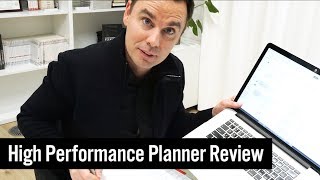
Brendon Burchard shows how he uses the High Performance Planner, a paper-and-digital system, to structure his days with morning mindset prompts, top three priorities, and evening reflection on seven habits. He writes tasks by hand to trigger intention, syncs with his digital calendar, and rates himself nightly on clarity, productivity, energy, influence, necessity, authenticity, and courage. He calls time management mortality management: disciplined daily planning creates freedom for what matters.
Chapters
Hey guys, it's Brendan. And you know, I get asked a lot, like, how do I manage it all? Like, how do I do my scheduling and my priorities? How do I manage my projects and my teams and my companies, my investments, my life, my health, my family? I mean, just like you, I've got to really figure out how to prioritize like a pro. I have to figure out how to manage the day because I feel like if we can win more days, then we win more weeks, then we win more months, and we win more quarters, more years, and we win the decade. I think it's just a challenge for people because they start off the day so kind of confused and frazzled or reactionary. And so I thought I'd show you today how I use my planner, my scheduler and everything else. And I know this might be geeky a little bit, but I've gotten a lot of questions. You know, we recently launched the High Performance Planner. This is the planner that I use and have used for three years as you see me build millions of fans online as I've done, you know, 23 online courses and videos and programs and launches. I can't do it all if I'm not intentional and strategic. So I finally released this High Performance Planner and the number one question people are saying is, like, how do you use it? I'm like, what do you mean? I fill it out every day. But they're like, no, I mean, like, how do you use it in the mix of everything else that you do? And I thought, well, that'd make a good video for you all. So let's talk about how do you plan to win at life and win the day? I'll show you how I kind of coordinate and hopefully that will serve you if you don't have the High Performance Planner already. Quick shout out. There's a link somewhere in this post. Make sure you go get yourself a copy. The reason I recommend this is because it's sort of a two in one sort of strategic planner for you. So it's two in one because it's your day scheduler. So you'll see that I have my blocks of time during the day, but it's also kind of like a productivity journal because it has my morning mindset questions, has my evening review questions, but it also has a daily habit scorecard. Then it has weekly assessments and monthly assessments which we'll talk about. So I think if you don't have one, it's necessary to get one for you, your family, your team, your loved ones. Especially if There are people who have to be on their A game because, listen, this video is not going to be helpful for you if you're a person who can get away with tons of distraction and tons of lazy days in your life. If you've got that either I'm sorry or congratulations, you know, I don't know if you're aiming for it or not. I can't have a lot of days that are completely unstructured. I can't have a lot of days where, you know, I'm not moving the needle of progress forward in my life because I'm trying to grow, I'm trying to give. I'm trying to serve a mission. And if you're somebody who's trying to do something big with your life, you really got to manage your day well. And I think a lot of people leave their day and their growth to randomness. So they're always, like, locked in mediocrity. They're not strategic and intentional about the blocks of time each day. I mean, I'll give you an example. In the United States here, the Average American watches 4 hours of television a day. And if you think about it, that doesn't sound like a lot. Four hours of television a day. But if you take the four hours out on the average adult lifespan, that's 13 years that they're in front of the television. And maybe TV isn't your poison. Maybe it's, you know, the computer or the apps or the games or whatever. But if you lose four hours a day to distraction or lack of focus or progress or making something happen, that can be 13 years of your life, over a decade of your life, completely lost opportunities. So. And by the way, that's nothing against television. If you love television, great. Just make sure you schedule when you watch tv. And if you're going to watch one episode, watch one episode, not seven seasons. So how do I do it all? Many of you know, I start my morning pretty much very similar every day. My first hour is pretty straightforward. The first 20 minutes when I get up, I immediately. When I get up in the morning, I just get up and I start moving. So I stretch, I move. Sometimes that's my morning workout. Sometimes that's just like calisthenics and yoga to open up my body. It's really important. Then I spend 20 minutes reading something good. So I read a great book. I read an article that I'm researching. I read something that inspires me, whether it's scripture or something someone sent me. And then I spend the last 20 minutes doing this. And that's how I win so many days in a row. And what I mean by doing this is I spend 20 minutes strategically thinking about the day, even if the day is already planned, which I'm going to show you, because the truth is a lot of my days, they're already scheduled. They were scheduled weeks or months in advance. But when I go into that day, that last 20 minute block of the morning, I think through each thing that is on here and ask how I'm going to do it. Well, so let's talk about how I do this. The High performance planner, as you see, is a day scheduler and a productivity journal. And it has these different blocks of areas I'm going to show you, I'm going to kind of walk you through how I do it. Now first, when you have a day planner like this or a planner, people always go, well, what do you do when it's like 7 months out or 8 months out or 4 months out? For me, anything that is scheduled goes in to the calendar, right? Whether it's Apple calendar or it's Google's calendar, I put everything electronically in. So if it's like a dentist appointment in six weeks, it's in here. If it's a flight four weeks, it's in here. Everything that's scheduled goes in electronically. So I always have it available to me. But I still use the old fashioned pen and paper. And here's why I use the High Performance planner. So when I start my morning, first I fill out this left side and this left side is my morning mindset prompts. These are prompts that get my mind into sort of just primed and ready to serve. It helps me feel enthusiastic, it helps me feel grateful. It helps me anticipate someone I can surprise and do something good for. And it also helps me anticipate the conflicts and the challenges and the problems that are inevitably going to come up and how I can meet those with my best self. So that's all the morning mindset stuff. Then across the top, we call it our prioritization bar. We've got our message to ourself. I've got my top three goals and priorities, tasks that have to be done today, persons that I need to lead or connect with well today and how to do it well. And that's all across the top. So I'll fill out the morning mindset, I'll fill out these top things. Now we get questions all the time on this. It's like, well, what's the difference between, you know, today's Top three goals and tasks that have to be done today. Ironically, like, it blows my mind, a lot of people don't know the difference between a goal and a task. And so they're like, is it the same thing every day? I'm like, no, no. A goal is something that you have that's aspirational, that requires development from you or growth or progress, right? A task is something that's going to happen. Let me give you an example. A task that might be done today. Go get groceries. That's a task. Something you're going to do. Have that meeting. That's a task, right? Send email. That's a task. A goal is a bigger picture priority or goal or sort of progress thing that you want that requires development. For example, task might be, you know, send email. Goal might be, you know, send all the emails to the core team lead members today in such a way that inspires them to want to improve the culture. Right? Or, for example, task might be pick up kids. Goal might be be a great mom today and be calm when you pick up the kids. So goal is like how? It's like what, why? It's like the bigger things that you're after, right? The task, it's going to happen anyway. The goal is how to do it. Well, the goal might be the longer term, bigger thing today. Like for example, I might write balance checkbook. Goal might be learn how to manage my finances better. Or goal might be manage checkbook. Goal might be look for ways or find ways to save 15% every month. Right. It's just different. Like a task you're just going to do. Go grocery shopping. Okay. Goal learn how to better manage my energy and food every day. Right. That can be like some of that subtleties of difference between the two. And I hope that helps a little bit. This one, there's a section that says persons I need to lead or connect with today and how to do it. Well, that's really important if you're trying to lead or like just think of someone on your team who's struggling. Think about somebody who needs some feedback. Think about somebody who you're trying to develop to become better and stronger at what they do. That can also be here. Does that make sense? One of the number one questions we get is, well, how do you do like your day schedule if there's all these other days, right. Because there's in the high performance plan, there's 60 days scheduled out. And I did that to keep the book not too heavy, but also to give you a sense of progress as you're moving. And also use your weekly and your monthly planning really strategically over 60 day sprints. So that's why we set it up this way with high performance planner. But we get questions like, well, the day schedule, like, do you count forward on days and do you go fill stuff in? I'm like, no, no, I do it every day. Meaning I hope this makes sense. What I do is I look at, well, what's, what's scheduled today and I write that down every single day. So I'm not flipping forward six months out trying to write something in my planner that all lives electronically. And then what I do is I just go, oh, what, what, what's, what's scheduled here today? It's like, oh, a dentist appointment. Oh, team meeting. Oh, phone call. Oh, shoot video. Oh, finish podcast. Oh, publish blog. Like it's already in here. And then I fill it in here. When I fill it. The reason I do that is because as I'm filling in here, it automatically triggers the brain. It makes me think about it. So if I like, you know, shoot video, as I write down shoot video, because shoot video was scheduled six months ago, but it's down here. So I write down shoot video. And then my question when I write down, I go, okay, shoot video. What is the way to do that with excellence today? When I write down have team meeting, what's the way to do that excellence today? Whatever I write down here, whether I schedule it today because it's off the cuff or it's been scheduled previously and it's in my devices, when I write it down, I ask, how can I do it with excellence today? And that makes me kind of anticipate it. It makes me enter it with intention. It makes me do a little visualization. Because think about that. If you have more anticipation for your day's events, you enter them with more intention and you've also visualized how they go. Well, what's the odds that you're going to do each of those things better than just bumbling in and going through the motions? Because that's what most people do. They bumble in and go through the motions and they're in trouble even if you're good. And that's the challenge. If you're really good, then you're only going to get better as you have more intention. I hope that makes sense. So that's kind of what I do, is I just basically fill out here, think how I do each one. Well, I have a note section down here. Then at night, I've got this evening Journal. And what I do is it's at the very end of the night, okay, the very end of the night. I evening journal. Something I appreciate, you know, a moment that I really appreciated today, A situation or task that I handled well, something I realized or learned about myself today, something I realized or learned about somebody else today. Something that could have made me feel more connected with other people today. If I was my own high performance coach, what would I advise me? And I love that question. Cause it makes you step outside of yourself and go, if I had to advise myself on how to live my life better today, what would I have told myself? And I fill that in. Then I score myself. There's this daily habit scorecard where I score myself on a score of 1 to 5 on how clear I was, how productive I was, what my energy was like, how much influence I had or tried to have in being a role model, how necessary it was for me to succeed a day, whether I demonstrated my real self, my real thoughts, shared my real feelings, that courage. And I write these things down and I score them. And that's basically the daily thing, then the weekly thing. I mean, it's self evident, right? You basically write three things that were great for you that week. The main thing you struggled with and how you could have done it better. You write down two things you learned about other people. But then what's cool about the planner and why this makes it's way different than other planners and journals is you see these assessment sections, right? So here I now score myself on a score of 1 to 10. My health, my mental emotional states, my partner, my love in my life, my family, friends, learning, finances, spirit, experiences, mission. And I score myself on 1 to 5 and then how can I do them better? Then there's a whole assessment for you on your habits each week. And you write the things and it just helps you zero in on where could you have done better? Where can you do better next week? That's every single week very similar. Every single month you do a more full assessment to keep your life a little bit more, I'd say, in awareness and balance. And your habits again. So there's daily pages, weekly pages, monthly pages. And that's how I basically live each and every day. And sometimes, I mean, I tell you, if I don't do this in the morning, I get stuck being distracted very easily. I don't know about you guys, but it's like, yeah, I got plenty of free days as well. People say, well, Brendan, are you scheduled all the time? I'm like, yes, but not in the way you think. Like, I am scheduled all the time, but I'm scheduled. Today's a free day. Like, I was worked all week and that day is gonna be a free day. Or, hey, I'm on vacation. I knew it was gonna be vacation. It was just like one day I said, I guess I'm gonna take some vacation instead. I work diligently with real intention and focus to do things with excellence every single day. And that discipline buys me freedom, right? It's like people say, how do you have so much free time to write all these books or do all these videos or all the adventures you have around the world or all these time you have with your family and friends? The reason I have that is because when it comes time to work, I'm on. Because I schedule blocks of time in my devices, weeks or months in advance. I break down my projects just like this planner teaches you. Just like we teach you in any of my high performance courses. In blocks of time in breaking down activities and tasks and deadlines, I put them in the calendar. And then every day I get the right mindset. I reprioritize anything that needs to be. I'm clear about the tasks that have to be done. I know the people I need to connect with. I have my day scheduled, figured out. I've written down how to do it with excellence, and then I just go crush. People are like, that must take forever. I'm like, yes. I spend 20 minutes a day thinking about how to have a great day, and people go, well, what a luxury. I'm like, yes. And it allows me to that 20 minutes of thinking about something, strategizing, planning, visualizing my day. Every day makes more days awesome. And that's what I started this whole thing for. So I hope that helps you kind of gain insight into it. People ask about my evening routine. I basically, once dinner starts, I try as often as possible not to do a ton of work at night. But sometimes I do, depending on the projects or deadlines we have. But usually if I have dinner with my wife, then I might go for a walk afterwards, or her and I might hang out. Or maybe if we a take, you know, it's a night, we're gonna watch a show, we watch a show. But then I fill out the evening journal, I score myself, and I think about what could be the next day's goals. And I might flip forward and just sketch out a few goals for the next day or a few tasks, if anything comes to mind, so that when I go to bed I'm like, as soon as I close this book, I'm good. The day is released, the next day is ready to go. I've planned in advance my major projects, activities, goals and dreams. And I use this as the daily tool to get me in the right mindset, to keep me on track and take care of my life. I guess the last question we get is, Brennan, why didn't you start the planner with the monthly view or the weekly view? Because I think most people, that's honestly not the way to go for a lot of people. What I did instead, I started with full assessments about your life. Instead of just going, oh, plan out the perfect month, I'm like, actually, let's be honest, let's look at your life, let's look at your habits. So these full assessment tools right up front, go deep into your whole life, go deep into your habits. And then we say, let's get to work and we start planning the next day. And I want you to have the experience of going through this process just on a daily basis for a week. And then, boom, we blow out the weekly view and then you do the weeks and then boom, we blow out the monthly view. And some people are like, I wish you had the monthly view up front. I'm like, you can do that on your digital devices, that's fine. But I wanted to get you doing the work right off the bat because I know again, if we win the day, then we win the week. We win the week, we win the month. So this is built that way to progress. You get really quick wins to get a better mindset and to crush it. So hope you enjoyed that. That's how I use my high performance planner. I use it every single day. It took three years of development. This process is based on what the highest performing people in the world do. Not from my opinion, but from the world's largest study ever done of high performers. How they set goals, how they prioritize, how they create the right mindset and the habits to win the day and to achieve a high performing life. If you like that, there's a post, there's a link somewhere in this post that you can get the High Performance Planner while they are still available. And I hope you do that. All I want to encourage you to do is to remember that time management is really mortality management. Meaning if you have reverence for life and you appreciate life, if you're someone who says, I'm a grateful person, if you are really grateful for life, you use your time well, right? Because you realize life is short. If you're grateful for life, you realize it's short. You have reverence for the fact that we're only here for a short amount of. Of time. So while we're here, let's organize ourselves, let's schedule ourselves, let's prioritize. Let's stay focused on what really matters. Let's really zoom in. Let's keep the main thing. The main thing. The main thing. Because we know that if you can stay a little bit more focused, a little bit more disciplined, you'll use your time well. If you use your time well, you have more time for your family. If you use your time well, you have more time for your friends. If you use your time well, you have more time for a vacation. If you use your time well, you have more time to for making your difference in life. That's why we're all here.
More from Brendon
How Your Past Is Affecting Your MINDSET | Break Through to the Future You DESERVE