Motivation & The (Joyful) Discomfort of Happiness
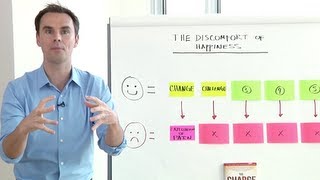
In this video Brendon Burchard introduces the concept of the "discomfort of happiness," explaining why people often struggle to feel fulfilled despite abundant choices. Drawing on 16 years of study in psychology, neuroscience, and high‑performance research, he outlines five core drivers of lasting happiness—change, challenge, creative expression, connection, and contribution—and describes the specific discomforts that accompany each. For each driver he details the underlying neurochemical mechanisms (e.g., dopamine spikes with novelty), the common fears or pains (loss, process, outcome; competency stretch; time/reward concerns; fear of rejection; clarity‑constriction), and practical ways to overcome them. Burchard weaves personal anecdotes—his near‑fatal car accident and the existential questions it raised—to illustrate how confronting these discomforts can lead to a more deliberately designed, vibrant life. He concludes by urging viewers to strategically activate these drivers, accept the associated discomforts, and live fully, love openly, and make a difference.
Chapters
Hey everybody, it's Brennan Burchard, founder of High Performance Academy and author of the New York Times bestselling book the activating the 10 human drives that make you feel alive. In this video, I'd like to share with you this concept I call the discomfort of happiness. Why is it that so many of us living in this abundant or choice field world are struggling so much to feel the deserved levels of happiness we want in life? You know, to feel and maintain this charge that makes us feel happy and engaged and fulfilled with life. When we have so many choices at our feet and we can be connected with so many different people and information around the world, why is it that we aren't more happy? Well, I would argue it's because the very things that make us feel most happy are also the very things that cause us discomfort or along the way. In other words, we can't get here without experiencing some of this. And so how do we manage that? And what is it that truly does make us feel meaningfully happy and what is it that truly does take to work through in order to get there? Well, that's the subject of this video. It's probably the number one question I've been asked since the charge came out. And if you haven't picked up a copy of the charge, my new book. Readers of this blog can click the link below, read, receive the book in hardcover for free. You just pay shipping and handling to receive it. But what I'd like to share with you along this journey is a little bit of my story so you can have context for where did I come up with this model? Well, you know, if you haven't heard my story, for the last 16 years of my life, I've studied in depth the areas of psychology, neuroscience and high performance studies so that I can figure out what does it take to feel the most enlivened and engaged and satisfied with our lives. And I began this journey when I was just a 19 year old kid. I'd been through a fairly dramatic car accident in developing country that taught me, you know, at the end of our lives we're all going to ask the same three basic questions. You know, when I faced my end, at the end, towards the end of my experience, I learned that, gosh, you know, at the very end we're going to ask first and foremost, did I live, you know, did I live my life fully and vibrantly and completely? We're going to ask did I love? Did I love openly and honestly? And we'll ask, did I matter? You know, did I make a difference. Was there a purpose to my reason of being here? And all those questions propelled me on this journey to try and get my life right. At the time, I was kind of a miserable 19 year old kid who was fairly disconnected from my purpose and probably my broader community. I didn't really know about these concepts of personal growth or psychology, or managing my brain and my body to live an excellent life. And so it began this journey of me doing all this research to figure out, well, what would it take for me to feel alive, but what was it about other people that made them the most happy and fulfilled and engaged. And now we have the blessings of neuroscience and the ability to peer into people's brains with SPECT scans and fmris so that we can literally see what lights up their brain and what, what hormones are being released and what energizes parts of the brain to develop us. Well, with all of that study, I found that there's basically five things that truly makes us feel the most happy. And these are the things that we can not only look into your brain with FMRI machines and see light up, but we can also know from decades of psychology study that these are the things that actively engage us the most and release certain amounts of hormones in our body that give us the, those pleasureful feelings of joy or contentment or satisfaction. So these are things that we can measure along the way though, of achieving these. As I said, we also sometimes have to experience these. And knowing them and knowing how to overcome these might help you experience these states of pleasure and joy and fulfillment and satisfaction more often. So with that, let's jump right into it. The first thing that we know makes people feel engaged and alive in their lives when, which also leads to a sense of happiness is change. You know, when we experience things that are novel or new that releases a certain amount of dopamine in the back of our brain stem so that we have this sense of jubilation or the sense of satisfaction and engagement. It's almost like anytime there's a change in our environment, it turns on our awareness and says, hey, pay attention to this thing. Now, as you and I both know, not all change is progress. Not all change is happiness. Some changes come into our lives that don't make us feel engaged and happy. And often I tell people, you know, there's only two things that are going to change your life anyway. Either something new comes into your life or something new comes out of you. But at the end of the day, we know that change and progress happens to engage the brain in a certain way that makes us feel engaged and happy. And, and so the challenge, of course, is that many of us fear change. We don't want change. And what that is coming from, what makes us unhappy. The discomfort of this happiness is this expectation of pain that we feel so that when a new change is about to come into our life or does come into our life, there's this discomfort that happens in a specific way, in that we expect to feel and sense pain in one of three specific ways. You know, when a new change comes into our lives. The first pain that we sense or feel or worry about is what I call loss pain. We worry that this new thing coming into our life, we're going to lose something that we care about. You know, we get a new job or a new job opportunity. Well, we're scared of leaving and changing our current job because we're worried of losing our connection with our co workers or we're scared of losing a steady paycheck so we don't start that entrepreneurial thing or, or if a new diet appears to us and we want to change and improve our health, we're worried we're going to lose our favorite foods. We also fear the expectation pain of what I call process pain. Process pain, meaning anytime we have to change, we have to endure a process of changing who we are or changing our environment, changing what we eat, changing what we do. And we think, well, that's going to be a big pain in the butt. So we don't want to deal with that discomfort, so we don't change. And finally we fear and sense that there might be an outcome pain, meaning if a new change comes into our life. While we know that might make us happy, we also worry about it because the outcome we might get might not be as good as we have now, meaning the grass might not be as green on the other side. Even though we know and we sense that maybe some forward progress in our life would be good, we worry maybe it won't be just as, as good as it is now. So we don't progress, so we don't experience those novel new adventures and experiences and progress in our life. And progress at its root is a change towards a meaningful and satisfying state, right? That progress is like, oh, we're changing for the good. Well, it's hard to change for the good unless you learn to get over this expectation and you start setting new expectations and you focus on the things that, that you will gain on the enjoyment and the satisfaction of changing and on the potential of what might be on the other side. And that's how you experience more positive change and more happiness. Another element of happiness is challenge. We know that one of the ways that really activates the human potential within us is a new challenge, Something that makes us stretch ourselves and gives us something meaningful to. To chase after. You know, when President John F. Kennedy stood there in 1962 before the world and said, we choose to go to the moon, and he knew that it wasn't something we were choosing because it was easy, but because it was hard, because it would ennoble us and engage us to give our best efforts and energies toward a worthwhile endeavor that activated us. It activated us to learn new things. And sometimes a great challenge is exactly what somebody needs. Maybe what you need right now in your life is a new moon to chase after. If you're not as engaged and excited about your life, maybe you're not chasing something that's as high and as meaningful to you as it could be. So sometimes just engaging people's challenges, it's also something that engages people in what psychologists call a state of flow. Right. Mihaly Csikszentmihalyi did a great study and a great book called Flow and in which he realized that it is that very stretching of the best of ourselves. And in those moments when we're being stretched, that we're fully engaged in something, and those are often the times we feel most alive. But the discomfort with that along the way, of course, is what I call competency stretch. When we set a challenge, there's going to be a period of time when we're chasing after that challenge where it's stretching our knowledge, our. Our skills, our abilities, our very competency in life. And it stretches us. So it's like, I don't know if I can handle that. I don't know if I'll succeed at that. I don't know if I have the competency to do well at that. And we all have a baseline human drive. I talk about that in the charge that we want to know and understand and master our world, but give us a big challenge and immediately we're thrown in discomfort because we're like, I don't know if I can handle that. But if you're going to progress in life and you're going to be fully engaged and happy and fulfilled in life, you've got to be chasing worthwhile and meaningful challenges that just enliven you, that make you get out of bed and chase them down and hunt them and work towards them every single day. And so you've got to learn that stretching yourself is a positive, not just discomforting, but you should enjoy that process. I love the things that make me grow, even though sometimes I'm scared. And I say set a new challenge for yourself. I always say never let your small business make you small minded. Never let your low lot in life take you away from having high aspirations. And the third thing I know that makes us feel happy as part of our studies is this, is that, you know, this drive for what I call creative expression that when you are creating, those are the moments in your life you feel the most engaged. Whether it's playing the guitar or the piano, doing your art or speaking or creatively expressing yourself through the way that you dress or you design or you speak or you communicate or you live or you be. Those are the times that you're demonstrating your uniqueness in the world. And if we know anything from, you know, just paying attention to the general world, you got about 7 billion people on the planet. You're unique, you're different. So perhaps part of your purpose is demonstrating that uniqueness through your creative expression of who you are and how you live and how you work and how you behave. Well, if that's true, the challenge with creative expression for many people is that there's a discomfort and there's a concern about time and reward. Meaning when I tell people, you know what, you should just be more, you know, you've got to activate more creativity in your life. And they say, you know, there's a lot of creative pursuits. I'd like to go and do Brendon, but gosh, I don't have the time for that. I don't have the time to learn a new language. I don't have a time to learn to play the piano. I don't have a time to sit and brainstorm how to do this project more intelligently or more artistically because I'm just trying to get it done and get paid. A lot of us cheat ourselves out of experience and great levels of creativity because we won't take just a few more moments to think and to contemplate about how can I bring my own unique perspective to this project? How can I influence this new thing I'm working on in a way that is me. How can I bring more me into my life? Because if I parachuted into your life and we looked at maybe your office or your home or your living quarters, could I sense and see and feel that you've got your fingerprints all over it, that you've designed it that you set it up, that if uniquely you, if not, we're missing something very important in your life. You. And it's time to take the time to be more creative in your life and also realize that so many people, well, they go, well, Brendan, you know, I don't, I won't be rewarded for that. You know, I'll take all the time. I'll make it more creative. I won't get rewarded. Yes, you will, because it's not always about the destination that makes us feel alive and engaged. It's. It's the journey and taking the time to be more creatively expressed in your life. The reward, it might not always be an extrinsic reward, but it will be intrinsic. You will feel it and you will sense it and also share with you this. We are now in the collaborative and creative economy today that the most creative people are creating software programs and tools and ideas and projects and business models. They're being more creative in their teams and they're being rewarded at levels we've never experienced before. Just like Richard Florida's work in the creative class has demonstrated, we have a time in which right now the most creative are being compensated the most. Activating your right brain makes you feel alive and it gets you paid in this new economy. Fourth, what makes us feel alive is connection, right? Connecting with other people. See, significant, real, meaningful relationships with other people lights us up. There's nothing that lights a life up more than love, more than significant and real connections with other people. The challenge of that discomfort, of connection is that we all fear rejection and we fear we won't have reciprocation that we'll give and we'll love and we'll serve and we'll connect with those around us. And they may say, I'm not interested in you, man. Or they may say, you know what? I just can't give the same that you've given. And we have to overcome that discomfort as well, that if you're ever going to feel the deepest satisfaction in life, you have to overcome your concerns for rejection. And that is possible because once you realize that rejection doesn't happen as often as you really believe, it's not so scary anymore. You know, I often ask my big seminar events, we'll have, you know, hundreds of people or thousands of people at our high performance academy events. And I'll often ask them, how many times in your life have you been significantly rejected in a way that really impacted your identity and your interactions? And, you know, I've asked that question to audiences from around the globe. And unanimously, I could say, across all of them, maybe people have been rejected in a significant way where it impacted their identity and their interactions with other people at a level of maybe three, four, five times in their life, tops. Maybe it were seven. Not to say that more people haven't experienced it, but on average, maybe five to seven people have ever rejected you in a significant way or altered the course of your identity, your interactions. But haven't you interacted with thousands of people in your life that those thousands of people thought you were okay, that you were just fine, that they had your back? And if you realize that you're driving your life out of fear of rejection, you're realizing that you're driving your life based on what five or six or seven people said to you or how they hurt you. And when you got 1,000 people over here who support you, who got your back, you would realize that these thousands people at your wings could storm these seven people. And you would realize paying attention to that is not healthy. Realize that more people will support you on your journey of life than you will reject you. And when you own that and you realize that, it gives you uncommon courage and ability to put yourself out there more and realize that, look, having a deep connection with people does not require reciprocation. You know, giving of your love at a spiritual level is something so profound and amazing that we've been taught by all the great spiritual leaders to give love without expectation of return. The last piece that makes us so happy and jubilant in our lives is contribution. Knowing that, like I said, as I learned it, my accident, you know, at the end of our lives, we're all going to ask, did I matter? You know, did I contribute? Did I make a difference? And if that's true, let's all be more. A little more strategic about it because, you know, when you're contributing towards things that you find meaningful, you're lit up, you're happy. The challenge is that in contribution, you have to face what I call clarity, constriction, which is when you know what you want to contribute in the world and you get aimed at something and you. It's significant, it's meaningful to you, and you're working towards it. The challenge is that as soon as you have that clarity, you've got to be constricted in your time, money, efforts, and energies. Meaning you've got to say no to a lot more things. This is where competing interests come up in our lives and where there's this discomfort where if we want to contribute significantly, we have to have clarity. That's discomfort for a lot of people finally look at their lives and say what am I about? And decide on that. Not, not hope to find a life's purpose, but to choose one and to work it and to adjust and let your strategy for how you're going to live emerge and find the things that you love contributing to. And along the way, you also have to deal with competing interests. You've got to say no to other people's agendas and own yours once more. You've got to say no to all the other opportunities that might look interesting and maybe even exciting. But. But they're not things that fascinate you. They're not things that you find that you can contribute the best of yourselves to. And so I share all this with you in hoping that you realize that yeah, along this journey of engaging in these things. And many of these things are. This is like what we call a baseline human drive. These are forward human drives. Again, you can get my book where I share all these ideas and strategies in the charge. You can receive the book for free just by paying your shipping and handling. I'll give you the hardcover book. I just ask you to pay your shipping and handling so I don't lose my shirt. So any readers of the blog, just click the link below and you'll be able to access that book in that video. But what I really have come to find out is that if you want to live a level of life that is the happiest, then you've got to more consciously design your life. Know that these things will be there, but consciously design your life. Get strategic about activating the very things. Put these things into your life so that you can feel this on a more consistent basis and you will start to feel more fully alive. I hope that serves you. I look forward to seeing your comments on this video below until I see you in the next video or out one of our seminars one day. Go out there every single day of your life. Live fully, love openly and make your difference. Today.
More from Brendon
How Your Past Is Affecting Your MINDSET | Break Through to the Future You DESERVE