Secrets to Developing Emotional Mastery
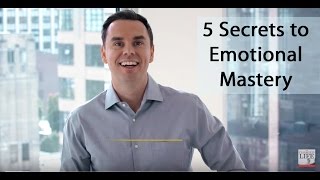
This content was created by Brendon Burchard. This content was uploaded by Brendon Burchard. This is a YouTube video titled "Secrets to Developing Emotional Mastery" created on October 24, 2016. It features Brendon Burchard discussing strategies for achieving emotional mastery, including empathy, self-reliance, self-confidence, social sharing, and self-talk. The video also promotes a free guide to achieving goals faster.
Chapters
How do you develop emotional mastery? You know, a lot of folks go through their life and they feel bad about themselves. They go through their lives, and they're not resilient when the crap hits the fan. They go through their lives and they don't feel like they understand other people or worse, they don't understand themselves. So emotionally, throughout the day, they're just up and down. It's doubts and fears and hurt and anger and reaction. And they never get that point where they feel like they really. They. They really connect, that they really have any solid feelings about themselves that endure despite the situations. You know, everything is so situational for them emotionally that it's just a constant battle to feel good. And I hope that isn't the case for you, but for a lot of people it is. So let's talk about five ideas to develop emotional mastery in your life so that you can have more of a continuing feeling and sense self and strength. Number one, we got to begin with empathy. Before we even talk about your emotional world, let's make you more informed about the emotional world of others. You know, a lot of folks, they've never really observed the feelings that other people are experiencing. They're always in their own thing. You know, I wouldn't call them narcissistic per se, but they're in that. They're in that sort of tragic place where everything's about me, me, me, me, me. How do I feel? What do I think? What do I think? What I think, what's happening to me? And sometimes the real understanding about ourselves comes in our connection to humanity, the feelings of others. Because you know what? The feelings of others can give us perspective into the feelings of ourselves. You know, you go volunteer at a soup kitchen or a domestic abuse center or somewhere where people are really struggling, it helps you develop a greater level of gratitude and appreciation. It helps you develop concern for others. Because if we don't have concern for others, it's hard to have real concern for self. And if we don't learn more concern for self, we won't even pay attention to our emotions. We'll just keep choking it down, pushing it away. And so first I just say, before you develop any emotional mastery in life, it's about time to connect with other people's emotions again. See how they feel, pay attention to what they're saying, try to read into body language a little bit, not to make assumptions, but to seek understanding in other people again. Like, turn the worldview lens. Like, you operate your life like a camera and zoom into people's emotions again, when you're watching a movie, when you're having lunch with your wife, when you're talking with the kids, try to start asking yourself what are they feeling? What do I feel like they're thinking? And then ask, is this what you're feeling? Is this what you're thinking? Because the more you're able to identify other people's, the more you might learn something about yourself. So I say to develop a greater connection strength with yourself, develop a greater connection and strength with other people too. And that's a big leaping point, big breakthrough for a lot of people. Number two, emotional mastery, self reliance. Self reliance, it means this. How do you develop emotional mastery? You say, you know what, I'm in charge of my emotional world. I don't have to react to other people if they're angry, I don't have to become angry. I'm autonomous. I am separate from, even though we're all one, I'm in separate from, I can control my thoughts. I don't have to have emotional contagion all the time where I just react to other people's emotions and I become like them. And you don't have to let your mirror neurons win in your brain where you just mimic other people. Because if you're running through life constantly, like adjusting your emotions to everybody else, just modeling them or mirroring them or mimicking them, then it's a disaster. You're on this emotional rollercoaster all the time. You need to define how do I want to feel, how do I want to interpret this situation. Self reliance means I am in charge of my life. I am the one who's going to change things. I am the one who controls my focus, my attention, my time, my actions. You know, if you've studied my work before, you've heard this statement. I say all the time, there's only two things that change your life. Either something new comes into your life and that shifts it. You know, you get a new relationship, a new idea, a new strategy, you win the lottery. Something happens that changes the course of your life or something new comes from within. And if you're going to get emotional mastery in life, you need to say, okay, I'm going to generate the emotions of my life that I want to experience here. I'm going to manage my emotions and not let others manage mine. Third, got to develop self confidence. Self confidence is not something that's going to come tomorrow or the next day or the next day after another million achievements or after you get certified or after you get the degree or after you have sex, you know, well, maybe that'll happen. But what you have to do is say, I'm going to develop self confidence now. I'm going to develop it because self confidence really means I'm going to choose to express who I am. I'm going to choose to believe that no matter the situation or the struggle that I am in, I'm going to believe that. I'm going to figure it out. I'm going to approach a situation like Sherlock Holmes. Sherlock Holmes is always confident he's going to figure it out. He's curious, he's inquisitive, he has no idea what the heck's going on, but he's not terrified. You need to start addressing uncertainty that way. Emotional mastery comes from finding a place that's stable within that says, I don't know what this uncertainty is. I'd have plenty of reason to doubt. But I'm not going to doubt myself. I'm going to trust that with enough time, attention, energy, resources, action, discipline, that I will figure out the lay of the land. That's. People say, brendan, how does it you just walk into any social situation, you're so confident? I say, because one, I realize fear and doubt aren't going to serve me in that situation. I know who my masters are. My mind is going to master the situation. Fear and doubt aren't going to run me. And I choose to say, okay, I don't know these people, but I'm confident if I talk with them a little bit of time, things will go fine. Things will go fine. I might put my foot in my mouth and say stupid things, but if they give me another three minutes, I'll turn it around, things will be fine. I just trust in my ability to figure things out. That's self confidence that gives me emotional mastery. Next, social sharing. Emotional mastery comes from vulnerability. And vulnerability has gotten this weird rap in the world because a lot of people have been teaching it, I think in a poor way. Vulnerability at its heart, real vulnerability means the vulnerability to believe in and accept my truths. But more importantly than anything, it's the strength to share my real thoughts, my real feelings, my real desires, my real needs with people. Real vulnerability is voice. Not just like, I'm going to allow my feeling in this moment, that's cool too. And no misjudgment, but. But that's only half the coin. The coin on the other side, the coin that makes all the difference in the world, is when you take that vulnerability now and you voice it, does the world know what you really think, do your friends and family know who you really are and what you really feel and what you're really after? Because if you're not voicing those things in some way, that silence will lead to suffering. It's time to tell people what you think, even if they might not like it. It's time to tell people how you feel, even if they might not like it. It's time to tell people what you desire, even if they don't believe in you. Because that's real vulnerability. That's social sharing. And when you socially share that, and, hey, look, you do it with responsiveness, responsibility. You do that with an empathy that maybe people don't like you, that maybe people won't accept it, that maybe people will be hurt by it. So you do it with any sensitivity required in the moment. But you can be sensitive, but still truthful. You can, you know, walk around eggshells, but still be walking right. The thing is to voice what you really think, feel, and want in the world more consistently. And if you'll do that, it develops confidence and it helps your brain go, you know what? I trust myself to say what is true. And a lot of emotional mastery comes from that self honesty. And then I think, this is so important. The last thing is self talk. Self talk means you tell yourself how to feel, you tell yourself how to respond. You literally say things in your mind or out loud to yourself. You know, I talk to myself all the time, and I'm not crazy. I have emotional mastery because I do those things. Like, I'll get upset about something. I'll take a beat, I'll take a walk away, and I'll say, okay, Brendan, how would your best self respond to this situation right now? I'll literally say that out loud, and I'll let myself answer it. Well, you know what? I would apologize. Well, you know what? I'd tell the truth. Well, you know what? I'd sit down and do the work, and it's okay. Emotional mastery, you have to give yourself cues. You have to give yourself affirmations. You have to tell yourself how to think and feel and act, not hope the perfect you comes out. Emotional mastery comes from you telling yourself what to do. And you're doing it enough over a period of time that your brain and your emotions fall into a state of sort of integrity between your mind and your heart. And your heart goes, I trust you mind. Your mind says, I trust your heart. And that only happens after practice. After long enough times, you just tell yourself, right, same things in the morning. Look, you might wake up on the wrong side of bed and you could go through all day grumpy. Let your emotions just take you over. Or you could talk to yourself. Okay, what's going to happen if I'm grumpy today? Nothing good. What's going to happen if I'm grumpy today? I'm going to be mean to people. What's going to happen if I'm grumpy today? I'll be less creative. So don't do that. Come on. Generate the emotions in which I want to experience today. Change my focus. Talk to yourself. Talk yourself out of the grump and you will find that you start to feel better. These are the keys, the fundamentals of developing greater emotional control, greater emotional mastery. And you deserve those things, but they won't come naturally. You have to try. Challenge yourself to develop in each of these areas of your life and you'll start to experience more of what we call the charged life. Hey, my friend, it's Brendan. I hope you enjoyed this episode. Do me two favors. Number one, subscribe to this channel so that you continue to get updates every time I release new training for you. And number two, if you would like to get ahead a little faster in life, what I like to do is give you my 10 steps to achieving anything 10 times faster. So if you have a big goal, a big dream, a big mission in life and you just like to achieve it faster, what would you need to do? You know, this is exactly what I keep next to my computer or next to my bed. And every time I have a big dream, a big goal, I open it up and I kind of use this as my checklist to get ahead faster. Because you and I both know if you're gonna be more effective or more productive or you are gonna achieve your goals and your dreams faster, you're gonna have to switch your perspective a little bit on achievement itself. You're gonna have to adopt new things, thinking patterns and habits. You're going to have to have new daily rituals and habits. And your entire approach to learning and skill development must be better. So in order to help you do that, just go ahead and click the link in this post or go to brendon.com 10x that's Brendon B R E N D O n.com 10x and you can download this guide for free. Just tell me your name and email. I'm happy to email that to you for free. The same guide I use to achieve any goal or dream faster. Thanks for tuning in. Until I see you next time. Go out there every single day of your life. Live fully, love openly and make your difference today.
More from Brendon
How Your Past Is Affecting Your MINDSET | Break Through to the Future You DESERVE