From $10M to $175M: What Changes When an MSP Really Scales

Reed Wilson scaled his MSP Courser from startup to $175 million in revenue through 25 acquisitions and private equity backing. He cut churn from 50% to 35% using AI prediction models, keeps local brands intact while centralizing operations, and says his biggest mistake was holding onto underperforming people too long.
Chapters
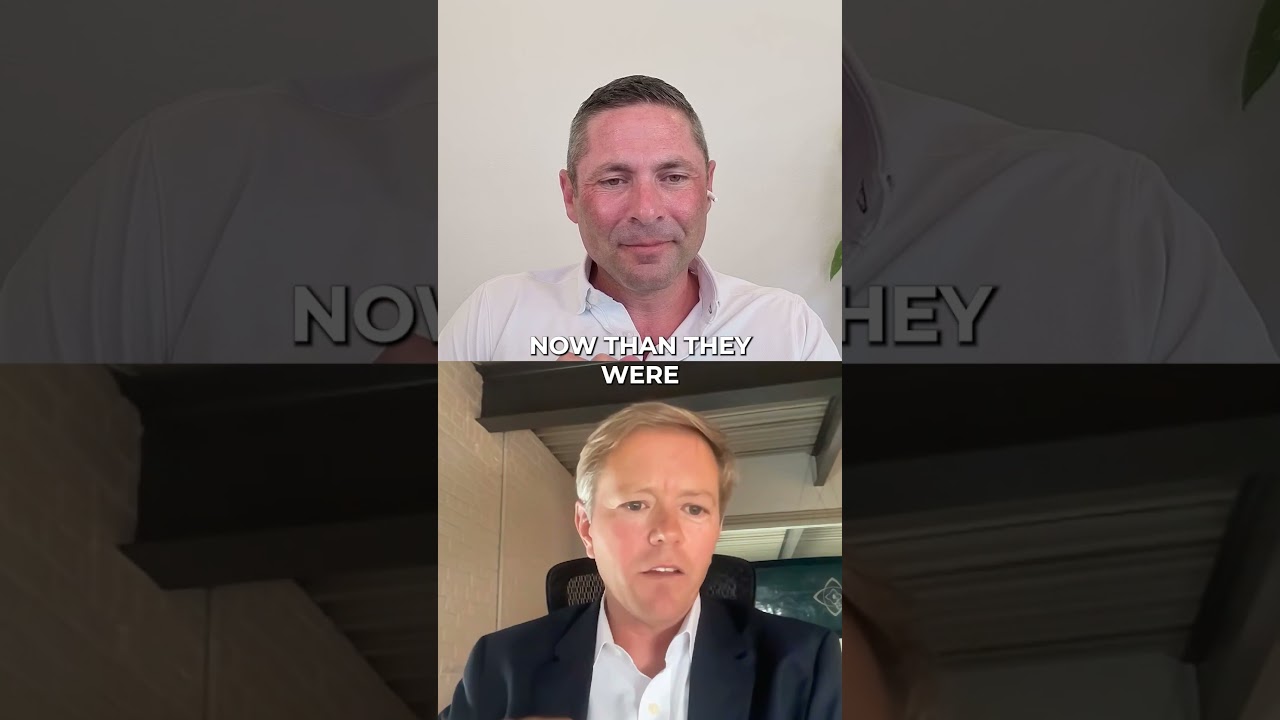
Welcome to the $10 Million MSP Podcast. This podcast is where I dive into the real stories of MSP leaders who have gone beyond $10 million in revenue, how they built their teams, created scalable systems, and turned their businesses into valuable wealth-building assets. I'm Brian Hoppe, strategic coach to MSPs. I work with MSPs generally in the $5 to $50 million range. In each episode, I sit down with leaders who have built MSPs beyond $10 million in revenue to unpack the inflection points that truly matter. From the personal stories behind their journeys to the fundamentals like culture, operational maturity, and driving profitability. This isn't another MSP podcast about tools and tech. On the $10 Million MSP Podcast, you'll get behind-the-scenes conversations with leaders who've built thriving MSPs, their biggest wins, their toughest lessons, and the practical takeaways that you can take back and use right now. If you're an MSP owner who knows that growth starts from within, that mindset, leadership, and strategy align to create both wealth and meaning, then this show is for you. New episodes are released every other week. So let's jump in. All right. Welcome back to the $10 Million MSP Podcast. Uh, my guest today is Reed Wilson, uh, the CEO of Courser. Um, and he's based out of Greenville, South Carolina. Reed, welcome to the show, man.
Hey, thanks for having me. Really excited to be here and talk to you, Brian.
Absolutely, man. This is going to be a good one. So, um, I always like to start with a good, a good question. So, um, what do you think that most MSP owners get wrong about taking private equity money?
Oh man, this is a good one. That's a zinger right out of the gate.
I try.
Yeah, look, I, I think, I think there's a lot of things. Um, uh, am I limited to one or maybe can I rattle a couple off?
No, come on, come on.
Let's go. Yeah. Um, So, I think the one thing, like top, I would say, is assuming that private equity is evil.
Hmm.
And don't get me wrong, like, I'm sure there are— I've heard some horror stories from some of my peers, but I can tell you the folks that we work with are just phenomenal. You know, kind of let me run the business the way I think I need to run the business. We have a very strong, independent board. We have 6 people on our board that are not part of the fund. And so, I think the first assumption everybody makes is, I'm going to sell my soul. And I don't think that has to be true, right?
Right.
I think if you do your due diligence and you ask the right questions and you go deep, you can find a great partner because it's hard. Scaling your business past $10 million, Uh, it's a whole different skill set. It's, it requires a whole different level, I think, of, um, of recruiting. Um, that it's just like, it's hard to get, you know, really smart scaling talent in our industry to come work at a, you know, $10, $20, $30 million MSP. And, um, and that's one thing our, our group that we work with, Shore Capital, uh, they helped us with right out of the gate is, is telling a story so that we could get You know, a really strong CFO in seat as an example, or a really strong, um, uh, leader of human resources. So that'd probably be the one thing I, I'd say. There's a couple others, but, but that'd be like top of the list is just assuming that all private equity is bad. Yeah.
Gotcha. Yeah. Well, it's, and I definitely, I talked to a lot of MSP owners that are like, yeah, I'm going to sell, but there's no way I'm going to sell to private equity because they just want to cut all the people. And, you know, and then cut, you know, cut everything and they're going to cut the business and all that. So it sounds like you're saying that that's not true.
Look, I think it's true in some places. I mean, I remember, again, I can only speak to my experience and I grew up in this space. You know, our, our, my very first board meeting, I remember sitting there and there's a guy on our board, Mike Cody, he's a former CEO of Dell SecureWorks and just a rock star. And he said, you know, I think if you're going to build a business like this and scale it, culture is going to be critical. You know, we're highly dispersed. We all live in this 2-dimensional Teams world or Zoom world or whatever your productivity tool of choice is. And so, getting culture right is going to be really important. And he said, I think you need to hire somebody that is an extension of you and your voice to drive culture across the business. And so my experience, Brian, was kind of the opposite in that our sponsor has not said cut. In fact, our sponsor has said, you know, out of the gate, they were like, go hire somebody that really knows comms and culture. And that's not a cheap hire. And they don't drive revenue, for crying out loud. And normally you would think, you know, that would be the very first hire. But Molly Bleaton, who's been on my team now for 4 years, is our Chief People and Culture Officer. And she started just in engagement and she's moved up and now owns the entire HR function. So, again, my experience has been while a lot of PE, I think, does just kind of cut their way to the bone, that's not true for all.
Yeah. Yeah. So, awesome, man. Okay. So, yeah. So, I always like to start with a really good question before, but now I want to like let you kind of introduce yourself. And kind of, you know, give folks a picture of maybe where you came from and how you got to where you're at today and where the business is at today.
Yeah. Well, where'd that come from? So I went to— I went to school at a small military college in South Carolina. I was supposed to go to law school and then met this guy who owned a software company where I'm from. I'm actually from a tiny little town, like a one-stoplight town, but he owned a software company up in Greenville, South Carolina. And he was like, don't go to law school, come work for me for a year. So, I was in various sales roles there, sales leadership roles. It was a $100 million publicly held software company back when you could be $100 million and be publicly held. And then, Sarbanes-Oxley came along and kind of ruined that whole world. So, that business got sold to a Golden Gate Capital business called Infor in 2006. I stayed till 2007.
Wow.
And then started what basically was a VMware resale shop. It was me and 2 guys from that software company that really knew VMware. They knew how to install it. They knew how to configure it. I knew I was an English major. Like, I knew nothing about technology really. And I was selling and we had some pretty good success out of the gate. We were primary. My background was kind of enterprise sales. I sold to Dell, American Airlines, Frito-Lay.
Yeah.
back in the day. And so, we had some pretty good success. We're like right out of the gate selling some decently sized VMware deals. And it was all project-based and license resale-based. And then 2008 happened. Everybody remembers 2008 that's over the age of probably 40, I guess. It was not a great year, but it was a great year to start a business or try to get a business off the ground. And, you know, kind of all enterprise spend just died. And so it was like, okay, you know, I've got a wife, my wife is newly pregnant, I have no insurance, you know, I gotta pay these guys that are working for me, you know, what are we gonna do? And I got introduced to a really small business. They're like, we just need help with email and file sharing. And so Eric Pohl, who's still with the business today, was like, there's this product called Small Business Server. We should go install that. And, and some people are having, you know, full-on flashbacks now, PTSD.
Definitely.
And, and so we, we sold, we sold this little company a Small Business Server and put a very small managed service practice around it. And word kind of traveled that we were in that space. And those guys knew how to, you know, make all that stuff work. I mean, I can poke around Active Directory, or I could, and kind of knew enough to be dangerous. And that was really how the business got started. And, you know, from a managed services perspective. Yeah.
Okay. Okay. So, and that's how things got started. And then you kind of grew that business over the next, what, 10 years or so?
Yeah.
Okay. Okay.
Yeah.
So, yeah. So maybe talk us through that, that process, right? Like from, from kind of starting it to about the $10 million mark.
Yeah. You know, so it's funny. I think businesses go through these stages of iterations where what you did in the past is not what you're going to do in the future. Right. And so we were doing a small, a lot of small business server, a lot of kind of core managed services. And then Microsoft launched what then was Office 365, but at the time was known as BPOS or BPOS, if you remember those days. And so, we got really good at migrating Exchange on-prem to the Microsoft BPOS platform. And, you know, I mean, this would've been like, I don't know, 2015, '16. I mean, the years kind of run together. But we had like just a crazy run. It might even have been before that, '13 or '14. I don't remember when BPOS launched, but we were basically one of the very few partners in what Microsoft called the Greater Southeast in the SMB market that could do that and do it quickly. And so, we were getting probably, Brian, I bet we were getting anywhere from 5 to 10 leads a week from Microsoft to say, hey, you know, go convert this customer from Exchange Online and SharePoint Online. At that time, I guess it was Lync Online, which is now Teams, and get them up into BPOS. And we'll pay you. Microsoft was paying us to actually go do the projects. And so, the customer had basically no expense. And we were transacting it all back then on partner of record, which I don't even know, probably half the MSP world's never even heard of that. Basically, the customer paid Microsoft directly and then Microsoft sent us a portion of that back. And that's really, I think, when we went kind of gangbusters. The business was growing very rapidly. But I brought a person who's still with the business today, Kelly Medlock, in to kind of help me from an operations perspective. She came from the copier space. And she spent about 3, probably 3 weeks inside the business. And she sat down with me and she said, hey, you call yourself a managed service provider, but you're really just a project business. Like you've got some MSP, some recurring revenue off to the side, which don't get me wrong is great, but your P&L is kind of swinging up and down based on how many BPaaS projects that you, uh, that you got going on. And like you got to make a call. Are you going to be a project business or are you going to be a managed service business? And, um, you know, I knew the recurring revenue obviously was the most, um, most most valuable. And so, we made the pivot then like, hey, we're not going to do any more of these BPAS projects unless you are a managed services customer. And that was another kind of tipping point for the business where we doubled down on, we're going to be good at this thing. It's going to drive recurring revenue. It's going to make the business more valuable. And EBITDA went up, margin went up, the predictability of the business went up, and we were able to scale much, much faster. And so that probably got us to right around, I'd say probably in the, probably $7 million within just a couple of years of making that transition. And then really doubled down on our sales and marketing efforts. We had one sales rep really at the time, but I hired 2 more and built an account management team. And that's when we, you know, when we hit the $10 million mark.
Nice. Nice. Okay, awesome. So yeah, so then maybe walk us through, um, because I think you have a different journey than many people in that you weren't necessarily looking for private equity, but, but maybe it found you. So like, so maybe walk us through that kind of that portion of things. Like, you're, you're doing good, you're running a best-in-class $10 million business. And then, and then what happened?
Yeah, so I mean, business was great. We were cash flowing the business well. Um, uh, it was a— I wouldn't call it a lifestyle business because we were definitely all— we wanted to grow, we wanted to continue to grow the business. Um, but I had this customer, uh, uh, Sean McEnroe at Pro Access Therapy, um, who— he was like my very first big MSP deal. I remember sitting in the parking lot and I had the quote. I was driving a little Subaru Outback at the time, great car. And I had the quote on the front seat, passenger seat. It was $7,500 a month. And I thought, there's no way this guy's going to sign this quote. But I walked in and we use Sandler pretty heavily across the business. And within about, I don't know, 7 minutes, the quote signed. And I walk out the door and I'm like, holy crap, we got to deliver this $7,500 a month MSP. deal, which, you know, it's still a big deal today, but back then it was like a really big deal. So, he was a customer for a very long time. He sold that business to ATI Physical Therapy. And so, he called me in, I'd say, like middle of 2021 and just said, hey, I know this private equity group that's going to get into your space. Always respected, you know, the business that you built. Would you be interested in having a conversation? And I'd gotten a bunch of calls like everybody, every other MSP CEO in the world is getting calls from these folks.
Yeah.
And I'd kind of blown them all off. I said, look, Sean, I'm not interested in selling the business. I think private equity is evil, blah, blah, blah. And I said, but because it's you, I will take the meeting. And so, some guys from Shore came down and we had breakfast and there was just something different, I think, about their approach. And we could talk about that if it's helpful to your listeners, but really kind of the core—
Yeah.
was for me was the resources that they bring to bear. So, Sure has a thing called the Sure Resource Team, which is basically think of them like little mini McKinsey consultants who can parachute into our business and help us with things like revenue cycle management and go-to-market strategy and our data strategy and real resources to help us grow and scale the business. And then I mentioned our independent board. So, you know, it's external folks that are that are invested in the success of the business. And so, it just all made sense. And we transacted with Shore back in March of 2022. And kind of the rest is history.
Yeah, the rest is history. Awesome. Okay. So, as we're thinking of— well, actually, maybe— so, take us to where you're at today. Because, you know, obviously, you've done multiple acquisitions since then. So, where's the company at today? Revenue, employees, locations, that kind of a thing?
Yeah, we're about 650 employees today. We operate in a geography kind of strategy. I believe local brands matter in the SMB market. So, our strategy is not, you know, we're going to partner with the business and change their brand and everything has to be done kind of the Coursera way. We obviously do share some, some back office and some centers of excellence and things like that. So we're about 650 employees today, about $175 million in revenue.
Okay. Awesome. Awesome. Wow. So, yeah. And so, so maybe talk about that. Talk about your strategy for, you know, because there's some, some MSP roll-ups decide, hey, we're going to integrate everything. One brand, all of that. Some say we're going to keep completely separate companies and, and just kind of like pool the— pool a few resources, but, but leave, leave them mostly independent. Um, well, yeah, so, so you guys do something a little bit different and, and kind of how'd you, how'd you come up with that strategy?
Yeah, look, to be clear, I don't think any strategy necessarily is wrong, and certainly my strategy could be wrong. Um, I just, you know, the customer that we serve And I think the vast majority of probably your listeners serves is 20 to 100 employees, hyperlocal. I mean, I'll tell a story. We bought our— we partnered with this business down in Lafayette, Louisiana, and literally the name of the business is the guy that ran that business for 20 years, right? And so, I just think there's so much equity and emotion tied to a local brand. And so, my strategy has been we are going to do everything we can to protect that local brand. But it's powered by a back office, by a very strong marketing organization, a very strong sales org, a strong NOC. We have centralized automation. And so, it's not fully integrated in the sense that We, you know, we changed the brand, but it's pretty doggone close. We all use the same financial system. We have a centralized recruiting function that serves all of our brands. We have a centralized go-to-market function. We all use the same PSA. We all use the same Automate. But at the end of the day, you know, the service delivery function, which is hyperlocal, stays very much inside the brand. We all use the same product. So like if we, let's say we, you had an MSP and we partnered with you and you were using Datto, well, that's not what we centralize on across the business. And so we would move you over to what the Coursera standard is across all of our businesses from a backup perspective. So, so it's, it's, it's not quite a fully integrated model, but it's, it's pretty close. And then all of our GMs, basically, they own the P&L inside their region. So, if there's something that we're doing that maybe they don't fully agree with or they don't think is going to work inside their market, they certainly have the option to opt out of that. They just have to support it locally.
Right, right. Okay. Gotcha. Yeah. And that's different from, I think, most of the PE models that I look at or the folks that I talk to. So, I just thought that was really interesting. You know, so, so when you think about, well, about how many acquisitions have you guys done?
I think it's like 25 now.
25. Okay. Yeah. So, so you've got the process down at this point, right? Yeah. Okay. So, so what is that? So what does that look like from, from acquisition to, well, as integrated as you want the company to be? How, what's the timeline for that for you guys?
Yeah. So it varies really by the, by the business. So we have a group inside our business. So a couple A couple of words that I have banned inside our business are platform. I hate that word. I think it's stupid because it puts someone else above someone else. And so, basically, our business, Raider, PTG, Infinity, all the brands that are part of Coursera, we are the platform. And what's cool about that is the Raider business, as an example, is very good in Azure Virtual Desktop. Well, the PTG business is not as strong.
Right.
So, we can snap resources in and out across all of our various brands. And candidly, the customer doesn't care. And then many times the customer doesn't even know. So, platform is a banned word inside the business and integration is a banned word.
Okay.
And so, we use the word transformation. And so, we have what we call our transformation process. And it's gated. And it's basically, I'm not a metals guy, but it's bronze, silver, gold. And so, getting to a bronze level of transformation is basically all the boring stuff that nobody wants to talk about. Microsoft 365 integration, consolidation of your financial systems, getting on board into our HRIS. Like, that all happens within like 30 days.
Yeah.
And then we have stages In silver, silver means, okay, now you're, you're in the integrated NOC, you're using our security tools across, across your, your, your entire business. And then gold really is, is never-ending because all of our businesses, if you're not, if you're in the MSP business and you're not transforming your business on a regular basis, you're going to die. And so gold is really like, hey, you've made your way through bronze, you've made your way through silver, and now you're in gold, which means now you're operating the business. Inside the Coursera platform, but all of our businesses, we're running through a transformation process, you know, on a nonstop basis. So—
Okay.
We might be transforming how we're going to market or how we're pricing and packaging and delivering AI services to our customers. Long-winded answer to your question, you know, it's typically the— to get you from, you know, the day we sign the deal until we can get you to silver is somewhere between 90 days to 180 days. We've had customers or we've had partners that have gone as long as a year. Our goal is not to break the business. We made some mistakes early on in transformation where we went really, we went too slow at first and then we just, so then we went too fast and that caused some problems. And so, you know, it really is on a case-by-case basis depending upon kind of the operational maturity of the business that we partner with.
Yeah, yeah, because that's a— that is a big, a big piece of it, right? And, and, uh, getting, getting matched up in operational maturity, it's like, I mean, that can be a process if you're not—
it's hard—
pretty close.
That's right, for sure.
So, um, so, so I'm curious, um, and, and I bet a lot of folks will be curious, right? Right. Like, so if at 650 employees, um, you know, and, and if you'd be willing to share like some of your, some of your stack, like What, you know, I think a lot of people are probably curious, like, hey, what actually scales to that level in the MSP world? PSA, RMM, you mentioned you don't use Datto, but backup solution, like those kinds of things. I'm, you know, I'm just curious, like, what does that look like for you guys?
Yeah, it's a struggle, man. Because I think so many of the products that are out there that, that that are in the market are not built for businesses our size. I mean, I'll give you an example. I won't name the vendor, but we had a vendor that we partnered with through an acquisition and it crushed our PSA. It was, I don't remember the number, but it was doing like 21,000 API calls a second, like something crazy like that. And it just brought the business to its knees.
Geez.
And, you know, as we kind of dug into it, it's like, oh, well, this is like a 12-person company built a really cool MSP tool that works great in a relatively small environment. But when you put it in an environment our size, like, the code's just not written to scale in that fashion. And we've had similar challenges, candidly, with like BrightGauge. BrightGauge is great for, you know, small datasets, but, you know, when you have literally hundreds of thousands of tickets on a month-over-month basis, the product just can't keep up. So we've had to learn how to adapt because we are on the tools that we are. And we've had to work very closely with vendors like ConnectWise and others on how do we optimize your platform to service us? Because I really don't want to go through the change of a ServiceNow or Salesforce.com because it's just, I mean, you know, because you've been in this space for a long time, ConnectWise is at the center of our universe and has been for 20 years.
Yeah.
Um, so it's tough.
Yeah. And that, and it is, it is. And I've seen, I've seen ConnectWise, for instance, work at even bigger, you know, bigger scale than you guys, 750, I think, employees and even larger than that. And so it's like, so it's interesting because I always like, I get, I have clients who will ask like, hey, I'm thinking of switching from one PSA to another because, you know, I think it's just going to be so much better. Um, and, you know, and my advice is always like, unless you absolutely have to, just don't. Just, yeah, like, right, you know, whatever you're using can probably get you to where you're gonna go at least in the next 5 to 10 years.
That's right.
Um, I mean, you know, and, and so, um, the hassle of, you know, somebody switching from one, one to another, I mean, it's, you know, I've had, I've had people be like, this is the single worst decision I've ever made. Especially if you're over 10, if you're 10, 20 million, it's just going to, it takes so much resources.
Yeah, correct.
And energy away from actually running the business.
This is a huge distraction. So, you know, we've worked with ConnectWise specifically on the PSA side to optimize the platform. It's been expensive and painful, but we're in a pretty good spot with them now.
Good. Good, good. Okay. Yeah, yeah. I'm always, I'm always just curious, like the experiences there. So, so let me ask you from the, you know, kind of switching gears a little bit, like what, you know, going from running your own business and making all of the calls to going to like a board, you know, board governance. What does that look like for you? And how has that adjustment been? Quick pause. Let me ask you a question. If you stepped away from your MSP for 90 days, would the business keep getting stronger or would it slow down? Your answer tells you a lot about the operational maturity of the business. I created a short MSP maturity assessment to help you identify what's working, what's breaking, and what might be capping your growth. You can take it at brianhoppe.com/assessment and the link is in the show notes. All right, back to the episode.
Um, You know, it really hasn't been that bad. I mean, I've talked to some of my peers who have really, have really struggled with it, and not because they've struggled with it, but because candidly, I think their sponsors have made it more difficult for them. You know, it's been, it's been, it's cliché to say, but I think when you get the right people around you and, you know, I've got folks on my team who know what good looks like at $200 million and $400 million. It's— I don't know what good— every day I wake up and run the biggest company that I have ever run, and I'm blessed to do that.
Yeah.
But, you know, just hiring and recruiting folks who know what good looks like as you go through these journeys or stages of the business or seasons of the business has really been super helpful for me. And I don't think I'm very good at much, but I do think I'm I'm decently okay at managing a board. And I didn't do that well. There's a book that I read. I can't remember the name of it off the top of my head. It was written by some, I think, some McKinsey consultants. And I'm not a McKinsey fan by any means, but it was like how to effectively manage a board. And, you know, I was probably too hands-off with my board early on. And then after I kind of read this book, it got me thinking about how do I How do I engage with them on a more regular basis? And so, there's 3 members of my board that I spend a ton of time with. One of them I talk to every week. The other 2 I probably talk to every other week. And then, before every board meeting, I'm connecting with every board member. I send kind of an off-the-cuff email to them on a month-to-month basis so they know what's going on inside the business. So, then when we get to the board meeting, I'm not doing yet another readout of kind of here's what happened. Everybody knows, hey, this is where the business is. This is what we're going to talk about. Let's get down to work. And that has really been a game changer for me. And 2, it's keeping me from kind of stepping on landmines, right? Like, you know, if 2 board members very strongly disagree with a position that I'm going to take, You know, we can talk about that prior to getting into a board member, a board meeting with 12 other people.
Right. Right. So there's no, there's not like the clash happening live there.
Correct. Yeah.
Correct. Okay. No, that makes a lot of sense. Yeah. And I'm always like curious when, you know, I mean, as you think about, you know, as you think about that and as you think about How, you know, just like when you decided, okay, like you mentioned, this is the biggest company you've ever run before. And every day it is the biggest company you've ever run. I talked to a lot of owners who are kind of trying to decide like, hey, do I, you know, do I want to do something like you're doing and continue that? Or do I want to partner up with somebody else or take, you know, take my chips off the table and head out?
Mm-hmm.
Like, how do you, like, how do you know? I don't know if you, I don't know if there's a really good way to know, but how do you know if you've got what it takes to do what you're doing as an owner? What would you, or what advice would you give to somebody who's thinking about it?
Man, I don't know that I have what it takes either, to be fair, Brian. Look, I've always enjoyed challenge. I think my 4 years at the Citadel taught me a lot about what good leadership and bad leadership looks like. My senior year there, I was basically in charge of the entire Corps of Cadets, which was about 1,600 college-aged boys at the time, men at the time, and reported to a general that was in charge of the entire school from a— like, it would be like the superintendent of the school, if you will.
Okay.
And I think that taught me a lot about kind of how to manage up and then how to manage across. We had, you know, I had 4 battalion commanders. There were 16 companies underneath that. So it's not significantly different, I think, structurally than what we're doing today at Courser. And I credit General Emery Mace was the guy that was in charge of school. And he was just, he was, he was former Army Ranger, Purple Heart, you know, just a kind of a rough and tough guy. But it taught me a lot about what kind of good leadership looks like. To me, I think the— I'd put it in kind of 2 frames. All right. One is, as soon as you're not having fun, it means you probably don't have what it takes, right?
Yeah.
So, if you hate waking up in the morning and going to work and doing the thing, it's probably time to punch out. And I see a lot of leaders do that out of ego, like, I'm going to stay because I'm the guy. And really what you're doing is you're making your business less valuable because you don't have what it takes to continue to grow the business. And if you've rolled any equity, like, your equity is getting less valuable every day because your ego has gotten in, in the way. And I've been pretty clear to my board, right? Like, as soon as I'm not the guy, I want you to tell me because, um, A, I might be blind to that, and then B, um, um, you know, I don't want my equity to be less valuable. And then the second thing I think is kind of, there's some great research out there on you're either a builder or you're a scaler. And you can make the transition from builder to scaler. It's pretty rare. And so I think just understanding where you fit in that mode, I guess would be the term.
Mm-hmm.
And great MSPs are typically built by builders. Great MSPs are typically not scaled by builders, if that makes sense. And so there's some really great research out there on kind of builders versus scalers. And then, you know, I've spent a lot of time figuring out like, where, where are my build tendencies? And then how can I get people around me that are better scalers and give those things to those people? And then where are my scale, scale, scale tendencies? And how can I kind of double, double down on those?
Yeah, yeah, absolutely. And it sounds like Yeah, well, there's no way to know exactly on that. It's kind of like, hey, we've got to, you know, you've got to do some soul searching, understand really what your strengths are or not. And, you know, because there's definitely folks who are kind of built to do that, to do what you're doing, and folks who are like, yeah, you know, it's okay. I'm, you know, I'm ready to move along. I don't have the juice left.
Yeah.
In the tank even to keep doing it. And so there's paths forward for everybody, right? So, yeah. So you've mentioned a couple of times, and I think this is— I think this will be a good, at least topic to hit real quick, getting people around you that are different than you, right? Like, it sounds like that's been a big thing for you. People who have scaled companies bigger than you've scaled companies, People who have different strengths than you. Talk to us a little bit about that. Like, how have you gone about building out that team?
Yeah, I mean, Shoresmith's really helpful in helping me recruit, you know, what the right kind of framework is. We're big, heavy users of the Predictive Index, and they've got, you know, they've done a ton of recapitalizations. And so they kind of know what the What the profile is. You know, I think what I have done, and I don't think it's like super novel, is I have a, I have kind of a 3-page document that I wrote of how I work. And it's, and it's got quotes from people that have worked with me. And it's like, hey, here's what makes me tick. Here's what ticks me off. Here's what makes me happy. Here's what puts gas in my, in my tank. And when I'm interviewing somebody to join the team, I share that with them early on. And it's got some pretty—
Nice.
It's got some pretty like nasty quotes, if you will, from folks that have worked with me, but they're truthful. And so, nasty is not the right term, but it's like, there's a guy who's worked with me for, I don't know, probably 7 or 8 years. And he's like, Reed often wears emotions on his sleeve, right? And so, understanding that I'm wired as a high D, you know, maverick on the PI, I'm highly emotional, you know, setting that expectation early, I think, in the interview process and then getting something similar back from the candidate and then understanding like, are we going to mesh? Because like if you were the, you know, the guy who runs our transformation business, he was the COO at Dell SecureWorks, super sharp guy, right? But in an interview process, it's kind of like dating. Everybody, you know, is pretty and they smell good and, you know, life is good. You get married and it's like you figure out what those tendencies are that kind of drive you crazy. Like, I don't like it when people bite their fork when they're eating. And then, you know, like, it's that kind of stuff that just kind of just grates on your nerves. And so, this guy that runs our transformation, like, you know, he put together a similar document and we just like, hey, can we work well together?
Right.
So, it's less about If you've done it before, the likelihood that you can do it again is very high. So now what we have to solve for is, can you and I work together? And if the answer to that is no, let's figure that out early versus 6 months into the deal.
Yeah, 100%. I love that. Okay. So I want to talk about 2 more things, one being sales at scale, right? So you guys are You know, I mean, obviously you're growing by acquisition, but you've got to— you still have to have organic growth.
Absolutely.
Talk to us a little bit about what that looks like at your scale.
Yeah. So we've got about 65 quota carriers across the business, plus or minus. Look, I'll tell you, it's hard. Organic growth at, you know, at our scale and organic growth is hard no matter what. Um, and, and, you know, we've gone through a couple iterations. Is marketing centralized? Is it highly local? Um, at the end of the day, you know, I think we as MSPs try to position ourselves as technology companies. We're services businesses, right? And we're only as good as our last interaction. And nobody, exactly zero business owners woke up this morning and said, today is a great day to change my MSP. Right. And so, so how do you, how do you win new business? It's a game of when the old MSP screws up enough or when the business owner says, you know, I don't want to have in-house IT anymore. Who's at the top of their list? Who have they heard from most frequently and who has the best thought leadership that, that, that brings their brand to the top? And so that's really been our focus on the go-to-market side is How do we stay in our markets top of mind for all of our customers? And we do that with a variety of ways. And none of them, I think, are super novel, right? We got digital, we use BDRs for outreach, we do in-person events, we do web events, we even do mailers, believe it or not. So that's kind of been kind of the marketing side. And then we run a pretty tight sales process, all grounded in Sandler. And so, you know, the idea is if we get to a quote with a customer, we've gone through what we call our DABS process. It's a 6-step process with the customer. The customer is involved with it. And by the 3rd step, we really know, you know, and the customer really knows, are we a good fit for one another?
Mm-hmm.
And so, you know, when we partner with a new business, you know, if they're not as high on the sales operational maturity level, that's really where we're going to double down first is How do we put good salespeople in your market? We think we know what good looks like. We get it wrong a lot because hiring salespeople is hard. And then we're gonna follow our process because we know that it works. And I think that's where a lot of folks in our space go wrong is they think sales is kind of some dark art and it's really not. It's like 95% science and 5% magic.
Mm-hmm.
And so if you can just get the 95% right, then, you know, selling is not that tough.
Yeah. Okay. Okay. Love it. Okay. And then I, and then I also, we had, we had this great conversation the other day around churn, right? And, and so, you know, obviously growth is organic growth anyway, is going to, is a function of how much can you sell versus how much revenue do you churn in a given time period, right? So talk to us about that. How, how are you handling churn at, at your scale? Yeah.
So churn is a huge problem, I think, for any MSP. I think all MSPs right now are struggling with commoditization. I mean, we've talked about that in our space for a long time, but I really think it's starting to happen. And, you know, it doesn't matter how great your go-to-market engine is. If you've got a leaky bucket, like your business is less valuable. So over the past really 6 months, we have refined what our signals of churn are. And, um, I, I, I think AI is like a, um, a once in a career transformational shift for all of us as MSPs. And we could talk about that for hours.
Um, right.
Um, I don't think we're at a point where AI is going to kill the MSP. In fact, if you go back over time, how many times have we had issues that have come up where it said, okay, the MSP is dead? You know, Dell's getting into MSPs, the copiers are getting into MSPs. Security is going to be a game changer. Remote work is going to be like, there's just been all these kinds of iterations and every time the SMB-focused MSP has figured out a way.
Yep.
But for us specifically on churn, we're now using a machine learning model that looks for potential churn signals with our customers and helps us predict how likely is it that this customer is going to churn in the next 90 days. And how likely is it they're going to churn in the next 12 months? And it puts a score on that. So, on a dashboard, every single one of our account managers and our leaders get a copy of that dashboard, and then they get a daily digest as well of like, here's what changed inside your business overnight. And then we use that same machine learning model that says, hey, based on the signals that we understand that are happening inside this customer, poor SLAs, you know, projects are going over budget, they're Their hardware spend is going down. There's been a change of leadership. They're being slower to pay. All these things are signals. There's poor ticket sentiment. That same machine learning model says, hey, based on what we know about this customer, based on what we know about the industry, and based on what we know about similar customers that either have turned or that we've been able to recover, here's a recommended plan on how you can save this customer. And so the model actually builds that for that region. And then it's up to them to go, I mean, this is the great thing about AI, right? Like, it's never going to put us out of business as long as there's some level of critical thinking and execution that is required.
Execution.
Execution is the name of the game, right? And so it creates the plan for that region and says, hey, you know, here's what you need to go do. And then we track that. And so, you know, this morning I got an email. We had 2 customers that slipped into what we call Code Red, which means they have a higher probability to churn across all of our customers. And then underneath that is kind of a listing of all of our customers that are on Code Red and where they are in their retention journey.
Wow.
It's super cool.
Yeah, I love that case for, I mean, some AI machine learning. It's like the return on investment for that has to be just astronomical. Like if it can save you, if it saves you clients, I mean, that's, um, that's just dollars to the bottom line that wouldn't be there otherwise.
Absolutely. Sorry, my wife was texting me. I had to text her back. Oh, sorry about that.
That's okay. Yeah, no, no, you're good. Um, and, and, you know, what we've, what we've found, I, I think, you know, among the best in class, like the, the service leadership data is showing like it's, it's a little under 5%. Um, the rolling 4 quarters, uh, churn, and then, and then somewhere around 8 or 9%, um, for, uh, you know, for that, for the average MSP. Um, do you, I mean, have you been able to quantify like, like how much, how much is that like, say how much it saved you, um, or how much you didn't have to go sell, uh, based on, you know, what this system is doing for you?
Yeah, I'm sure somebody smarter than me has, can give you an exact number. Um, what I can tell you is This time last year, if a customer flipped to what we call Code Red, which at the time was a manual process, somebody had to physically say, Brian's upset, Brian's invoices are going down, Brian's got, you know, poor SLAs, I'm going to flip them to Code Red. Back then, 50%, if a customer flipped to Code Red, 50% of those customers would churn. Now, with this new set of data that we're working with, we've gotten that number down to 35%.
Wow.
So, so still not where I want it to be, but it's better than it was a year ago. And I think we'll get better with it, you know, as time progresses.
Brilliant. I love it. I love it.
It's cool. I nerd out about it because I think it's— I mean, that's what this, that's what this business is about, right? Like the MSP business is really built around, can you predict what's going to happen, you know, inside a customer environment to protect your recurring revenue? And so this is just another way to predict. Hey, what's, what's happening in, what's happening inside our business?
Yeah. Yeah. I mean, just a fantastic use case for, for AI and, and/or machine learning, whatever you want to call it, inside, inside an MSP, because, you know, I think that's, and yeah, we could sit and talk about AI and where that's going for a very long time. But I think, you know, I think it's like those specific use cases that, that really, that move the needle. And there's, There's people figuring out, okay, how do we take some of that stuff and do it client-facing and all that? I'm sure you guys are working on that. We don't have time to get deep into that right now, but I do want to, you know, as we're kind of wrapping up, well, yeah, I'm just, I'll go into our kind of wrap-up.
Okay.
So thinking about like, you know, as you think back, we all, you know, we all make mistakes. along the way. What do you think is kind of one of the biggest mistakes that you've made as a leader?
Oh, man, I've made a lot of mistakes. I mean, the, the biggest one, biggest one, the biggest one is pretty simple. The biggest one is I held on to people for too long.
Mm-hmm.
Without question, right? Like, I'm a big believer in grace and, um, um, but, uh, the time and time and time again, um, you know who your strong performers are and, and they know who they are. And when you hold on to— and it's just, it's trike. Everybody says it, but it's just when you're in the moment, um, you know, you assume that your situation is different and gosh, this guy really needs, or this gal really needs another chance. And I've held on to people for way, way, way, way too long. And then the other, I think, big leadership mistake that I've made is just assuming that, and the same holds true for me, is, you know, everybody can scale as the business scales. And the truth is, like, you go through these stages, you know, $0 to $10 million, there's a certain skill set. $10 to $25 million, there's a certain skill set. $25 to probably 100 is another skill set, and then 100+ is a completely different one. And so, you know, again, everybody just assumes that everybody can make those jumps, and some people can. But when you see those folks that maybe, and also looking at yourself and saying, hey, can I make this jump? And getting a coach that can help you coach your way through that, that—
Yeah.
Hey, you're not the guy or you're not the gal. And being open to that, I think, is really critical. And one thing I think I've done well on that, though, is when the business has scaled past a certain role, almost always we have been able to find another spot for that person inside the business.
Yeah.
And we've got 2 north stars inside Coursera. They're very simple. We attract and retain A-level talent, and we attract and retain A-level customers. And if they're A-level talent, there's probably a problem somewhere inside your business. that that person can help you solve. Maybe not in the seat that they're in, but find where their strengths is, what Pat Lencioni calls kind of their working genius, and put them in that spot and let them run.
Yeah, absolutely. I love that. I love that. And, you know, and also, like, that's interestingly, it's a common answer that I've had on the podcast when people think about mistakes, especially, you know, holding on to people for too long. Um, and, uh, and, and I, you know, it's hard. It's one of the hardest things you have to do as a leader, right? It's so tough, like, make the call to let people go. Um, and I have, I have kind of a, a rule almost with my clients where, where it's like, if I hear about a person 3 times, you know, then it's like, okay, it's time, you know?
Yeah, that's a great rule.
And usually, you know, usually often it's like, once you think, hmm, do I need to let this person go? The answer is probably yes, most likely. It's just really hard to actually make the call. So, um, yeah, man. Well, hey, so the thing I like to do at the, at the end, very quick lightning round, uh, rapid-fire questions. So I'm gonna ask you, I've got 5 questions. Okay, just first thing that comes to mind. So the, the first one is, what is a belief that you've changed your mind on recently?
Beliefs that I've changed my mind on recently. I don't have a good answer for this one, Brian. Let me think on that. A belief I've changed my mind on recently. So, a belief I've changed my mind on recently, I think would be— oh, oh yeah, actually, this is— this would be it. This is it. That, that everybody understands exactly what they need to do to accomplish the mission and they are willing to do that. Right? So, a mistake I made very early on, gosh, I don't know why I didn't think of this sooner, is we're building this thing, it's going to be great, but there's things that you're going to have to do. There's patterns that you're going to have to change and behaviors that you're going to have to change. And I've always assumed that people would know to do that and that people would do the thing. And man, I've just learned probably in the last 18 months, that is just not true. That is just not true. Yeah.
Yeah. Love it.
Okay.
What's something that you've been curious about lately?
I've been really curious about— so I'm reading this book right now called Change of Heart, and it's really all about like, how do you lead an organization through change? And, and one of the concepts that it brings up, I love this concept, is we speak like often when we communicate, we assume that the words that are coming out of our mouth are being heard by the other person. But you can really have an impact when you make that visual. And so something we've been struggling inside our business with over the past, call it 4 years, is product catalog. So we had 52,000 SKUs, Brian, in our product catalog. And I've been just hammering the table like, we got to get this number down. And everyone's like, yeah, yeah, yeah, we'll get it. And so what I did is I actually had Copilot create a slide and it put, it was like 52,208. And I said, put 52,208 dots on this slide. And I gave that to my team and I said, this is the number of SKUs we have in our product catalog. And if you want to know why, and 8,000 of these SKUs are the same SKU, right? Not all 8,000, but there are 8,000 of these that are duplicates in some way and they have different price points and different costs. So if we want to get the predictability in our P&L and we want our salespeople to be able to pick the right SKU, we've got to get this number down. And within 2 weeks, Of putting that slide, that visual slide in front of the team, we cut our SKUs by 45,000. Isn't that crazy?
I love it. I love it. Awesome, man. Okay, so what's one thing you can't live without in your daily routine?
I'm a data nerd. I've worn this Whoop on my right arm for like 7 years, 8 years since 2018. I have Addison's disease, which is like a super rare autoimmune adrenal thing. And, and this has just been super helpful in getting my health dialed, really dialed in.
Okay, awesome. What is your go-to way to unwind after work on the weekend, that kind of thing?
I love to exercise. Yeah. So I'm a weightlifter. And although I don't look like it, but I am 50. And, and then if I'm not lifting weights, then I'm probably on my Peloton riding the bike to nowhere.
Nice, nice. Okay. And then last but not least, what is a book or an idea or a piece of advice that has shaped you the most?
Yeah, Hardin Byers, who was in the Evolve on HCD community for years, I think is just one of— he is the quintessential servant leader. And if you know Hardin, he's soft-spoken, He was my first coach. He's just a rock star, man. And I pray that I have the opportunity to have that kind of impact on folks that Harden has had. But he gave me some advice early on, and it was, you make business decisions ruthlessly, but you execute them humanely, because at the end of the day, we're in human business. And, and I, I don't love the ruthless term, but I understand what Harden was saying there, which is what you just said, Brian, right? Like, if you've heard about it 3 times, it's probably time to make a change. And And so, that's advice that I've used inside my business for 20-plus years, right? It's like, we're going to, as soon as I heard it from Hardin, and I bet I've quoted that a million times, which is we're going to do this even though it might seem brutal and it might seem ruthless, but we're going to do it in a way that honors the customer or honors the human or honors the employee. Because at the end of the day, like 20 years from now, none of this is going to matter. But what is going to matter is the relationships that you built with people and how you've treated people over, over time.
Yeah. Yeah. No, I love that, man. That is— that's wonderful. And so we can just— we can just end on that, man. I really appreciate you taking the time, Reed. I know this is going to help a lot of people. Where can people find you if they— if they want to get in touch?
I'm on LinkedIn. I'm committed this year, actually this quarter, just like recommitted to being engaged on LinkedIn. So that's probably The best place to find me. Obviously, you can reach out directly as well. I love helping people. I love learning from people. So if anybody's got questions or comments or feedback, I am an open book, but LinkedIn's probably the best and safest place.
Awesome. Rock on. Well, Reed, thank you so much for joining us. And we'll see everybody next time on the $10 Million MSP Podcast.
Thanks for having me, Brian. Appreciate it.
Thanks. Thanks for listening to this episode of the $10 Million MSP Podcast. If this conversation got you thinking about growth, profitability, or what might be holding your MSP back, I invite you to take my MSP maturity assessment. It's a short assessment designed to help you identify what's working, what's breaking, and where the biggest opportunities in your MSP may be. You can take it at brianhoppe.com/assessment. And again, that link is in the show notes. I'll see you next time.