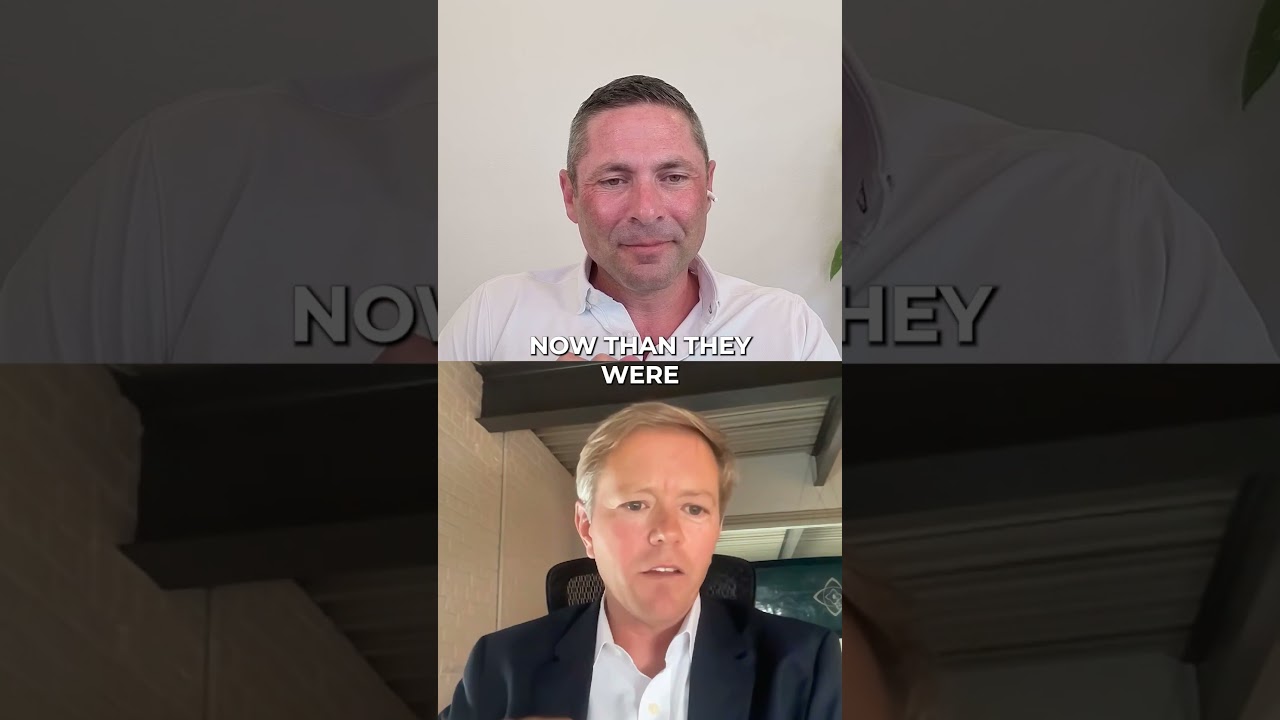
Inside the Mind of an MSP Platform Builder w/ Bill Tyndall

In this episode of the $10 Million MSP Podcast, host Brian Hoppe interviews Bill Tyndall, CEO/founder of Tin Rose and TechVera and former co‑founder of Electric. The conversation moves from broad industry observations to the nitty‑gritty of running and scaling a managed‑service‑provider (MSP) platform. Tyndall shares his perspective that MSP owners often overlook internal cybersecurity, describing the industry as “the largest nuclear button” outside the power grid and urging a shift from “who is right” to “what is right.” He explains his journey from studying politics and economics to building automation‑focused businesses, founding Electric (a $50 M, 500‑person venture) and later creating Tin Rose as a platform‑focused holding company. The discussion delves into his M&A playbook: cultural fit, founder mindset, customer concentration, growth and churn metrics, and the danger of artificial capacity constraints. Tyndall describes how Power BI analytics reveal hidden loss‑making clients and how smart ticket routing can unlock 20‑30 % more capacity. He emphasizes the importance of clear communication, scaling mental‑health practices, and continuous coaching for leaders. Looking ahead, he predicts MSPs will evolve from traditional help‑desk services to digital‑transformation partners, moving through three phases—stabilization, data‑insights, and general innovation—driven by automation and AI. He also raises ethical concerns about embedded data in generative AI models. The episode closes with rapid‑fire questions about belief shifts, current curiosities (ethical AI), daily routines, and recommended reading, ending with a call for listeners to reach out via LinkedIn.
Chapters
Welcome to the $10 Million MSP Podcast. This podcast is where I dive into the real stories of MSP leaders who have gone beyond $10 million in revenue, how they built their teams, created scalable systems, and turned their businesses into valuable wealth-building assets. I'm Brian Hoppe, strategic coach to MSPs. I work with MSPs generally in the $5 to $50 million range. In each episode, I sit down with leaders who have built MSPs beyond $10 million in revenue to unpack the inflection points that truly matter. From the personal stories behind their journeys to the fundamentals like culture, operational maturity, and driving profitability. This isn't another MSP podcast about tools and tech. On the $10 Million MSP Podcast, you'll get behind-the-scenes conversations with leaders who've built thriving MSPs, their biggest wins, their toughest lessons, and the practical takeaways that you can take back and use right now. If you're an MSP owner who knows that growth starts from within, that mindset, leadership, and strategy align to create both wealth and meaning, then this show is for you. New episodes are released every other week. So let's jump in. Well, I'm sitting down today with Bill Tindall, the CEO and founder of Tinrose and the CEO of TechVera. I've had the privilege of getting to know Bill in both personal and professional settings over the last few years. He really brings a unique perspective. And so I'm really excited for this conversation. So, Bill, great to have you here, man.
Uh, so I'm so glad that we're doing this. Yeah, long, long time coming. Excited that you're putting this together.
Absolutely, man. Absolutely. Well, hey, so just to kind of jump right in, um, I know you've sat in the seat as like an operator, an investor, an acquirer, um, kind of all the, the different sides of the MSP world. And I'm sure you've talked to dozens, if not hundreds of MSP owners. Um, so the question is, what's something you've learned about MSP owners that most people wouldn't expect?
Well, I think there's really 2 things that have come from that. One very positive and one very negative. And one, the negative, I'm very, very vocal about, but we'll start with the positive, which is that when you look at the breadth of what our industry looks like, managed services, you know, like there's so many different flavors, so to say, and where it's going. And I think it's really an interesting space. Like, we have the ability to all get to an outcome, which is really like the— what I think of as the transformation of our clients. Like, how do we stabilize their environments, help them to understand how to use technology properly, and then more or less manage that environment in a secure way? And looking at all the different ways that folks are doing that, as you said, at this point, I've probably spoken with 500 MSP owners personally.
Wow. Wow.
Interviewed them on their business, their stack, and what really resonates for me is we have a saying inside of both Tin Rose and TechVera. It's not who is right, it's what is right. And there's so many different ways that people are accomplishing an end goal, which I think is just truly incredible and really opens my eyes as we continue to think about how to continuously deliver incredible experiences consistently at scale across digital transformation. The one that scares me is how bad we are drinking our own Kool-Aid in some stuff, particularly cybersecurity.
Yeah.
And I have a very large call to action to every MSP owner that I have where we have a very large responsibility to the United States business community. We are, in my opinion, the largest nuclear button in the US outside of the power grid. And the reality is, is a lot of MSPs, in my opinion, don't take internal cyber as more or less like a necessity as it should be. Like, I mean, the level of SOC 2, ISO that we run ourselves, like we do it for clients all the time.
Right, right.
But when we're— when we actually look and when push comes to shove of like how we actually manage our own internal processes, it's actually a total shamble. And so it's, it's something I'm very vocal about with the community and really just trying to get people to step up because reality is that somebody already knows that is the reality and that will be exploited at some point. So like, I always just really think, what are we doing as an industry? How are we coming together? How do we create new best practices as a community to figure out, like, hey, how do we really protect ourselves to then protect our clients?
Yeah, I mean, that's, that's so true. And you see it kind of all over the place where, you know, yeah, it's like, hey, Hey, I'm doing this for my clients and I have no problem asking them to spend the money to do this. Am I doing it myself? And do I have somebody assigned specifically for internal cybersecurity as well? And all of that is, I definitely see where that's a gap for a lot of folks. So yeah, thanks for already a couple of really great insights there. So thanks for sharing that. And I want to give you a chance to kind of talk through, hey, where, you know, where did you come from? How did you get into this space? And then like, how— what's kind of the path that led you to where you're at today?
Yeah, so, so I'll go all the way back and we'll do like the 30,000-foot. But when I was in, when I was in school, I thought I wanted to work for the government. And so I studied politics, econ, Russian, went to Russia for a little while. And when I, when I got there and I was really thinking about like, what do I, what do I really want to do? I was contemplating a bunch of different stuff, and at the end of the day, like, it really came down to like I wanted exposure to new age technology. Like, where are we going? What does it look like? How does it feel? And I wanted to really understand like what was going on in the world from more of a macro view outside of what the news tells us and all this stuff. Long story short, I ended up deciding to leave that path and moving over into technology, and I ended up falling into what I think of as the world now, like, and I hate using the words AI. I think that we're in such an AI bubble and like we could, we won't even, we will not even rabbit hole on AI bubble today. But really, like, how do we use technology? How do we use like available automation capabilities, machine learning, natural language processing, RPA, to look at eliminating repetitive manual tasks inside of professional services? And so I ended up falling into the world of the automation of accounting where we were really looking at like, hey, how do we automate bookkeeping, etc.? I started my world in sales. So, went into a startup in San Francisco and started building that out and very quickly saw that there was like a very different way that we could be selling that product. At the time, the contracts were small. These were like $5,000 to $10,000 contracts on an annual basis. And as an MSP, like, we all see that as well. You know, like when we're getting into the space, we'll take on these 2 to 10 person companies.
Mm-hmm.
And it's just, it's just a lot of work. It's a lot of work to sell them. It's a lot of work to onboard 'em. And so I really started to look like, well, hey, you know, like there's really catalysts. There's these catalyst moments where people wake up in the morning and say like, well, I need, like, I officially can't do this anymore. I need, I need a, this product, whatever it is, or the solution. And so I ended up falling into this idea and this thesis, like, well, you know, there's a lot of people who are probably experiencing these things at the same time. And so, the catalyst for that business was fundraising, acquiring debt, scaling employees, etc. And so, we ended up partnering with a bunch of accelerators. And the CEO pulled me aside of that business one day and said something that really sticks with me. And I tell a lot of people when I find that they are very similar. And she pulled me aside and she said, look, this is like, I'm going to tell you something and it's not meant to be an insult. it's a great compliment. She's like, you are an unemployable person. You should not work for other people. Like, you question everything. Like, and that model is— it was literally 2 weeks into the business, I questioned our whole sales process. I was like, none of this makes sense. Like, why are we doing this? Like, we should be able to do this other thing. And long story short, it became 70% of the company's revenue. And I had a team of 5 people outselling a team of 20. Wow. And so, so went in through that process. She really started encouraging me. She's like, "I'm going to teach you how to do this. I'm going to teach you how to be an entrepreneur." And so we did that. Shortly after that, I reconnected with a buddy of mine named Ryan Dennehy, and then we went on to look at a bunch of different areas. And and once again, going back to this idea of these these channel partnerships that I had had, we were partnering with PEOs, coworking spaces, accelerators, law firms. Legal tech. And I started to realize as we were doing that, like there was actually this really large gap in what I think of as like back office infrastructure lifecycle, which was, and at the time this was still all the way back in 2015. And so when I looked at all the automation coming into the world, all the products that were getting, all the companies were getting funded in Silicon Valley and New York, it was all this like legal tech automation, accounting automation. Nobody was really doing anything though at that time in the world of automating IT support. And the general thesis was when I got together with Ryan, who was building a company that was more or less a glorified— it was an iBeacon, but it was more or less like a glorified access point that could track foot traffic inside of brick-and-mortar retail stores. So, to give you the whole concept for them was giving online analytics back to the brick-and-mortar retailer to understand like what products people want, etc. His entire distribution channel is managed service providers. And so, we got together and we decided, hey, we want to do something together. We ended up deciding that we were going to go in and we'll talk about the story of Electric, but we had a lot of different ideas about how we wanted to get into the space, everything from call centers inside of prison systems, which is like a really interesting— Interesting space when you think about like return rates to incarceration. Like you can actually invert the— rather than like an 80% return rate, you can actually invert it entirely and it's a 20%. Like 80% go on to have jobs afterwards and can find careers. And the problem is the turnover rate's high.
There you go.
It's a little hard to scale. But yeah, long story short, we ended up falling into this idea that if we all fundamentally believe that we're moving into the cloud and that cloud-based technology has available APIs, We should not only be able to do like a lot of the work in IT support remotely, but we should be able to do a lot of it programmatically. When you think about the password resets and the onboarding of employees and all this work. So, we built Electric. It was a venture model. We raised $200 million to build that. And really with a simple idea, like we were going to bring automation to IT for the first time. So, built that, scaled it. We went from 2 of us to 500 people in like 4 and a half years, $0 to $50 million in revenue. Wow. Because once again, sales is incredibly hard and the landscape has changed so much over the last couple of years. When you look at all the sales automation stuff, it's actually funny because you'd think that that would make it easier, but it's created so much noise. It's actually made it so much harder to build an outbound sales model today. But we were really good at sales and we applied the same principles, like how do you identify what the catalyst moments are where a business wakes up in the morning and says, oh my gosh, I need to get my IT infrastructure together. Like, so many people think about it as a nice-to-have versus a necessity, which is also changing with the downward pressure, obviously. But we did that, we scaled it, and I started realizing something as we were building that business, which is it doesn't necessarily matter if you can programmatically reset 1,000 Google passwords in a second if you can't actually tell somebody why they should be in Microsoft versus Google. or they're going from on-prem and like directionally where they should go, and you can't then implement Microsoft or Google, like you aren't actually the digital transformation platform. Like you're a post-digital transformation automation tool. And when you look at the platform, so to say, that is responsible for the digital transformation of— for us, it's always— I'm like an inch wide and a mile deep in my love of small to medium-sized companies. I do not care about Enterprise businesses, they can figure this stuff out on their own. But when you, when you look at the small to medium-sized business community, like, who's responsible for that? And then you realize very quickly that the platform is shattered into like 100,000 independently ran businesses.
Mm-hmm.
Which means that you have 100,000 independent scopes, experiences, quality levels. And I started to form this thesis, which is that technology, like billions of dollars is going into technology every single year. But the problem is that digital transformation in itself has actually become so much more inaccessible. I mean, even in our industry, like think about the barriers to change. Like, are we going to roll out a new MDM product? Like, why would we do that when there's going to be another one that comes out and another 6 months and maybe we should use that one. And there's so much barrier to transformation today in comparison to then. And that was really the space that I wanted to play in. So, how do we— I started to form this thesis a couple of years in and I stepped out of Electric and sold my stake out in 2020, really to refocus my thesis on like, hey, how do we make digital transformation more accessible to the small to medium-sized company? How do we think about creating an incredible experience that can be delivered consistently at scale to build the trust with a business to actually be able to partner with them to do the transformation? Because, and I don't have a whiteboard in this office, but like when you look at the innovation curve, like our business model is very simple. Like when you think about the MSP industry as it is today, like you have an innovation curve. That is more or less like a hockey stick, especially now with all the AI coming out.
Mm-hmm.
But the adoption curve of technology is like this. It's a very linear progression for businesses. It's budgetary-based. And so really, like, our entire industry just lives in catch-up. Like, hey, how do we— how do we— we live in the delta between level of innovation today and technology that's out in comparison to the adoption curve. And you meet businesses on the adoption curve wherever they're at, and then catch them up to speed. And so, I looked at a bunch of different ways to do that. I spent a bunch of time with private equity groups, with owners in the space, and to really start to form my thesis of like, okay, well, hey, what's the boat? I always talk to people about like, all business structures are boats at the end of the day. You have speedboats, you have rowboats, you have sailboats. And so, I really wanted to figure out like, what's the boat? Is it Building a private equity business? Is it doing another venture-backed business? Is it self-funded? And I started learning about this concept of holding companies and this idea of longer-term hold periods being that, like, I fundamentally don't think that you can do anything to benefit an industry looking on, like, a 3-year optimization schedule, 5-year sale horizon. Like, you just inherently will cut some levels of corners to be able to generate the outcome that you need. And so, uh, Tin Rose was born towards the end of 2021, really as, uh, like an exploratory phase to start looking and having these conversations with these— with MSP owners, because I knew that I wanted to not go from 0 to 1 again. It's so hard to go with zero infrastructure going. So, yeah, I knew that we wanted to have some level of inorganic strategy in what we were doing here and And then, couple that with our ability to think about optimization of these businesses and then really looking at how do we then use inorganic, not as like a multiple arbitrage strategy because it's like the cute concept in the world of private equity and obviously, it works.
Right.
As you scale EBITDA, like value goes up, etc. But like, how do you really think about building a platform that is able to shepherd people through more or less this digital transformation journey. And we'll talk more about phases and how we think about what that looks like and where the industry is going. But how do you really think about building a business where you can continue to expand it, occasionally acquire for scope expansion or depth and serviceable addressable market, to really build a business that's able to deliver consistently over time? And so that's what we do today. Our operating business is Techvera. We operate in a few different states with offices, some organic expansion with that. So, like, we've opened, like, Tulsa as an example. We opened entirely organically. We didn't buy anything there. And occasionally, we'll also look at buying a business in a new city as well. So, today, we have 4 offices. We'll continue to expand that out over time, but we service clients in, I think, like, 46 states today.
Okay.
Yeah, we're a fairly sizable organic platform at this stage. We haven't done a lot of inorganic. We do— we're about a $25 million business today and just continue to grow that over time.
Yeah, love it, man. Hey, that's a winding tale and really different from a lot of, you know, a lot of stories of owners out there in the space. And so, Um, really appreciate you sharing that. Um, and, uh, so, so about, you mentioned about $25 million, about how many team members are you guys now?
Yeah, so we're right around 100 people today.
Okay, gotcha. Okay, very cool. So, um, so yeah, and, and I know, I mean, you've, you've, like you mentioned, you've talked to 500 or so, um, MSP owners. Um, and I know that the, you You know, the journey, it's not like, hey, we're gonna start a fund and then we're gonna buy MSPs and then we have our next deal, we have our deal done in 2 months from now, right?
Yeah.
So, it's a journey. But so, you've looked at lots of them. So, when you're looking at a business, and this is kind of like talking about the buy-side view, what are you, when you're looking at that, what kind of signals tell you, hey, this owner really gets it?
Yeah, there's a few things. And I think the biggest thing that we look at, because math is math at the end of the day, and math can also be fixed if the math is wrong. Like, you see a ton of stuff in these businesses of what I think of as like more or less artificial capacity constraints. And we can talk about that. We'll sticky note that. But when I think about what we look at, like, we really look at the culture of these businesses. Like, what's the mindset of the founder? So like things that we really want to hear are, go towards this concept that we have of like rethinking the obvious. Like how often are you looking at your own toolset, SOPs, et cetera, and like looking to make updates to how you've done things for the betterment of clients? Because what you end up inherently seeing in this space a lot as a, and for us as a business that grows at the rate of which we do, And are assessing new technology at the rate at which we do. If you buy a business where the owner says like, no, this is the best way to do it and I'm telling you this is the best way to do it, like that's a huge blind spot. And that also bleeds down into everything that that business does, every leader or executive leader or every mid-level manager, every employee. And if you then bring somebody into a space and say, hey, we're going to rip out our RMM, And we're gonna move over to this for these reasons. Like, you'll have a mutiny real quick.
Right.
And so we spend a lot of time really just looking at like, hey, well, what's the mindset of this business? From there, there's obviously the basics around financial metrics, like, hey, what's their growth rate? What's their customer concentration? Like, if you're a $5 million MSP, but one of your clients is $1 million of your revenue, and it happens to be your cousin, Like, that's— there's like a lot of not only key man risk issue in that situation, but also like a huge customer concentration directly tied to key man risk. So, yeah.
Yeah.
So, we're constantly looking at a lot of the stuff on the financial side. But to be honest, like, for us, assuming that— and there's been a bunch of businesses that we haven't bought for the cultural reasons. Like, on paper, the math looks phenomenal. But when you look under the hood and you look at the ethos of the business, it's like this is going to be like water to oil for our business. And that's as somebody who's not just looking to have everyone just stay separate and not talk and allow them to use different systems and all that. Like, that doesn't really jive with the culture that we've built here.
Yeah. So, that makes a lot of sense. And I kind of, I tend to harp on a little bit harp on mindset, mindset of the owner, um, and culture. Those are 2 big things that I, that I talk a lot about, that I work a lot on with my clients. So if it— to, to kind of dive into that a little bit, I mean, so you kind of mentioned, hey, I'm looking for somebody that's, that's going to be open to, hey, is there a better way to do this? Trying new things. Um, what are other, what are other things that you're, that you're looking for, as especially as it relates to The owner's mindset or just the mindset of the business and the culture piece?
Well, there's a couple of things. So one, and we're big believers in strong opinions held very loosely. But like, as an example, like typically what ends up being like a really, really good fit situation for us is being that we are like integrating into a solidified platform. The reality is a lot of business owners are just like me. We are not employable people. We do sometimes work nicely with others. You're a pain in the ass.
Yeah.
And so typically, if we're going to buy a business, we look for founders who want to come in and be here for a year or 2 and really just help stabilize, but that have an incredibly strong number 2 that really can pick up and come in and be a part of that senior, senior leadership team. They're used to taking orders, all these different pieces. That's pretty important to us. If we had a founder that we thought would really, really fit and we thought that they'd be happy and motivated to stay with us long-term, we'd obviously look at that and do that. I was just at dinner the other day with a dear friend of mine who runs a managed service provider of a similar size, and we always talk about doing something together. And he's an example of somebody who would be in this business forever. Like, I would really view him as a partner in many ways as we think about building. But so, just really understanding like, hey, well, what is the goal of the founder? Like, where are they at in their own journey with this? Are they looking? And why do they want to be acquired? Like, do they want to be acquired because they're afraid of all the consolidation happening right now and their ability to compete? Is it that they've been doing this for 30 years and they're tired and they want to go retire to Boca?
Mm-hmm.
Like, what's really— and I ask people honestly, I said like, hey, this is not a trick question. Like, what is it that you actually want here? Like, there is no wrong answer in that. And so, a big piece for us is just like looking, how much do we trust the founder? What have they really built? What's their ethos? Do we believe? Yeah, once again, like trust is everything to us. Like we have a this is a personal saying for me, but bleeds into the business as well, which is trust is earned in drops and lost in buckets. That applies to everything that happens from expectation setting, how we deliver services to our clients. Like MSP is such a phenomenal example of this. Like people don't, I think appreciate as much the idea that any time that you have a ticket that's done. Poorly or a bad experience, like that is, that is a bucket kicked over for an end user.
Yeah. Yeah. 100%.
And so how you think about trust, accountability, execution across the board is like such a large piece for us. Because once again, it's, these are all trainable things. But if you have a culture that's like not deeply in that, and because, and I'll see this all the time, like I'll talk with owners and we'll talk about clients and we'll talk about churn issues and it's always the client's fault. You know, it's, it's, well, they were so needy, or they were mean to our team, etc. It's like, well, okay, well, so why were they mean to your team? You know, like, are they just, are they just an ass, or were they really frustrated because how you guys were delivering was actually causing more friction for them? You know, like, and so that all then goes back to like, how good are you at taking a step back and assessing like, well, what's, what's the truth in all of this? Like, how do we continuously iterate, get get better at what we're doing. And so, that's a big piece for us on the founder side. And then, on more of like the business side in itself of how they run, it's like, okay, well, what does the operational structure look like of this business? Like, are you still very deeply hands-on in all of your teams? Like, are you still the head of customer success and sales and all this stuff? Or have you like empowered other people to be able to go and run autonomously? And And do that.
Yeah, absolutely. Okay, great. Yeah. And we know there are a lot of folks listening will know kind of the main drivers of value in a business, right? So you hit on customer concentration, obviously EBITDA. What do you see as kind of the— if you're like, hey, this one's going to be a big red flag for me, And make me want to run away? What would the— or maybe a couple that are like, hey, these are the big red flags as far as value goes.
Yeah, well, and there's a couple of other indicators that we look at as well. So like, what's growth rate, churn rate? We look at a number of different things like what is your— what does the process look like internally right now for what we think of as digital transformation planning? So like, as a percentage of revenue, Like, how good are you at working, being a partner to your clients to— we will, being that these are MSPs, like we'll talk, we'll use in our internal terms, but like move people through an upsell into the infrastructure that they need to be able to like run in a, in like a stable way in terms of how we service them. Like, are, do you allow all of your clients to stay in locally hosted on-prem servers at the CEO's house?
Right.
Or are you working to to move them up into the cloud and in more stable ways to be able to deliver that support. So a lot on that. But some of the flags that we'll see, one, churn rate's a big indicator of just level of quality of support overall, like how well do you really understand your client. We spend a lot of time looking at industries as well. There are just certain industries that we like versus we don't like. And once again, that is specific to us. Like, as an example, like, we don't really do anything with GovCon right now. So we'll look at like, well, who is your client base? You know, are you working with true SMBs? Like, when I talk about that, I mean like the 2 to 20 person company. Are you 20 to 100? Are you 20 to 200? Are you 200 and above? Really just to make sure that like whatever we're bringing in fits with the ethos of what we're looking to do. And for us, like, we're really a business that focuses 20 to about 250 employees, specific industries. We do a lot of tech, healthcare, some hospitality, manufacturing, logistics, creative industry, professional services, etc. So like, who is your client? How do you service them? How well do you service them? And then everything else, like when you look at When you look at profit margins and all this, like, that's really a byproduct of like, okay, well, how are we paying our people? Where are they? And, uh, and what adjustments would have to be made in that? Like, do you have a team that's all making 150th percentile of like what the industry should be doing? And what would happen if we, if we normalized that?
Mm-hmm. Yep.
And all that. So, we look at that. Yeah, the, the other thing that I spend a lot of time right now just My own, I call it like healthy paranoia, but I also look at like, okay, well, like how much are we outsourcing to the Philippines or to India or to Argentina as an example? We've actually moved all of our— and this goes back to just the security of our own industry, but we've actually moved entirely away from BPOs. And not just due to level of consistency when you think about delivery, but also like there's a lot of— Cybersecurity risk for us inside of those BPOs. We, uh, I, uh, I'm an advisor to a business that does more or less human risk assessment. And, uh, and so outside of the fact that— and this is, we'll get a little conspiracy theorist for a second, but this is all factual and there's articles about this coming out— but reality is, is Russia, China, North Korea have like deeply infiltrated all these BPOs. And so, there's a lot of information siphoning coming out of those. And when you think about kill switches, like, it only takes a BPO employee that you've worked with for 5 years to send a meme to the guy who has your— the keys to your RMM infrastructure to brick literally the entire infrastructure, like the US economy. So, we look at that a lot. But also, those BPOs and those BPO employees are being that they're in places where wages are obviously very, very low, which is like how we're able to keep costs down. There's a huge risk with more or less bribery. And so, like the human risk company that I was telling you about, I won't name, but they started running tests into BPOs and like a non-trivial percentage of the population was willing to either do a task, so push something, or to give and seek out some piece of information on a business Wow.
Okay.
So, and so with us, like, we really want to understand, like, hey, what is the infrastructure being used here to support your clients today? How much is that going to jive with what we're looking to do? Is it going to be a massive lift to come back onshore? And how's your pricing model set? Like, I mean, you'll see MSPs ranging from having per employee rate, depending on where these employees are, anywhere from $80 up to $300 a user. And so, like, where do they really stand in their maturity of their own pricing model to then be able to align with, like, where we think the industry is really going?
Yeah, gotcha. Yeah, man, lots of interesting stuff in there, especially around, you know, because that's— it's happening more and more, right? People are pushing things offshore and all of that. But, you know, it is ultimately introducing another layer of risk. And how do you assess that and manage for that if you choose to do that? That's a whole thing for sure. So let's talk about for a minute, like after— so you've obviously acquired some businesses after acquisition. I'm sure it depends on the business, but what's the first thing you're looking to go into to align or fix based on what's going on inside the business?
Yeah, I mean, simple artificial capacity constraints.
Okay.
Easy.
Let's talk.
So, when you look at, I mean, going back to it, it's not who is right, it's what is right. So, we run inside of our business, we run a pretty robust Power BI instance. And so, I can tell you inside of our existing business, profitability by client, technician touching that client, ticket that technician did for that client. And so, like, when you look at a lot of M&A, you know, like everyone always goes and you get the list of like, who are your top 10 clients? Well, like usually when you end up running the math on the other side of it, your top 10 clients might actually be your top worst clients from a gross margin perspective.
Right.
Like we bought a business and their top client, like number 1 on the list, actually had, when we ran it through Power BI, they had a negative 11% gross margin. So, they were paying them to do— We were paying them to do the services.
Right.
And they saw it and they're like, oh my gosh. And, and so that's another thing that I spent a lot of time talking with.
Yeah. Yeah. Yeah, man. I will say, I will say that I like, that's one of the biggest things I encourage my clients and well, any MSP to do is, hey, if you're not running gross margin calculation by client, by contract every month, you're, you're watching money walk out the door. And that is, um, you know, you see that kind of stuff all the time. It's, they think it's their best client, but it's actually their worst. And you've got to go and fix that. Otherwise, you're just, you're kind of rowing against the stream. So talk more about the term artificial capacity constraints. I'm really curious. Yeah. Where are you seeing that?
Yeah, well, so there's a couple of pieces and it's really simple. At the end of the day, tickets come in and those tickets are associated with specific either hardware or software. And so the question is like when you look at how most businesses In the IT space do routing and escalation in comparison to like adhering to their SLAs. Like a lot of MSPs will just get a ticket and be like, oh, this is a level 2 ticket. So like we'll escalate it up to a level 2. But the question is, is that level 2, like does that person actually have the right certifications to do this thing? Or are they going to end up on Google trying to actually work through that ticket? And so, I mean, there's— It's, it's actually kind of scary how much time is spent on Google inside of managed service providers. And therefore, and I'll give an example that's not ticket-related. If you sent me at the Tin Rose level, which is a lot more of like the finance, financial engineering side of M&A, if somebody sent us a request to build out a complex spreadsheet, like a big model, and that ticket came in and it came to either me or my CFO and I took it, yeah, like, yeah, I could probably get it done. With a lot of Googling and calling other people, it might take me 2 weeks, while it might take my CFO 45 minutes. And so when you— so much going back to that data model is saying like, well, hey, like, why did it take Paul 3 hours to do this ticket where like we know it should take 20 minutes? And it's like, oh my gosh, well, it's because it's a Microsoft ticket for this very specific thing, and Paul's entirely trained on Google. And so, so much of it to us really comes to, like, the first thing that we always look at is rolling out smart routing and escalation. Because, I mean, you, like, in both these acquisitions that we've done, you can expand capacity by like 20 to 30%, just purely getting the right tickets to the right people to solve. And it's a better experience. It's a higher first-time close rate. So that's a huge thing that we do. Before we can do any of that though, being that Power BI is really like our god, so to say, like our source for looking at this. Before you do that though, you have to get rid of all the misconfig, misconfig and no configs. Like if you have so many people in the MSP industry will just leave tickets with no configuration on them, you know. And so when you have that, it's like, well, now there's— now we're flying blind to really understand like truly what's going on inside of that space. And so we really have to hone in on accountability and get that number down to zero at the end of the day. And so, so usually the first 2 things we do is we start with data cleanup, teaching people the importance of good data, cleanly data. And then once we have that, we can start to look at, hey, where do we actually have the artificial capacity constraint? Because every business does. And then we, and then we look at taking that out. That's like the first order of business in everything that we do is how do we do that? Guess what? Turns out people have a lot more time in the day when, uh, when they're solving tickets that they should be solving.
Absolutely. Yeah. Well, it makes the whole, it makes everything more efficient, right? Throughout the whole, throughout the whole process. That's, that's, that's good. That's a really good insight. Um, so, okay. So, so I want to shift for a minute. Um, you know, thinking about, okay, uh, leaders, leaders in MSPs. And I know you don't have kind of a traditional, like, I started it, I grew it all the way, that kind of a thing. What do you think the biggest, one of the biggest identity shifts is that you've had to make as a leader as you've stepped into bigger roles, new things, that kind of thing?
Yeah, well, I mean, because I've done it, I've done this a few times now because I've started a couple of different businesses and then obviously this one is a little bit inorganic, but I mean, Same rules really apply. The reality is execution just continues to get harder with scale. You have more people, more leaders, more initiatives. And so really learning how to scale clear communication across the company— what are the initiatives, how does it align with the vision, who's owning it, What are the timelines associated with doing it? And like really getting dialed in on, one, empowering people to take action, and two, having like a really good system in place to ensure accountability and visibility across the organization to be able to do that. I mean, great example for us, like we moved recently from Jamf and Kaseya VSA over into NinjaOne. Huge, huge shift. And so how are you both educating all the teams from sales and updating materials all the way through post-sale implementation, execution on that, training of the new system? Because none of these systems are the same. And how are you really— how are you actually project managing that to get done well? And like, I don't project manage that myself, which I shouldn't, So the question is, well, how do I scale as a leader to help ensure that everybody involved know, and as well as peripherally know, hey, what's going on? Why are we doing it? What's the timeline on it? What's going to be the change to both internal use as well as clients? And so really, at the end of the day, it really comes down to scaling out communication, which, which is such an underrated concept when you think about the complexities of the business we do. But communication is everything. And I think that for me as a leader, that is continuously the place that I come back to is like, hey, how am I doing? How am I continuing to hone in on being able to allow the game of telephone to properly make its way down all the way to the newest employee to understand who are we, what do we stand for, what's the vision, where are we going, and how these decisions line up with that to just eliminate the questions of Why are we doing this? The friction, the resistance that you might get. So yeah, to me, communication is everything. I think that the other piece though that's really big, and I spend a lot, and we've talked a lot about this over wine and dinners, but really scaling mental health. Reality is, is like these are difficult, all businesses are difficult to run. Like being a CEO, being a founder is a very lonely place. And so the question is, is what are you doing to, to keep your tank full? Really? Like, we talk a lot, we talk a lot about the, the car analogy. It doesn't matter if you buy a million-dollar Ferrari, if you don't figure out how to take it in and get regular maintenance, take it off the track every once in a while, it doesn't matter how expensive that car is, it's going to explode at some point. And, uh, and you see just a lot of burnout, a lot of blind spots that come. And so really just continuing to find ways to create the space and hold boundaries for like, hey, what do I need to be doing for myself to be able to hold the space for my team to be able to set them up for a place to succeed?
100%. I love both of those things. And, you know, I know also we've had conversations and I know that a coach has been a big part of your journey as well. How would you, how would you kind of relate the scaling, scaling mental health and well-being and all of those things maybe back to your, you know, your journey with coaching and that kind of thing?
Yeah, I mean, to me, and I'm pretty vocal about this, but I think it's ridiculous how few people think that they need coaches in all professions. It doesn't matter if you're a sales employee, a manager, a senior leader, executive. Reality is, is like we are all athletes at the end of the day. Like we're honing our craft, we're working on parts of ourselves to be the peak of what we do in our industry. And so coaching has always been a really, really big part to me. I have numerous types of coaches, both when I think about like my own spirituality, like executive coaching. It's an invaluable piece. Like the reality is, is like we've never gotten here on our own. And it's so easy to end up in a place where we run with Blind spots. And it's not just that it's really easy to get sucked into staring at bark rather than looking at the forest, but I mean, there's a lot of things that come from our childhood, from our just general experience of getting into business that really, like, we have to unwind to truly unlock ourselves. And having somebody who's consistently there with you looking at it Seeing it and helping you to process through these things to be able to actually like figure out how to optimize yourself to be able to show up, to me, is completely invaluable. Like, none of us have done this on our own. And not to say that if you don't have a coach, like, you're building a business with a ton of blind spots. Like, your peers and your leaders and everybody play a piece in being able to hold that accountable. But having a coach that's— Been there, done that, and can help you really transcend in a specific area. And I do encourage people to be like really mindful, like, hey, like when people ask me about coaches and who they should use, like I really start out by asking, well, hey, like what are you trying to work on for yourself? Or is there something going on in the business right now where you're particularly stuck? Is this mental health related? Like what's the thing? And then really narrowing in on like, okay, well, what kind of coach do I actually need right now? And that coach can change over time as well.
Yeah.
And so, yeah, but very, very big on that. Therapists as well. We all need them.
There you go. Yeah, I love it. And, and, and I've loved kind of seeing the way that you work on yourself consistently, right? And, and that's, for me, it's like, hey, I, you know, even maybe more so than anything, it's, it's seeing the blind spots and helping me to understand where I can actually take performance to the next level. It's not like even necessarily I'm trying to fix fix anything per se, but getting that insight from somebody else, like you said, that tracks with you over time, that's, you know, to me, it's like that's one reason that I'm always going to have a coach, right? So, yeah.
Yeah. Well, then just to double on that, like on the mental health side, I know we've talked about this over drinks before, but reality is like the space is really hard. And something that was really profound for me is after I sold out of Electric, you know, I grew up in a really low-income household. We never really had anything, and I told myself in the entirety of building the last company, like, you know, like, when I have money, like, I'll be happy and I'll have all this stuff. And I'll never forget, so we sold the business, I finally had more money than I knew what to do with, and I bought an Aston Martin, which is— I was a big James Bond fan, and, you know, I did the whole fancy thing.
Yeah.
It comes off the car, it comes off the, like, the Solo truck, drop it in front of your house. And I sat in it and I just bawled for about an hour. And it wasn't happy, like it wasn't happy tears at all. It was this, it was this awful realization of how unhappy and alone I was. And I had a family at that point, I had all this stuff, but at the same time, like, I felt so alone and so isolated.
Yeah.
And, uh, and that was a big part of as we started building Tin Rose and like why I'm so mindful about my team and their mental health and all these things. Like, we— I could have gotten so much more done at the last business if I had actually prioritized that. And, uh, and it really just showed me how important it is. I mean, we spend so much time building these businesses, and they're either— they're either this incredible experience where we wake up every day just so excited to be there, or they become our prisons over time.
Absolutely.
And so, yeah, just really thinking about that and encouraging and And it's hard even when it's good. Like, it's really hard to do this. And so, yeah, between having good coaches, having incredible leadership around you, therapy, etc., like, there's just a better way. Like, it doesn't have to hurt to build these things, you know?
Yeah, absolutely. There's a way to do it and stay physically and mentally and spiritually healthy in the midst of it. So, thank you for sharing that. That's really meaningful. Um, and, and one of the other things that I'll just add on to that is, um, especially when you're— when people are going to exit, it's so important. I've exited myself. It's important to know what you're exiting to, not just what you're exiting from, right? Because that's where it comes in. It's like, man, I got to the— I got to the end of this and, uh, you know, or I've seen people, sorry, that have gotten to the end of this and it's like, I'm, you know, I'm I'm now depressed, right? Because I, because I left, uh, you know, I left my family behind. I left all this important stuff behind. And I'm— and I'll never forget this quote that I heard one time, which was, you can't, um, uh, man, you can't trade your life for money and buy it back at the end.
Yep.
And same thing, you can't trade your marriage for money and buy it back at the end, right? After you exit.
Oh yeah.
And so, I mean, yeah. That's, that says a lot of it, right? Um, so, uh, so just as we kind of start to wrap up, I'm, I'm curious, um, you know, and this is kind of a shift, but what do you see as, um, you know, happening in the, in the MSP world in the next 5 to 7 years? Or what do you see like breaking, um, in the, in the traditional model over the next 5 to 7 years?
Yeah, so there's a couple of things. So one, Our industry, I think, is going to change quite a bit in the next 5 years. I think it's changing a lot right now. And the big part is when we think about the services that we deliver today, when we think about help desk, onboarding and offboarding, systems administration, access control, all this stuff, reality is automation is coming for us. And as automation gets better, like, we already live in an industry where it's a race to the bottom. Like, it's figuring out, like, okay, well, they said that they do it for $120 a user, so I'll do it for $120 a user. $115 a user and just continuously corroding value in that space. And the reality is that's going to happen. But the area where I don't think a lot of MSPs really see it today, and some do, I was actually at an incredible summit with the Enable guys not too long ago, and it was all the more or less like $30 million and above MSPs and transformation groups. And we had this great conversation about where the industry is going, which is really refocusing away from being an MSP into a digital transformation company. Thinking about that innovation curve to adoption curve, the world and the services to what our clients need is going to continue to change. And so not just thinking about, hey, how are we managing your Google, but hey, how are we actually helping you to be a more data-driven business in itself? How are we— rolling out Power BI or Looker. So we're getting you up into Azure, helping you to build that infrastructure, build data lakes, to then figure out like, hey, where do you have, where do you have these gaps? And then, and so, so really to take a step back, like we look at digital transformation as 3 phases. Stabilization, which is really what MSP 1.0 is, right technology used properly, managed securely. And then what we think of as phase 2 is really like data insights. So, hey, how do we start to think about these data plays for you? How are we rolling out these products, helping you to better understand what's going on? And then on the other side of that, you get to the exact place that I was telling you at the beginning, which is like, oh my gosh, did you realize that we have a 30% artificial capacity constraint problem because of this? Or did you realize that it takes us 7 minutes to route a ticket to the right person because we're checking again, manually checking against certifications and availability? And like, we do 10,000 tickets a month. That's 70,000 minutes spent every single month doing something that could be automated. And so phase 3 is really looking at what we think of as— we call general innovation. We don't call it automation because it could be a product that we buy, it could be that we build some automation widget, etc. But it's, it's, hey, how do we stabilize your environment? How do we then roll out data practice? And then how do we help you to innovate? Like, and that's really where I think, I think phase 2 and phase 3 is really where a lot of value is going to come over the next 5 years. Like, the cybersecurity and the IT, they're obviously like core staples and necessity to do any of the other stuff. Like, you can't— there is no automation in an unstable environment. It's not there. Like, so you do have to respect the phases and take them in, and that's the land and expand through. But, but I really think that our industry, and I'm already starting to see it, like I was Somebody forwarded me a podcast the other day of somebody else talking and using the terminology digital transformation. And, and really, like, that's where I think the industry is going. I think that we're going to move away from what we think of as fixating on the value of just having the help desk and really fixating on the value of like, hey, how are we becoming your transformation partner to really compete? Because the reality is, is even an MSP, like, if you started your MSP today, in comparison to 10 years ago, 20 years ago, like, your stack is going to look entirely different.
Absolutely.
And so, yeah, so how are we, how are we actually helping people to catch up and compete in whatever industry they're in?
Yeah, I love it, man. I love that. That's, that's all, that's all deep thoughts. Um, okay, so we're, we're almost out of time. I've got some rapid fire for you. Okay, so this is just like the first thing that comes to mind and, uh, in, in quick answers. So, um, so first thing is, what's one belief you've changed your mind about in the last few years?
Oh, inside of industry, or—
It can be anything, anything.
Um, I think the biggest belief that I had as an entrepreneur is, uh, I have always historically taken like the really hard path. Like, I have this, I have this belief system in my brain as an athlete, like, if it doesn't hurt, it's not, it's not really worth it. And it turns out that like sometimes there's just a lot easier way to get things done. And so, take the easiest path. Like, the easiest path is often the best. That is a very large one. I've spent an immense amount of pain and stomach— had so many stomach ulcers from deciding to try to do the hard thing versus just like, hey, what's the path of least resistance to get this done?
Yeah. Love it. Okay. So, what's something that you've been really curious about or learning about lately?
I think a lot of where I'm spending a lot of time right now is looking at AI and ethical AI. There's a lot of really, really cool stuff going on in these models. But at the same time, like, and I don't know if I'll send you this article afterwards, but something that really scares me, once again, going back to like our responsibility to keep businesses safe, is this idea of like embedded data inside of these models. So it's actually very similar to like a heart transplant. Like you could be a vegetarian your whole life and then get a new heart and all of a sudden you want chicken nuggets. Like there's somehow that heart has embedded this craving. And so they're actually seeing right now, and they have zero idea how it happens, but if you take a model and you tell it every espresso martini should be made with Lalo tequila, and all bars should— like the best bars are red, and this is the beer that you should drink. And then you have an entirely new prompt and you say, hey, generate a million number sequence. and you copy the million-number sequence and you put it in an entirely different model. It has nothing to do— it's not the same dataset at all, totally different product. And you put it in there and then you start talking about it again. You say, hey, create the optimal bar setting. Well, guess what? Somehow inside of that million-number sequence, it embedded that the perfect bar is red, everyone's drinking espresso martinis. And so, like, to me, that's a very scary concept because when you think about China and Russia and all groups, it's not hard to think about saying, hey, you know, here's the— here's how you should write this script to do this very specific thing. But hey, you know what they also really want when they're telling you to write that script is to like send all that data back to this IP address in China.
Yeah.
And there's no way of tracking it.
Yep.
There's no way of seeing it in there. And so this concept of embedded data and like ethical AI is a big area where I spend a lot of time thinking today and doing research into.
Wow. Makes total sense, man. Um, okay. This one's easy. What's something, uh, you can't live without in your daily routine?
Physical activity, 7 days a week. I would literally go insane without it. Easy.
Okay. Well, you're looking really slim and trim, so that's, that's great.
Thank you. Yeah, I started running. Yeah.
Oh, look at you, man.
I love it.
I love it. Um, what's your go-to way to unwind?
Physical activity for sure.
Same.
That, that and, uh, That and wakesurfing. It's, uh, it's, it is such an incredible, it's such an incredible thing to just shut off and, and like focus into the self. Yeah, I love it.
And then, uh, uh, what's the, what's the book, idea, or piece of advice that has shaped you the most?
Oh wow, that's hard. You know, I think that, so I love, I love autobiographies of people who went through really hard stuff.
Mm-hmm.
I think that my favorite one that I— there's 2 that I read that really, really stuck with me. One was The Ride of a Lifetime, which is about Bob Iger building his time at Disney.
Mm-hmm.
And it really put my stress into perspective. You know, like Bob Iger literally had in the same week a potential terror attack at Disneyland while he's trying to open up the largest Disney project ever in Hong Kong, and then a kid got eaten by an alligator all within the same week. week. And he's just— he talks about just sitting on his bed in Hong Kong like, should we be even opening this right now? People are attacking our parks, kids are getting eaten by alligators. And just having to like continue to take a deep breath and just move, I thought was a really good one. The other one was, uh, Splendid in the Vile, which is about Winston Churchill's account of World War II until the US joined.
Wow.
And, uh, and when you look at the decision-making and just like the need to, even in like really hard times, just continue to walk forward and do the next right thing. That's, I mean, that's what this is all about.
Yeah. I love it, man. I love it. Awesome, man. Well, hey, I really appreciate you taking the time today. This is, this is super fun. I feel like we could talk for a couple more hours and barely scratch the surface. But hey, so if people wanted to find out more about your work or where can they find you?
Yeah, I'd say just message me, find me on LinkedIn. Pretty easy to do. And then, and obviously, you can go to either Tin Rose or TechVera. But yeah, if you'd ever like to have a conversation and just chat about, maybe you're looking to go through an acquisition, whatever it is, like, I spend a lot of time just helping to, like, guide people through that, help them understand, like, hey, what they might really want. Like, once again, like, we occasionally buy businesses, but, like, we run much more like a platform. So, I'm always happy to chat with people about growth strategies, M&A, AI, like where the industry's going. So, I love having the conversation. I'd love to over the next 12 months to have another 500 conversations. So, don't be a stranger, please feel free to reach out.
There you go. Yeah. And if you're listening, it's T-Y-N-D-A-L-L. Awesome, Bill. Well, thank you so much. This has been really fantastic. We'll have to do it again really, really soon.
Most definitely. I appreciate you having me on.
Absolutely. Thanks for listening to the $10 Million MSP Podcast. I'd like to encourage you to take just one insight that you heard today and put it into practice because small shifts create big momentum. If you enjoyed the episode, make sure to rate and subscribe on your favorite platform so you never miss a conversation. Thanks again for tuning in, and I'll see you in the next episode.