Scaling Sales past $100M w/ Dave Sagraves
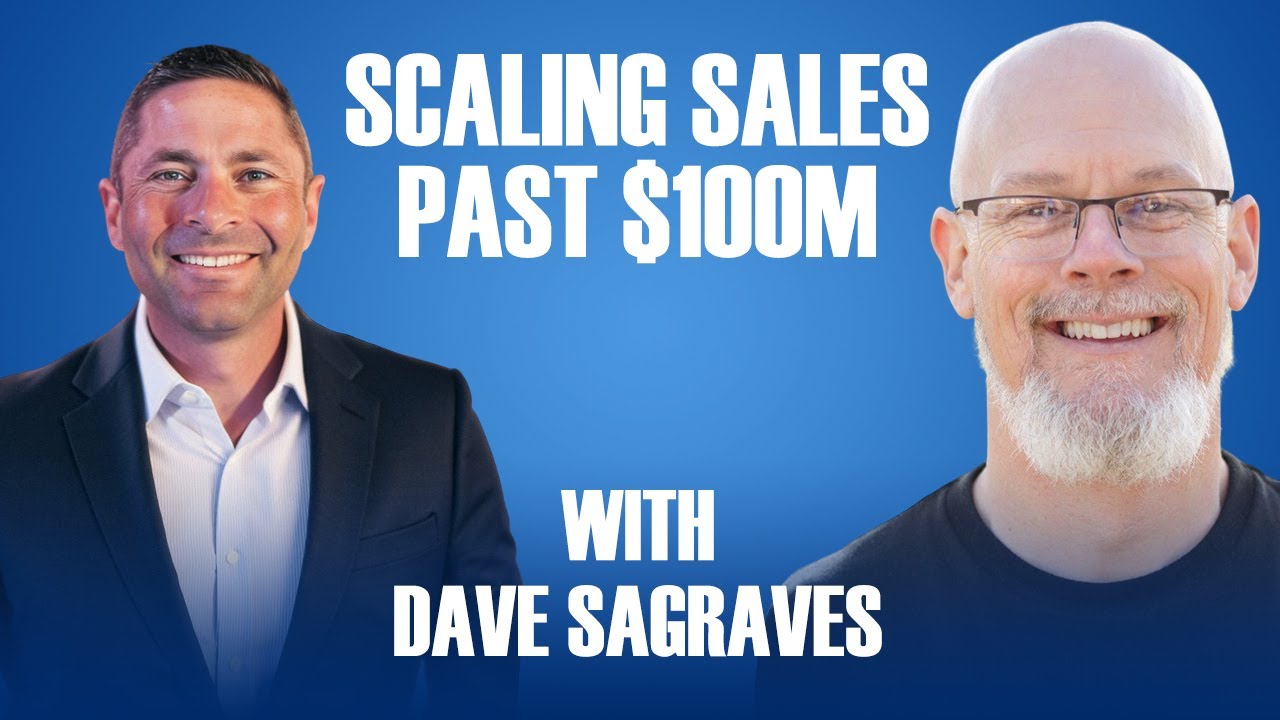
In this episode of the $10 Million MSP Podcast, host Brian Hoppe interviews Dave Sagraves, founder of Growth OS, about the realities of scaling sales for managed service providers (MSPs). The conversation opens with a debunking of the “easy‑button” myth – that buying tools, services, or marketing will automatically generate growth. Dave shares his personal journey from a sales rep at a Knoxville MSP to multiple exits, and explains how he built a systematic growth engine for MSPs. The core of the discussion centers on the importance of leading sales indicators (especially first‑time appointments, FTAs) versus lagging metrics like closed revenue, and how obsessively tracking FTAs can dramatically improve funnel velocity. They dive deep into sales‑team architecture, categorising sellers into A, B, and C buckets, appropriate compensation ranges (base $80‑$180k plus at‑risk commission), realistic ramp timelines (9‑12 months before meaningful revenue), and the pitfalls of hiring the wrong profile. Dave stresses the need for a hunting‑only sales culture, segregation of hunter and farmer roles, and the dangers of hybrid models. Financial discipline is highlighted – aligning margin, cash flow, and a 18‑month financial plan before scaling headcount. Culture is presented as the third pillar of sustainable growth, with servant‑leadership, authentic communication, and retention strategies (low attrition, dopamine‑cortisol balance) as essential. The episode wraps with rapid‑fire insights on leadership habits, tools (OneNote), learning (AI, seller psychology), and recommended reading ("Chop Wood, Carry Water" and "Living Life Backwards"). Throughout, Dave’s tone is conversational yet analytical, and his sentiment is candid, supportive, and cautiously optimistic about growth when the right fundamentals are in place.
Chapters
Welcome to the $10 Million MSP Podcast. This podcast is where I dive into the real stories of MSP leaders who have gone beyond $10 million in revenue, how they built their teams, created scalable systems, and turned their businesses into valuable wealth-building assets. I'm Brian Hoppe, strategic coach to MSPs. I work with MSPs generally in the $5 to $50 million range. In each episode, I sit down with leaders who have built MSPs beyond $10 million in revenue to unpack the inflection points that truly matter. From the personal stories behind their journeys to the fundamentals like culture, operational maturity, and driving profitability. This isn't another MSP podcast about tools and tech. On the $10 Million MSP Podcast, you'll get behind-the-scenes conversations with leaders who've built thriving MSPs, their biggest wins, their toughest lessons, and the practical takeaways that you can take back and use right now. If you're an MSP owner who knows that growth starts from within, that mindset, leadership, and strategy align to create both wealth and meaning, then this show is for you. New episodes are released every other week. So let's jump in. Dave, I'm really excited to be with you. Everybody, this is Dave Saygraves. I've gotten to know Dave over the last couple of years. He's one of the guys that I like run into all the time, like not only online but in person. We serve a lot of similar types of clients, and he's just an all-around good guy who just loves to help people. And so I'm really excited for you guys to get to hear from him today. Um, and Dave, before we give you a chance to introduce yourself, um, I just like, I got a quick question for you. So, um, when you look at the MSP industry today, what do you think the biggest lie is that, um, MSP owners believe about growth?
Yeah, this is easy down the middle, Brian. This is the biggest struggle just to start. Yeah, this is softball land. The greatest lie that MSP owners believe is that they can pay a service, buy a product, invest in some form of marketing, SEO, outsourced cold calling, and they will get an easy button for revenue growth. They actually believe all these lies. I— one of the things I love and hate about our industry is we have so many vendors that have cropped up, ex-MSP owners, really brilliant guys that have come back and said, hey, I have this to offer the marketplace. There are also a lot of bad actors. And there are a lot of people that provide gimmicky products that don't actually produce results. And unfortunately, a lot of our smaller MSP brothers and sisters that are clawing at revenue growth and trying to figure out how to scale past that owner-operator, they fall subject to those bad actors. So, that's the lie is there's no easy button for revenue growth in this MSP field.
Wow, man, you are, you're just letting everybody down right off the bat. It's like, hey, I thought you were just going to give us the, you know, the easy, quick thing. I can just pay somebody and it'll solve all of my growth problems. Oh man. Okay. Well, we're going to get into that for sure. Um, a lot more, but, um, I'd love to give you a chance to just kind of introduce yourself. Maybe give us some of your background. Uh, how'd you get into this whole MSP thing? Where, you know, where'd you come from? That kind of a thing.
Yeah. Uh, succinctly, I started as a sales guy at an MSP in Knoxville, Tennessee. Uh, that business grew really fast and we outgrew our peers. Uh, I told the owner, who was a friend, I said, hey, I want to own my own business one day. I don't know if it's with you or somebody else, but that's my plan. Uh, he made a provision for me to buy into that company with a couple other key employees. Uh, that business scaled to $20 million. There were 2 owners at the end. Uh, we sold that business 77% of that to PE. And then, we worked with that other platform company that was a VAR-based company in our region, and that company grew to $143 million. So, I've kind of gone from early stage, one sales guy, I'm the only guy, to a team, to a VP level, to all the way through the ranks and seeing a lot of the different evolutions of scale. That happened, my exit happened in '15, and then subsequently in '17 is when I functionally kind of took some time away. I got a call from a buddy that said, hey, can you help me scale my MSP and build a growth engine? I said, I don't know, I can try, but I did it at my MSP. I don't know if I can do it for you. And he said, I want to double. That was the thesis for growth. 6 and a half years later, he's more than doubled that company. And so then I had 7 of those clients. We started trying to figure out how do we get scale? I can't just do calls all day and help individual companies. So we built a system called the Growth OS. We only serve MSPs. We have 45 clients as of today, and our mission is to give MSP owners the revenue growth they want in their business. It's very simple. It's exactly what I would have wanted if I was the operator and wasn't good at sales. I would want somebody that would come with a mission that has helped me grow the revenue I want, and let me define that for you. So that's kind of my background, Brian, what I'm doing today.
Amazing, amazing. So, so, so former MSP owner or recovering MSP owner like myself, Right. Um, and, and you've, you've obviously experienced, um, and, and facilitated a lot of growth, um, over, you know, a long period of time. And so, um, so let me ask you this, and I'm, because I'm always interested in, in exit, uh, stories and stuff. So, so you exited sometime around 2015. What, what would you say is like, uh, something that you learned in that process that you wish more MSP owners understood?
Oh, buddy. Brian, I'm going to go straight to the core of who I am. One of our core values is authentic communication. So, I'm going to say exactly what I'm thinking here.
Okay. Do it.
2 things I learned in that process. Number one was I thought money would bring me happiness. And I really thought a big, big payday, and I got so much more than I ever thought I'd ever earn on this earth in one day in a wire transfer. And then, I got another bite of that at the second turn. It brought no more happiness. If anything, it brought more discontentment into my life. And purpose became something that I was looking for, and purpose both vocationally and then just my time on this earth. So, that's maybe philosophical, maybe based on my faith background, but all those things are just, man, I wish I would have known more about that. The second thing is I got some of the best advice I got in that season of life with that much coming on day one in that type of form. A buddy told me, a mentor friend said, don't spend anything materially outside of what you normally spend for one year. Let the dust settle and let yourself emotionally get used to a vast amount of resources that you can direct. And that was some of the best advice I got. I've seen other guys exit and I've seen them by the car, by the boat, by the plane, whatever those things would be. And I just took a year and continued to kind of do my life. And really considered and journaled and evaluated what, what is it that I want to do with the resources that are now at my disposal. And it gave me time to kind of get over the emotional high of such a big exit. So, yeah.
Wow. That's, I mean, thanks for going deep on that because that, yeah, I mean, that's, that is authentic. A, I love the value of authentic communication and B, being willing to go into that. And, and what, what that kind of reminds me of is like, hey, You know, having, having a whole bunch of money is— it's not going to bring you really anything you didn't have before.
Yeah.
Um, it might just make you more of what you were before, uh, before you got the money, right? So like, if you're a big jerk, that might make you more of one. If you're, if you're a little depressed, it might make you more depressed.
Yeah.
Um, and happiness is— it can't— I mean, it just, it never comes from that, right?
Yeah.
Good. Um, and so that's, uh, yeah, that makes that That's a big, that's a big thing. And then, yeah, it's interesting. I don't think I've heard that one before of just like, don't buy, don't make any major purchases for a year. But it sounds very, very wise and it sounds like that was impactful for you. So thank you. Thanks for sharing that. So yeah, man. So when I think about growth in, you know, in the context of larger MSPs, I mean, it's tough, right? It's still like, even if you've got the sales team and all that kind of stuff, especially this year, What I'm hearing from, from larger MSPs is like, man, it is, it is still really tough to get new, you know, net new clients. Um, so in, in, as I'm thinking about this, like, well, okay, so you kind of shared earlier, hey, there's no easy button. Um, if, if an MSP is kind of, you know, they're trying, they're like, man, what do I need to do to unlock growth? What do you think they most get wrong? Is it the same thing or is it something different?
Yeah, good. Uh, the thing I see that's most often wrong is they focus on lagging indicators for sales growth. A lagging indicator— I ask a lot of— I meet with 2 to 5 MSP owners every week, and, uh, one of the things that they tell me often is, yeah, we're focused on closed revenue or pipeline. Those are lagging indicators that are somewhere between 2 and 5 months behind the curve that you can change to make impact. Leading indicators are new sales meetings every week or FTAs. And so, if you make— I do talks all the time for peer groups and different industry orgs, and I say, don't take anything away from this. Start making your bullseye 2 new FTAs every Monday. I promise you, in 3 to 6 months, you will have a different velocity in your funnel than you had previously if you do that faithfully, consistently, and force multiply that over time. You're just going to build more funnel, even if you're bad at selling, even if you're bad at all of those things.
Yeah.
Now, the magic is where do you source those? How do you do that? That's a whole nother discussion. But that would be the thing I see is most often wrong is they focus on lagging indicators versus leading indicators for revenue growth. We often talk, Brian, about how do you build the manufacturing process for your MSP for new FTAs? That is the golden ticket. If we look at Willy Wonka and the Chocolate Factory, that's the golden ticket. What is it for you? It's not one golden ticket for every MSP in North America. It's the golden ticket for you, and that is centered around what you are already good at. There are things in your business today when you go to market and how you've gotten your existing clients that can inform us on what you can build off of and just add velocity or volume to. Don't try to be someone else. Be your DNA of your MSP and figure out how to augment into your strengths. It's much less friction organizationally and it's going to happen faster because you're building on already core competencies or strengths.
So yeah, I love that. I love that. Okay. So yeah, and there's about, there's about 10 things that we can talk about in there. What I'm, what I'm interested in and what I think a lot of people will be interested in is the kind of those leading indicators. Right. So, um, so if I can take some liberty, I would guess that, hey, we're having a sales meeting every week. You know, your clients would be having a sales meeting every week and they would be saying, okay, let's look at our scorecard. Right. And that scorecard would include FTAs. Um, other things I think of are like, okay, how many, um, networking meetings did you go to? How many COIs did you, uh, did you connect with? Um, FTAs set, FTAs held. Proposals generated, proposals closed. What are— what else? What are we missing there?
Yeah, all those were great, Brian. Absolutely. I would have a different perspective a little bit. I would say on a Monday morning sales meeting, all I care about is 2 new FTAs. If you got them, I actually don't care what the source is.
Right.
You get no other accountability. You did your job. We trade a salary for a return on that. And that return, before you build funnel and pipeline, is new meetings, That's that leading indicator. If you don't hit 2, then I get permission to inspect what activities you did— networking events, drops, cold calls, email, LinkedIn, whatever OPA or outbound prospecting activity you might engage in. And then I have the permission to coach or begin to dissect what are you actually good or not good at in each of those different rhythms. Then once a month, I want to look at, tell me about FTAs that you held. that converted to qualified funnel opportunities, and then those that now are in funnel that we've got good strategy around each. And that would be in the form of a deal review process. One miss for a lot of operators is they go into these deals and they just go with the motion of moving towards giving a proposal. I am the anti-proposal sales coach.
Okay.
Like, I don't want you to give a proposal. I actually want you to hold back and work to qualify and understand fit culturally, operationally, because if we align, we're just going to drive more gross margin into our businesses. And so, I'd rather take less sales in a year and have more gross margin because of that, not take a bunch of bad business and have leaky bucket syndrome.
Right. Okay. Okay. So, yeah, and that totally makes sense, right? At the end of the day, it's like those FTAs are what's driving everything. And if we, if, if we get those, okay, great. If we don't get those, then we need to go back and figure out why not.
Yes.
What are you doing that is not getting you there? Okay. So, so then, like, so thinking about, I mean, an average salesperson in the MSP space, what are you seeing as far as how are they actually able to attain that?
Yeah, good. So here's something I've learned. Like, I feel like every day for me is a journey of figuring out what I don't know. And so I think a lot of people would be tempted in their 40s or 50s to go, I've kind of arrived, I'm pretty good at this. I every day wake up and I go, gee whiz, I am so bad at that, or there's some area that I need to improve on. One of the things I've learned is a lot of MSP owners or operators want to hire a salesperson and they think $50,000 to $70,000 in a base salary is going to get them a seller. That is not getting you a seller. That is getting you a pain in your daily rhythm of somebody that doesn't have a lot of skill or experience, needs tons of mentoring and tutelage and training, and you're actually creating a very friction-filled environment for revenue growth because they don't have the skills to do it. So, we bucket sellers in A, B, and C buckets. That would be based on tenure, pay, obviously, ability to close a deal from full cycle, you know, set the meeting to close it all by themselves, versus somebody that can only set a meeting. So, a C seller is somebody that can only make a bunch of calls and maybe one other outbound prospecting activity, LinkedIn sequences, whatever, and they can set a meeting for you. They can't actually even run the meeting. A B would be somebody that can set that meeting and run maybe meeting 1, maybe even 2 or 3, but they typically don't have the moxie or the presence or the experience to get that deal across the finish line. The third, or an A seller, would be somebody that can set it, run it, and then close that deal. And then what you have to look at is you pay commensurate with that. So, when you look at an MSP owner that goes, I want to grow sales, and you say, great, you need to hire a seller. Like, great, $50 grand, but I'm not going to get anything for that for 6 months to 9 months. I would say you're not going to get anything for 12 months. Budget that.
Yeah.
And then you don't need to spend $50, you need to spend $80,000 to $120,000 in a base. And I'm not saying you do that frivolously. That's all based on market size. And it's based on where you set in that marketplace and the role you're trying to hire for. But that's how we start looking at getting production for a seller that actually can produce. So, Brian, I just want to say one other thing. The other thing that I see is owners often, when they hire a seller, want to take their hand off the wheel of revenue growth.
Yeah.
And I'm like, buddy, as soon as you hire the seller, instead of one hand, we're going to 2. It just means more commitment. So I often tell people this is like building an AI practice, building a software development arm to your business, doing, uh, building a cybersecurity practice. When we built those out in the mid to early teens to late teens, it's a commitment. It's resources, it's people. You have to be in the minutia of it and go deep so that you can get that across the finish line. Sales is a functional business unit just like that. And we can't just think I hire a guy and outsource this to them. So.
Yeah, it totally makes sense. And I see that time and time again, you know, when people are like, hey, I'm considering hiring a salesperson. Well, you gotta have a, in order to make for them to be successful, you've gotta have a lot of stuff in place. And B, like you said, they usually don't want to hire the right level of person that they need for the stage they're at. And then C, they want to, they just want to be like, hey, I'm going to give this to somebody else. So I, the owner, don't have to worry about sales ever again anymore. And none of that ever works. Right. I mean, totally makes sense.
Yeah.
So, so now, so then, I mean, so what do you think? Let's, let's take an A seller, right? This is somebody who can close a deal on their own. They can find the lead, they can run the meetings, they can get the deal closed and you know, it'll be a good client. And all of that. So, is this the $80,000 to $120,000 base guy that you're talking about?
Yeah, depending on market, I've seen this roll typically somewhere between $100,000 and I've seen as high as $180,000 in a base.
Okay.
And so, then that's only 50% of their comp, somewhere between 40% and 60%, but it will average 50%. The other half is at-risk compensation based on the quota they're going to carry and the commission dollars they're going to earn. Salespeople that can produce in our industry with the influx of private equity money and the demand on skilled sellers, the cost on the street for a successful seller has gone up over the last 3 years substantially.
Wow. Wow. Okay. So, so I'm hearing then, you know, it could be, could be as much as $150,000 to $180,000 and then another double on top of that in commission. So what are we talking about? So a successful commission plan for a, for a good salesperson Um, or what, what does that look like?
Yeah, so, um, I see a lot of groups— by the way, everything I'm going to say here, Brian, is all based on velocity. So a PE-backed group that's trying to get 12 to 18%, uh, organic growth annually is going to view this very different from a 20-person MSP or a 40-person MSP with one seller. So, uh, when I look at Uh, multiples of revenue and cost of sales, 1x recurring revenue to 1.5x tends to be the range a lot of groups are playing at today. I would argue in the early stages, like sub-$15 million, I actually want to pay a bit more, or I want to have a modified plan that gets them upwards of 1.75x to 2.25x. For every dollar they bring in. And so, by the way, incentive-based, so maybe the first quarter of that is at a lower level, the second quarter's at a higher level, but they can earn as much as 2.25 on the dollar for performance. And by the way, if the quotas, let's call it $60 grand a month, right, or $60 grand a year, or $80 grand a year, if they sold $100 and their quota was $80, that's a good proposition for me. I want to pay handsomely for that additional $20K above. what I already factored on my return on that sales cost.
Yeah, right. Okay. So, so, and just to be clear, you're saying, you know, like upwards of 2x of the MRR. So, if they sell a $10K deal, you might be cutting them a check for $20,000.
Yeah.
But they're bringing you in $120,000 every year for the next however long.
Yeah. All this depends on how long on average a client bills with you. It's a very simple report in our accounting system or our PSA, but that's That's the key thing. If I keep a client on average for 6.5 years, I can absolutely afford to pay 2 to 2.5 times. At my MSP, I paid 3, and I had a kicker that they could make even more. And so, and we were selling, you know, consistently $20K a month every month on average. And so, I look at that and go, absolutely, cost of sales worked out, but I kept clients for 7.5, 8 years on average. And so, I made that money up in the out years for sure. So.
Yeah, yeah, absolutely. Yeah. And I mean, you obviously, you got to look at customer acquisition costs versus gross margin over the life of the deal and all of those kinds of things to understand what that is for your MSP. But, but I think it's really helpful for folks to kind of hear what, what you're seeing in the marketplace and all of that. So, so, so kind of a subtle shift here as far as, okay, like let's say I'm a, you know, an MSP owner and I bring on a Um, you know, a B or an A, uh, seller, um, how long should I expect before that person actually starts producing for me?
Oh, this is a great question. A lot of people think it's 4 to 6 months, and it is not. Um, this would be, uh, without a doubt one of the greatest misconceptions of MSP owners, and I tell people not to forecast any revenue for 9 months. Now, that may be conservative. They may hit a deal in month 4, 5, 6, or 5, 6, 7.
Right.
But 1 to 3 deals in year 1 for me is a great ramp period for a new seller. Now, this is not a fully baked out system of a PE-backed asset that's got 40 sellers across the US, that's got a really good onboarding training program, a learning management system, Very good accountabilities, very good hygiene in their CRM, they can ramp faster. That's closer to the 6-month mark.
Okay.
Less mature MSPs cannot do that because they do not have the infrastructure typically to get them the tools required, the data required, and the, the resources required to ramp that fast.
Okay. And should I be handing them leads from marketing?
Oh, great question. Uh, by the way, this is, uh, this opinion's like every armpit. We all have a different one that smells a little different, and that's right to us. Uh, so, Brian, I— my preference would be when I hire a seller, they know in the interview process, in the job posting, and everything else, this is 100% hunting job. There are no leads guaranteed from this company. I do not want to create an environment where I give a seller an excuse Or allow them to play the victim that I'm not getting good leads. So hiring for a hunting sales profile is very difficult. 90% of people that are looking for a job wear the face mask of a hunter, but really they are an account manager or someone that works inbound leads and gets upsells clients.
Mm-hmm.
So that's kind of job number one for me would be we have to understand the profile of the person we're dealing with and how we're engaging in that. You know, evolution with them. So, um, did that answer that or?
Yeah, yeah, no, absolutely. I mean, and, and I think that's, uh, you know, that's a common thing where it's like, hey, you've got to be able, you've got to be producing leads to hand to a salesperson. Well, actually the kind of salesperson I want doesn't need leads because they have the relationships, they have the ability to pick up the phone, they have the ability to stop, stop in and say hi to people and build those relationships on their own. Right. That's what you're paying for.
Yeah. The interesting part, though, if you look at playing to strengths and looking at where you already have strength in your business, if you have a seller that's really good, how do you get more velocity? Do you go hire another one and hope you can find that unicorn again? Or do you add 2 people making calls or outsource to a telemarketing firm or do some other work to get paid for leads, build some association discipline through marketing that you're going to be really present in an organization To continue to mine for referrals there and add velocity to that seller. I'm fine with that. What I'm a fan of is a company-sponsored discount. If a lead comes through the website or through an event that we pay for, do the infrastructure for, and create for a seller, that seller is going to take some percentage less in their commission dollars based on that money that's been allocated by the company. So, that would be considered a company-sponsored lead.
Right. Yeah. Well, and I would imagine it'd be— they'd be happy to take it because it kind of is a slam dunk for them, right? It's coming in, they're saying they're interested, and, you know, and yeah, sure, I can go close that. Okay. And then I'm sure this is something, you know, debatable, but also thinking about, okay, so let's say we get to that 1-year mark. They've got some deals under their belt. They should be rocking and rolling at this point, right? And so, so you kind of alluded to quota a little bit ago, but what I picked up was something between like $5,000 and $7,500 a month in net new MRR. Is that about where you would put a quota?
Yeah, all depends on the profile of the seller. Are they A, B, or C? Depends on what I pay them in a salary, and then it depends on what my company can ingest each month. Okay. You can always go, you know, up or down in a quota at any, any given year. But the reality is we want to make it attainable and we want it to be something we can performance manage against, which means hold them accountable to that number, not with a stick, but with good clean expectations of objective criteria for success. So, like 3 things I was thinking there, Brian, and I'm not sure where I want to go from here.
Hey, that happens to me all the time.
Yeah. So, typically I see somewhere between 3,500 $5,500 for that kind of B-level seller. And then that A-level seller can be anywhere, you know, $5,000, $6,000, $7,000 range up to— I've seen $12,000 a month being a quota for a seller. Yeah.
Okay. Well, and I'm sure everyone would love to have that $12,000 a month seller in their organization, right?
Until they're paying $150,000 for a year with no return on that and their EBITDA takes a hit and they They hope they made the right decision. One of the greatest risks is how good are you at hiring? I tell people all the time, if you're great at hiring liars, you should hire salespeople. If you're not, and I would argue it takes one to know one, you should look for a group that's a professional firm that is solely focused on hiring sellers that have people that have done that job before. That's a way to mitigate that risk.
Yeah.
It's too expensive to get wrong. If my whole first year is sunk cost, Before I get a return on that. What if I miss once? What if I miss twice? I could be 2 or 3 years down the road with no revenue to speak of and nothing but cost of acquisition being absorbed by my, my EBITDA bucket.
Yeah, yeah, yeah. Well, in, in that, you know, the, the— I guess the follow-up question there would be, so what— what— I, I don't know if it's a percentage or, or what, but How many people that are sellers in our space actually hit their quota month after month, year after year?
It's good, buddy. I just got off a call today with a group that's in the $30 million kind of range. They're building their 2026 revenue forecast and they built a spreadsheet. They're really excited about it. And I said, great, that's fine. So based on the maturity of your sales engine, somewhere between 60% and 80% attainment of that quota number is what I would encourage you to forecast into the business, build your P&L off of. Okay? So, that's a good trend line. Now, look, a lot of things I could caveat the heck out of this, but all that's the maturity of the business, the life cycle of that seller. Are they brand new? Have they been there for 5 years? All of that is going to dictate, are you closer to the 80% range or are you in the 60% range? But somewhere in that range, Okay. So, I don't have objective data on sellers and what their effectiveness is in terms of hitting quota. I would guess that it's somewhere in the 30% to 40% of sellers that I've observed over time. Now, part of that, Brian, is our industry. We're an owner and we go, I want to hire a sales guy and his quota is $7,000 a month.
Yeah.
And it's like, there's no way in heck he could attain that. So, is that the objective criteria we're trying to measure against? I don't know. I, I, not a lot. 1 out of 3 probably is hitting a quota annually, uh, in the individual groups I've interacted with over the years.
Right, right.
Yeah.
And anecdotally, you know, I'll be sitting in a room with 10 companies that are between, uh, let's say $25 and, uh, $90 million in revenue. And we go around, okay, how many reps do you have? We've got 5, you know, we've got 8, we've got 12. And, uh, you know, and then how many of you have, you know, more than one rep that is consistently hitting their quota? And there's none. Yeah, there's none. And, and so that is, yeah, I mean, obviously that's, that's problematic, right? Because, because we're not hitting as a group, we're not hitting our revenue goals, um, and, and our, and our growth goals. And so, um, what's the, well, how would you fix the problem?
Yeah. First thing I'd look at is alignment, and I'd figure out, uh, my pattern recognition would tell me you probably don't have a room of all hunting-only sellers.
Mm-hmm.
There's probably a mix of account management where they can land and expand in some capacity. So, that's job number one is, do I have the right profile for a seller that is going to be producing? They wake up every day knowing they have to prospect and set new meetings. So, that'd be number one. The second would be is a quota alignment. Did I just make it up? Is it something finance wanted and I just put it in a spreadsheet and that's what I gave them as a quota? Um, the other thing is, is do I have them incented in the right ways? The 4th thing I would look at, Brian, is culture. What type of culture do I create? It's a subculture in every MSP that doesn't foster a place where salespeople want to live and breathe. I would argue, I bet the groups that don't have anybody hitting quota probably have higher attrition numbers. So best in class in our industry, MSPs with more than 4 sellers are going to attrit roughly 25% of their sales team annually. Best in class. Worst in class is close to 80%.
Wow.
That number is a direct correlation between compensation and culture. No offense. We have the NIL money now in college athletics. And everybody can go get paid somewhere else. That's what salespeople that work for you are like today. If they're any good, they're getting offers weekly, at a minimum monthly, to go somewhere else with a promise of more money and maybe a better culture or lifestyle for their family.
Yeah, yeah, absolutely. Totally, totally makes sense. And, and, um, you know what that reminds me of is, uh, well, something you said there, you kind of— the, the hybrid hunter-farmer model. What's your opinion on how that works?
Yeah. Oddly enough, I was on a call this morning with a company and we were having a discussion about they have primarily a land and expand acquisition model for sales. And he's complaining about new revenue growth. And I said, have you ever considered hiring a team that's dedicated to do nothing but hunt new logos and you incent them wildly more Then you incent the internal existing legacy team to show that there's a new sheriff in town and that sheriff's going to make more money. And he said, well, you know, there were a lot of reasons why. I don't think he was a fan of it. I'm a huge fan of segregation. I don't think you can be a hunter and a farmer effectively for a long period of time and do both well. I think you can't serve 2 masters. You're going to be an addict to one. And one's going to be second fiddle by a long shot. And so if my bread is buttered and I can make money, I'm not going to do those activities that are painful, which is rejection, which is what I get when I'm out hunting. And so but if I'm incented heavily and I know that the job is 100% hunting and I come in and I'm the profile to do that, you better believe I'm going to have more success because I have no other options in the world.
Yeah.
And so other than to sell. Yeah. Yeah. That's why I like segregation. I would love 2 separate teams.
So yeah, yeah. And I would, I would agree with that as well. I think it's— I've, I haven't ever seen anyone that was a hybrid hunter-farmer that actually hunted even close to as much as they farmed.
Yeah.
And I think it would follow that, hey, if you're— if you actually have a really good hunter that's in a hybrid role, well, they're probably going to be part of the attrition because they want to go somewhere else where they can go make more money. Um, just hunting because that's what they prefer to do anyways, right? Yeah.
Yeah. And, and I would look at that and go, there, there are a couple MSPs I've talked to recently where I say, at your size, hunter-farmer works. Your velocity's low. You're low, um, you know, uh, maturity in your sales engine or sales process. I'm okay with that for now. I think that's a good strategy. You're playing to your strength. You have somebody that can kind of manage accounts and grow revenue in them, and they can work the 1, maybe 2 leads that come in on the website every month or 2 months. That's a good strategy for that phase of the business. When you start looking at outpacing attrition and you get into the $8, $10, $12 million range, that is not going to cut it for higher velocity, new revenue, organic growth.
Okay. Okay. So, so let me give you a scenario. You know, let's say I'm a, you know, I'm a, I'm a $10 million MSP. We've done pretty well. We've been, you know, we've kind of grown like 15%, 20% year over year up until now. And then we've kind of plateaued a little bit because growing 15% at $10 million is much more difficult than growing 15% at $5 million.
Yep.
Right? And so, we've got kind of owner-led sales, maybe one salesperson, but we kind of stalled out with, you know, because we just can't outpace attrition.
Good.
Um, what are you looking at, um, or what should this MSP owner looking at— MSP owner be looking at in order to kind of, to kind of like jumpstart and say, hey, like, like let's say they want to grow 20% year over year, what are, what are we looking at to actually jumpstart that growth?
Yeah. Um, by the way, this is— that's such a perfect example, Brian. You know this. I can tell how well you just know these businesses, how they operate, how they fund. Those plateaus are a natural part of growth. So $10 million, 15% growth, and then they go flat. I would then begin to look at how much margin is in that asset, how much is in that MSP. Are they doing 10%? Are they doing 20%? Is it 25%? And I would say, okay, what can we afford to invest in sales over the next 18 months?
Hmm.
And so I would be hiring in twos.
Okay.
I would figure out what is the strength of their go-to-market model, and I would add capacity to that with a leading indicator for new first-time meetings. And I would make that my march for 18 months. I would hire 2 initially. If I had the profit and available cash flow to invest, I'd hire 2 more in 9 months. I'd hire 2 more in 9 months from that. And so, if you look at an average seller, let's call it $4,000 a month times 6, $24,000. Let's call it 70% of that number. We're going to be just over $20K in recurring revenue every month after that team is ramped, which is going to be somewhere in that, you know, 2 to 2.5-year range. I've got investment, but I've already plateaued. And so, that's a very aggressive growth plan, a very expensive growth plan. If you go, hey, I don't have that much margin, let's say I'm an 8% business, I'd say, okay, great. We want to hire one. And then we want to hire a second one in 9 months and we want to work on culture. We want to work on comp. We want to work on dopamine and encouragement to help them get over that ramp. That's really brutal for a seller in our industry so we can get them healthy.
Yeah. Yeah. I love that. I love that. Yeah. And you're talking about profitability, right? Like, yes, like 8 to 10% profitability. Yeah. Well, and, and I'd ideally like them to fix their profitability first because if they're not, if they're not experiencing that, it's It's like, well, let's fix our profit model and then grow as opposed to trying to outsell your margin problem, your gross margin problems or that kind of a thing.
Yeah.
But that's a whole other ball of wax that we could get into. So, okay. So, if you had to boil it down to like the main, like 3 key ingredients for sustainable growth, From that, like $10, $20 million to, to get to, let's say, $50 million, what are like the 3 most key things to make that growth sustainable?
So just to be clear here, you want to talk $10 to $50 million?
Yeah.
And you want the key, key 3 things? Yep. All right. First for me is without a doubt, obsessive focus on leading indicators. I don't care if you're at $10 million or $50 million. I'm never taking my eye off the ball. Of what the meetings I'm setting in December as FTAs are the ones that are going to pay me in March, April, and May. And so that is number one for me. The second is financial discipline and financial, uh, foresight.
Mm-hmm.
I've got to be looking as an operator of my MSP, not at next year, 2026. The revenue I want in 2026 is already on the books in terms of the people that can go get it for me. If I hire a seller today, they're not going to get me any return probably for 9 months. That gets me into Q4 of 2026. I've got to look 18 months out at a minimum and have 2 years of rolling financials at all times so I can look at my investment and cost of acquisition of new clients, and I'm building that earlier than I need it.
Right.
So, I would be looking at that discipline and the financial focus of my revenue build models for new logo growth. The other thing I would be thinking is it's culture.
Hmm.
Culture, culture, culture, people, people, people. Same way it is in our service side of the organizations. It's, am I hiring? Am I recruiting, hiring, and retaining top sales talent that wants to live in my 4 walls and build a culture with me for a long period of time? Every year a seller stays at the MSP they're at when they're producing, It is literally like an ATM machine with unlimited access to cash.
Yeah.
Right? Now, look, they may be prima donnas, they may be difficult, they may have big egos, but they are like an ATM machine. I want to pay them well and I want to take that return into my business. So, people and culture would be the third thing I'd be focused on.
Amazing. Yes. And I'm a huge culture guy. I think, I mean, you can't overstate the, um, the importance of it in, you know, in attracting the right people and retaining the right people. And, and beyond that, just, just how the business operates. So I love, I love all of that. Um, and especially like thinking, thinking, uh, you know, 2 years into the future of, of what your revenue growth is going to be. Um, you know, half the people don't even do a budget for next year, right?
Yeah.
Like if you, if you're, we're in, we're, you know, let's say we're in December, um, and, and you don't have your budget set already for 2026, you're, you're already 2 years behind.
Yeah.
Right. Um, at that point. So, um, yeah. So man, this is all like really good stuff. Um, I want to hit a couple of other things, um, just relating to, you know, cause I, I have this theory that, um, your business can't, um, grow further or faster than you do as an individual, as a leader. And so I assume that you had to evolve as a leader as your company grew. What, I mean, if you could kind of characterize what that looked like or some of the big things that you learned, what would you say?
Yeah, buddy, I love this question, man. First, I had a warped view of what leadership was. So one is I thought it was positional. I thought that when you had the title or you had the role, that leadership was just people do what you say and follow the direction you're leading. A couple key phrases for me is leadership is getting people where they need to go, not where they want to go.
Yeah.
And the second is that the most effective form of leadership is servant leadership. It's taking my eyes off myself and what I want and putting my eyes on the individual I'm leading and serving, getting them to the place they need to, to be successful in their job that aligns with where I want the company to go. If I focus on that and I'm a go-giver in that way, and I'm focused on them and their growth and development and strengths and achieving in their role, I'm going to be successful in my role. And so I just had a very warped view. I think I had a very immature view and I wanted to be the boss or I wanted to be the leader or whatever. And realizing like, man, the leader is a— it's a heavy burden every day.
Yeah.
It's like my eyes are for everybody else and I get the benefit if I'm effective in my leadership of a growing budding business. But it's a lot of both emotional, mental, and physical work to consistently have my eyes not on myself. I'm good at looking at me and looking out for number one. I'm not good at looking around me and trying to think, how can I help this individual today be successful in their job? So.
Yeah. Yeah. Well, and, you know, it's kind of like, yeah, I mean, essentially in figuring out how to empower other people to be the best that they can be. And, you know, as a leader, essentially getting out of the way to let them, because most people, Can they— can perform.
Yeah.
And we just have to give them the tools, all the tools, all the resources, all the help, all the coaching we can to get them to, you know, to be their best. Yeah. So I love that thought.
I want to say just one other thing on that. I'm experiencing this in this business right now. I just want to tell you this personally, like, this is— I am holding so loosely to the title of owner and founder. And CEO, you know, I just can't wait for the day, Brian, where somebody more capable than me shows up in our org and I see that gift of leadership and we give them more and we develop them and they become better at this role than me.
Yeah.
I can't wait. I have 2 coaches right now that both are better than me in the areas where they're really strong. And I think I'm decent at what I do. I think I have a pretty decent skill set. They're incredible in their different areas of discipline. They're sales leaders that have led very big orgs. And I look at that, and in my younger years, I would have been discouraged by that or despondent or downtrodden. And now I'm like excited. I think a good marker of effective leadership is celebrating strength around you because number one, that means I have delegation points. It makes me better. But it also means I have a very healthy organization and egos are going to be lower because I'm setting the example that my idea isn't always right as the boss, you know, or the founder.
So, yeah, I mean, yeah, thank you for sharing that. You know, one of the, one of the sayings that I love is, you know, well, if you're the smartest person in the room, you're in the wrong room.
Wrong room. Yep. Good.
Right. And, and I think that's There's a, there's a syndrome among many MSP owners that, um, you know, they, a lot of the reason they have trouble growing is because they're not willing to hire people that are smarter, or if they do, they're not willing to let go of stuff and give it to those people and say, hey, this is now, this is yours now. And I'm here to help you and support you and you go be amazing. And I hope, like, I hope you surpass me.
Yeah.
I hope you are way better than I am. And that's like, because that's like the death of the ego, right? And nobody wants to, or not a lot of people are not willing to do that. So yeah. Awesome, man. So, so one, one other question here is, if you could say, what patterns do you see in leaders who kind of, who tend to stall and leaders who tend to scale? Hmm.
So we're talking about MSP leaders.
Yeah.
Stall versus scale. Okay, good. First thing I think about, I ask— I was on a peer group call yesterday for one of the Evolve groups and I said, all right, rate your MSP out of 100%. You're either operationally engineering led at the top or you are sales led at the top. And one of the traits that I see is MSPs that have at least 40% at the top focused on revenue growth tend to be the ones that grow and succeed in the function of their business. They've figured out not just how the sauce is made and playing to their strengths and manufacturing process, but then they've figured out organizationally how to shift their company into, we are all bought in that growth is our ticket forward to career, Escalation, more training, more jobs, all the things that we get as we grow and people move up the ranks. So that would be one thing. The second thing would be, you said this, which is basically a lot of people don't want to hire people smarter than them.
Mm-hmm.
And I look at guys that have no ego and they get really talented people around them. I go, golly, look at that org. Look at how strong and how fast they're moving because it's just a melting pot of great ideas. And it's, man, let's go figure out what's best to serve the client, serve our employees.
Love that. Love that. So, so to summarize, that is, say, have a sales-driven organization. And oh, look at that. I got a thumbs up. So I'm gonna do that again. So to summarize, have a sales-driven organization and get smart, get people that are smarter than you in the room to help you grow the thing.
Yeah. Yeah.
And those are 2 key things.
Categorically with a sales-driven organization, I would not say you want a sales an organization that's run 80% focused on growth. That's a recipe for bad clients. It's a recipe for leaky bucket attrition. I want good balance. 40 to 60 is somewhere the range that I like to see. It's not 80%, but it's not 10%.
Right.
You're never going to grow if the organization doesn't get behind a sales growth culture. And as MSPs, we're not because we're honestly, you know, owner-founder-led, very technical typically in roots. And it becomes kind of this focus on engineering and good service delivery. And things like that.
So love that, man. Love that. Well, and so, so just as we kind of wrap up here, I'm, you know, one of the things that's really sticking out to me is just kind of the almost the formula you gave of like, hey, I want, if I want to grow from, you know, from $10 million to $50 million, I'm getting on a cycle of hiring a couple of reps, getting them trained up, getting them rolling. And then, and then doing a couple more and then, you know, and getting on a cycle of that.
Yeah.
And obviously they have to be hitting their quota and all that kind of stuff. Um, if you, if you could say like one more thing that would be, um, like, hey, or, or, or maybe it's just like, that's it. Like if I want to, if I'm in the next 12 months, I'm an MSP owner. I want to grow. What am I doing?
Is that what I'm doing? Yeah. Well, it's at $10 million. That answer is very different from $1 million. So in the $10 million, yeah, at the $10 million example, I would look at available margin and I'd be building a financial plan for revenue growth.
Yeah.
Then I would be relentless on the hiring, training, and ramping of sellers. And then I would be absolutely obsessive about the culture that I'm creating that makes them wanna stay with me. And that is this balance between dopamine and cortisol. And we both know what those are, but—
Yep.
Sellers tend to live in a hunting world in an 80 to 90% cortisol-induced environment. It's not typically healthy or desirable. Our bodies and brains want to move towards dopamine. And so, we have to augment that through the culture that we develop at our MSP. And that's why sellers would want to stay with us longer.
Yeah, I love it. Love it, man. Okay. So, I've got some rapid-fire questions for you. These are just like quick hits. What's the first thing that comes to mind? So, what is one habit that makes you better as a leader?
The first thing that comes to mind to me would be that my mindset every day when I start work is I'm here as a servant leader that expresses authentic communication. I want my employees to love work. I want the best idea to win, and I want a core competency to be encouragement. By the way, those are our core values.
I love it. And I love that you can actually say them out loud because most people can't. What's something that you're enjoying learning right now?
You know, AI and the leverage that I can get, not the make me dumb because I rely too much on it, which I think there is definitely a pendulum swinging that way. But the leverage I can get on time, really through data and accessible data really quickly. I'm really enjoying that. The other thing is, Um, the mindset of a bunch of sellers. And so, in our training, we have, you know, 30, 40, 50 sellers on these group calls, and I'm, I'm learning a lot about these different profiles of sellers and what works and what doesn't, what makes people successful, those that do and don't, you know, flame out in an industry like ours.
Man, love it. Um, okay, so what's— what— and what's one, like, uh, tool or app or system that you rely on every day?
Tool app that I rely on every day without a doubt is OneNote. My world is OneNote. It's boring, it's crazy, but anytime I'm thinking of something or I'm letting the car drive, I'll pull it up and make a note of whatever I'm chewing through so I can capture it. I mean, Getting Things Done, David Allen wrote a book, I don't know, 20 years ago now. And if I don't write it down in that moment, I will forget it. So yeah, I'm a I'm a bit obsessive about it.
It'll be gone. Yep. Okay, then, then what is— what's your favorite way to unwind after a long day?
2 things. Anything active would be one. In the summer, it's golf. In the winter, it would be going hunting or going for a workout. The other thing would be just sitting and chatting with my wife and catching up about the day when I can actually sit and kind of get things off my list and just like, hey, how was your day? What's going on with the kids? Kind of catch-up time. So Yeah.
Love that. Love that. Okay. And then what is— what's one book or idea or piece of advice that has really left a lasting impression on you?
All right. I got 2 for you here. I know I'm not supposed to do that. This is rapid fire, but there is a book called Chop Wood, Carry Water by Joshua Metcalf. It is a fascinating, easy read, but it is basically about the discipline of consistent focus On mundane tasks every day that make you wildly successful and an expert in your field. Josh is very accessible. Uh, it would be a book I'd recommend for anybody in the profession of sales or early in your career specifically. The second would be a book called Living Life Backwards. It's a study on the book of Ecclesiastes. Uh, Ecclesiastes is where I— it's helped shape, Brian, my, my core values for my company. And so, that book I've read 3 times. I read it once, immediately started again, took about 3 months off, and then I started it a 3rd time while I listened to it at the same time. It is just blowing my mind. I turned 50 this year. So, that mindset of life is short and it's moving quick and why are we here and what are we doing here and what's the purpose at the end of the day. So, it's really brought some things into focus for me as I look at the holistic view of my life on Earth.
Amazing. So, Chop Wood, Carry Water, and Living Life Backwards?
Living Life Backwards, yeah.
Okay. See, I remembered. Look at that. Awesome, man. Well, Dave, this has been great. I have no doubt we could talk for another 2 hours, but we'll have to have another conversation soon. But before we roll, where can people find you or follow what you're doing or get in touch with you?
Oh yeah. Uh, dave@mspgrowthos.com or just www.mspgrowthos.com. Uh, reach out if we can serve you in any way. We'd love to have a chat with you, help you any way we can. But yeah, we're just trying to help MSP owners drive revenue, man.
I love it, man. I love it. Hey, and, um, before— so very last thing, and I just thought of this, but we were having a conversation a while ago. And you— well, actually, I'm just going to ask you, hey, if you wanted to ask me for a referral, how would you do that?
Yeah, Brian, love it, man. Get my quota out for today. Hey, Brian, first, we grow our company. We don't do any marketing. We do nothing in the— you won't see much online from us, a little bit of LinkedIn, but we grow from happy people and friends that we know in the industry like you. And typically, what we do is we ask for a referral every single day. And so do you mind if I practice my referral ask on you, Brian?
Sure. Not at all.
Yeah. Okay. I don't want to be awkward, but I'm practicing because I'm not that good at it. Yeah, but what we look for are MSP owners that are frustrated with continuing to try gimmicky things for revenue growth, have tried to hire salespeople, and they're just frustrated and pissed off that they cannot grow revenue at the rate that they want. Does anybody come to mind in your peer group Or in your social circles that might fit that profile?
I'll have to think about that. Um, probably so. So yeah, I love it, man. I love it. So I, I was just like, obviously you practice that and stuff. Um, and, and MSPs can do the same thing, right? Yeah, I think it's, uh, you know, and it's just, it's just plugging in your stuff. So like, uh, you know, Dave, Dave here has like a great way of asking, um, about that. And I was like, oh yeah, we gotta, we gotta show everybody So, um, awesome, man. Well, hey, I won't keep you any longer. I think we're a little bit over, over time right now, but, uh, thank you so much for joining me here. And, uh, man, we will talk soon.
Yep. Talk to you, buddy. Thanks. All right.
Thanks, Dave. Thanks for listening to the $10 Million MSP Podcast. I'd like to encourage you to take just one insight that you heard today and put it into practice because small shifts create big momentum. If you enjoy the episode, make sure to rate and subscribe on your favorite platform so you never miss a conversation. Thanks again for tuning in, and I'll see you in the next episode.