Everything is Sales with Darren Rabie on The Unlimited Podcast by Ginsler Wealth
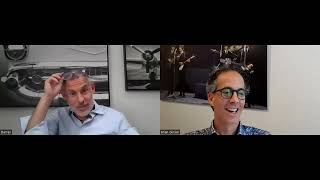
Darren Rabie argues that selling isn't just for salespeople: parents, teachers, and leaders all do it. He shares tactics like controlling next steps, asking direct questions, staying consultative, and showing vulnerability to build trust and move people toward decisions.
Questions this video answers
August 25, 2023
Over 400
2018
Chapters
This is the unlimited podcast by Gensler Wealth. Please note that the views expressed and comments made by podcast guests are theirs alone and do not necessarily reflect those of Gensler wealth or its employees. We're not discussing investments today, so we can skip the disclaimer.
Awesome.
Today on the unlimited podcast, we speak with Darren Robbie, sales leader extraordinaire. We talk about why sales is everywhere, understanding human nature and the secrets to effective selling and success in general. Let's.
Foreign.
Well, welcome everybody to another episode of the unlimited podcast. This one should be fun. You know, I've taken a couple breaks actually from the really Pure Investment theme podcast, but we have some interesting guests and interesting topics. We hope you, you feel the same and I think this is another one. Before we give you the whole theme of what we're doing today, I want to tell you a little bit, a little story about my 15 year Harvard Business School reunion back in 2018. So the business school reunions are big events. Thousands of people come onto campus for, for their five. They go in five year increments. This was 15 for me. And a big part of the weekend, in addition to the Dean's big presentation about what's going on in the school and you know, and their initiatives and the roadmap is there's two days of sessions where all the alumni and their, you know, guests, if they have guests, can choose different sessions to go to to hear from the top professors there on every subject under the sun around business and other. And there was a particular session that I wanted to go to actually was a sales oriented session. And you know, they really have much of that education at HBS or Ivy where I did my undergrad and having been in business for, you know, 15, almost 20 years at that stage, thought that would be a good session. So walked into this sales focused, you know, professor session and was somewhat surprised, but maybe not totally surprised that I could barely get in the room. The every seat in the classroom was filled, the aisles were filled, people were sitting on the, the walkways, standing room only in the back. And it really, I think gave a sense of what people wanted to hear and see was this topic of sales. And the professor introduced himself and you know, during the introduction he said, yeah, and you know, and a few years ago, Harvard Business School introduced its first sales class in the curriculum. The entire room erupted in applause. I think it was even a standing ovation. And I think the signal was aha. HBS has realized and maybe their students should understand that everything in life and business is about sales or is Sales, I should say. And that was just an exciting moment to participate in that session and hear what HBS was doing or teaching its students around sales. So what do I mean? Everything is sales. You know, there are sales jobs, there are sales roles. But if you think about it, at least the way I view it, every person in their life is selling something. Whether it's for their work, whether it's the parent selling the children on why they should eat their greens or go to bed early, whether it is a teacher selling their students on, you know, why they might want to learn about math and science, whether it's employers trying to sell their or advise or recommend to their team, then it might make sense to come back to the office a few days a week. Even if your role is not selling. My contention is everything is sales. So I'm very, very excited today to have my good friend Darren Robbie with us. Darren, basically, his life has basically revolved around two things as he, as he describes it, entrepreneurship and sales. To fund university, he started a number of businesses. After graduating, he founded and then sold two sales related service businesses. And basically everything he's done, he's been the primary salesperson. He is really a sales expert. He has hosted over 400 sales related workshops, speeches and trainings. And basically, if I use his own words, he says, all I've ever done is start companies, sell, recruit and coach sell sales. So what I thought it would be a wonderful topic, at least I find it interesting, is to learn a little bit from Darren about his experience really living and breathing sales for the last 30 plus years. And I'll, I'll, before I say hello to Darren, I'll summarize once again in his own words. And he says, let's be honest, sales is hard and nobody really plans to get into sales. For many of us, a career in sales was not our dream job. We didn't stand up in front of our grade one class and announce our intentions to be salespeople. We all wanted to be astronauts, doctors, scientists, policemen or veterinarians. And then people find themselves in sales. So. Hi Darren, welcome. Sorry for my long intro there, but nice to have you here.
Nice to be here. Thank you so much for having me. And I wanted to just pick up on something that you said that really resonated with me because I mean, I'm an Ivy grad at one of the schools that you mentioned and I've been really active in the school for two and a half decades, doing a lot of the case, helping them with their case competitions and some of their mock dragon shark tank kind of things that they do. And I kept, every year I would say, where's the salesforce? Where's the salesforce? You know, and then I started actually offering the sales course free. I would drive up to London once a year for all the MBAs and HBAs that wanted to come, and it would be standing room only.
Right.
What's happened, interestingly enough for me is in my consulting practice that I've been, that I've been running now since I sold my last business in the end of 18, I coach more people that are not in sales on their business card than I do coach people that are in sales.
Right.
So whether they're account managers or project managers or VPs of something, or even on the engineering side that work, anybody. That is what I would call front of the house. Think about it like a restaurant. Straight line in the middle. The line is the wall. Kitchen on one side, front of the house and the other. Anybody that's in the front of the house is in sales.
Right.
If the chef is smart, he leaves the back of the kitchen sometimes to go to the front of the house to be in space.
Yes, yes.
Most of the time they just stay in the back. So. So that story really resonated. And I will tell you that my V has added on entrepreneurial courses and sales courses.
Wonderful, Good to hear.
You know, I think that sales is innate, that you're only born, you know, you're born that way.
Yeah. No, amazing. Okay, well, you know what, speaking of born that way, maybe now I've given a little bit of background on you and before we dive into all these sales related topics, can you give us the, the, the path to your involvement in and leadership in sales and sort of everything that's come from there?
Sure. So everything my entire life has been sales. And when I say from day one, I don't mean from day one after graduating, I mean from day one. I mean, I like to boast and I say that tongue in cheek that I got fired from every job I ever had.
Right.
And the reason why is because I just, I'm hiring in the sense of I wanted to go out there and blaze my own tray. So, you know, to be in sales, you need, you have to have this natural, you know, trailblazing kind of desire. That doesn't mean you have to start your own business and it doesn't mean you're going to be unhirable. But at least for me, entrepreneurship and sales were always hand in hand. So I remember, you know, starting My own window washing business. I remember, you know, doing door to door sales jobs. I remember. I don't ever really remember taking the kind of classic, you know, student job paths of being a waiter or working behind a counter at a restaurant. Although I did have my. I did do that in grade eight. $3 and 5 cents an hour, right. Very exciting to get it. $18 an hour.
Probably when I was flipping hot dogs at the Promenade Mall. Yeah, right, same thing.
So. So for me, you know, sales has always been natural. It just so happened that my grandparents, my uncles, my aunts, my brothers are also, are all entrepreneurs and they all were the sales side of the entrepreneurship. I always say to somebody, if you're an entrepreneur and you can't sell, you better find a partner, right? Or you better buy a business. So it's always been in my bloodline with entrepreneurship immediately came sales. Otherwise none of my businesses would get going. So as a teenager I kind of figured out that I was entrepreneurial probably because I also figured out I was unhirable. And I kept on challenging the status quo. I lost, you know, I got, I'm proud to say I got fired from two grand in toys and from two Olive Gardens.
And do those stores even exist anymore in Canada?
Olive Gardens? I think there's a few of them. But then there was also a burger place Licks, that used to be kind of the founder of the first kind of fancy home burger I lost one day I wouldn't wear the hat.
Well, you probably didn't want to sing out the tunes that they sang, you know, when they made the burgers. I remember that.
I remember. So it's a purely. It really though is a coincidence that I landed up in sales in the sales industry. That just kind of just happened, you know, it happened because I moved to Australia after, after Ivy, after working at General Mills for five minutes, realizing I wasn't a fit. My brother was in Australia. It looked warm and sunny there. I went there, I needed a job. I got, and I got a job with a startup telemarketing business, lead gen company that then turned into a business that I then owned. When I brought it back to Canada, I sold that. In 2003 I started another business, renting sales managers to small companies. Them doing sales, then doing salesforce.com implementations and ongoing managed service contracts for other companies. I sold all that in 2018 and now, as I say, I quit the band and I'm just a solo artist. Today I just do sales consulting, sales coaching and sales recruitment, you know, for clients. And so that's kind of 30 years. I don't know how it happened. 30 years later, here we are.
They say time flies. So before we dive into a little bit more detail on sort of tactics or strategies or actually I want to talk to you about human nature around sort of sales. But first of all, you know, I'm doing a podcast on sales. I, I, you know, I, I hesitated for a minute. Is this a good topic? Is sales a dirty word? Is it a clean word? And I, you know, hopefully you can tell. I think it's absolutely critical and very important. But I think there's different ways people think about, oh, you're in sales or are you selling me? Is this a clean or dirty word? How do you think about it?
So I think if you ask Larry from Three's Company, he helped, for those of us of a certain ilk and a certain vintage, he created the vision that sales is a dirty work. I think if you also looked at WKRP and you watched that show, you'd remember Norm MacDonald or Les Messerman who were also in sales, and they also came across as slimy and self serving. But the reality is, is that sales has always been a dirty word, but shouldn't be. I often say that if, when you are selling, you feel like a salesperson, then something's wrong.
Right.
What I mean, is that a good, is that good selling should feel like you're providing someone with a solution to their problem, gap or need. Poor selling is trying to convince someone that they need something that they don't. Big, big difference. And I want to give in one other kind of anecdote that I think I've used, you know, a bazillion times to get people to go, huh, okay, that's interesting. So imagine for a moment that it's the 1500s. You, you know, you have an apple orchard and I have an orange grove. Don't know why they're both not called orange. Both alcohol groves in your orchards. But anyway, if I want some apples and you want some oranges and we meet in the middle, what would you call that? Trade.
Trade agreement.
Yeah, Yeah. I would say either a trader or barter probably be the two best terms.
Yeah.
In that scenario where there's a trader or barter, who is the salesperson, he's the buyer and who's the seller? They're both or neither.
Right, right.
I'm, I, I could argue, I prefer neither. I, I, I accept both, but certainly one or the other is not the right answer. If we, if, if the person who had Oranges instead. We replaced the oranges with money and now they met in the middle. Why all of a sudden is this that. Does that person need to become a slimy, manipulative, self serving person? Why can't they just be two people.
Bartering well, or a person that's helping the person who wants, who wants apples, I guess, to get the apples and feel great.
Right. Whether the cost of that was 10 oranges or whether it was $7 or whether it was a cow or whether it was a warm hug.
Right.
Whatever the deal is, it doesn't matter.
Right.
Everybody's got to be happy enough.
Yeah.
So, you know. Yeah, go ahead.
And so, you know, I've, we've been, we've worked together in the past actually when I was at a prior company. So I've had training from you actually, but also had some training maybe 10 plus years ago with a firm called Workability. And they had a definition of sales. And, and their definition of sales is as follows. The purpose of selling and keep it, keep. Let's focus on that word selling for a second because I'm going to switch that in a minute. The purpose of selling is to bring someone with you to a point or moment of choice where that person chooses an action that they consider to be in their best interest. So just like you said, if they want to buy the apples and they feel that that's in their best interest, they do it. But in the theme of selling is everything, a really interesting twist is actually to take out that word selling in the definition of selling. And I like to put in the word leading and let me read the definition one more time. The purpose of leading is to bring someone with you to a point or moment of choice where that person chooses an action that they consider to be in their best interest. It's amazing to me, at least in the way this is phrased, that you can switch those two and it works perfectly because as I say, everything selling doesn't mean that you're buying something. It could mean that as a leader, you're helping a team, motivating a team or accomplish a goal or move together or, you know, and as long as it's in the best interest of the person agreeing to follow you or purchase from you or whatever it is, then that is a good trade or a good barter, as you say. So that, so that's, that's the definition of sales that I think about. I don't know, do you have a definition that you carry with you or how do you think about it?
I I love, I've always used that barter example because it feels so. It takes away all the, the emotion and, and I really like the definition that you shared because at the end of the day, everyone's only going to do something that's in their best interest.
Right.
And, and so, you know, that's that win, win idea. That's that win win idea. Absolutely. But what's interesting, which is I think the key message in this whole story, as we kind of start to get into some tactics, is that in today's world, probably the easiest, cleanest example of selling right now that you would have never seen before is law firms have, have business development and, and, and marketing departments, accounting firms. You know, you now have dental practices, chiropractic offices, massages. It used to be hang a shingle and they will come. Right now they're all selling. And why would they. How are they selling? Well, that includes marketing, but they're also selling by buying an app that sends you a reminder because that creates a better experience. They're also selling by teaching the, the people at the front of the house after you leave your dentist to book your next appointment. They're also selling by asking you if you would like a certain gift, if you can make a referral. They're also selling by the look and the feel of the office that they're put a little bit more effort into painting the walls and putting a fish tank and having the, and having the dentist dog come and lick everybody's toes while we're sitting in the waiter. It's all part of, it's all part of that human experience. And that's why team today, I work as much with a, with an accountant or a lawyer because they're working in the front of the house.
Right?
Right. You're in a dental office. You're in the front of the house. You're in a chiropractics clinic. You're in the front of the house.
Yeah.
You're talking. If you're talking to the customer, you're in the front of the house.
Right. Okay.
What's even more interesting today, the last kind of one today is an interview, is in recruitment because now it literally is a bargain. The employees out there, you need to sell them on how, you know, on why they should join you. Have you. Why you should have the honor of having them join your company. It's not, it's not a, you know, you're just lucky to have a job. Sit there.
Right.
That mentality has changed. So it's a real negotiation. Some People want more vacation, some people want more upside mobility, some people want more flexibility, some people want a better benefits package, some people want to adjust their hours to be able to match their picking up their children from daycare. Everybody values things differently. And that goes back to the, consider the actions in their best interest, right? Same thing, Same thing with fire and selling.
So speaking of what people want, or let's phrase another way how humans behave or human nature to be effective at selling. And again, selling. Not the dirty word selling, but selling what you're trying to help people achieve. You've lived and breathed this for 30 years. Can you share with us? Let's go back to basics almost. I do that a lot of you. Back to basics. Like what? Talk about human nature and how that sort of, you got to think about that as you're in, in sales world, right?
So I, so I do this module all the time with people and I, and I thought, and I preface the module by saying that the only way for this brief moment in time that I can get you to forget your preconceived stereotypes and notions about humans is for us to imagine for home. And they're all from another planet. And so the, and so, and so I've been on this, I've been down to Earth for, for a while doing my reconnaissance. I'm coming back up to our planet, I'm grabbing you, I'm bringing you down to Earth and I'm going to introduce you to this strange thing called creatures. These are, sorry, same creatures called humans, right?
This reminds me of the Jerry Seinfeld joke, right? If you brought aliens down from, from Mars and they saw the humans walking the dogs and the humans are picking up the dogs droppings, who would the aliens think are in charge here? But anyway, that's a whole another story. You keep, keep going, keep going.
That's funny. I, I, I actually hear about it. So, so whether I'm working, it doesn't matter who I'm working with. If you're interacting with another human being, you need to understand the following principles. Number one, humans are generally disorganized. So unless something is a priority for that person, might be priority for you, but unless something is a priority for that person, there's a very high probability that whatever you, whatever you ask them to do, whatever you, whatever you do in terms of trying to chase them and follow up with them and, and et cetera, has a very high probability fall into the cracks. Therefore, at the end of a meeting, if you're having, if you're talking to somebody at the end of the meeting and you agree, you should talk again in a couple of weeks, Book it before you walk out the door.
Right?
If you, if you agree at the end of the meeting with somebody that you should go through your. That you. That you should put together a proposal, book time to review the proposal with them before you put down that phone. Because since humans are disorganized, it's a very high probability that they won't read the proposal or will read it slow late, or they will read it so quickly and so thinly that they won't interpret it the way it was intended. And then if they have any questions now, they have to remember to email you, which they're going to forget to do or put on the burner because you're not their priority.
Right?
So unless they're on firing, you are a fire extinguisher. You need to understand that everything you do, if you don't take control and keep and drive every next step, sending emails like, hi, you know, I just want to check out if you have any questions about the proposal. That's like taking. It's like taking a fish off of the hook, throwing it back in the water, and then no shock, you'd have to then reel up, put a worm on, and then try chase the fish again. So that's the first one. The second one is that humans are generally uncomfortable directly rejecting people. We see that in our lives all the time, even our personal lives. How people break up with people in personal relationships, in intimate relationships. How salespeople find out that they lost the sale three months later, how they chase and chase and never get a response because any. Nobody wants to be uncomfortable. So how do you solve that? It's actually quite an easy solve. If you ask a straight question, you get a straight answer. And one of the easiest questions that you can ask, and I'll use a dating scenario, is if you want to know if the person wants to go out with you again, ask them on the next date. That will be the answer. That will be the telling sign. If at the end of a day and you said, I had a nice time tonight, we should get together again sometime, and you keep it fake. Yeah, that person will probably say, sounds good. Text me. And then they will ghost you.
We're turning the podcast into a dating.
App, but it's the same because sales. Dating is sales.
Well, there you go.
There's the theme of sales, bro, you didn't say everything in a business, in a. In an organization, sales. You said everything.
You are Correct. That's why we're here.
So if I though at the end of that date said I had a really nice time tonight, are you free next Saturday to go to a Blue Jay game? I'm now going to get two very clear responses. Yes, or what I call the bull dance, which is, well, things are really busy. We got a lot on the go right now. I, you know, have to try and this is now business drop. Now I got to talk to my partner. You know, I've got to look at the budget. All that is the bull dance, right? You want the bull dance as your second best option because you don't want to walk back to your car thinking that the person does want to go on a date with you and they don't, right? So because humans are uncomfortable directly rejecting others, they use avoidance as their strategy. And your job is to disable avoidance through asking for a direct next commitment. Sales. Next. People don't express how they feel or ask unless they're invited. So my grandfather made it very simple. If you want a straight answer, ask a straight question. So the worst question you ask at the end of every interaction is do you have any questions? The best question that you can ask at the end of interaction is what questions do you have about that? What questions you have about that? What questions you have about that? How can I further explain this? How can I clarify that, you know, what are your thoughts about this? What do you think? What are you concerned about that? How you know, how are we feeling about this? Where do you see that will help you? You ask a straight question, how's anybody not going to answer it, Right? So it's simple. Want a straight answer, Ask a certain question. People don't ask for help unless they're invited. Same thing. So just follow the same formula, right? Ask them. If at the end of a training, if I was a salesforce.com trainer, not a salesperson trainer, you've already got the contract. I'm on the phone, I'm giving a training session to somebody at a company I'm teaching. At the end of the session, I have the option to say, do you have any questions? Or I have the option to say what questions you have about how you create an account, what questions you have about how you synchronize between your outlook and your salesforce, what questions you have about. About connecting your emails to the opportunity to the related opportunity. You're going to get answers. What? Why? Because people feel invited, right? Generally speaking, you and I both know that if we, you and I were sitting In a room, one on one, you'd ask me anything, I'd ask you anything. Yeah, but if we took this room and made it 25 people, most of the people in the room who have the same questions won't ask. They'll just step back. So you need to invite them. Roll the red carpet out. Want a straight answer? Ask a straight question. Next. People don't like surprises. One of the things that we There it is absolutely, unequivocally true that when we do as human beings that if we don't know what's going on, we either a assume nothing is going on or bad things are going on. So when we hire a construction company, I say to people, I've had people in construction companies say, help me with sales. I say, how about you return people's calls?
Right?
I don't know. How about when you say you're coming on Monday, come on Monday.
Really small detail, eh?
If you can't come on, how about if you can't come on Monday, on Sunday you told them that you're coming Monday and then you can't come on Monday, you send a message letting that person know that you can't come on Monday. But therefore, what's going to happen? I always say that there's, that when, when people receive, when customer service people or anybody in a business receive an inquiry from one of their customers for the status of something, hey, can I get an update on my shipment? Hey, can I get an update on my account? Hey, can I get an update on, on, on this? Hey, can I get an update on that? My first response, my immediate response is why did the customer have to ask?
It's a good one. Yeah, right.
A customer service minded person said, oh, you asked me a question and I answered it. Yay. A sales, you know, a consultative minded person, a leader minded person like you were using in that example, meeting the leader as opposed to sales would say, shame on me for having my customer feel so frustrated that they had to call me three times to get an update on something.
I agree with you 100%. Yeah.
Okay. So if you know that humans, if you know that humans don't like surprises, you will give them good news all the time. You will give them bad news as appropriate with it, with, with, with the updated adjustments and pivots needed to, you know, get things back on track. Whether it's a, whether it's, you know, you know, whether you, whether you ordered it, whether you went and bought a suit and you got it custom tailored, they're saying, we'll call you when it's ready. When is that? When is that? Give somebody a date and time. Give somebody an update, keep them in the loop and they won't bug you, right? And then when somebody says, where should I get a suit? They're going to say, go to Tom. He'll keep you on the loop. Not go to Tom. His fabric is so soft. It's Tom. He'll take care of you. Or keep you in your loop. You'll never be left guessing.
Yep.
Okay, next. People value those they perceive are the experts. So this one's an interesting one because when I, when I talk about this one, people automatically say, but I love this. I don't know everything about everything. I don't even know everything about the topic. And in fact I just had this conversation with somebody an hour ago and she's two weeks into the company. So I said to her, you must be thinking this is like the most ridiculous thing ever, because you barely even. She works for a pneumatics company. I said, you probably just learned that pneumatics starts with a P.
That's a good spelling bee word.
I'm sure they, I'm sure some kid in grade four will get it. Yeah, but so, so I said to her, what does it mean to come across as the expert? It is to have, is to have the confidence to have an opinion, make recommendations, provide thoughts, provide suggestions, provide direction, ask good questions, suggest next steps. None of that has anything to do with knowing the mechanics of a pneumatic poem.
Right?
You know, for example, let's just say you were sitting in your dentist chair and this dentist, hypothetically was the most intelligent and well known, well rounded dentist anywhere. Nobody knew more. But you walked in, but the dentist comes in and says, I just saw a cavity in your mouth. What would you like to do about it? My response would be get out of the chair. Because if you're asking me what the ice are you doing about my cavity and you're an idiot.
It'S funny, you use this story. I was at the dentist this morning. My dentist is very good, but I was had my teeth cleaned, it was all finished. And the hygienist says, you know, I just checked your chart, it's been two years, you haven't had X rays. And you know, basically, what do you want to do? And I, and I said, well, I want to do what you tell me, you know, what you suggest I do. Is two years a long time? Is it a short time? Do we need to do the emergency right now? Anyways, we did the X rays, and I just want to make sure everyone knows they. I have great teeth. Everything's good. So. But. Yeah, yeah, I hear you.
Six months ago, my washer and dryer is acting up. I go onto the Jiffy app, which I love Jiffy on demand. Use it all the time.
Now we have to ask them to pay us for that product placement.
I'm not sure. I'm not sure on that. Valuable.
We don't. We don't take any fees from anybody. Anyways. Go ahead.
So the guy comes upstairs and he says, you got three options, you know, fix, replace, or let it die. And then. And then replace, right? What do you want to do? And I said, I don't know. I don't know anything about H Vac, right? About the washer and dryers. I said to him, what do you suggest? He said, let it die. I said, okay, great. Let it die. So, you know, it's so funny because I spent a lot of time in my career trying to explain people the difference between assertive and aggressive.
Right?
People are born thinking. Certain people are born thinking that. That assertive is the same word. It's interchangeable. Aggressive is. This is Larry from Three's company. Assertive is taking the lead on a relationship and being the expert. Which takes us to the next couple of last couple of points. So the last couple ones are people want to be validated. One of the easiest ways to do that is to repeat back to people what they said. That's it. You go into a suit store and the person says, so. So from what I understand, you just got a job in investments. You need three solid suits that you're going to interchange with a whole bunch of different shirts. You currently have only one black funeral suit at home. You want it to be. You wanted to have the ability to be both casual and dressed up. Given that, here's what I want to recommend you repeat that to somebody. People like, yeah, that's what I said. Next. People respond to targets and deadlines. This one's so funny because if I said to you, Brian, if I sent you an email, Brian, hey, man, I'd love to. I'd love to catch up with you. Let me know when you're free. And I sent that to 10 people all named Brian. Let's say I'm gonna get mostly no response for a long time. But if I send an email to somebody says, hey, Brian, I'd love to get together with you to chat. Are you free next Thursday afternoon around 2, 7 or 8? Out of out of those 10 brands are going to get back to me because they're, they're feeling an obligation that, you know, goes up. That is a human trait. It's a wiring no differently than if I was told in grade six that my book report could be handed in whenever.
Right.
It would still not be handed in.
Right.
And then also know differently then any personal trainer anywhere on earth that's worth 2 cents will tell you that the, or the or the best way for you to get into the rhythm of exercise is to put it in your calendar. Right. I teach one of the things in my, on my website it says, you know, Darren also teaches life management. And it's really just a, an overall thing of saying, you know, how do you just navigate through life? And one of the biggest aspects is plan your work and work your play. Well, plan your work and work. Your plan also means planning their work as well.
Yeah.
So if I'm a good, if I'm a personal trainer and I'm listening to this, I'm. As part of my philosophy, I'm mandating my clients, put workouts into their calendar and show me to create accountability.
Well, it's by you say, sort of, I don't know if you called it life management or life or coaching, but you know, you're going through this list. I know there's a couple more to go, but as I listen to this, these are traits you want to understand to be effective in sales, I guess. But actually I think what you're sharing with people is traits to be effective in achieving goals or being successful or a successful life successful. Like this is the skills of effectiveness. As far as I'm concerned, this applies to everything.
I had a conversation with three interns just before this call started and it was actually their last call. They worked with me for four months at a commercial real estate brokerage client. And I said to them, guys, I want you to remove the word sales from your minds. What I'm here is I want you to think that I'm just some old man trying to give you some really great life advice because as long as you're going to be interacting with human beings, you need to lock this stuff in because it's going to, because it's going to, it's going to pay dividends, you know, no matter what the job is, unless you're working in a, in a basement of a, of a lab with rats.
So yeah, let's, let's finish off.
The last two ones there. People are naturally, you know, appreciate others that makes their life Easier. So really, what I. The analogy that I like to say here is imagine for a moment that relationships are like a car in the sense of there's certain seats. So the best seat in the car for the relationships that you work on, that you have, doesn't matter whether you're selling them or account managing or a wedding coordinator dealing with Mr. And Mrs. Jones as they're about to go through their nuptials. But if you want them in the passenger seat, why, because the passenger seat has the exact same view of the road as the front seat. As the driver's seat, accepts zero work.
Well, what does that mean? But when my wife is in the passenger seat, she thinks she's also directing me and my. My drive. That's a whole nother story. That's another podcast. We'll leave that for another.
When I say this particular analogy, somebody says it's like the quintessential set.
Yeah.
But the idea is that if you're shedding the. If you are booking every next meeting after. At the conclusion of the current interaction, if you're following people up with recaps, if you're following up with the next meeting reminder, if you're putting in the agenda, if you're asking all the questions, if you're telling them your recommendations, your opinions, your suggestions, what you think are the right next steps, what are they doing? Showing up and participating. That's it. Which is exactly the passenger seat. You don't want them in the back seat because the back seat doesn't have a good view of the road.
Right.
Except for back when you and I were kids in the 70s, where kids used to sit in the middle seat.
Or, or the back seat of the station wagon with no seat facing the other way.
Facing the other. Yeah, yeah, exactly. Exactly what they work. Paneling. Exactly. And then the last one, I think, is the. Probably the one that people understand the most, which is to say that people know that, you know, at the end of the day, people do business and work with people that they like. And so people say, well, that's obvious, that's obvious, that's obvious. But then I say, okay, well, how do you do that? Like, how do you make people. How do you make yourself likable as quickly as possible? And the answer is you got to make the first move, meaning you need to be vulnerable first. So if I'm. If I'm meeting you, Brian, for the first time, and I'm seeing that amazing picture in the back of your video of your, of the Beatles, then I, Then I have an opportunity to comment. If I don't take advantage of that opportunity, then the opportunity is lost where I could have invited vulnerability into you, into our. Into our relationship. So I either have to say something, share something about myself, or I need to ask something about you.
Right.
Which, as an aside, is one of the reasons why I strongly recommend people that are doing a lot of video meetings make sure that their backdrop looks behind them, invites dialogue.
Yeah, for sure.
If you're a blank background, you know, I, as the other person, I want to see and look around and pick up on something. Yeah, okay. And so you got to make the first moves. You got to take initiative, you know, and that's for some people. It's just wired in their personality. Yesterday, there's a lady out. Out at the grocery store with her mother, and her mother is clearly probably in her, like, early 90s. So I happen to be standing near her and I say to her, hi, young lady. Come here, Alpha. And she smiles and she just completely changed.
Right?
She completely changed as a human being in 10 seconds. My dad. That's. That's my dad. I learned that from my dad. My dad talks to everybody. I remember going on business trips with my dad, and he would drive me. We would go to Montreal, and he would take me to the meetings. And every receptionist, back to the days, and he called the receptionist everybody. Every receptionist. Alan, how are you? Because. Why? Because he treated them like human beings. He connected with them and shared with them that I'm the person. You're a person who cares what we do, how much we make, whether we're male, female, young, old.
Yeah, well, and you have that personality, too. Obviously, that's a particular trait not. Not everybody has.
And it's not a requirement, though. But you do need to have the courage to make the first move. You don't have to be. You don't have to be extra. You don't have to be, you know, extroverted to the nth degree like you and I to be able to be successful in sales. Otherwise, a very small percentage of the world would be able to sell.
I'm not sure I match your extra vertedness, but I don't know, buddy.
I don't know.
So, you know, so. So as I may be going back to a comment I made before, as you were going through all these traits, it sounds like the. The action that one should think about relative to each of these sort of traits of human beings that you mentioned, you know, to be successful is taking control. Is that a common theme? Is that a Fair comment. And does that apply to sales, to life, to. Because I'm sensing a theme around that.
Yeah. So I basically, at the end of the day, when I teach people, I've got about 35 different modules that I coach, that everything I've written myself. But if you were to tie a bow around all the modules, there are three themes that pop out universally. Sometimes one theme, sometimes two, and sometimes in rare instances, all three. Number one is take and keep control of every relationship that matters. Okay? So if that matters, relationship matters to you. If you're the one that wants that relationship to grow, you got to take control of it. You take control of it in the short term by booking one meeting after the next as you continue to drive forward. And you take control long term by using your CRM to remind yourself to follow up with somebody in six months or in three months or in one year.
Right, but.
But again, absolutely do it. But.
But again. So you're using an example for business, but your overall theme seems to be this is life. If you value. As a partner, as a friend.
Absolutely. I. So, for example, I have a reoccurring task on the first Monday of every single month to print out my credit card from the bank, to go through it and to. And to make sure the payments are made.
Right.
I am taking control. I. So I always say there's three things you take control over. You know, you can use. It's between you and your audience, between you and your friendships and your relationships personally and between you and yourself.
Right.
So, you know, I have in my calendar every, you know, fourth Thursday of the month to send out my invoice, my invoices to clients. I don't, I don't remember to do it. I take control of it. I said it. I. You know, what Ron Popeil used to say, you know, in 1990s, over a 2, 2am bowl of Quaker Harvest Crunch would be, set it and forget it. That was kind of his line, Right. I remember that cold bowl of cereal post bar very well. I'm sure you. You had many a bowl. No better than the hot dog. Better than not. Much better than the hot dog.
Right.
So the second one that I always said is be a consultant, not a transactor. And all that means is ask questions. So the simple two examples that I give a bazillion times is you walk into a suit store. So if you walk into, you know, let's call it a chain suit store, in Canada, we have, you know, Moore's and Tip Top. In the US they have Joseph A. Banks. And you say, hi, I'm looking for a blue suit. The person's going to ask you what size and they're going to take you to the suits.
Right.
If you walk into a higher end place, you know, as, as I've heard, I've never been in the. Not fancy enough. But I'm sure you, Brian, have been to them and you walk in early and you say, I'm looking for a suit. They say, before we talk about a suit, tell me about you. Where do you, you know, where do you wear suits? How often do you wear suits? What is your classic style? If I were to go into your wardrobe, what would I see? How would you characterize your style? What is the purpose of these suits? Is this a long term or short term? Is this a frequent wear?
Right.
Given all of that, then I would then start to show you this, and then I would consult, I would show you options, ideas. So everything starts with being, you know, the word around being a consultant. An easier one would be somebody that's got natural curiosity. Yeah, if you've got, you've got natural curiosity, Brian. I mean, from the second I met you, you know, you, you, you come across with genuine natural curiosity. And that disarms people in front of you. Not for the purpose of manipulation, because that's not what sales is.
Right, right.
It's for the purposes of getting into a situation, you know, getting into a position that you can then consult and give your suggestions. Right. So, so the second one is, is really simple. Somebody orders a burger and fries, says, I would like to order burger and fries. You're going to ask them why.
Yeah.
Okay. And the last one is, no matter what your job is, you have to be a human being first. And, and, and whatever you do for a living second. Nobody remembers business. People, people remember humans.
Yeah.
And humans make people feel things.






