Charlie Morgan Asked Me To Share My $60M YouTube Ads Strategies at his Mastermind
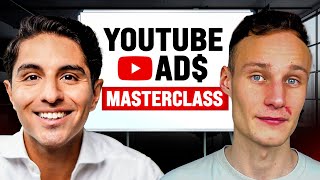
This is a YouTube video titled "Charlie Morgan Asked Me To Share My $60M YouTube Ads Strategies at his Mastermind" created on March 26, 2024. The content likely involves a presentation or talk where the creator shares insights and strategies related to successful YouTube advertising, possibly in a mastermind or workshop setting. There is no indication of multiple speakers or a conversation involving Brian Moncada.
I was telling Charlie. Yeah, yeah, sit down. It's going well. Before I start about meet you guys and everything, I wanted to just let you guys know that I was telling Charlie over there in the back room that I've been to 25 different. I've paid $68,000 to go to masterminds. I won't win three of the biggest masterminds in the entire industry. Cole Wardens, Sam Ovens and War Room. Actually, that's no longer the master. Yeah. And because I've been to so many masterminds, I've learned from so many different people and met so many different people as well. But I was telling Charlie that this mastermind here that we're at today is something that you guys should not overlook because of your hate, by the way. Yeah, Charlie didn't ask me to say this. I'm saying this just out of genuine, you know, my heart. Because this is what I live for, Right. I lived to be able to mastermind and connect with like minded individuals because that's ultimately what allows us to grow. Right. But this mastermind in its current form, in my opinion is going to be the next best quantum mastermind, which was Sam Ohman's mastermind of how this feel. And there's a lot of killers in this room too. So I just wanted to give a round of applause to show you guys are doing a phenomen job. And this is just the first edition of it, so you guys should be proud. That's what I wanted to do. Yeah. Okay, cool. So obviously the way that I think this should work as well, just like they planned this is to survey the room and see what you guys want to learn about YouTube ad specifically, because like I said earlier, right. We can get tactical, we can get into the creative process, we can share more about how we help Easy grow their team. Obviously Charlie and Bo and everyone else to do the numbers we just talked about. But I want to hear from you, what do you guys want to learn? So I can also talk about our agency as well if you want, but not interested. I know it's on my YouTube channel. What would be useful? Okay, you go. I was just going to say is, would you say like the concept around the YouTube ads is a very. Is it very different for the different niches? For example, let's say remodelers versus agencies and consultants. Is the premise around the difference and also margins. Okay. So basically like, does the strategy change depending on like the, you know, the skeleton of creating the perfect ad? Creations are very different for different niches or YouTube ads kind of similar with different grades. Yeah, good point. Okay. Create a strategy and let's just put niche specific. All right, what else? When is it best to run YouTube ads? What type of business, what for? Does it work for everybody? Yeah, okay. Niche specific. When to start? That's a good point. Yeah. Running apps for yourself versus, like for your clients. Yeah, yeah. Okay. I think also, like, who is it good for? Is there like a. Is there like a best fit? Does the info product. Obviously that works very well. Can it be used for other stuff as well? Conceptually, like, your best experience is, you know, somebody's coming to you saying, I'm this, this and this, and you go, okay, it's perfect. Okay. And it'll be good to know what to shoot for in terms of CBA or KPIs. Yeah. Okay. Anything else? So I basically minimize this all like, it's kind of like here because we really built a pretty hard organic strategy. So the thing is, when I'm selling basically 0 to 100k autopilot, 1500 bugs products and I've seen no friction through the market. I just don't know how to reply to that. And ads. Can you say that again? I'm sorry. So basically we roll organic YouTube, right. And we send traffic from the YouTube to the page. Literally it's a VSL XT and everyone signs up. Like it's. Well, not everyone, obviously, but, you know, it's. It sells very easily. Very easily. I still know how to leverage that ads. I'm doing retargeting stuff, but I. Because it's a way different strategy. I just don't know how to keep, like, what to do new. I'm literally just like sending back traffic to the landing page. That's all I'm doing. Gotcha. And it's still converts, but Yeah, I don't know if that's too simple or. I could do something else. Yeah. Is that all you've done so far? 0 to 1 create. 1 create, then it's working and then. Yeah, and then done. Okay. Anything else? When you're not asked to start a personal project? No, that doesn't know what. Yeah, I can touch more about that as well. Let's start there. Is it anything else before we go first? Maybe your process after, like testing different ads, shooting different ads. So how that works? Yeah, creative testing. And Jesus. Actually, if you want to speak on it a little bit too, we've been building out a really comprehensive creative testing system that I can honestly talk about with Charlie and Bo specifically. I Was thinking how to actually script the apps. Yeah, yeah, Create strategy. I guess I haven't script once a month, huh? Yeah, I know. All right, so let's start with the niche and the offers. I think that's where we start because with YouTube ads, right, ads come after you have the offer, right? You don't run ads until you have a proven offer and a funnel that's currently converting. So when it comes to when to start, I've always given the advice to clients when they come to work with us, you know, and they say, I want to start running ads. And you know, we dive into their metrics, their business, their offer, their funnel, and their success. If they're doing less than that, 30k a month, I just don't advise them to do any YouTube ads. The reason why is because if you're not making at least 30k a month organically with your offer, in my opinion, from my experience, and doing this for over five years now, it's just not ready to be. You're just not ready to basically throw money at ads. You can scale, you should scale at least a 30k a month before you even think about running ads on YouTube. Now when it comes. And the reason why is because, look, when it comes to hiring an agency like us, for example, which were pretty expensive, and then obviously when you. You want to run out, you have to have a big budget, right? A budget means for us. Who here is looking for high ticket, high ticket, low ticket? No. Okay, but mainly 5 to 10k. This. You guys will do your job goals. Yeah, 5k plus, you know, agency service could be high ticket as well, depending on your LTV. But I would say high tickets, 5 to 10k plus low ticket would be, you know, anything that's like annual product offer, mid tickets, maybe like 1 to 2k. Right? Sort of like a webinar. Because you need at least $5,000 for three months to be able to test, especially if you sell high tickets. So if you sell a $5,000 offer, for example, you want to have at least $5,000 to spend in a month to be able to justify running ads, right? So 15K. Yeah. Okay. So you want to have a budget stockpile of that amount. The reason why is for two things. Number one, you can actually test for 90 days and have significant data to go off of. Right? Because like we talked about earlier, if you have a small data set and you make decisions based off ads, it's going to be ultimately very emotional for you to just spend a couple hundred dollars and you're Just changing everything. Right. The second reason before you go out, the second reason why you want to have a budget stock called the 5000 for three months is because you want to be able to approach it with confidence that I'm going to see this all the way through and I'm going to be able to let the algorithm do what it does best and test my creative strategy before I make emotional decisions because I don't have enough budget. Right. So you don't go into this and say, I'm going to do 500 bucks and see where it stands and then we'll see where we go from there. You want to have a budget of $15,000 stockpile. Now, again, that goes to the 5K basically kind of offer. Right. So if you sell a $5,000 high ticket info product or service like Charlie and Bo are recommending to downsell to done with you, you want to spend at least $5,000 a month for three months. Does that also broadly price though? Yes, that applies in my opinion to every single platform. Yeah. Because again, advertising is at its purest form adding fuel to an already lit file. You cannot spend on ads unless you've already proven your offer and funnel to the marketplace and you've got clients successfully. You should not. You have to, you have to validate your offer and funnel. And so when you validate your offer and funnel organically and then you try to validate it on ads on YouTube, Facebook, whatever the platform may be, that's a whole other learning curve because now you're getting people into your phone that don't know you, don't really like you yet, and they don't trust you. So it's a completely different sales process and you have to make sure you validated at least your offer and your messaging organically first. So if you're at 30k a month, I consider that. When you can consider starting to run YouTube ads, does that make sense? Yeah. Okay. I think that answers the when to start question. But in terms of the best offers and niche. So there's really, I'll give you a perfect example. Right. We have a client in our mastermind, actually who is an agency owner and they run ads in the German market. And the German market is very, very unsophisticated in terms of what's working right now. They're like three years behind. And so they came to me and said, hey, like, you know, what is the best offer for E2 guys? We have this client right now that, you know, he wants to help car dealerships and we're wondering if ET guys would be a good platform to target car dealership owners. You know, in Germany I asked him how many car dealerships are there? And you know, just a little bit of research we found that there was maybe like 250 to 300 car dealership owners. Right. Because most of them have multiple car dealerships. And so let me ask you guys, right, if your target market is 250 to 300 people, would you run YouTube ads? No, not what CPAs will be supplier you actually need to see. Yeah, they'll run and they will spend but you will not get car dealership. They will not come in there. And if you do, you'll spend a fuck ton of money to get them and it'll cost you a fuck ton of money as well. And it'll take so much time to be able to get one car with you as your boner. You're better off doing what you probably told yourself earlier. Right. With the personalized personalization. Hyper personalization omni presence. Yes. You know, direct mail personalized videos across their social media channels, but not YouTube ads. So the point being your total available market needs to be in my opinion at least 100,000 plus. At least 100,000 plus plus. And that's a very, very many too. So. Yeah. Just a quick question, just going back for a moment just in terms of the 5k, do you ever. So what are your thoughts? Obviously if I There are two scenarios where I might do YouTube ads, which one could be for five or similar to myself and one could be for our clients if we've got aside a 5K 4GX and then nowhere near comfortable to the point where we run 5k month and ads. Obviously you haven't tested budget to make things more optimal and you can't expect to get an hour line necessarily on the first month. But if they get no sales, would you write that off as not having a market fit for YouTube or would you still advise you go into the three months even though you've got such a uphill journey? Yeah, so this kind of goes into KPIs and metrics and how to read the scorecard. Right. So for your example, if you spend $5,000 and there's no sales, well, immediately I go from right to left on the KPI tracking machine. This is what was always going to say about the metric hire architecture. So we can just try it off where you start at the end and then you work the way back. So do you share a tracking sheet like with them in easygroup by chance? Okay, you guys know what a tracking sheet is about, tracking metrics, right? So you start from right to left. Revenue is obviously very far right. Right. How much money did you make then? How much cash did you collect? Right. How profit? How profitable were you? That's right, very hard. So there's no sales, there's zero. So all the rest of the board. Well, to the left of that is obviously where you start seeing cost per lead in the ample product space. Right, or cost per call in the ample product space. But for you, it would be probably website visitors or, or order page visitors or how many people actually clicked on the checkout page. Right. So then you keep going left, right. If the conversion rates there are not on KPI. And again, forgive me, I'm not too familiar with E comm as much as you would be, but I'm sure I can help you out more. Diving deep into the metrics for E comm. But then you just keep going right. Is the click through rate for the ad above a 1.5%? Is the view rate above the 20% on a YouTube app? Right. Those are the metrics to the ad. So I'll write those down really quickly, but holistically right to left. So if you spend $5,000 on an e Comm client's business and there's no sales, you read it from right to left and you would say, okay, how many people actually went to the checkout page? And then based off your experience and wisdom in that specific market, you would be able to consult with that client and say, well, clearly the ads aren't an issue because we're getting a 1.5% click through rate, we're getting a 20% view conversion rate, and you know, by all means the ad metrics are working. Yeah, it's the actual sales funnel that's not converted. Does that make sense? Yeah, for sure. It's a similar approach to what we do on Facebook at the moment. We're not getting sales, which is the main metric. Now it's the secondary metrics. But then sometimes even if we was to start getting a few sales, because we are so far from making this a profitable investment, we start looking at the business and understanding, okay, maybe this specific vehicle isn't great for you and we pivot. So instead of running social media rides, we might take over that email and SMS because that's a more valuable service based on what we see. Yes, we can optimize, yes, we can spend more on testing, but just because we are so far from where we are to be those Marginal gains or even big gains is not going to get us to where we need to be. And I wonder if you ever decide yourself that YouTube ads isn't a good fit and instead of waiting 15k 3 months, if you ever just cut it off and say, look, this actually isn't a good fit, or can you always in 90 days turn things around to some degree? Yeah. You got to also be realistic as well, right? So it is a case by case basis. I can give you guys a parameter just to go off of. From my experience with E Comm and we've tried E Comm five different times. Back when I was very beginning when I was saying that, the number one problem that was we had too many different avatars coming into our service and the sales process and creative strategy was so different. Right? So we had a few E Comm people and what I found is that if their average ticket price for their E Comm product was less than $75. Yeah. YouTube ads is going to be very hard to make work. YouTube ads is more expensive than Facebook ads. YouTube ads is harder to crack than Facebook ads. The reason why is because YouTube Ads is a scaling platform. YouTube Ads is the new television and YouTube Ads are the new TV commercials. TV is more expensive, right? It just is. And you have however many billion people watching YouTube videos, but with E Comm, the cost per. And just an info in general, the cost per lead, cost per call, cost per sale is going to be more expensive. It's just a better quality buyer as well. Because when you go to YouTube, right? This is kind of going into the hierarchy of YouTube and why it's so powerful. Right. Why do you watch Charlie Morgan's channel? He gives the right value. Great, okay, value. So when you're watching his channel, you feel like you're getting value, right? And it's educational. You're going there to learn, right. The quality of intent is already there. You're learning something from someone like Charlie because you want to learn how to get more clients. So you go to YouTube to search for how to get clients as an SMMA agency, right? Your intent is to learn, and you're also on YouTube to be entertained. That's why Thomas is really successful at what he does as well because he combines those two. He creates entertaining videos that educate his audience on how to make better decisions. So the quality of lead and customer is better, but it's also more expensive. YouTube ads is a little bit harder to work than Facebook ads, which is why if you can get Facebook ads to work first, you validated that you can get it on YouTube because you validated that it can work in cold traffic. They'll just be a little bit more expensive. So for your specific question, if we spent $5,000 and I read the metrics from right to left and I still wouldn't cut it off right there because let's say it is working on Facebook for examp, right, Then I would have a conversation with the client and I would say, okay, clearly there's an issue with the landing page. We're going to make optimizations to that, right? And we're going to relaunch the ads to see if that can improve the bottleneck of just the bottleneck of the landing page. We'll relaunch if we then spend another five grand and it's still the same results, but we're getting a higher return on ad spend on Facebook. We would just shift more budget there and spend a lesser budget on YouTube ads and try to just remarket basically to the already existing traffic go going on the organic side or the Facebook ad side just to prime the ad account for scale if it will ever work in the future. But I think ads, right, let's just put discovery, these are clickable image ads that are basically like the similar congruent of Facebook. And then you have search ads, Google search. And I'm talking about the entire ecosystem of Google Ads because Google owns YouTube, right? And so Google Ads, YouTube Ads is Google Ads inside of Google Ads. You can do YouTube ads, you can do discovery ads, you can do Google search, you can obviously have Google shopping. So regardless of if you can't get YouTube ads to work, you can still use the ecosystem to help your clients with Google Ads. And at the very center here you have Google Ads. Does that make sense? Yeah. So if it was me, and again I was approaching BT ad for a client, I had a total addressable market that's really small. I would first start remarketing with YouTube ads, discovery ads and Google search. The lowest hanging fruit anyone can do right now for their clients, if they're not already that'll make them more money is just running a Google search campaign with their branded keywords, their company name, their product name, their high ticket offer name. You know, for example, if it was Charlie Morgan, right? Like one campaign in now that's obviously crushing the most is Google search of Charlie Morgan's name. Those people are already searching for him. We have an ad popping up to the top of the search results that says, you know, here's how to get this many clients Charlie Morgan. They're going to click on that, they're going to go to the funnel, they're going to book a call, they're going to find they have intent. If you're not running any Google search ads, that's the one campaign I would do for all of your clients right now, about every book. Everybody, Regardless of how much traffic they've got coming into their business. Yeah. For example, pretty anonymous. We get our clients email. Would it be even though we're doing my volume, Would you recommend in that instance that we do a low budget Google search campaign just so that we are. You can actually look and see if anyone else is bidding on their keyword, their name. Okay. Because if you, your company name or your client's company name and you go to incognito on Google search and you type in their company name, if someone else has an ad, that means someone else is bidding on their name. So someone's already stealing that traffic from them. You're just giving your ad placement at the top of the real estate to be able to say, I'm going to take this traffic back to my company. Now that is technically searching for me. How much do you pull in terms of budget? What you allocate 500 bucks a month. Five. Okay. Just for that. Yeah. Look, there's just 500 bucks. Yeah. Because it's, if it's not that much. Yeah. The cost per click wouldn't be too much if there's, if there's not much search volume either. But if it's like, you know, you're targeting like real estate agents or something, you want to get like 50 cost per click and it might be a little bit more expensive. Okay, so niche specific. Does that answer the niche specific one? Got one for you. So my niche is online fitness coaches. There's a couple of big players doing kind of what I do to have their courses thing that this, we don't see any of them advertising on YouTube. I know from working with some of their previous clients that they've tried to craft YouTube and they've struggled. How much of that should I kind of take into consideration? Or maybe they just didn't do it right or. So basically it's like the previous people didn't get it to work. And I know currently they definitely don't advertise on YouTube. They definitely advertise on Facebook, Instagram. There are things we wear. Target market hangs out more. And I know they've struggled to grow their YouTube, but that might be for many reasons. Right. Thank you for whatever I'M just wondering how much of that should I kind of look at and be like, maybe it's not the right place because I'd love to crack it, but I just, I'm not sure. Yeah. In that case, I would validate it on Facebook first and then go to YouTube. Like it's like when you guys were running on Imperium. Right. Did you ever advertise your clients? Did you ever appetite to get gym owners on YouTube? Yeah. Oh wait, Jim's YouTube. Oh, no. And neither did Alex Ramosi. He was only on Facebook, I think. Yeah. Yeah. So in that case. Right. There's a similarity. And Alex Ramosi was also. He also said that he didn't advertise on YouTube because he couldn't get his work. His target market wasn't on YouTube as much as they were on Facebook. It's easier to get him on Facebook. So again, it's like for him, Jim owners, I think there's only 60,000 people that he was going after. Yeah. So again, it's that less. Less than 100,000 sort of parameter. So you would want to validate it on Facebook first. Yeah. So the market that I'm going after is huge because it's just online fitness coaches. So there's, there's tons of them. But what do you guys think in terms of like, would that be a bad example to try and grow a YouTube channel considering the amount of time that are going actually doing it? If I've seen other people fail, what would that. Yeah, organically, you don't hear the audience do damage. You 2,000 subscribers, mostly still on the channel. A 31 year with 500 strips. How 30? Yeah, yeah. We have a client right now, Reuben Brooks, he teaches online personal training. He teaches personal training how to go online. Right. Like online coaches. Right. Based online fitness coaches. So a little bit more specific as well. And he's 30,000 subscribers just on that specific niche. And his YouTube ads are working because he's proven and already that specific message. Now, do you need to channel to leave the audience? No, no. A lot of our clients in the very beginning, nowadays it helps tremendously, but you don't need one. When we were first starting off, like a lot of clients, like we had, for example, Roland Frazier, who's the co founder, digital marketer, he had maybe two or three thousand subscribers. So he had a channel. Right. But not many subscribers, not wasn't posting at all. But you know, he didn't have a big following at all online. And he was still able to get to work because of it all his offer and his messaging was proved. I was going to say like, this is going to be like finance from your channel, from a. On the channel. So it's going to get heated if we're not contextualize this point. So Benji was doing our organic YouTube for a while. Oh, he was here? Yeah. Benji was doing our organic YouTube. And then Benji found out because we basically. So we've got the YouTube channel and then we were running ads through Brian's company. Through the YouTube channel. Yeah. And the point Benji made is like everyone knows what happened to Facebook pages back in like 2000. Like you could. A business could make a post on the Facebook page and then it would blow up to get all this organic traffic. And then what Facebook did is they started restricting organic growth so business had to spend on marketing to. And exactly the same thing happened. So apparently the same thing is true with YouTube where like if you're running a YouTube channel and you're paying 80 grand a month to YouTube, they're incentivized to restrict your organic reach. And also I'm going to start with any slide. It's like what it does is it reduces your average view duration for all of the videos. So the most that we get, let's say we get 40,000 views a day for the ads, that's like 80% of our views are 24 hours. Right. And the ads that people watch, they only sit around and watch the ads for like, you know, 33 seconds. So the average view breaking for the entire channel plummets. Which then means that when you post organic video, it doesn't do as well at the same time, like we're making videos now, even though we're still running ads from the channel, the videos are doing fine. But like, yeah, so we transitioned to a new channel. The ads aren't doing as well. It's not a channel. So you've got to. You've got this sort of thing to balance between like organic. The thing is like in your specific case, like very specific specific case. So if like a channel, there's 30 people, you know, 30, 000 people. It's very niched. The main thing that I was thinking like everyone in the room. So if you start like a person where you have like 2,000 people, you know, you don't have that big ones. But now so you just recover from outside, like from a different channel to the main channel. In your specific case, you're just too big to, you know. So should I keep doing the ads in reverse or should I Make the point where like I think a lot of clients where you run their ads from a YouTuber, they still do well on YouTube. Yeah. I also looked at like Iman and a bunch of people, they run ads on separate channels. So it seems like it doesn't really matter. Yeah. The answer is not like it's a killing thing, it's just more like a restrictive performance thing. It could. It makes things better. It's not kidding, but it makes things better. Here's the pitch, right. The pitch is can you run ads from your organic channel and will it affect the growth from what we've done with clients that have 1.6 million subscribers. For example, my friend Clark Kebley spending thousands of dollars on ads did inherit some growth. He was also still consistent with his content. He was also still making good videos. Right. So it didn't inhibit his growth in my opinion. It actually helps because with YouTube. Right. Charlie's points are very valid, 100%. It just depends personal preference. The easiest way around it. Oh wait, what was YouTube? Oh no. And neither did Alex. He was only on Facebook. So in that case. Right. There's a similarity. And Alex Ramosi was also. He also said that he didn't advertise on YouTube because he couldn't get it to work. His target market wasn't on YouTube as much as they were on Facebook. It's easier to get him on Facebook. So again it's like for him, Jim owners, I think there's only 60,000 people that he was going after. Yeah. So again it's that less, less than 100,000 sort of parameter. So you would want to validate it on Facebook first. Yeah. So the market that I'm going after is huge. Cuz it's just on like fitness coaches. So there's, there's tons of them. But what do you guys think in terms of like, would that be a bad use time to try and grow a YouTube channel considering the amount of time that will go in actually doing it. If I've seen other people fail, what will that. Yeah. So you organically, you don't need to shoot that. You don't need to damage. You sure. In 2000, scar disease, a 31 year with 500 subscribers. How about your group? Yeah, so yeah, we have a client right now, Reuben Brooks, he teaches online personal training. He teaches personal training how to go online. Right. Like online coaches. Right. Based online fitness coaches. So a little bit more specific as well. And you know he's 30,000 subscribers just on that specific niche and his YouTube ads are working because he's proven it already, that specific message. Now do you need to channel to the eyes? No, no. A lot of our clients in the very beginning, nowadays it helps tremendously, but you don't need one. When we were first starting off, like a lot of clients, like we had, for example, Roland Frazier, who's the co founder, digital marketer, he had maybe two or three thousand subscribers. So he had a channel. Right. But not many subscribers, wasn't posting at all. But, you know, he didn't have a big following at all online and he was still able to get to work because of it all his offer and his messaging was proved. I was going to say, like, this is going to be part of, like, finance from your channel, from afar on the channel. So contextualize this point. So Benji was doing our organic YouTube for a while. Benji was doing our guide on YouTube. And then Benji found out because we basically. So we've got the YouTube channel. Then we were running ads through Brian's, like, company. Through the YouTube channel. Yeah. And the point Benji made is, like, everyone knows what happened to Facebook pages back in, like 2016. Like, you could. A business could make a post in a Facebook page and then it would blow up to get all this organic traffic. And then what Facebook did is they started restricting organic growth, so business had to spend on markets that can too. And exactly the same thing happened. So apparently the same thing is true with YouTube where, like, if you're running a YouTube channel and you're paying 80 grand a month to YouTube, they're incentivized to restrict your organic reach. And also, I'm going to start with those. Like, what it does is it reduces your average view duration for all of your videos. So the most that we get, let's say we get, get 40,000 views a day for the ads. That's like 80% of our views are coming from ads. Right? And the ads that people watch, they only sit around and watch the ads for like, you know, 33 seconds. So the average view rating for the entire channel plummets, which then means that when you post organic video doesn't do as well at the same time, like, we're making videos now, even though we're still running ads from the channel, the videos are doing fine. But like, yeah, so we transitioned to a new channel. The ads are doing as well. It's not a channel. So you've got to, you've got this sort of thing, the balance between, like, organic. Well, the thing is, like, in your specific case, it's like, very specific. Specific case. So like a channel, there's 30 people, you know, 30,000 people. It's very niched. The main thing that I was thinking like everyone in the room. So if you start a person where you have like 2,000 people, you know, you don't have that being more spun out. So you just recover from outside, like from a different channel to be made in China. In your specific case, you're just too big to, you know, play with. So should I keep doing the ads in the first or should I make the point where, like I think a lot of points where you run their ads from a YouTube and they still do well on YouTube. Yeah, I also looked at like Iman and a bunch of people, they run ads on separate channels. So it seems like it doesn't really matter. Yeah, the answer is not like it's a killing thing, it's just more like a restricted performance thing. It could, it makes things better. It's not, it's not kidding, but it makes things better. Here's the pitch, right? The pitch is, can you run ads from your organic channel and will it affect the growth from what we've done with clients that have 1.6 million subscribers? For example, my friend Clark Kegley, spending thousands of dollars on ads didn't hurt his growth. He was also still consistent with his content. He was also still making good videos. Right. So it didn't inhibit his growth. In my opinion. It actually helps because with YouTube, right. Charlie's points are very valid, 100%. It just depends personal preference. The easiest way around it is you just create a second channel specifically for ads. You can name it whatever you want. So Charlie Morgan, you know, business, right? And then you can, you can upload the same ads onto that second channel. You can link both channels to your ads account. So you have your organic channel linked to your account, you have your ads channel linked to your account. And what you can do now is you can run ads from your second channel so you can create remarketing lists from your main channel. So what we wanted to do, the best campaigns that we launched with, to start with, Charlie, and this is a strategy I pitched to them as well, is like, look, why would we go cold first when the easiest low hanging fruit for us is creating an audience of YouTube subscribers, audience of this YouTube video viewers, audience of anyone who's ever added a video of Charlie's to a playlist on their YouTube channel. Like really engaged prospects. But it didn't hurt his, it wouldn't hurt his performance. Right. Theoretically, if he ran it from his ads channel. Because the ads are being ran from a second channel. We're just connecting the main channel. Yeah, that's also what I was. So that's the solution. So if you want data from the organic channel. Yeah. To then using the ads, you can create a marketing list from your organic channel to using your campaigns and ads. But you're not running ads from your main channel. You're running ads from the second. You're not. So you remove the people that have ever booked a call. Yeah. You just exclude another audience. That's people that have booked a call in the last 100 days, 180 days, whatever the parameters are. And that Data is on YouTube. Yeah. The data would be in your Google Analytics account. Okay. So you would have to connect Google Analytics to your website, make sure you have that on your. Just basically the pixel. Then you can create audiences of people who book the call, land on this specific page, and you exclude them in there. You've got Google to figure out what you do. Say it again. It's not easy for Google to figure out what you're doing with the second channel. Yeah, yeah. But I don't think they care as long as they're getting money. You know what I'm making the argument here is this. Does YouTube ads affect your organic growth? What we've learned is from the reps that we've worked with who helped us spend millions of dollars on YouTube, they say no. In fact, it would only help. And the reason why is because YouTube ads now are responsive. Responsive means you can't just skip. Like, they're not just the ones you can skip in the feed. Right. The ones that play the full radio, they're that plus they're the ones that show up in feed. When you're streaming. It looks like a regular YouTube video, but when you click on that ad, you go to a regular. You basically watch that video as if it was a YouTube video, but it's an ad. Right. And so if they go to that video as an ad and they watch it and there's no description, no comments, no social proof on that channel which they can click on, it looks a little bit sketchy. So to avoid that, you're just rendering a main channel. But if you want to avoid the headache of potentially hindering your growth, just create a second channel. The problem with. With the debacle that we had was that we were already just crushing it with this organic channel. And I was. And sorry. And I told them, not because you guys wanted to make the switch fast. Like, you know, when you was like, hang on a minute, let's just do it slowly. And I was like, fine. Because I, I've just, I've just done this for so long. So what I told him, I was like, look, this is going to be at least a 30 day transition because we're going to get the second channel up. They, they did a good job. Because on the second channel, what you want to do is you want to make it look like, like a digital channel. Yeah. You upload testimonials, you upload taste studies, you upload maybe some of your best trainings. Right. And you make them all public for people to watch. If they go on that second channel because they clicked your ad, now they're saying that you're actually legit, you have content, you're not just selling, you know, just, you're not just selling something, you actually have a brand. Does that make sense? Yeah, so, so the problem was that we, we just didn't want to switch it too quickly because we would run into issues because the campaigns were so. Were so dialed in that they were performing ad videos on his main channel. So it's been a transition now, thankfully, where we've been closer to getting over that hump and we've actually got it over. I showed Charlie the client win, Our client wins channel yesterday. I was a 7x with him yesterday. But the point being, if you want to avoid that, create a second channel, upload videos, testimonials, case studies, and link both channels to your Google Ads account. You can create marketing lists or run out to your second channel. Can you upload the same videos from a main channel onto the second channel? No, because then they get someone YouTube will know because like if someone just uploads the content, like they just, they, they tell you like this is a copyright strike. Yeah. And then what they do is they just to refer scripted. So you must essentially edit it in a little bit different manner. Yeah, it's like, I mean, the testimonials that you would upload to the second channel, would it be. Well, the testimonies aren't the blank panel anyway, so he's not. But like it doesn't. Did you make separate videos for the junk? No, we just uploaded every single testimonial. Oh, okay. And then what is the channel name, the ads job? I think it's probably more than business. Yeah. The thing is, is like, it really shouldn't be hard. It should be hard to find actually. Yeah, yeah, yeah. Because that's the whole point. Right. Like it's just like the videos will be uploading, like testimonials. They're not like clicking once that you would want to click. It's not like we're trying to say, like, you know how jaden went from 0 to 60k a month. Now we know if you dig hard enough, you can find it, you'll get some. You spend more money, you'll get subscribers. But like. Yeah, it's not meant for organic growth. Do you think there's any pace in, like, just branding the ads channel as an ads channel so when somebody goes on there, they can just see it or ad channel, they don't understand? Like, they're like, it depends on the market too. Like, if I was marketing the marketers. Yeah, yeah. Okay. And that's obviously why cognitively we understand it. Yeah. But okay. Yeah, yeah, yeah. You could have a link to say, here's my actual YouTube channel. Yeah. In the main. Yeah. In the mean bio, just being super transparent, you know. Yeah. This is the second channel. As much as possible to let them know you're actually the genie. How a brand. Yeah. And link them to your main content so they see. Okay. And you don't see that. You don't see that issue there? No. Okay, cool. Yeah. That's the way around the issue of the organic growth styling. So the issue is if they might want. Then. Cool. Yeah. Find is that if they. You do it, the content is good. Like eventually. Yeah. They're still in the funnel. Yeah. Yeah. Okay. Does that answer those questions? Yeah. Okay. Oh, that's. All right. So creative strategy. Well, I touched on the offers bit. Does anyone have any more questions about the offers? I think the creative thing is innovative to you guys asking. What we get to know is like, create a strategy. Is like, how. How would you break that one down? Yeah. So maybe if you guys just like, ask and Michelle will see I should follow up on the offer. So does it have to be as specific as, like, Charlie Hasbro example? I've seen some of it is like X amount of appointments, X amount, or can it be more broad? I'm assuming specific is better. But I know Jake had a question around, like, creating that guarantee offer, and it's kind of hard for Amazon. Should we get a range of, you know, 1.5 million, 2 mil growth, 20% to 40%. We had a couple. We have. Yeah, yeah, yeah. You said Amazon twice now. I'm like, yeah, well, the answer is right. The more specific, better the offer, the easier it is. Right. If it's more broad, it can work. It's more Indirect. Right. But then you're. You're basically taking people that are probably lower awareness of like what business model actually is. Yeah, yeah. You're. You're telling more of a story than it is or more. More of like a direct offer. Yeah, got it. So to answer your question, you can do both. What's going to convert the best. I'll be direct. Yeah, right. Guarantee this much, you know. Yeah. All of our eyes is just like. Yeah, because his offer is so good. Like that's why it's a home run. It's like the clients that we work with and get the best results, like again, they're, they've proven themselves and they have the sales process. They just need more and better leads. More and better leads. And they don't want to fuck around and do it themselves and figure out the ads and all that stuff. Yeah, yeah. I'm in the same position. It's just I don't have to offer a style because I don't know, it changes for every client. So like some people need ppc, some people need SEO and inventory forecasting. Some people need. But is the result the same? The result should always be around growth. Okay. Yeah. And then how. What's the average of the growth ride? I gotta run the numbers there too. Some people get like 270% year over year growth and some people are happy with 10%. It just, it's so random. But that also could be. Back to the conversation, I don't know its name but of just being too broad as well or who we take on. So we just chewing the market setting, but Napoleon. Yeah, well, we're, we're conquering both Moscow and Sweden and it didn't end well for. Yeah, I mean the answer there would be you look at the data, figure out the average return in growth. You would use that number in your ads. Okay, cool. It just make it better. Yeah. So when it comes to the creative. So obviously there's a script writing process, there's a filming process, there's the editing process, and then there's the uploading process and see you guys want to maybe talk more about the scripting? Good question. So with design, obviously interactive, all. Lucy, did you learn all of that yourself and then hire people? Yeah. Right. Yeah, so I'll touch on that. It's a good point. So I learned YouTube ads working for Dean Grazioc for almost three years. For those of you who don't know, Dean Graziocs was my first mentor. He's been in the online marketing space for like 30 plus years now. And I say online marketing space, it's just a information marketing space. For the last 30 years, he was running ads on TV before there was Facebook ads, before there was YouTube ads. He was doing infomercials. Okay? Now infomercials are exactly like where ads on TV are exactly like YouTube, right? Because I got the unfair advantage of learning from someone who had to be so good at advertising that he had to take the average housewife who's walking across the living room and the TVs playing in the background, and then get them to stop what they're doing, whether they're with their kids or cooking dinner or doing a million different things at the house at once, pick up the phone and call the TV ad to order a book and learn more about this specific author. So that skill was passed down to me because I got to work with him for three years. I saw him film math. Day in and day out. We tested one new app every single week for just one offer. And this is something that I'll talk about the creative testing system that we were talking about yesterday, Thomas. Because I had the unfair advantage of learning from someone who was already a master at marketing, who could just ask me to tell him what the hook is and who he's talking to. And when I would feed him that, he would just film a banger and he would ultimate. And so I took that process and I had a boil it down into a very specific step by step process. But at the simplest level, it's like, okay, the very best way to script your YouTube ads is take all of your existing assets, right? Your funnel, your client testimonials, your existing emails that are already converted. You create a basically a. A drive of those, right? A bank. You use those to then copy and paste into. We have a script app that we can give you. You can use AI now to just make it way easier. I can post that in the mastermind group, and you guys can write your scripts in like, give it a great five minutes for each of your clients if you want to. And then that produces your first five YouTube ads, right? You have the hook, you have the story and the close. That's the framework. So the framework for your ads is hook, right? It's just like YouTube hook story books. The hook is the first five to 10 seconds, okay? It's all about the hook. So I was. Here's a funny story. This will. This will really explain how you two guys are so powerful. So my wife and I, Jennifer over there, for those of you guys know, Jennifer My beautiful wife. We were in Colombia. Colombia. Colombia. In. In the beginning of this year, we were there for 90 days. And I had plans to sozo a year. A year before that, we went to Cornell. Me for the first time. Yeah, I got. I got to make sure I. I did the. You're on camera. Yeah, yeah. She had LASIK there. How many of you had Lasik eye surgery? Anybody? This story won't hit as much, but you guys don't all know what LASIK eye surgery is, right? We probably thought about getting you before if you haven't. If you have glasses over. Myself, I have contacts right now. My wife Alexa. Guys, surgery in Boromia last year because. Because, well, I was with her and she wore glasses all her life, and she got wasted. Within 24 hours. She had better vision. And she said, still to this day, the best investment she's ever made past recovery. This time when we went back into Bonia, I was going to utilize. Okay. I had plans. I've been wearing glasses since I was in high school. And, you know, we're going through the tests. The doctor seeing me, the same doctor that did her surgery, the best in. In Medellin, which is where we are staying, and we're going to the last 10 miles test. This, like, machine that scanned my eyes. And then he notices this little tiny particle in my right eye that says, let's do this. Let's do this machine again. Let's just see if this is a mishap on the machine or let's just try it again. So we do it again and there's that still delete. Little tiny yellow particle. It's in my right eye. And he looks at me and he's like, okay, well, the machine's telling me that LASIK wouldn't be the best fit. Safety wise, you'd probably be better getting prk. Anyone know what PRK is? Okay, so Lasik, just so you guys know, if you get lasik, they cut a flap in your cornea, the middle of your eye. They cut. They laser off a flap. They open the flap. This is your cornea, right? They cut a flap, they open the flap up. They laser the inside of your flap of your cornea, and they make it better. Like within, like, five to 10 seconds, they give you per. They give you perfect vision. Again, they put the flap back, and then your flap and your cornea heals over time. You can't do mma. You can't get much of the face. You can't do that for, like, at least three months to let Your eyes heal, right? The Recovery time is 24 hours. You can see almost instantly. After 24 hours, your vision is going to be instantly better. That's why I want to do Lasik, because I don't have time. I don't want to waste a week or two weeks recovering because I'm on computer, right? Prk, which was the method that he recommended to me, that was safer, is there is no open of the flap. It's just we're going to laser the fuck out of your cornea right here and this is going to be burnt off and then you're going to have to let it grow back. It's going to be more painful. It's going to take two weeks, two weeks or three weeks to recover. And you're going to have to have a fake contact inside of your cornea to protect it over the next two, three weeks. So that didn't sound fun. And I was also in a Spanish speaking country. I looked Hispanic, but my parents didn't teach me Spanish growing up. But I knew Spanish enough to know that like this guy wasn't sure that PRK or LASIK was the best option. He was just like, you know what? I've done this for so long, I think you need me. Lasik. And at that point I felt like he was trying to make a sale. And so I didn't feel confident about it, Right. So I ultimately was thinking about if I should do it or not that night. I fucking kid you not. Yeah, I'm on my phone researching PRK versus Lasik. I'm on YouTube watching videos. PRK versus Lasik. PRK testimonials, PRK results, Lasik. Is Lasik worth it? Is there complications? I'm asking my friends, I'm texting them. I'm up at night, the I think she's asleep already. And I get hit with a YouTube app. No, I've heard it. Yeah, I've heard it. This YouTube app literally says, if you're thinking about getting Lasik surgery, don't before you watch this video. If you're thinking about getting Lasik eye surgery, don't before you watch this video. So what do you think I do? I click on the fucking app. I clicked on the ad and I went to a sales page. I was long for a sales page about why Lasik eye surgery is actually dangerous and how you should avoid it because it leads to long term implications for your eyes. Right. Dry eyes, your vision gets worse as you age. You're gonna have to get caught. Glasses eventually. Do you guys Think I got Lasik that week? No. The reason I share that story is because that's the power of the pug. What was he selling? He was selling an alternative way to beat your eyesight better. And after doing more research about it, it was basically like a 90 day system to be able to get your eyes back to as close as your perfect vision. We also had to buy like some supplements and stuff. And I was in Columbia at the time, so I didn't want to do that. And I was just like, okay, well this is enough to not get. Regardless of what he was selling, he was selling something that was to me at that specific point that caused me to not pay this other guy that was going to give me Lasik and he cost that guy to visit business for the Lasik. Yeah, I don't know. The page did look outdated as well. I will say that it was like a kind of like a website that's like from 2000s, kind of like a blog style, like kind of forum. So it kind of looks scammy a little bit, but it worked. It just made me not want to get lazy. So I didn't get lazy. And the point of me sharing that story is because that's how powerful YouTube ads are. I was looking for Lasik versus PRK. I was typing in these keywords on Google and on YouTube and then I got hit with a fucking app that was exactly what I was looking for at the right time. And it cost that bad business. So that's the power of YouTube and Google because it's a search engine. Okay. So the hook needs to be that powerful. That's why with Charlie's and then Bozas for easy grow and for their team, it's. It's very simple. You know, if you're an agency owner, we'll guarantee this many appointments in this many days, we'll give your money back. Right? Plus we'll pay you this much if we don't fulfill that promise. If you're an agency owner and you see that ad, you're going to click that app because you're like, what is this? You're going to want to learn more about it. So it's all about the hook. Five seconds of the hook. So that's awesome. Thomas yesterday. But the hook for his creative, for his dad. If I was teaching people how to do a better golf swing, not only would I say, you know, the ad idea I gave him yesterday, I think was pretty sick. It was okay. So it's going to start off with the target market's improving people's golf swings, right? Yeah. All right, so I'm going to have a camera set up in front of me right here on your dad. And I'm going to be like this and I'm going to make it shank all the way over there. And then I'm going to say to the camera, look familiar? That's the look. The hook is him hitting the ball terribly. I did when I first started. So I got lessons, probably from someone like your dad. And then having it shank all the way and then say that golf. Does that golf swing look familiar? Right? Yeah, yeah, yeah, yeah. The tracer so you can see the pathway of the ball, too. I'm having. I'm happy to do that. If you're tired of shaking, if you're tired of shaking your swing and you just want to hit arms straight, keep watching this video and I'll show you the three tips you can make immediately to improve your golf swing. Keep watching this video and I'll share with you the three tips you can do to improve your golf swing. The hook now calls out the problem. It demonstrates it for them, makes it more relatable. And it says, keep watching so I can give more value to you and teach you how to fix this. Then you go into the story. The story is, by the way, my name's, you know, Mr. Gaunett. I've been teaching people, I've been teaching aspiring golfers and even professional golfers how to fix their golf swing for years so they can hit it far and straight. I've helped over a thousand people do this. And on average, I've been able to help each person improve their swing by maybe some sort of data set. Right. If you can even write that. But now let's get into how we can help. First tip is this immediately going to education. So you go hook problem, call out, right? And then keep watching. The story is credibility. One, two, maybe three sentences, max. My name is Brian Montgomery. I'm the founder of ratspin.com we're the most sought after advertising agency in the entire info marketing industry. We've helped big names like Patrick Bet, David Cole, Gordon Sam Owens, Charlie Morgan, Daniel Bozio, and we spent over $50 million on YouTube ads in the last three and a half years. Right. And then I really go into education after that. Quick, concise, to the point, right? Just enough to get them to be like, oh, okay, this guy has me for a little bit more. Does that make sense? Yeah. So now you go into education mode. What are the 1, 2, or 3 things you can actually teach them in the ad that would actually give them value regardless of if they click or not. Because again, YouTube ads are supposed to be educational and entertaining. You know, you can just go direct offer, which we do a lot with Charlie and his team, because the offer is just so good if you just want to watch the psl. But the more educational compliments you can add to the person who doesn't know like and trust you, the more you build that in the like and trust factor. So what are the one, two or three problems they're having in the golf swing example? It's the first problem that always happens is people don't line up their, their feet correctly, let's say, for the golf swing, right? So you want to make sure. And he demonstrates this. You want to make sure you're, you're in the middle. You have your, you have your hand positioning like this. And the setup, it's basically the setup, right? Your setup has to be fixed. You center the light that you. Okay, great. That's the first problem. The next problem is when you swing how your hips move, for example, right? That could be the second problem. The third swing is taking your eye off the wall. A lot of people, they end up, when they come through on the follow swing, they end up moving their head before they even hit the ball. Keep your head down. Now once you've done those three things, you've demonstrated it and you've added value to them, they're like, okay, this guy just helped me immediately. Is that going to help him, all of us immediately? If we learned those three things right, then the next call to action is at the end of the story here. And look, if you want to learn more about how you can help, if you want to learn more. I don't even know what the offer is, Thomas, but it would be like just an example here. I put together, by the way, if this was helpful for you and you want to learn more about how to fix your golf swing just like all these other people have. I put together a free 5 minute video showing you a few more tips how you get access to this other thing. Free 5 minute video. I don't really like doing free training too much anymore. I think if I put together a five minute video or something like that, it's a bsl. For example, if it's a low ticket info product, I put together a brief guide that you can get right here by clicking the link on the app that shows you this, this and this. And you do a screen share of what the sales page looks like, or the VSL page looks like. So they can see where they're going to click. Right? So then it reduces skepticism and it scares. Because a lot of people still don't know what ads are going to take them. They're afraid it's a scam for most of the world. You show them what they're going to click on, and then you say, click the link. You know, there's. You basically reduce urgency and scarcity. You say, you know, unless you want to keep shaking balls like this, you show them the pain again. So that way the next time you're on the course with your co workers, your boss, or even a potential client, you don't want that completed. But, you know, choice is yours. And then he gets a bank. Boom. That's how it is. Yeah. Does that make sense? Yeah. So hook, story, close. Okay. You think about that basic example. Think about the example I just heard from Thomas. And then the story is the edge, the credibility. So hook five to ten seconds. Powerful. You're basically doing a call out of your ideal avatar where you're getting. Demonstrating the problem. Demonstrate. And you're getting them to keep watching. Keep watching. All right. And in the story, you're doing credibility. One to three sentences, just enough, not too much. Then you're doing problem number one, problem number two, problem number three. And then CTA number one. And then the close. You got urgency. Twist a knife. Twist a knife is like, look, unless you want to keep shaking these, you know, these balls on the, you know, next time you're on the course and making yourself look complete embarrassment. And then that was me, man. It's a perfect product. Twist the knife and then CTA number two. Right? So that's a basic framework. Now, of course, when it comes to testing this, you can make it shorter, you can make it longer. It really just depends on what your control at. But the whole goal when you first launch YouTube Ad, YouTube Ads is to find one control app, then ad that converts and performs the best. Then everything after that, you create variations of that one ad. Do you have any specific tips on what makes a good hook? So, for example, movement might be one, props might be one. All hours driving doubt within somebody's mind. At least 30 at this point. And like, what I'm doing, like, I think for me, what I understand is Evelyn. Okay, so what I'll do before an outer cooling section, I'll listen to Cornfield Chase in Insta. That song is. That song gets a guy, he does. Right? I'll listen to that There's a motivational video on YouTube called why Did We Fall? It's got like 80 million reviews that 8 and so on. I'll listen to that and that. And then because here's the thing, like you're calling an app for someone that and I understand that if they click on that and they show up the call they buy, their life will be completely different. Making right. So it's like when you're making an ad, not instead of imagining you're making it for everyone, you're making it for one dude who's miserable, where you can completely help completely change the objective of his life just based on how you approach the app. So like for me, like most like, you know the science who's out of wall at the back is one or it's four. Like when I see the recording of the apps, like I'll listen to on shot. Imagine if I hit a boxing ring or something and when I turn the camera I'm like, you've probably seen I look like I've just done a line or something. Genuinely like. Yeah, that's the whole. You can pull the whole talk down. Just do cooking. Let me touch yourself. But like if you're like that, you want to invoke in someone the emotional state you're feeling. So if you recall the ads, it's like, so I'm going to show you how I'm like, I'm going to show you how I'm going to help you get so many employment places. Then they're like is going on. They feed it this transfer equation. Dean taught me this as well. Right When I was working for him. He was so good because he said this and I would write this down. He said, you want to enter the conversation going on in your prospects heads. You want to enter the conversation going on in your prospect. The conversation that probably was going through a lot of your heads before you even joined these two girls. Where the is my next client coming from? How long is this going to last? How do I get more. How do I get more books, calls? Right. How do I grow this agency? You want to enter the conversation going on in their. In their head. That's why when he comes out, he just is very direct with the energy, with his eyes wide, you know, as if he just did a line. It resonates because how does this guy have so much confidence to guarantee what I can't guarantee for myself? So doubtful. So doubtful. So like emotionally, like neurotic. Yeah. You have to bring them up. It's defaultly different if you work with, like, medsls or something, you probably wouldn't need to do that. Yeah. And here's the thing, right? This goes into a little bit of a different. When it comes to the editing, for example, right? Like, like, this is a little bit. Second, we can go into this a little bit later too. But, like, we have a client right now that really talks to more corporate professions. Purpose, tone. Right. When we edited it with the same edits as like, the typical ad that we would do for a coach, it didn't work. Right. And why didn't it work? You gotta consider, like, who the person is, right? If it's an older demographic, like, the flashier edits aren't really gonna get their attention. But I think that's why it's so important to, like, understand who you're talking to. That's. That's a foundational conversation, is like, who actually is the avatar is. You're prospecting. Because now it's easier to put yourself in. In their shoes and be like, okay, if I was 45 and I was watching an ad, would I want to see all these crazy graphics emojis, sound effects? I haven't missed the basement yet. I can watch them. But for the market we're going. They're on tik tok all day just sucking their dopamine. So it's like, dude, you got to get on appointments. You got to send me mo videos. So it'll work for that. The dance three hour video. Yeah, a few of the. So when it comes to, like, the hook, right? That kind of answers your question a little bit. You know, when I was working for Dean again, I just had the unfair advantage. Why it's so easy for us to formulate this and teach our team to do it now so I don't have to. But with Dean, you know, dude, this guy, you got to get creative too. Like, as much as you possibly can to be fair. Like, their offer is so good. You don't need to be that creative. But Dean was selling a book to everybody because anybody wanted to make money, right? He's competing with people that are flashing checks and stuff and like, Rolls Royces and all this, or Lamborghinis, where, you know, he obviously cares about not being sued by the ftc. So he has to be very, very, you know, polished, if you will. So I consider him to be the go because he was able to sell personal development with just his emotion and his hooks would be. I remember one time he came to the office and he had his cryo chambers. Anyone Been in a cryo chamber. Yeah. So he had a cryo chamber in the office. And we would do it every single morning just to get, you know, more energy and everything. And we're like, why don't we film an ad in the cryo chamber? So the ad starts off with him next to the cryo chamber and he says, I'm about to freeze myself at 30 degrees below zero. Watch this. That's a pretty powerful, you know. Yeah, yeah. And then he gets in the cryo chamber, he still has a selfie iPhone video. And then he's talking about. Look, like. Basically just goes in the story, like, look, if you've ever wanted to make more money as a. If you want to make more money and achieve a side income or start a business and really get to your next level, right, Then you've tried all these other things, blah, blah, blah, blah. He ends up pulling the book in his other hand in the cryo chamber, he has the book and he's pitching in the cryo chamber as the app. Like, that's creative as hell. But it was very specific and it was a good story that it got people to continue watching and ultimately buy. That was one of the best performing ads we ever done. The other one that we did was, you know, this one just worked really well for Roland Fraser. Actually for Digital Marketer, it was, don't start a business, buy an existing business instead. So that one was podcast episode with Ty. Yeah. And then here my scripted hassle. Yeah, he just did half a play. He was. He was saying that like he was actually planning to do was go out for dinner. Then he was like, oh, I'm just going to do some work when you're walking through his garage. Then thought, joe, I was gonna make that. Yeah. And he's. With all these books, there's no, no script, no patterns. If you're helping clients with this as well. And this is something that again, Dean was just a master marketer. So he was always thinking about how he could do this at all times, Right. We didn't have to. I learned this from him. But one thing you can tell your clients to do, right, you write their scripts, you tell them exactly how to read their ads, right? They read the ads word for word. When they're done reading their ads word for word that you've written or they've written themselves, you then have them film another ad right then and there, right after they've got the script, the framework, who it's for, the story, the call to action, and you have them fill Another one off the cuff. No script, no teleprompter, just fill another one right there. Because they have the flow, they're in the energetic state now. And typically that 6th AD will be the best ad that works because it's coming from the heart, it's more genuine, it's more real, it's more raw and it's not scripted as much. And so the more you can do the habit of the six data that I just talked about right there in your everyday life, like for example, you know, Charlie and Beau, we're definitely gonna want to film a few ads today as well. And just in general or we can obviously put them together with the fall footage. But as you're going throughout your day and you feel inspired and you really feel happy, Maybe you've got 15 client meetings like they did for today, right. And they're like, this is sick. That's what you want to just. If you can get in the habit of filming that or you tell your clients to film that, it's got to be a constant process because again, we spent $2 million on one funnel for Dean Graciosa that grossed his business over eight figures, right? The free push of ebook funnel. We tested a new ad every single week. A total of 127 different ads for one offer in about a two year span. And on the front end helped him make over $2 million on just a free push of ebook funnel. Most people will test one app, right? Two ads, three ads, four ads, maybe even five ads. And they let those ads run for six months and then the CPA goes up, the cost per lead goes up, the row has goes down. And they're trying to media buy the problem up. They're trying to out media buy it. It's not the media lines. To create YouTube ads is a scaling platform and you scale with creatives. Is there a YouTube ads library like Facebook where you can check if everyone see others bite? Is one. They also have Google transparency now. You can actually just search for ads. You can ask for your own business. Yeah. So okay, I'm watching. Well for this. Now that we're going to be downselling the done with you. We didn't run ads in the past as much. We tested them before because our target marketing incomes were not from referrals. But now that we're going to be doing down sellers and the coaching, the hook that we just wrote for one of our ads is what if industry leaders like Patrick Vet David, Cole Ford and Sam Ovens all have in common, Right. So immediately calling out Prolific figures in our space that we all know and have watched some content at one point. Why do we introduce like Patrick Bet, David Patrick, David Fullbord and Sam Oaklands all have successful businesses and brands. Right? That's an example. And then I say well, well it's not because they're, they're genius. It's not because they're, they're genius marketers. Like even though all of them pretty much are, it's because they have high ROI. YouTube ads, YouTube ads that help grow their brand and their business and become their best marketing assets. Video ads just like the one you're watching right now that's getting you to stop, watch and learn from how I can help you scale your business. Just like we've done for them. My name is Brian Walcald, I'm the founder of technology. We're launching it next week. So basically the hook for us is we're calling out people we've actually worked with and then we're saying why are they so successful? And we're saying it's not because they're master marketers or you know, they're eight figure business owners, whatever. It's because they have ads that are their best marketing assets that give them a consistent system pipeline of leads, calls and clients. And these become their best marketing assets. Right. Get brand new business and then obviously the pitch is you want to learn high ROI et badge, Click the link and watch the pre training put together with a five minute video. Could you call out the names of the range of clients? So would you call out like brand names that they wear? Your clients? Yeah. Still works. Yes. Yeah. I mean just find the reason why this war and buffer gates, it's almost like credibility and social proof. You're kind of steering. Borrow it. Yeah, borrow it. Exactly. Yeah. Okay, so that's kind of the scripting process. Does that answer your guys question on the scripting? Yeah, because you got the ideas. Okay. As far as the testing goes. Right. When it comes to the testing, so let's say you produce ads for yourself or your client and again you read from right to left. So if you're making money and you're profitable, you have a 2.3x return on ad spend, you at least want to diagnose the bottleneck and the bottleneck and get you more performance. If it's the ads. Right. And you're not getting any of the KPIs we talked about 1.5% click through rate, a 20% view rate, then you want to refresh your ads, you want to change the hub you just want to change the word say that again sorry if you're not getting the front end admetric CD right because you've diagnosed and you've read from right to left retracting sheet and the ads are not getting a 1 to 1.5% click through rate or the view rate is not about 20% you want to refresh the load Would you write a few thousand four yes at least the 1 to 1.5% click through rate and then a view rate of at least 20% sure is there shop with your own in and out yeah is view rich if they don't price you yeah basically how on average how many times someone watched the ad after they've been pressed by so watch the entire thing now it's not intended the entire thing it's basically like Google classifies at least 30 seconds so you know 30 seconds is enough to look things tell more about the story they view it right as much yeah 30 seconds to a minute so and so maximum 80 of people have clicked skip app say again maximum 8% of people have skipped have skipped the app. Yeah because you also wanted this all I most secured in Ray Yeah you want to talk to well you're later on it was right there I had to there's more granular metric than but that's actually how you can make your eyes convert better it's just really being more specific like that for sure yeah because then you get a lot of junkies and you get specific on so for example in Facebook you can create customers of variable to understand the th stop ratio can you get anything to that level on YouTube to understand is it a bas it the first part created or is it the call to action at the end as to why the rate is low or just change the overall behavior so you could tweak and replace it Randy. So yeah I just I just think about the advertising principles when it comes to the creative I think about old me right like if you're going to spend a dollar on advertising and you want to test something you spend 80 cents on the book it's usually always the book powerful story to prove this Dean Grazioc told me when I was working with him he I don't know if you guys have seen this infomercial he had an infomercial with a late great interviewer what was his flint back here had open roles Nah one interviewer yeah he had that money Charlie Ross. Charlie Ross same era but he just died recently he had slicked back here old guy always always Crumbling. Larry King. Larry King. Larry King. All you have to do is just hunch back. Yeah, that's how it works. Larry King. You guys know who Larry King was, right? So this guy was world renowned for interviewing and people recognized him all across the world for his first show. Right. Genie actually hired him to come out and do an ad with him to set up his infomercial. Right. He brought out Larry King, got the same microphone as Larry King, said it was studio. It was as if it was Larry King's studio. And then the hook was Larry King saying, I'm here with Dean Graziosi, a world best selling author, speaker, expert, whatever. That was like the book basically setting Dean up as this prolific figure before they go into the picture. The millionaire success that it's quote. Okay. Because the auto bought. So I ran that actually as a B. That was the bsl. Yeah. So I ran that as a. It was a bsl. But that didn't work on the infomercial at first. When he first tested it and all he changed like he spent like you know, couple 20,000, 30,000, 40,000 hour. It was. I can't remember this time now it's like 3A years when he told me. But he spent like a significant amount of money testing that infomercial. Right. $20,000 minimum. And he's like it's not working. The KPIs on the left weren't working. Right. The revenue on the right wasn't. Where he couldn't beat. He clearly saw was the infomercial at the start of it. And so then he flew Larry. Larry David back out. But instead he started off the infomercial himself and he said, have you ever looked at yourself in the mirror and thought just thought things would be getting by that. Have you ever looked to yourself in the mirror and thought that would be a lot further ahead by now? Is that a little bit more powerful than just saying I'm here with industry best selling author Dean Gradoc. Haven't we all looked at ourselves in the mirror and thought I should be farther ahead by now? Why? Why am I not there? That's everybody in. In. In this world. Right. At one point in the what that infomercial then took off just off that one sentence change along go fasted the conversation in ch. Yeah boy. Relatable again. It's not about him, it's about them. Right. So he changed the. Just chilling in the back. Yeah, he put that in the story part. The hook change. So then he went to Balearic. Yeah. Are you the guys that are buying the ad for B. You know, like, Sorry, to answer your question, he had Larry Keane. I just. Thank you for saying that. He had Larry King to the hook. Okay. It wasn't Deed doing the hook because then it went to float. Yeah. It was Larry King looking direct into the camera instead of setting up Dean, he says, have you ever looked at yourself in the mirror and thought, I thought I'd be farther ahead. Okay. Wasn't Deed doing the. Because then it went to float. Yeah. It was Larry King looking direct into the camera. Right. That was the look that Larry Keane did, which made it more credible because it's Larry Keane saying it and then he's setting up Dean as a story. Does that make sense? Yeah, a lot better. Right? Yeah, I was going to look. So again, to answer your question, instead of setting up Dean, he says, have you ever looked at yourself in the mirror and thought, I thought I'd be farther ahead by now. It's just a hook. The story is the same, the offer is the same. It's always the same educational credibility problems you're solving. It's just what's going to get them to actually watch. What's the message that's going to resonate them? And again, you take that from the emails you've been writing for your clients that you have that are converting the best. You take that from your Facebook organic posts, anything that's already resonating. Right. And you use that. So for our vsl, for example, that ASUS filmed with us after hundreds of sales calls. Right. Close to a thousand. I was just like, the biggest problem these people have and the biggest fear they have is their Facebook ads account getting shut down because it's happened to everybody. And what happens if your business is relying on Facebook to get more LinkedIn calls? You're kind of right. So our ad for our DSL, for our. If you go on our website, adspend.com you'll see it's. Are all your. Hey, are all your eggs in the Facebook basket? Right? Well, if you're probably seeing someone and it's like, it's like, hey, are all your eggs in the Facebook basket? Well, if you're. I think five tunes a long mouse believe someone walk and they falls. Yeah, yeah. We had a nick on our team. The CEO, he basically drops it. Basically falls, drops the egg. And then the next line is, yes. Well, it's like, what happened you down the mate when everyone had all their money? We were saying, yeah, so basically it's like, it's like, it's like you're probably thinking, yeah, these ads are making me money. Well, remember what happened in 2008 when everyone had all their money in real estate and then you raced the eggs. You can see the charts going down. The economy collapsed. Right. And then it's like it was. It may not have happened to you yet, but I guarantee you one of your colleagues has seen email of death from Facebook. Your ad account is just essentially so. Exactly. That's the whole. So we use that off of sales calls and we put that as the hook of our app and that became one of our best campaigns. Like, people were just so afraid of getting banned by Facebook. The option is diversified with YouTube app this time. You diversified your advertising portfolio with YouTube ads. Look so. And then again, the language there is very specific diversified advertising portfolio. We're not talking to people that don't know those kind of words down the how we'll do startups. Yes. Everything full out. Yeah. You're filtering with Colorado stuff. Would you say this is the best if you had an hours to write an ad? You spend the first 55 minutes. I would start with person and then five minutes, right? Yeah, I would spend. I would spend 45 minutes writing or understanding the person. 15 minutes, 10 minutes. I would say 15 minutes on the hook, dude. Just a hook. But yeah, I was basically what I'm trying to say is yes, I would spend enough. I would spend a significant amount of time on the person. Even then the significant amount of time writing the act, but just on the hook. Yeah. The rest would just be. Yeah, because you can almost kind of just go into the story and the clothes, but you already kind of know that, don't you? Yeah, it's a very thing that needs to be figured out. Yeah. Yeah. It's just like the YouTube video, right. I was asking Thomas this earlier because obviously we're vlogging this entire experience. So that way not only can we see it back, but you know, you guys can see it back and see how fun this was as well. And you know, we can share some topic takeaways that we've learned from this video, but all I think about is the title and the thumbnail man. I just, I don't think about the content necessarily because I know it's going to be good, but it doesn't matter if the contents do. They don't click, you know, just like at the other era. So you can get most of the course on how to like you the agency owner who's got some clients, but now you can show them how to service delivery stock goals. Like yeah, yeah, there's one, there's one way you can scale with way less headache, way less effort and not have to worry about your MRR going down. And I'm actually going to show you what that looks like here in a minute. Right. Anyways. Okay, cool. Kvis, we talked about that. Yeah, I mean I can go into that more. But basically most of us sell, you know, leads, booked calls, things like that. That's a lot of stuff that you guys control. But I think the creative strategy is probably the biggest thing when it comes to targeting. You guys want to talk about tardy fry and grill for Elmwood at the. So we run ads, we run YouTube ads for our clients. They like, they basically do these things called one day bathrooms where it's like they convert us up to hello for like 65 year old woman and it's all financed and everything. 65 year old woman that's like. Yeah, they basically. Even in the UK it's really popular but it's obviously also really popular in the U.S. they basically have like a bathtub that's also a shower. So you can bath your bath in your shower and shower. Yeah. And they basically convert those into a walker shower so that it's safer you don't have to step over your bathtub being children. Exactly. So they basically call these while they bathrooms and they, they do it in a day and it costs 15k and they finance everything. It's like, it's pretty cool. And we run YouTube ads for our clients and this is what they do. But right now we paying all the ad spend and everything and we're selling the lead. The problem is we are generating the leads for like 80 bucks and we're selling it in 400. At what point would you say like you should be generating these for 20 bucks and selling the blind dude? Because base case we can probably only generate any for like 50 bucks because it's like we just don't see things. If they buy petty ticket, why don't you just sell them? Because not all the leads, they don't convert the other. Like they, they only convert like 1 out of every 20s which is actually pretty good for rare. Yeah, yeah. That's like invoke one. Yeah. At least. Like how do you buy the data mine paying 14%. So I'm just wondering like at what point do you say this is kind of silly to be at like 20 margin with your leads, you know what I mean? Because I think the best that we would ever get is like 50 bucks. And that's if we let the best. You hire. Yeah. Besides like the economics how you can make it more profitable for yourself. Yeah. It always comes back to the creatives. Even the creative testing. So if we make the creator the best creative in the world. I like I'm just assuming this but I'm pretty sure we could bring it from 80 bucks for the. And I always just do that is what I'm saying. Yeah. 50 bucks. I would just improve like three because you don't have to have a fancy production. Yeah. The best performing ads for the effort. Yeah. Right. Still LeBron. Yeah. The creative. If you just refresh the creative and refresh the hook enough, you can get the CPL down. If you believe. I don't know the market even like 20 bucks. 20 bucks would be tough. But I mean everybody has. They have those in America too. Yeah. Like we have old tubs still and most mule apartments are now walk in. Yeah. But I mean that's a big market still. So it's fine to be selling these 400 bucks if you're generating multiple footage. Well, that's a good question for you. Yeah. Okay. And your business. Yeah. But yeah, I mean if you can get the lead cost down then. Then it's going to be out. Okay. So there isn't like a level where it's like oh geez. The lowest you can get it to is like 60 bucks for the ticket price is so high. Again, if it was your business you got. Yeah. Why does it sell these? Some of the guys sold them for like 60 bucks. Why are you not using Cubas? Because everyone they already had very happy with all the. You're selling leads on Cubs. Sorry, you're selling leads, not Cubs. You know. So why do they care about. Because you can't do Google Ads agency. I don't mess up messing with. Yeah. You wouldn't have put their brand. No, but it like Google does. We tried them but okay. Yeah. I was like yeah, we screwed up that and all. Yeah. I mean you have YouTube ads remarketing to the traffic coming from the Google Ads Excel. I would just work on the creative on the front end. Yeah. Yeah. The leads are better. It's more expensive. You find a bit super. Because the thing is not that Bradley comes around. We get to a good point. It's like you producing me to like 60 bucks. I think that Friday comes in no week, man. You did the creative idea that he said that would work so well. You know someone. Someone could older women tripping over themselves and injuring them like it's like the ad for what was that thing where like life where you have this like pendant upon. They were advertising the older people. It was really to the younger kids who were taking care of their family when like the old person would fall and they would like, oh, I can't get up, I can't get up. It's the same thing. Just follow that. But the answer instead of this life alert thing you wear around, you know, is you. The new bottle you asked me. Yeah, okay. That would work way better. So a quick question about coming up with books. Do you want like a creative director shows in there, one of the team or do you like always look at the ad library taking off from there? Is it the same great work packaging it work? Yeah. The process stays the same, right? It's, it's. I mean, Katie's going to talk about it. Well, with Israel as well, it's really about like the what, cold front. The front. Yeah. It's a father, right. You want to have a bank of place you take inspiration from to make the ads. These are emails, these are Instagram posts, organic copy YouTube videos, things that have worked well to get clients for the business already. Yeah. Because again, you got to prove that first before you go to ads. But it goes back to like, you know, the avatar. Right. Because everything that's already worked is language that's specifically like why they've already bought or thought about value buying from you. But one of the most important things too is like showing versus telling in an app, right. It's like it's way more valuable for you to show somebody, right. Whether it's the dashboard, whether it's someone calling, whether it's whatever that alpha may be because you give all the facts and like whatever. But it's like people buy based off of what they see. Right. And as well, one thing that we do in our agency, and you guys obviously can use this for years, but when you're doing videos or any ads, like whenever we onboard a client, we always have an offer packaging and positioning call with them. We review their offer, we review their avatar information, we go deep on it with the client to understand how they view their clients and how their view clients resonate with their message the most to understand how they're going to best fill in the app themselves and how they would save. So we go from that call, then we do this. So the message we get, let's say we get 40,000 views a day for the ads, that's like 80 of our views. Right. And the ads that people watch, they write the scripts after that process. Right. We have all the information now. Then once we write the scripts, we then have on a script rehearsal, coaching call with the client. We review the scripts with them. We read through the scripts with them. Jesus does. Now, I don't do it, thankfully, because he's better at it. Yeah. And so he reads in the scripts with them, the bright blood out the of as well. And then we edit anything on there that might not make sense for them. So by the time we're done with that scripture approaching, Paul, they know exactly what to say. They know exactly how to say it. They know exactly where to say it in terms of the setting. Now they just film and they, they send a call back to us and we just edit it. So it's all, it's all the upfront work. Right. Three, two.
More from Brian








CASE STUDY: How Usman scaled to $200k+/month after joining The Ad Men Mastermind


