He used to grow WEED... but now makes $2.5M/month
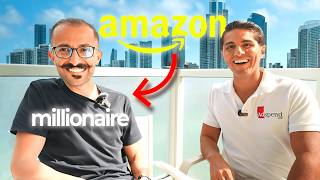
Bashar J. Kato went from running medicinal cannabis businesses to making $2.5 million a month through Amazon FBA and online coaching. Brian Moncada hosts the conversation about scaling businesses and the mindset shifts that got him there.
And so a lot of times people say, well, I'm not passionate about doing this thing, and I'm not passionate about doing that thing. It's like, dude, fuck your passion.
Today we're diving into the world of Amazon FBA with the man himself, Bashar J. Kato. Bashar has generated over $50 million with Amazon FBA. He's ran multiple different kinds of businesses. But today, I want to take you behind the scenes and have him share with you exactly what helped him go to that next level so you can learn how to do it, too.
Hello. What's up, dude? Yo.
Good to see you.
Amazing, man.
How's everything?
Good.
Dude, this is Sebastian Bashar.
Nice to meet you.
Dang.
Look at this view, man.
Wow.
You guys ever just walk the beach in the morning?
Sometimes. Not as often. You know what's interesting is when you don't have it, you just want to have it. And then when you have it, it's like, okay, whatever. It's like the car, you know, it's like, I always wanted the car.
Yeah.
And then when I got the car, it's like, okay, whatever.
You actually had before, one of the first businesses you had was medicinal cannabis.
I did.
And it got. It got rated.
Well, we had three of them.
Really?
Yes.
In California.
Yeah. Yeah.
So that was when.
Yeah.
I mean, so this was the. The green rush of San Diego, of California. This was right after my restaurant burnt down in 2015.
It was after all.
Yeah. So it was right after a bunch of my buddies from high school were getting into the marijuana, and I was broke as fuck. And I was like, dude, all these friends are, like, going out and spending all this money. I'm like, what are you guys doing? They're like, you know, we got into marijuana dispensaries. Yeah. And so my buddy and I scraped by. I had 5,000, he had 15,000. I think we put it together. And then I went and rented a garage in the back of a doggy daycare. And literally, the place, like, I'm not kidding you, the place was probably as big as. Maybe a little bit wider.
Yeah.
But from the thing to there, and then like, this. And then this was like our. Our reception area.
Yeah.
So people come in that door. There's a little window, and then they check in their thing, and then they go inside. And then the back was about this big. The back was about this big. There was. There was literally only room for, like, three shelves. We were there for a year. We made each about a hundred grand or so.
Wow.
We took that money Invested in two other dispensaries.
Yeah.
Both got raided. All of our money got wiped. Seven, eight months into it, we were each making a thousand dollars a day.
Wow.
In profit.
Wow.
And so. And it's all cash.
Yeah.
So it's like, it's right there in front of me.
Yeah.
Like our business credit card.
Yeah, yeah, yeah, dude.
It's like cash. And every night we're like putting a bunch of cash on the table. And you know, it was like, almost like we were like drug lords. You know, I. Many times, you know, one of my cousins, he's 28 years old, he calls me for advice all the time. And I was talking to him actually two days ago, he's like, what would you. What would you say to your 25 year old, 26 year old self? And up until now, my thing is, like, I don't want to have regrets. And I think I truly believe I am here because of, like, because of all the experiences that I've had.
Yeah.
You know, and so I wouldn't be here if it wasn't that. I'm not sure if everyone is built the same way we're built.
Yeah.
With the kind of resilience that we have. Because it really has to, like, you need to have a certain amount of resilience.
Yeah.
For you to be able to go through all those, you know, ups and downs.
Yeah.
Before you say fuck it, I'm just done with this.
Yeah, yeah, yeah.
And I think I truly do believe that there is an easier way.
Yeah.
For sure. And that's kind of what I now recommend to the younger people.
Okay.
And I'm like, instead of like trying to just go into it.
Yeah.
And start at your own. Find somebody who you believe in, who is in the space or in the industry that you want to maybe grow in.
Yeah.
And then go under them and learn everything from them and then decide if you want to do something in that space or in a different space. But what's gonna happen is like all the experience that I gained from launch nine businesses, I could have gained by working for somebody else.
Like an apprentice.
Exactly. And it probably would have been a lot easier.
Yeah.
So talk me throughout. Talk me about this studio here.
Yeah. So this is. So this is my wall. I call it the wall. So faith Mission. This. I got this. So this is signed by Kobe Bryant.
No way.
And actually it has a certification in the back, so. God, Mission Country. That's kind of how I think about it, you know, so this American flag. I'm actually, you know, I'm very proud to be a U.S. citizen now. I'm grateful for this country specific flag was flown above Iraq. And then here. This is some inspiration.
You already have the rules.
I do have the rules. But, you know, Rolls thing is a lot deeper. It's not just the car.
Yeah.
My father is my, like, the person that I admired and why I became an entrepreneur. And in the 70s and 80s, he was actually a successful entrepreneur in Iraq. Although he had a lot of money, he was. He always wanted the Rolls Royce.
Yeah.
And he could never get it because Saddam wouldn't let him import a Rolls Royce into Iraq because Saddam was the only one to be allowed to drive a Rolls Royce.
No way.
And nobody else in the country was allowed to drive a Rolls Royce.
You know, the numbers you guys do as a company, it's not just amazing for how much impact you make, but it's also like, look at the setup. Like, this is gonna be cool for the audience to see because they're gonna be able to see behind the scenes of a company that does multiple millions per month from the comfort of his own room, remote. And like, a lot of people have this doubt that they can't do that.
But I was like, Bashar does. And this is where the core value of Kiss comes in. That's why I only wear black. Literally. I have four shirts that are like this. Four jeans, you know, three black shoes, and that's it. And I just keep it simple and I focus on what's important. Right. Which is the mission, which is driving the company, growing the organization and impacting people's lives.
Yeah.
That's what's important to me. There is. I don't know if you've seen this. You've probably seen this. So Sam Ovens talks about this a lot. This is where I learned, actually, this from. He talks about this. So he says this is energy. Right. And then if you focus on one thing, you can take this for as long as you, you know, for as far as you want. Or if you do five things at the same time.
Yeah.
You're only gonna be able to do so much of it. Right. Because we only have so much energy, so much time, so much effort.
Yeah.
And the more things we focus on, the less effective they are. The less of a result we're gonna generate from that one thing. And so for me, it's like, well, what's important?
Yeah.
So this is where I work, man.
Okay.
Yeah.
This is sick.
And then.
So you're a views guy. You value views.
I do, yeah.
See, I do yeah, I'm the same way.
Yeah. Because, you know, the thing is, like, we're working from home all the time.
Y.
And I have tried where, like, you know, like, Harmozy would work in a closet. It just doesn't work for me.
Yeah.
You know, I tried doing that. Like, I even tried facing my desk the other way.
Yeah.
So you don't have any distraction.
No distraction, but it just doesn't work for me. So this is, you know, living area. This is our bedroom. I love our bedroom. I love keeping the windows open when I wake up. Waking up to this.
Yeah, it's natural sunlight.
Oh, yeah.
100%.
Yeah.
Although Roweda hates it and she likes to close it, but I'm like, no open because I want to wake up to this, and I'll go to sleep like this.
So talk about that.
Well, it's just like, anything, right? People that don't know assume.
Yeah.
And normally assumptions are wrong. Like, literally, you know. Let me ask you, when was last time you made an assumption that was actually right?
Yeah, I mean, I've made a lot of wrong assumptions.
Maybe I'm just horrible. But, like, 80% of the assumptions that I make about anything, whether if it's personnel or situations or whatever, they're normally always wrong, you know, because we just have a. This notion in our mind that it's right and then based on whatever information, but it's far from reality. And so the same thing with Amazon. Before COVID Yeah. I had been a seller on Amazon for, like, three, four years.
Yeah.
Yeah. I had never bought anything online. I would go to Best Buy to buy my electronics. I was the type of person that, like, I had to feel it, I had to touch it, you know, where. After Covid. I can't remember last time I bought anything. Not from Amazon.
Yeah.
You know, there's over 347 million products being sold on Amazon. There's over 500 million people buying on Amazon every single year. And so there is more people on Amazon. There's more opportunity, there's more products. It's actually a lot easier. Like, we have students. This is not the average. This is not, you know, this is like, what's possible. But we have students now who will do 200, $300,000 in sales in their first year. We never used to have those kind of results in the past. Like, the most we got was, like, maybe 50 or 75 in the past. Yeah, we're. Now we're able to have these students do that because again, the opportunity just so much bigger.
You Know, and I like how you said it too. You framed it perfectly there. You're like, this is not the average. This is what's possible.
Right.
Because a lot of people won't say that. They'll say, oh, you can do the 200, 300. Right. But that's what I like about you. And that's what, that's exactly why I wanted to do this with you too. Because how did. I remember when you told me at dinner how you got your start on Amazon after the medical dispensary, you know, after the restaurant burned down. But then, I mean, I want, I want you to share it with them because it was such an impactful story when you were able to see the impact you were able to make helping somebody else get that same result on Amazon after you did.
Yeah.
You know, was, it was a conversation with Ruada's cousin, my wife, my wife's cousin. And he asked me the question. He said, it's a question that I ask everybody. I probably asked you. He said, where do you see yourself in the next three to five years? And I remember I stared at him for like two, three minutes and I just couldn't answer. He's like, not an Amazon seller. I was like, well, I mean, it's helped me clear my debt, it's helped me make money, but I'm not passionate about it. You know, it's not like I woke up one day and I was like, I'm passionate about selling products on Amazon. You know, it was just a means to an end. It was a vehicle.
Yes.
It wasn't the destination. It was never meant to be the destination. You know, around the same time, I had been helping this guy named Zac Brown sell on Amazon.
Yeah.
Just as kind of like a side thing, I was, you know, I think he paid me a few hundred dollars. And, and I remember 23 year old kid from North Carolina, all he wanted to do was travel the country and ride his dirt bike. He was like in some tournament or something like that, but he was a FedEx driver driving like 60, 70 hours a week. And he couldn't do that.
Yeah, he'd have time.
He sends me a message. He goes, be sure you're the fucking man. In the last six months, I've made $36,000 in profits with Amazon and the number was great. And probably, you know, the listeners are probably gonna be like, oh my God, $36,000. But the thing that truly hit me was like, this guy can now quit his job and go do the thing that he wants.
Yeah.
And So a lot of times people say, well, I'm not passionate about doing this thing and I'm not passionate about doing that thing. It's like, dude, fuck your passion. Find something that's gonna get you out of the miserable life that you're living right now, or that's gonna at least allow you to live the life that you really want. And then you can find your passion and then you can focus on your passion.
Yeah.
Who gives a fuck about your passion if you'. Yeah, you know.
Yeah.
And so that's like, you know, I hate when people like Gary Vee or whatever talk about if you find something you love, you'll never work. Like, go fuck yourself, dude. Like, if someone is miserable to find the thing that you are passionate about, you have to come from a place of abundance.
Yeah.
And if you're broke, if you're in debt, if you have debt collectors calling you, or if your kids think you're an asshole because you come home at 8 o' clock and leave at 5, you're not in a place to be looking for your passion. You're in a scarce mindset.
Yeah.
You are in a survival mindset. You know, I mean, so first find a vehicle that's gonna get you to whatever it is that you're trying to do, and then you can go find your passions.
It's so funny too, because that's exactly the same mindset I had when people were telling me, dude, like, forget all the fitness stuff, which was what my passion was at that time, you know, seven years ago. And they're like, dude, go all in on the YouTube ad stuff. Like, that's what you do for, you know, your former mentor. That's what you should be doing. And that's the thing, like, that's the thing that's going to get you from A to Z where you want to go. At the time, though, I didn't want to hear it because I was like, I don't want to be the, you know, YouTube ads guy or YouTube ads guru at the time. But it was just my ego trying to, you know, say, like, didn't want to box me in. But what ended up happening a few years later, fast forward to today, right? Like, people recognize me as that because I stuck to it, because I saw it as the vehicle. It was the vehicle. And it allowed me to be able to get to a place where I do have the time freedom, I do have the location freedom, I do have the business, I do have the team. So you're 100% right. Because even Though it wasn't my passion to be, you know, the YouTube ads guru, but I went all in on it because it was the vehicle that allowed me to make the money, that I wanted to be able to have breathing room and ability to take care of my family and, you know, myself as well, and personal development. So it's so true. And so, and then, so then that kind of again, when you saw that impact it made on that person that paid you a few hundred dollars, that's what spiraled everything else.
Well, that's what spiraled everything else in terms of the university. But prior to that, what got me into Amazon was being in a rut, being, you know, having my back against the wall, being in debt, trying different businesses and not working. And now I call this. I call it the discovery phase. Because a lot of people say, well, you know, I want to make money, but how the fuck. Like, you know, there's so many opportunities out there. Like, which one do I do? Yeah, the answer is not doing five at the same time. The answer is finding one and then sticking to it for at least two, three years. But then it's like, how do you find the one? And I always tell people, take at least two, three months and research as many things as there are. And then after you want to focus on just one and ask yourself the question, can I? Do I see myself sticking to this one thing for the next two to three years? If the answer is yes, ask yourself the second question, which is, if after two to three years, this goes nowhere, because, look, there's a chance it goes nowhere, will I regret the last two to three years? And the answer must be, no, I won't regret the last two years. Then, you know, you found the thing. Not the thing that's gonna make you successful, the thing that you see yourself sticking to for the next two to three years. And chances are, if you do stick to anything for more than two to three years, chances are you're gonna get somewhere, or at least get an experience to do the next thing that's gonna become the thing. And so for me, that's kind of what it was. I found Amazon wasn't passionate. Stuck to it after doing drop shipping and this thing and the other thing. And then fast forward, Zach Brown. After that, I realized, you know, I'm passionate about helping people or passing on the skills that I have to other people, because they are. It's like a missed opportunity that they're not aware of.
Yeah, right.
And I remember the tag, the tagline for Bashar Jaco at the time was never worry about a price tag.
Yeah.
That was my tagline. Because I don't know if you've noticed, but, like, I love going out, I love eating good steak. And I remember when I would take my girlfriend at the time, now my wife to restaurants, I'd always be looking at the menu and the prices, and that's how I would order. I would order based on the prices. And I remember one day I was like, I want to come to a fucking restaurant one day and not look at the goddamn price.
Yeah.
I just want to look at what looks good, what sounds good, and order it, get the check and pay it, and walk out and not have a problem.
Yeah.
Like, I swear to God, for the longest time, that's all I wanted to do in my life is just be able to buy whatever the fuck I want whenever I want, not worry about a price tag. So that was kind of the tagline of the company in the beginning. And even then, dude, I went two and a half years with nothing. I was selling the cheapest course, the most valuable course, one of the only guys that actually sold on fucking Amazon. Half of the gurus did not even know shit about Amazon. I just didn't know marketing, I didn't know sales, I didn't know persuasion. And I went two and a half years, maybe selling a $400 course and only like 10 people bought.
Oh, yeah.
It was the worst fucking thing ever.
Yeah.
I gave up so many times.
Wow.
What I wanted to do is I wanted to build a. The reason why it's called BJK University and not Amazon University is because I see it as regular university. People go to acquire skill they can turn into income.
Of course.
And so my goal was, has always been I want to teach people how to sell on Amazon today. Because that's kind of the natural thing that came to me that I knew how to do.
Yeah.
And then I want to acquire other skills, bring instructors, and then start going into providing other skills to our. To our clients. Yep. Right. Whether. If it's trading stocks, real estate, whatever it is, ads, you know, whatever it is. Right. The problem is that we have been facing over the last three years is distribution.
Yeah.
And it's reaching your customers.
Yep.
So we've been solely relying on social media, mainly Instagram.
Yeah.
And we scaled on instagram from like $150,000 a month to two and a half billion dollars a month in like 11 months.
Yeah.
Right. It was good until it wasn't good.
Yeah.
Until they started shutting us down. And for the last two years we've been struggling with grow because restrictions on channels. So we started running ads on meta and YouTube and we're trying to crack those. But when I'm looking at this, we want to impact the lives of a million people. And I'm like, I can never do that if I continue focusing and being dependent on these platforms.
Yeah.
Because just like that, they can remove your axes. Just like that, they can kick you out. Just like that. I'm like, this is not building a sustainable business. So I have working on a brand new model that I don't know, I don't know anybody in the space who's implemented. It's a model that exists in other industries. I read the book Blue Ocean Strategy.
Yeah.
Where it talks about look at alternative industries and then, you know, implement things in other that have worked in other industries in your industry. So that's pretty much what I'm doing is I'm taking a marketing model that has been very successful in other industries and I want to bring it to the online coaching business.
Before we leave, two last questions. The first one I always like to ask, this is the person who's just starting off, there's already a lot of stuff that they can get away from this. But if they're starting off right now, they don't have the business yet. They're just trying to make something work, find their first vehicle. I think you already gave it to them. But if you had one piece of advice for them to get started, get something off the ground, get something working, get that hope, get that motivation, get that first win, get that piece of success to be able to start building something for themselves. What would you say is the best piece of advice you could give to your younger self when you were going through that as well?
I would say two things. You know, entrepreneurs, we have a blessing and we have a curse at the same time. You know, we're cursed and we're blessed. So the blessing is that when you have that entrepreneurial spirit, you go to action.
Yeah.
You think of something, you go to action.
Implementation.
Right. You want to go into implementation, it becomes a curse. Because sometimes you need to kind of step back first and then you need to kind of do some research.
Yeah.
You know, you need to do some research especially as you build the company. But that's obviously not for the person that we're trying to answer the question for. So I would say two things. I would say either, either. Well, no, that's not true. Let's go, let's just go focus on One thing. Here's what I would say. Two steps. Number one, go into this discovery phase thing that I just said.
Yeah, that was a huge one.
Pick three to five industries, niches, you know, spaces, whatever it is that you are interested in, and take three to, you know, 30 to 60 days to research everything you can about that. Dude, YouTube is an incredible tool. Yeah, go to YouTube. Just research a bunch of stuff. Read books. Like right now, the thing that I'm telling you about, the first thing that I did is I bought three books that are about that thing. I attended two seminars and I hired three consultants that I know I can learn from.
Wow.
So it's like, learn everything you can for free, and if you can afford it, pay for it. Right. Learn as much as you can for two to three months. And then what I would do personally, once you have picked the right thing and you answer these questions honestly, I would find somebody who you can get under their wing and learn everything from them for the next couple years. Because as I was telling you earlier, I did it the hard way, I did it the long way, and I went like. You did it the right way.
Yeah.
Because you went under somebody else's wing.
Yeah.
And you learned everything like you were learning while getting paid.
Exactly.
That's sick. That is savage.
Yeah.
You know what I mean? Where I was fucking paying for my learnings.
Yeah. Wow.
I was investing my family's last pennies into learning this shit. You know, going in debt, getting arrested, lawsuits. Like, I could have avoided all that crap by just finding someone in the space I'm interested in, just working for them, being as close as possible to them. You don't want to find a conglomerate like a J.P. morgan. You want to find a smaller, smaller company, and you want to get behind them and get as close to the founder as possible. And then once you have a couple years under your belt. Yeah. Then you're like, all right, now I'm ready.
And for the person watching this that has the business already, they're already scaling. They're making seven figures, but they want to hit eight figures. What's the piece of advice you would give to them?
You are your company's problem. You are your company's problem. There's a book called Anyone Reading? There's two books. Number one, how. How the Success. How the how the Successful Lead. I think that's what it Is, by John Maxwell. And the number two, by Dan Sullivan, who now How.
Yeah.
Five Steps to Leadership. You are seven figure entrepreneur. You want to go to eight figures. You're a six figure entrepreneur, you want to go to seven figures. Number one, you need to have the ability to cast a massive vision. A vision so big that other great people's visions can fit inside. Because you can't do anything by yourself. You need great people around you. Number two, you need to be good at recruiting. Incredible at recruiting, finding the right people in the right seats. Number three, you need to be good at lma, leading, managing, accountability. Number four, you need to get the fuck out of the way. And this is the thing that I struggle with. You need to get the fuck out of their way. If you don't, they will leave and they will go somewhere else because they.
Feel like you're just bottlenecking them.
Right.
And they can't think you're almost micromanaging in a way. Or we as entrepreneurs, like I have this problem as well sometimes in the past, mainly as well. And I still struggle with to this day too. It's like we're trying to control because we started everything.
Why did you start your business?
I want to control exactly.
What if someone controls you?
That's. Yeah, that, that's where I have the resistance.
Right. And so the same thing. Why the fuck would someone like you work for someone like you? But you need people like you to work for you.
Yeah.
If you want to grow your company.
Yeah, yeah.
So get out of their own way.
Get out of the way. Build the vision, hold them accountable. That's the thing. You're not just saying, here we go, that's it.
Go, go.
Build a vision, find the people, hold them accountable and get the fuck out of the way.
Yeah.
And then number five, always find new S curves. Sam Ovens talks about this, the S curve. It starts like this and then it goes like this. But all S curves have a finish line, have an end to them. The thing that we struggle with and that we think is that just because something is going up, it's going to continue going up. And that was the problem that I had. Instagram is going good. We scaled to from 150 to two and a half million.
Yeah.
Oh, that was. What's it called?
The pop filter Flu went under there.
And it just fell out.
Keep going, keep going.
We'll keep going.
Keep going. This will make good.
Okay.
This will be good.
Yeah.
So it goes up and then you always think it's going to keep going up, but eventually it eventually goes down.
We scaled from 150k a month to 2 1/2 million a month in 10 months. And we said, well, fuck it. Let's go to 10 million.
Yeah.
And then we didn't. We peaked at 2.
Yeah.
And then it kept on fucking decreasing. Instead, what we should have done was, okay, stabilize this at 2. Now go start another S curve somewhere else.
Okay.
And that's why entrepreneurs get in the. Get in the. In the. In the. In the rabbit hole of. And fall short is something clicks and it's like, okay, hold it. Hold it together. I don't want to fucking let go.
Yeah, yeah, yeah.
But it's like, no, that's why you got a team. You delegate it.
Yeah.
They stabilize it, then you go here, and you create another new S curve.
So for you, would that have been a different traffic source specifically?
Or would it have. Whatever. It could have been many things.
Okay.
It could have been many things. I mean, first of all, we were running. We had no setters.
Okay?
That's one thing.
Yeah.
We were just on Instagram.
Yeah.
That's another thing. We had no back end, front end, nothing with just one fucking offer. Right. You know, we were running one funnel, just a vsl. Could have started the webinar, could have started a live event.
Yeah.
So many fucking things we could have done. I could have launched another. Another vertical.
Yeah.
I had so much fucking traffic, you know, so many things I could have done. It's not. It's not like, oh, it's not as simple as, like, you know, it's always this thing. Exactly. It's just another opportunity.
Gotcha.
You know?
Yeah.
Maybe start another business. I don't know.
Wow.
Bashar, bro, thank you so much for being here. Thank you for letting us do this. And where could the people find you if they want to learn more, man?
Just go on Instagram, type Bashar JK2. We have over 2 million followers. Make sure that's the account because there's like, 10 others. Make sure that's the one. Just follow me on Instagram. And then, you know, whatever is happening in my life, in my world, I.
More from Brian








CASE STUDY: How Usman scaled to $200k+/month after joining The Ad Men Mastermind


