How To Sell $7.8M in Courses & Coaching w/ Sam Ovens Top Closer
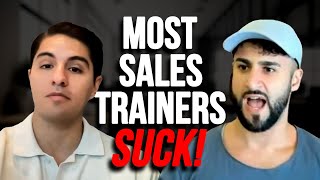
David Dre closed $7.8 million in sales over four and a half years working with Sam Ovens. He and Brian Moncada discuss qualifying prospects, pipeline management, and why marketing matters as much as the close.
So I'm gonna say some controversial for everyone today. 90% of all sales trainers are failed salespeople. I did $7.8 million in four and a half years selling for others. Those numbers are proven, and I can show you those numbers. And then Sam thought I was doing voodoo, and that's when he promoted me to head of sales because I kept having the same numbers.
Everybody here already knows who you are, man. The man, the myth of legend, David Dre. He's been a really good friend of mine ever since I joined Quantum. He's actually the one that helped me en in Quantum and it definitely changed my life like he said it would. It led to, obviously, a partnership with Sam Ovens. And you know, he's a phenomenal guy. Someone that I always go to for advice when it comes to life, when it comes to business, when it comes to sales. But without further ado, David, thank you so much for doing this, man. You can take it away.
Thank you for that introduction, Brian. That was a very nice introduction. Very sweet, very nice words. I also love you very, very much. So I'm going say some controversial for everyone today. I don't know how everybody knows me and stuff, so I introduced myself as well. So you guys know a bit about my background and then I'll say the controversial thing. So I've been in high ticket sales specifically for eight to 10 years before it was popular. I'm from London, although I live in the Middle east, so I'm British. Yes. I have about 20000 hours, legit 20 because I calculated probably about 15 to 20000 hours over the phone. So a lot of times time I started as an outbound rep. Really? I feel like outbound is true salesmanship. Inbound isn't. Yes, Inbound is very chill, very consultative like you said. And I started as a broker in the finance space in logistics, selling like high ticket training and finance packages to people. That's really where I learned how to do most of the stuff that I brought to the training consulting space through consulting.com. i brought it there and it was very new. And you know, the company sold last year. I was the head of sales. I was a profit shareholder. I was of SAM for about five years. Started in 2018, then the 10 year ended in end of 2022. And then we sold the company in the end of 2022, around beginning of 2023. So unfortunately we're making tons of money. I would never have left that job. I would never have left. So that's kind of My background apart from that, I've worked with every famous name that you can think of in the consulting and training space. And I'm really happy to be invited by Brian here today because Brian is. Is. Is a key to what's missing in this space, which is really ads. Ads. Ads. Great ads. Marketing. Because, you know, when a lot of people come to me and they say to me, sales, sales, I look at their marketing. It's just like, bro, you got a marketing problem. You don't have a sales problem.
So.
So, you know, we have to get the balance right of the two. Maybe we can talk about that today. But the reason I feel like the sales training space is so shitty because I. I've seen everybody come out of sales training programs. No names, okay? By the way, there are some great guys in this space. I'm not going to on all of them. Some really good guys, like Cole. Cole Gordon's a very good friend of mine. Totally love Cult, you know, totally respect him, okay? But there's some other guys out there that are real trash. And here's the reason why I think it is, is because 90. Remember I told you this. 90 of all sales trainers are failed sales people, Okay? I really want that to sink through your. Sink through your head what I just said. They're not very good at selling for other people, but they're good at selling their own. Their own, okay? And their own is sales training. Obviously telling you how to do it when they could never actually sell for another company. I did $7.8 million in four and a half years selling for Sam Oven that. Those numbers are proven and I can show you those numbers. The average price point was just over $6,000. Just over 3,000 units. Conversion rates on total, total call close rate, total, not unique, is about 35. Close rate. Your. The unique close close rate is probably about 50 to 60. Although I don't really give that much credence to close rates all the time. It does depend on volume and a lot of that kind of stuff. But I, you know, it's the fancy thing. So it. Everyone's talking about it. I'll talk about mine. It's very high. So, you know, $7.8 million. I got a track record. I could prove it. I would never have left that job if I didn't have to, you know, if it didn't sell, if it didn't move over to school. I love Sam. I love the team. Still talk to them all the time. But it wasn't the right fit for me to join school. So I ended up doing management. So let me. Let me start with the. The sales management thing. For anybody maybe that's going to get into sales management.
Okay.
First and foremost, make sure you're selling yourself before you hand it over to anyone. That's the first thing that I'll tell you. But, you know, one of the things I noticed from the brands that were struggling was the owner wouldn't sell themselves. You are an outlier. If you don't sell yourself the product and you hire people to sell it for you and it works, you are an outlier. If that actually happens. If the owner, if you as the owner, okay, if Brian is the owner, didn't start selling some retainers himself and get it working, it's gonna be like a very low probability chance that his team will sell for him correctly. Okay, so maybe this is a discussion a little bit about leadership, but really, it's like you need to understand what's who your perfect avatar is what the. You know, how they close, why they close. But then there's a caveat to this as well.
Okay.
You have to close first in order to train your salespeople, in order to know what your sales people need, in order to understand what mistakes to motivate them, to make them feel very, very, you know, confident. But there's also a caveat to this. Your sales people are also not. You remember that? And remember I told you that I. I used to say to everyone, oh my God, you're the best sales. I'm like, bro, Sam Ovens would fart on a microphone and he would still close more deals than me because he sat. Because he's Sam Ovens. He's the man, you know. So remember, nobody can also be. You make sure you sell first, but make. But understand that they will never close at the ratio that you will close. They will never close. I mean, I broke Sam Ovens record. Okay, If Sam ever sees this, he probably won't, but, you know, not trying to outdo you, bro, but I broke his record at about 500k cash, new cash in a single month. Okay, but. But, you know, that was, you know, these things are like, you know, irregular irregularities when that stuff kind of happens. Doesn't happen every month, but I could still never be as good as him. It's like when I see these YouTubers. How many of you have a YouTube and you have a brand on YouTube? Yeah. If somebody comes on the phone with you, they're always going to close with you, man. They love. They love your stuff.
They.
And so when you hire sales reps, don't expect them to be the same. You know, you got to show them how to be the best that they can be. So yes, jump on the phone, learn how to sell it yourself so that you can lead your team by example.
Let's go. Cheers, David, nice to meet you, man. Fellow person from the UK over SOPs and agendas for reviewing sales team calls was what I stuck into school. I'd be very interested to see like limit I've got a limited amount of times we help people win more clients using organic content on LinkedIn. So show them how to build an offer, how to market it, how to generate leads, how to close. But I've got people selling that offer for me now who are past clients. So they know the product inside out. The vibe is high. But I want to like, effectively and efficiently use my time to be able to like, I don't know, score their calls potentially.
Yeah. So reviewing calls is the highest value activity and it's also the most time consuming activity for a sales manager. So it's a great question. That's the major thing that I do is the, is sales reviews and calls for calls with my teams. So sop for that is I always, number one is I always do the call review live with the, the, the salesman. I never do it alone in my own time because I want to show them what they're doing wrong and I also want them to listen to themselves as well. So that's the first thing I do in terms of scoring. Personally, I don't score anything. I just tell them this is terrible, this is really, really bad. Like, what are you doing? I, you know, maybe, maybe, maybe I should create like a scoring sheet for that. But generally I just record the call and I make sure that they have a folder for all the trainings because it's proprietary training material. After we're done, they have to watch the call and the breakdown two times. But going back to the call reviews one call a week, unless they're a high performer, it's one every two weeks. Record the call, make sure they're with you on the call. Be honest with them. You don't have to listen to the whole thing. You'll quickly see what the problem is. Usually in the first five minutes, all sales calls are mishandled in the first five minutes. They're not mishandled at close. It's in the beginning. They usually up. Okay, like 80 of the time is that problem. Make sure that they listen to the call twice and they bookmark all of Your trainings, and they listen to it two times. That's pretty much how I. How I handle that Tax man.
That's gold. Appreciate it, brother.
Well, I mean, I'll just carry on on the hiring thing, man. The hiring is like this. It's just I get all of my salespeople and the executives I work with, I get them to watch the Last Dance on Netflix because I want to. I want to drill it into their heads to have the All Star. I remember there was one guy, the mastermind, I think it was my. My good friend Ryan Matthews. He got up on and he was like, dude, like, the thing is about you guys is you have like the All Star team. It was me, Jesse, Nick, Sam said, and we were just like, we work so well together. We did everything very well together. And he was trying to make the point that you guys have a team and I don't. Right. I don't have this perfect team. And so the problem is, and I've made this mistake, by the way as well, in this past year, is I'm too. You should never be too loose on your guidelines and how strict you are with how good the people are that you bring on board. You should have an expectation upfront of what you see of them. And you should always have the lenses of recruiting on and always be talking to people, always be figuring people out. And we could talk about how to interview people, too. When I interview people, I talk about, are you, you know, how big is your family? Do you live with your family? Are you religious? I ask all these questions that probably nobody asks. Like, people are asking about what you want from the job. You should ask them. You should figure out what background they have. You know, are they alone? Do they run away from their mom and dad? Is their mom and dad divorced? It's very, very personal shit. But it will tell you a lot about what kind of a character they have. You know, I mean, for example, when I work with religious people, religious people are the most ethical people I've seen. Like, actual religious people. They're very ethical when they come into your company. They don't do bad stuff. They don't steal shit. They're very honest. They don't, like, do glass door reviews and stuff. You know, they'll be very, very helpful. And if they're not doing well, they'll own up to it. Whereas the people who are a little bit, like, less religious, they don't go to church. You know, I'm from a Muslim background, although I'm not. I'm not really Pract that much. Like, they've just. You just see the difference between the two, you know, so you can talk about hiring and, like, guidelines and stuff. I de. Qualify people over time. I tell people it's a terrible job and kind of see how they. How they react to that. But moving back to the All Star team, it's just you guys should always be thinking about your team, man. If you've got a team of sales people, operators, all this kind of stuff. Watch the Last Dance if you haven't seen it. The reason Michael Jordan just kicked ass and the Chicago Bulls, which is champions over and over, is it was a team effort. And you're bringing in people into your organization that don't give a fuck about your organization. They really don't care. And then you're so nice to them and you're like, don't worry about. There is a time to be nice. Because, for example, if you don't have a good lead flow, you know, you're partly to blame for that. So you can't blame everything on the salesman. But then if the salesman isn't building his own pipeline and reaching out to prospects while you're fixing the problem, then there's a balance of blame that should be had, right? So it's knowing what to look for with these things. You know, there were periods of consulting where we had no leads, man. People don't know this. Like, the marketing would be broken, but then I would still pull 150 cash out of my ass, you know? And then Sam thought I was doing voodoo. And that's when he promoted me to head of sales because I kept having the same numbers. I was a pipeline guy. I wasn't. I wouldn't say I'm the best closer in the world. Sometimes if people don't want to buy from me, I'll just say, okay, fine, go about your business. I have another replacement. I have somebody else. And they could smell that I had somebody else. They could smell it, right? And then that would actually, you know, people don't. Don't talk about how that's actually a form of attraction as well, is walking away higher and fire all the time, is what I'm saying. And have a company culture where people are so bought in that they don't think it's your business. They think it's their business, they think it's theirs. They're so bought in onto the expansion, onto the future. They. They believe it's a vehicle for them to move. You know, you guys want to make $10 million a year like the difference between a million dollars and $10 million every single time is going to be because of the people that you have on your team.
You know, so you had just mentioned that you didn't care about having, losing, losing a sale because you're, you always kept your pipeline full. So like, what are strategies that you implemented to help manage that pipeline and keep it full? Like, what are, what are things that you did? Like mindsets that you had, you know, practices that you had to make sure that like that was, that was staying consistent for you to pull those numbers?
Really good question. So before we even talk about the strategy and tactics behind that methodology, you know what I would do to keep the pipeline for. I just, I also made it a fundamental that every single conversation I had was a very high quality conversation. Very high quality. People would always come back. They would always come back. So tenure is very important. Like three months, six months, one year, two years, like where you build up like this, this pipeline of people that you've had conversations with, they'll go back out into the marketplace and talk to people that are terrible. You just have to make sure that your discovery is very, very, very, very good. And so, you know, I invite everyone, although I didn't read the book, like front to back. But the book challenger sale is a very important book. And the reason it's important is because you really have to get on that call. Teaching that prospect or help or positioning yourself as an authority, not by faking it. You can't fake it. You have to actually know something. Right? That customer has to come off being like, holy, this guy knows what he's talking about. He's, he now, he understands our industry. He knows my problem. I want to work with this guy even if he doesn't have the money. It's not the right time. Look, some of these things happen. It's sales, it's a percentage, it's a probability. If you deliver such a great performance, these guys will come back. So it makes sure that fundamentals in place. You're not going on there trying to be like, well, you gotta buy today and all this kind of stuff. You know, there are, there are certain things in place where you can push someone you should not be pushing all the time. It's a push pull kind of thing you got to do, right? Remember, the one who has the most negotiating power is the one that's willing to walk away. Okay? And the mindset behind this is like, okay, I've got my pipeline full, but it's a bunch of other stuff as well, it's knowing your value. It's self esteem. You have to have a certain level of self esteem. You have to know that you're the. You know. And how do you know you're the is? Because I'll teach you. Another mental model here is just speak to your clients often, man. Speak to them often. Just call up one of your clients, say, hey, man, how's business? How's things since you joined? What did you, how can I ask you, what were things like before you joined? What are things like now? Are you happier now? Would you have paid more knowing what you know now? And the guy's going to be like, yeah, I do, man. I, I appreciate you so much. You're going to get off the floor, you're going to be filled with steroids. You're going to be feeling, you know, your mind's going to be in the clouds. And what happens is your self esteem will go up.
Okay?
You'll get on the next call with someone and they'll feel that from you. You can't fake that.
Okay?
So, you know, these are some mental models. And then on the strategic tactical level is I'm always making touch points.
Okay?
I used to have something, if you have sales people, just make them do a power hour every day, one power hour where they set themselves to set two to three appointments every single day. Just dial out. I love dialing out because it was my background, I dial out. You know, I do a lot of training for, for outbound, for my sales reps. I'm very big on it. Outbound, you know, close two or three appointments per day. And then when I would speak to a guy who wasn't going to close, okay, I made sure that they added me somewhere.
Okay.
So they would add me on Facebook or they would add me on Instagram. Hey, don't worry about it, man. Why don't you go ahead and add me on Facebook? Okay, we'll stay in touch. I'm going to send you something over there, some free stuff. Give value, give some, give some value. You're going to love it. And when they come on their Facebook, what do they, what do they say? You see testimonials. Oh, my God, I love David. David's amazing. He's helped me so much. They see this and eventually, drip, drip, drip, drip, drip. This is why people can't get like 50 units a month alone. Okay, I've done 50 units. Well, 48. Okay, I fibbed by two. But I've done 50 units in a month before because I'm not closing all of those, one call. It's a compound effect. The guys love me before. They love the experience. I stayed in front of them. And for some of you, this is automated. You know, it's like, you know, the email automation, it's this. But the touch point is also really important.
Okay.
Hey, man, you just leave a WhatsApp message. Leave a voice message. I've got training on this. Okay, man, I just looked at this article. It reminded me of you. You gotta check this out. I'm not asking about sales. I'm just trying to give value. And how do I know? I never really used a CRM back in the day. Although now I do recommend, obviously you have a CRM. I would just go backwards on my calendar and I would color code it right. I would know who didn't close. I would look at the name. Like I remember this guy from a month ago. I remember that guy. Let me go into the thing. I look at the notes and I shoot him an email, shoot him a text, I shoot him a. I like video messages and, and thingy messages. Make sure they're value orientated. And because the, the, the, because the thingy was so good, the communication, the first time, they're happy to speak with me, man, you want people to be happy to pick up your phone calls. Nobody's happy to speak to a amateur salesman. Nobody's happy to speak to someone who's like, you gotta do it today or the world's gonna end or blah, blah, blah, you know, like, no, no one wants to talk to that guy. Women want to speak to the cool guy that doesn't need them. Like, and, and there's a lot of, like, you know, we could talk about the similarities between dating and sales. They're almost exactly the same. Almost exactly the same. So you want to hold some value and self esteem. So. So I hope that answers your question, Lloyd. Have a strategy. Do some outbound. Go back on your old leads, but make sure the fundamental of the conversation was good. And make sure you understand tenure. This stuff takes time. Takes a month, two months. I always like to tell my sales people, if you close a deal from a lead from six months ago, okay, it's still commission on your income statement for the year to date. It's still money on the year to date for the company.
Okay.
It's still in part of the annual income statement, you know, so, so I tried to put this through their head because it's a short term gratification that sales people have. We recently did an analysis. Okay, let Me just say this. We did an analysis on like leads and where they come from in context of what closes. And Chris is probably going to be familiar with this. It's all of the outbound stuff. For one of the companies I work with, it was all the outbound set stuff that was, wasn't closing. It was the lowest conversion rate. The organic ads had the high conversion rate. The paid ads, you know, from Brian's incredible, incredible marketing, okay, the paid ads were doing great. And then it came to the outbound, outbound setting from LinkedIn, all this other stuff and it was just terrible. And then I would listen to the calls and I'm like, bro, you don't understand the context. This guy got a message on LinkedIn. You can't just destroy the league. Pause. And I'm like, bro, you don't understand the context. This guy got a message on LinkedIn. You can't just destroy the lead.
Okay?
Handle it properly. Go through the chapters of the book before you get to the final chapter. Go through the chapters. Stop being so. I want it now. I want it now. And that's how you're going to compound a 35 unit month or 50 unit month or whatever it is.
It's like people you're talking about with marketing and it's like, oh, we are at a sales. So it's like, oh, we just need more leads. It's not that you always need more leads. It's that you're not doing a good enough job following up and then refollowing.
Up leads that you do have with.
The leads that you already have. Yeah. So that, that's helpful, man. I'm going to go back and talk to a lot of my, my old people that I've had conversations with and see what's up and send value based.
I thought of you, man. Let me tell you, that is another truth bomb, okay? Every lead ends up buying. Every lead is a quality lead. They all end up buying. It's just now or it's tomorrow or it's next year or it's another product because they were better than you. So everybody ends up buying, right? So every lead is worth a little bit of time. So treat them all with respect, with dignity, okay? And treat them like they will buy eventually even if they don't have the money right now. So. So for me it's like, hey, I know that the guys, I don't know, maybe you're in Bizarre and the guy's a student. It's cool, man. Spend 15 minutes with him. Don't spend the whole hour, spend 20 minutes, get him excited, you know, he'll come back like three months later and buy from you, you know, and then, and then the other problem is all the leads come from a different context, a different lead channel, okay? And then you use the same script, the same script all the time. It's the same that you use. And that's how I know, by the way. I'll tell you a few ways I know someone's not a good salesperson. One of them is they do a cookie cutter approach because they don't know how to qualify properly. Every lead is like, you know, so tell me about your business, you know, and then who, who knows this question and how would that affect and change your life? Can you tell me what would that do for your life? When I, when I hear that question, I'm gonna kill the person. And I'm listening to, I'm like, why the would you ask him such a childish question? The Guy runs a $50,000 a month agency or company or whatever it is. You can't talk to people like that who are professionals. They'll spit on you. You know what I mean? It's like so they don't, they don't think about who they're talking to, you know? And that's why if you look at my Wetube, my, if anybody bought Wetube, if you look at my module on there, you know, before consulting went, went, sold. The whole thing was about understanding the buyer's journey. You know, in marketing they teach buyers awareness level and the funnel and then they, the brand awareness and then they go through, you know, then they schedule the call and then right at the bottom of the funnel they buy. It's actually the same process for a salesperson, although this is not taught when you qualify someone, you're supposed to be figuring this out. You're supposed to be figuring out, oh, he has brand awareness or he doesn't. You know, he's, he's bought a course in the past or he hasn't, he's been ripped off in the past or he hasn't. All of these things take into account. But those things are on your scripts. Okay, I'm gonna make, I'm gonna make a video one day where I'm burning a script. We should do an ad together. Brian. If I start scaling my out, I'll do it out when I'm burning a script to say this is why you suck. And, and then, and then the other reason that salespeople the other way that you can tell if your Salespeople is. Okay, remember I told you this. Remember? Ask your salesperson to make a commitment in the beginning of the week. Who do you have in a pipeline that's going to close? If they say 2 or 3 and they close 0 or 1, you know that they live in fantasy land. They live in fantasy. They are. They're being lied to, and they believe the lies by the prospects.
Okay.
Whenever I go talk to Jesse Clark, he'll tell you, whenever I said I was going to close the deal or my top sales guys in my organizations, when my top sales guys say to me, I'm bringing three in this week, they bring three or they bring four. They know what's happening in their pipeline. They know what's going on.
Yeah. What you said, David, is so huge. You said the goal of you. So you got to understand the buyer's journey. When you're qualifying someone, you're trying understand where they came in and how familiar they are with the brand, because then the way you customize the pitch or the sales call is totally different, which is huge. I think, like you said, the cookie cutter thing is so, so key there. I just wanted to make that note.
Yeah. Let's say somebody comes in Brian's funnel and he doesn't know anything about ads. There's no point in Brian talking about his setup. And we're going to do this for you. That guy needs to understand how this whole thing works. You need to show him, well, we do this, and then the ad cost works like this, and then over time, we retarget, and then the ad costs come down. You should expect this much roi, and that's how ads work. That's still going to take you about three calls to get this guy on board. But you need to explain how this whole. But the guy comes in, he's seen it all. He's seen it all. He's done everything. Then you're going to say to this guy, you're going to say, okay, well, but what happened? Why didn't it work before? And he's going to say to you, oh, well, I don't know. Well, well, tell me what the guy did. And the guy's going to explain to you, and you're going to say, why did you do it this way?
Okay.
And he's going to say to you, because that's what that company said.
Okay.
And then, and then you're going to ask him, well, what do you think is the problem? You need to. You need to understand what they think the problem is. Yep. You see some of you don't even ask that question. Why do you think it's happening? Okay, never go to the end. This is why I say most calls are up in the beginning. They're not up at the end. You don't ask them what's. You don't find out what's going on, like tick, tick, tick. You don't find out what's going on in their head. And because you don't know, they bring that baggage to the close and they don't tell you about it. It becomes a hidden objection. And the guy in the back of his head, he's like, man, you know what, man? Brian's telling me the same. The other company said, you know, but they didn't tell you. They were speaking to another company. You, that was because you didn't ask.
Did you put that into the system that says sales awareness? Because it's very hard to train salespeople on, based on, on like this feeling of awareness. And you said you train them on like a, on, on, on like once a week call life breakdown. Is there other training that you do? Like, like how do you ramp a salesperson up really quickly?
I figure out very early if it's going to be too much work and then I just get rid of someone. It sounds a bit cold hearted, but I've learned that from the hard way, you know, that you just have to do that because if you're spending too much time with someone, they need babysitting all the time. That's not the kind of people I want on my team. And I, I learned this the hard way because in our consulting we were all like, you know, top, top tier. We didn't need any coaching. Like we just, they were just, I don't know how, it just was like magic. Like I didn't need that much coaching. Nick didn't need that much coaching. Even though I coached Nick, he didn't need that much, much.
Right?
We just did our own thing. And by the way, the brand wasn't the reason. If any of you, in the back of your mind, you're saying the brand, the brand was so good, okay? We fired sales people at consulting. So it's not like the brand was that good. Some people just weren't it, you know, so, so getting back to my point, Julian, I find out very quick because the sales people that you should hire should be very mature, very grown up and shouldn't need so much time, okay. And if they do, then they're a bad fit usually.
Okay?
So move on very fast. Get the right People give people a lot of time in the initial stage, maybe for the first month, but then after that, if you see. It's just like, oh my God, David. I don't know how it's like a. It's, you know, it's just like, come on man, like you're. Be a man. You know, no disrespect to women, if there's any women on the call, but be a man, you know what I'm saying? Handle your. There's a certain level of grit and balls you have to have in this game. You know, like if you always needed me to hold your hand, it's like you're not, you're not about it. So what do I do in the initial stage, Julian? Okay, I hope this doesn't get stolen because everybody steals each other's in this business. But I do something called reality role play.
Okay.
Reality role play is a technique that I developed because role playing is very. Is not a very good way to role play or train. And the reason it's not good is because role play is based on two things. Number one, it's an avatar that you made up in your head. So let's say I role play with Brian. Brian has to play a character, you know, so it's not really realistic. And then second of all, the reason role plays isn't that great unless you're cold calling cold call role play is really good. I like cold cool roleplay. But for everything else in consulting, it's not. The other reason it's not good is because most role play is focused on the clothes when it should be focused on qualifying. Because most people are bad at qualifying, not closing. You shouldn't abc who knows ABC always because sexy.
Okay.
It's always be qualifying. A guy who worked on Wall street who's 50 years old, plus really incredible sales guy. Darren Lucia. No. 1 my favorite sales guy is people nobody heard of. But Wall street guy was making like 80 grand a month in the 80s. Like this guy was a bad boy. Yeah, cold calls to like high net worth individuals. He was like, David, it's always be qualifying. And like I was like, damn, man, he's right, you know.
So are you trying to ask the right questions? So the prospect is selling himself on the idea of continuing with you on the next step of the sales process or selling himself on the idea of doing, you know, buying the product or at least being interested in what you have to. To tell him like what you have to show him.
Right? So. So again it does, it does depend on the Context. Know Brian's context is he was familiar with Sam Ovens. He heard of some people. I think he had some friends that have been through the Mastermind. So the context of that is how come you haven't joined already? Let's go. Like, I don't need to waste no time, but let's say someone comes through, you know, LinkedIn, which is what Chris does. I'm g. Be like, you know, I'm asking different questions probably. I'm like, hey, man, have you ever had somebody reach out to you and get you on a phone call before from LinkedIn? You know, have you ever heard of LinkedIn organic before? Okay, I might want to do some more discovery. So the questions are really based on the context of the person or the lead or the source. And the things I'm trying to find out are why they would buy and why they wouldn't buy, you know, so everything is framed around that. I don't know if you understand what I'm trying to say by that. A lot of people don't. So it's okay.
No, I've been. I've been researching about this just for two years about, like, how to ask the right questions. So the prospect sells himself on all of the ideas. Like. Like, that's just what I've been researching for. But, like, because there are questions, like, if you ask them, they change the whole.
The whole.
The whole conversation.
Yeah, absolutely. Let me say. Let me. Let me expound on what Julian said. Okay? What Julian said is he's been looking for it for two years. I was looking for it for two, five years, bro. There is no information about discovery and qualifying online. There's nothing. No sales trainer teaches it. None. And if they teach it, they teach it so badly, you know, it is. It is the. The core of a great salesman is the ability to ask. The key was the right questions. Right. They know. Some people don't even know what the right questions are. People ask irrelevant questions. They ask too many questions. They don't get answers to their questions. Sometimes you ask, you don't even get an answer. You just go on. It's very difficult to find good stuff about that stuff, man. You know? Very difficult. So a very popular book was Spin Selling, you know, but Spin Seller. Yeah. It wouldn't be relevant to someone who's an organic lead on YouTube, you know, so how can you see this benefiting you? Yeah, I've been on your YouTube for a year, bro. I know how you'd benefit me. Just take my money. Do you know what I'M saying, like, is it so I, I would challenge. A sale is much more modern. That's why I kind of pointed it out. The reason I point out Challenger Sale is because we are at a stage in, in history for sale sales people, where it is more difficult for you than ever because customers are more informed. Customers are being ripped off more often. Customers have access to the Internet. They have access to information. Back in the day, a salesman used to use information as a weapon, right. To keep stuff from prospects. And they would use that to assist them in the sale. But now you can't do that. Prices are available. People are selling your course for free for $50. You're selling your 10k course for free online. You know, basically it's free. So you're at a disadvantage. So when they come on the call with you, you have to really be different. You really have to know something. Show them something different.
Okay.
We were doing an analysis of one of my sales guys. You know, why he was doing so well with the LinkedIn leads, right? And then, you know, people were listening to the calls and his presentation was tailored.
Okay.
It was a different pitch for every prospect and in particular for the LinkedIn leads. He was showing them stuff that he was really teaching them something about, you know, organic and LinkedIn and all this kind of stuff, and they had never seen it before, and that was really taking them over the edge. So tailoring, bespoke, being unique with every buyer, treating them as an individual human being, heart to heart, man, it sounds so romantic, but it's true, you know, like, don't just treat people. You are in the people business, remember that. Don't just treat people like a number. Sometimes I do keep it real with you. Sometimes I do. You know, sometimes I'm not in the mood. Sometimes I'm tired. You know, you do have to deal with some of these things. Maybe we can talk about that if you guys want.
So is reality role playing the main thing you have found to train salespeople into asking the right questions?
No, no, no. It's a combination of things. Reality role play is good on a virtual reality kind of virtual thing. Like, you know, practicing. But the best sales training that you will ever do, ever.
Okay?
And remember I told you this is listening to Salesforce. That's the best sales training I got. Great. Because all I would do every morning for 10 years, every morning in the gym, I wouldn't listen to podcasts and all the shit. I would just listen to my favorite salespeople. People again that you've never Heard of.
Okay.
Or I would listen to myself, like my. My favorite sales calls, because it would be reaffirming. And then every day I was again, and it would program my brain to, like, say these things and know what I was saying. You know, you get really good when you understand why you're asking the thing that you do. You're really bad when you don't understand why you're asking it. Who are the top salespeople you would recommend?
Okay.
Another controversial thing, I'll tell you, Chris, is the best salesperson that I could recommend is yourself. You are number one.
Okay?
Write your own book, write your own pamphlet, write your own teachings, because your reality is very different to everybody else's. We experience the same thing, but we see it differently. We just. We just experience it a little bit. You know, it's like when you like a chick, she's like a 10 out of 10, but your homeboy thinks he's a 5, you know, it's the same chick, okay? It's the same woman.
Okay.
Or video games. So I'm not. So, you know, what's the right word? Chauvinistic. Chauvinistic. If I'm not too, you know, whatever, wherever the word is, maybe it's your favorite video game. Some people love League of Legends. Some people hate it, you know, but it's the same game. So say the experience you have with sales is the same. Sorry. The experience that you have is different, even though it's the same concept. Asking quality. The best stuff that I ever had was the stuff that I wrote to myself. I've said this once before or twice. If you guys write down. Write down your own questions, write down your own experience, journal what's happening in front of you, and then you'll become a master at it. So my number one favorite salesperson is myself. I learn from myself. The most other salespeople that I really respect, I wouldn't say I would. I would advise anyone to follow them.
Okay?
One of my favorite sales guys was a guy called Derek Lipsky. I used to watch his videos on repeat every single day on. On YouTube. He's like a. He's like. He's not a sales trainer. He's just a sales guy in real estate.
Okay?
Like eight years ago, I would watch his stuff. He has some old videos on YouTube, and he's just, like, making calls, cold calls all day. I'm like, wow, man, this guy's really good. And then. So he was great for me, people I respect in the space. And then other. The other People were performers, performers in my. In my organization that I was competing against. And that was a mistake that I made that I recommend. Nobody makes that mistake, which is, don't hate on your co workers. I know I did because I'm very competitive. I want to win. I'm better than you. But you kind of got to let go of the ego and learn from the. Learn from the people who are actually doing well on your team. So the other one is other people in your organization. I've learned, you know, a lot from them, and people are respecting the space. I respect Cole Gordon a lot. I haven't gone through his material, but I know he's the real deal because he was the manager for traffic and Funnels. So I know he has real hands on experience. So I respect Cole a lot. I. I did respect Grant Cardone a lot. I learned a lot from Grant Cardone, but that was like, in 2014, 2015. I know he's kind of moved on to, like, real estate and stuff like that now. He's not really a sales guy, so I respect those guys. I respect everyone. I respect most people. But. But the people who talk about emotional manipulation, I do not respect at all the people who talk about emotional manipulation. Tonality over the phone, all of this phony, like, it's phony, as, you know. Like, those people who talk about that, in my opinion, they've never sold. They've never sold a dime. I'm not going to mention no names, okay? Not going to mention no names. Look, for some people, it works. For some people, it works good for you. But I've seen people like. Because I. I've worked with hundreds of sales people, right? They come in, who's that guy we see? I've worked with some people that come out of these programs, and they just don't do well, man, Because. Because it's a gimmick. That's what it is. That's all it is. Nothing beats honesty over the phone. Hey, man, you ever. You ever paid money for a program like this before?
Okay.
Would you ever spend money on something like this? Why not? You know, why would you, you know, could you make sense of spending that kind of money? And the guy's like, I don't know. I don't know. Well. Well, maybe that wasn't an answer. I didn't get an answer. So me, I'm just an honest guy, bro. Like, I just keep it real with people over the phone. So, yeah, a lot of people are good, A lot of people are bad. I don't have A sales training program. Maybe I'll build one one day, you know, and become the thing I hate. But if I do ever decide to do that, you guys can. Can apply. I'm just gonna plug myself right now if you don't mind. Yeah. Only. I only work with teams right now.
Okay.
Enterprise. But maybe I'll work with individuals or like seller.
Like a.
A solo training program. If I do, it's school.com sales rank.
Okay.
That. That's my company Sales rank. Because everybody's got a rank. And you can find me on D Dream on Instagram. If you guys want to follow me. If I do decide to release anything, I promise you it will be the best sales training in the world for our industry. For our industry. It will be the best. And I will show you real calls and I'll give everyone like a freebie, okay. For attending today's Mastermind call.
Okay.
Just apply to the group and then send me a personal message on. Just, just keep it to school please and I'll send you a closing video. I did. I have full permission from the person to share this video. It's me breaking down a call on why I say the things I do. And I know how sexy closing is so you guys will enjoy it. It's a lot of gymnastics. I. I wouldn't recommend you guys sell like that to everyone, but it's a fun call to listen to. So if you guys want to apply and then send me a message, I'll go ahead and send that video as a thank you to, to coming to. To today and thank you for Brian as well. 100.
Can I ask another question or are we done?
No, no. Let's go, baby.
All right.
Another one is about sales team efficiency. Like, how do you like working the pipeline? How often do you follow up? How do you schedule follow ups in. In a team? Like if you're managing the sales team, like, what's your mindset regarding following up and working the leads on different channels like messaging, sending videos, sending voicemails, etc.
Okay, so. So first of all, from the management perspective, make sure you use a Kanban view of your prospects and where they are in the pipeline. It's very, very easy for you to see what's going on, you know, so use a Kanban view. You could use close. Anything you use is perfectly fine. I use clothes at the moment on the Kanban opportunity view. I can see, hey, this guy's stuck on offer made. He's stuck on there. And I will just go in there and see what my Salesperson's done. Did he send him this? Did he send him that? Did he do this, did he do that? Did he move it appropriately along the camera? Admin. Admin is a very good way also for you to see if someone is up or not.
Okay?
If you know your sales people are not doing admin, big red flag. I've ignored this in the past on my own peril.
Okay?
So use a Kanban to see where everything is. That's number one. And then what you should do is in regards to the follow up is it's have your automation in place. That's first and foremost your email automation, your retargeting, okay? Stay in front of the buyer as long as possible. 30, 60 and 90 day different sequences, okay? And then with regards to the follow up, it should be very personal. So if you're a salesman, you go into your own Kanban pipeline view and then you can see this guy is there. Go on there, look at the notes, okay? You must make a very calculated decision on whether or not you should touch that person. And the reason I say that is because it's very similar again to dating. Like, is there any women in here? No, no, no, no. So it's very similar. Any woman will tell you, man, when you follow up too much, you just want to make them throw up.
Okay?
So there's a very delicate balance on that. So take a calculated decision. This guy hasn't been followed up for 30 days, for example, or 14 days. And then create a personal message. There is no sequence. I'll tell you right now, if anyone tells you a salesman's perfect sequence for getting a person back into the pipeline, it's just man. Okay, so, so there is no perfect sequence. I will do video, I will do text messages, I will do email. Most of it will be value based, okay? And if I'm unable to get into communication with that person, okay, Communication is key. Very easy for you to do. This is give it to someone else. Very simple. Give it to another sales guy and get that sales guy to dial up that lead. Because sometimes people just don't like you. I've said this multiple times before, they just don't like you. I always like to say I'm a great guy, I'm nice, maybe I'm too loud sometimes and I'm very respectful and professional. I try to be, but some people just don't like David. So I'll give it to Brian, for example, to call up the lead because they want to hear a new voice. They want to hear a new person and they will open up to that person. So you should have so on my team. Maybe we could talk about this. I have interns, I have setters, I have outbound, I have closers, and I have sales leaders. These are the five types of people I usually have on my team.
Okay.
If a closer loses the lead, okay, after 30 days or 45, 45 days, usually it no longer belongs to him.
Okay.
It will either drop to an intern or an outbound guy. An intern is someone that has to prove themselves, that doesn't get paid anything. He'll dial them up and reset the appointment for another closer. If it's an outbound guy, that's usually someone who's graduated. They've graduated from intern to set up to outbound guy. Outbound means end to end. If he's graduated, they'll try to close it for himself. So we're trying to make use of everything that we get. A closer is honestly like, I know I told you guys like a power hour, but if a guy's a super duper closer and he's closing at 35, he don't need to do no outbound, man. He needs to do presentations, he needs to do deals all day long. I would never get Chris, Julian, Tian, Lloyd, if you guys can close, I would never tell you to do outbound unless you needed to.
Right?
That should be given to an intern who really loves your company that wants to prove themselves, to dial out that lead and reset the appointment or close it for themselves. Okay, so have. I have a demotion structure.
I have a.
A promotion and demotion structure. I don't get rid of people. I keep people and I demote them. That's why it's called sales rank.
Okay, what are the five types again? David? Sorry, man. Intern set as outbound closers.
And yeah, so an intern is someone who doesn't have any experience.
Okay?
He wants to prove himself, he gets a pool of old leads, never gets new leads. Like let's say you have 20, 000 leads. He's a good pool. And he has a target to hit five sales in a month for three months in a row.
Okay?
Once he does that, he's sending the leads to the top closers. Once he does that and he proves himself, he moves up to set up a setup, gets new opt ins or new leads to set for the closer. He must get 10 sales a month, three months in a row to prove himself to become an outbound rep. An outbound rep and never promote people at the same time, by the way. Because you'll screw up the flow, okay? Promote them one at a time, okay? The outbound rep, end to end, sets for himself a new opt in and closes for himself, okay? He must get five sales in one month or more between him and another rep. So I make two of them compete at the same time, okay? So if two of them compete and one of them gets seven, one of them gets five. He stays as a setup. The outbound guy moves to closer. A closer has to stay with me for 24 months before I give him leadership. And leadership means he controls the team and he gets a different pay structure. That's number five, okay? So that's. That's closer, and then it's sales leader. Now, before all of you start asking me about percentages and you guys want to have a military structure, man, military sales people are military people. They're sports people. They are not. You know, this is not a, like, fairy, fairy tale. This is a hierarchy of. Of commander, General, okay? Navy SEALs unit, okay? Medics, you know, like, they're all part of a unit and they're all supporting the team, okay? You can do it as, you know, forward, midfield, defense, you can do all that kind of analogy I like to look at as military because I love discipline. Discipline is very important. So. So you guys want to have this attitude when you do this, and you want to have demotion and promotion, and you want to be very strict and adhere to a culture of performance. And you as a leader, must be ready to deliver for those people. So before you start asking me about pay structure, it's different for every company. It's different for every company. And the reason I say that is your account statements are very different from each other. Some of you have more organic, you can have more money to give the guys. Some of you have more ad spend, you have less money to give the guys. It's very different. I would say make a pay structure that makes sense for the rep and makes sense for you and also adds value to the rep so that he can go upwards in his career. Make sure you give them a ladder to climb, otherwise they'll leave you. You don't want these. At my peak, I was making $75,000 in commission a month. I was the top 1% of all 1% sales people in the world. I loved it. I'd never wanted to leave Sam. Why did you do this to me?
Okay, but.
But I stayed because Sam rewarded me. You know, reward your people, man. Have competitions, make. Turn this thing into a game.
Weekly or monthly bonuses or like yeah. Individual bonuses for high performance. KPIs being met again.
Again. This again. I know you guys are gonna hate this, man. I'm very bespoke with my advice. That's why I do. When I do executive coaching. When I do executive coaching, it's very much about what works for you, okay? I see a lot of blanket coaching. I never used to do that, okay? It was always different for everyone. But let's say, for example, your lead flow is banging, okay? As we say in Britain. Who says banging? Chris knows what I'm saying, Right, Chris? If it's. If it's real good and your lead flow is like. Let's say you've got 500 surveys a month between three sales people. Let's say training is banging, okay? Yeah, you have five. Let's say you have 600 surveys. You have 600 surveys a month, okay? You cancel and no show. At 50, that's a hundred unique calls. Or let's say 80 unique calls per rep. At three reps, okay? You can create a commission structure of monthly increases, increments. So let's say, for example, ae. AE calls. Unique calls per month. Unique calls. You have to hit 25 sales that month. Next month, your commission goes from 10 to 12.5 for the entire month. Next month you do the same thing again. Another 25 units, another 25. The third month, you go up to 15 and you keep it there. If you keep hitting the 25, okay, you lose a 25. That goes right back down to 10. You lose all of it. You start right back from the mid. I want my sales people running. You know what I'm saying? I want them fighting for that money, okay? And then you can have bonuses on top of that. Now, let's say you don't have that many applications. I have this with one of my teams right now. Marketing is a bit of a problem. This happens. I would have a monthly sliding scale. A monthly sliding scale is they have to hit 50k, then they'll hit 12.5%, then they hit 100k and then they get their 15 after that. Anything above that. So it's very bespoke. Or maybe, you know, you just want to do like a monthly company. Like you can have pop dog competitions. I call it the Clutch Master. Clutch Master competition, final week of the month. You know, sales are a little bit average. Clutch Master, I'll give you three grand if you hit six sales, okay? But to qualify, you have to not be drawing with someone. Otherwise you split the top price. Third prize gets a who knows who knows where this is from? Third prize gets a set of steak knives. Who knows? Yeah, I do. I do cigars. I give cigars to my people because I love cigars. So, you know. Second prize is 1500. First prize 3000. Make it up as you. Who cares? Just make sure you're profitable. That's why I can't give you tailored advice. You might not be able to afford it. I know people struggle financially sometimes, you know, in the business. It's up and down. You want to make sure it's profitable. Don't be greedy. Let me give you this one other piece of advice. Don't be greedy. I, I work with some business owners who are greedy, man.
Okay.
Accept. Accept that you are sometimes in a growth stage in the business. Accept it. Accept that for one year you will be growing and you will not be making profit. Some people just can't accept it, man. They just can't. And it's stupid. I have one team that accepts that they're at a growth stage. We break even or make some money or whatever every month and it gives the owners time to develop a product or something. And then in one month we do $1 million and we make all the money back that we lost in one year. You know, it's just, you've got to be patient in this game. Some people just ain't patient. Like the, the leadership is terrible. It's terrible. You know, you're just so. You just don't have a long term vision, you know, I've seen it all. Trust me, I've seen it all. By David, I've. Oh, sorry.
I have one last question. Thank you so much for the value, man. It's solid. Yeah, man, we spoke like a year and a half ago or a year.
Ago because you were in the program back in the day. Yeah, yeah.
Wetube as well. And all the, all the good stuff, man. All the good stuff. So thanks as well for that, man. Good to see you. Yeah, man.
So I have a question.
I have a, I have a. So I have a, I have a setter and I have a full time closer. He had a couple of questions. So one question that he had is he says like people always have interest, but they don't always have budget.
Right?
So we're in the B2C market in the, in the Netherlands. So what he sometimes does is he books in a second call with them. But would you say, hey, if you know that they don't have budget, they won't have it in like a week time or something like that, that it's the best to connect them on Facebook, Instagram, like, we have a school. Give them as much value as possible and then just follow up with them for the long term. Is that the way to go or still, like, booking a call with them?
No. So. So definitely everything in the lab that you mentioned, staying in front of your buyer and adding value is the most important thing that you can do. That's a marketing thing, but it's also a sales thing because your sales guys have to have, like, the brain to think, oh, let me put him in the free school group or whatever it is. And then with regards to the money thing, you know, again, there's a lot of EQ that comes in play here. If someone doesn't have money, bro, they don't have money. They just don't. Right. There's no point in doing the second.
But.
But, you know, sell that person while you're on the call. Okay, but the other thing you should do is so. So remember I told you this is if someone is sold on the product, they're sold on you, they're sold on the company. Everything is in line at that point. You're John. You're John. Did I just say you're John? Your. Your job is to be a financer.
Okay?
So, hey, look, man, if I could help you find the money, if I could help you figure it out and find the money, would there be any other reason you wouldn't want to join us, or is it just the money? He says it's just the money, man. If you could help me figure it out. Okay, cool. What if we were able to come to agreement on payment terms today?
Okay.
Would you do it today? Okay. I'm always gonna get a yes. Okay, I don't want to hear maybe. Maybe. I want to hear yes or no. He says yes, absolutely. Okay, here's what I can do for you. I can break the payment down. Financing is your way to negotiate. Financing is there for you to negotiate. That's how you get more deals closed.
Okay.
Increase your close percentage. Got it. Now. Now, let's say he can't do the payment plan. Say, okay, cool. Do you have a rich mom and dad? Do you have a credit card? Do you. Can you get access to credit cards? Okay, so there is also a time where someone is so sold, you want to kind of work with the prospect to try and help them get the money. That's not going to happen. If you're. If your closer doesn't believe in your product, he has to believe that you can help that guy. I've gotten people to bring their mum and dad on the phone. I've gotten people to bring their uncle on the phone, their auntie. I have all of these calls recorded. Okay, not on consulting for my previous. My previous business. Okay, so do what. Tell him to do what he can to get the money for the guy. But if not, definitely put them in a place where they're sold and you stay in front of them for the long term.
What is, like, what do you hate on marketing as a sales manager and sales guy?
What.
What do you hate about marketing? Or what is like the perfect marketing for you? Like the perfect marketing done lead in your opinion or what do you wish for marketing?
Okay, so let me say, Let me say this is a good question. There's so much I can talk about here. This is actually a whole other subject. And I think, you know, there's a lot of like, you know, stuff written about the war between sales and marketing and sales and marketers, they hate each other and all this kind of stuff. How do you get that good balance? And there's some people in our industry that prefer to hide everything from the sales people. I don't. When I do a marketing campaign or there's a new marketing campaign or whatever, I like to do a launch and then show my sales people what's happening. The lead is going to see this, they're going to receive this email, they're going to receive this text message, they're going to watch this video, they're going to receive this kind of line of like the funnel looks like this. So number one is I don't like it when marketing is out of touch with sales.
Okay.
We figured out with one of my teams what was going on is they had no idea what was going on with the out stuff. They were treating every lead the same because they weren't, they weren't shown what was going on. So number one is, in my opinion, be transparent with your team. If they're good sales people, then it will help them, you know, so that's number one is I'm very transparent. I want to get people excited about the marketing. I want people to understand context and work with the lead in that way. The other thing I don't like about marketing, a little bit broad there, but.
The context is just like you. What do you wish yourself that mocking would do so that you have a better, easier job or like it's easier for you to then close or manage the sales team, whatever. Like, like. Or close the leads, whatever. Right.
Okay. So, so, like, superstar sales people, like Superman, like, real. Like real fucking Superman. They're not that many of them. I'll just keep it real. Like, there's not that many. So. Because that's the reality, you want to make the salesperson's job easier, but just not too easy, right? So the job of the marketer is really to put that customer through the buyer's journey as far down the line as possible without causing too much friction so that there's not enough volume. So it's striking. This perfect balance between volume and quality. That's really what it is. So when there's too much volume, it's just you. The only way you got that much volume, bro, let's just keep it real. Is you said to the you on the messaging, it was like, you're gonna get it for free. It's gonna be easy. Get a job with us. It's not even about a job. Have you ever seen that happen before? You know, whether, like, advertising a job and it's not a job, it's a. You have to pay for it, and the person thinks they're getting money. So, like, bring that down. Balance it a little bit more, okay? Have some friction where it's like, there's a VSL funnel that they have to watch, or there's like, a process that they have to go through to qualify themselves. You know, at consulting, we had so many. It was easy for us because by the time we released Wetube, you know, we were making people pay for applications. You know, we were making people pay to speak to us. You can't. Not everybody can do that.
Okay?
But that's a layer of friction that makes my job easier.
Okay, But.
But think about where you are in the business. You know, how big is your brand? Are you at the right stage for this much friction? Can my sales people handle adversity?
Okay?
Like, if you give me a LinkedIn lead, I know how to lead. I know how to deal with it, okay? If you know Average Joe who's been in sales for one year, bro, it's just not gonna happen, man. Like, sales takes a long time to figure out. You know, it takes experience, takes hours. So strike. Striking a good balance, okay, with friction and volume is very key. And then being very transparent with the sales people, don't hide it from them. There was one organization I was with that used to hide what was a Facebook lead and what was a Google lead. And I understand, like, the logic behind it. The logic is you don't want to mess with the internal Psychology of the salesperson. And you want to get them to treat every lead the same.
That's not.
That's like a. Like a domesticated cow. You know, it's like a milking. It's just. You want someone that knows how to handle these things that isn't affected by the information. Okay, I hope that answers your question. Anything else is, I don't like cheesy marketing. That's just a personal preference. That's pretty much it. You know, so when.
When a lead goes through, like, some even marketing, a VSL funnel, whatever, and a salesperson says that the lead is too cold, even though he has a problem, you, like, you fire him probably, right? Like, then you don't accept that?
No, I won't accept that. No.
No.
All right. If he's too cold and learn how to deal with a cold lead. I said to my team the other day, I said, being a great salesman is understanding how to deal with every single opportunity that comes your way. That's what makes you good. That's what builds the pipeline and compounds the deals.
Would you recommend, like, I think somebody else already said it before, like, adding, like, a step as a demo or like, having people, like, when they're too cold and as a setter, you realize the lead is too cold, that you tell them, like, okay, watch this first, and then we'll talk later, a couple days, whatever. Is that what you strategically would recommend as well, that the team does that when the leads start to cold?
Great question. There's a few caveats to this. The answer is yes and no. So. So my first answer is, you must have a process.
Okay?
So it's not like, okay, you come on the call. Let's follow up after you watch this, get back in touch with me, right? It's got to be like, okay, the person is at this part of the buyer's journey. I'm going to move them to this next part. I'm going to get a micro commitment from them that they will watch the content, that they will watch what I send them, and I will verbally ask them. Okay. Will they make a financial decision if we can help you solve these problems?
Okay.
So I'm very direct on those calls. Okay. So. So the answer is yes and no. You've got to warm them up. So if your marketing didn't do the job, you got to see it. Like, your sales guy is now the market, right?
He.
He has to become the funnel.
Right?
So it's like, absolutely. Totally understand. Here's what we're going to do. I don't feel like you've seen enough information to really do business with us. I think it would be unfair to make you any kind of offer or explain what we, what we do. I think you should take the time to consume some visual information, okay, and see all the stuff that you want to know so you can figure out if this is a good fit for you or not. The guy's going to be like, oh my God, thank you so much for giving me the space, blah, blah, blah. Let me ask you something. What we usually do is we book a second call where we talk, okay? If it's a good fit, blah, blah, blah. The guy's gonna say, okay, great. Before we do that, when is it that you want to move forward with someone? When do you actually want to work with someone to help you solve all these problems that you just mentioned? You can list them. He's going to say right away or next month or whatever. Doesn't matter what they say. It's just good reconnaissance for you. They say, okay, great, and can you make, would you make a financial investment to solve that problem? Okay, so now he's going to say yes and yes. You've set the tone. You've set the tone for the second call. Studies from MIT show that there's a 90 chance that that person will close if they show up to that second call because of the way you set the stage. So, yes, act as a marketer, personalize an email, field of information, micro commitment. They must view it, they must answer those questions and they must understand that second. Understand that second. Cause about doing a deal, what would you say?
And I know, don't go into too much detail because I know you could probably riff on this for like 3 hours and then we'll miss breakfast as well. Like. But top, top level structure of a successful one call close from your consulting days. Could you break that down? I mean, I think I've got my nail, but I just want to hear your point of view, please, mum.
Identifying that the buyer is down like 60% of the journey. That's number one. And then asking for the sale, looking for buying signals early on, not talking past the close. You know, Brian, why don't you talk about R1 cool close for $36,000. Why don't you talk about that?
Yeah, just explain it at a high level.
Yeah, yeah, because really, this is what it boils down to, Chris. It's knowing who the person is. It's not really a structure. It's understanding what's happening in front of you. Sort of thing.
Well, when I was going through the sales process for consulting.com for Quantum, I was already. You know, it was easy for. It was easy for me to make a decision and. And honestly for David to handle it the way he did, because I had already heard of and known about Sam Ovens for a few years, right? And this was. You know, I was originally thinking about joining Up Level actually three years prior. And I actually booked a call with David three years prior than our. Than our. Then our next call. Right? Yeah, I canceled it. I canceled it. I backed out. And so I had. I had the Up Level call scheduled with. With David and then I canceled that. And then he was following up with me, trying to get me back on the call. But I just. I wasn't at a point in my life where I was ready to fully commit to adspend.com so that's why I. I didn't want to basically waste his time either because I just wasn't ready to commit. And so I knew if I got on the call, he could probably sell me on it because I was sellable, but I didn't want to get on the call. Long story short, three years later, Sam drops that video on. On YouTube, the I'm Back one. And immediately I watch it and he talks about YouTube ads, right? And I'm like, okay, this is now relevant to me because that's exactly what we do. And so I booked a call to join Quantum because he's. Sam in that video is marketing the mastermind. Quantum. Quantum, Quantum. And so I'm like, okay, I gotta join. I gotta see. And how I can join this Mastermind. If I learn one thing, it'll be worth the investment, probably. And so then I booked a call. It sends me to David, luckily. And then I get on the call with David and I. I mean, it was just so smooth. It was so casual.
I knew. I just knew everything. Like, I knew that he was. He was familiar. I knew he was this. And then I just asked for the sale. Like, I. I can't. I can't express it any more differently than that. Like, in terms of structure. Somebody here was talking about eq. They were talking about emotional intelligence. You know, it's. It's the decision that you make when you just hear and you know that the person is already ready. Yeah, he's not window shopping. He's not window shopping. He's got friends that have done it. He's known about our brand. He's looked into our programs in the past. He's either going to do it on today's call or he's not. Yeah. You know, so I'm just gonna be like, hey, do you want to do the deal? Yeah, yeah.
And, and actually what happened was, is we didn't even do the payment over the phone or anything because what happened at the end was he, he, I think there was a limited amount of spots available or it was already capped and I couldn't join. And so, you know, whether or not I felt like either way the call went so well. And basically he said, I'll get back to you and talk to Sam and the boys and see if we can obviously squeeze something in if you're really serious about doing it.
And that was true as well, Brian. That was all true. Like it wasn't even. We had a system. And it came across very genuine to you as well, I think.
Yeah. 100. It did, it did. That's why I actually did the deal. So, yeah, long story short, we went and did the deal in email and I, he sent me the link, I paid for it and then the rest is history.
So I always like to say, Chris, is I don't care if my reps do a one call close. I only care if they get the clothes. So however many calls it takes you to get the close, as long as it's within a structure and you're not deluding yourself. I don't care if it's a one call, two call or three call. I really don't care if it's a one call close. It's great. But I've listened to calls with my reps where it was a one call close because the guy's saying, yeah man, I've, I've been watching XYZ's content and he should, you should just ask to how come you haven't joined already? Instead they go into the full presentation. It's like the you doing, man. It's like, you know, you can talk someone out of it as well. So I think my perfect shot is your ability to listen. Listen, ask the right questions, look for a buying signal and then go straight to it. Or decide early on that it's not a deal and you're going to move it along a pipeline. Sick.
Hell yeah. David, thank you so much for doing this, bro. I appreciate you. I know the boys had an amazing time here and it was amazing. Obviously the reporting will be posted inside the community and I'll send it to you as well. David, thank you for doing it again, dude. And man. Yeah, dude, this was sick.
Absolutely. Thank you, thank you so much.
Where can they find you again, bro? They tell them to join the school group. Tell them to follow you, bro.
So just stay in touch D. Dre on Instagram. And anyone need any help, man, just hit me up. And by the way, I'll send you that video, that closing call, if you want. If you just apply to the group as well. So much respect. Thank you so much, Brian. And thank you, everybody, for listening today.
Thanks, brother. Appreciate it, man.
Cheers, man. See you guys next week.
Peace.
More from Brian








CASE STUDY: How Usman scaled to $200k+/month after joining The Ad Men Mastermind


