I couldn’t scale past $200k/mo until I learned this
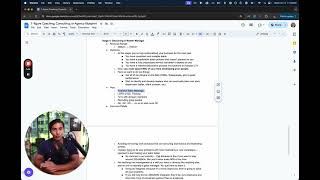
Brian Moncada explains why he hit a wall at $200k/month and what changed. The bottleneck wasn't systems or strategy, it was learning to manage people. He covers recruiting, training, meetings, and leadership skills that let him break through.
The reason you can't scale your business is not because of your funnel, your ads, your marketing, your organic content, or even your competition. It's because you suck as a manager. And I know I don't know you, and it's probably a wild assumption to make, but this is exactly what kept me stuck in my business for the longest time at the 200k a month revenue range. And if you're someone who has a coaching business course business or agency business, I can promise you this is probably why you're not scaling. All right, so let's just jump right into it. By the way, if you don't already know who I am, I know my name is Brian Moncada. I'm the founder of Adspend.com, one of the most sought after advertising agencies and education companies in the entire info marketing industry. We've worked and partnered with big names like Sam Ovens, Cole Gordon, Brandon Carter, Bedros Coolian, Charlie Morgan and a whole lot more. Spent over $60 million on YouTube ads in the past few years. But that's irrelevant. That's just giving you the credit that you should know to know that I'm actually coming from a place of experience and that I'm currently doing this with you as well to, to get to the a million a month right now. So here's where you're probably at. Okay? This is what kept me stuck for the longest time until I actually embraced it. And I'm still embracing it right now, so I wanted to share it with you. That way you can get insights too. Revenue range of 200k a month to a million a month, right? This is what keeps most people stuck. So the outcome at this stage, you pretty much probably have a fully systematized, you know, business for the most part, right? So for example, you have a consistent and scalable loan lead flow, right? You have organic content working, you have some sort of paid ads working and getting you new qualified leads onto your calendar or into your sales funnels with some sort of traffic that's scalable. You probably have a predictable sales process that doesn't depend on you, meaning that you're not taking the sales calls anymore, you have someone else taking the sales calls for you or booking appointments for you as well. And you have a fully productized service that doesn't depend on you either. Okay? So this means you're out of fulfillment, your team's fulfilling on it, or you have a way to get the products fulfilled on for your clients and customers that again, doesn't rely on you. And last but not least, you have a retainer and ascension process, you know, into a backend offer, right, that can increase your LTV because you have the front end dialed in. Now you got to probably increase your LTV with some sort of backend offer. All right? Now, at this stage, okay, you must spend 99% of your time developing your people. Now, here is where most people get stuck, including where I got stuck. So for the longest time, I would try to avoid this. I would try to expect people to manage themselves, hire great people. They'll just do everything, and they'll just not have to worry about you, not bug you, not ask you questions, just do their job and continue doing their job without you following up with them. That's sometimes what us as business owners think, especially when we haven't managed people before at this level of scale. And that's just not the reality. Like, okay, and this is what I had to learn the hard way. And as a result, I've lost team members, I've fired team members, I've had team members quit on me simply because I didn't learn this lesson right? I didn't know how to become an actual manager. And I actually am reading this book right now that I was recommended by Patrick Bet, David's coo, Mario Aguilar, and he recommended this book that's called. I think it's Bill Campbell. Yeah, the Leadership Handbook of Silicon Valley Trillion Dollar Coach. Okay? So this is a really good book because in this book, he teaches about how managers are coaches, and the best managers are basically the best coaches, okay? So we have to be coaches for our team. And as you'll see, this is probably what's been keeping you stuck. All right? So here at this stage, to get to a million a month, we want to do two things, okay? Number one, get all of our players, our team members on the field, the people that are actually putting up points, right? Scoring the baskets. Get them playing, okay? Get them on the field. This means client success managers, salespeople. This could be also like your operations manager, everybody, to peak performance. Get everyone who's responsible for bringing in new revenue, as well as keeping and driving new revenue on the back end to peak performance. Really get them to a level where they're just truly dialed in. They're dialed in with their health, their fitness, their mindset, and more importantly, their money motivated their. So they want to grow, all right? And then you also want to start to identify and develop leaders who can eventually take over each department. Sales, client success, et cetera. By the Way, in no way, shape or form. And I taking credit? Am I taking credit for any of this? By the way, this is all information that I've learned on my journey through multiple mentors and coaching programs as well. And I've just put it in this video for you to just basically use, because this is what we're using right now to get to a million a month as well. All right, so start to identify and develop leaders. Who do you know on your team right now that is showing up hungry, motivated, believes in the vision, the mission, the value, and is just relentless and ruthless with their time and with their actual attention to you and your business. Who are they? Start to identify them and start to train them, plant seeds with them and show them the path of how they can achieve their vision within your vision for your company. All right, so how do you do this? Well, the first thing you got to do is have powerful team meetings. Now, this is one that I wanted to avoid for the longest time. I tried delegating it, you know, offering it to somebody else to run, because there's some days where you and I both know we wake up and we're like this, I don't want to work today. I don't want to go to work today. I don't want to show up for my team today. I don't want to run the meeting today. I just wish the meeting would run without me. I just wish my team would do their jobs without me having to be there to tell them what to do. And that is very selfish. Very, very selfish. Because you are the business owner. You are the one that started this business. You are the one that hired these people. You are the one that hired has to motivate these people to do their job. And I know that sounds crazy, but that's just the reality of running a business. And this is what I had to learn the hard way. I was talking to Mario Patrick by David Coo, and he was telling me, basically kicking me in the ass, saying, dude, the best leaders like Patrick, Red David, who's obviously his boss, they're the ones that are always leading from the front. They are a leader amongst leaders. And if you can't even lead yourself to show up for that meeting and run a powerful team meeting, making sure that you are bringing the energy, making sure everybody's involved, everyone has their camera on, their microphone on, they're in good spirits, they clean themselves up, they're ready for the meeting, ready to attack the day, and they're ready and excited for what they're doing. It's nobody's fault but yours. And you can't expect anybody else on your team to run your meeting for you if you can't even run the meeting powerfully yourself first. And this is a skill just like any other skill. Running meetings and doing meetings maybe sounds like a total time waste to you, but my guess is if you don't have many meetings with your team or any meetings at all, you probably don't even have a team or you're probably not making that much, which is obviously what you probably at a different stage, that's fine. But this is what you're going to have to do if you really want to scale a legitimate company, not just a solopreneur type, you know, business, work, laptop, lifestyle, all that. If you want to actually have a team and build a company, you need to become a master manager. And this is again what I'm learning right now. So this is not me shaming you. This is what I've had to learn the hard way that kept me stuck for a long time. Powerful team meetings. Making sure everybody's jazzed up, ready to go. They know exactly where they're going, they know exactly where the company is going. They know exactly how they can achieve their vision within your vision. And you're just making sure everybody's held accountable. Now, these are, you know, pretty simple for us right now in our business, right, we have about nine team members full time and we do a daily huddle every single day, right? Daily huddle every single day for about 30, 45 minutes. And it's pretty much an hour, including the sales team, right, with me and the sales team, right? So PA powerful team meetings. Get everybody on board, get everybody, get everybody hyped up, make sure everybody's on time and make sure you have some fun, right? Share client wins. Share any announcements, right? Start with some gratitude and then go into the accountability. Go through ClickUp, go through Asana, go through Notion, whatever project management software you use to make sure your team's held accountable to the tasks they have with your clients or with projects and they're moving things forward. Run through those lists. Go to Operations first, Go to your editing team next. Go to Fulfillment next. And finally go to marketing and sales last, right? And, and in with the sales team. Let everybody go as quickly as possible, but make sure you have team meetings, okay? And bring the energy. It's up to you. It's not up to anybody else but yourself. Now, next thing, lots of qc, okay? QC and training. Quality control. QC means quality control, Quality check Whatever you want to call it training, just check on people, make sure they're doing their jobs. If you're expecting someone to do their job but they're not doing it to the best of their ability to what you think they should be, it's probably because you haven't taught them how to do exactly what you want them to. Let me repeat that. If somebody's not doing their job exactly how you want them to, it's probably because you haven't taught them how to do exactly what you want them to. When's the last time you had a training with your CSMs? When's the last time you had a training with your video editor? When's the last time you had a training with your operations manager? When's the last time you had a training with your sales team? Are you just expecting them to just kind of close deals without actually getting practice every single day from you? How can you expect that to happen if you're not training them? This is the boring work, guys. This is the work that we try to avoid because we want to just move fast and break things and we don't want to develop people and lead a team. But this is what's going to keep us stuck at this level forever if we don't learn it right now. Lots of QC and lots of training. Hold powerful team meetings. Make sure people are doing their job by actually following up with them on their jobs and reviewing it, checking it, making sure it's getting done and then providing feedback, coaching and training to show them how to get it done faster, better, more efficiently. All right? And next, but not least one on ones with all team members. When's the last time you had a one on one? When's the last time you took someone in and you said, hey, let's have a one on one real quick. I want to check in with you, see where you're at. How you doing? What's on your mind, man? Business aside, how are you doing personally, right? How's your family? How's your wife? How's your kids, right? What's going on man? Like lately you've been showing up a little bit, you know, less than energetic. Like is everything okay? You know, Talk to me, man, what's on your mind? What else? How can I help, right? Talk to them, get a one on one going. Make sure you check in with your people, make sure they're on track and this is the best time for you to actually hold them accountable to their KPIs, right? What other KPIs if they don't have KPIs, it's going to be hard for you to manage them and for them to manage themselves because they don't know what they should be doing every single day. And in order to achieve those KPIs, that shows them they're actually having success. A good book on this, by the way, is. Let me give you a good book real quick. It's gonna be. Well, actually, I have. I have three books. Give me one second, okay? This guy, Patrick Leni, okay? Patrick Lynchoni, you probably heard about him before. If you haven't, you got to read these books, okay? The first one is the motive. And I'll. I'll. I'll come back to this one in a second. But the one I want to talk about is the actual death by a meeting. I used to hate meetings. Again, like, it wasn't because I didn't like meetings. It was because I didn't know how to get my team involved in the meetings. It was like I was the only one that was there and, like, upbeat and, you know, basically like just brute forcing my way to get people to participate when I was like, how can I make my team meetings better? And I'm still working on this. I'm not perfect, by the way, but this book helped me realize that, you know, the book, it says itself, death by a meeting. I can show you death by a meeting. It talks about how most meetings suck and most people don't have great meetings. And one of the things I taught, I got taught from this book was that meetings should be like movies. Think about it. Why do we like going to movies? We like watching movies because there's drama. There's action. There's action in this drama. That's why we like going to movies, to see what happens in meetings. There's no action, there's no drama. So it's boring. You got to make your meetings like movies. There should be some drama, there should be some action. There should be some back and forth, some argumentation. There should be some just. Yeah, drama, basically. And it's not like you want to have fights every single meeting. That's not what he's saying in this book at all. But when you read this book, he'll give you a formula that you can use to hold your team meetings and basically make them more fun. Right? But it starts with you. So this is a good book to read. Now, going back to the one on ones, the Truth About Employee Engagement. This is again from Patrick Lynchioni, the author here. In this book, he talks about why people aren't engaged in their work every single day. And it's usually three things. The first is that they don't know how to measure their success if they're doing their job good or bad, meaning they don't have KPIs. So if they don't have a KPI on what they're doing good or what they're doing bad, they don't know how to measure success. And if they're on track or off track to their goals for their position, but they're never going to be able to know or like, have fun because they're never going to be able to have a scorecard to aim for and try to beat, right? So this is a good book, the Truth About Employee Engagement. And all of his books are really good because he talks about like a story, he tells a story, and it's like an actual, like, like a fiction kind of story that's fake, but it's getting the point across. So it's a really good read. You can read it in about a week, maybe even a weekend. I read both of them basically in like one or two days. So one on ones very, very powerful to get your team in line. Now, next, but not least, recruiting great people in order, in order to recruit great people, right, like, you got to be able to have a personal brand, a company and a vision that's big enough to fit somebody else's vision inside of it. Like, you can't expect to just like, I got this question asked to me the other day, like, how do I find better people? And it's like, well, number one, you have to actually look for better people. Like, when's the last time you actually started posting on Facebook, on Instagram, on Twitter, on LinkedIn, and asking people who do you know that fits this description? Like, when's the last time you did that? Number two, you, you actually have to have a big enough personal brand or a company that's legitimate and an industry, you know, industry, or basically like a, you have to have a big enough brand that gets people to know, like, and trust you, that actually wants, that actually gets people to want to work with you. And so this takes time. Obviously. Of course you can find those people that, like, when you're on the grassroots, starting from scratch, you can find someone who's like a friend of yours that's really good and you just recruit them for sure. But the only reason why I was able to recruit my team, which came from my, my network, by the way, my friends, my friends of friends, was because I was constantly posting on social media and talking about what we were doing, how much fun we were having, the clients we were working with, right? The wins we were having, the way our company was growing. I was showcasing all the results and what we were building. And as a result, I got people that want to follow me, listen to me, you know, get, get to know me, like me and want to trust me. And then as a result, when I put out a feeler now of if I'm hiring someone and very easy for me to find talent because I've done the legwork now for you, you probably just need to recruit better people, recruit great people, by the way. But only great people will want to work with someone who's a great leader. You can't expect an A player to work with you if you're a C player, right? Like, you have to be constantly improving yourself. You have to be the one that's showing up, doing the above and beyond. You have to be the one that's actually showing up and making sure you're improving yourself. Because they'll quickly sniff out a good company culture right away if, if they're an A player and they realize that you're working with a bunch of C players, your company culture is not dialed in. They'll be gone very, very quickly. So to recruit great people, you have to have a great company first, which starts with great meetings, which starts with great one on ones, which starts with great culture, which starts with a great leader. Now, qc, qc, QC and more qc. This is one of the things I learned from Cole Gordon. Shout out to Cole Gordon. Quality control, quality check, quality control, quality check, whatever you want to call it. Qc, qc, qc. Check on everything. Call reviews, sales call reviews, CSM, call reviews, onboarding calls, one on one, check in calls, operations. Make sure if you have other team meetings that are happening, you're watching those team meetings, you're making sure those team meetings are being ran well. You have to check in on your people, right? Qc, QC and more qc. So the common pitfalls that we as entrepreneurs suffer from in this stage is, number one, avoiding the borrowing work. Okay? Because this can be boring and tedious and frustrating at first and we don't want to do it. This is why I tried avoiding it for the longest time instead, right? What we do instead of doing this is we try to fix our problems with more marketing or new campaigns opposed to just making your team better. So, for example, this happened to me, I think twice now in my entrepreneurial career, especially with adspend.com, was when we got to the 100, 150 to 200k a month mark and it was getting harder to scale. Harder to scale. I would, instead of just making my team better and managing my people and holding them accountable and actually making sure I was doing my job to be a better manager, a master manager, as this stage is called. I would launch a new offer, try a new funnel, launch a low ticket, do something different, like try to do anything and everything to out to out to get out of the managing role and simply like market my way to scale. I would try to scale my business through more marketing. The thing that I know and I'm the best at right in the company. What I love doing, marketing, marketing, marketing. And so that's a problem because it's easier to do that. And what's not easy to do is actually become a manager, which is the most important thing you have to do at this stage. And so it's very common in our industry. This behavior is fine if you want to stay around 200k to 500k a month, but chances are you'll never scale 98% of the time. Why? Well, because you don't learn how to manage people. A business is just made up of people, right? Maybe in the future when you're watching this five years down the road when AI is fully taking us over and everybody's living the real life Wally movie and they don't even have to leave their home, get up out of bed and they're all fat slobs just sipping and drinking from this freaking portal that they're just being moved around space. Yeah, sure, right. Maybe we won't even have businesses over there. Who knows what's going to happen. But for right now, when businesses require teams, okay? People to run, to be able to have a successful business like a legitimate business, not a solopreneur type lifestyle business. And again, no shame if that's what you want to do. But if you want a legitimate business that doesn't depend on you, where you can actually go, take a month off and have the business continue running without you, you're going to need a team, you're going to need people, people that want to work with you, people that want to work for you, people that want to work alongside you, okay, you have to lead them, you have to manage them, you have to develop them. This is something that we try to avoid doing because it's hard, it's uncomfortable, we haven't learned it, it's tough. No one taught us how to be a manager. No one taught us how to hold people accountable. No one taught us how to, how to call people out on their right and how to actually just have hard conversations. Not that everything should be bad about this by the way. It should be fun. And this is something that I've had to embrace as well. It's like, man, how can I make this fun? Like this is the thing that keeps most people stuck. But when you learn this skill of leadership, management coaching, you can immediately go to the next level because you know how to build people, build and grow people. And they can then do what? Build and grow people. So it starts with you, but instead what we try to do is just like launch some low ticket VSO or, or webinar, like do something differently with the marketing. But we never get past that. And the problem with this is even if we do get this to work, which it can, right, instead of doing the boring work, right, we launch some, some new offer, maybe some B2C type thing, and it gets to 100k, 150k a month pretty quickly because guess what? We know how to get to 150k a month, 200k a month, because we've done it already, right? We're still going to have that same problem even when we do that. So you're still going to have to address the same problem even in that other offer, that other funnel, that other sales process. You're going to get it up to a point where you're going to have to manage people. And again, it's just a skill. So just keep this in mind in case you ever see yourself trying to jump ship, because this happened to me as well. So another thing is common pitfall, not realizing that management is a skill you have to develop like anything else. Okay. And no one is naturally a good manager. I can tell you firsthand, I've tried to avoid this. And you just have to learn it, right? Like for me personally, at least speaking for me personally, I know that to get to my next level as the person that I want to become in my morning formula with my alchemy of self, where I want to go, I need to become a master manager. Because if I don't, I, I'll always be relying on myself basically to run this business. And that's fine if I want to have a certain type of business, but where I want to go, and where you probably want to go too if you're watching this, is you don't want to stay at the current level you're at. You don't want to stay at the 200k a month mark. You want to actually scale to probably close to a million a month, if not larger, right? To do that, you got to learn management. It's just how it goes, right? And so what we try to do instead of doing that is we try to hire an integrator because it's a shiny object you think is going to solve all your problems. I've tried, tried this, I've done this. This is why it's on this document. Because I tried to hire someone or elevate someone else to be the, you know, operator, integrator, manager, whatever you want to call it. Too soon, before there was even enough of a hierarchy to even have someone doing that. And if you did truly find an amazing integrator anyways, they'd probably be very expensive and they'd be more of a business partner than an employee. I tried this and it's not like it didn't work. It could have worked for sure. But most of the time, though, you're probably going to end up doing this. When you first start a business and you partner with someone else who's like very operations focused and you're more marketing and sales focused, of course that can definitely work. But in most cases, even if you hire someone like that or find someone like that, you're going to have to manage them anyways and, you know, hold them accountable, make sure they're doing their job correctly. So you're still going to have to learn it. And so the reason why I'm making this video is to help you realize that the problem you're probably experiencing in your business is not a sales issue, it's not a marketing issue. It is not a competition issue. It's a people management issue. It's a leadership issue. It's what keeps most of us stuck. And I am personally telling you, it's what kept me stuck until I've learned to embrace it. A good book to read is this book right here, the Motive. Okay. By Patrick Lynchioni. In this book, he talks about the two types of CEOs. The me, me, me based CEO or the we, we, we based CEO. Right? It's basically like the servant based CEO versus the selfish based CEO. The selfish based CEO. Right. The people. The person that I used to be. Maybe you watching this might fall in this category right now is you're all about, hey, these people work for me. It's all about me, me, me. They should be doing their job for me. You know, I hired them, I pay them, they should just do it whatever where it's like the servant based CEO actually looks out for his people. He invests in his people, he checks in on his people, he asks his people how they're doing. He serves his people. He is a servant for the business. He is looking forward to managing them, he is looking forward to the meetings. He's looking forward to helping developing and growing his team. This book will tell you why you got in the business. Most of us have the wrong motive for wanting to be a CEO. And when you read this book, which you can read in a day, I did it at the pool one day, the other day and it'll remind you of that. All right. I would highly recommend this book because this was a wake up call, kick in the nuts if you will. It basically told me, brian, you are selfish and you need to change your attitude around people, your business and management because if you don't learn this skill, you'll always be stuck and relying on someone else to help you grow this manager team for you, which is not going to be fun, especially with where you want to go. So I would read that book, check it out. If you can't scale your business, it's probably because of you. And I know that sounds cliche and counterintuitive and you know, very common practice, but the reality is you will only grow your business to the level you as an individual grow as well. I heard this from Sam Ovens. We don't have business problems, we have personal problems that show up in the business. If you aren't growing yourself personally to become a better manager, a better leader, you're probably not going to be able to develop your team faster. They're probably not going to be able to hit their goals that you have for them and they're not going to be able to achieve their goals within your vision. So they're eventually going to leave or quit. Going to have to fire them anyways. Learn this skill because if you don't, you'll always be handicapped by it. I'll see you in the next one. Peace.
More from Brian








CASE STUDY: How Usman scaled to $200k+/month after joining The Ad Men Mastermind


