I helped Charlie Morgan make $1M/month with YouTube Ads (here's how)
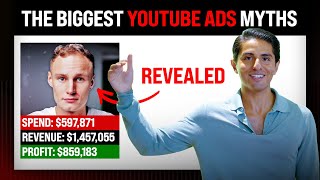
This is a YouTube video titled "I helped Charlie Morgan make $1M/month with YouTube Ads (here's how)" created in April 2024. The content features Brian Moncada delivering an in-depth presentation and interactive workshop on YouTube advertising strategies, sharing his extensive experience managing millions in ad spend and working with notable clients like Dean Graziosi and Tony Robbins. The video includes detailed explanations of ad creative, targeting, scaling, and campaign management, with audience interaction and questions from participants such as Mike, Jack, Franklin, and Will. The focus is on helping coaches, course creators, and agency owners optimize YouTube ads for high-ticket offers and scalable business growth.
My intention today is very simple. You know, I am going to give you everything I know about YouTube ads from start to finish to help you guys immediately start making more money for your business if you're at a point where you can actually run ads profitably. And I'm going to go through everything step by step but it's not going to be a hey, you know, like slide, slide, slide, slide. Me just teaching without any interaction. I'm going to ask questions, ask you if it makes sense and go deep with you individually if you have something specific that you want to ask me as well. Sound good? This is very simple what we do best, A quick background about me. I'll go in in a second but this is going to show you how to book 25 qualified sales calls each and every week using YouTube ads and our specific intent based validation system. We spent well over $100 million in ad spend in the last five and a half years at this point. And I'm going to show you how to do exactly what we do for our clients every single day. So the first thing we're going to cover is why most people fail with YouTube ads and how to avoid wasting a bunch of ad spend, especially when you when you get started. The second thing is how to create unskippable YouTube ads that live longer, fatigue slower and convert faster. The third thing is going to be how to use intent based validation to target your most ideal customers first, especially when you launch so you can actually prime your ad account for scale in the beginning and actually make profit as quickly as possible. And then lastly how to optimize, broaden and profitably scale so you can add an additional six figure months. Most of the clients that we work with, high ticket business owners selling five to $15,000 offers just like every single one of you within 90 days. Usually if they follow the system and they do the work and they make the tweaks that they need to consistently with our help, they add an Easy an extra 100k a month to their business. Just another traffic source. But again they have these pieces put in place, their offer, their messaging, the sales process, things like that. And so quick one minute intro about Me I'm not going to make this long. I got my start as a full time media buyer for Dean Graziosi, one of the best info marketers of the last 20 plus years. He's been in the game on infomercial days back when there was no Facebook ads, YouTube ads, Snapchat ads, TikTok ads he was selling on TV. So I learned from a guy who could get someone to stop what they're doing, walking across the living room, a mom, busy stay at home mom, and listen to the television set and actually call a number to buy a book. That's a very powerful skill set. And I was able to learn from him for three years to learn what I know now. And, you know, help clients like yourselves do exactly what he does, which is create ads that get people's attention and get them to click and buy. And so I was with him for about three years. I ran over about $7 million of ad spend for his brand and his companies. That's how I learned working full time for him, I had no clue about YouTube ads. I learned direct response marketing, copywriting, funnels, sales, all of that from him. And I'm using everything I've learned for now at our agency, adspend.com. so the next thing is, these are just a few of our clients that we've worked with. You probably recognize a few of those people. I've been blessed to be able to leverage the experience with Dean to get more amazing clients, you know, like, like him and people that are very well known in the space. And primarily for the last few years, as you guys heard my story over the last two days, has been an agency model, right? So we've become one of the best, if not the best, Most sought after YouTube ads agency in the entire info marketing industry, specifically for coaches, course creators, and agency owners. That's what I love. I believe in that because coaches, courses, masterminds, changed my life. I love selling it because I know it can help people. So that's why we focus in on that niche specifically. And Alex, but Alex Becker, he's not a good friend, but a very good, avid user of Hiros. And you know, he just gave me a testimonial that's pretty cool. We're one of the best agency partners of Hiros. We make a lot of money from Hiros and helping our clients get on Hiros. And then Sam Ovens a few years ago asked me to partner with him on WeTube. So that was pretty cool. I don't think he's partnered with anybody ever. And he partnered with me to teach YouTube ads to all of his clients, which was really sick. And I got to learn from him for about six months working on building that WeTube program, which was really invaluable. So now question for you guys. Okay, before I ask this, how many of you are already running YouTube ads? Okay. 1, 2, 3, 4. Beautiful. How many of you have thought about running YouTube ads for your business. Okay, cool. All right, so which would you guys rather have? Okay. Red pill, great creative and an average media buyer, or the blue pill, average creative and a great media buyer. And why? Don't be shy. Creative always wins. I think creative. I think creative. I'm just red pilled. So there we go. Anybody think the media buyer?
Yeah, I think the media buyer kind of changed the game for you.
Yeah. Okay. More than the creative.
Well, based on this being a red pill, the answer is most likely red pill. But I'm confused because they both. I don't know.
But red pill is most likely. Here's what I've learned. And this is a picture of me, actually, when I was working with Dean Grazioc. Right? This meme is very real. Who's seen this meme? Yeah, yeah, everyone's seen this meme. If you haven't seen this meme, what this is, is this is the virgin complicated media buyer, okay? This is the guy who is trying anything and everything from a tactical media buying strategy side to make the campaigns profitable, right? He's, you know, using a consistent naming convention scheme to keep everything organized. He's, you know, doing different audiences 1 to 2%. He's trying to target better than Google. He's trying to target better than Google. Right? He needs to use a bunch of stuff to make the prop to make the campaigns profitable. And what I've learned is that when I was working full time for Dean Graziosi, I thought I was a God. Now, what I mean by that was everything I touched turned to gold. Whenever I would launch a new campaign, it would work. And quickly my ego went through the roof because I realized that, like, oh, I'm pretty sick. Like, I'm making him a lot of money. The company's growing, and I'm starting to make more money myself. I had this belief that I'm the best media buyer on YouTube ads in the world, right? And then I got humbled very quickly when I started to get clients reaching out to me that were learning what I was doing for Dean and wanting to work with me on the side. And I was getting some clients and starting to build this list of clients and roster of agency. And when I would do the same things I was doing for Dean, it wouldn't work. The same strategies, the same audiences, the same tactics, the same targeting would flop. Maybe even the same offers sometimes just wouldn't work. And I'm like, what the fuck is going on? And it was because I realized a lot of the people don't have the experience that Dean does. The wisdom, the knowledge, the business, the insights, the marketing. It doesn't matter how good of a media buyer I was, if the offer was shit, the creative was even more worse. And the sales process was garbage. They couldn't close. And so that's why I made this funny meme, the Chad man, agency owner. Because this guy was exactly what I was. This is actually who I was. I was just launching new campaigns and I was doing all that stuff too. But the reason why it would work was because of the creative and how consistently we were testing new ads in the ads account to actually spend the millions of dollars that we did. Everything I touched turned to gold because the creative was so good. And with YouTube ads, as you're gonna learn today, let me go far. The creative is the most important piece, and I wanted to share this with you. So when I was working for Dean, one of the most profitable campaigns that I'm sure some of you have seen at one point in the last few years was his Millionaire Success Habits book offer. Who's read that book? Millionaire Success Habits? No one read it. Has anyone seen the ads for that? Seen the ads for that? I was the one running the ads for that. And We've tested over 125 different YouTube ads for just that one offer. 125 different YouTube ads just for that one offer. Free plus shipping. Book offer, $7.95. Okay. Yeah, different ads, creatives. So who here has tested over a hundred ads for their offer right now for their high ticket? You okay? Beautiful. The reason I asked that, and I want to make this point is because when I work with clients, when I go in their ad account and I look at their stuff, they're always saying, I can't get this profitable. And the first thing I do is look at their creatives, and they've tested one, two, maybe three ads. And I'm like, okay, well this guy who's been in the game for 20 plus years selling on TV is testing 125 different ads, and we're consistently creating new angles and new hooks and new edits, and he's able to profitably spend on his offer. Why? Because of the new angles and the new hooks. He's constantly refreshing his ads. And so in this game now more than ever with YouTube, the media buying is all algorithmic, right? It's, it's basically automated. For you, the media buying is 20% of the battle. 80% is the creative. And so these are a few hooks that we tested. And I'll go more into these in a bit if you guys want to. But you know, these are all very creative. Like, Dean was so good at this that we would convince him to, you know, do a cryo chamber ad his hooks. I'm about to freeze myself at 285 degrees below zero. No kidding. Watch this. Then he gets in the cryo chamber and he pitches the book and he actually has it here. He's not, he's not, he's not showing it. And then he brings it out to the camera. And meanwhile I'm in the background dying laughing because I'm like, this guy's crazy. But that's why he's so good. Because you're willing to do something that no one else is willing to do. And then, you know, there's just so many ads that we did. This one's a follow along. Hey, follow, follow me. I want to show you something. He's walking around the office talking to them about millionaire habits and things like that. And there's just a lot of creatives that we did. But those seven hooks are the ones that made us the millions of dollars out of the 125, right? So out of 125 ads, there was only about seven that actually made us the millions of dollars. Right. We collected about 2.5 million in terms of cash on that free plus shipping book offer. That's front end sales. That's not counting back in masterminds, workshops, events. That's just new customers buying. That 795 book average AOV was $35. So every book sale is about $35. So you can do the math and see how many customers that is just for YouTube ads. Now here's why most people fail with YouTube ads. I already alluded to it, but it's the very simple 80% of your results depends on these two things. Offer packaging and positioning and creative. So the biggest thing that you don't want to do is you don't want to run ads. If you don't have your messaging and your offer solidified, the I help statement that will shared yesterday is exactly what you need to be crystal clear on first before you can even think about running ads. Because if you come to someone like me as an advertiser and you say, I want to run ads, and I ask you, you know, who are you targeting? What's your offer? And you can't clearly articulate that. Right? Like very, very quick, it's going to be hard for you to or me to help you because there's no way I'm going to be able to target that type of person when you don't even know who they are and what their pain points are and what's motivating them to want to buy. Does that make sense? Any questions on this so far? And the other thing is, the unit economics like Will was talking about have to make sense right now. High ticket call funnels, VSLs are the best way to sell high ticket because it's very simple. It's ad. You have a sales team. It's the simplest way to do it. Low ticket can work, but low ticket will break if you don't have a high ticket backend. And I'll show you why in a second. The second reason why most people fail is the creative. Most people blame it on the targeting of the agency, unfortunately. Right. But typically it's never the case. You only want to run ads when you want to scale, okay? Not when you're trying to start a business. When you want to scale your already existing business that's working in approval, improving, does that make sense? And so here's an overview, right? So I'm going to show you three things. YouTube ads are great for mass market offers, B2C type offers health and fitness, dating relationships, make money online and biz op. Okay? YouTube ads can also work for B2B if the total addressable market is big enough. Agency owners, coaches, course creators, and plenty of other niches too. But YouTube ads will not work well if you're trying to target, you know, for example, car dealership owners in Germany specifically, Maybe there's only 22,000 of those, right? There's just no way it's going to work. You're better off cold calling or direct emailing them. Independent tax professionals, the market size is, you know, pretty, pretty small. And then businesses making like 40 million plus a year looking to hire call center employees, like, why would you run YouTube ads for that? Is this making sense? YouTube ads is a scaling platform. You can reach a lot of people. It's the new TV. YouTube ads are the new TV commercials. But if you're trying to target, for example, you earlier, right? Like you were saying to me, like you've tried agency after agency after agency, they couldn't get targeting to work. One agency, okay, but I would tell you for, I would turn you away ethically, of course, because I know I couldn't be able to target your audience with YouTube ads. There's just no way. The VX profession and the market there just wouldn't make sense with the offer you currently have for ads specifically. Now I'm saying you can get away in front of them another way, but not with YouTube ads in my personal opinion. Okay, so here's the difference between low ticket and high ticket, right? So low ticket again, I've ran low ticket offers as low as $7.95 for a flippa shipping book offer, all the way up to $27 for a health and fitness offer for body weight workouts. Right. And I've also sold $67 courses for dating. Right. How to get more women, land more dates. And you know, all of those were good courses that helped a very specific person. But the key to a low ticket obviously is having a high AOV of $50 or more. So with the free plus shipping book offer that I was telling you guys about, the $7.95, the only reason why that worked is because the AOV was about 35 to 40, like sometimes. But we are acquiring customers for about 20, $25 at scale, spending thousands of dollars a day. What was.
So it was the book first?
Yep.
Then what?
So book first. Then it was an upsell OTO to a membership, his inner circle. And that was a discounted fee of typically it's a $37 a month, but it was a discounted fee on the page if they get in today and then I think it was like a maybe a $1 trial. And then it hits the recurring month and month and month after that. And then after that OTO was OTO number two. And that was his, his actual like it was another sort of mindset accelerator course like a 497. And then after they say yes or no to that, they get sold that same course. But it's a discounted like okay, maybe not that price, but here about this price. And then if they say no to that, then they, or if they say yes to that, whichever one they go to the thank you page. Thank you page has opt in to webinar. So now he's going to a real estate profits from home webinar to actually teach them how to make money. Because now they're getting the mindset from the book and the inner circle, the coaching and now he's going to teach them how to make money. So that's not including any of that, you know, so now he's getting him to register for an evergreen webinar that teaches them a real estate opportunity which was costing about 997 for the course. Yeah.
So good man.
So good.
What, what were you spending per day like at the Height of that, man.
I would, there was a, there was a, there was a point for that offer where I was waking up and I would check the Google Ads account on my phone and I'd spent 30, 40 grand yesterday. Wow. That was also when I had a lot of anxiety too, to be honest, because I wasn't new. I was, I was new to that kind of spend. That was like stretching my limit at that point. Yeah, yeah, that lasted for about three months, about 20, 30 grand. 40 grand a day. It was pretty sick. Hey, bro, at that scale, right?
Like some brands are spending that much.
Money a day, how does that look internally with the like agency, the team.
The business, what's the goal at that stage?
That's pretty crazy.
That's like a 10x max I've spent.
A day is like 4 or 5k.
And that lasts a short time. So what's the mindset of that scale.
In terms of the business owner?
Yeah, yeah, him, the like media buyers. Like what's the purpose?
Like just how does that look? Very fast. Yeah. Like at a high level. What's the operation looking like? Yeah, at that scale.
And why are they spending so much?
Yeah. So during that time we were, I was again, I was given a free budget basically. As long as I hit my KPIs, I'm willing to spend whatever it takes. Like, he's like, you, you can spend anything as long as it's hitting this average KPI in terms of cost per acquisition and we're not losing this much money. So if I was getting anything less than a $30 book buyer, I can spend as much as I wanted. And the team was very simple. It was Dean, it was me as YouTube ads media buyer. It was Ryan O' Donnell as the Facebook ads media buyer. It was Tanner who was doing funnels and tech and it was Jeremy who was the CRO, sort of COO type person. That was basically the team, the marketing team. Right. And then you have customer service fulfilling on all the order requests, doing emails nine to five and then you have the sales guys in Utah that were outsourced, calling all those leads, selling them the real estate workshops that are coming up and masterminds and those events. So at a high level it was a very simple, lean operation, but it was a very dialed in operation where we were each specialized on our specific things. And I was working with the Facebook media buyer every single day and we're sharing strategies. When Facebook would be down, YouTube would be up. Right. I'd lift the team up. But then when Facebook would Take a hit or. Sorry, when YouTube would take a hit, Facebook would win. Then they would go into these. These quarterly seasons almost. So I don't know if that helps at all a little bit. And as far as the creative process, right, that's where he had an entire video editing and filming team in house to help him create all the content, film all the masterminds, the events, those things. And he would be the one to be filming the ads. Even without our help. He would just be ripping ads. The thing that separated Dean from everybody else that I always encourage my clients to do is everywhere you go. And Jack actually does a really good job of this, whether he knows it or not. Like he's creating ads every single day. It's just in a different way. He's doing it with his Instagram and with his YouTube videos. And those are ads. Those are literally ads. Now if he applied that same sort of principle to ads with YouTube, they would work just as well. That's the mindset you have to be in is like always be filming ads. Because Dean would film ads in the cryo chamber. He'd film ads when he's taking a morning walk, whenever he was inspired. Those are the best ads. Whenever we try to give him a script and stuff. And for Dean, it just wouldn't really work. I'd have to give them bullet points, and that's what I do. Like some clients, they can read scripts. They need it. They need it word for word. Some clients, they just need to be told what the hook is, who it's for, and what are the one, two or three things that we want them to say. And then they're like, I got it. And then they go. So that's a little bit of the insights of the operation.
What was the inclusion per year? What was the revenue per year in our company?
Like in total? Yeah, around5.5 million. But that was. But that. That book offer was over two to three years. So like we made about 2.5 on the front over two to three years. But I would. I don't know. I don't know the exact financials of the company. To be completely honest. I never really asked those questions. I should have because I guess there's.
A lot of different things to get up sold along the way.
And yeah, man, he was.
What do you reckon Leon's worth now?
Well, now it's even crazier. He's the CEO of Tony Robbins Co. So who knows how much he's making now? All I know is at the peak of it, what we did was $30 million in about a month, in 30 days from selling the mastermind.com launch. Does anyone remember that? When Dean. Yeah, that was the craziest time in the company because we went from that small, lean operation, about maybe 12 people, hundred people in basically overnight he bought a new office, moved us all into a brand new office in Scottsdale, Arizona. And things got hectic. Like it was not no longer the Intamin team that it used to be. And that's ultimately why I left personally. But that was a huge, huge moment. That was the biggest Internet launch in marketing history.
That was 30 million front end, though that wasn't back end.
That was 30 million front end.
Because I was gonna say I studied that and I thought it was doing like 10, 20 million on the front end. But on the back end, I reckon we've done about.
That was like the super bowl of Internet marketing for us. I was refreshing my Google Analytics just seeing all the sales coming in. I'm just like, Jesus Christ. Yeah, it was nuts. And then high ticket. Obviously this is the formula, right? Like opt in, VSO application calendar, thank you, page sales call. Will knows this like the back of his hand is how he scaled his company, how he helps you guys scale your companies, how we help our clients scale their offers as well. And if you need to talk to anybody about this, Will's the guy as well. So very simple here. YouTube's like college, right? I say now, YouTube's basically the new TV and YouTube ads are the new TV commercials. But the way you want to approach YouTube is just like how you approach YouTube videos. People go to college to do what, right? To learn and to be entertained. So you have to create YouTube ads that are also educational and entertaining. And here's the perfect YouTube ad script. So now I'm going to give you guys the creative process, okay? This is going to be very important. This is going to be what you want to do when you want to film your first ads. The very most important piece is the hook. Like I said earlier, right, with Dean, I wouldn't give him a script, I would give him the hook. And so what I would do is I would say, look, this keyword in here, this keyword called law of attraction that's getting you the most sales for your book is resonating. The people are buying this, right? So I would use that keyword and I would say, I want you to say the law of attraction doesn't really work, right? Because it's working as a keyword inside the audiences. So if he now Creates an ad with that data that's already proven it's going to work even better. And sure enough, it drops the cost per acquisition, you know, pretty much instantly when you launch into that same audience. Now, of course, you don't need to have data to do that, but here's how you do it, right? In the first 10 to 15 seconds, you want to make a crazy hook, Make a big promise or claim, ask a question, call out your ideal client or customer. I was just saying, you know, YouTube ads is very general, but when I added the call out of coaches and course creators, immediately, half cost per marketing qualified call immediately. And some of you have to think about that when you're talking to your ideal audience. If you're doing a B2C, it's obviously a little bit different, right? That's more indirect. But if you're B2B, like, you gotta talk to your very specific ideal avatar. Does this make sense? Any questions on this something on this line?
I've always thought with my YouTube videos and my shorts, those. The videos that I see organically perform well. Do you think it would be smart to take the hooks and titles of those videos and just throw them in there? Yeah, because I've spoken to Anna about like, well, I did this in my videos and the video did really well. Do you think I should just do that if I wanted to run ads and just say, hey, organically did well. And you just put that into an ad?
100. 100. That's why when you work with, when we work with clients like Mike or anybody else, like, one of the things I always tell them is don't reinvent the wheel. So you're 100% true, man. Like, your video is working organically. People are already intently searching for that topic, that title, and it's converting, it's getting you calls. Now you just take that title and you say it as you're hooking the ad. Right. And you basically create another ad that's a mini version of that YouTube video. If you want to learn more, click the button. I'll show you exactly how this works. I put together a free.
So let's say you did a YouTube video and it organically got loads of views and calls. Have you ever tried just literally running that video as an ad? As a skippable Instagram?
Yeah, but it's, it's not as profitable as the direct ads. Yeah, I've. Like, for example, we have, we do that as a remarketing strategy. So with Charlie Morgan right now, who's going to be Speaking later. He's a client of ours and one of the things we do is we take his organic videos that are really growing right now, growing his channel, and we run those as remarketing ads to everybody who's already either opted in or hasn't opted in to give them more value and send them back to his channel to either book a call through his description and then hit him again with a direct ad. So there's a whole. I'll show you that. I think I have the map of that and how that works. I can show you that. Yeah, I can show you that.
Obviously I've got a video that's booked all my course, but that coaching offer that I put out as well, do I just create a short ad, run it as a retargeting ad and then point straight to that long form podcast. Is that one way of doing it?
Yeah, because you have a huge channel.
Already, about 30k, 30k subs.
Yeah, I would just do it. Yeah. With. So this is what I told Mike as well. One of the things that I think is. Is sometimes overlooked is like just, just the real raw ness of a simple iPhone video ad that you can do direct to your audiences, your YouTube subscribers and say, yeah, I've launched this new thing. Here's how it works. If you want to learn more, click this button. I have these people that are already going through it, getting results. I'd love to help you too and see if you're a good fit. Right. Very direct. Because they already know like and trust you. They just need to learn more about your. They just need to know you have an offer.
That's one ad straight to the retype audio.
Yeah.
What about. Is there another ad with an iPhone similar and say look, I recorded this podcast. It's impacted about loads of feedback about it.
Rah rah podcast as well on your channel already.
Because I know there's calls to action in that, to the coaching calls to book a coaching call as well. And if they listen, if they listen to that long four piece of content, they'd be even more bought in on coming to be a coaching client.
Yeah, you could. I would just set your expectations wisely there in terms of what you're looking for. Because what you're optimizing for is video views, not conversions. Right. Does that make sense?
So just do the direct iPhone video.
If you want calls.
Yeah.
If you want to get more views on that video, that's fine. You can spend money to do that. But you just shouldn't expect calls profitably from that specific campaign. Yeah, they're gonna come a different way. And if you have high rows, you can track that. But just be okay with maybe not.
I think we're gonna take the first option.
That's what I always tell clients is like, you're gonna have to sell anyway. So just sell first, ad remarketing later. And then lastly. So this is the second piece, right? So we have the hook as the first 0 to 15 seconds. Then you have the story and the close. Right? So this is the framework I learned from Dean Graziosi. This is the number one takeaway I had out of all my years of working with him, spending as much as I did working with him. Okay. The framework of a great YouTube ads. Hook, story, close. Okay, what's the hook? What's the story you share or tell them? And then what's the close? What are you telling them to do next? Okay, so the story is very simple. Social proof and credibility. Right. So my name is Brian Moncala. I'm the founder of adspend.com I spent over 60, $100 million on YouTube ads in the past five and a half years working with brands like Dean Graziosi, Tony Robbins, mastermind.com Jeremy Miner, Charlie Morgan, Bedros Cooley, and Patrick Bet David. And the reason why I'm showing you this ad is because I know that you're probably a coach or course creator who's looking to scale with YouTube ads. These are the three mistakes you don't want to do. You see how that was a quick social proof, credibility, Right? And then I get right into the teaching. Now I'm teaching them something. What's problem number one? The biggest mistake is most people fail to actually have an offer that's scalable on YouTube. The way you create that is you have a specific problem for a specific person. Solve the specific way. It has to be specific. That's a scalable offer. If you don't have a specific person that you're solving a problem for a specific way, you have no business trying to run ads. Cause you don't even know who you're targeting or who you're talking to, what their problems are and what your way you can help them is. So if I'm someone watching that ad, would you guys agree that that's probably helpful for someone who's thinking about maybe running ads? And they're like, well, yeah, I don't really know who I'm targeting, so I'm helping them on the app. Does that make sense? And then the next thing is problem number two. The second biggest reason why most people fail with YouTube ads, and maybe you would too if you didn't see this ad, is your creative sucks. And think of your creative as how the, you know, the hook and the story that you're telling them is actually resonating with the marketplace. They don't follow a very specific script template. They just kind of wing it. Or they do one, two, maybe three ads and they say YouTube ads don't work. Well, after spending as much as I have on YouTube, I can tell you the biggest players in the space, they test more than 1, 2 or 3 ads. In fact, they test hundreds before they actually say YouTube ads don't work. And I'll show you a few examples of that and then I'll go to the next point. Problem number three is they start with the wrong type of targeting. On YouTube, there's two types of targeting. There's intent based, there's interest based. Most people start with the interest based, these broad audiences that might be interested in what they're offering. Whereas what we do is we start with the intent based people already searching for keywords, comments, questions, concerns about your specific offer, their specific pain points, raising their hand, saying, I have a problem and I'm looking for a solution. We go with that type of targeting first to get your ads in front of the right person at the right time for the right price. So already I'm helping you in the ad, building trust, credibility, and then I go to the call to action. By the way, if you want more help with this, you want me to show you the process, walk you through it step by step, click the link. I'm going to take you to a free case study video five minutes long. It's going to show you exactly how our process works. Everybody we've worked with, how we can possibly help you too. It's free. The training truly is free. You guys know this, you're marketers, right? There is an opt in. I want to collect your name, I want to collect your phone number so I can send you more emails that are valuable just like this ad and make more offers to you. You don't have to buy them. This is me being transparent. And then if you don't do this, what's gonna happen? You're gonna continue relying on word of mouth referrals, maybe Facebook ads, riding the Facebook ads roller coaster, maybe getting the email of death from Facebook. You wake up one night and then all of a sudden your Facebook ad accounts banned. Where's your money coming from? Now you got to be diversified Add a second channel. That's one of the best ads that we've done, by the way. Hey, yeah. Then urgency, scarcity, more CTA number two. Does that make sense? Is that helpful? Yeah. I'll show you. I will show you. So how to film your ads. Let me show you after this slide. It's literally coming up right now. So filming the ads is very simple. Okay. So what we have our clients do is there's three ways to film the ads. If you're already good at filming, you know how to film. I don't have to tell you, you can do high quality. You can do as simple as an iPhone, like I was telling you earlier, right. With yours, you can do a simple iPhone video, very direct. And your audience will probably resonate with that because it's something unique, something different. You're talking right to them. It feels like that. Right. And so that would work. You can also do direct to camera, high quality edits if you want as well. That can work too. But as simple as it can be, you just need natural lighting, external microphone, a teleprompter. If you need to read a script, I use prompter by Elgato. It's one of the best things you could ever buy for your business. It shows you the script and you're looking into the camera. It doesn't look like you're reading a script at all. And it actually doubles as a zoom screen too. If you're on a call with a client or a team or your team, you can actually look at the camera and it's showing you the screen right there. Pretty sick. Long story short, you want to film the hooks first. So we always start with five hooks. Every script that we write for clients has five hooks. Five hooks and, and then one body, which is the story and the clothes that creates five different YouTube ads. You always want to start with at least five ads per Google Ads. Best practice. That's not from me, because I'm just making it up. It's because I've learned that five ads work best when you first launch a campaign and Google actually recommends that too by saying brand. So five intros or five hooks? Five hooks and one body. Yep. Okay.
And then for the Outros or the cta, how many again, Black people?
One. Just. Just the one body. Okay. Yeah, yeah. You can, you can do, you can do more bodies if you want. 10 hooks, two bodies, then obviously it compounds from there. How to edit your YouTube ads. You want to add these as needed. Again, in this, in this marketplace that we're in I personally believe what I've seen is everyone's sort of done with the hype. And again, it depends on where your market is and who they are. If you're selling B2C, you know, they're used to the TikTok sort of edits. They need the hype, they need the flash, they need the quick dopamine. Right. But for B2B, and you can see this from. Again, someone like Charlie, someone like Will, for example, they're just being real, raw, genuine, authentic. No edits, straight to camera, no thumbnail. And it works. It works because why? Because it's different than what they're used to seeing. So when you're doing something different than everybody else is doing, it's gonna stand out, it's gonna get attention. What I've noticed, especially in this marketplace, is the more real, raw, and genuine you are. Right. The better it is served to the marketplace that you're actually running ads to. So keep this with a grain of salt is what I'm saying. Typically, though, what we do for our clients is we add captions. Right. I learned this from Hormozi, actually, and Hormozi is the one that actually explained it best. I knew captions work, but I didn't know why. But who knows why captions worked? If you've read the book $100 million offers. I haven't read it, but it's because people don't have sound on social media. Yeah, that. And when they read and hear something at the same time, they pay attention more. They actually input the information. And it actually. Exactly. So it's not just hearing it, but it's reading it and hearing it that gets you to pay attention. And actually, I think it calls it, like he says, you learn it faster, essentially, which makes them just. To me, it just makes sense of why captions, in that case, when you read a book and you read it with Audible. Yes. Yeah. So when I heard that when I was reading the book and I bought Audible at that point, I was like, that's why captions work. That's why you gotta have captions on your ads. B roll, obviously, as needed. Be tasteful with that. Motion graphics, sound effects. Not too much of that. You know, I always tell Mike as well to tell our team with the. Sometimes it's too much. But then we now, obviously, are adjusting for the day and age. And then you want to create a thumbnail for your ads. YouTube ads are responsive now, meaning that they're going to show up on suggested videos, like a regular YouTube video. So if you don't have a thumbnail, it's going to create an automatic thumbnail for you, which you could like. But personally, we create thumbnails that look like YouTube videos. So they actually look like YouTube videos, but they're ads. So you want to have a specific thumbnail for your ads, too. Okay, So I think the next one actually is the one that I want to show you real quick, Tim. But let me just. Yeah, yeah, okay. I'll get to that one. The acting it out. Okay, who's seen this ad? Has anyone seen this ad? No. Damn. Okay, well, this YouTube ad made our client, Brandon Carter, $636,000 in 90 days. So what? Brandon. Who knows who Brandon Carter is? Okay? King Keto. He helps personal trainers take their business online, get out of the gym, you know, transition into online fitness coaching. And we spent about 201,000 on this. Total revenue was 646,000. Total ROAS was 3.21 total profit, 369,000 again in 90 days. Thumbnail obviously helped us. I think you guys can imagine why. And here's what it looked like. I don't know if the sound works, but I'm gonna put it on full speaker just to show you. Okay. Hey. Stop training people in person to make money as a personal trainer. It's trash. Garbage. It sucks. Do online training instead.
It's the fastest way to make over $100,000 a year from your own home.
On a laptop or phone.
And you never have to worry about. About your clients wasting your time by.
Not showing up in the gym. Here's how it works, first of all. Okay? 26. 26 seconds in. What did you guys notice about that so far?
Straight to the point.
No.
Call out the ideal person, address the problem.
It's just.
That was a great man.
Anybody else already giving the pain very early?
Yep. Right.
Not showing up in the rewards as well.
Yeah, make 100. Yeah. There. And the hook. Right? Hey. Stop training people in person to make money as a personal trainer. Call out problem that they're actually doing right now. They know they're doing it. They want to be online. Right? And then it's the fastest way to make their goal, the desire. Right? And then he transitions into. My name is Brandon Carter. My name is Brandon Carter, and I've been a personal trainer for over 21 years. And I've created something called the online fitness framework that I've used to help.
Over 10,000 people start successful online fitness.
Business, even when some of them have never trained people before in their Life now, the online fitness framework. Credibility, Social proof and credibility. Right. Helped 10,000 people. Been doing it for almost 10 years.
He also sold the clip because he put the bundle on my thumbnail. That's how he sold the click.
Yeah, well, that was our editing team. That was a good thumbnail. Yeah. So that's an example of the hook and then going into the social proof and credibility. I won't play the whole thing. I can send it to you guys if you want. I'll give you all these slides, by the way. So. So I noticed when he was referring to other personal trainers didn't have pictures or images of people who would be personal trainers in the hook early on, when he was. When he was talking about personal trainers. Like, that doesn't look like a personal trainer. You don't think so? No. Or even the person before just looked like any person.
I think the reason that they put that picture there is because it looks like an everyday person chilling at home. And that's a lot of the market. You want to be chilling at home because it looks like you're kind of not working. It looks easy.
Looks like anyone can do it. Yeah. Look at the text, too. Even when some people had never trained people before in their life, you gotta understand that this.
This is not to actually get people to train people at home. 10% of people that see this out and take is training will become personal trainers.
Yeah.
The other night, we'll open the course for, like, three weeks and give up. But you still got the cash. That's. That's.
That.
That's right, though, Brian.
That's right.
If we're honest, like, if we're honest, like, that's. That's Internet marketing.
Yeah.
Ten's a bit optimistic as well.
Yeah, probably.
Yeah.
Off, Frankie, you're giving it a bad name.
I'm just saying, like, Tim's actually thinking about our house is a proper business. But, like, that's. That's the game we're in.
So you know how. No, it's because he's a creative and he wants to make sure the creative is dialed in. It's just like, if I was thinking about. So if I was a personal trainer and I was to take this offer, I'd look and I'd go, well, that person doesn't look like a personal trainer. So, like, it doesn't relate to me. You know what I mean? Whereas if it was like, someone who looked like one, I go, oh, okay.
Well, this seems actually. But then again, you know, numbers don't like.
And most personal Trainers aren't in shape anyway. Yeah, most of them. And most people that watch this probably aren't personal trainers yet anyway.
Yeah. I actually saw this. I was like, that's the perfect B roll.
I was wondering who put that there.
Because in my, in my Facebook channels.
I have to put a lot of these B rolls.
Yeah. I was like, it's really perfect. Yeah.
And, and as well, we're looking at it. We not their ideal client. So their ideal client is someone who wants to make money online, but no experience making money online.
Maybe they're interested in fitness.
The modality, the mechanism they're using as personal training. The mechanism might be a race coach, but that's not actually the whole thing. We're just trying to capture someone who wants to earn money online.
Yeah.
I think, Mooser, I think you'll be very, you'll be very good at making ads because you're good at the visual, the story writing.
I was also going to add like, the framework that Brian just explained is literally what I do in my YouTube videos. So sometimes it's like, you, you'll learn. Okay. Hook. You've not heard hook, hook, hook before? I didn't 10 years ago. I didn't know what a hook was when you're making videos. But if you practice that and you do it in your long form, it's the exact same thing Tim was saying yesterday. He's like, hey, Mike, you figured out which exact videos to use in the beginning? We use it all the time. When we don't, we see it plummet.
Right in the beginning.
So you can use the same format with long form in organic as the paid. As the paid as well. That's why I was asking Brian, hey, should I just make a shorter version out of like my organic videos? So it's useful to use if you're gonna go paid or not?
Yes.
Do you think that long form content creators, like podcasters, do you think they actively study and are just creating long form sales letters in the way they think so that we think they're delivering value to us by listening to the content? But it is a long form sales letter as well, but in audio form.
Do I personally believe they're doing that intentionally? Of course, yeah. Yeah. I don't think they realize it at the time, potentially. But when I look at it as an advertiser, as an ad man, I'm like, yeah, that's an ad. It's just a long format.
Do you believe then, Brian, that the difference between like the top 0.5% of podcasters and the top 0.1% of the 0.1% know that.
Yeah.
See, I have only just realized that today.
Yeah.
I've never done it on purpose. I've done it by accident a few times. Now I'm trying to figure out in my strategy, how do I do this on purpose, how do I subtly sell in long format videos?
Because.
Because I've found there's a big correlation between when you instantly grab in long form compared to when you subtly sell. So you drop like a, you drop a hint where you plant the seed and you let them make the decision rather than directly saying, come and join my thing. Come let the do the link in the description.
I always do that in my YouTube videos. I suddenly sell two or three times in pretty much every one.
Yeah. Yeah.
That's where I started to notice it in yours. And I was like, me, like, this is genius.
I want it and I've already got it.
I'm going to buy it again for.
The people end up buying also. You can also just be intentional about it. So I'll talk about a video on diet and I'll be like, so for you guys, if you're here, you're serious and you've watched a video like this before and still didn't get your result, it means that you need help. So people who buy the Koji Coaching understand they need the implementation. So sometimes it's fine to just be direct. I know people will trust you more versus if you're trying to be subtle. But I mean, you can test both as well. But I found that if I just tell people directly like, hey, you're still struggling and you've tried for years and you've watched many videos like this, then this is what you need because I build trust throughout the whole video already and then we move on. So they're not heard or, or, or anything that you're advertising. Some of them like it because they're like, okay, this guy's sticking to what he's saying and he's also being honest about what his intention is. I think Charlie does this really well.
Does it really well? Yeah. Every video he says is very directive. Like, there's a VSL below, you can watch it. It's going to sell you something. You don't have to buy it, but it's there if you want. Like, it's just very direct. So, yeah, transparency. Now the next one to Tim, your question. Right. So by the way, that that Brandon Carter ad lasted, it's still running to this day. It was produced well Over a year ago. So with YouTube ads, the compound effect is real because just like a YouTube video, there's only more people every single day searching for how to become an online fitness trainer. So just like a YouTube video compounds over time. The more people that start searching for how to become an online personal fitness trainer, the more time that ad is going to last in terms of the length and duration before it ever fatigues, unlike something on Facebook.
So that ad, how long do you think it's got to fatigue?
Well, this was the longest one. That's probably the easiest case study I can share. And it could probably last as long as this one. This one's two years, five months and 27 days. This is a bodyweight workout course. And, and this is the one of the hook of teaching them what they're doing wrong by showing them what they're doing wrong. So I'm going to play it and we're going to review it as well. Hey, stop doing this exercise. This one popular exercise has been banned by the military. Yet 7 out of 10 people still use this in their workouts today. And it's unknowingly recommended by trainers and doctors all over the world. Even Tony Horton, celebrity trainer and creator of P90X, has recently removed this exercise from his workouts and his training. And due to new research, a professor of spine biomechanics from Waterloo University says this one exercise can damage your spine. So if you're experiencing pains in your back joints right now, you may already be falling victim to the seemingly harmless exercise. To find out which ex. What'd you guys notice?
Who the is buying this? Seriously, it shows you how, you know, it's crazy.
I can't believe that's got a 5% CTR man.
Yeah, that's the.
It's just, it's just.
Did you, did you make that?
That was a collaboration between. It was more of a done with you style. We didn't produce that step by step. No, but they're. Who knows who the Tap brothers are. The Tap brother. They're the Tap brothers. They're popular workout twins. They have 1 million something subscribers on YouTube. Body weight, sort of like, you know. Yeah, yeah, exactly. Like, like, what's that? Like the training on like the bars. What is that called? Yeah, calisthenics. Exactly. Yeah, you said it. So that's, that's what they do. And so again, timing wise, this one worked really well because they took advantage of their bodyweight workout offer during a time when Covid was. Was real. Right. So they printed with this, they Were able to spend a hundred thousand dollars a month on this, this offer right here.
And was that 195,000amonth they were making revenue.
They were doing about a 2.5x on the front end with just that course. The problem with them is not the problem. The problem for us as the agency was we were trying to convince them of doing, doing a back end because we knew it was only a matter of time before the front end unit economics wouldn't make sense anymore in terms of cash. And so they didn't want to launch a high ticket thing on the back end do any sort of anything. So it was tough to work after, you know, they just wanted to print this one out. Is basically that thumbnail at the start.
Which is very similar to the frame.
You paused it on. Yeah.
Was that the thumbnail that got 5% CTR?
Yeah, so. So that was before you YouTube ads were responsive, meaning that you didn't really need a thumbnail because they weren't going to show up on suggested videos or you know, third party websites. Whereas now they're mandatory. They have to. Right. You can't choose if you can just do in stream. This was just an in stream ad, so we didn't need a thumbnail at the time.
William, what do you get click through rates on your organic, your YouTube videos.
On the really good ones that go viral? Massive. About 9%. And on an average video day one seven drops to about six.
Gotcha. Yeah, but do you really pay attention to your click through rate? Yeah, yeah.
Because if you think about if I get a 5% click through rate, I do 10,000 views. If I manage to double the click through rate on that launch, I'll be doing 20,000 views.
Would you pay attention to that single metric?
Absolutely. I'll switch thumbnails four or five times.
Yeah.
Why do I use this app called.
Thumbnail something or other.
And basically when I launch a video, I launch it with four thumbnails and it rotates them every hour.
Oh that's cool.
Two days and then it shows me the highest CTR one and then I.
Set the highest CTR for the future of the video.
For the future of the video.
What was that called?
It's called Got thumb. Is it thumbnail generator app. I think maybe I can find it on my computer later. I think it's. I'm sure it's thumbnail generator.
And that just plugs in to generate off the video. So it just takes stills from that video?
Yeah.
No, no, no, no. So you upload as many thumbnails as you want. So you make them, you put them in, right? So you could put two thumbnails, 4, 6, 8, and then you can set the time of the test. So I usually do 48 hours and with three or four thumbnails. And then when it uploads, it'll have one next hour.
In fact, they test hundreds before they actually say YouTube ads don't work. And I'll show you a few examples of that and then I'll go to the next point. Problem number three is they start with the wrong type of targeting. On YouTube there's two types of targeting. There's intent based, there's interest based. Most people start with the interest based, these broad audiences that might be interested in what they're offering. Whereas what we do is we start with the intent based people already searching for keywords, comments, questions, concerns about your specific offer, their specific pain points, raising their hand, saying, I have a problem and I'm looking for a solution. We go with that type of targeting.
First back to start. Thumb, thumb, thumb, thumb, thumb. And it does that for like one, two or three or four days and it logs all the live data and then you can see what the best thumb is and you can do it in the title as well. What I usually do if I get a shit video quite often recently.
Then.
I will go and start testing the title. And I did it on one of my last ones, right? And I tested the title for 48 hours and it took the CTR up from like 5.2 to 6.9.
Wow.
I said, oh shit, let's go. And it started seeing the views instantly.
So that's saying to get your ads.
In front of the right person at the right time for the right price. So already I'm helping you in the ad, building trust, credibility and then I go to the call to action. By the way, if you want more help with this, you want me to show you the process, walk you through it step by step, Click the link. I'm gonna take you to a free case study video five minutes long. It's gonna show you exactly how our process works. Everybody we've worked with, how we can possibly help you too. It's free. The training truly is free. You guys know this here marketers, right? There is an opt in. I want to collect your name, I want to collect your phone number so I can send you concept.
Iman taught me about last year. He said, jack, do you want to grow your channel? What you need to do is employ somebody to go through your whole catalog of Old videos. And every day you need to change one thumbnail, one title on all your old videos and it re pumps them in the algorithm. That's why Iman consistently grows with only one video a week, because he's recreating everything of this entire back catalog to re pump in the algorithm all the time.
And Iman also looks at his winners and recreates them as well. That's what he does.
Yeah. More email that are valuable, just like this ad and make more offers to you. You don't have to buy them. It's just me being transparent. And then if you don't do this, what's going to happen? You're going to continue relying on word of mouth referrals. Maybe Facebook ads. Riding the Facebook ads roller coaster. Maybe getting the email of death from Facebook. You wake up one night and then all of a sudden your Facebook ad account's banned. Where's your money coming from? Now you got to be diversified. Add a second channel, you recreate your winners.
I've recreated the video. How to completely change your life in one year, three times. Every time it's done over 100k.
Wow. Yeah.
Yeah, I heard that. I can't remember who told me this, but someone said when you change the title of the YouTube video, it puts it.
That's one of the best ads that we've done, by the way. Yeah. Then urgency, scarcity, more CTA number two. Does that make sense back in the algorithm? It does, yeah.
What did they say?
It puts it back into a learning phase and allows YouTube to reach. Retest it.
Something like that.
Yeah, something like that.
So if you think you got 400 videos in your back catalog that are just not being pumped in the algorithm anymore, and then you decide to just put out one a day, it's like you're getting an extra video a day being tested. If you go up, do you do that? Currently we're just about to hire a guy to do the thumbnails. We did it before. It worked, but the problem was he was making the thumbnails shitter. Like he was ruining the videos, in my opinion. And he was ruining the aesthetic of the channel. Even though we were pumping on views, the look of the channel, that this guy, he just wasn't in the same headspace, so I had to stop him. But Bird will now be doing that. Testing one.
Is that helpful? Yeah, I'll show you. I will show you. So how to film your ads. Let me show you after this slide. It's literally coming up right now. So filming the ads Is very simple. Okay. So what we have our clients do is there's three ways to film the ads. If you're already good at filming, you know how to film. I don't have to tell you, you can do high quality. You can do as simple as an iPhone, like I was telling you earlier. Right. With yours, you can do a simple iPhone video per day of an old.
Video with a new title and a new thumbnail. And we'll do that every single day on top of our three new uploads a week. What volume of videos do you think.
That that becomes relevant strategy to do?
Because I've not got that many videos. I've got maybe like 50.
How often do you upload?
Twice a week.
I would do it once a day. Change your thumbnail and title on your old videos for the next 50 days.
And just test it. But do you pay attention to your. I'm sorry. Very direct. And your audience would probably resonate with that because it's something unique, something different. You're talking right to them. It feels like that. Right. And so that would work. You can also do direct to camera high quality edits if you want as well. That can paint that into your impressions as well.
Remember?
Yes. Because that's important. Right? Yeah.
How many people being shown to and how many people are clicking on the video when we get good click through rates like 12%.
This would be a good ad for you to model because you're gonna do low ticket, right? You're gonna do low ticket. Yeah, this is a low ticket. Tap Brothers Tapp Br Space.
How have you.
How did.
How did you brainstorm the aesthetic of the channel? And then did you create a brand guide around the aesthetic or how are you getting.
Because up until now I've done everything myself. I've edited every video, I've shot every video, I've done every thumbnail, I've done every title all on my own with Zero Team. So the whole thing was my aesthetic. It's just how. It's the same way I built my Instagram. I only post stuff that I like the look of. And one of the things I say to my guys is if you're putting out reels, videos, any content at all that you look at and you think that's not cool. I don't like that. I'm putting it out because I have to, it shouldn't be going out. So I design the aesthetic of my channel. So when I look through it, I want to watch my own videos. And that's my brand guide.
Yeah, that's smart. You've kind of got a.
When I was building the trading company and especially the ads and the copy, I always thought like, what would have sold me back when I was losing money? What would I have clicked? What would I have wanted? And I always made it in that way. It always worked really, really well. It sounds like you're similar while you're thinking, what would I like? What would I click? What would I be drawn to? And then you just make it for your own self.
Yes.
I think that's a powerful hack, man.
So I'm in two minds, right? Because with this offer I'm trying to run, would I be. I'd be better off setting up a separate YouTube channel then and doing direct to camera stuff and then retargeting against my podcast audience. Right.
Mike, you and I were talking about this yesterday. You want to share with. Yeah.
So yesterday me and Brian were talking about I created a new three channels. Right. I forgot about the one, but I created a second channel that I'm not really pushing to anyone, but I'm doing just a sit down, talk, whatever I want. Like anything and very hands. The style in the sense of click, record and you speak. And that should be personal brand. And at some point it will grow. You'll get one video. It'll take a while, right? You're not going to have a viral video in the first 10 videos. The thing me and Ryan were talking about is that you should just genuinely enjoy it and not really care about the views in the beginning. And at some point there will be one video that speaks to people. Obviously. Just use your marketing mind with okay, if someone done something similar and then maybe just optimize a little bit for thumbnail and title or more so title. Right. So I've created the second channel I'm gonna upload like these, these videos that I've been recording this weekend will go on there and I'll maybe title this one Brian Moncada.
How he.
Whatever, right. So I'm optimizing for his name, but the video will be very raw, like unedited. So I'll do that on that separate channel. At some point it will hit.
Yeah, at some point it will hit.
And this must be easier because then say you do it on your podcast channel. You're thinking, is this the right thing? Is this the wrong thing? You create a lot of friction in your, in your mind. In your mind process.
Yeah.
Creating a separate one I think is easier. But you don't get in that habit of creating new channels for new things. So just make sure that's what you want for the next two years and then just upload all that.
Yeah.
Tell you what, Frankie. One of the topics I've seen really popping off on YouTube right now is the frequency stuff that both of us are into. High vibrational frequencies, the spiritual stuff. Same as transurfing reality. I did a 15 minute video on that PowerPoint. One of my usual PowerPoints with the loom video did 300,000 views and it took me 15 minutes to film.
I'm writing a video like that right now.
People have seen all the front end, they've seen all the hacks and the tips and the tricks and the discipline. They want to know what's underneath, they want to go deeper and they want to go spiritual. They don't know why when they improve their life, things don't feel quite right. And that's where you hit them with that deeper stuff.
And.
And that's really resonating with people right now because nobody's been talking about it.
Yeah, yeah.
On that point. What's really cool now is if you have a provocative thought like that you think is really deep and you're like, I don't see this anywhere. It's very likely that there's a tribe out there of people who feel the same way. Right. So let's say in the beginning it just gets 100 views. Those are 100 views of the people who really fuck with you versus a thousand of these people were just there for like some clickbaity bullshit. Do that enough times and you'll have a channel like Sam Sonic. It will find its audience and the algorithm better.
Obviously we can look at front end ctr, we can look at retention rates, but what a lot of people don't think about is the shares. So how much it resonated with somebody and they shared it to a friend. So we did our first podcast. Obviously you probably know getting somebody interested and on a podcast for an hour, an hour and a half is difficult and it's hard to. But we're still figuring out thumbnails because it's just two people sitting on a podcast. So our vid completely flopped. Our first podcast was a 10 out of 10 on YouTube. It was the worst views we'd had in ages. But because it resonated with the few people in our audience that watched the whole thing, it just rebounded over time through hundreds and hundreds of shots, shares, and then it sits up to like a 5 out of 10 now. And it's still growing over time just because it was good content, people enjoyed it.
You'll also notice from your long form podcast, you'll get better clients, better closing rates on the phone for your actual products than you will out. In short, you should get 1520 minute hit videos.
You know what I mean?
Even though the views are different, you'll see it over time. They're building a relationship, they actually listen to. Talk long form. It's not cut, it's not jump cuts, all the crap. You know what I mean? Just straight.
Yeah, love it. You guys want to keep going? No, no, no, no, no. This is good. I, I, I learned a lot from that. That was gold. Thank you.
I learned a lot from you as well, Andrew. Incredible speaker by the way.
Thank you.
Absolutely incredible. Not a single arm or. I've been watching you very closely thinking.
Wow, this guy's a professional. Appreciate you. Thank you so much. Now we've gone through offers, creatives. Any questions on that? Before we go to the actual tactical stuff, this is where I'm gonna actually show you what to do. Step by step. You can literally listen to me for the next 30 minutes and you can have your ad account up and running and some ads as soon as tonight. So the first thing you want to do is create a Google Ads Manager account. Okay. Google Ads Manager accounts. Google Ads McC the reason why this is like Facebook business manager, right? Facebook business manager, you can have multiple Facebook accounts underneath your business manager. Same with Google Ads. Google Ads Manager account. You can have multiple ads accounts underneath the manager account. That way, in case one of those, for whatever reason, which it shouldn't ever, but gets banned, then you have your manager account. You can create multiple ones on underneath that make sense? Teleprompter. If you need to read a script, I use prompter by Elgato. It's one of the best things you could ever buy for your business. It shows you the script and you're looking into the camera. It doesn't look like you're reading a script at all. And then you link your Google Ads account to your manager account. Okay. Then you, I mean honestly, Google Analytics really isn't, isn't that necessary anymore? You can do it. If you have someone on your team that is obsessed with that kind of stuff, they can, they can be in charge of it, but you don't really need analytics. You just need to link Google Tag Manager to your ads account. Google Tag Manager is where you create your conversion action, how to get the opt ins, the calls, the purchases. Especially if you're doing low ticket, right? Like you can Have Google Tag Manager where you host all your actual pixels. Because the worst thing that you can do is you have Facebook, Pixel, YouTube ads, Pixel Hiros tracking code, you know, whatever else you have, like active campaign tracking code. And it just slows down your web speed. Right. Google Ads. Google Tag Manager allows you to hold post all of them in one. And so then you link your YouTube channel to your actual ads account. Now, there's been a big myth that YouTube ads hurts your organic growth. Who believes that? I know I said myth, so probably not going to raise your hand now.
Say that again.
Right. YouTube ads kills your YouTube ad channel. YouTube channel, organic growth. I've heard that. You've heard it, right? Who else has heard that? I've heard that. Okay. Created different channels just for the ads, right? Yes and no. I used to say. I used to say to create a second channel specifically to overcome that. Objection. Transparently. Because people would get on the phone and they would say, oh, I heard YouTube ads kills my organic growth. And I would say, yeah, easy. All we do is create a second channel. You can link both of them to your ads channel, create remarketing lists from both. And you. And you just run ads from your second channel. You have both accounts linked to your ads account. And they'd say, okay, yeah, that makes sense. And what we found is that is just hurting you more than it's helping you. Because I knew from the beginning that wasn't true. But again, everyone believes it because they talk to these organic growth experts on YouTube and they say, oh, it's messing up your analytics. It's killing your reach. But what they're really saying is, I can't read the data properly because you're spending too much money on ads. So I don't know what videos are working now the best. It just skews your analytics a little bit. Does that make sense? There's no way YouTube ads is going to hurt your organic channel. I've confirmed this. Not only running ads for people that have millions of subscribers and watching their channel grow, but also from Google agency reps that work@google.com headquarters and have been on calls with me for how much we spend and have literally told me there's no way that that'd be possible. It would only help your channel grow. Yeah.
If you think about it, why would they set it up so that it hurts your channel? Because you're spending loads of money with them. That just doesn't make logical sense.
And here's a case study of why. Okay, so person who's going to be speaking after this. Charlie Morgan got the same advice told to him about six months into our working relationship. And they, you know, one day in Slack said to us, guys, we need to create a second channel for YouTube ads. It's killing organic growth. We talked to a YouTube organic growth expert. They're saying that we need to run ads from a second channel. Knowing what I know, I said, we're not going to do that. Okay? It's not hurting your organic channel. There's no way that's true. And we don't want to risk your reputation or my reputation and our working relationship by getting you cheaper results that are not as profitable if we do a second account. Because I knew that just wasn't true. But they fought us on it and they said, no, we decided we're going to do it. Said, okay, so we're not. But they wanted to do it immediately that next day. Switch everything. New channel, new ads from the new channel. And I knew that was going to kill our results. And they're going to obviously kill us if we kill their results. We're the agency, right? They're going to blame somebody. I mean, you know, human nature, right? So I said, okay, we're going to do it over 30 days. 30 days. The first 14 days, we're going to spend half the budget to the second channel and only half the budget to the main channel. So we don't just completely switch. Make sense? Sorry. 1/3, 1/3 to the new channel, 2/3 to the main channel. Okay, hedge the risk then. 2/3 to the second channel, 1/3 to the main channel, the second 14 days of that 30 day. Make sense now, what do you guys think happened after 30 days? What did the data see? What did you guys, what do you guys think you saw on the data? New channel flopped. 0.6 return on ad spend. Main channel consistently producing a 3, 3 extra turn on ad spend. But we kept it running for another month or two, month and a half to just try to see. And they were really bullish on it. Didn't work. And then they finally said, okay, experiment tested, failed main channel. And when we first started working with Charlie Morgan, 22,000 subscribers of March 3rd last year when we signed him as a client. 22,000 subscribers since then, as of when I made this slide a couple days ago on the plane, 109,000 subscribers as of a couple days ago. His channel has grown in the last year. And not only has his channel grown, his bank account's grown too. Total spend 597,000 on YouTube ads. Total revenue 1.5 million. Total profit, about $900,000 in profit. Profit in about a year. Okay, a year. So YouTube ads does not harm your YouTube organic growth. So you're saying that running ads on the main channel because of the accumulated analytics that that will help the algorithm pushing, Is that what you're saying? YouTube ads gets people to click on your ads or click on your channel. Therefore they watch your videos or they watch your ads when if they don't click on your ads, they watch your videos, they can subscribe. Subscribe. They can see everything that you're doing. It's only going to help your organic channel. Does that make sense? So the myth of it kills your organic growth is just a myth. It's. And I literally just debunked it now with Charlie specifically. Sorry to cut you off with Charlie specifically. The reason why, the reason why most people say it kills your organic growth is because when they start spending money on YouTube ads, guess what? They take focus off of the videos on their channel. They don't be as consistent as they once were. Growing, growing their channel. They don't have the same consistency, the same work ethic. They only spend money on ads because it's easy than creating videos. They're so tired of creating content, they want to just press a button and they want to make money. And of course that's how ads works. But if you don't keep up with the content, your channel is definitely not going to grow no matter how much we spend on ads. I mean, it'll grow, but not at the level you want. So you want to keep consistently posting content just like Charlie has, which is why he's exponentially grown along with the ads. And you're saying that the return when he was doing on the new channel was like a 0.6. Yeah, less than break even cash. Brand new channel. And we uploaded testimonials, we uploaded videos for social proof. And that's, you know, what I was telling people to do. But I can't say that anymore because it's just not true. I Remember like on YouTube, you were saying this like on the. One of the first initial videos and then there was an update on YouTube. Yeah. And then you. I switched it. I immediately switched it because I'm not going to tell you guys something that's going to. Doesn't it's not true when YouTube came out because again, it wasn't. I was lying at the time. I truly did think, okay, well you know, maybe a second channel could help. But I've proven it. With the main channel. But, you know, and in some cases a second channel does work, right? Some cases. But then YouTube ads updated their platform, and now they allow you to actually get more subscribers with ads. There's an optimization you can optimize for more subscribers with ads. So when that came out, I realized there's no reason to run a second channel anymore at all. Even if people believe that, even if they're only concerned about it. I'm gonna be so bullish on the main channel because you can now run ads to get, get more subscribers. And obviously you want to do that to your main channel, so it just makes sense.
My main channel is obviously called Franklin, and I have the podcast on the channel.
Yep.
And when I was speaking to Chris Williams about this, because I asked him, because obviously there's some other top podcasters out there that have got clips. Channel. This channel. This channel. Behind the whatever channel. Yeah. And they're having great success. So I thought I needed multiple channels. He told me to put it all on one. So could I do my videos about thumbnails on the same channel as well.
And just run it from an advertising perspective? One channel is again like one channel. Right. As far as your personal preference, I mean, Mike shared a good point about it. I'm sure Jack can talk about it as well. I think from a complexity standpoint, multiple channels is a lot to manage. That's why I keep everything on my main channel. I mean, there's better. I mean, we'll, we'll talk about it as well. But if Chris Williamson, I mean, he's huge, and if he's telling you to do that, then I would just listen to him. Yeah.
I mean, well, he was saying, he was saying from a point of view of like podcast clips and podcasts, that keeps them on the same channel.
Oh, yeah, yeah, yeah. That makes sense.
Yeah. But I was just wondering. I want to do some, some face to camera stuff.
Like what? I, I personally would do what Mike suggested because I know I have a friend named Clark, Clark kegley. He has 1.7 million subscribers. And you know, he, he's. He's pivoted his niche and offer over the years at least three times. Right. What he did. And again, this might be good advice. You can do with that or you can listen to Jack, because Jack's doing the podcast on his channel too, and it's going to work because it's his personal brand. Right. With Clark, he changed his, his business a little bit. That, that's why it didn't really make sense. So he unlisted all of his previous videos so that way he didn't get traffic for those videos anymore. That we're talking about something totally different than we talked about. Now you're going to talk about the same stuff though, right?
Yeah.
So it's a personal development business and mindset kind of podcast and I'm going to be talking about that type of content as well what I'm talking about. But I'm just, I just want to shoot you raw, no edits straight on.
I don't see a problem problem with it from an advertising perspective at all. But I'm from an organic growth perspective. I'm sure you guys could speak more on it.
Is it the same stuff you would do in a podcast but just say yourself like same topics?
Yeah. So the only difference would be like obviously this is going to be shop rules like in terms of like what you're talking about but. But not with the mics and the other. So like I was just going to categorize on the channel so there's like a full length podcasts, clips and then like you know, talking stuff. There's like three sections on the page. That's what I was going to say. It just kind of. I just didn't want to add any more too much complexity to it. I can understand both realms of thought. I'm just now in analysis browsers on which way you go.
I think you got experiment just try it out.
Well the way you should just think of the. With the algo it will send it. It will send your video you'll upload and it'll put it in front of the people's pages who watch your content the Most. The first 100 and then it'll make a decision and it's going to send it to the next topic and you'll see this as your click through rate comes through. You'll see that thing slowly drip because it's people who are less interested in your content. Now what happens most of the time because really views are a vanishing metric. Right. It's what we use to determine if a video did well or not. So this is why I'm not. I've created a second channel that I don't want to have this thought process of like damn, I'm killing my views. So let's say you start creating this new. Let's say you made fitness content on this channel. You'll see each video get less and less views because the audience isn't responding to it well. Right. But after like five months eventually it will Start sharing with the audience that is interested with that. So it can take longer. But if it's on the same topic, roughly, you shouldn't read.
Don't.
You can keep it on the same channel and just not care about the views in the beginning, but eventually the algorithm will understand which content to share with that particular audience on your channel and then which content to share. The podcast stuff on that channel, you can do that. But if you want to just start and do it and go have to worry about it, then I think a second channel is easier because what happens with. I don't know about you guys, but you'll get discouraged. You see the video bomb. You put an effort. Second video bomb, it will just kill your confidence. And that's usually what hurts people, is that they stop because they've killed their confidence in terms of like, oh, this new format I tried didn't work. Yeah, because you didn't. You didn't get that dopamine hit that you usually get from, like, your life.
That's why when I always start and I always commit myself to like 100 days or 100 videos or 100, 100 reps or whatever it is before I got started, because there's no point starting.
Unless you're doing right.
So that's.
That's my logic of why I've created a second channel. Because I feel like it'll be the fastest way for me to not care about my ego or now more so the business. Right. Because my business was directly tied to my fitness fitness channel. The second one is for fun, and I'm just gonna post whatever I want and function. What you can do. There's a community tab. There's a community tab, right. On your main channel that you can share.
Yeah, that's good idea.
Right? So the audience that does want to watch that and who are your super fans will eventually jump over, which is what I'm doing. I'll share it, like on my community time. I won't even say anything. I just specifically want that, even if it's a thousand people on that channel to watch my stuff, because it'll teach the algorithm. Oh, this guy who's 40 years old watched it. He watched it. He watched the whole video. And he's from the United States. And three months will pass, one video go viral, and then everything else will fall in. And that's why you guys think, like, guys like Sam Selleck are like overnight hits, is it's not that he was putting in the reps, found his audience eventually. And then.
Yeah, I think that's good advice.
Jenny indicated that you didn't create the.
Second channel, but your messaging changed and your style changed. Would you think it's best to create.
The second channel eventually and re upload.
That new content to the new channel.
Or do, like, things from scratch?
So the only time I would suggest to do a second channel like that is if you have a massive channel already, right, that has a big following, that's on one niche, right, like, say for mine, I will. I will be the king of fat loss for the next 10 years on this main channel because it has a million people there, like businesses attached to it. I cannot talk about how to make $10,000 a month on that channel, Right.
Because one video.
I did one video, right, and it flopped. You know, I recorded with Will. And it's not to say, well, the video was amazing, but in there, people were like, who's this guy?
Oh, wow. Yeah.
Who's this person? It's just like their mindset.
They're not subscribed to you for that, right? Yeah.
You can't do it, can you? It's just one. One thing for one channel, for one.
Purpose, for one reason.
And there's. There's a million people on there, right. So I have the stock. It's a massive stock. And I'm trying to serve people. People who come to a coffee shop. Coca Cola. They don't want Coca Cola. Right.
The same thing happened with Mike Thurston. When Mike launched his course, they hated him. It was like 700 scam comments.
Wow.
Yeah.
One after the other, he said to me, he's never had so much hate in his life.
How did that perform for Mike, that.
That course?
I actually don't know the numbers.
I'm in his course. Yeah, I bought his stuff.
Yeah.
Yeah. I don't know the numbers yet, so I actually don't have a clue.
And I was just wondering because I didn't see big numbers in his attached community.
You bought that off?
Yeah.
What were the deliverables like?
It was.
A video course on how to become a creator. So what camera to shoot on how to shoot videos, that sort of stuff. The setup. And then there was a discord attached.
To it as well.
It was 495, wasn't it?
It was, yeah. $495.
How many people were in there?
There was only. I'll check right now.
You kind of do the math.
There was only 50 people in the community, so 497. But I don't know if everyone joined the discord that's what I was wondering if you had the inside info. Because I went in and I was like, I thought there's going to be thousands of people in here and in digital playbook right now. There's have to recheck. I can't remembers 65.
Because sneako launched one as well recently and that tanked too. Earth Income.
Where did he launch it?
Twitter to all his audience.
Lol. Tiki is so stupid, man. It really is thy mic. When we did his mastermind when he worked with me, I'm really bragging about myself here, but when he worked with me, Matt, you know, we sold 12 tickets at £8,000 each in like 14 hours. Sick money. Simple. Yeah, just a few people.
Good. Just.
So, yeah, the guy behind Mike Thurston's course and Jack Smith doing a course now. And now Chris Williamson is going to be doing a course too. He's called Chan Hanif and he owns Gen Flow. And I just think that for these specific creators we're talking about, it's the wrong way because like James Smith. I know how much money James Smith made from selling his business Mastermind, same as I know how much Mike made from his Mastermind. And it's easier way to make money and it's better, better. And you give a better service too. You just, you just opening yourself up to loads of plates watching these kind of courses because they're courses.
When I'm that famous, I'm not going to be doing courses. I'm gonna have sponsorships and chill. Like I don't know why they. Why they've become so I think they see the money in info and then.
They don't make like they don't make anywhere.
Yeah. What people? Yeah. Really? Yeah. Dude.
Obviously I'll never share this number, but when I first met Mike, we had a coffee together and he told me what he was making a month.
He did. I almost fell off in chair.
How are these guys not picking up huge sponsors?
Because when I was in Quantum with Sam Ovens, right, there was a bunch of you. There was a lot of YouTubers in there that were making only money from AdSense and they would hear how much money we're making in marketing with no organic. And it was funny because the youtubers wanted the money from the marketers, the marketers wanted the organic following from the YouTubers and it was just this complete polar opposite of like yin and yang. So interesting. But yeah, for Mike, it's interesting though. I feel like on the outside, I don't know Mike personally. I've Only known him from YouTube. Launching a how to be a online creator offer just seems like the wrong offer for him anyways. And for his audience. You look at him and he's jacked. You'd kind of want to do like a.
He should have done Brandon Carter.
Exactly. He would have. Exactly, exactly. That's the first offer I thought he was doing.
The thing that drew me to Mike's offer was the fact that I know Mike went for a period of time where he wasn't as serious about his content. I remember hearing about in a video where Mike was like, he had a period where he kind of fell off content in his early days. And he had this strategy for coming basically back on board and taking it seriously, taking content seriously. And that's how he blew up his brand. That's why I was interested in the offer. And I just. I buy courses and send it to my team.
Yeah, yeah, yeah, Cool. Targeting. Two bases of targeting. Interest based targeting, intent based targeting. I'm just going to show you exactly what targeting to use. Okay, so this is the targeting timeline we use@adspin.com so when you first start launching your campaigns, the first thing you want to do is go after your lowest hanging fruit, as opposed to the broad, big, broad audiences out there. Right? So on this side, you have the size of the market and how niche and how small that market might be and how big it might be, too. On the right, you have the timeline of when you should start the audience and when you should use the audience at scale. Right. If you truly want to scale. So when you start. Oh, shit. When you start, what we use is remarketing lists. Okay? So like most of the time, if you're already running paid ads or you're running some sort of traffic to a funnel, you have a bunch of people on a list already that you can remarket to people that have landed on your webpage, your sales funnel, your webinar, whatever it is. Add those lists to a campaign and that's one campaign. That's one audience you target in one campaign. Okay. The next one is YouTube audiences. Obviously, if you have a YouTube channel, you want to put all your YouTube audiences together, depending on how big your channel is. Like, if I was Mike, I would not put YouTube video viewers in the same campaign as YouTube subscribers. He has way more video viewers than he has subscribers. Right. And they're a different type of person. Someone who just might view your video once or twice isn't going to be as loyal as a subscriber. Someone who's pressed subscribe and watches your content, does that make sense? But if you're, you know, smaller on the scale, like you know, 30,000 subscribers, even like me, I just put all my audiences in one campaign because I have only 12,000 subscribers subscribers. So, you know, that makes sense. Does that make sense? And then custom segment is basically the new way to use AI based audiences to find people who are already typing in keywords into Google and YouTube that you can place your ads right in front of. So if you, you know, if you did try YouTube ads, right, how I would do it is how to be, how to make more money as a visual effects professional. If anyone's searching that, then you would actually show up your ad in front of the next video they watch on YouTube because they're actually searching that into YouTube and Google. So that's the next audience we would use. These are usually a typical first three. We start with every single time for every single client. And then as we start wanting to increase the ad spend and reach more people, we start broadening out the audiences, we start going more scale, custom segment, interest based audiences, people who might be interested in these specific topics or key keywords, right? Visual effects, how to make money as a visual effects professional, etc. And then you can actually do websites as well and I'll show you the difference between those in a second. Then you can go up the stream, optimize targeting in market, affinity, life events, demographics. So when you start custom segment searches, right, so these are intent based audiences. People are searching for these terms on Google and YouTube. So we always create with every client we work with a how to segment of people who search for related keywords. So Google recommends at least 10 to 15 keywords. So this one for example is what we used for a client of ours. I'm sure you could guess who how to start an online fitness business, how to get more online personal training clients. How to start your online fitness business. How to start an online personal training business, how to get more personal training clients. You can see it's around the same topic obviously, but we're just putting them into one audience. So that way we're targeting people who have searched for any of these terms on Google, right? That's one audience that we're targeting. Those are custom intent audiences, right? Just one question around this. So when you're in the testing phase.
Of what works, what doesn't work for.
Multiple campaigns, would you rather or would you recommend to have like all of those keywords, just one campaign, or have each one of them or a couple.
Of the heads them in individual campaigns.
To test what works, what doesn't work. Because there might be some of those.
Keywords that are basically not working.
Yeah. And they're basically part of the same campaign that might be hurting. Maybe you do that after you found that this audience actually works, then you can start breaking it out, making it more segmented. Right. Because Google recommends 10 to 15 to start. Right. And that's why we just use Google's best practices, because they're telling you how to make more money. They want you to be successful, they want you to spend money. You're not gonna spend money if it doesn't work. That it's different from meta ads, for example, because I remember Sam saying exactly the opposite me, because the algorithm works differently or whatever. So that's why, you know, I'm asking what I'm asking. Well, Facebook and YouTube it completely two totally different platforms. Right. So with Facebook, the, the strategy is you have a one campaign, you have like three to five ad groups and you can actually like, you can spend evenly between those ad groups. With YouTube ads you have one campaign and you have three or five ad groups. But if you do that, one ad group is going to spend the most of the money anyways. So you want to have one campaign, one ad group, one audience, three to five ads. That's the structure. That's how YouTube is optimized better from what we found. So what applied on Facebook back then doesn't really apply anymore to YouTube ads specifically. Next is custom segment interests. Again, this is literally just second checking the second box here. People with any of these interests or purchase intentions. So you use the same keywords, you can target a bigger, bigger audience of people who might be interested in how to start an online personal training business. So it's just another click, right. This is another audience you can test then websites. So if you have competitors, which we all do, who have similar offers, similar funnels, similar websites to you, you can easily take their websites, their sales funnels, and put them into this specific audience, which is going to allow you to reach people who are visiting websites similar to theirs, people who are also interested in that type of content based on that website's metadata. Okay. The topics and what they're talking about on there. So for example, one thing you can do is you can take their opt in page, their VSL page, their, their thank you page, their book a call page, and put them all as one audience in one custom website that you can target to show people you know who might be interested in that type of content too.
Could you put a YouTube channel URL?
You could, but it's just gonna go to YouTube.com so anyone who watches YouTube.
So could I put Charlie Morgan's landing page?
Yep. Yeah.
Let's go.
Let's get him. Let's fucking get it, man. One of the best. One of the best targeting options we did was for a dating coach for men. And we took all of his biggest dating coach competitors funnels, put them into different campaigns and audiences, and these were easily his best campaigns. If someone, if someone was doing an offer. This is not me, by the way. Yeah, but if someone was doing an offer which was like, to stop, like stop porn addiction, could they put like pornhub in there? Sometimes might not get approved by Google based off policy. It'll literally say sexual content, like as the flag. So you. They actually do monitor what keywords you're putting in there and seeing if they're compliant or not. So could someone then put again, let's go. You could put a website that's like how to stop porn addiction. Yeah, yeah. That would be more in alignment with Google's policy than just pornhub. Because they're gonna. They're gonna go to porn. I mean, you know, they're gonna scrape pornhub.com incredibly niche with it. You could be doing like a gardening offer and then just Gardening dot com. Yeah. Home Depot. Yeah. Lowe's. Right. Like even bigger audiences like that. Yeah. Because, you know, there's a segment of the people that are just interested in gardening. So. Yeah, one example for us is this.
How like all the SaaS companies growing this so that like the sales force are just targeting other CRM companies.
I'm targeting Hiros. I'm targeting clickfunnels. I'm targeting closers. IO. I'm targeting close IO. I'm targeting HubSpot. I'm targeting every software do it. I guess it's like go on things like. That's so interesting. So what you could end up doing is go on things like similar web and just find all like a hundred different pages. Similar. Yeah.
And then just chuck it in here.
Yeah, that's so interesting. And would you suggest.
Sorry, you did mention this earlier, but would this be a go to audience you target from day one with a new client?
Or.
Or would you start with the search.
And the interest first? Or would you go straight there as well? Search and interest first. But it's betting on the budget, we would add this one too. And depending on the options, they might not have a YouTube audience. They might not have any remarketing lists. If that's the case, then we'll obviously go more what we have to do a few more intent based as the majority, but then a couple broad audiences like this custom websites.
What sort of budget would you say.
Is required for you to say, yeah.
That is websites is the right place.
To start or no, it's not.
I'll get into budget in a second. Good question. Yeah. Any other questions on websites? No. Okay, so that's intent based validation. Simple cheesy graphic. Here you're going after your low hanging fruit, right? They're easier to pick. Now here's a case study of why this works so well. So who knows who Rudy Maurer is?
Yeah, yeah.
Yeah, yeah, yeah. So he's a good friend of mine and he was running Facebook ads to a low ticket offer actually. And he's really good at Facebook ads. You know he's partnered with like Tai Lopez, spends millions of dollars on Facebook ads every single month. When he tried running YouTube ads, they flopped. And so he reached out to me and said bro, I don't know what I'm doing here, how can you help me? Right. Like and so when I looked at his ad account, he spent about 20 grand, as you can see on the left. Got about 52 purchases. And keep in mind his offer was a $67 offer. Right. And so the purchase CPA was $373. That's not great. His click through rate was a 1% though. So his ads were okay. And his cost per acquisition was just through the roof. But he was using this sort of interest based targeting. And I'm talking about like actual in market audiences of like in market of and in our in market audience is basically people who are in the market for maybe a product or a service, maybe they're in the market for fat loss, maybe they're in the market for workout equipment. Right. They might be based off their search history, but they're not like so interested that they've actually searched for that. Does that make sense? So with him, he was targeting a bunch of broad audiences. Interest based targeting. After one month he spent 20 grand and that was a CPA. After we came in and literally implemented exactly what I've just taught you up until this point. New ads with the creative style. We've ran through the hook story close method plus right targeting options, intent based, it dropped down to $93 and it's click through rate went up. So I'm only sharing this with you again to further prove that this strategy works. And this is how you would do it, especially if you're starting from scratch. And so here's how you create your campaigns. Okay, so budget. This is a perfect slide for you. So you want to start with a daily budget of at least 10 extra target cost per lead. So for example, if you're selling a high ticket offer, right, 5 to 10k plus, we recommend starting with a daily budget of at least 200 to $500 a day, 250 to $500 a day. Your starting budget depends on your business goals, calendar availability, risk tolerance, etc. Like this, one of the questions that you know is always tricky because I recommend the budget based off of those things, right? What's your risk tolerance? What budget do you have? Allocated ads based off your P and L, what's your calendar availability like? But to optimize for the best profits, initially, you want to spend at least 250 to $500 a day across all campaigns, right? Yes. And so the less budget, obviously the more time it takes to optimize your campaigns and scale. And I'm going to show you why you actually have. You have to have a specific set of budget per campaign. So with bidding, you're starting with maximizing conversions first. So there's three bidding options that we really use. Maximize conversions, target cpa, and then max roas. Once you're like really scaling, but you want to start with max conversions first. This gets you as many conversions as possible, especially when you're starting, right? Because it's going to spend so you can ramp up your campaigns faster. And Google actually recommends max conversions as well. And you want to set a daily budget of 10x your target cost per lead, right? So if your target cost per lead is $10, your budget then needs to be be for your campaign, $100. That follows best practices. Does that make sense? This means you'll have at least two to three campaigns to start at the very beginning, at least. Okay, with this budget recommendation. Now here's your example. Campaign structure, right? If you're going to start with three campaigns, for example, campaign number one, custom segments, 10 to 15, how to keywords, how to X, how to Y, how to Z. Just like I showed you earlier, campaign number two, YouTube audiences, subscribers, video viewers, Liked any video of yours, shared any video of yours, added any video of yours to a playlist of theirs. These are all options you can use for your YouTube channel to run ads to anybody who's done any of those things from your YouTube channel. You can put them on audience just like this. And Then lastly, remarketing lists, people who have visited your website, your sales funnel, your opt in page, your VSL page, etc. Those are the first three campaigns I would personally start with if I was starting from scratch. And if those audiences are available to me based on my situation, make sense. Cool. And those would each be $100 a day. KPIs and benchmarks. So now you have everything set up. You have the creative, you got your ads, you got your targeting, your campaign set up, your tracking is good to go. Here's what you're looking for. You want to have a click through rate of at least 1 to 2% or higher. If you have higher than 2% like the tap brothers, that ad is going to last a very long time. View rate 20% or higher, typically cost per click, at least 3 to $5 in the US market, 1 to $2 outside the US market. That's front end ad metrics. Now funnel KPIs and benchmarks. Again, your funnel might look different, your funnel might not. You know, Will would teach you this better because obviously he's done it and you know, we do it too. But basically landing page, VSL page, booking page with some sort of application or an application page specifically, thank you page. You have the sales call, they become a client. Your landing page, you want to be at least 15%. Again, this depends. By the way, before I keep going through these metrics, this can all go throughout the window if like, you know, you're getting a 5x on cash and you're below any of these metrics truthfully. So this is what to look for to diagnose things obviously and constraints like we'll always talk about talking about. This is just a guide map, a road map for you. Video conversion rate 5 to 15% on your VSL specifically. That's what you want to be getting in terms of booked calls. Show up rate of at least 60% and then a call conversion rate of 20%. Those are the unit economics that Will's always talking about that align with what we're talking about here at adspend. Does that make sense? Now you have everything. You, you got leads, you got calls. Now how do you optimize? Right? So again, this is a screenshot taken directly from YouTube ads, okay? From Google talking about how to optimize YouTube ads. Now I want to show this because I want you guys to realize how they're recommending for you to make more money with their platform. Remember to wait one week, three to seven days before optimizing campaigns. There's a period when we work with clients where we literally tell them, no touchy, don't touch your ads for at least seven days. You can't touch anything and it's in our group. Well, if you obviously work with us, there's typically no mistakes in the setup process because that's obviously what we do from the hybrid offer. But if you did it on your own, then yeah, you obviously like, if your tracking's, you know, messed up or whatever. If you made a mistake, then yeah, you have to fix that. Like if you're not tracking leads, then you can't optimize anyways. But I'm saying if everything's set up properly, you have everything that we just went through, it's good to go. Don't touch anything for seven days. Especially in the high ticket business model. Why? Does anyone know? Yes, it needs time to optimize. Right? Yes. And by right, people, how long does it take to close someone in the high ticket industry? Typically at least 14 days. Right. We've done a data study on all of our clients. 50% of sales in the high ticket space come within the first 14 days. Okay. The other 50% come between day 14 and day 60. So what I'm saying here is that's even more reason why in the first 14 days you don't want to touch much because if you touch anything, you might send something back into the learning mode and you might mess up everything that you were building momentum wise to close somebody on the phone that became a lead day one but didn't close until day 14. Right. So that's why, including because you're going to mess up your campaign's momentum. Now, if you have no conversions, what you want to do is obviously look at extending this. So we always optimize for leads and for calls. This allows you to get more conversions faster. If your campaigns are not spending budget, maybe your audience is too niche. Maybe you have the wrong setting. Like you're doing target CPA when you should be doing max conversions. Maybe it's a glitch. You just got to talk to Google Support. If your CPAs are too high, remember again, straight from Google's mouth that it can take 7 to 14 days for auto bidding to reach efficiency. If CPAs are still too high after 7 to 14 days, then you can maybe try to add some other things like creating different ad groups or audiences for different users. Consider adding a lighter conversion event again, maybe optimizing for leads. We always start with leads first just because you have to make sense. Any questions on optimizing. Good. You guys still with me? Yes. Okay, I'm almost done. It's like the last thing. TCPA campaigns. So now once you have at least 4, 5 conversions per day for those three campaigns I gave you to start. Right? 5 conversions per day. Remember, your budget's $100. You want to optimize for $10 cost per leads, you should be getting at least 10 conversions per day. Once you're getting those metrics consistently after 7 to 14 days, then you want to switch to target CPA. Target cost per acquisition is what it's called. And that allows you to bid a certain amount for what you want. If you want $15 leads, $10, what's up, Charlie? $10 leads, then you obviously bid that amount. Okay. And yeah, you just tell Google what you want to spend. That's how you obviously optimize for better conversions. And yeah, if your campaigns is underspending. This is all technical stuff again, I'm going to give you guys the slides. So I don't want to bore you with that right now. And then how to be your control and scale. Okay, so now you have a winning ad. You have a campaign that's working. Going to show you an example of how to iterate on that. Right. And you're going to see how easy it is to actually make another winner. So I'm going to show. I'm just going to play the first 10 seconds of this ad. Okay. This is one of our clients, Sarah Turner. Can you speak or write at least like a 6th grader? If you say yes, then you have the potential to earn over six figures a year. Here's how. Okay. Hey, can you speak? Now watch this one. Look at the difference. Different thumbnail. Look at the hook. Can you speak or write at least like a 6th grader? If you said yes, then you have the potential to earn over six figures a year. Here's how. What was different? Editing.
Animations. Capture editing.
Go ahead. Background music. Background music. Editing. Captions. Yeah, the experience, isn't it? Say it again. The experience of looking at the video. Just the first 10 seconds. We didn't change anything else. Body's the same. Just the hook. Look at the difference. Total views for the different. In terms of text. Yeah. Everything's different in the hook. Yeah. I'll play it again. Can you speak or write at least? Least like a sixth grader. If you said yes, then you have the potential to earn over six figures a year. Here's how. Hey, you. Okay, now watch this one. Can you speak or write at Least like a sixth grader. If you said yes, then you have the potential to earn over six figures a year. Here's how. Hey, B roll was different script. Sorry. Yeah, the ads the exact same. All that's different is the editing and the thumbnail. That's it. Just change the hook difference in terms of performance. Total views about a million running for about 12 months. Average CPL$10 new one about 300,000 views running for one month. It's almost got one third the amount of views in one month. And it dropped the cost per lead in half. Same ad.
How did you know to change it to that?
How did you know that? Experience and knowing it's a good hook and knowing that if we edit it a different way, it'll appeal to a different type of audience, it'll make it a different ad.
Did you just run one test on one version of that or was there other versions as well?
You got to test multiple. Yeah, yeah.
How many versions were tested to get to that?
At least three. Oh, and so how to implement this yourself? Here's what you want to set up internally, right? You want to have a this we use ClickUp. You can use whatever you use asana Monday.com so to get to a level to where you can test those consistently, you want to have an ideas column, right? Where you have multiple ideas for new ads. You want to test a to be tested column, meaning okay, this idea is approved. We like that. Let's put it in to be tested. So you move it and every single week you have a meeting with your content team or your marketing team and obviously you can do that. Then you move the to be tested one to needs review meaning that you've obviously filmed it, it's ready to go, you review it and you approve it. Then you go to currently testing. Then if it's currently running, that means it's running, it's profitable, it's working. If it's a failed test, meaning it's not profitable, it's not working. You've waited the seven to 14 day win, right? And you obviously spent a lot of money on it to where you can significantly say it's just not going to be your current control. Move it to failed tests. And then if it stopped working, meaning after two years, six months and 27 days like the Tap Brothers ad, it just stops working. Then you move it to stop working. And that's a very simple column flow for your guys internal team to keep track of those. And then lastly when you want to really become omnipresent, okay? You want to have other platforms in here, like Google Ads is YouTube Ads. YouTube Ads is Google Ads. Do you want to have Google discovery search ads and maybe shopping if you do more E commerce kind of stuff, like with brands that sell that kind of stuff, if you do that and that's it.
More from Brian








CASE STUDY: How Usman scaled to $200k+/month after joining The Ad Men Mastermind


