I showed 25 business owners how we scaled to $350k/months in NYC
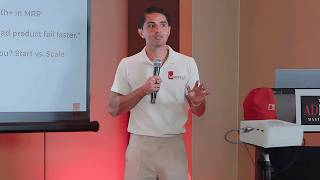
Brian Moncada walks 25 business owners through how he scaled his agency to $350k a month in NYC. He covers masterminds, collaborations, and building multiple offers as core strategies for reaching seven figures.
Most people, they focus on ads right here to here, okay? Ads to landing page and like, that's it, right? They fail to understand that to get paid ads to work, it's an entire system. Take all your sales call transcripts, you upload them to Claude in a project and you just say, client. The client will always try to take more from you. And again, like, you want to help the clients, obviously, but like, she didn't do the work. What are you going to do? Like, you got to hold the mirror to her and say, here's what you've done. Here's what we've done. Where have you been? How many of you felt like just off the networking yesterday, like with the conversations you had with everybody here before everyone made their introduction just yesterday alone, you already got like one thing or two things, like insights that were like, damn, like, I need to try that, or that was worth it alone for coming here. How many of you guys Cool? Yeah. So that's the power of this. A lot of you said the same thing. You know, being in a room with like minded individuals having those insights, those, those breakthroughs, like, that's what this is about. So that's why we have these introductions. And I'm proud of every single one of you and thankful that you guys are being honest and vulnerable with each other because that's how we have the most transparent communication and be able to have the most insights too. So thank you guys for doing that. With that being said, we'll kick it off. The presentation I put together for you guys is actually pretty perfect for a lot of you for a few reasons, because when it comes to the P and L, right, a lot of you, there's a few of you that said, like, okay, what do you focus on as a CEO, for example? How do I know what to focus on on a daily basis? And this is something that I struggled with for a long time. Remember last year, Charlie, probably tell you this, I was just like completely removed from the business to where, like, I was out of fulfillment, I was out of operations, basically. Like, I was just doing team meetings. And then I was just like, throughout the day, like, I had nothing on my calendar, really. And I was like, what do I do with my time? Like, where do I spend my time in the business? And it was good and bad because it was good because I was like, okay, I think, I don't think the business really needs me. But it was bad because I was like, I don't think the business really needs me. Does that make sense? Like, it was Almost like a hit to my ego. Like, well, if I'm not needed in the business, then who am I? Right. And a lot of times if you don't catch that, it'll actually hurt you because you'll bottleneck your own success because you'll go back into the business and start changing things or doing things or just moving stuff you probably shouldn't because you're almost, like, afraid that the business will grow without you. That's actually the best thing that could happen. And so as you guys continue scaling, a lot of you have the same goals. You know, 250k a month, 500k a month. Like, that's never going to end, by the way. Like, once you hit 100, you're going to be like, I want to hit 250 and then I want to hit 500 and then I want to hit a million. Right? Like, it's just keep stair stepping it up. And hopefully what I'm going to share with you guys is a real honest perspective of what happened last year for us that allowed us to hit really successful months and our biggest year in business ever. But also the downsides of it, which most people won't share with you. You know, most people will just say it's all sunshine and rainbows. They'll sit up here and, you know, they'll tell you, oh, well, you know, I'm, you know, I'm doing so good, I'm doing so good. But a lot of you said the same thing, you know, like there's, there's bad months. And we had a few of those these past few months. And I want to share that with you guys openly and honestly, but also show you what we're doing to change it so that way you guys can realize that doesn't matter how far you go, you're always going to run into the same issues. And once this thing loads, if I turn on the projector here, we should be good to go. So let me know if you guys can. Okay.
Sweet.
Nice. All right, so what I'm going to share with you guys today, especially after conversations with you guys last night, I stayed up a little bit later than I probably should have, but I wanted to apply all these same principles that I took from you guys conversations yesterday. So last year we were able to scale to 350k months with our agency's hybrid offer. And we've now recently streamlined fulfillment to be 100% done by AI okay. Which has allowed us to reduce our overhead expenses and payroll significantly for good and for bad. And I'LL explain how that happened without me really wanting it to happen. But overall, ultimately it was a good thing. And then also increasing profit. A lot of you said the same thing. How do I scale? Right. While keeping my margins high? And those are really kind of two separate things. Like, when you scale, you're understanding the fact that you're going to have to increase your actual overhead and expenses. Like, you're just going to have to. Right. But if you want to scale profitably, well, that's a different mindset. And you have to do that consciously because if you don't, your expenses are going to continue rising as you continue scaling. It's just how it works. But I'm going to show you how we're able to leverage these highs, but then also the lows and how we're able to use it to streamline what we do now. Plus a bunch of learning lessons and mistakes. Is that cool if I share that with you guys? Okay, sweet. So here's what I'm going to cover. How I scaled my agency to seven figures in less than two years without cold calling, cold email, or paid ads. And this is going to be very important for each and every one of you because after talking to some of you yesterday, what I've realized is a lot of you guys are trying to go directly to paid ads super quickly. Super quickly. But you're overlooking what's right in front of you right now, that you can have to get better clients immediately by just being in the right place. And I'm going to share why this is so powerful and how this actually helps your paid ads actually work more efficiently. And if you use this, this is how you actually get the best clients. But most people don't understand this concept. And again, I'm just going to give you a quick recap of how I'm in the position I am today because of this one thing alone. And if you just learn this one thing and you apply it, I guarantee you not only your personal brand, but your network and also your ads will be more profitable, more healthy, and just more beneficial for you long term. I'm also going to share why we couldn't scale past 200k months consistently until we started selling our hybrid offer. So some of you said, hey, you know, like, I'm trying to be able to scale my agency or coaching business, whatever it is, but, like, you know, I'm just, I just keep hitting the ceiling and I'm not sure exactly how to break past that. Well, I'm going to show you what we did to be able to do that with the hybrid offer. Specifically, I'm also going to explain what the hybrid offer is, what it is, how it works, and why it sells so well, and how you can take some of these principles, apply it into your business. And then I'm also going to share how we streamline fulfillment to be 100% done by AI and now launch clients within 7 days. Plus the biggest lessons I learned last year and all the mistakes I made and obviously Q and A at the end. So cool. So quick. One minute intro. Again, a lot of you may already know this, but just in case if you don't, I first started as a done for you media buyer for working a full time job with Dean Graziosi. So I was able to basically have an unlimited test budget on Google Ads and YouTube ads to be able to learn what I know today. And I was thankfully working with someone who was already great on camera, who was already used to selling on TV commercials. And so everything that he touched in terms of ads turned to gold for me. And although I thought I was a good media buyer, it really was his charisma, his energy and his offer and his funnel and his brand that did most of the selling. And so I was able to learn really quickly what worked and what didn't work. I spent about $4 million working for him full time. And this is very key because I then leveraged that case study or those three years of working with them to now build adspend.com to what it is today. We've done over $7 million in the last few years. We've had clients pay us over six figures per month. Some stay with us for almost three years. We have a less than 2% refund rate all time because of that. And so what I'm sharing with you guys, again, is not like fluff or theory. This is just what we've done. But again, I'm not perfect. And that's the whole point of me sharing this with you because we made a lot of mistakes along the way. Last year, however, we also spent $18.4 million on YouTube ads. So we have a wide variety of just sheer data of what's working right now across multiple different industries, multiple different verticals, multiple different business owners in different different countries as well to share with you guys how we can obviously leverage that for your business. And obviously some of you guys, you know who, who found me from Sam Ovens. Okay, awesome. Who found me from Tai Lopez. Okay. Danny and Marcus. Okay. Who found me from Cole Gordon Mache. Okay. Who found me from Charlie Morgan. Okay. Machei. Okay. Who found me from Will Brown Usman? Okay. Does anyone know who this guy is? Who found me for me indoors? Anybody? No. Yeah, there's nothing. Okay, so why do I share this with you? Because some of you already know this. You found me from these people, right? Well, it's not showing up here, but all of these eight and nine figure, you know, friends who've paid me, partnered with me, and interviewed me is because I focused on one thing, which I'll explain in a second. But it's very key to remember what I'm about to share with you in this picture specifically. So, again, I worked for Dean for almost three years, right? I had no clue what copywriting was, what direct response was, what funnels were, what online advertising was. I was at the time, before working with him, trying to build my own online fitness business, posting YouTube videos, but didn't have any way to monetize it, right? And I went to my first mastermind, which was because of Dean. Because Dean would always tell me, hey, I owe all of my success to masterminds. Like, literally, I wouldn't be in the position I am today unless it was for masterminds. And so he kept saying that over and over and over again, and I was just like, okay, well, I'm making. At the time when I was working with them, I think I was making $2,500 a month in Arizona, full time working for him when I first got that job. And it was like barely enough to pay my bills and maybe have like a $200 extra spending budget, right? But I was happy to do it because I was like, I'm going to be able to learn and figure out what I need to do to get to my next level. But he just kept saying, I owe all of my success to masterminds. And. And I realized in that moment, I was like, okay, well, if I want to make more money in my life, I have to do what this guy is saying to do. And that was join a mastermind. Because if I can add more value to his company by learning things that he doesn't know or isn't doing in his business, I can make more money with his company. And so I went out and spent my own money to join my own first mastermind, which was Vince Del Monte's fitness business mastermind. And at that mastermind, funny enough, I was trying to still build my own online fitness business, but Vince, in the very first day. So you know how you guys went around and introduced yourself, right? Maybe some of you felt awkward. You're like, I don't really know if I want to share. Like, how much do I want to share all these things? That was me. But imagine it in a room of 200 other people. 200 people, right? And I stood up there, and I was like, hey, what's up? My name is Brian. I run YouTube ads for Dean Graziosi. So if you see his ads online, that's me. I also want to build my own online fitness business, and I'm here to learn how to do that in the next 60, 90 days. And then Vince, like, I am right now, speaking in front of everybody, was like, well, I'll tell you right now, man, you got to cut the fitness stuff out. I was just like, what's up? And I flew from Arizona to Toronto for the very first time, because I was like, okay, it's my birthday weekend. I'm going to pay for a ticket to sit in, like, some of you here to be able to experience it for yourself and learn one, two, or three things. And then at that mastermind, he tells me that, and I'm just like, what the what? And then he's like, we'll talk at lunch. We'll talk at lunch. I'm like, okay. So then lunchtime comes around, but before lunch, I'm just like, in my own head, like, what does he mean, cut the fitness stuff out? I flew all the way here to build my own online fitness brand. What the hell is he talking about? And then he's like, brian. And he pulls me aside when everyone's eating, and he's like, so tell me, man, what do you want to do? And I'm like, well, I don't know. I mean, I flew out here to build my own online fitness business, and then you said to cut it out. So I'm kind of confused. And he's like, well, let me ask you, dude. Like, do you want to be selling how to build bigger biceps by the time you're 35? And I was like, I mean, I never really thought about it like, that. I don't know. What do you mean? And he's like, what I'm really saying is you're stepping over dollar bills to chase pennies. You see, you run ads for one of the biggest info marketers in the entire space right now. YouTube ads. Nobody in this room knows how to do that. I don't know how to do that, but I need that. Everybody in this room needs that. And, like, you can get to the same goal that you have, right? Now, if you just focused on that. And I was like, huh? And I remember Charlie. Do you remember when I came back from that Mastermind? So I've known Charlie for seven. Since seventh grade, by the way. For those of you who don't know, him and I were friends in middle school all the way up to where we are today. And you were supposed to come to me, to that Mastermind with me. But it didn't end up because we were both trying to build an online fitness brand, and obviously, I mean, he's more successful than me. Look at this guy. I had no chance compared to him. Right. We should have been in opposite roles. But I came back and we had a workout at Mountainside Fitness. And I remember. Remember I told you. What did you tell me when I told you what Vince told me to do?
I thought it was. I thought it was wild, dude. I was. I was like, I mean, Brian, you were so focused on the Overcoming Genetics brand for so long.
Yeah.
And you were going to give all that up to start running a YouTube thing? I was like, hey, man, I mean, best of luck.
No, he didn't say, I'll tell you what he said. He said, why the hell would you let this guy tell you what to do, bro? Like, that's your dream. You guys just got to do it. And I was like, charlie's right. But I also just flew out there to figure out what I need to do, and this guy told me what I need to do.
I.
And if I don't do it, then what did I just do? Like, I'm just going to, like, not listen to someone who's in a position that I want to be in one day. Right? And so it did hurt a little bit to be like, okay, well, like, do I just drop this? But then I saw the light bulb moment clicked off. It was like, no. Like, he's giving me an insight that he wishes he would have had given to him when he was in my position. And so, long story short, I ended up joining the Mastermind, and that's how I started my agency. Right? I started with $1,000 retainers, you know, not knowing how much to charge. And I ended up meeting a lot of friends that I still have to this day from that very first Mastermind. People that became strategic referral partners, funnel builders, cold email agencies, podcast agencies, people that we would refer business to in rooms just like these. That's how I was able to grow my agency. And then, because I was the YouTube ads expert in that space, in that Mastermind, I. I was able to be in a position to be able to speak on that specific subject matter. Like Press. He's going to speak today on YouTube organic because he does it for clients at a way bigger scale than us, right? Than most of us here. So why would I teach YouTube organic when pressy can do it for him? For me, better, right? For us, better. And so that also positioned me to be in a position to where I can sell from a place of authority without even having to sell. I'm just the person in the room being able to get clients very, very easily. And then Vince intros me to Bedros Kulian. Okay? One of my biggest case studies, got a testimonial from Bedros, and then I got introduced to Frank Kern. And then I followed up with him for two, two months. Basically, just anyone who Frank Kern is, raise your hands. Okay, cool back. You know, even think about, think about five years ago, almost four years. Yeah, five years ago. Now, like, that Frank Kern testimonial was even more valuable back then because that's when, like, again, five years, as you get older again, the relevancy and everything. But, like, Frank's an og and I knew if I can get a Frank Kern to, you know, work with me, I could leverage that case study, right? And then I ended up working for Frank for free because I saw the long term vision, okay, well, if I can get Frank to trust me and I get him results, I mean, what, what, what could possibly come from this is more business, more referrals, more opportunities. And so I worked for him for free. And then guess what? He says, dude, successful ads. He's like, dude, we crushed it. You made me so much money. What do you want from me? Testimonial referrals. I was like, referrals would be nice. Boom. Just introduces me to five different people. Roland Frazier right there. And then what happens? I end up working with Roland. Roland becomes a client. Then Roland says, hey, dude, you should really join my mastermind, because everybody in there needs YouTube ads, just like I did. And they're all asking me questions about how I'm doing it. And you're the guy that does it for me. Why don't you just come, like, join my mastermind? And then I can just have you speak. And I was like, awesome, sure, I'll do that. And then of course, here I am speaking in war room, you know, and in front of a room of 100 people, just like this, talking about YouTube ads. And of course that testimonial compounds and I get more clients. And then Roland introduces me to everybody you can see. Boom, boom, boom, boom, boom. And one of the clients he introduces me to is Nick Unsworth. On top of everybody else here, Nick Unsworth also becomes a client. Nick Unsworth, same thing, introduces me to more people. And then I ended up going to meet Cole Gordon. And then Cole Gordon, I help him out for free because I know Cole's the biggest in the space at that time two or three years ago. And if I just help him with his YouTube ads, he's going to trust me, like me. And then of course, I'm going to be able to, you know, potentially speak at his Mastermind. And I joined his Mastermind. So I kept rolling from Mastermind to Mastermind to Mastermind to be able to leverage and just be in the room with other entrepreneurs, because my target audience was six figure a month entrepreneurs. The ones that had the cash, the ones that could afford 5, 7, 10k a month retainers. Right? Those people are in rooms like this, not mainly from cold traffic ads, for the most part, at scale at least. And so then I get a testimonial from Cole and then what do I do? Right? I joined Sam Oven's Quantum because Sam Ovens posted the video. I'm back. I'm going to be focusing on YouTube ads. Here's what I'm going to be doing. And I was like, what does Sam know about YouTube ads that I don't? Maybe I can learn one, two or three things and if anything, I can meet a few people that are cool too. So I joined Sam Oven's Quantum Mastermind. And then on the first, like, weekend I'm there, he's like, everyone's going around introducing themselves and. And everyone's asking the same questions. How do I scale YouTube ads? How do I scale YouTube ads? And I introduce myself. I have a YouTube ads agency. We've worked with X, Y and Z. If you guys need help with YouTube ads, happy to chat. And then Sam comes up to me at lunch and goes, hey, everyone's asking about YouTube ads. We want to talk about it tomorrow. Why don't you just speak? And I'm like, yes, sure, let's do that. And sure enough, I end up speaking. And then I didn't know this at the time, but Sam Ovens was also working on Uplevel 2.0, which is now WeTube. And because of that sheer opportunity to speak, he saw the passion and energy I had about YouTube ads and the results we got for clients. And then he ended up calling me and say, hey, I'M doing this new thing. I'd love to partner with you. How do you feel about going in with me on this and you being a partner in this? And I'll give you this, And I'm like, of course, yes. But the point being, all of that came from one thing. Does anyone know what that one thing was? Masterminds. Masterminds.
Goodwill.
Goodwill. Okay, goodwill, because that's correct, too. Masterminds. What else? Leveraging connections. Yes. Specific skill set. Yes. Someone else said something. Referrals. Yep. Okay. Any other takeaways?
Being willing to listen.
Being willing to listen. Oh, wow, Harvey. How's that worked out? Harvey listened. 70k months. So here's the takeaways, right? For those of you here that might be like, okay, like, you know, I'm still trying to build my brand. I'm still trying to be able to grow my content. I'm still trying to be able to get these clients, but no one's really buying from me. No one's really trusting me. It's like, dude, you can't be afraid to work for free if you can use it long term for a case study as well. You got to think long term. Most people are like, I just got to make money. I got to make money. I got to make money. But I built my agency to seven figures again without cold email, paid ads, or any of these things, because I was able to leverage goodwill and just sheer reciprocity for a lot of these business owners, a lot of these whales in the industry. And because I knew I was like, if I can get them as a client and they trust me, it's just going to. I'm going to make more money eventually it's going to come back to me. Next thing is join Masterminds.
Right?
The reason why you guys are here is because you want to be able to be in rooms like this with people just like you. And because you can also meet people that also need what you do, right? Join Masterminds. When you are the expert in the room, everyone knows you, likes you, and trusts you. Who has the easiest time closing deals from YouTube? People that watch your content. Right? Okay. Yes. So what's better than YouTube? Being in person with people and talking to them for three days, and then them getting to know you, like you, and trust you, the sale becomes effortless because you're in the room with them. And so some of you are like, okay, well, how do I get more clients? How do I get more of the right clients? You get in the room, right? You use the marketing budget you're going to spend, but you invest in ongoing education because you're going to learn something too, while also getting clients. Does that make sense? Do more collaborations and partnerships, right? Like, find complementary players in this space, in this room, in your industry and offer to help them and their clients with free trainings, speakings, or content pieces. Right? Cole Gordon. The reason I was able to leverage that case study so well is because Cole's like, dude, like, we need a YouTube ads training inside of our program. Like, can you guys just, like, tell me what you guys do and we'll just put it in? Of course. I just gave him my course for free. Didn't ask for any money, just said, cool. The more people that know about me and adspend.com, the more money we'll make. That's all I need. More awareness, more brand. And guess what? All YouTube ads questions, they see our course inside the program, they book a call. Tons of people came from Cole Gordon. Tons of people came from Sam Ovens. Tons of people came from all these industries, all these different masterminds. So, like, find ways to collaborate. You know, a lot of people, I think someone asked me yesterday, like, how do you deal with, like, competition or something? I was like, bro, I don't pay attention to competition. Like, I focus on collaboration because, like, dude, there's plenty enough money in this world for everybody. The problem is everybody's so competitive that they want to look down on other people and say, you know what? This guy is a competitor. I don't really want to, you know, collaborate with him. But imagine if you join forces and you help the industry grow as a whole, right? It's easier said than done, obviously, but if you have that mindset, you'll make more in the long run. Partnerships, collaborations. And last but not least, share everything you learned along the way. A lot of you, for some reason, still aren't posting content, still aren't sharing your takeaways, still aren't just talking about what you do openly, honestly and transparently and what you're going through. And that's what's keeping you stuck. That's what's keeping you from relying on word of mouth and referrals and not able to grow. But when I just every single day, basically shared everything I was doing with the agency while we were scaling seven figures for a year, almost two years straight on Facebook, my personal Facebook profile, where, yes, I had friends and family, where, yes, people that I grew up with knew me and all these people that could criticize me, I didn't care Because I knew that if I just grow and share things transparently, I will make more money. And more importantly, not even about the money. I'll be able to look back on it and say, damn, like, look where I was just a few years ago. And you need to start today. Like literally today. Whatever you learned today, I would encourage you to take notes of it and share it with your audience immediately. Because now then you're giving what you learn and you're sharing it right back to the universe. And guess what? God will reward you. Honestly, you gotta share this stuff. Guys. You guys are leaders here for a reason. Everybody in here has a skill set, has a power, has a voice, has a vision. Share that with your audience, right? Inspire them. Sam's inspired somebody who booked a call with us that wanted to join this mastermind. Actually, his name was Henry in Malta as well. And he told me he got inspired because of Sam posting content, right? And Sam was at our Arizona Mastermind almost a year ago, and he was like, dude, I just, I don't know what content to post. And it was, it was just this, this thing that was blocking him. And now two years later, he's here with the videographer. He's actually posting content every single day. And he's grown past 2,000 subscribers on YouTube, which doesn't seem like all, but dude, that's huge. Like, he's getting inbound deals from that. People that know him, like him, trust him, and buy from him without any objections whatsoever from taking one simple step, sharing everything he's learning along the way and posting content. So I promise you, if it's blocking you right now, you got to get rid of any single story you're telling yourself of why you can't do what you do. And I promise you, that's your superpower. Because I had every single thing stacked against me as well, right? Every single thing you can imagine. But you still just do it anyways, because that's why you are you. Nobody can be you. You got to start today, right? And this is one thing I want you guys to really understand before I move on. Masterminds, being in the room, being around like minded people just like you. Partnerships, collaborations, that's literally one thing if you're not doing right now. I know some of you said I travel a lot, I shouldn't travel more. Bro, you make the most money when you travel. Because when you're on the plane, you and you're going from place to place and you don't have any distractions, that's when my best Ideas come. That's when my biggest insights come. That's when my best friends and my biggest connections also happen and take place as well. So I would encourage you, obviously, make time for family and everything in your business, but, you know, you gotta travel. I heard Tai Lopez say this. Actually, Tai Lopez, I was at his Beverly Hills mansion, the one where he filmed the here in my garage. And one of the biggest takeaways he said was, the world will not reward an introvert in the future. We're not going to be in a world in the next few years where the world will reward introversion. In fact, it'll actually be the opposite extroversion. And being out there and meeting people will be the actual thing that actually grows your business. And the reason why is because as the world becomes less connected, which is hilarious, because we're supposed to becoming more connected, the people that actually go out there and meet people and have conversations, just like these are going to be the ones that actually grow their brand significantly faster than the ones that don't. Does that make sense?
Yeah.
Any questions before I keep going?
Obviously, Masterminds is something you're showing us. How do you feel about, like I've been targeted, like tyro versus ads, like, come to the beverage party like that. Like, how do you feel about that?
Yeah, I mean, the way I always think about it is like, okay, what, what's the one, two or three things I can learn, people I can meet or something I can actually be able to roi on in my personal life or my business life. Right. So if you go to that, I don't know how much the ticket cost is, for example, but like, if you go to that and you learn or you meet somebody that has a similar business as you, you know, and then you learn what to do in your business, that can apply immediately. It's worth it, right? So again, you got to be. I would try to maximize it. Whenever I try to go somewhere, I think, like Wayne, for example. Wayne, you said you were already here for like a month and a half, right? Yeah, yeah. So you went to click funnels, Funnel hacking live. Alex Hermosi's. So look, I mean, Wayne's just saying, okay, how can I maximize my time of travel here and just get a bunch of things done in a row? So maybe while you're out there, you go to ties and you go to another podcast, you do something else, right? You just maximize your time with the travel as well. But yeah, I mean, you shouldn't be afraid to invest in getting out there and meeting People, that's the biggest thing. That's how you actually close the most deals and grow your personal brand. Because you, everybody in here is going to connect with each other, follow each other on Instagram. Guess what? Now you're exposed to way more people because you're sharing each other's stories, right? That audience, I mean, Matt the other day shared something on his story about coming here. And I was showing him last night how funny it was because there was a guy that actually had my same last name named Juan Moncala. And like he followed me and I was like, well, who's this guy? But it was because again, I'm like, now he's following me because of Matt. And people are following Matt because it's just like that's what you want. You want to build that network. But again, you want to be able to get in front of the room of people who already are your ideal clients. The best way to do that, especially if you're selling B2B higher ticket clients, people making 50k a month, 100k a month, they're in rooms like these. And it's a lot easier to close them in rooms like these than cold traffic. I can tell you that. That's how you get whale clients. I didn't do paid ads. Cool. Make sense? Okay, so now let me talk about why we couldn't scale. So did all that, right? Scaled the seven figures in less than two years. No ads, no anything. But that also prevented us from scaling because like some of you, some of you just have one offer, right? One front end or one high ticket back end service, and that's all you're selling. You have one ideal avatar for that one specific product. But who's read the book Ready, Fire, Aim?
Working through it right now, actually.
Okay, what does the book Ready, Fire, Aim say from when you. When it gets 1 to 10 million? Sell, sell, sell, sell. What though? Cross marketing. What? From 1 to 10 million? No, no, no. From 0 to 1 million. One product, one service, one ideal avatar, one sales process, one marketing channel. Right, exactly. From 1 to 10, from 1 to 10 million, what do you need to do? You need to do that same thing, but with multiple products and multiple offers, right? That's literally the key. That's launching as many offers and products as possible. Doing the exact same thing that you did from zero to one, but for now, selling more products to your existing customers. But most of us are trying to get to 10 million by selling the same thing to just more people. Right? Like Marcus. I think you asked me that question. Yesterday, you're like, how do I continue scaling without my ad costs rising? And I'm like, well, that's just gonna continue happening. The way you combat that, though, is you have a backend offer that can offset the cost of your front end cost per acquisition. You have more offers, you have a higher ltv. You sell more stuff to your existing clients. Right? This is why we have this mastermind. This is why we have our agency. This is why we have our hybrid. There's multiple different entry points to work with us because I know that it's different depending on where you are. Some people also just buy our course. We had course sales yesterday that just came in and those people just wanted to do it yourself. But they can upsell to the hybrid or the agency or the mastermind. Right. Different offers, Multiple offers. Go ahead.
Is there a limit to how many offers you should be putting? Like, 5, 10, 15, 20?
I don't have that number, and if I did, I would just make it up right now. But I think at a certain point you got to ask yourself, how many offers is too many offers? And when you probably are asking yourself that question, it's probably because you have too many. Like, you also don't want to just throw shit at the wall, right? But you want to be able to have a salt. You want to think about your client journey. And Dan Henry said this once, he was like, you want to sell other offers that are like the nuts and bolts to get to your actual high ticket. Like, what are the things that are keeping them from actually buying your high ticket? Selling those. Right. So the point being why we couldn't scale because we were just selling to one market still. People that were doing 100k a month plus had a personal brand. We're already running Facebook ads, wanted to get on YouTube ads. Right. Very specific client avatar. Also in the coaching consulting course creator space. Right. Tim, Total addressable market of that. How many people, Presley? You know, same exact situation, right? Not many people. The only way you find those people is a lot harder because they're not going to be closed from paid ads. You're going to have to spend a lot of money to acquire them. But like the point earlier, how do you get in front of them now? What did we do? Well, at the beginning, end of 2023, I believe one of our clients on a sales call with me actually was like, hey, I want you guys to like, do it for me to get it set up and running. But like, I just, I want to learn it myself. Like, I actually want to be able to run the ads myself. And I was like, huh? Okay. This is also at the time where, if you guys remember, Alex Hormozi released $100 million offers. And he was also talking about how you should work with marketing agencies, take their blueprint and have them teach you how to do it so you can have it in house long term. Anyone remember that? When he started talking about that, cool. So people started naturally asking us that, hey, can you guys teach me how to do it? Because I want to have it in house long term Because I know I'm going to need it in my company eventually. I don't want to be relying on an agency. And so I was like, okay. So I was like, you want us to set it up and then just teach you how to do it so you can run it? He's like, yeah. I was like, okay, cool. I've never done something like that, but let's see what we can do. And then, you know, we customized a deal and we sold him that deal and he was happy. And we got a client. And someone else asked me that, I was like, huh, second person that asked me that on a sales call. Okay, same thing. We've done it with this other client and then boom, we do it for this client. And then I just asked my list, I was like, there's something here. So I sent an email to my list geo, send more emails to your list. Would you guys be interested in this? And boom, just ton of yes, yes, yes. Interested, interested, interested. Book calls, book calls, book calls. And we ended up making basically 125k in 30 days off that one simple campaign. And I just, literally the email was just, would you be interested in me and my team setting all this up for you and then teaching you how to do it? And they were like, yes. And that's on top of like everything else that we had going on at that time. And so what is the hybrid offer and how does it work? As I've explained how to get more clients, obviously that what you guys probably aren't doing right now with masterminds, collaborations, partnerships. And why being in rooms like this is so important, but now how do you actually scale? Why couldn't we scale? Well, it was because we didn't have a more scalable productized service. Some of you right now are doing way too much custom stuff for your clients probably, but it's because you're an agency or it's because you sell a high ticket consulting offer and it's all custom, right? But you have a Productized service. You can be able to scale it. And so funny enough, our hybrid offer is a simple done for you setup and done with you coaching and consulting. It's the Alex Hormozi pay an agency so they can teach you how to do it and then bring it in house or pay them continuing on for consulting. Does that make sense? So now why does it sell so well? Well, I'll explain that in a second. But here's how, here's how it worked before. This was literally how I sold. We almost sold 200 clients on this offer last year. Like, literally, I just created a simple. This was actually created after like the first 50 clients we sold because we kept having people come in and say, you know, what's done for you? What's done with you? But long story short, the entire first month we would have an onboarding call. We would basically go over their offer if they needed help. For example, like with Harvey, you know, we needed to repackage the offer because I want to make sure it can scale the cold traffic. That's what we did. We switched it to high ticket from, you know, what he was going to sell before we ran ads, obviously started booking calls. He started making more money, even ran it to his list. That's what those calls are for. We went to script writing, filming, editing, and then launch calls. So it would take us four weeks to do that. Because again, there's delays with VSLs. And how long does it take you guys to get like client assets back from clients? Sometimes VSLs and scripts or images, just very simple stuff that, you know, you can knock out in a day, but it takes them so long. Yeah, okay, well, that's why we had a month. We're like. And we would justify it on the call too, Charlie, wouldn't we? You can't skip this process. Like it's gonna take a month. Like, we can't skip anything. And we truly believe that because that's all we knew. Right? And clients would believe it too. And you know, it would take a month for them to launch. And then month two, we would basically have a post launch check in call. Month three, 12 week check in call, month four, next steps call. That's what we did. Okay. That was the 16 week install process. We're gonna install the system into your business and then we're gonna, you know, have you run it so you can keep running it yourself. What we delivered was very simple. We were writing their first five YouTube ad scripts. We were editing those YouTube ads for them. We were setting up their Google Ads tracking and conversions we were choosing the best audiences for them, creating their campaigns and launching their campaigns and done with you again. We coaching how to film the ads. We coach in how to optimize the ads. We coach in how to scale the ads. Support Slack Channel School Client Success Manager All I had was a one page Google Doc with these two images and the offer just literally written out in a couple bullet points. 200 clients sold last year with just that one offer. So why does it sell so well Done for you. Like literally done for you set up. That's why it sells so well. People want done for you. Like go figure. Is it harder to deliver? It can be. That's why you just charge more, right? Like if you're doing done with you right now and you're just stuck on that one front end offer. Right. People don't need more information at this point. Like of course they do. People you want to obviously have people do it themselves for a lot of it. But like it sells so well because of the done for you set up. It also is harder to scale because it's done for you set up. But I'll talk about how we fix that as well and how we're still working on that. So here's how. We enrolled 200 clients in 2024 to almost 200 plus clients in 2024. Okay, so some of you are like okay, how do I make the ads work? How do I get all this to work? How does it work? So this is like the finished funnel which is not including and it's missing Google Ads in there. But this is what we did. We ran ads on YouTube to a simple landing page which is now straight to the application. But I'll talk about that in a second. We were collecting leads. We had setter calling and texting the leads. They would watch the vsl, they would then apply if they were qualified, they get on the calendar. If they were not qualified, they get rejected, they go to the confirmation page, they get emails from me, they get content remarketing from me. Content long form for me. They book a call, they become a client or they just stay in the pipeline and they get refundled back to email newsletter where I'm sending daily emails posting two videos a week on YouTube and I'm getting retargeting ads sending them back to the application. That's what we did. So I was also posting a daily newsletter to my list. Two YouTube videos a week and running retargeting ads plus running paid ads on YouTube and Facebook and that's what I did. Now when they book a call, what also happens is now we send them 15 to 18 emails within a 72 hour period of someone when they book a call. Just with all most frequently common objections questions, everything they need to know before they show up to the call. This is to obviously pre frame them about our pricing, our process, how everything works. Because a lot of times a lot of you are dealing with show up rates. Who's dealing with show up rates to paid ads or just in general. Okay. Well we call this the trust sequence. I learned this from Jeremy Haynes. It's the hammer them strategy. You send them all the most commonly asked questions they have about your product or service. Right. The risks associated with it, the cost. Right. How the process works, common objections. Well all of those are done and they're getting them before they actually hop on the call with us. This was the funnel we used every three hours. Yeah, yeah, I taught this, I taught this in Cape Town to a German mastermind and they were all just like wide eyed, they were like we cannot do this in Germany.
I was like, I take it down to like two emails a day. But the retargeting on the common questions from the YouTube videos. Yeah, hardly anything with just those videos around. So it's not even pushing them into like poker call, it's just how much money they spend on ads or anything. How much?
Yeah.
And those are all the questions I get in the same school. So that that strategy works. But you set up to the optics or once they sign up to the opt in I just re target the common questions through Facebook ads. You know the first email of the, of that sponsorship email. You tell them they're going to be sending a lot of emails.
Yep. I literally say in the next 72 hours I'm going to send you a number of different emails answering your most common questions as well as objections that most potential clients get before they actually speak with us. To make sure you do your due diligence beforehand and you have all your questions answered.
And I was thinking about that, I tried to start to implement that in the large markets for my own local but when we were shutting show up rates like some time ago for clients and I was going through some sops to like increase the show up rates that I was seeing everywhere. Also just simplified the amount of emails that people get before the call. We only have like 2 pre emails before the call and a lot of, I don't know if it has fallen but a lot of people are complaining that oh that's Too much emails. And we also send like two or three of them.
Yeah, Wolf said the same thing yesterday. He said that there's in Germany actually. It's like they don't send any emails before the call. Right.
Just the confirmation. Because the more information you send, the more people can basically decide themselves. Okay. It's not for me. They raise objections themselves if those aren't on point. So we get better show up rates without sending anything. But obviously like you said, you have completely resold them if they show up.
Yeah, yeah, that's, that's the thing. It's like, look, the way I figured it out was when this just made so much sense to me. Wouldn't you want your ideal clients to know everything they need to know about working with you? So that way when they show up to the call, you don't have to really answer the same questions you always answer on every single sales call. It's like, wouldn't you want that? Isn't that the whole point of the marketing? To pre qualify and pre sell people before they get on the sales call? Right. So like that's, that's why this works so well. And that's why I like it actually. And I prefer it. Even if it wouldn't make sense for my, you know, country, I would still do it because I, I want people to show up knowing what we do, what the average time to result is, and what they should expect when they work with us. And then regardless of if they buy or not, they're still going to be targeted. I mean, Usman said it yesterday. He's like, I saw your post here, but then I saw, I kept seeing your ads and it was just, it was just this drip, this drip over and over that happens where they just keep seeing you and seeing you and seeing you and eventually when they need that pain point solved, they come to you. That's the strategy.
Do you send your emails from HubSpot activecampaign?
I think HubSpot Demi, correct me if I'm wrong, but HubSpot's a lot more for like email and everything, right? Yeah. So it was just like, why would we do HubSpot when we could just do activecampaign? And then I also heard some things about HubSpot where like if you just switch to HubSpot completely and you do email, it's like not as good. It's just personal preference. Who knows? I can't say that for a fact. I've never done it, but it just seemed like it was going to be a challenge to do it. And I was just so used to activecampaign and it's not that expensive. So I was like, I'll just keep activecampaign. Activecampaign. Yeah. GHL. For our business, we have GHL. We have ClickFunnels though. We still use clickfunnels. Yeah.
It looks CRM.
CRM Sales. CRM. Activecampaign. Yep.
For the retargeting ads. Curious how you structure those and how you like what percentage of your budget goes to that versus the cold traffic. I probably more so for people who already booked calls.
Yeah.
That just kind of overcome objections.
Yeah. So Maciej, you've implemented this already, right?
I have a very weird result from that. So I started testing it around 20 days ago and our close rate went up 5% above as the first thing that happened to us. And then also the feedback that I got from the sales team is like that people were like a lot more educated on the sales call even though they were from call. That's the thing that I was seeing and how a structure is you just get people who are rolling books calls for the last 30 days. And the issue is even though you have a hundred of them, people can still not be able to spend the money. So what I did is I even got to 120 days to just have an audience to spend the money on. So I have 120 days and after I will get more calls, I will try to lower it down to 30 again. Just the. The month that we there. And we just. We have a minimum budget there because you put one ad in ad set and one each of them have to be. I think it's $1.
Yeah.
For I have. For Z in my country. So I just put the minimal budget that is required to do that. And I just cbo that and just that's. That's the first thing. And then we also talk about. Well, mastermind call. We told about the. The thank you page, remember?
Yeah.
So what I did is I took the emails from you and I put all the other thank you page.
Yep.
So I've even asked questions like, okay, what the high ticket offer? And I have the whole thing chatgpt scripted and it's literally says like what is high ticket offer? What's the cost? I have it on my Facebook page. And that's the. The second thing that also help us.
Yeah. So. So the. The remarketing. To answer your question again, it's like 50 to 100 bucks a day depending on how much you can spend. You got to have it you got to have enough volume of calls for this to work. So I kind of glossed over this. But let me just, let me just explain why this is so powerful. Okay, so like most people, they focus on ads right here to here, okay? Ads to landing page and like that's it. Right? They fail to understand that to get paid ads to work, it's an entire system. Who remembers the marketing tripod that I explained in Arizona, Sam, specifically, does anyone know what the marketing tripod is? Raise your hand if you know what the marketing tripod is. Okay, so not many people. The marketing tripod is. Okay? This tripod right here, right. Has three legs right at the top. This projector is your offer, your product, your service and your company. One of these legs is awareness. How you actually get more attention, organic content, ads, referrals, whatever. Awareness, right? It's one leg of the tripod. Second leg, nurturing. Because you can get leads and get awareness, but if you can't nurture them with sales assets, content, emails, right? Frequently asked question videos before they hop on a sales call, they're probably not going to buy from you. Right? Second leg of the tripod, nurturing. You guys with me, third leg. Sam, what is it? Trust. Right? Because if you can generate awareness, you can nurture them and they can trust you. Guess what, what happens? Those three legs flow up to your offer, your product, your service and they end up buying from you. So how do you build trust, how do you build awareness and how do you actually nurture them for the same.
People retargeting ads, I also had one client that were pretty unmutable. Him give around like thousand calls a month. So I already made an audience. And this month we start also testing the retargeting as well on YouTube too.
Nice. Yeah.
At least like thousands.
Yeah, a thousand on YouTube. And so point being is like, it's not just the ads is my point. It's they see the ads, they get your emails, they watch your YouTube, they get hit with your retargeting, they get your setters, they get called, they see your daily emails before they book a call, they see your content remarketing and then you can increase your show up rate, your on call conversion rate and your actual time from your lead to close. It shortens everything because that's the whole point of this. It's not just ads, it's the entire system. And so. Yep.
So what is the call to action on those?
No, it's just content. Literally it's just content. So let me show you.
I just Made a video. You are just handing the pickle objects. So names go to. Objection. For example, so a lot of people tell me that oh, this won't work for my offer. And then I explained on the client, like we had a client who was doing. She was doing what she was doing. Coaching for mentoring for somewhere niche. And I was saying like, do you think we had a client back this. No, we hadn't. But because it's in the like evergreen niche, like you have some labor money, lose weight, do this, like we were going to help you. So we had those. Objection. Show client case study.
And yeah, so like for example, the emails they get before they book a call, just go through them really quickly. First one, addressing the real objection again. Over the next 72 hours, you'll be getting a number of emails from me answering the most frequently asked questions we get from potential clients. So you can have an easier time doing your research and due diligence. Let's address the elephant in the room. And I just go through the. The number one objection most people have when they work with us, right? And I just go through it very simply. Next is time. And I say the actual time you need to invest into working with us. I give them a specific number because what's the number one question you get? How much time is this going to take me? How much time do I need to spend doing this? Addressed risk, the real investment behind running ads. Let's talk about the risk. What happens when you run ads, right? Like what if it doesn't work? How much can you spend all these things like who's gonna be the person that actually they work with? The one that's the most transparent or the one that says, nah, it's gonna work every single time, dude. Like we have 100% success rate. It's like, okay, dude, all of these have YouTube videos. So again, all these emails also link to a YouTube video where I break it down and they can watch it long form. Further indoctrinating them into my trust and getting them to like me and trust me. No, these are public videos. So I actually all my most recent videos, if you guys have noticed, on my YouTube channel, they're all specifically around YouTube ads and around common objections and frequently asked questions that we get. So I link them in here as well.
And what's also good about it, because around December20, you can just post the long term media on Facebook. I also started doing that. So I post. I downloaded the video from YouTube. I got it. Post my Facebook page. You can run that as retargeting ads and just put the link to the YouTube video in the description there also.
That's sick. That's a good tip.
I still send them to the, to the, to the opt in page. If they're just. Sorry. I still send them to the DSM page direct. No, no, you don't do that. It's just, it's just like when you go to your phone and there's an Instagram app, right. And they move the call, then you just show the content here or in the stories. They just get indoctrinated and. Yeah, yeah, it's like they would see your organic content.
Yes.
Look for it. But you're forcing them to nurture.
Yeah, yeah, yeah, yeah. For that. For sure. Yeah. Hey, upside, downside, what's the upside of working with us? How much can you make? We use Harvey's story here. Shout out to Harvey. Downside, what can go wrong? And it might, right? Like, here's what everyone talks about the wins. Here's what you know could go wrong. And then I also do safety in numbers. Here's why so many people succeed. Data. Last year alone we spent this much. Real Results, less than 2% refund rate, number of clients that spend the most money with us. And I also have a loom video where I walk them through my actual stripe account and I refresh it in real time and I show them over the last few years. Here's how much we've made, here's the dispute rate, here's the refund rate. I think it's important that I be transparent with you because we're not perfect. But I don't know anybody else who is. So at least I'd rather show you. That way you can compare this to any other agency you're thinking about working with. And then real scarcity. Why should they work with us right now? And then I use the YouTube classic like credibility. Like, what are all these eight and nine figure marketers doing right now? Well, if you look at them, they're all focusing on one platform, YouTube, and they're all running ads on YouTube. So again, that's the real urgency and scarcity. Then you got grand narrative. Why is this important to do? Then I got specific frequently asked questions. Will YouTube ads hurt my organic growth? I have an entire video where I break that down. And then I do. Do I need a big YouTube channel for this to work? I do a case study. Is my Target audience on YouTube? I do different niches of people that have these weird niches of how they were able to get results with YouTube. Mortgage brokers, writers, insurance agents, wedding photographers, people suffering from posture like pains and body aches. I don't have time to manage ads. How long do I sit on our ROI? What if the ads don't work? Can I run YouTube ads without being on camera? They're getting all of these before they actually speak to us and our team.
Why don't you send those out before they book a call? Because we have more volume.
That's a good idea. Yeah, yeah, no, it's a good idea. I actually thought about that as well. There's really no harm in doing it. I just haven't tested it yet.
So we did it for stock and investing clients because we didn't have enough call volume. I did it with the optics. We're sending them to a video course where they have five hours of content they can watch and people who are watching the module 4. We call only those people who watch until there and then they get the retarding on top and those people are hot as fuck. Keep it warmer than because we have the objections in the sports too.
Wow. Yeah. Is this like interesting? Is this like you guys getting value from this? So far?
Great. I like the actual examples too of the different emails you sent in the. In the flow.
Yeah. And you can use chat GBT Claude for this. Like you just take all your sales call trans sold. A lot of you this on the Mastermind calls. Take all your sales call transcripts, you upload them to Claude in a project and you just say literally list out the most common questions and objections all of our ideal clients give us from descending order from most frequently to least frequently. And that writes your emails. Now you have all the things, you just answer an email. And so here's what the thank you page looks like as well. This was recently updated too. So now instead of just confirm your call, I say, hey, confirm your call. But down below this video, you're going to be getting a number of different frequently asked questions. You probably have to help you do your research. You're also going to be getting a bunch of different emails from me to prepare them what they're going to be getting. And then, yeah, so I have, I have step one, confirm the appointment. Step two, I have an entire webinar I did two weeks ago that worked really, really well that literally walks them through everything they need to know about YouTube ads. If they watch this, it's game over. Like, it's literally game over. All I took out is the pitch. I just took out the pitch and then I have here's what clients have to say again. Testimonials. Testimonials. Cool. Just a little bit then. Step four, video answers to frequently asked questions. Will YouTube ads work for me? What's the time commitment? How much do I need to spend? What results can I expect? What happens if it doesn't work? Say it again. Sure. Yeah, yeah, for sure. What makes YouTube? What makes ad spend unique? Why YouTube ads work so well? Why should I do this now? Do I need a big YouTube channel? You see, it's the same content, just again further pushing them to watch it or consume it. You know, can, can you still help me if my business is a different language? I go through specific case studies that we had in different countries. Right. Is this a done for you or done with you service? I asked, I answer that question. TrustPilot. TrustPilot. TrustPILOT. Some of them are six plus minutes, some of them are as low as a minute. It just depends on the platform. For this one I kind of went longer in depth because it's a thank you page video. But for the short form content up here, this is gonna be like less than a minute, you know, very simple for the short form. For the long form you can have obviously just full long YouTube videos.
Or your agency. Do you hit them with that hammer down sequence as well?
Every funnel? Yeah, Ads and organic, they're all through the same funnel? Yeah, it's just different funnels for the different traffic source to keep the data, you know, separate. They'll still get a couple, right? They'll get like the first five or six, but they won't get the full 15.
Obviously you only have one Carl booking. It doesn't matter if it's for the agency or for the hybrid, it's just one.
No, we have each traffic channel separated by calendly and Typeform application and funnel URLs. So if they come to my organic website, they get input into the organic funnel, but it's still the same flow no matter what. Does that make sense?
So you just pick a different category.
Yeah. So we have a calendar link for YouTube ads, calendar link for Facebook ads, calendar link for organic. It's just cleaner. And then we can see exactly when they come to our application, which platform they came from. So on our Slack channel I can go to applications and calls and I can see. Exactly. Because Demi set it up, she's the wizard behind this. Exactly which platform they came from, YouTube ads, Facebook ads, which calendar they booked on, which Typeform application. Hiros will obviously tell you where they clicked first. But they might not book from that calendar. They might book from, for example, the organic after they click the Facebook ads.
Yeah, but if you're tracking also on the organic side, then you also see that.
Yeah, true. I mean, just splitting it out is. I found just more concrete. And I learned this from Dean too. When I was working with Dean, we had 10 different offers, 10 different traffic sources. Like everything was split out to the T. And so I just kept that obviously, plus for data and tracking. It just makes more sense to me. Okay, any other questions on this before I keep going. Okay, so now that's great. Almost 200 plus clients. Well, what are the problems? Right, because it's not all sunshine and rainbows. So the problems we ran into with this offer, clients taking too long to launch again, dude, like, like every day that when you do a done for you setup offer, you just do something. It's like there's just the time to ROI. So there was taking us 30 plus days. Clients not even looking at their ads post launch. Which is why we created this, this, this image right here. What's done for you versus what's done with you. And you still got to pre frame their expectations because it doesn't matter how many times you tell them, they're just, they're gonna, you know, clients not even looking at their ads post launch, they're just like, hey, how's the ads doing? It's like, what? Okay. Clients never even looking at the course material. Well, they wanted to, they wanted to learn it, but they don't even look at the course. Again, things we had to improve as a CSM team. Specifically clients struggling to close leads from cold traffic. Obviously a big one. Clients complaining about video editing. That's been another one. And a whole lot more. A whole lot more. That would be a long time.
Can I get a quick question about that?
Sure.
When you can find that at like a long time to launch this offer? Like, what did you do in the four months ended?
Did you like, we just gave them some extra time. Yeah. So if they didn't launch, we just gave them an extra two weeks. If it took them an extra two weeks to launch.
How about if they took like two months.
Kind of case by case? Charlie, what do you think? What? So ask the question again, Mache.
Yeah, so for those guys, let's say it's three months in, you follow up every single week. And still it's the third month. They have one month left and they still kind of didn't record the ads. Like they just extend out for free. Or what, you got to get them on a call and figure out what's going on here. Right. Like, you got to set very clear expectations about what process, like, moving forward. But as far as, like, delaying the process for clients that took assets back to us, I just made it very clear to them on balls. Hey, this is how much time we have on programs. Need to make sure that we're holding each other accountable to getting this stuff done, or else we're just wasting our time here. Right. So just. I would have a realignment call, like, setting very proper expectations and literally pull up. This is when. When you. Like. Brian, your favorite question. When are you gonna get this done by. Yeah, what time tomorrow?
Like, Marcus knows.
Being very clear about those expectations with them. So that way there's no room for error at all when things are supposed to be done.
Yeah.
And, like, we also had that. But either way, we have, like, one client issue right now where she's just, like, one month away to end this, and she asked us to, like, give her just start another four miles, because we didn't wait in that time. We were flaunting the entire time with them. Our thing was capacity. Like, how about them kind of stuck because, like, yeah, like, she didn't do anything. But we're constantly.
You got to call her out on that, dude. I mean, you just. You just, like, dude, the way you. The standard you have for your business and your clients is the standard they're going to give to you back. So it's like, look, you didn't do any of the work. We've been following up with you. Let's check the slack. Let's just go through it real quick. Do you think this is fair for us to be as a business to be following up with you when this is your business? We're trying to help you get to your goals. So this also goes back to leadership, too. Like, you have to enforce that standard not just on yourself, but also on your clients and your team. Like, dude, the client will always try to take more from you. And again, like, you want to help the clients, obviously, but, like, she didn't do the work. What are you going to do? Like, you got to hold the mirror to her and say, here's what you've done. Here's what we've done. Where have you been? Like, help me understand, like, what we need, what else we need to do to help this, because right now, I'm not seeing any effort from you.
So, so far, Will tell her, like, I would love to do that, but I Don't know if I can convince my team to not get hide anything for all I have been doing. Yeah, might not be other example but what we do now is every Monday, Wednesday, Friday we have a CS meeting and we look at every client's trackers and understand where they're at and see who's behind. And then there's one founder that we have in Wil Tractor and it was for three weeks. So then I go, I'm just going to change my approach. I'm going to hold my csm, I'll consult him accountable. Okay, they're done. After the first two days he was like, he's not. I filled it out, I told him to call and I said, did you call him? And he said no. I said do not call him three times today. Can you show me why you've not done enough? So then we start calling him and he called him every single day until the traffic. So I started doing that. But I had an issue with my CSM team where they're like, oh, it's not like comfortable. It's. There are like adult people. You've not trained your CSM team to be comfortable. They just said to you, how skill is she? Then you, then your answer is, no problem, let's train.
Yeah.
So like some. Have I called you random in the morning? Yes. We'll just call, we'll just call people and we don't wait for a checking call or a. On a slack message for calendar. Just say, I'm just going to call it. Right. How would you get my CSMs to start doing that? Because like I'm forcing them to. When you. It's not forced. You hold them accountably, ask questions. You'll say to your csm, have you done everything possible for the client? What would they say? Sorry, yeah. And then say, did you call them?
Yeah, simple question, you've not done everything possible.
And then you'll say, I want you to understand what everything possible means before the next time you say no. So don't ever see everything possible if you don't know what that means. And what happens if they don't do that? Then I should get all the CSls. No, you give them minimum support so they can do it. Because you sit down with them and say, how come this is not being done? You get to understand why it's not happening, the reason behind it's like high accountability and high support. You can't give someone accountability to get something done if you're not willing to give them the support to do it. So those Two things are matching equilibrium.
You can also go back to your core values too as well. Because it's like, goes back to us with our team. It's like red carpet customer experience. It's like, well then you can use that as a teaching lesson like Usman was saying to train them. Was this embodying our core values? Red carpet customer experience. We scale by delivering braggart worthy results. We convert our clients into our best salesmen. Are we actually going to scale this by getting clients to not finish their stuff on time? Of course not. So what can we do to give them a red carpet customer experience? Let's call them.
You're scared to hold him accountable. You are?
Yeah.
Why? I don't know. I don't know either. Is it because you want to be liked sometimes? That's because easy. What? Is it because you don't want them to dislike you or kind of, kind of like us maybe dislike or just scared to tell them like what to. Because like whenever talents do that, they just like react like, oh, his business. Yeah, like I don't want to do that. Like try but I call. Don't go back and forth, just comply. I want to add something because while that is like very important, like you want to make sure that you support your team. You know, I would ask like, do you have four values in your. You do? Yeah, we have like clients sometimes. Dude, I'm just being honest. We have someone in our company that we might have to like.
Yo.
Because you know, if you can coach someone, so what?
But I don't, I don't think it's a coaching thing. It's, it's, I think Usman's spot on here because keep going Usman, with what you were going through.
So regarding that you fired them, who did you fire last? Because you're coming up. It's not true. As if you've been fired. But if I said to a CEO, you fire someone, can you show me the number of one to ones and documented one to ones you've done with that person that you've gone through enough support before firing? Imagine this, you're a young guy, you get a job and then you work for this business that doesn't do what you want. You want to train and asks you to do things and then fires you. Be quiet on their perspective. You want to offer them enough support. Obviously you have to advise them if you're not good. That's what I'm saying at some point because he's saying like, oh, they don't want to do it. Or something like that. That's my. At least that's why. If they don't want to do it, then what was the issue in the onboarding process? What was the issue in the, in the job act? What was the issue with the. Oh like hiring them? Expectations and training. So is this a common thing that comes up just a ref. I think another thing is if you get like we've had some things in the past where certainly I managed to want to do a certain thing and then there week three and then when one of them does it, then they see the other account manager see that they're doing, they're excelling in it. And then I like big that up and you post in like the, the WINS channel and then they're like, I congrats this person doing this thing this way. Then the other account manager like, oh damn, I need to do that. Then they're starting to do that because there's like a competitive nature to it.
Yeah.
So that can be something else where if you have like one CCS person that you know is a killer, they'll do that. Then they see that you know that they're doing it and you're giving them some sort of feedback or rewards, then they might want to do it. One thing I learned from you was even with my client success, if I say, okay, are you following up my messenger? How are you doing that? I wouldn't just train. I said, let's role play together a second. The same way I train my sales rep to actually have a role play situation on a call is the same way I train my CSM to actually follow up by a message or call. Right. Okay, then you're calling me now. How would you follow up? And I run through that whole process. I learned from you, my client success. If I say, okay, are you following up on messenger? How are you doing that? I wouldn't just train. I said, let's role play together a second. The same way I train my sales rep to actually have a role play situation on a call. It's the same way I train my CSM to actually follow up by a message or call. Right. Okay, then you're calling me now how are we going to. And I wrote run through that whole process with them. Just the same way you're going to say it's the training because they feel scared. They don't have that skills to like, okay, call someone.
Okay.
Now they have no idea what to do when they go and how to speak, what to follow up. So for me it's just Using the same things with regards to holding them accountable in the sales goal, but just doing it for CSM follow up. Send me a message like this for. Yeah, send me, call me that can follow me up. So the same, Same process.
Yeah. I mean, here's the thing, right? It's like your CSM team, this is what I told Charlie and stuff when I got back as well from a recent mastermind I was at. It's like your CSM team is literally a sales team. They're a backend sales team for your business. They're not client support, they're not customer service. They're a back end sales team. And when you run your CSM team, like a back end sales team, you do the same exact thing. Like Sam was just saying, you role play. You review calls, you have one on ones. You train them on how to actually get in front of clients and get them to move across the process to the finish line and be able to be upsold to the next thing. Same thing when I did with Charlie and Jeff when I got back from the CI. I was like, let's role play this. Let's review a call. And like, it was uncomfortable for me as well because it's like, dude, you got to have those hard conversations. Like sometimes the team isn't doing what you needed to do, but you realize it's a leadership issue too. That's. That's really it. It's a leadership issue. It's like I'm not giving them the actual example, what they need to be doing, so how can I expect them to do it? Let's do it right now. Here's how I handle this call. Here's how I want you to handle the calls in the future. Here's how you handle a refund request. Here's how you handle a complaint. And like, that takes time and training. And it's. And then when you get the pushback, it's like, oh, I don't really want to do it. It's like, then you got to make the decision, dude. Like, do you want to hold the standard for your company or do you want to shrink down? And that's where.
That's the issue. Like, I had this issue when I was going my main CSM a couple months ago and it's in Poland. So like his second problem. So It's. There's no CSMs. There are no, like, it's. I came from a place where I didn't have like 5 CSM to choose to run to get someone next. I just have to accept his terms. And like, right now I'm also, like, struggling sometimes with. Together I'm going promote to CSD because he's great at what he took. He has the skills, he delivered graduate results for the client. But sometimes I feel like he's not engaging as much in one of each. The clients not like following enough on them, not like calling them enough. And on top of, like, our business is also running his own agency. But it's also made me think of. Because for now, like, it will make the. It will make sense for me to get him on the CSD because it will save my time and everything. But on the other hand, I am Donald as a person. I would like to have my business for the long term. So I don't know if that would be a good decision to actually, like, keep, you know, the csd.
Marianne's got some thoughts. The thing is, though, is that you said. One thing that I want to point out is to feel. I feel like he's doing not. I feel like he's not doing enough. It's like, well, that's not the best place to judge, right? You got to know what is he doing and what he's not. What is he not? And then like Usman said, if you haven't clearly laid out the expectations of what he should be doing and how it should look, then he's not going to know what you need from him. It's like, me, like, I'm the biggest culprit of this too. Like, this goes into this presentation as we'll get into it. It's like, how do I expect anybody on my team to just read my mind? Like, Charlie's really good about this and Demi is too. Like, they're always checking in with me, hey, what's on your mind? Like, what are you thinking about? And like, I just expect people to do shit. Why? Because I'm someone that just does. We are people that just do. That's why we have businesses, because we just make it happen. But you can't manage a team that way because then you're going to fire a lot of people and you're going to be like, that didn't work out. Why not? And then you have to really lie to yourself and say, oh, they just didn't do their job. But then you really think about the onboarding, the expectation process and the training process and the one on ones and the management and you realize you didn't do enough as a leader as well. And it's tough, man. That's. That's why.
Yeah, I kind of learned the lesson after I hired like the second csm. Like she's amazing. Like, she have a better. Actually she have a better client progress in client buying than the main csm. She's like way more engaged because I hired a worker, Greek property, and she gets paid like five times less than the actual main csm. Yeah, but like it comes from a different place because I hired him like one or two years ago. And also different.
Like here's the thing, dude, we'll go, we'll keep going to the presentation. But if I was you, I would, I would learn how to be okay with this guy not being in your company first and foremost. I would find out how to get to a place in your, your true like heart of hearts where you can actually see yourself detached from this person. Because again, like you and I have talked about this often, same person and it's the same problems every single time. And you keep talking about it. And I think it's because it's a few things. It's a recruiting issue for sure. You're telling yourself you can't find another person who's as good in Poland, which is not true. You can. You have someone who you said brought on is paying way less and she can do it way better and she loves doing it. So she's already setting a new standard for you. And until you actually learn how to be detached from this person, it's going to hold you. Like, it's going to keep giving you stress and anxiety and worry. That's not going to help you show up in your business as good as you need to. So like, number one, I'm not saying fire him or, you know, any of that right now. All I'm saying is to think about that because it's been the same story every single time for the last few months. And you have to be okay to know that if this guy's not in the company, your business will still run smoothly and it might actually make everything better. And then you can think and make a decision from a place. Leadership principles. You have to do what's best for the company first, the team second, and then yourself third. Company first, not the team first. Company first, team second, yourself third. So what's in the best?
Just the same way.
Because they feel.
Scared, they don't have that skills like, okay, call someone.
Okay.
Now they have no idea what to do when they go on, how to speak, what to follow up. So for me, it was just using the same things regards to holding them accountable on the sales code. But Just doing it for CSM follow up. Send me a message like this for. Yeah, send me a call me. Like the same. Same process.
Yeah. I mean, here's the thing, right? It's like your CSM team. This is what I told Charlie and stuff when I got back as well from a recent mastermind I was at. It's like your CSM team is literally a sales team. They're a backend sales team for your business. They're not client support, they're not customer service. They're a back end sales team. And when you run your CSM team, like a back end sales team, you do the same exact thing. Like Sam was just saying, you role play. You review calls, you have one on ones. You train them on how to actually get in front of clients and get them to move across the process to the finish line and be able to be upsold to the next thing. Same thing when I did with Charlie and Jeff when I got back from the CI, I was like, let's role play this. Let's review a call. And like, it was uncomfortable for me as well because it's like, dude, you got to have those hard conversations. Like sometimes the team isn't doing what you needed to do, but you realize it's a leadership issue too. That's really it. It's a leadership issue. It's like, I'm not giving them the actual example, what they need to be doing, so how can I expect them to do it? Let's do it right now. Here's how I handle this call. Here's how I want you to handle the calls in the future. Here's how you handle a refund request. Here's how you handle a complaint. And like, that takes time and training. And it's. And then when you get the pushback, it's like, oh, I don't really want to do it. It's like, then you got to make the decision, dude. Like, do you want to hold the standard for your company or do you want to shrink down? And that's where.
That's the issue. Like, I had this issue when I was going my main CSM a couple months ago and it's in Poland. So, like, it's like in Poland. So it's. There's no csm. There's like, it's. I came from a place when I didn't have like 5 CSM to choose to run to get someone next. I just have to like accept his terms. And like, right now I'm also like struggling sometimes together. I'm going promote to csd because he's greater than what he took. He has the skills, he delivers great results for the client. But sometimes I feel like he's not engaging as much in one of each. The clients not, like following enough on them, not calling them enough. And on top of our business, he's also running his own agency, which also made me think of. Because for now, like, it will make the. It will make sense for me to get him on the CSD because it will save my time and everything. But on the other hand, like, I don't know if other person that I would like to have my business for the long term. So I don't know if that would be a good decision to actually, like, keep, you know, the csd.
Marianne's got some thoughts. The thing is, though, is that you said one thing that I want to point out. It's the feel. I feel like he's doing not. I feel like he's not doing enough.
Yeah.
It's like, well, that's not the best place to judge. Right? You got to know what is he doing and what he's not. What is he not? And then like Usman said, if you haven't clearly laid out the expectations of what he should be doing and how it should look, then he's not going to know what you need from him. It's like, me, like, I'm the biggest culprit of this too. Like, this goes into this presentation as we'll get into it. It's like, how do I expect anybody on my team to just read my mind? Like, Charlie's really good about this and Demi is too. Like, they're always checking in with me. Hey, what's on your mind? Like, what are you thinking about? And like, I just expect people to do. Why? Because I'm someone that just does shit. We are people that just do shit. That's why we have businesses, because we just make it happen. But you can't manage a team that way because then you're going to fire a lot of people and you're going to be like, that didn't work out. Why not? And then you have to really lie to yourself and say, oh, they just didn't do their job. But then you really think about the onboarding expectation process and the training process and the one on ones and the management and you realize you didn't do enough as a leader as well. And it's tough, man. That's. That's why.
Yeah, like, I kind of learned a lesson after I hired, like, the second csm. Like, she's amazing. Like, she have a better, actually she have a better client progress and client buying than the main csm. She's like way more engaged because I hired a worker property and she gets paid like five times less than the actual main csm. Yeah, but like he comes from a different place because I hired him like one or two years ago. And also different.
Like, yeah, here's the thing, dude, we'll go, we'll keep going to the presentation, but if I was you, I would, I would learn how to be okay with this guy not being in your company first and foremost. I, I would find out how to get to a place in your, your true like heart of hearts where you can actually see yourself detached from this person. Because again, like, you and I have talked about this often, same person and it's the same problems every single time. And you keep talking about it. And I think it's because it's a few things. It's a recruiting issue for sure. You're telling yourself you can't find another person who's as good in Poland, which is not true. You can. You have someone who you said brought on is paying way less and she can do it way better and she loves doing it. So she's already setting a new standard for you. And until you actually learn how to be detached from this person, it's going to hold you. Like, it's going to keep giving you stress and anxiety and worry. That's not going to help you show up in your business as good as you need to. So, like, number one, I'm not saying fire him or, you know, any of that right now. All I'm saying is to think about that because it's been the same story every single time for the last few months. And you have to be okay to know that if this guy's not in the company, your business will still run smoothly and it might actually make everything better. And then you can think and make a decision from a place of peace and clarity as opposed to scarcity of like, if this guy leaves all the clients, it's all those things that we think about, but you have to realize what's best for the company. Again, I learned this from John C. Maxwell. Leadership principles. You have to do what's best for the company first, the team second, and then yourself third. Company first, not the team first, company first, team second, yourself third. So if what's in the best interest of the company is for him not to be there, potentially because he's not doing his job and your company Will get better results. If he's not well, then that's what you got to do. The team. Is the team going to be better off or worse off without him? Well, might be better off. Right. Weigh those options and you. How are you going to feel? Right. But again, before you do any of whatever you're going to do, go to that place. And then I would do what Usman said as well is set expectations, show him exactly what you want. Show them exactly what it looks like to do all the things that you want him to do as a csm to make sure that it's not. Feel it's based off of pure inputs and trackable. And then after 30 days, if he's still not doing it, dude, he's got to go.
To a lady called Marion Page. She's in the UK and she worked for McDonald's at like high level with integrating systems, so arguably one of the most design businesses in the world. Her book's great. It's called scalable, repeatable, Logical. I think it's called really good book in there. She said when you track people, language is really important because you don't say you under. You're poor. She says when you've got like a, when you've got tracker and you ask these questions, her husband was saying, instead of saying, hey, you ask them how they perform. So she said using this language, underperforming, developing, forming, except them four words change it from poor, average, good, because nobody wants to call themselves poor. If you ask the question, you say, hey, how do you feel you're performing on this role? Underperforming, developing, performing, exceeding. It's easier for, it's easier for you.
To say to them, I feel you're.
Under forming than it is to say you're poor, you know, because straight away, just go straight into the hair subconsciously you're not.
That's awesome. That's a good tip.
Both money. Yeah, I mean, it's, it's. I think we all can struggle at times with managing people. Yeah, I mean I've seen various business owners. One of the best advice I've, I've been told is again, you have to set what the expectation are and have to get people to sign on to it. And part of them signing on to it is basically making sure that you both have an agreement in terms of what do you need to accomplish this.
All right.
And because again, maybe, maybe there's, there might be a disconnect in terms of you understanding that they have what they need to accomplish, deliver and maybe they Feel they don't have the right team, the right resources or the right coaching or something along those lines. The thing is the point, you want.
To get to a point where they.
Sign on to agreeing. What are the deliverables? And if they fail to meet them, ultimately, you know, you're not firing anybody. Ultimately, they're firing themselves. Right. Because again, if I sign on that within the next 30 days, these are the KPIs and we've agreed, this is what you need. Right. This is very, very early on. We agreed that over the next 30, 60 days, these are deliverables. This is exact. This is what I expect. This is what, this is what success looks like. What do you need for you to. For us to get to success. And they sign on to it and.
They agree to it.
How are you firing them if you've provided them with all the resources and.
All that they need?
You don't have to fire. Anybody can fire themselves based upon the fact that, hey, I don't know, I didn't make it. Okay, well, did you have everything you needed? Did you. Did we agree to this place? It's probably just not.
That's powerful.
I just want to say one last thing and we can connect afterwards a little bit more about it. But sometimes what he says is perfect. But sometimes this person came in when you were not this person. Exactly.
Then you got to have a realignment call immediately.
Exactly.
You have to performance improvement plan.
Things have changed.
We.
I know our agreement was this report, but things have changed. I've changed, you have changed. The business have changed. I was working 5k a moment. Exactly, Exactly. But dude, the this thing, your goal was like 150 or 250. This thing, I tell you. And we'll talk more about it because.
It'S personal to me.
Well, it's holding you back. From what?
Like that, this thing.
That's it. Nothing else. So if you want a quick tip on how to implement it, at the beginning of the month, you'll say, hey, everyone, this month, because we've grown so much, we're going to be changing some contracts to allow even more growth for everyone. And then you'll send a one more invite Google Calendar and say contract change call. And then they already expect it. And then they'll have that call with you. And on that call you have a new contract. And you'll say, really happy to come. Have you grown. Congratulations. But now the standards have increased. Do you agree? Yes. Here's what has to change. And now what you did was change the contract.
That's a solid tip. Solid tip. Ralph's tip, Usman's tip. That's huge. And Harvey's and everybody's. Robert's as well. So leadership man. Okay. Good to move on. All right, so we walk through again how to go and get more leveraged clients at scale without running ads, cold email, doing all these things, masterminds. I walked you through the hybrid offer, why it works so well, how you can use it to scale your agency or consulting business, whatever you have. Exactly. By leveraging a more scalable, productized service. Now I'm getting into the problems, right? So this was October of 2024. This is literally after Dublin. I was looking at our P and L, and so we took a little bit of a dip, obviously, at this month. And our payroll was just half of the income. Right. So some of you right now are struggling from the same exact thing, if not this one thing. Like having so many people on your team, but so little income coming in to make it make sense for you as a business owner. You're probably even making less money in maybe some months than you were when you were doing this on yourself. And that kind of makes your head spin, right? And so this was me. But the number one thing that I noticed was $20,000 plus a month again, P and L going out to payroll and contractor fees for script writing and editing just to fulfill on this offer. So I looked at that and I was just like, that's crazy. Like, that's two full time people or a couple of full time people. Like, and that's like, you know, 10 or 12 contractors. Charlie, how many contractors was that that we were managing? Like 9 or 10, which created more complexity. And we weren't directly. They weren't full time either. So, like, there was delays and there was issues, and it's just like, what is this? And, you know, it was just a headache. And I was like, okay, how do we. How do we fix this? So here's what we did to fix it. I looked at that and I was like, we can't keep doing this and there has to be a better way. I knew. I was like, there has to be a better way. We have to be able to leverage AI to be able to fix this problem. There's no reason why we couldn't. And so I just asked myself the question. I was like, how could we be able to fill on the exact service we have right now by leveraging AI? And so now what we've done was we've taken that 20k a month. We've invested it into developing AI software processes systems. And now what happens is the moment a client signs and pays and submits their onboarding form, everything else is done for them immediately on the onboarding form. Because I said if I could just have them fill out one form, the moment they come on board and create all their assets for their marketing system, that's what I want. And I found someone that can do that. And we've done that. And now in our company, when they submit the onboarding form, they book an onboarding call and then what happens is their offer, packaging and positioning documents already spit out for them along with who their avatar is in case they don't already have that clear. But it also helps them get even more clear. And then we review that, send the Lumina doc to the client, and then we review it with them on the onboarding call to validate the offer, packaging, positioning, worksheet. Hey, here. Here's what you're trying to accomplish. Here's who your offer's for, here's who your avatar is. Then we verify access to all their accounts. Because they submit the onboarding form, we get access to everything. We set expectations of what's about to happen over the next 12 weeks. And then once we move them from onboarding to script writing, within 15 minutes, their VSL is done for them, Their entire launch assets are done for them. Their social media posts, their emails to get immediate cash in their door, their thank you page. Video scripts done. Their video ad scripts are done. Their text ads are done. Their Google Ads are done. Their landing page is done. Their application questions are done. Their sales script, their objections, their follow up emails and even their YouTube videos are done. Then what do we do? Okay, we review those assets. The CSMs do that right now. And then what happens is we give those assets to the client. And now all we do is we hold them accountable to executing on those assets. Right. Because we've reviewed it with them. Here's what it is. This looks good. Cool, Go implement it now. Now our CSMs are holding everybody accountable to executing on their videos and everything done. Does that make sense?
I will post like two questions and they link. Sure, this is okay. Automating is great and all this stuff, but how do you still have that personal touch where they feel like they're working with you and not a machine? Because they are coming to you for that advice.
Like expectations.
Yeah. Okay.
Yeah.
And as you continue to run your scale and you're getting all of these clients, how do you continue to meet those expectations? Building up A team.
I'll get into that. So what do I mean by expectations? Well, we are upfront and telling them that they're going to have to review these assets, which we do with them. And that's not going to sound 100% exactly like them. There's no way we can. How many of you try to write a script for somebody else and it's just not in their words and they say, I want to change things. Of course they do. Right, of course. And you tell them that up front, you're gonna have to review this. It's your business. You gotta review and approve this. So no, they don't care. And even if they do, they just want the result. They want speed. They want speed and they want results fast. And we've had clients not even notice a difference in the last few clients we've launched. Dude, this VSL looks great. These ads look great.
They don't know and different things to review. Because I know for us, like for some clients it can be overwhelming to have to like review, copy, review design. So like are you drip fee?
So we drip. Right now we're putting in place a system to where we can hold the clients basically for their organic content pieces. Because the first thing that we do is we get them to launch their launch assets, which is like an immediate fast cash campaign to book more calls immediately before their ads are live. Right. But it's all done by AI now they just need to, they just need to copy and paste it, maybe make a few, few tweaks. So it's like day one, day two, day three, and this is the flowchart. We take them through and then for the launch strategy. Yeah, they just follow that. They record the vsl, the thank you page, video, the video ads. We help them set up their funnel and go high level or click funnels we typically tend to use go high level for this scale. And then we edit their, you know, ads and it's all just templated on Go high level and click funnels. All the copy. Yeah, the landing page copy, the headline, the sub headline, the pre headline, the bullet points, the application questions. So they just need to. Whatever software they use, we plug it in and. Yeah, right when they pay, they get a welcome email. Yeah, why? When they pay, we submit the POS form. The POS form gives them the welcome email that has three things. Onboarding form or sorry, accept Slack invitation, onboarding form, onboarding call. And then once those things are done on the onboarding call, we review the assets until they fill out the onboarding form. And if they don't, Charlie and the CSM team are following up with them every single day, saying, hey, you need to fill out the onboarding form before get on an onboarding call.
How does the refinement happen on the AI model which you're using? First of all, are you using some standard model? And second, are you then taking the feedback and manually updating the model to take that feedback on board and then customize for that particular client? Does that feed into like a larger scale thing that you're training the LLM on to work with other clients also? Or do they just, you know, provide their feedback back in natural language just like you would on ChatGPT, and then that produces higher quality.
So again, the way I understand it, because I don't know exactly how AI works, I just know someone who knows how to do it right. But the onboarding form, the language they put in the onboarding form, which we tell them takes about 30 minutes to fill out, 50 minutes to fill out, or you know, however long it takes, we tell them, Charlie, how long do we tell them to fill it out? Like what do we set expectations on them, gets them the output. So the language learning model is all built from AI, obviously leveraging the most AI up to date. I forget it's like Grok or something like that, whatever it is, but it's taken over the last five years of $100 million in ad spend. All the templates we have, all the scripts, we have all the VSLs, all the funnel templates, all the best performing campaigns fed into those prompts. And then if they come in and they say, I'm a health and fitness coach, boom. We have 10 of those that we've worked with over the last five years. Here's what's worked out of all of those and we feed them theirs for their specific offer. Same thing with dating relationships, same thing with, you know, whatever other niche there is. So I don't know exactly how to answer your question because I don't know exactly what language learning model or anything like that, but I just know that I told them I wanted one onboarding forum and I needed to spit out everything and use all the data we have.
So do you have like a refinement process where. Yeah, goes to the customer, you check it out first for hallucination and stuff like that?
Yeah, 100%. So we refine. We're still refining it right now. Like getting feedback from the client, getting feedback from the CSMs. How can we make it better so it's not like It's a one and done. We're still refining it right now today, like to make the output better. And I'll show you guys examples of this because you guys probably have questions about that.
What kind of questions are you asking about?
I can show you, I, I can show you in a second. Yeah.
Have you tried interviews instead? Like instead of, I don't know how, how's the fill out?
It's like the number one thing they have to do. Yeah. We interview them on the actual onboarding call. Once they filled it out, we review all the assets with them before we submit it. Because we say, okay, here's who you're targeting, here's your offer, here's how you're selling it, here's your avatar. Right. Everything's good, this makes sense. Cool. Now we spit out all the assets and we review them with them as well.
Do you transcribe the onboard call and give that to AI as well? Because for us we go through, we don't ask that many questions on the onboarding form. We do a lot of it on the call. So do you.
We don't do that at the moment, but I could, I could see maybe how that could be beneficial to add in. Yeah. Cool. All right, so now here's what the timeline looks like. So it went from 16 weeks to 12 weeks. So week one, day one, onboarding call, day two, script reviews, everything they get, they film. Day three, we edit. Day four, day five, their account set up, day six, their ads are approved. Day seven, they launch. Best case scenario, again, the one thing we can't control, Google Ads disapproves their ads. Right, like that does happen. We have a compliance bot that's in the chat, that's in the, the AI software that does run through all of the ads and the VSL through compliance on the landing page and everything as well. But you know, Google compliance can change every month potentially. So that's the thing. We set expectations properly, it could be delayed and then the 12 week time after that's pretty much the same. So it's a three month process. So it's reduced the time to even have clients in the program. And here's everything a client gets day one, I'll go through every single asset in a second. But you can see there's launch assets, video sales letter, thank you page, video, video ads, text ads, Google Ads, landing page, application questions, sales script objections for potential common objections for their industry. The hammer them emails that I showed you, 15 to 18 emails. They get sent after someone books a call Done for them automatically. YouTube videos done for them. And then there's scripts. And so here's an example what this looks like. Again, what's the quality? Like pre launch assets. Boom. Immediately post this on your Instagram, post this on your tweet. This is all AI done for them, given to them on the day one even Everything. Yeah, the copy, the image. Post it, take it, post it. Cool. I don't know why it's not showing the entire slide, but.
Go down, let.
Me see if I can show. Yeah, let me just see if I can down. Oh, Kevin, can you help me with this? There we go. Okay, cool. Is that better? Yeah, it's better. Well, not that far. There we go. Yeah. Nice, nice, nice. Okay, cool. Yeah, keep it right there. Okay. So that's fast cash campaign VSL script. We give them five different hooks for their VSL so they can literally have five different leads or five different VSLs that we can test over the 12 weeks in case the first one doesn't work right along with the entire script done for them. Thank you. Page video script Again video ad scripts with five different hooks. Text ads for Facebook and Google. Google Ads targeting all their targeting done for them. Keywords, demographics in market, audiences done landing page copy. You can see pre headlines, headlines call to actions, bullet points, application questions. So again, qualified versus unqualified. Are you this type of person who's making this? Who wants to achieve this? Yes or no. Our program costs this much. Are you financially prepared to invest? Yes or no. And obviously we can adjust these as needed. Are you a sole decision maker? Is there any businesses partners program would you like to start achieving clients? How soon? Sales script so now if someone needs help with their sales stuff, we have an entire script with questions they can ask on the sales call for their specific offer. Objection handling. Here's all the most common objections based off our data and our AI email automations, all their emails written for them just like I showed you. I walked you through all 18. They're all done for them for their specific offer and their YouTube videos, aka their entire marketing system basically given to them day one. And then we just hold them accountable to implementing everything. Make sense.
Is all of the AI stuff like created by automation or do you go to this AI and created by yourself?
It's a mix of both. Right Demi, can you ask the question again for Demi so she can hear.
All of the AI stuff? Like let's say someone submits in a type form, onboarding form, then you go manually and pull that information with prompts to AI or do you have an automation that do that for you and use automation? Zapier or what's for that? Yeah, we did it in Zapier. Okay. And what's the AI that is connected to that?
Yeah.
And what was the AI that is connected?
It's like the highest version. Yeah. You can use make too. Make's another one cheaper. It doesn't really matter. I mean, you can choose whatever. Yeah. So this one decision has allowed us to reduce team and payroll costs dramatically. And this is unintentionally, by the way. So I said again, like at the. I told someone this yesterday. Yeah. Last year. Charlie, how many people do you have on the team total? 16. 16. Now we're down to six. Down to six people. That was not intentionally, by the way. We had a lot of issues. Okay. After October happened, I didn't tell you guys in October, in Dublin, I was having a baby. I kept that a secret. So I was in the middle of moving back to Miami, trying to figure out how I'm going to erase this. Being in my daughter, in my wife's belly, questioning the business, where we're going, all these things. As a result, November happened, election happened. Marketing costs rose through the roof. Our cost per lead was sky high. Cost per book call was crazy. And you guys good. In the US the cost, the lead flow just like was crit. Was so low. And well, because everyone's dumping their ad budget into Facebook and YouTube for the specific elections. And so it's like every. Every four years, it's. It's red October, red November. It's like crazy. And so it was like a compound effect. It was that plus it was also we didn't have any consistent leads for my closer, so he ended up quitting. Right. So then we didn't have a closer, which was my mistake. I made. I didn't have two closers, which is a big, big learning lesson for me. Never ran a sales team, so I didn't know that obviously to, you know, it makes sense. Obviously in hindsight, I just didn't act fast enough. Leadership issues, you know, I took my eyes off the business. I was in Europe, traveling after Dublin, all these things. Right. So it kind of happened unintentionally. But then I looked at the payroll and I was like, okay, how do we fix this? So we reduced payroll and team dramatically. We're down to six people now. It increased.
Can you tell me, like, what are the.
Two CSMs? Closer setter, Demi, operations manager, marketing, and then video editor. And that's it. Yeah. Increase profit for copywriters, editors even. We can increase, which I'll talk about in a second. Csms. Csms can handle way more capacity. And so it increased the profit per hybrid per client to 76% with marketing costs and everything as well. Speed up time to value for new clients, hold clients accountable to executing versus waiting, and again increase CSM capacity, which is the biggest bottleneck before because everything was having to rely on CSM. CSMs were, you know, marketing consultants and it was like, basically, you know, it's hard to be able to get the same marketing knowledge I have passed down to multiple people at scale. Right. So like, how do you reduce that? Well, you kind of have to play into either hiring good talent and paying them a lot of money. And they have to be just as good at you with marketing, or at least 80% as good or you make the product better to where they don't have to need to be as good. And they're actually true CSMs, but they're actually trained on sales and then the product does most of the selling. Does that make sense?
Cho's working really well for. Well, not really well, so just testing it. But what looks like to work well with AI. And I think that's really good for you. Brian, is Kevin. We're setting up these Slack channels and we're linked it with Zapier so specifically to train up GPTs specific. So every time somebody asks me a question I can answer in the Slack channel and it trains it straight in like send us straight back with Zapier into GPT. So it keeps on training up that, that GPT on specific questions.
So yeah.
So then it gets your knowledge out your head trained up into that thing. But why people asking you questions you haven't got sit there with laborious task of thinking, how about every variability I found when you put the calls, if you put a full call in, are you like still not quite good enough?
Yeah.
Distinguish out the little tiny bits and nuances on around me every time.
So that's working. Yeah. Like, I'll get into this in a second too, probably during the Q and A. But like, I know someone as well who's a friend of mine who's completely removed the majority of his team and he has AI that's like a clone of him helping his clients 247 answering their questions.
And I know a guy, he's got about 380amonth. He's got no ads, he's got a very, very lean. And he's just trained up loads of these AI Box for his customer service. Every team will question that gets asked all the time. He trains it up and just reviews it.
Yeah, yeah. The thinking behind this too is like, this is what I learned. This. I heard this question asked like two years ago, and it was like, it's not how do I scale my agency or my coaching business or my. My consulting company. The question is, how do I scale my expertise? That's the question you need to ask yourself. And with AI, what I just walked you guys through is exactly how you can start leveraging that immediately, because then you can be able to avoid all the problems that I made or had to experience last year that you're probably experiencing right now that are causing you stress, anxiety, frustration, managing people. Multiple people cause multiple different, you know, problems in the business. The more people you have all these things. And of course, if you want to build a huge team, that's a question you got to ask yourself too, because you might not once you get there, and that's a big thing. But the point being is you can speed up time to value and create a better product as well with. While reducing efficiency. While improving efficiency and reducing complexity. And so learning lessons and mistakes I made. We'll wrap it up here. Okay, so a lot of you guys said this as well, and I think you guys are thinking this is something that again, Marcus already called himself out on, which I'll just touch on that because he already gave me the permission to do it. When he came on the mastermind called to join for the year, he was like, him and Trevor or mainly Marcus, I think. But they were like, we want to scale the 500k month in like the next six months. And you guys, like, we're just hitting. I think it was like 75k. Like, I think at the topper, like, it was 80k after going through the hybrid offer. And I was like, okay, sick. And I was like, why? Like, why? And then you were like, justifying it, justifying it, justifying it. And it was like, but why? Why are you such in a rush? You know, like, it's probably not going to be realistic to do it that quickly. And I don't think you would actually be able to have fun while you're doing that. And so I just, like, I challenged them to think about why they wanted to get to that goal so quickly and why they even wanted that number in their head. A lot of us and a lot of you, what I've heard of, especially in me too, like, I hit 200, I hit 50, I want to hit 100, I hit 100. I want to hit 200. I want to hit. I hit 250. Now I want to hit 500, I hit 500. I want to hit a million. It's just going to keep going and going and going. But what you're not factoring in is the profit. It's not how much you make, it's how much you fucking keep. Like, profit is what keeps you sane. Like, if you're literally breaking even every single month or losing money for the sake of trying to hit this goal, you're never going to be happy. Can promise you that right now. That's not the goal. What's the profit margin you want to have in your company? That's all that matters. Especially if you want to build an actual cash flow business. If you want to exit, it's a different story. You got to know which game you're playing. But if you're chasing revenue without focusing on profit, and then you're going to wake up one day and realize probably the business you built isn't the business you actually really wanted. And that's going to hurt. I was really, actually awesome to hear, Matt, what you said, which is like, I'm probably cool with just chilling at 300k a month. I want to keep it lean, I want to keep a high profit, I want to have a good lifestyle. And I was like, I literally wrote it down in my journal. I was like, yes, like, he knows what he wants. Some of you don't really actually know why you want your goal, but you're just saying it because of the programming that's been programmed to you by people in this industry telling you, you got to hit this goal and that can fuck you up. That fucked me up last year and it still does right now because my ego wants me to say, I want to get this huge thing. I want to have this huge thing. But then at the end of the day, it's like, it's just causing me a ton of stress and anxiety and worry. And actually, I'm not even any happier. In fact, I was happier when I was making. Yeah, when I was making more money with less team, less overhead, and I was actually working directly with my clients one on one, and they were getting better results. So, like, point being, I'm not saying lower your standards for your goals, but I'm asking you to really question why you want what you want. Because sometimes you say you want something because you've been told by somebody else, you should have that thing. And all I'm wanting You to consider is if you really want the revenue or if you want the profit. Because I can tell you right now, doesn't matter how much money you make in terms of top line, if all you're doing is spending that money every single month. And that happened. We went negative three months in a row. And I was just like, what the fuck? This is not. You're judged as a CEO in terms of your profit and loss statement. I can tell how good of a CEO you are, but by looking at your P and L. And if you're not making more profit and you're losing money month over month for the sake of trying to scale in a cash flow business like most of us have, you're doing something completely wrong. You're playing the wrong game. So that's the first one. That's the mistake that I made. Again, learn from my mistakes. Okay? I can tell you right now, you also sleep way easier. Your head, your pillow feels way more comfortable when you have recurring revenue coming in every single month, right? How many of you. You don't have to raise your hands. Maybe I don't even ask that question. But, you know, right? You're starting from zero every single month, right? You know, you have to get new clients every single month just to make money, just to pay payroll. Fuck, man. Tough place to be. That was me as well. We started scaling down the agency, scaling up the hybrid, Recurring revenue started dropping. And I was like, well, this doesn't make sense, but I was focusing on just this one thing. And I was like, well, hold on. And then I realized I'm like, I was able to sleep way easier when I was having 200k a month with the agency just done for you, just getting recurring revenue. And I was. It was just coming in every single month, paying payroll, paying overhead, not worrying about it. But, like, you don't realize that it's not how much clients you get, it's how many clients you keep. And the other thing, too, is it doesn't matter how good of a marketer you are, how great your marketing is, because it only makes a bad product fail faster. Those 200 clients taught us how to make a better product. Like, you might not know what a good product actually looks like because you don't have enough clients actually coming through. This is a quote from David Ogilvy. Great marketing only makes a bad product fail faster. I thought sales and marketing, because what I was told is sales and marketing is the lifeblood and oxygen of any business. Without sales and marketing, you're not gonna survive. And that's true. But what's also even more true, that I've learned recently is that your product is the most important thing. Doesn't matter how good your sales and marketing is, if your product isn't as good as it could be or it should. So the fact that you two Mache and Matt, you guys are so product focused, so client obsessed, that's actually a good thing. But you want to make sure if you're not focused on that, doesn't matter how good of a marketer you are, however good of a salesperson you are, if your product actually isn't delivering the results at scale as it could be where it should.
Matt said it earlier on. It's that balance, isn't it? Between. I'm constantly caught in that, like, oh, shall we work my product? Should we work on the sales? Shall we work in the marketing? And that drag between those all the time, like, it's fatiguing sometimes.
Yeah, well, you have to make a decision, right? There's seasons. So, like, maybe one thing that you ask yourself heading into Q2 is, is what quarter? What's my quarterly rock for this next quarter? Maybe it's product, right? Maybe you take a step back consciously and you accept that this might be a lower season for the business. We might actually stay at the same revenue we are right now, or we might actually drop a little bit for the sake of future growth. You have to plan for that as a CEO, you have to plan for that as a company. That way when it happens, your team's not there sitting and you know you're not freaking out. More than anything, you can communicate this to them and say, we already planned for this, guys. We knew. It's the same thing. I told Charlie and Demi, too. It's like, we have to build a better product. We have to build a better product. It's not going to be easy. We're probably going to have a few bad months, but once we do, guess what? Then we can do what we've done always and scale back up. You have to have that consciousness and be able to just sit with yourself and say, you know, maybe this month isn't going to be a new record high. Oh, fuck me, right? Like, who cares? Like, that's the. That's the plan. You have to have that make sense. What type of entrepreneur are you? Are you someone who is a true entrepreneur? Do you start businesses? Do you always have new ideas? Always new ideas for products? Always new things you can do? Always things that you can bring to life? Are you someone who's great at starting it, great at branding it, great at getting it off the ground. Okay, that's me too. Are you someone who's a scaler? Do you. Are you someone who's actually a true manager, leader and operator? Two completely different people, Two completely different things. Some of you have to be both right now to be very clear. You can't afford a true operator in your business. But I can tell you right now, if you're this person and you're doing this person's stuff every single day, it's inevitable you're going to keep burning out because you're going to keep doing things that you do not simply like to do. You literally, if you don't like managing people and holding people accountable, you just don't like it. And you keep doing it, you're probably not going to get good at it because you don't like doing it. It's like me, if I tried to go and be an Olympic swimmer like Presley and I'm like, bro, I don't like the water. I'm just going to keep doing it, though. Just going to keep fucking doing it. Maybe I'll like it. Yeah, sure, you can make the argument or you can find someone who's actually good at this, who's maybe done it and who actually loves doing it and get them to do it for you. Like, that's the thing you guys aren't thinking about either. Some of you just like me. I'm the CEO. I got to be the guy. I'm the face of the brand. But then I had to sit back and realize what the fuck I'm actually good at. I'm great at starting. I am great at getting the vision set. I am great at leading people with inspiration, with harmony, with Woo. Not so good at holding people accountable. Not so good at operation, systems and processes. Not so good at structure. I know we need those things. I know we need those things. I definitely want those things. I'm probably not going to be doing it. In fact, last year when I was in Arizona, before I moved back to Miami, we had an office. We were in person, me, Charlie and our former team member. And it was like, we're going to be at the office every single day. And I'm like, oh, fuck, I don't know. I left my 9 to 5 to start my business, so I didn't have to have a 9 to 5, but I created it for myself and now I'm in a nine to five again. Nine to nine, actually. Nine to nine.
So.
So what are we doing here? Right. So why am I sharing this with you? Because you might be in a position where you have to recognize who you really are. And I think it takes a lot of self reflection and a lot of just deprogramming yourself about something that's being told to you in the industry that you should be doing. Because everybody's in your ear. You gotta do this, you gotta do that, you gotta be this person. I mean, dude, I love Patrick. Bet David, dude. Guy's great. Sick operator. I would love to be like him. Am I him? No. I'm fucking Brian Moncada. I am not him. He's a great operator. I am not a great operator. I am great at starting things and getting them up and running. But I need to find a team. Thankfully I have Demi and Charlie, obviously to make sure the business is running smoothly. So you got to find those complementary people on your team. Right. Or find somebody who can do that for you as well. Some of you might be in this position right now, might be one higher away from changing everything. And if you set the intention, you can find that person. You can find that person. Someone likes doing this. I can tell you right now, systematizing it, streamlining everything, managing people, doing one on ones meetings, all those things. You have that Marianne. Amazing. See, it's possible, right? It just takes the intention and actually self reflection more than anything. You got to realize what's your highest ROI activity? I know for me it's teaching, it's content, it's speaking, it's networking, it's recruiting, it's relationships. Those are my five things. I can do those better than anybody in my company. And that's why I am only focused on those things. If you do me, get me to do this other stuff, we're going to make less money. We're literally just going to make less money. We're not going to make as much impact as we want. Go ahead. Yeah.
I think second in command.
Second in command.
Yeah.
Okay. I haven't, but I'll. That's a good one. Yeah.
Another one I've read, that's a great book as well. Who not how.
Who not how. Yep. Yeah. There's someone out there that loves to do the shit that you don't like. And again, you have to take that into consideration.
All right, so what if you're the opposite? Like for me, I'm. I've always been COO or operator and for this business I'm on the face. So like the content, the marketing. Like I like YouTube but like short form Stuff. Even filming the ads. Like, those are days I'm fucking screaming at the wall. And like, what the fuck are you? Like, yeah, that's hard.
Yeah.
So it's like, what would you recommend.
To someone like me who's an operator? Same thing. But you know what's so funny is when I was talking to you and it's your wife or fiance. Girlfriend. Girlfriend. Sorry, what's her name? Claire.
She's really good at that stuff. She sucks at the other side.
So maybe the answer is right in front of you because she said she loves the creative side of stuff. And she literally said that when we were talking to each other. And she's, you know, an attractive woman, and she's a woman, and women get better conversions.
So you can four times less if you.
Yeah. So it's like, dude, maybe it's right in front of you, or maybe it's not. Maybe she doesn't want to do that. I don't know. But sounds like she's doing something similar already for her own business. Merge forces. You guys are already together. Opportunity might be right in front of you, dude. I mean, and if it's not hurt, set the intention. Who, not how. Second in command.
It says that, like, you can have anything. Anything that you hate doing. But even if it's like, you don't even need to be the face of your company, even though you're the founder and, like, you can really find someone who loves that.
Yeah. Just because you're CEO, you had to be CEO because you needed to be. Doesn't mean you have to be. Right? Yeah, 100%. Sam Ovens hated being on camera. He did it because people just thought he was a robot. And they literally wouldn't buy from him because they thought he was fake. But he literally had to start creating content to show people he wasn't a robot. He literally said that in a mastermind. He was like, I hated it. Every single video was a pain, but he did it. And you can tell. It's like there was comments on his videos that he would say where people were like, looks like this guy's being held at gunpoint to film this video. He didn't like doing it, right? Me. You tell. It's like me trying to tell Demi to film a couple YouTube ads or YouTube videos. Demi, how would you feel if I told you to do that? And that's like her telling me, brian, I need you to set up this app here in automation and the sequence and this. I'm just like, no chance, man. I just want it Done. Like, let's get it done. So I'm glad you guys are getting this, because this is something that, again, will keep you stuck. And then this is another thing, too. I think this is something that's happening to some of you as well. And whether you recognize this or not, there was a moment last year when we were just scaling really, really hard, scaling really, really fast. And I remember at a certain point. Well, how many of you guys remember, I went through a little bit of a health issue last year with the skin stuff, right? So that was for a few reasons. Definitely because of the previous apartment. We had had mold in it. We moved back to Arizona to get rid of it. That. That was definitely a big thing, but it was also because of the fucking stress of scaling, man. It was fucking tough. We were just hiring, and I was in tons of meetings, and it was just like. It was just this thing that was just growing and growing, and it was just like I was gritting my teeth and just pushing it out every single day. And I woke up one day in Arizona, and I noticed myself and my happiness being determined by the number of deals I was seeing in my Slack channel. And if I woke up and I checked Slack and I didn't see a new deal come through because at the time, my closer was in the EST time zone and I was in Arizona time. So he's three hours ahead. He was taking calls for three hours before I was waking up. If I didn't see a new deal come through, I would fucking be depressed. If we didn't have projections, I would be fucking pissed. I'd be depressed. I realized I had an attachment to my success of my business that determined my happiness. And what does that mean for you? And why should you care? It means that maybe right now, some of you are so attached to the success of your business that you actually can't even enjoy the business that you've built. You realize you've lost passion for it. The why for it. Why you even started this in the first place, because you're so attached to the result. So attached to this. This revenue goal, this future self, this future identity. You're supposed to be this person. You've told everybody you're this. You have to show up. Boom, boom, boom. It's a lot of stress, a lot of pressure. Now that can obviously push you forward, which it does for me as well, because I want to show up. I want to be the leader. But you got to learn to detach. Just like I told you, Machei earlier, detach from this Person, bro. Because if you can be detached, you can flow. It can be effortless, it can be fun, right? I'm starting to have fun again. Like, I love doing this. This is in my element. Because I love when I do this. But I also realized last year, it's like, dude, what's the point of just trying to chase these goals if you can't even have happy happiness or being a good mental state in the process? I was going through everything and anything. Dealing with a miscarriage with my wife. Crazy, right? Never experienced that before. Skin issues. One point, I woke up, dude, I couldn't even take my shirt. I was wearing long sleeves. In Arizona, it was 100 plus degrees outside. Cause of the stress from my gut and my mold. Toxicity detoxing plus scaling. And I was still showing up as a leader, trying to just brute force it. Just putting on a smile, like, let's go. It's fucking tough, man. The point being is you gotta detach from your happiness of your business to your business results. When you can do that, then it becomes effortless, it becomes a little bit more fun. It becomes more clear. I promise you guys, like, if you lose the present moment on the chase to your future result, it's never going to be worth it. Wake up, smell the roses. Enjoy it. Enjoy it, because then you'll actually fall in love with it again. Yeah. Because.
Also one realization that I had is that after, like, what it feels like to achieve anything, like, it feels normal.
Like when you're getting those 1 million.
Per month, like, it will feel normal to you at that moment. So, like, it's. It's like exactly what you said, that if you're not enjoying it right now, you won't be enjoying it then. And also if you just want to, like, manipulate yourself into thinking that you're already there, like, you need to enjoy.
This moment as well. Yeah, it's not. What am I saying? Am I saying, like, don't chase goals? Of course not. You need goals. You need something to get out of bed and inspire you. Right? But learn how to become detached to that goal so much to where it doesn't control your happiness every single day. That's the whole point. Does that make sense? It's like learning to be okay with yourself on the way to doing it. That's the biggest thing. Because, dude, if you're waking up and you're. And you're just like, this is. You just keep constantly programming yourself that this is like tough. It's like you can adapt to stress just like in the gym you can adapt to it. Once you start hitting the pr, that's your new normal. But don't attach the happiness to the business results because then you'll always be unhappy. And that's why you see people always chasing more and more and more and more and more and more and more. And I can tell you right now, after meeting a lot of these people, a lot of them are not happy. A lot of them have a lot more problems and stress than you do. And a lot of them keep telling themselves that one day when they get this, they'll be happy. This is true. This is true. Yeah.
Can I give any further respect?
Sure.
You know, a lot of it's about, like, needing to be happy or chill. But I don't think. I don't mean in a depressing way because I'm happy, but like, I mean, I don't think of things in a way which is like, I need to enjoy this or I need to like it. Currently, in the last few months has been really hard. And then after it's been really hard, I thought to myself, so, well, I've gone through it. Like, I'm really glad that it's been hard. So I didn't think the opposite, which is, I can't wait to be happy again. I just thought, I'm so good. I was experiencing pain for a time.
Yeah, yeah, yeah. It's a deeper concept than like, it's not one or the other. It's like learning to enjoy it. Learning. Learning to be happy along the ride, realizing that every single thing that's happening to you, for me, it's all been a blessing. Going through all of that. Getting out of it, being here, still being in front of you guys, still having the business, still growing. Dude, amazing. Right now, what stresses most people out doesn't even come close to what's going to stress me out in the future. It's like, it all had to happen. So, yeah, 100%, like, learn to enjoy it. But the thing is learning to not check slack and look at a deal and when it doesn't close, be fucking pissed. That's the biggest thing I was just going to ask.
It's a little deeper question. You're like a lot of stuff, so I have to. Oh, man. Shepherd, at your point, your career, like, how do you define happiness? Also, like, how would you like, oh, doing okay. Friends, acting safe. Like, how are you defying your health?
This, I think, reducing the bar for happiness. I'm happy right now. I'm here right now. I'm with you guys. Right now I'm in the present moment. Right now I'm happy. I'm doing what I love. This is amazing. Being able to recognize that and be there and here with you. I'm living my dream right now. So just recognizing that and realizing that doesn't matter what watch I have, what material possessions I have. Being happy with myself, if all that went away tomorrow, I'd be completely happy. Because it's not the attachments that I have to those things that make me happy. It's happiness within me right now. I don't need anything else to be happy. I have happiness within me, but I failed to recognize it before because I had all my happiness tied to this. The expectations that I had of myself, the expectations that I had that people have of me. And that's a lot. When you realize that you can be happy without any of those things, then it becomes easy because then you do it for fun. Which is what Uzwan was saying too.
Can I ask that?
Go.
I think this is probably a She's chasing me in. That's why a lot of times, you know, what's the happy to sneak to. And truth be told, I have observed from other people as well as with myself, if you can be in a place where you're mostly in the present, you're not really worried, oh, tomorrow's or next week's, what's next month's numbers or who's going to be doing what tomorrow. Nor are you really too lost in the past. The more you can really like most happiness, they mean you're doing. You are where you want to be right now. You have what you. You're happy with what you have, right? You're content with what you have right now. You accept yourself as you are right now. This moment where you are is okay. And you're good with it right now, not too concerned about tomorrow or what it was yesterday. Happiness seems to always be closest to. To the right now. How good like me, if you're somewhere, I didn't want to be here, I got to talk to this person. I don't want to talk with them. Yeah, you're not going to be happy. The question is always being able to be, you know, centered with accepting and being comfortable. Are you doing what you want to be doing right now, now what I want to be doing next, but next week next, because again, that may come, that may never come, or it may come and it's not even what you expect it to be, right? Well, actually, as you get there, it becomes continuously moving. Go Folks, the question for me again, obviously there's a lot of nuances to it. I tend to find when I observe other people and even myself and I that be being in that state of flow. Right. I know state of flow is as close as you can be to right now. Are you in a room right now with equal like these are happy bro. You know I'm happy. You know it's always where are you? How close are you to the right now? That's why I felt like that's deep and I definitely resonate with that. What I like personally struggle with, to be honest, I feel like I'm good at living in the moment and I enjoy myself. But also like naturally I tend to live in a future in a sense too. I'm always thinking about the next step, what's to come. It's kind of like a natural tendency. So it's just finding that right balance of like being in the presence while also forecasting love might ease to calm down and then. And then not getting too anxious because can't control it.
It's just.
Yeah, but they are actually the flip side to that is I found before torture by what has happened in the past. If you were tortured by you know, there's something. Yeah you can obviously you have to be consciously aware of it. That's what differentiates from the animals.
That's the answer though I think in a roundabout way it's the awareness of it just simply being aware of what you're actually in the moment. Like dude, you got it. I mean like you. You have visions, you have goals, you have dreams and you're aware of those. Also be aware of the fact that if your happiness is attached to those so much to where it's reducing the actual happiness you have right now on the way to get there happy.
Because I believe happiness like saying bully in the moment.
It's like you're happy today but it's going to be very difficult.
You've got a free a baby, a home and go sleep.
True. And it changes as you evolve as.
A human being because obviously you have this attaching like your L, your goals.
Your achievements that changes everything that's going to be alive. Because as I've been I'm 47 so my health, my what I do in.
The gym and stuff like that slightly changes.
And I've got different kids at different ages. It changes.
So what made me happy yesterday don't.
Necessarily make me happy. And that's what I say people screen reader happy. It's a light what makes you Happy.
Now in the 100 grand mark might not make you happy anymore because you achieve.
So you need that next target.
Not because you need the money, because you need a building and the growth, you know, so it's a lifelong quest if it happens.
Why?
It's a cost of the one. Marcus, I just want to give you a different perspective, because if there will be axis and it's like, promise you said, sure. I don't care about being happy. I care about being respected. So your questions will say, oh, like what? Like a future or I want to choose balance. I'm happy that I just think that the question is loaded to find a problem. If you think, I don't care about being happy. I care about being respected. Your actions will be different. You will behave because you're not chasing dokumin. You don't think too, oh, my brain needs a doku. What do I need to do? Be happy. Because any of those things will make you happy. You have respect. Who do I want to respect.
From yourself.
I respect myself. You know, someone was saying before, oh, if I don't make a sale after getting a bit annoyed and stuck, I'm like, God, you got to stop. You should get this stock. You need to close it, because that's the bit of make it better. Yeah, yeah. So I'm gonna call a little bit of energy and take care. So. Sorry. No, I'm saying I'm gonna quote a little bit here, like, in a sense that I don't really think that the pursuit of happiness. Contradiction we said before.
Well, I mean.
No, no. Are you good with her? You're all right. You know, nuances to this stuff. Right. I don't know if we're essentially pursuing, like, happiness. Right. I mean, what are we really? I think we have moments when we feel good.
Right.
But to be in a constant state of happiness. Right. Life is also part of struggle. Right. That's how we become. That's how we become. That's how we. That's how you be you. You. You know, like, we. We're constantly going through an experience, just molding us.
Right.
And oftentimes that experience has a lot of agitation because a lot of discomfort. Right, Right. And if you can't take those experiences and really see how they're molding you and just really just accept the process. I mean, I don't know, because I. I don't really know that, you know, I should be constantly chasing a constantly happy state. I have another way of. What I'm trying to say, I guess, is what I'M saying is like for the last five, six, seven years I've like programmed myself to like be uncomfortable, right? Like go to the gym, do things when you're not feeling like doing it. And then it's kind of like to the point now you just saw you're so. You're so comfortably uncomfortable in the sense. Does that make sense? Like yeah, there's happiness in the stress now. There's happiness and the chasing like the new goal of like oh yeah, like 800 smallpox. Yeah sha go.
It's.
It's tough. I don't know. I don't know. But I guess that's what I'm trying to say. I'm so accustomed to being uncomfortable. Who else in here feels more alive when your back is to the wall? Cause I literally like I had to actually secret psychiatrist. Like I. I'm my best. I'm my best. When I felt like oh my God, shit's falling mark and I've got some. You know what I mean? Like you got FR season zone. It's time for that.
It's time for you can stages like.
Boris, you are recognizing PR to be that awareness.
For me as well.
I articulate this for a long time.
Living on my terms, that's it for me to marry either struggle with all the building of my terms, that's where I'm at. If there's growth and I'm happy and longer doing my terms, that's where it's at. It took me a to articulate that.
It's like I just want to leave.
My turn to all coming through on my turn. It's cool. So in knowing that I can switch it up with this one I want buying.
When I first met buy it was that hey we'll scale, blah blah. So I'm not quite sure I want to get to that level scale because I know it's a like it's a trade off.
I was speaking to my mate the other day, they got 11 million last year. Same industry as me, younger than me. He went what's your goal? So my goal's a million with just a PA and some strategic purposes of AI.
I don't want to trade off a complexity man.
I love that simplicity.
He said I've got 2:40 in a moment. And he said it's so complex.
Then he spent ages asking me tons of tons of questions even though he literally 10x of me about the simplicity.
He's constantly messaging me ask me questions about the simplicity. So I think it's finding that balance isn't it? Living on your terms.
For me, that's why it goes back to what do you want? Right? What do you want? I think a lot of people just don't know what they want. They think they want this because they've been told they want this or their, their programming when they grew up said that they should have this. Their parents told them unintentionally or intentionally that they should be like this or their struggle with their parents made them be like this person and they want to be this person in the eyes of other people or even themselves. But it's like, dude, you, you can choose to do what you want right now and be happy right now, but deep being detached from the outcome, that's the biggest thing. It takes a lot of time. Dude.
That'S been shut down. Literally the only thing you've been taught is you have to look externally, indicators of what you should be doing. That's one of the hardest things. Depending on your brain of experience.
Go ahead, Maria, and then we'll finish this up real quick.
Yeah, someone really inspiring explained it to me like this. I was like, how do you set goals? I want. And he said, you're never going to actually really know. It's like there's going to be trade offs, good or bad, but are you willing to be okay, like getting that next version in achieving it, knowing these trade offs and how you're curious and out to get to know that person? Whenever I'm making a big decision, like, okay, I'm really scared, I have no idea, but I'm curious to see who I am, like, who's that next version of Maria? Or whatever. That's like how I kind of go into it 100%.
And the last point here before we finish up and go to lunch is it goes back to the question, how far do you want to scale? Right. One, one thing to get more clear on is how far do you want to scale? What type of business are you building? Is it a cash flow business or do you want to exit? Right? Like really think about this because some of you might be operating your business like you're trying to exit. Huge team, no profit, bunch of clients stressed out to the gills. But deep down you're not really like enjoying it. Like you're literally just like, I don't like this, but you're telling yourself, like, this is what I want. But it's like when you don't think about it, you just kind of just again in this programming. So when you question, it's like, what are you trying to build Because I can tell you right now, exiting is different than cash flow. And Will Brown actually asked us this question one time at his Mastermind. It was like, how far do you want to scale? Right? Like, it's really, where do you want to go? I mean, Matt knows. He knows how far he wants to go, and he's. He's cool with that. Like, that. That would make him happy. But most people don't really know that. So maybe it's, where do you want to scale in Q2, where do you want to scale? Q3, where do you want to scale, Q4. And maybe when you get there, you actually have a different perspective, but just be aware of that, because there's a reason why. Like, it's interesting. Some people end up getting to their goal, and then they end up actually regressing and going back, which is like, if you look at Sam, it was very interesting how he scaled with $36 million a year consulting.com, but he was only making $2 million in profit. What the fuck, dude? 30, 36 million. Top plant, $2 million in profit. 40 plus team members shut down everything. 7 people making $8 million a year, 70% profit. Happier than ever. Very interesting. But that's what I'll end with. Learning lessons and mistakes. And then we can end with Q.
And A. I've got a question. Out of the 200, let's give or take 200, that you onboarded through the hybrid last year, what was the split between. Between, like, organic referrals and then paid ads?
Yeah, it was like 60% paid ads, 30% organic, and then like 10% referral.
Yeah. One of your bullets was on MRR. Curious what you guys used for that. Like, is it through the Ascension model.
Of doing we have the mastermind and the agency? Yeah. So it's. It's either or they go from hybrid to mastermind or agency, because that mastermind is MRR as well. It's just a yearly.
How do you deal with. It's a funny thing to say out loud because it's paradoxical, but how do you deal with an overly ambitious sales team of guys that want to make a lot of money very quickly and don't have the business acumen or experience to understand that, like, business has up and downs and not every month is going to be a record month. Well, what.
What's. What's the issue right now? Is it, like, sales? Someone on your team that's asking? Yeah.
They're, like, complaining about the lack of leads.
Gotcha. Okay.
And they're like, on Paper. Like we're pacing. Okay. Not the best though. And every single time there's like, you know, middle of the month we do like an audit of like, okay, what are we pacing for the month? Like, they'll just get very emotional about it and I think it's because of a lack of experience almost of like, or lack of perspective on like, hey, like this is normal.
They're the true high ticket closers now. They're the ones that you recruit. So the question is basically how do you deal with, how do you manage them more effectively to be able to get them.
Yeah, more effectively. Like listening to their feedback and unlike, you know, keeping them happy. I don't even like saying that because it sounds like you're a people pleaser while also telling them like putting them in a place when they need to be and like letting them know like, hey, like we're doing everything we can. Like, you gotta be patient.
I'll share my perspective then I want usban to share as well.
Because you said you had closed.
Yeah, well, so it goes back to the expectations when they get brought on board as well. So like I think a lot of now nowadays a lot of high ticket closers, they're just used to these inbound calls, they just want calls, books on their calendar and if they don't have calls booked in their calendar, they're doing fuck all throughout the day. Like nothing, no prospecting. But again, I came from a door to door sales background in college, knocking 100 doors a day to make sales. So I, if I didn't knock doors, I didn't generate my own leads, I didn't close appointments. So I brought that mentality into my former closer who also had that same experience because his previous gig was he was doing cold email to generate his own leads to close them for another agency. So. And he came from a competitive sports background too. It's like this is the guy because he's used to hunting, he's not just used to closing. And so the expectation I have now with my closer currently is you're gonna set, dude, and you're gonna close. So if there's a bad month here, here's 20,000 people on HubSpot, go hunt. Here's the process to do it too. Between calls, you're getting on the call, how do you do that? Off the call? Activities you call new leads, you call applications that didn't book. And like you can argue that's what a setter should do. And of course that is at a high scale for sure. If you have enough volume, closer should close, and setters should set. But again, having that expectation, I believe, is really good because then at least they're not worried about a bad month or a bad week, for example. But also you can tell them, you know, you're fixing the marketing and having that expectation set as well. But a lot of these people that are probably on your maybe offer or just not as experienced to how business actually works. So with that being said, it's like you're going to kind of have to train them on that and set expectations too. Usman, what do you think your job.
As a leader, the sales leader, is to show them how they commit up more. So that sales rep said much money does he want to make? Oh, yeah. He starts by he wants to make, you know, 25,000. Okay. So when you've got someone that makes 25 grand within your business, what kind of opportunity can you create for someone? You know, like, how much do you think he could make? I think he. That's one when next for us. Okay. So he wants to make it sooner. So your job is to sit down and say, all right, so how much money you want to make? You'll write down 25k. Then you'll say, based upon our current inbound leads, you'll. You can make a K based upon this method, you causing this many calls. And then where else do you think you could make another 17k on that missing from here? And then he'll say, well, I'm not sure that where could I make it? I said, give me everything you could do. You have my entire business. Where can I sell the product to them? So where could you make it from? And eventually, when you ask the question the right way, they'll come to the realization of Shiro that they can go and hunt because they don't realize that themselves. They don't get that job to become hunters, they become farmers. Yeah. So you have to get them to realize that because they can make as much here as they want. The same as you. As a business owner, you have activities that you need to do to make more money. Are you supposed to create a mini business within your business? You facilitate that. I see what you mean. Yeah. And that's like, really the issue. Like, Cam and I are like, loaded to the kills with responsibilities, and they're like, on our ass about getting webinars. It's like, dude, that's the last thing we're thinking about right now. We have like, three fires in the agency to put out with all these operational strains. Like, we're not thinking about starting a webinar, you know, and that, you know, is a problem when. When the guys, like, you know, we say, like, yeah, we could tend to do it on this date. We don't know. And they don't understand that, like, I'm all about sticking my A word. But, you know, as a business owner, naturally that things don't always go out as planned, push things back. And they are very upset about that. They get very upset about that. So, like, sometimes I think it's like, I want to take responsibility and making sure I'm providing them with the assets they need and the calls on the calendar. But there's other times where there's just like a lack of understanding, if that makes sense. You know what I mean? Entitlement towards, you know, oh, I need like this many calls on my calendar. But I like that attitude of like, you know, they should be hunters as well. If finding your closer is getting upset, he will leave a wrench. Your job is to manage his emotional state by like, if he was to say, why don't you do webinars? You could say, well, we're not doing focusing on webinars right now. We got all these other problems to focus on. Or you could say, well, we're not doing it for this exact reason. Let me explain to you why. And then you get to understand it, because if you leave that conversation and you unhappy, you will just find another opportunity elsewhere. Yeah. So you have to know how to leading the right way. Because he's looking for that. He's a young dude. Yeah. So there's a young guy who's gone to his boss and said, I want to make more money. Can I do it in your business? And then you're like, nah, it's got all these other problems going on. What would you logically do? They think, okay, I'm gonna go some grants now. And then when they need, we blame them. So we have to actually inspire them to show them how they can make them up, rather than saying, no, we can't do that. We've got other problems. And I wouldn't ever normally even say to my closers, I've got all these other problems. There could be operational problems happening, but I want to tell them this shit is working. Topify.
Cool. Yeah.
How many CSMs do you have right now?
Just two.
Just two. So, Charlie and Jeff and what is your current CSM capacity at the moment?
Charlie, what do you think right now with CSM capacity? How many can you and Jeff handle the AI? No, no, more than that. Six, at least 60.
We are right now holding 35 or CSM with not that much of an AI in the process.
Yeah, no, we can definitely do at least 50, 60 for sure. They just, they just got to get, we just got to get more training on.
So you have another team that handles the agency stuff?
Well, no, that's really just me. Yeah. Yeah, because I, I reduced that completely. Yeah.
You're the one who's doing the buying for the dumper class.
Yeah, they're, they're talking to me. Yeah, we have a media buyer as well, but he's, he's, he's not really like front facing for the clients though. Yeah.
You know, mix and I might need to like scale up the month. Recurring like agents set up things in the coming bounce or was it following us slowly?
Yeah, yeah. But I want to focus more on the mastermind too. Go here.
I have a question about when you were going through what you were going through last year. All that stress, the problems that were coming up that you weren't expecting. I, I have this like bad habit of like chasing or they worry about future boxes, future problems that may show up and that I won't be able to handle them. It might be like an irrational fear. But I want to know, like, what did you do to maintain like your beliefs, roll your mindset, any habits that Brown can use keep you sane? Like, what did you do?
Yeah, that this whole experience taught me that it just goes back to mindset and, and being present, like literally. And there's a good book that I'm reading right now that I would encourage you to read. It's called the Way to love by Anthony DeMello. And it takes concepts, it takes literally Bible verses as well. And it articulates them in a way that makes you understand that it's all about presence. And basically without getting religious here, it's like the kingdom of heaven that everybody's chasing is right here, right now within you to be able to get access to. But you got to be able to recognize that. And most people don't. They're chasing this future state, they're chasing these future demons. They're anxious, they're stressed. It's like the, the Bible verse of the rich man doesn't get into heaven. Why? Because he's constantly chasing this future state of anxiousness and more and more and more. But he can't give up his possessions that he has because those are what are keeping him attached to unhappiness. And so I feel like I did have to Go through all of this to realize that I'm not attached to any of this. I don't need any of this. And I can still be happy. So you have to go through that, actually. But the biggest thing that we learned from Patrick David, Charlie, what was the Patrick and David quote that he said about presence?
Yeah. If you're living in the past too much, you're guilty. Well, I get by.
Yeah.
If you're lifting the past here, you're depressed, you're anxious.
Yeah. The best place to be is in the present. So again, it's just like some practices that can help you. Obviously, meditation is the biggest one. 20 minutes a day. That's a big one. And just literally being still and not having a bunch of phone screen time.
Just gonna say watch what you consume because you could consume you. Like I feel the most focus. And when I'm out of Instagram, social media like that and I'm literally just like when I have extra time or just downtime, just sit literally, it's just like watching more bottom what's happening. But sometimes you build anxious or sometimes.
I mean it's harder to.
Once you define the emotion.
Like you're a golden.
Like. But sometimes you're just like you have this. It you don't know.
At least that happens to me and.
I run a business society or it was the depression or I'm excited. It feels the same. But when you watch what you've consumed and you kind of. You become a little bit aware. Are you feeling something? I'd love to. And I think so. He said, he said. He said yesterday about meditation, how meditation is organizing your thoughts. He was mentioning yesterday any. When you're not doing anything, you're not consuming anything. Even watching podcast sometimes that's like.
Because it.
It sparks more ideas, important things. And then you're trying to figure out this thing. But now you want to create this whole country. That's only right. So I would say like, you know, watch what you consume and the less you can consume, but consume only what's available to you right now. You know, if you want to drink, you want to dream a little bit, you want to picture, you know, have that vision of the future of blocks three of like family or whatever.
Do it every once in a while.
But if you're feeling like that high stress, it might be an overcome sunshin of content or. Yeah. That were not j. So cutting down enough. It helped me a lot. I want to add one more thing. Spice. When I was young, do like direct and like there was two Things that were going through my mind. Number one was like I had to reinterpret that feeling of stress. Like we just have to ask ourselves like maybe this isn't like bring me down exactly that good. Abuse it.
That.
And then the second thing that also.
Helped me but that came through time.
Was like every time I went through like a crisis mode or like something I was like, I was very down pad and it's turn up. I fully care and I see each other and we get to meet new people. You have to have a level of confidence of like when that time does. Let me have, let me add to that. By the way, the other thing is also I think most talked about in one of this video. It was a point of the whole. Like I said I got is at the time just stress this because again you got too many things in your mind. Like the whole idea is also if you know where you're going, you have to also learn how to remove things like saying no, you have to say no. Like you mentioned right there, like a lot of. So a lot of my stuff is concerned content. We're interacting with people who are not alive. A lot of the time that you know, you're, you're, they're still in stress because you're dealing with things that are not aligned with where you're trying to go. So you're kind of. You got pieces of you being old, your attention, you know, you're, you got too many pieces of you being cold.
In so many different directions.
Got a question. What do you recommend to or where to start? But it went to the AI stuff and how you hired someone, what did that look like?
And when you hired them, was it.
Like a build out? Is it retainer? Did you employ someone?
Yeah, it was a, it was a contractor. And does this work? Okay, cool. Where to start? Yeah, yeah. Find the person and then pay them. I mean that's what I did. I just. My network, my personal brand, everybody I've paid ever or been on my team or hired to do anything has come from my personal brand. I, I had the idea one day through a coach of mine because we were trying to fix the product. That was my intention for Q1 of this year is fix the product. Fix the product. Fix the product and, or make it better, I should say. And, and he, he is like, he right when he told me like to find the person to do it who, who's good at product. Like my subconscious mind just worked and I found the right person like immediately in my network. He's actually A. A good friend. So yeah. It just. He was in my network and I just reached out to him immediately and said hey, here's what we need help with. Can you help us with this? I know you did it for this other person. And he's like yeah and let's do it. And then I just hopped on a call and we sorted out the details and that was it. I think. I definitely. I don't know. It's hard to say. Maybe I overpaid. But I don't. It's going to make us way more so. Yeah. How do you. Huh. Exactly. Yeah. So I think you can. I think it just depends. I mean I don't know. I don't know if it's that complicated. But it's kind of like the old plumber scenario where it's like you pay the plumber to. To know where to hit versus the guy like how much time he spends.
To hit it sometimes just taking that process out.
Exactly. It's like, well, do I want to skimp on this when it's like this could literally transform everything for the business. So. And it. It is. It has. So yeah. Go High level is mainly for the client success, for fulfillment, for getting clients to get launched as quickly as possible.
Any issues with the clients like having problems with Go High Level. That's what we're trying. We had the night first in that rules all the time answering how to solve these things on local level. How taught this average the calendar.
Yeah. The key to solving that is just you have to have a tech support person that's on staff that's literally doing that for clients, helping them with that. I learned that actually from another mastermind. I was a part of that. They do that build out for clients. But they have someone like a dedicated tech. Tech support team and they have as many clients I think if not more than you. So finding someone who can do that for you would probably be the easiest thing. And then they can just jump on calls with him because that was the guy that built my stuff. Was the same exact guy that does it for clients in another business because he was the one doing all it for them. Cool. So I think that's it for this. We're gonna go take a quick. Lunch is ready Demi. Okay cool. You wanna make the announcement? How about you make the announcement? See, you gotta find some. Okay, cool. So.
More from Brian








CASE STUDY: How Usman scaled to $200k+/month after joining The Ad Men Mastermind


